Renting with a cat is a constraint problem. The cat wants height, a view and somewhere private, and the lease wants the walls returned exactly as they were. Those two things are less opposed than they look, but only if you stop treating wall shelves as the default answer and start treating them as the expensive one.
Thirteen ideas that leave nothing behind.
1. Get height from tension, not from screws
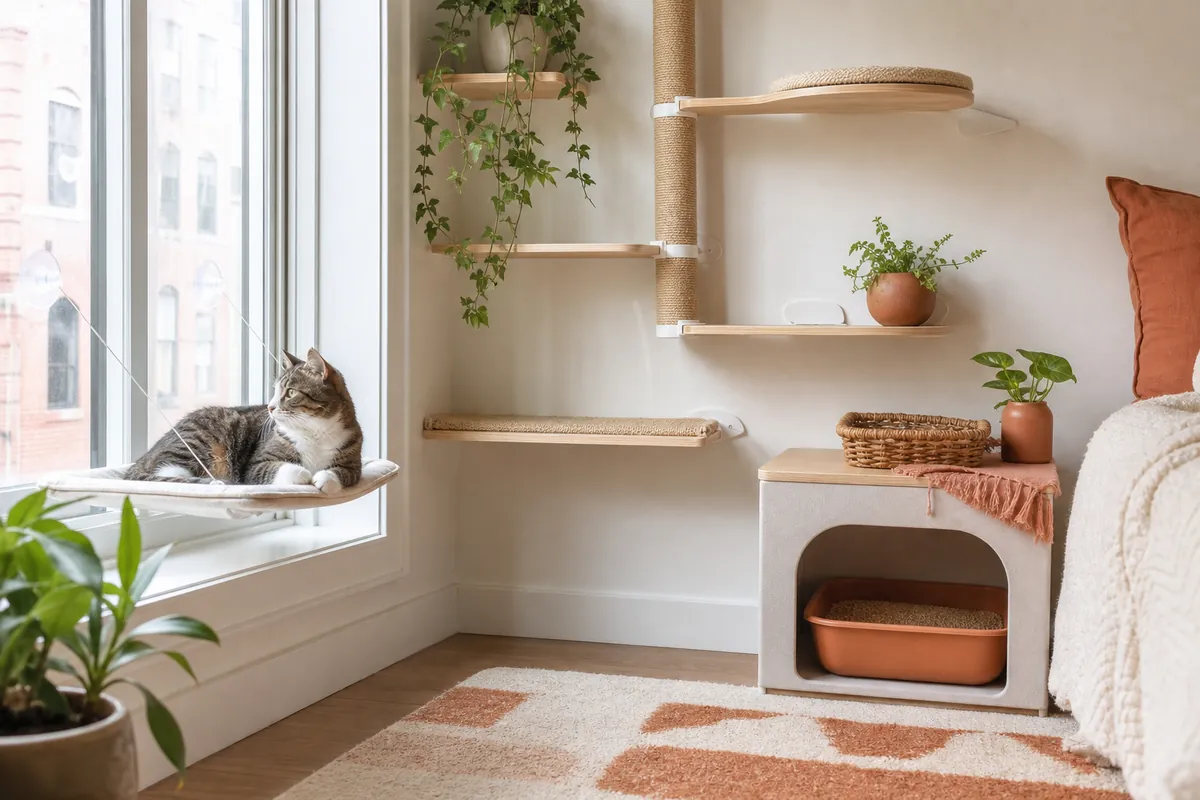
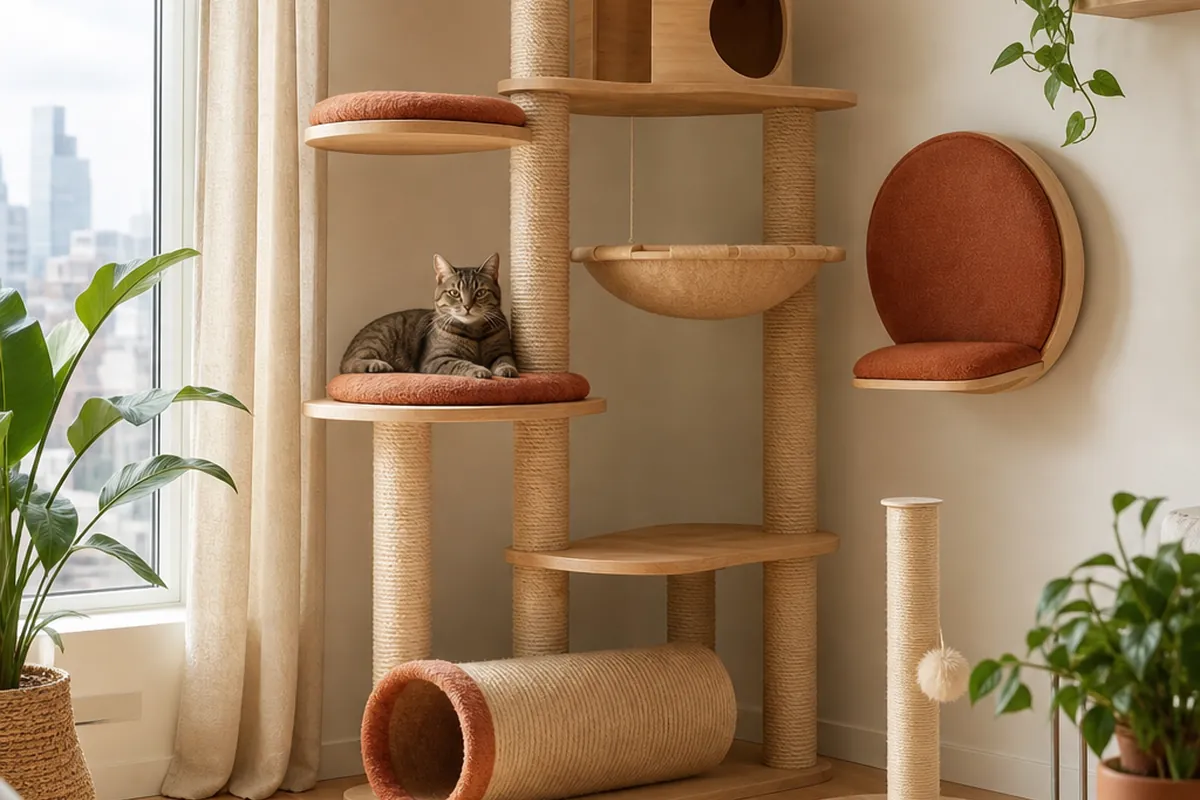
A floor-to-ceiling pole braces between two surfaces you are not allowed to damage and touches neither permanently. An adjustable tension cat tree covering roughly 102 to 122 inches suits standard ceilings and gives a cat genuine altitude in about a square foot of floor. Check your ceiling height before ordering, because these have a real minimum as well as a maximum.
2. Tighten the pole to firm, then stop
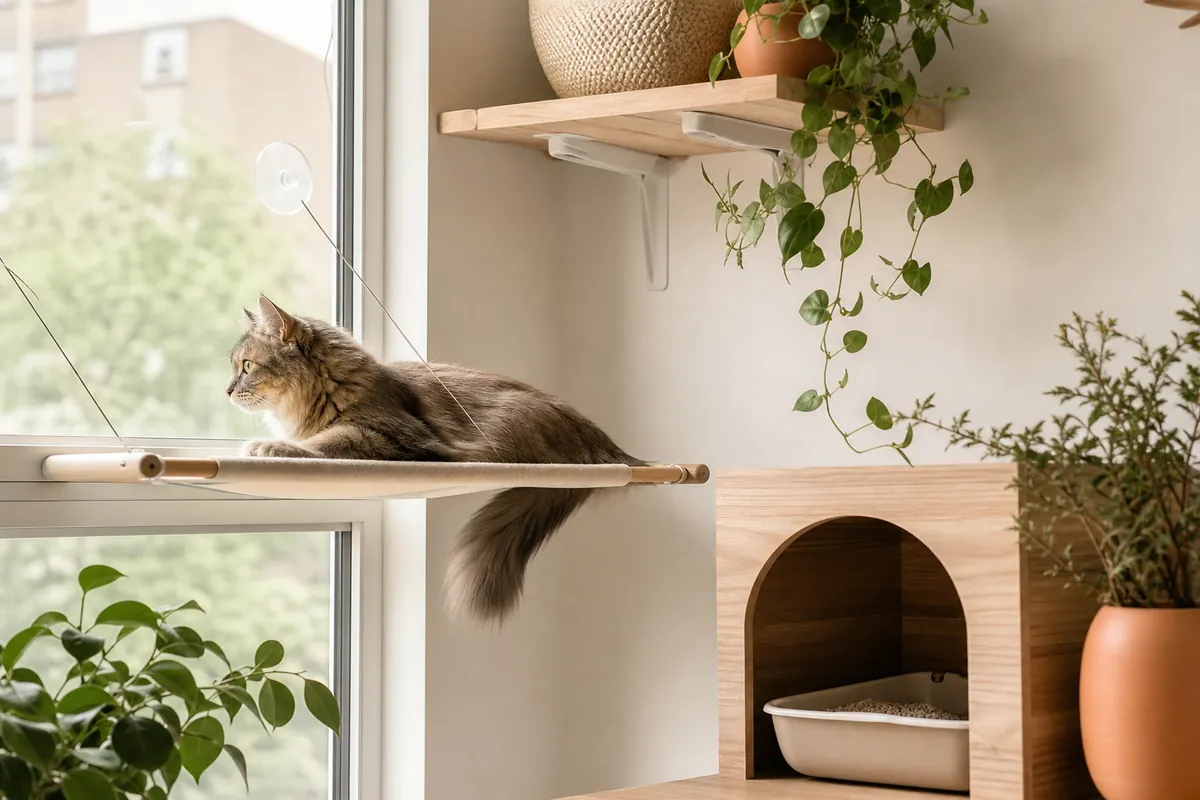
Overtightening is how a tension pole leaves a mark, and a dented ceiling is a deposit deduction in a way that a scuffed floor is not. Use the supplied spreader plate, tighten until the pole is solid, and go no further. Re-check it monthly, since buildings move and poles work loose.
3. Put the perch on the glass
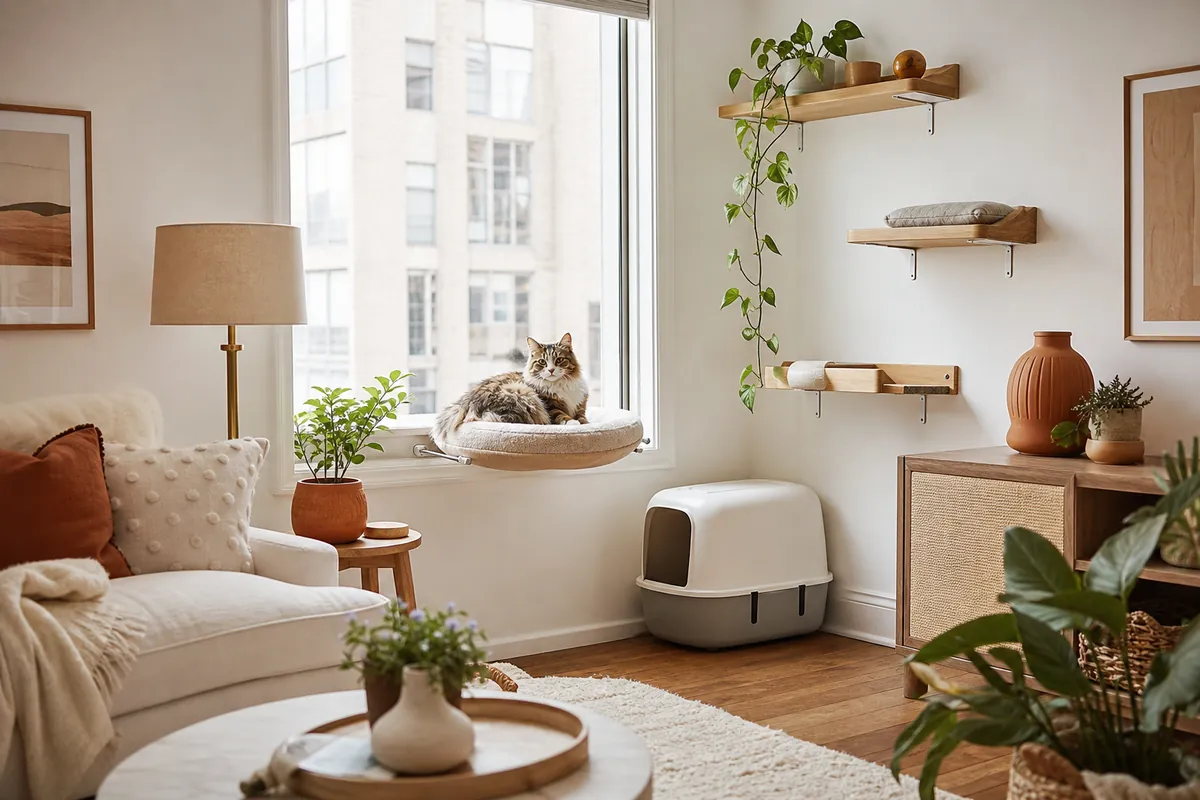
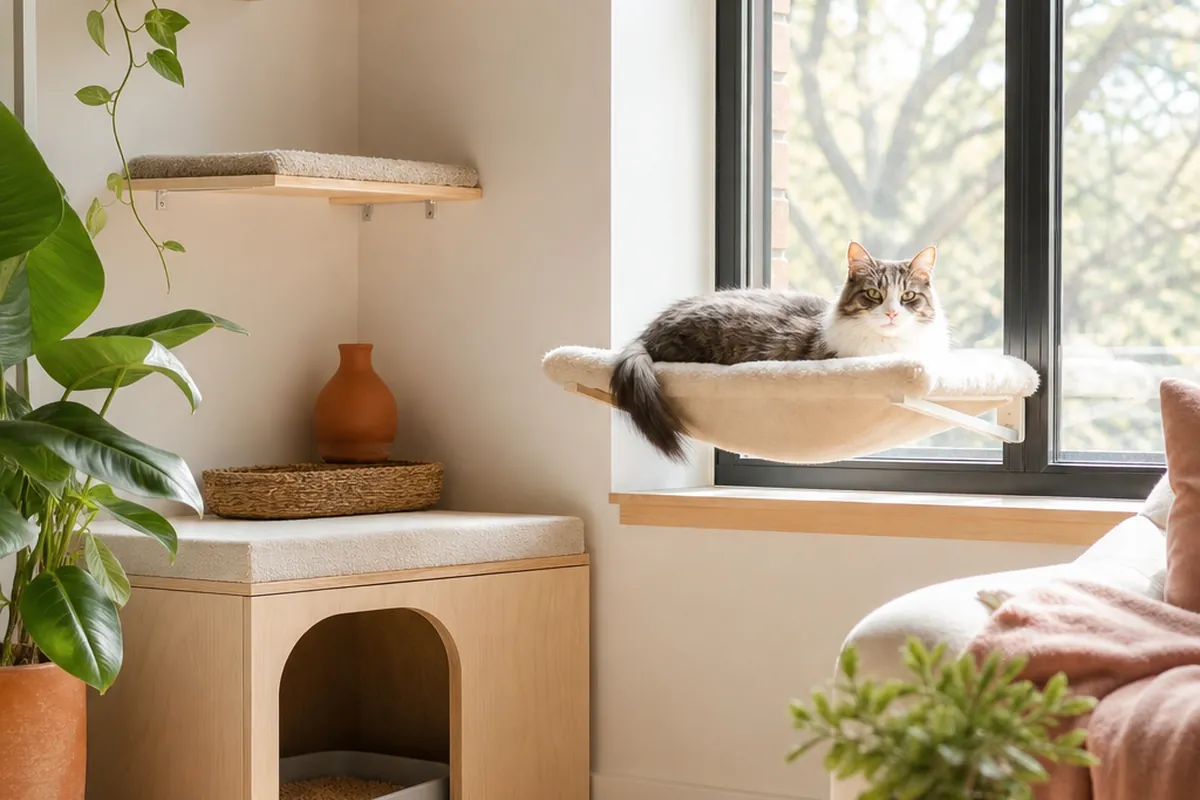
Windows are the one vertical surface in a rental you can mount to freely. A suction cup window perch puts a cat at the best view in the apartment with no fixing at all. Clean the glass with alcohol first, since suction fails on residue long before it fails on age.
4. Know when suction will let you down
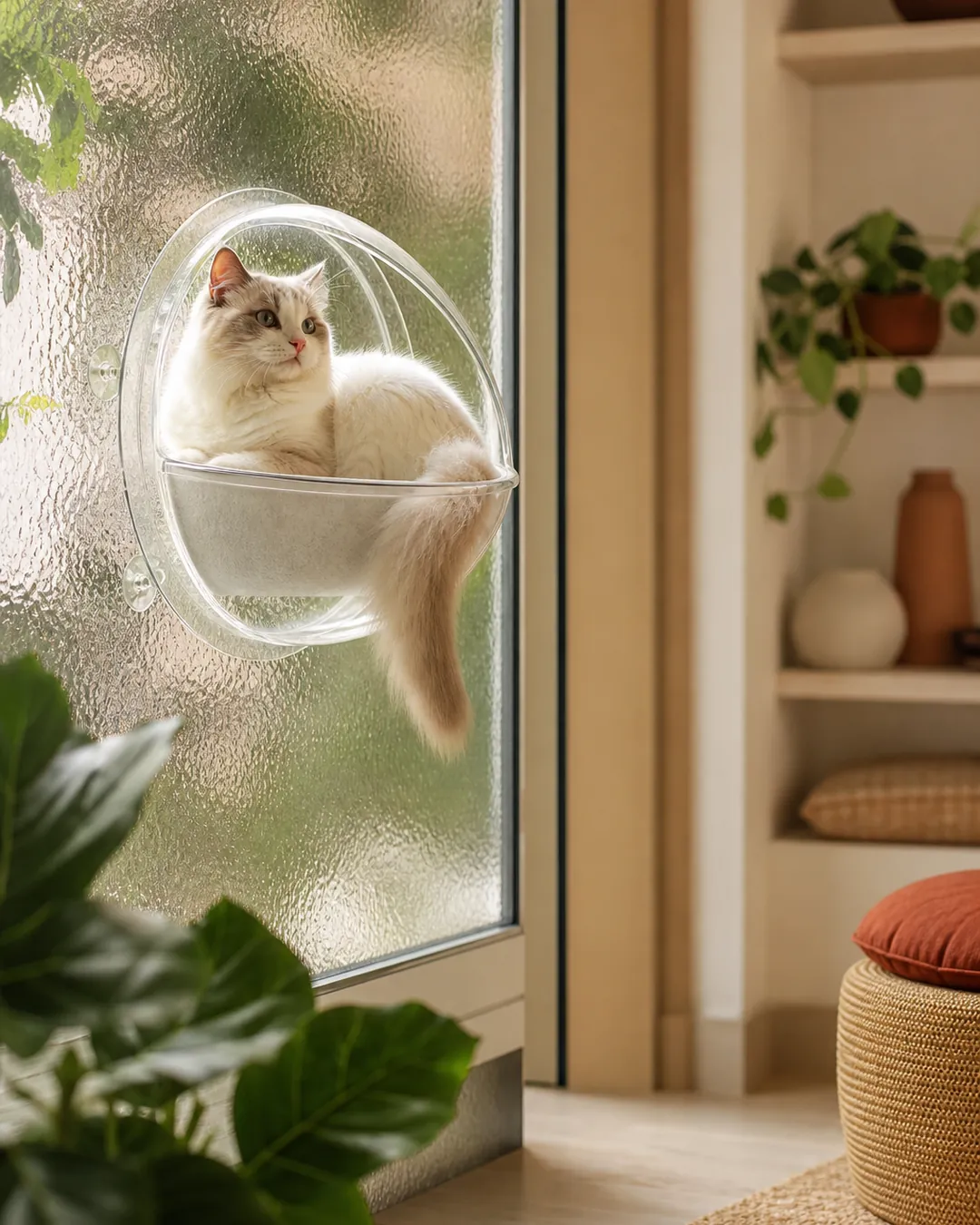
Suction cups lose grip on textured or frosted glass, and they lose grip in cold weather as the material stiffens. If your windows are old, single-glazed and face north, treat a suction perch as a summer solution and have a freestanding backup rather than discovering the problem the hard way.
5. Distrust adhesive mounts for anything a cat lands on
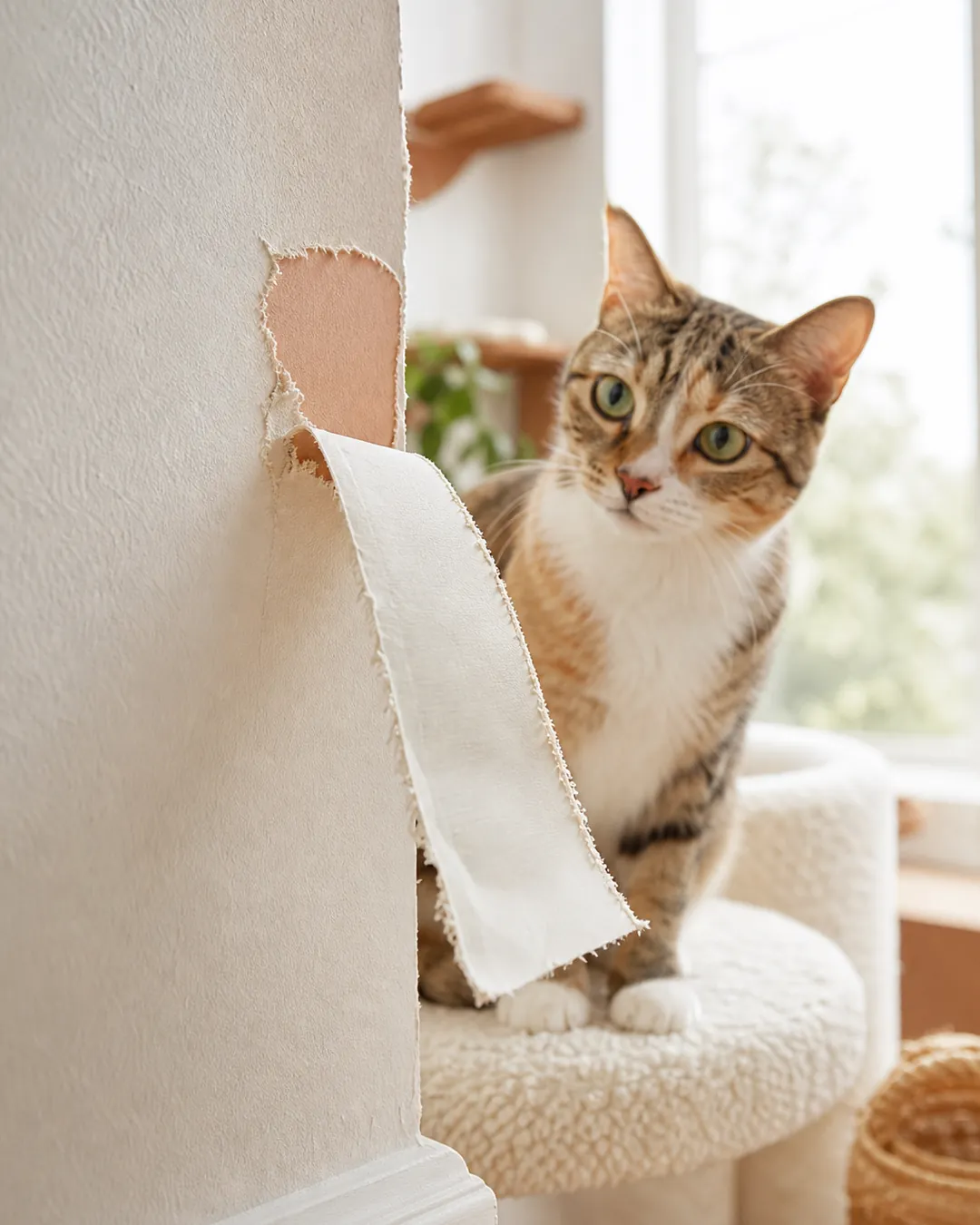
Adhesive strips are rated for a static hanging load. A cat landing from two feet up applies a brief force several times its own weight, in the direction most likely to peel the strip off the wall. Use adhesives for a light bracket or a cable clip, not for a platform. The failure is worse than it first appears, because adhesive mounts rarely let go gradually. They hold for weeks, then release all at once, and they frequently take a patch of paint with them, which is the exact outcome the renter was avoiding.
6. Use the furniture you already own for height
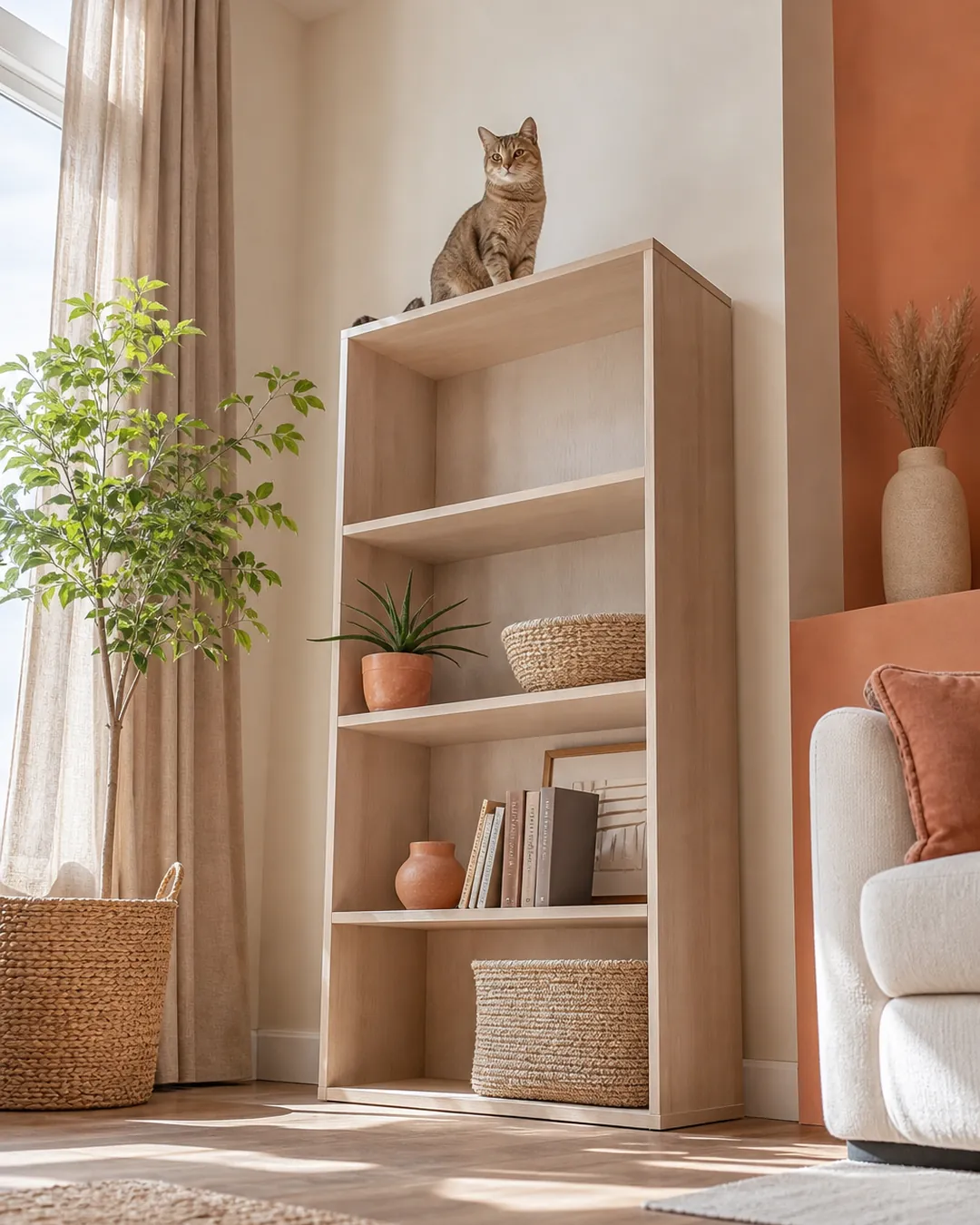
A bookcase with the top two shelves cleared is a cat tower you have already paid for and already have permission to keep. Secure it against tipping, ideally with a strap to a stud, and you have solved altitude without a single new purchase. Add one intermediate step, an ottoman or a sturdy storage box, so the cat is not making the full climb in one jump. Most rejected bookcases were not rejected for height. They were rejected because there was no sensible way up. In a bedroom the cleared dresser or nightstand top plays the same role, and these small bedroom cat setup ideas work it into a climbing route that leaves the floor around the bed clear.
7. Choose litter furniture by depth, not width
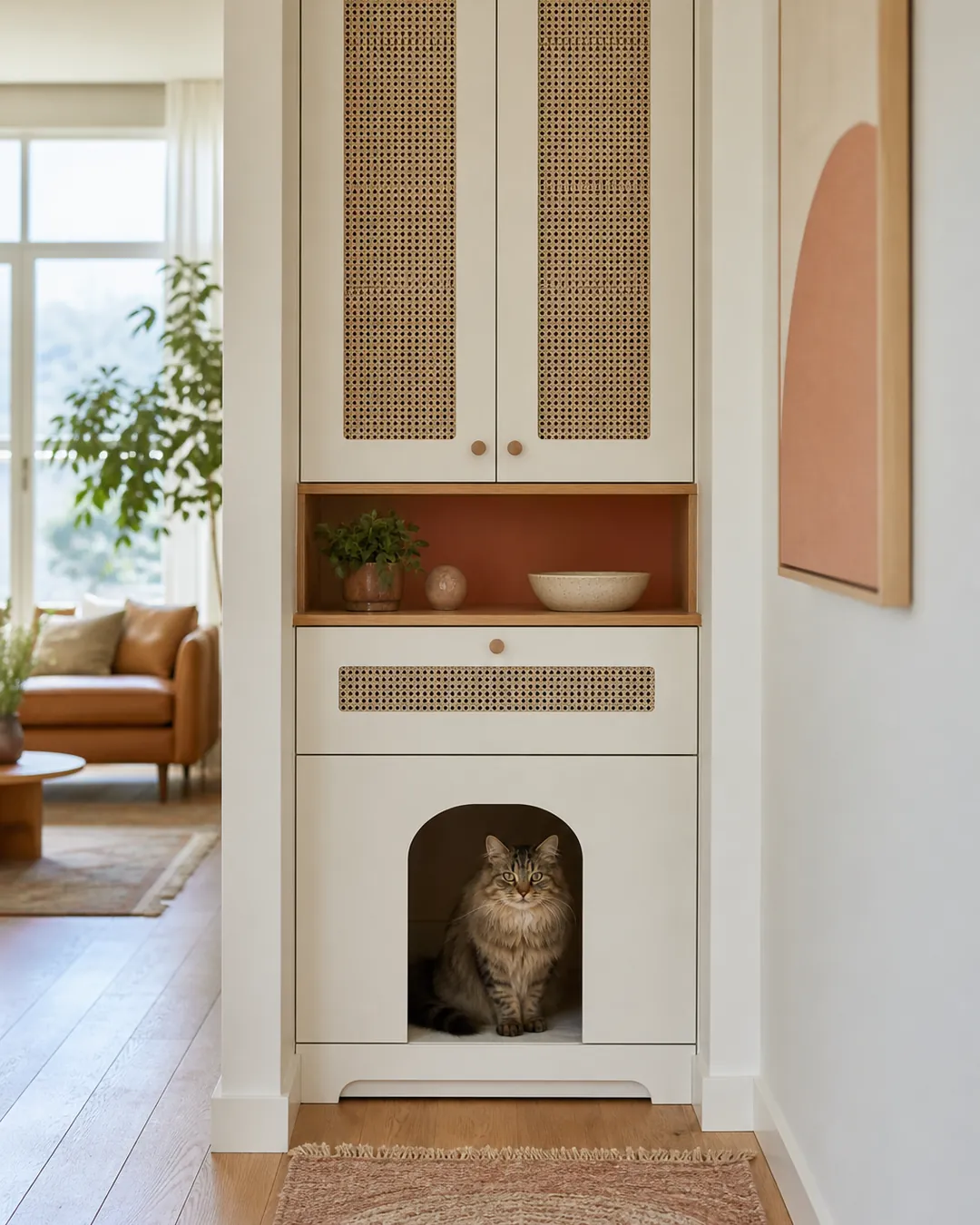
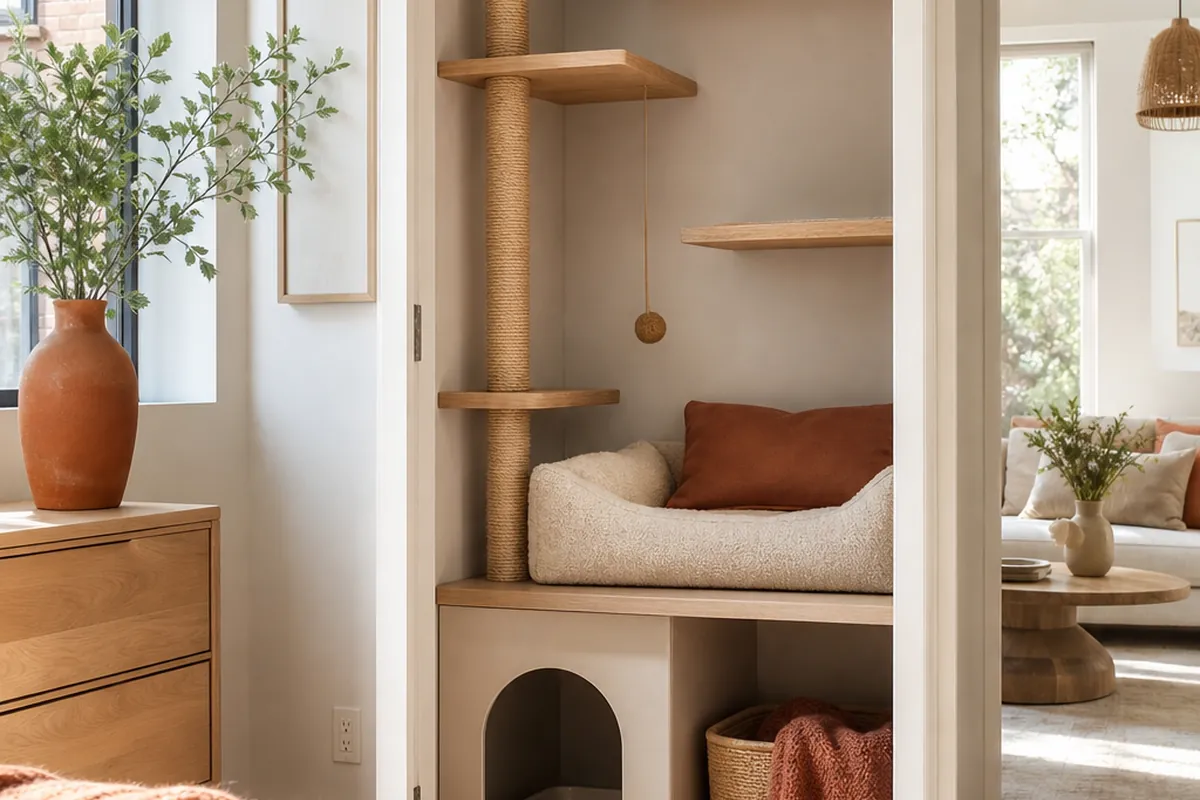
Rental hallways and alcoves are narrow, and depth is what stops a cabinet fitting. A slim litter enclosure at around 23.6 inches fits where a standard cabinet will not, and a reversible entry panel lets you turn the opening away from the room after you have seen how the space is used.
8. Catch the tracking in the first three steps
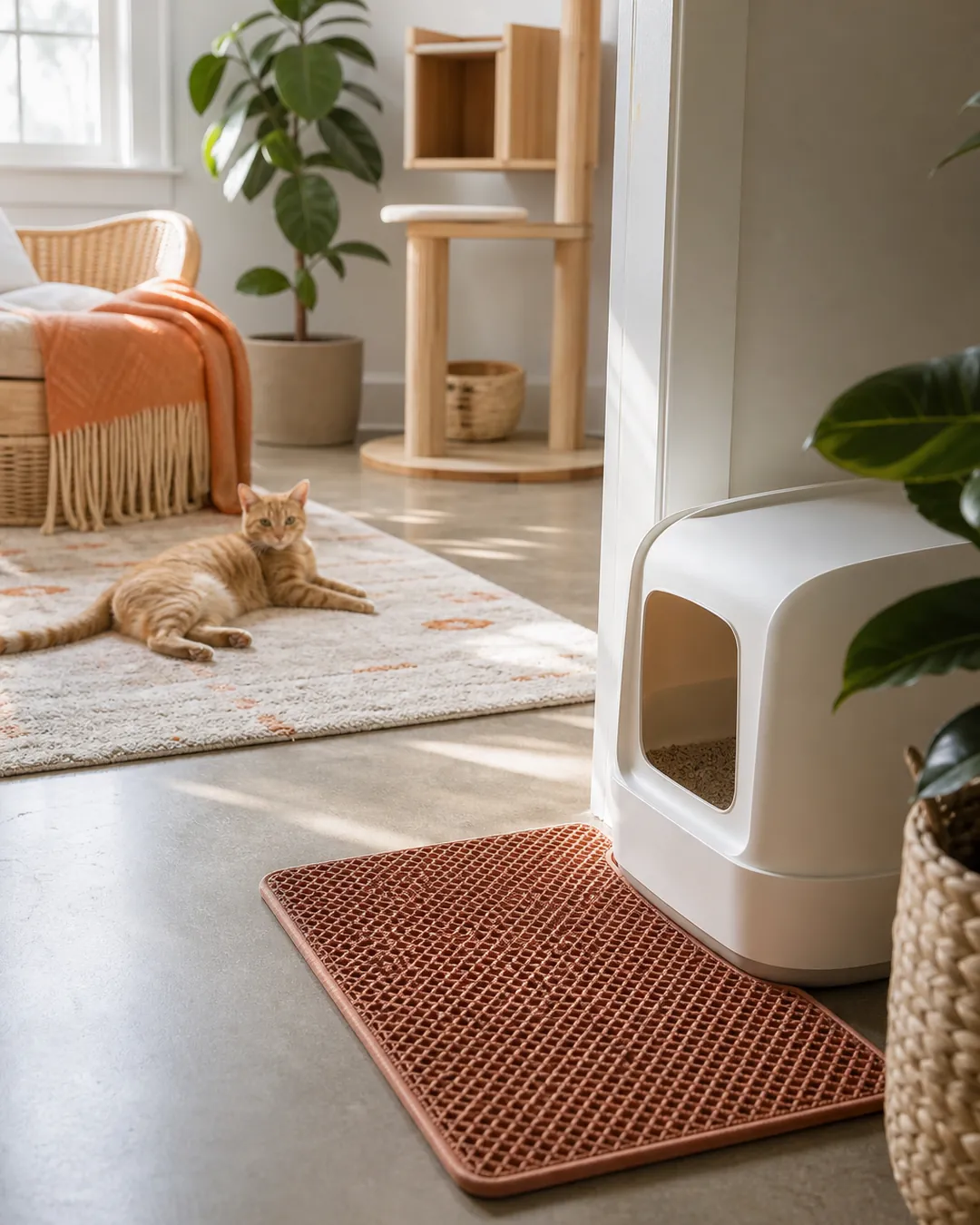
Most litter travels on paws for a very short distance and then falls. A mat directly outside the exit catches the majority of it, and an enclosure with a raised interior lip catches more before the cat even leaves. Carpet is where deposits go to die, so this is worth doing properly. Position matters more than the mat itself. A large mat placed a foot away from the opening catches noticeably less than a small one sitting flush against it, because by then the paws are already clean.
9. Give the cat a post before it picks the carpet
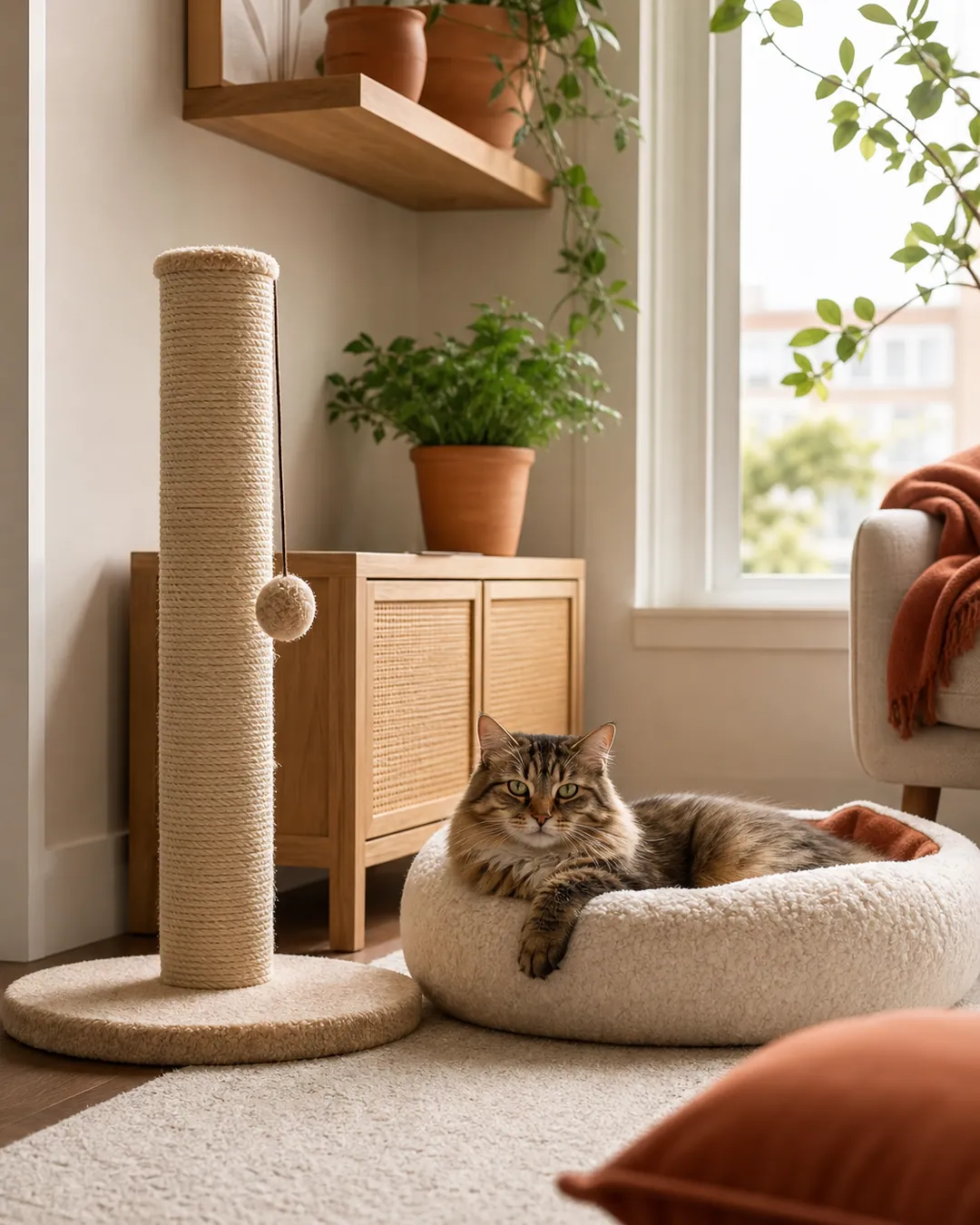
Cats scratch to stretch and to mark, and they will choose a surface whether or not you provide one. A tall sisal post positioned near where the cat sleeps, installed on day one, is considerably cheaper than replacing a carpet at the end of a tenancy. Height is the specification that matters most and the one most often compromised. A cat wants to reach up and pull against something taller than it is, so a short post bundled into a cheap tower will be walked past on the way to the stair carpet.
10. Cover the door frame the cat has already chosen
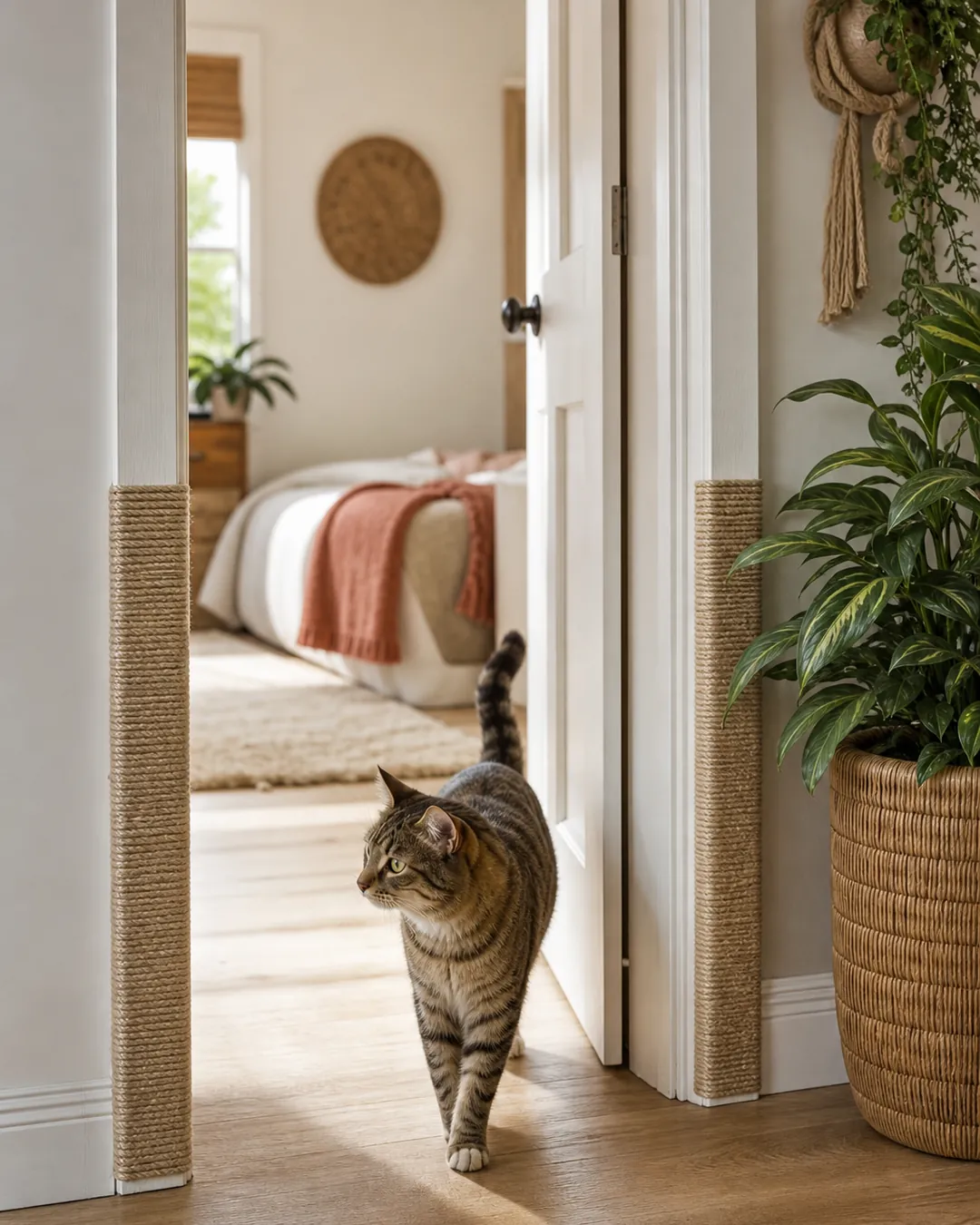
If a cat has already claimed a frame, blocking it rarely works. Wrapping that specific frame in sisal or fitting a removable guard redirects the behavior onto a surface you can unscrew and take with you. Fighting an established habit is a losing position.
11. Protect the window sill, not just the window
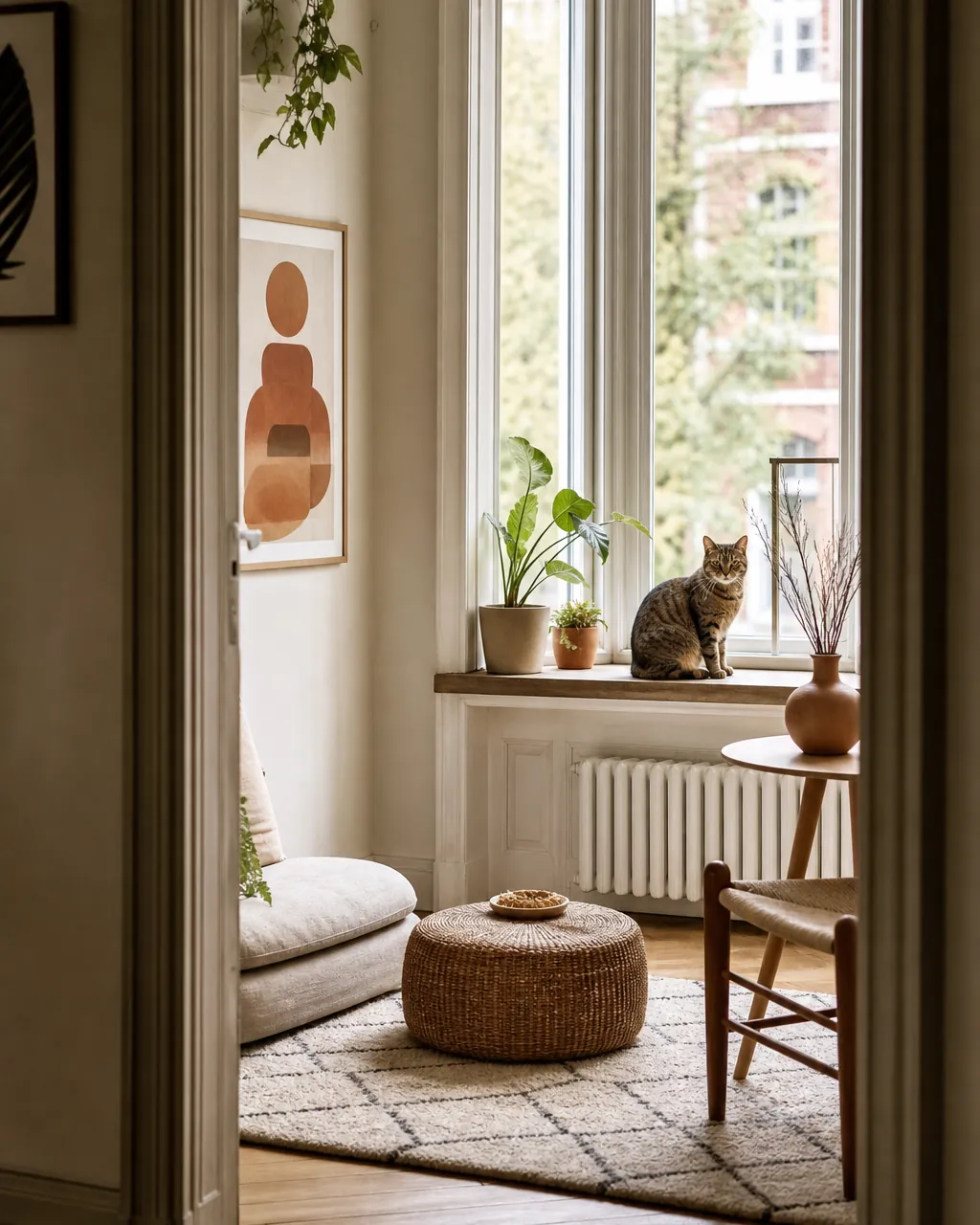
Sills take the wear in a rental: claws on paint, condensation under a bed, sun bleaching around whatever sits there. A removable mat or a fitted cover on the sill is trivially cheap and sits exactly where the cat spends most of its day.
12. Keep everything on a removable base
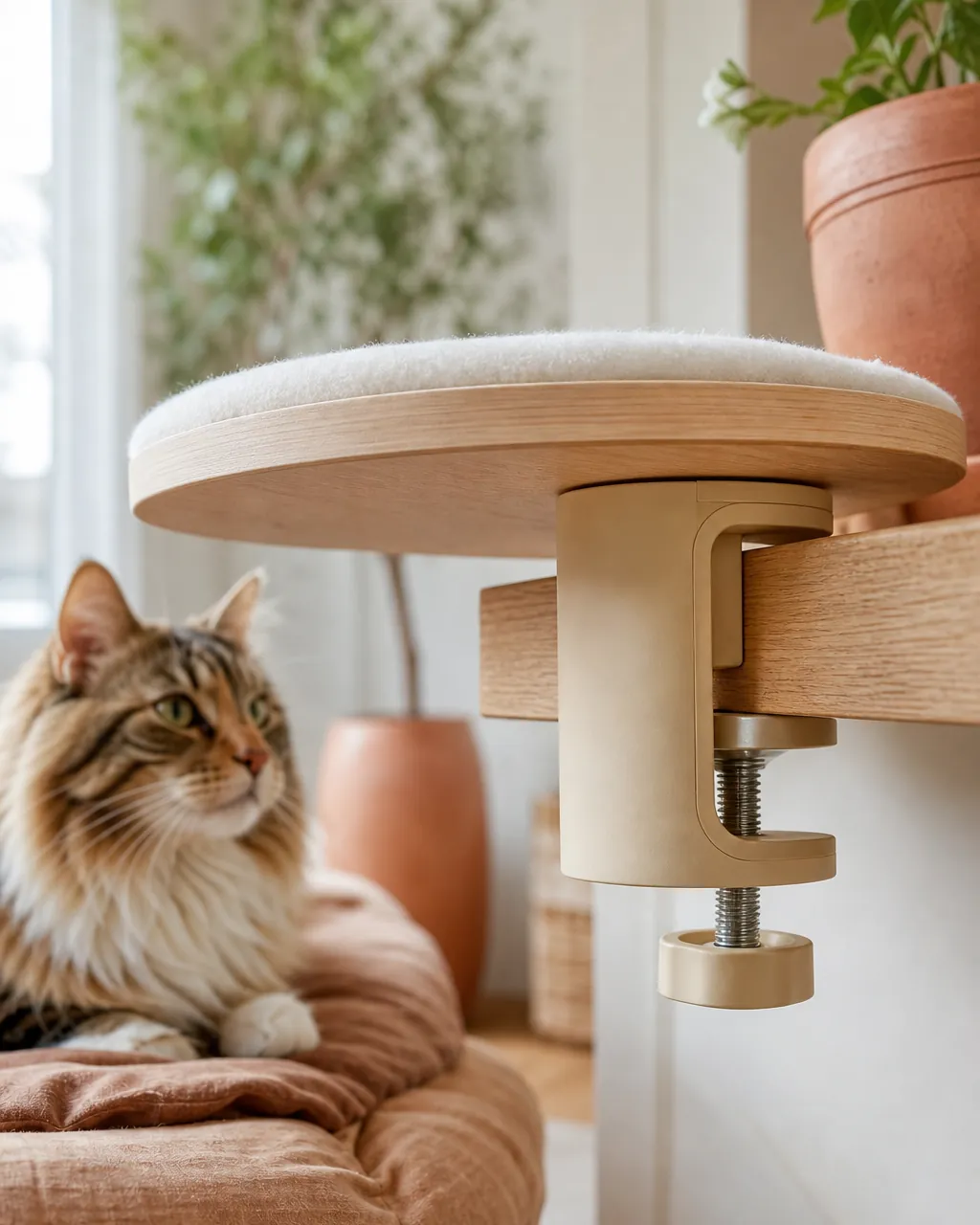
Prefer clamps, straps, tension and weight over anything that makes a hole. When a hole is genuinely unavoidable, keep it to a small number of neat ones in a single stud rather than a scatter of anchors across an open span, because filling four tidy holes is a five minute job.
Seasonal decorating is where this discipline usually slips, and Halloween decor that survives a cat in a small apartment keeps the garlands and lights on the same removable footing.
13. Photograph the walls on the day you move in
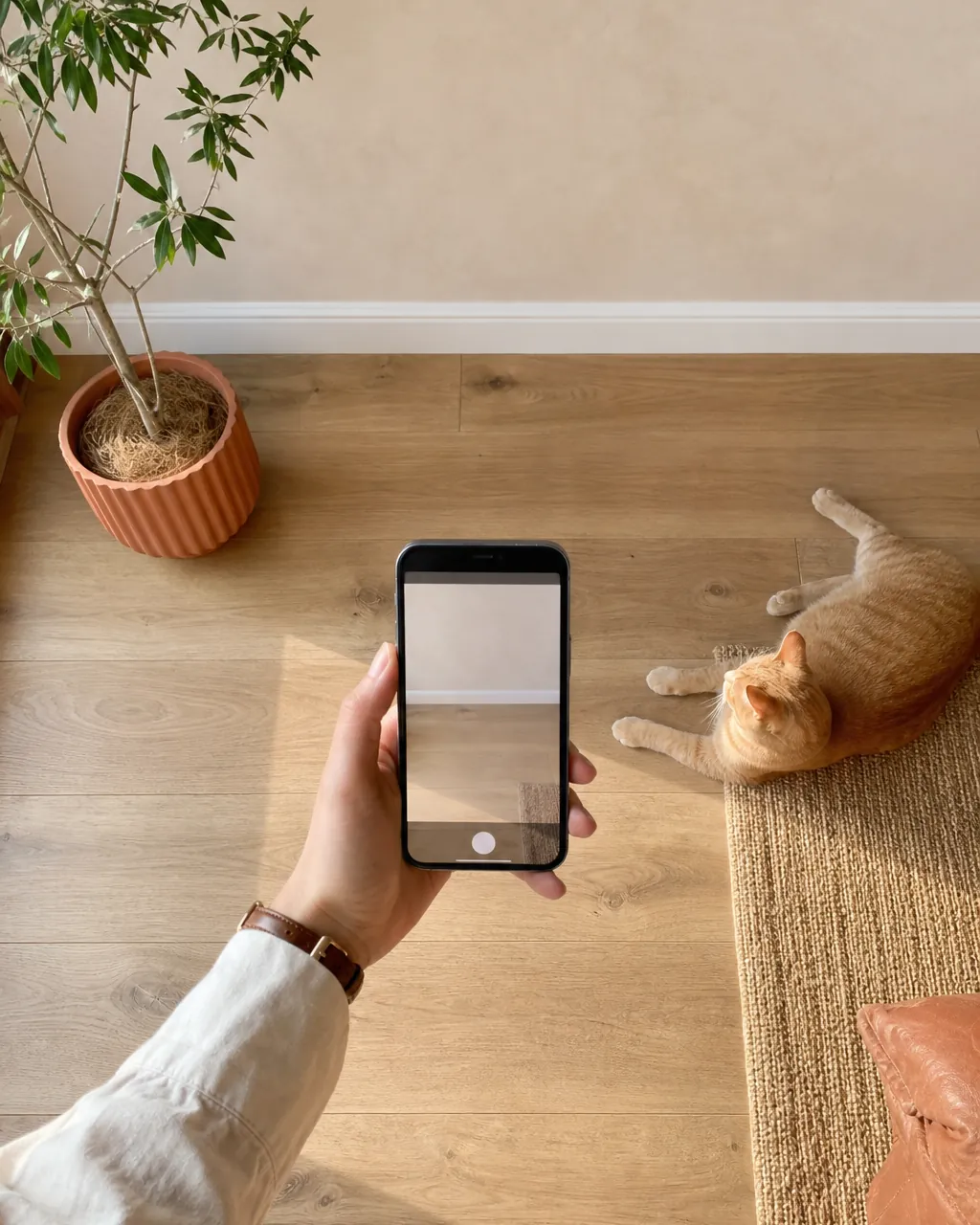
This has nothing to do with cats and saves more money than anything else here. Date-stamped photos of every wall, frame and sill at move-in settle any argument at move-out about what the cat did and what was already there.
The rest of the move-in list, from no-drill gates to the flooring under the bowls, is in pet-friendly apartment ideas renters can pull off.
Where to start
Handle the two deposit risks first, since they are the expensive ones: a tall sisal post before the carpet gets chosen, and a mat outside the litter box before tracking grinds into the pile. Both are cheap and both are much harder to fix retrospectively.
Height comes next. Try the free version first by clearing a bookcase and watching whether the cat uses it. If it does, you have learned that altitude was the missing piece and a tension pole is a safe purchase. If it does not, the problem was the location, and a pole in the same spot would have failed too.
Leave the window perch until you have checked your glass is smooth and your climate is kind to suction. It is the cheapest item here and the one most likely to be returned, purely because of a window nobody inspected first.
Keep the boxes and the mounting hardware for anything tension-fitted or suction-fitted. Ceiling heights and window sizes change between apartments, and the spare parts that let a pole fit a new room are exactly the ones that get thrown away in the first month.
Everything on this list can come with you to the next apartment, which is the actual test of whether a rental setup was designed well.