Cat tree listings compete on height, because height photographs well and sorts nicely in a search result. In an apartment, height is the specification that matters least. What you actually live with is the base: the rectangle of floor you will be walking around for the next five years, and the thing that decides whether the tower is steady enough for a cat to trust.
Ten rules for choosing one, ordered by how much they matter.
1. Shop by footprint, not by height
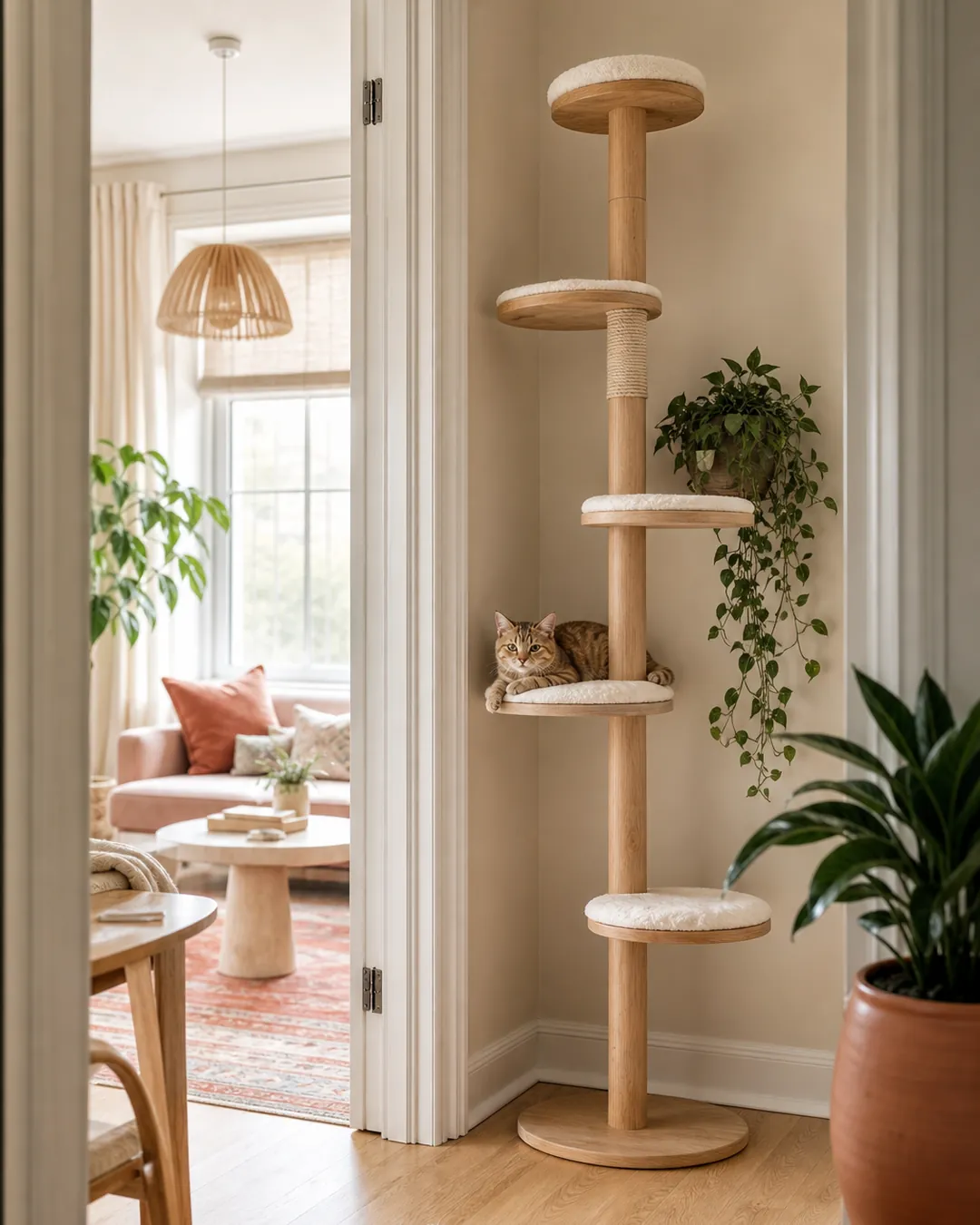
Find the base dimensions in the listing before you look at anything else, and if they are not stated, treat that as an answer. A 70 inch tower on a 20 inch base is a tall thing in a small apartment; a 30 inch tower on the same base is a piece of furniture. Same floor cost, very different room. Tape the base outline on the floor and leave it for two days before ordering. A rectangle you keep stepping over on the way to the kitchen tells you something no product photograph will.
2. Add clearance on every open side
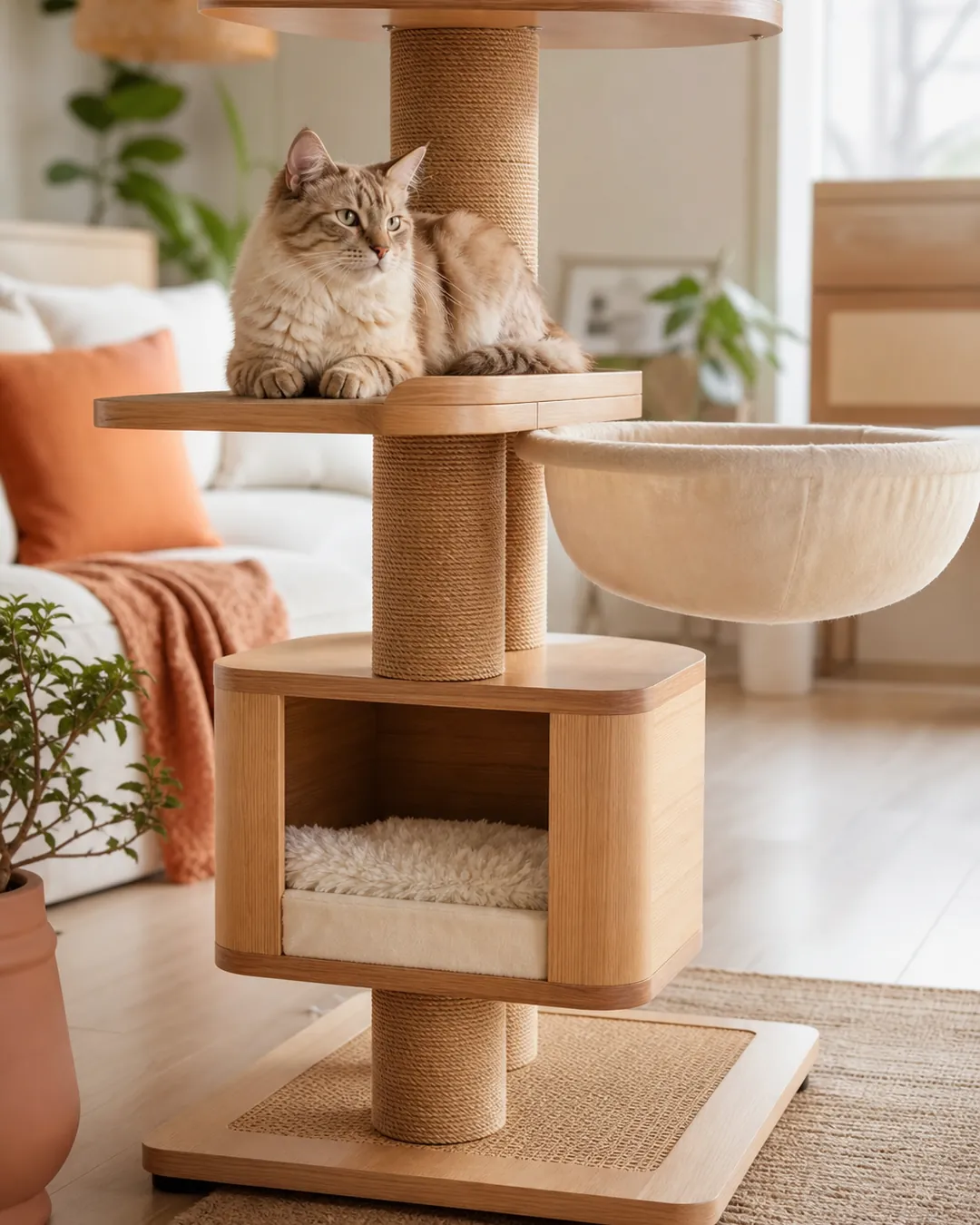
Budget the base plus a couple of inches all round. A tree wedged tight against a sofa on two sides looks space-efficient and transfers every wobble into the sofa, which is how a stable-seeming tower turns out to be neither stable nor quiet.
3. Weigh the base, not the box
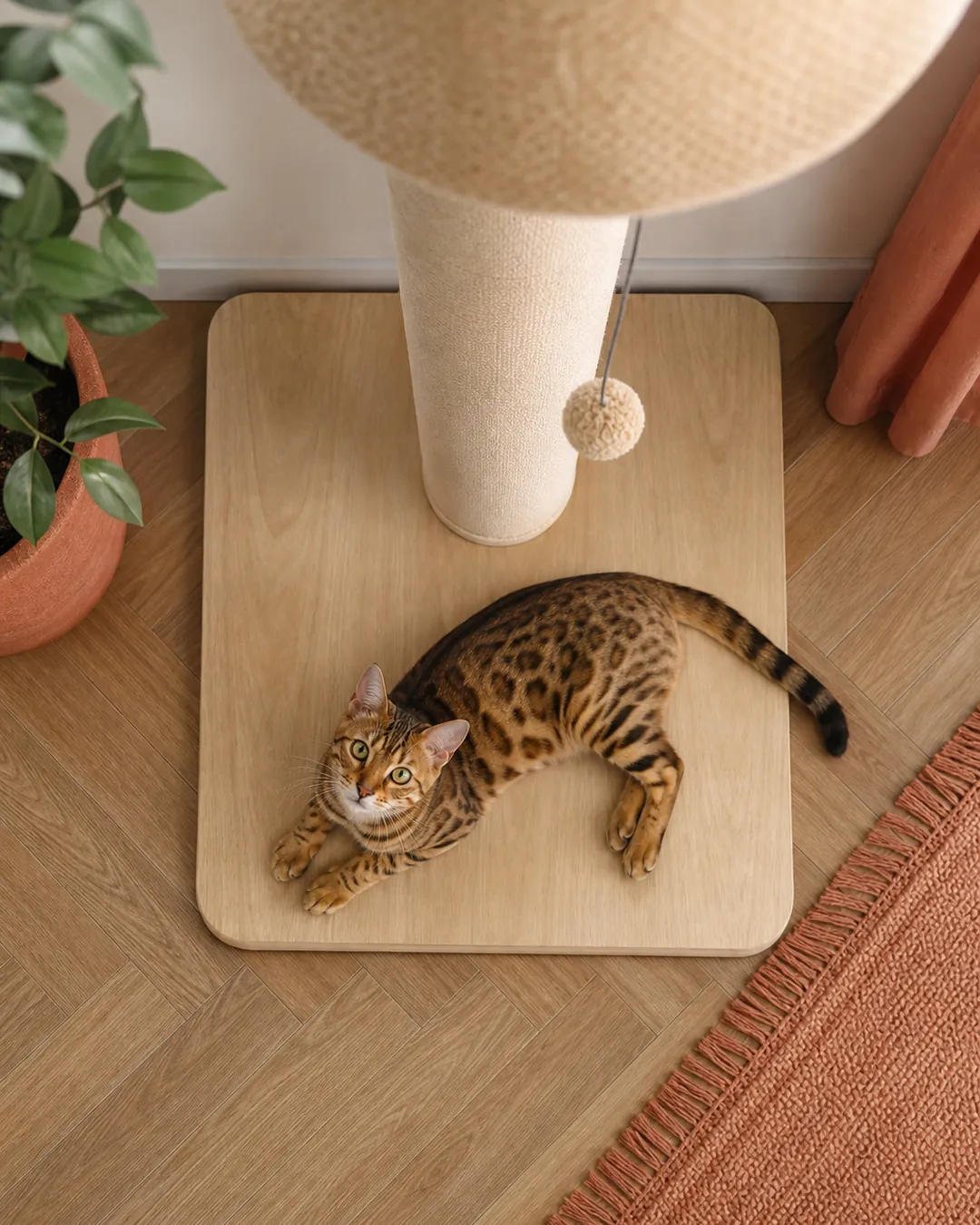
Stability comes from base weight and base width, and cheap towers save money precisely there. A wide particleboard base is heavier than a narrow one and that weight is doing real work. If a listing brags about being lightweight, it is telling you something about how it will behave when a cat lands on the top perch. Shipping weight in the listing is a decent proxy when base weight is not stated: two towers of the same height where one ships at half the weight are not the same product.
4. Put it where the cat already goes up
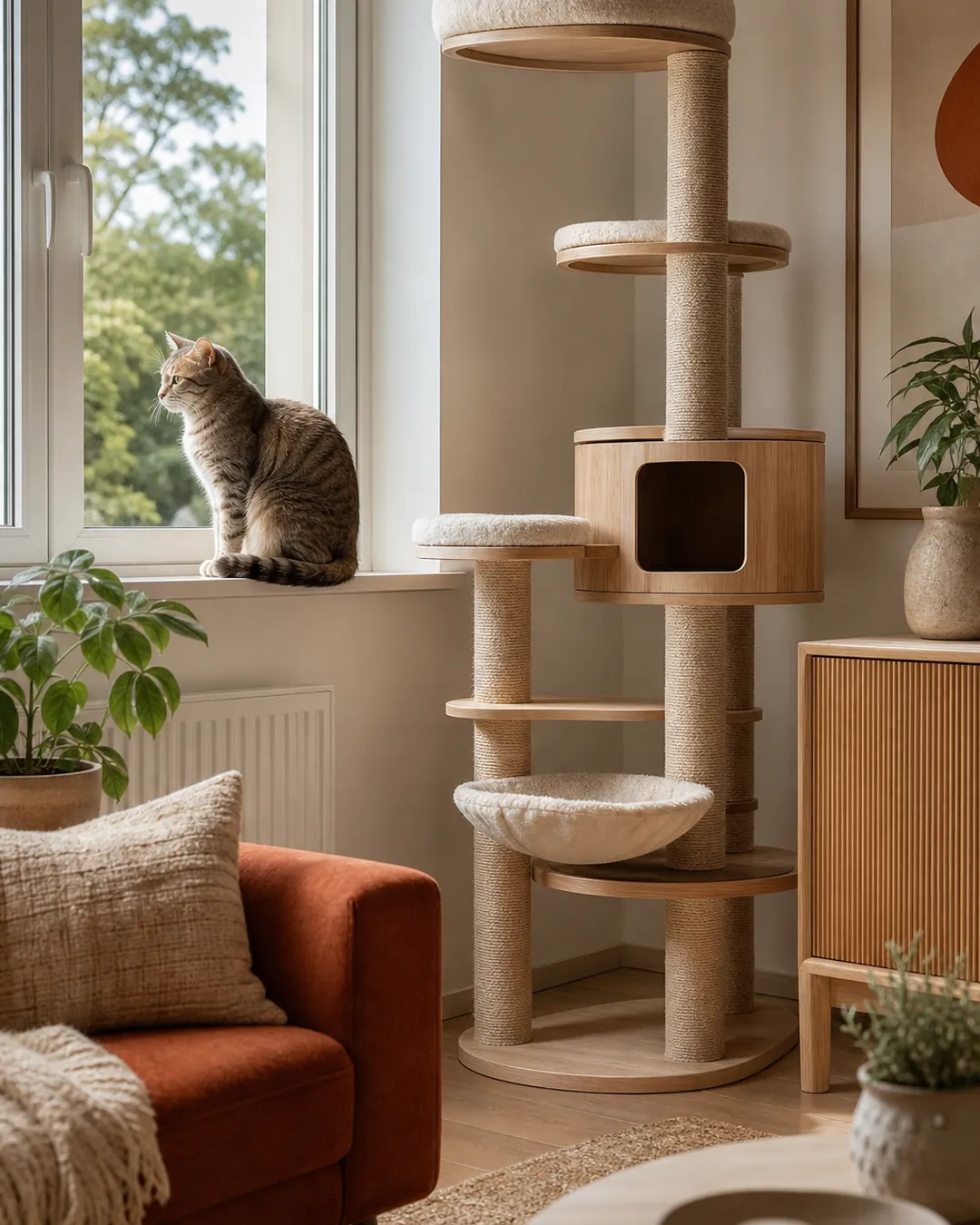
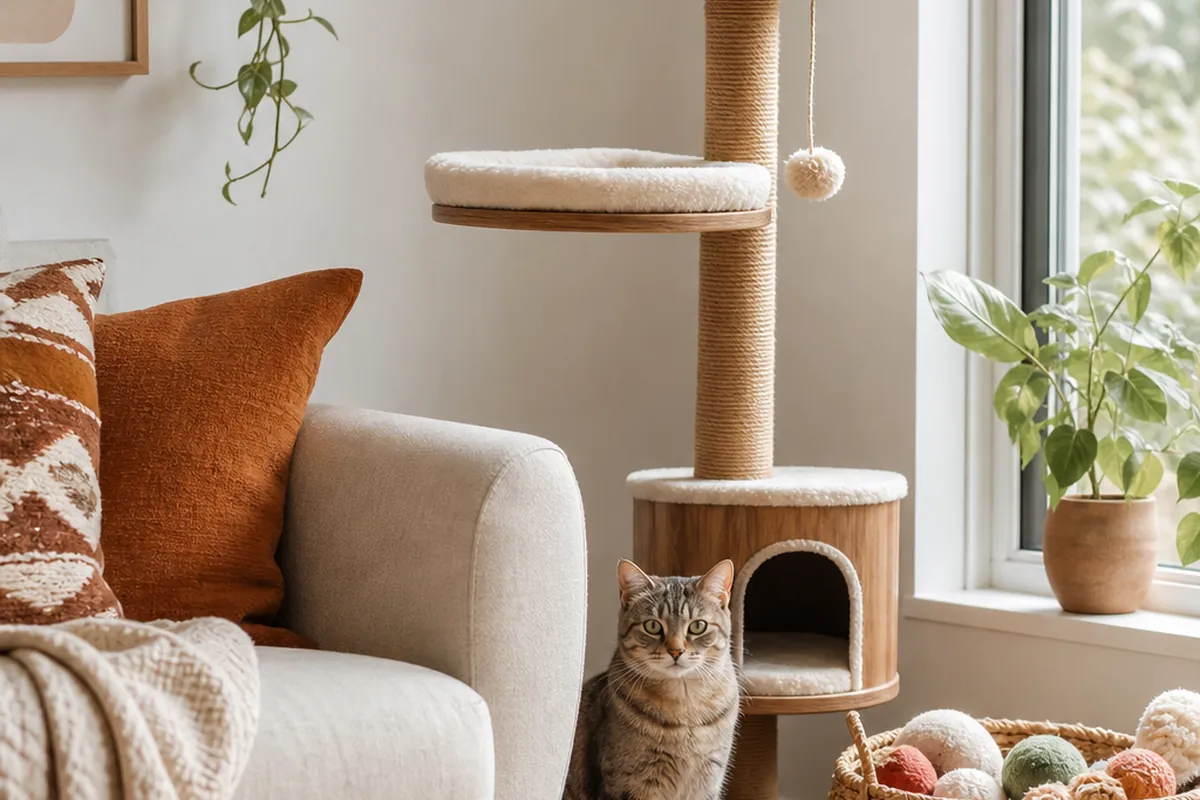
A tree in an empty corner is asking a cat to adopt a new habit. A tree beside the surface the cat already jumps to, the sofa back or a windowsill, joins a route that exists. The MECOOL 4-in-1 small cat tree suits this because it is short enough to sit beside seating rather than tower over it.
5. Match the tone if it is going in the living room
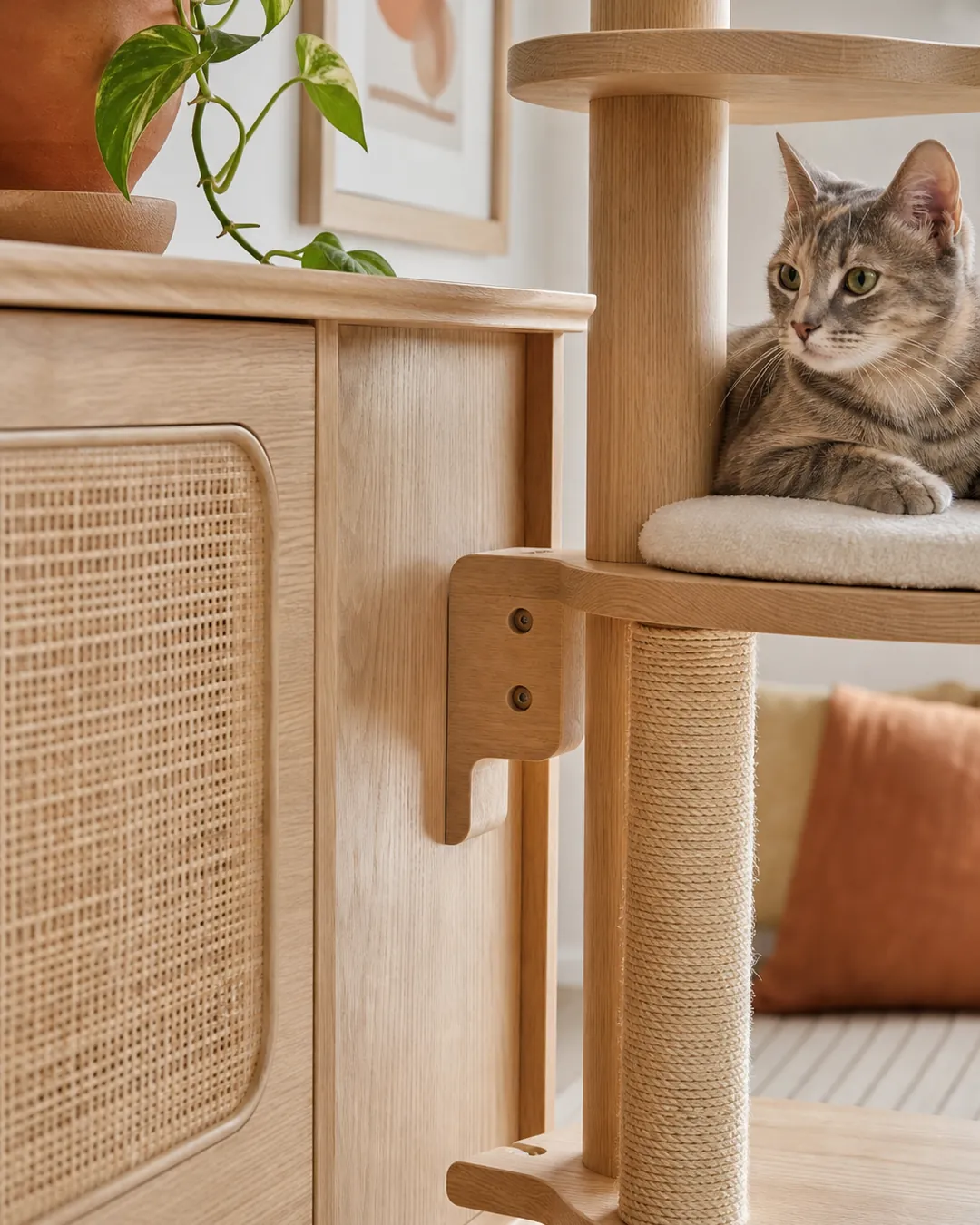
A cat tree lives in your main room and it is furniture whether or not it was sold as such. A 26 inch wood-finish tower in a tone close to your existing pieces disappears into the room, where the same tower in cool gray plush announces itself. This decision costs nothing at purchase and everything afterward.
The tree is the biggest piece, but the same rule runs through every cat item in a shared room, and cat room decor ideas that skip the pet store look applies it to the beds, textiles and litter furniture around it.
6. Check the post is tall enough for a full stretch
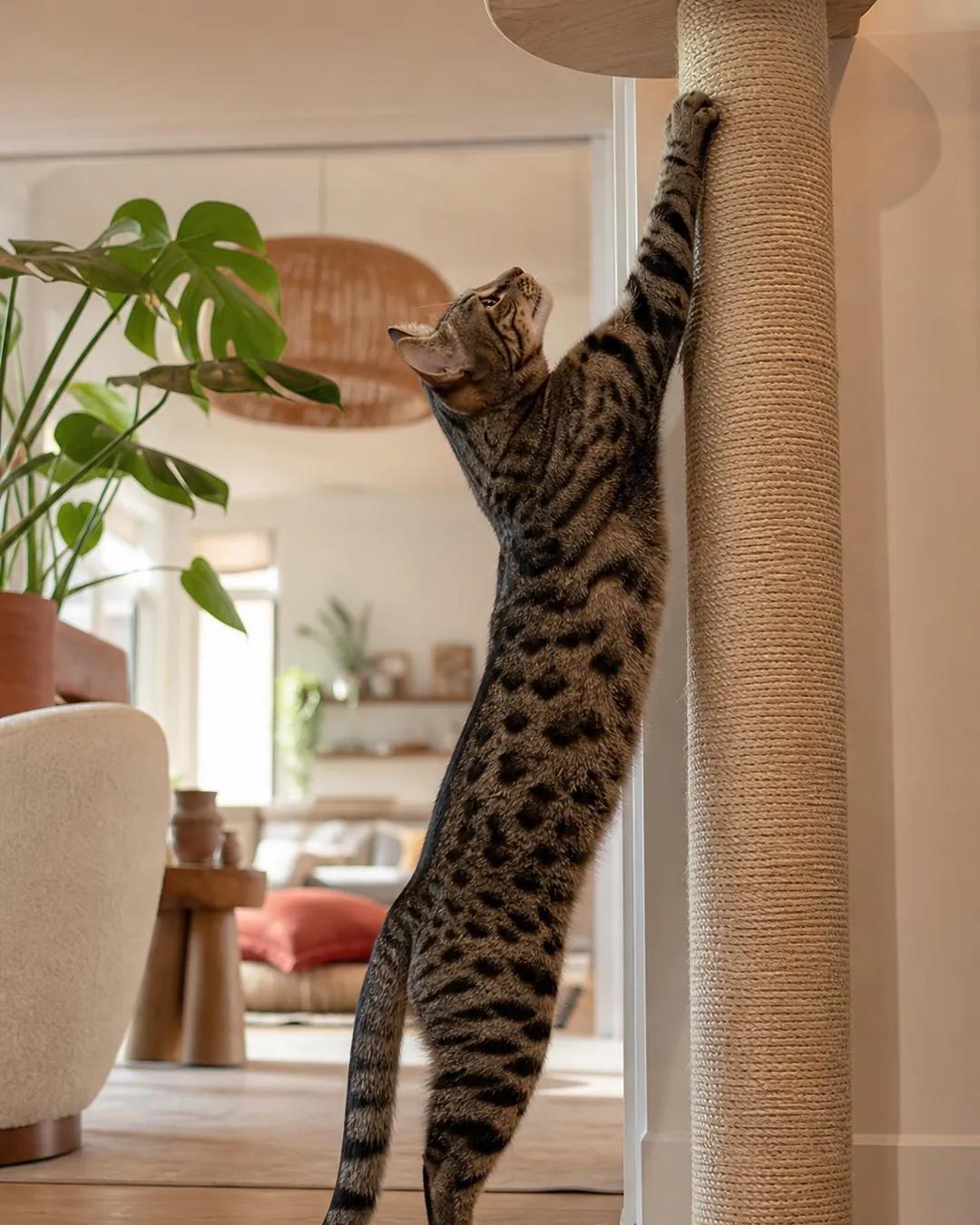
Cats scratch to stretch, which means reaching up and pulling down against something taller than they are. Most posts bundled into compact trees are too short for an adult cat, and a short post is walked past on the way to the sofa arm. Measure your cat standing on its back legs before you accept a bundled post. The listing photograph will not help you here, because the cat in it is usually a kitten and the post is shot from below. Take the stated post height and compare it to your own measurement rather than to the picture.
7. Buy the post separately if the tree’s is short
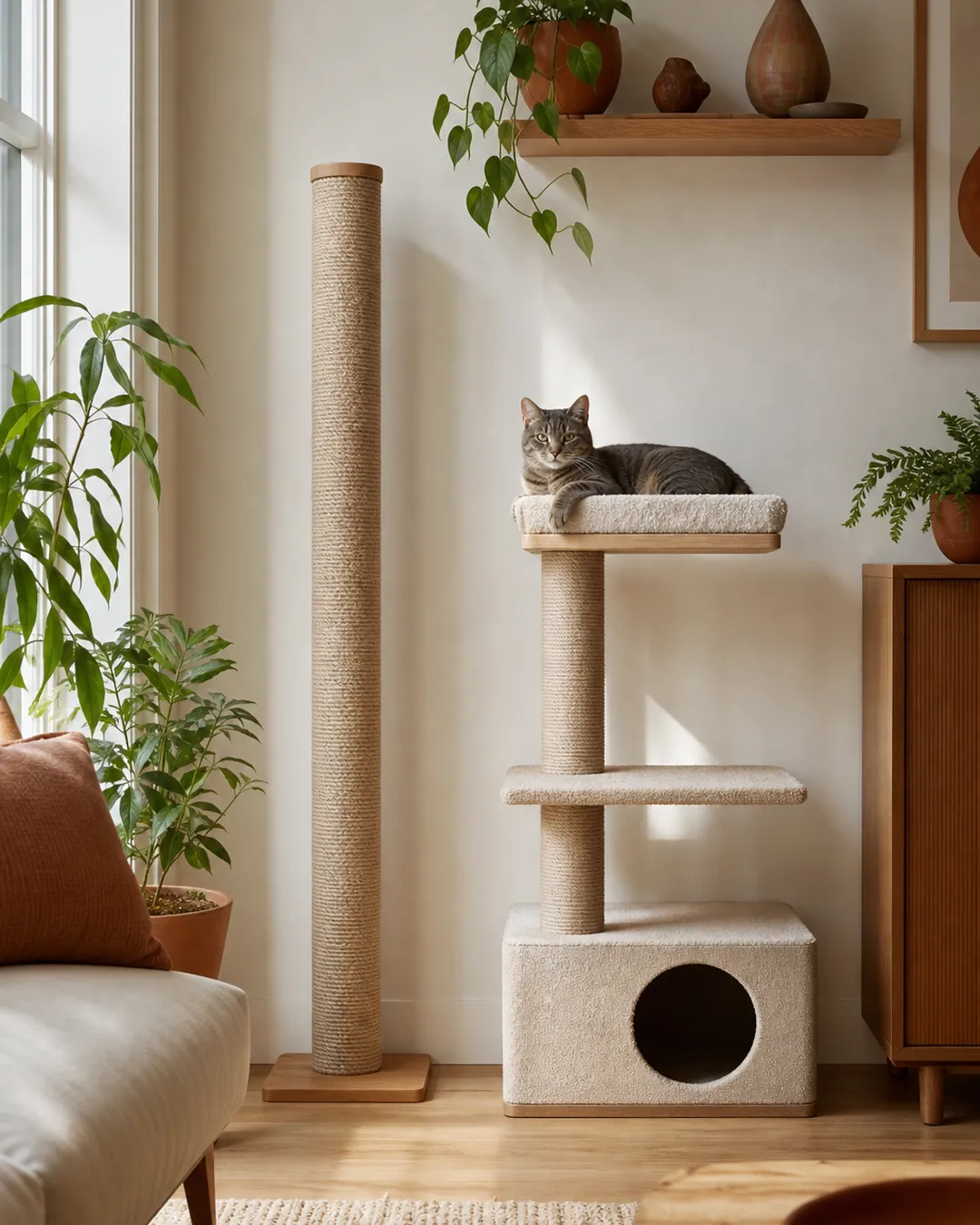
This is the most useful money on this list. A full-height sisal scratching post on a wide base does the one job a compact tree usually compromises, and a compact tree plus a proper post takes less floor than one big tower that does both badly.
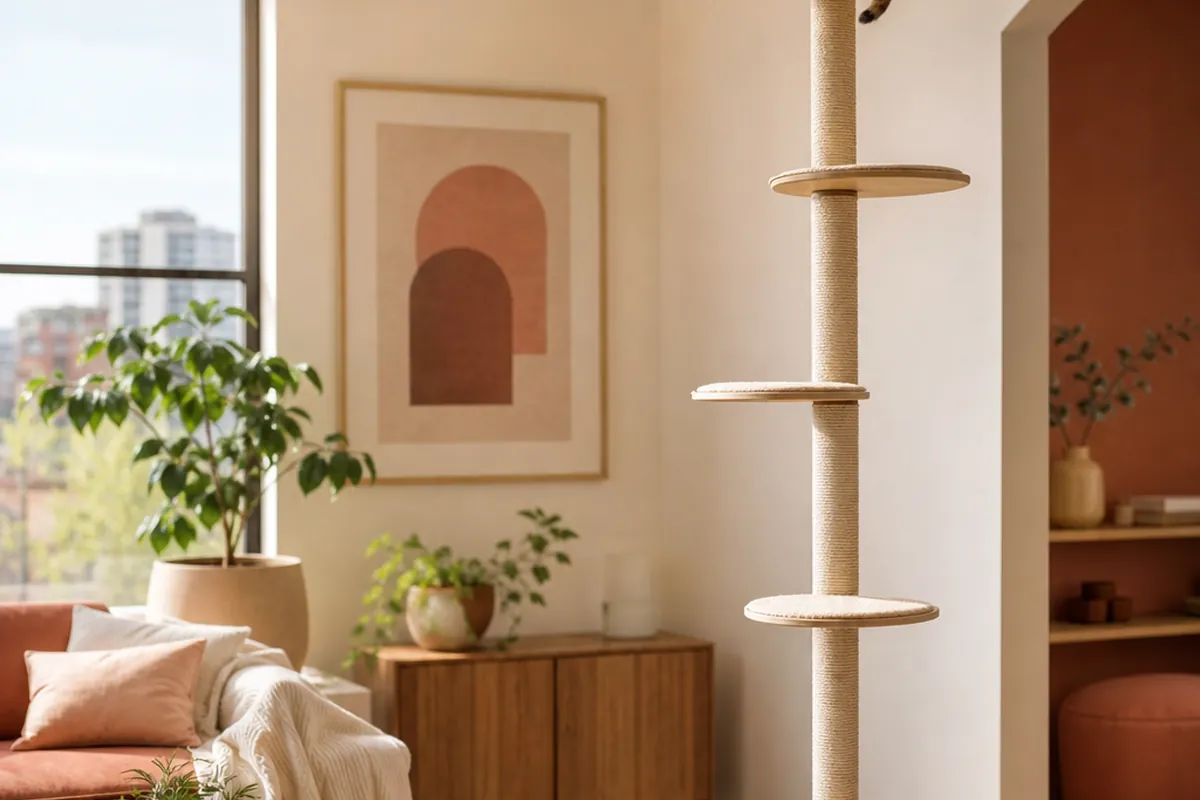
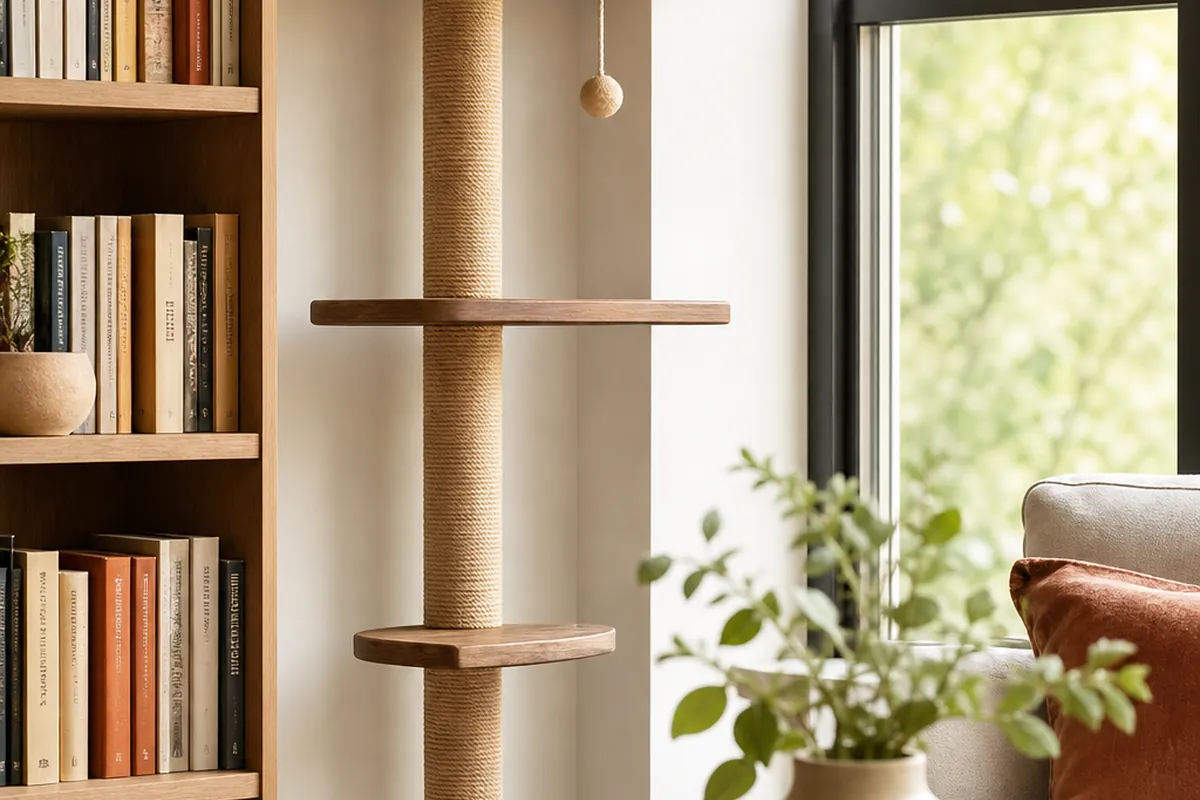
The other way to get a full stretch out of almost no floor is a tension pole, and floor-to-ceiling cat tree ideas covers when that beats a post and when it does not.
8. Choose sisal over carpet on anything scratchable
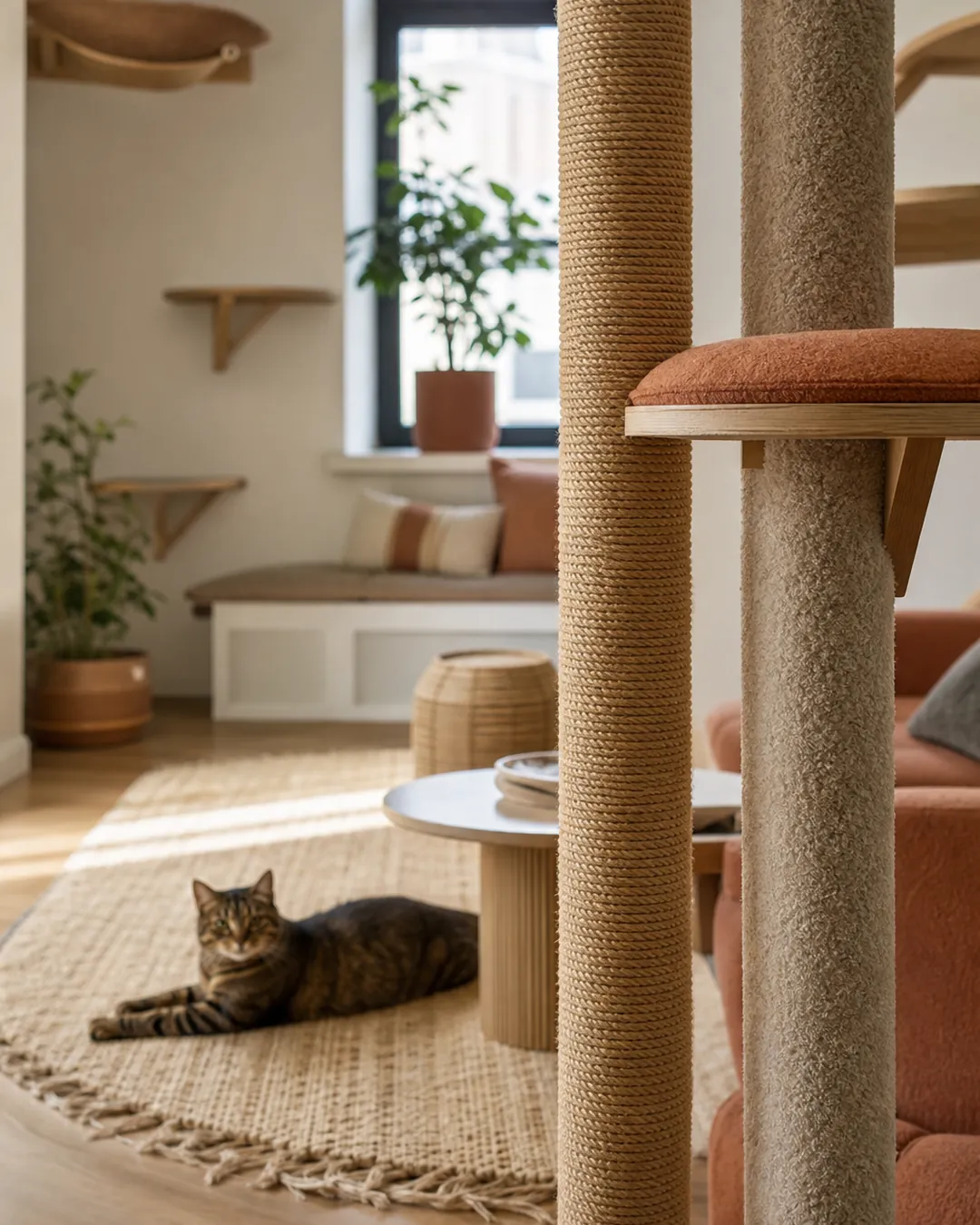
Sisal wears into patina; post carpet wears into a mess and needs replacing. There is a behavioral argument too, since a carpeted post is teaching a cat that carpet is a scratching surface at the same time as you are hoping it leaves the floor alone.
9. Give the top perch a wall or a view
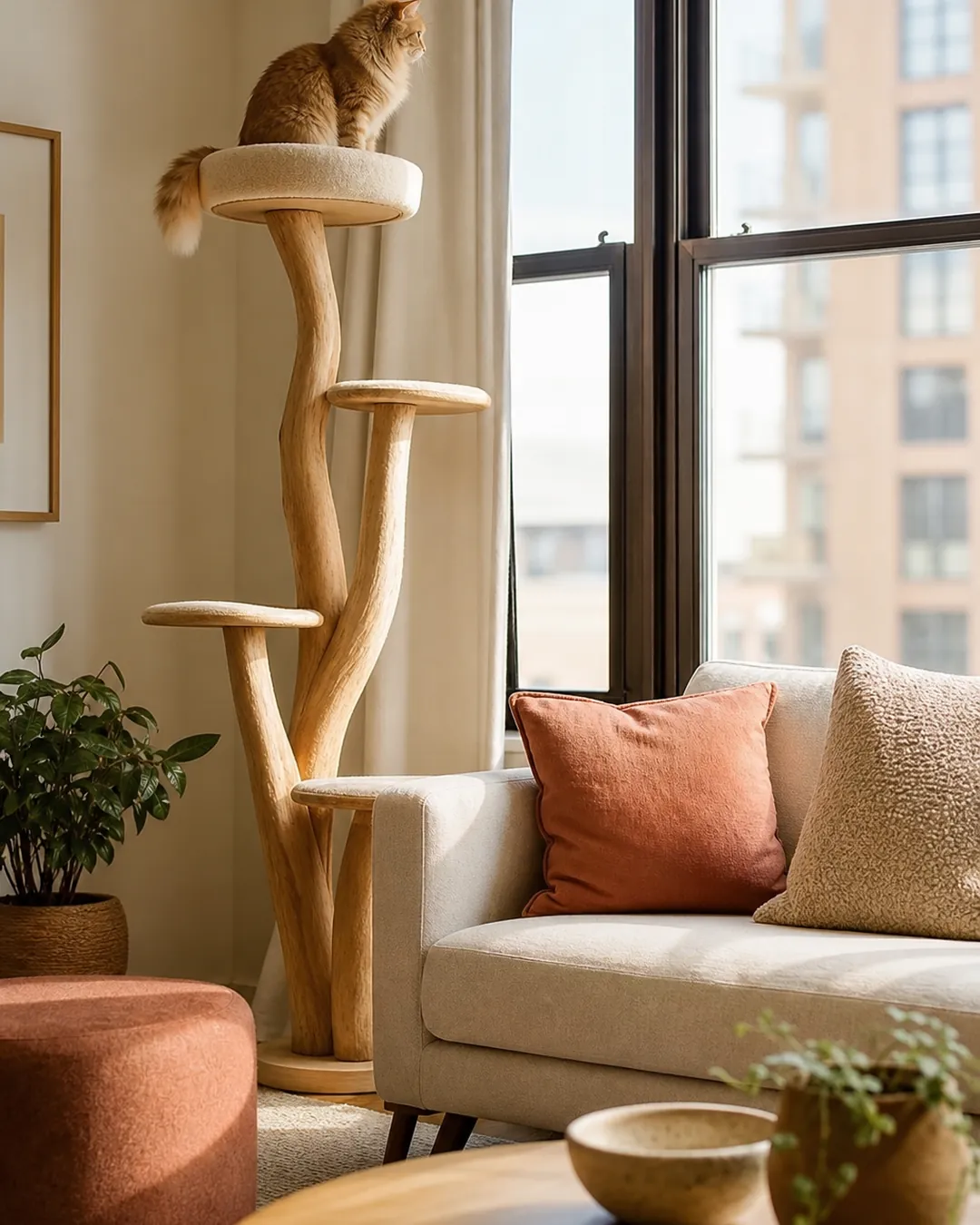
A top platform floating in the middle of a room is exposed on all sides, which is not what cats are looking for when they climb. Position the tree so the top perch has a wall behind it, a window in front of it, or ideally both. The same tower in two positions gets used very differently, and this is free to test before you commit the floor space. If the only workable spot is open on three sides, choose a model with an enclosed condo on top rather than a bare platform. Cover can also carry on past the tree itself, and these cat wall tunnel ideas for apartment climbing run an enclosed route from the top perch across the wall above a doorway or window.
10. Assemble it properly and then check it again in a month
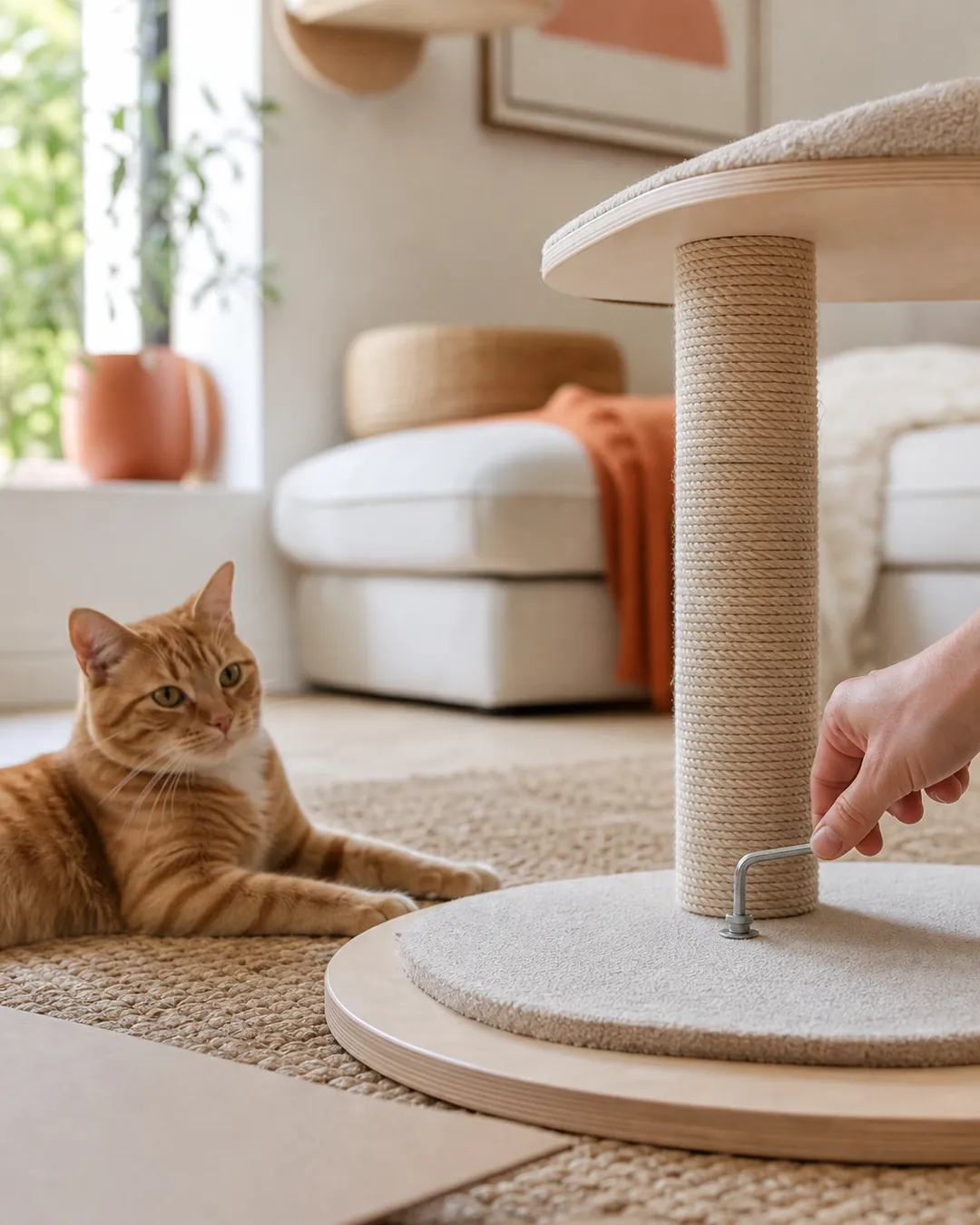
Flat-pack towers loosen. The bolts that felt tight on assembly day work free as the particleboard compresses, and the first sign is usually a cat that has quietly stopped using the top level. Re-tighten everything at a month, then twice a year, and a cheap tree lasts considerably longer than its price suggests. Keep the hex key taped to the underside of the base rather than in a drawer, because the maintenance that actually happens is the maintenance that takes thirty seconds.
Where to start
Measure the space first, in the specific spot you intend to use, with the door open. Write down the maximum base you can accept. That single number eliminates most of the catalog and stops you being sold on height.
Watch where the cat currently climbs while you are at it. Almost every apartment has one route the cat already uses, sofa back to windowsill, or counter to top of the fridge, and a tree placed to extend that route gets adopted far faster than one that asks for a new habit.
Then decide whether you are buying one thing or two. In a small apartment, a compact tree beside existing furniture plus a separate full-height post is usually better than one large tower, because it splits the footprint into two placements rather than one and it fixes the short-post compromise at the same time.
There is one more thing worth weighing, which is how long you expect to stay. Flat-pack towers rarely survive being taken apart and rebuilt; the particleboard holes strip. If you move every year, that argues for a smaller, better-built tree you can carry intact rather than a tall one you will be re-assembling into a wobble.
Buy the tree last if you are unsure. A post is cheap and immediately useful, and where your cat chooses to use it tells you where the tree should go. That is a better source of information than any listing photograph, and it costs about the same as guessing wrong once.