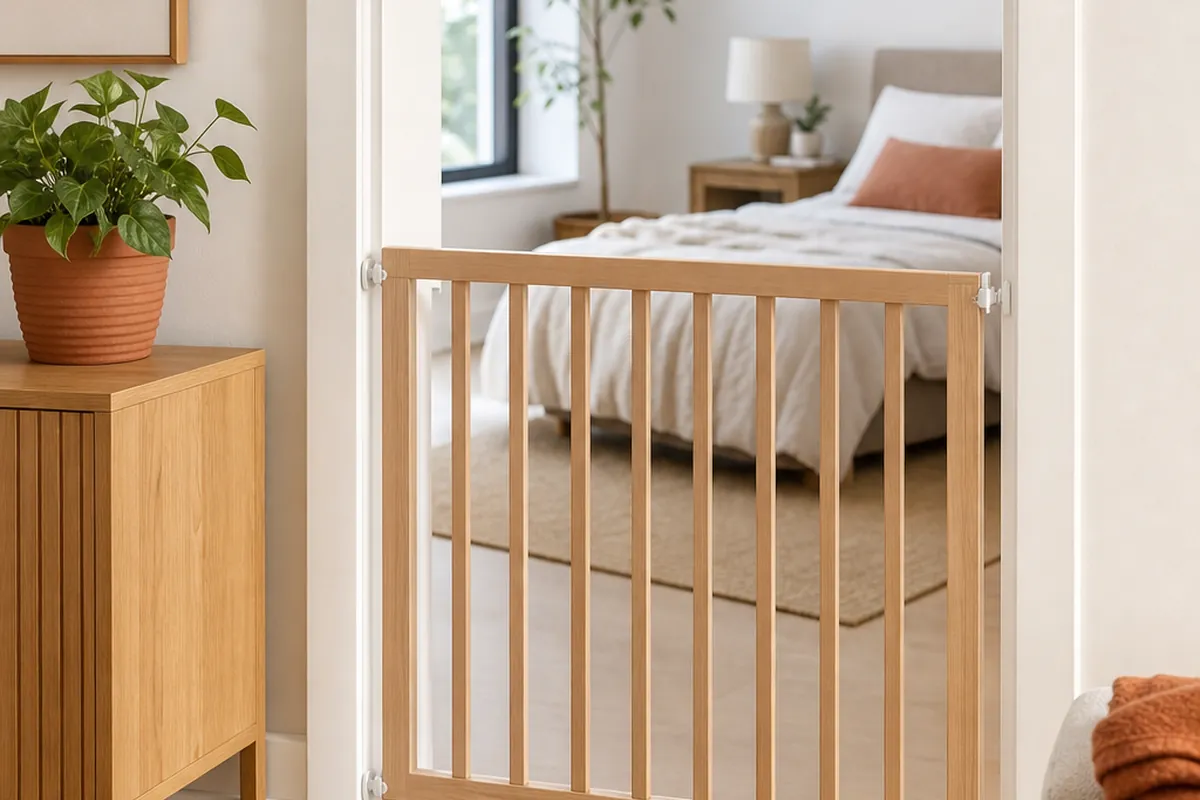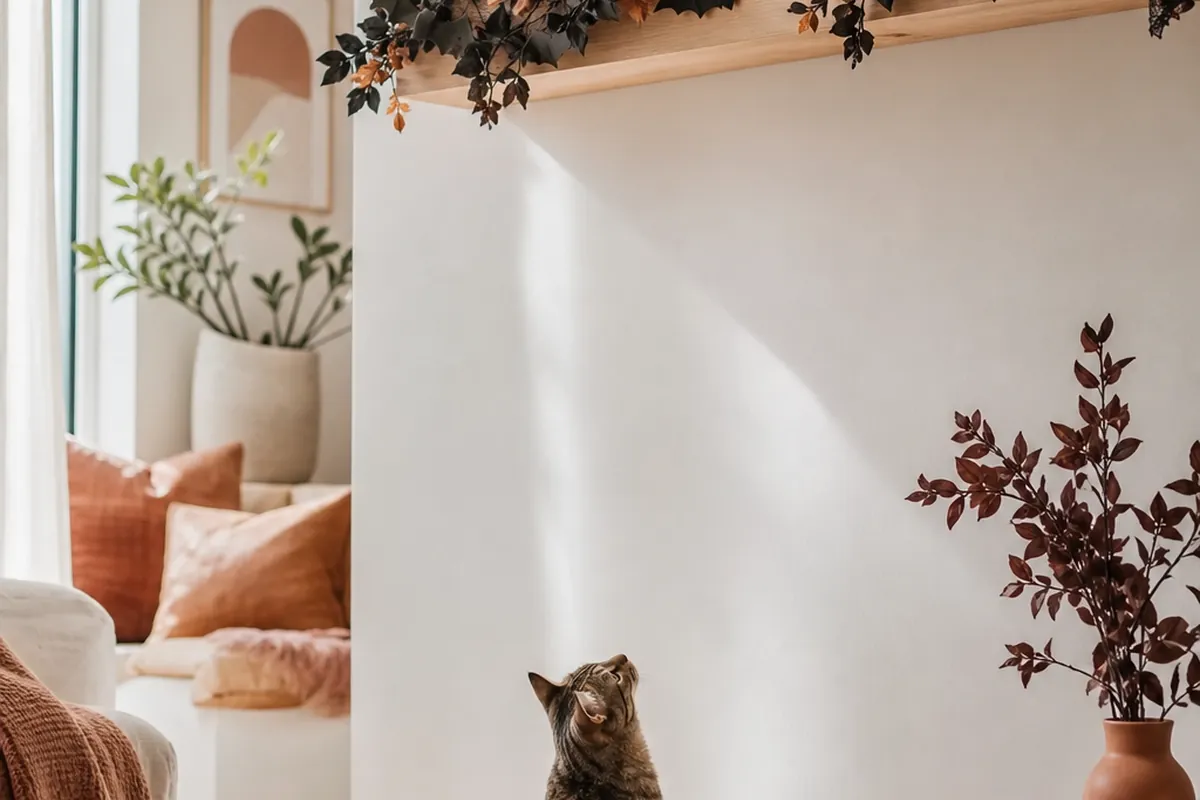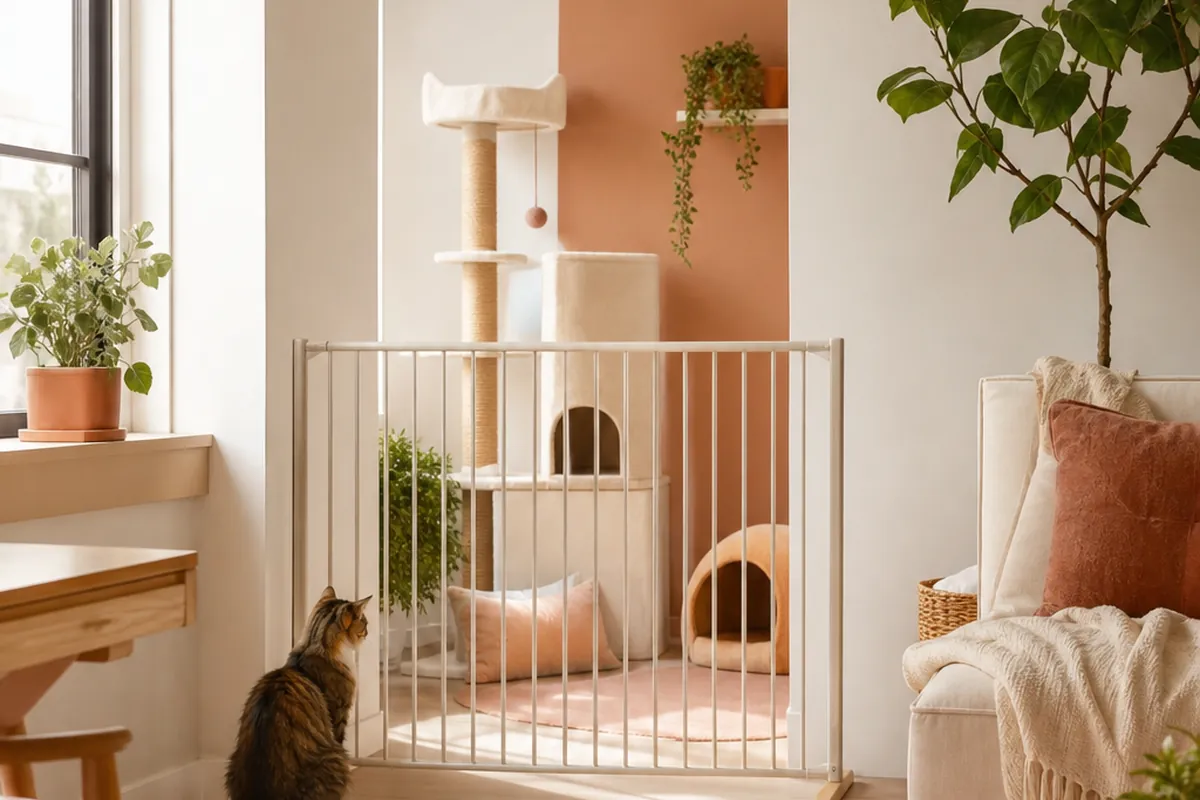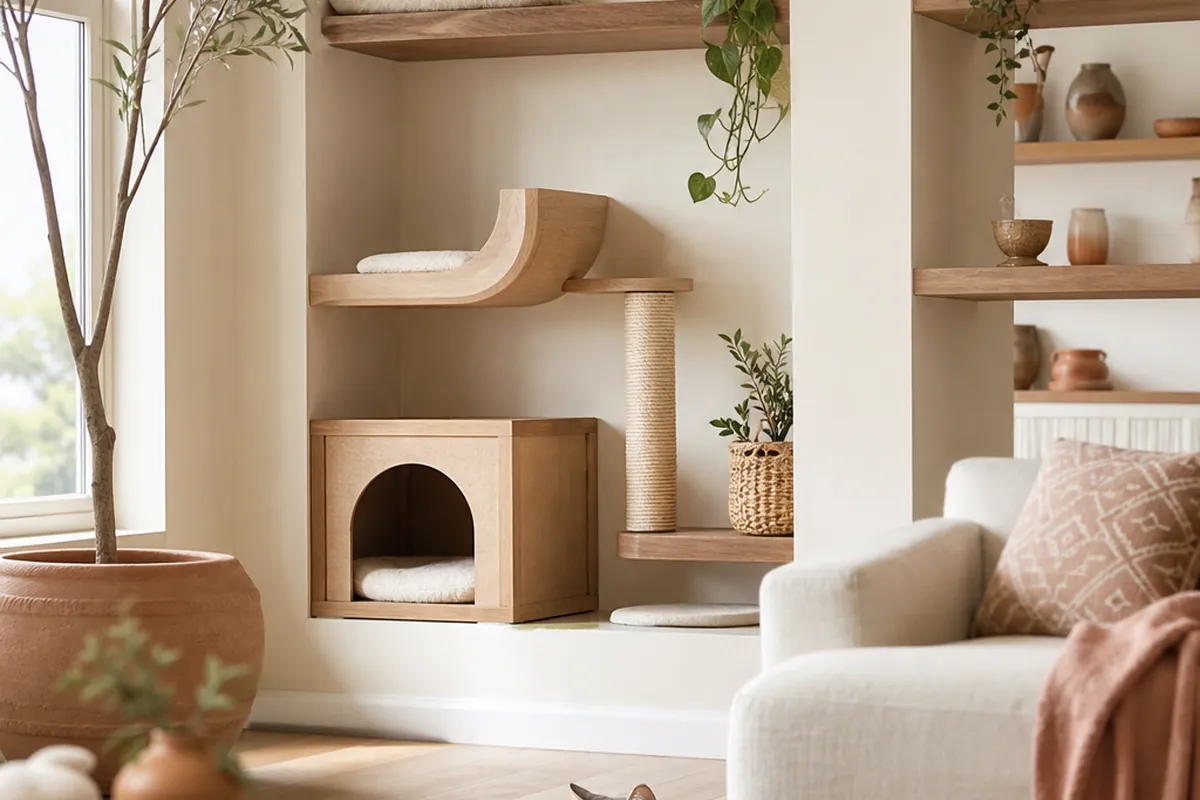
There is a specific look that gives a cat room away, and it is not the cat. It is bright plastic, carpet in colors that exist nowhere else in the home, and at least one object with a paw print on it. None of that is required to keep a cat happy. Every one of those choices was made by a manufacturer, not by an animal.
Fourteen ways to keep the room a room.
1. Decide the palette before the function
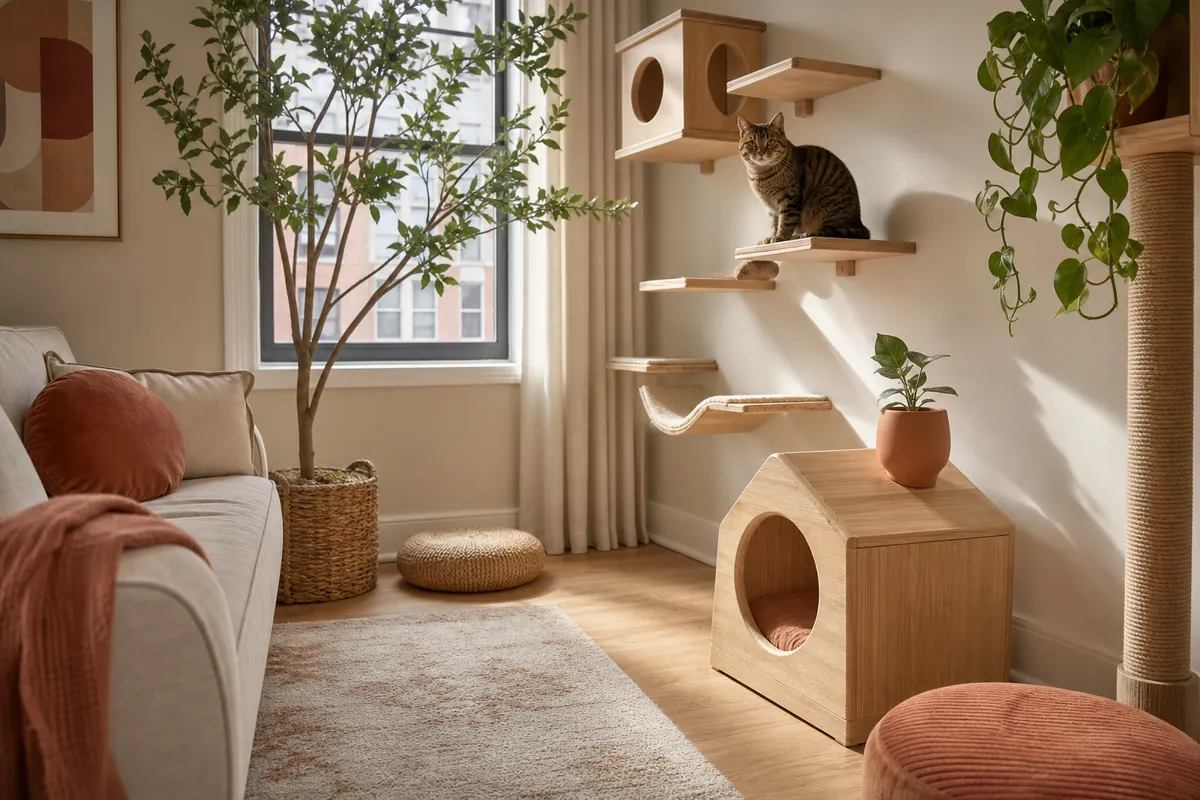
Pick the room’s two or three colors first and refuse anything outside them, however good the reviews are. This single rule removes most of the pet-store look, because cat gear is overwhelmingly sold in colors chosen to stand out on a shelf rather than to sit in a home. The discipline is harder than it sounds, since the piece that fits your palette is frequently not the cheapest one on the page. Buying the wrong color twice costs more than buying the right one once.
2. Treat warm neutrals as the default
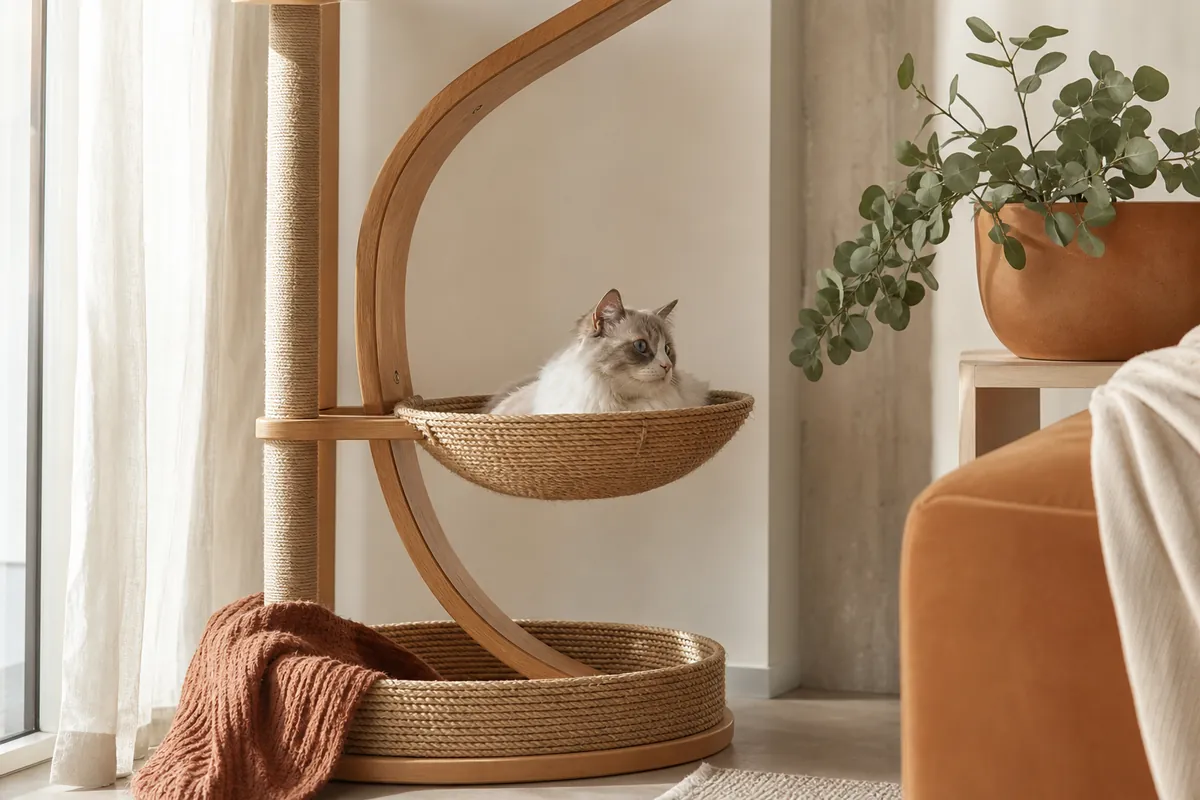
Oatmeal, greige, soft terracotta and natural wood all read as furniture. They also hide the thing every cat owner is quietly managing, which is fur, far better than either black or true white. A mid-tone neutral is the most forgiving surface in the room.
3. Let the cat be the accent
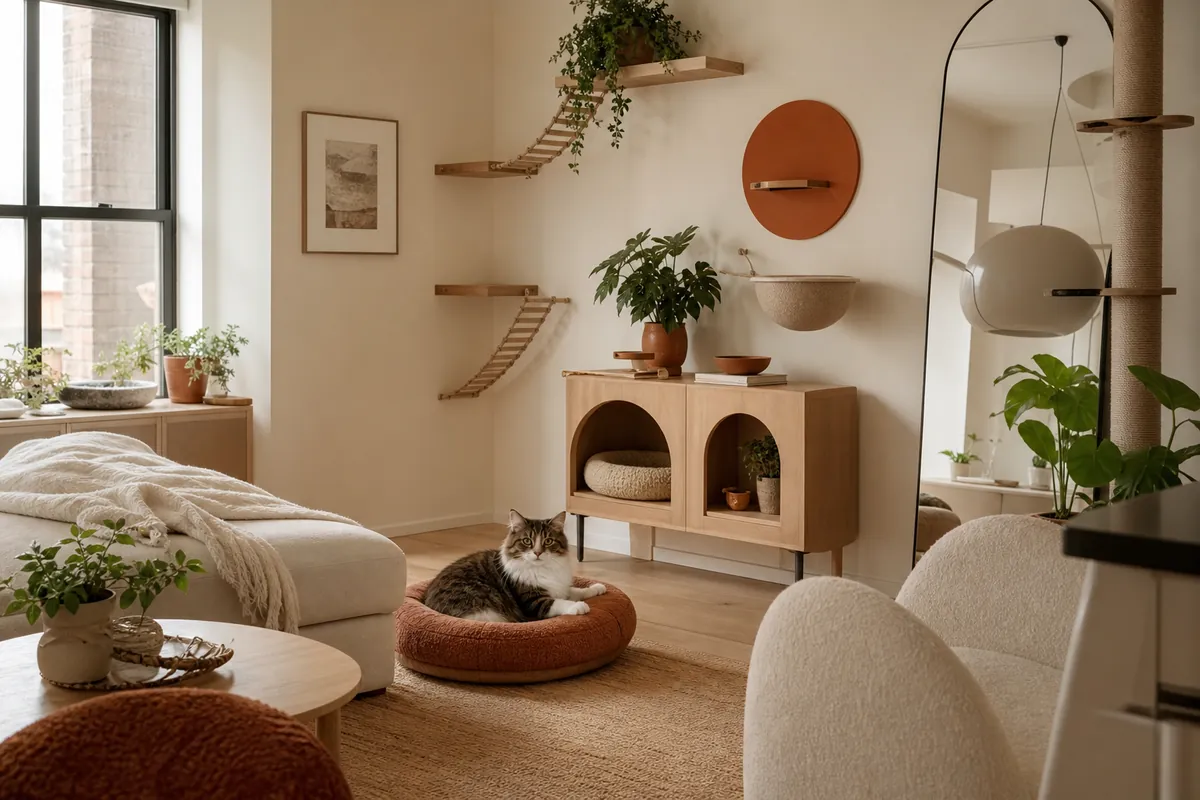
A cat is a strong visual element that moves. Give it a calm background and it becomes the focal point of the room. Fill the space with pattern and the cat disappears into it, which is a strange outcome for a room built around an animal.
4. Choose woven over molded
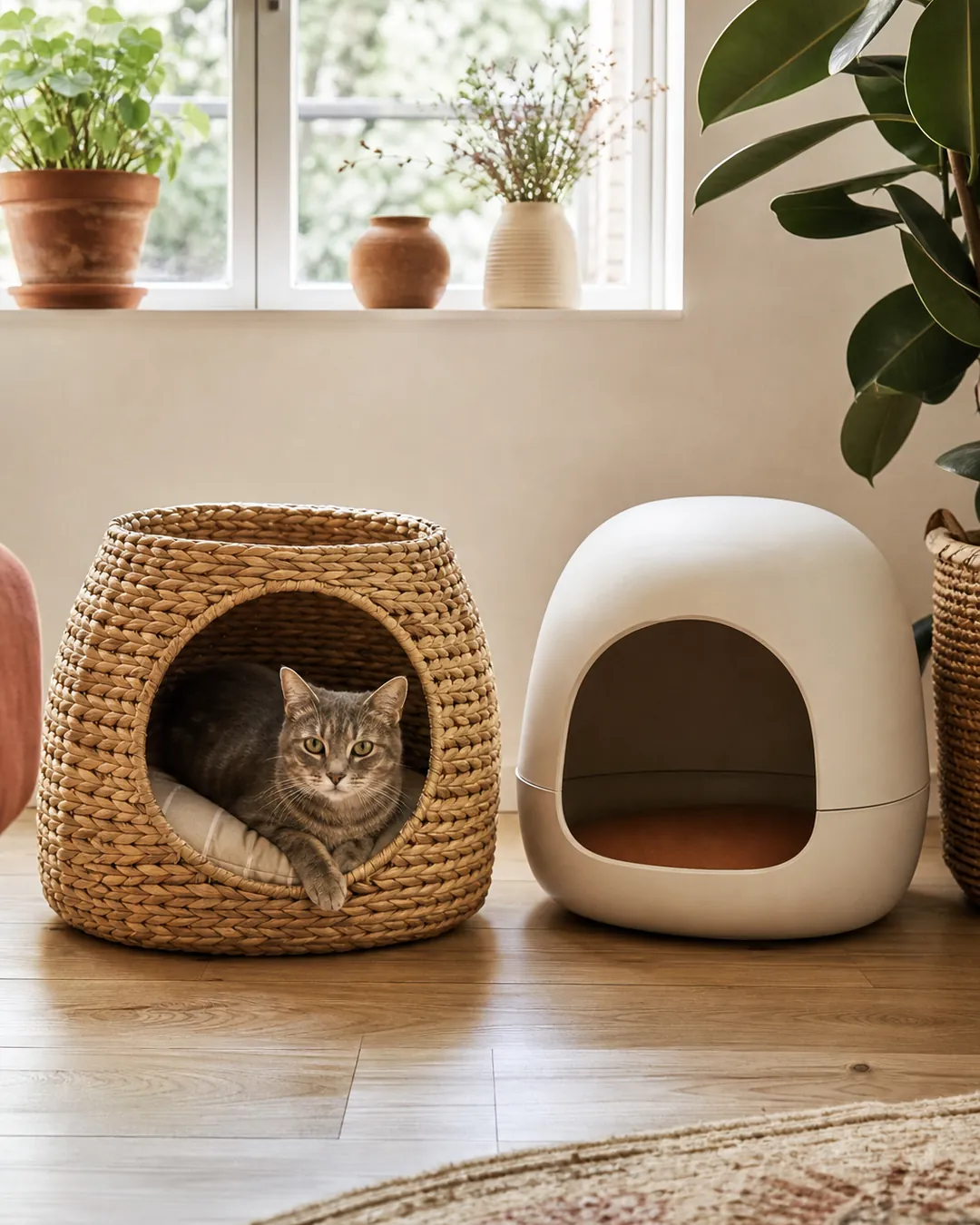
Rattan, seagrass and paper rope sit comfortably beside furniture in a way that molded plastic never manages. A woven rattan cat cave reads as a basket that happens to have a cat in it. Look for a rolled or reinforced rim, since that edge takes the wear as a cat steps in and out.
5. Buy furniture that declares another purpose
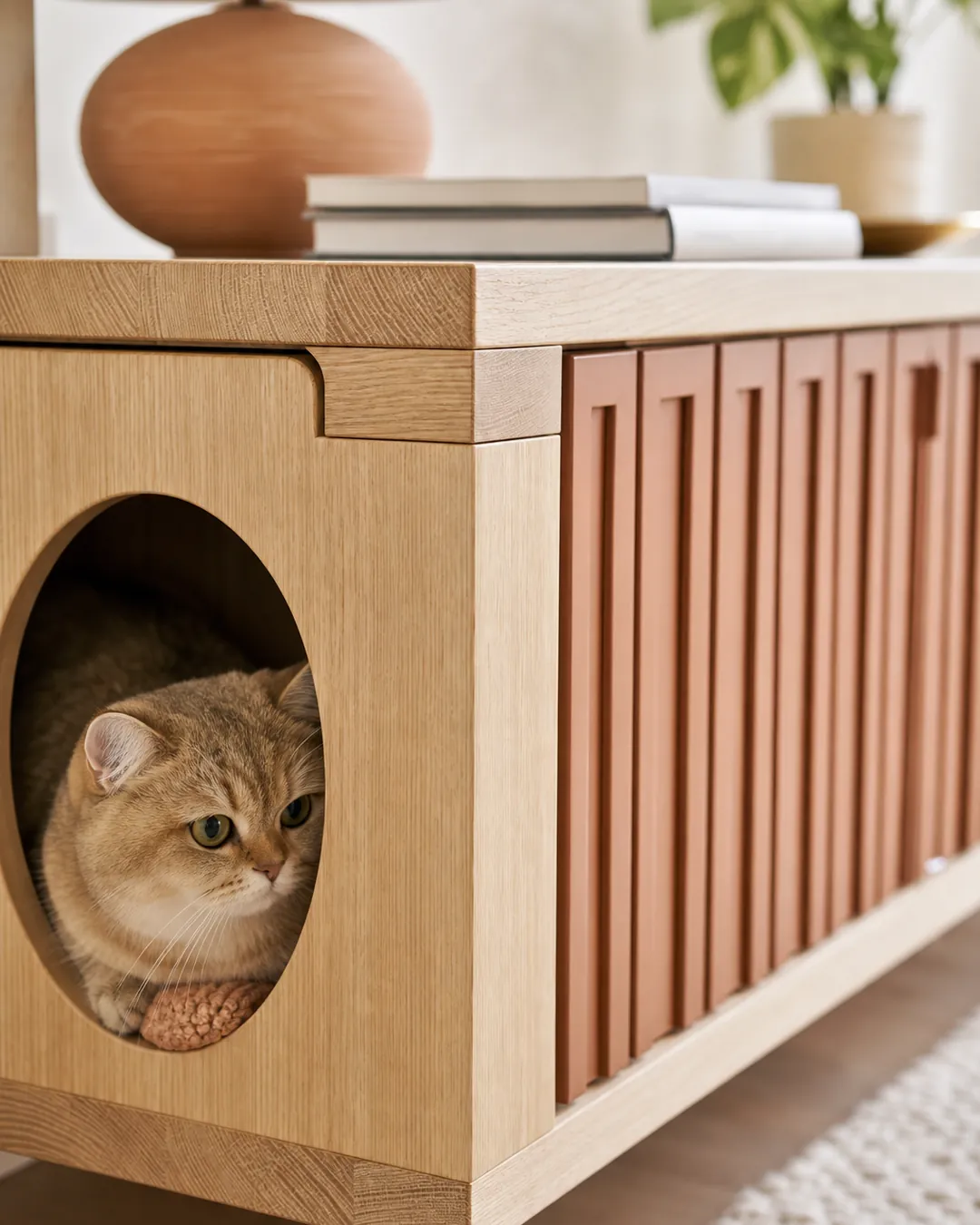
The most effective disguise is not a disguise. A decorative cat house that is built as a side table works because it genuinely is a side table, with a usable top surface at the right height beside a sofa. Nobody reads it as pet equipment, because it is not only pet equipment.
6. Match the wood tone you already own
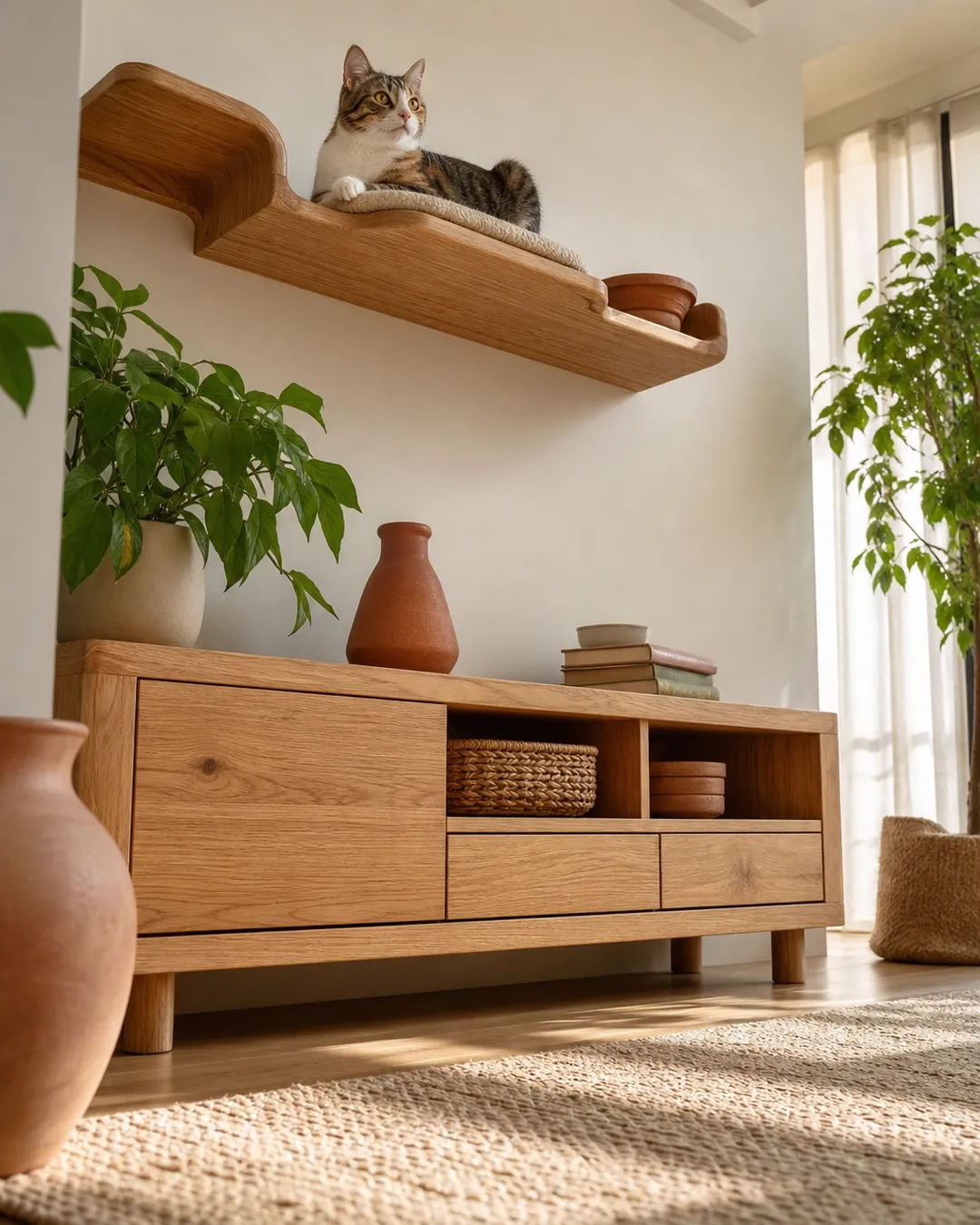
Cat furniture in a wood tone close to your existing pieces disappears; a mismatched tone announces itself. If your floor and shelves are warm, avoid the cool gray-washed finishes that dominate flat-pack cat towers, and the other way round.
7. Keep textiles in the room’s palette
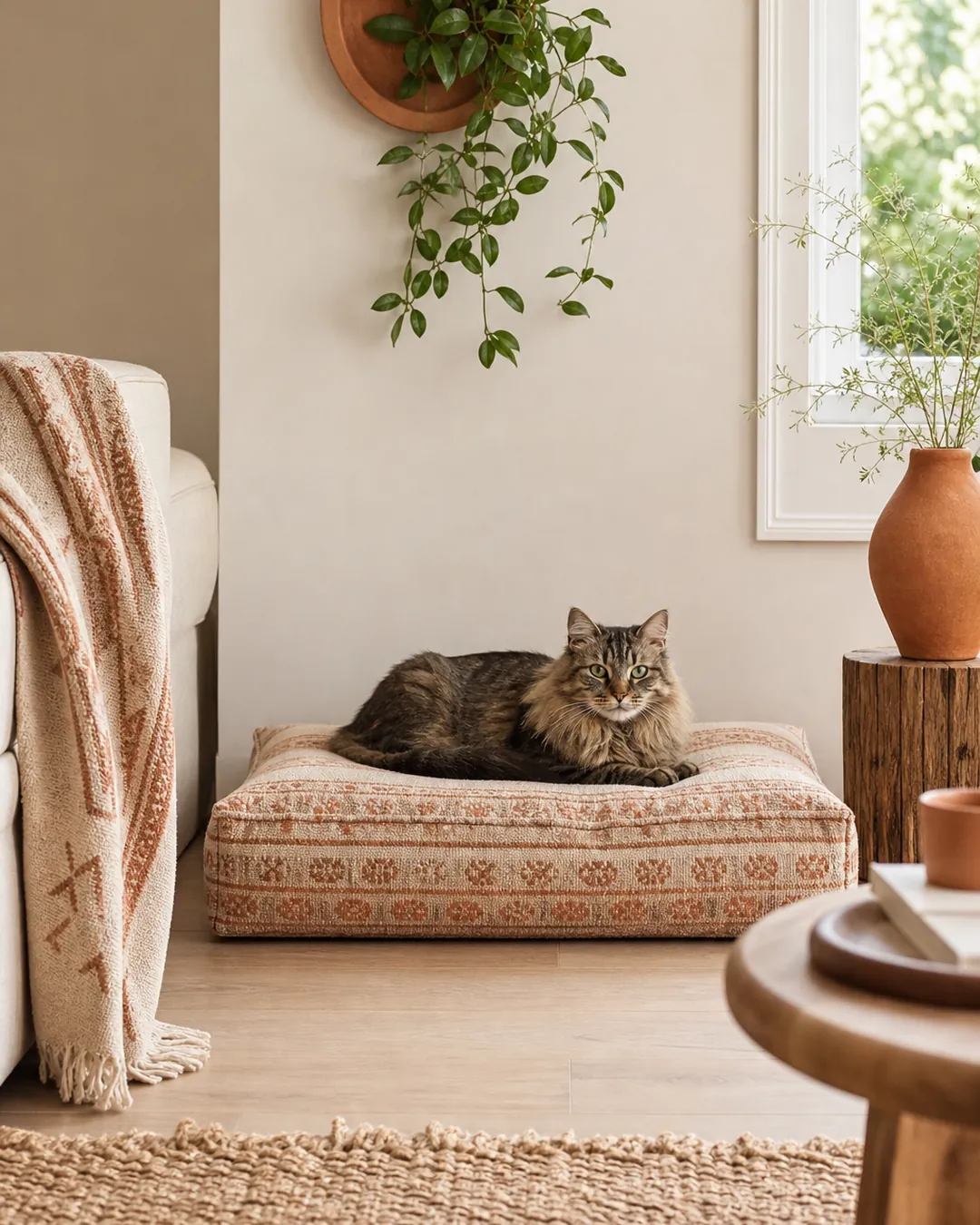
One throw in a color the room already uses does more for the look than any amount of tidying. A sherpa blanket in beige at roughly two feet by three feet covers the spot a cat has claimed on a chair without turning that chair into pet furniture. Two of these are plenty for a small room.
8. Use sisal, not carpet, on anything scratchable
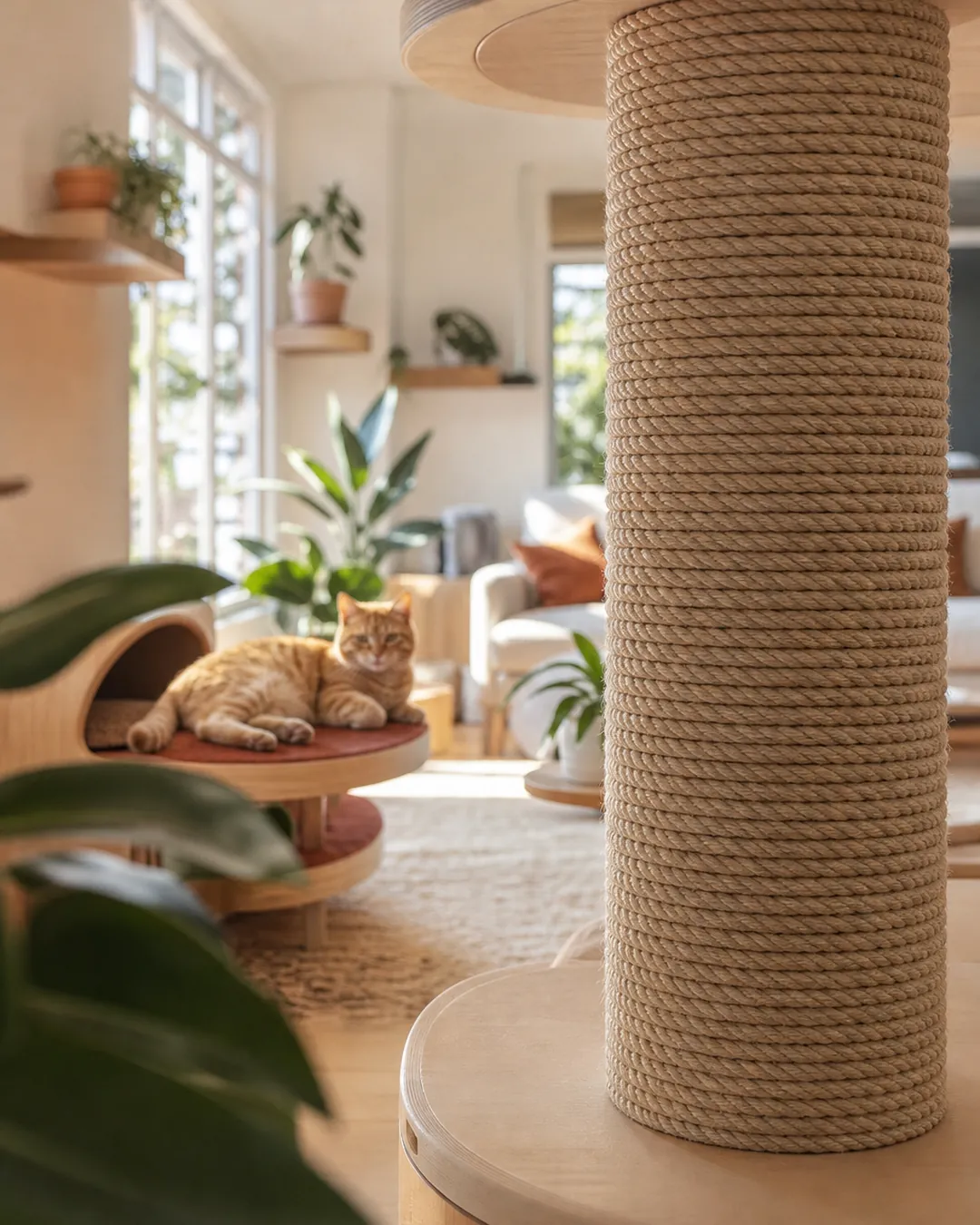
Sisal looks like a material; post carpet looks like offcut. There is a practical argument too, since carpeted posts teach a cat that carpet is scratchable, and your floor may well be carpet. The visual and the behavioral reason point the same way here, which is rare enough to be worth acting on. Sisal also ages more gracefully. A worn sisal column reads as patina, while a shredded carpet column reads as something that should have been thrown out months ago.
9. Contain everything loose
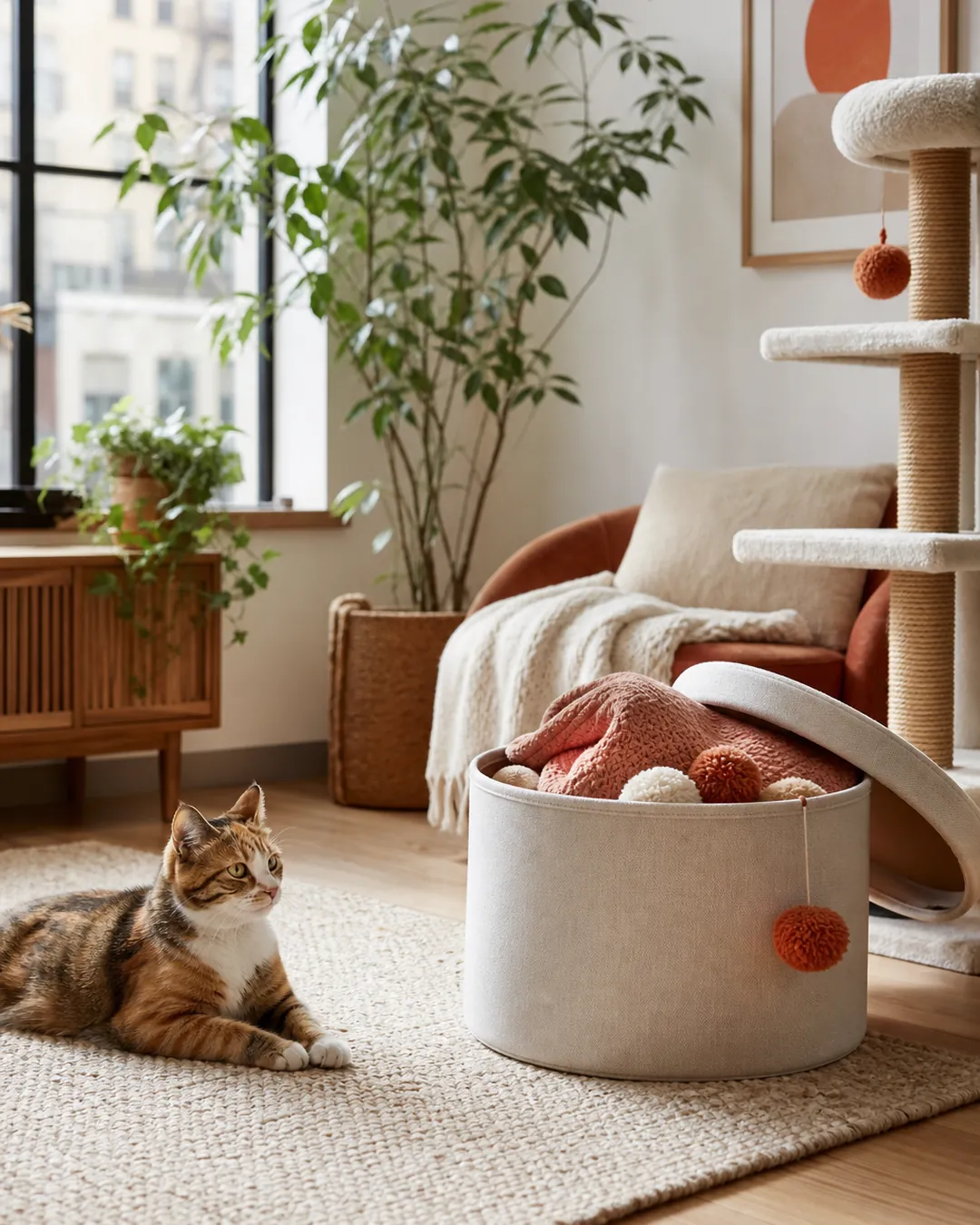
Toys, brushes, spare liners. Anything that lives in a heap should live in a basket instead, and the basket should match the room rather than the pet aisle. Containment does more visual work than any single piece of furniture you could buy, and it is the one change you can make this afternoon with something you already own. Baskets also solve the daily version of the problem, since putting four toys away takes seconds when there is an obvious place for them.
10. Cut the number of beds
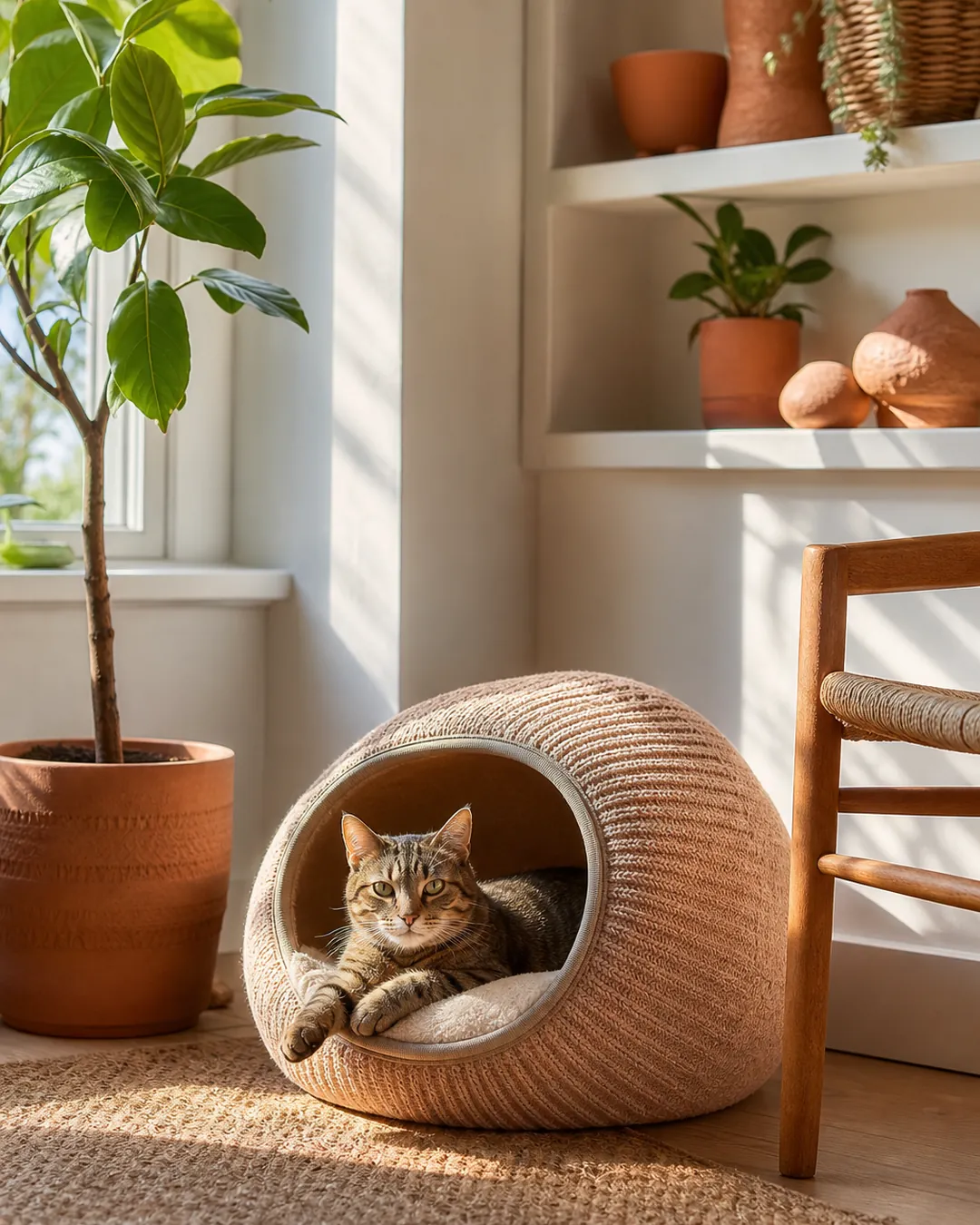
Most cat rooms hold more beds than the cat will ever use, because each one was bought to solve the same problem the last one failed to solve. Three carefully placed spots beat six scattered ones, and the room immediately looks composed rather than accumulated. Before buying another, move an existing bed to a spot with elevation, a wall behind it and a view of the door. That is usually what the new bed was going to be tested against anyway, and it costs nothing to find out. In a living room that spot is usually a corner, and these cat corner ideas that fit in any living room build one out around the bed without it reading as equipment.
11. Hide the utility, show the comfort
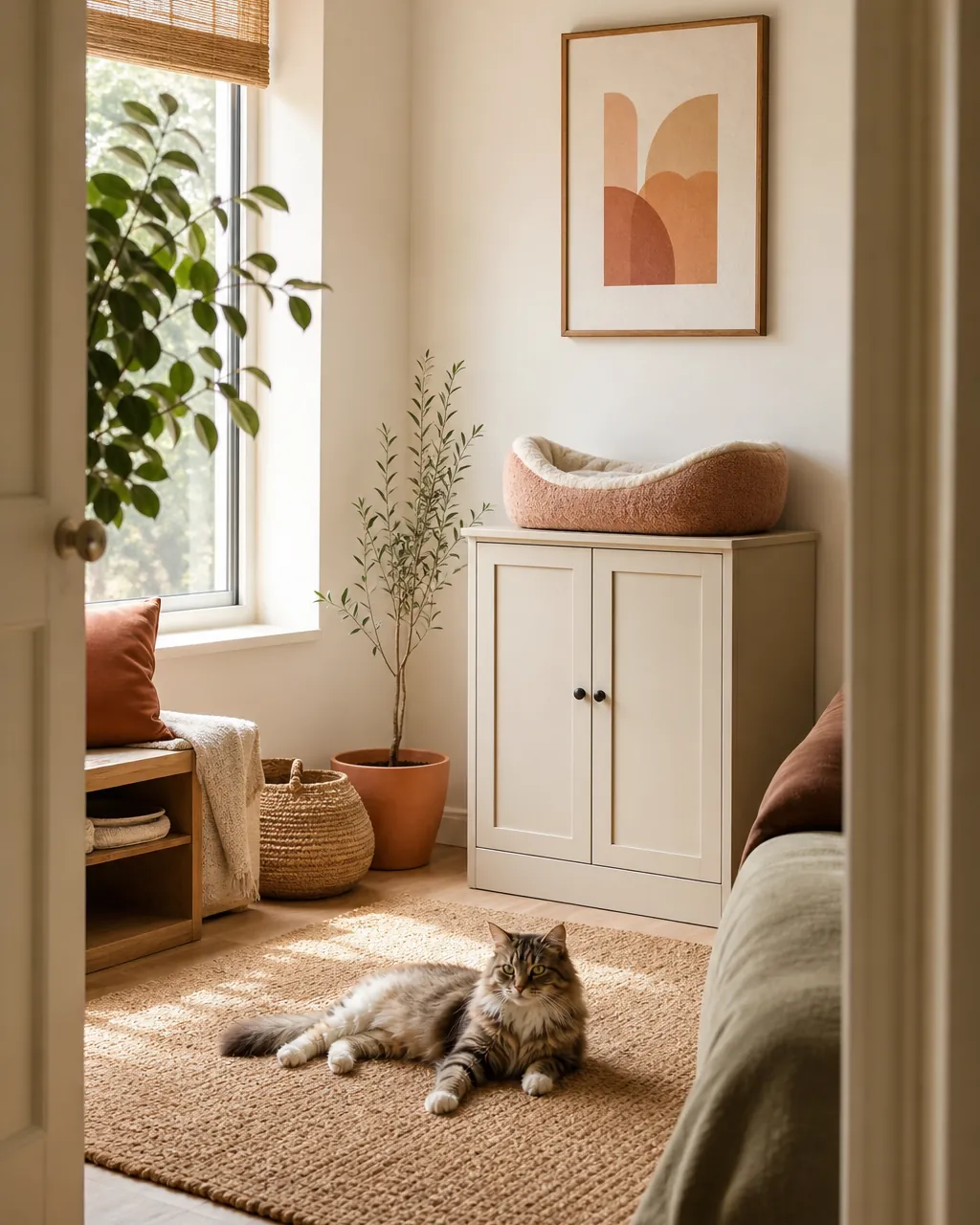
Litter, food bowls and cleaning supplies are utility and should be behind a door or a panel. Beds, perches and the cat itself are comfort and can be on display. Sorting every object into one of those two groups tells you exactly what needs a cabinet. A spare reach-in closet already comes with the door, and these cat closet ideas for turning dead space into a cat room put the litter box and a quiet den behind it.
12. Mind the floor around the box
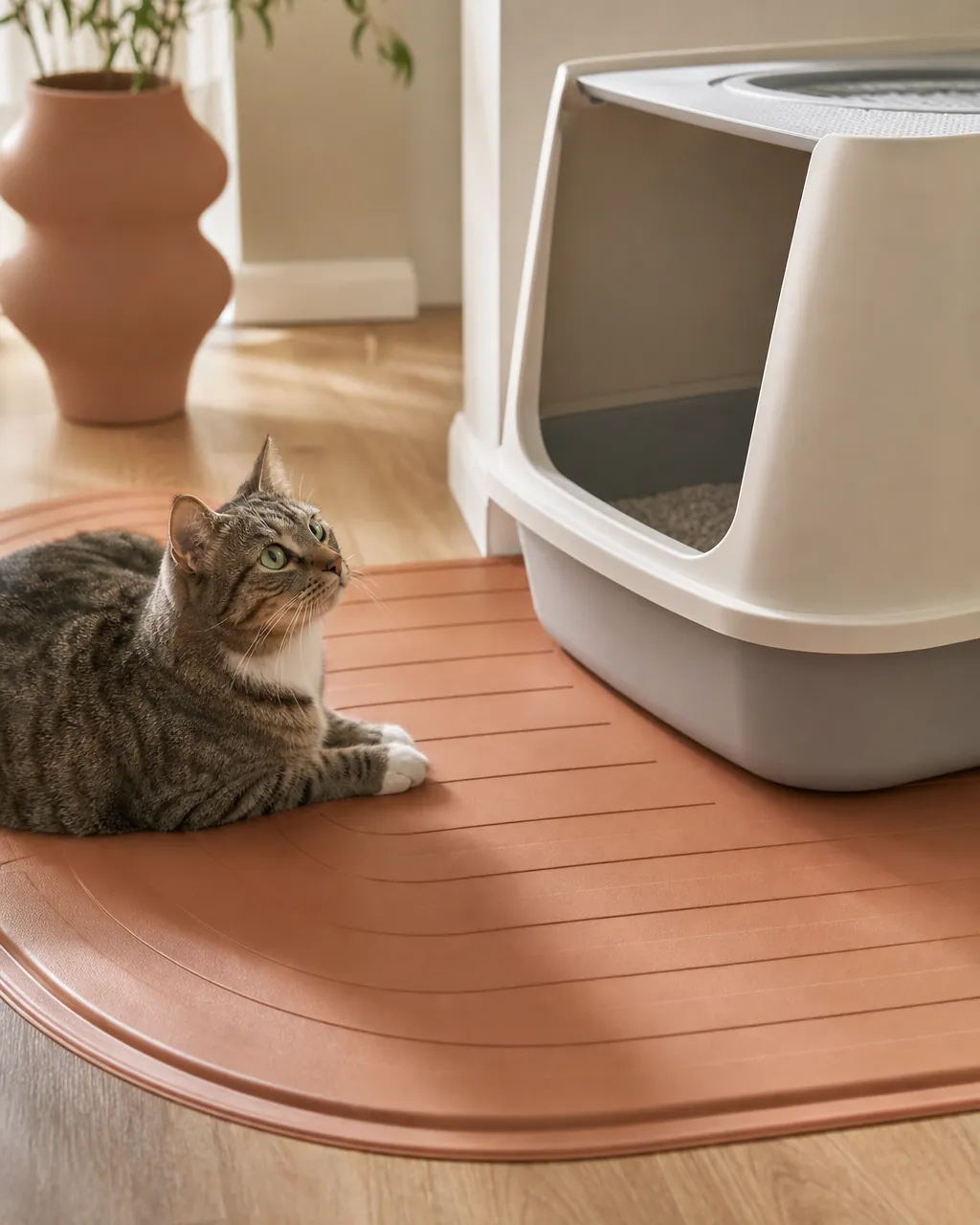
A tracking mat in a clashing color undoes an otherwise careful room, and it sits at exactly the spot people look. Choose one in the room’s neutral, or run a low-pile runner that reads as a rug and does the same job with none of the visual cost.
13. Give vertical pieces a reason to be there
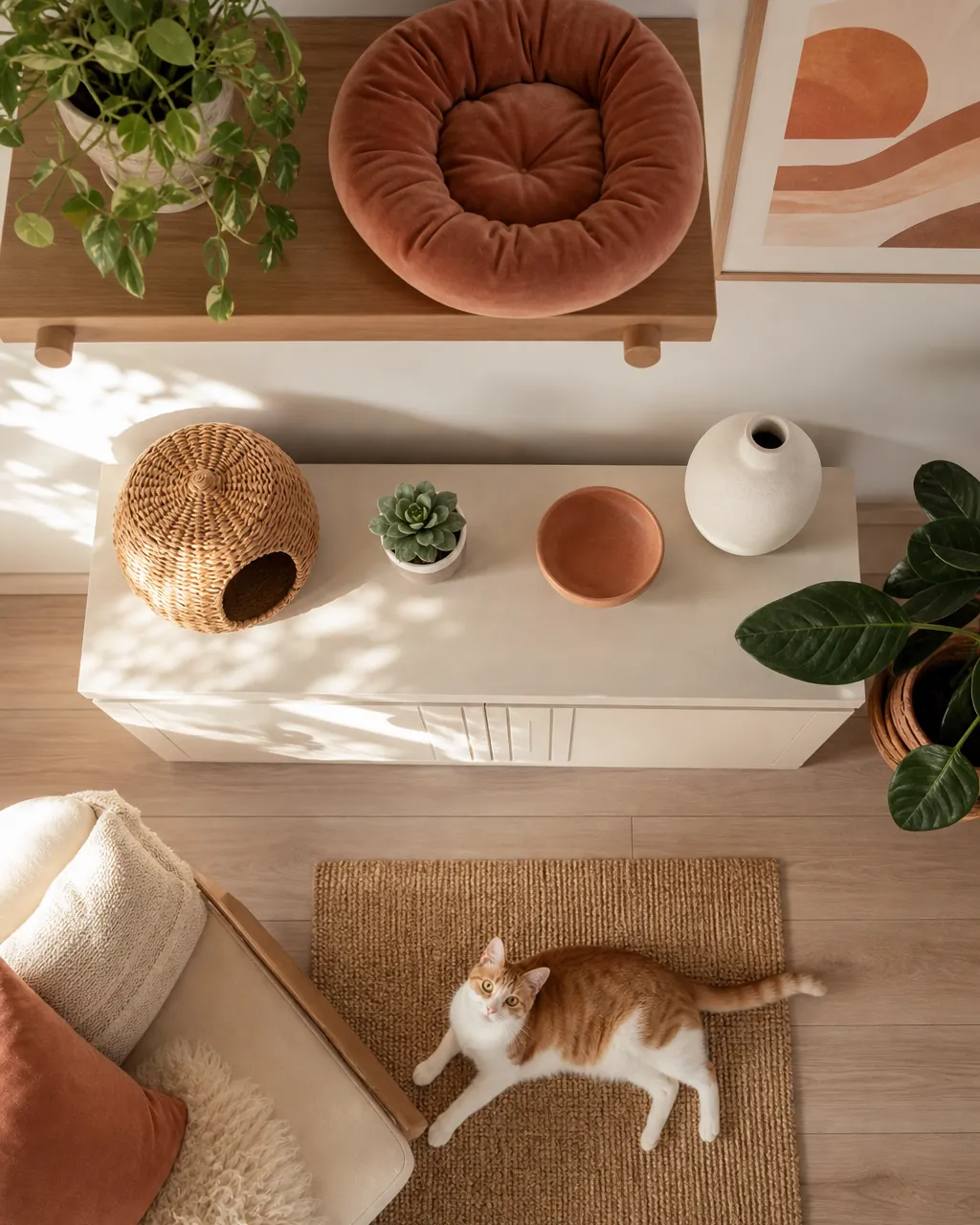
Wall shelves look purposeful when they line up with something, the top of a door frame, an existing picture rail, the height of a bookcase. Shelves floated at arbitrary heights look like equipment bolted to a wall, even when the spacing is right for the cat. There is usually a way to satisfy both. Set the lowest shelf to an existing line in the room, then work upward at the spacing the cat needs, and the whole run will read as intentional rather than improvised.
14. Skip anything with a paw print on it
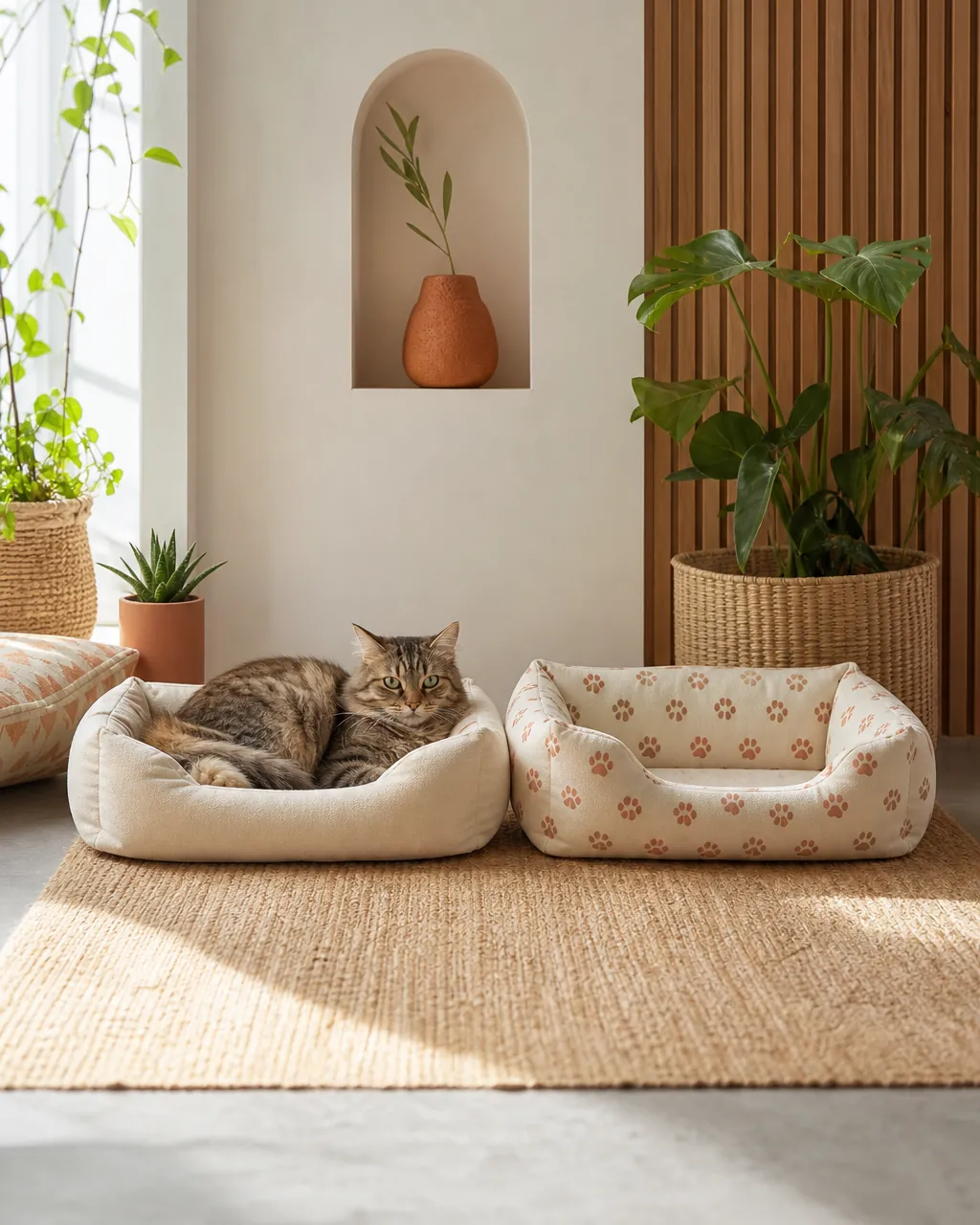
There is no version of a printed paw motif that reads as decor. The cat does not benefit, and the object is instantly identifiable as pet merchandise from across the room. This is the easiest rule on the list to follow and the one most often broken.
Where to start
Take everything cat-related out of the room and put it in the hallway. Then bring back only what the cat actually uses, which is usually about half of it. That step alone changes the look more than any purchase.
Next, sort what returned into utility and comfort. Utility goes behind a panel, and if you own nothing with a panel, that is your first purchase and it should be a piece of real furniture rather than a pet product. Comfort can stay visible, provided it lands inside your palette.
Buy replacements slowly, one at a time, in materials that already exist in the room. Give each new piece a week before adding the next, partly to check the cat actually adopts it and partly because a room absorbs one change more gracefully than four.
The test to apply before every purchase is simple. If a visitor would identify the object as pet equipment from the doorway, it belongs behind a panel rather than on display. That single question resolves most of the decisions on this list.
A cat room that looks good is almost never the result of a single order. It is the result of refusing about ten things that were nearly right.
In a studio with no door to hide anything behind, that panel instinct has to become a real boundary, and dividing a studio apartment into a cat zone is where it actually gets built.