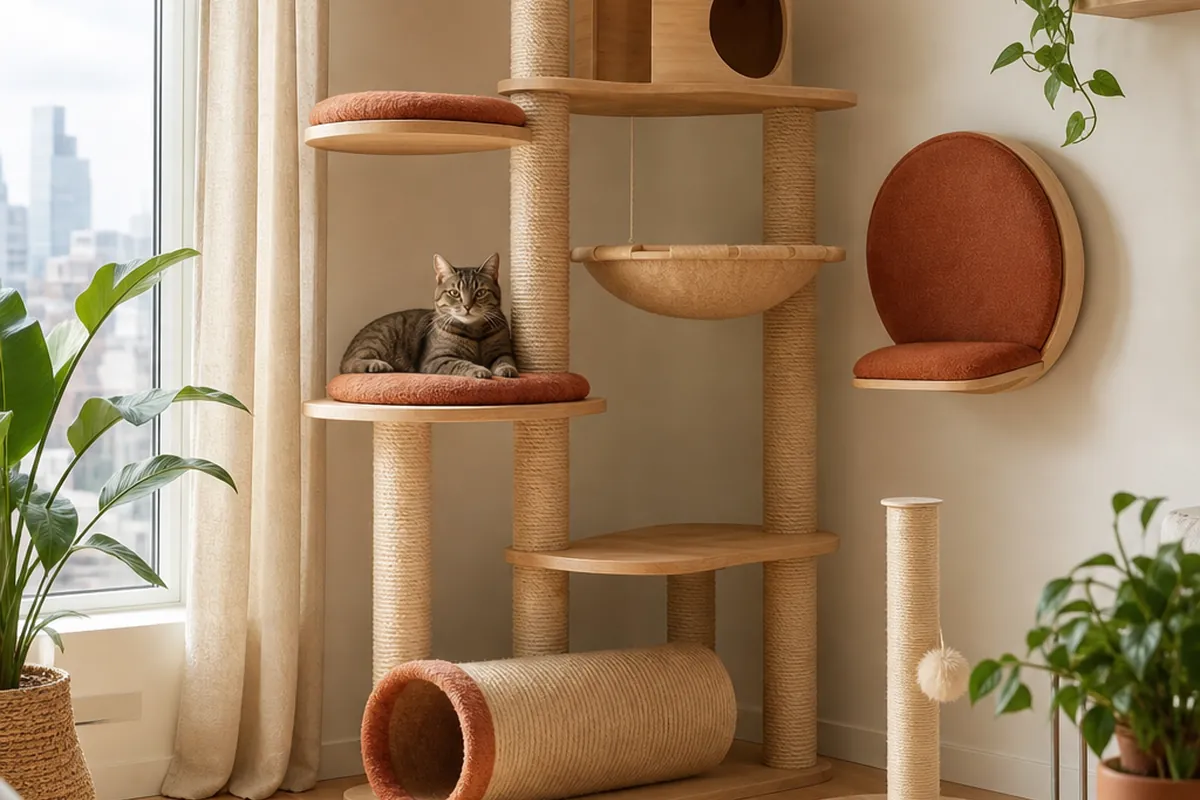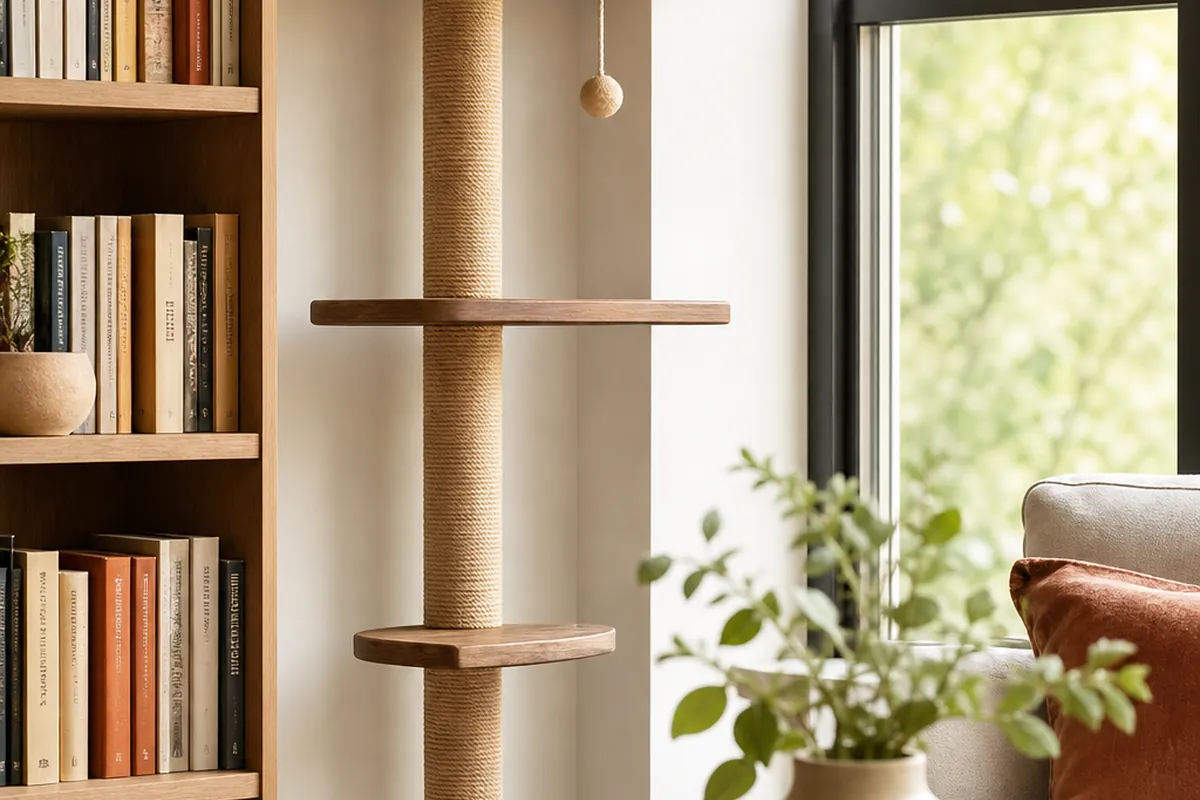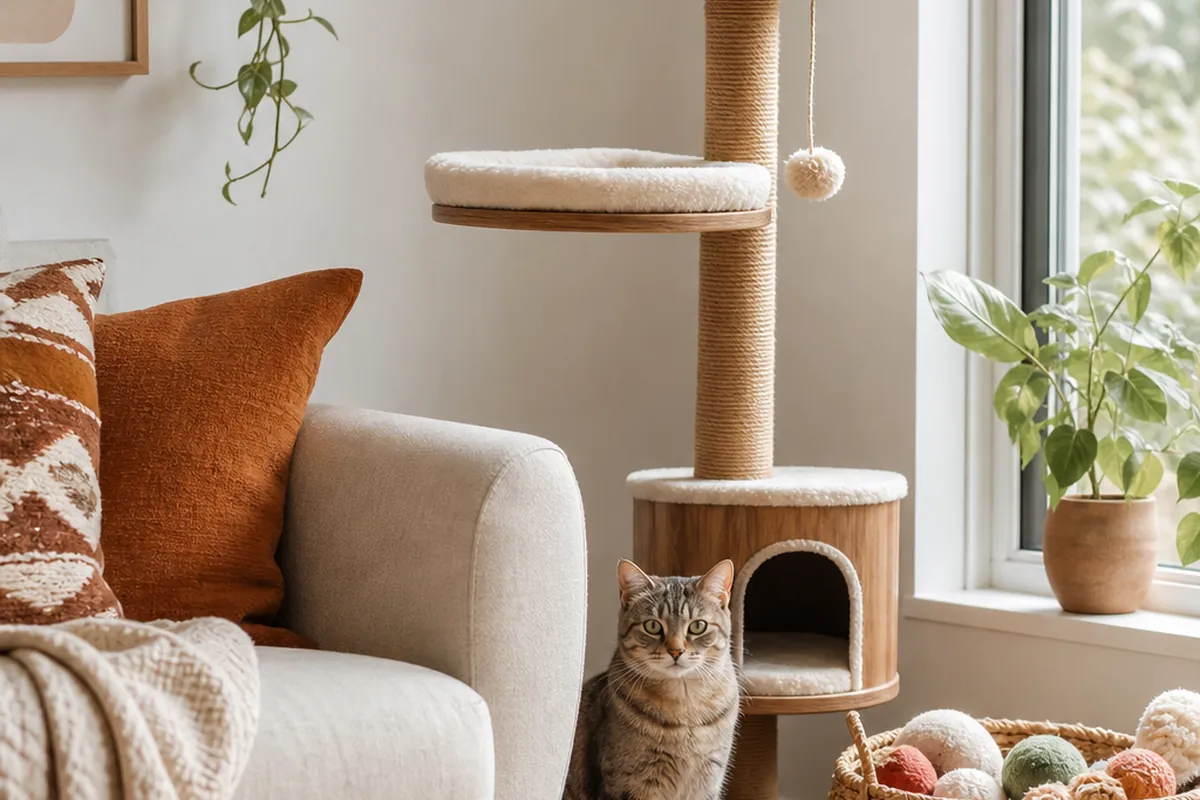
Corners are the part of a living room nobody has a plan for. They collect a floor lamp, a stack of things that never got put away, and eventually a cat, who worked out long before you did that a corner offers two solid walls and a clear view of everything else. Building a cat corner deliberately is mostly a matter of catching up with a decision your cat already made.
Twelve ideas, roughly in build order.
1. Pick the corner by traffic, not by looks
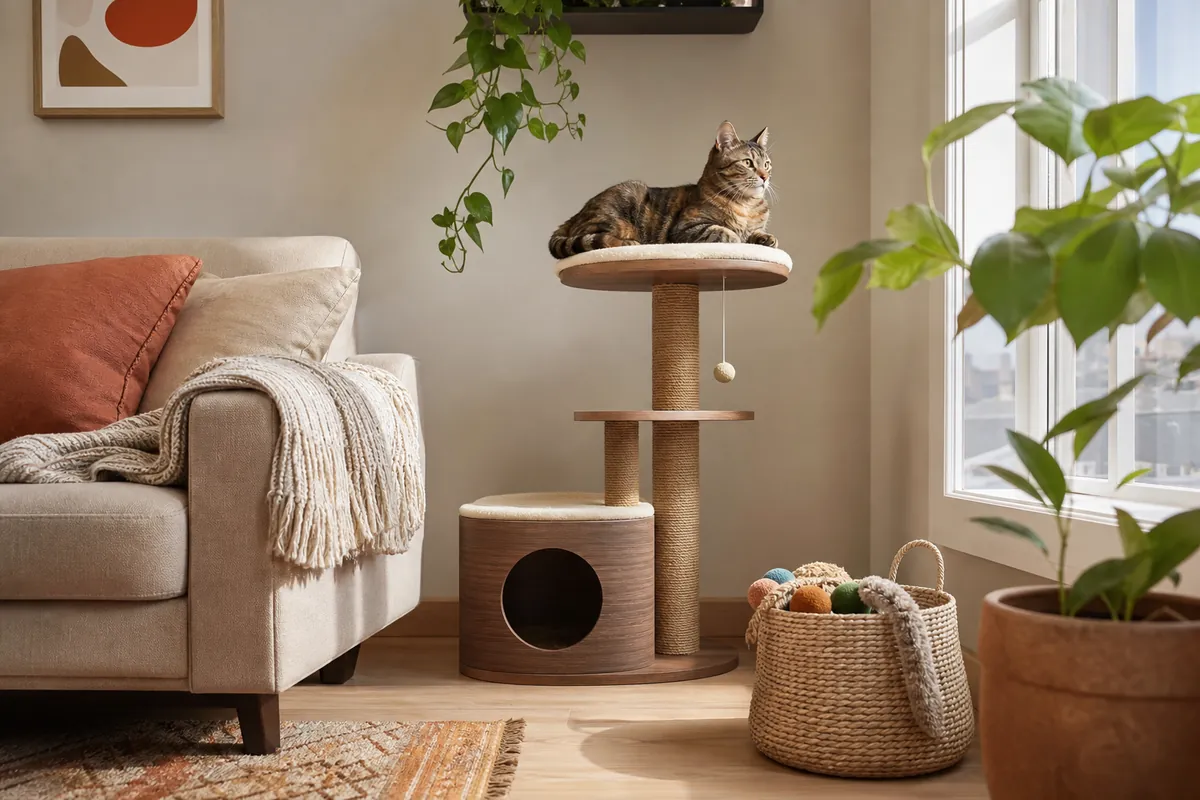
Watch which corner your cat already drifts to, and check what is happening around it. Corners next to a door, a bin or a walkway get abandoned. The good ones are slightly off the main route through the room, with sightlines to the door but no one passing within arm’s reach. Sound matters as much as movement here. A corner backing onto a utility closet or sharing a wall with a neighbor’s television will be quietly rejected, and you will never see the reason, only the empty bed. If the quiet corner your cat keeps choosing turns out to be in the bedroom instead, these small bedroom cat setup ideas start from the corner the bed already leaves empty.
2. Work out the footprint before you shop
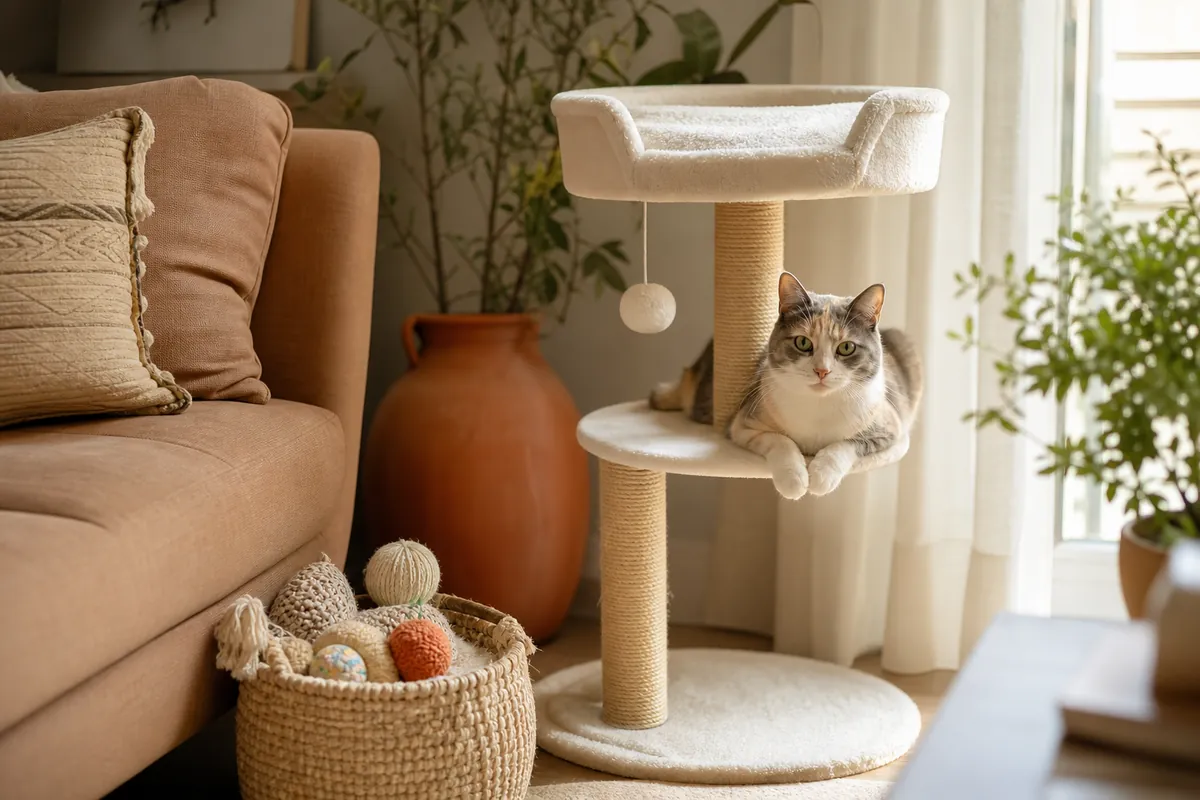
Measure the triangle you are willing to give up, both walls and the diagonal across the front. Most disappointing cat corners are the result of buying first, then discovering the tower blocks a radiator or stops a door opening fully. Ten minutes with a tape measure removes almost all of that risk. Mark the footprint on the floor with tape and leave it there for two days before ordering. Living around the outline tells you things a measurement will not, particularly whether the corner is on a route you take at night.
3. Use a compact tower rather than a tall one
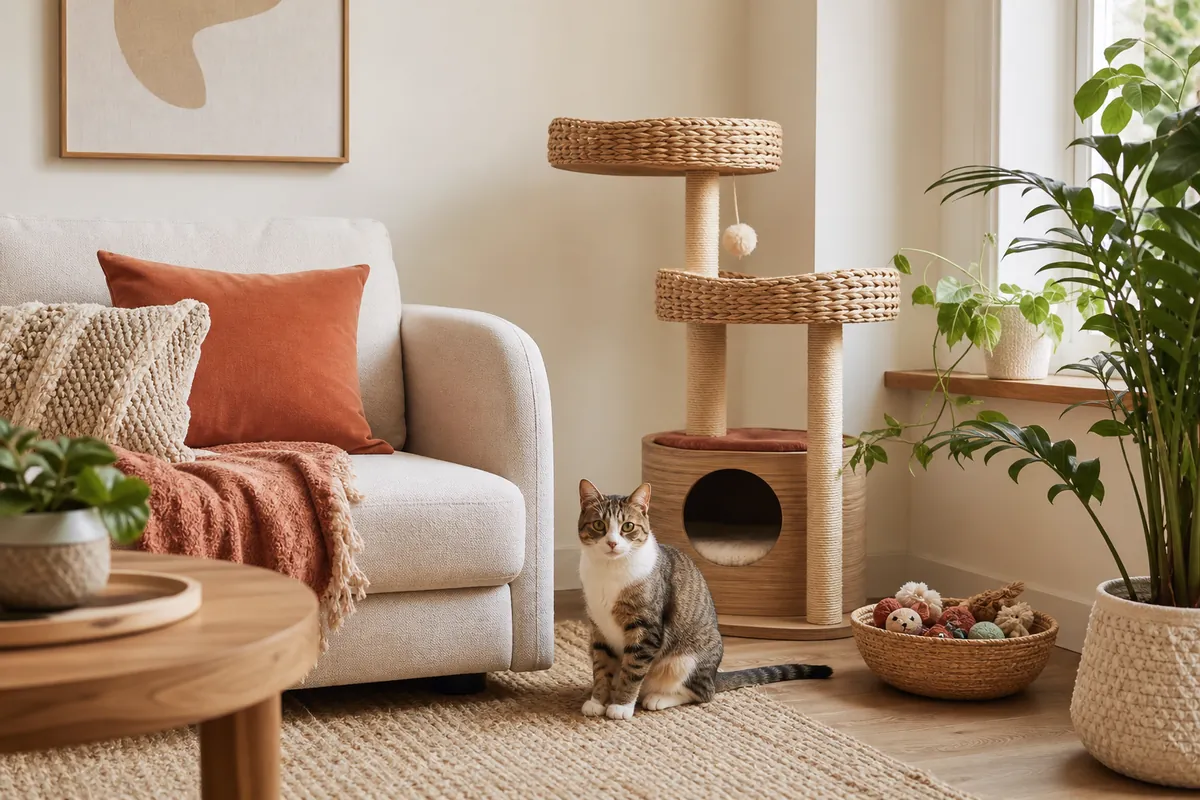
In a corner, a tall tower leans on two walls and looks like scaffolding. A smaller unit with a sisal post and a raised condo, along the lines of this compact cat tree, sits below the eyeline of standing adults, which keeps the room feeling open. You can always add height on the wall later.
4. Put the climbing on the walls, not the floor
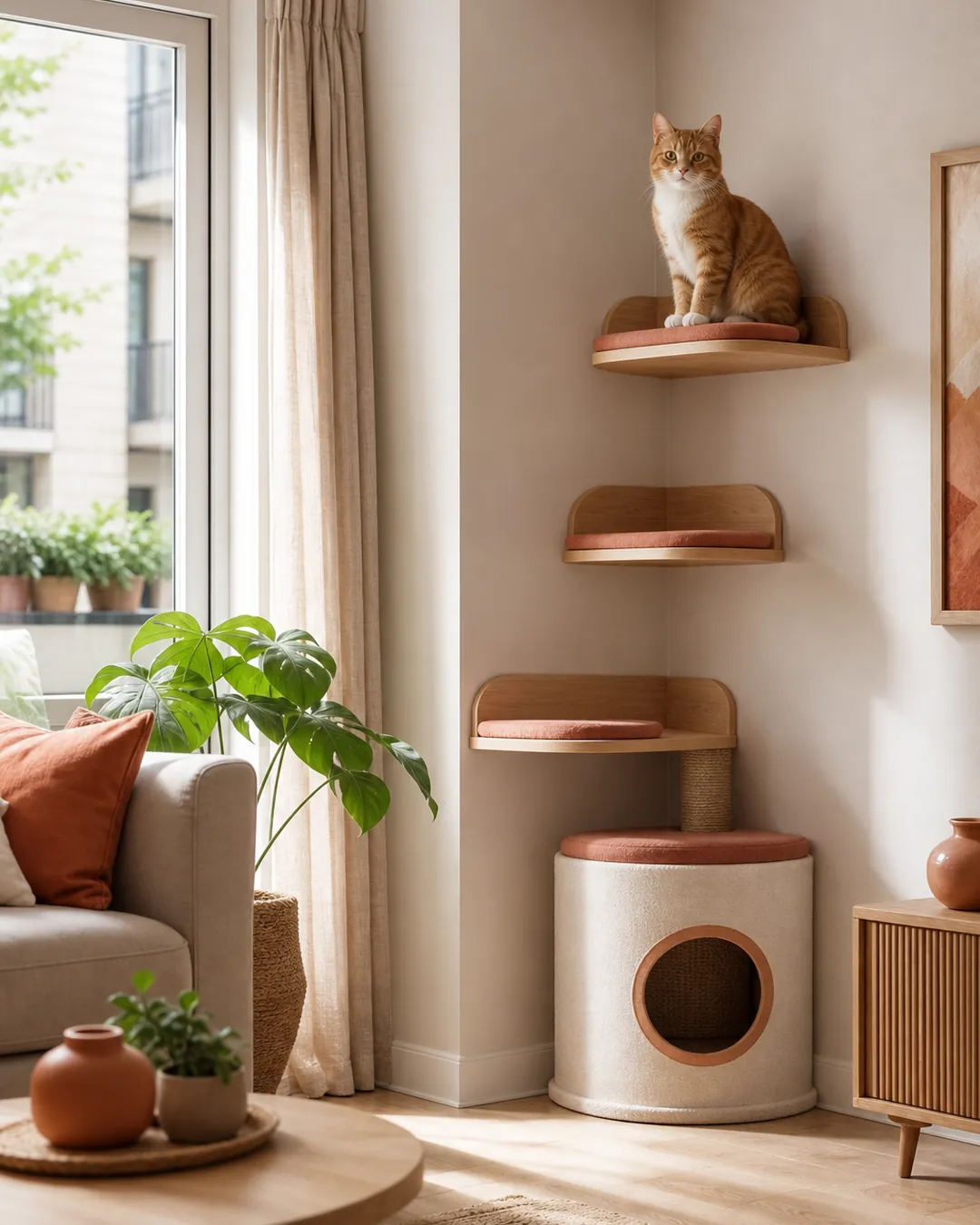
The corner’s advantage is that two walls meet there, so a cat can go up in a spiral rather than a straight line. A corner shelf set with wide steps turns the angle itself into the route. Wide treads matter more than deep ones, since a cat turning ninety degrees needs somewhere to put all four feet.
5. Anchor into the wall you actually have
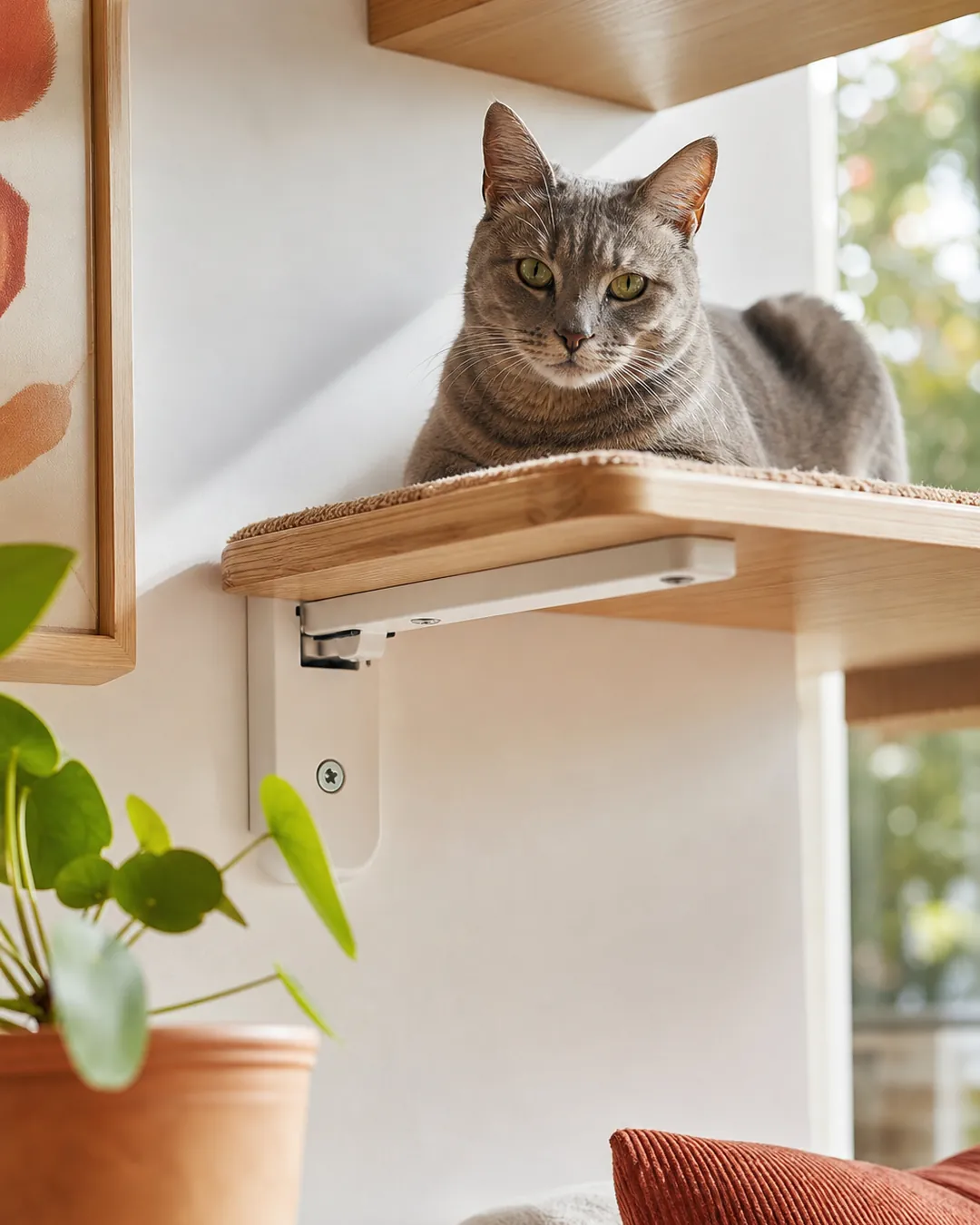
Corner units concentrate their load onto a handful of fixings, and drywall alone will not hold a landing cat over time. Find the stud if there is one, and use anchors rated for your wall type rather than the generic plugs in the box. This is the failure that shows up three months later, not on day one.
6. Give the spiral a top and a bottom
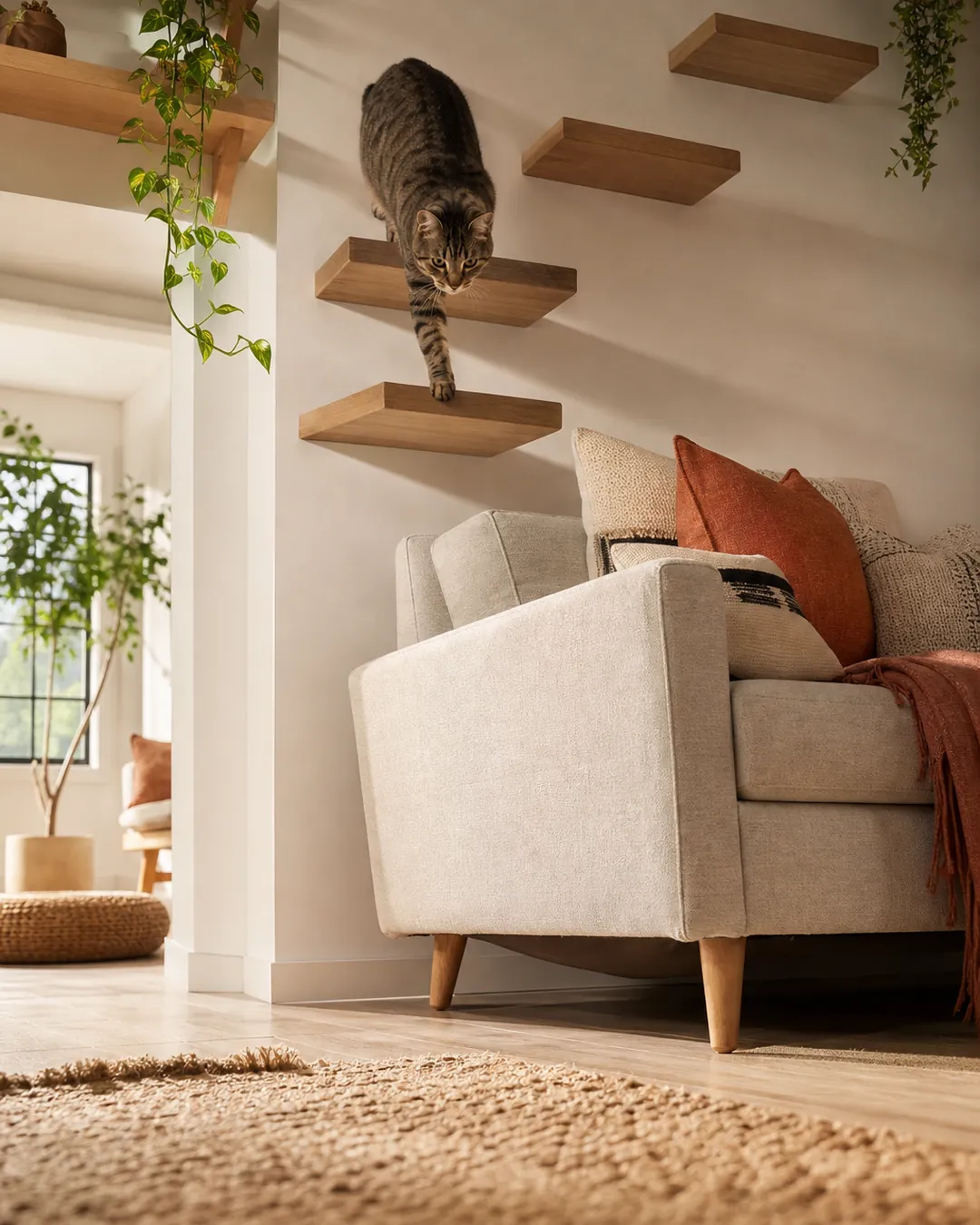
A climbing route needs a destination and an exit. Finish the top step with something worth arriving at, a padded perch or a hammock, and keep the floor below the lowest step clear so coming down is a step rather than a drop. Routes that end nowhere get used for a week. Watch the descent in particular, because cats commit to going up far more readily than to coming down. If your cat climbs the corner once and then avoids it, the problem is almost always at the bottom of the route rather than the top.
7. Contain the toys in one basket
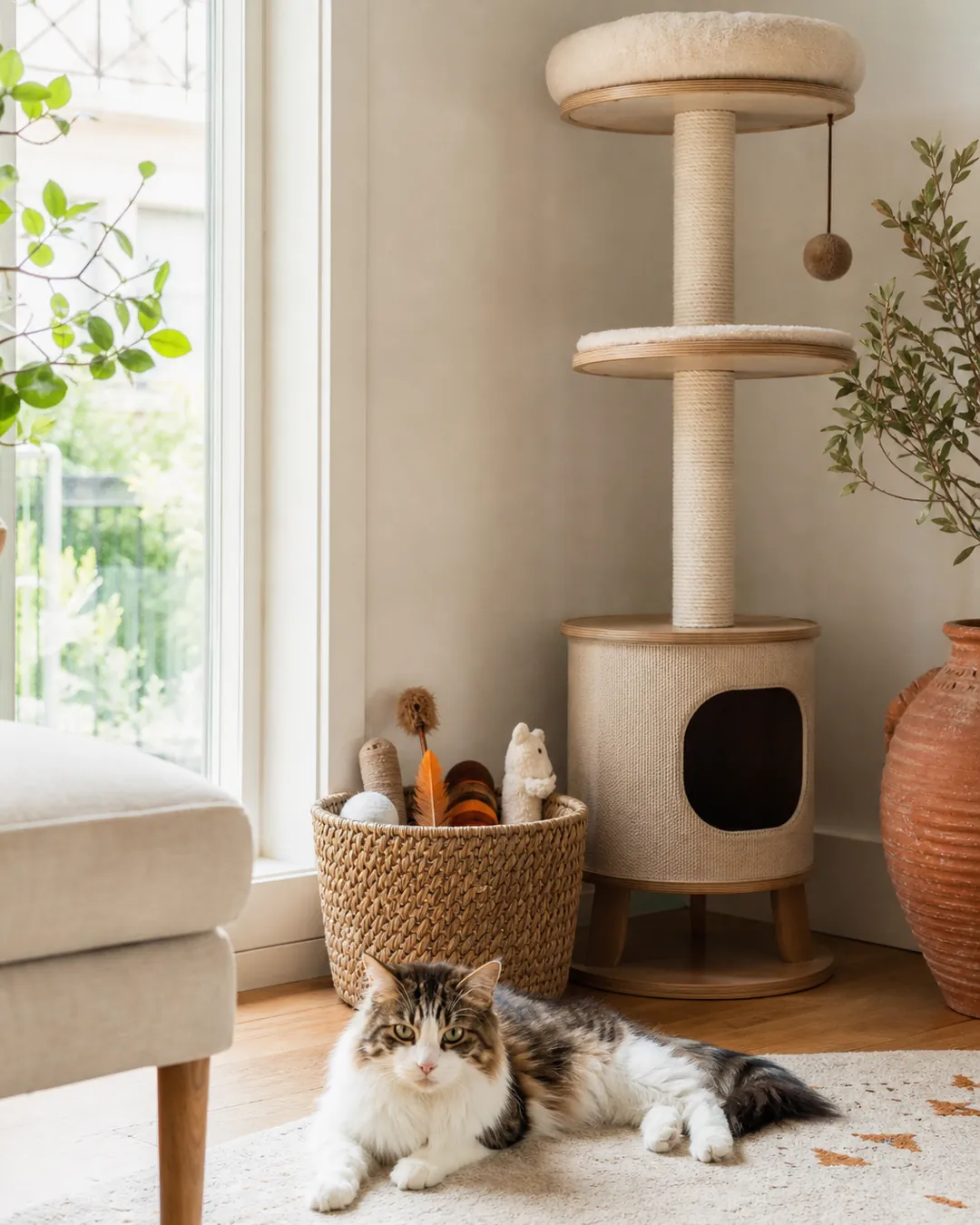
Loose toys are what make a corner read as clutter rather than furniture. A cotton rope toy basket at around fifteen inches long holds a realistic amount without becoming a piece of furniture in its own right. Open-topped works better than lidded, because a cat will fish out its own toy and you will not be doing it at ten at night.
8. Keep the material family narrow
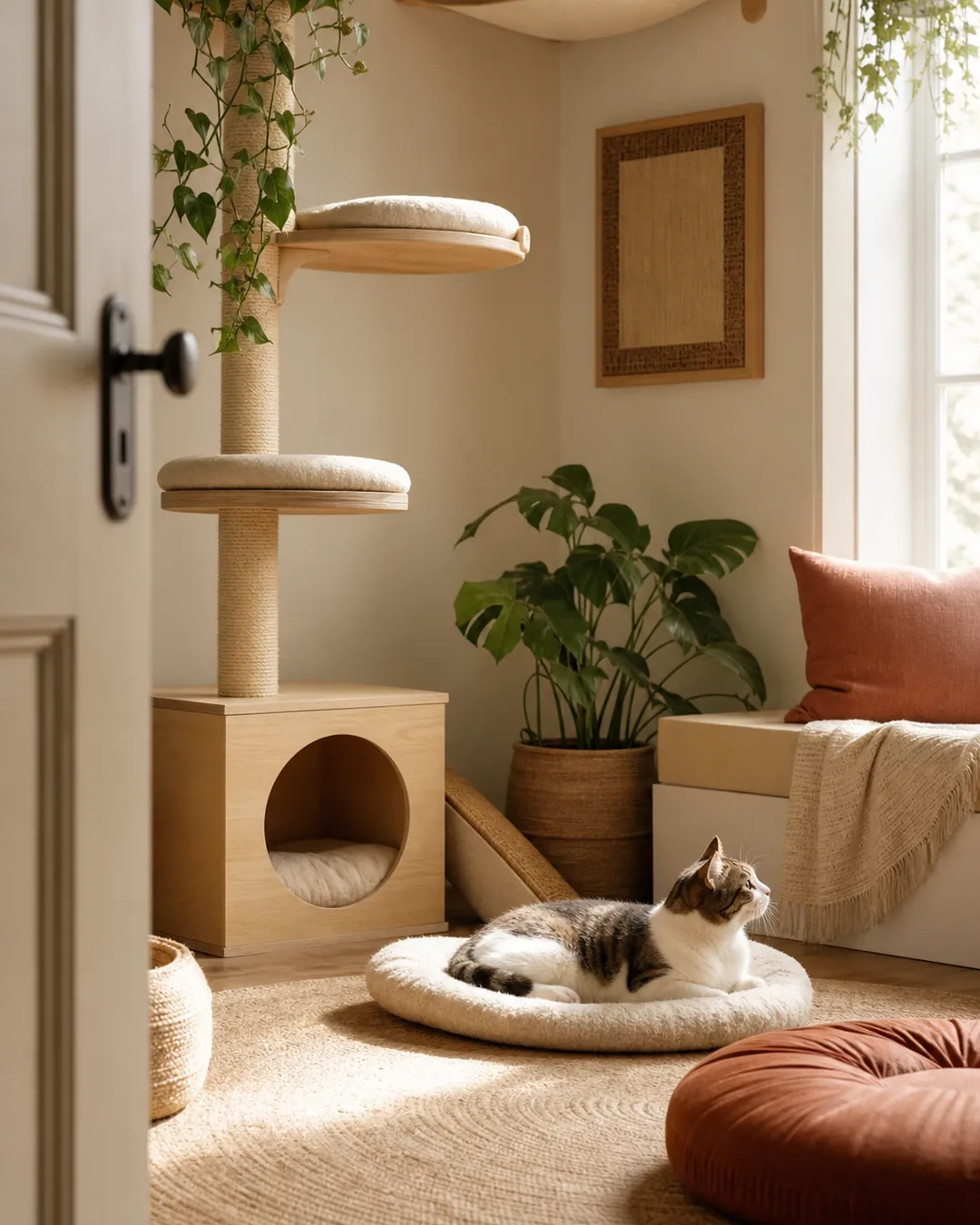
Two materials across the whole corner is plenty. Natural wood and one woven texture, or painted wood and one fabric. Corners look messy when four different finishes meet at right angles, which is exactly what happens when pieces get bought one at a time over a year. If you already own a mismatched set, the cheapest correction is usually textile rather than furniture: one throw and one basket in a shared tone will pull three unrelated pieces together well enough that nobody looks closer.
9. Leave the diagonal open
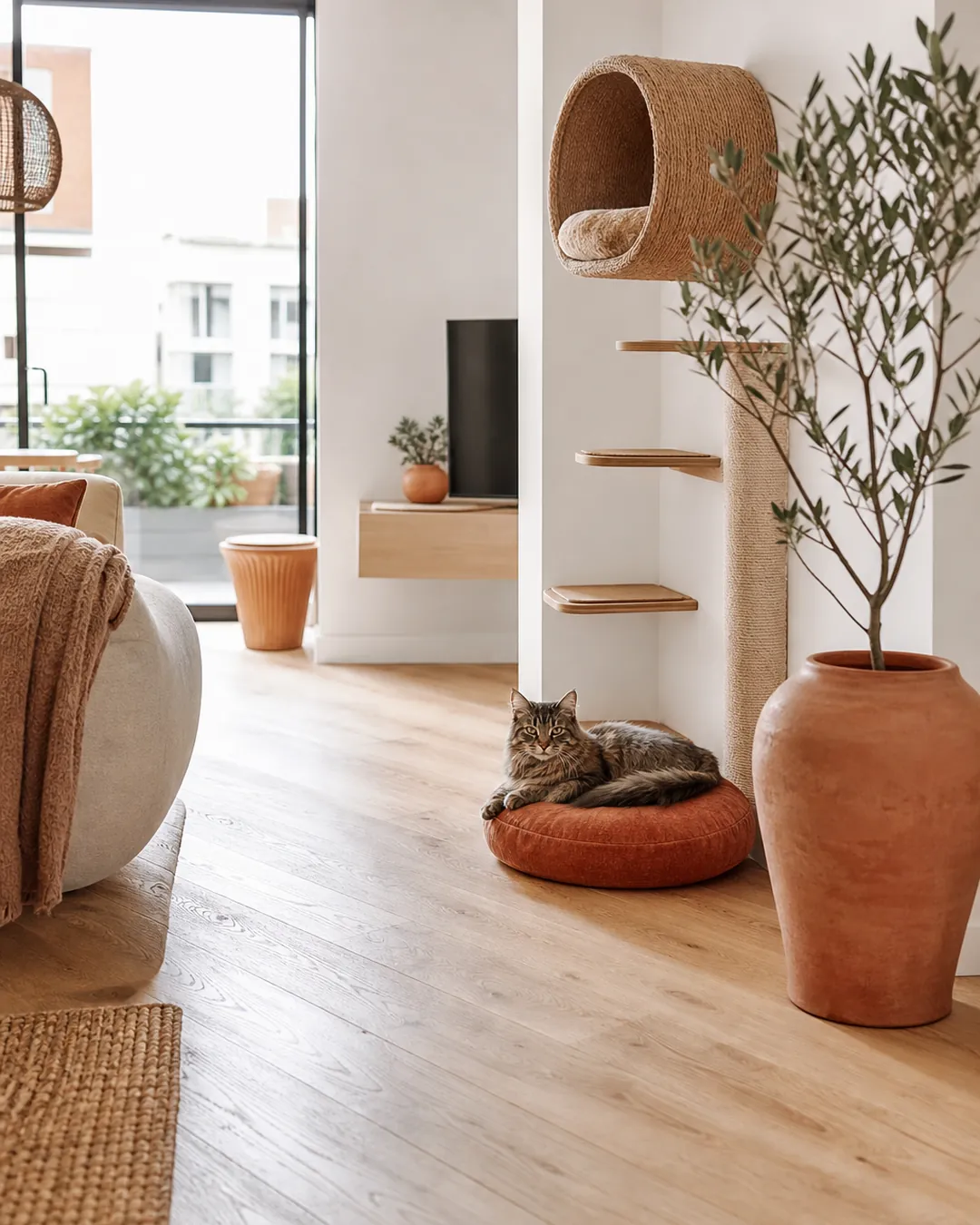
Resist filling the triangle right up to the front edge. Leaving the diagonal clear gives the cat an approach and stops the corner reading as a blocked-off zone. It also means you can vacuum, which sounds trivial until you have owned a cat corner for a month and discovered that shed fur collects exactly where two walls meet. A corner you cannot clean easily is one you will come to resent, however well it works for the cat.
10. Use vertical space above the tower
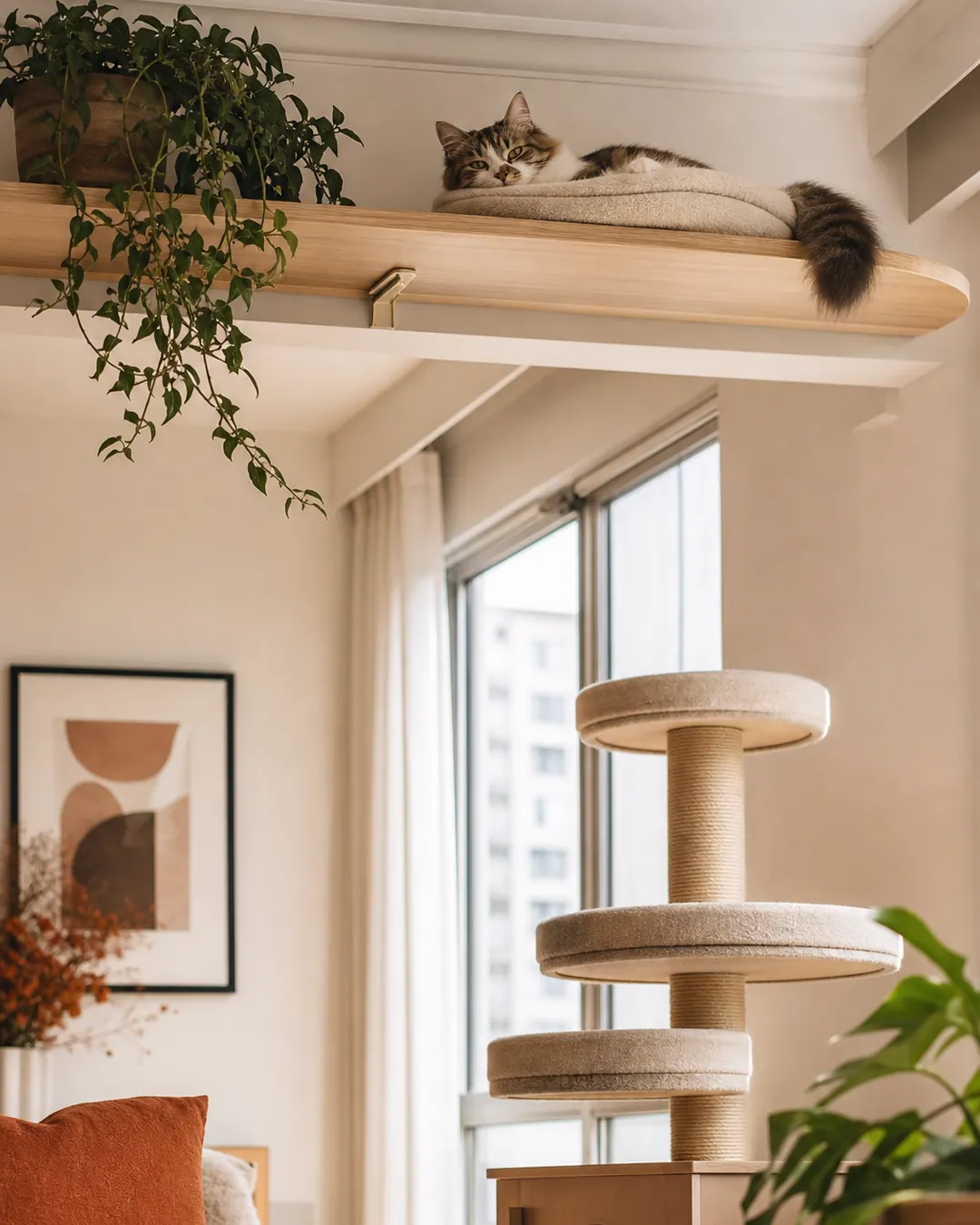
The wall between the top of a tower and the ceiling is usually dead. A single shelf up there, reachable from the tower, adds a genuinely private spot in a room that otherwise has none. This is the cheapest square foot in the entire apartment, and in a shared household it is often the only place a cat can be genuinely out of reach. Keep the gap from the tower to that shelf comfortably short, since a cat that has to stretch for the last step will simply stop making it.
11. Solve the light before the furniture
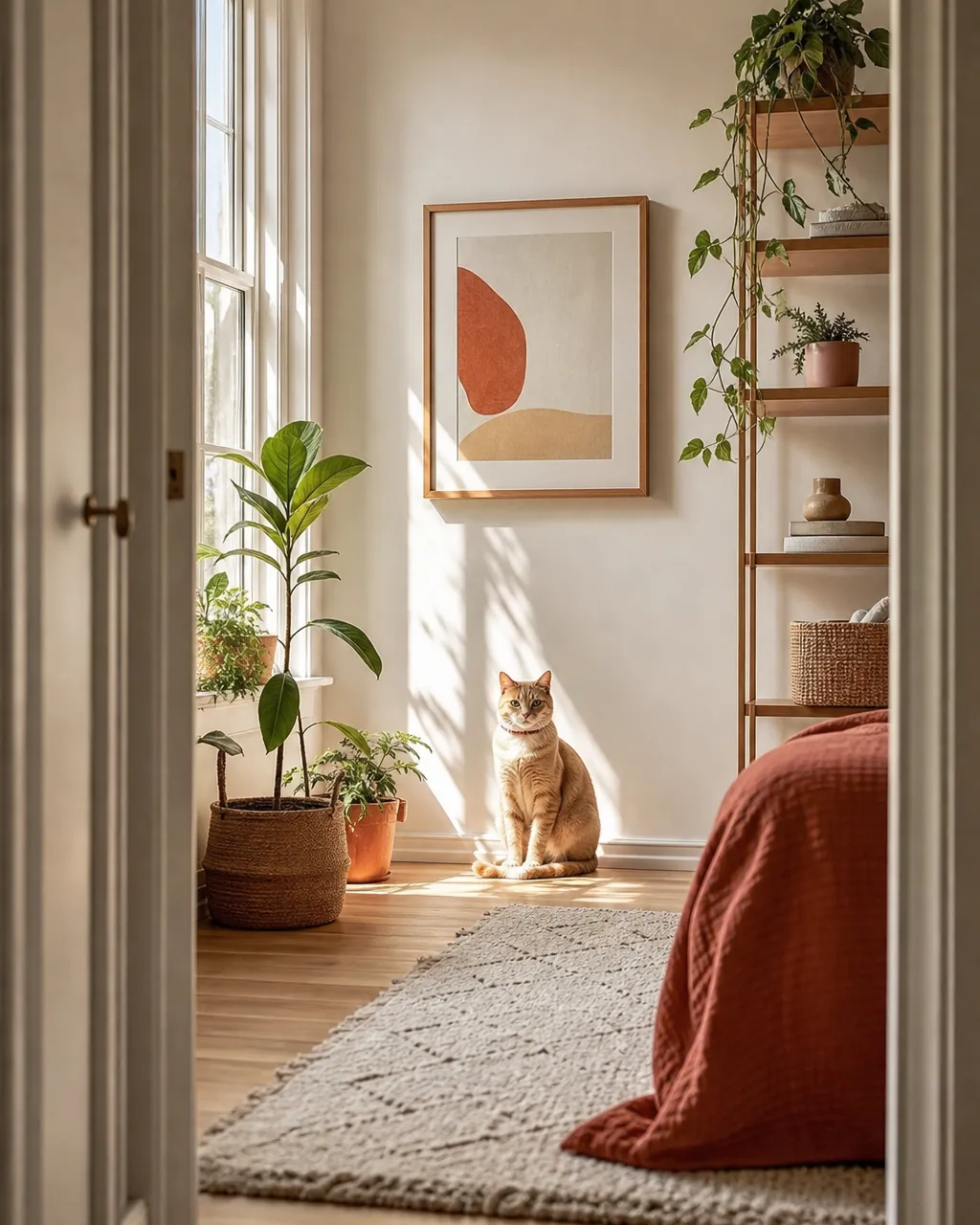
A corner with no natural light will lose to the windowsill every time. If your best corner is dark, either accept it is a night-time spot and put the sleeping there, or pick a different corner. No amount of good furniture beats a patch of afternoon sun.
12. Give it a back if the walls are cold

Corners on outside walls can be noticeably colder than the middle of the room. A bed with raised sides, or a covered condo rather than an open platform, deals with this without any special equipment. Cats will simply relocate rather than tell you about it.
Where to start
Start with a week of observation and a tape measure, and buy nothing. Note which corner your cat uses, when, and what it does there, whether that is sleeping, watching the door, or getting away from someone. That tells you whether you are building a sleeping corner or a lookout, and those are different builds.
Then buy in this order: the floor piece first, because it sets the footprint, the wall steps second, once you can see how the cat approaches, and the storage last. Fixings deserve more attention than anything else on the list, since a shelf that shifts under a cat’s landing is one a cat will never fully trust again.
One more thing worth knowing before you commit: a corner that works will change how the rest of the room gets used. Cats that have a reliable retreat spend more time in the room with you, not less, because withdrawing no longer means leaving. That is the actual return on giving up two feet of floor.
A cat corner is finished when it stops looking like equipment and starts looking like part of the room. That usually means fewer pieces than you first planned, placed more carefully.
A corner that stays comfortable through a cold snap usually needs a warm surface waiting in it, and that is where a few solid heated bed ideas for a cozy apartment winter come in handy.
If the living room genuinely has no corner to spare, a reach-in closet nearby can take over the same job, laid out as its own small cat room.
A corner built for retreat works even better paired with somewhere to burn off energy first, and a playroom corner built around a tunnel and a floor-to-ceiling tree is worth setting up nearby if there is room for both.