A hammock is the only cat furniture that adds a sleeping spot without adding a footprint. It hangs in space that was already empty: under a table, against a window, off a wall. In an apartment where every flat surface is already committed to something, that is a genuinely different proposition to buying another bed.
Nine ways to use one, and how to pick between the three kinds.
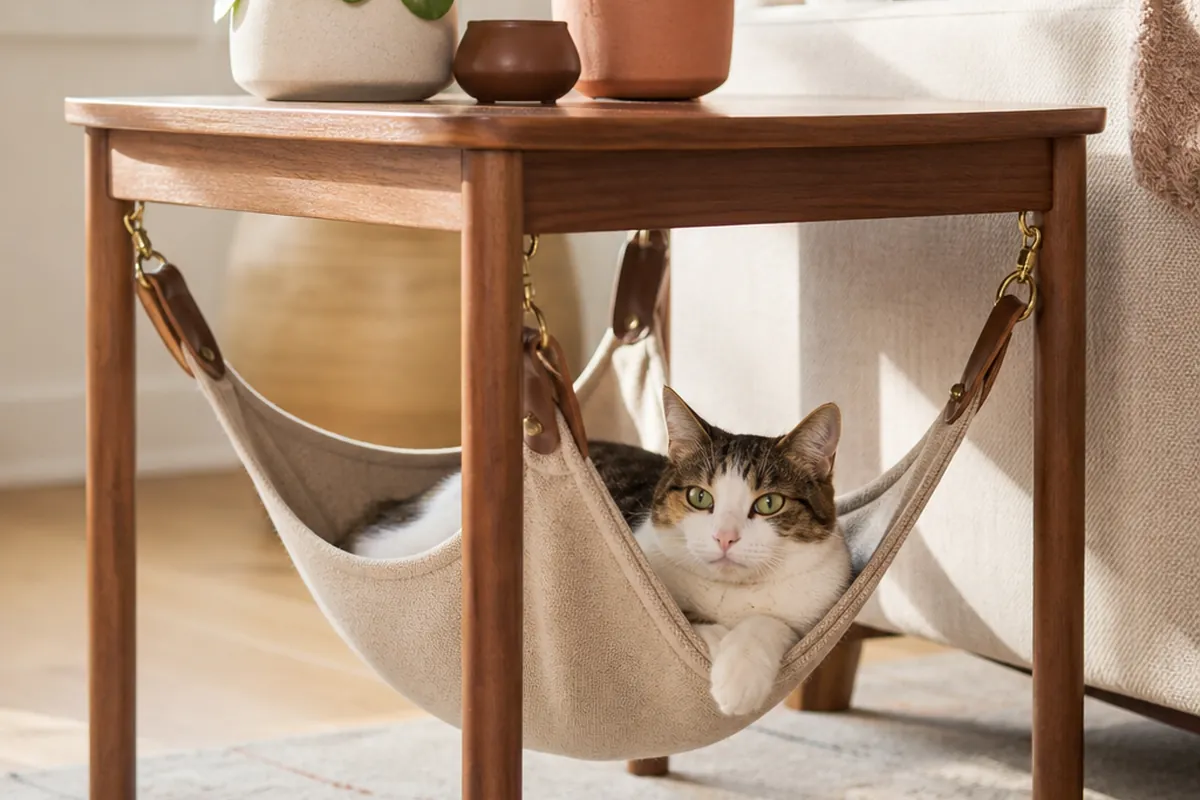
1. Use the space under a side table
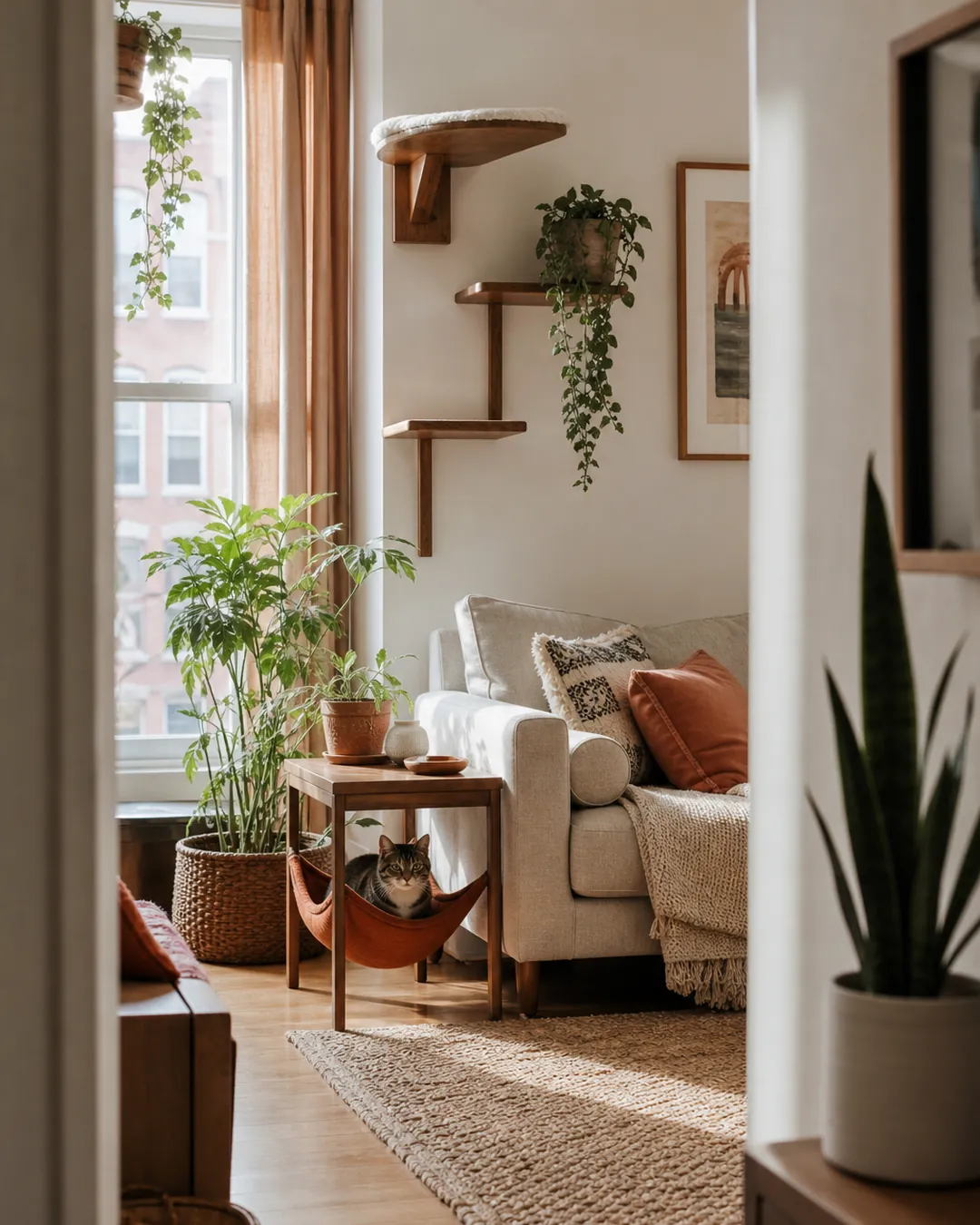
The gap under a low table is dead space with a roof on it, which is close to a cat’s ideal. A hammock slung there gives cover overhead, a wall or a chair at the back, and a view out at floor level. It also keeps the cat out of the walkway, which no floor bed manages. Check the clearance underneath first: a cat needs to get in and out without flattening itself, so measure from the floor to the underside of the table and compare it to the cat sitting upright.
2. Pick freestanding when nothing can be mounted
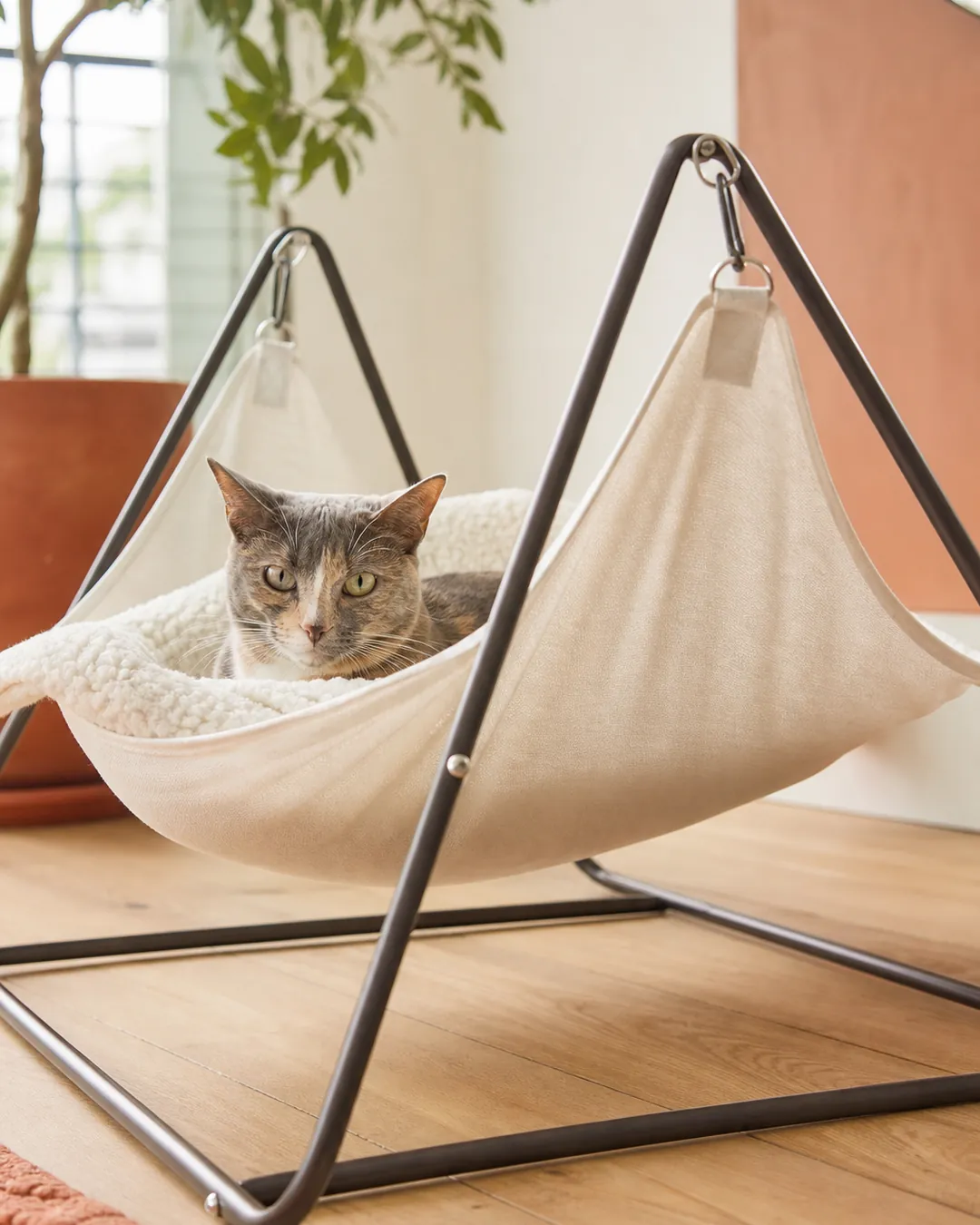
Renters and anyone with plasterboard walls should start here. A freestanding elevated hammock at around 19 inches needs no fixings at all, moves room to room, and lifts the cat off a cold or drafty floor. Nothing to make good when you leave.
3. Pick the window version for daytime
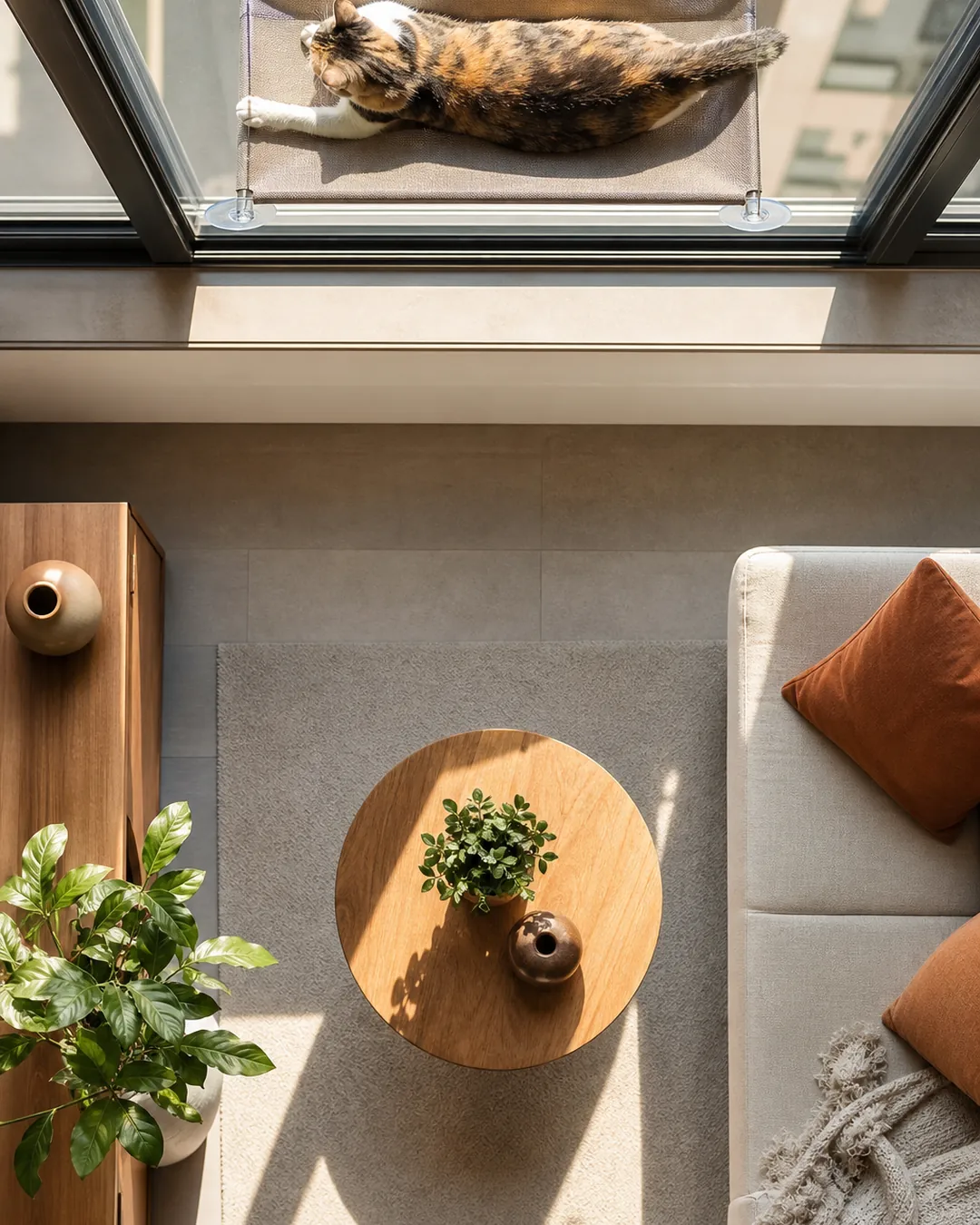
Cats sleep where the sun is, and a window hammock puts them in it without taking the sill. A 2-in-1 window perch hammock at roughly 16 by 10 inches mounts to glass and doubles as a perch, which is two functions in the footprint of none. Clean the glass with alcohol before fitting, since residue is what defeats suction cups.
If the window is the cat’s favorite spot anyway, the wider set of options for it, from sill beds to suction perches, is in cat window perch ideas for sunny apartments.
4. Pick macrame when it has to look like decor
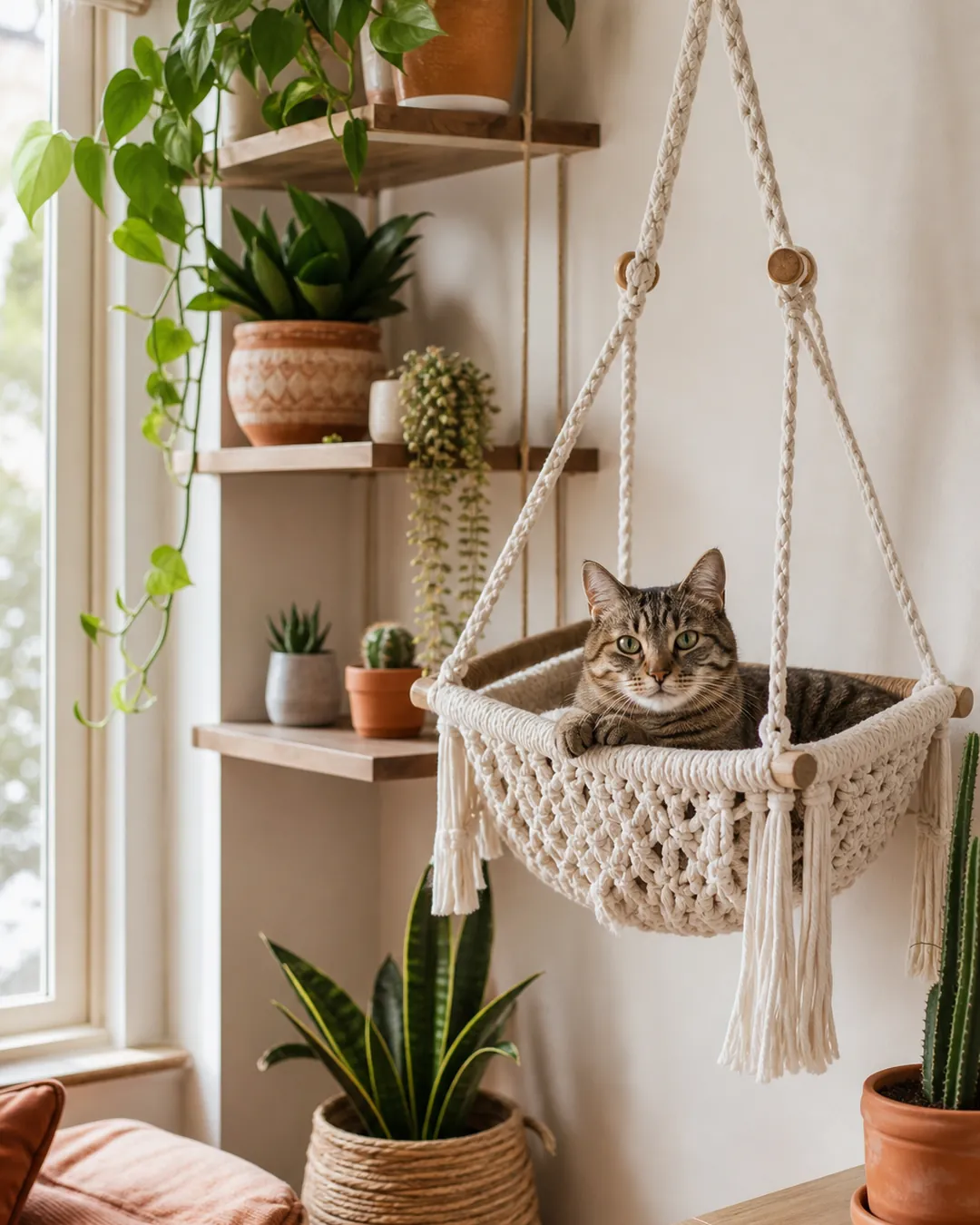
Some rooms cannot take another piece of pet equipment. A macrame hanging hammock in washed cotton reads as a plant hanger with a cat in it, which is the trick: it belongs to the room’s vocabulary rather than the pet aisle’s. It is also the one that most needs a proper fixing.
5. Hang from a stud, never from plasterboard alone
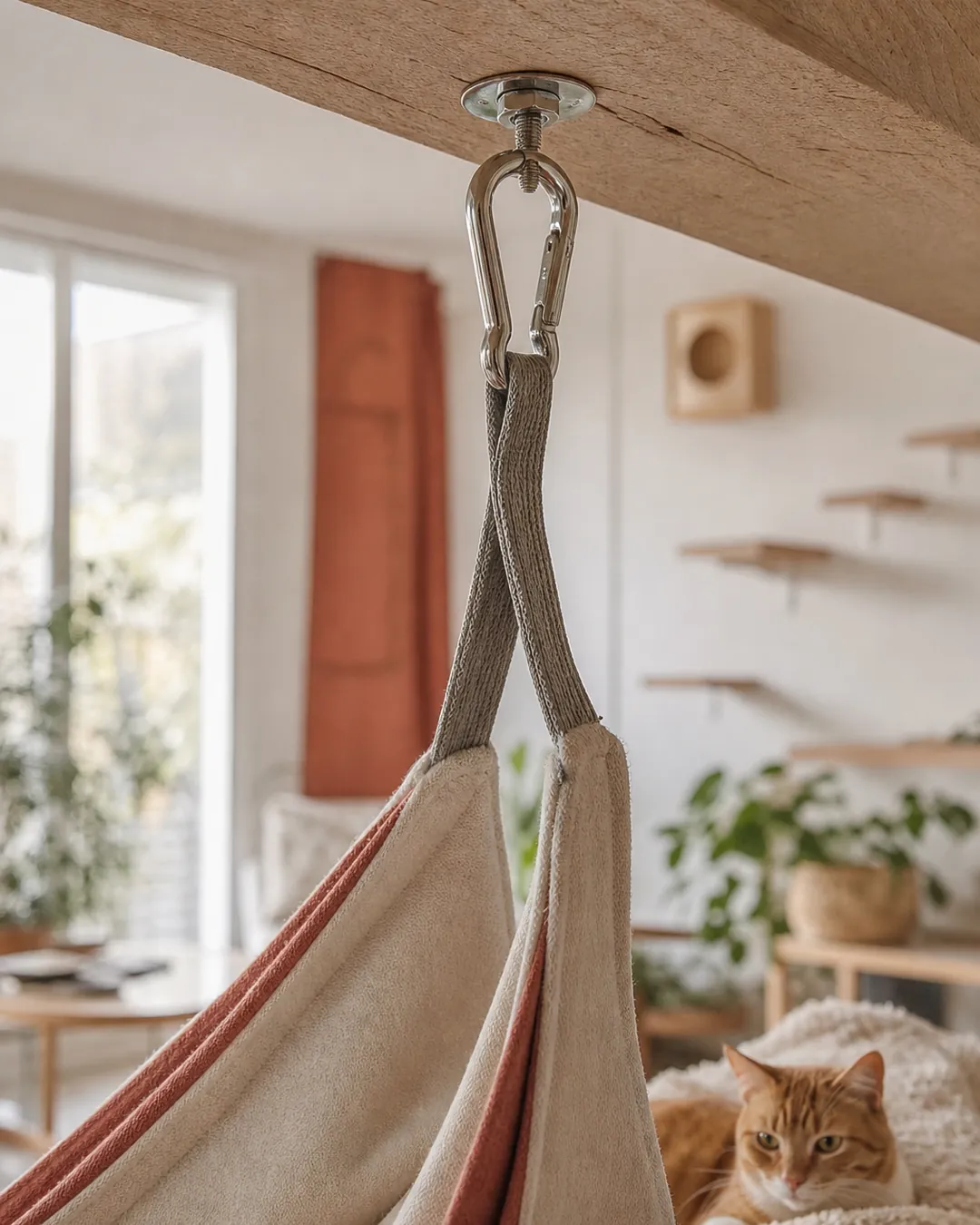
This is the failure that matters. A hanging hammock carries a static load plus the shock of a cat jumping in, and a plasterboard anchor that holds a picture will not reliably hold that. Find a stud, or use a fixing genuinely rated for the dynamic load. A hammock that lets go once is a hammock the cat never uses again, and that is the cheap version of the outcome. Renters should note this is the one hammock type that puts a real hole in a wall, which is an argument for the freestanding version even where the ceiling would take it.
6. Mount low the first time
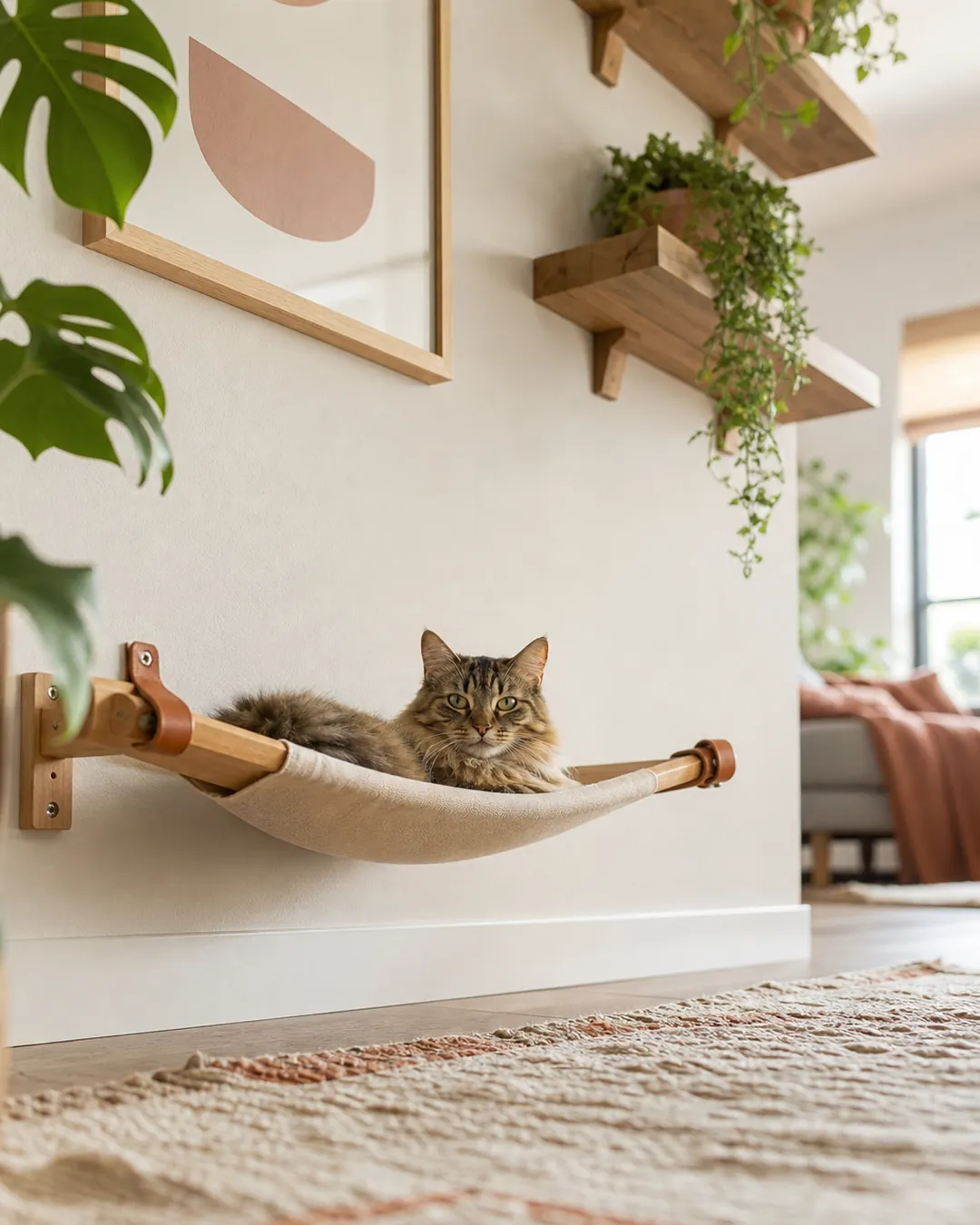
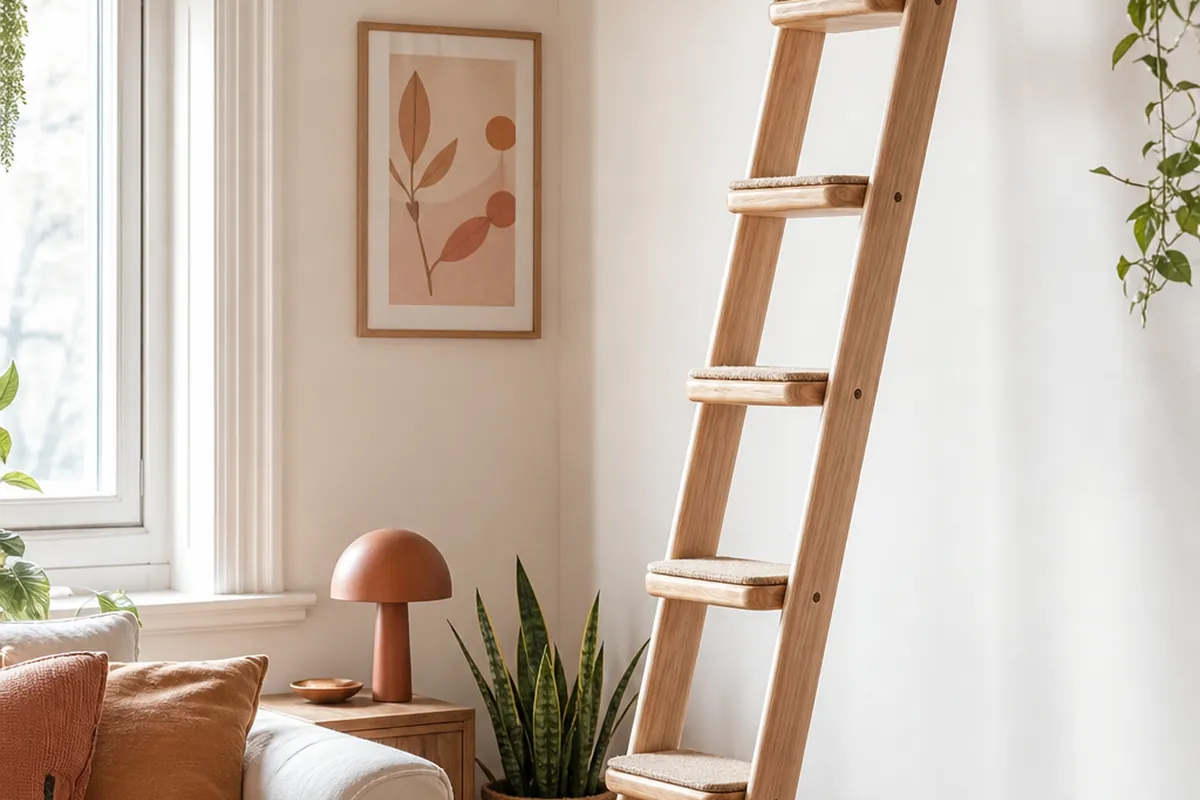
Height is the most common reason a hammock gets ignored. Set it low enough that the cat can step in rather than jump, watch it get used, then raise it if you want to. Going the other way, from too high to used, rarely works because the cat has already written the spot off. A hammock also moves when a cat steps in, which a shelf does not, so the first entry needs to be easy enough that the movement is not a surprise. Get that first impression wrong and you are working against it for weeks. When you do raise it past an easy jump, give the cat a way up rather than a leap, and these cat ladder ideas for reaching high shelves cover the pitch and rung spacing a cat will actually climb.
7. Give it a back
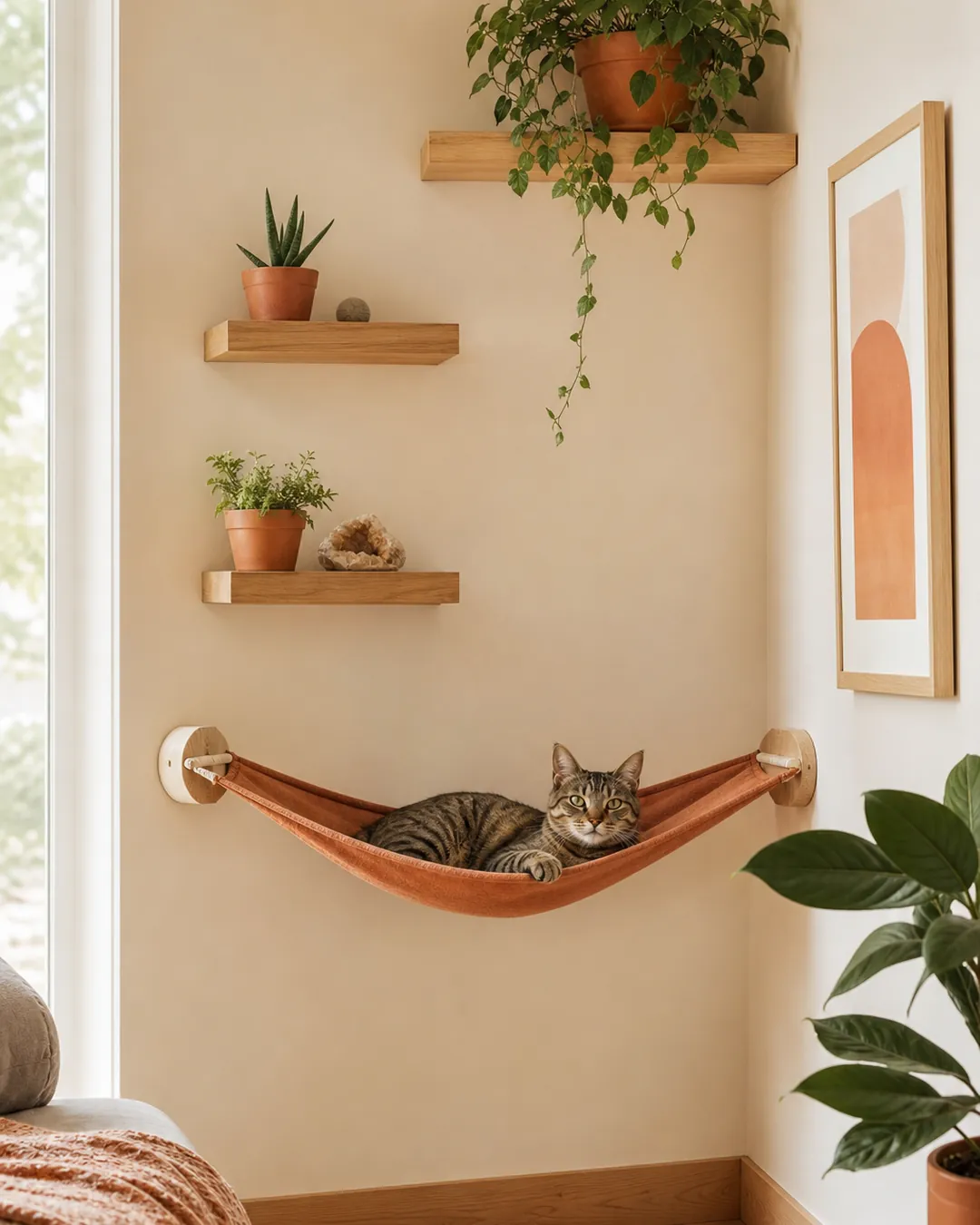
A hammock swinging in open space exposes a cat on every side, and cats do not sleep deeply like that. Position it against a wall, a sofa side, or into a corner. The same hammock, moved eighteen inches to gain a back wall, frequently goes from ignored to occupied, which is the cheapest experiment available to you and the one people try last.
The exception is a multi-cat household, where the cat lower down the pecking order often wants sightlines on every side rather than a snug corner. If you have two cats and one hammock is going unused, try moving it somewhere more open before assuming the cat dislikes hammocks.
8. Buy for a removable cover
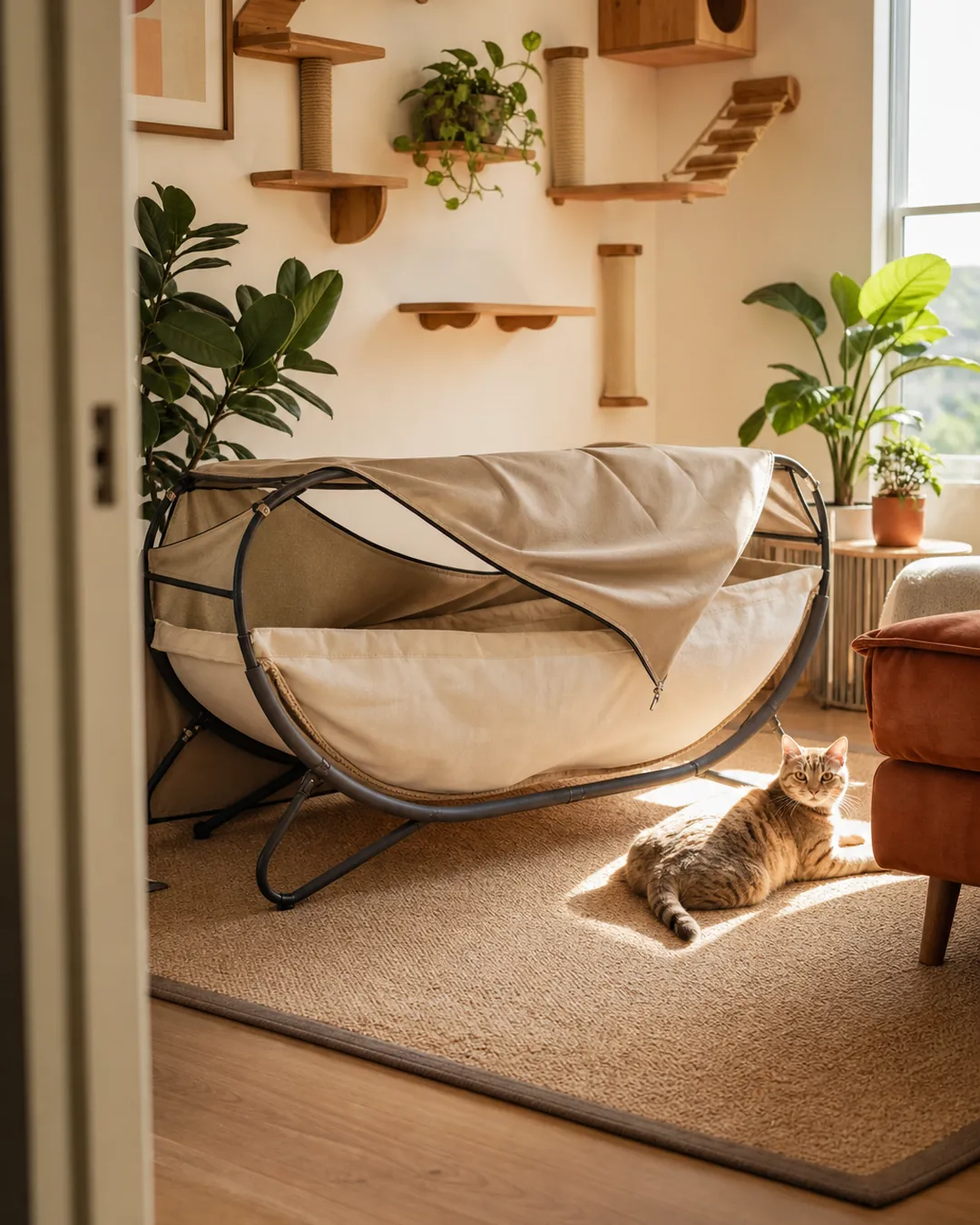
Hammock fabric collects fur faster than a flat bed, because the cat settles into the fabric rather than on top of it. Check the cover comes off and goes in a machine before you check anything else about the design. A hammock you cannot wash becomes a hammock you resent. Look for a zip rather than a tie closure, and check whether the frame has to come apart to release the cover, because a cover that needs the whole thing dismantled gets washed about twice.
9. Match the fabric to the season, or plan to move it
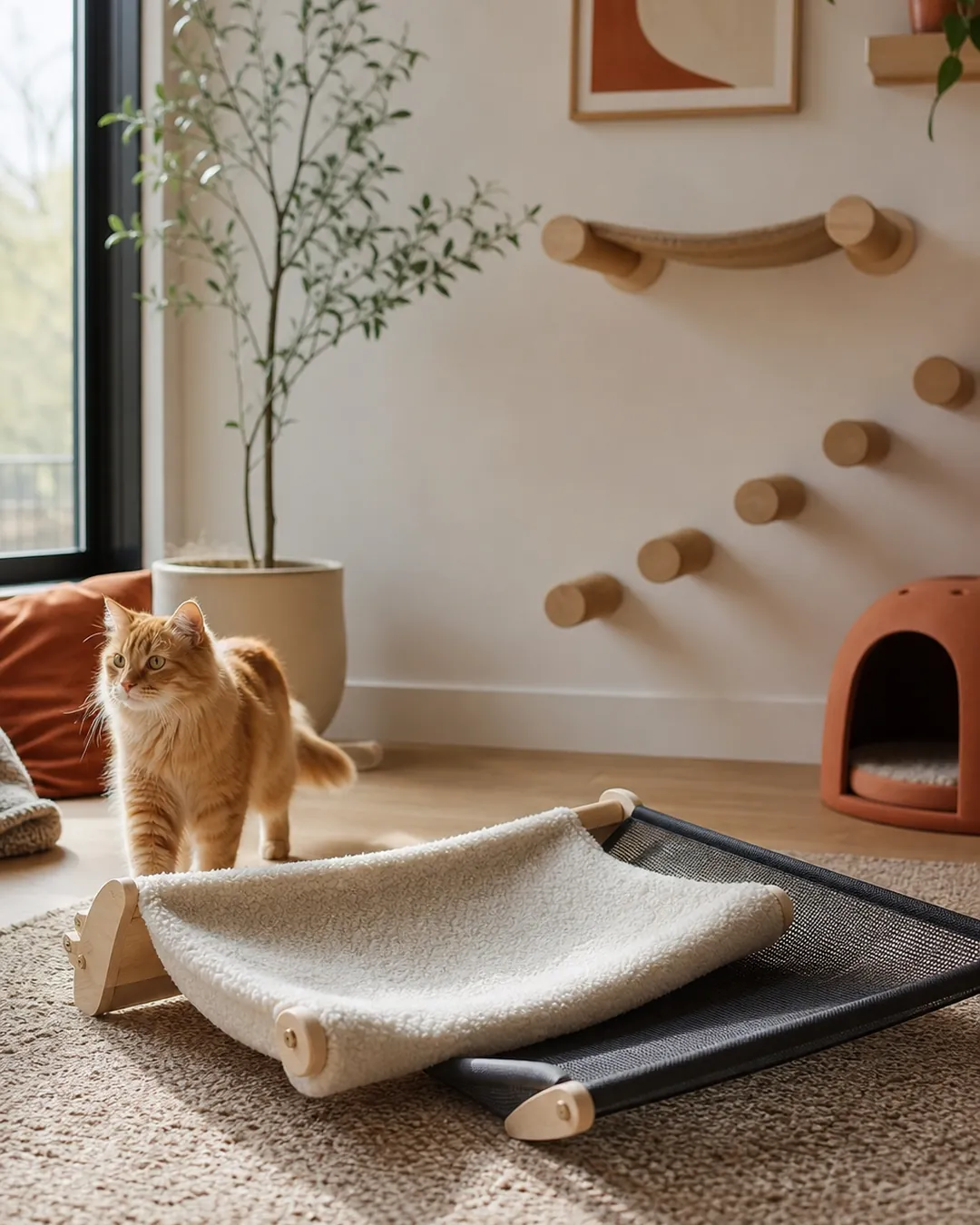
Fleece and sherpa are excellent from October and too warm by June, and a cat will simply relocate rather than sweat. Either choose a breathable cotton or mesh style for a sunny window, or accept that the winter hammock moves to a shadier spot in summer. Cats vote with their feet and they do not explain. If a spot that worked all winter is suddenly empty in May, the hammock is not the problem and neither is the location; it is the fabric, and moving it eight feet into shade usually fixes it.
Where to start
Look for the roof first. Walk the apartment and find the low tables, the desk overhangs, the shelf undersides. Those spots already have the two things a hammock needs, cover above and something solid behind, and they are almost certainly empty right now.
Measure the clearance in each candidate spot while you are down there. Cover overhead only helps if the cat can get under it comfortably, and the difference between a spot that works and one that does not is often two or three inches.
Then choose by what you are allowed to do to the walls. If the answer is nothing, buy freestanding and be done. If you have a smooth window and a sunny room, the window version earns its place fastest, because it combines the sun that cats actually chase with a spot that costs no floor.
Worth knowing before you buy any of them: a hammock is not a straight replacement for a bed, and cats that sleep stretched flat on their sides often prefer a mat. The cats that take to a hammock immediately are the ones you already find curled in boxes, laundry baskets and the gap behind a cushion. If that is not your cat, spend the money on a better-placed flat bed instead.
Leave macrame until last unless the room genuinely needs it to look like decor. It is the prettiest of the three and the only one where getting the fixing wrong has consequences, so it is a better second hammock than a first.