Every apartment has corners that do nothing. The two walls meet, the angle sits empty from floor to ceiling, and the only thing that ever goes there is a lamp or a plant that gets knocked over. That inside angle is some of the cheapest square footage in a small apartment, because nothing else wants it, and a cat shelf built to fit the corner specifically, rather than a straight wall shelf pushed into the corner as an afterthought, uses it properly.
Ten ideas for building a corner into a cat shelf rather than around one.
1. Measure the actual angle before you buy anything
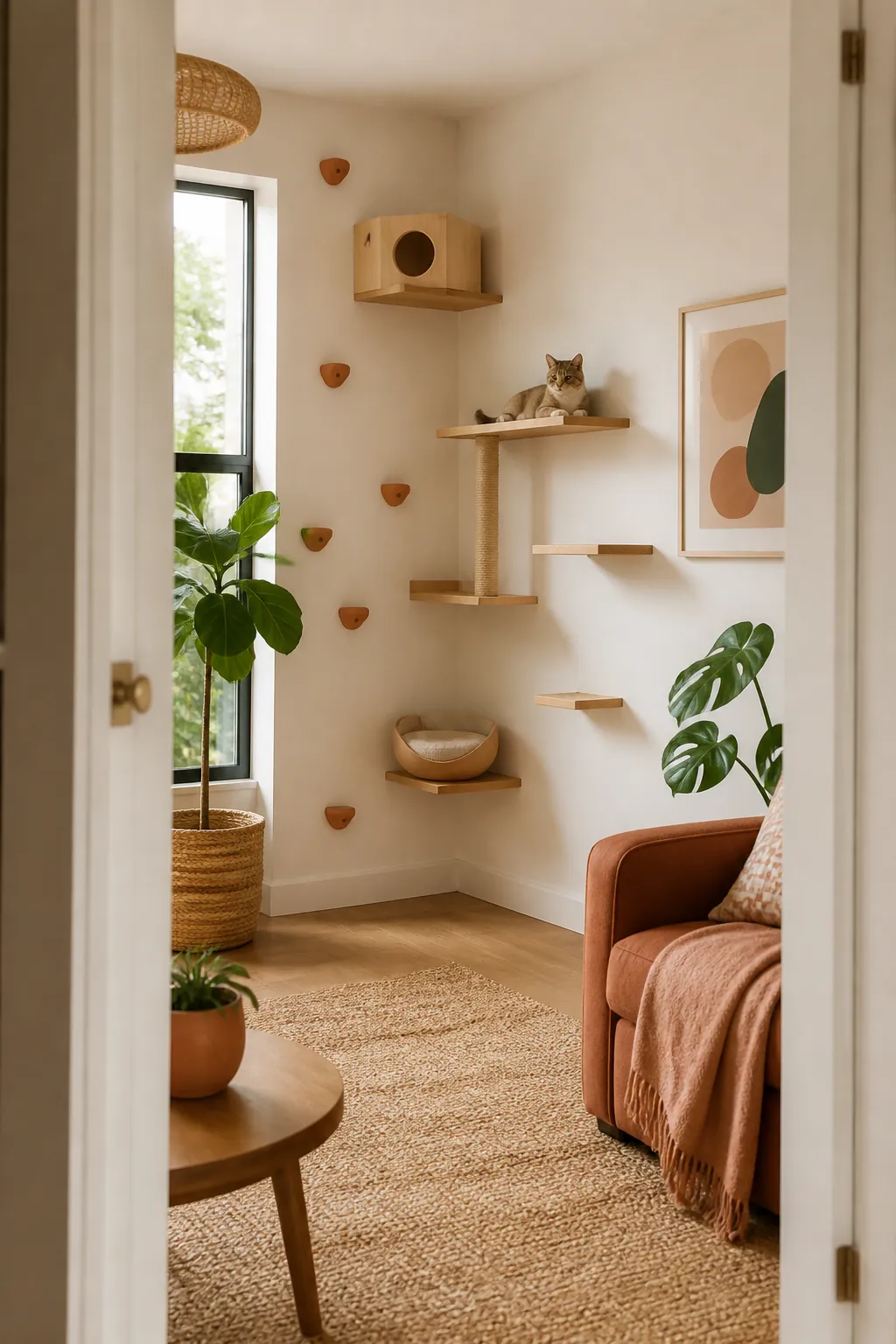
A true corner bracket is built for 90 degrees, and most interior corners are close to that but not exact. Hold a speed square or a large carpenter’s square into the angle at both the floor and six feet up, because walls can be square at the baseboard and lean a degree or two further up where drywall and framing have settled differently. A gap of even an eighth of an inch at the back of a triangular shelf is visible from across the room, and it is the first thing that makes a corner installation look like it was forced rather than planned.
2. Choose a true corner bracket over two shelves meeting
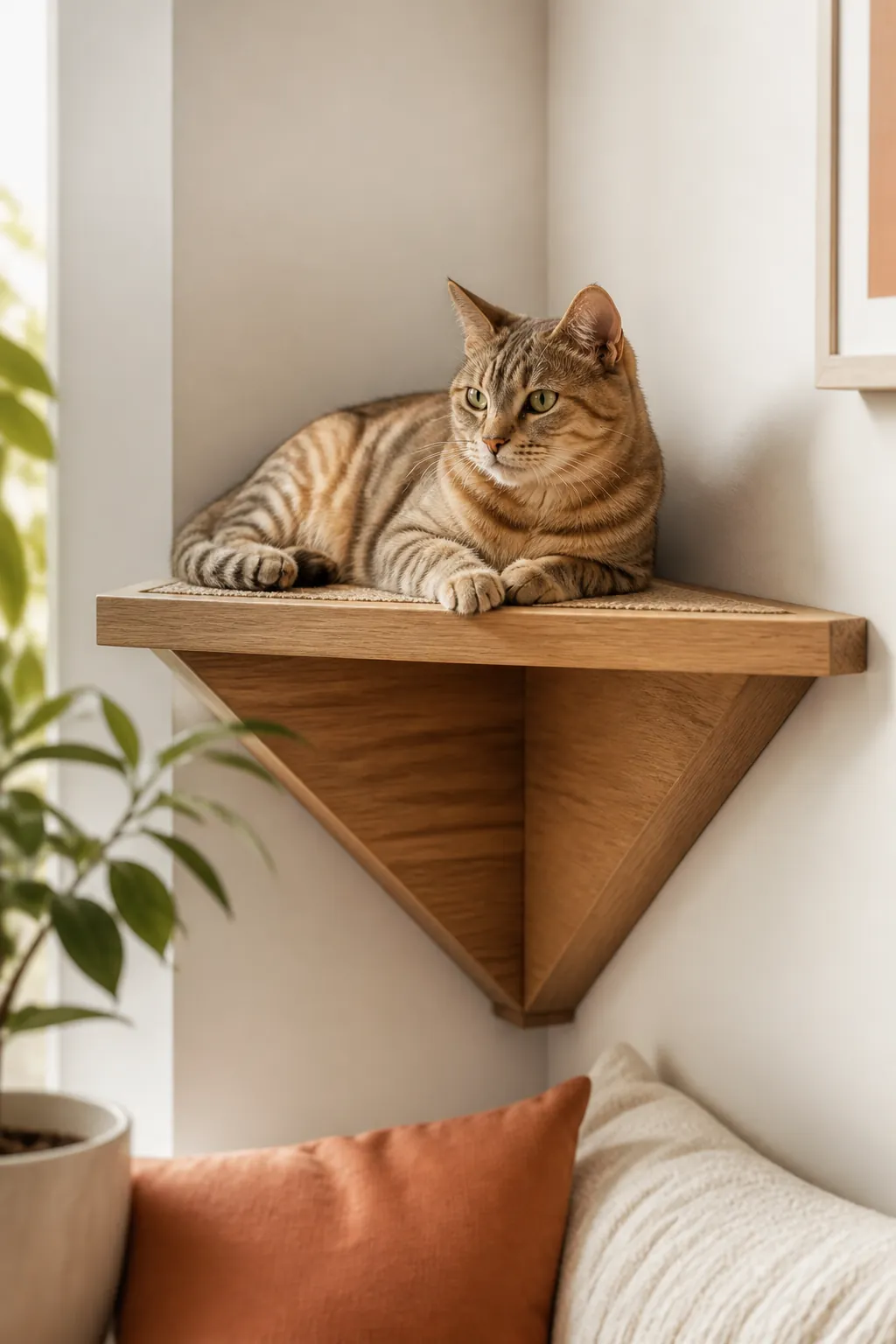
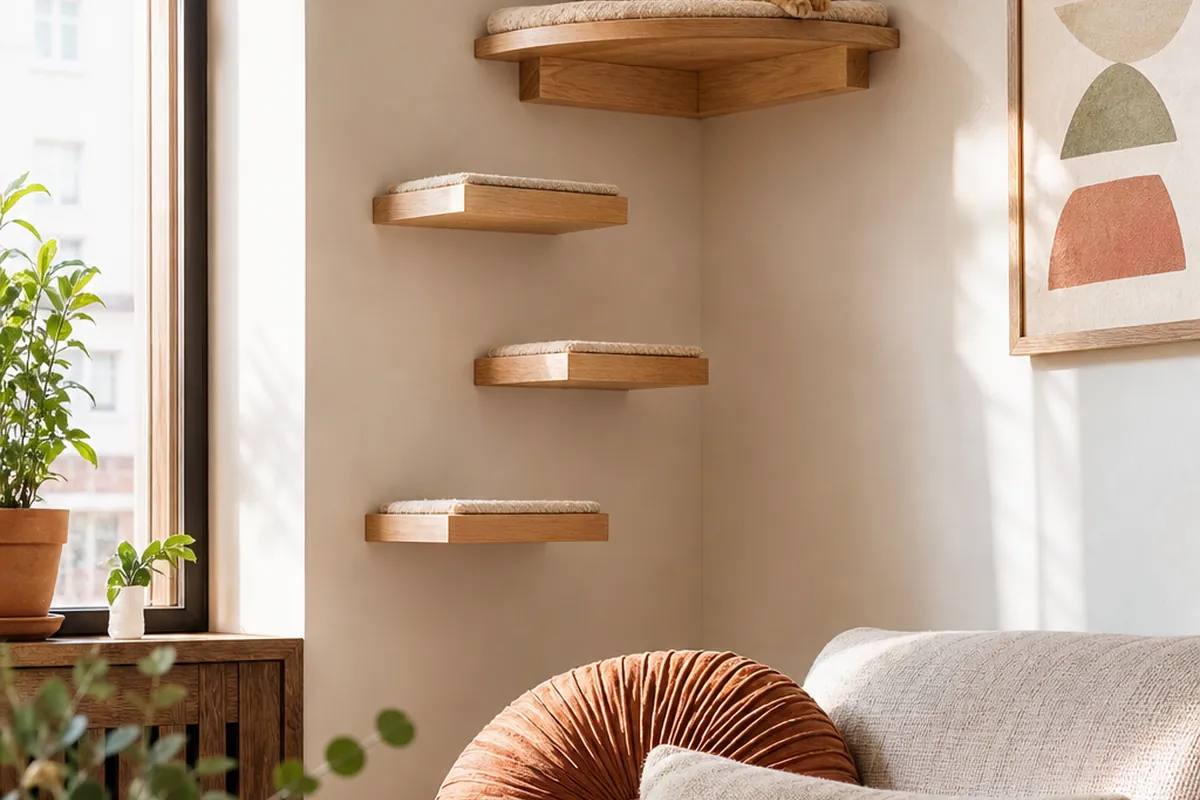
A corner cat shelf built as a single triangular piece distributes a landing cat’s weight across both walls through one rigid frame. Two straight shelves butted together in the corner look similar from the front but only share a wall each, and the seam between them flexes independently under impact. The single-piece version costs more and is harder to ship flat, but it is the version that stays silent after a year of landings.
3. Start the route from furniture, the same rule as a straight wall
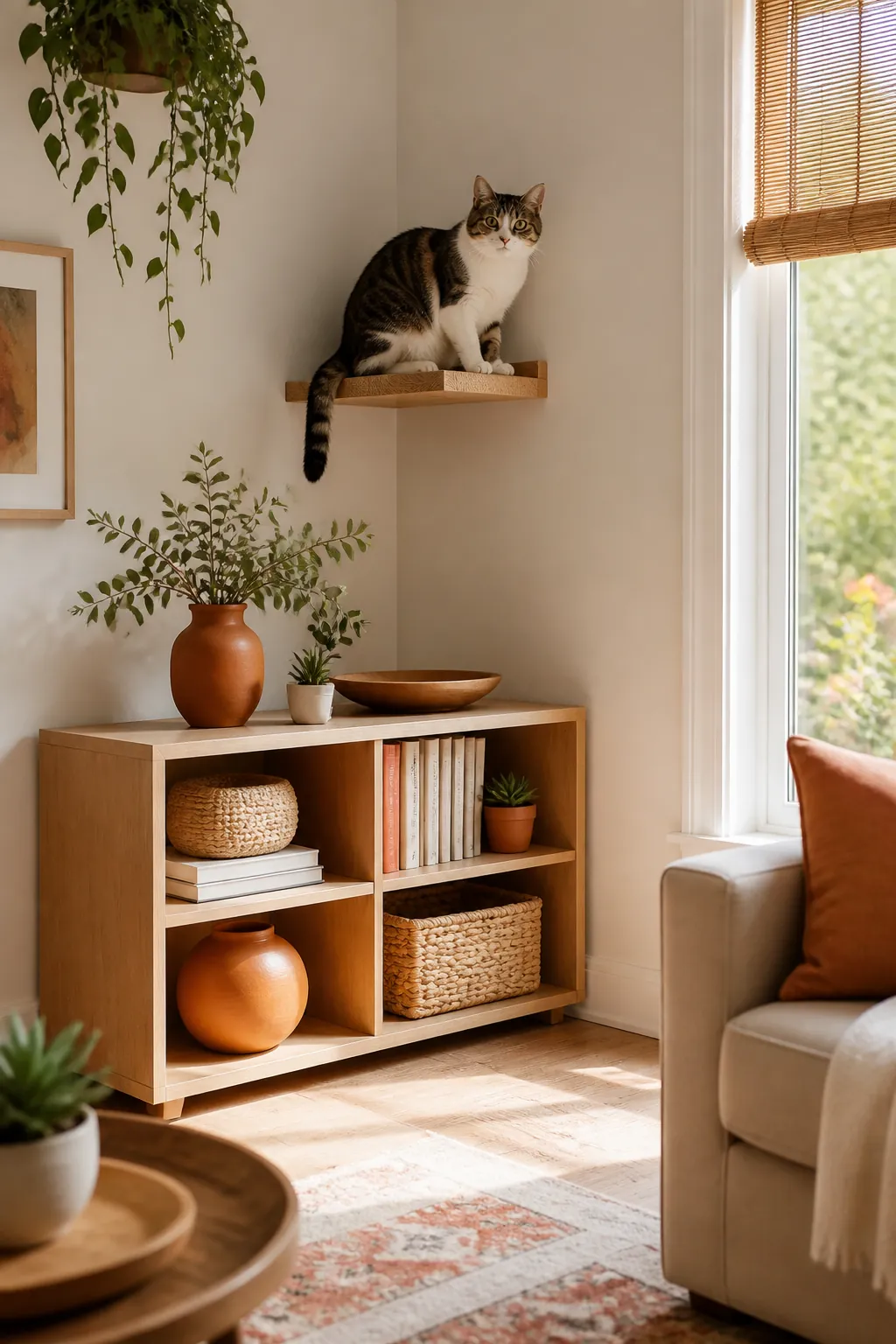
A corner shelf works best as an extension of an existing habit rather than a cold start. If a reading chair, a low bookcase or a windowsill already sits near the corner, begin the climb from there rather than asking for a standing jump from the floor. Eight to twelve inches of rise from the top of nearby furniture to the first corner shelf keeps the entry easy, and an easy entry is what determines whether the rest of the route gets used at all.
4. Expect two different stud patterns, not one
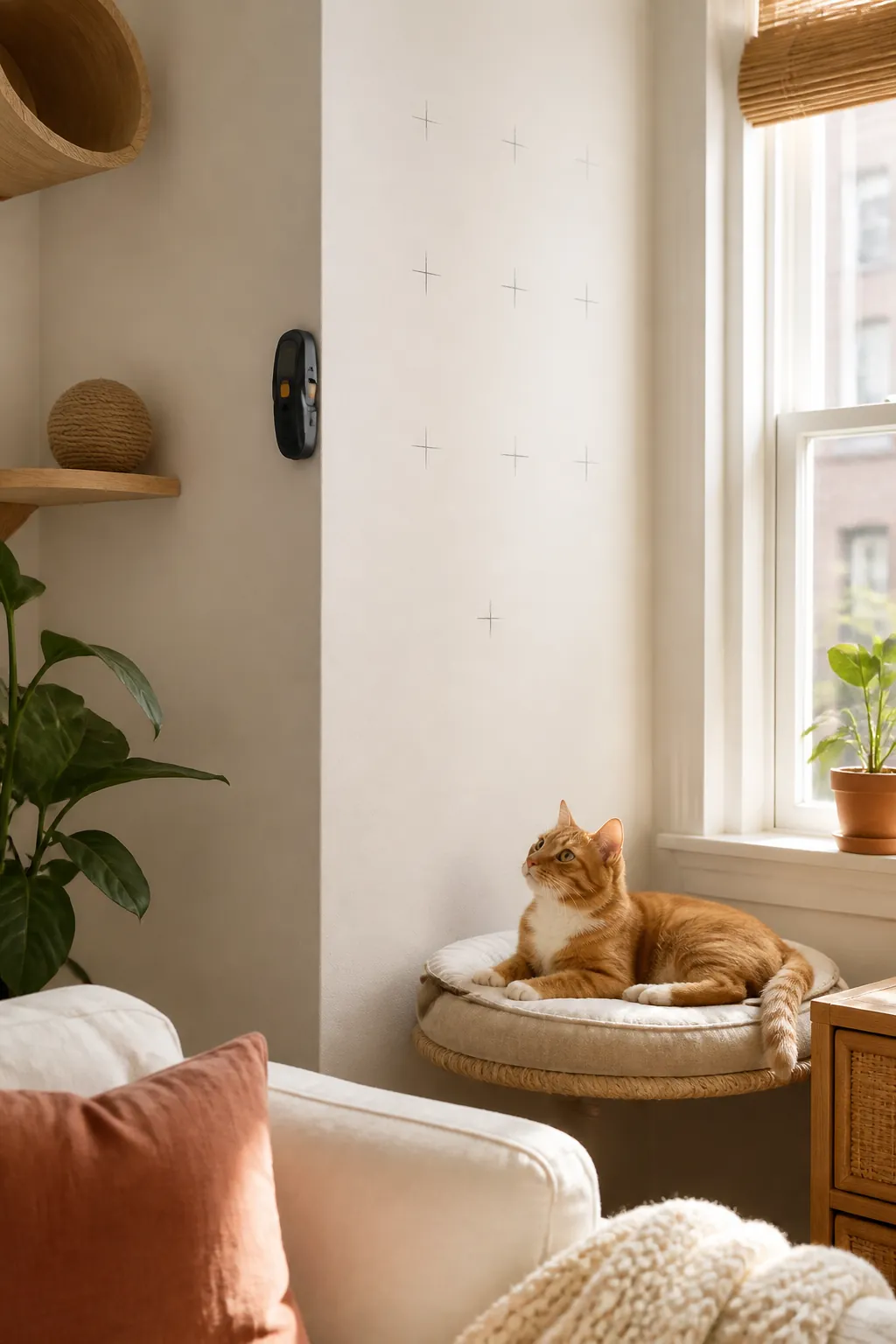
Framing on each wall of a corner was built independently, and the stud lines rarely align with each other the way they would along one continuous wall. Map both walls separately with a stud finder rather than assuming the second wall matches the first once you know where studs sit on it. In most American apartments studs run 16 inches apart on center, but the first stud from the corner can land anywhere from 3 to 15 inches out depending on how that wall was framed, and that first stud is usually the only one close enough to the corner to actually use.
5. Use toggle bolts on whichever side misses the studs
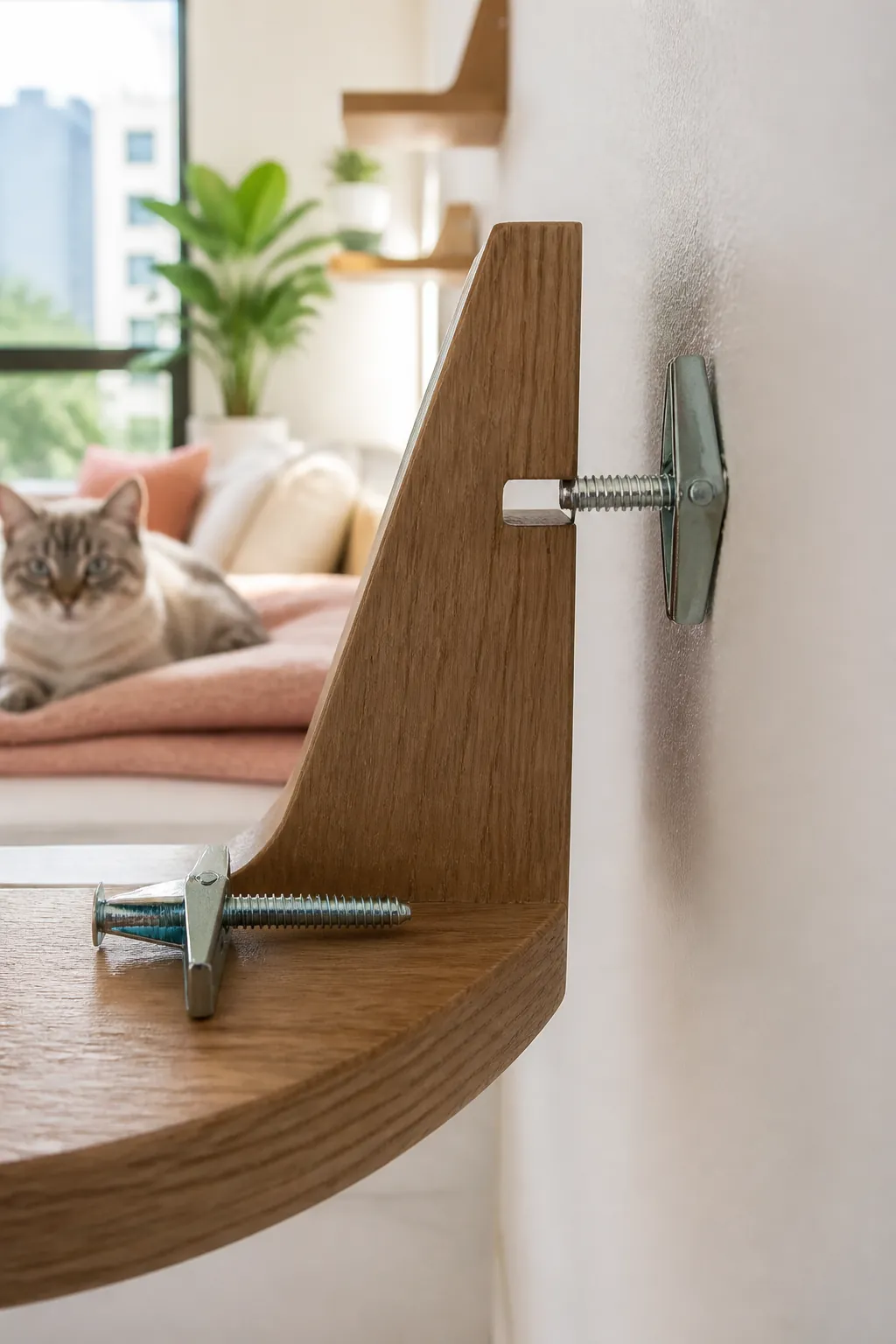
It is common for a corner bracket to land a stud on one wall and nothing but drywall on the other. Heavy-duty toggle bolts on the side without a stud spread the load behind the drywall and hold considerably more than the plastic anchors that usually ship in the box. Buy toggles rated for at least 50 pounds of shear load per bolt even on a shelf rated lower, because the two sides of a corner bracket do not share load evenly, and the drywall side often takes more of the impact than the stud side.
6. Use the extra depth a corner gives you
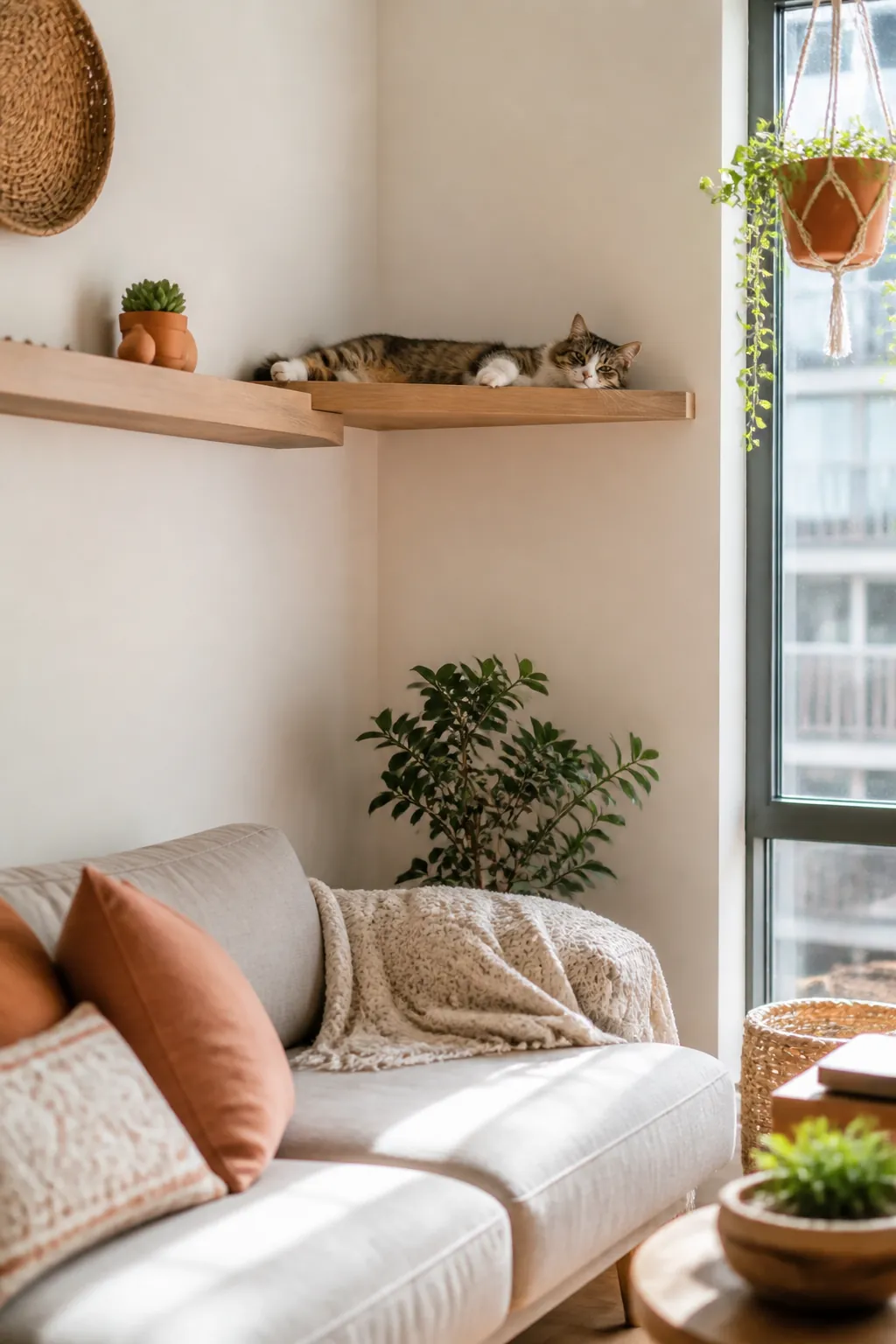
A corner shelf can run deeper, front to back, than a straight wall shelf of the same width, because it is braced by two walls instead of hanging off one. A wall-mounted cat shelf chosen for the straight run leading into the corner can stay at about 10 inches deep, while the corner piece itself goes to 12 inches or more without the bracket flexing, which gives a cat room to turn around and lie down rather than just pass through.
7. Bridge the gap below the corner shelf with floating steps
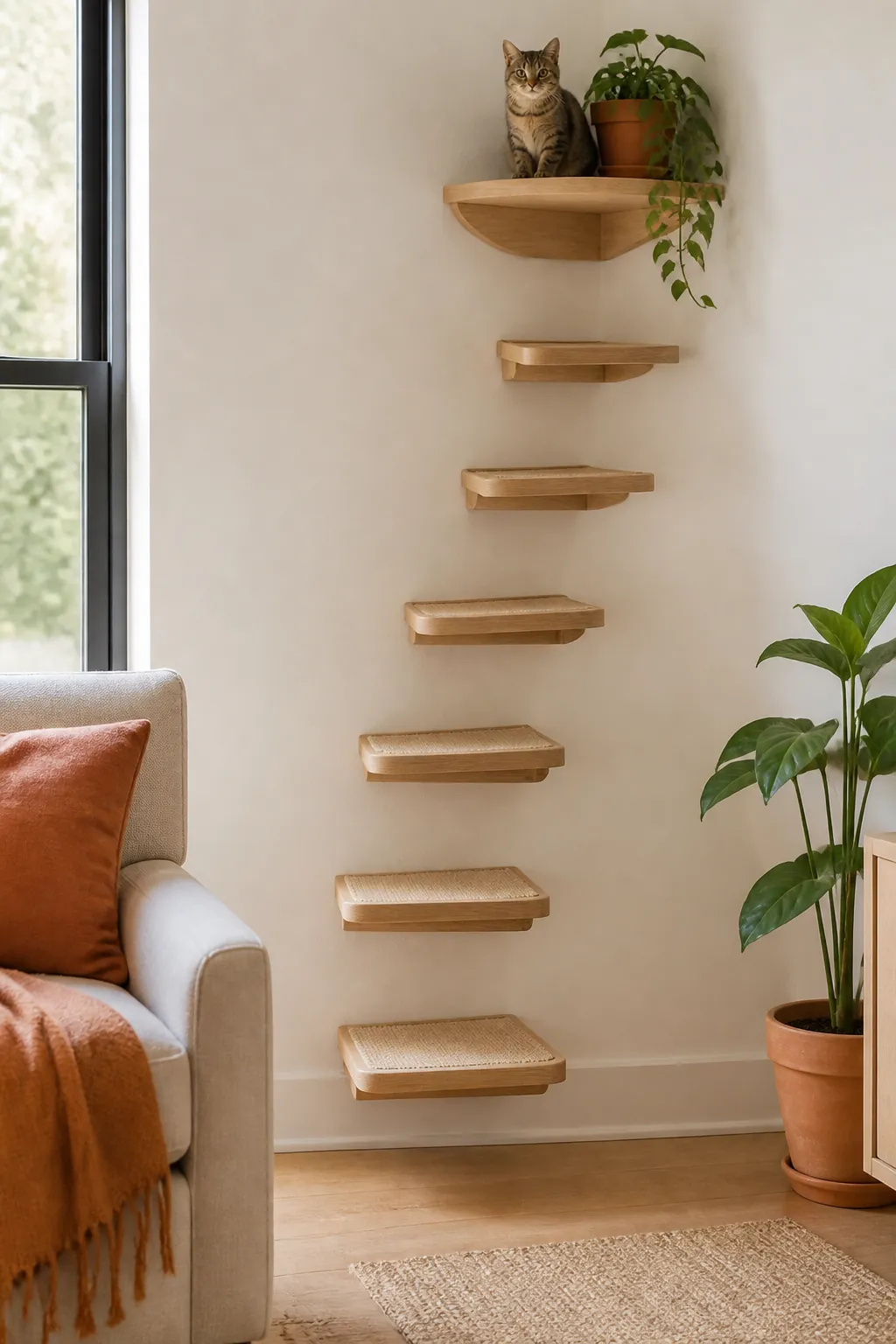
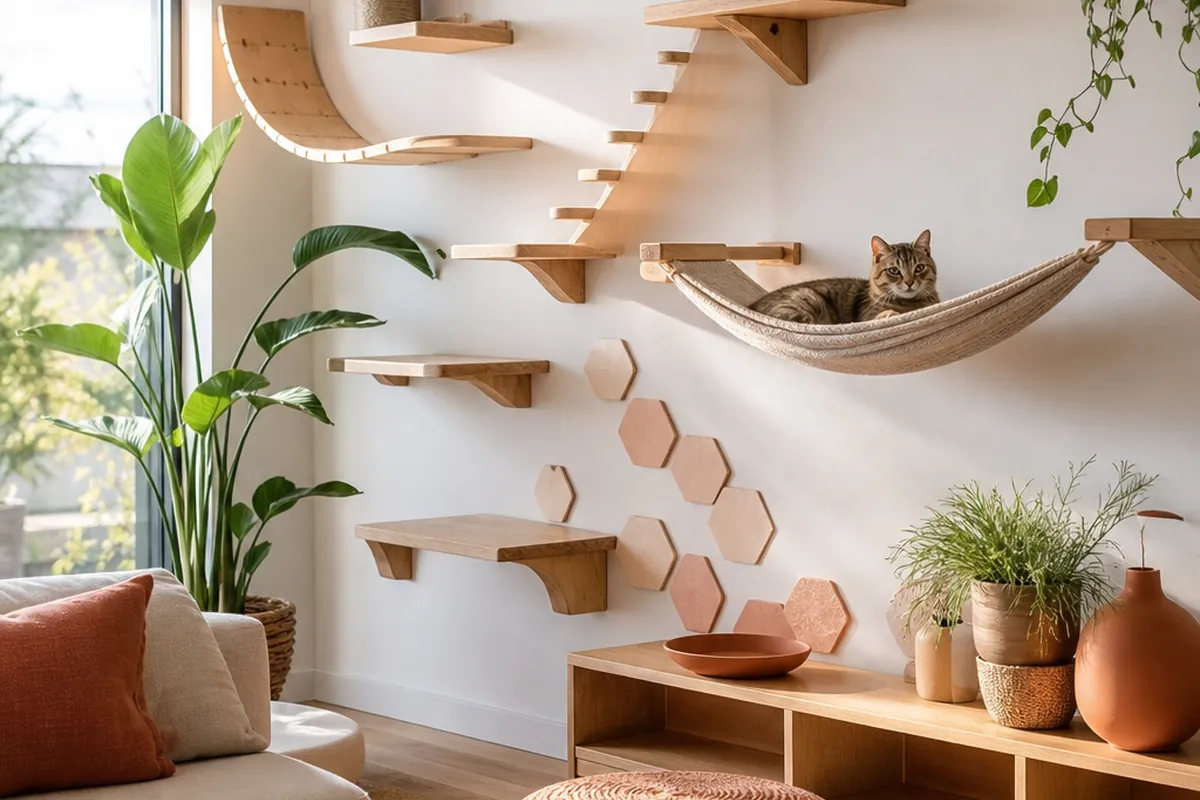
The space directly under a corner shelf is often a dead zone, too far from the floor for a short jump and too awkward for a second full shelf. A couple of small floating cat steps, each sold singly, placed at an angle below the corner bracket close that gap without eating the depth a second full-size shelf would need, and because each step mounts independently, they can follow the corner’s exact angle rather than sitting parallel to either wall.
8. Keep the shelf clear of both a door swing and a window latch
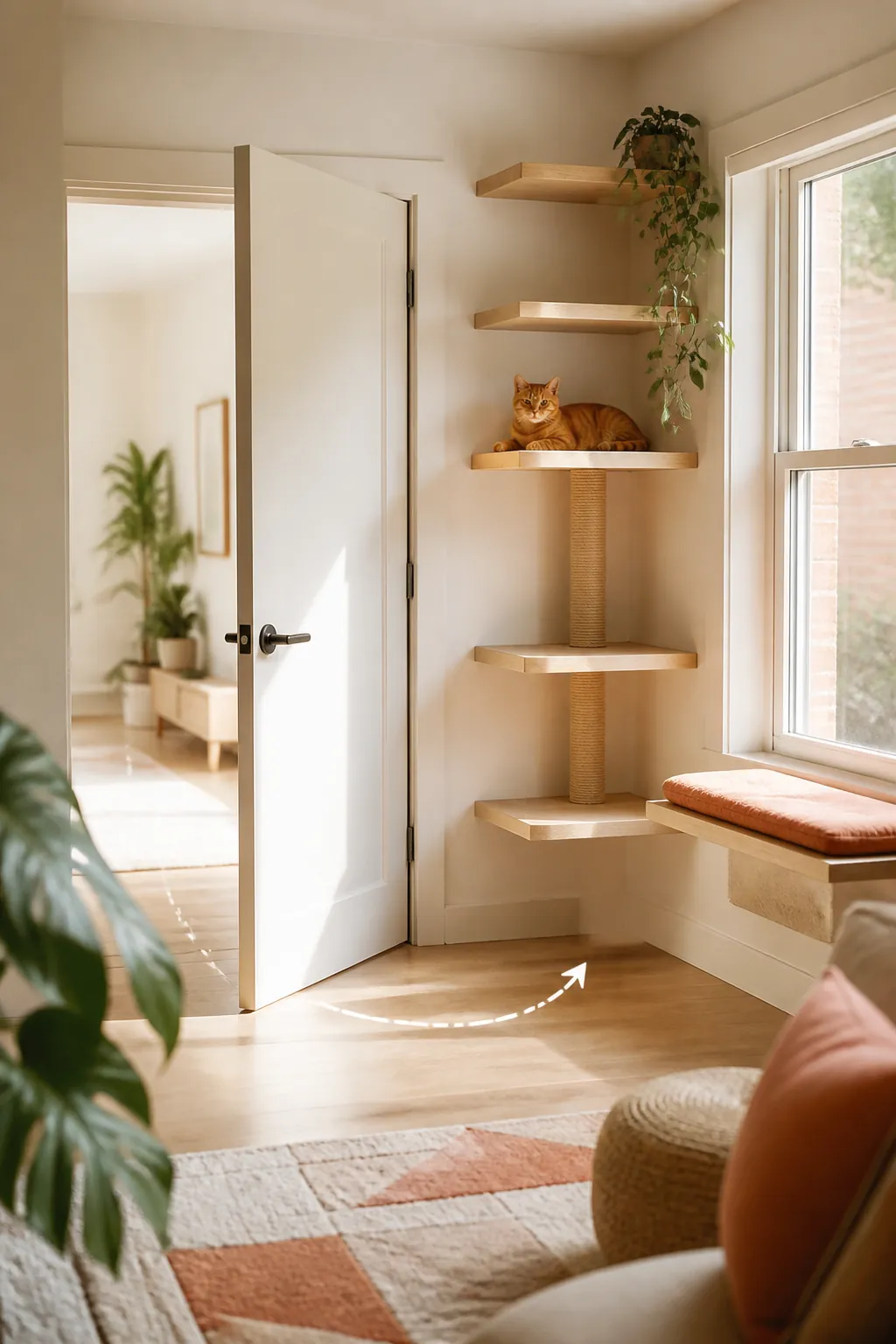
A corner near a doorway or a window gets checked less carefully than an open stretch of wall, and it is exactly where a shelf gets knocked. Open every door and window near the corner fully and mark where the door edge or the window hardware reaches before finalizing height. A shelf set two inches lower than a swinging door, or one that blocks a window from opening past halfway, gets damaged or removed within the year.
9. Stagger a second shelf diagonally above the first, not directly over it
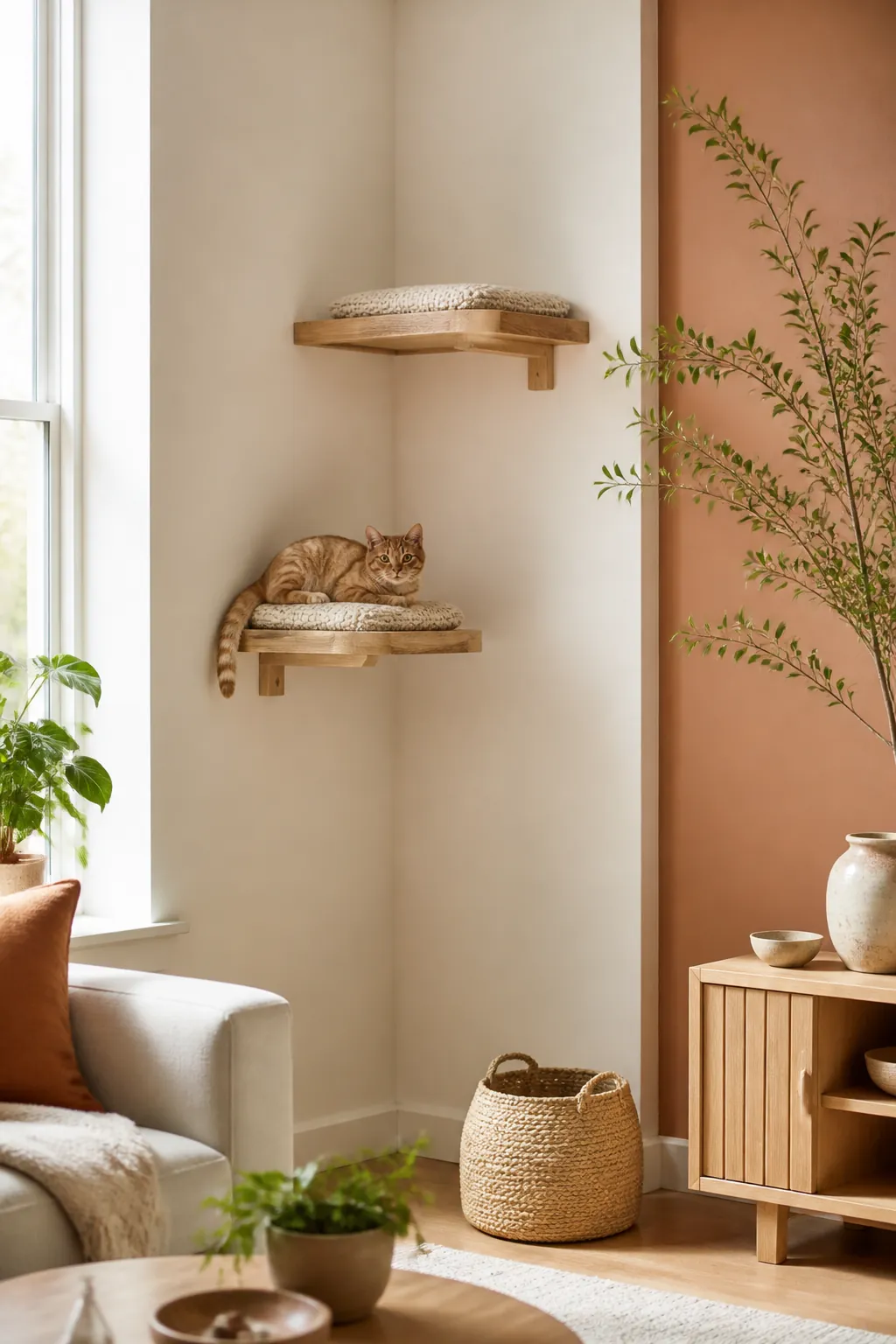
Stacking a second corner shelf straight above the first blocks the lower shelf’s headroom and turns the lower one into a crawl space a cat avoids. Offsetting the second shelf diagonally, toward one wall rather than straight up, keeps both usable and turns the corner into a short switchback instead of a single ledge. A vertical gap of 10 to 14 inches between the two, with the offset wide enough that a cat’s head clears the lower shelf’s underside, works for most adult cats without forcing a stretch.
10. Finish the corner to disappear, not to announce itself
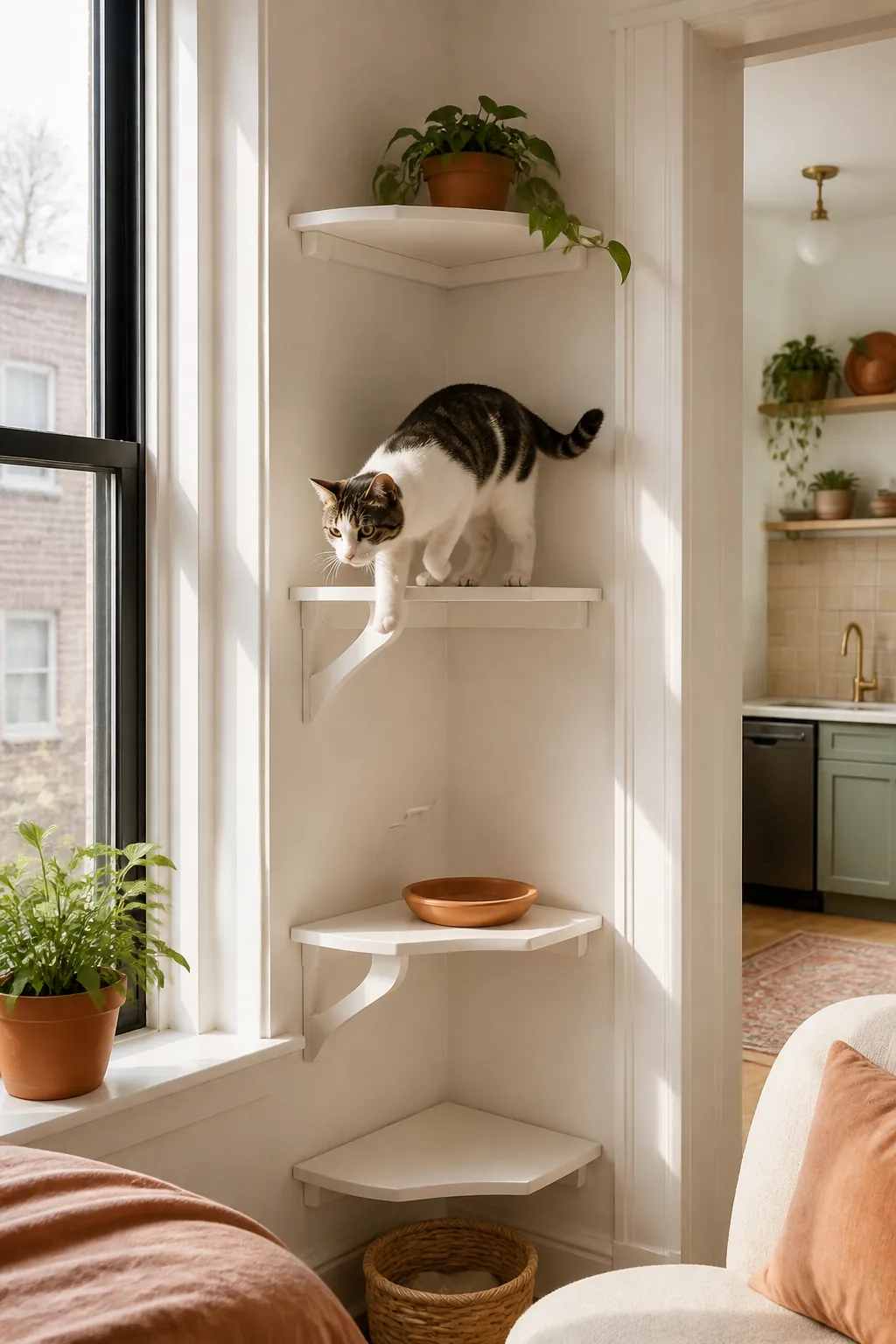
A corner is visible from more angles in a small room than a flat wall, which means a mismatched finish stands out longer. Match the shelf color to the trim or the wall rather than the furniture, since trim color is what the eye compares it against from across the room. A pale or white finish against pale walls reads as part of the room’s architecture. A dark stained shelf in the same spot reads as equipment, even when the shape is identical.
Where to start
Check the angle first, because everything else in this list assumes a true or near-true corner, and a lean of more than two or three degrees changes which products will actually sit flush. A cheap speed square settles this in under a minute and saves a return shipment.
Start with one corner shelf and the furniture already near it rather than planning the whole route at once. A single well-placed corner piece, used daily, tells you more about where the next shelf should go than a full plan drawn before any cat has tested the first step.
Map both walls for studs before drilling either one, and buy toggle bolts even if the listing says anchors are included, because the side that misses a stud is the side that needs them most. Corners carry impact from two directions, and that is exactly the kind of load a cheap anchor was never rated for.
Add the floating steps last, once the corner shelf itself is proven. They are the cheapest piece on this list and the easiest to reposition, which makes them the right place to fix a gap you did not notice until the route was already in use.