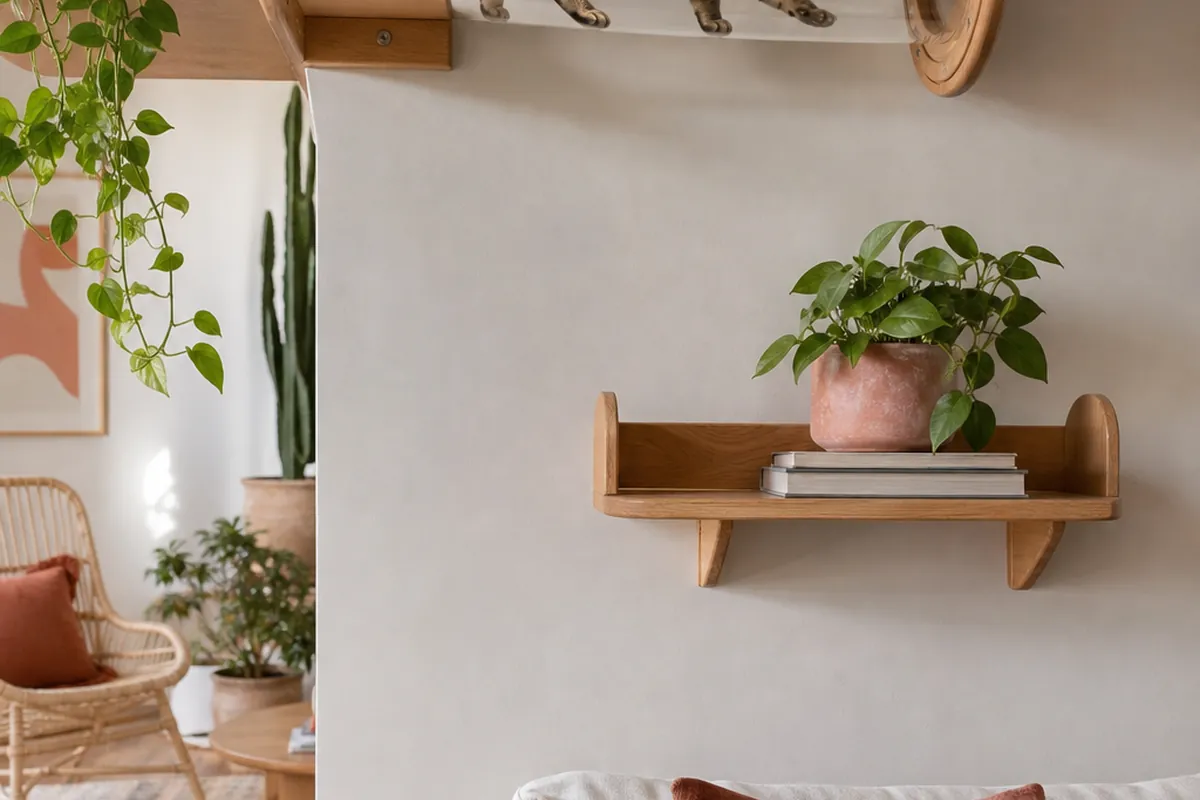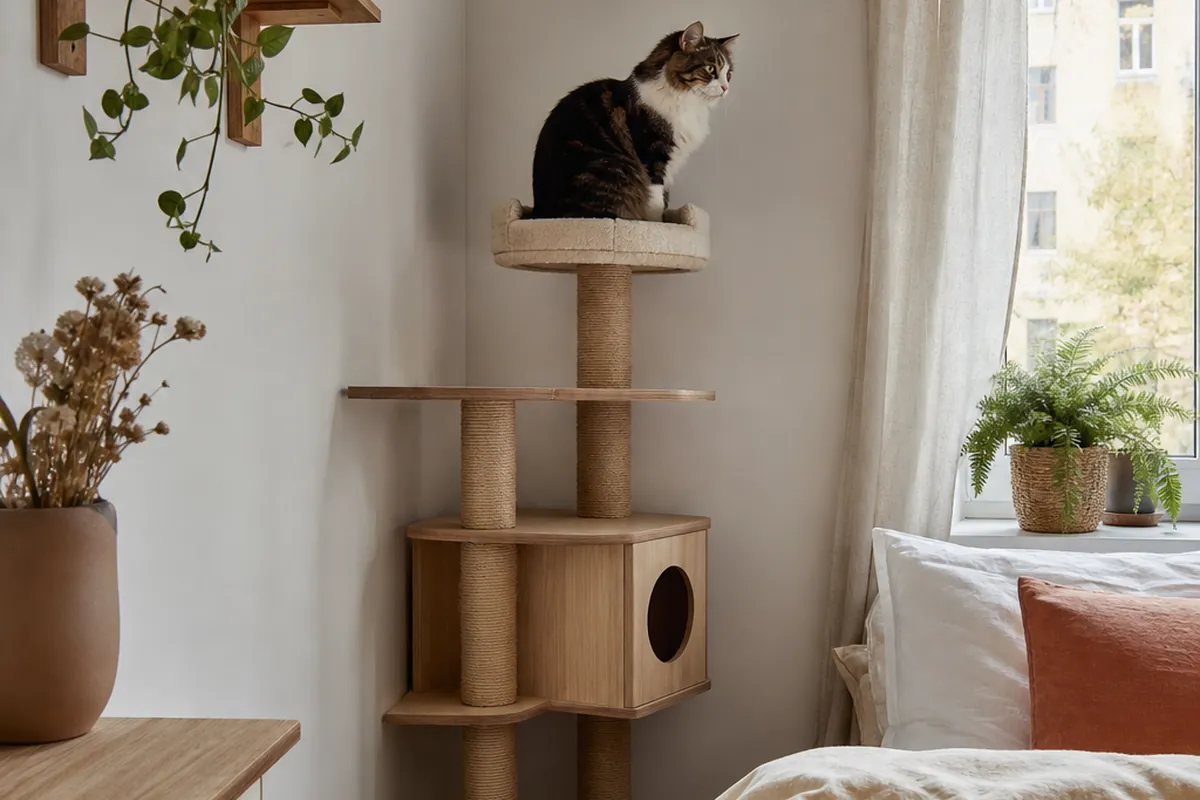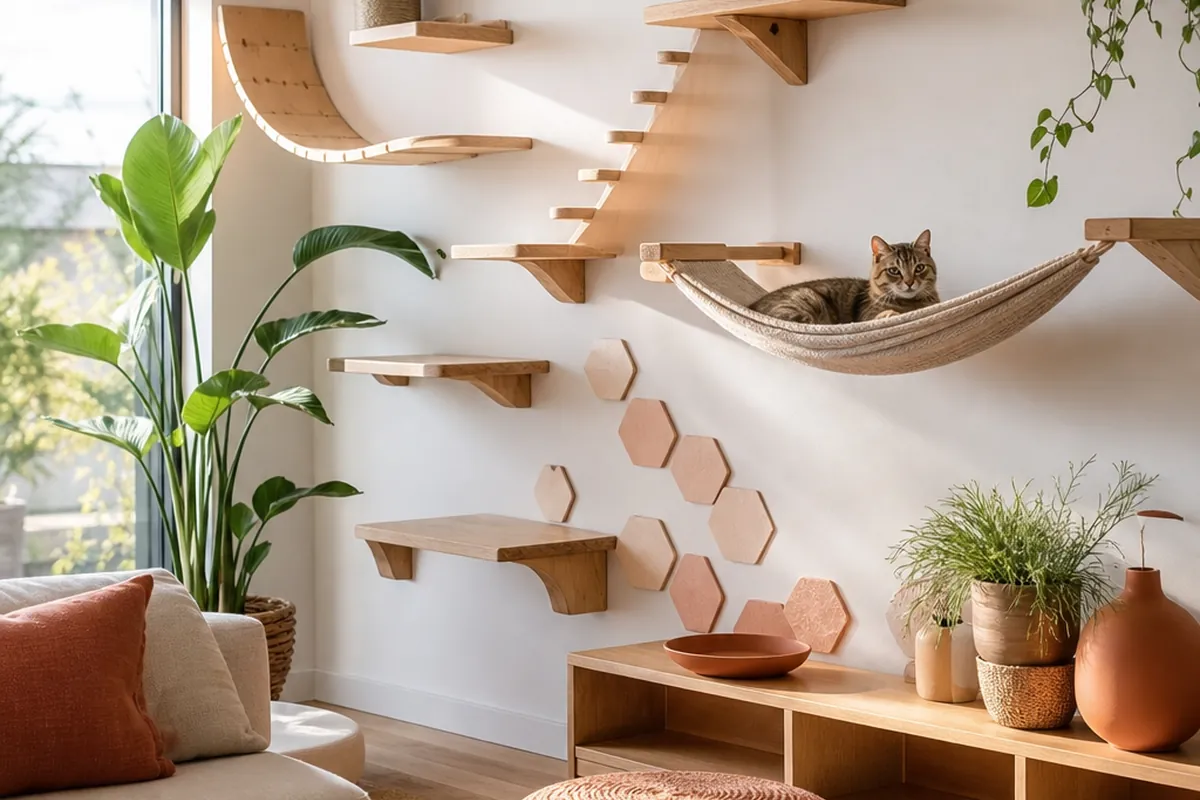
Floor space is the currency of a small apartment, and a cat tree spends it badly. A decent tower takes two to four square feet and holds it permanently, in a room where you are already stepping around a coffee table. The wall above it is doing nothing at all. That is the whole argument for a climbing wall, and it is a strong one.
Twelve ideas for building one that gives the cat more than the tower did while taking back the floor.
1. Count the square feet you are actually buying back
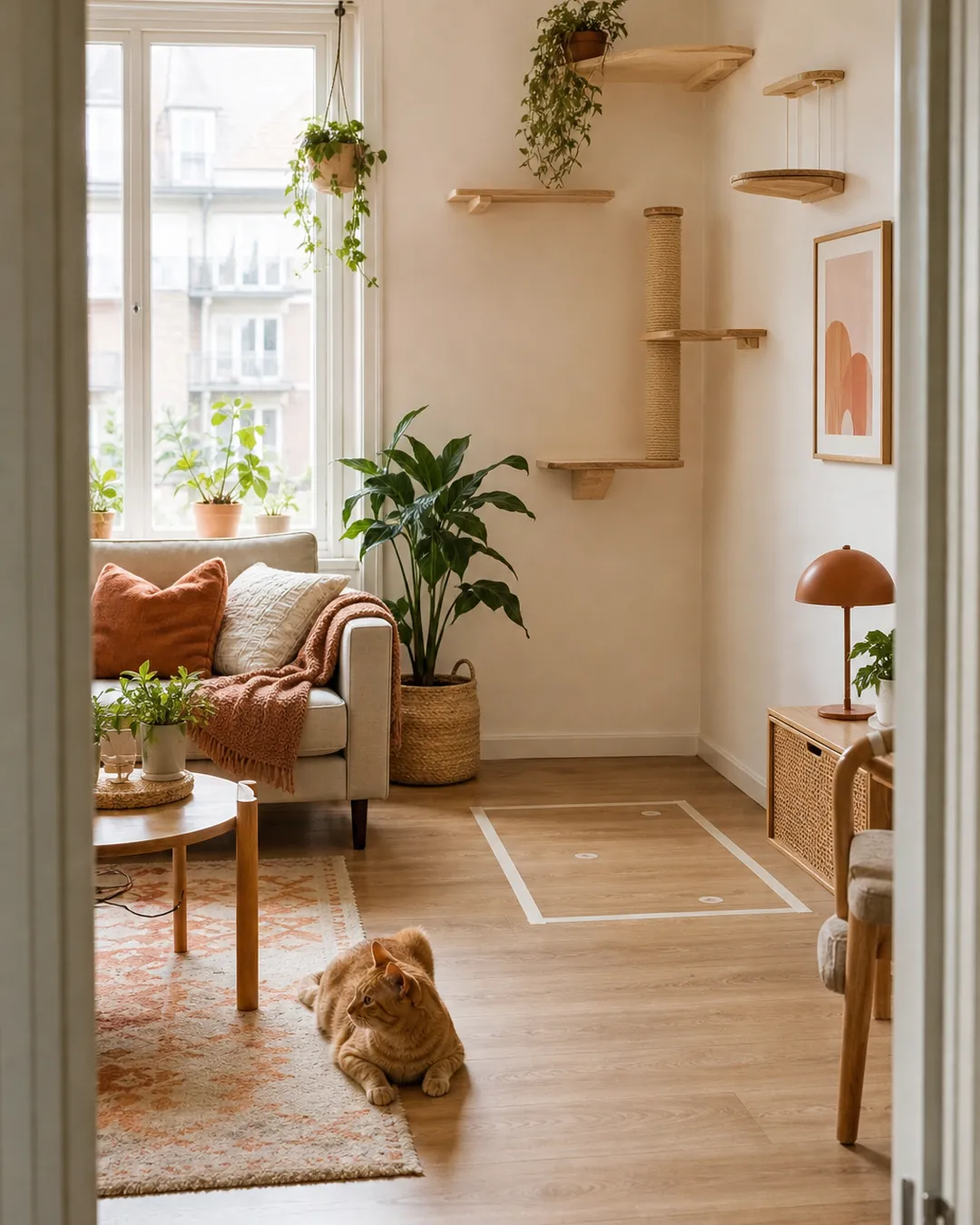
Before anything else, measure the footprint of what a tower would occupy and picture that patch empty. In a studio it is often the difference between a walkable path to the window and a permanent detour. That number is the reason to do this, and it is worth being specific about rather than vague. Measure it properly: a tower’s base is usually wider than the listing photo suggests, and you cannot put anything else in the clearance around it either, so the real cost in floor is larger than the base plate.
2. Build a circuit, not a ladder
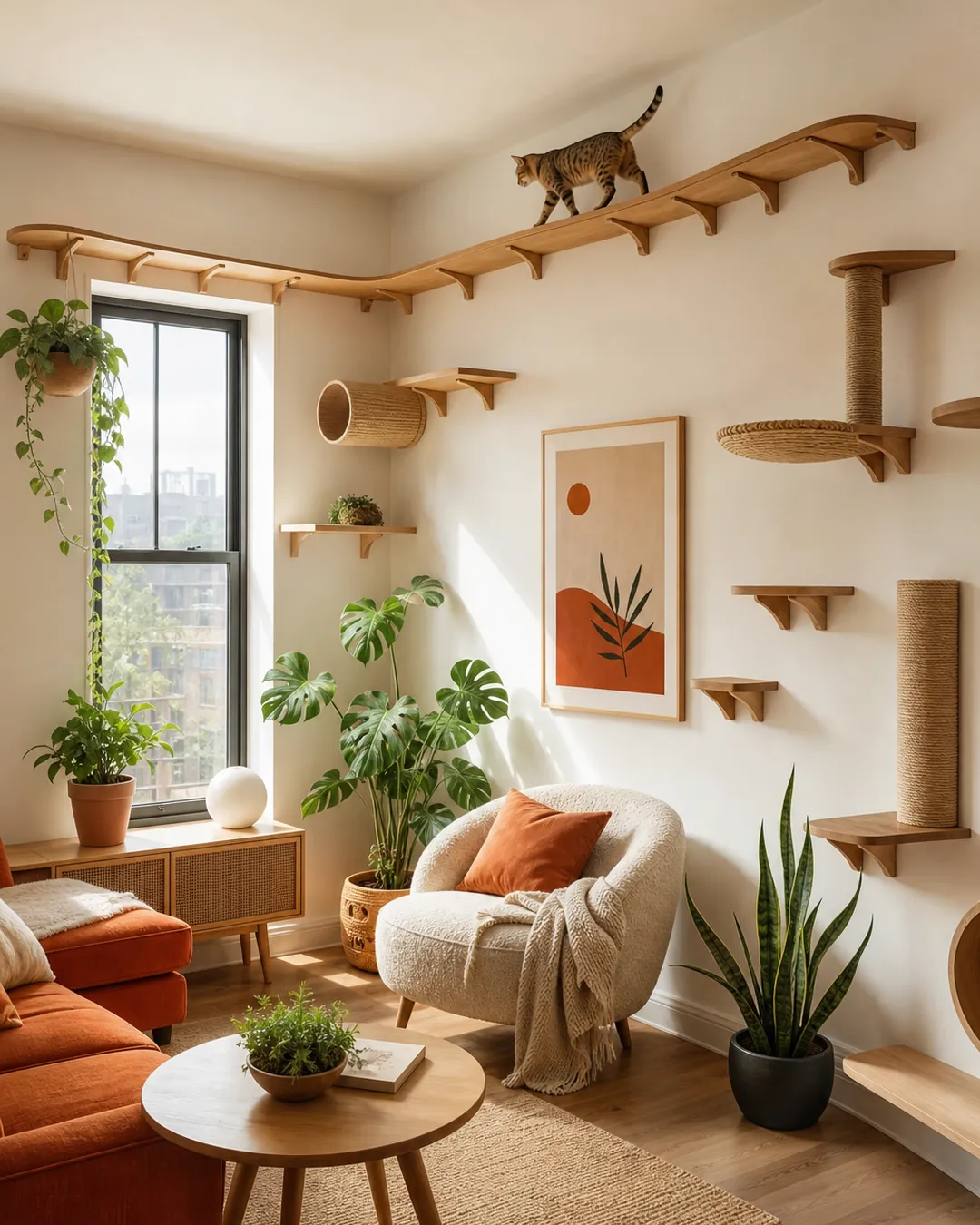
The most used walls are loops. A cat goes up one side, crosses, and comes down somewhere else, which is far more interesting than climbing to a dead end and reversing. A four piece wall shelf set gives you enough elements to form a short circuit rather than a single line, and a circuit is what turns a wall into somewhere a cat spends the day. Where the loop has to cross above a doorway or past a window, an enclosed section does that stretch better than an open shelf, and these cat wall tunnel ideas for apartment climbing cover how to size and support the span.
3. Turn the corner
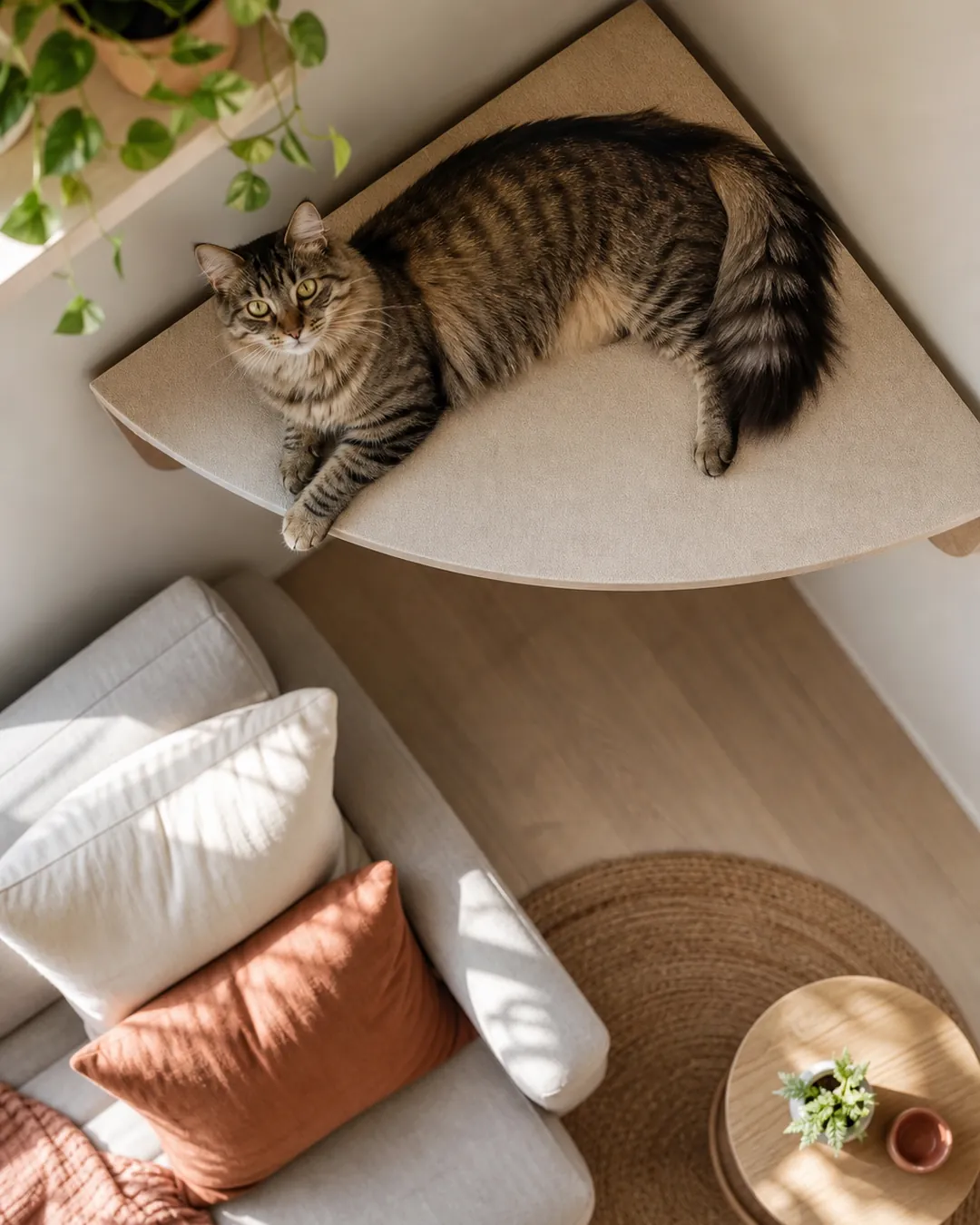
Corners are the most useful real estate on a climbing wall and the most often ignored. Two walls meeting give you a wider landing without adding depth to either wall, and they let the route change direction without a long horizontal run. If the room offers a corner, start the design there and work outward. An inside corner also gives a cat a wall at its back on two sides, which is the position most cats choose when they want to watch a room without being approached from behind.
4. Put the comfortable thing at the top
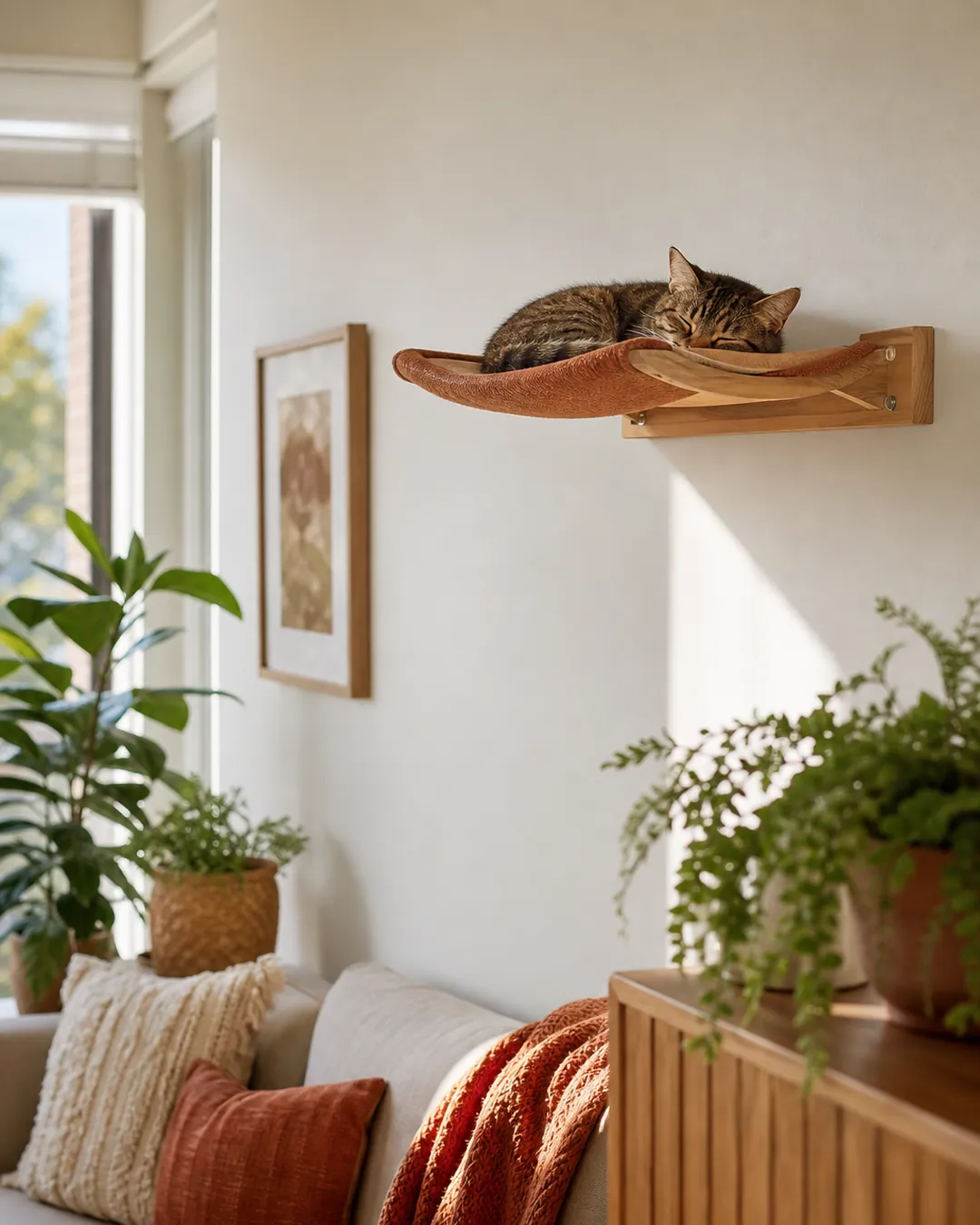
Cats climb to arrive somewhere, not to exercise. A wall hammock with two integrated steps makes the summit worth reaching, and in most homes it becomes the single most used component on the wall. A route ending in another flat plank gets climbed and abandoned.
5. Run the route over furniture, not beside it
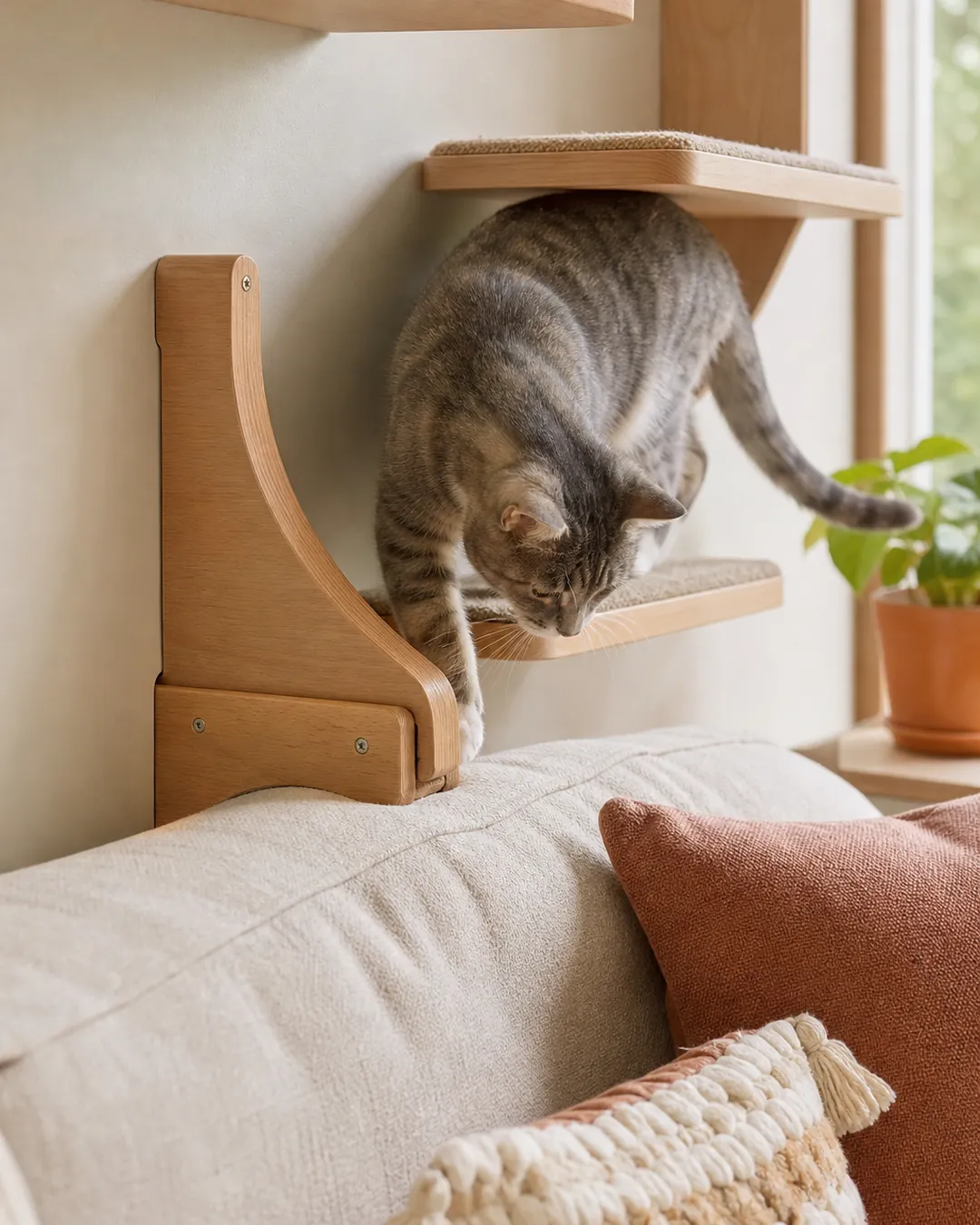
The wall above a sofa or a sideboard is the easiest to reach and the easiest to leave, because the furniture is the entry and the exit. It also means a fall lands on upholstery rather than a hard floor. Keep the lowest shelf close enough that a cat can step up rather than leap.
6. Use the zone above standing head height
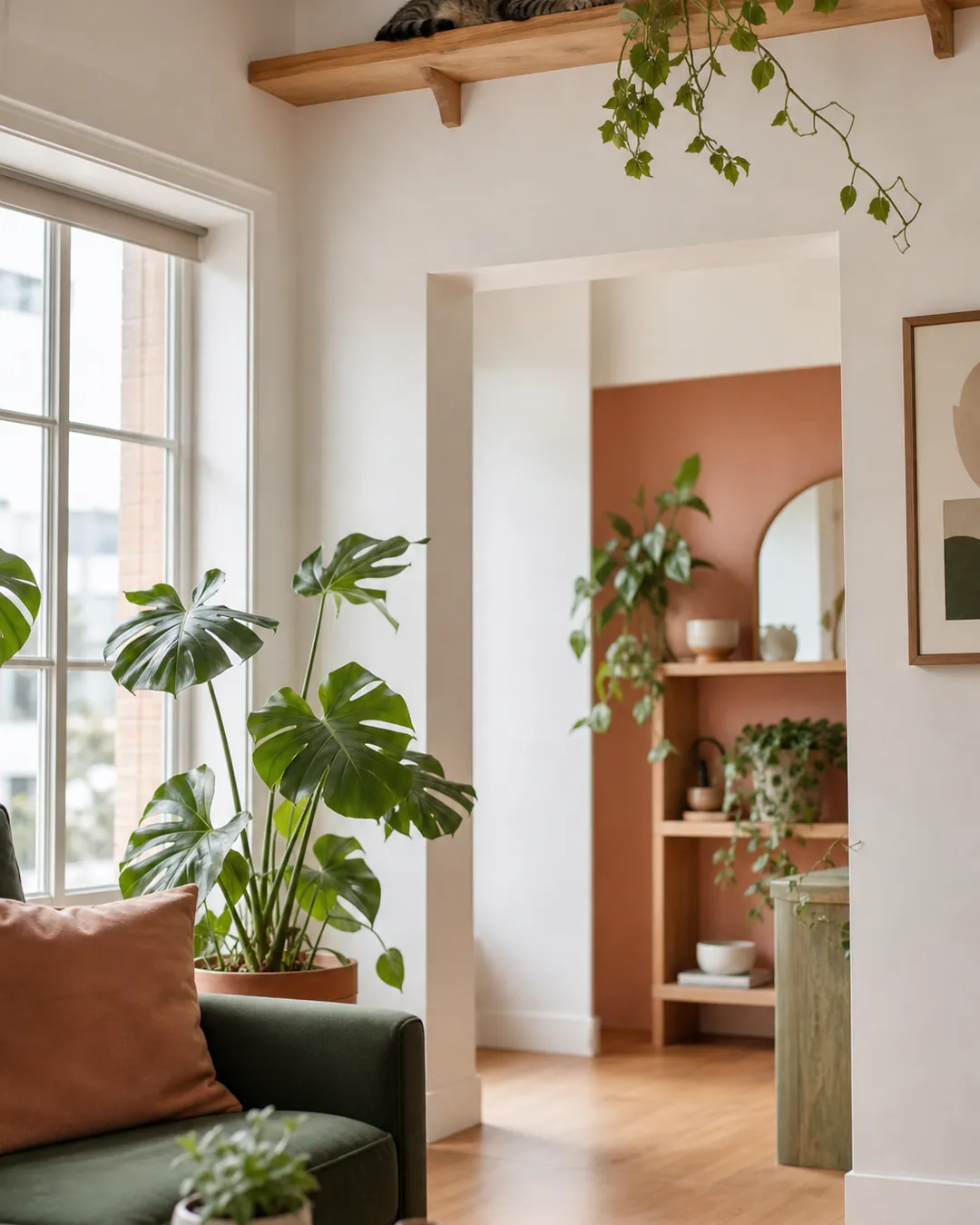
Around six feet up, a shelf stops being part of your room and starts being the cat’s. That is the height where cats settle rather than pass through, because nothing walks past at eye level. Below that they use the route; above it they live on it. This is the height worth spending money on, so if the budget only stretches to one wide, well made platform, put it up there rather than distributing the cost evenly across the climb.
7. Leave passing places if you have two cats
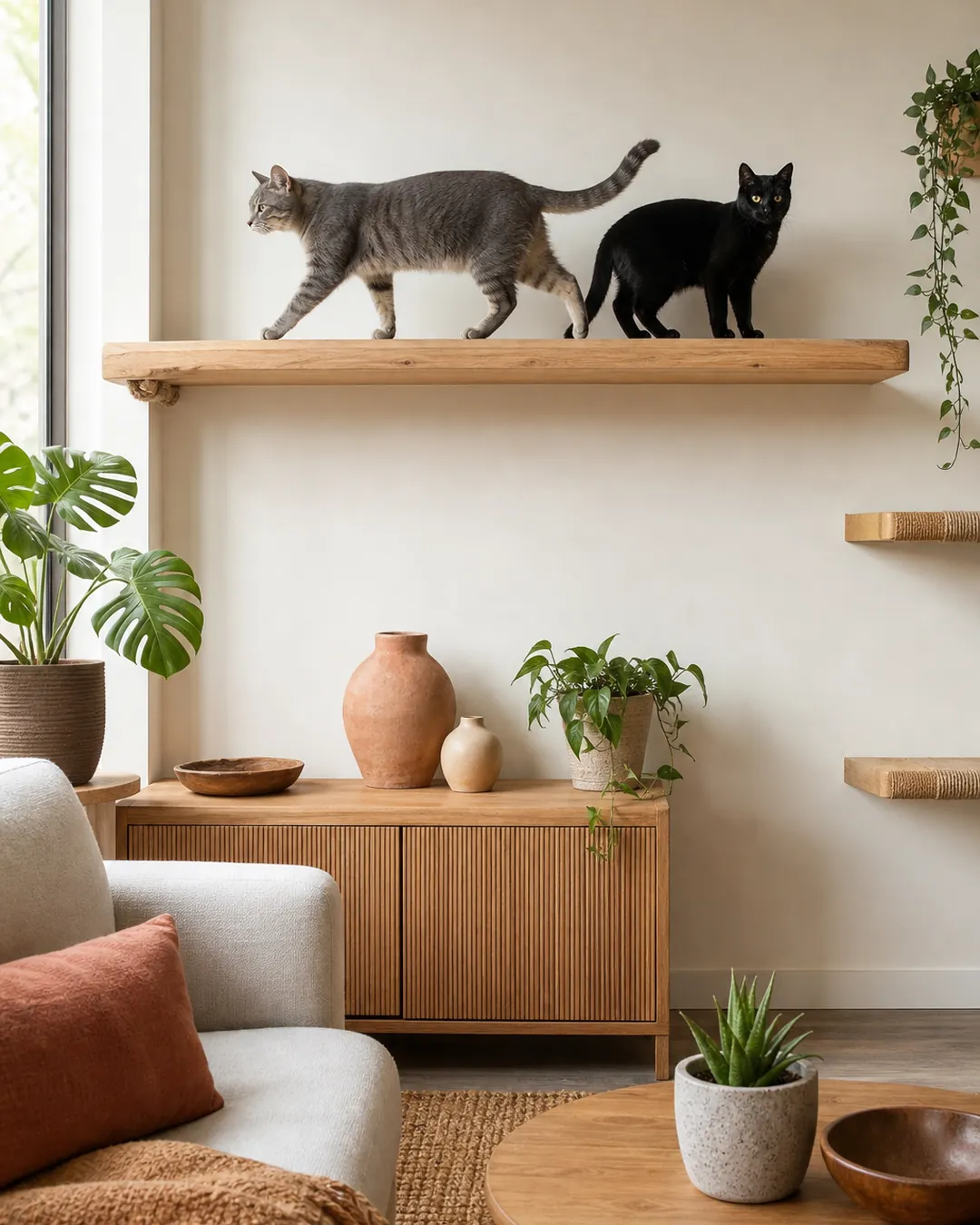
A single-file route creates confrontations, and the less confident cat simply stops using it. Wider platforms every few steps, or a second short branch, let one cat step aside. This is invisible in a photograph and decisive in practice. Watch for it in the first two weeks of use and you will see it immediately: one cat waits at the bottom while the other is up there, and within a month the waiting one has stopped bothering.
8. Give the wall more than one way down
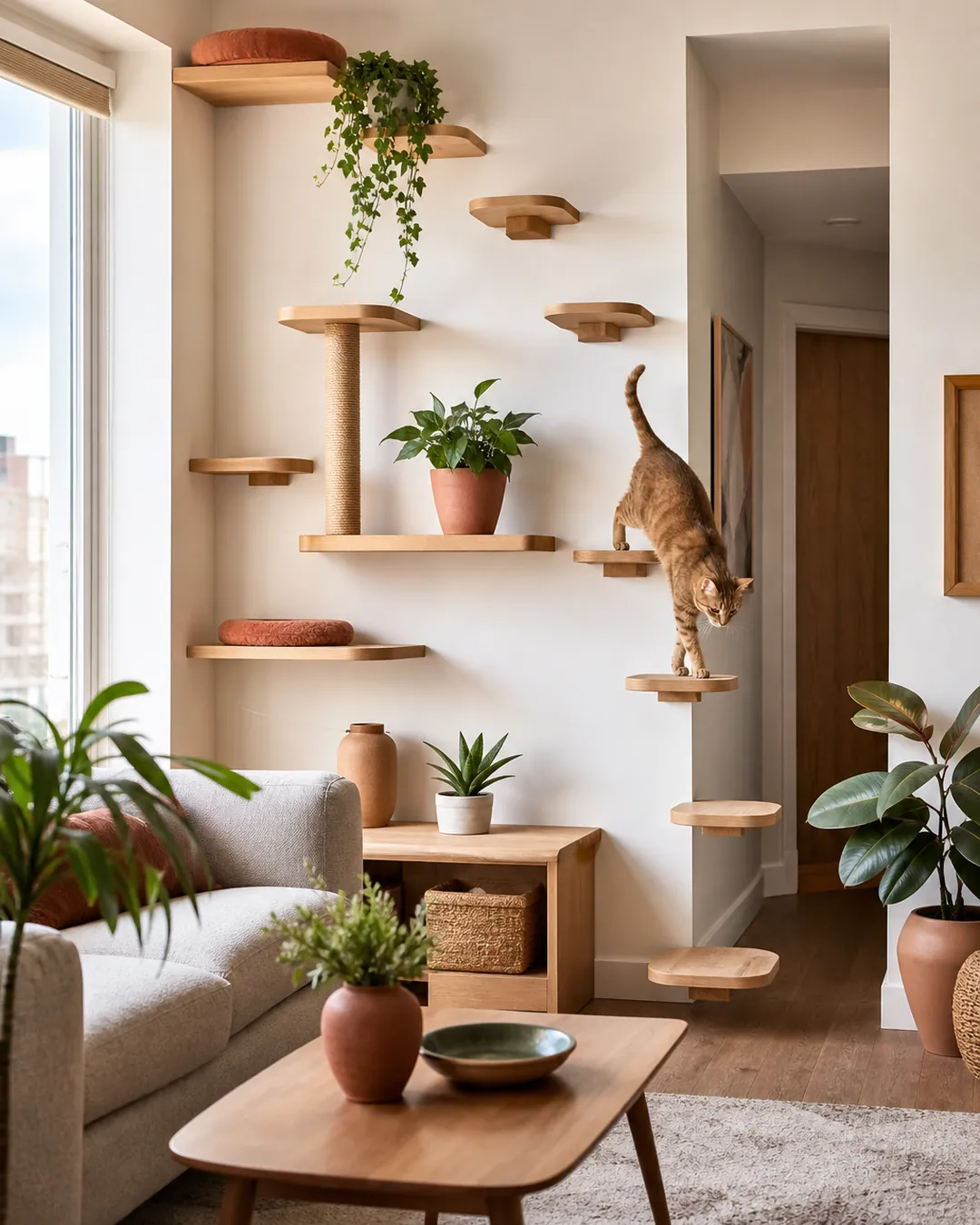
Coming down is the part cats find hard, and it is where they get cautious with age. Design a descending sequence rather than assuming the climb works in reverse, and make sure the lowest exit lands on something soft or on furniture. A wall with one exit is a wall that gets used half as much.
9. Put the scratcher at the bottom of the climb
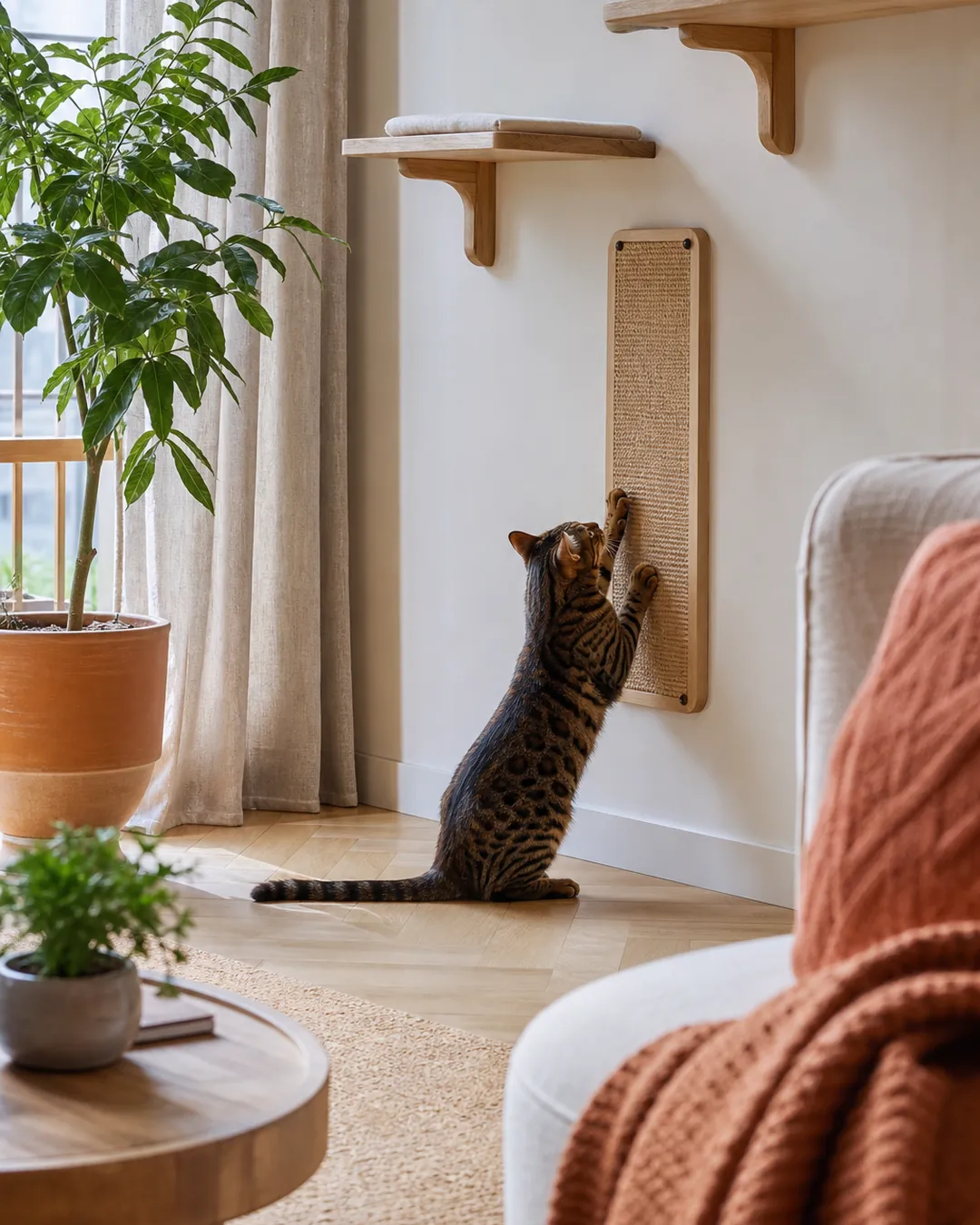
Cats stretch at the start of a route, and stretching turns into scratching on whatever is nearest. A wall mounted sisal scratcher with replaceable sleeves intercepts that at exactly the right point, and the replaceable sisal matters, because a scratcher that cannot be refreshed is a piece of furniture with a two year life.
10. Keep the wall away from the television and the bed
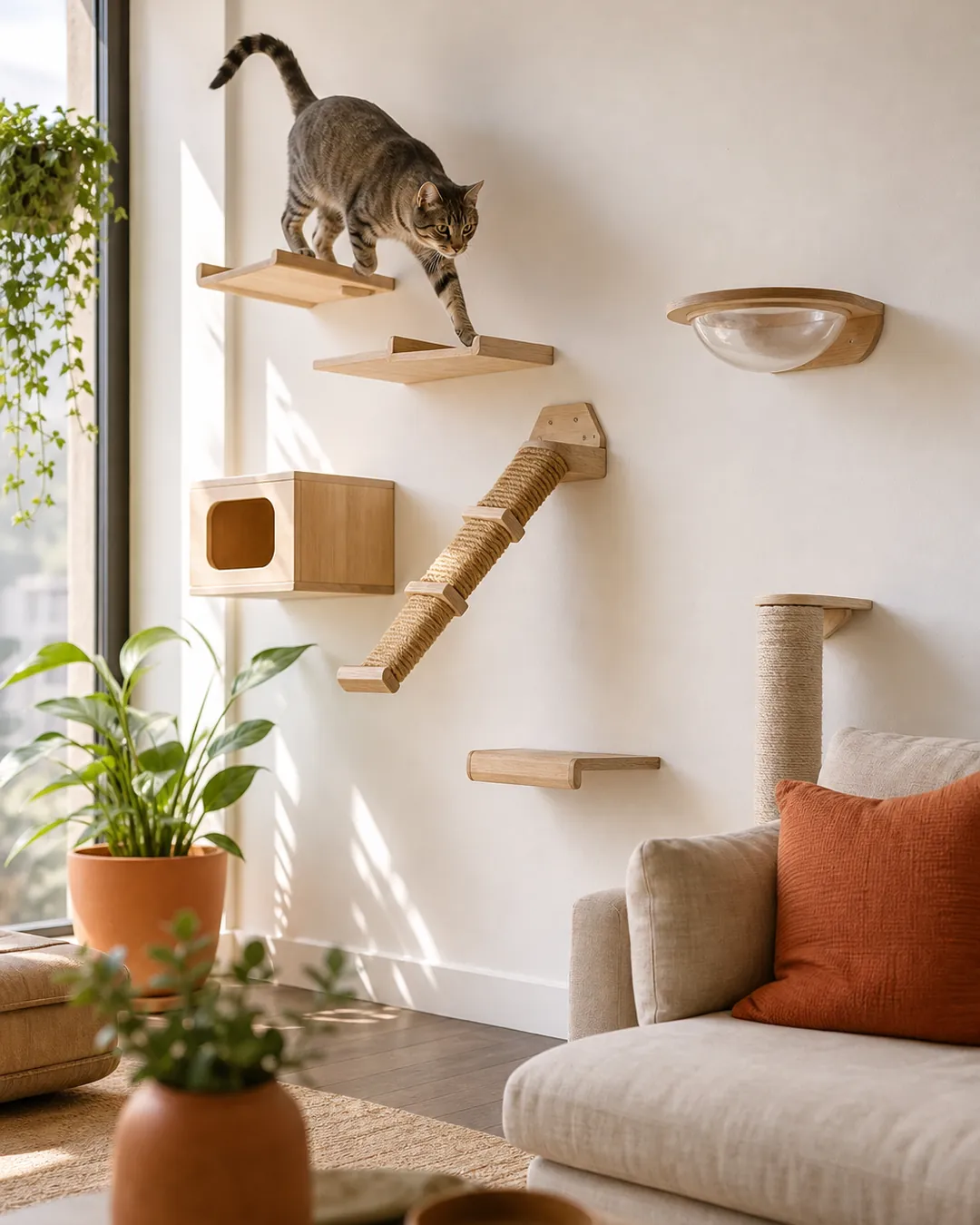
Two positions cause regret. Above a television, because a cat on a shelf overhead becomes a permanent distraction and a dust source. Directly above a bed, because a route used at four in the morning is a route you hear. A few feet of offset costs nothing at planning stage and is expensive later. The same goes for anything directly above a dining table or a kitchen counter, where fur landing from six feet up is a genuine nuisance rather than a small one.
If the bedroom is the only wall you have, the compromise is a shorter, quieter route on the far side of the room, and small bedroom cat setup ideas lays that out without giving up the strip of floor by the door.
11. Match the finish to the room, not the pet aisle
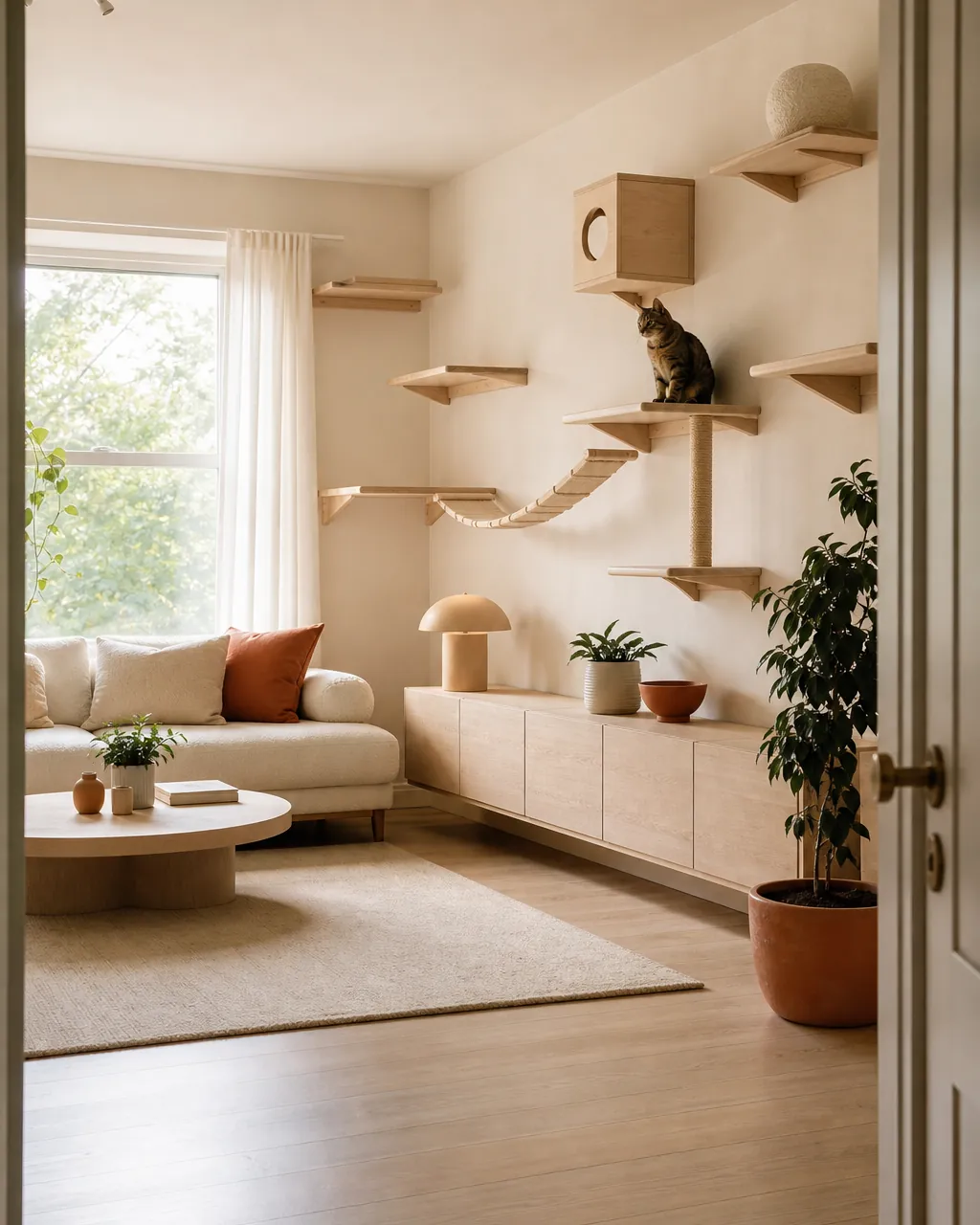
Wall furniture is visible from every seat in a small apartment, so the finish carries more weight than it would in a house. Pale wood, white or a color already present in the room disappears into the wall. Carpet in a loud contrast reads as equipment bolted to your living room, which is what people mean when they say a cat wall looks cluttered.
12. Plan for cleaning before you build
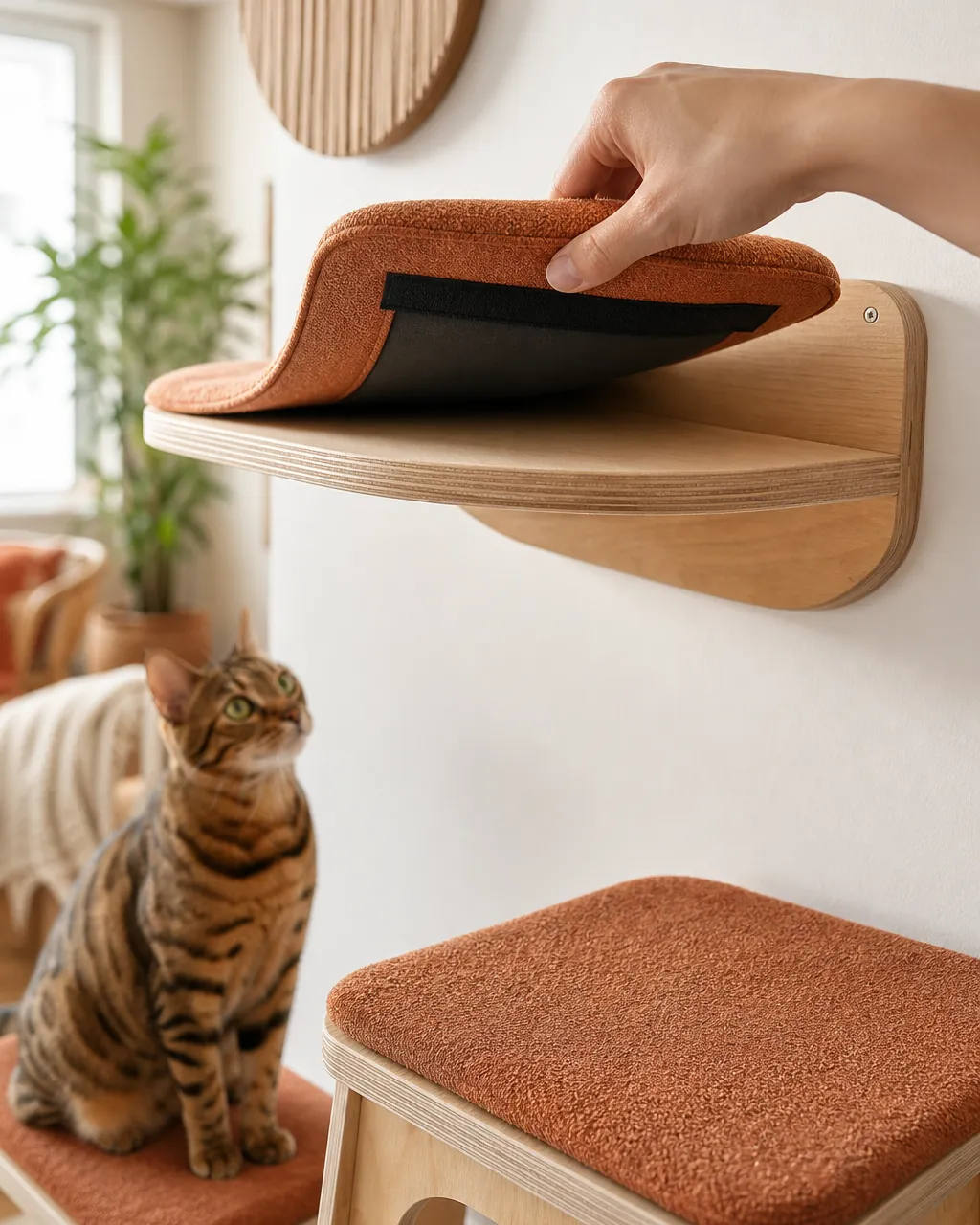
Everything at six feet collects dust, and anything with fabric collects fur. Choose removable, washable pads over glued-on carpet, and keep the whole route reachable from a step stool you already own. A wall you need a ladder to clean is a wall that stays dirty, and the pads are the first thing visitors notice. Buy a spare set of pads with the shelves if the maker sells them, because fabric parts are usually the first thing discontinued and a mismatched replacement two years later undoes the finish you chose carefully at the start.
Where to start
Pick the wall by looking at where the cat already goes rather than where the wall is emptiest. Cats have existing routes through a room, usually along furniture and toward a window, and a climbing wall that formalizes an established path gets adopted immediately. One built across the room from that path competes with it and loses.
Start small and prove it. Three pieces forming a short climb from an existing piece of furniture to a hammock is a complete route, and it tells you within a week whether the position is right. Expanding a wall that works is easy; relocating one that does not means patching a dozen holes.
Add the scratcher early rather than late. It is cheap, it protects whatever is currently absorbing that behavior, and it anchors the bottom of the route so the climb has an obvious beginning.
Then extend upward and sideways, one piece at a time, and keep checking the two things that decide whether a wall gets used: a step up that needs no leap at the bottom, and a way down that needs no drop at the top. Almost every abandoned cat wall fails one of those two, and neither is a hardware problem.