A small bedroom cat setup fails for one specific reason: everything competes for the same narrow strip of open floor between the bed and the door. Add a tree, a bed, a scratching post and a litter box the way a pet aisle displays them, side by side on the floor, and a ten by eleven room runs out of usable space before you have solved anything. The fix is not a smaller version of the same furniture. It is moving most of it off the floor entirely.
Twelve ideas, ordered from the measuring tape to the last thing you should bolt down.
1. Measure the actual floor space before you buy anything
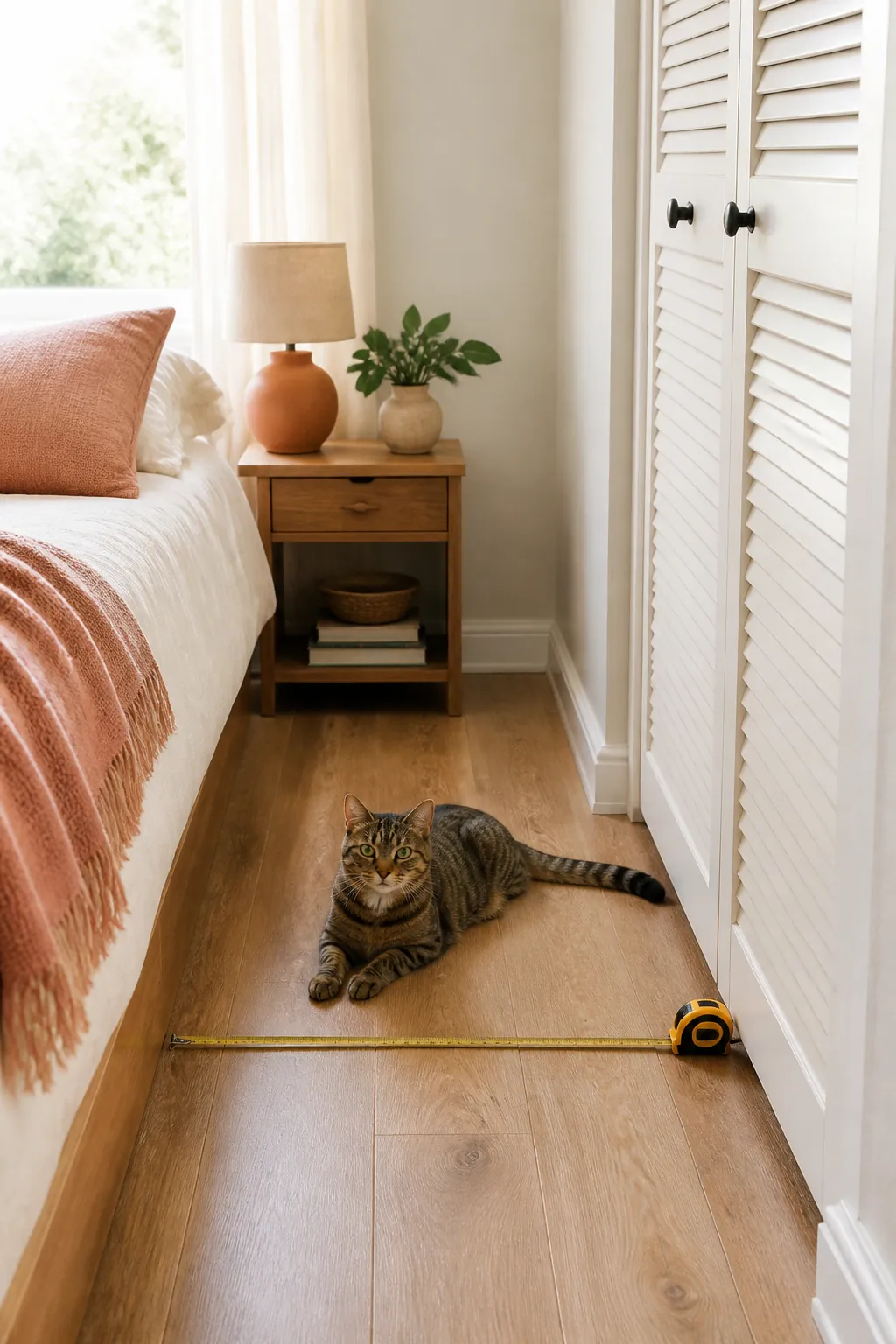
A queen bed alone accounts for roughly 30 square feet, and a dresser or closet swing takes a chunk more, which often leaves a usable strip only 24 to 30 inches wide along one wall. Walk that strip for a few days before ordering anything. Mark furniture footprints on the floor with painter’s tape first, since a box that looks modest in a product photo can be the exact width of the gap you were counting on.
2. Claim the corner the bed already leaves empty
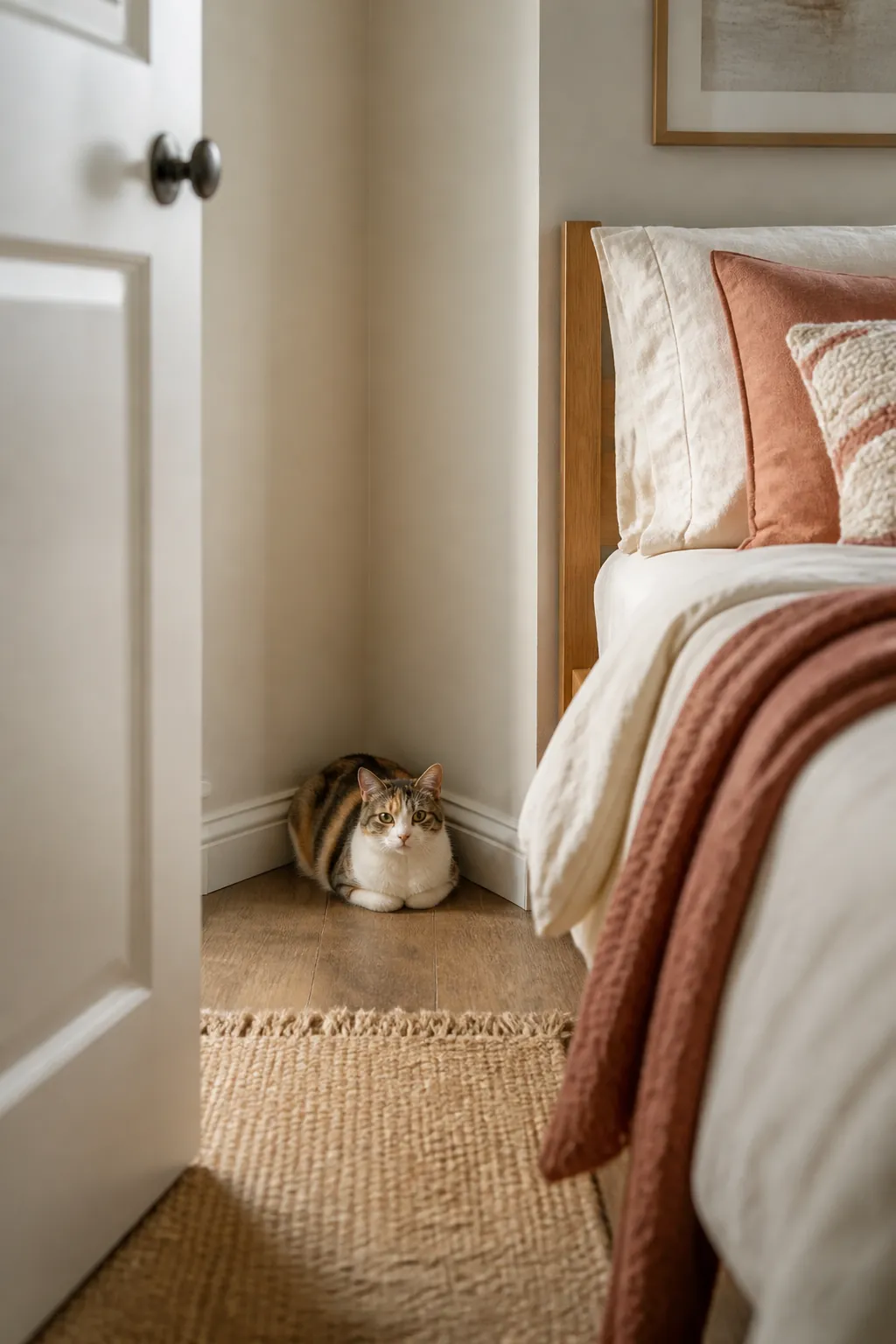
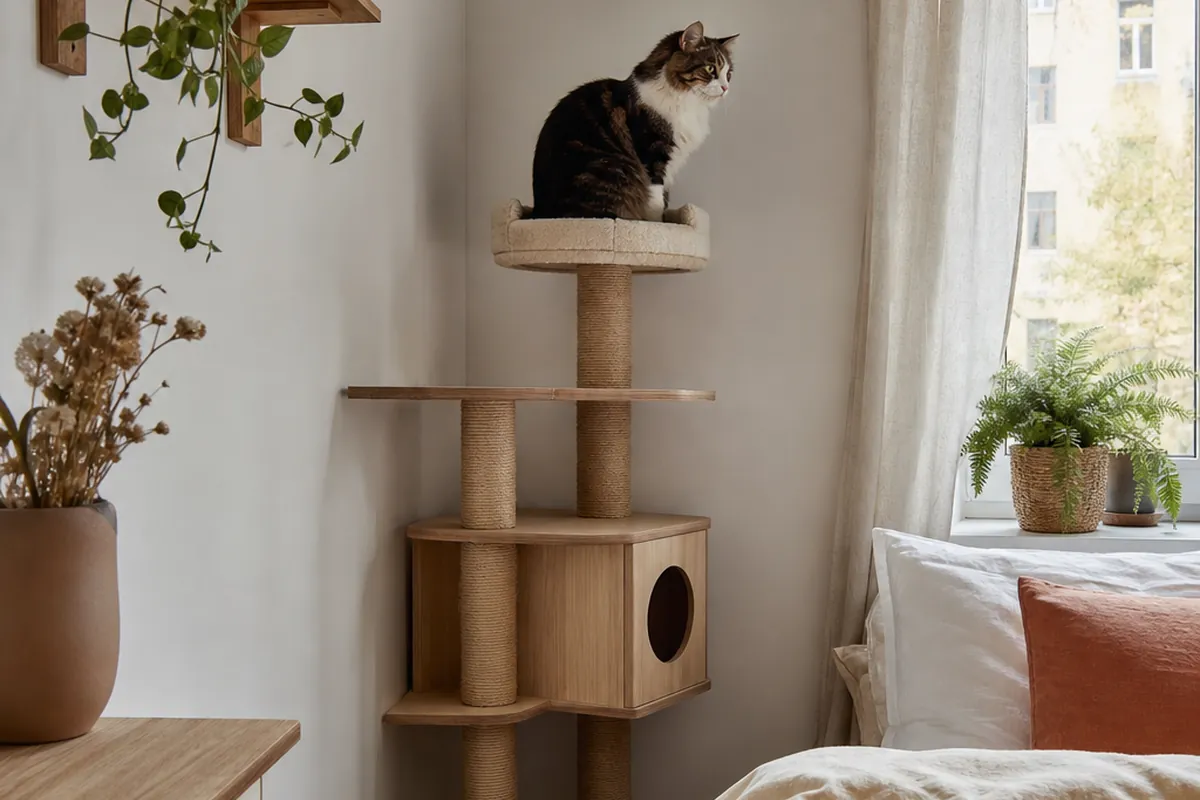
Every bedroom has one dead triangle, usually the corner beyond the footboard or the one behind an open door, that nobody walks through and nothing else uses, the same wasted corner a small apartment cat room leans on elsewhere in the home. That triangle is worth more than it looks, because furniture placed there adds zero net floor loss. Look for it before you look at furniture, since the corner decides which size and shape of tree will actually fit rather than merely squeeze in.
3. Buy the tree by footprint, not by listed height
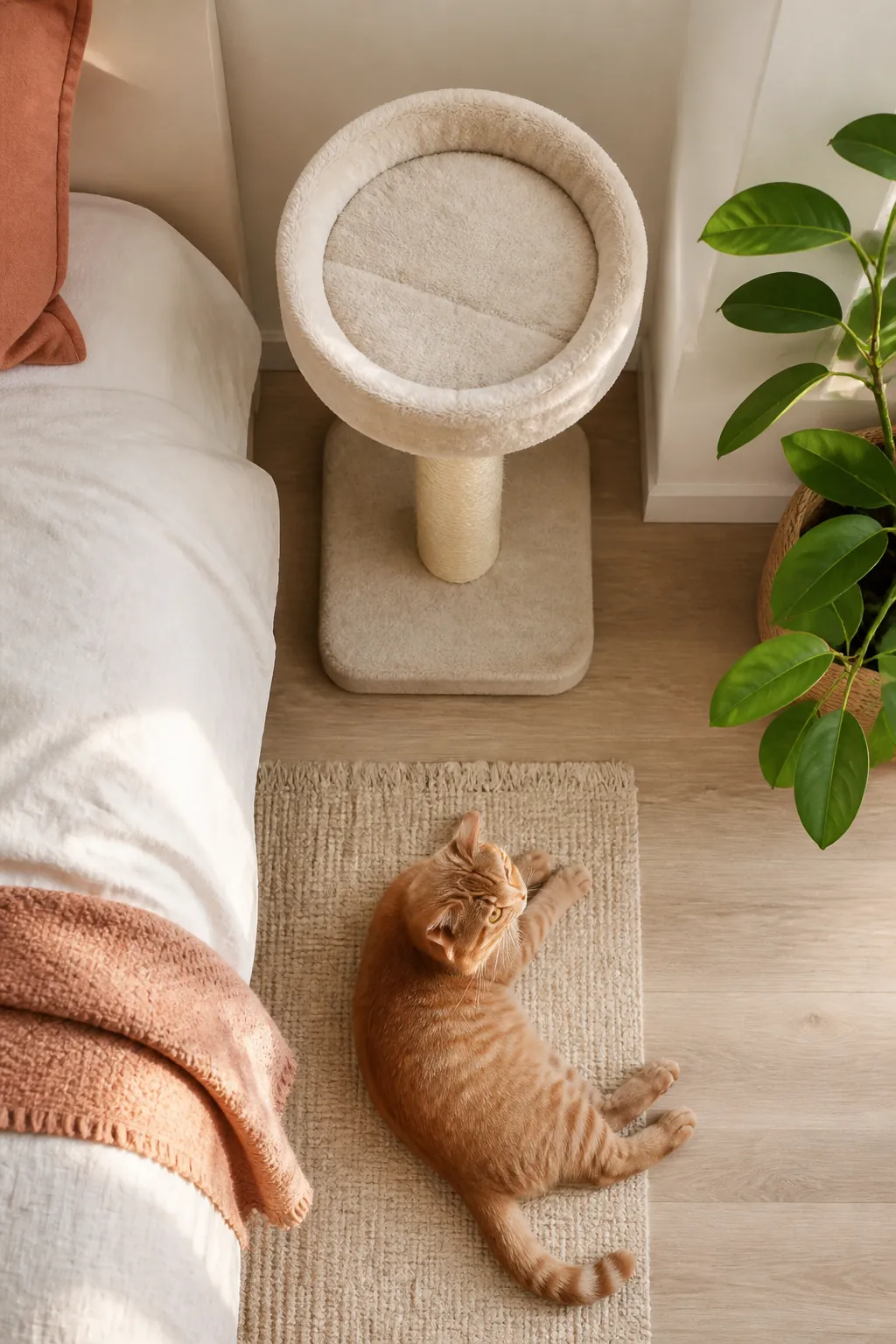
A compact cat tree with a sisal post and a cozy condo top is built with a small footprint, but the number that decides whether it fits your corner is the base dimension in the listing, not the overall height or the word “compact” on the box. Two trees built for small apartments can differ by six inches at the base, and six inches is the entire margin in a room this size. Check the listed base measurement against your own tape measurement of the corner before adding anything to a cart.
4. Put the climbing on the wall above the headboard, not the floor
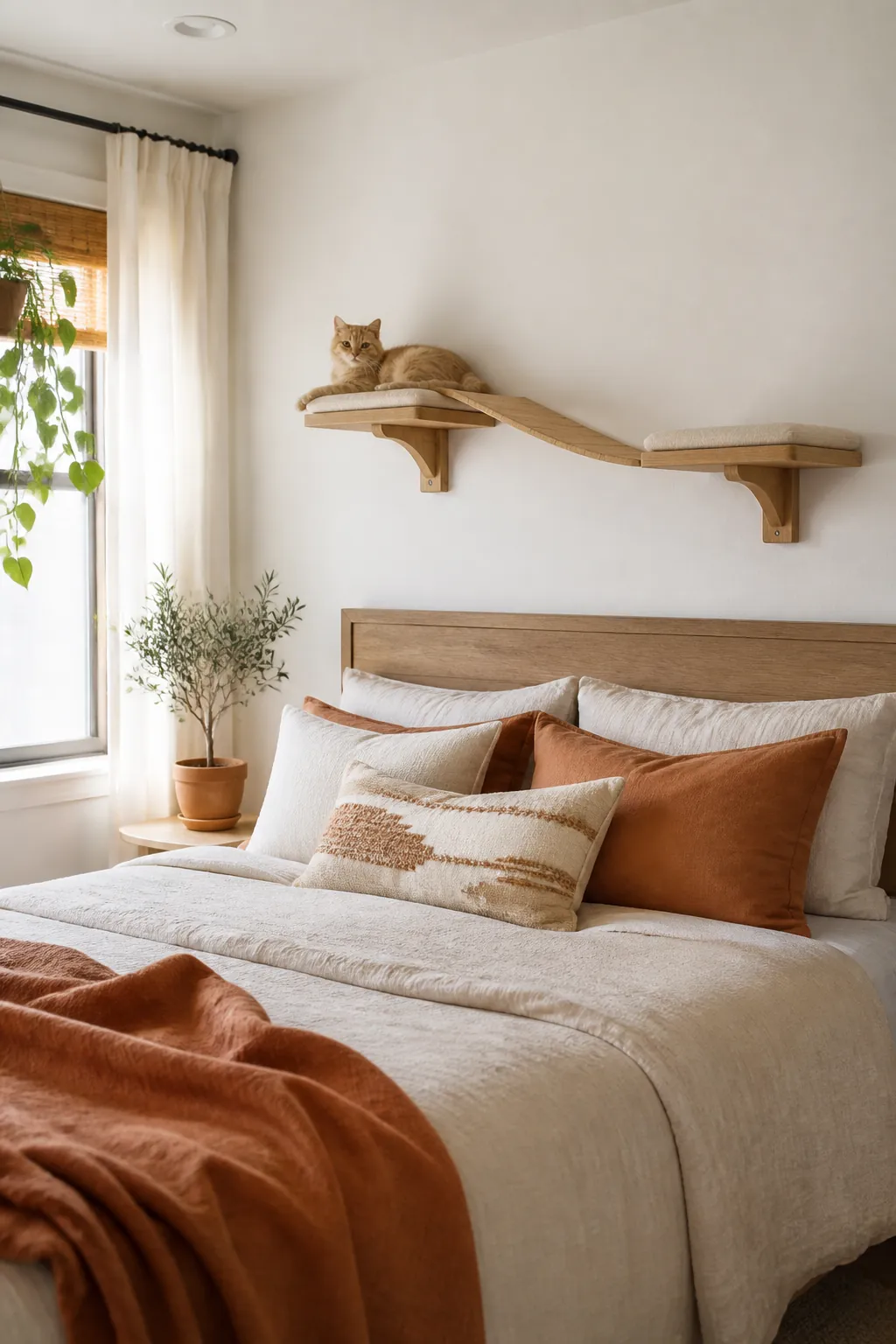
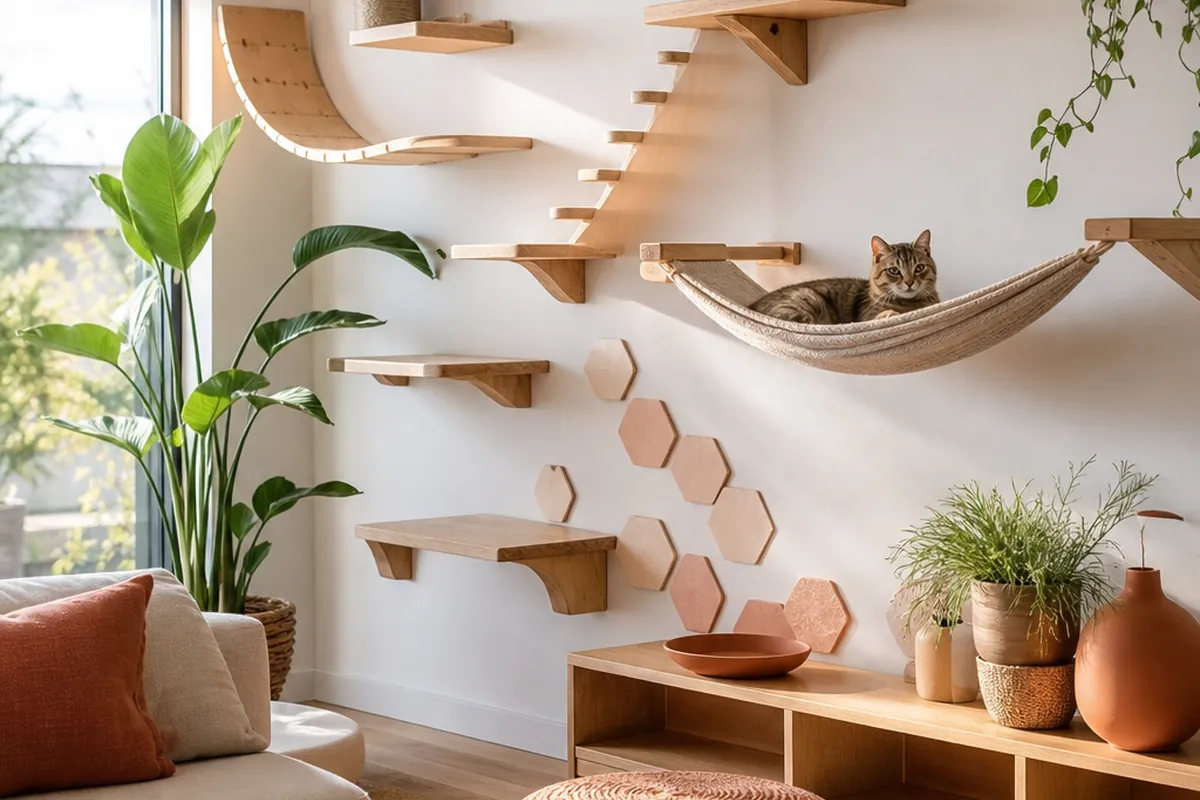
Once the tree has claimed the corner, additional height belongs on the wall rather than on a second piece of floor furniture. A tree-shaped two-platform wall shelf mounted above and to the side of a headboard adds a second level with no floor footprint at all. Anchor into a stud, not just the drywall behind the headboard, and leave enough clearance that a cat landing on the lower platform is not landing on a sleeping person’s pillow. Eight to fourteen inches of rise between the two platforms is the workable range. Steeper than that and the jump gets skipped.
5. Turn a dresser or nightstand top into a free landing pad
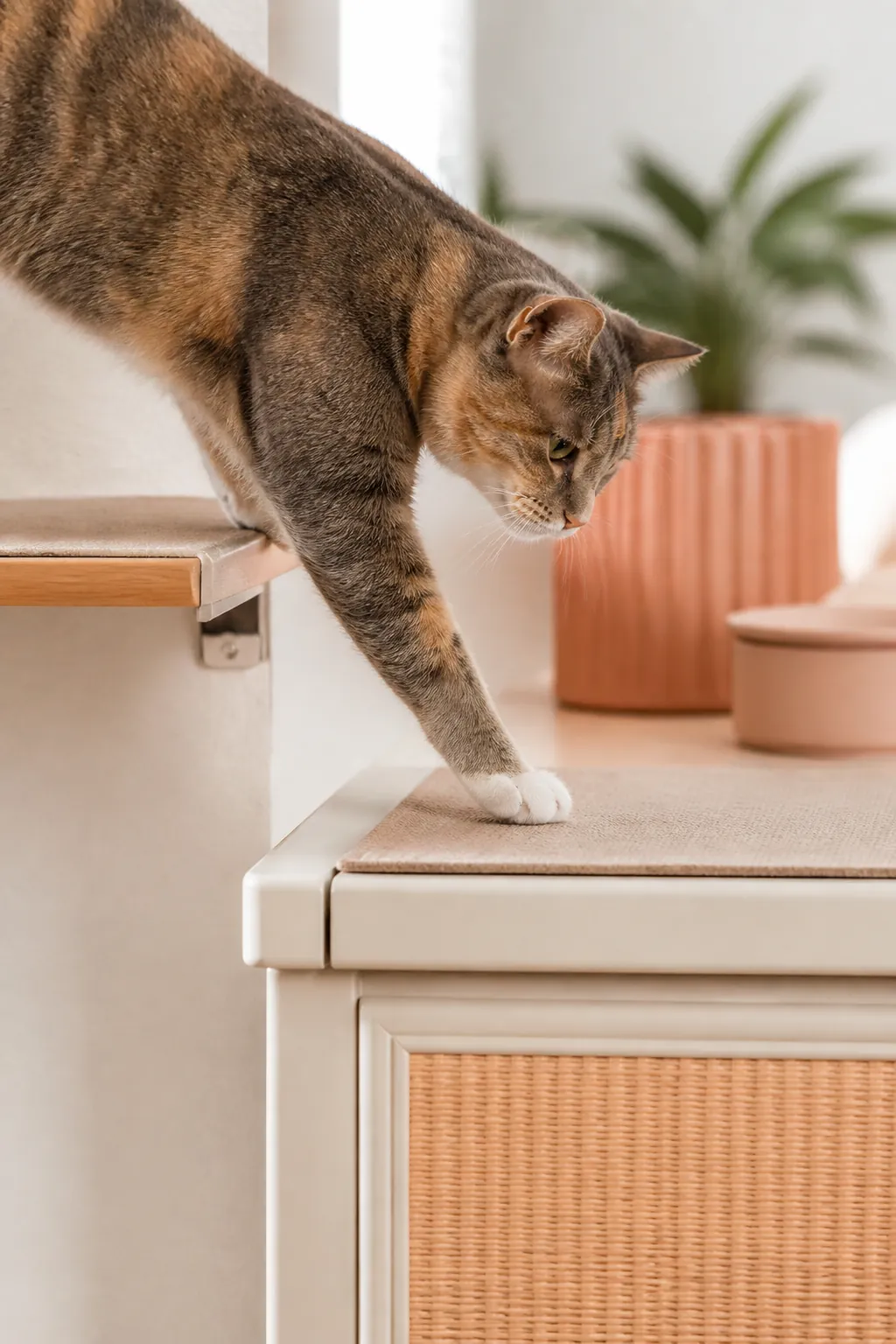
A cleared dresser top is a step you have already paid for. Remove the lamp and the tray, add a thin non-slip pad so nothing slides when a cat lands, and you have solved an intermediate step between the wall shelf and the floor without spending anything. Furniture at the wrong height gets walked past rather than used, so measure the actual gap between dresser top and the first wall shelf before assuming it works as a stepping stone.
6. Give the cat a low den to disappear into, not just a high one
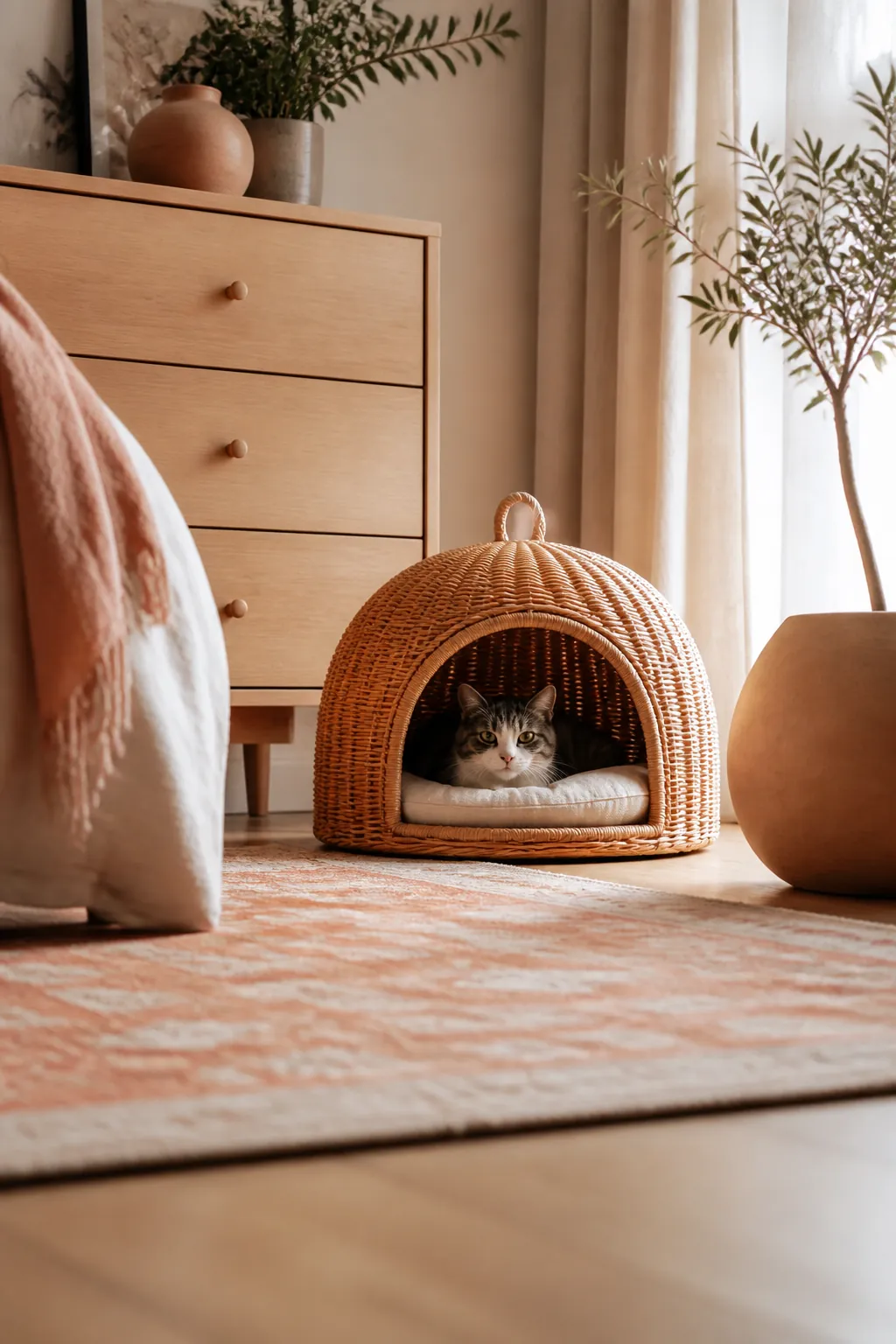
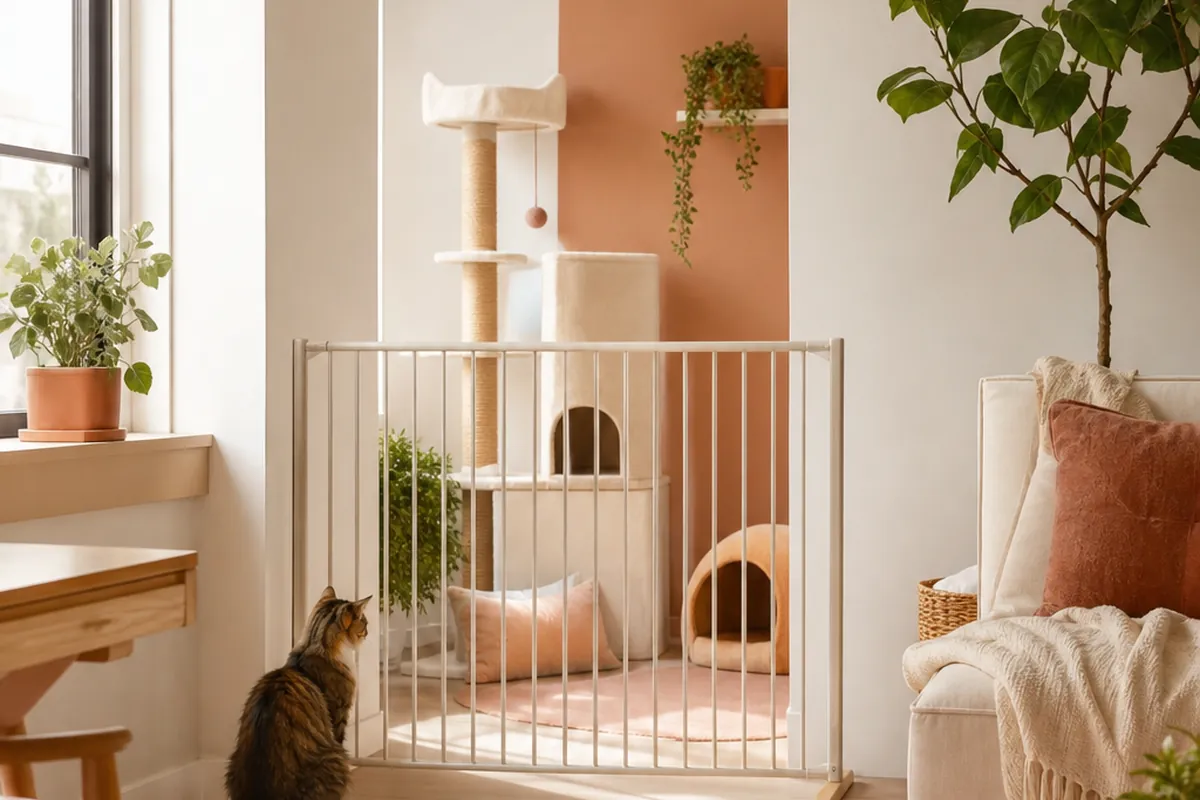
Height solves watching the room. It does not solve wanting to disappear from it, which is a different instinct and needs a different kind of furniture. A natural rattan cat den set on the floor beside the dresser, rather than wedged under the bed frame where clearance is rarely enough for a domed shape, gives a fully enclosed retreat at floor level. Check your bed’s actual clearance before assuming anything fits underneath it. Most bed frames sit four to six inches off the floor, and a domed den needs more than that. If the bedroom runs cold in winter, that floor-level spot is also where warmth matters most, and these heated cat bed ideas for a cozy apartment winter cover low-wattage beds and routing the cord safely in a small room.
7. Watch the closet door’s swing before you place anything
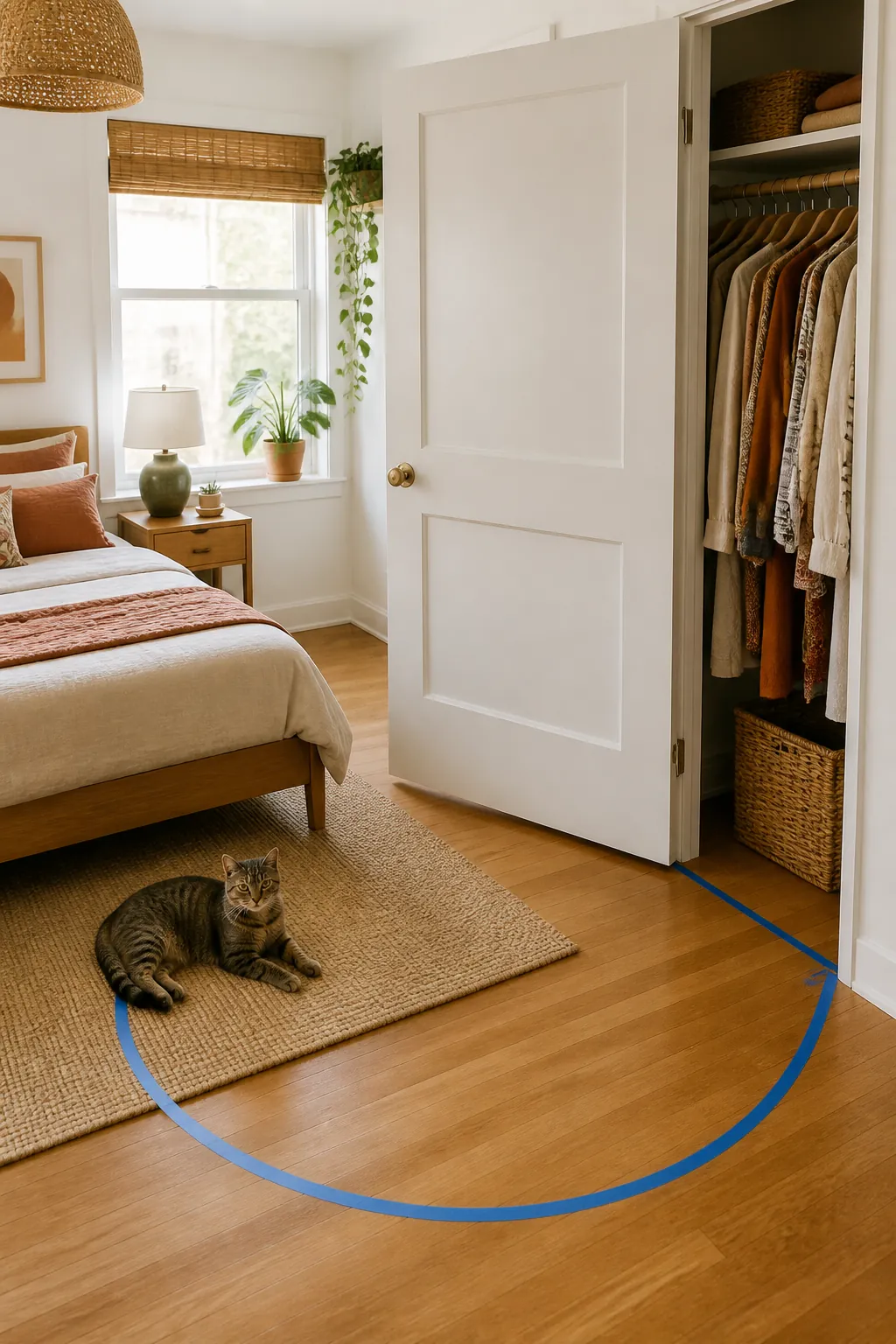
A closet door swings through an arc of roughly 24 to 30 inches, and that arc has to stay completely clear or the door will not open. This is the single most common placement mistake in a small bedroom setup: a tree or shelf gets positioned in what looks like open floor, only for someone to discover on day one that the closet door now stops three inches short. Swing the door fully before you commit to a layout, not after the furniture is assembled.
8. Put the scratching post at the foot of the bed, not the doorway
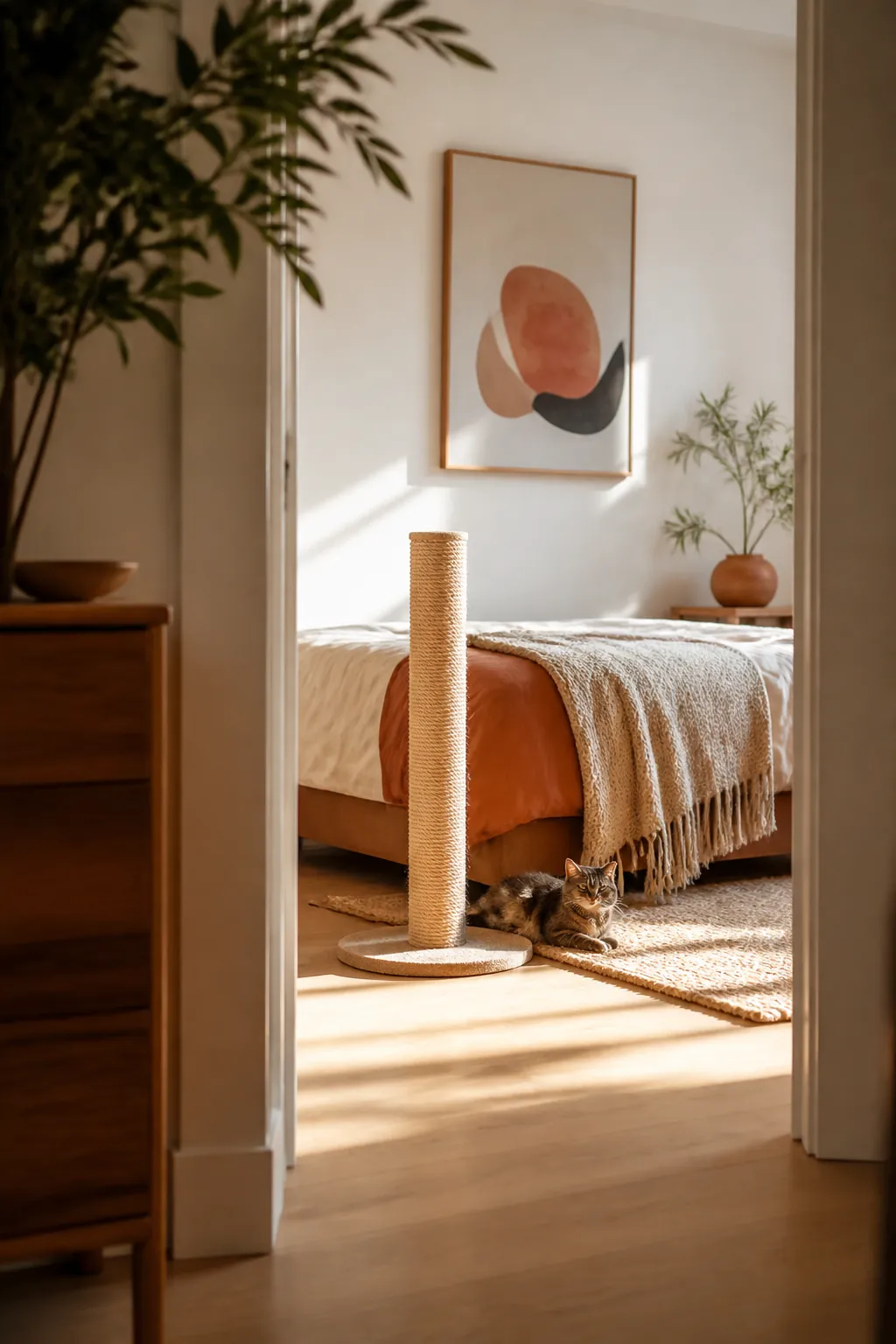
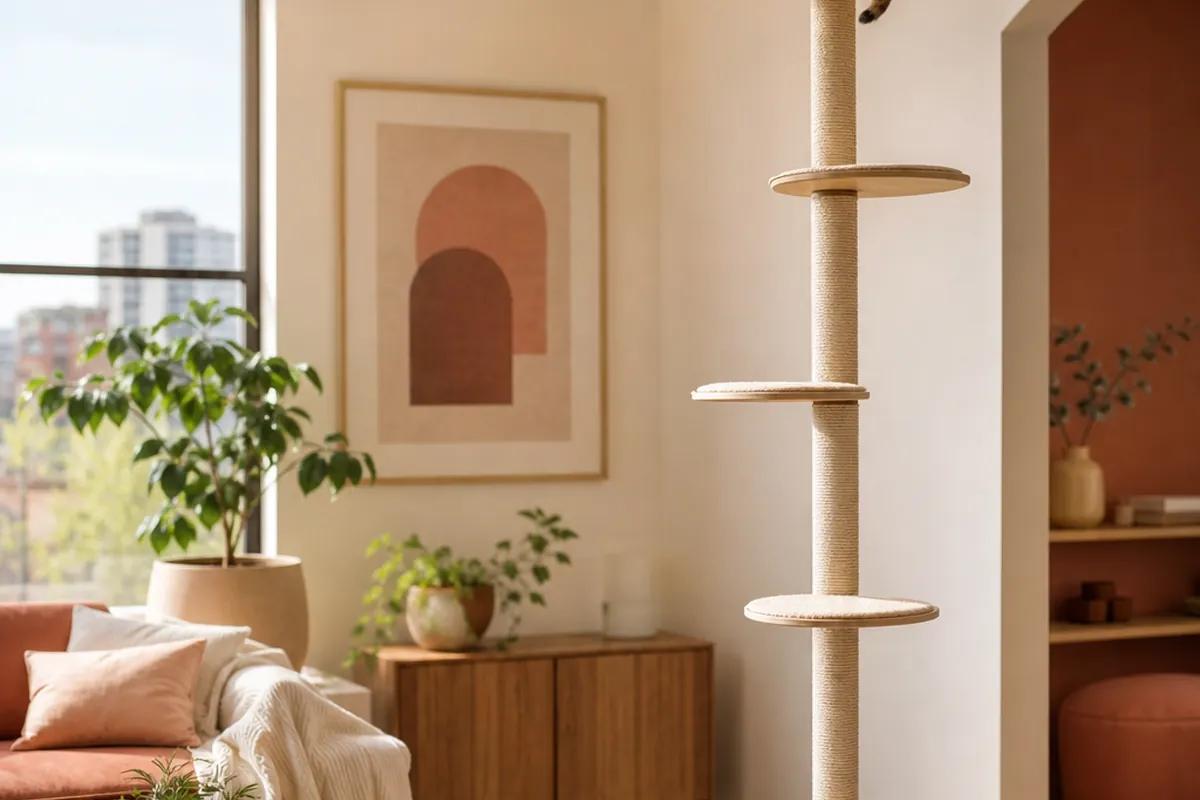
A post placed by the door gets walked past on the way in and out and rarely gets used, because scratching tends to happen near where a cat is already resting, not along a walking route. A tall sisal post at the foot of the bed, close to where the cat naps during the day, sees far more use than the same post moved six feet to a spot that only looks more convenient to a person passing through.
9. Keep the litter box out of the walking lane if it has to live here
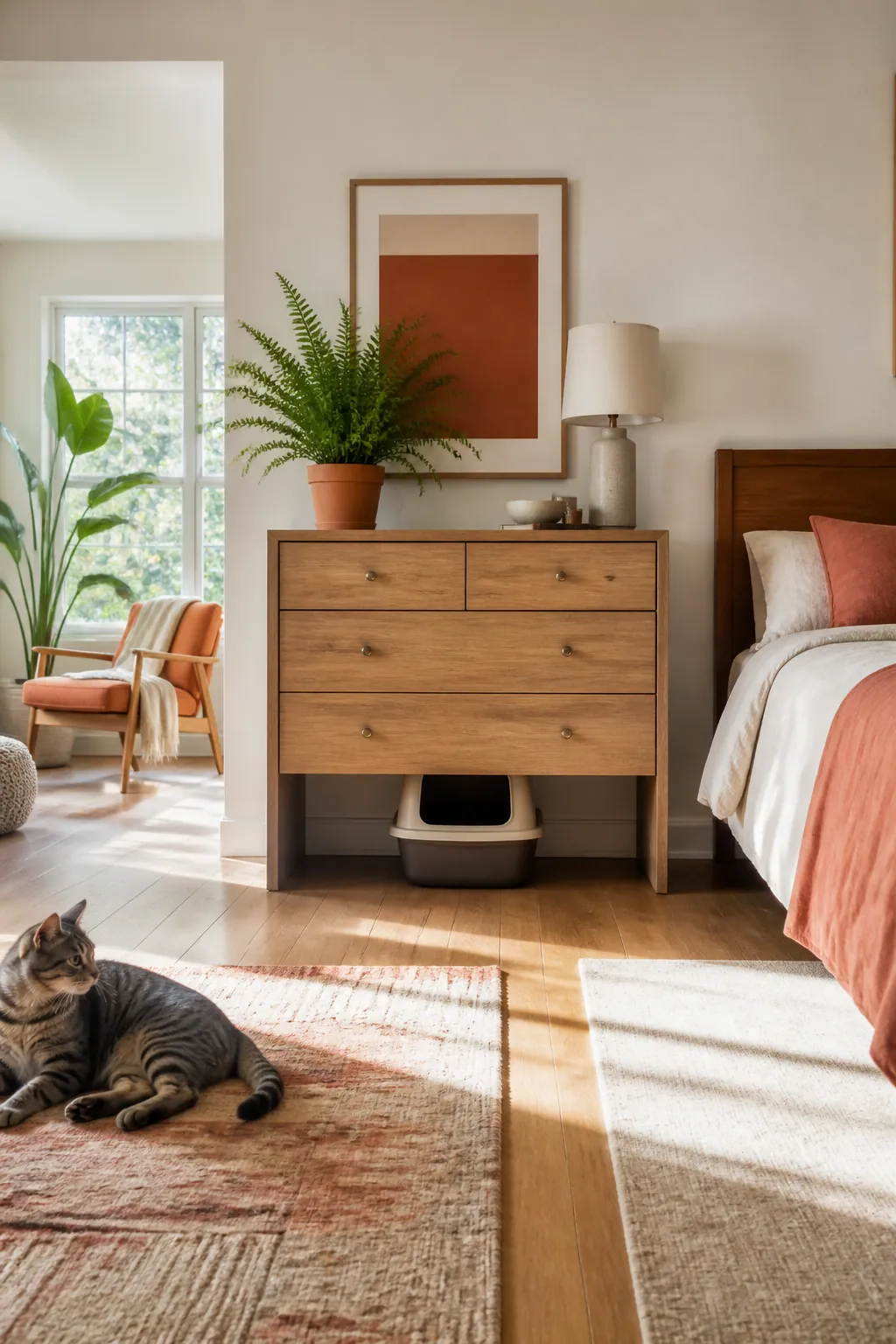
Studio and one-bedroom layouts sometimes leave no other option, so if the box has to be in the bedroom, keep it out of the direct path between the bed and the door. A corner behind the dresser, with open floor on both sides of the box rather than one side jammed against a wall, works better than a spot that looks tidy but forces anyone walking through at night to step around it in the dark.
10. Route blind cords and chargers away from the climbing route
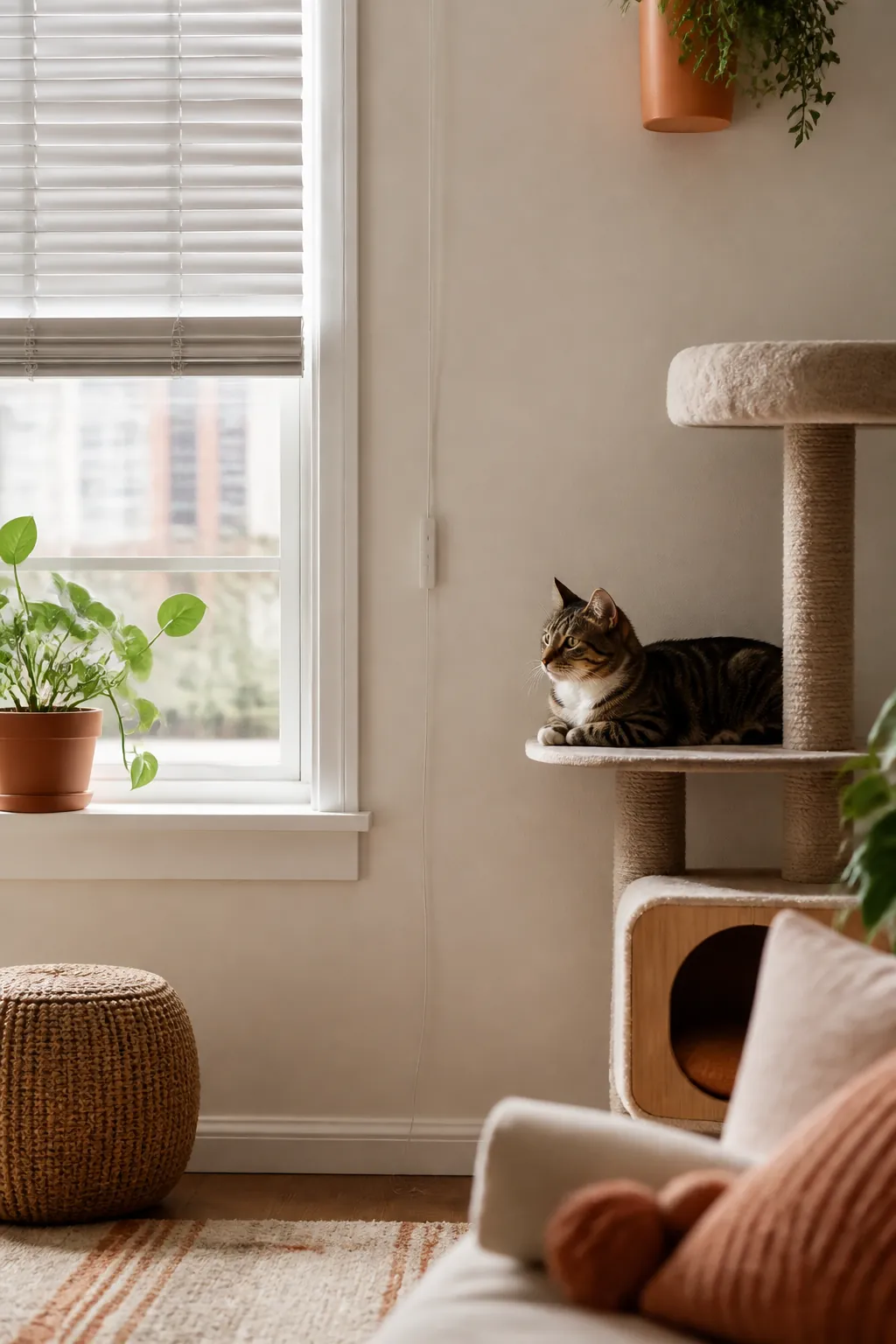
A cat tree placed near a window puts a climbing cat within reach of blind cords, and a wall shelf placed near a nightstand puts it within reach of a phone charger cable. Both are the kind of loose cord a cat treats as something to bat and pull, and both are easy to fix once you notice the overlap. Shorten what you can, clip cords flat against the wall, and route anything that must cross the room along the baseboard instead of through open air.
11. Keep the top platform clear of the ceiling fixture
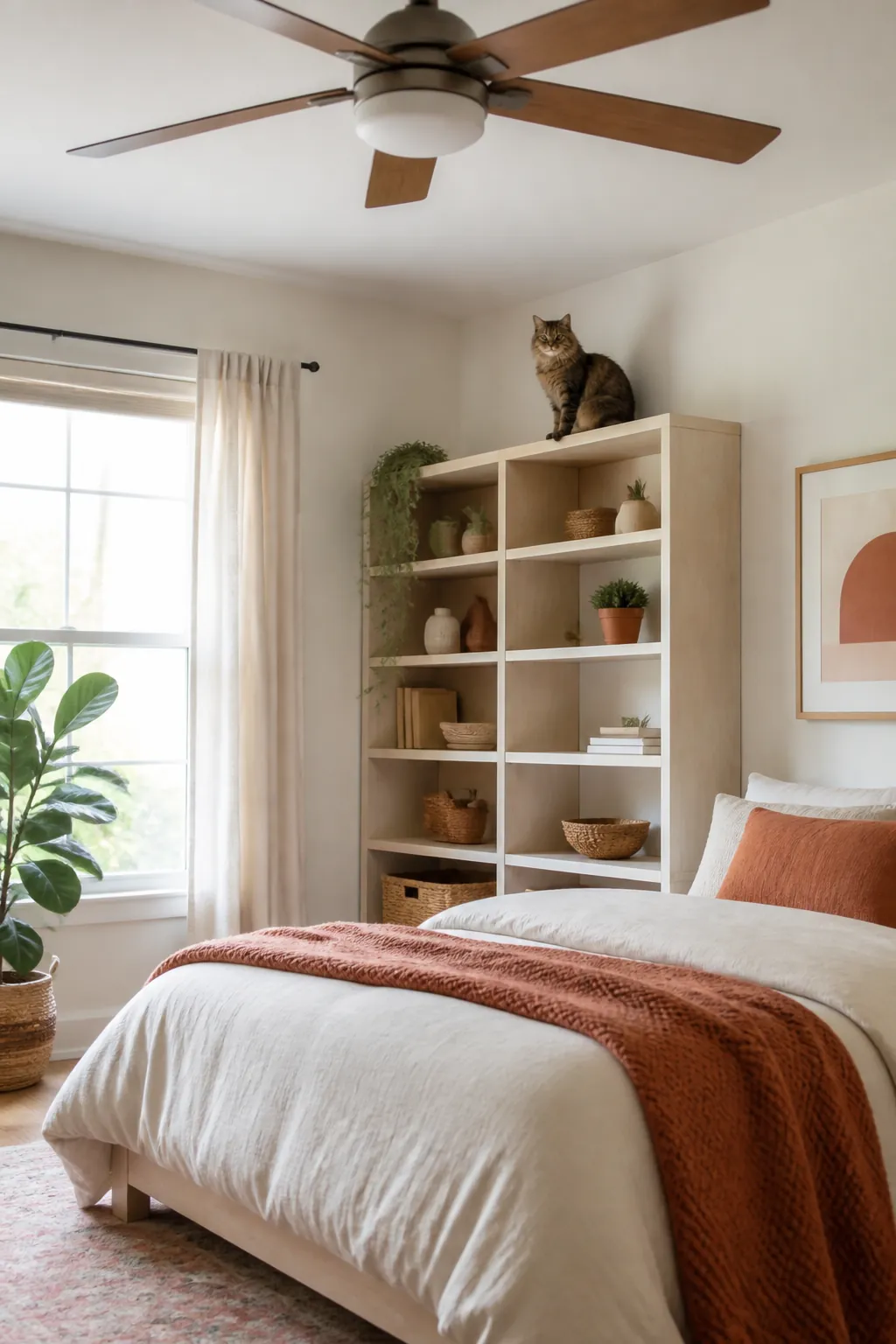
A wall shelf run that climbs a bedroom wall eventually gets close to a ceiling fan or a light fixture, and a cat on the top platform will investigate anything within a paw’s reach. Stop the run at least a foot below any fixture with moving parts, and treat that gap as fixed rather than something to close later with one more shelf, since the last platform is exactly the one a cat spends the most time on.
12. Test the whole layout for a week before you mount anything permanently
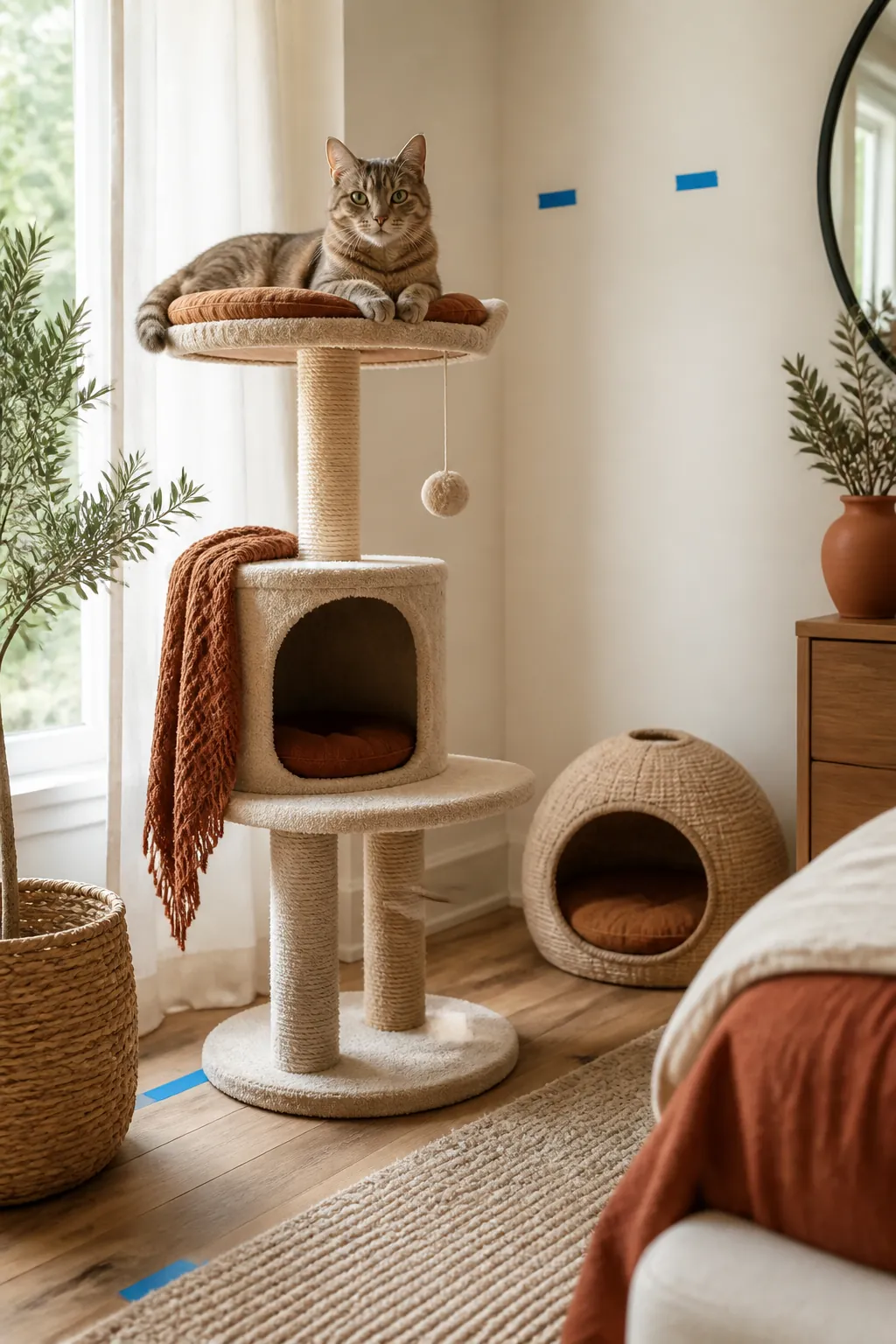
Set the tree and the den in place with nothing screwed in yet, and watch which pieces actually get used before drilling a single hole for the wall shelf. A cat that ignores the corner tree and claims the dresser top instead has just told you where the real climbing route should go, and it is far cheaper to learn that from a week of watching than from a wall shelf mounted in the wrong spot.
Where to start
Start with the measuring, not the shopping. Tape out the tree’s footprint and the den’s footprint on the actual floor, walk the room for a few days, and let the corner you find decide the furniture rather than the other way around.
Once the floor pieces are placed and left unscrewed for a week, add the wall shelf last. It is the one piece that is genuinely difficult to reposition once it is anchored into a stud, so it deserves to go in only after you have watched where the cat is already choosing to climb.
The test throughout is the same one that applies to every small room: does this piece add height, or does it just add floor. A small bedroom cat setup that keeps asking that question ends up with more usable room for the cat and for the person sleeping in it, which is the only version of “small space” worth building toward.