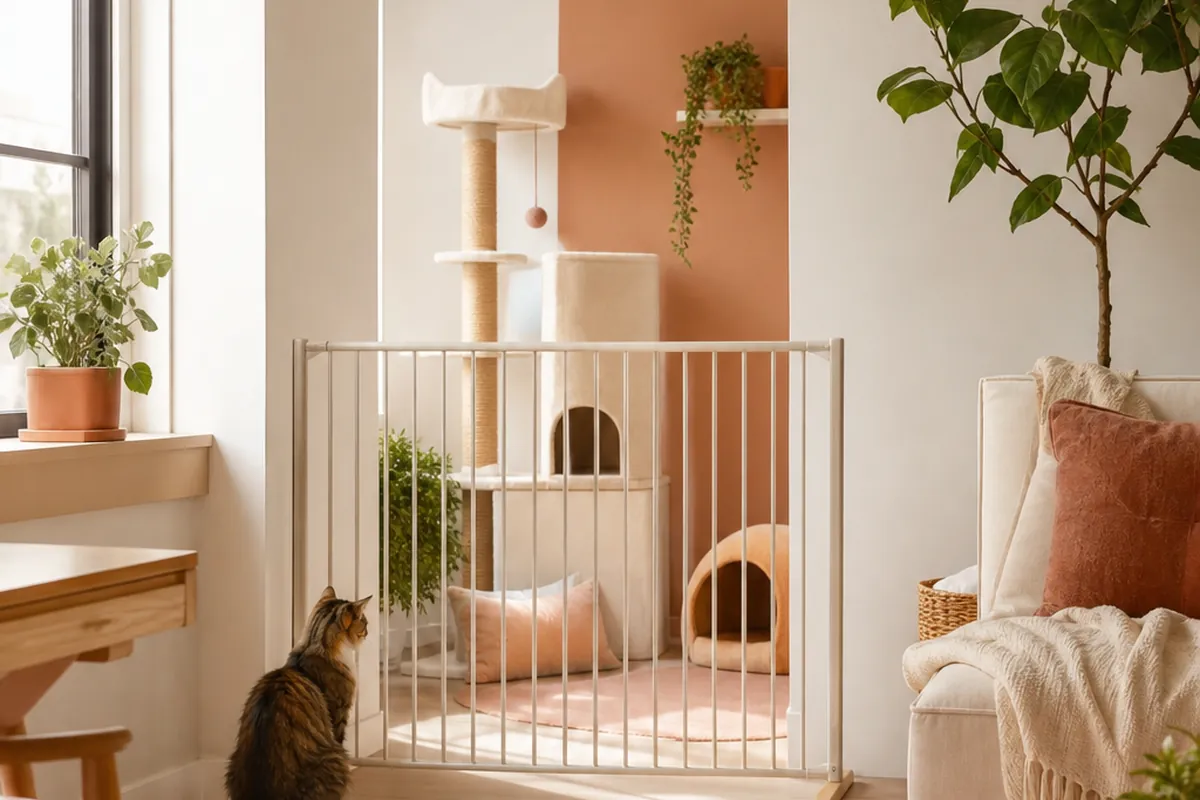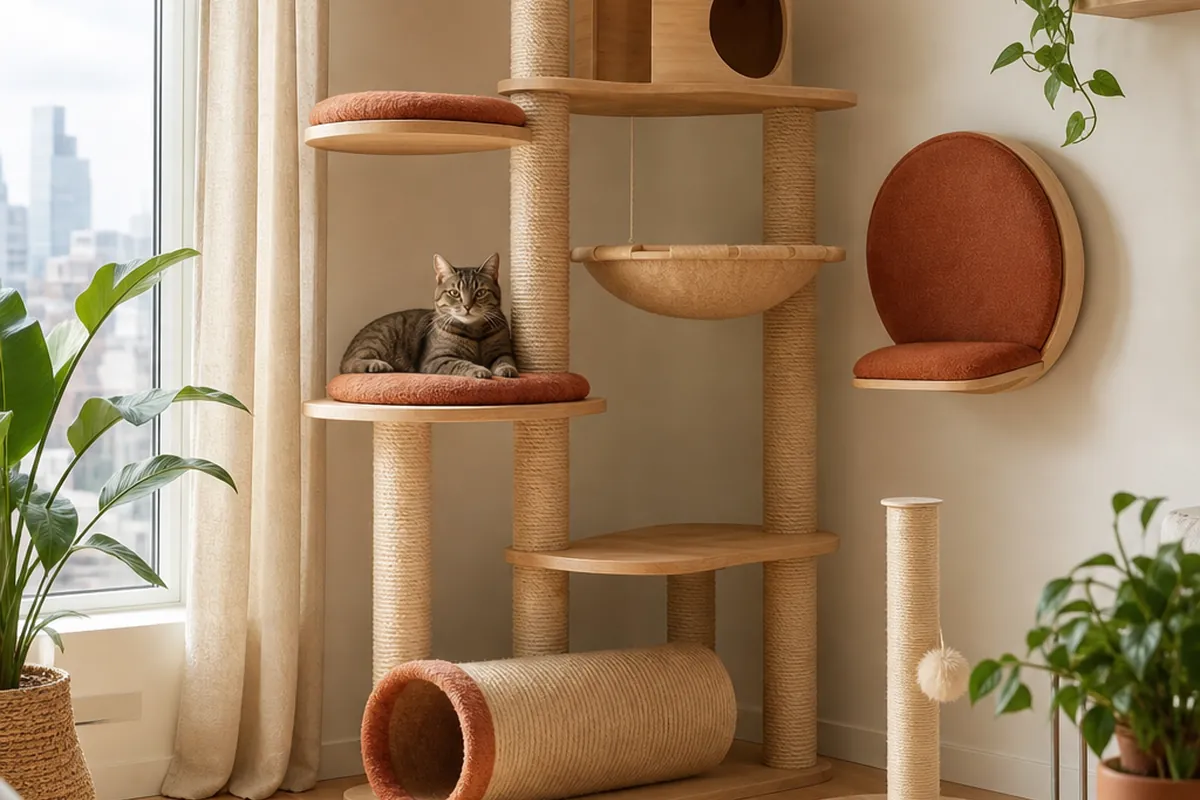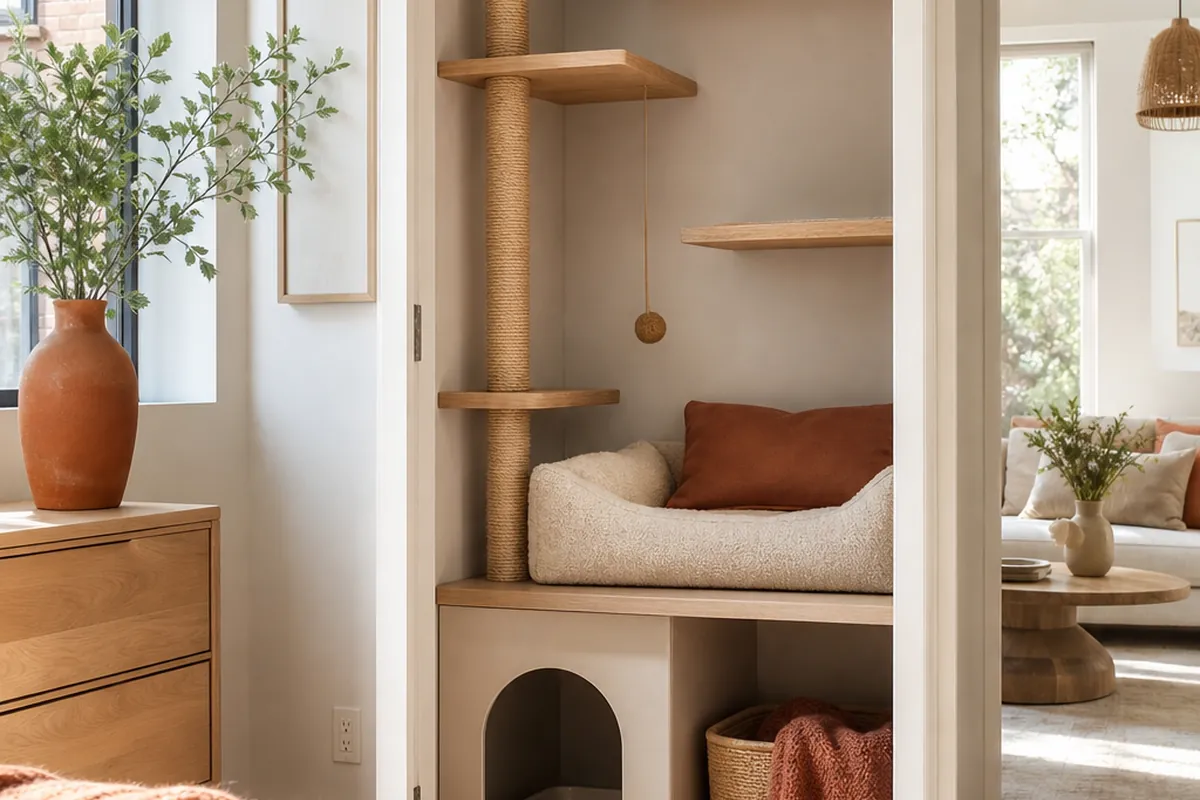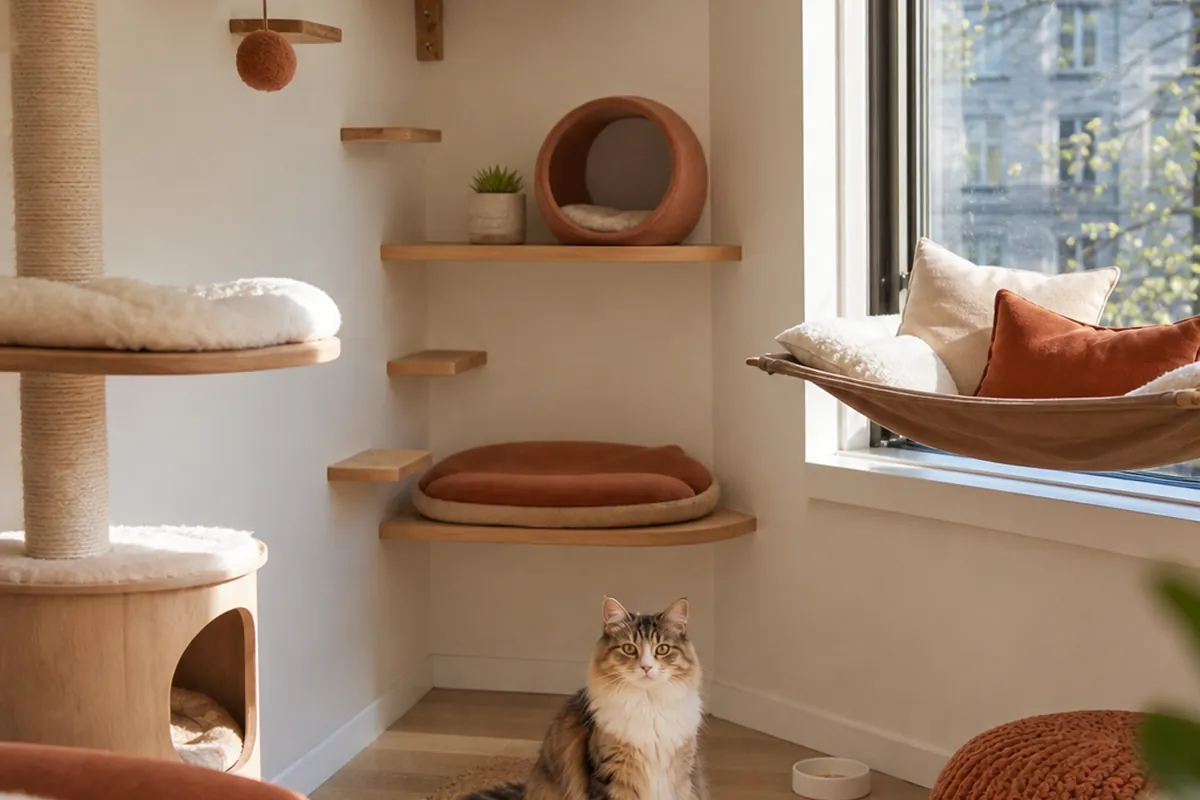
A cat room in a small apartment is not a room. It is a set of decisions about height, sightlines and traffic, spread across a wall you were probably wasting anyway. The apartments that do this well rarely gave up a bedroom. They gave up about two feet along one wall and put everything else in the air.
What follows is ordered roughly the way you should build it, starting with the things that cost nothing.
1. Claim the window before you buy anything
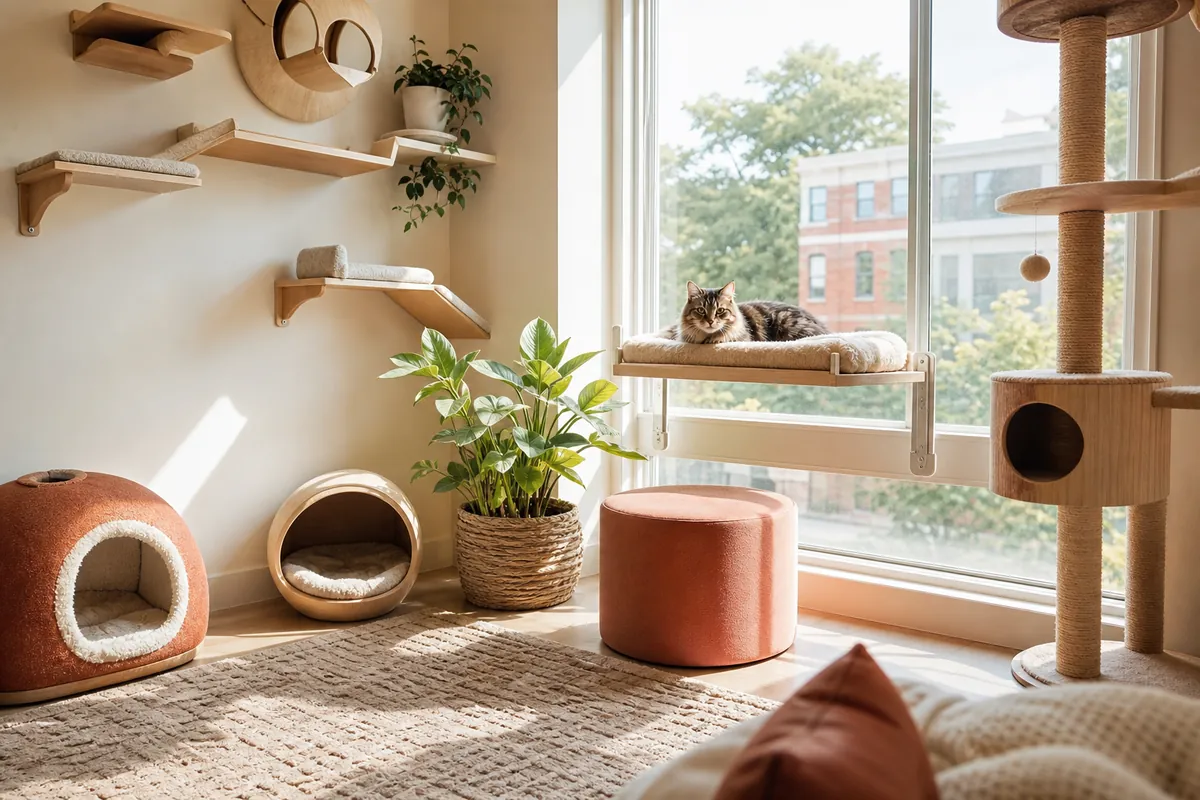
The window is the single most valuable square foot in the apartment to a cat, and it is already there. Before ordering furniture, watch where your cat sits between roughly ten in the morning and two in the afternoon. That is your anchor point, and every other decision hangs off it.
2. Build up one wall, not around four
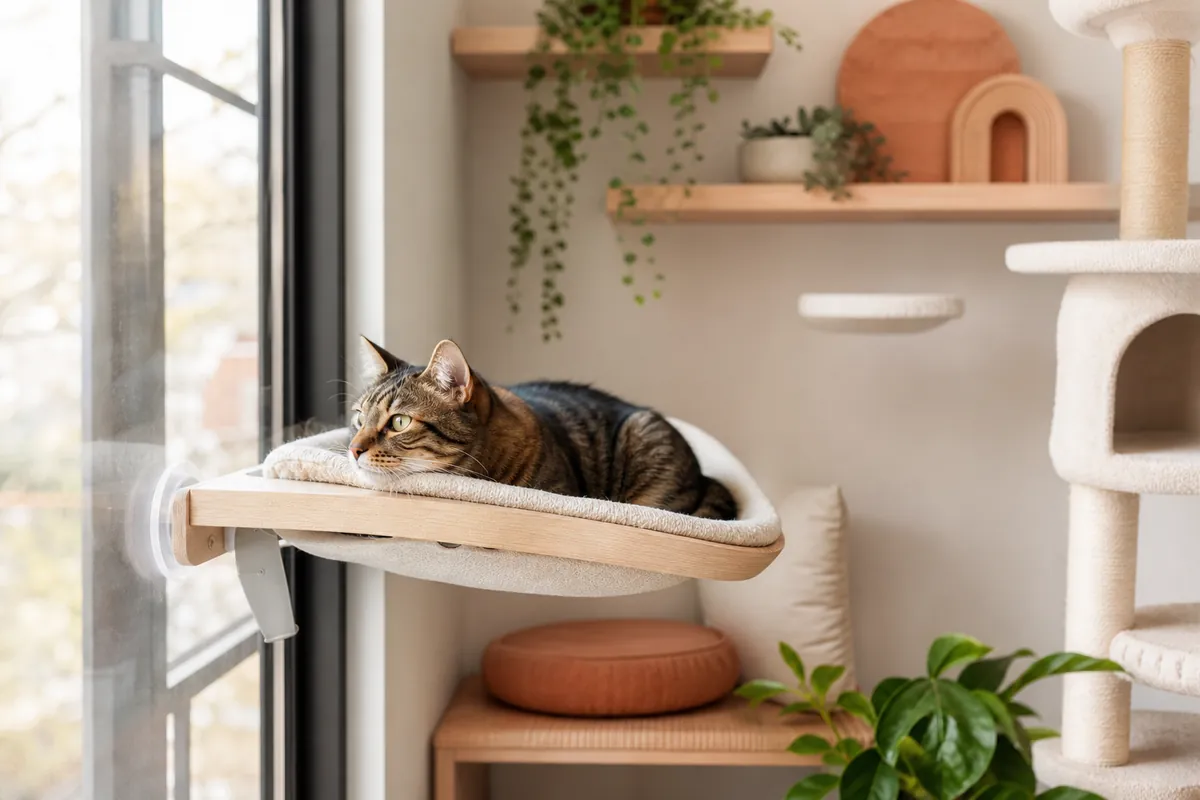
Spreading cat furniture evenly around a room is what makes a small apartment look like a shelter. Concentrating it on one wall reads as deliberate, and it has a practical payoff: a cat can move the whole length of that wall without touching the floor, which is worth far more than the same amount of furniture scattered into four corners. Pick the wall with the window if you can, and leave the other three alone entirely.
3. Stagger shelves 12 to 16 inches apart
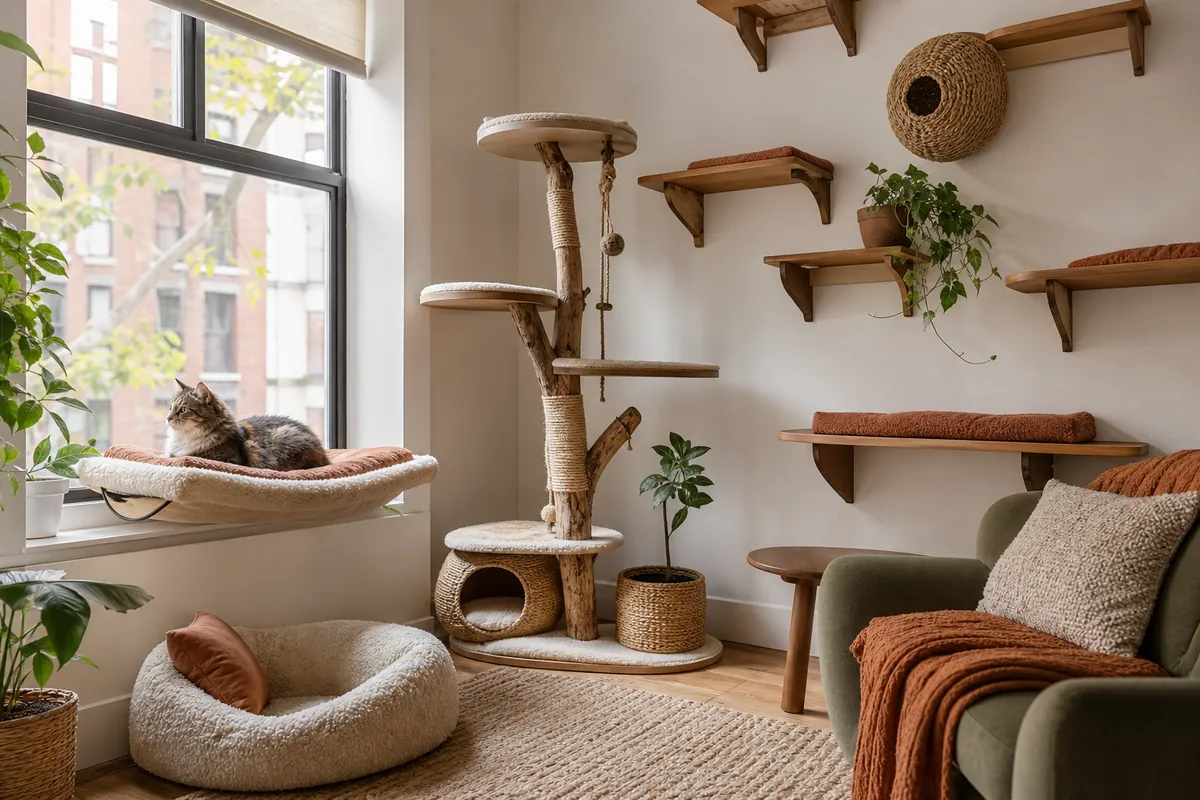
Twelve to sixteen inches of rise per step suits most adult cats without turning a climb into a leap. Keep the horizontal offset under about ten inches too. The common failure here is spacing shelves for how they look in a photograph, which produces a handsome wall your cat uses once.
4. Pick a tree by footprint, not by height
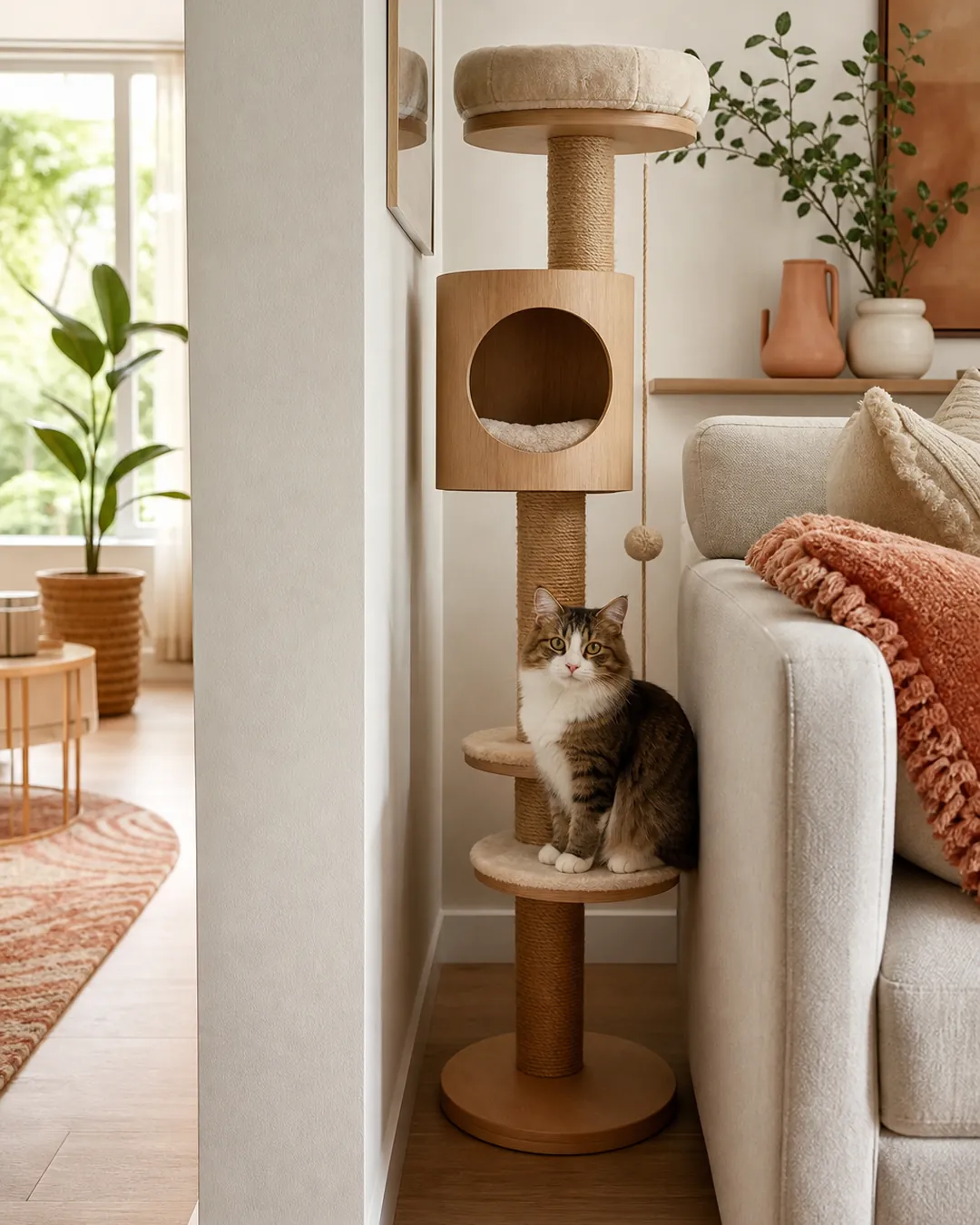
Height is what gets advertised; footprint is what you actually live with. A compact wooden tower like the Easyego 26.3 inch cat tree fits beside a sofa arm without becoming the thing you walk around, and its lower height means you can put it under a window rather than blocking one.
5. Give every jump a landing zone
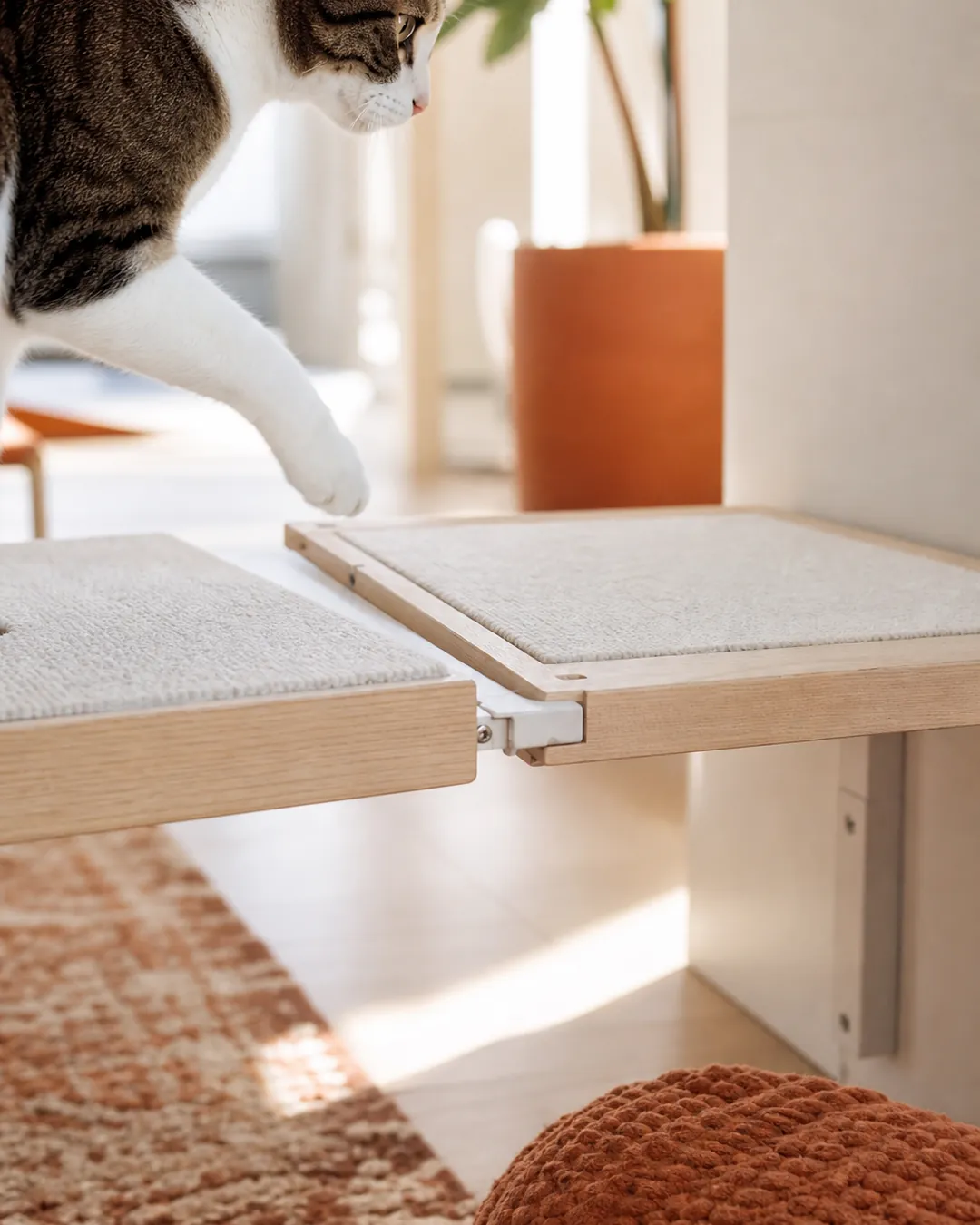
Cats do not land where they take off. Leave a clear patch of floor, roughly two feet square, under any shelf or perch a cat will jump down from. Bookcases and radiators directly below a perch turn a routine descent into a scramble, and the noise of a bad landing is usually what teaches a cat to stop using an otherwise good perch. This is the cheapest fix on the list and the one most often skipped, because the obstruction is normally furniture you already owned.
6. Put a bed on the wall, not on the floor
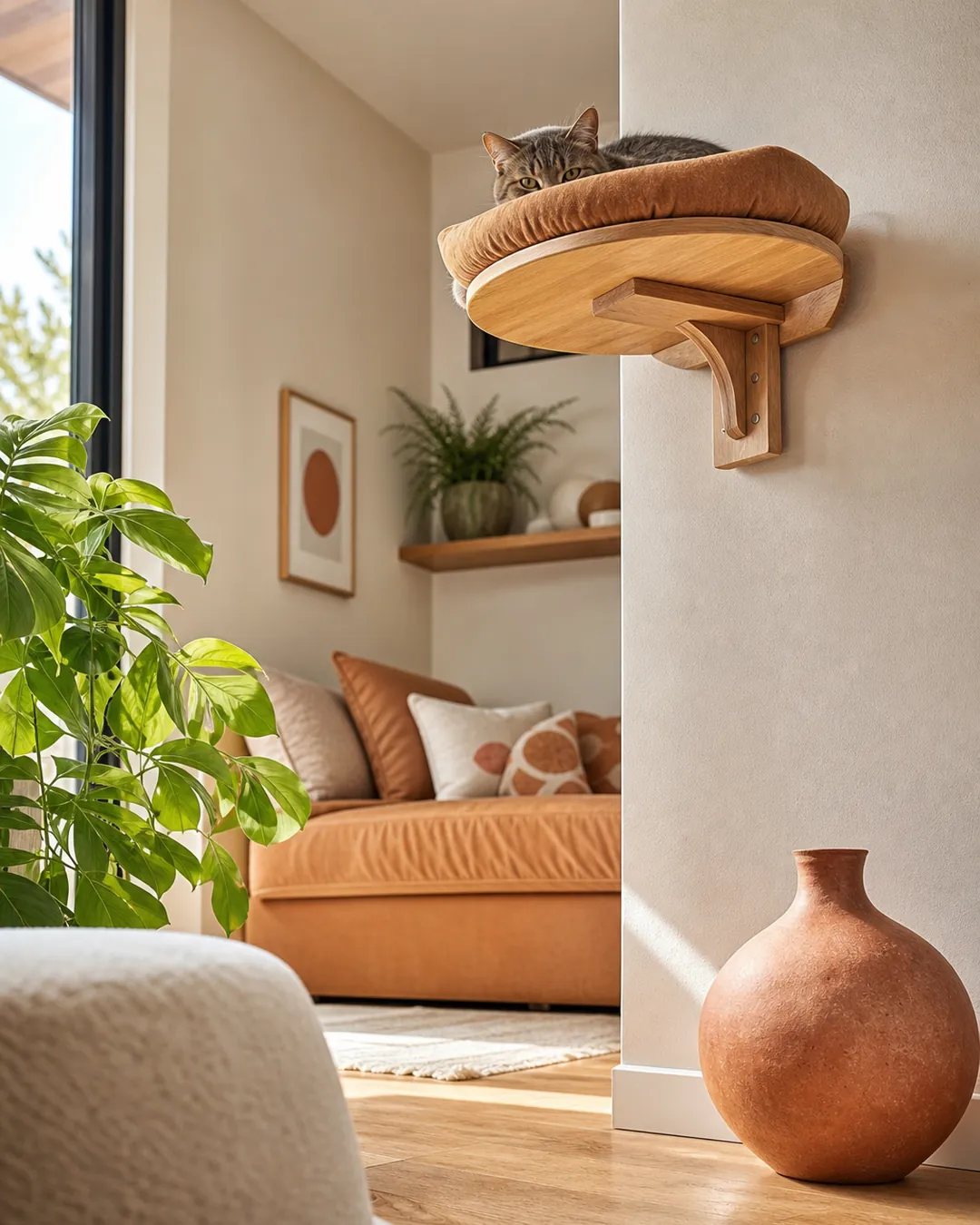
Floor beds compete with your walking space and lose. A wall-mounted hammock with steps does the same job at head height, which is where cats prefer to sleep anyway, and it frees the floor underneath for something else.
7. Use the corner your sofa already wastes
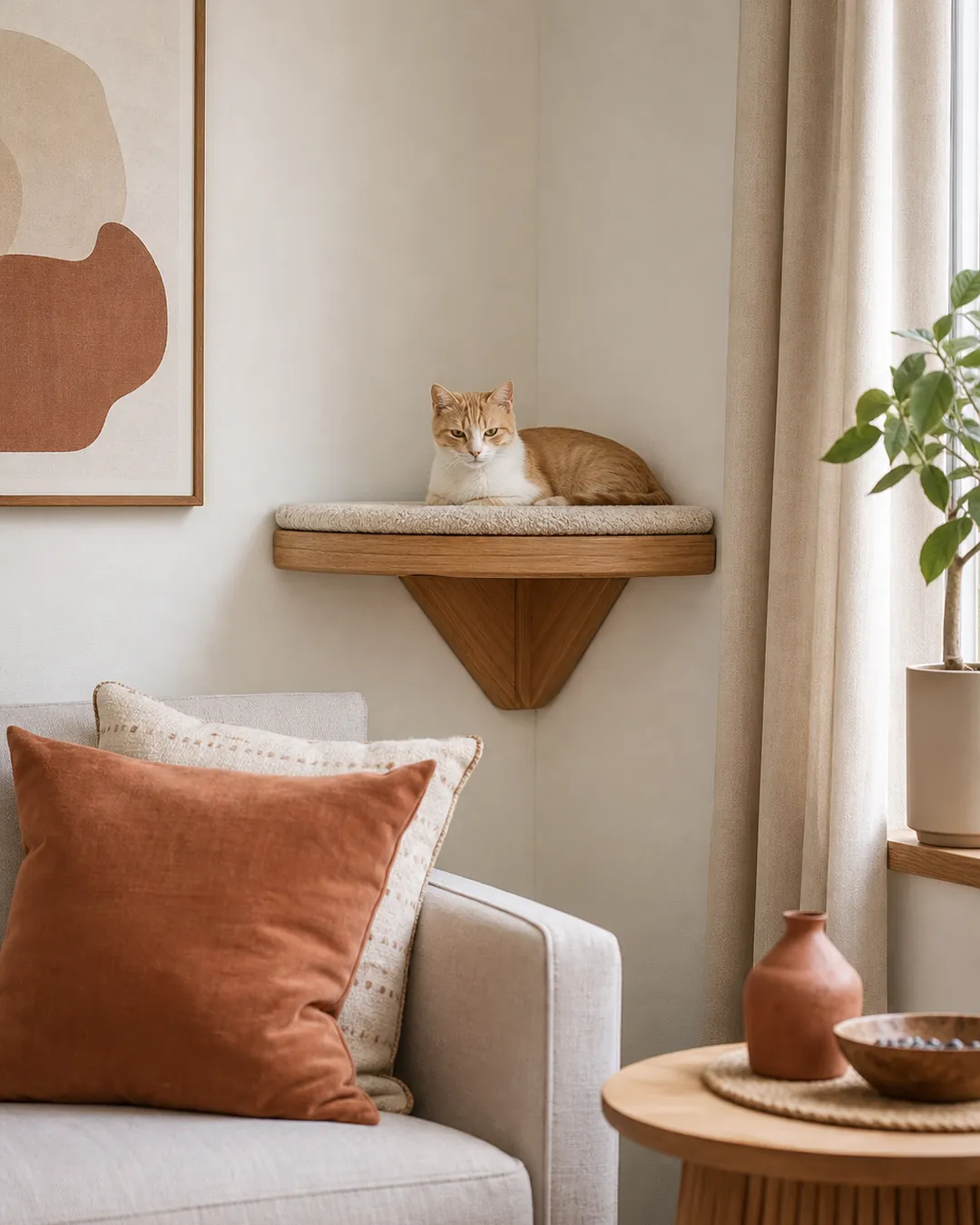
Every sofa creates a dead triangle behind or beside it. That corner has a wall at the back, limited approach and a view of the room, which is close to a cat’s ideal. It is also invisible to guests, so you can put the less attractive gear there: the scruffy cardboard scratcher, the bed that no longer matches anything, the toy basket. Check the gap is at least eight inches wide before you commit, because a cat that has to squeeze past furniture will use the spot once and then write it off.
If that triangle is the only space you can give up, it can carry the whole setup: cat corner ideas that fit in any living room build a complete corner out of a footprint this size.
8. Choose a tunnel over a third bed
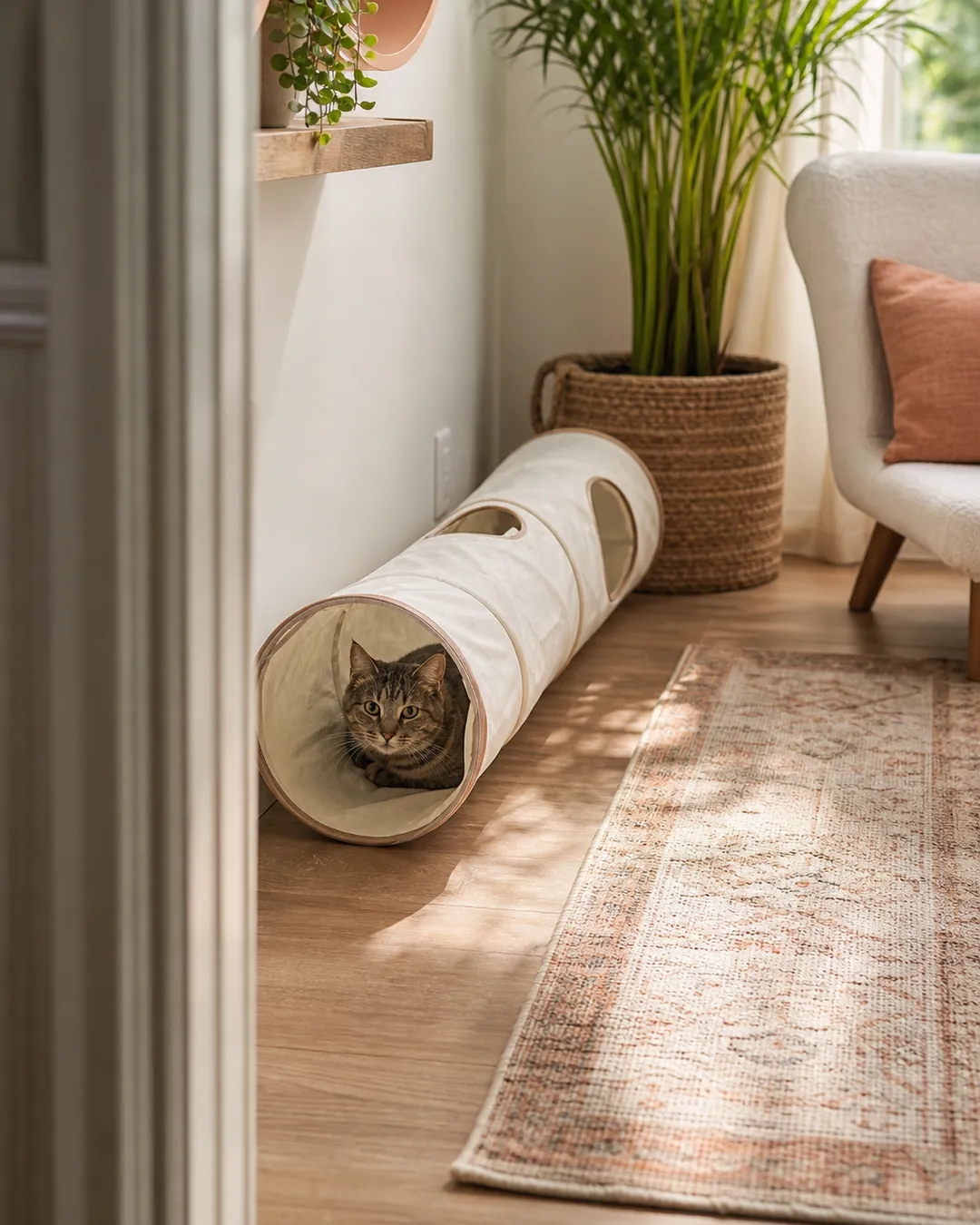
Most apartments have too many beds and nowhere to play. A collapsible three-way cat tunnel folds flat when company comes and gives a bored indoor cat something a cushion cannot. Store it behind the sofa rather than leaving it out permanently.
9. Keep food and litter in different rooms if you can
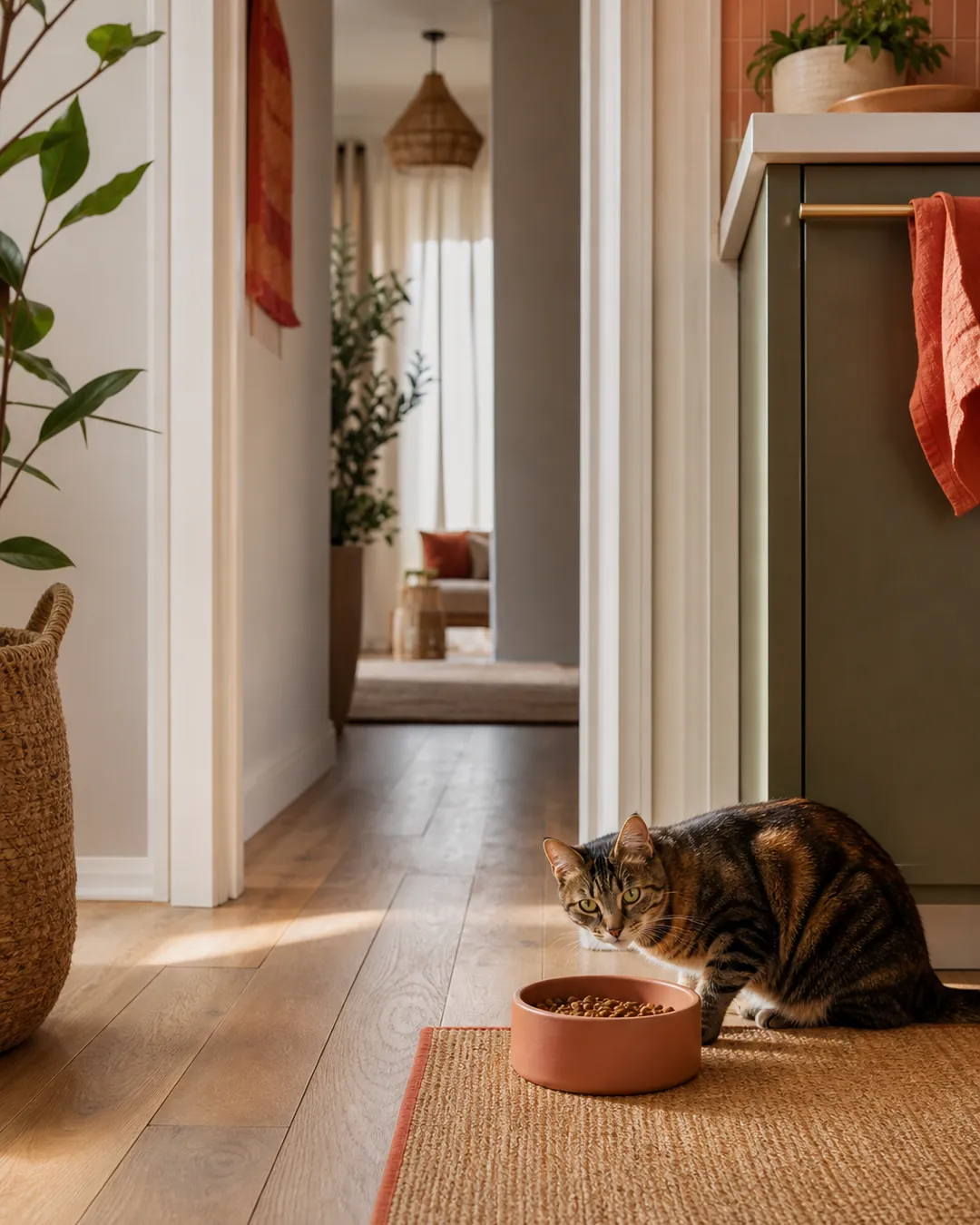
If you cannot manage different rooms, manage different walls. Cats routinely refuse a box placed next to a food station, and in a studio that refusal is expensive, because the alternative they choose is usually soft and absorbent and belongs to you. Distance matters more than screening. A partition between the two does far less than simply putting them at opposite ends of the same space.
The food end deserves the same care as the litter end, and cat feeding station ideas for small kitchens covers where the bowls go once the two are apart.
10. Hide the box in furniture, not behind a curtain
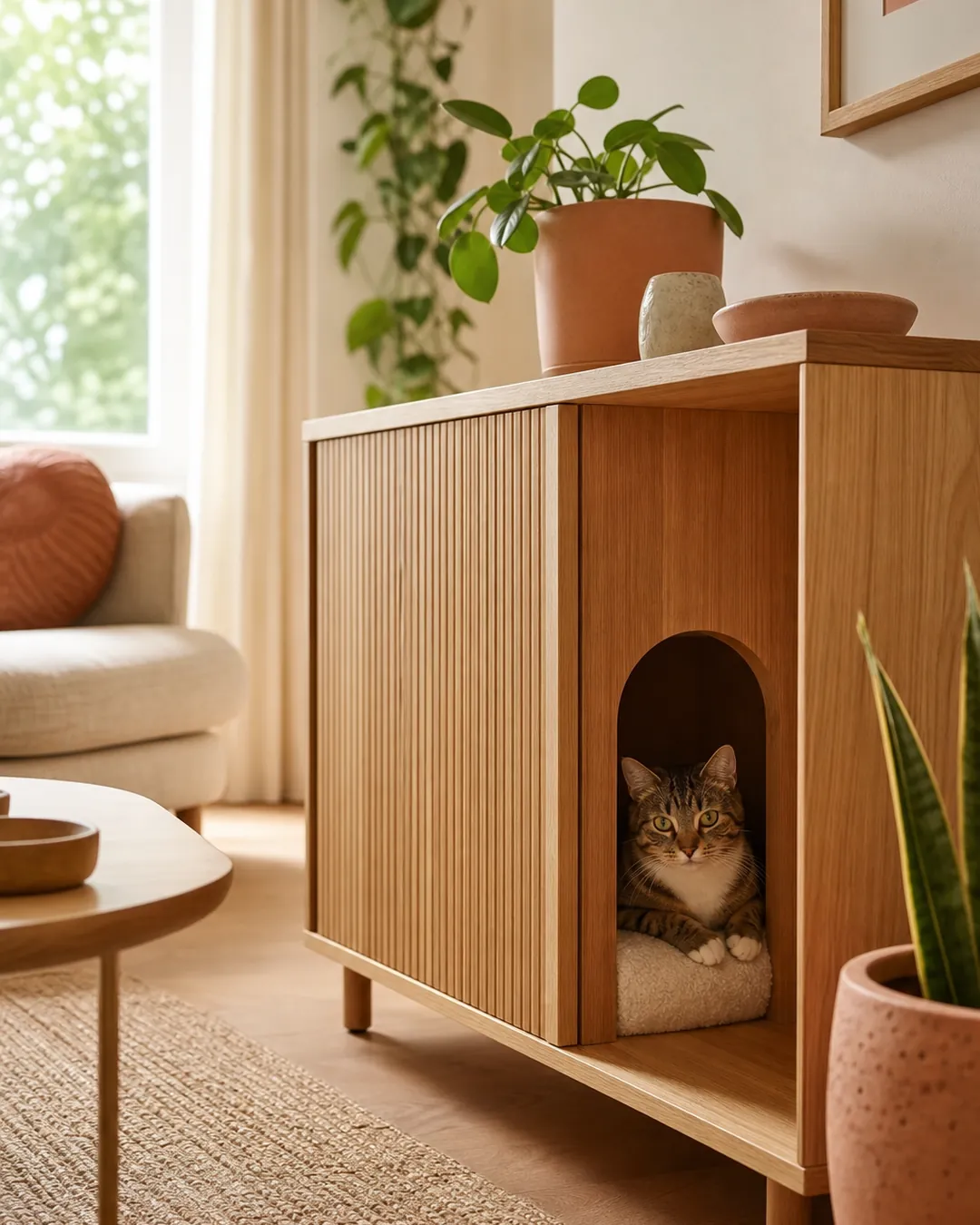
A curtain hides a litter box from you and from nobody else. Furniture with a real door, a vented panel and a wipeable floor solves the sightline and the tracked litter at once. Look for a reversible entry panel so the opening can face away from the room.
11. Give the box two exits
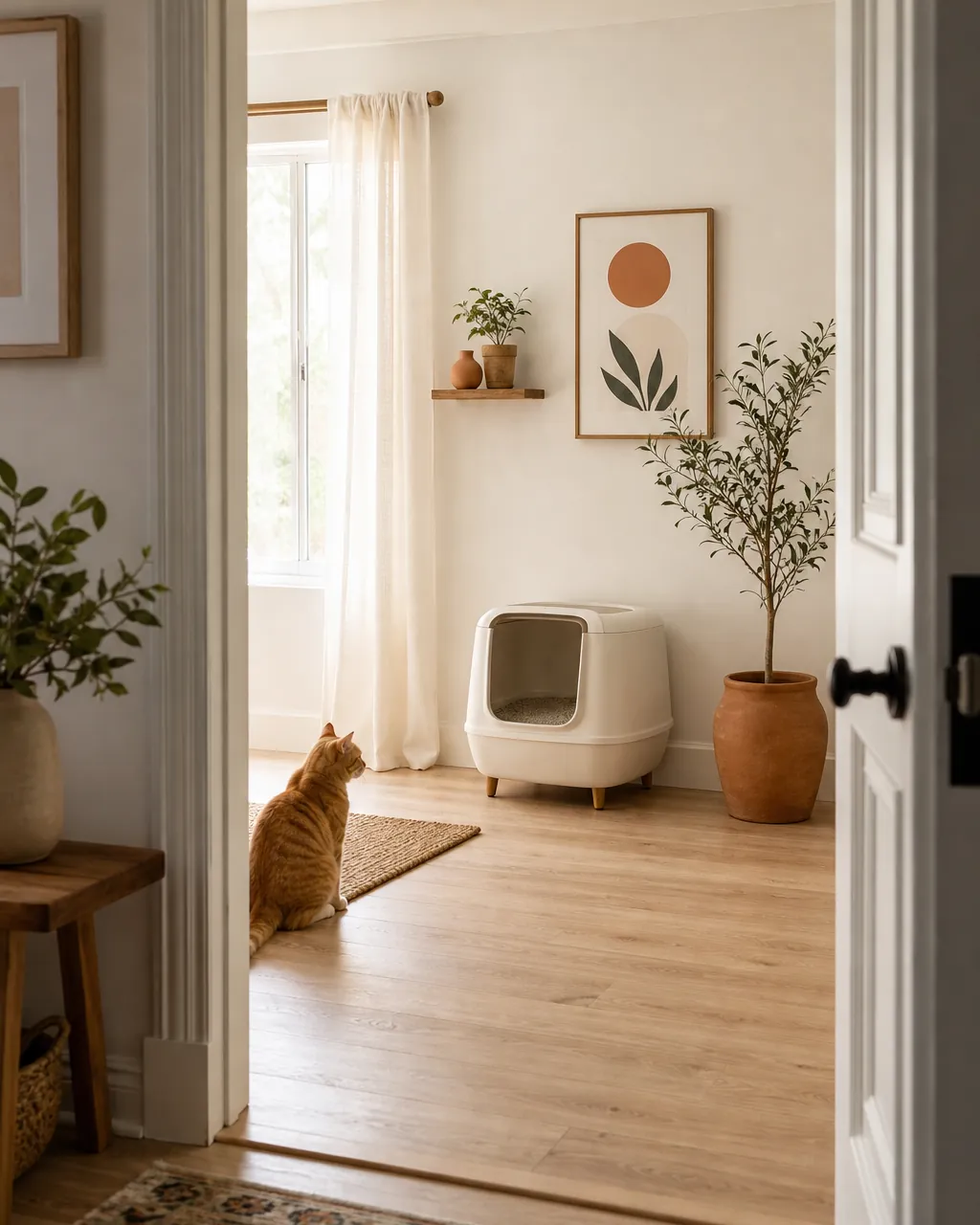
A box in a dead-end corner has one way out, and a cat that feels cornered stops using it. Position enclosures so there is an approach from either side, even if one side is only a few inches of clearance.
12. Buy furniture that is already doing another job
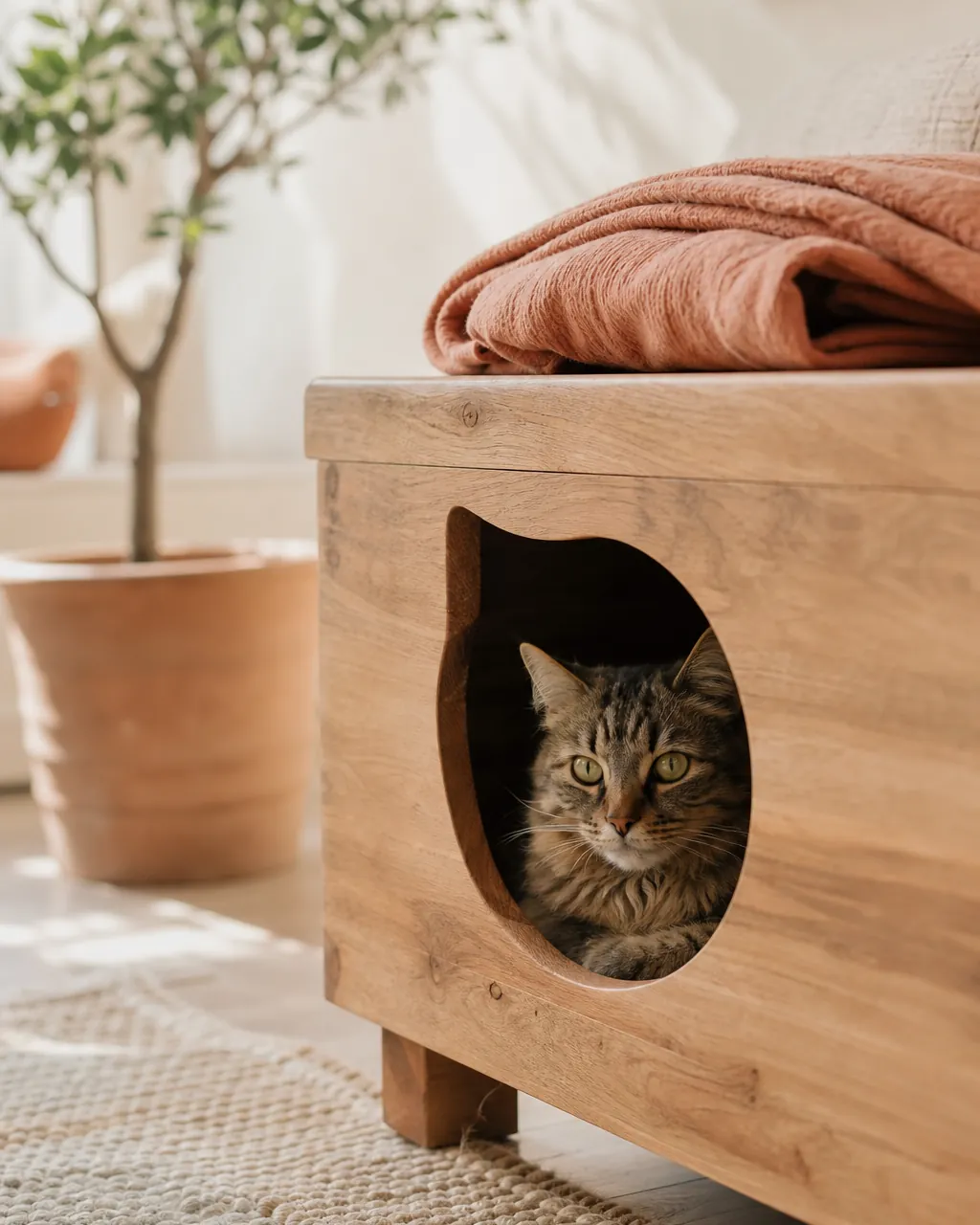
A nightstand that contains a litter box, a side table that is also a cat cave, an ottoman that opens for toy storage. In a small apartment, anything that does one job is competing for space with something that does two.
13. Layer soft spots at three heights
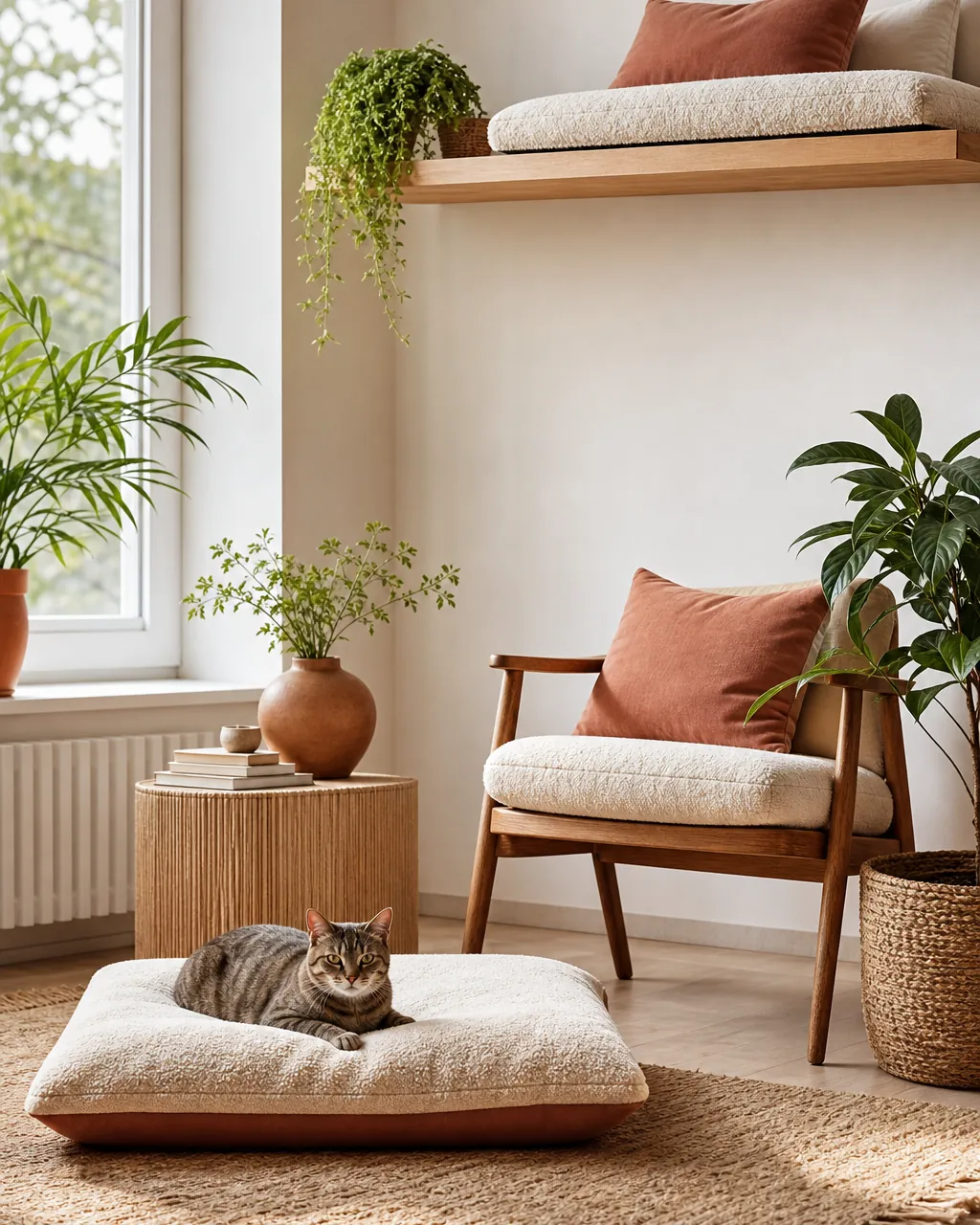
Floor, seat height and above head height. Cats change altitude with mood and temperature, and giving them three options stops them defaulting to your pillow. Three cheap spots beat one expensive one. In winter, warming one of those three does more than adding a fourth, and these heated cat bed ideas for a cozy apartment winter cover the low-wattage options and cord routing that suit a small space.
14. Put the scratching post where the scratching happens
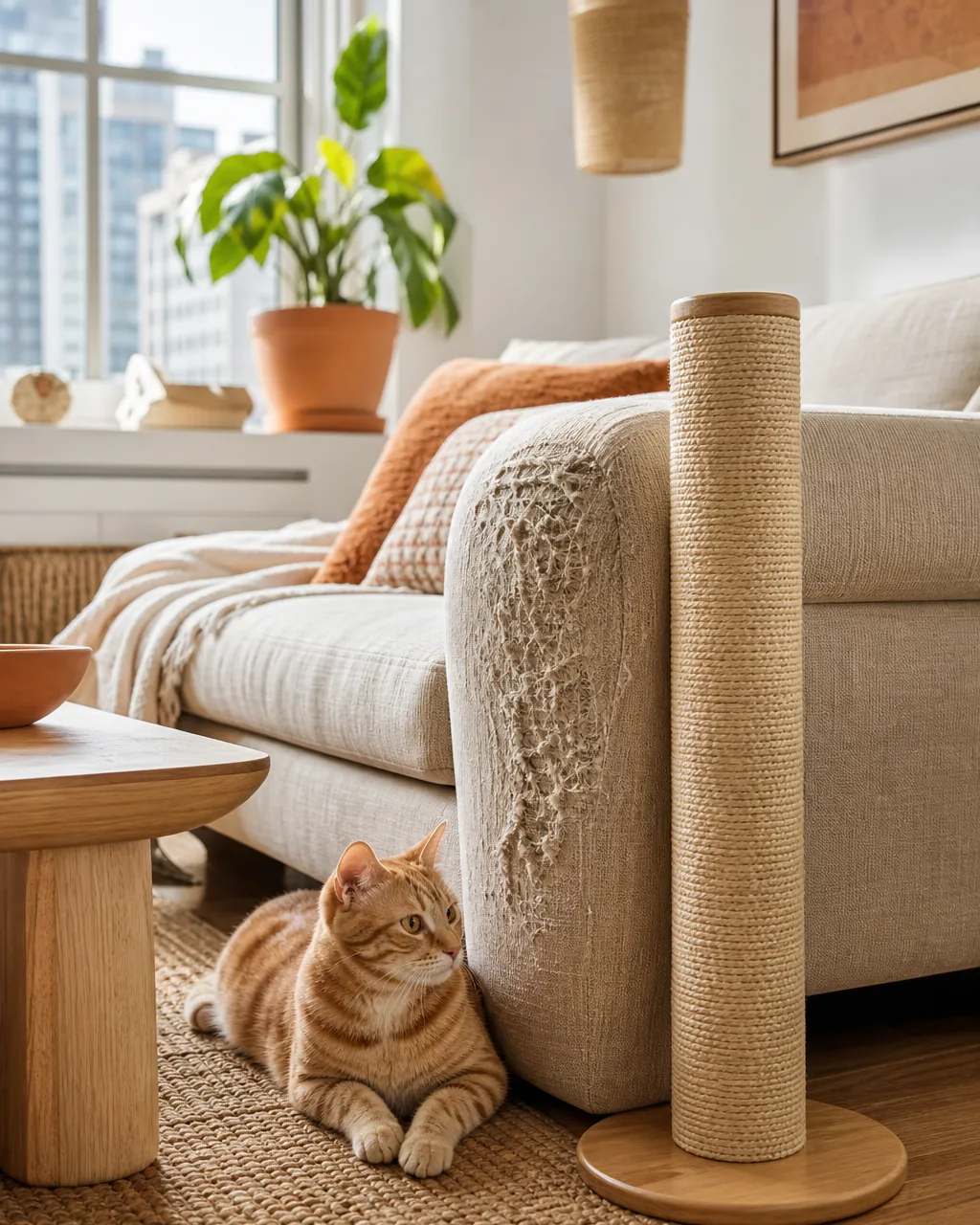
Posts get moved to tidy corners and then get ignored. Cats scratch at thresholds and after waking, so a post belongs near the doorway they use most or beside where they sleep, not wherever it looks least intrusive. Height matters too: an adult cat wants to stretch out fully against it, which rules out most of the short posts bundled into budget towers. If a cat has already picked a corner of the sofa, put the post directly in front of that spot rather than across the room and hope.
15. Leave one route that has nothing on it
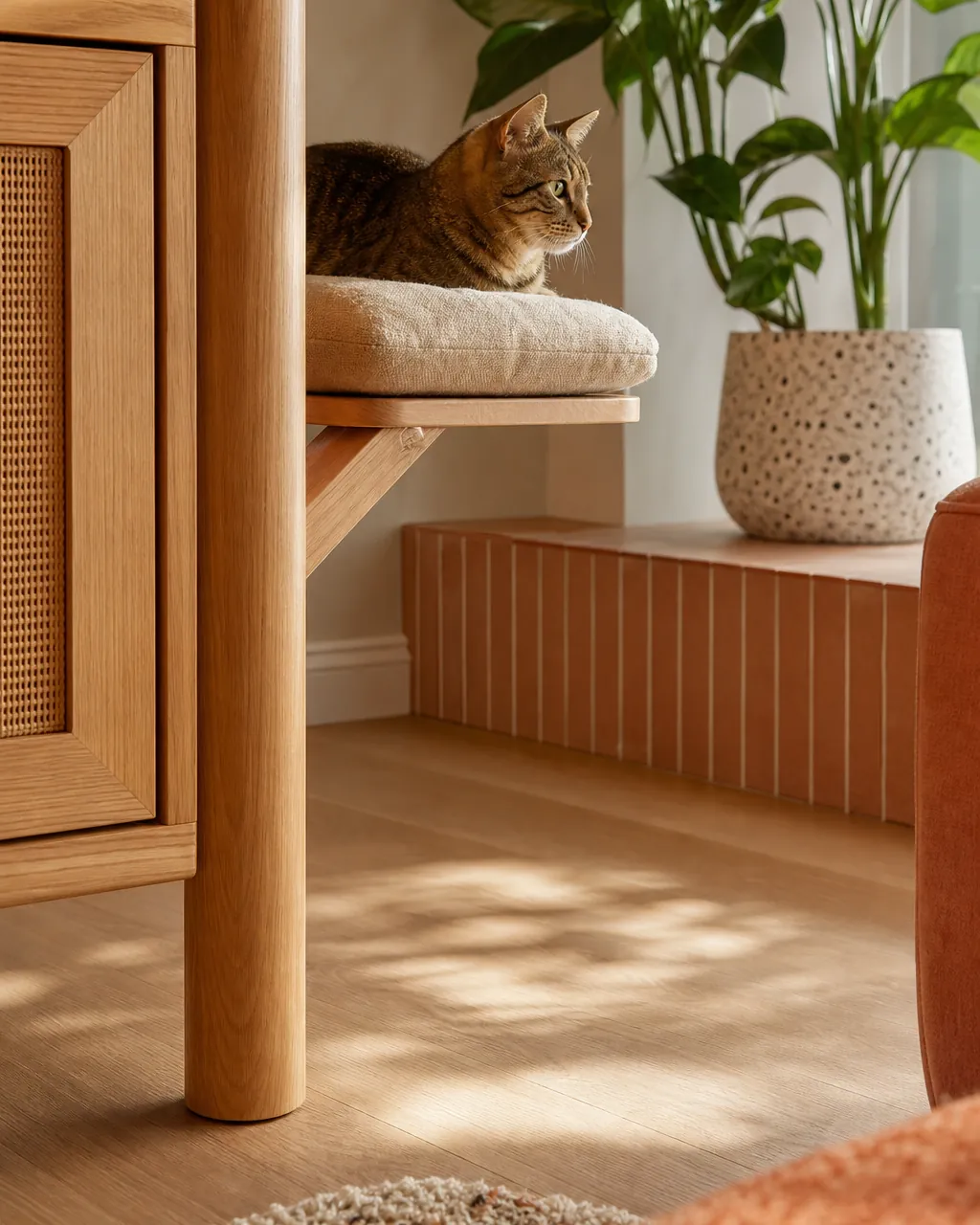
The mistake at the end of a good build is filling every surface. Cats need a clear run at floor level to move fast, and you need a path to the window. Keep one route across the room completely empty.
Where to start
Do the free things first. Watch where the cat already sits, clear the landing zone under it, and move one bed into the corner behind the sofa. Live with that for a week.
Then buy in this order: a window perch or a compact tree at the anchor point, one wall bed above it, and litter box furniture last, because that is the purchase most likely to be wrong if you have not yet learned where your cat actually settles. Renters should stay with freestanding and suction-mounted options until they are certain, since none of those cost a deposit.
The apartments that get this right are not the ones that bought the most. They are the ones that put a small number of things exactly where the cat was already going.