A cat eats perhaps twenty minutes a day and the feeding station occupies the floor for the other twenty three and a half hours. In a kitchen where two people cannot pass each other at the sink, that ratio is the whole design problem. The goal is a station that disappears when it is not in use and still gets the details right for the cat.
Nine ideas, in the order they make a difference.
1. Put it out of the traffic lane first
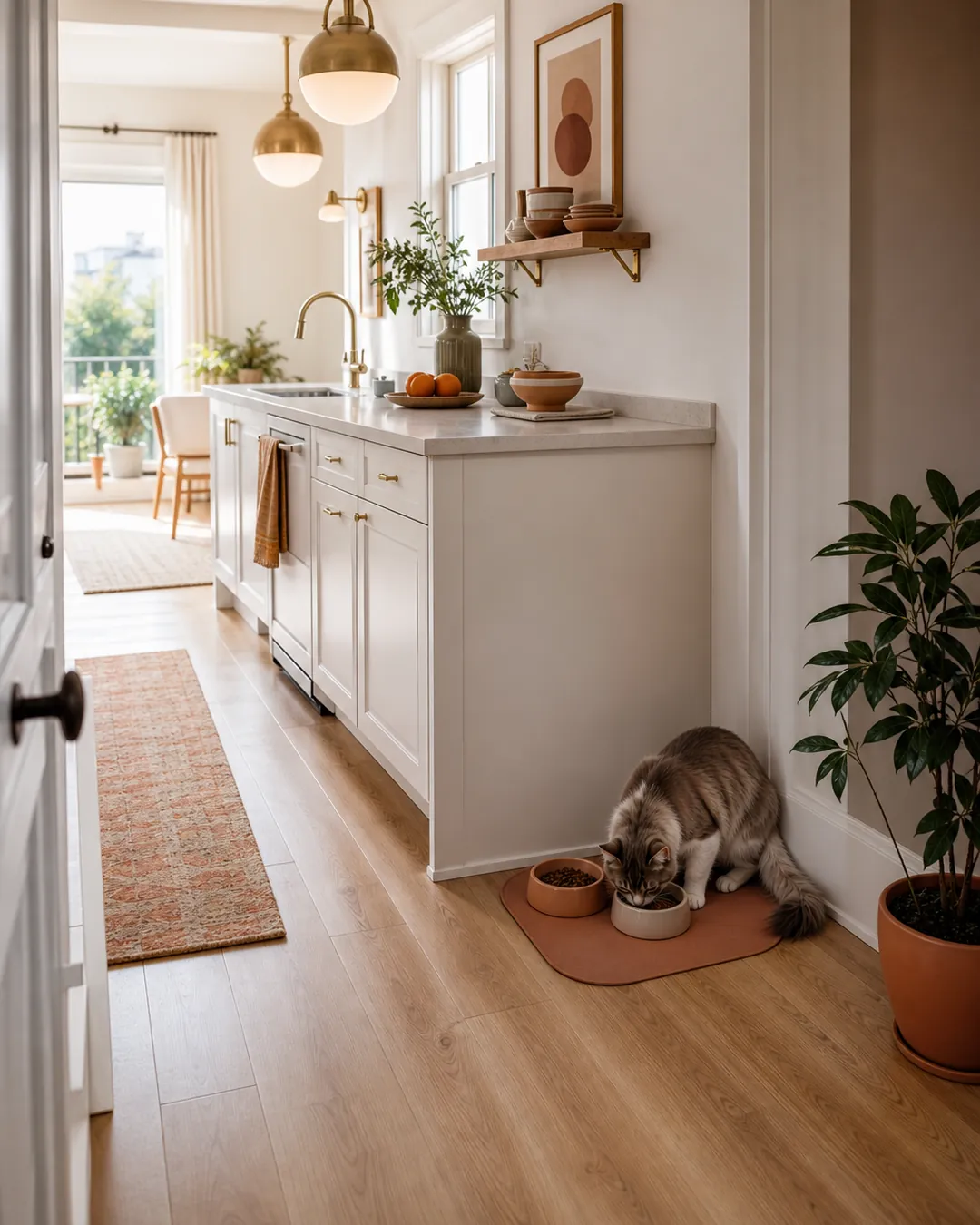
Kitchens have a walking line, usually between the refrigerator, the sink and the stove. Bowls placed anywhere on that line get stepped over, nudged and eventually moved to somewhere worse. Stand in your kitchen and watch where you actually walk, then pick the spot outside it: the end of a cabinet run, the gap beside the refrigerator, the corner near a doorway. A cat interrupted mid-meal often stops eating and comes back later, which is how a bowl ends up sitting out all day. If the only spot outside the walking line is beside an appliance, check what that appliance does at night. A refrigerator compressor cycling next to a cat’s head is a reason to eat somewhere else, and it is invisible to you because you are never lying on that floor.
2. Use wide, shallow bowls
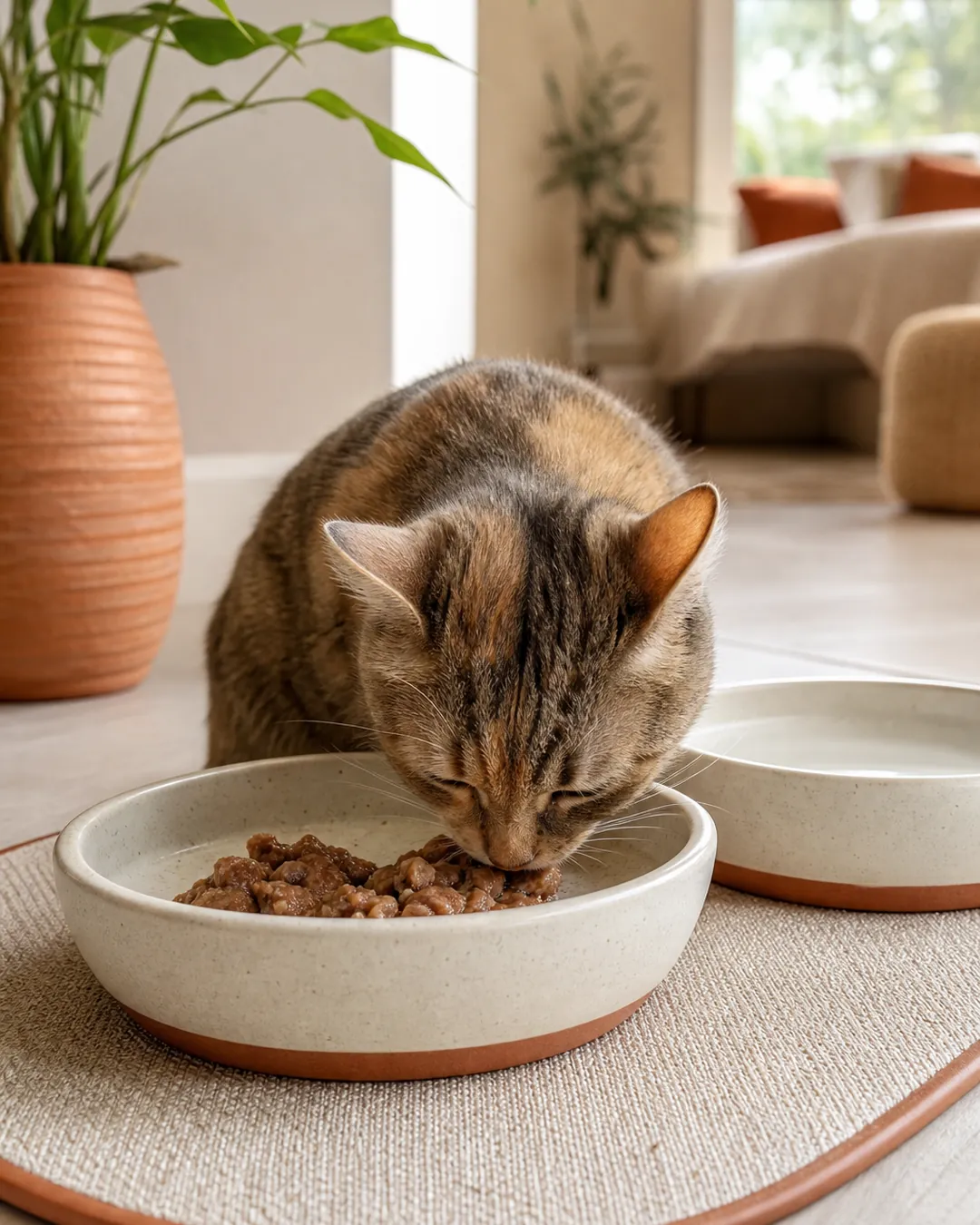
Deep narrow bowls press against the whiskers, and plenty of cats visibly dislike it. The tell is a cat that scoops food out with a paw and eats it off the floor, or one that eats the middle and leaves a ring around the edge. A set of shallow ceramic cat bowls solves both, and ceramic has the secondary advantage of weight, so the bowl stays where you put it instead of traveling across the tile during a meal. Check the rim height rather than the diameter when comparing bowls, since a wide bowl with steep sides has the same problem as a narrow one. What matters is how far the food sits below the edge.
3. Separate the water from the food
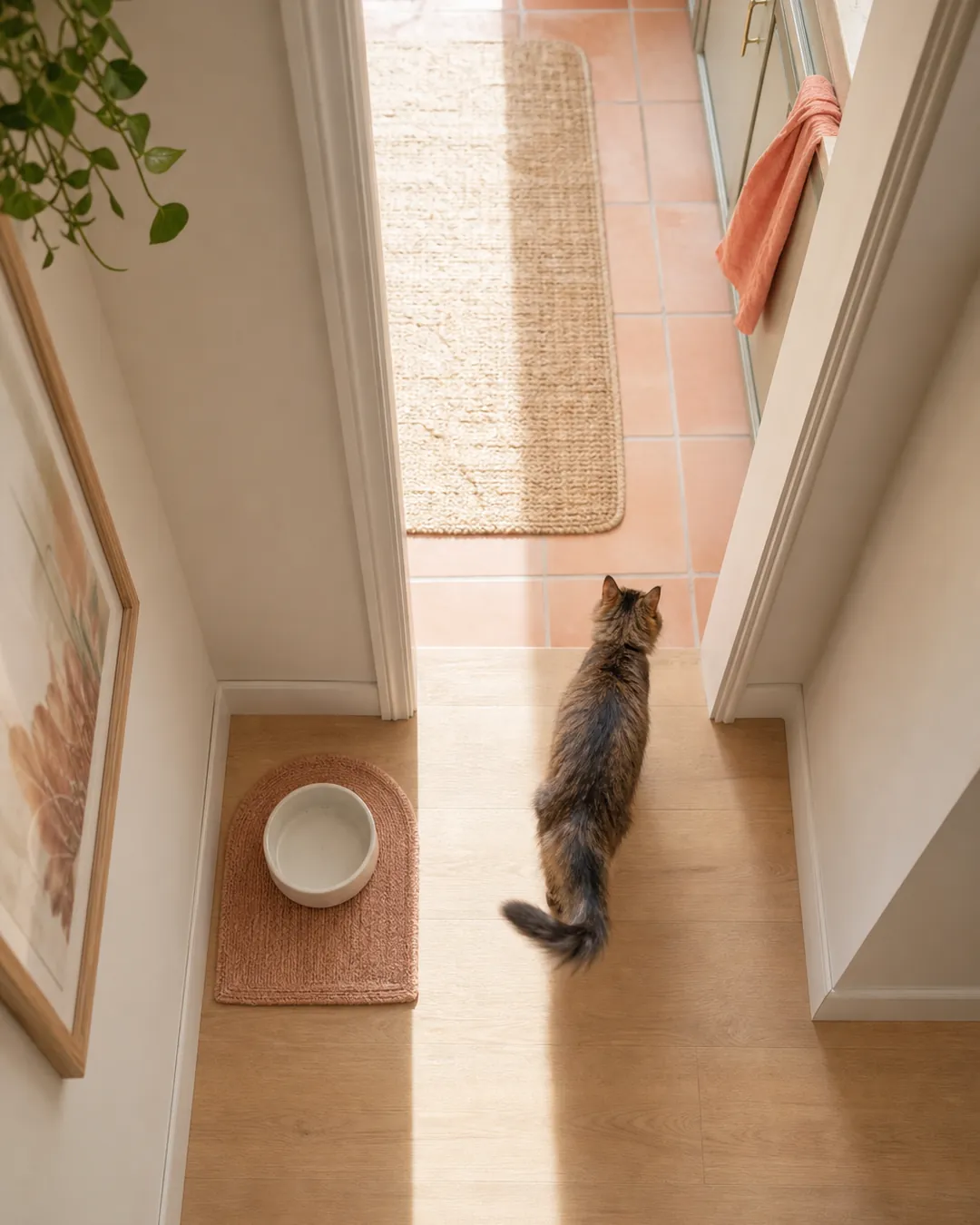
This costs nothing and is worth trying before you conclude anything about how much your cat drinks. Move the water bowl to another room, away from the food entirely, and watch what happens over a week. Plenty of cats drink noticeably more when the two are apart. In a small apartment the bathroom or a hallway corner works, and it also spreads the spill risk across two places rather than concentrating it in the kitchen. Running water is the other variable worth testing before spending money on a fountain, since some cats that ignore a still bowl will drink from a dripping faucet, and that tells you the preference is movement rather than location.
4. Get a mat that lies flat and stays put
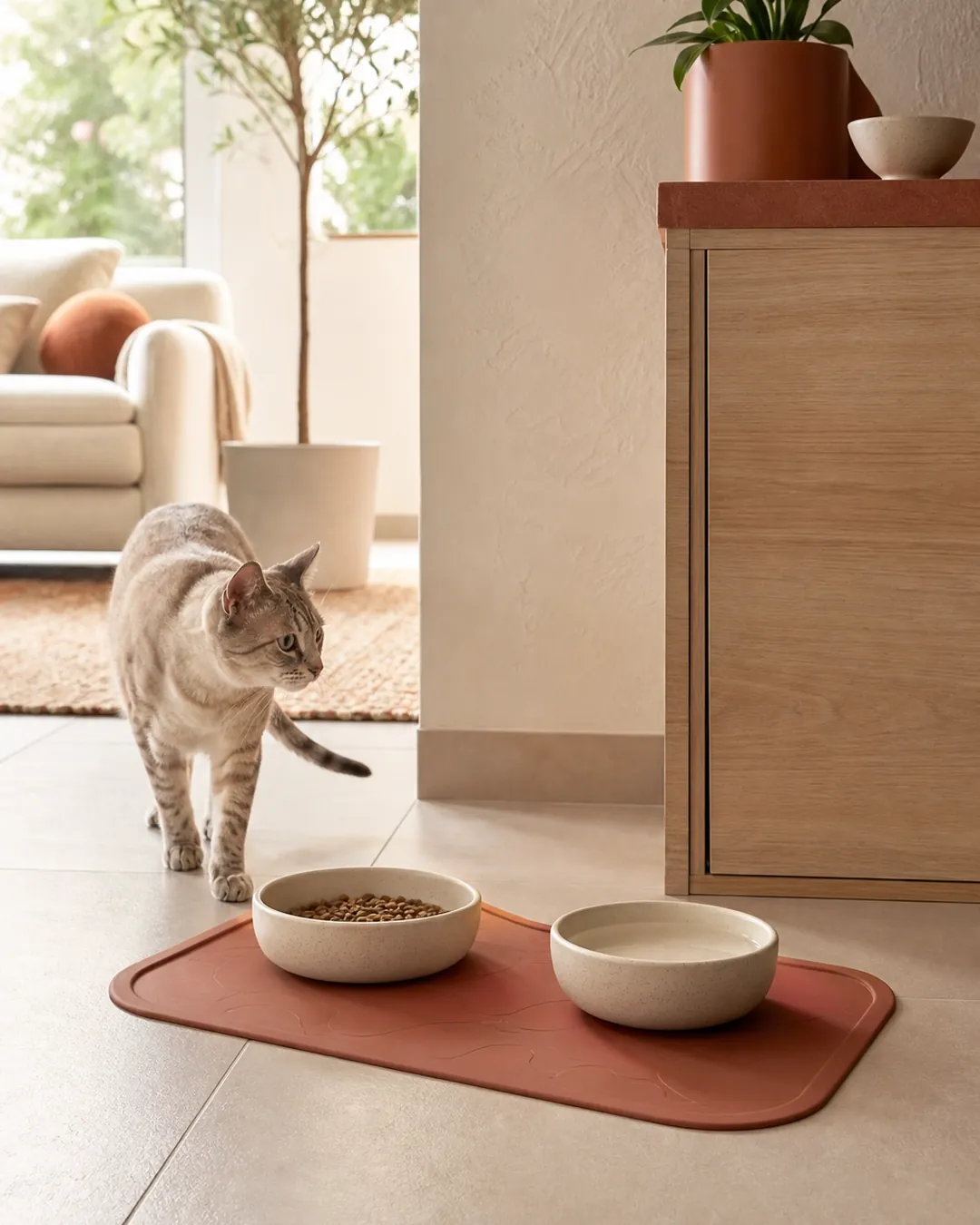
Thin plastic mats curl at the corners within a month, and a curled mat is one the cat steps around rather than onto, which removes the only thing it was doing. A heavy silicone feeding mat has the weight to stay flat and a raised lip that keeps water off the floor. Size it so the cat stands on the mat while eating rather than beside it, and pick a color close to your flooring if you want it to disappear.
5. Keep the litter box as far away as the apartment allows
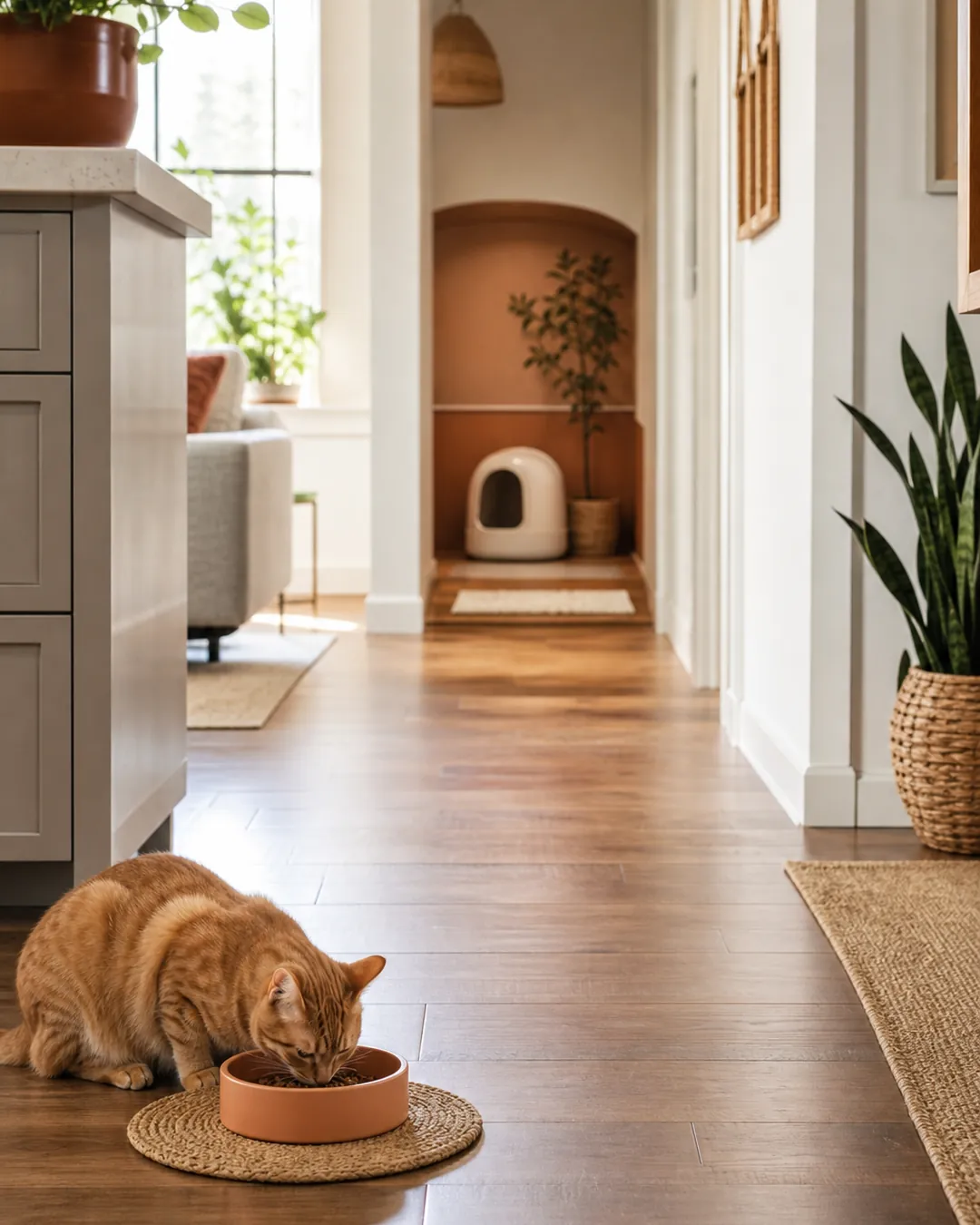
Cats refuse food placed near a litter tray, and in a one bedroom that refusal is expensive because you have limited alternatives. Distance beats screening: a partition between the two does much less than putting them at opposite ends of the space. If you only have one room, use opposite corners and accept that as the minimum rather than the ideal.
6. Store the food where the kitchen already stores things
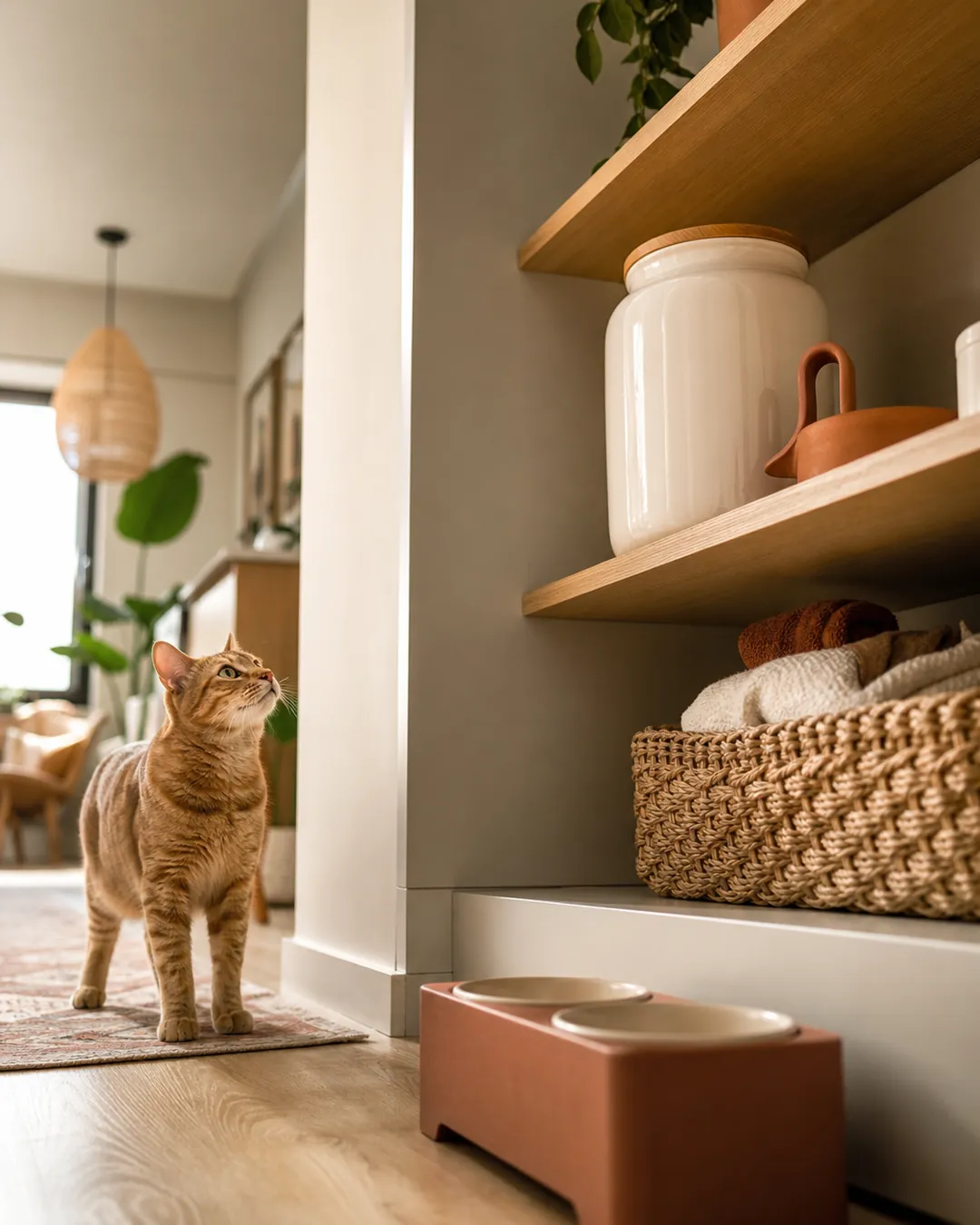
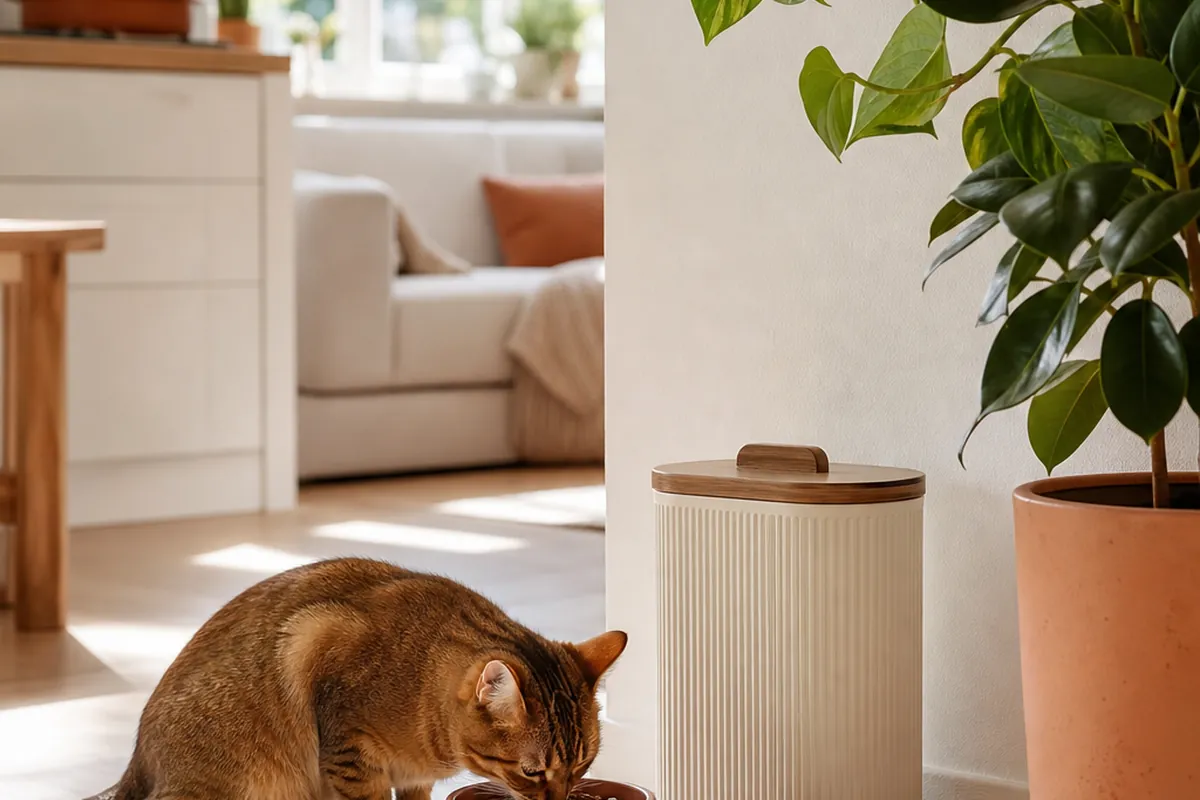
A bag of kibble on the floor is the single biggest contributor to a feeding area looking like pet equipment. A ceramic treat jar with a bamboo lid sits on a counter or an open shelf and reads as a kitchen canister, because that is what it is. Keep the bulk bag sealed in a cabinet and refill the jar, which also means the food you handle daily is always from a sealed source.
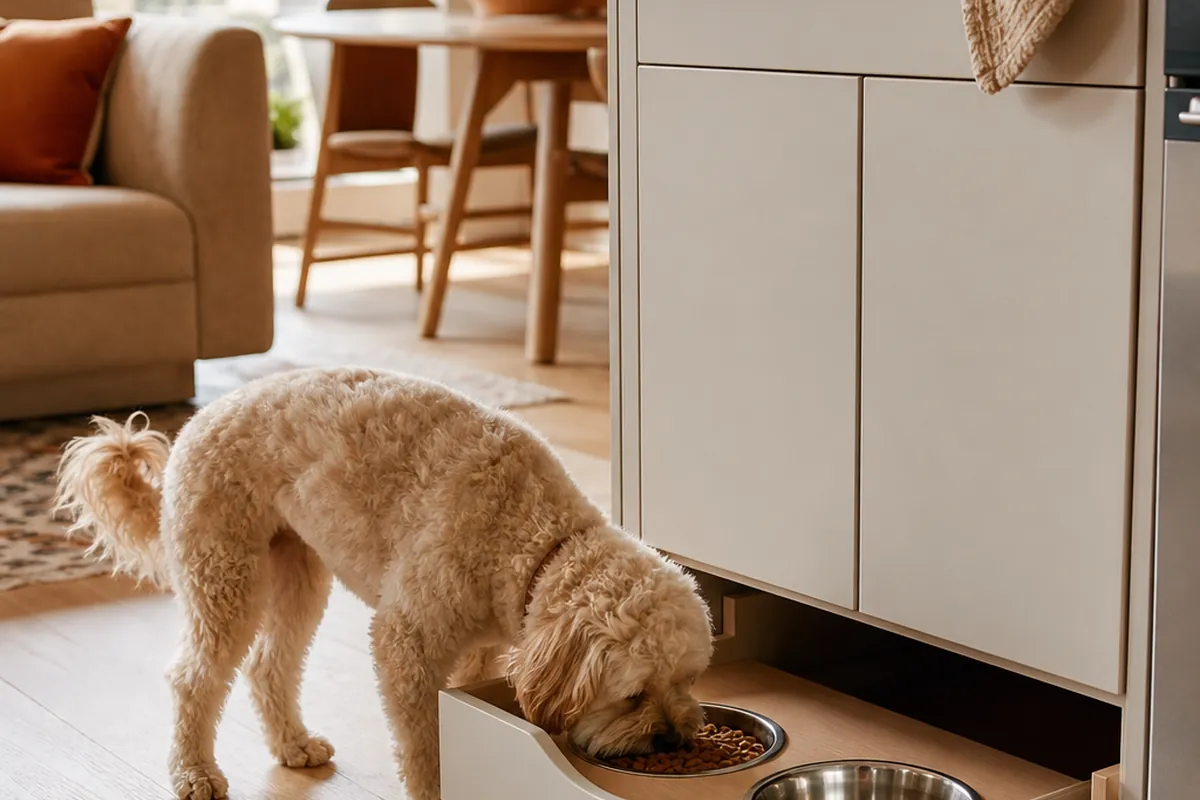
A kitchen with a toe-kick to spare can take the sealing habit one step further and put the bowls themselves away between meals, which is the idea behind an under-cabinet pet feeding station.
7. Raise the bowls only if it suits the cat
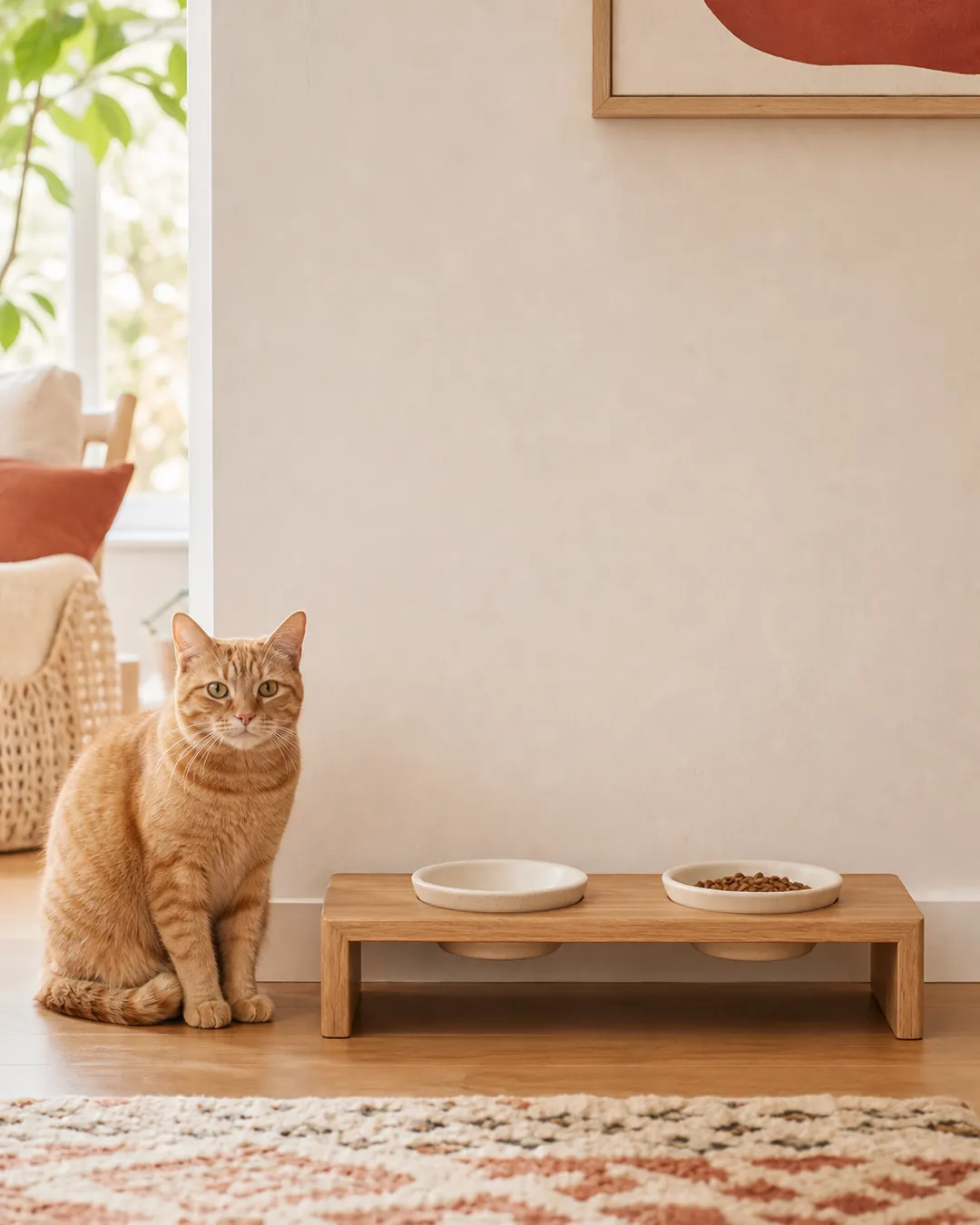
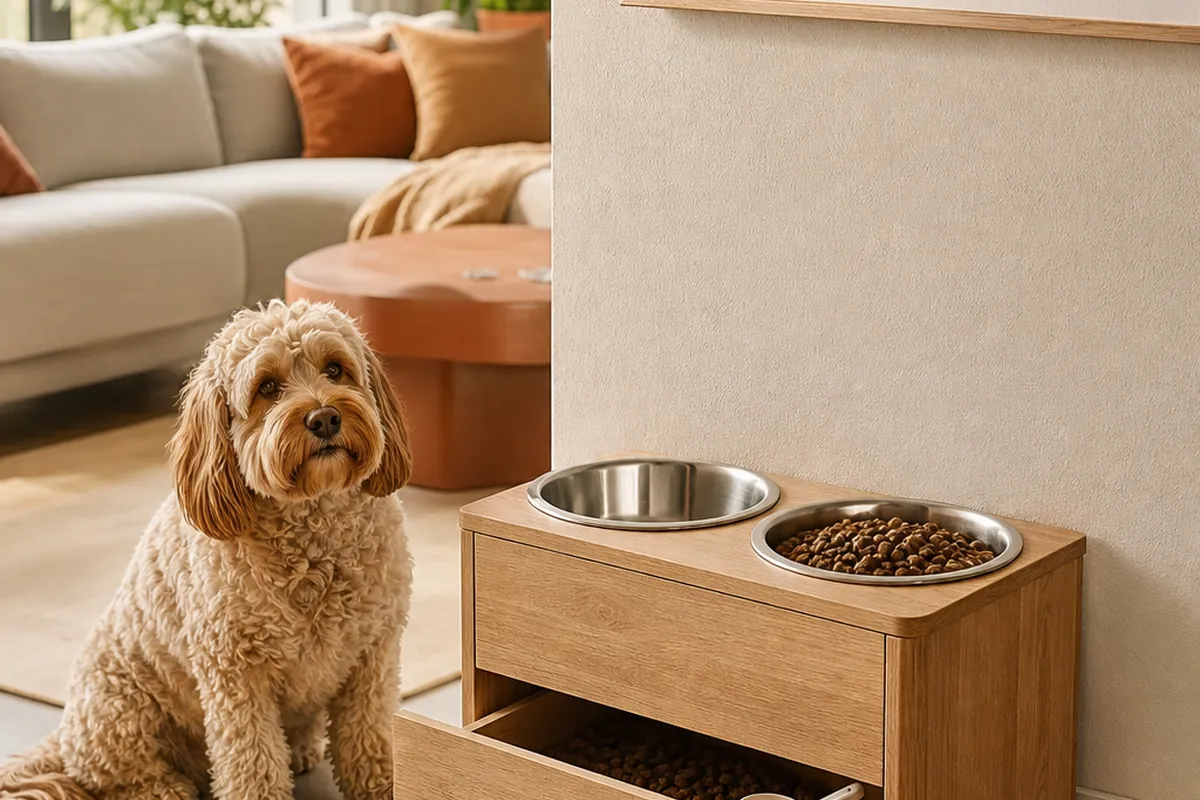
Elevated cat bowls suit some cats and are ignored by others, and a stand is another object occupying floor permanently. If you try one, watch how the cat stands at it for a week before committing. A low riser is usually enough where it helps at all, and in a small kitchen a stand that adds height without adding footprint is the only version worth considering. Wide bases collect spilled kibble underneath, which is a small daily annoyance in a kitchen where the station sits under a counter you cannot easily reach behind.
8. Feed two cats in two places
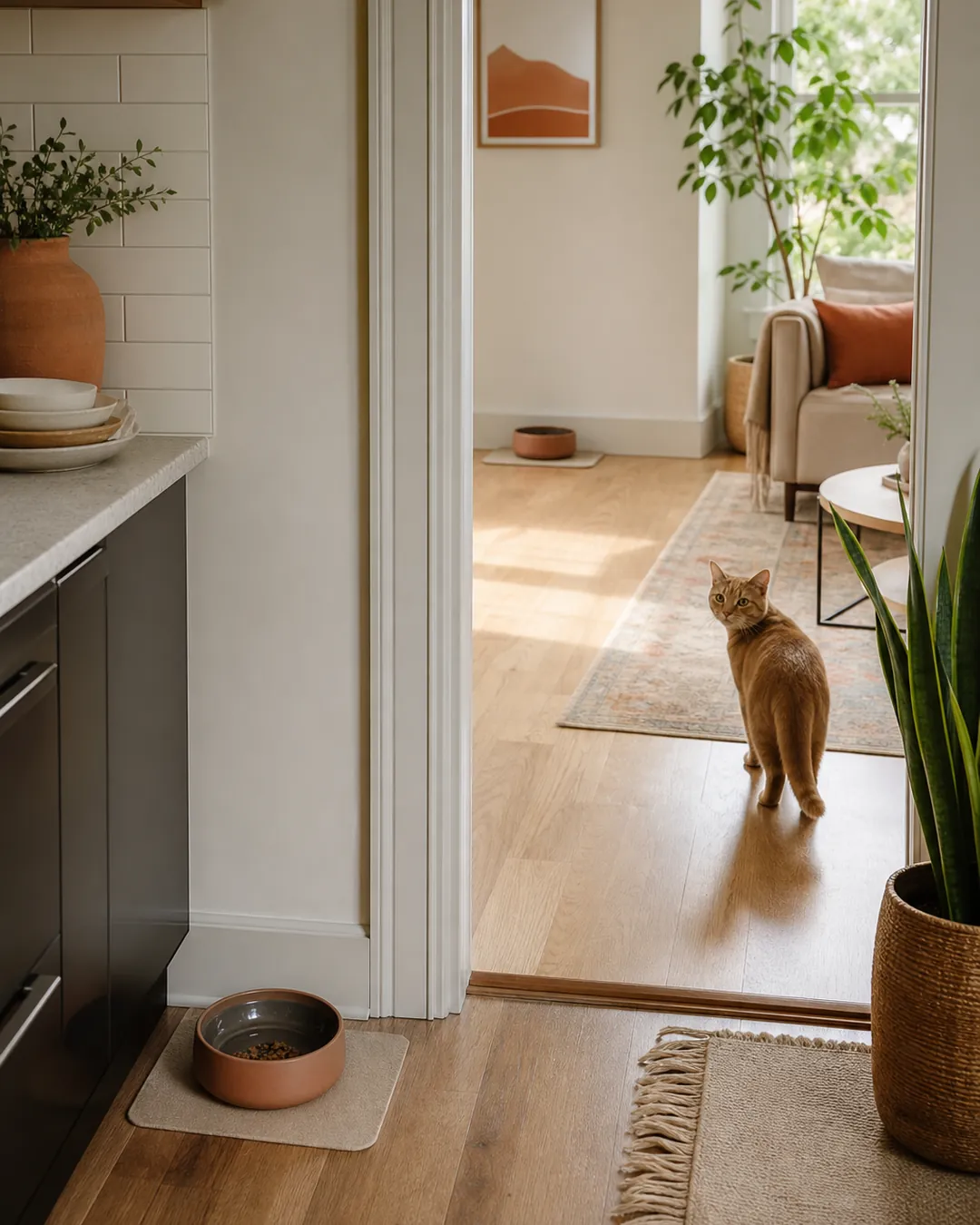
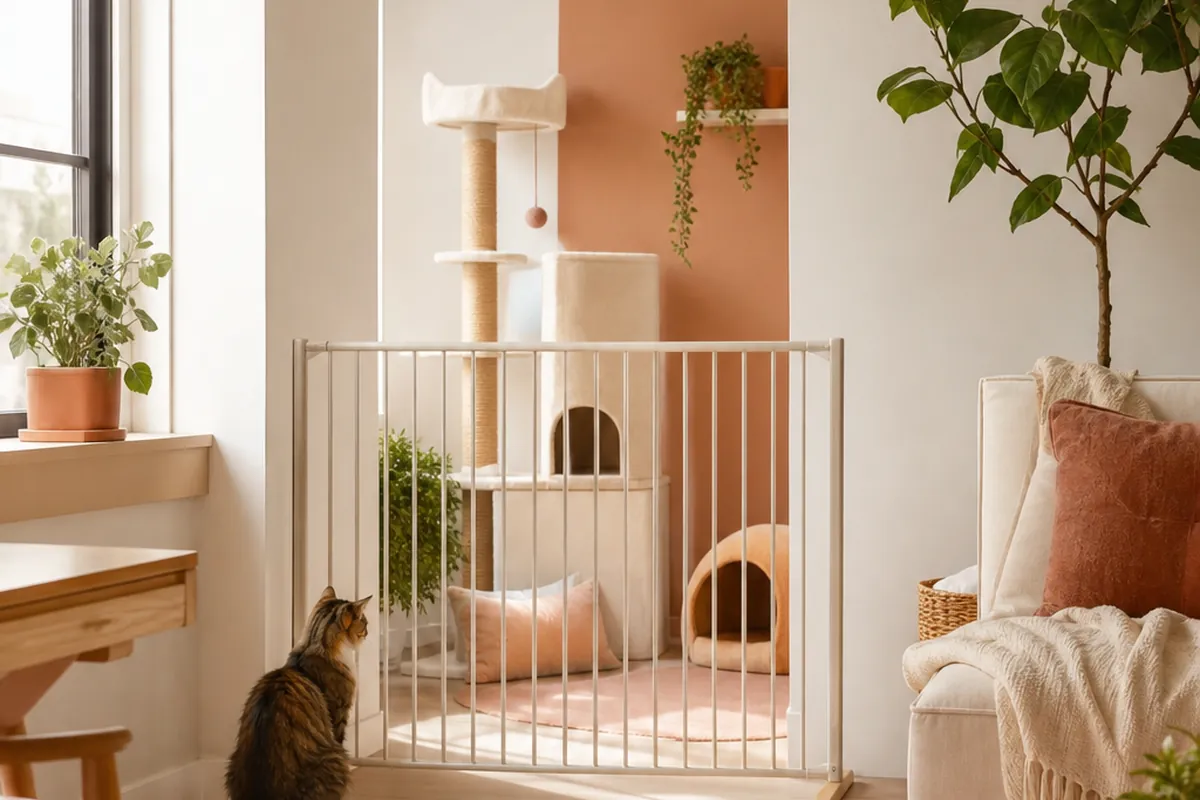
Two bowls side by side is one feeding station with two cats in it, and the less confident one waits, eats fast or gives up. Separate rooms, or opposite ends of one room, removes the competition entirely. This matters more in a small apartment than in a house, precisely because there is less distance available and the default arrangement puts them shoulder to shoulder. Line of sight is what counts rather than measured distance, so a bowl around a corner or on the other side of a doorway does more than a bowl six feet away in the same open room.
9. Design the whole thing to be washed easily
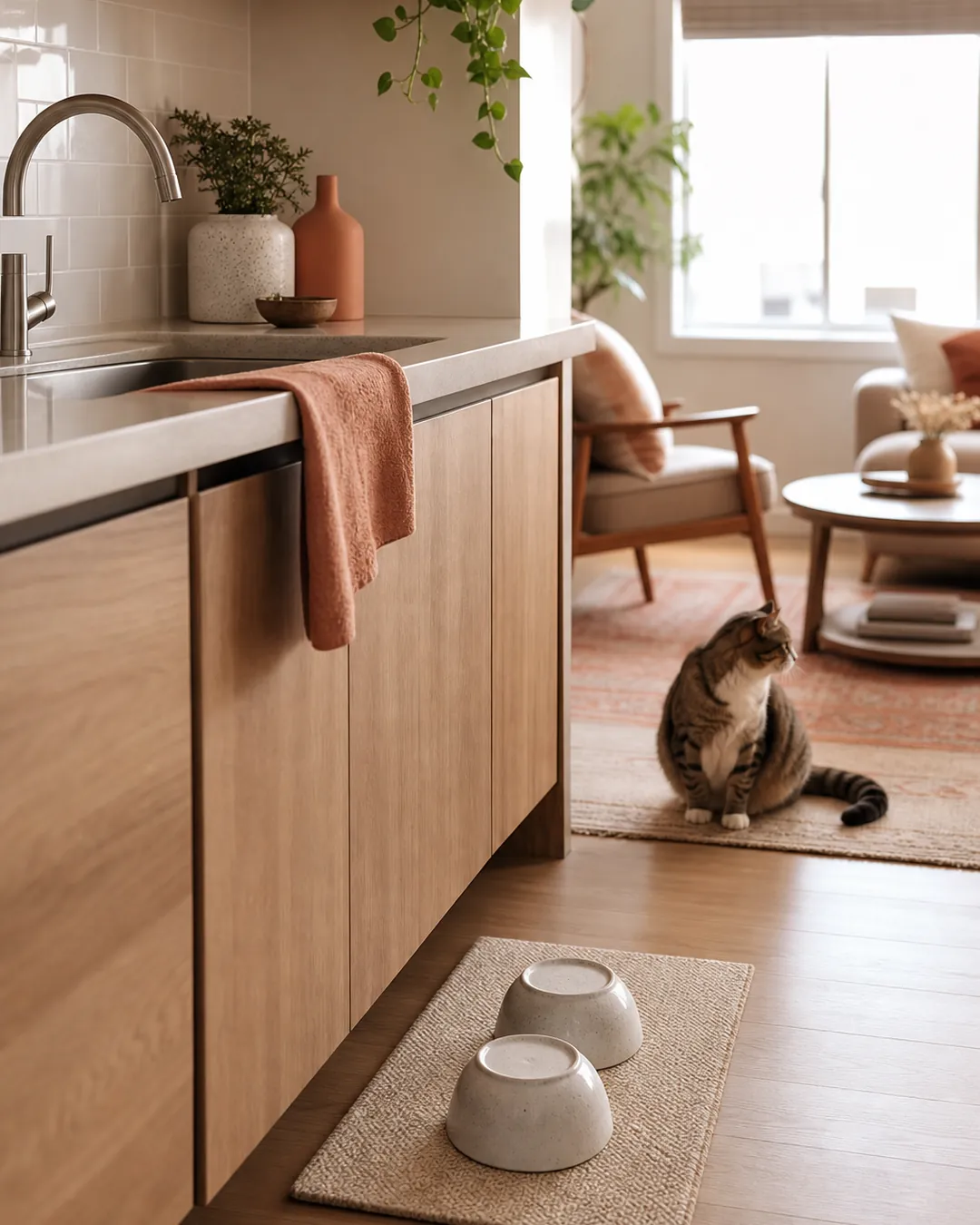
Bowls go in the dishwasher daily if they are ceramic or stainless. The mat gets rinsed in the sink weekly, which is only realistic if it fits in your sink, so check the dimensions against your basin before buying a large one. Wet food residue dries hard, and a station that is awkward to clean gets wiped rather than washed, which is how a tidy corner starts to smell faintly of fish. Keep a second set of bowls if you feed wet food, so the dirty pair can wait for the dishwasher without the next meal being served in them.
Where to start
Walk your kitchen at the busiest moment of the day and find the spot outside the traffic line. That decision does more than every product on this list, and it is free. Mark it, put the current bowls there, and see whether the cat follows within a day or two. Most do.
Then replace the bowls before anything else. Wide and shallow, ceramic or stainless, heavy enough to stay put. It is the cheapest change and the one most likely to fix a specific complaint you already have, whether that is food on the floor or a cat that eats half a bowl and walks away.
The mat comes next, sized to the whole station and heavy enough to stay flat. Store the bag out of sight and keep a small jar of what you use daily somewhere the kitchen already keeps containers.
Leave the water bowl experiment until the rest is settled, then move it to another room for a week and see what happens. It is the one change on this list that costs nothing at all and occasionally makes a visible difference. If nothing changes, put it back and stop thinking about it, because a second bowl in a small apartment is only worth the floor it takes if the cat is actually using it.