The bowls are never the problem. The problem is the bag of kibble slumped against a cabinet, the scoop that lives inside it and never comes out clean, the mat that has slid halfway under the counter, and the ring of water that has been on the floor since breakfast. A feeding station is the decision to treat all of that as one thing with a fixed place, instead of four things that migrate.
Ten ideas for building one, weighted toward small homes where the station is visible from wherever you sit.
1. Get the bag off the floor and into something sealed
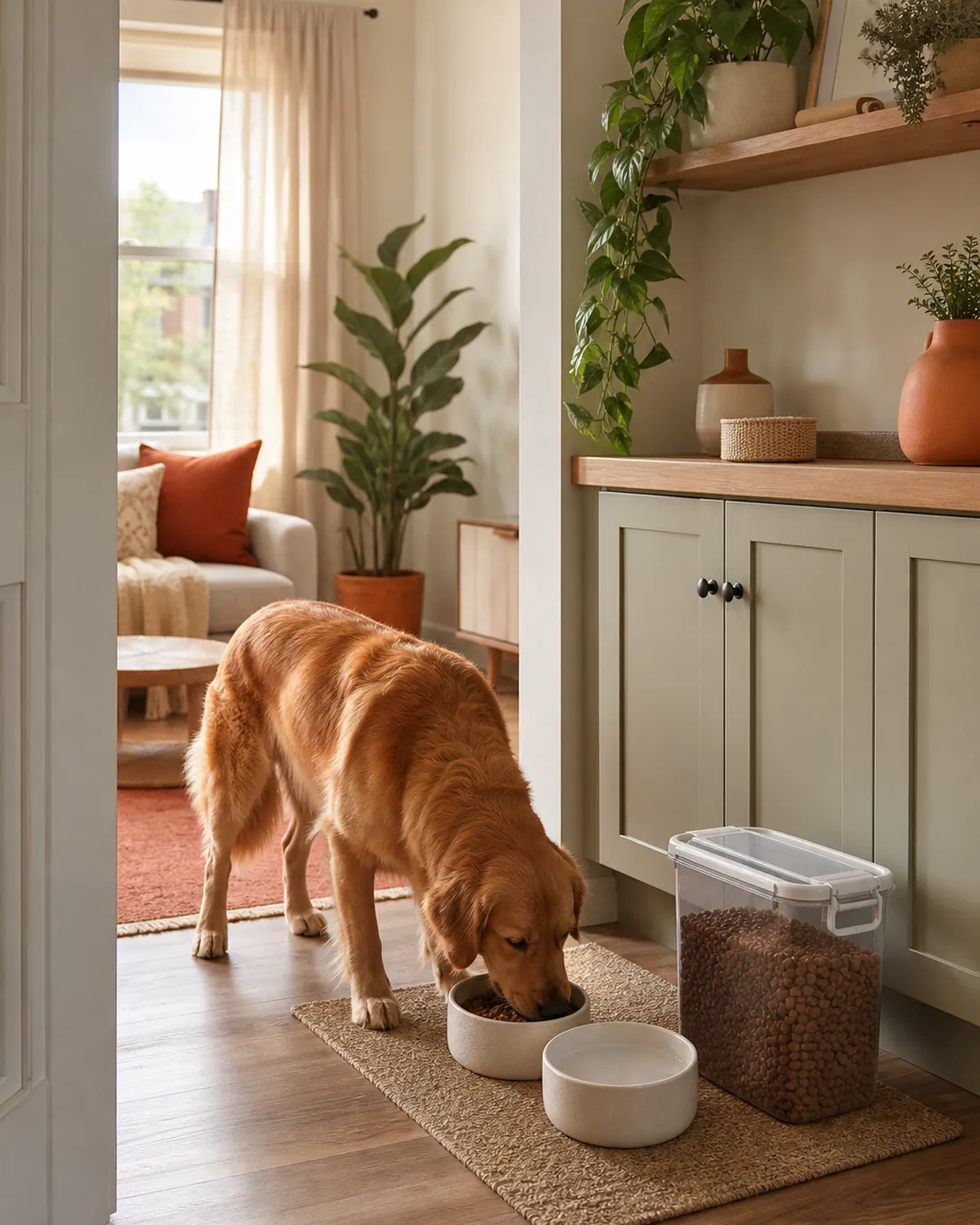
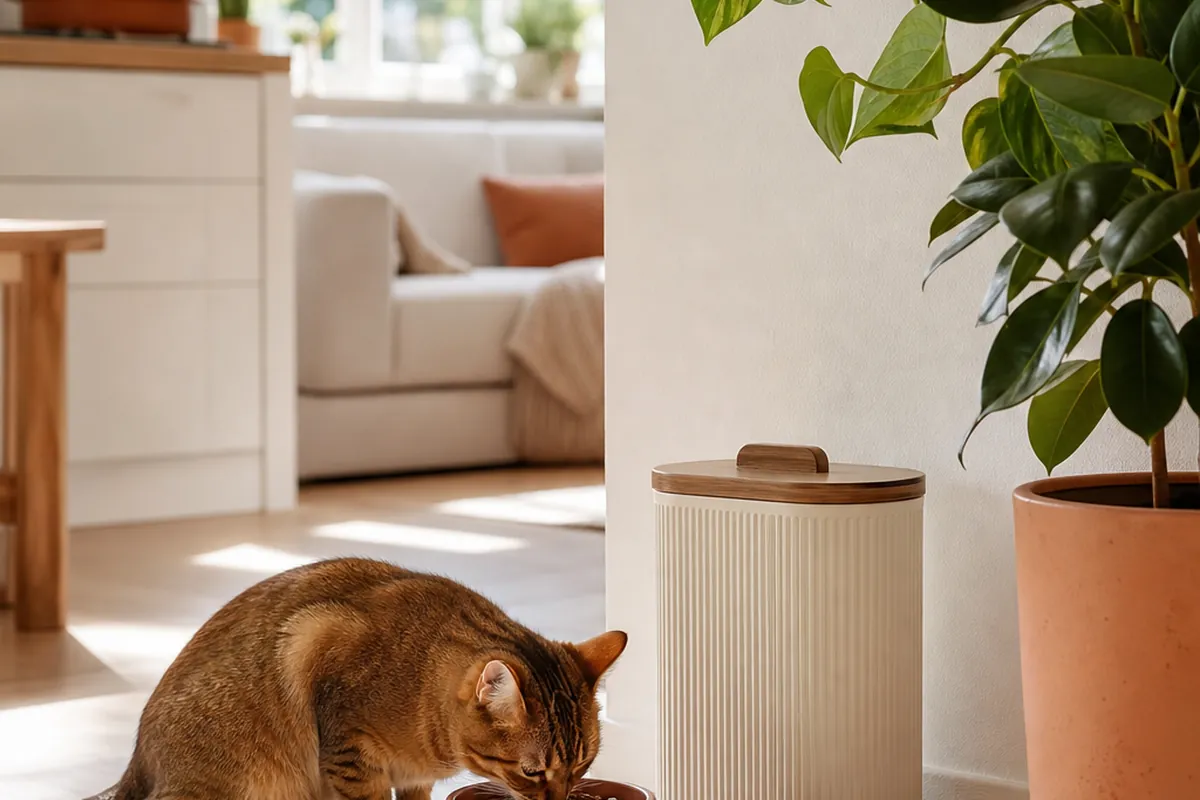
An open bag is the source of most of what makes a feeding area look untidy, and it is also the reason kibble goes stale. An airtight container holding up to 54 pounds takes a full bag, seals against humidity, and rolls out from under a counter when you need it. Buy to the bag size you actually purchase rather than the largest container sold, because an oversized bin is floor space spent on air. Put the whole bag inside the container rather than tipping the kibble in loose: the bag carries the batch code you would need if there were ever a recall, and the oils in the food transfer into bare plastic over months and eventually turn.
2. Keep the scoop with the food, not in it
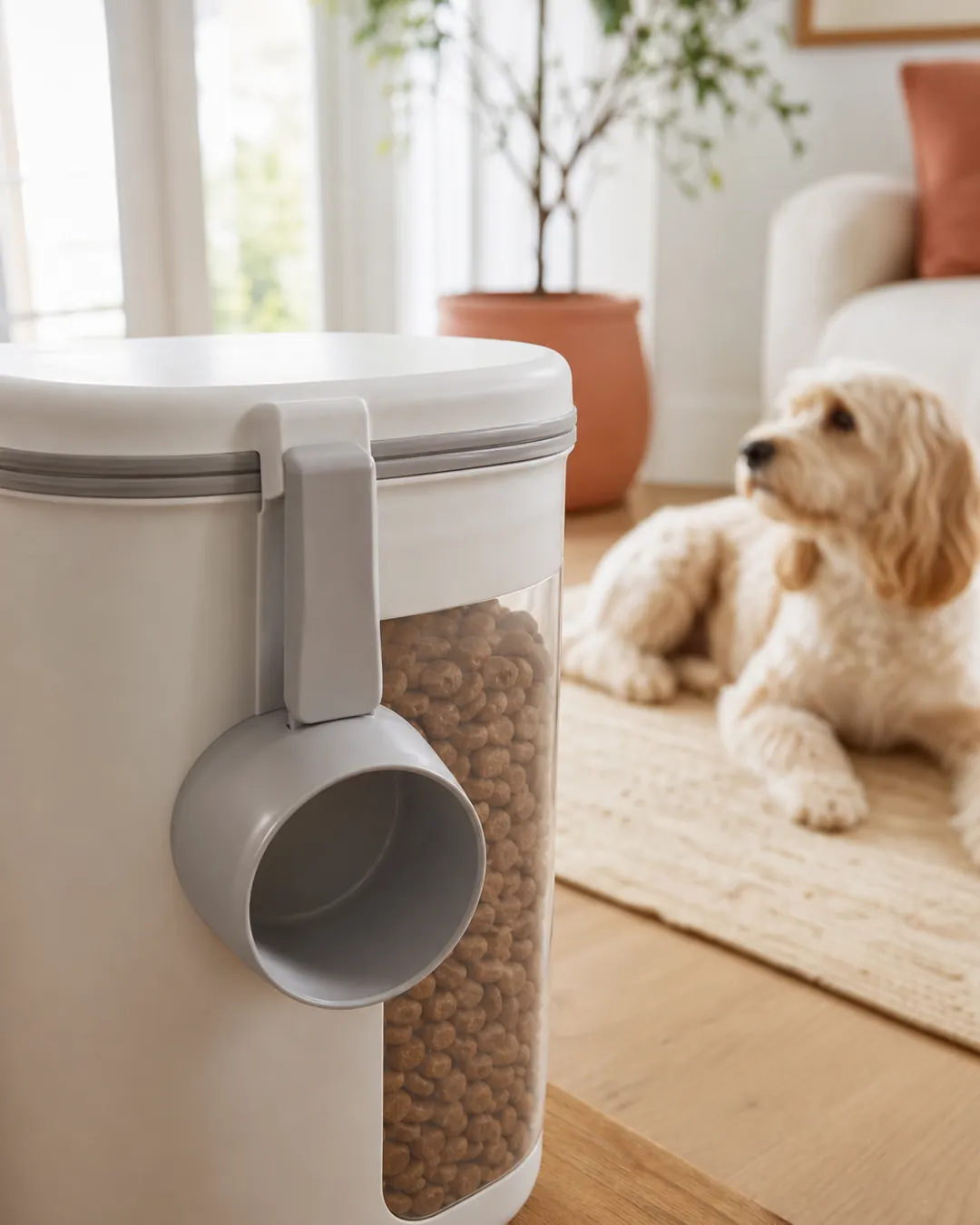
A scoop buried in the kibble gets handled with the same hand that touches the food, and it never dries properly if it has been anywhere near the water bowl. Clip it to the lid or stand it in a small holder beside the container. A set of measuring scoops also lets you pick a size that matches one meal exactly, which turns portioning into a single motion rather than an estimate. Consistency is the point, because the same scoop filled the same way every time removes an argument about whether the dog has already been fed. In a household with more than one person, that is worth more than it sounds. A small whiteboard or a magnet on the container settles it entirely.
3. Choose a stand you can adjust rather than one fixed height
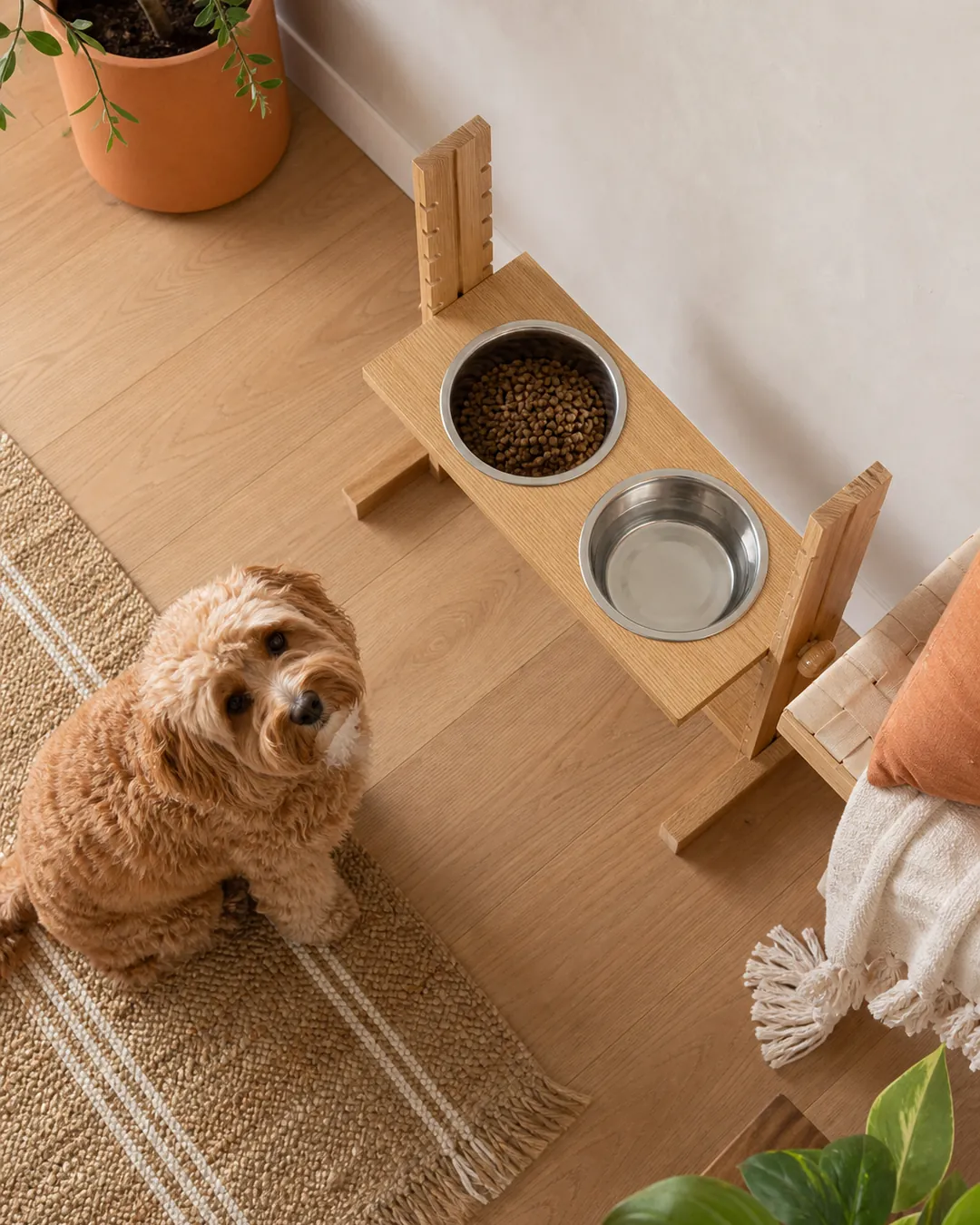
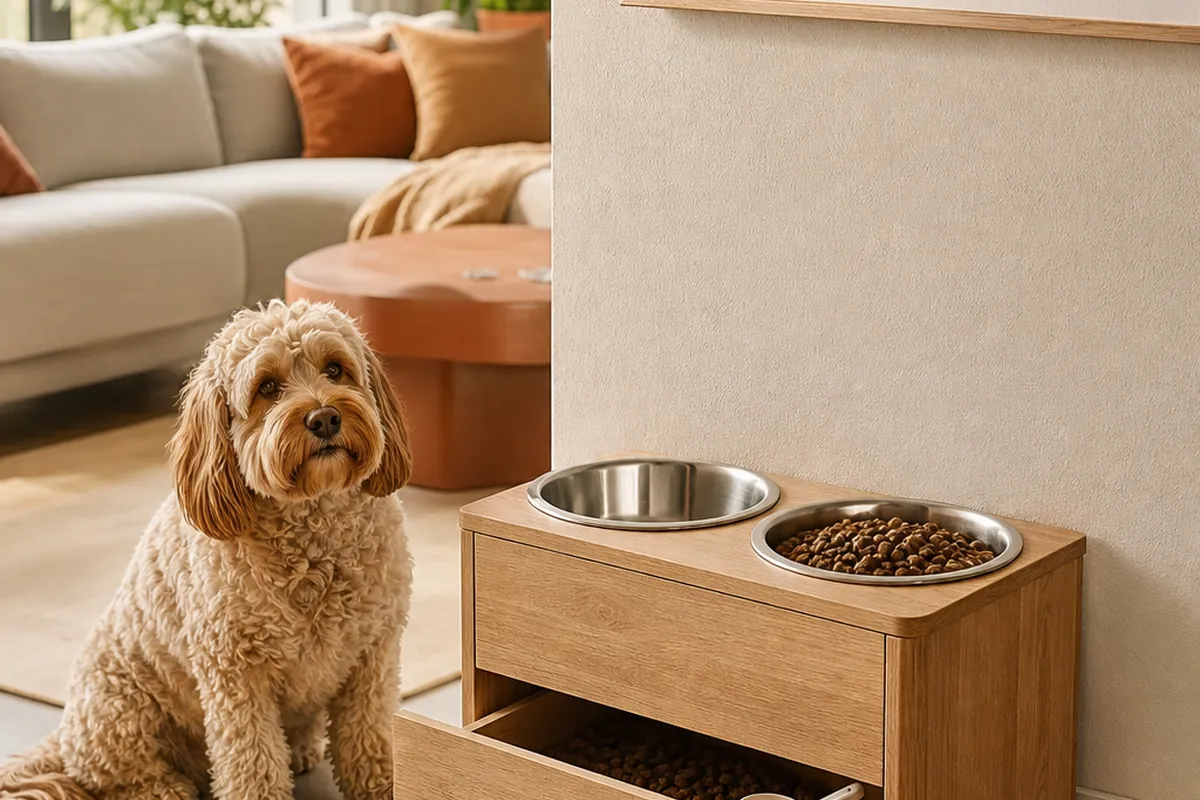
Bowl height is a comfort question, and the comfortable height changes with the dog and with the bowl you put in it. An elevated stand with five adjustable heights lets you try one, watch how the dog stands, and change it without buying anything again. That flexibility matters more for a puppy that is still growing, where a fixed stand is correct for a few months at most. Check the bowls lift out cleanly too. A stand that holds bowls in a recess you have to pry them out of turns a daily wash into a small fight, and that is the kind of friction that ends with bowls being rinsed rather than washed.
4. Put the whole station on one mat
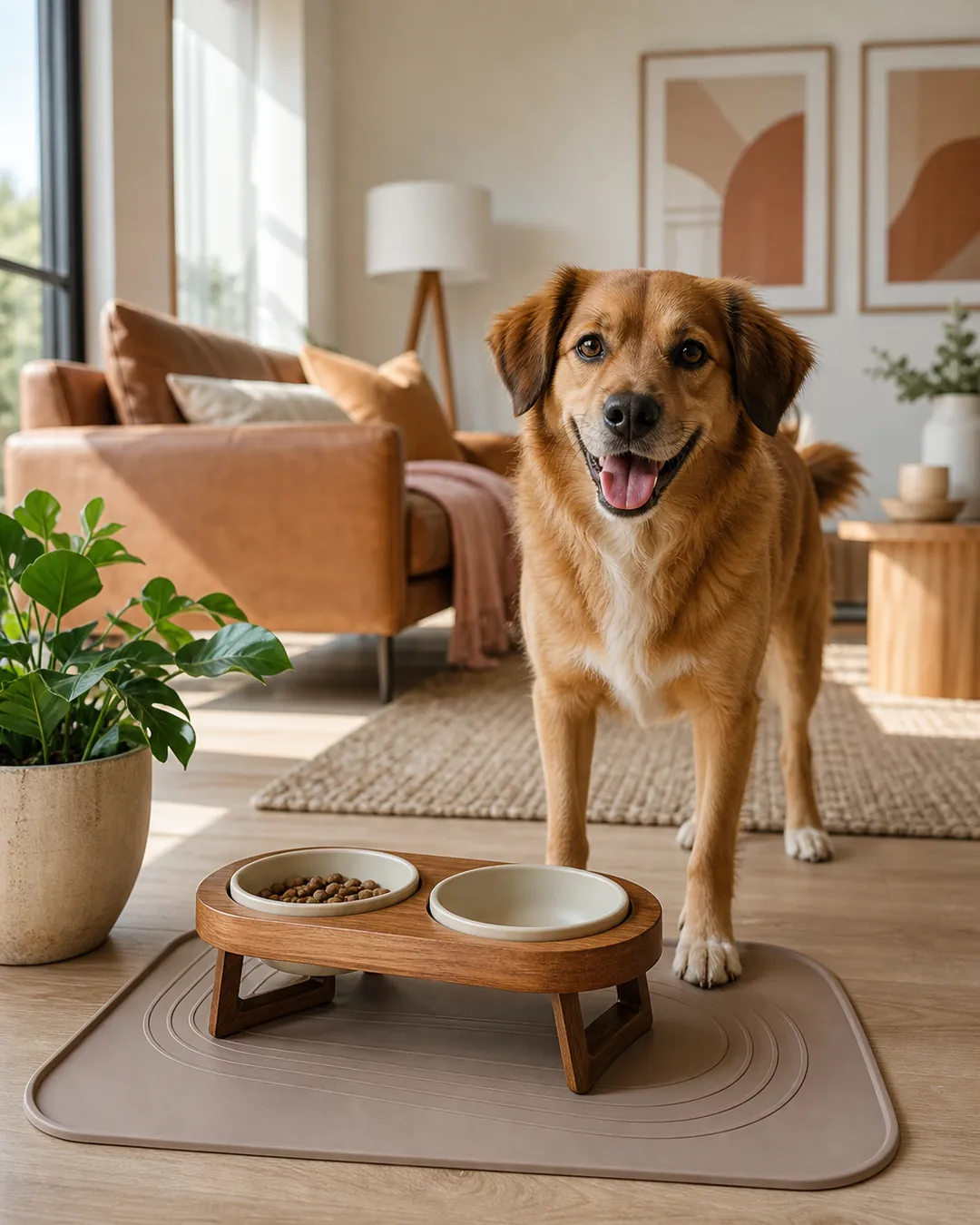
A mat under the bowls catches splash. A mat under the whole station catches splash, drips from the muzzle afterward, and the kibble that gets knocked out during a fast meal. Size it so the dog stands on it while eating rather than beside it, and pick one with a raised lip if your floor is anything other than sealed tile. The lip is what stops water reaching a baseboard, which is where floor damage in a small home usually starts.
5. Take the station out of the walkway
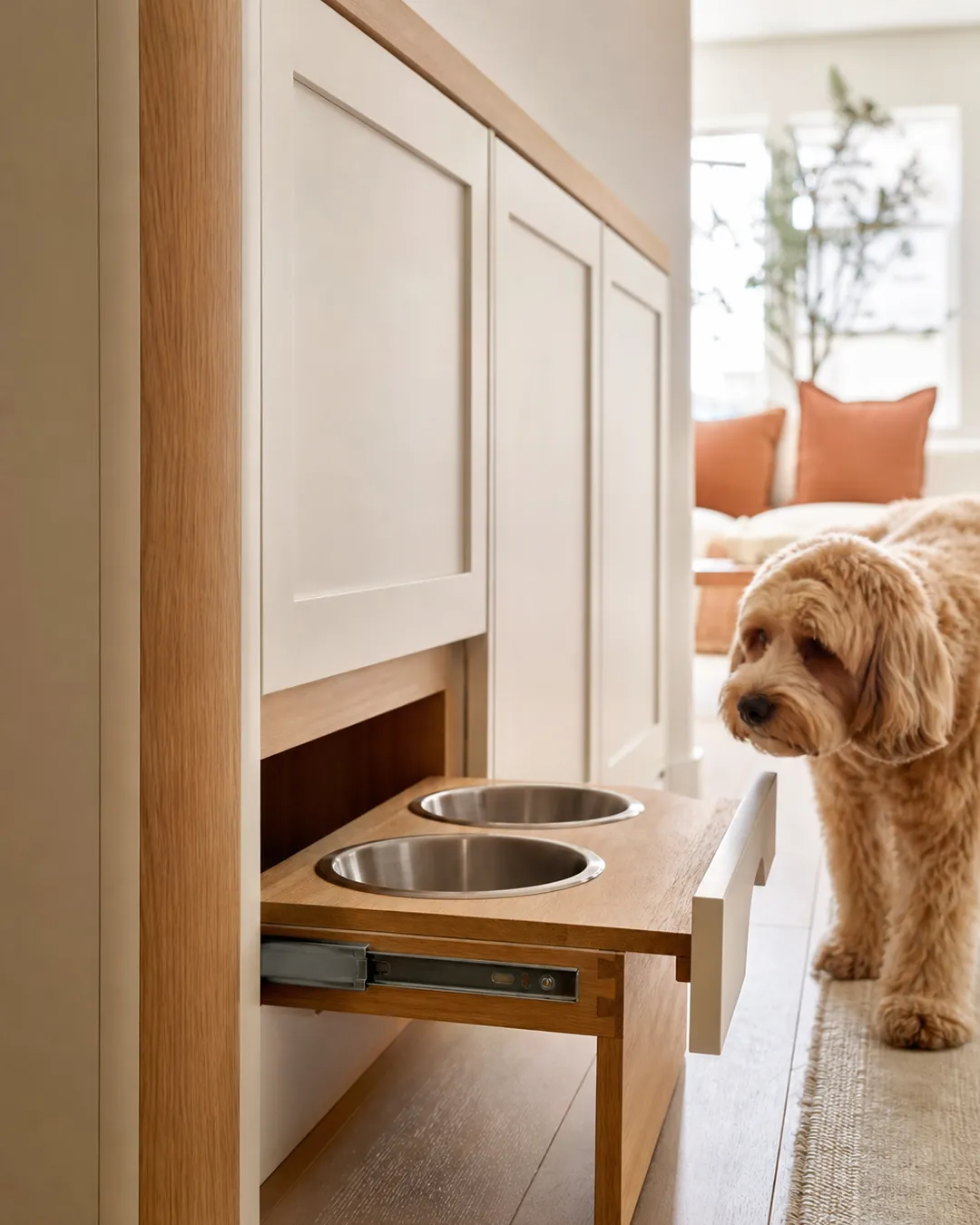
In a small kitchen the natural place to put bowls is against the nearest free wall, which is frequently the wall people walk along carrying things. A dog that is nudged mid-meal starts eating faster or guarding the spot, and neither is a habit you want to build. Look for a corner, an alcove or the end of a cabinet run where the dog can stand with its back to nothing. Watch where the dog takes a chew or a bone on its own, since dogs pick defensible spots without being taught to, and the corner it chooses is usually the right corner for the bowls as well.
That defensible corner is often the same one the bed wants, and dog area ideas for the living room covers how to zone a corner so the bowls and the bed share it without getting in each other’s way.
6. Store treats separately from food
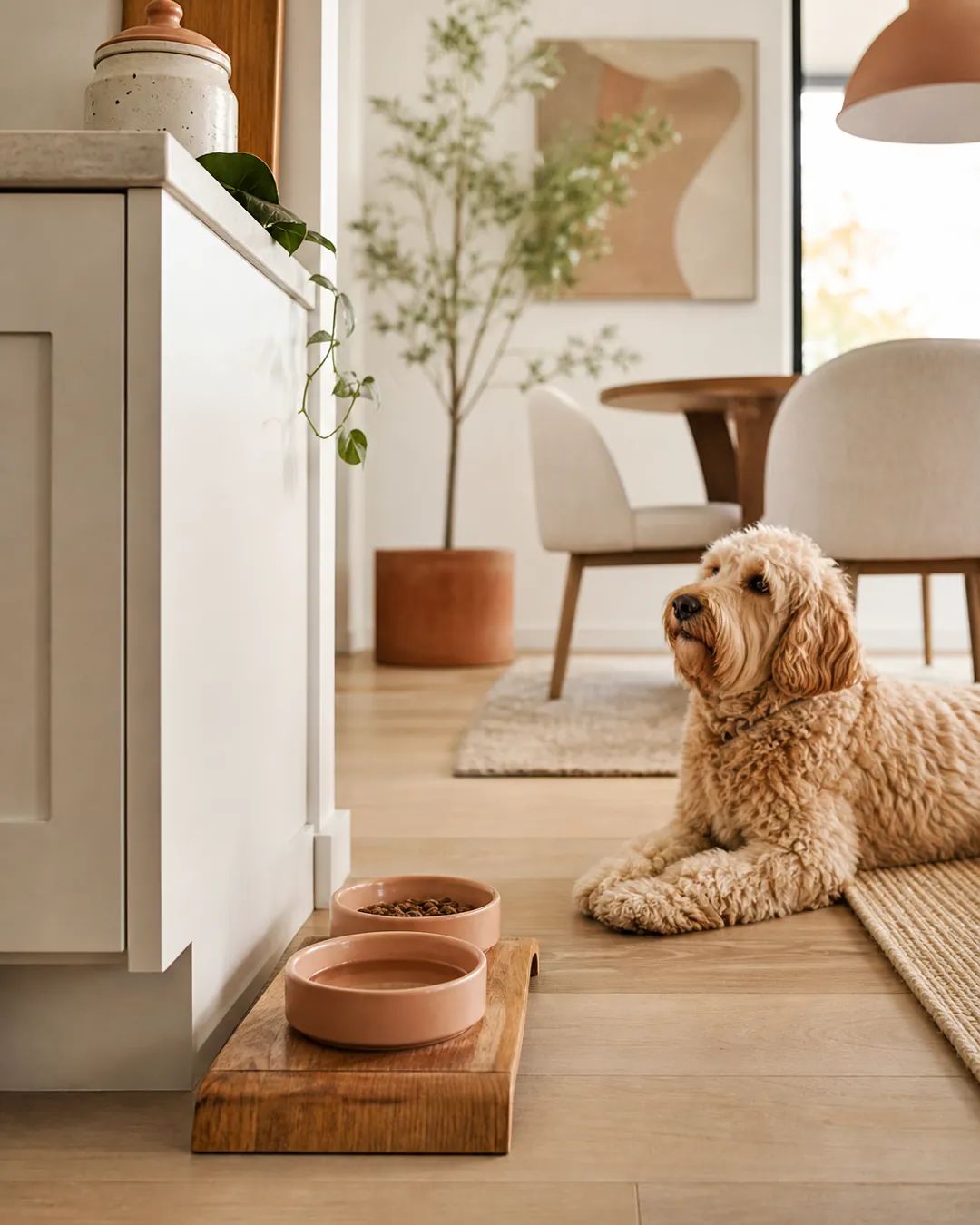
Treats and food in the same container means opening the food container several times a day, which undoes the seal you paid for and puts kibble in reach of a dog that has learned what the lid sounds like. A small jar somewhere else, ideally out of the station entirely, keeps the two apart. It also keeps the training treats near where training actually happens, which is by the door or in the room you sit in rather than at the bowls.
7. Fit the station to the cabinet line if you can
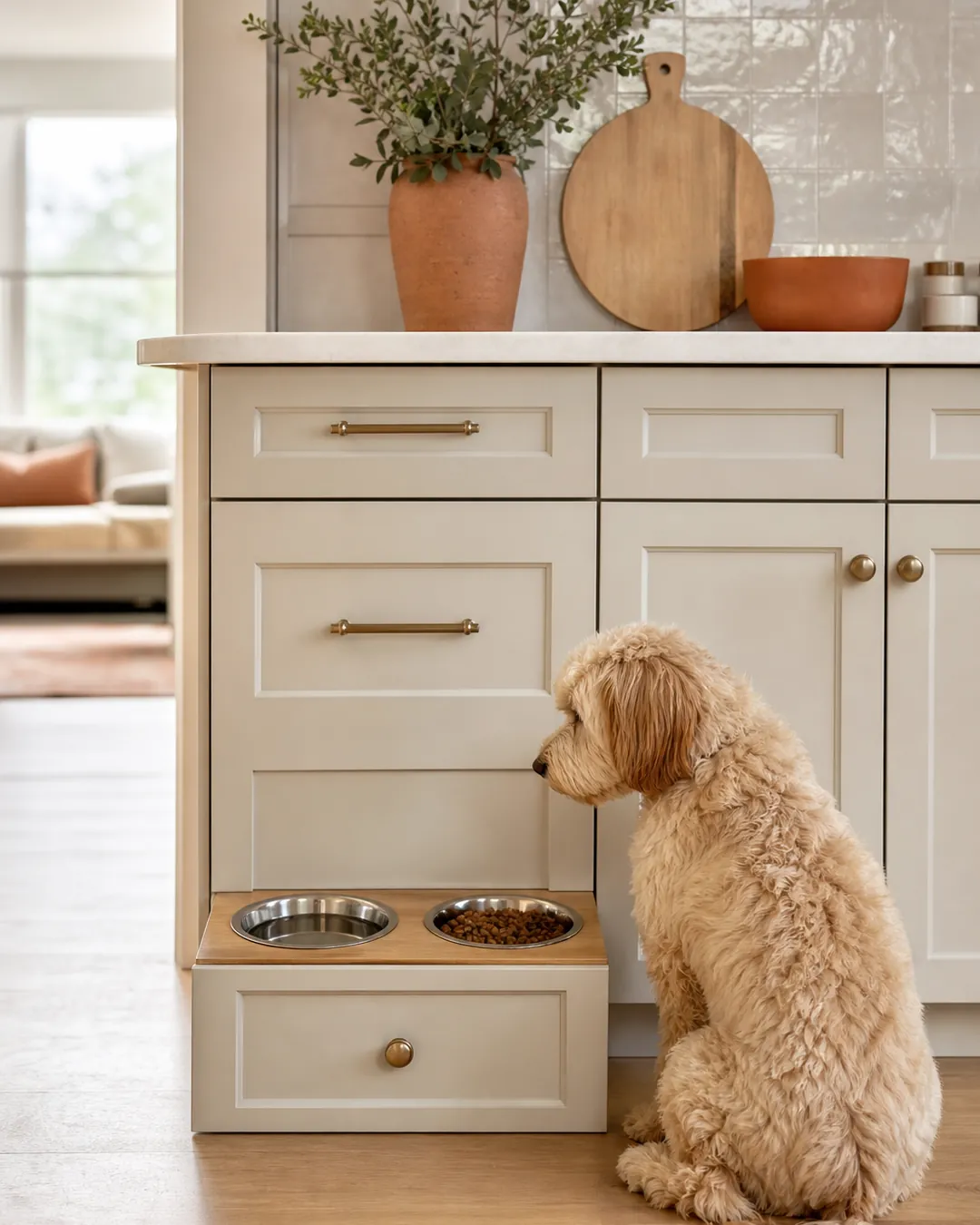
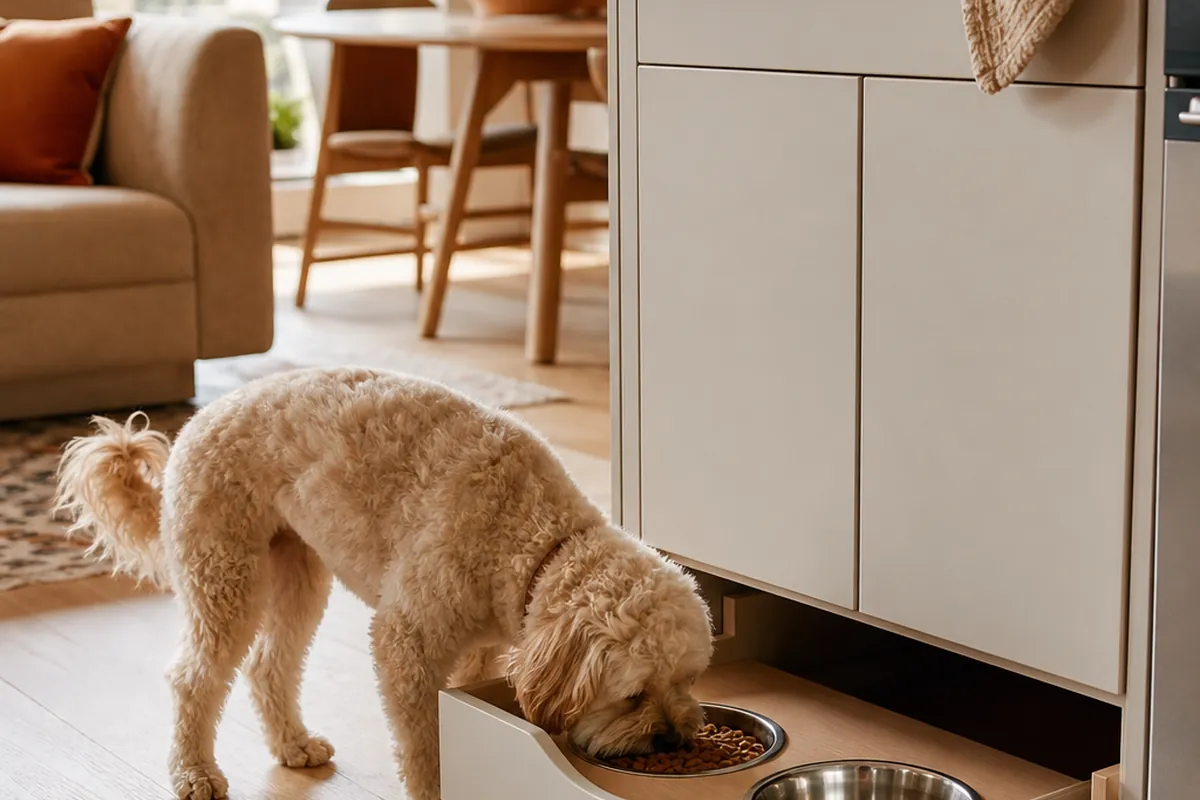
Where the station sits against kitchen cabinets, matching the depth of the counter above it makes the whole thing read as part of the kitchen instead of an addition to it. Standard base cabinets are about 24 inches deep, so a container and stand that together stay within that line disappear visually. Anything that projects further catches the eye and, more practically, catches hips. If the cabinet run has an open toe-kick, an under-cabinet pet feeding station for a small kitchen goes one step further and slides the bowls into that recess between meals, so nothing projects past the line at all.
8. Keep the water bowl separate from the food station
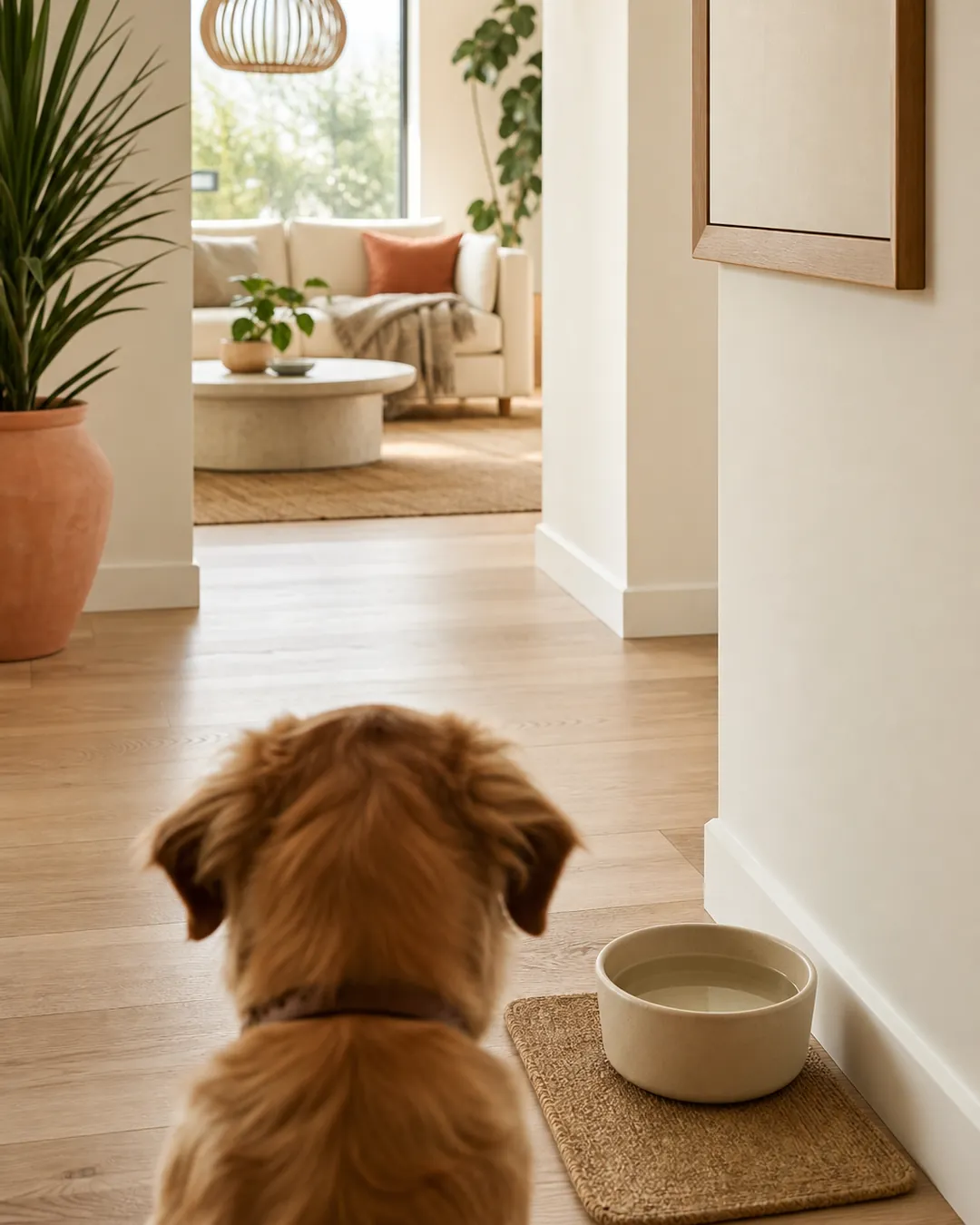
This is worth doing deliberately in a small home, because a second water bowl in another room means the dog drinks where it happens to be rather than trekking back to the kitchen. It also spreads the splash risk across two small areas rather than concentrating it in one. Keep the second bowl on a mat as well.
9. Give the station somewhere for the awkward extras
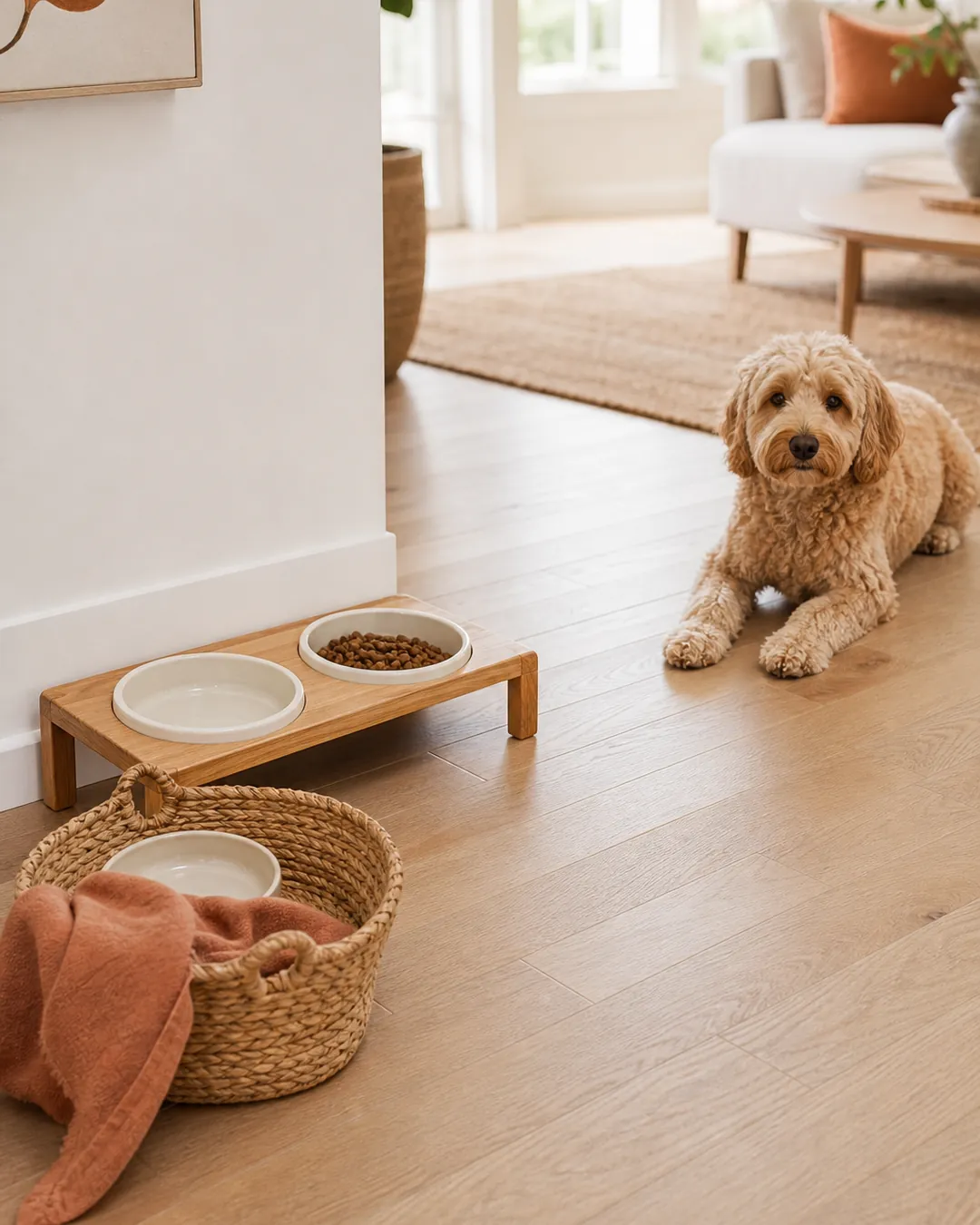
Every feeding area accumulates things that are not food: a folded towel, a spare bowl, the measuring cup you replaced, a bag clip. If the station has no home for them, they sit on top of the container. A shallow basket beside it, or a drawer in the unit if the design has one, absorbs the whole category and is the difference between a station that stays tidy and one that only starts tidy.
10. Make the whole thing washable and expect to wash it
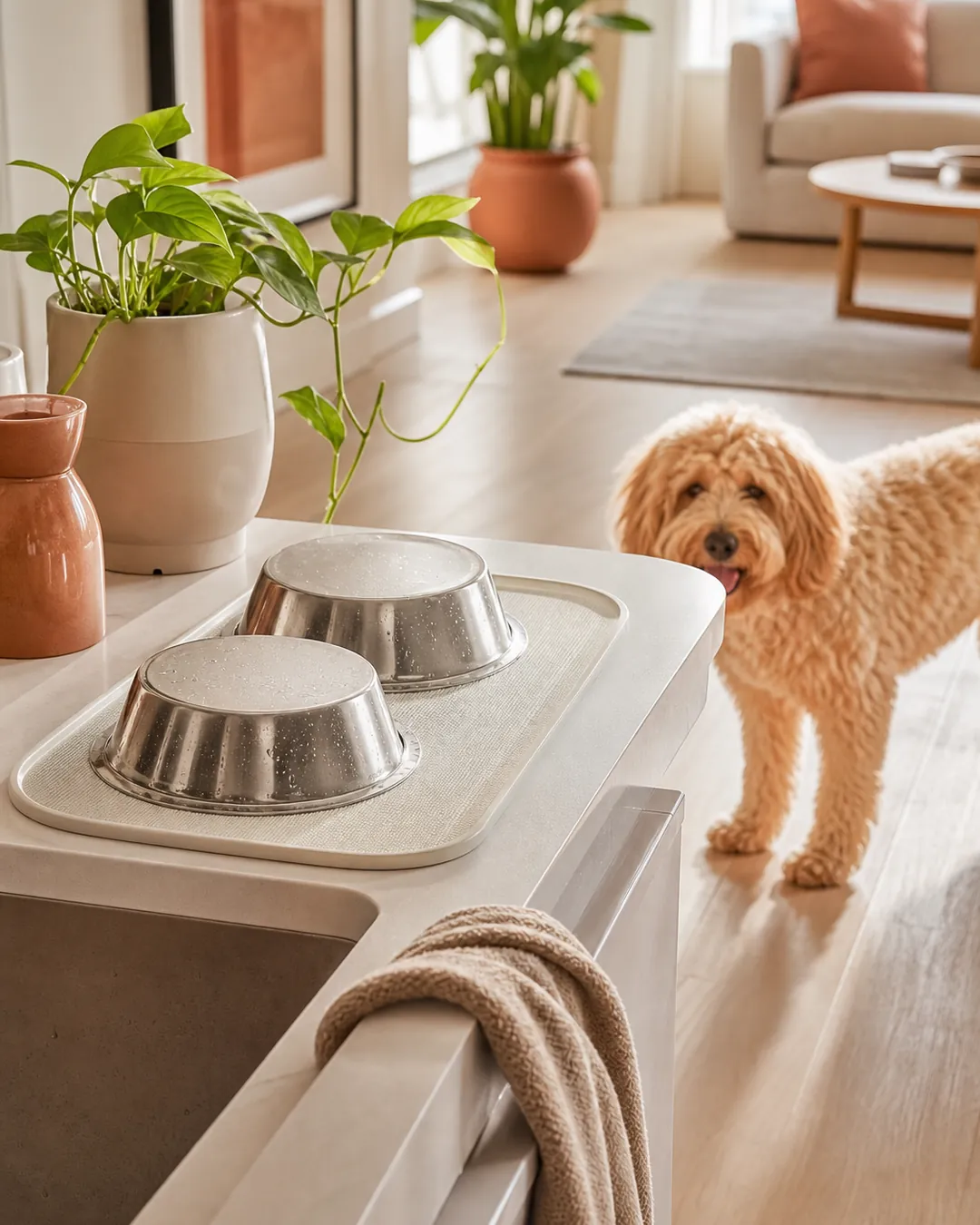
Bowls daily, mat weekly, container whenever it is empty and before the next bag goes in. Choose stainless or ceramic bowls over plastic for the simple reason that plastic scratches and scratches hold residue. The container should be wiped dry rather than left damp, because kibble dust plus moisture in the bottom corner is what makes an empty container smell.
Where to start
Decide the location before you buy any of it. Stand in the kitchen at the busiest time of day and look for the spot nobody walks through, on hard floor, with a wall the dog can face away from. That single choice determines whether the station stays where you put it.
Then buy the container first. It is the item that removes the most visual mess for the least money, and it works immediately whatever else you do afterward. The mat second, sized to the whole station rather than the bowls. The stand last, because that is the piece you want to choose once you have watched the dog eat in the new position.
Leave the setup alone for a couple of weeks before adding anything else. Feeding stations attract accessories, and most of them end up as the clutter the station was supposed to solve. If something has not been used in that time, it belongs in a cabinet rather than on the floor beside the bowls.