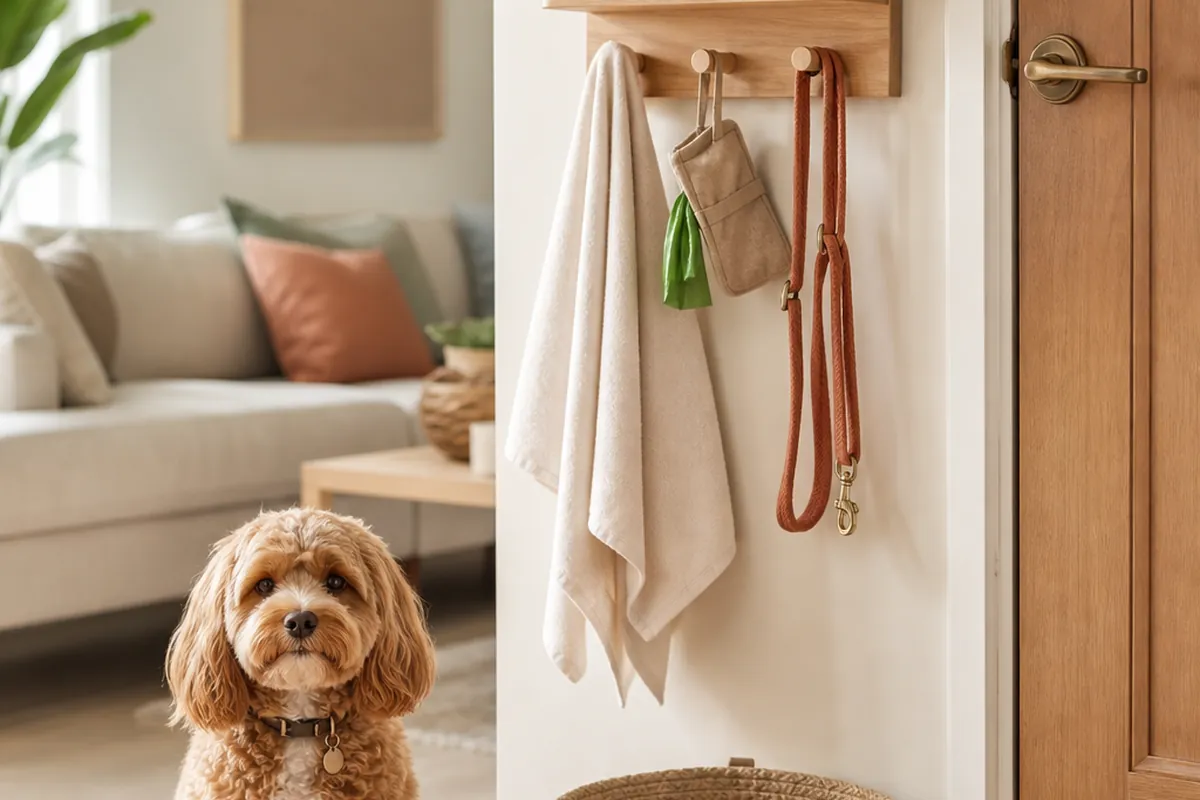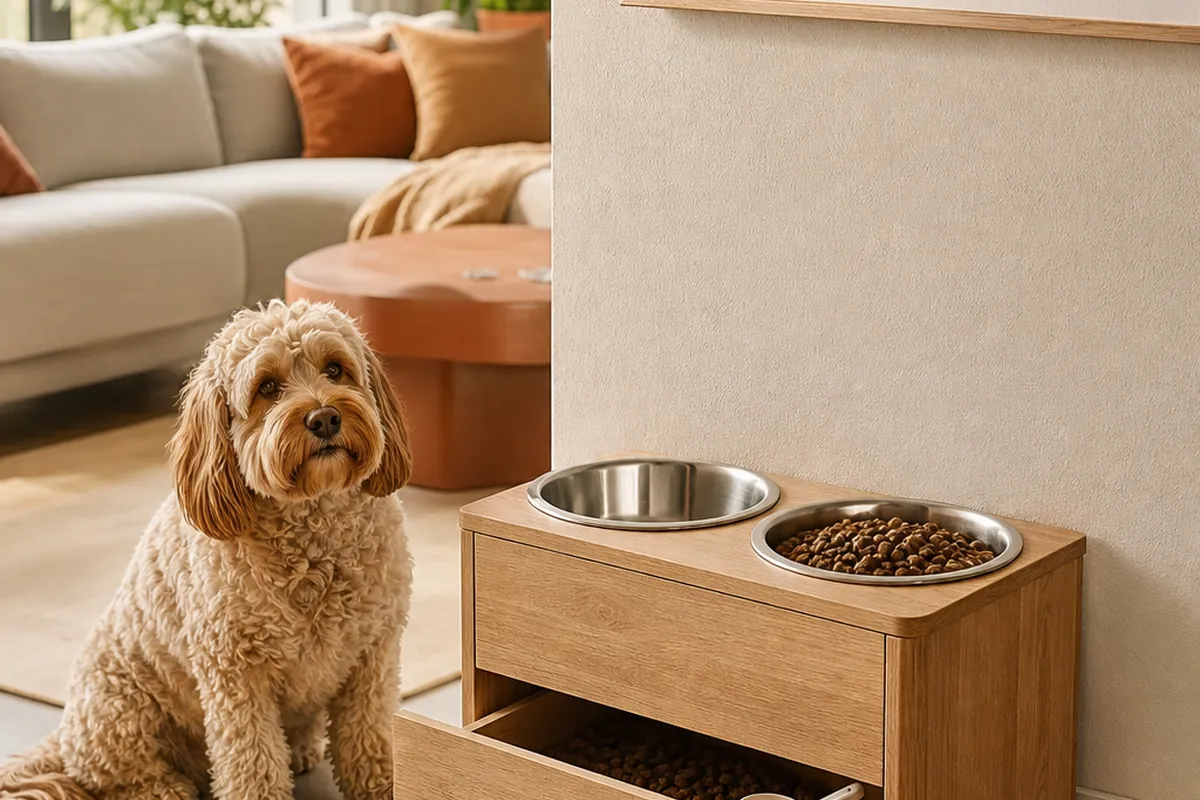
A dog grooming station in a small apartment has none of the usual outs. No mudroom to close a door on, no basement sink, no garage floor that already has stains on it. The brushing, the water and the loose hair all happen in the one room you eat, work and sleep in, which means the station has to be smaller, tidier and more contained than the one in a house.
Nine pieces of a setup built for that constraint, not around it.
1. Pick a corner with a floor that forgives water and hair
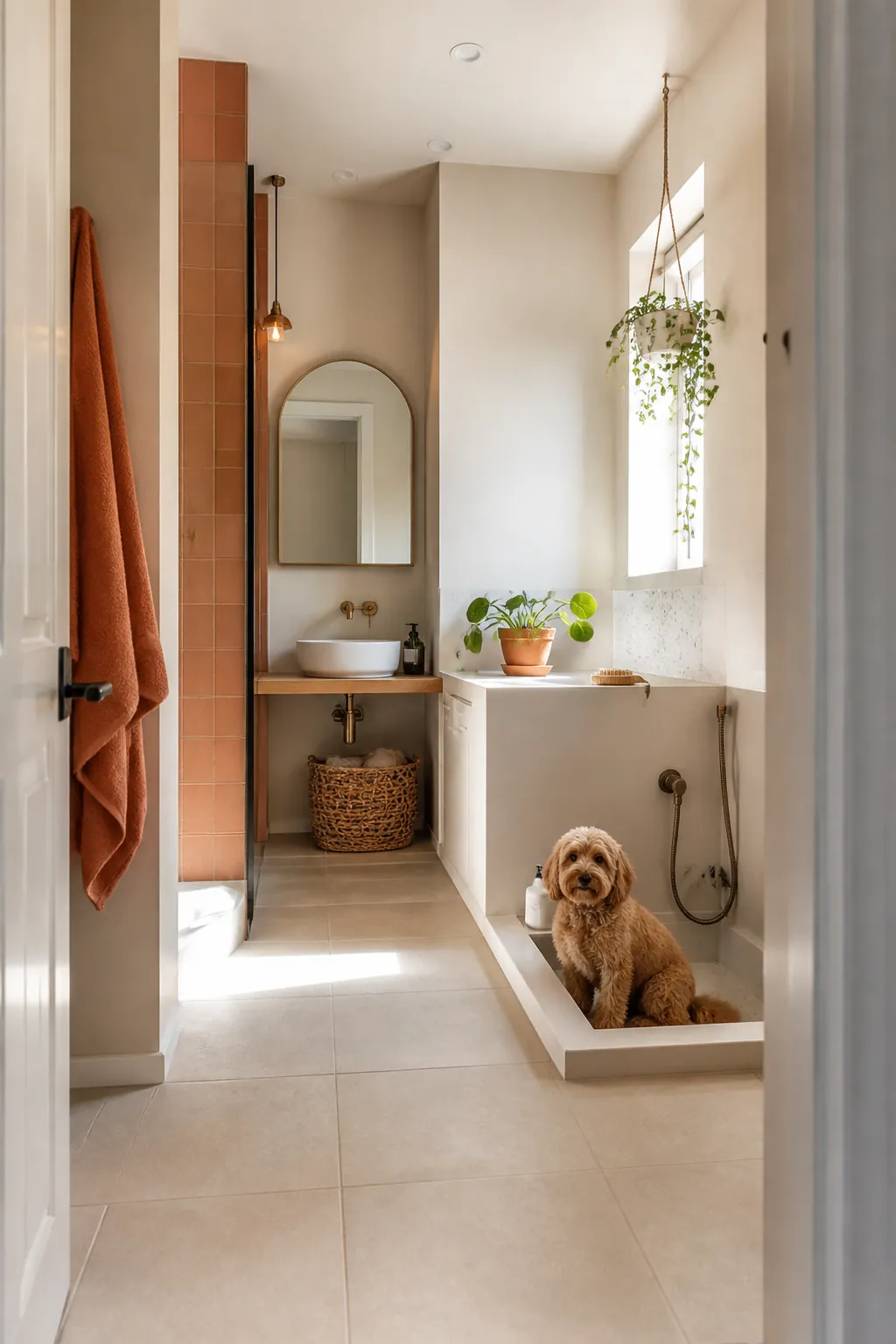
Hard flooring first. Tile, sealed vinyl or sealed wood all wipe clean in under a minute; carpet and rugs trap loose hair in the pile and hold a wet patch for hours after a bath, which in a humid week can start to smell before it dries. A bathroom corner or a spot near the kitchen sink usually wins, since both give you a water source without carrying a bucket across the apartment. If the only hard floor is in a hallway, that is still a better choice than the carpeted living room, even though it feels like the wrong room for it.
2. Lift the dog off the floor without buying a rigid table
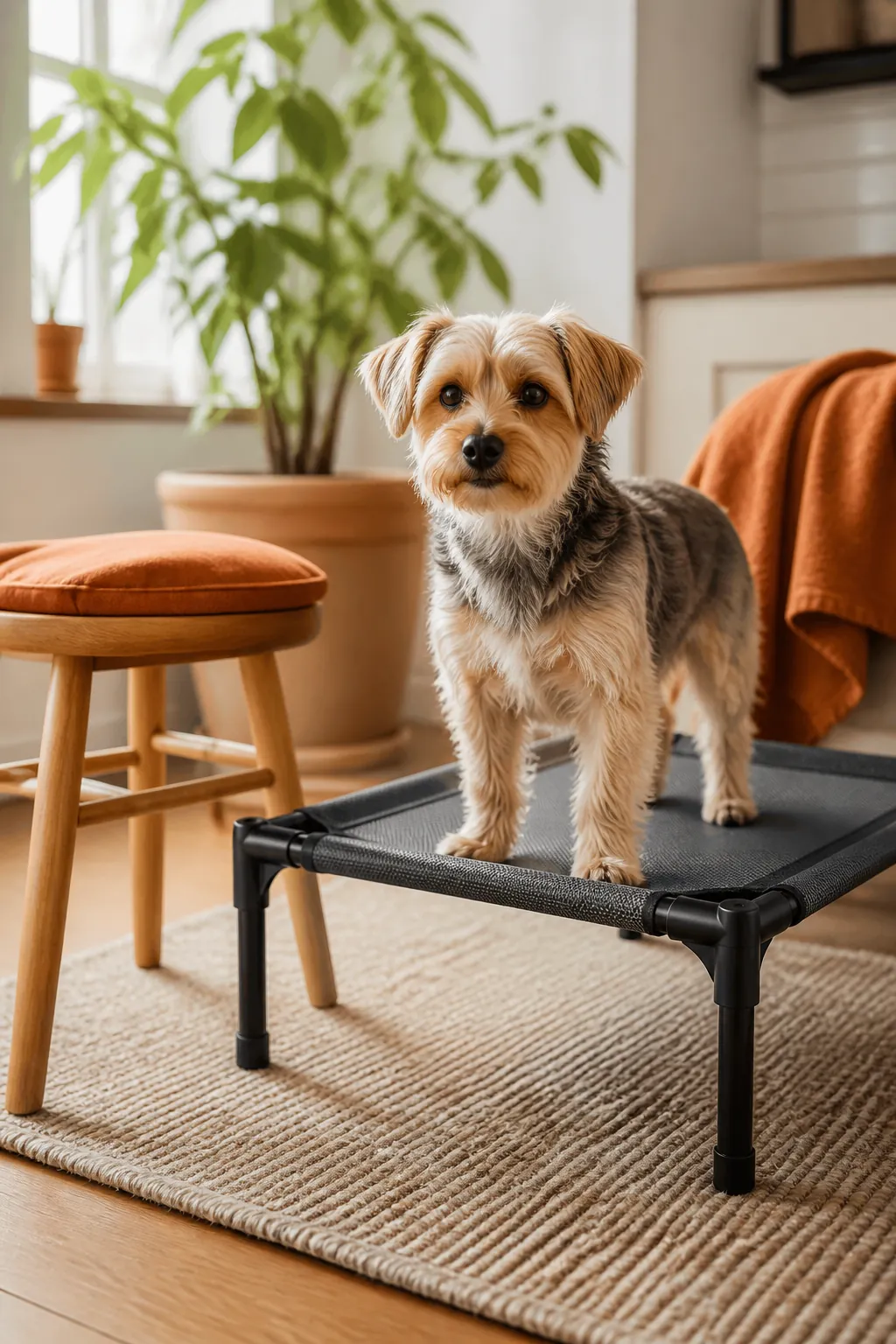
Kneeling on a hard floor for a fifteen to twenty minute brushing session is hard on knees and a lower back, and it is the reason grooming sessions get shorter than they should. An elevated pet cot, roughly knee height off the ground, gives a small or midsize dog a raised, breathable surface to stand or lie on while you work from a stool or standing upright. It is sold as a bed, not a grooming table, and that is fine: the raised mesh platform is the part that matters, and loose hair falls through it to the floor below instead of collecting in fabric. Check the listed weight rating against your dog’s actual weight, not an estimate, since a cot rated for a 25 pound dog will sag and eventually tear under a dog twice that.
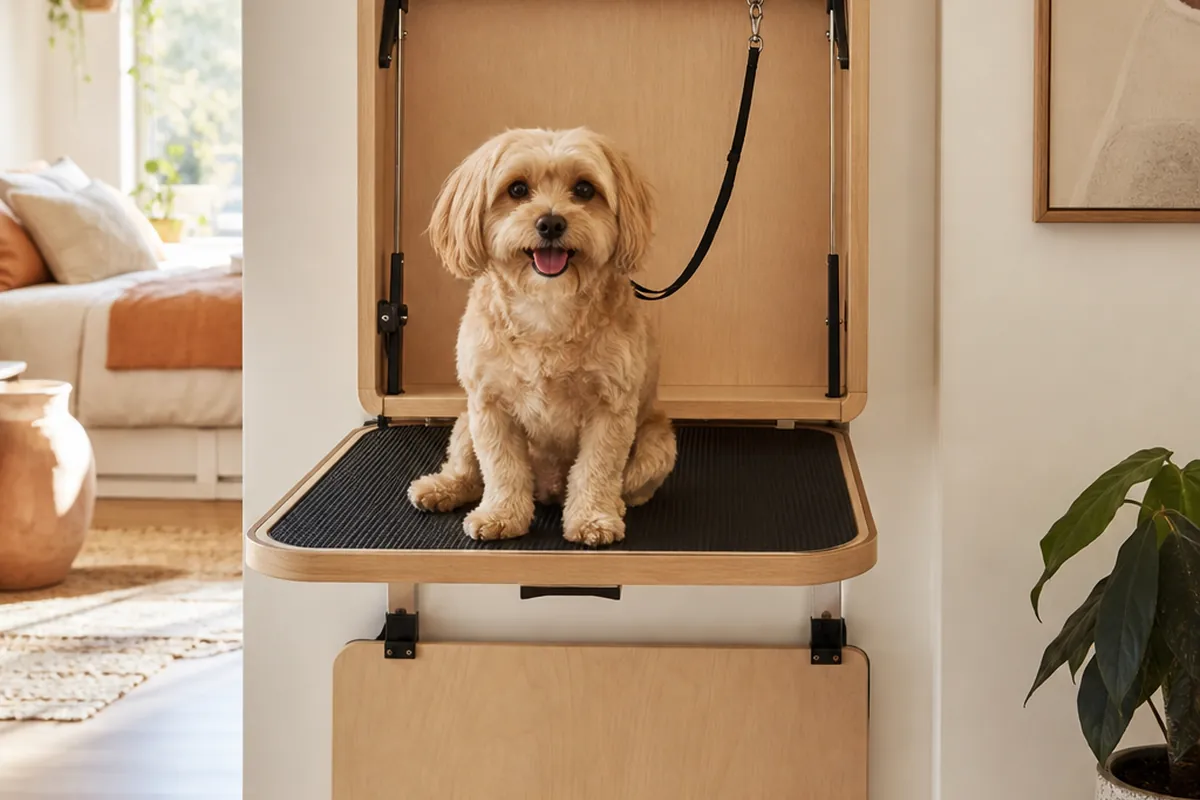
3. If there is truly no floor to spare, mount a fold-down table on the wall
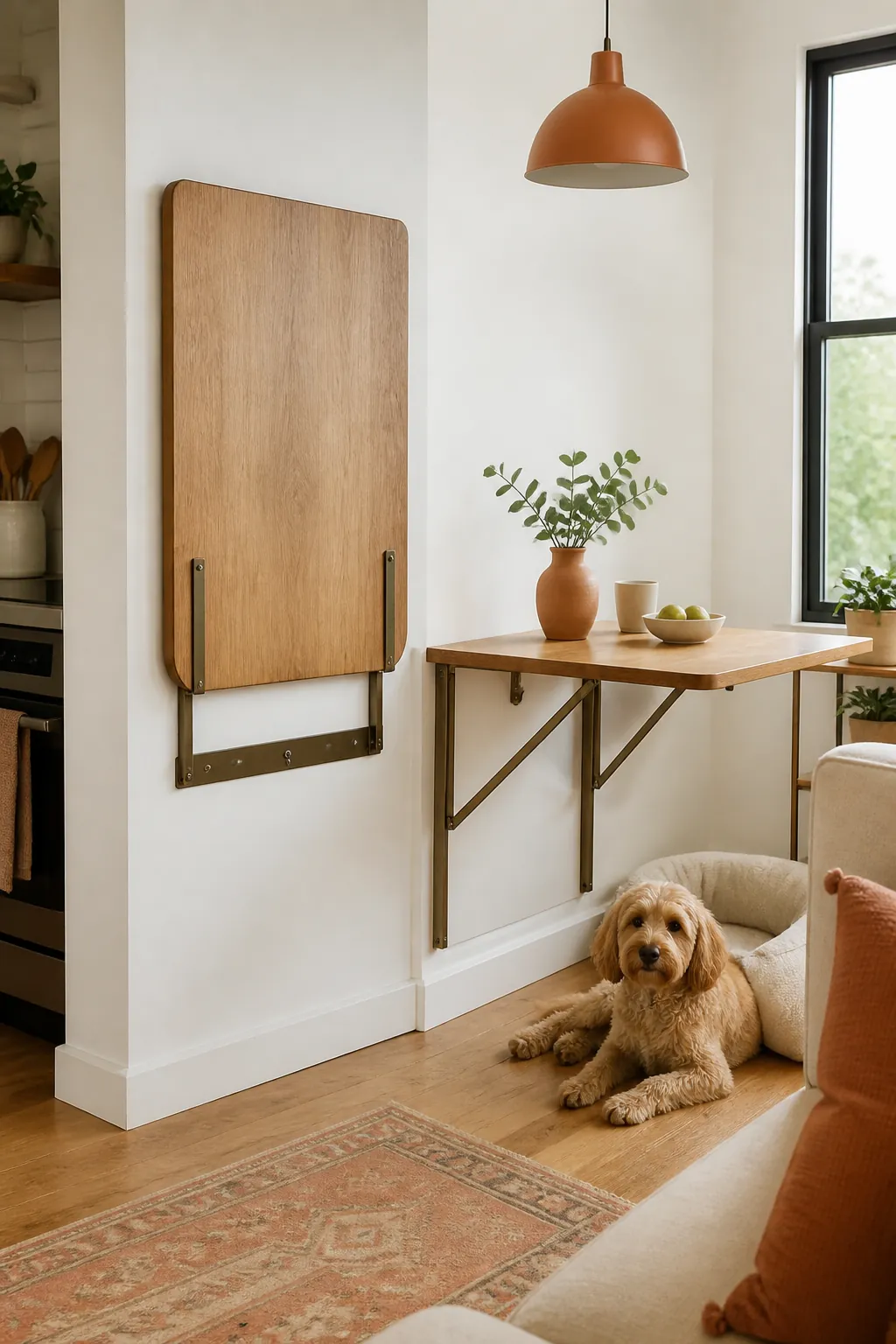
Some studios do not have even the two square feet a cot needs to sit out permanently. A wall-mounted fold-down grooming table, hinged to lie flat against the wall when not in use and to drop to roughly waist height for a session, solves that at the cost of drilling into a wall you may not be allowed to drill into as a renter. Shop this one as a category rather than a single model, and read the bracket’s weight rating carefully before buying: a bracket rated for a static load, like a shelf of towels, is not rated for the shifting, sometimes sudden weight of a moving dog, and the two numbers are not interchangeable.
4. Put every tool in one container, not three drawers
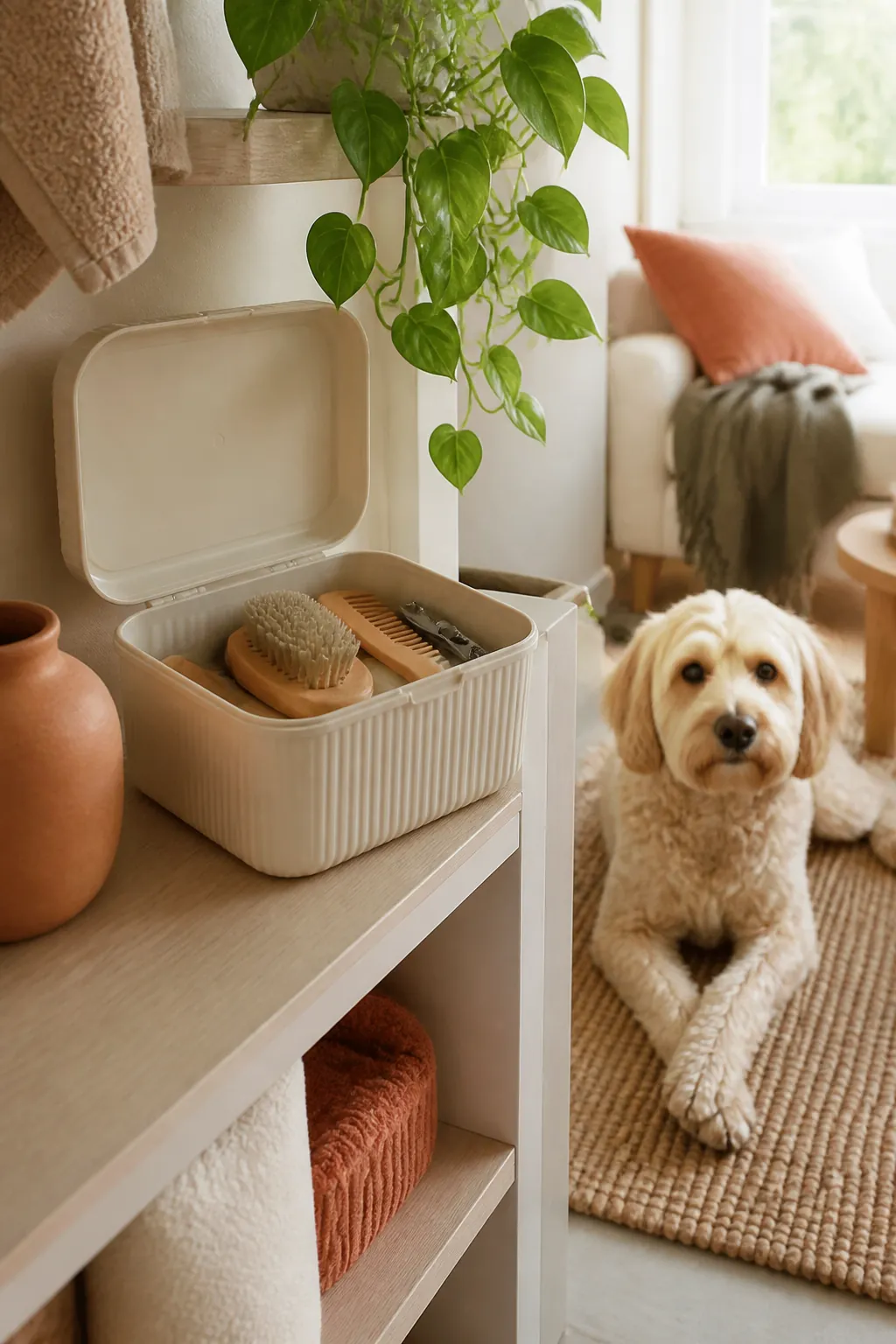
A grooming session that starts well and then stalls halfway through, while you go hunting for the comb in a bathroom cabinet, is a session that gets cut short. A lidded storage bin sold as a pet supplies organizer holds the brush, the comb, the nail clippers and a stack of grooming wipes in one place near the station, and the lid keeps loose hair and dust off everything between uses. Buy one sized to sit on a shelf or under the cot rather than one that needs its own floor space; a bin that becomes its own storage problem defeats the point of it.
5. Separate the tools inside the bin instead of dropping them in loose
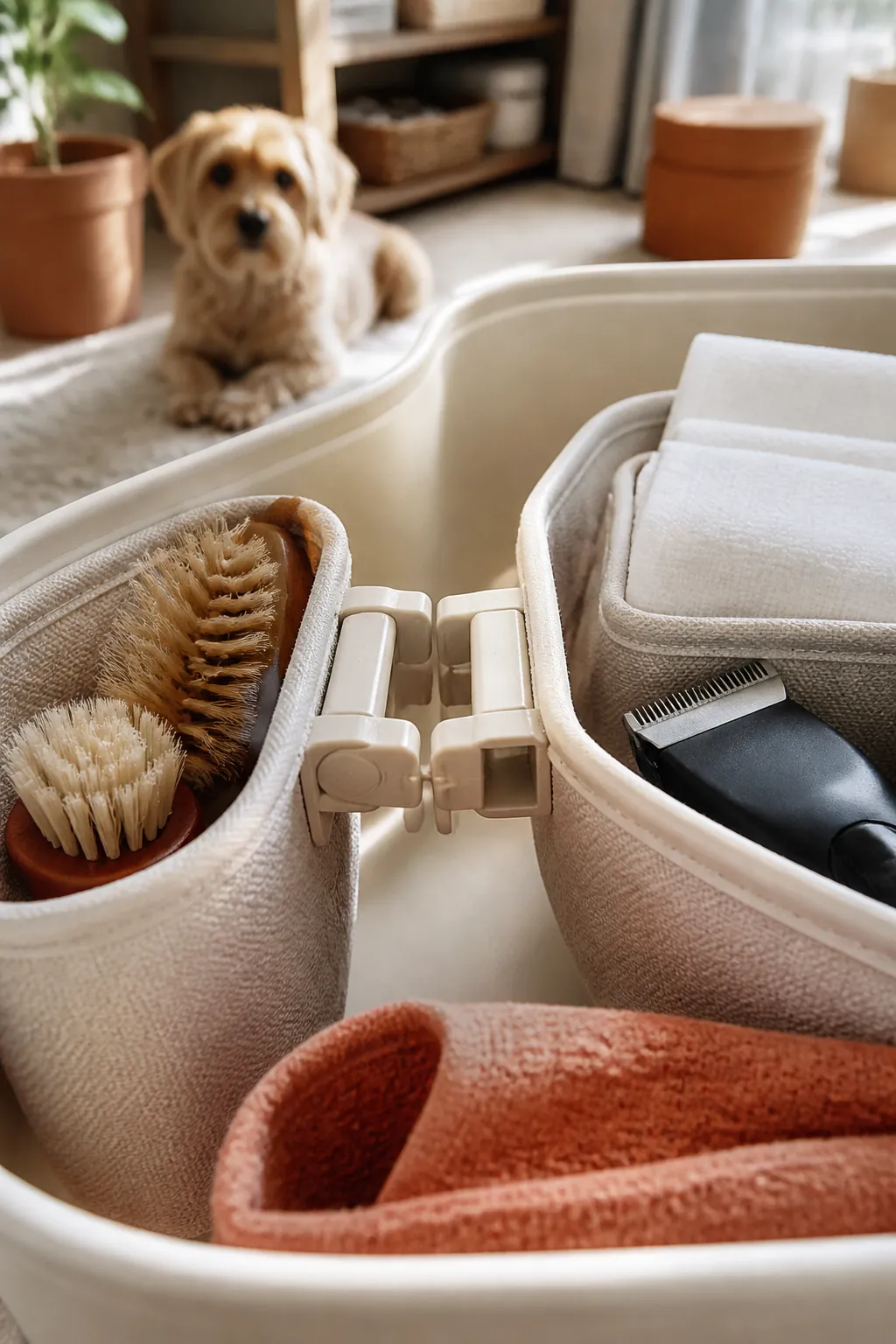
Everything loose in one bin turns into a bin you have to dig through, which is the same problem in a smaller container. A slicker brush for a shedding coat and a wide-tooth comb for detangling do different jobs and get reached for at different points in a session, so a simple fabric pouch or a small divider inside the bin, one for brushes and combs and a separate one for clippers and wipes, keeps the reach-and-grab part of the routine fast. This is entirely about the storage layout, not technique: the point is finding the right tool in three seconds instead of thirty.
6. Protect the furniture you actually use for this
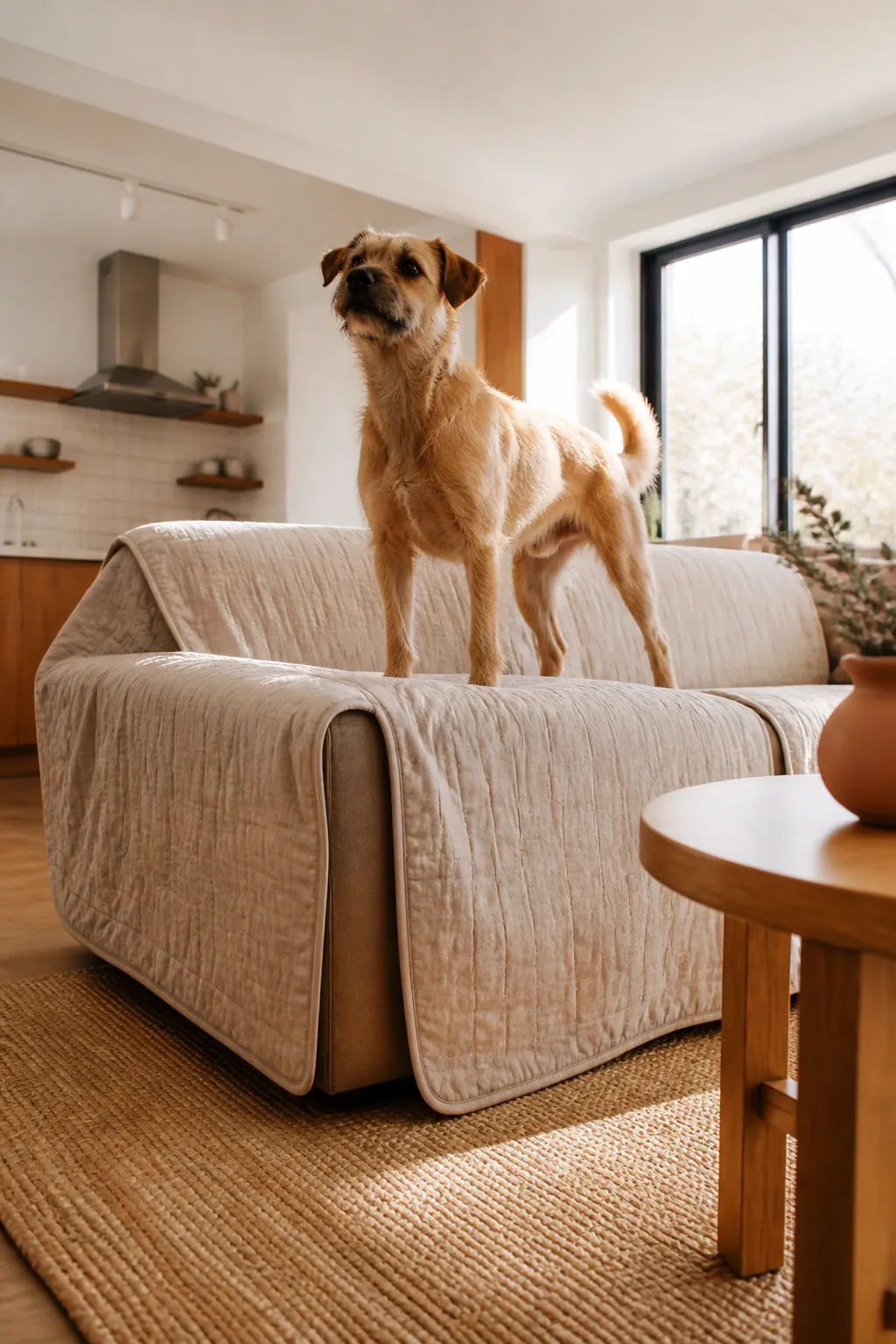
In a studio with no dedicated grooming surface, the couch or an armchair often ends up doing double duty because it is the only thing at a workable height. Washable furniture protector covers over the cushions the dog stands or sits on catch loose hair and stray water before either reaches the fabric underneath. Bare upholstery next to a shedding dog gets hair worked into the weave within a handful of sessions, and once that happens a lint roller stops being enough. A cover that comes off and goes straight into the wash avoids the problem rather than treating it after the fact.
7. Layer for the water instead of fighting it with one towel
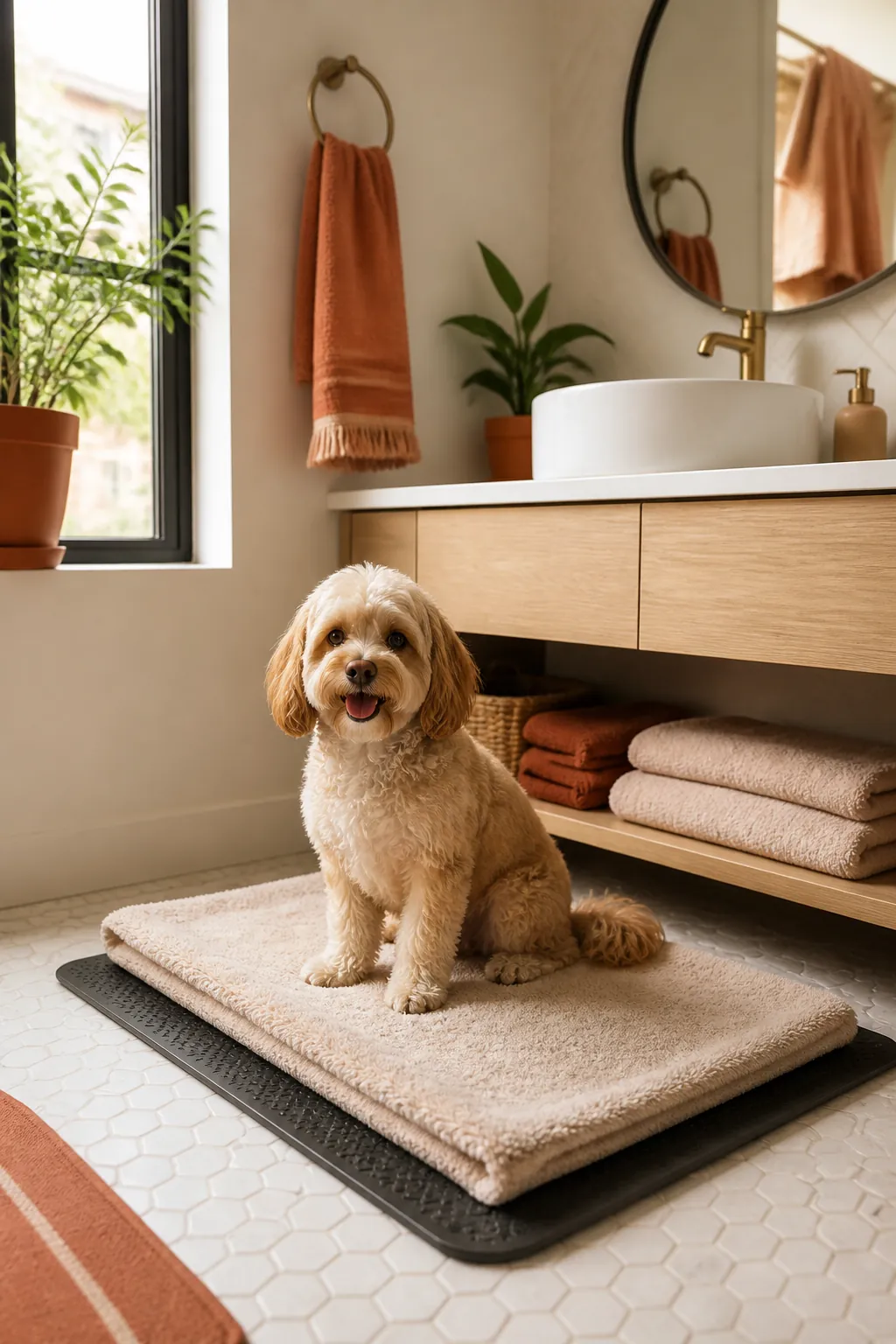
One towel under a wet dog soaks through fast and then does nothing. Two layers work better: an absorbent towel closest to the dog, and a rubber-backed or silicone mat underneath it that keeps water from reaching the floor or the baseboard. Baseboards are where floor damage in a rental usually starts, since water sits against them longer than it sits on open floor. If the station is on tile or sealed vinyl this matters less, but on any floor with seams, grout lines or a wood finish, the second layer earns its keep.
8. Corral the loose hair before it leaves the room
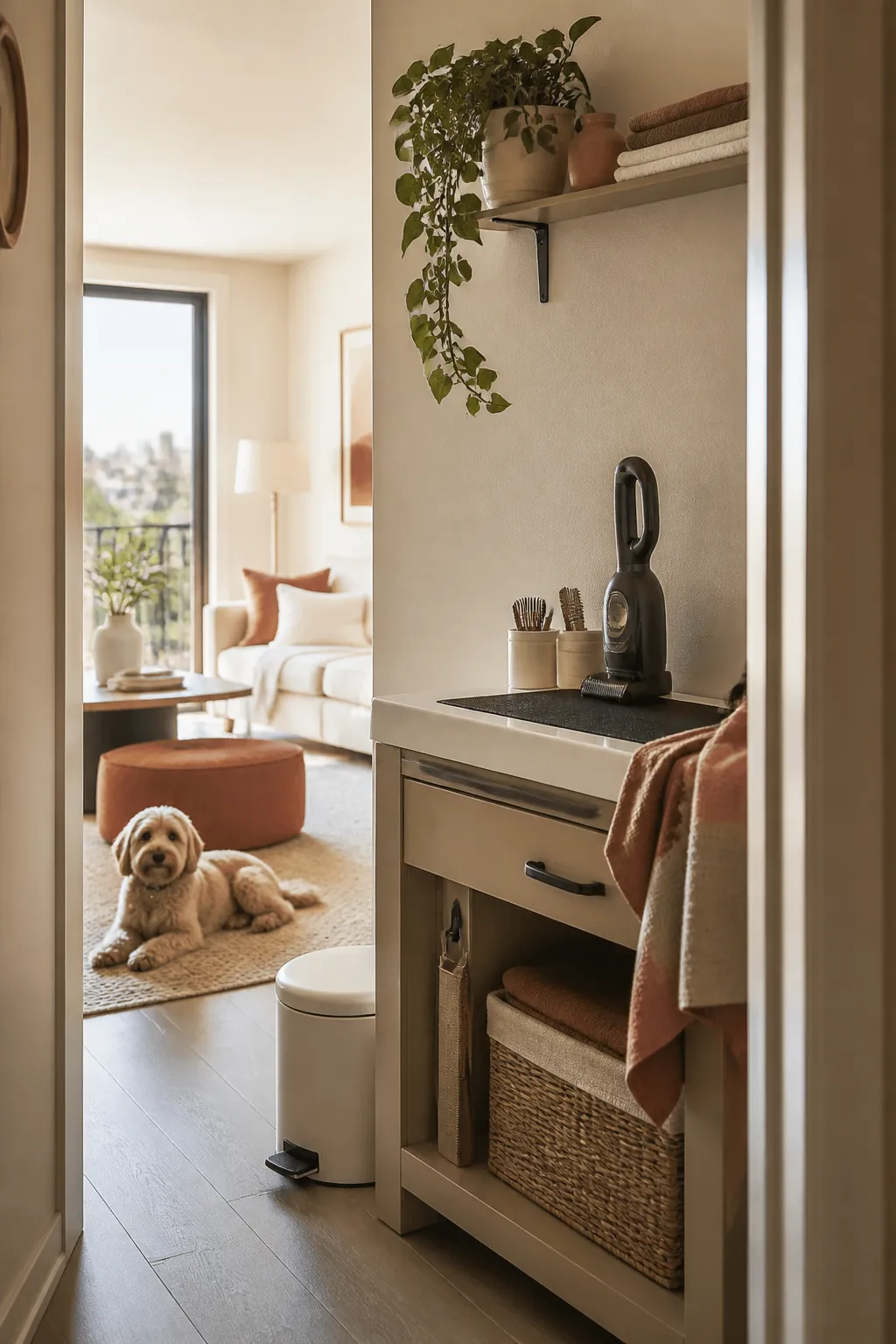
Brushed-out hair travels further than people expect, especially near an air vent or a fan, and a session that produces a small pile at the station can leave hair drifting across the apartment within the hour. A lidded trash can or a bag clipped to the bin at the station gives brushed-out hair somewhere to go immediately, rather than a floor pile that gets swept up later, after some of it has already migrated on socks and the dog’s own feet. A handheld vacuum with a pet-hair attachment kept within reach of the station, rather than in a closet across the apartment, is the difference between a two-minute cleanup and a task that gets put off until tomorrow.
9. Give the station a fixed spot and a fixed day
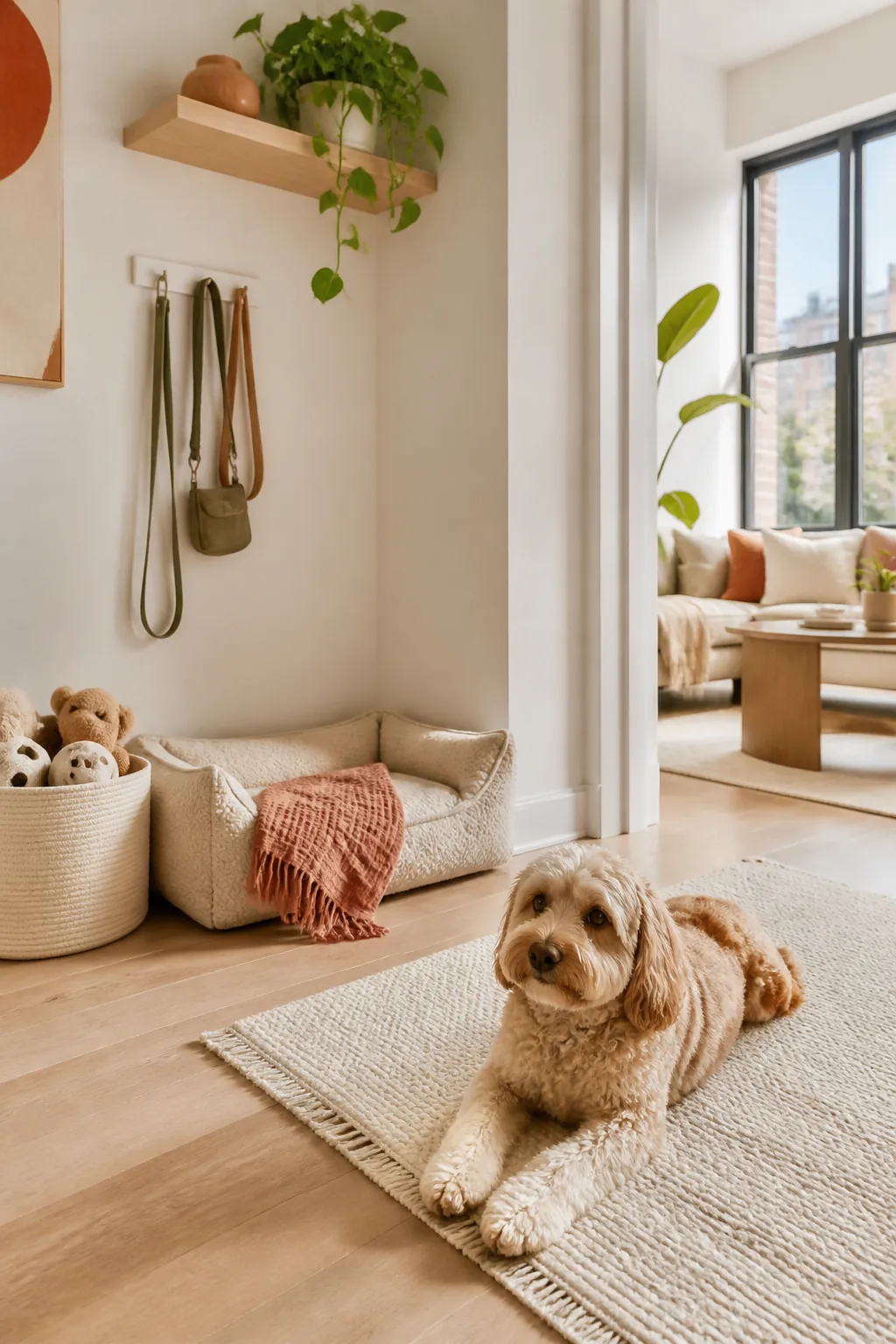
A station that moves around the apartment never becomes a habit, for you or the dog. Keep the cot, the bin and the covers in the same corner every time, and tie the session itself to a day you already have free, a Sunday morning or the same evening as laundry, rather than leaving it as a task that happens whenever hair gets bad enough to notice. Dogs learn locations and routines faster than people expect, and a dog that knows the corner and the day settles into the session instead of resisting it from a cold start every week.
Where to start
Buy the bin first. It is the cheapest piece here, it removes the most visible clutter for the least money, and it works immediately regardless of what else you add later. Sort the tools into it before doing anything else, and you will already know what does and does not need a home.
Decide the surface second: the cot if there is floor to spare, the wall-mounted fold-down table if there genuinely is not. Do not buy both. A studio with two grooming surfaces has solved a problem it did not have and created a storage one instead.
The furniture covers come last, and only if the couch or a chair is actually part of the routine. If the station lives entirely on a hard floor with a mat, skip them: the point of every piece here is to fit the apartment you actually have, not to complete a set.