Most advice about indoor dog potties is written as though the hard part is the dog. In an apartment the hard part is usually the floor, the smell and the fact that the only sensible spot is four feet from where somebody eats. Get those three right and the setup works. Get them wrong and no product on the market rescues it.
Eight setups and the details that decide between them.
1. Put it on hard floor, always
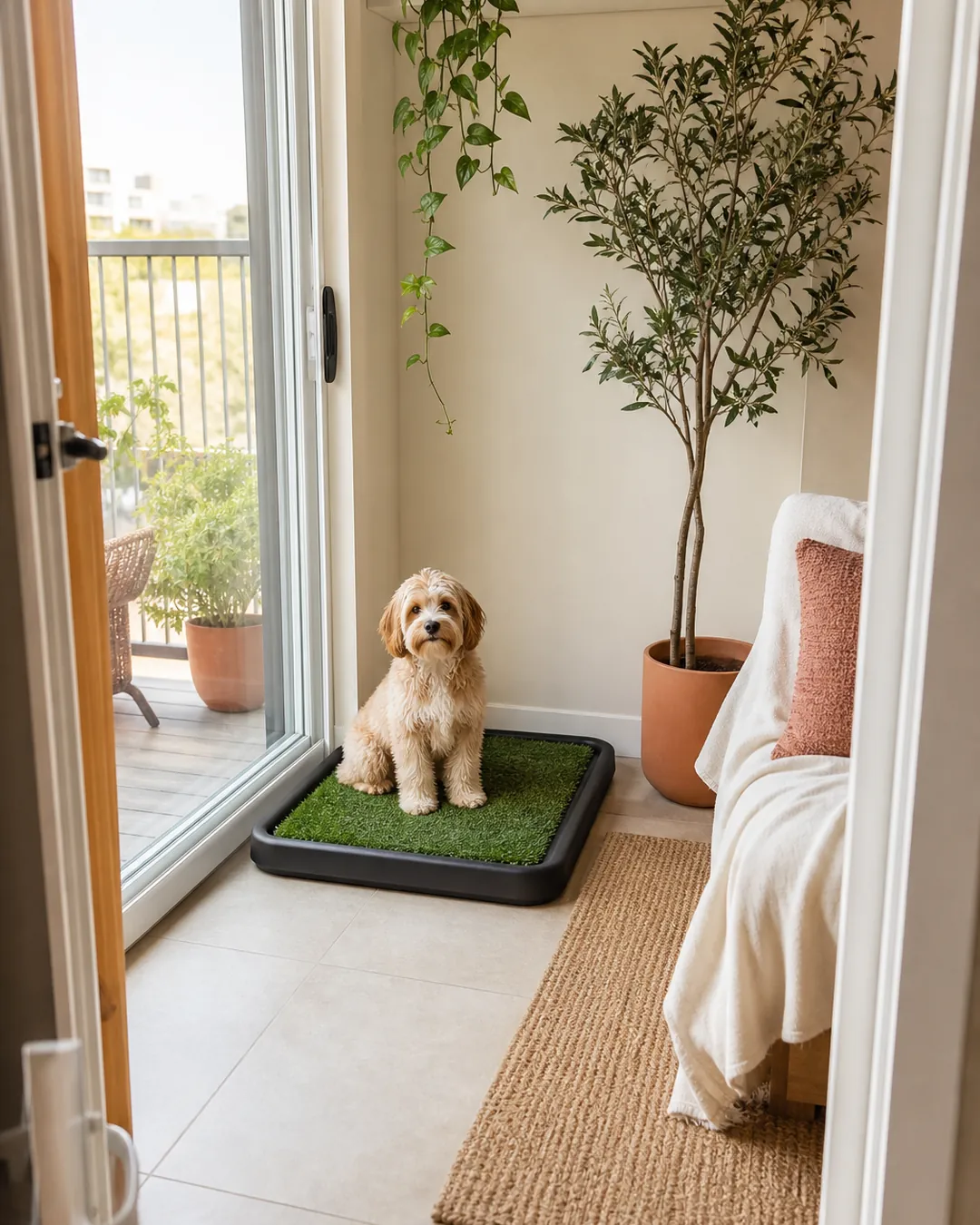
Carpet under a potty area is a slow, expensive mistake. Liquid passes through a pad edge, through the carpet and into the underlay, where it stays and where no amount of surface cleaning reaches it. If the only available corner is carpeted, put down a hard waterproof mat first and treat that mat as the floor. In a rental this is not a preference, it is the difference between getting a deposit back and not, because underlay damage is invisible at a viewing and obvious at an inspection.
2. Give it a wall and a corner
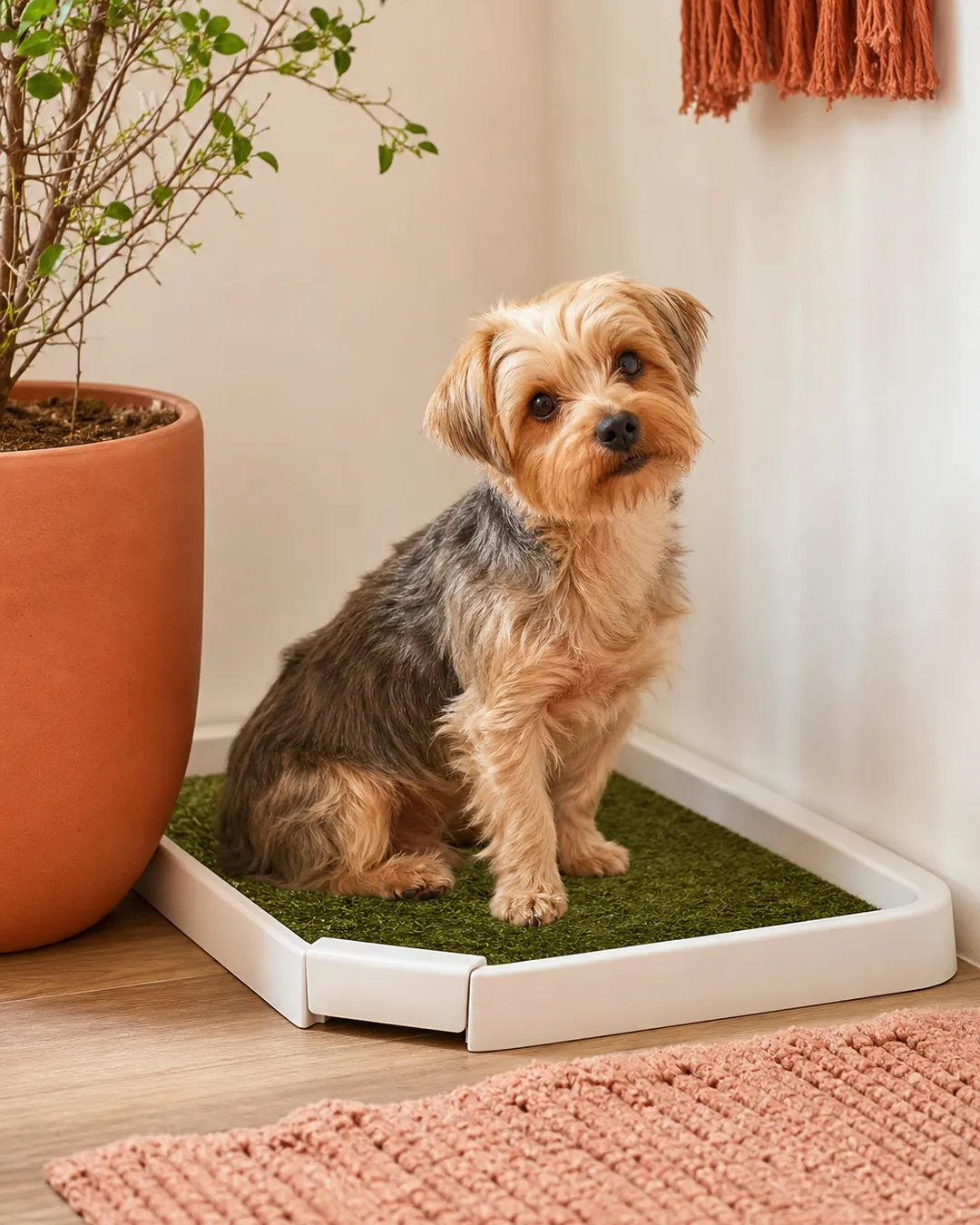
Dogs aim at vertical surfaces. A tray in open floor gets used from any angle and misses on at least one of them. Two walls behind the tray catch what the tray does not, and a wipeable wall is much easier to deal with than a wipeable rug. If the walls are painted rather than tiled, a clear splash panel or an offcut of vinyl behind the tray takes the wear instead of the paint, and it comes off cleanly when you leave.
3. Keep it away from food and from the bed
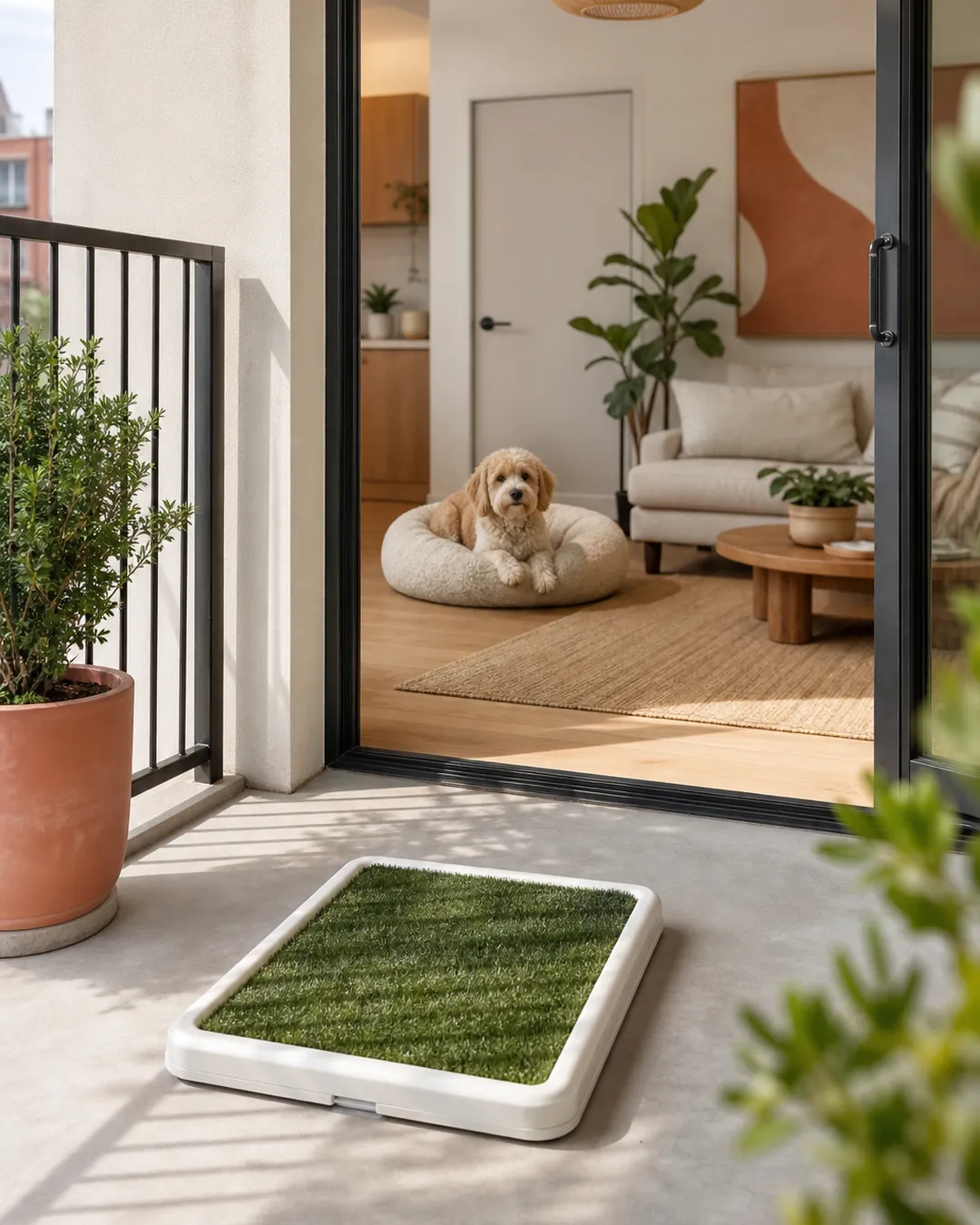
This is the same rule that governs litter boxes and it holds for dogs. A potty next to the water bowl gets refused or, worse, gets used and then the bowl does too. Opposite ends of the same room is usually enough in an apartment, and a doorway between them is better still. The same goes for the bed: a dog asked to sleep within a few feet of its own toilet will generally relocate to your sofa, which is a problem you then have to solve twice.
Where the bowls themselves should go, and what keeps the floor around them dry, is the subject of dog feeding station ideas with built-in storage.
4. Size it for a dog that turns around
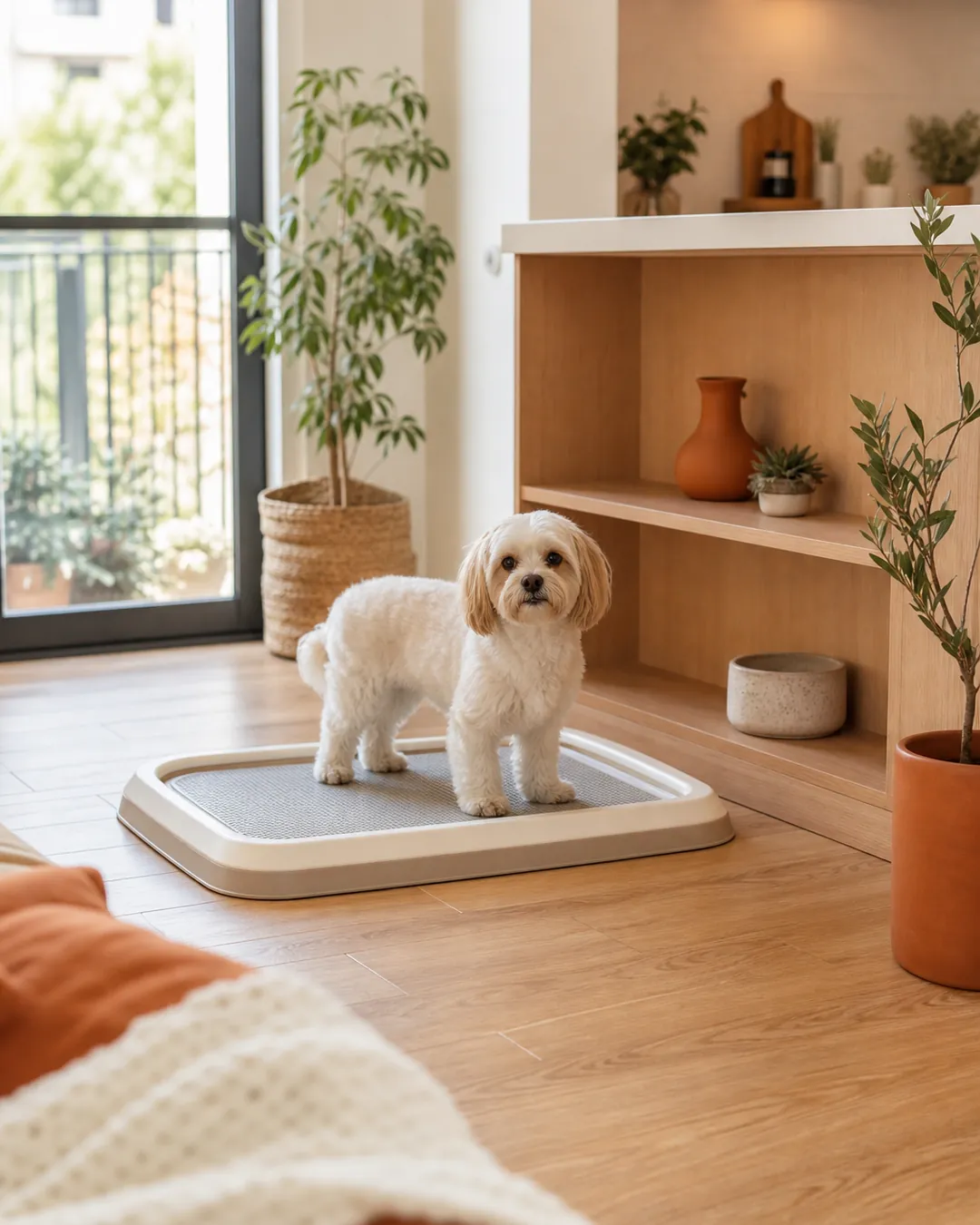
The most common complaint about every indoor potty product is that the dog missed. Usually the tray was sized for a dog standing still. Watch your dog circle before it goes and measure that circle, then add a few inches, because a dog on an unfamiliar surface circles wider than one on grass. A 4 pack of washable pads at 34 by 36 inches gives real margin, and having four means one is always in the wash. Buying small to save floor space is a false economy: the misses land on the floor you were protecting.
5. Decide washable or disposable on your day, not your budget
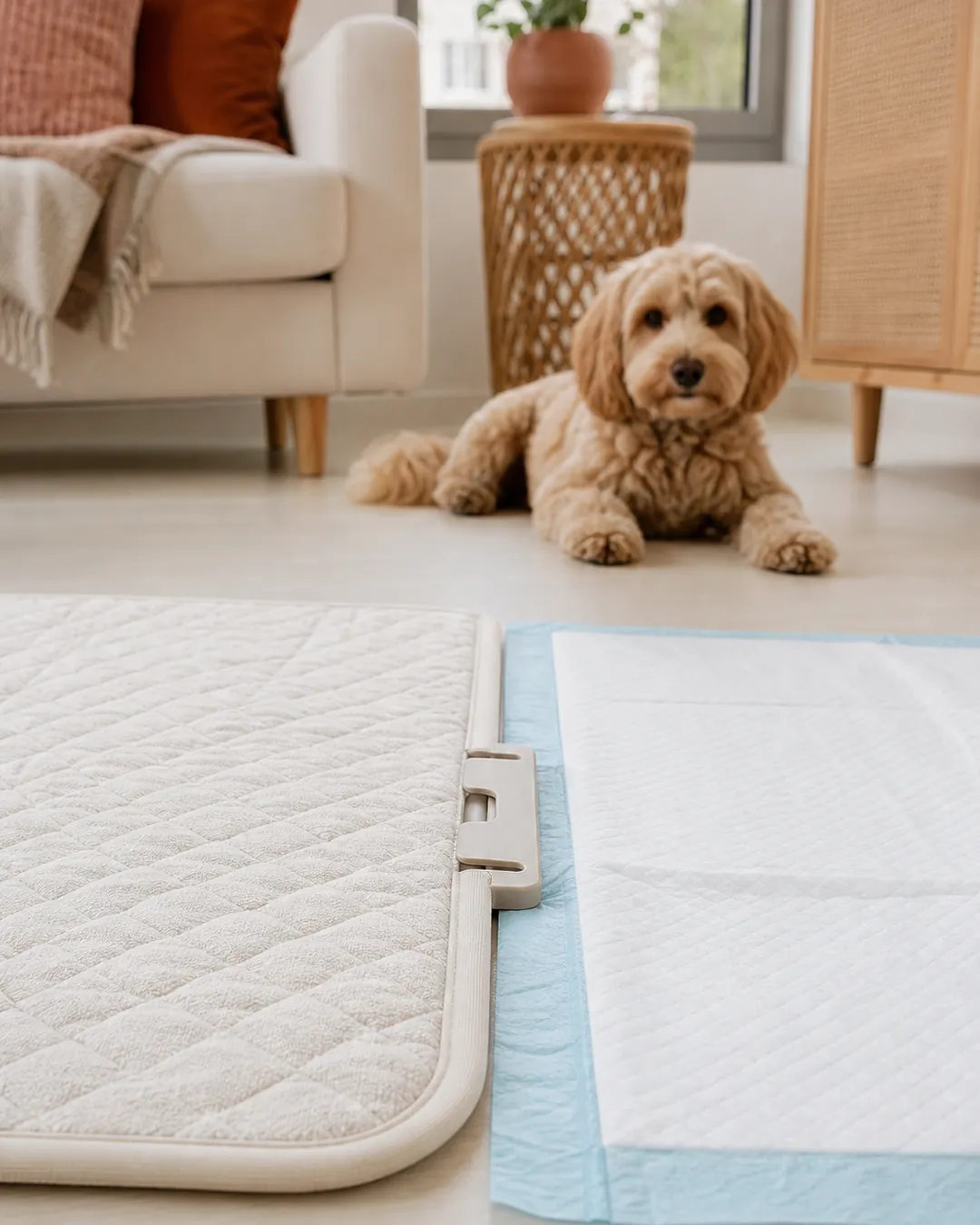
Washable pads cost more once and nothing afterward, and they do not tear into pieces when a bored dog finds one, which is a genuine mess rather than an inconvenience. Disposables win when you are out for ten hours and nobody is changing anything. Most apartments settle on washable at home and a pack of disposables for travel, which is a reasonable answer rather than a compromise. Buy washables in a four pack or larger, because a two pack means one is always in the machine and the other is always in use, and the day you fall behind is the day you find out.
6. Use a holder if the dog moves the pad
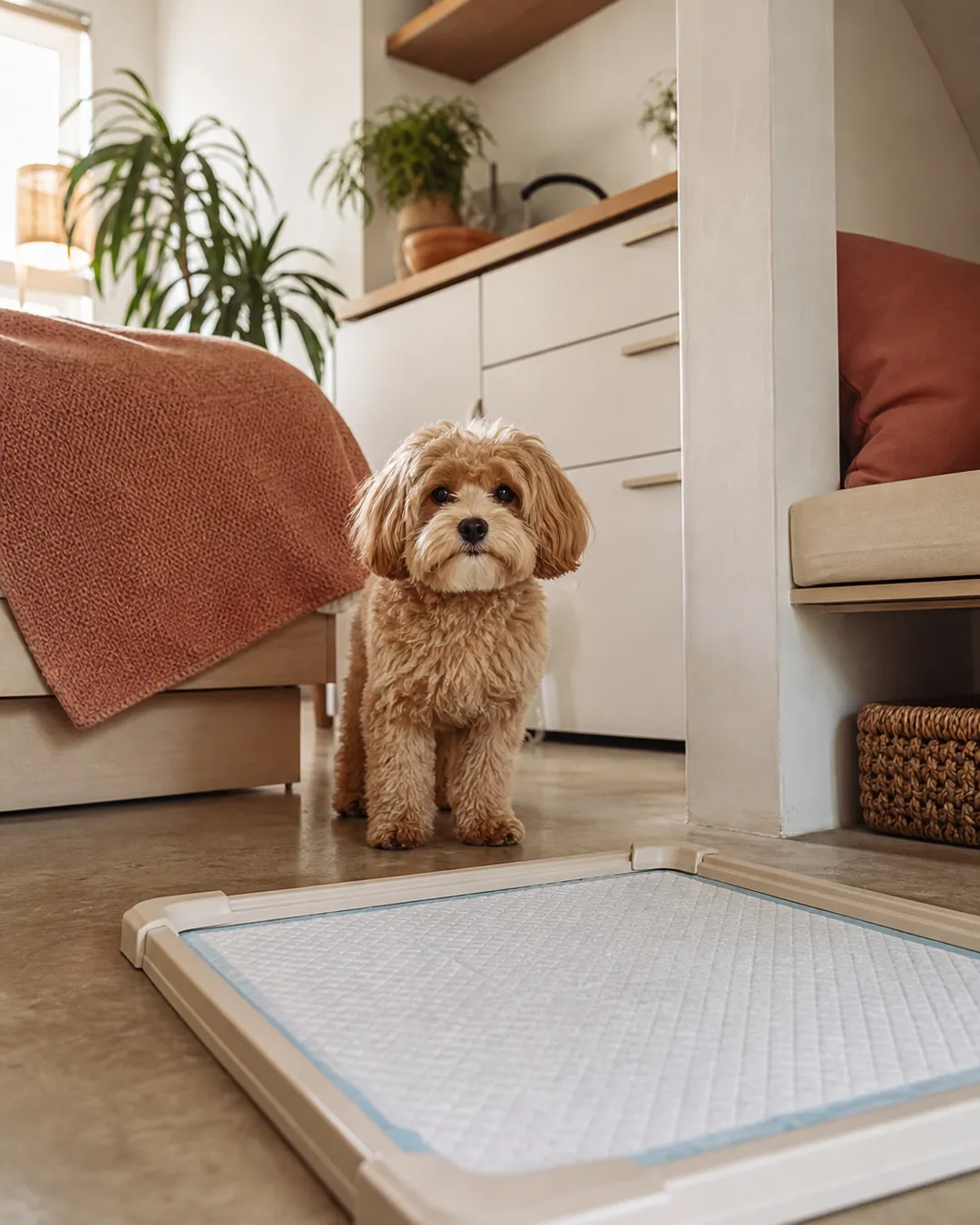
A loose pad slides, folds and ends up under the sofa with the wet side up. A pad holder that takes up to a 24 inch pad grips the edges and adds a low lip, which stops both the sliding and most of the overshoot. It is the cheapest item here and it fixes the most annoying failure. Check the lip height before buying: too low and it does nothing, too high and a small dog steps on it, tips the frame and learns to avoid the whole thing. An inch or so is the range that works for most dogs.
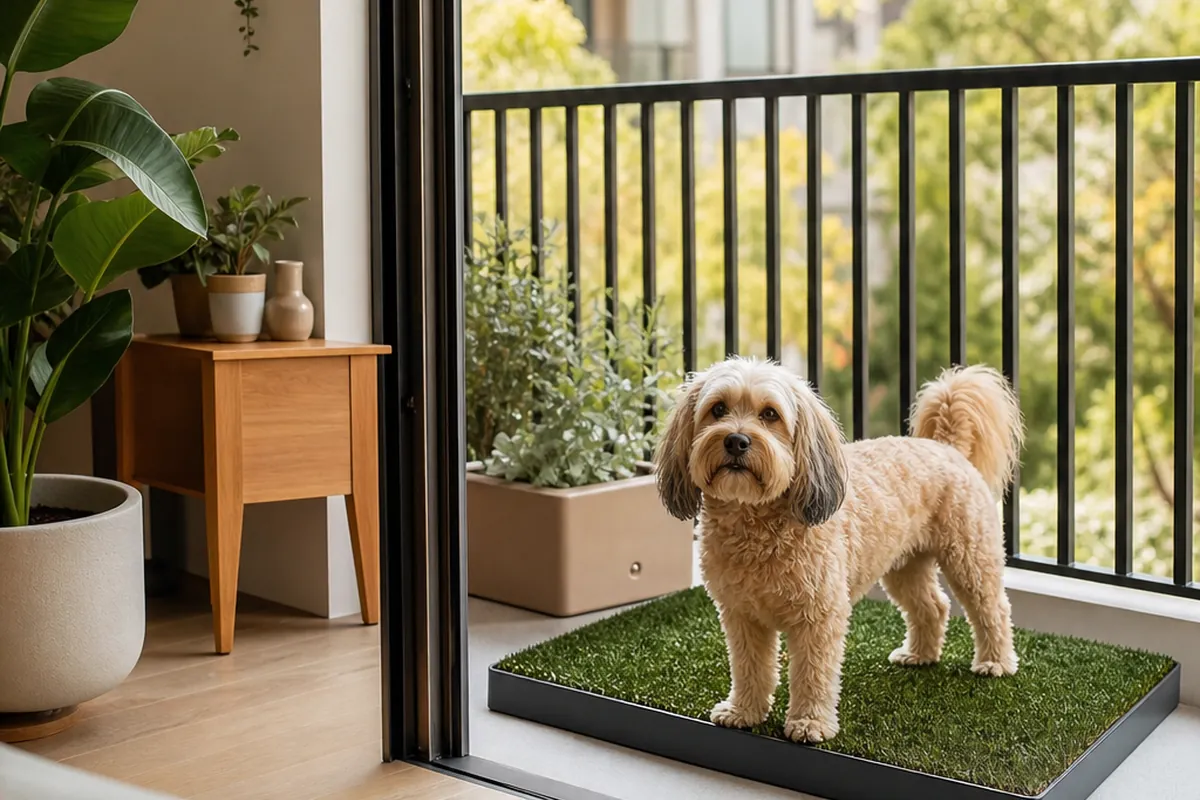
7. Go with turf on a balcony, and lift it to clean
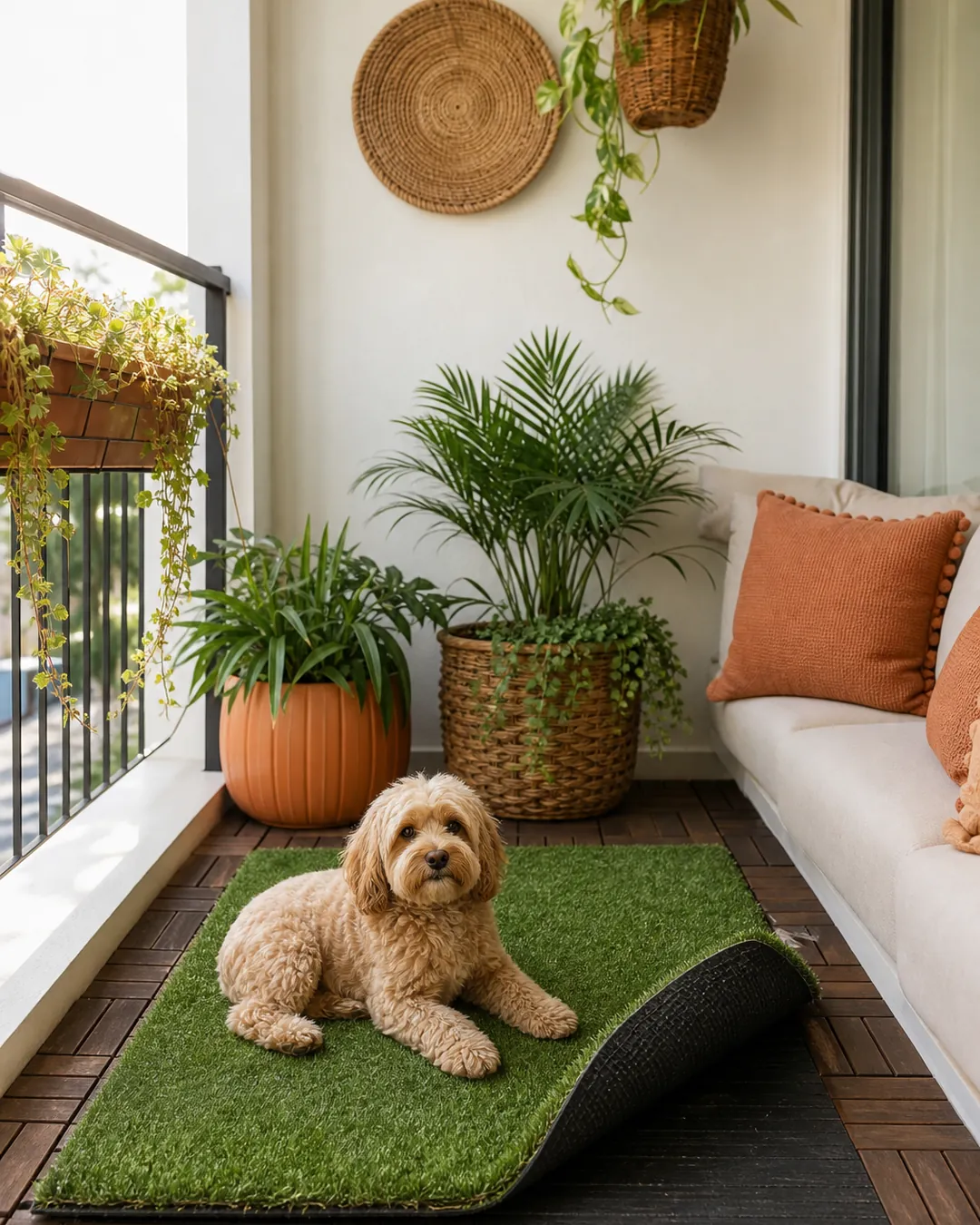
Artificial grass reads as outdoors to most dogs and looks far better on a balcony than a pad. An artificial grass potty pad with a collection tray works because the grass lifts out in one piece and the tray underneath rinses. The smell complaints about turf are almost always complaints about a tray nobody emptied. Check that the grass lifts as a single sheet before you buy: some designs glue the turf to the tray, which leaves you scrubbing between plastic blades instead of rinsing a flat surface, and that is the version people give up on.
8. Solve the drainage before you buy the turf
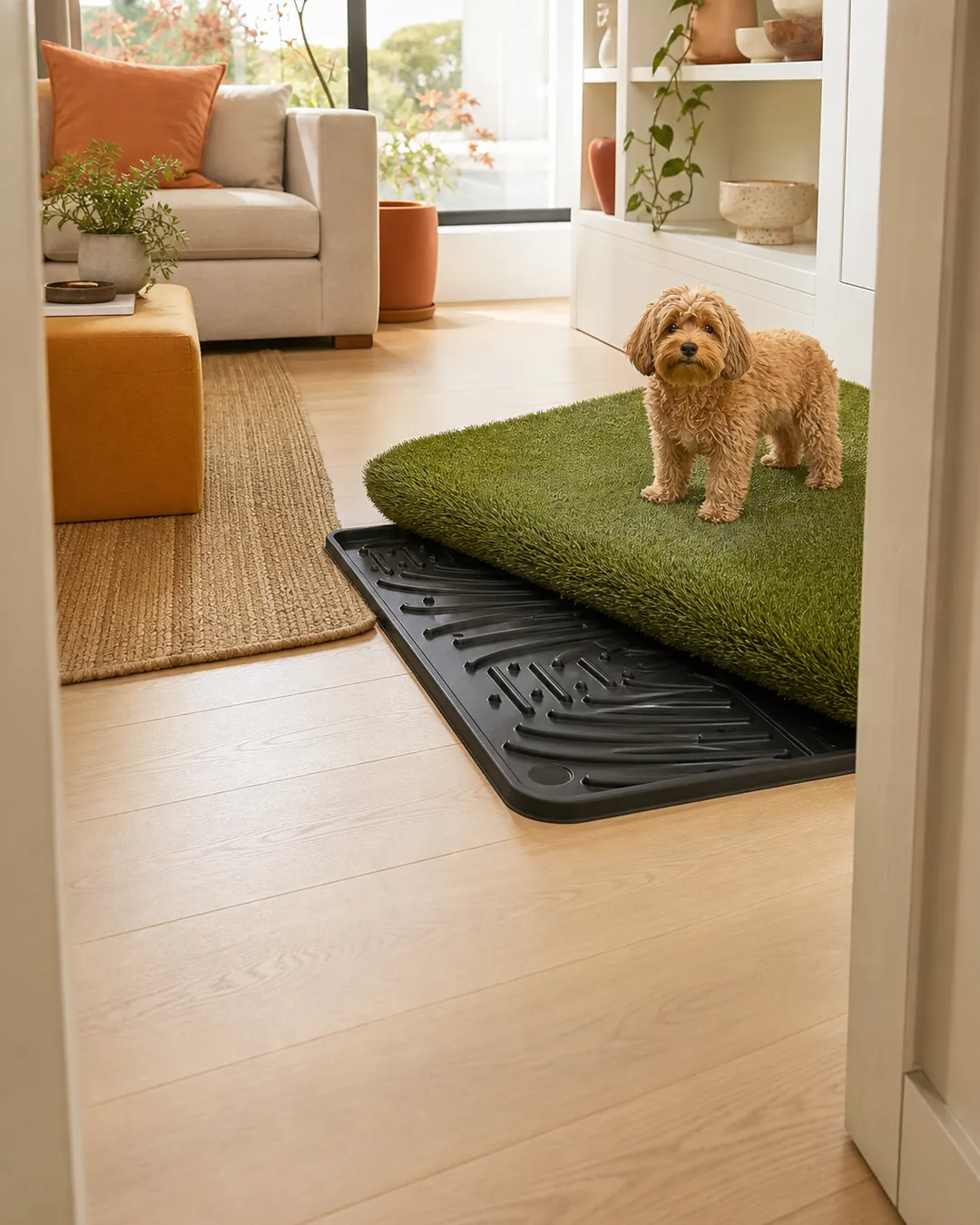
This is the step people skip. Work out where rinse water goes: a balcony drain, a bathroom, a bucket. If the answer is “carry a full tray through the living room”, the setup will not survive a month. Put a waterproof mat under the tray as well, because an unsealed balcony floor will mark and that is a deposit problem in a rental.
Check which way your balcony falls, too. Most drain toward the outside edge, but some fall back toward the door, and a tray placed uphill of a door threshold sends rinse water exactly where you do not want it. Two minutes with a cup of water tells you before the tray does.
Where to start
Choose the spot before you choose the product, because the spot rules out most of the products. Walk the apartment and find hard floor, two walls, distance from the food, and a realistic route to a drain. In a one bedroom there are usually only two candidates and one of them is the balcony.
Then buy in this order. The pad holder first, because it is cheap and it fixes sliding regardless of what goes in it. Washable pads next, in the largest size the spot takes. Turf last, and only for a balcony where you have already answered the drainage question.
One more practical note, because it decides how long any of this lasts: build the cleaning routine at the same time as the setup, not afterward. Decide where the rinsed tray drips, which cloth is the potty cloth, and where it lives. Setups fail at the cleaning step far more often than at the product step, and the failure looks like a person quietly deciding the balcony is easier than the tray.
A word on expectations: this is a containment and cleaning problem, not a training article, and the two get tangled constantly. Where the dog goes is a conversation with your dog and, if it is not going well, with a professional who has met them. What is under the dog when it goes is the part you can solve with a tape measure and forty dollars.