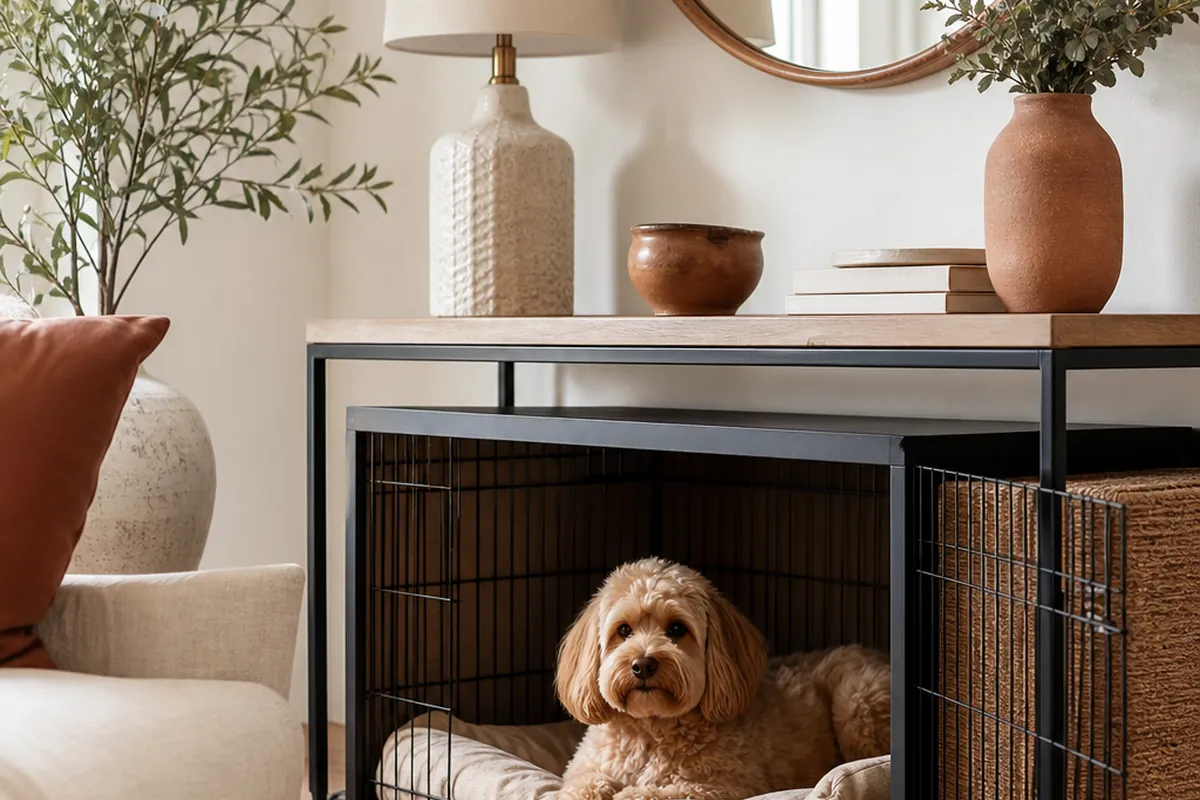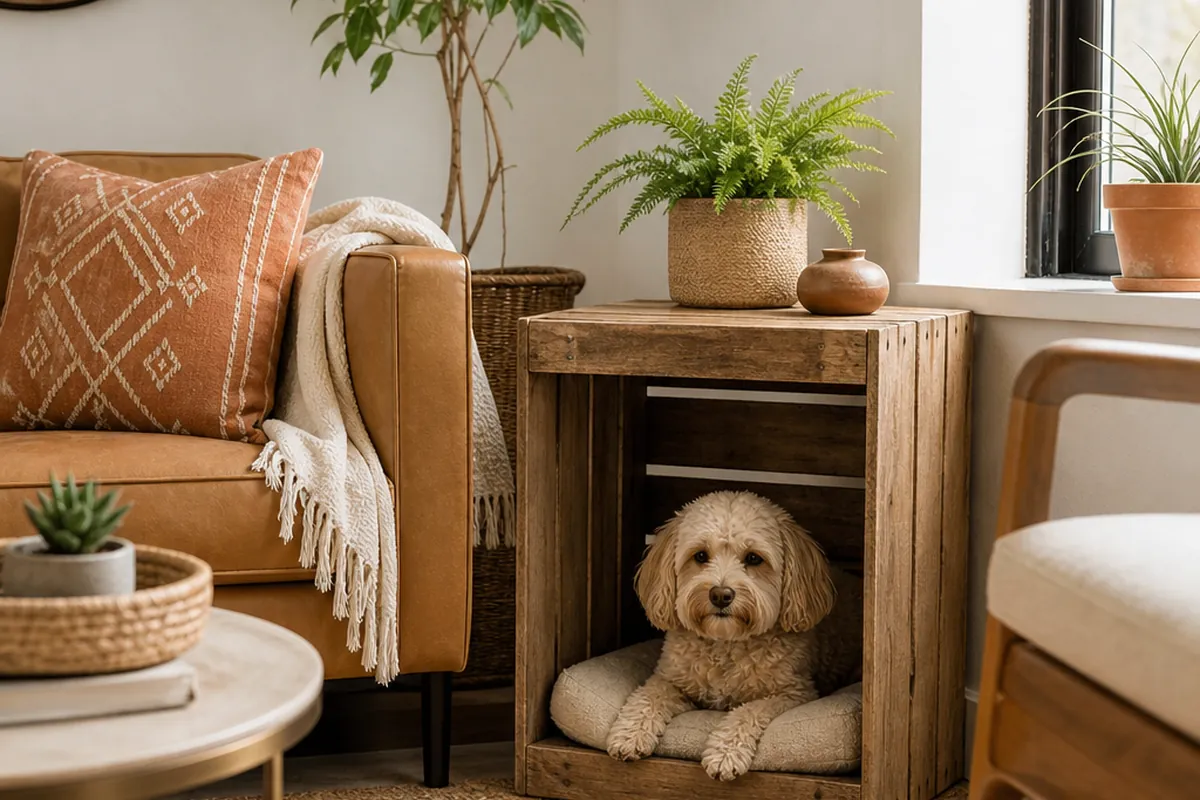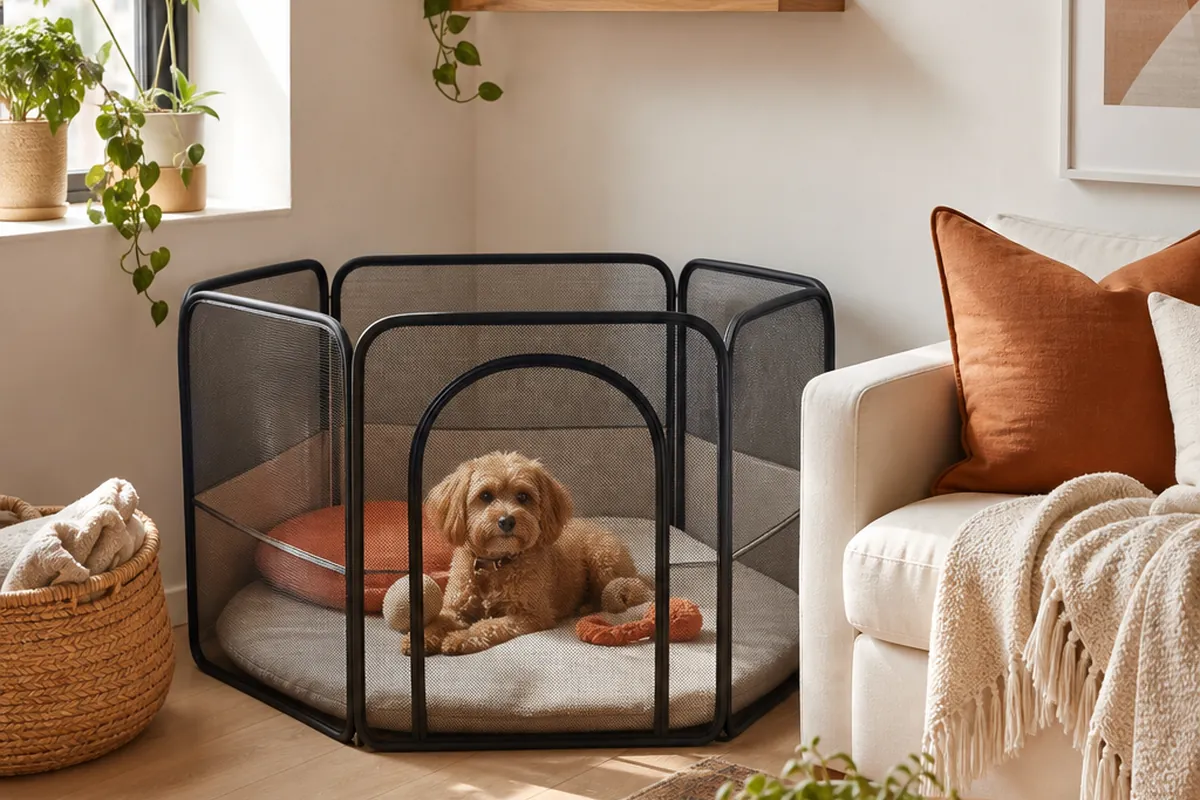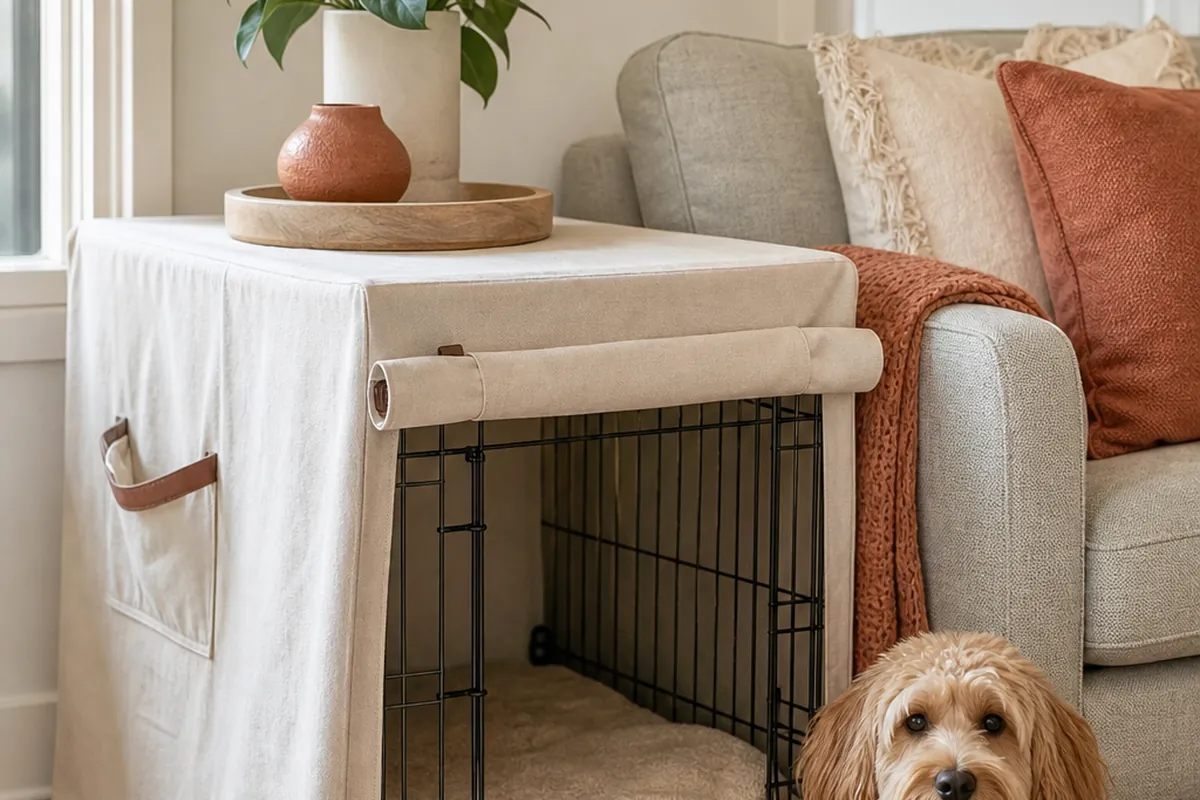
A wire crate draped in a spare bedsheet looks like exactly that: a sheet thrown over a cage, sliding off one corner by the second day. A cover cut for the actual crate, in a fabric that belongs in the room it sits in, reads as a piece of the furniture instead. The difference is almost never the price of the cover. It is whether anyone measured first.
Nine ways to get a crate cover right in an apartment where the crate lives in the main room, not a spare one.
1. Cover the sides and back, leave the door end open
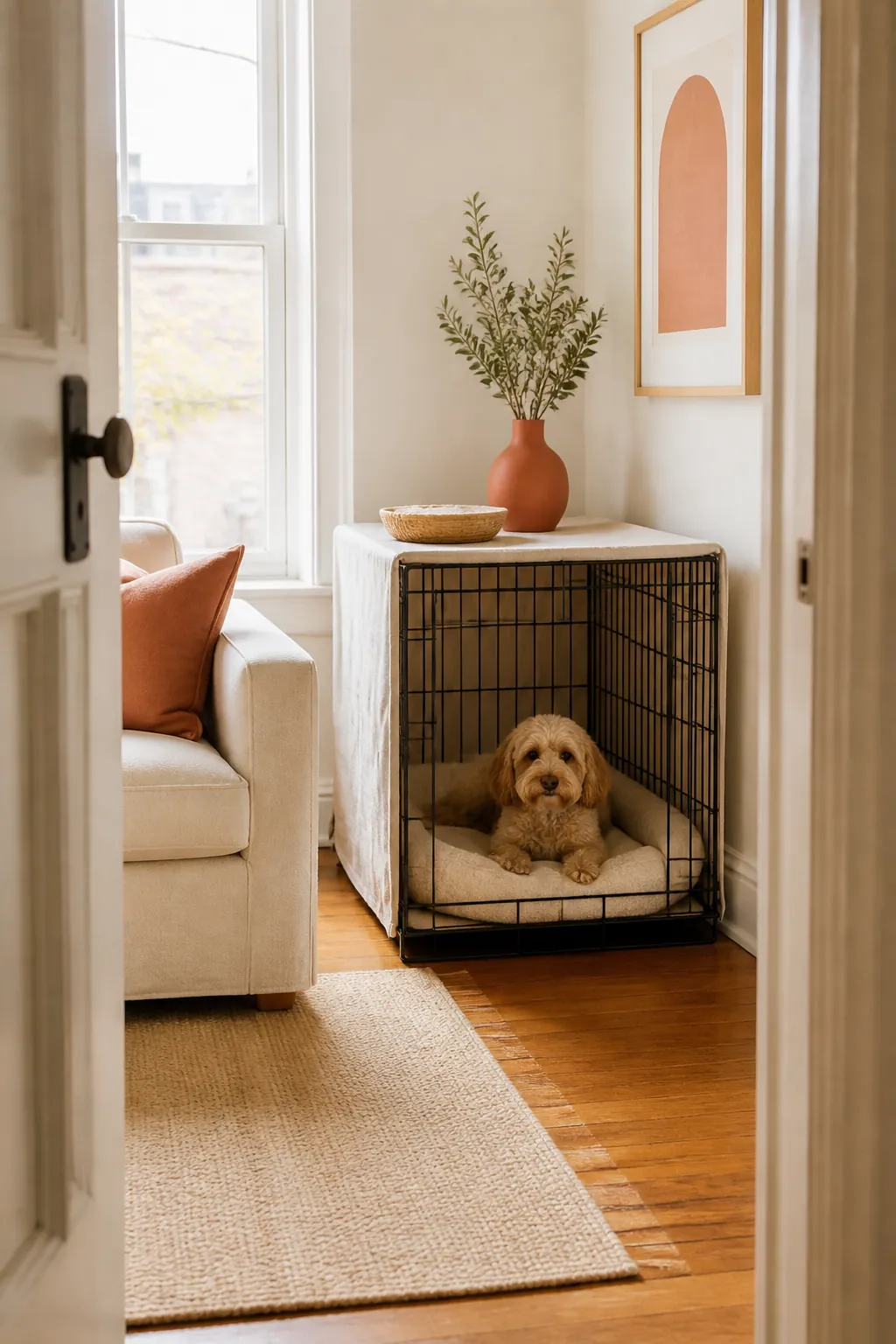
A crate cover with a fabric protector finish turns bare wire into a soft-sided box without sealing the dog inside a box with no air. Fit it over the back and both side panels first and leave the front flap rolled up or removed. That keeps light and airflow coming from the one direction the crate actually needs it, through the door the dog uses to get in and out, while blocking the three sightlines that make a crate look like equipment from across the room.
2. Buy a cover cut for your crate’s frame, not a generic size tier
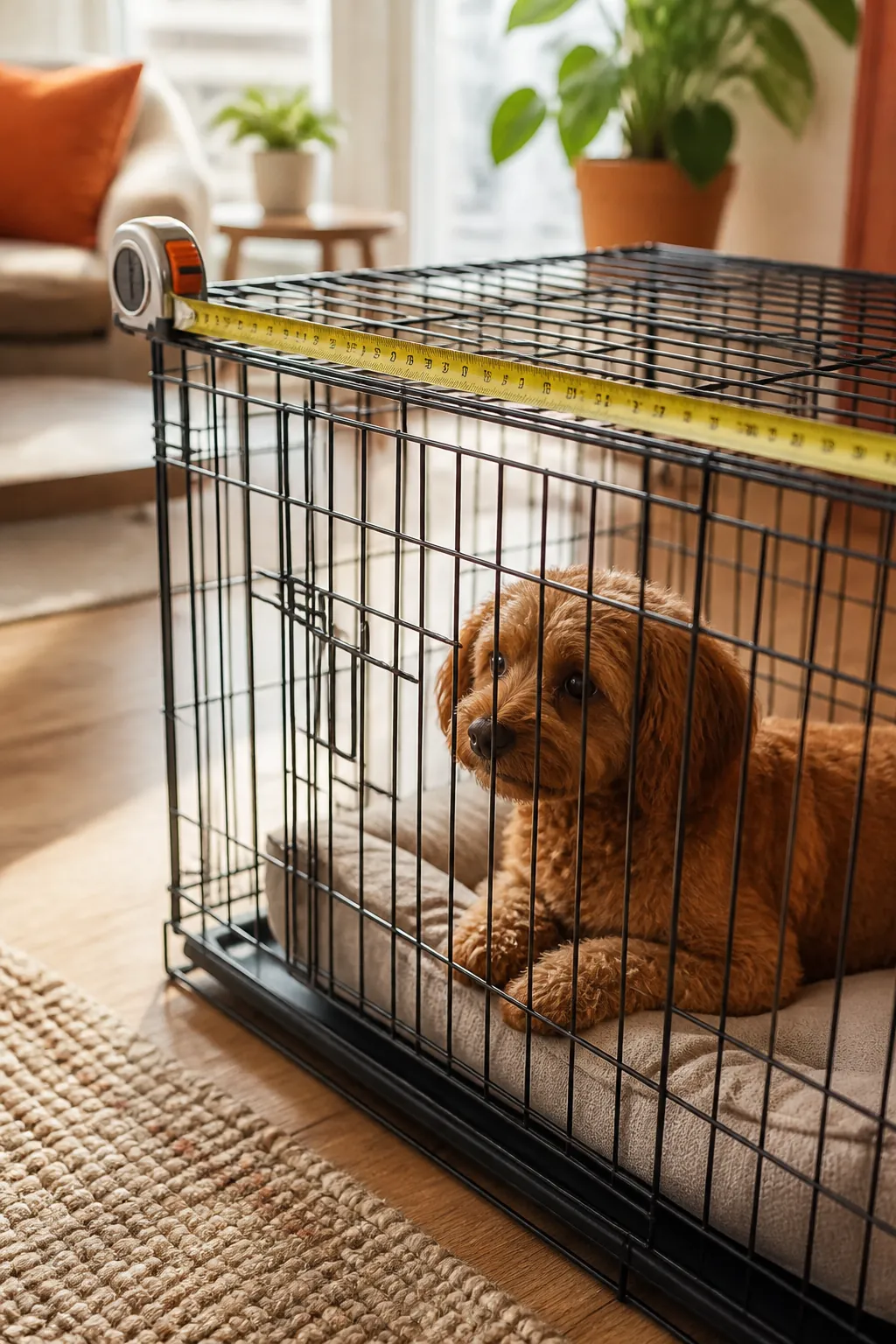
Covers are sold by size tier, not by brand, and a 36 inch tier from one manufacturer is not the same 36 inches as another’s. Measure your crate’s length, width and height to the nearest half inch before ordering rather than matching the tier label on the box, and measure the outer frame, not the marketed interior size a 36 inch crate is sold under. Those two numbers are a few inches apart on most models, and a cover ordered to the interior figure is the one that comes up short at the corners. A cover cut tight rides up over the top bar and exposes the one corner you were trying to hide; a cover cut loose bags at the base and catches on the door latch every time it opens. Both failures come from skipping the tape measure, not from a bad cover.
3. Choose fabric over vinyl if the crate sits in a living room
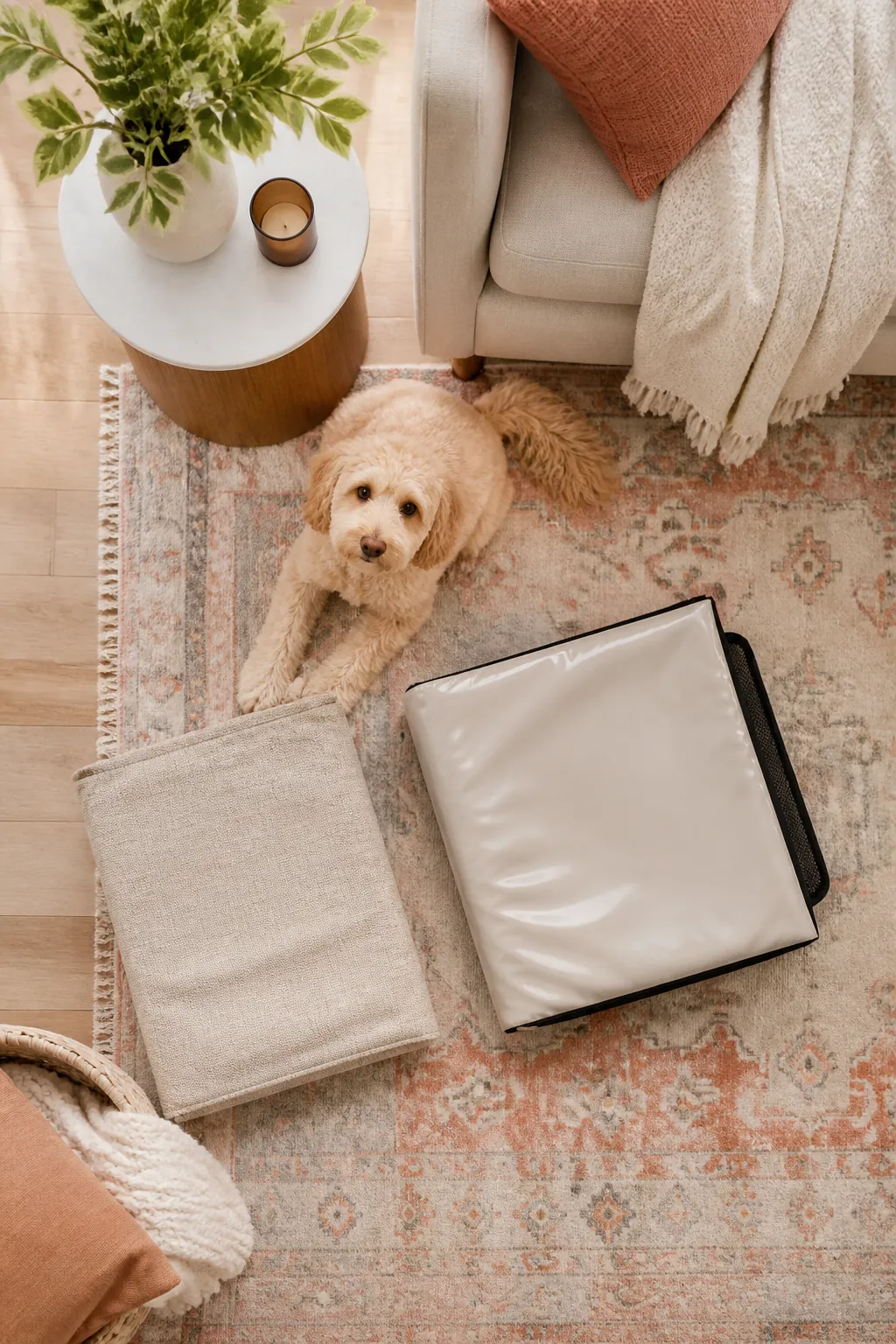
Vinyl covers wipe clean, but they also crinkle with every shift of the dog’s weight and trap heat against the wire in a way cloth does not. A woven or canvas cover drapes instead of crinkling, breathes better through a summer with no air conditioning, and sounds like nothing when the dog turns over at 2am. Vinyl still earns its place somewhere a cover might get splashed, a mudroom or a balcony door, but the main living space is where cloth wins.
4. Keep the color inside the room’s palette
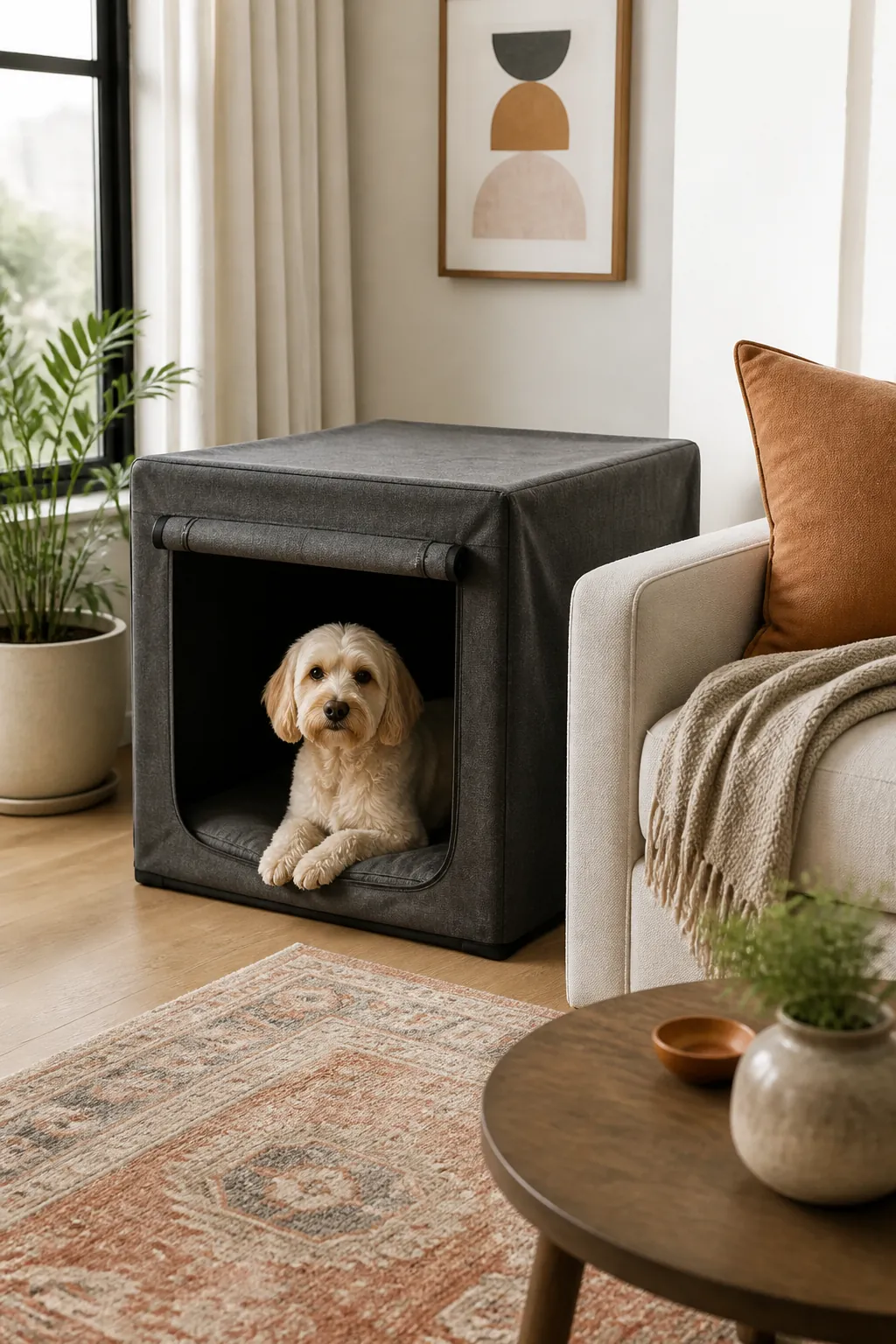
A cover in bright red or printed with paw prints turns the crate back into the focal point it was trying to stop being. A neutral in the same family as your rug or sofa, charcoal, oatmeal, a muted sage, disappears into the room the way the crate cover is supposed to. This costs nothing extra; most covers come in six or seven colorways at the same price, and picking the one that matches is the whole trick.
5. Take it off during the day if the crate stays open
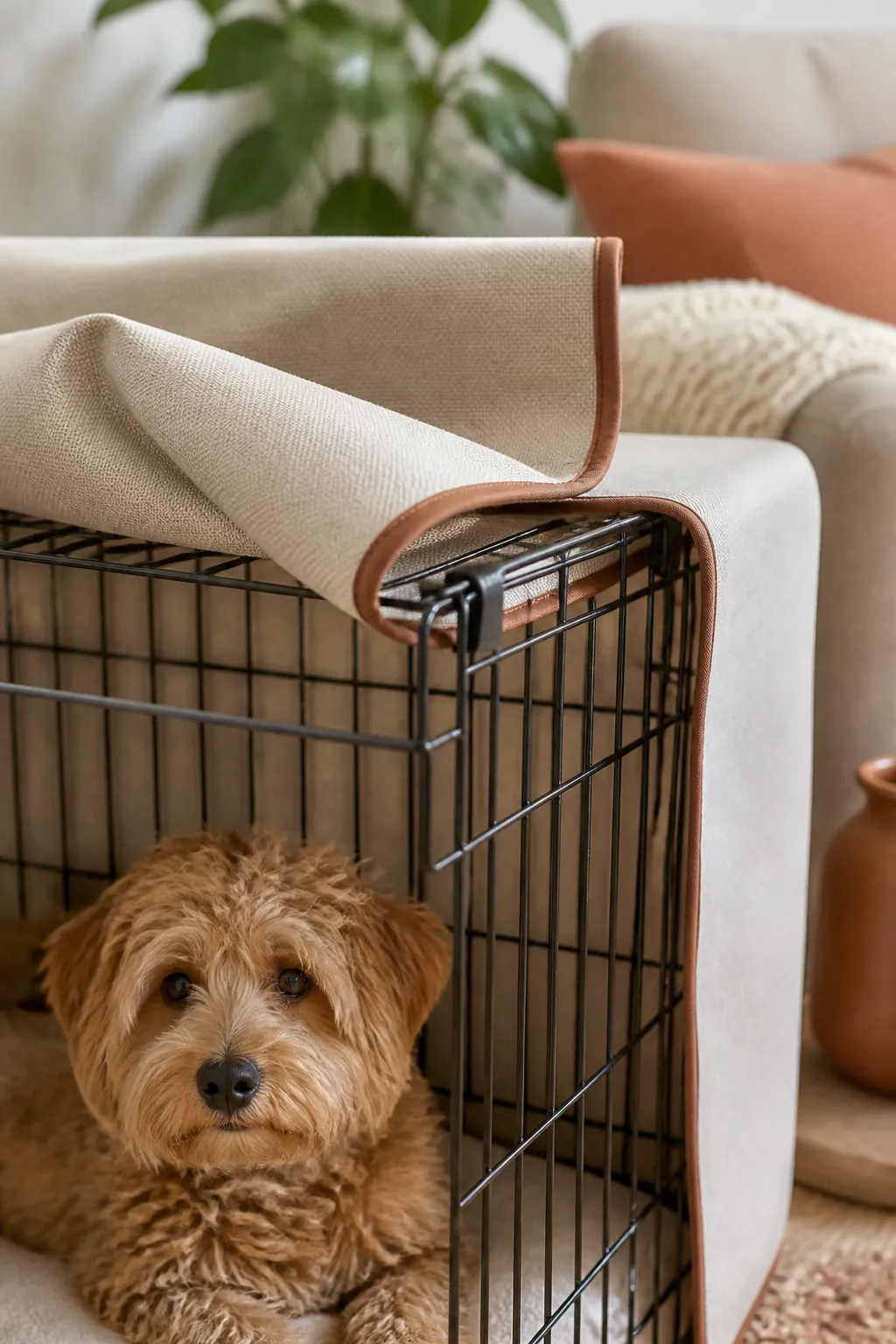
A cover that is on every hour of every day stops being a privacy wall and starts being a permanent box, which undoes the furniture illusion you were going for in the first place. If the crate door stays open during the day and the dog comes and goes on its own, fold the cover back and up over the top bar rather than leaving it hanging loose at the open door, where it is the first thing a bored dog chews on, or take it off entirely while you are home and put it back on for the hours the crate is actually shut. A cover earns its keep at night or while you are out, not around the clock.
6. Skip the cover if the crate is already furniture with solid panels
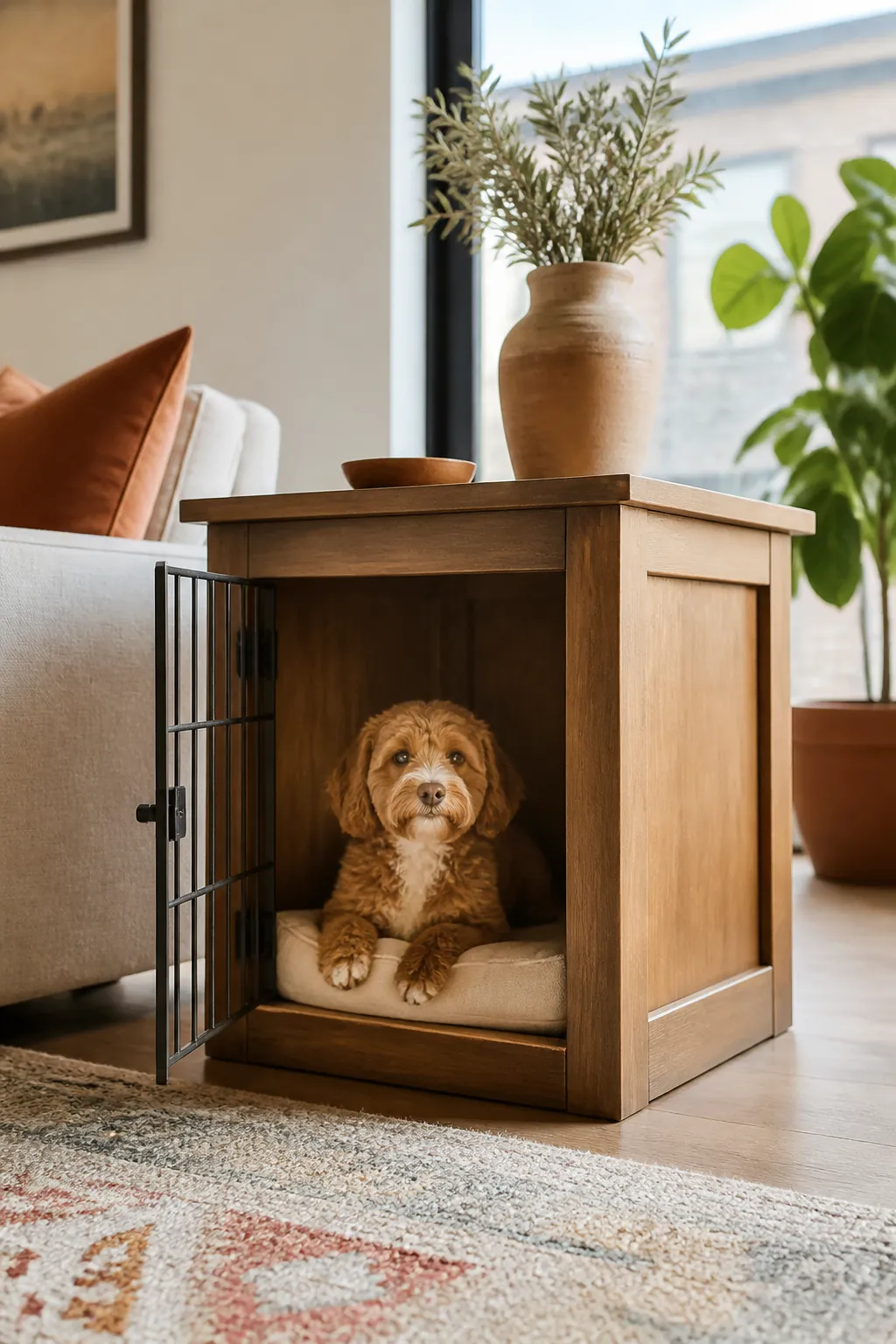
A 27 inch crate end table with a waterproof top already has solid panels on every side but the door, which is the entire job a fabric cover does. Adding a cloth cover on top of a paneled cabinet adds a second thing to wash for a sightline that is already blocked. If your crate is already a piece of crate furniture like this, spend the cover budget on the mat instead, since that is the surface actually getting used every day.
7. Cover only the open half when a divider is in use
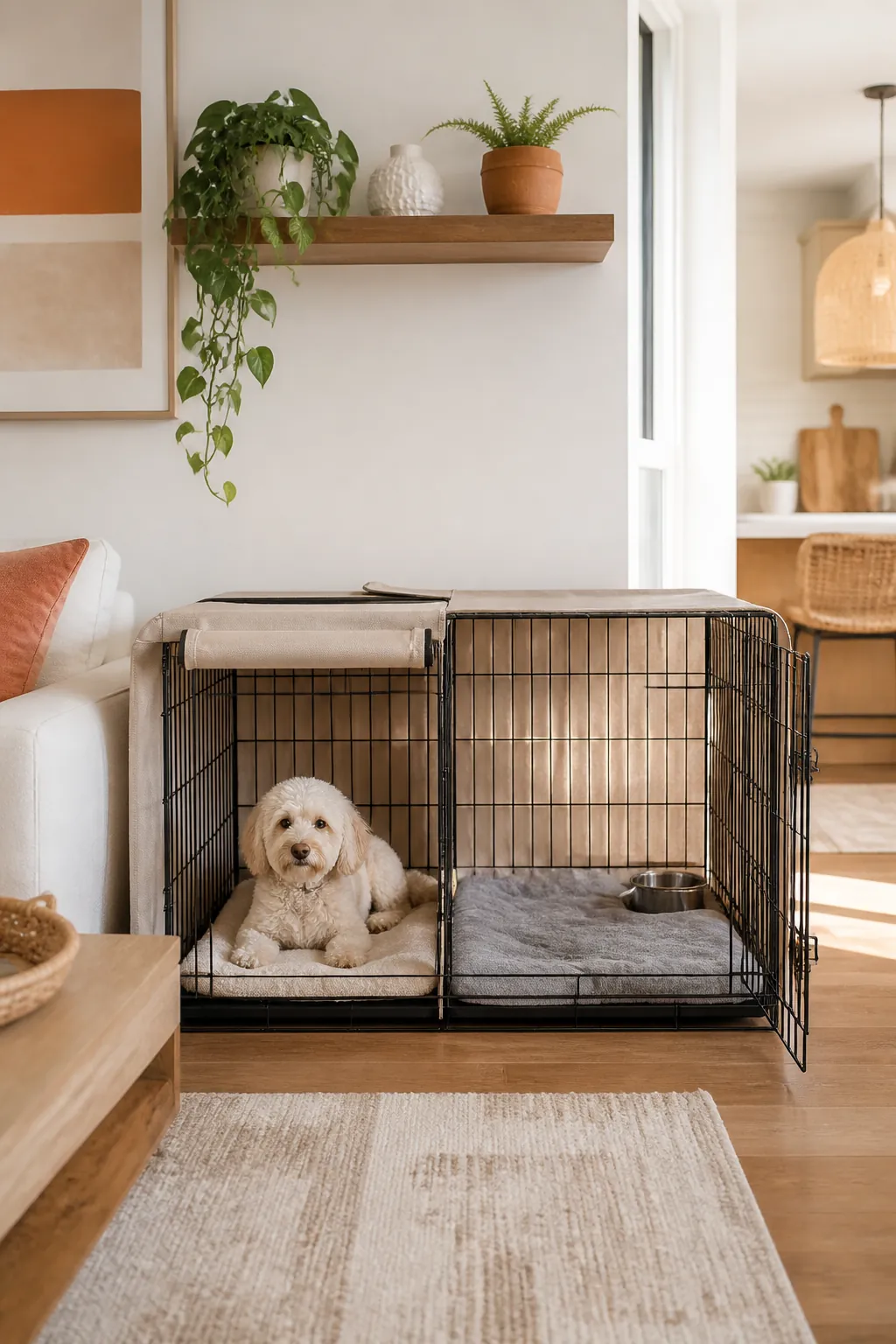
The divider panel that comes with a 24 inch iCrate splits the frame for a growing puppy, and a full-length cover draped over the whole crate bunches at the seam where the panel clips in, leaving a gap right at eye level. Fold the cover back at the divider line instead of letting it run the full length, so the fabric follows the shorter space the puppy actually occupies. Readjust the fold as the divider moves back, since the cover’s job is to match the current compartment, not the crate’s full potential size.
8. Swap the cover with the season
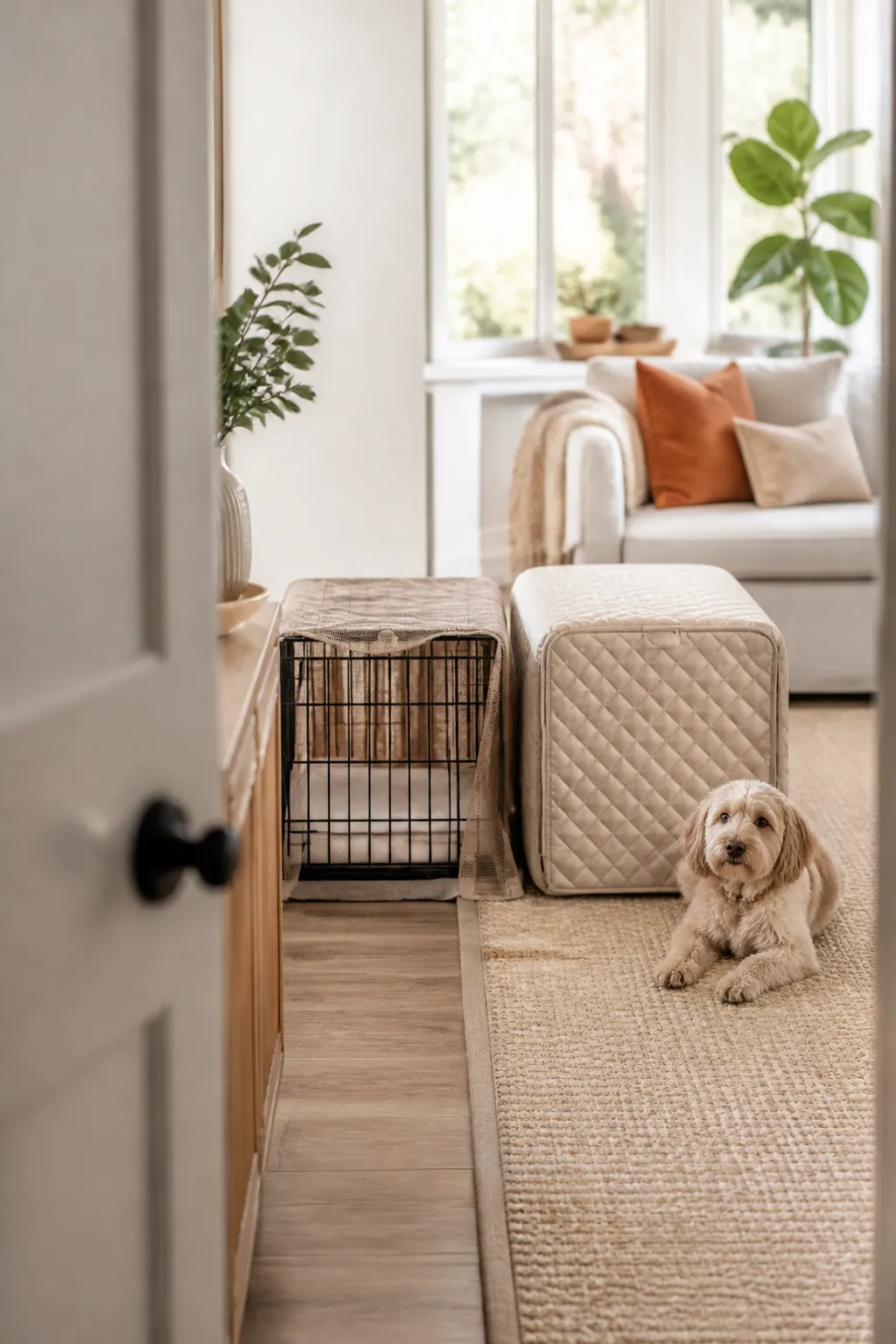
A quilted winter cover that is right for a drafty window wall in January is the same cover trapping heat against the wire in July. Keep a lighter mesh or plain cotton panel for the warm months and save the thicker one for when the apartment actually runs cold. The tell that it is time to switch back is condensation on the inside of the quilted cover by morning, a sign the room is already holding enough warmth that the lighter cover should go back on. Most crates do not need two covers bought at once; a single lightweight cover handles three seasons, and only the coldest stretch of winter calls for the heavier one.
9. Wash it before it needs it
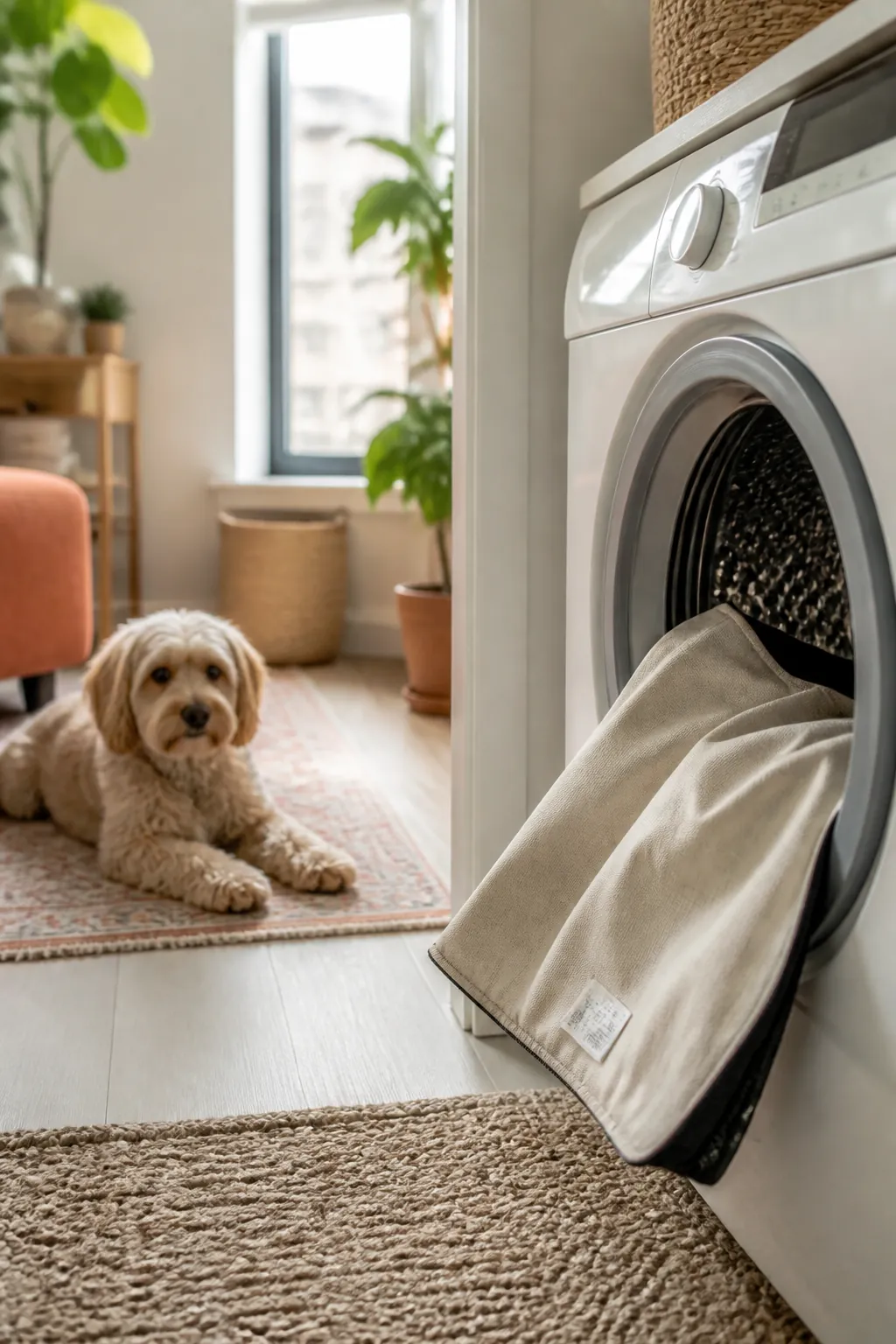
Check the care label before the first wash, not after the first spill. Most fabric crate covers are machine washable on cold, but tumble drying is where covers actually shrink out of fitting their frame again, so air dry or a low tumble setting is worth the extra day. Wash on a schedule, every two to three weeks for a crate used daily, rather than waiting for a smell to force the issue, since a cover washed on a schedule keeps its shape far better than one washed in a hurry. Between full washes, a damp cloth and a mild cleaner handle a single muddy paw print or drool patch without sending the whole cover through a cycle it did not need yet. A cover also stays cleaner between washes when brushing happens away from the crate, and a dog grooming station set up on hard floor keeps loose hair in one corner instead of in the weave of the cover.
Where to start
Measure the crate first: length, width, height, to the nearest half inch, and note whether a divider is in play. That measurement decides the cover size, not the tier printed on the listing.
Buy in this order. The cover first, in a neutral that matches the room, sized to the measurements you just took. A second lighter-weight cover only if you are heading into a summer with no air conditioning and the first cover is a heavy winter weight. Skip the cover entirely, and buy a mat instead, if the crate is already a paneled end table style with solid sides.
The test that tells you whether it worked: walk into the room from the front door and look at the crate from across it, the way a visitor would. A cover that disappears into the furniture passes. A cover sliding off one corner, or bagging at the base, means the measuring step got skipped, and it is worth the ten minutes to go back and redo it before buying anything else.