A wire crate in a studio apartment is roughly the size of a coffee table and looks like nothing else in the room. That is the whole problem. The dog is fine with it; the person tripping past it four times a day is the one who eventually shoves it in a corner where the dog stops using it.
Crate furniture solves this by being a piece of furniture that a dog happens to sleep inside. Twelve ways to get there.
1. Give the top an actual job
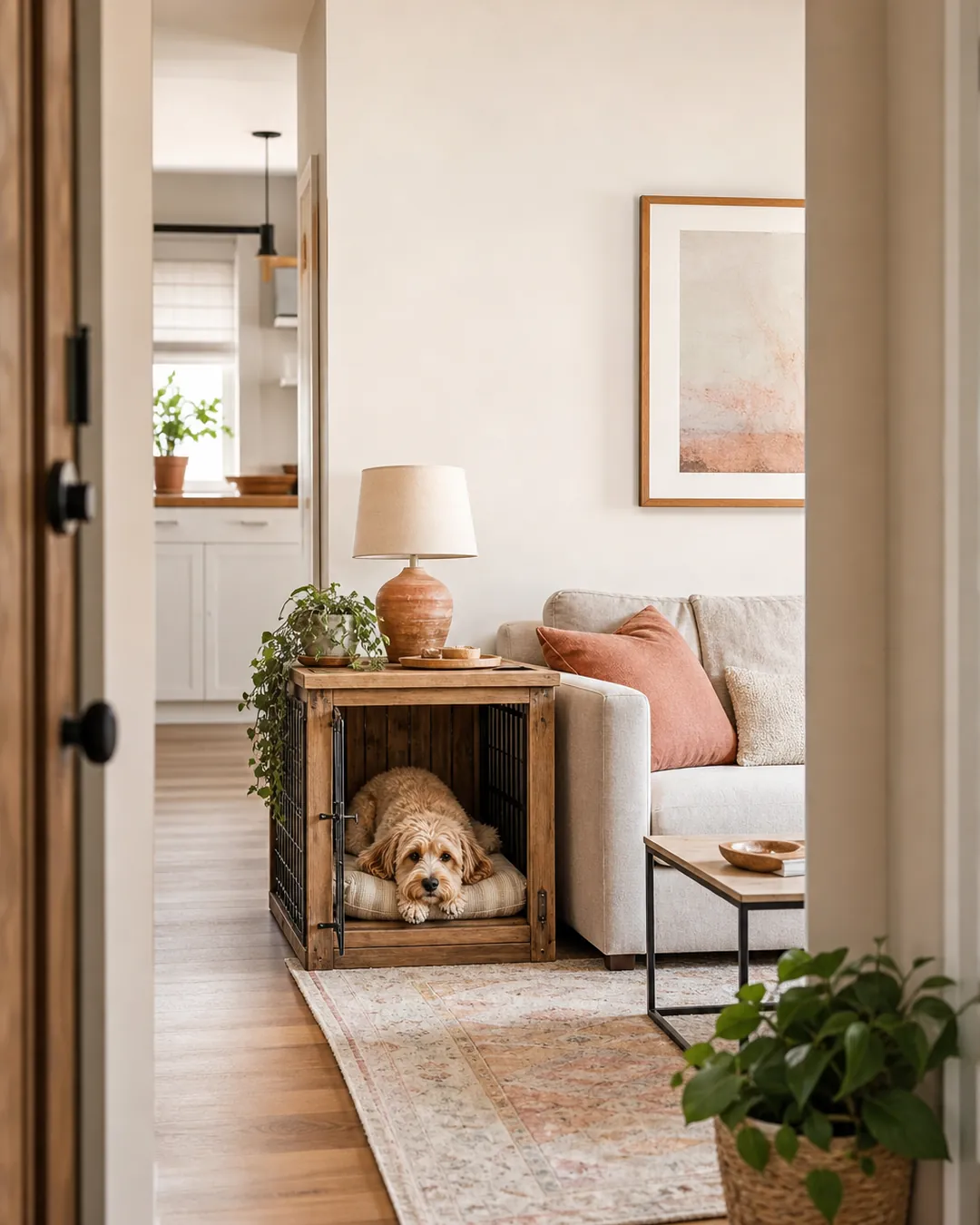
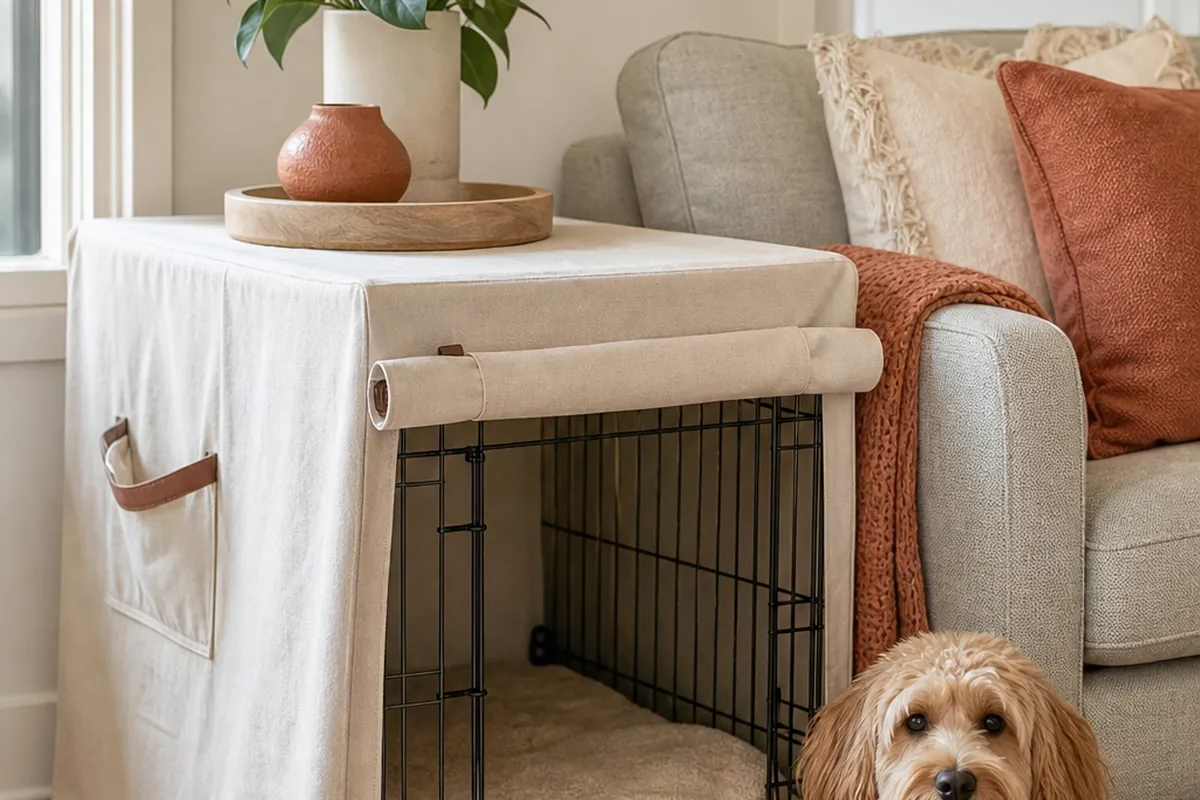
A crate table with nothing on it still reads as a crate. Put a lamp, a tray and a plant on it and it becomes a side table, because that is what side tables have on them. This is the single highest-leverage change on the list and it costs nothing if you already own a lamp. Keep the objects few and large rather than many and small: three items read as styling, eight read as a surface where things get dumped, which is the look you were trying to escape.
2. Buy for the top surface, not the footprint
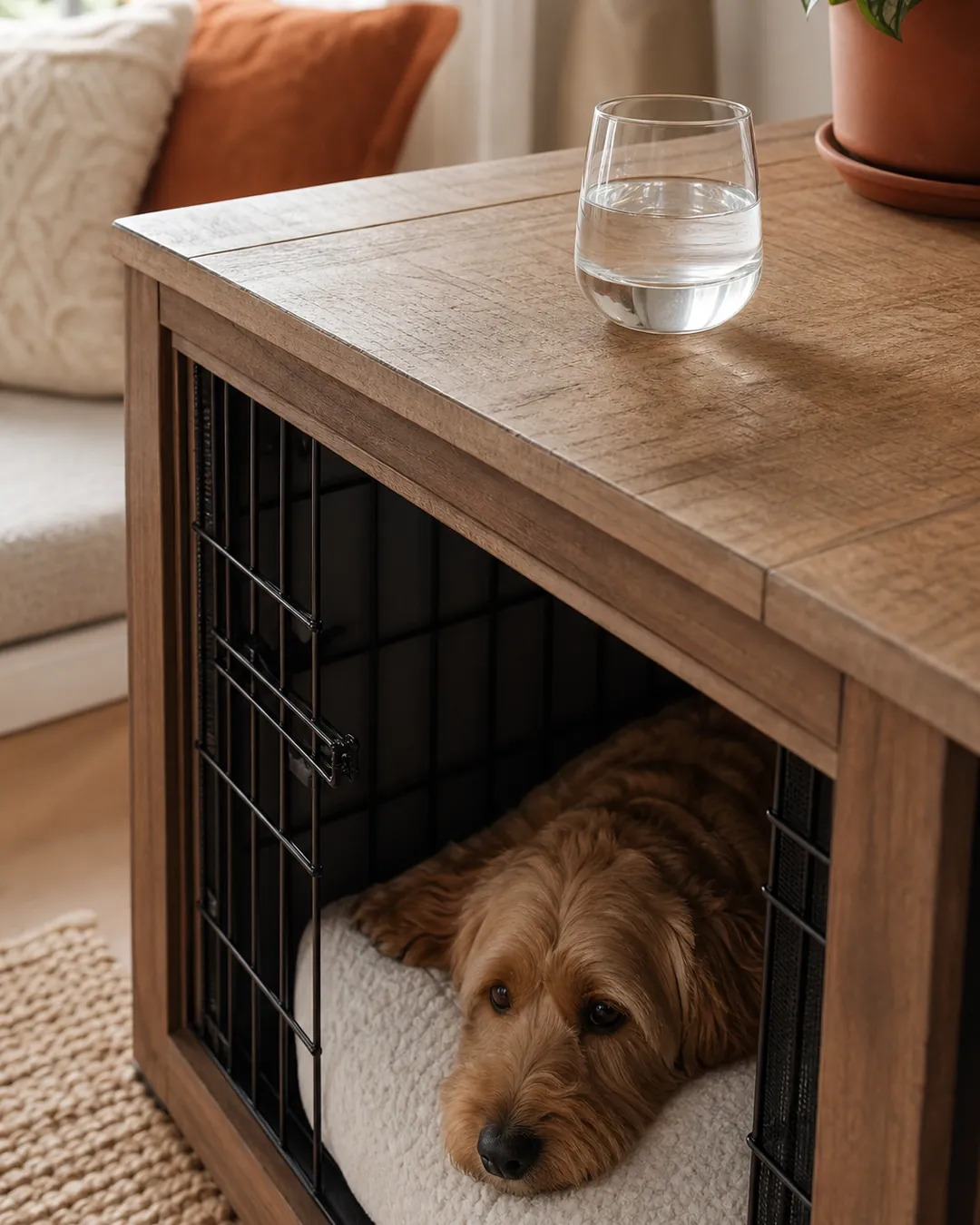
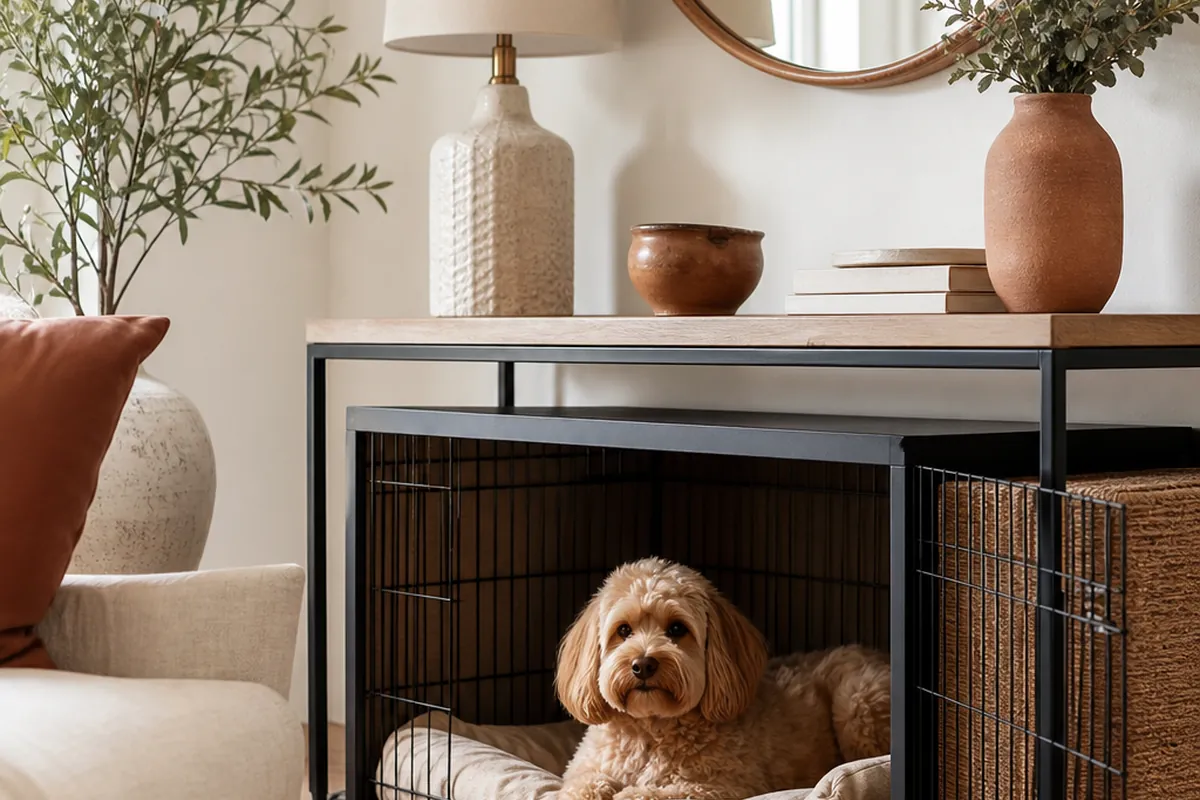
Most crate furniture is sold on interior dimensions, but the part you live with is the top. Look for a sealed, flat, waterproof panel rather than a slatted or contoured one. A 27 inch crate end table with a waterproof top can take a drink without a ring, which decides whether the surface actually gets used or stays decorative.
When the footprint genuinely is the problem, the answer is usually a smaller crate placed better rather than a bigger piece of furniture, and small dog crate ideas for tight corners starts there.
3. Match the wood tone to something already in the room
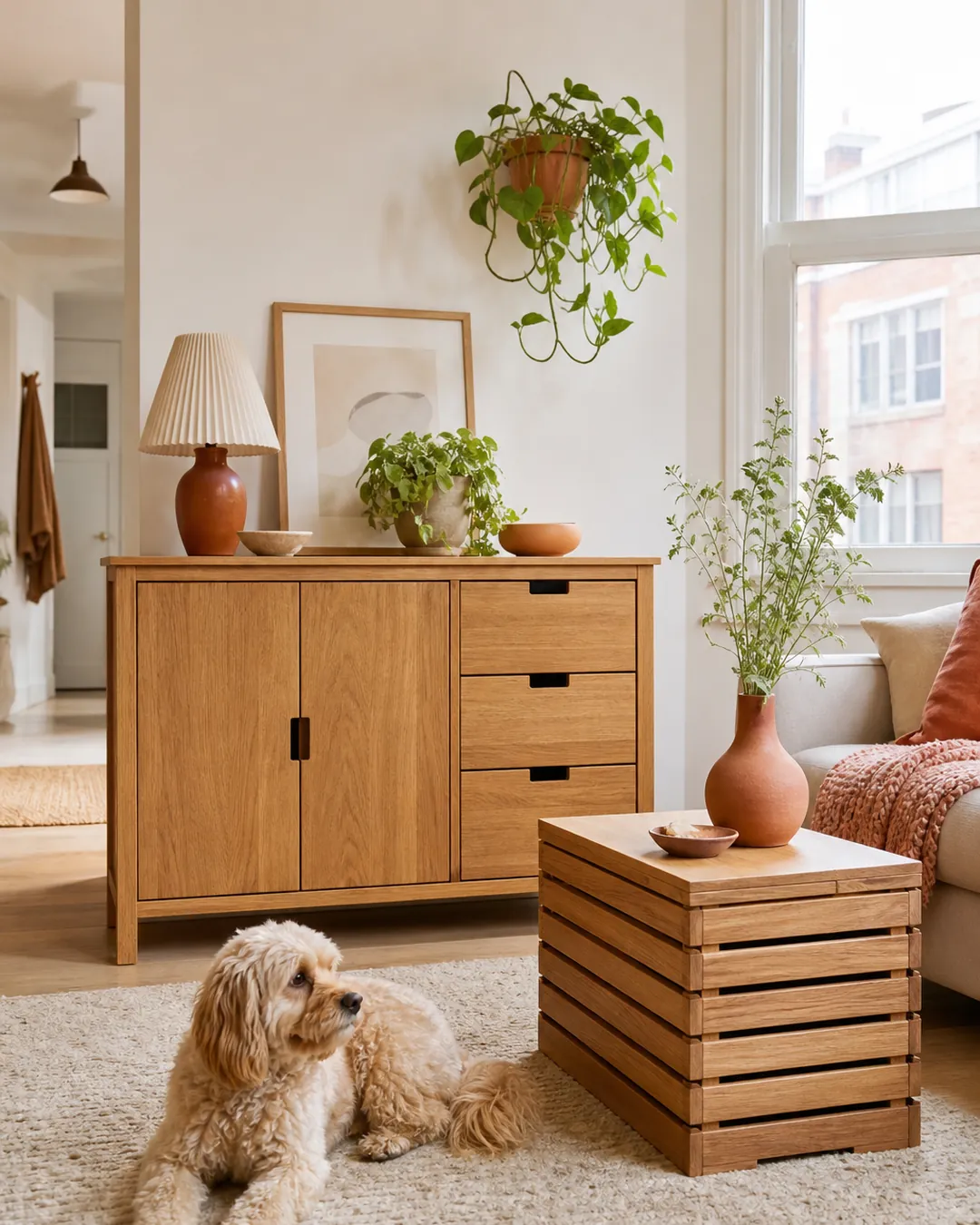
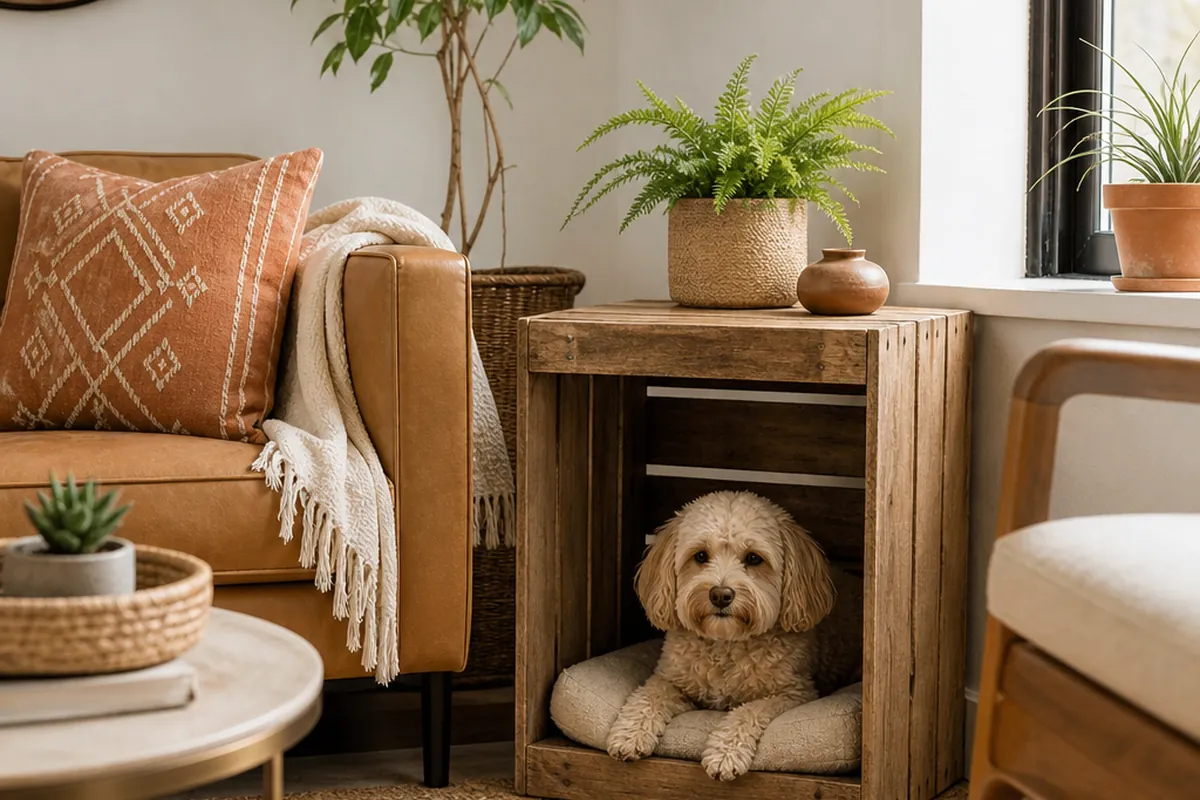
A crate in a finish that appears nowhere else announces itself from the doorway. Hold a photo of your existing furniture next to the listing images before ordering. Warm oak beside cool gray is the mismatch that makes an expensive piece look cheap, and it is the one people notice without being able to say why. If nothing in your room is wood, a painted finish in the wall color disappears more completely than any timber will.
4. Put it where a side table would go
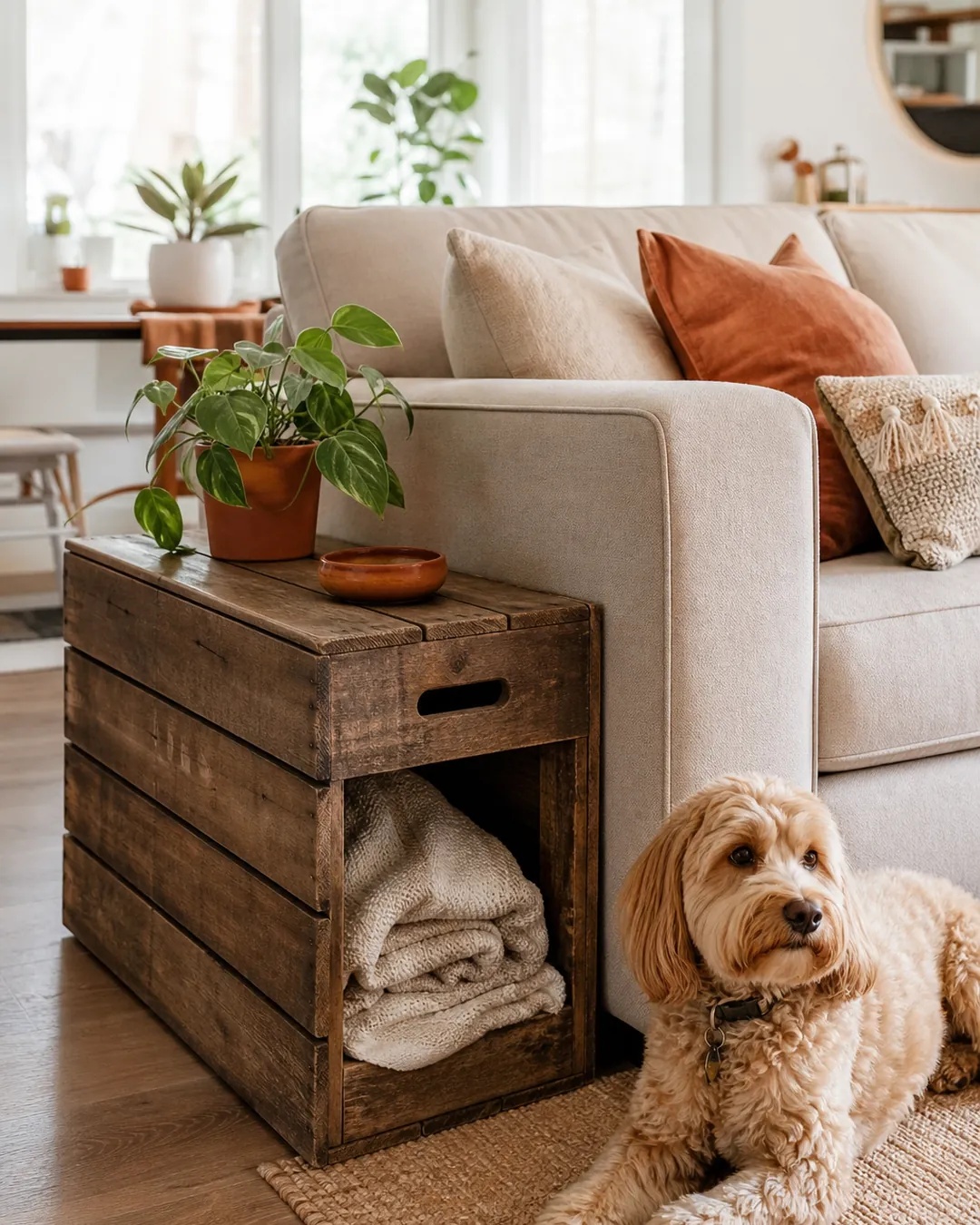
Beside the sofa, at the end of a bed, under a window. Those are the positions a person reads as furniture. A crate in the middle of a wall with clearance on both sides reads as equipment, no matter how nice the wood is. The reason is that real furniture almost always touches something: another piece, a wall, a corner. Floating in open space is what equipment does, and your eye knows it before you do. Whichever of those spots you choose, keep it at the opposite end of the room from any indoor potty area, because indoor dog potty setups for apartments rely on the bed and the toilet sitting well apart.
5. Keep it out of the walkway
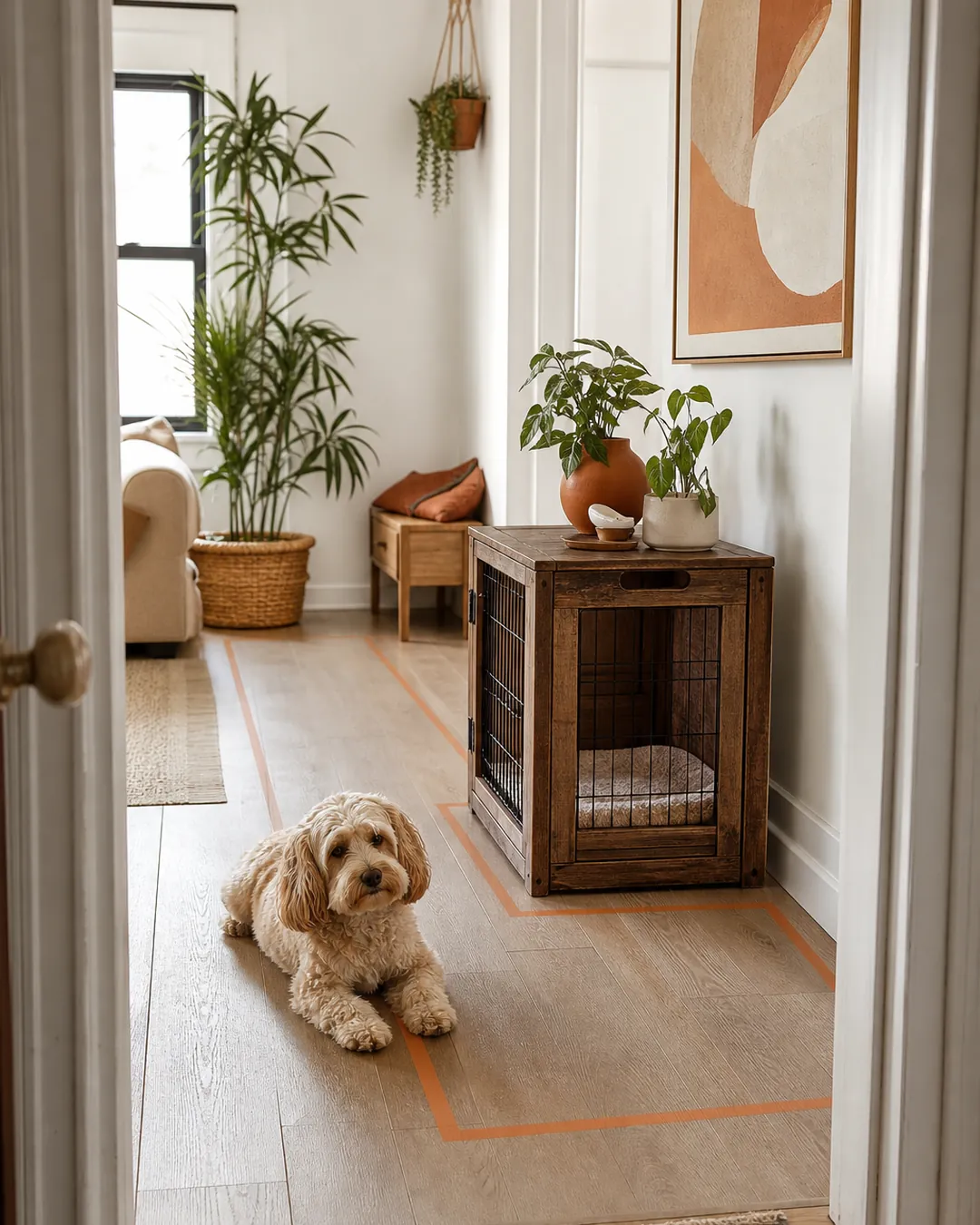
Furniture you walk into stops being furniture and starts being an obstacle. Measure the gap left when the door is open, and if it drops below about two feet, the crate is in the wrong place. This is also the failure that gets crates relocated to bad spots six weeks after purchase, usually to somewhere the dog liked less. Tape the footprint on the floor and live with it for two days before assembling anything, because a crate is heavy and awkward to move once it is built.
6. Do not face the door
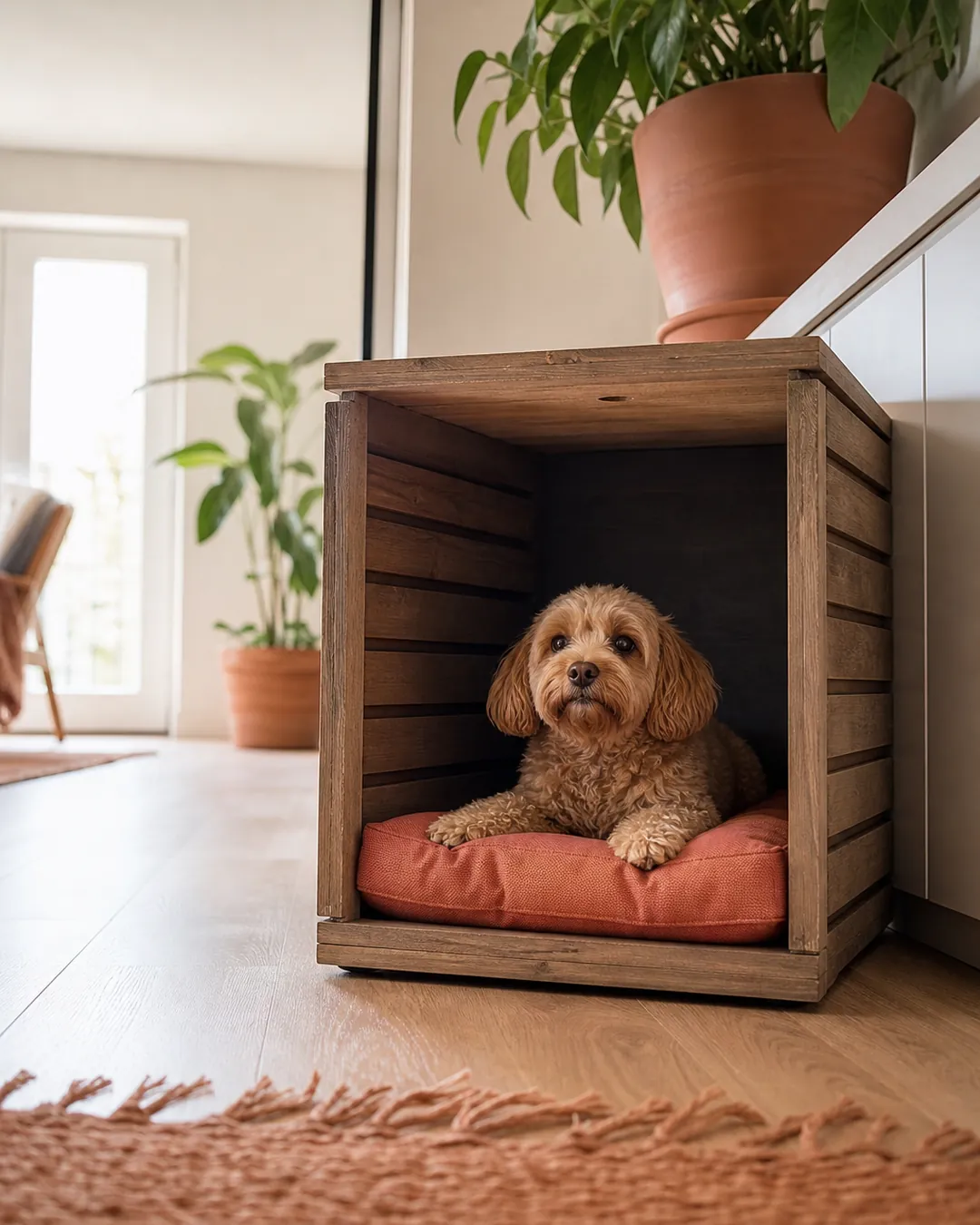
A crate facing the front door gives a dog a front-row seat to every delivery and every neighbor on the stairs. Turn it so the opening looks into the room instead. Same crate, same spot, completely different amount of barking.
7. Use a cover for the sides, not the front
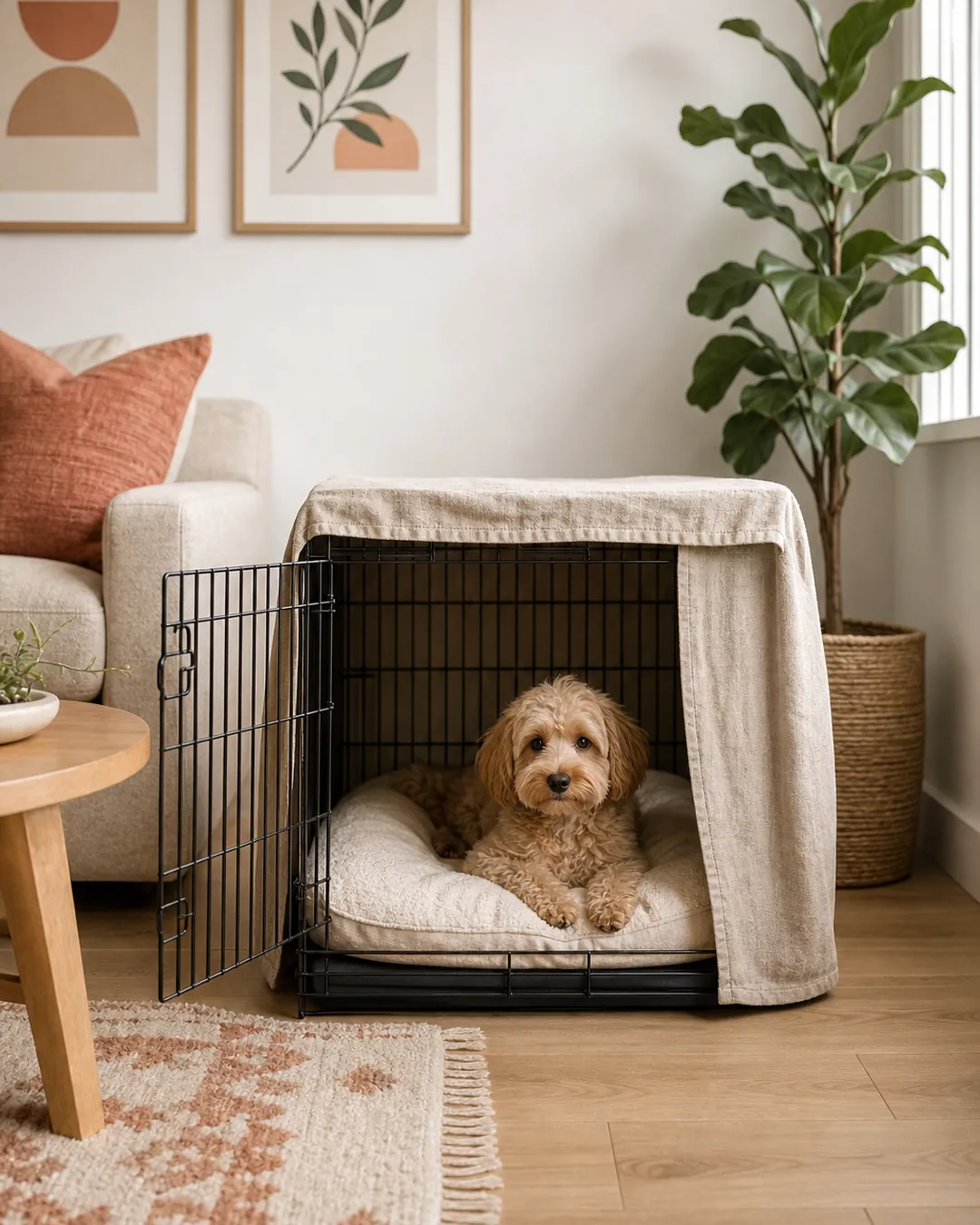
A crate cover with a fabric protector finish turns a wire crate into a soft-sided box, which photographs far better than bars. Start by covering the back and one side and leave the door end open. Some dogs settle faster enclosed and some will not go in at all, and you find out cheaply this way.
Getting the fit and fabric choice right is worth its own pass, and dog crate cover ideas for a small apartment covers the sizing and seasonal swaps this section only touches on.
8. Choose the mat for the room, not the pet aisle
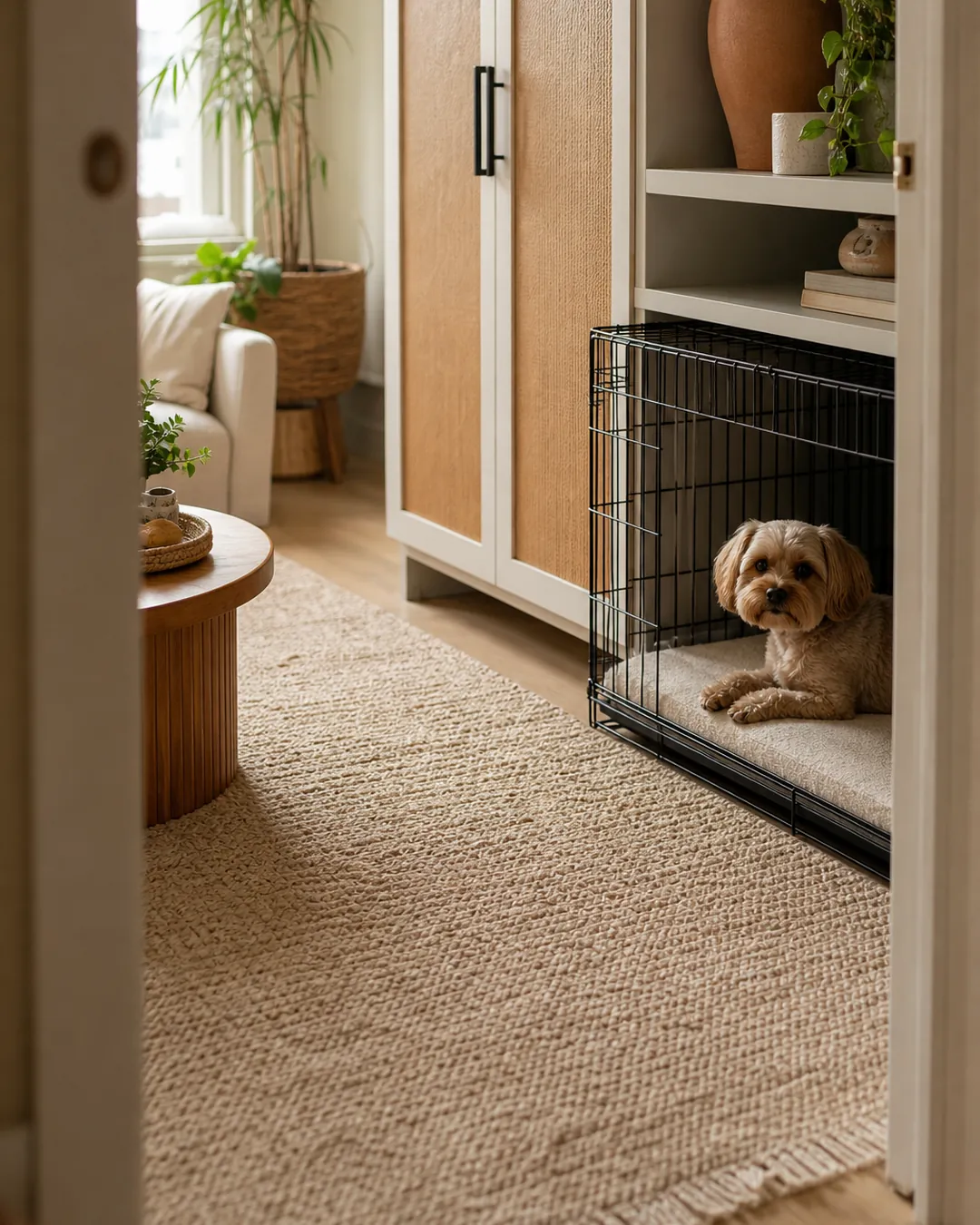
The mat is the largest visible surface inside the crate and it is usually the loudest thing in the whole setup. An orthopedic crate mat at 36 by 24 inches in a neutral gives you a bed the dog can actually rest on and a color that disappears. Check it is washable before anything else, because it will need washing.
9. Fill the gap between mat and wall
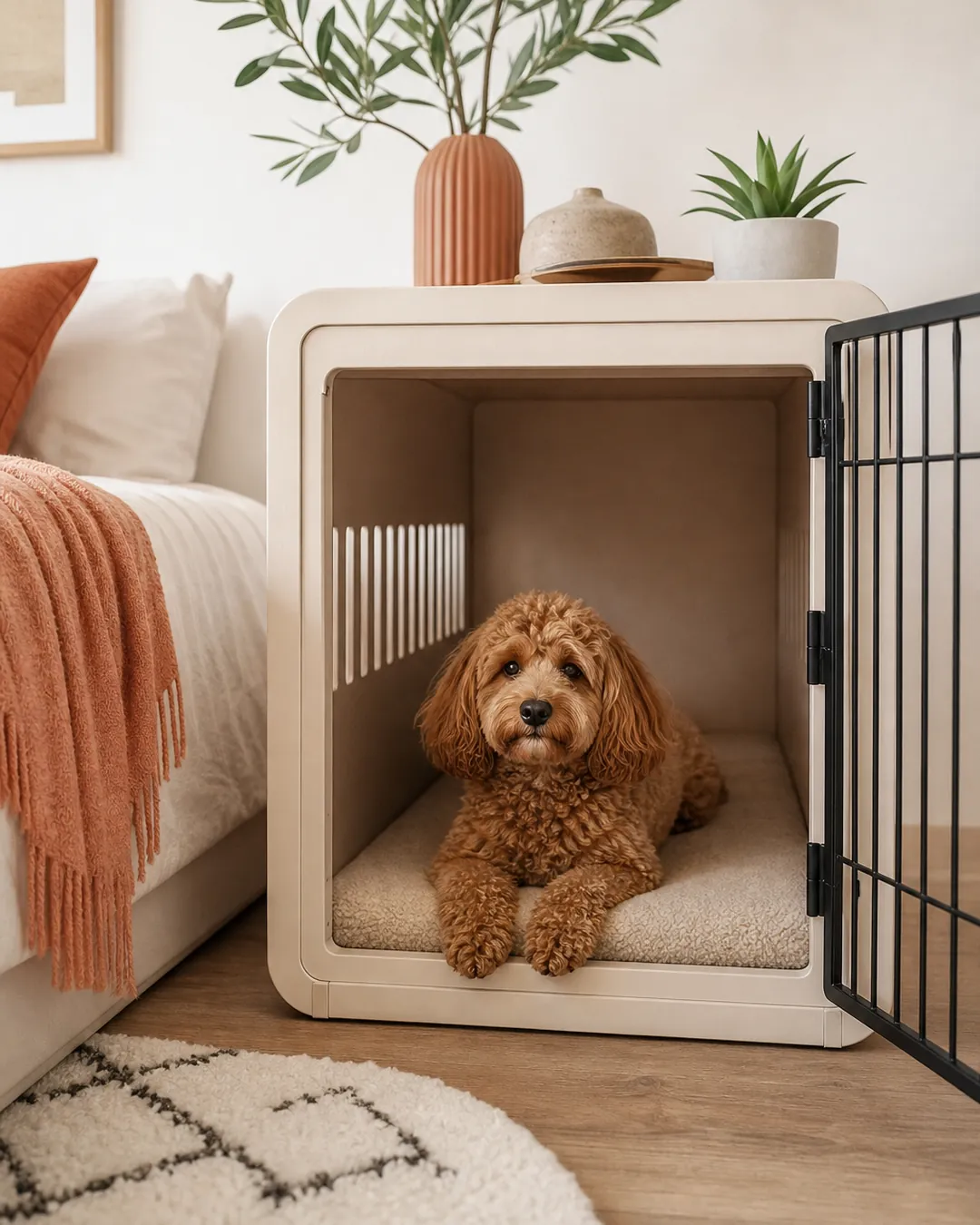
A mat smaller than the crate floor slides, bunches at one end and exposes plastic tray underneath. Measure the interior floor and buy to it. A crate that looks tidy from across the room and chaotic from beside it is doing half a job.
10. Hide the utility on the inside
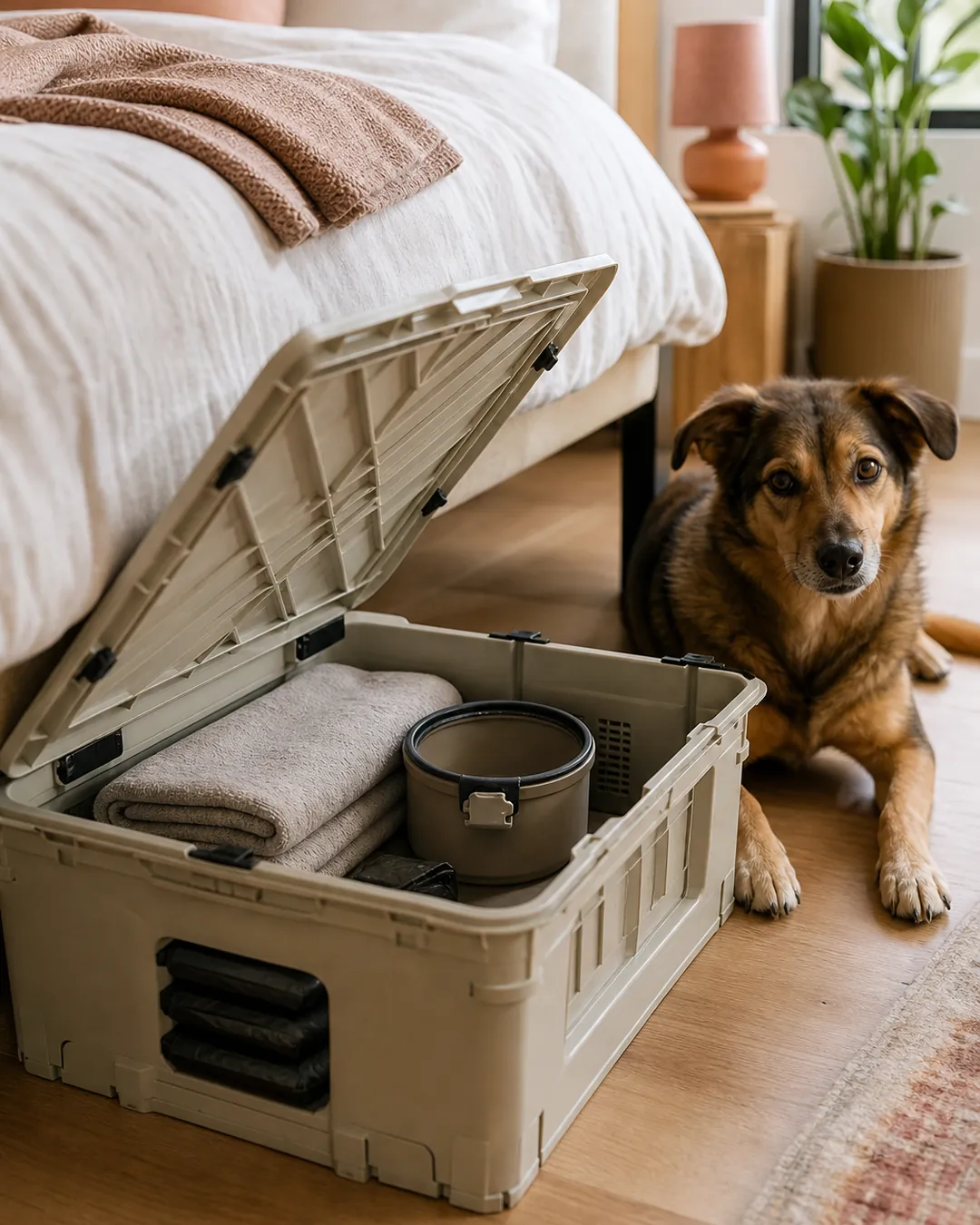
Spare liners, the clip-on bowl, the folded towel. These live inside the crate behind the dog, not stacked on top where they undo the furniture illusion. If they will not fit inside, they belong in a cabinet elsewhere.
11. Skip anything with a paw print or a bone motif
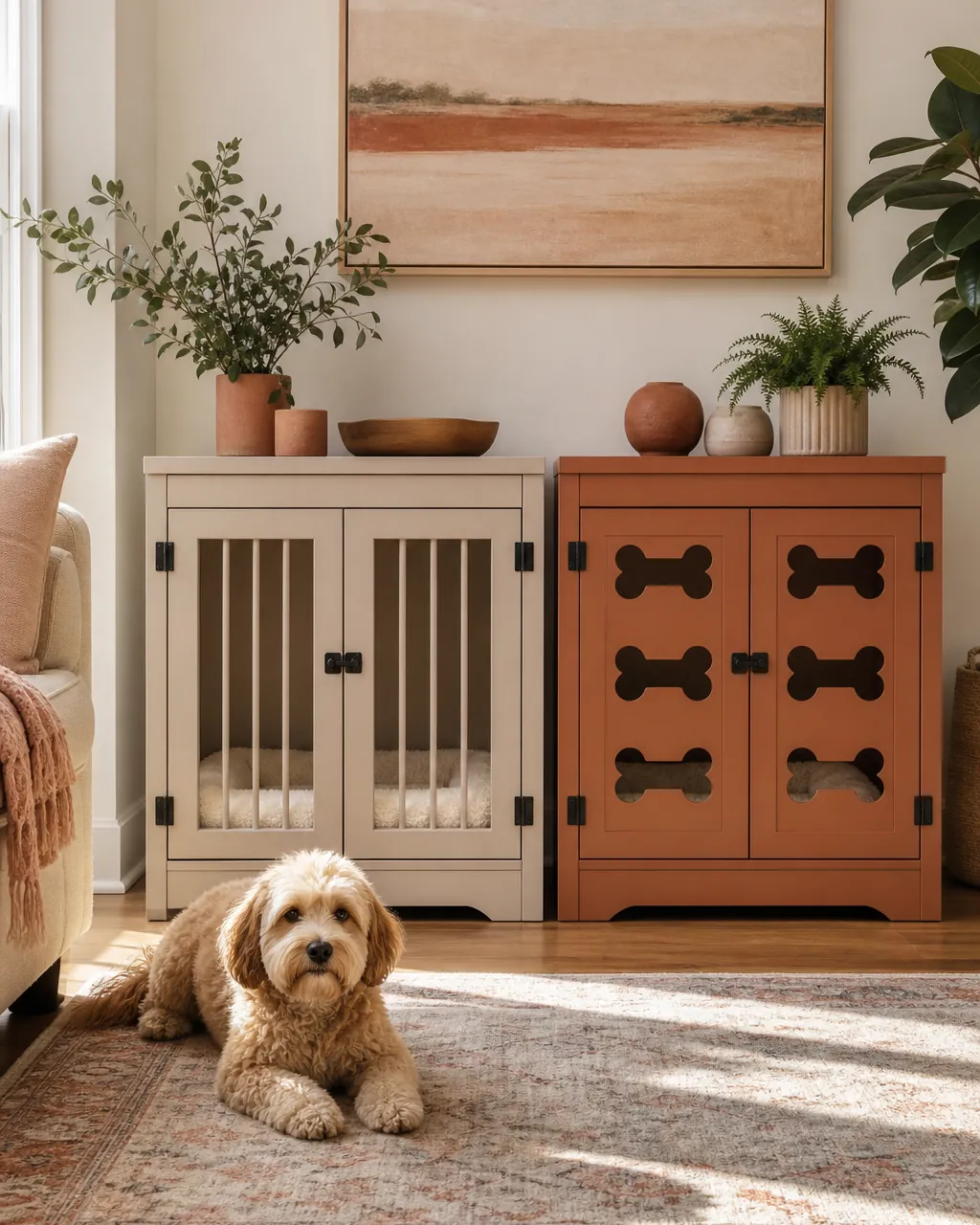
There is no version of a bone-shaped cutout that reads as furniture. Manufacturers add them because they sell in a pet aisle, not because a dog benefits. Plain panels, plain hardware, and the piece passes as a cabinet.
12. Decide honestly whether wood is right for this dog
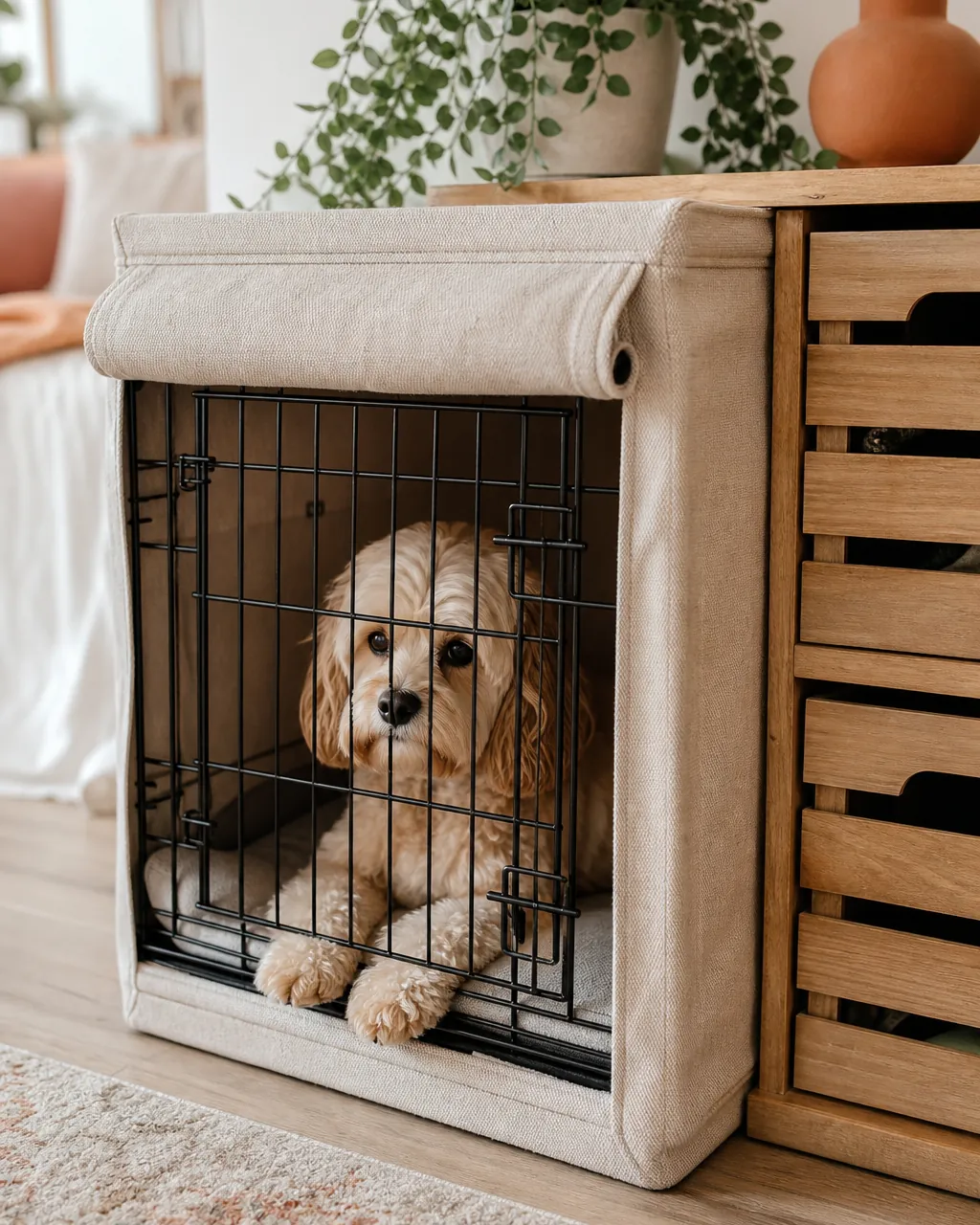
A settled adult dog is a good match for crate furniture. A puppy mid-chew, or a dog that scrambles when left alone, will mark wood in a way that does not come out, where a wire crate would have bent and sprung back. Buy the handsome one when the dog has earned it, not before. There is no shame in running a wire crate with a good cover for a year first; it costs a fraction as much and it tells you where the crate should live before you commit real money to that spot.
Where to start
Move the crate you already own before you buy anything. Put it where a side table would go, turn it away from the front door, and check the walkway still clears. Live with that for a week. A surprising number of crate problems are placement problems wearing a furniture costume.
Then buy in this order: the mat first, because it is cheap, it is the biggest visible surface and it improves the dog’s experience immediately. The cover second, if the dog settles better enclosed. The furniture piece last, once you know the crate is staying in that spot, because it is the expensive item and the one you cannot easily move.
One test before you order anything: photograph the corner as it is now, then look at the photo rather than the room. A camera flattens a space and shows you what a visitor sees on the way in, which is where a crate either reads as furniture or does not. People are far better at judging their own rooms from a photograph than from standing in them.
The best-looking crate setups are not the most expensive ones. They are the ones where somebody matched three finishes, put a lamp on top and stopped buying things with bones on them.
That same discipline about what a room needs to see and what it does not extends to grooming, and a fixed dog grooming station tucked into its own corner keeps loose hair from ever reaching the crate you just spent this much care matching to the room.
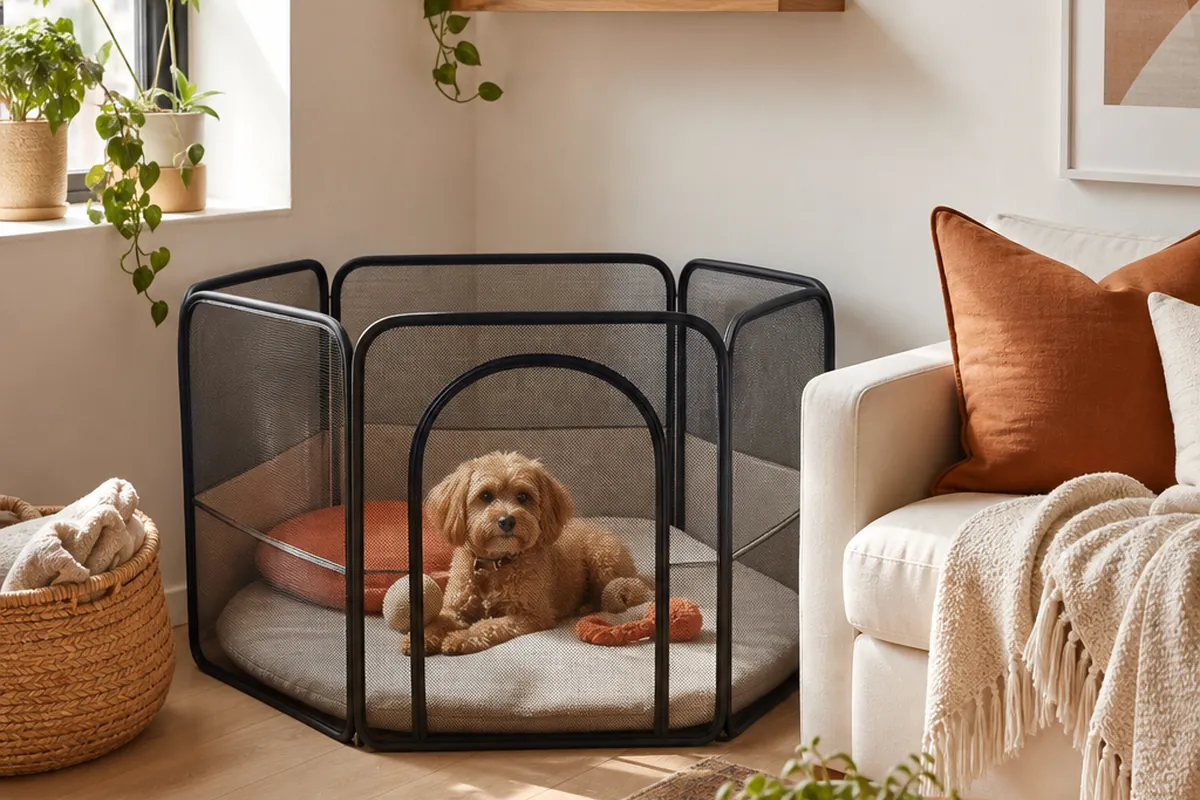
The same restraint decides whether a daytime pen in the living room reads as furniture or clutter, which is the whole difference in these dog playpen ideas for small apartment living rooms.