The problem with crating a small dog in a small apartment is rarely the crate. It is the four square feet the crate needs and the eighteen inches of door swing nobody measured. Get the geometry right and a crate slots into a corner that was doing nothing. Get it wrong and it lives in the middle of a room for two years.
Ten ideas, starting with the measuring.
One framing worth having first: in a house, a crate is furniture you tolerate. In an apartment it is furniture you negotiate around every day, which raises the value of getting the position right and lowers the value of buying the nicer model. Spend the effort on the tape measure, not the catalog.
1. Size to the dog lying flat, not to the catalog
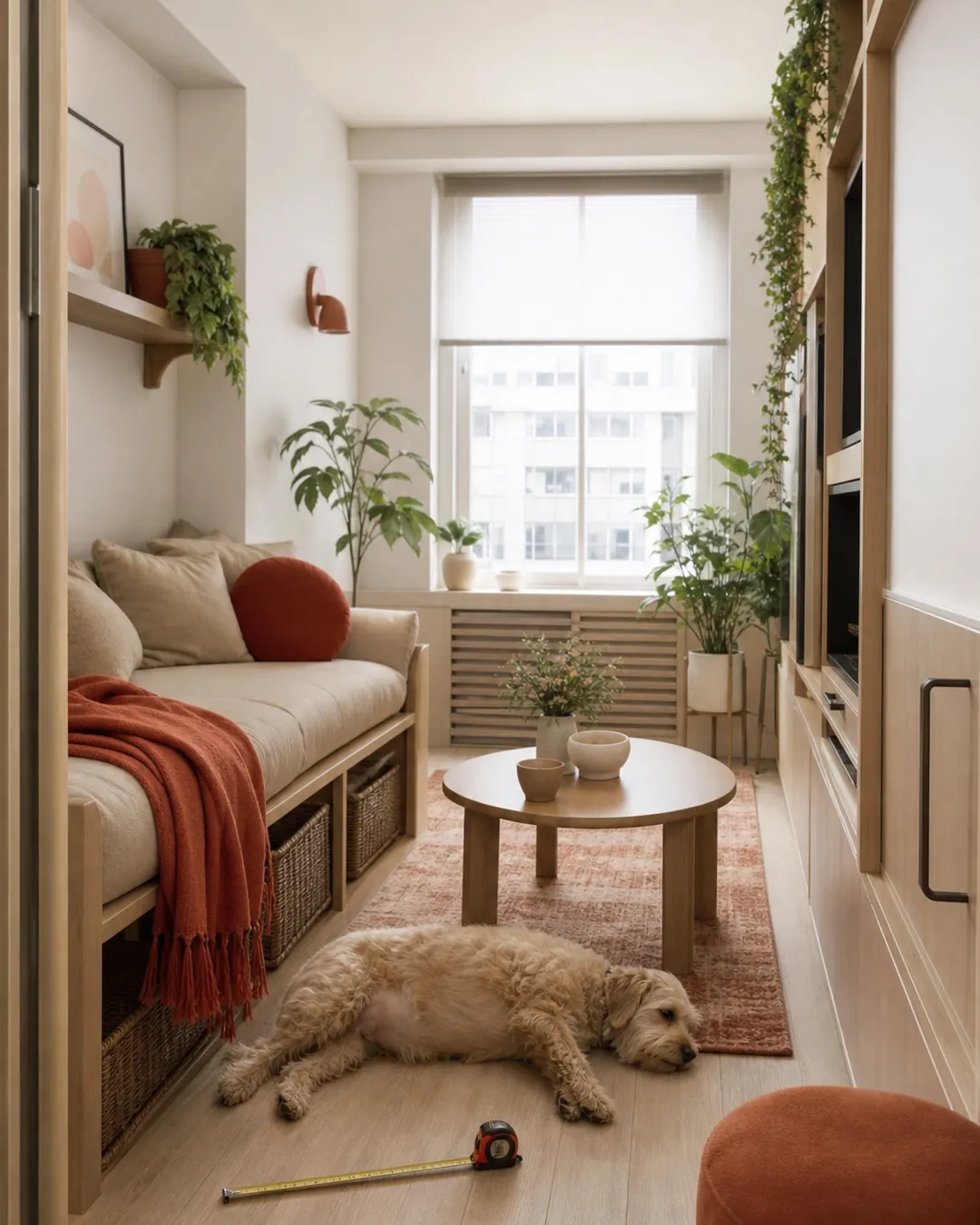
A crate needs to let the dog lie fully stretched and stand without ducking, plus a few inches. That is the whole specification. A 24 inch single-door crate for small breeds covers most small dogs, and going a size up because it seems kinder just spends floor you do not have.
2. Measure the door swing before the footprint
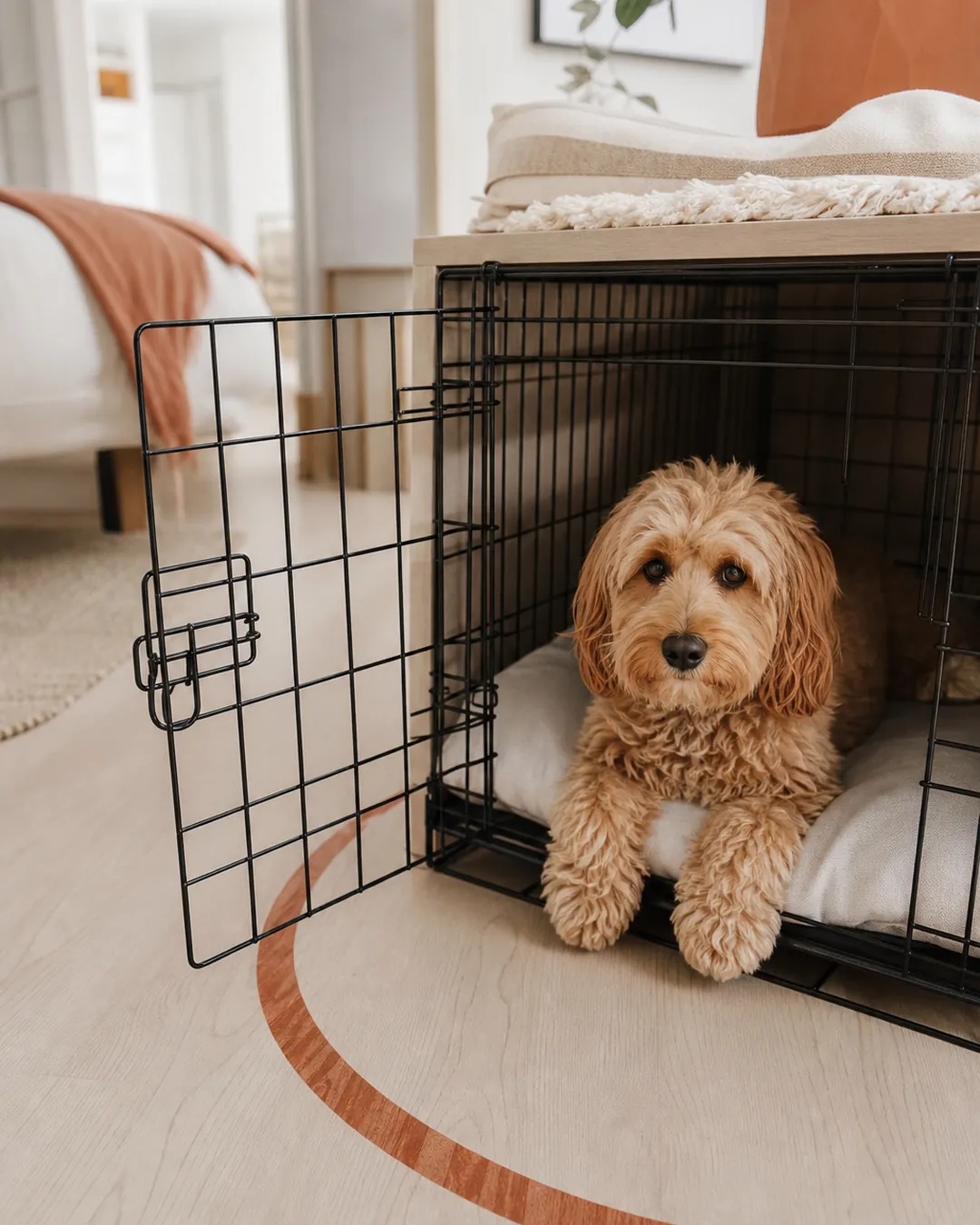
This is the measurement people skip and then live with. A single-door crate needs its door arc clear, which is often as much floor again as the crate itself. Draw the arc on the floor with tape. A crate whose door hits a radiator is a crate you will be moving.
3. Put it in a corner, facing out
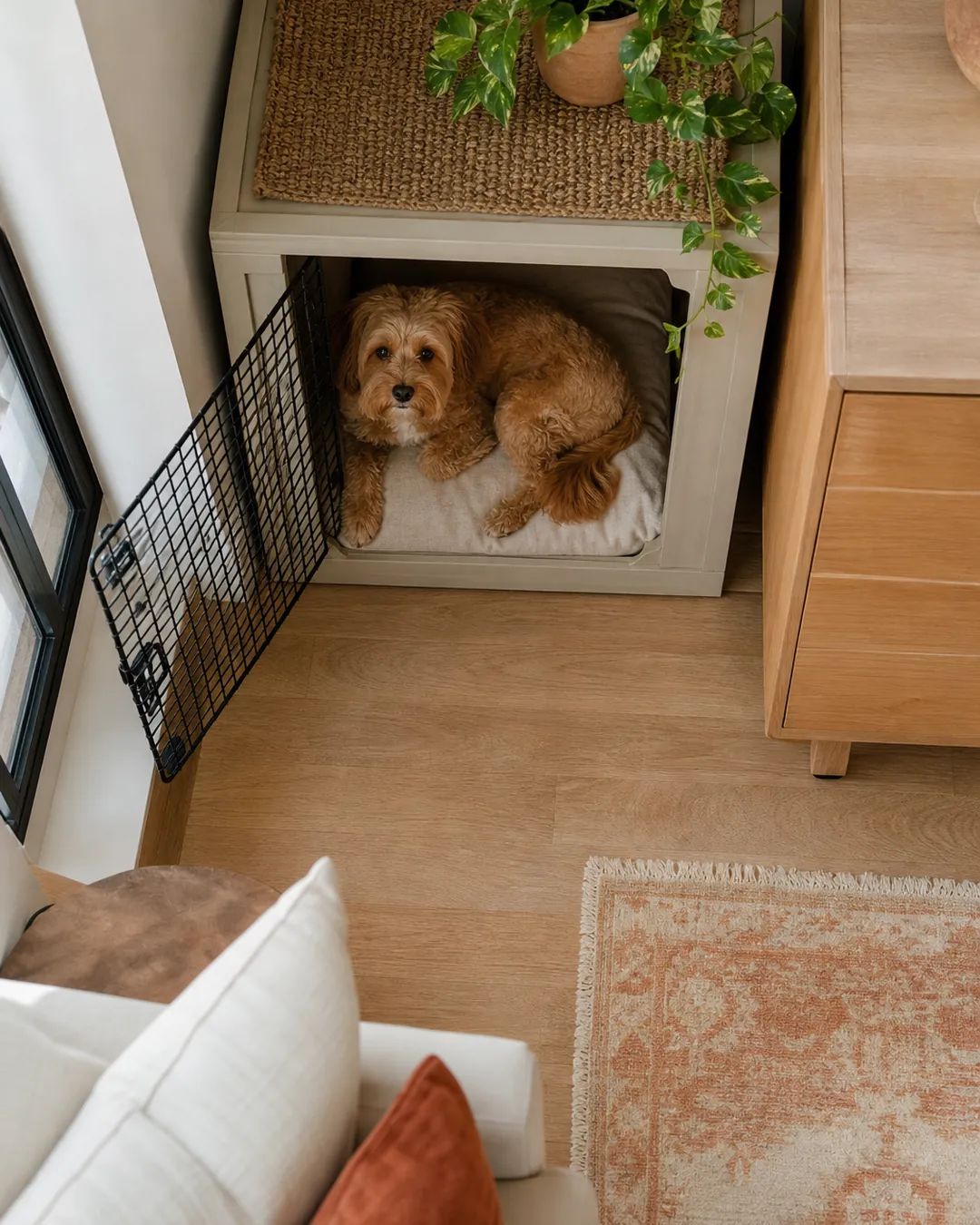
Corners are the right answer in a small apartment: two walls of cover, no walkway, and a clear view of the room. The only rule is that the door faces into the room rather than at a wall, so the dog is not backing out blind and you are not squeezing around the open door. If the corner you want puts the door against a wall, a double-door crate solves it for a few dollars more and is worth it rather than compromising the position.
4. Use a divider only while the dog is growing
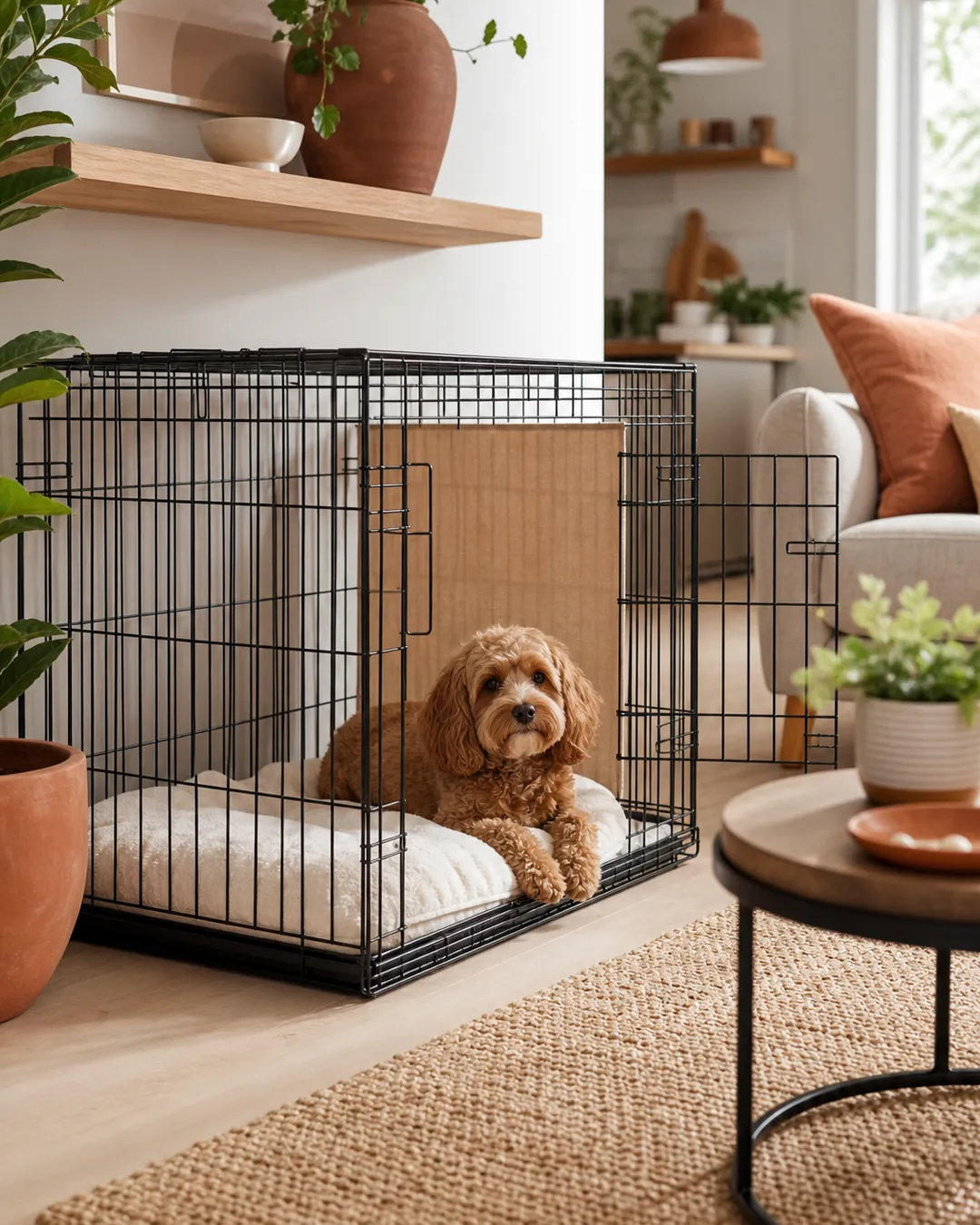
A divider panel lets one crate serve a puppy and then an adult, which saves buying twice, and the 24 inch iCrate already comes with one in the box. Once the dog is grown, take it out. There is no benefit to holding space in reserve, and the panel is one more thing to clean around.
5. Match the divider to the crate model
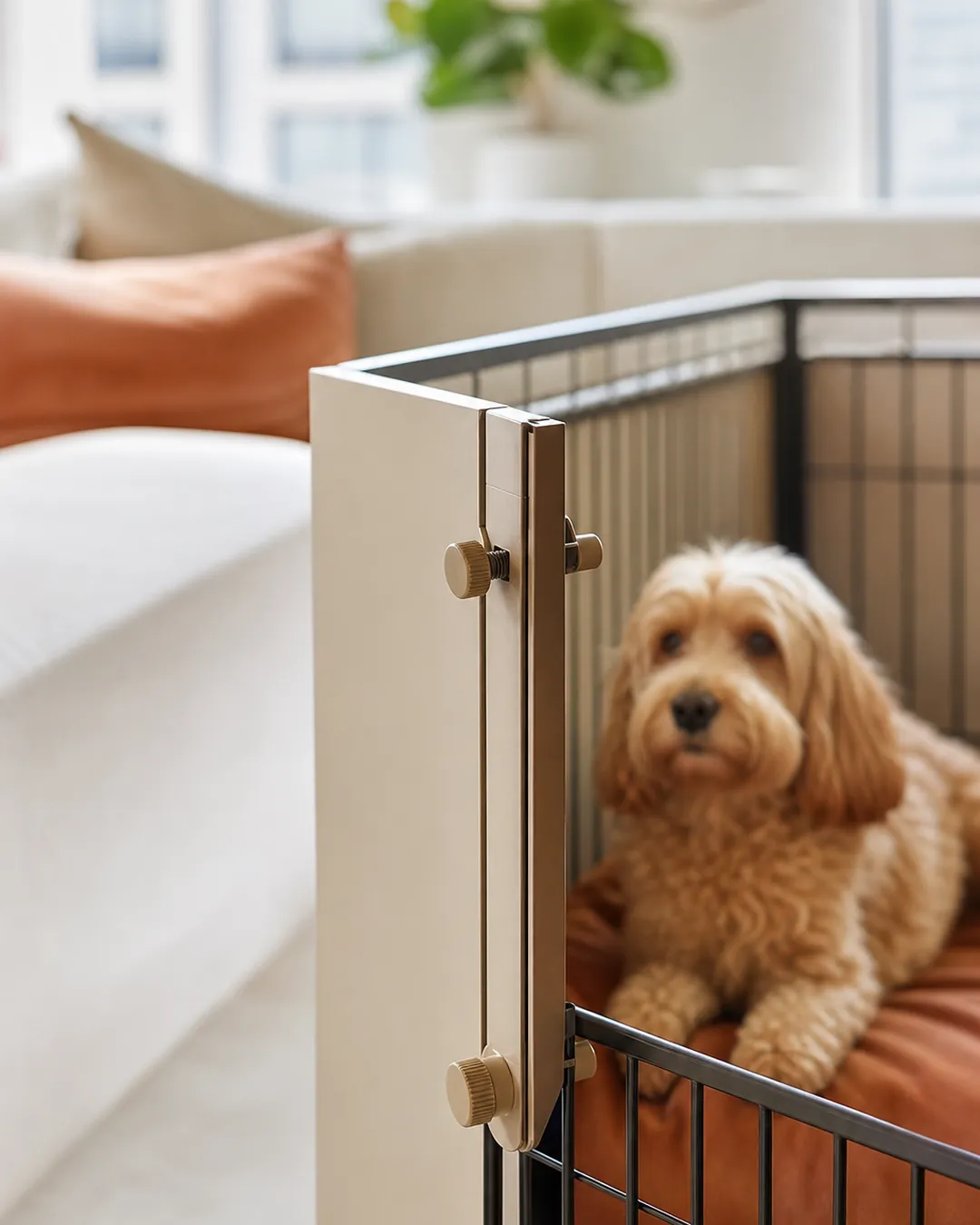
Dividers are not universal. They clip to specific bar spacings and specific frame widths, and a panel bought for the wrong model either does not fit or sits loose enough for a determined puppy to shift. Buy the divider that names your crate rather than the one that looks similar. If you are buying crate and divider together, buy them from the same range on the same day, because manufacturers revise bar spacing between production runs and a divider bought a year later may not clip to a crate that looks identical.
6. Clip the water bowl, do not stand it
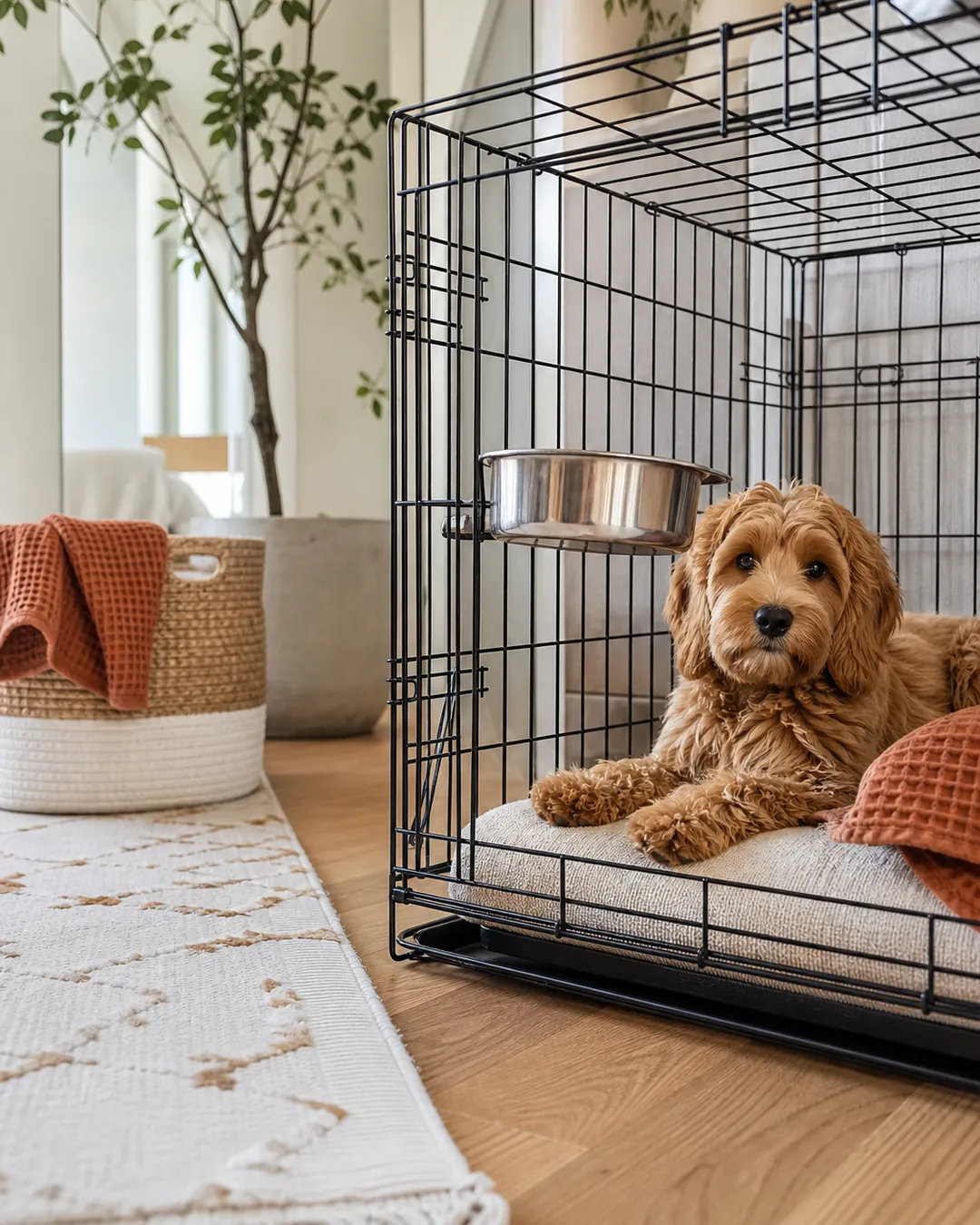
A dish on a crate floor gets tipped, and a wet crate floor is a crate the dog stops liking. A removable stainless steel hanging bowl clips to the bars at the right height and comes off to wash, which is the part fixed cups get wrong. Mount it near the door where you can reach it without crawling in.
7. Lift the crate off cold floor if it sits on tile
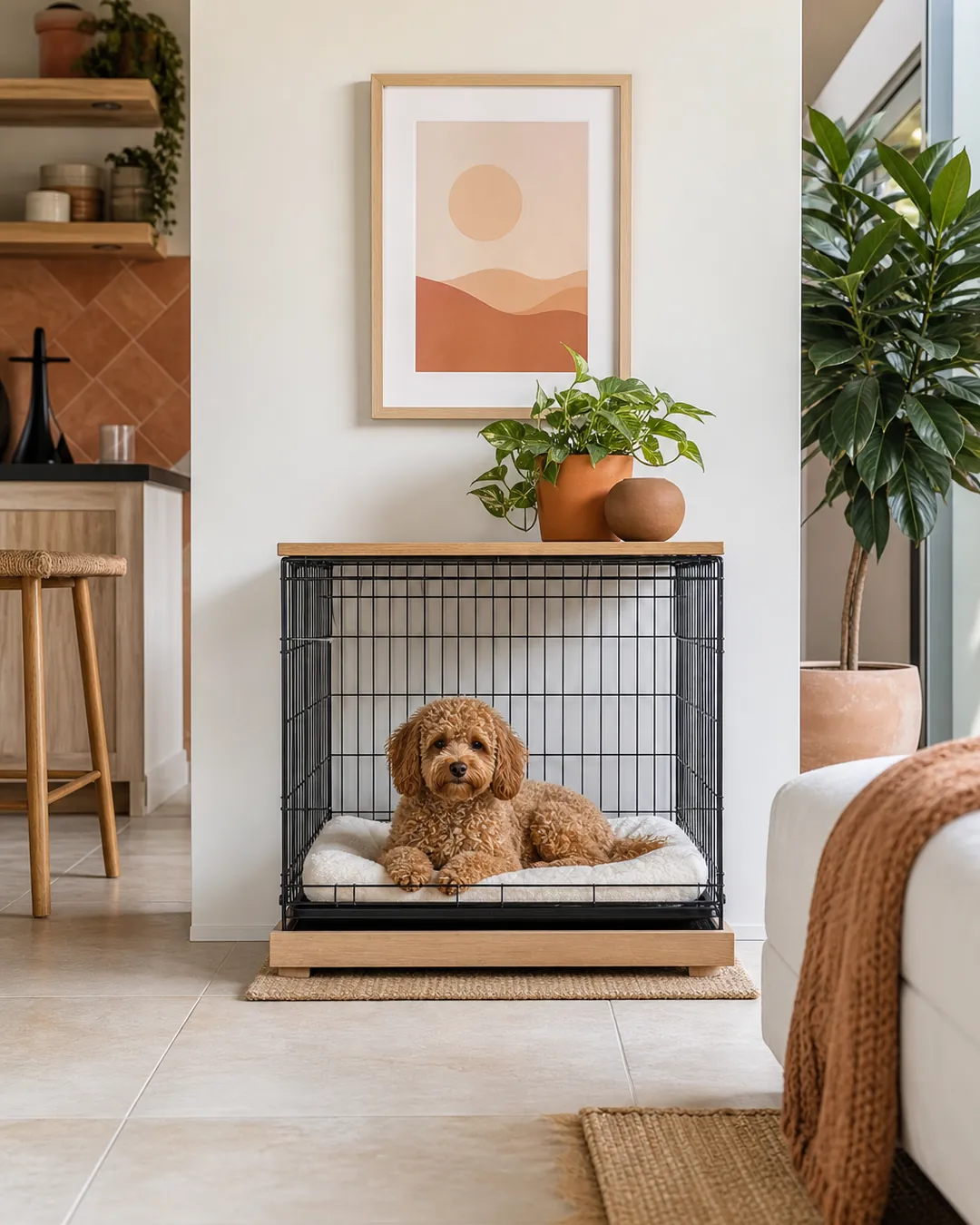
A wire crate on tile or laminate is noticeably colder than the same crate on a rug, and the tray amplifies every sound the dog makes. A thin mat underneath fixes both, protects the floor from tray scratches, and costs very little. In a rental that last point is worth more than it sounds, because tray scratches on laminate are exactly the sort of wear that gets itemized at the end of a tenancy. A cheap rug remnant does the job as well as anything sold for the purpose.
8. Use the top, but keep it light
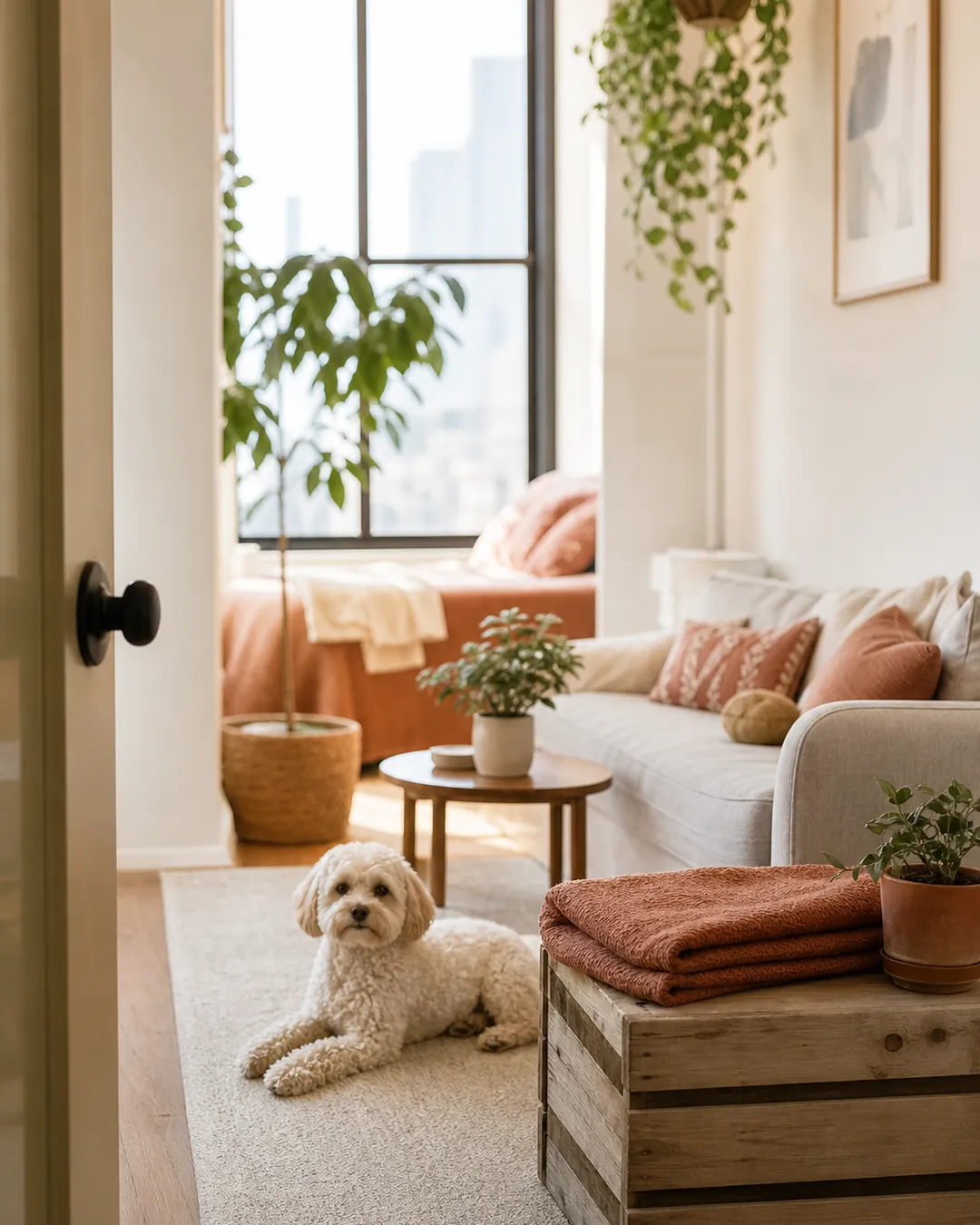
A crate top in a small apartment is a surface, and surfaces are scarce, which is a genuine argument for a crate over a soft carrier if you were undecided. Keep it to light, soft things: a folded blanket, a basket of leashes. Nothing breakable and nothing heavy, because the top of a wire crate flexes when the dog stands up inside and anything with a hard edge will eventually walk off it.
9. Do not put it next to the front door
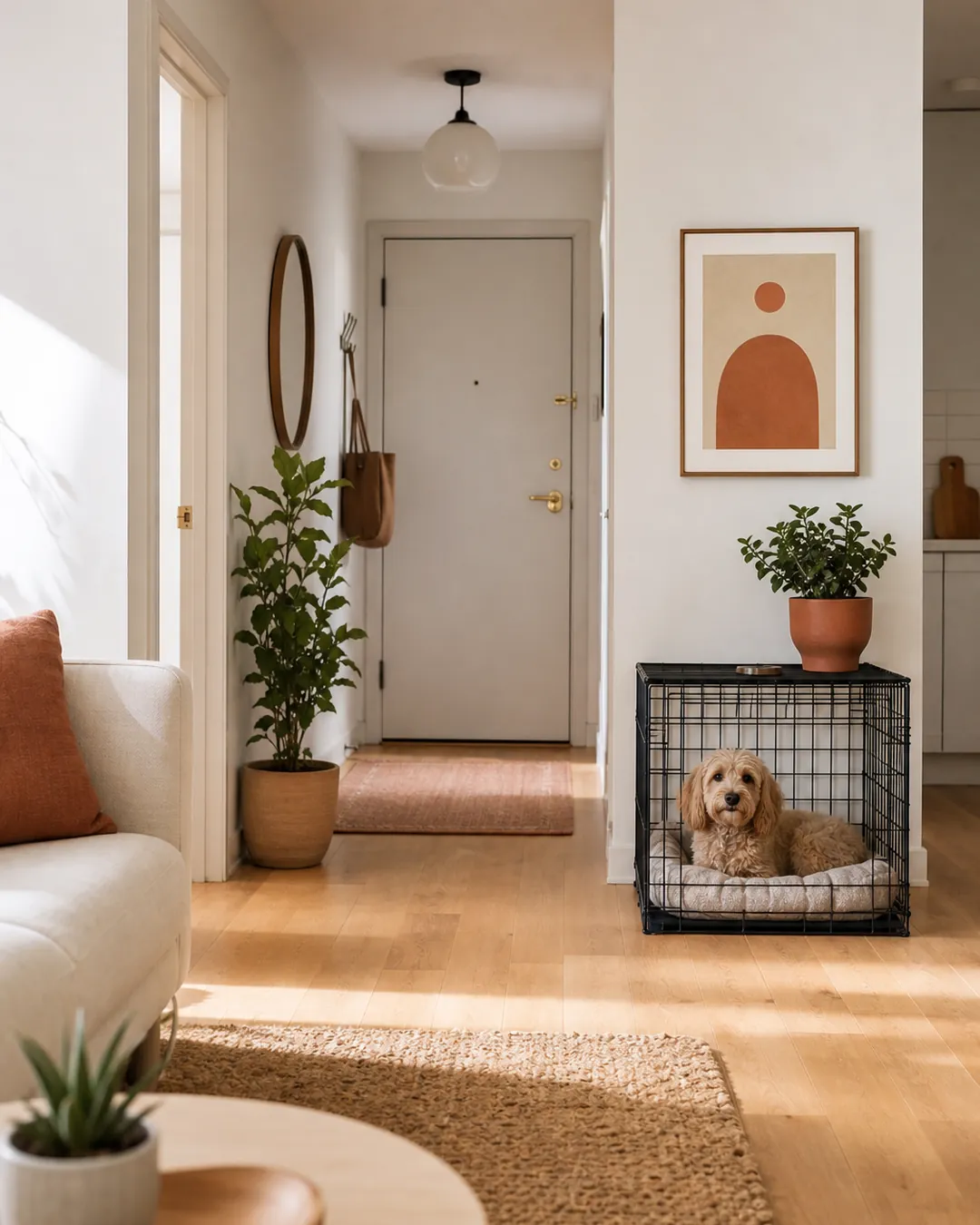
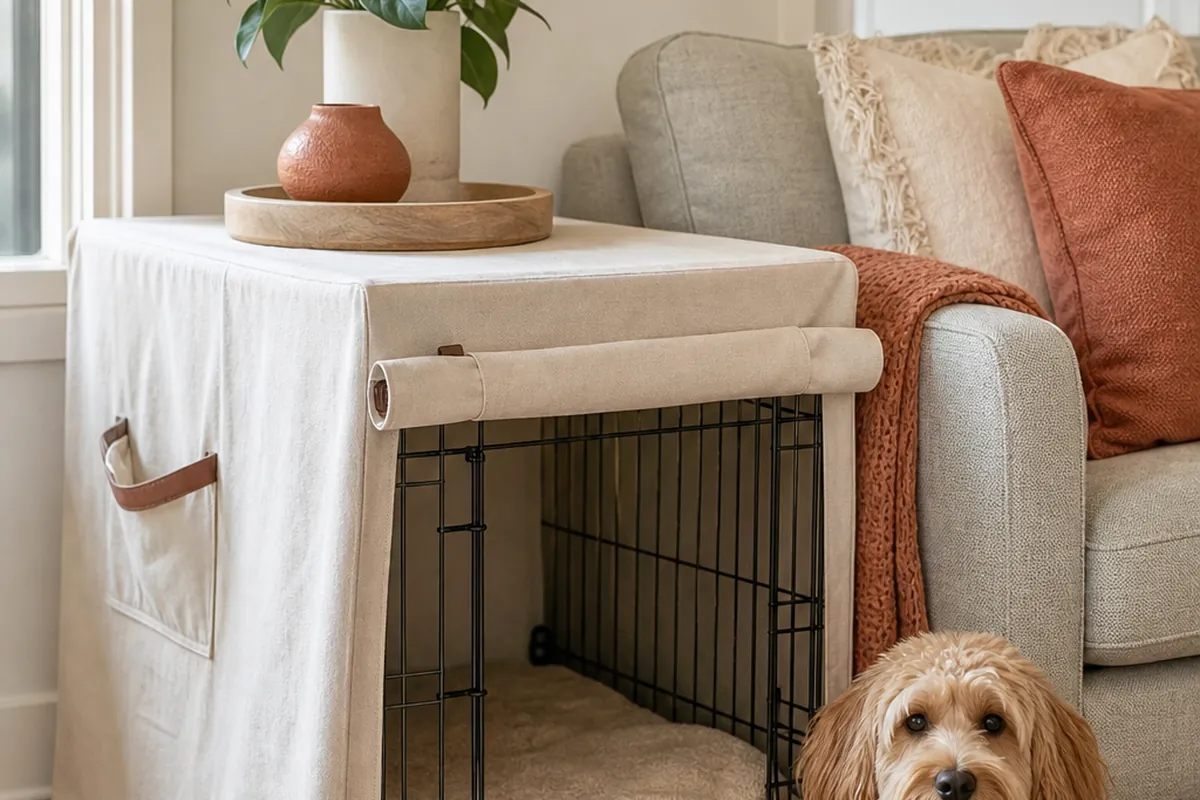
A crate in the entry hall gives a dog a front-row seat to every corridor noise, and in an apartment building that is constant: neighbors’ doors, the lift, deliveries, footsteps overhead. A few feet of offset into the room removes most of it. Same crate, same size, far less reacting. If the hall is genuinely the only place a crate fits, a cover on the hall-facing side is the cheapest mitigation and it works better than people expect. Fit matters more than fabric for that job, and dog crate cover ideas for a small apartment walk through measuring the outer frame so the cover does not ride up at the corners.
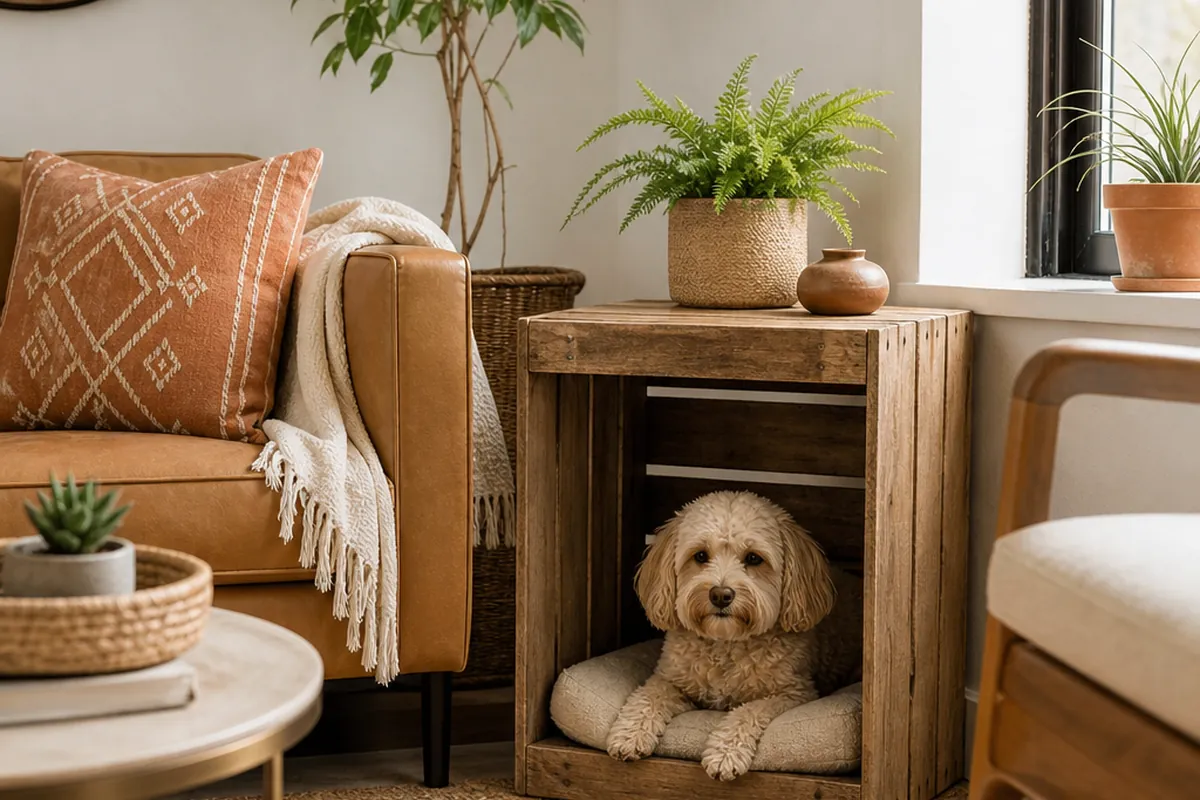
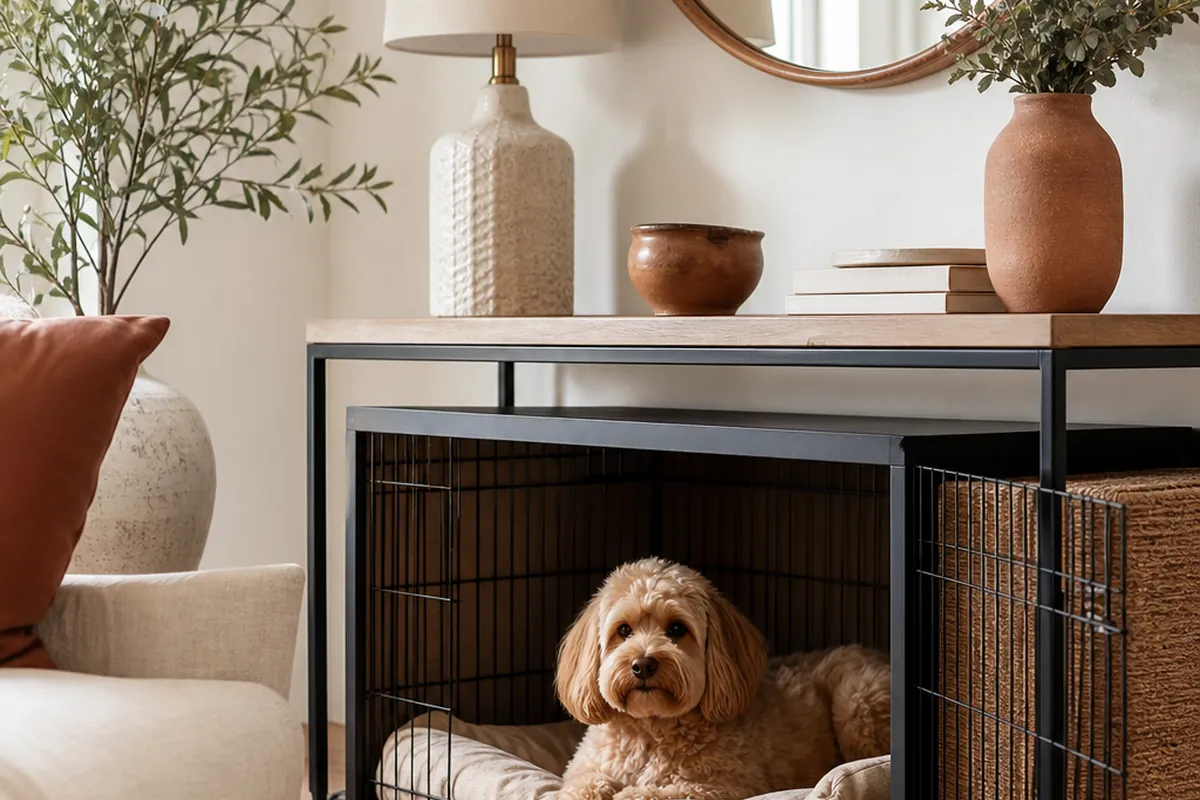
Once the crate is a few feet into the room, it is also in view, and dog crate furniture ideas that double as decor is about making that a piece you are happy to look at.
10. Plan the exit route as well as the entrance
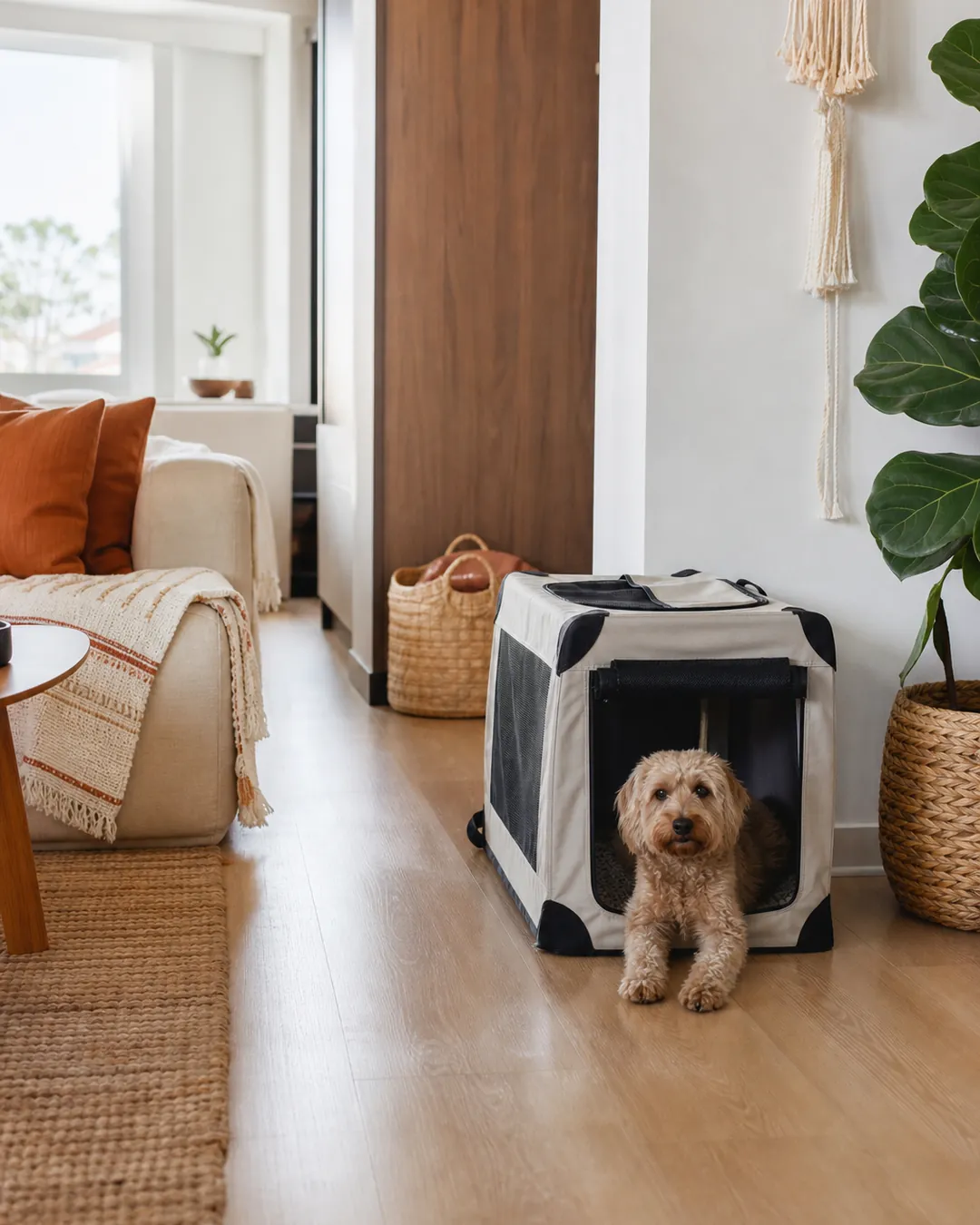
A dog leaving a crate at speed goes in a straight line. If that line crosses a coffee table leg or a floor lamp, you will find out at the first buzzer. Leave one clear run from the crate door into the open room, and the arrangement stops generating small disasters. This is easy to check and easy to forget once furniture moves, so it is worth re-checking after any rearrangement rather than assuming the route survived it.
Where to start
Take a tape measure and a roll of tape and mark the crate footprint plus the door arc on the floor. Live with the outline for two days. This costs nothing and it is the step that decides whether the crate ends up in the corner you planned or in the middle of the living room where it fits.
One more thing that decides how well this goes: whether the crate is a bed or a container. A crate left open, with a good mat, that the dog wanders into during the day is a piece of furniture the dog owns. A crate only ever shut at the moment you leave becomes a signal that you are leaving. Same crate, same corner, very different relationship, and the difference costs nothing but habit.
Then buy in this order. The crate itself, sized to the dog lying flat rather than to a growth chart. The mat or rug underneath, which is cheap and fixes cold, noise and floor scratches in one go. The bowl last, and only if the dog is crated long enough to need water while you are out.
A divider only enters the picture if you have a puppy. If your dog is grown, skip it entirely and put the money into a better mat, which is the part of the setup the dog is actually lying on.