A playpen solves a specific problem: you need the dog contained for an hour, not shut in a crate and not loose in a room with a laptop charger on the floor. Most apartments get this wrong in one of two directions, either skipping the pen entirely and gating off a doorway that was never meant to hold a wandering puppy, or buying a pen sized for a yard and discovering it eats the whole living room.
Nine ways to fit one into a small space without losing the room to it.
1. Decide what the pen actually needs to do
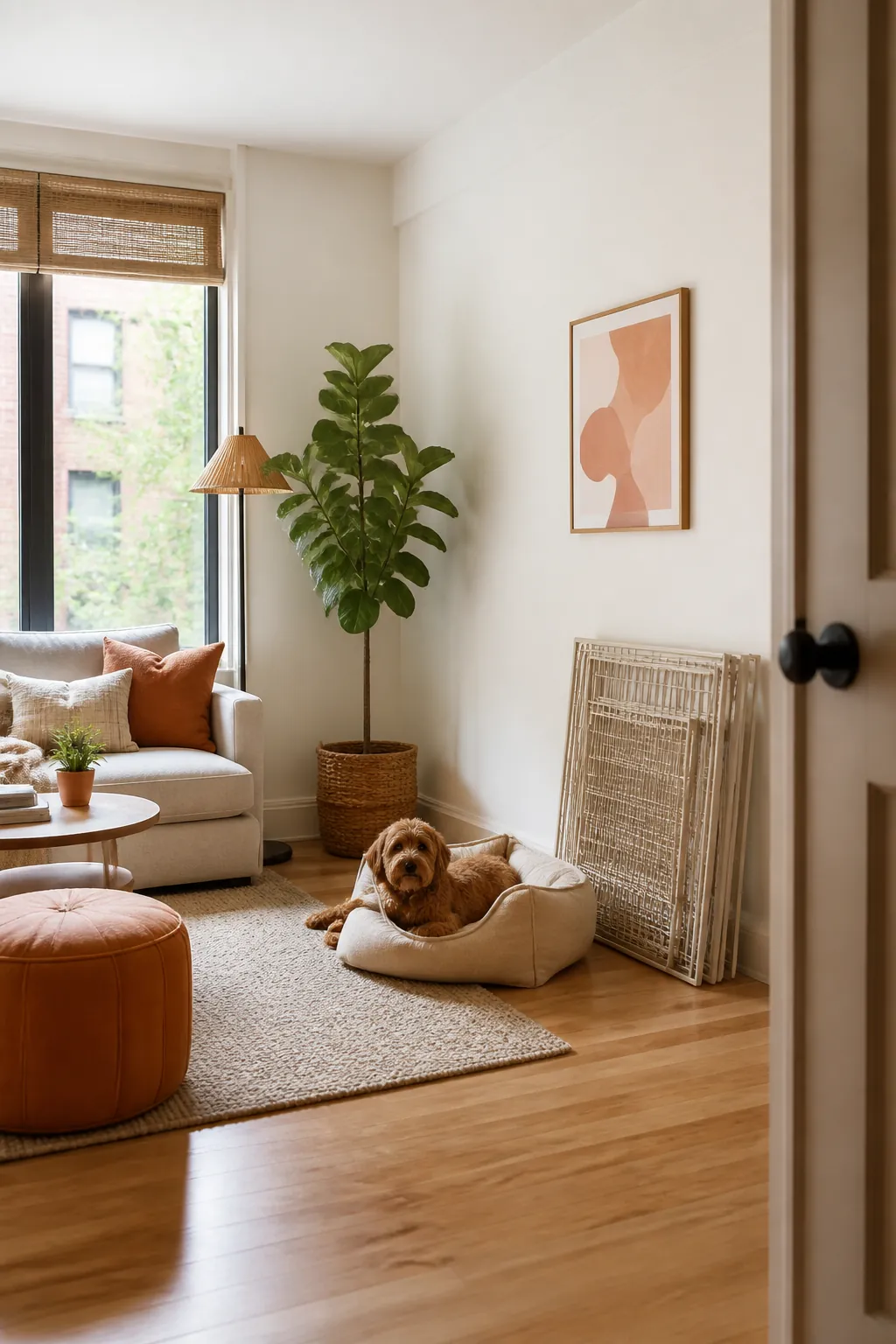
Before any panel count or footprint, settle the job. A pen for short supervised stretches while you cook needs less structure than one meant to hold a dog alone for an hour: the first is really just a wandering-block, the second has to survive a full bladder and a bored dog for sixty minutes with nobody watching. A dog left alone in a pen too small for a bed, a bowl and a couple of turning steps will spend that hour trying to get out rather than settling into it. Writing the job down first stops the common mistake of buying the biggest pen available and being surprised it will not fit the corner you actually have.
2. Measure the corner, then count panels backward from it
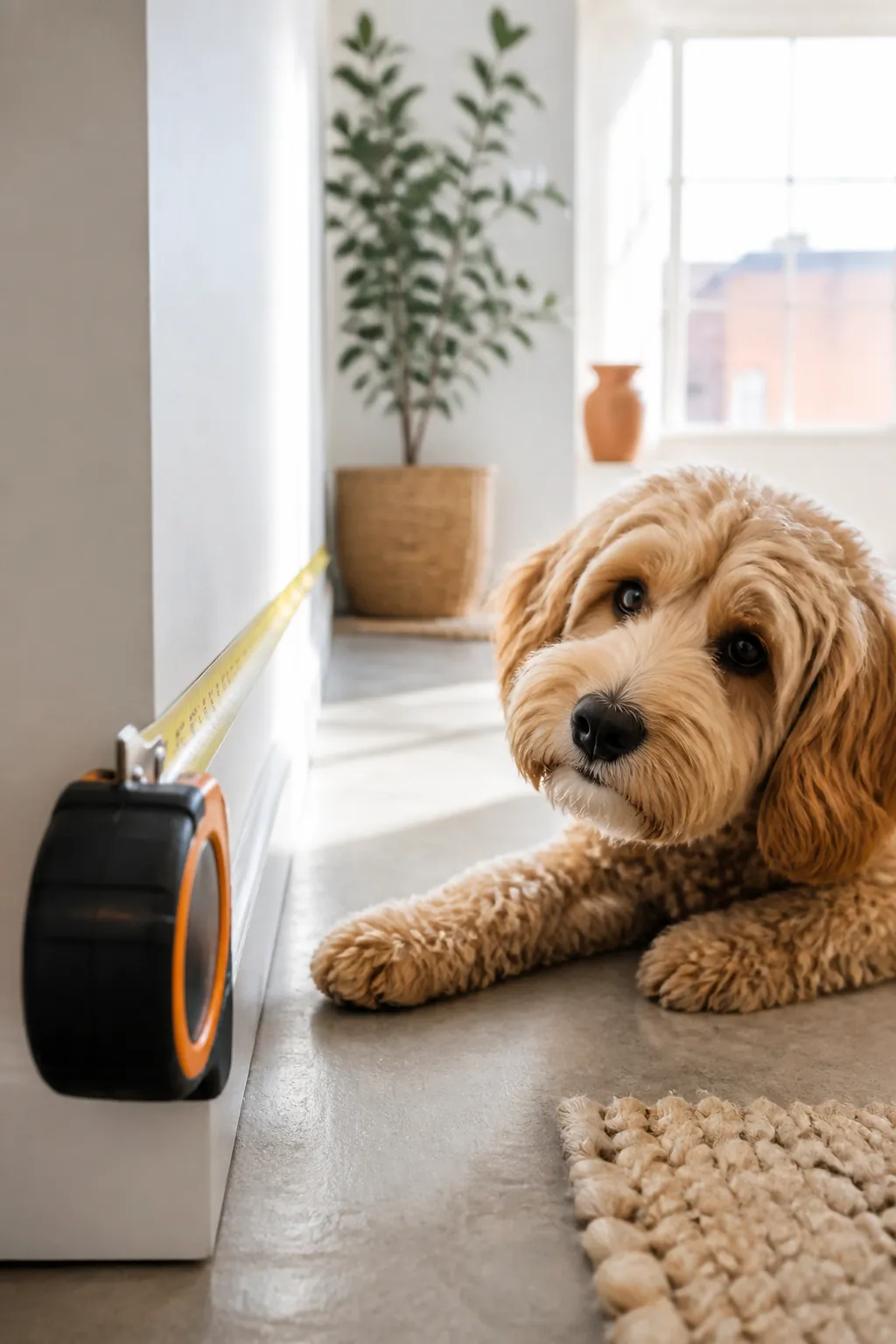
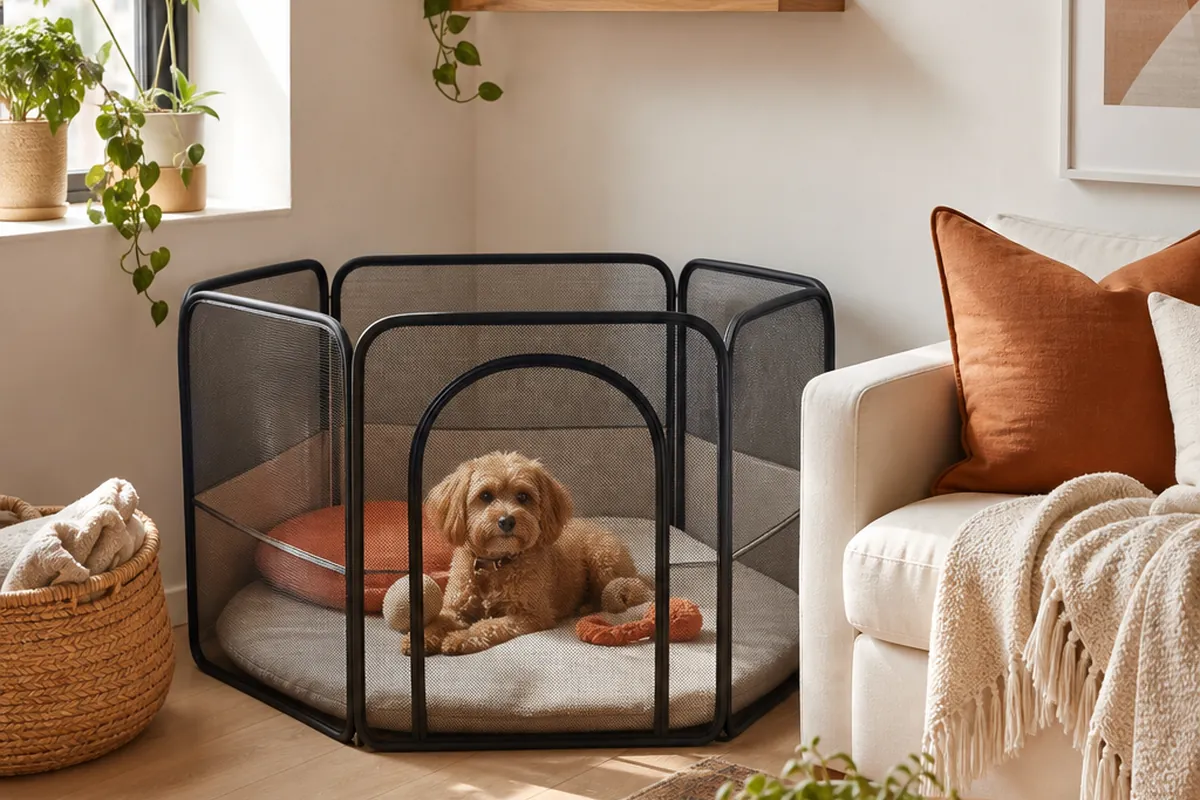
Most playpens sell as a set of eight hinged panels, each roughly 24 inches wide, which gives an octagon a little over 5 feet across if you use all eight. That is too large for most apartment living rooms. Measure the corner you actually have first, then use four or five panels folded into a rectangle against two walls instead of the full octagon. Fewer panels also means less hardware to store when the pen comes down.
3. Choose panel height by what the dog can already reach
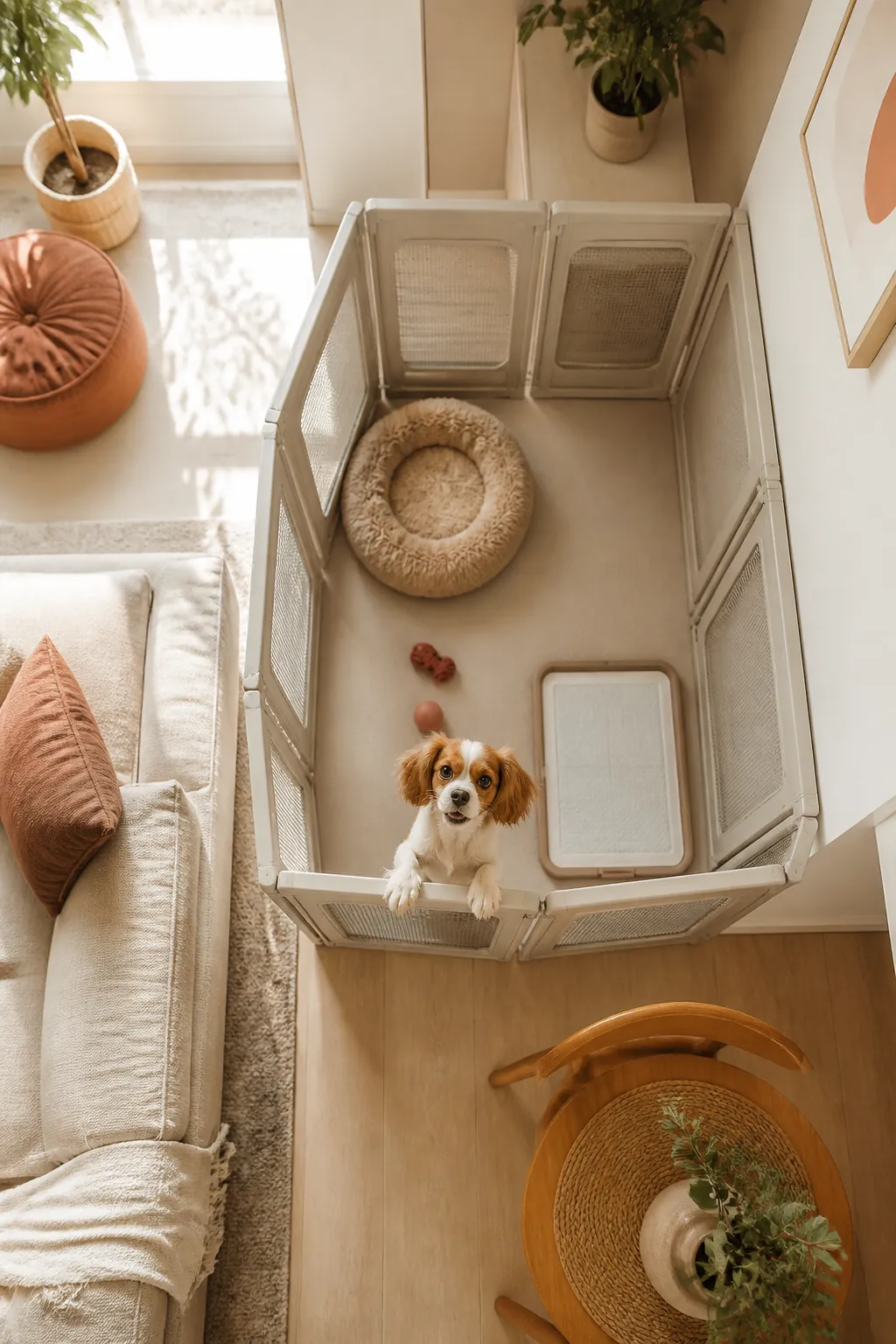
Panel height gets sold by dog size, which is the wrong measurement. What matters is how high the dog can get its front paws when standing on its back legs, since that is the height a panel needs to clear to actually contain rather than just suggest a boundary. A settled adult cat-sized dog is fine behind 24 inches; anything that puts its paws on the back of the sofa needs 36 inches or the taller extension panels some sets sell separately.
4. Put it against a wall, not floating in the room
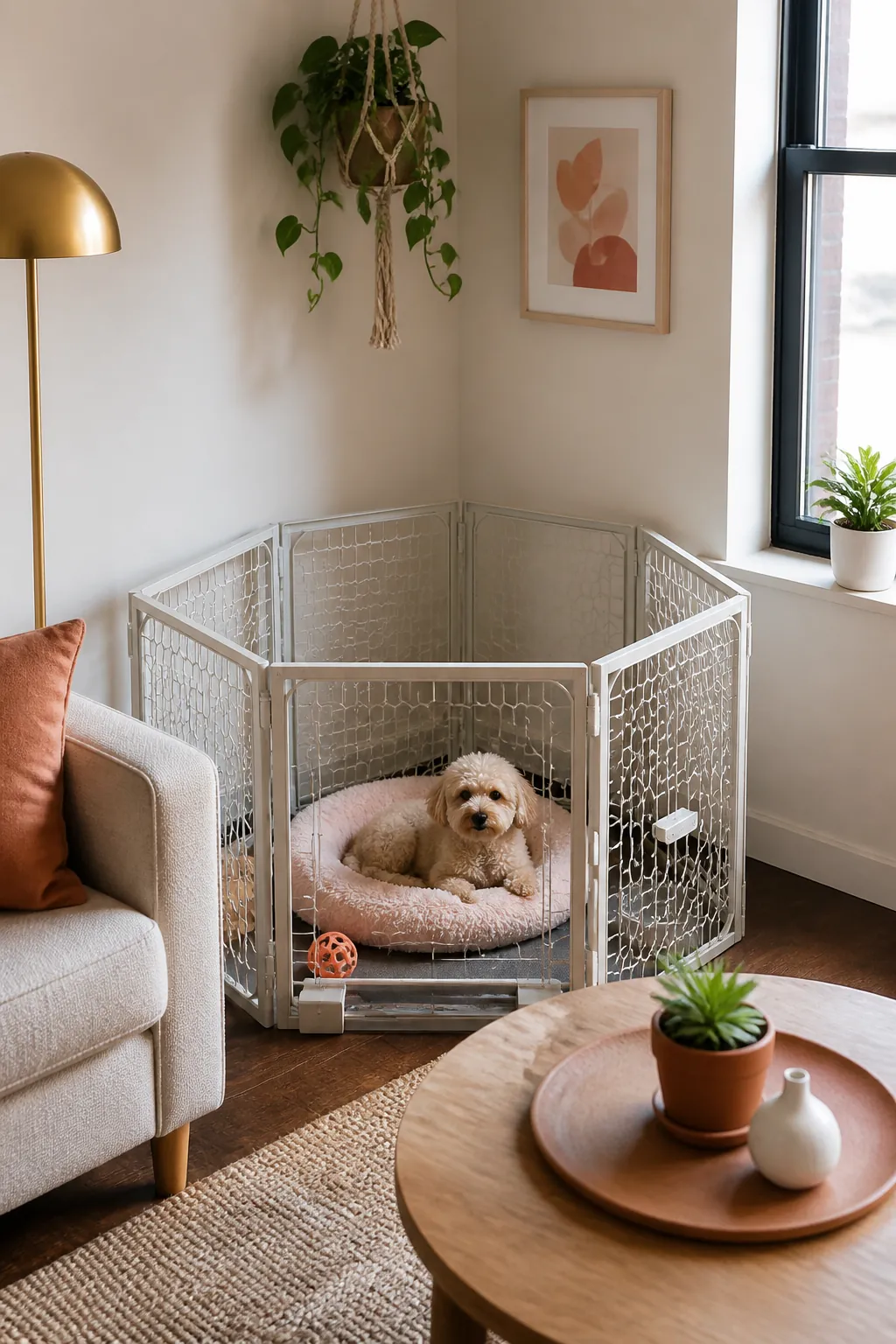
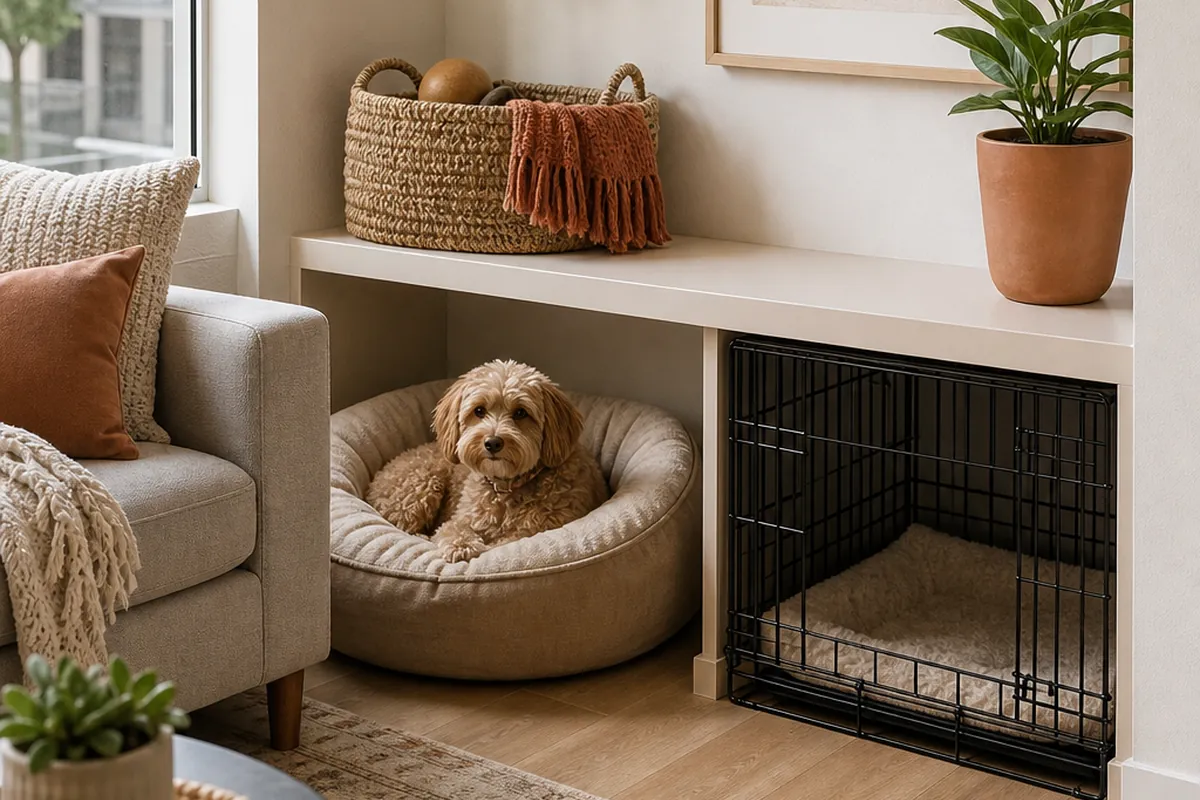
A pen in the middle of a small living room loses floor on all eight sides at once. Pushed into a corner or against a single wall, it only costs you the two or three sides that face the room, and the wall does part of the containment job for free. This is the same logic that works for a dog bed on its own: a wall behind it reads as settled, and an open side on every edge reads as an obstacle people walk around.
5. Protect the floor under the whole footprint, not just the middle
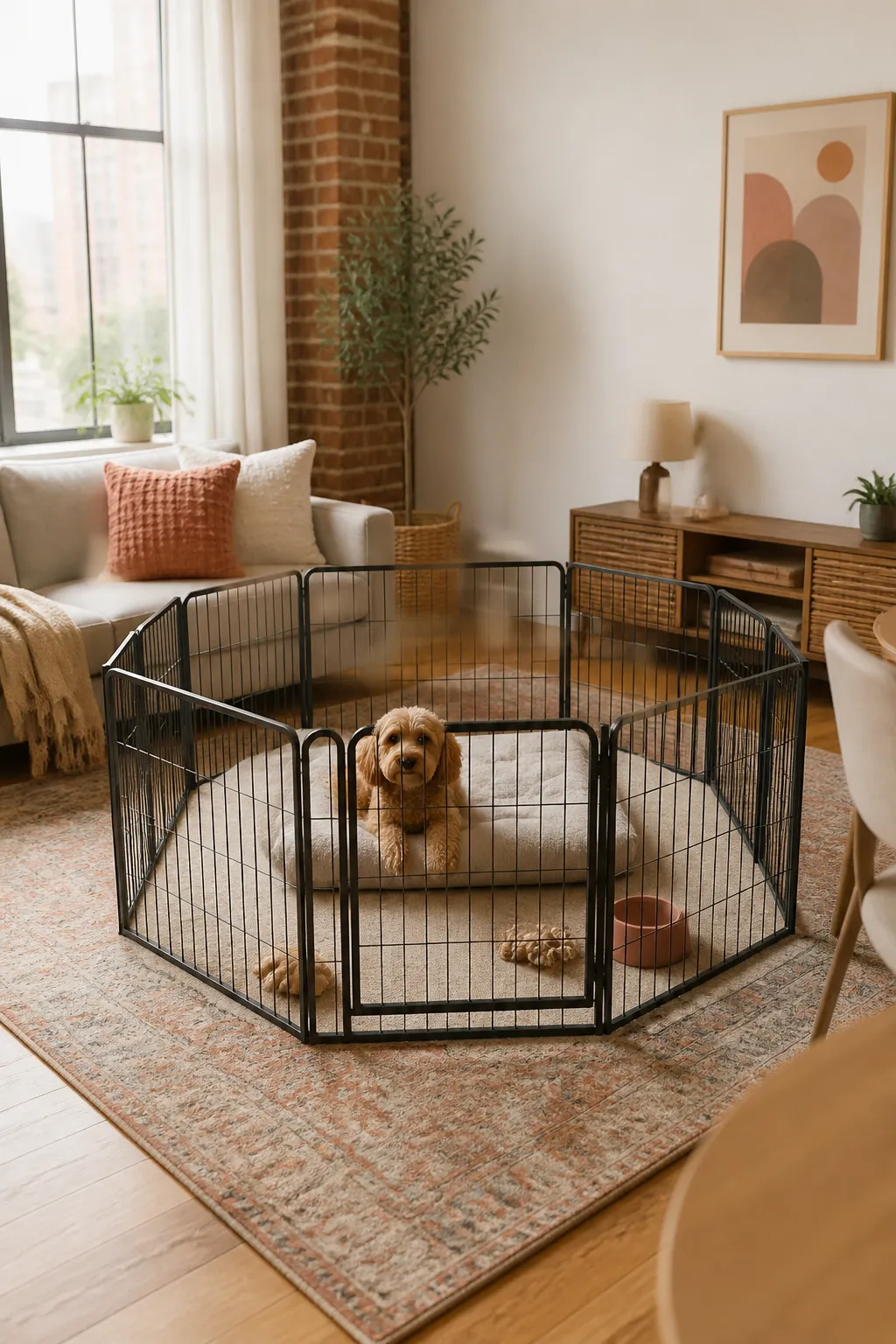
Accidents inside a pen tend to land near the edges, where a dog backs up rather than in the center where the bed usually sits. A washable, water-repellent rug sized to cover the full pen footprint, not just a mat under the bed, catches that. On hardwood or laminate it also stops the pen’s feet from scratching the finish as panels get nudged and repositioned over weeks of use. Check the wash tag before buying: a rug labeled washable that needs a commercial drum in practice never makes it back into rotation once it needs cleaning.
6. Use a single gate instead of a full loop when you only need one side closed
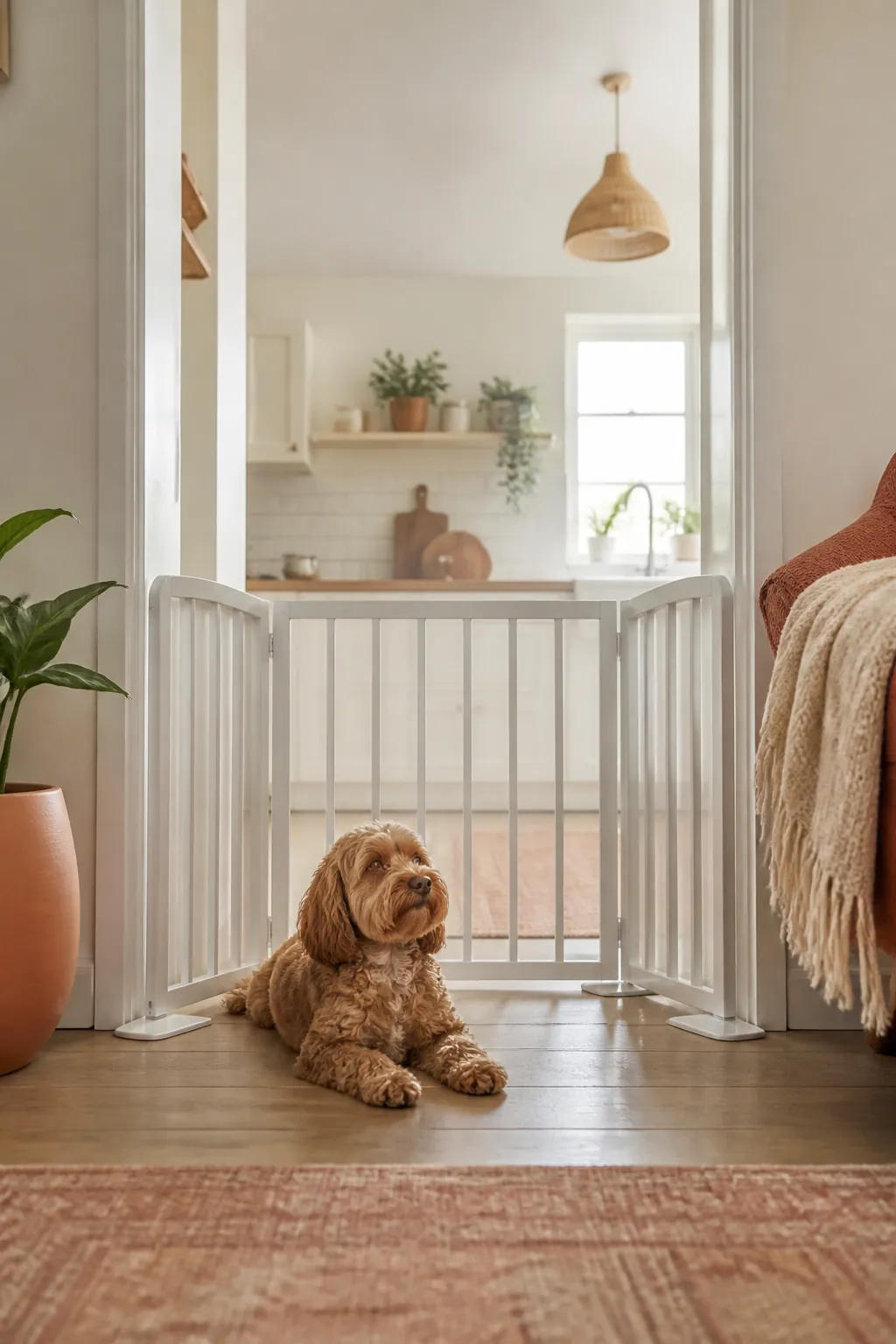
A full pen is not always the answer. If the goal is keeping a dog out of the kitchen while you cook rather than penning it into a spot, a freestanding gate across the doorway does the job with a fraction of the footprint and none of the panel storage. It stands on its own with no wall fittings, so it works in a rental and moves between doorways as needed. The trade is that it manages rather than contains: a determined dog can push a freestanding panel, so it suits short stretches where you are nearby, not an hour alone.
7. Give the pen a floor that is not carpet, if you have the choice
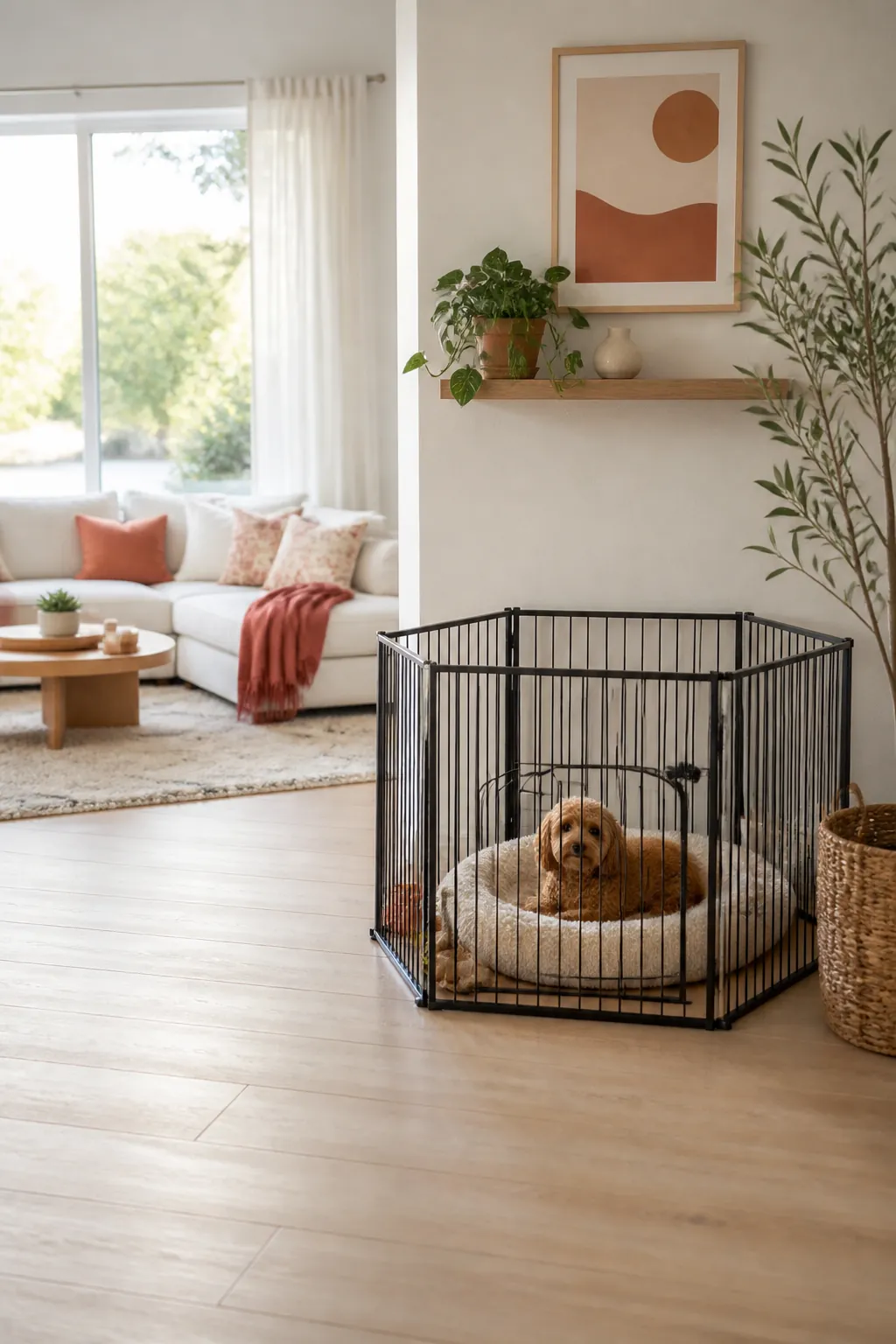
Carpet under a pen holds odor from accidents in a way a rug on hard flooring does not, and it is the surface most likely to end up costing a deposit. If the room has both carpet and hard flooring, position the pen on the hard section even if it means a slightly less convenient spot in the room. Where hard flooring is not an option, the washable rug from the step above becomes closer to essential rather than optional, since it is the only removable layer between the accident and the carpet underneath.
8. Keep the toys inside the boundary, not scattered past it
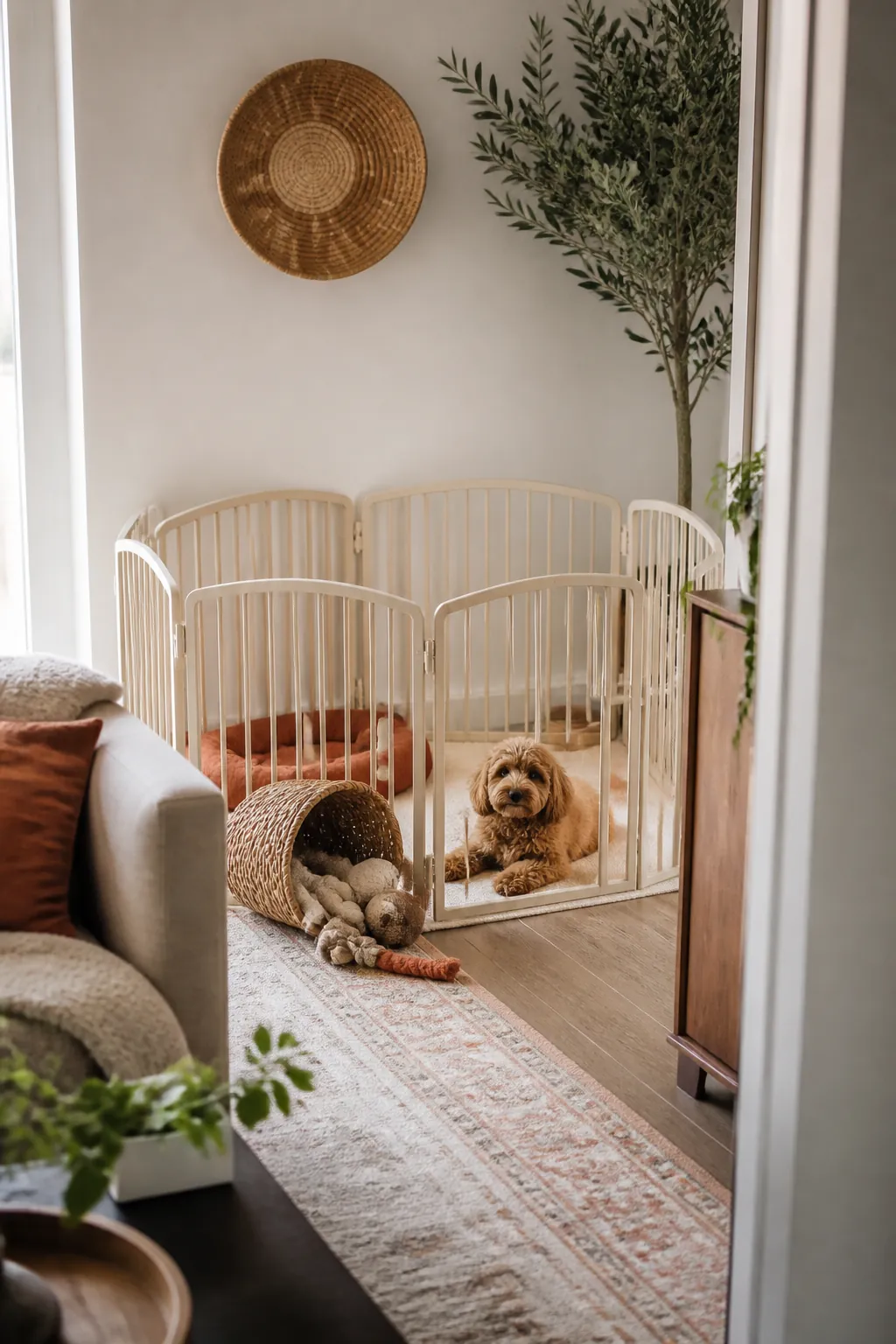
A pen with nothing in it gets treated as a holding cell rather than a spot the dog wants to be in. A small open woven toy basket placed inside, with three or four toys rather than the whole collection, gives the dog something to do without needing constant refreshing. Keep the basket itself low and stable enough that a dog stepping on the rim will not tip it, since a spilled basket against a panel wall is what most people picture when they imagine a pen going wrong.
9. Fold it away completely when it is not needed
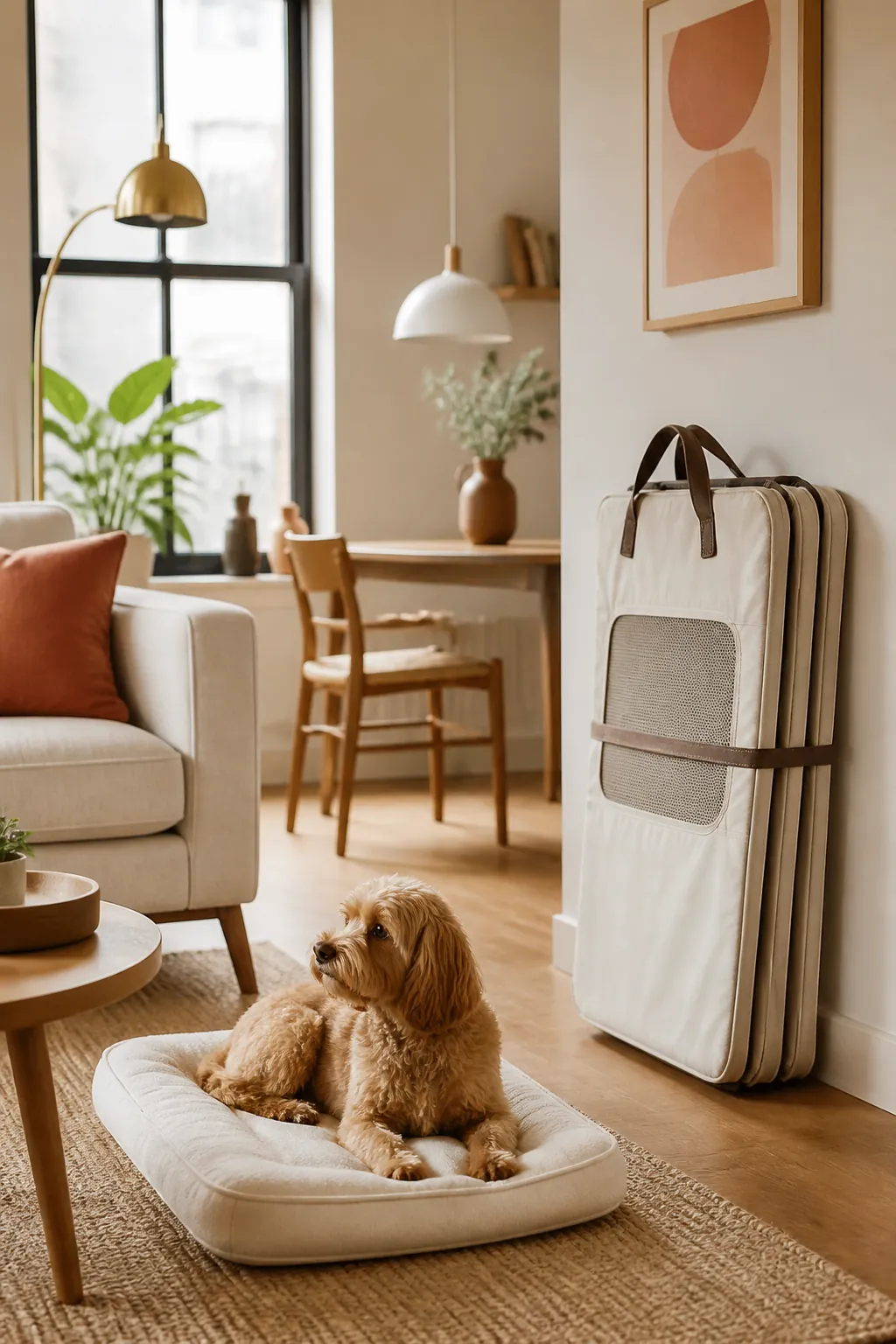
The panel sets that make small apartments workable are the ones that fold flat into a bag rather than collapsing into a loose stack of hinged rectangles. A pen left half-folded in a corner takes up nearly as much floor as one set up, and it looks worse doing it. Store it flat, under a bed or behind a door, and the room reads as a normal living room the rest of the time rather than one with permanent pet equipment bolted into the layout. This is the detail that decides whether a pen gets used daily or gets left set up out of sheer inertia until it becomes furniture nobody wanted.
Where to start
Measure the corner before you look at a single listing. Every decision after that, panel count, height, whether you need the full loop or just a gate, follows from a number you cannot guess from a product photo.
Then buy in this order: the rug first, because it protects the floor regardless of what else changes later. The pen or gate second, sized to the corner you measured rather than to the biggest set on the page. The toy basket last, and only once you know the pen is staying in that spot, since a basket in the wrong place just becomes one more thing to trip over.
Give it a week before judging whether the pen earns its footprint. A dog that resists it on day one is usually reacting to novelty rather than the pen itself, and most settle once the spot has a familiar toy and a few uneventful hours in it. If a dog is still fighting it after two weeks of short, calm sessions, the pen is probably the wrong tool for that dog rather than the wrong size, and a gated single-room setup like the one in pet gate ideas that do not ruin your doorways may fit the apartment better than full containment does.