Dog toys expand to fill whatever floor is available, and in a small apartment that is all of it. The usual response is to buy a box, put every toy in it, and discover two weeks later that the box is empty and the toys are back under the coffee table. The box was not the problem. The system around it was.
Nine ideas, most of which are about restraint rather than storage.
The reason this matters more in a small apartment than anywhere else is visibility. In a house, toys on the floor of one room are toys in one room. In a studio, they are in the room you eat in, work in and sleep in, and the same twelve toys read as three times the mess. The fix is not a bigger container; it is fewer things out at once.
1. Cut the number in circulation first
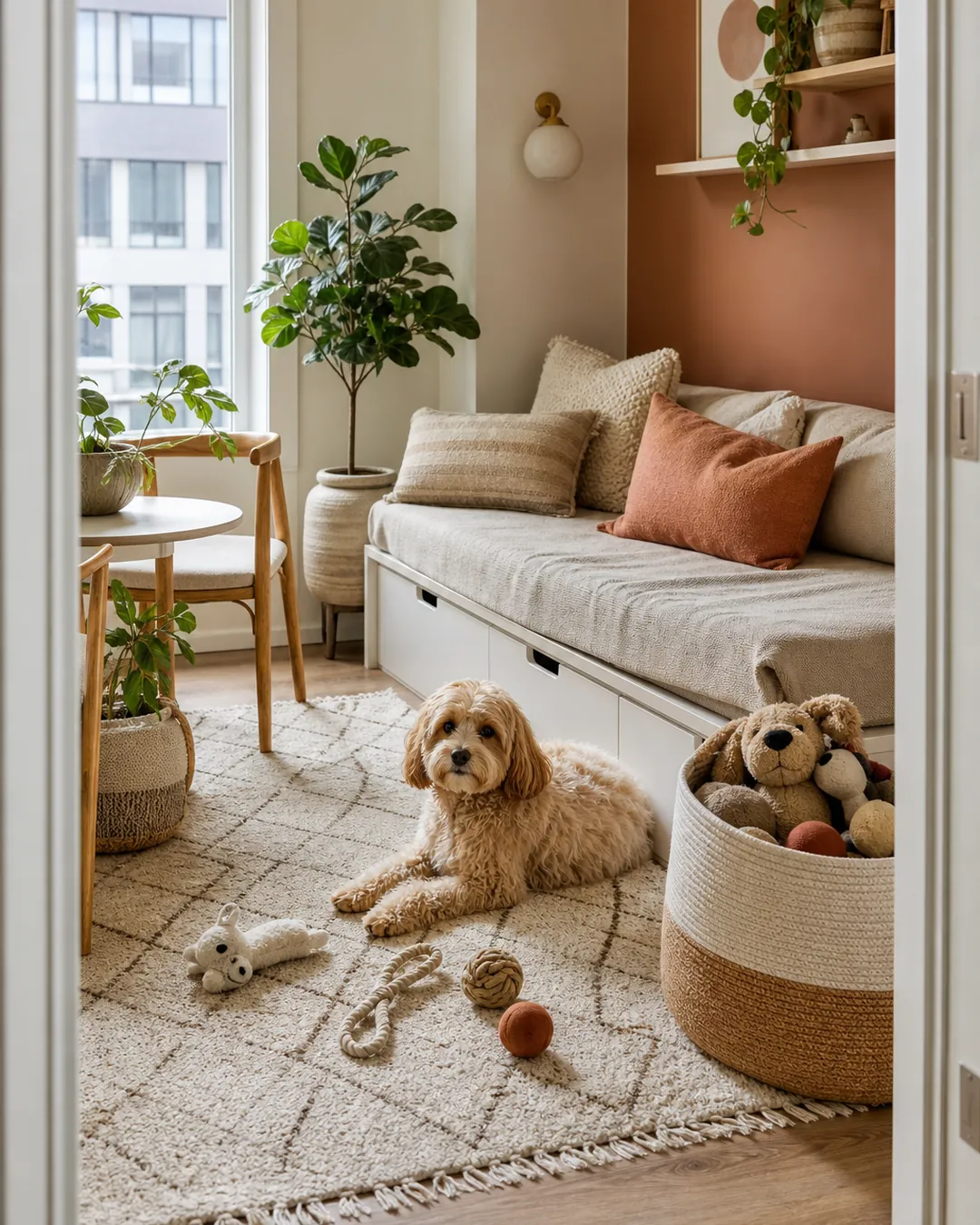
Four or five toys out at a time is plenty. Beyond that they stop being interesting to the dog and start being floor coverage to you. This costs nothing, takes ten minutes, and does more for the room than any container you could buy. Keep the one the dog genuinely prefers permanently in circulation rather than rotating it out; the rotation is there to refresh the supporting cast, not to take away the favorite.
2. Rotate the rest rather than owning less
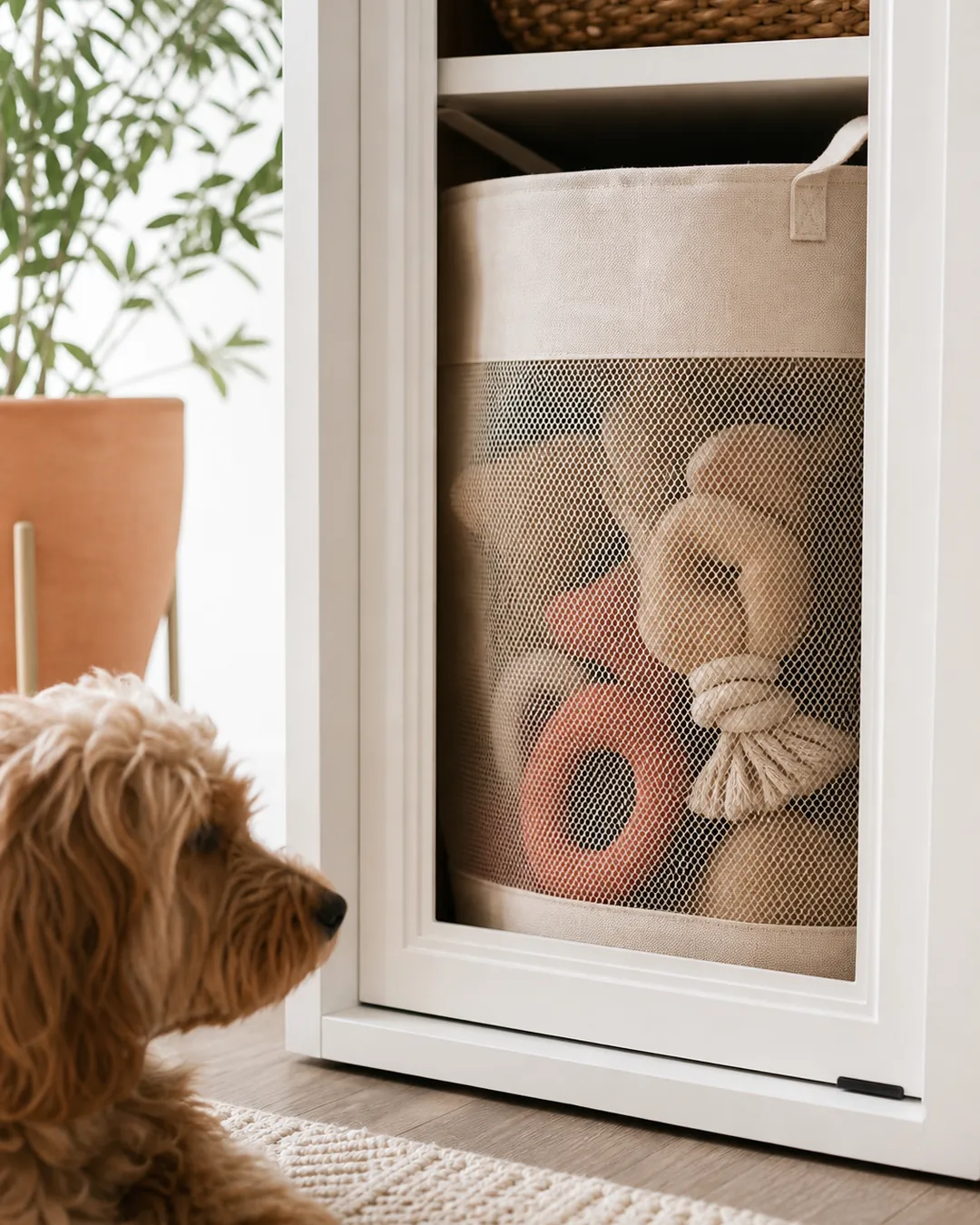
The toys you take out of circulation do not need to be thrown away. Put them in a bag in a cabinet and swap four in every week or two. A toy that has been away for two weeks comes back genuinely novel, which is the cheapest enrichment available and considerably more effective than buying a new one. Rotation also tells you which toys are actually earning their place: anything that comes back into circulation and gets ignored twice can leave permanently.
3. Keep storage at floor level
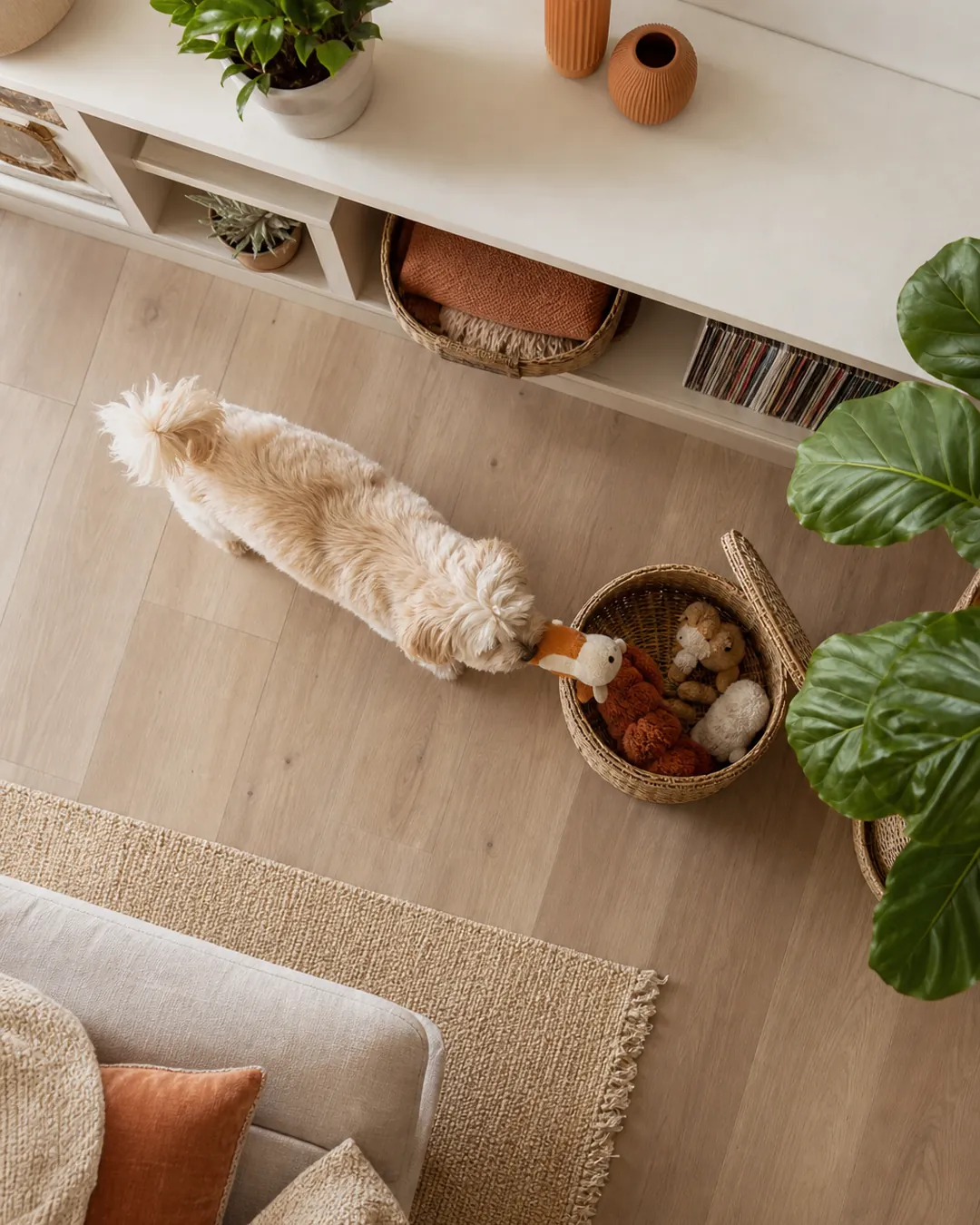
A basket on a shelf tidies the room and does nothing else. The dog cannot use it, so every retrieval is your job, and a system that depends on you is a system that lapses. Floor level, in the dog’s zone, is the whole point. There is a real exception, which is a dog that will empty the basket the moment your back is turned. If that is yours, the answer is a smaller basket rather than a higher one, because the problem is quantity rather than access.
4. Choose open over lidded
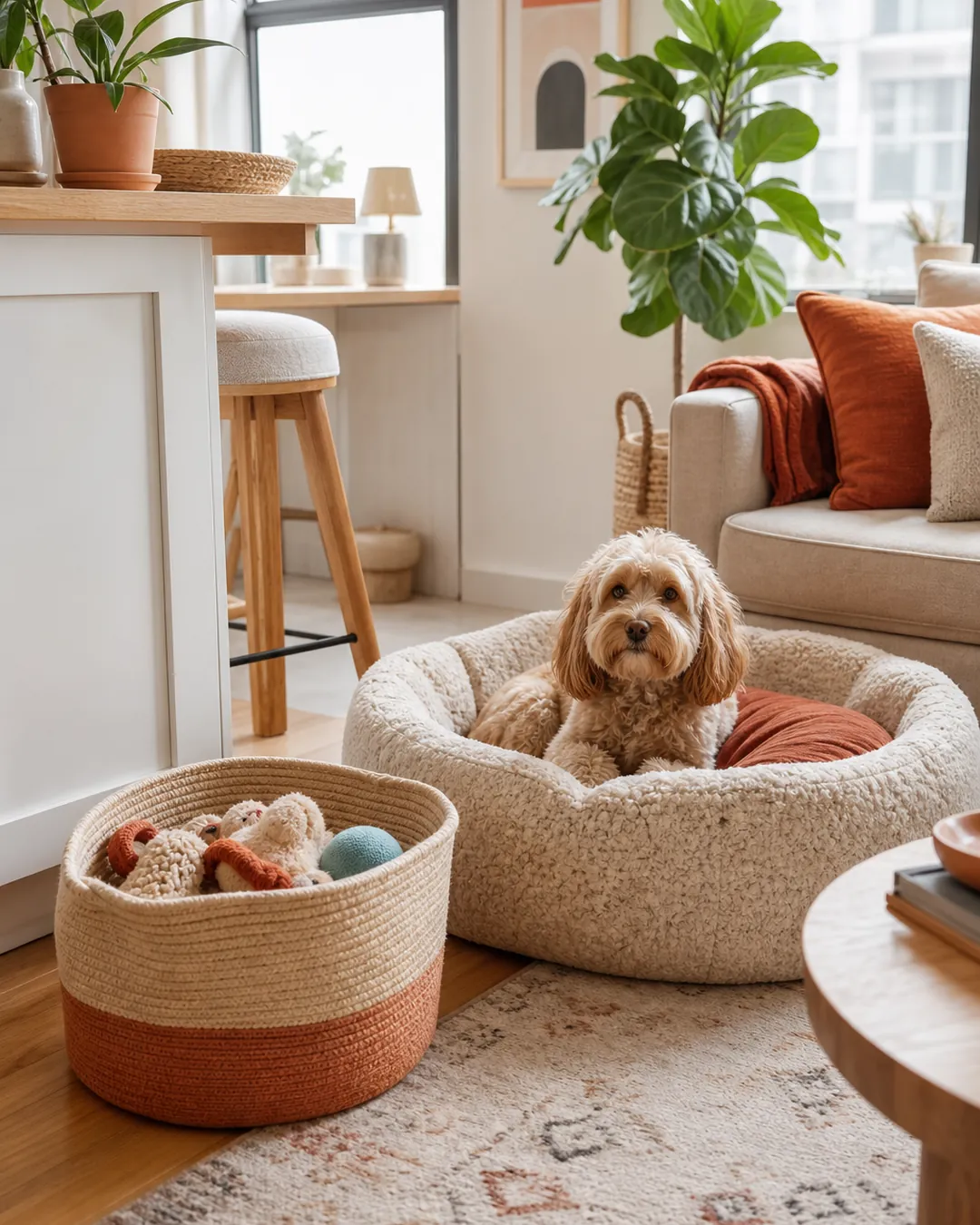
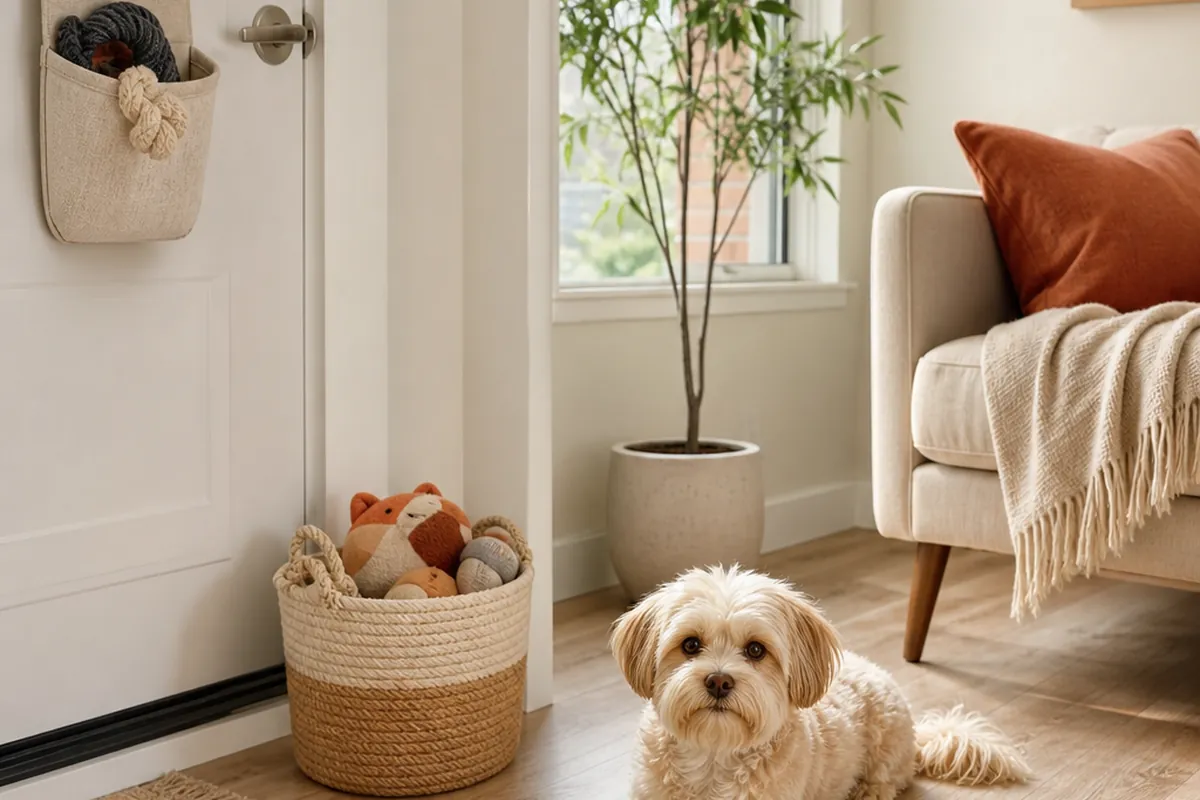
This is the decision that decides whether the system survives. An open woven rope basket at 12 by 8 inches lets a dog take its own toy and, with a bit of encouragement, put one back. A lid means you are the retrieval service, at ten at night, in the dark.
5. Use a lidded box for the overflow, not the daily set
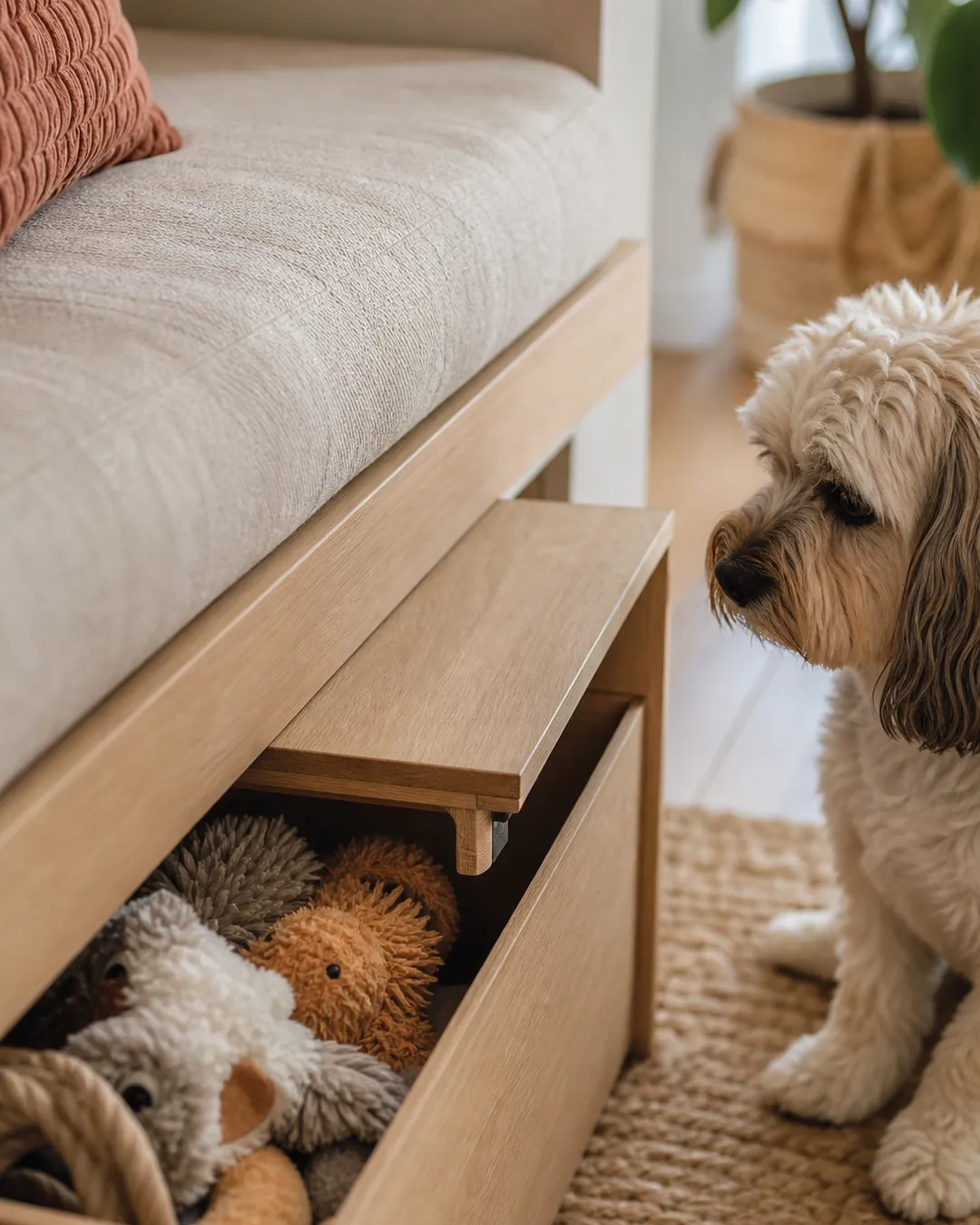
Lids do have a job, just not the one people give them. A lidded toy box is the right home for the rotation stock, the spare rope toys and the seasonal things, kept in a cabinet or under a bench. Out of the room, out of the count, easy to raid on swap day. A lid on the overflow box matters for a reason the daily basket does not have: stored toys pick up dust and, if the box lives anywhere near a kitchen, smells, and a toy that comes back into rotation smelling of the cabinet is one the dog will not be interested in.
6. Size the basket to the rotation, not the collection
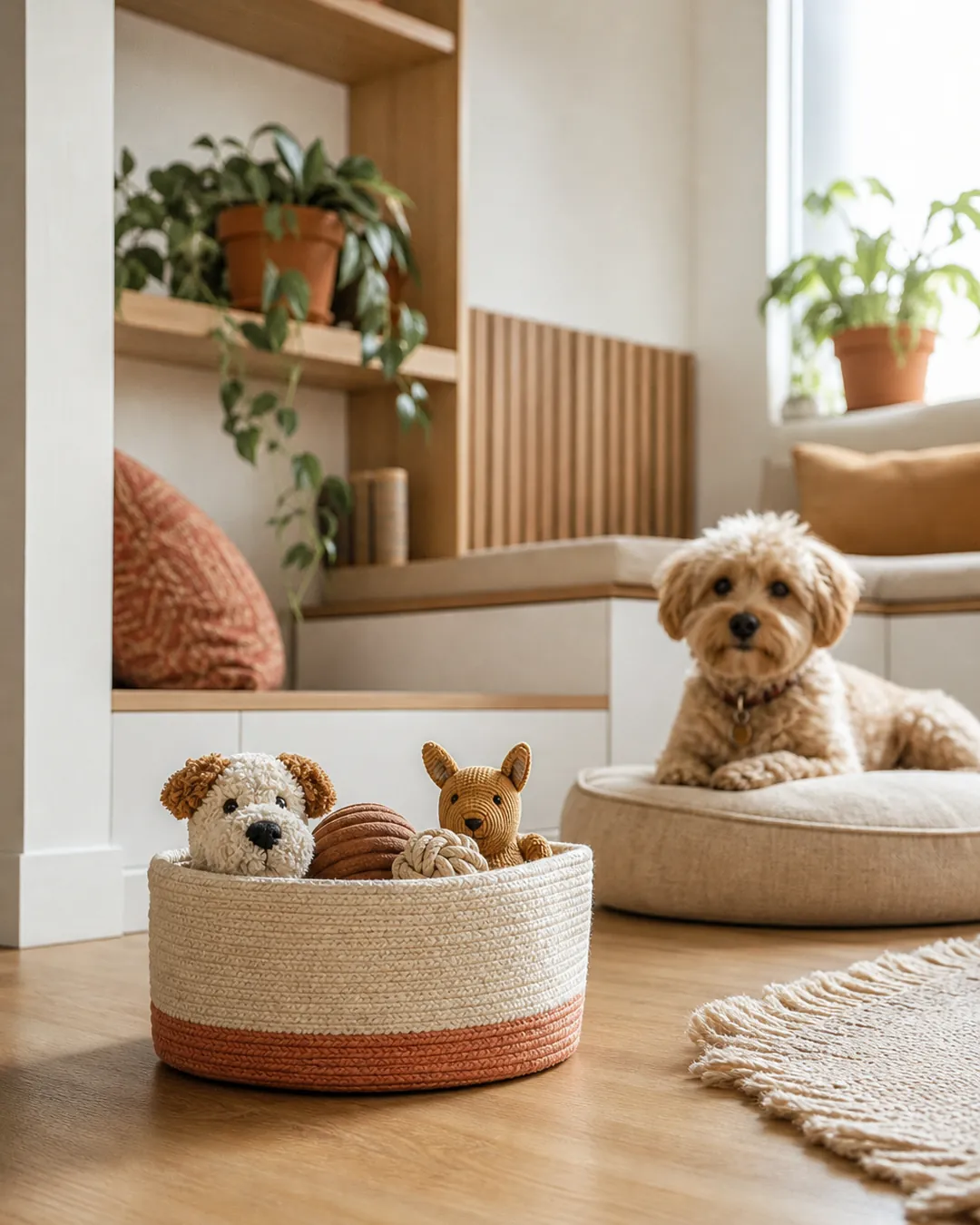
A basket big enough for every toy you own is an invitation to keep every toy out. Buy one sized for four or five and the constraint does the work for you. This is the same logic as a small bin: capacity shapes behavior more reliably than intention does.
7. Match the material to the room
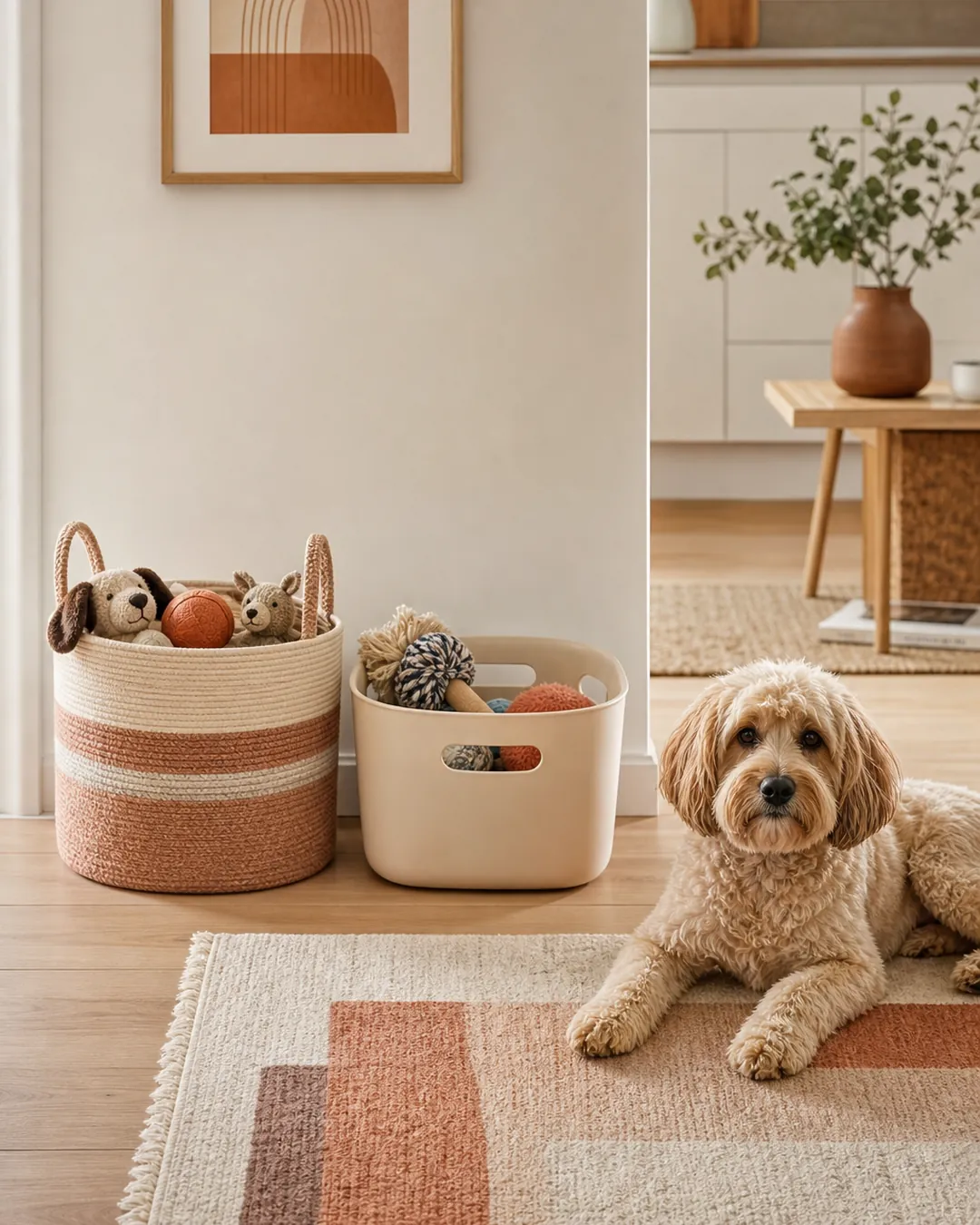
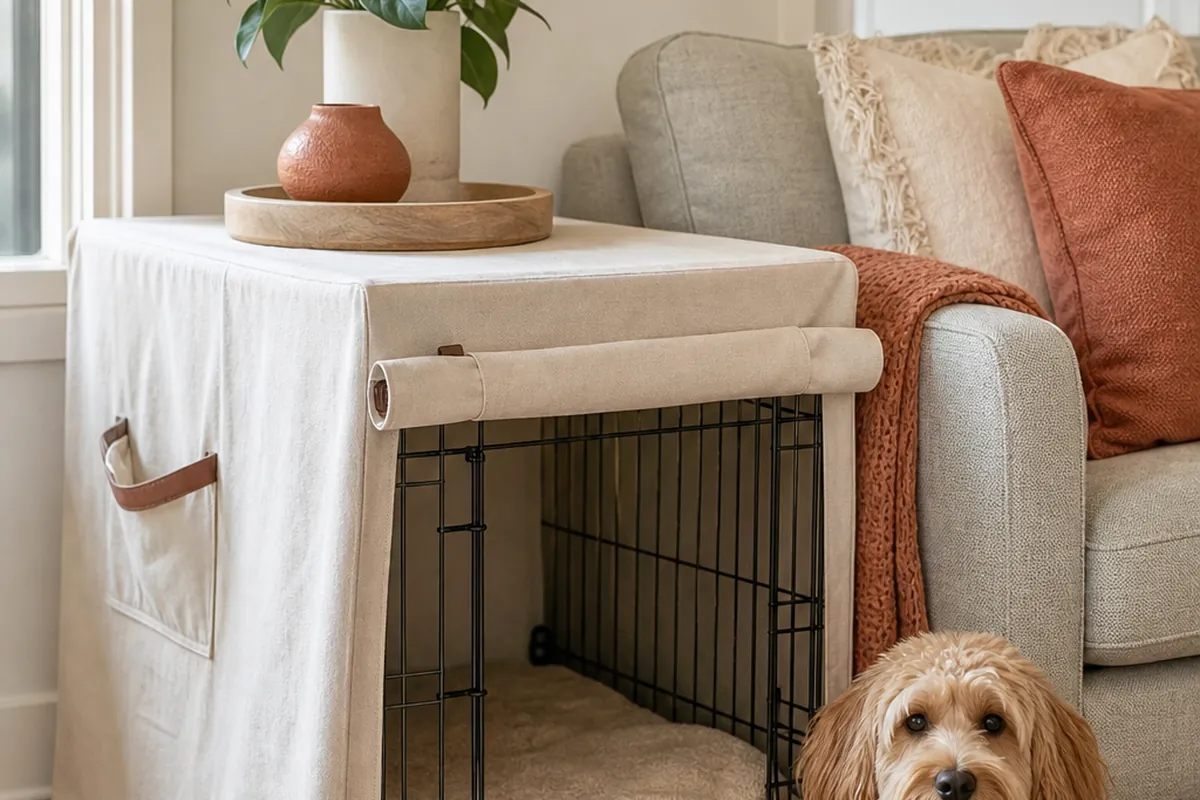
Woven rope, cotton, felt: these read as storage. Molded plastic in primary colors reads as pet equipment from across the room. In a studio, where the toy basket is visible from the bed and the sofa and the kitchen, that difference is worth the few extra dollars. Check the basket holds its shape when half empty, though. A soft-sided fabric bin that slumps into a heap once the toys are out is worse than plastic, because it looks like laundry. The crate is usually the other big dog object in a studio, and choosing a crate cover in the room’s own palette does for it what woven rope does for the toy basket.
8. Buy toys in sets so the rotation has stock
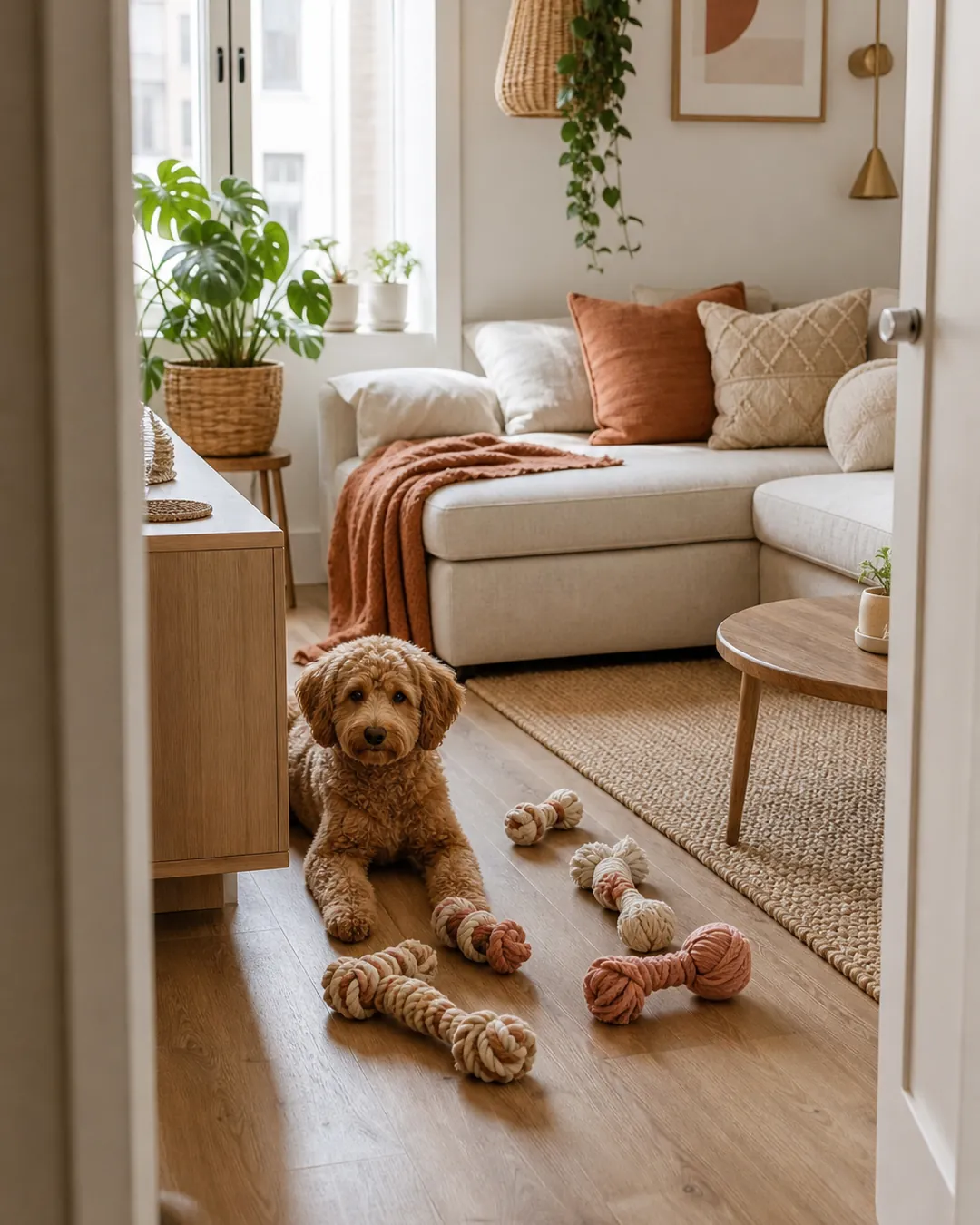
A rotation needs enough to rotate. An 11 pack of cotton rope toys gives you two weeks’ worth of swaps in one purchase, and rope is the category most tolerant of being chewed, washed and put away. Sets are also cheaper per toy than buying singly over months. The same kind of set makes an easy present for a friend with a dog and not much floor, and it is one of the gifts for dog lovers in apartments picked to fit a single basket rather than a toy box.
9. Give the basket a fixed home and never move it
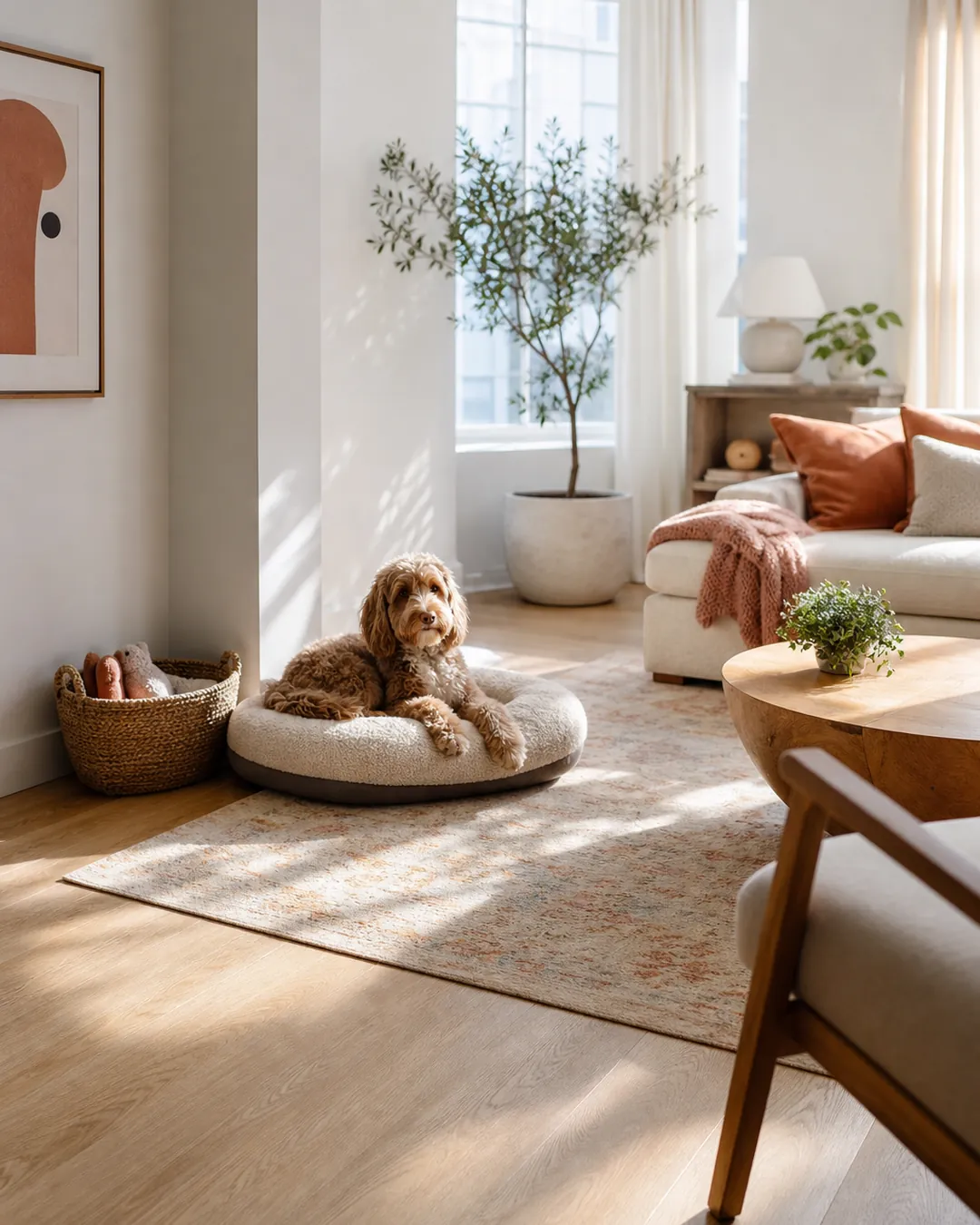
Dogs learn locations, not categories. A basket that lives in the same corner becomes somewhere the dog goes to get a toy and, eventually, somewhere it drops one. A basket that migrates around the room stays a container you fill and the dog empties. If you want the dog to put toys back, drop one in yourself every time you pass it for a week. Most dogs pick it up faster than people expect, and it is the difference between storage and a habit.
The easiest fixed home is inside the dog’s own spot, which is why dog nook ideas for small homes puts the toy bin at the foot of the bed rather than across the room.
Where to start
Do the cull first, before buying anything. Gather every toy in the apartment, pick the four or five your dog actually uses, and put the rest in a bag. The room will look better immediately and you will know what size basket you need, which you do not know right now.
Then buy one open basket, sized to that four or five, in a material your room already uses. Put it in the dog’s zone at floor level and leave it there. Give it two weeks before you judge whether the dog uses it, because dropping a toy back in is a learned habit rather than an instinct.
Worth saying plainly: the storage is the easy half. The part that actually keeps a small apartment tidy is the cull and the rotation, and both are free. People buy the basket first because buying feels like progress, then find the basket full and the floor still covered, which is exactly what you would predict from adding capacity without reducing volume.
There is also a maintenance rhythm that works better than a schedule. Tie the swap to something you already do weekly, laundry or the recycling, and it happens. Left as its own task it lapses inside a month and the rotation stock quietly becomes storage.
The lidded box comes last and lives somewhere else entirely. If you buy it first you will fill it with everything, put it in the corner, and be back where you started with a nicer container.