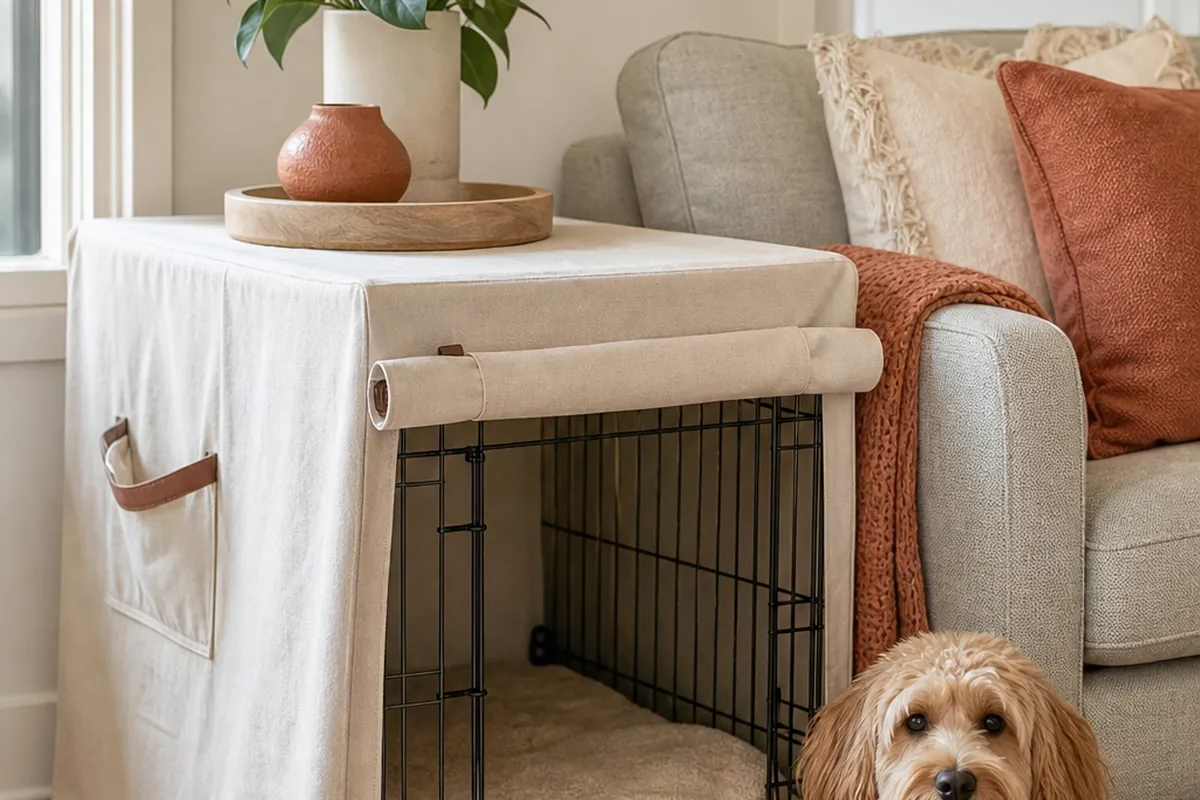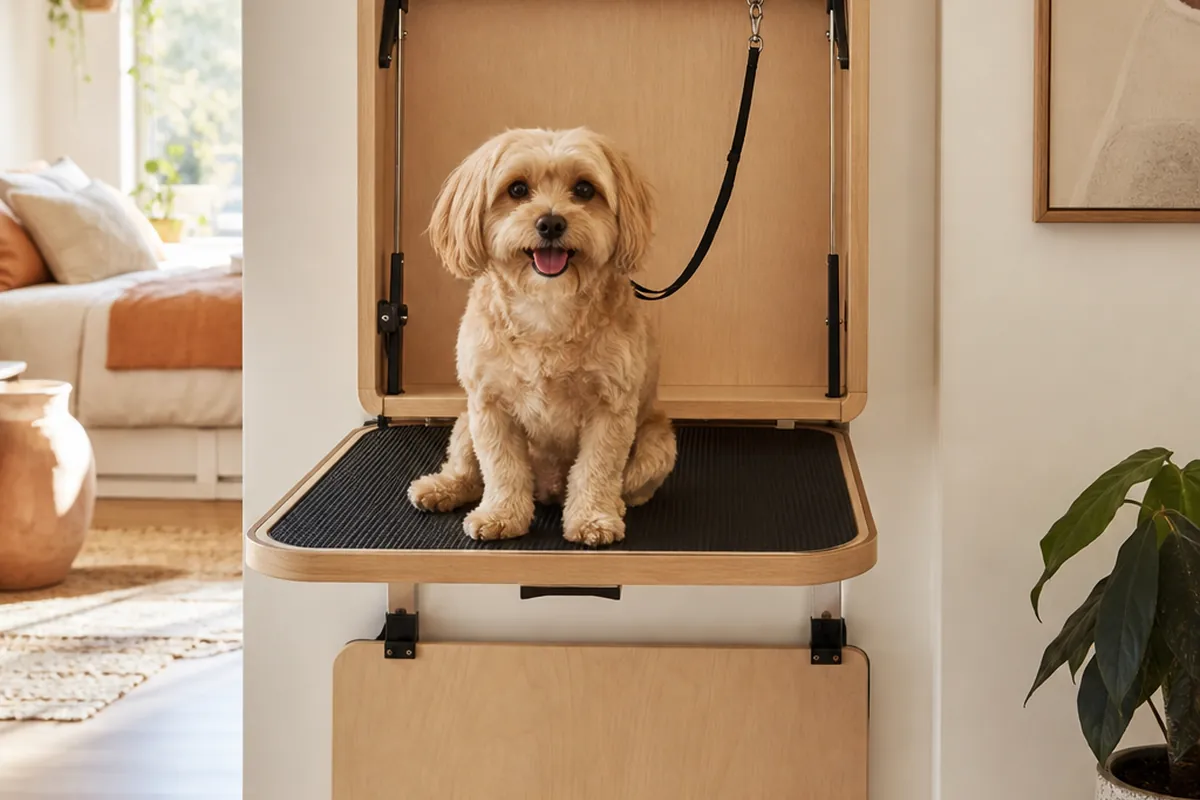
Every small home has three or four pockets of space that no piece of furniture fits into. The gap beside a chimney breast. The end of a hallway. The floor of a closet once the shoes come out. A dog nook is just a decision to give one of those pockets to the dog on purpose, instead of watching them claim the doorway instead.
Eleven places to look and how to finish them.
1. Take the door off a closet
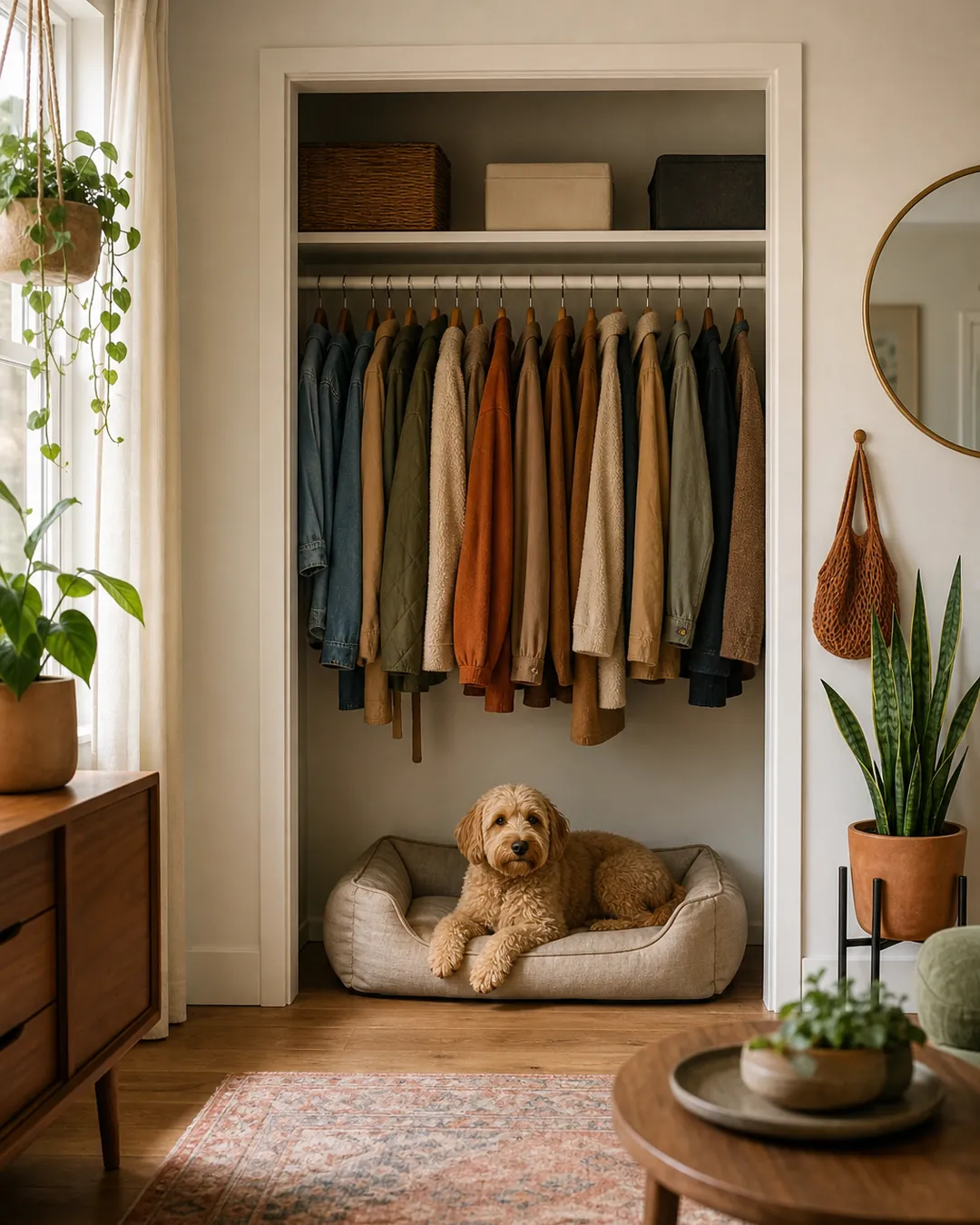
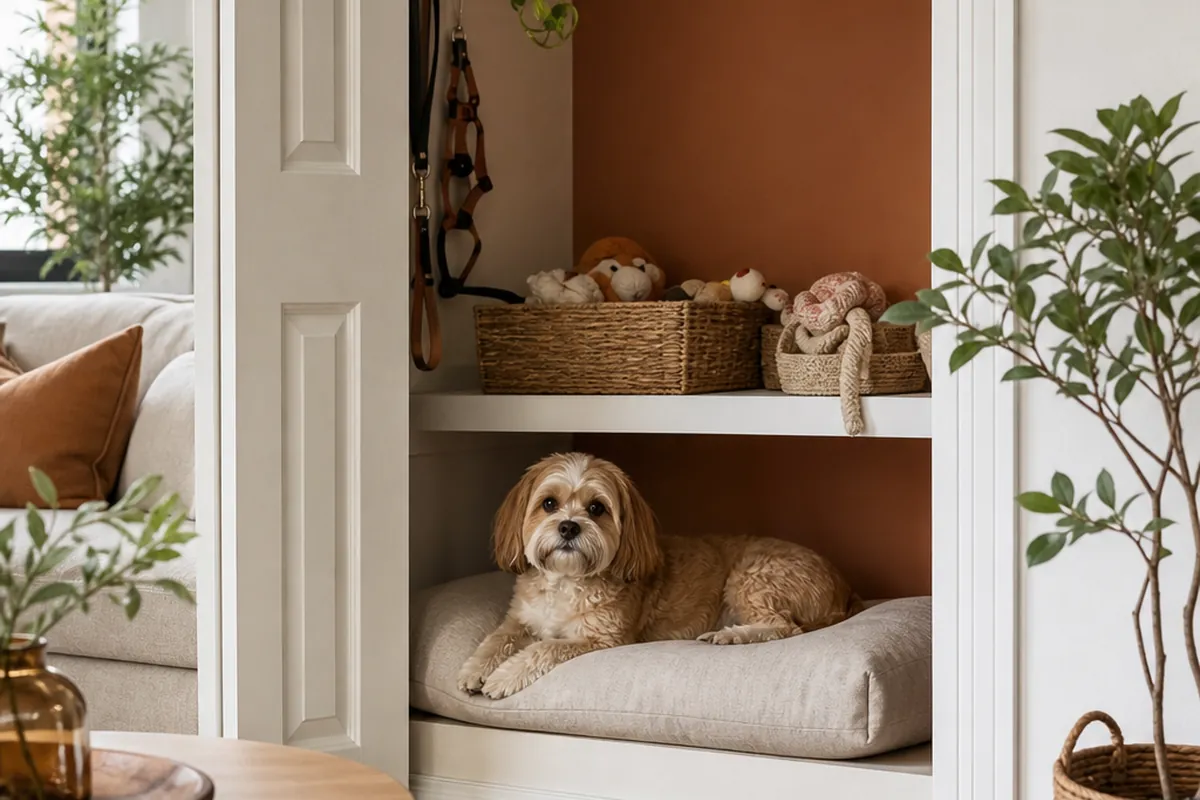
The cheapest nook in the house is a closet with its door removed and its floor cleared. You keep the rail above for coats, the dog gets three walls and a clear view out, and the door goes flat under a bed until you move. No fixings, nothing to make good afterward.
2. Use the gap beside the chimney breast
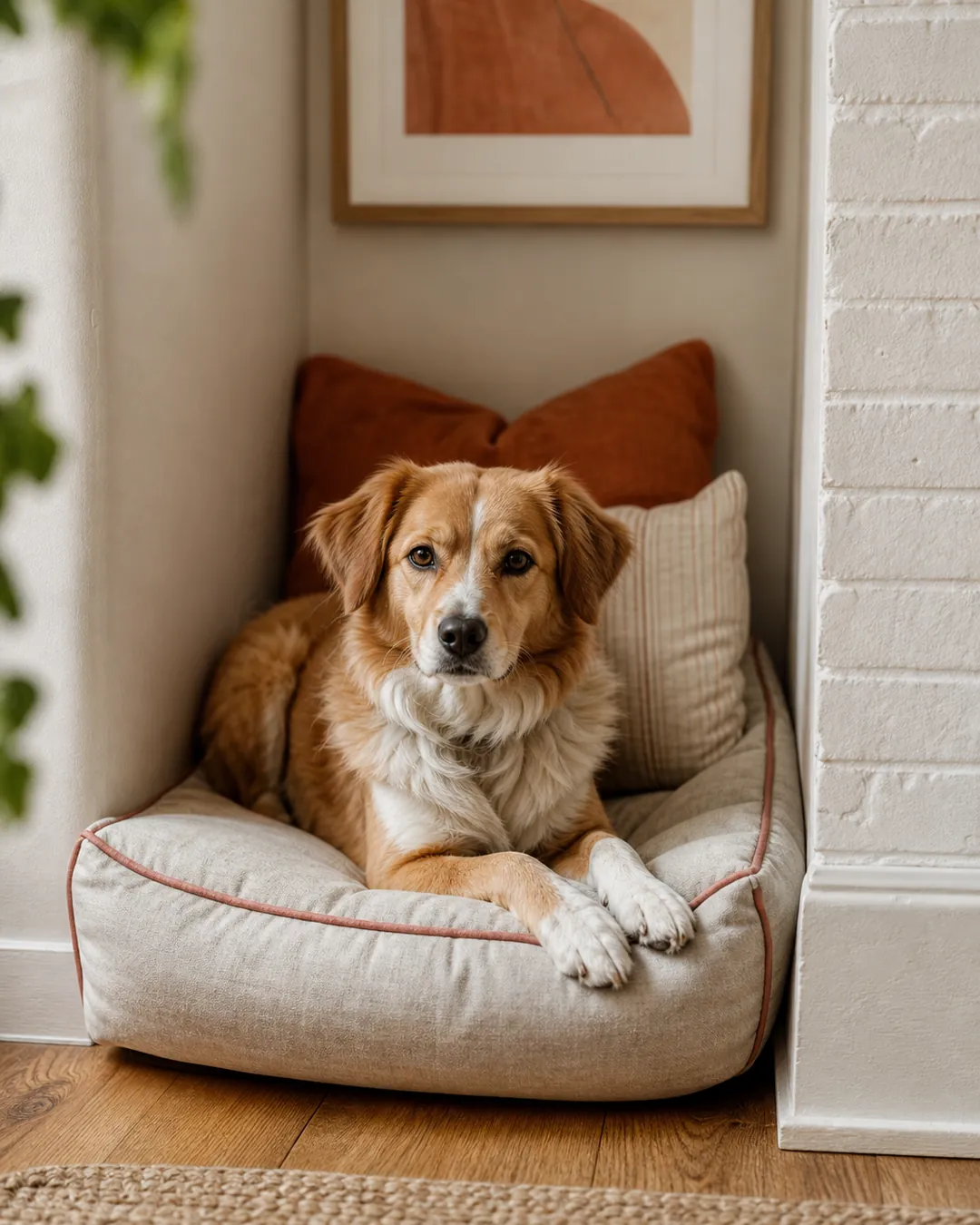
Alcoves either side of a chimney breast are almost always too narrow for furniture and exactly right for a bed. They come with two walls already built, which is the expensive part of a nook, and they sit off the walking route by definition. Measure the narrowest point rather than the opening, because alcoves are rarely square and the back is often an inch or two tighter than the front. That inch is the difference between a bed that sits flat and one that bows in the middle.
3. Check the headroom under the stairs
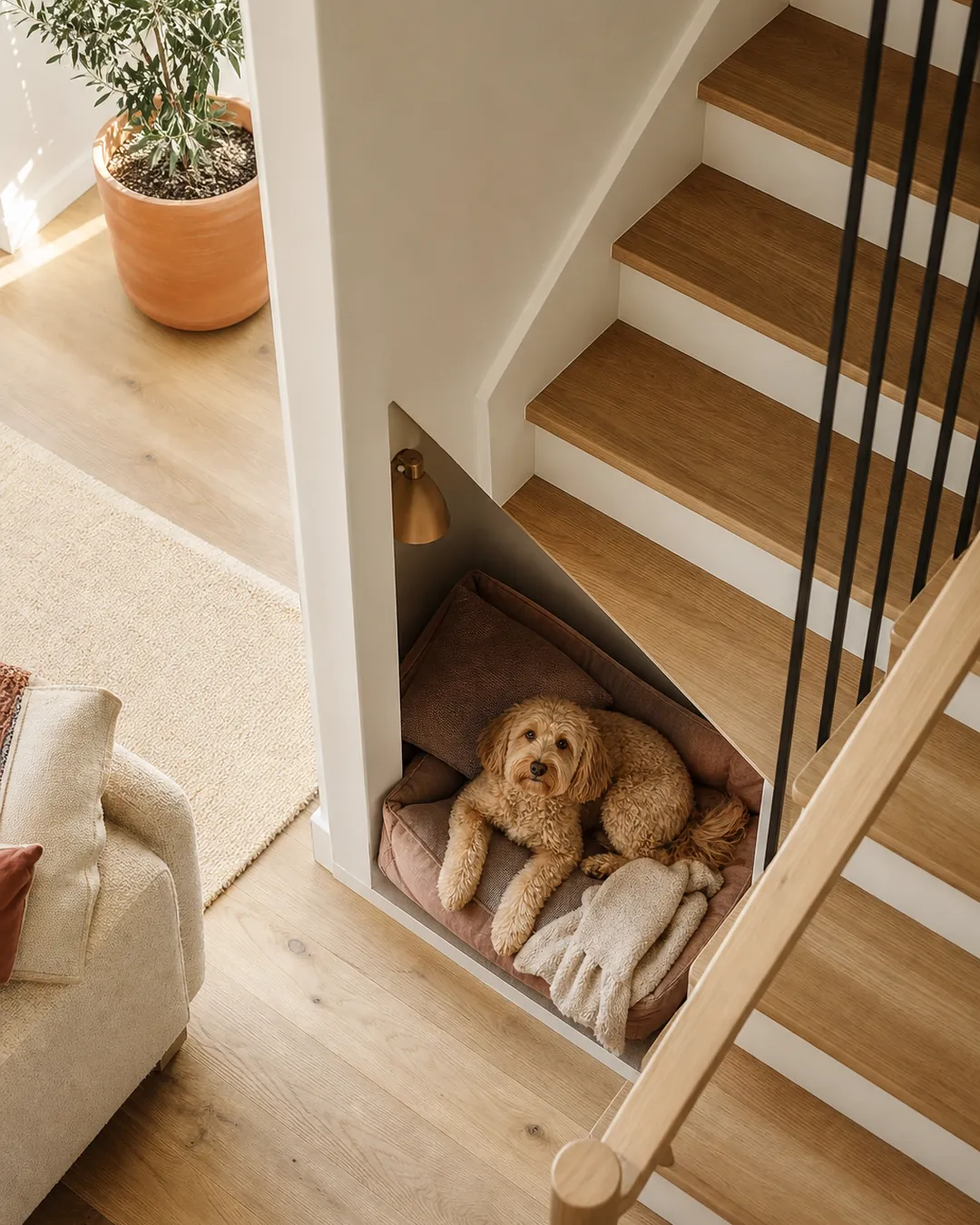
Under-stair space is the classic dog nook and the classic mistake. Put the bed at the tall end, not the low end, and check the dog can sit fully upright where it will actually lie down. A dog that has to crawl in will use it once and never again. Measure the height at the exact point the dog’s shoulders will sit, not at the opening, because the slope eats headroom faster than it looks like it should. If the stairs are open-backed, expect noise and dust from above and put a panel or a curtain at the back before the bed goes in.
4. Look at the end of the hallway
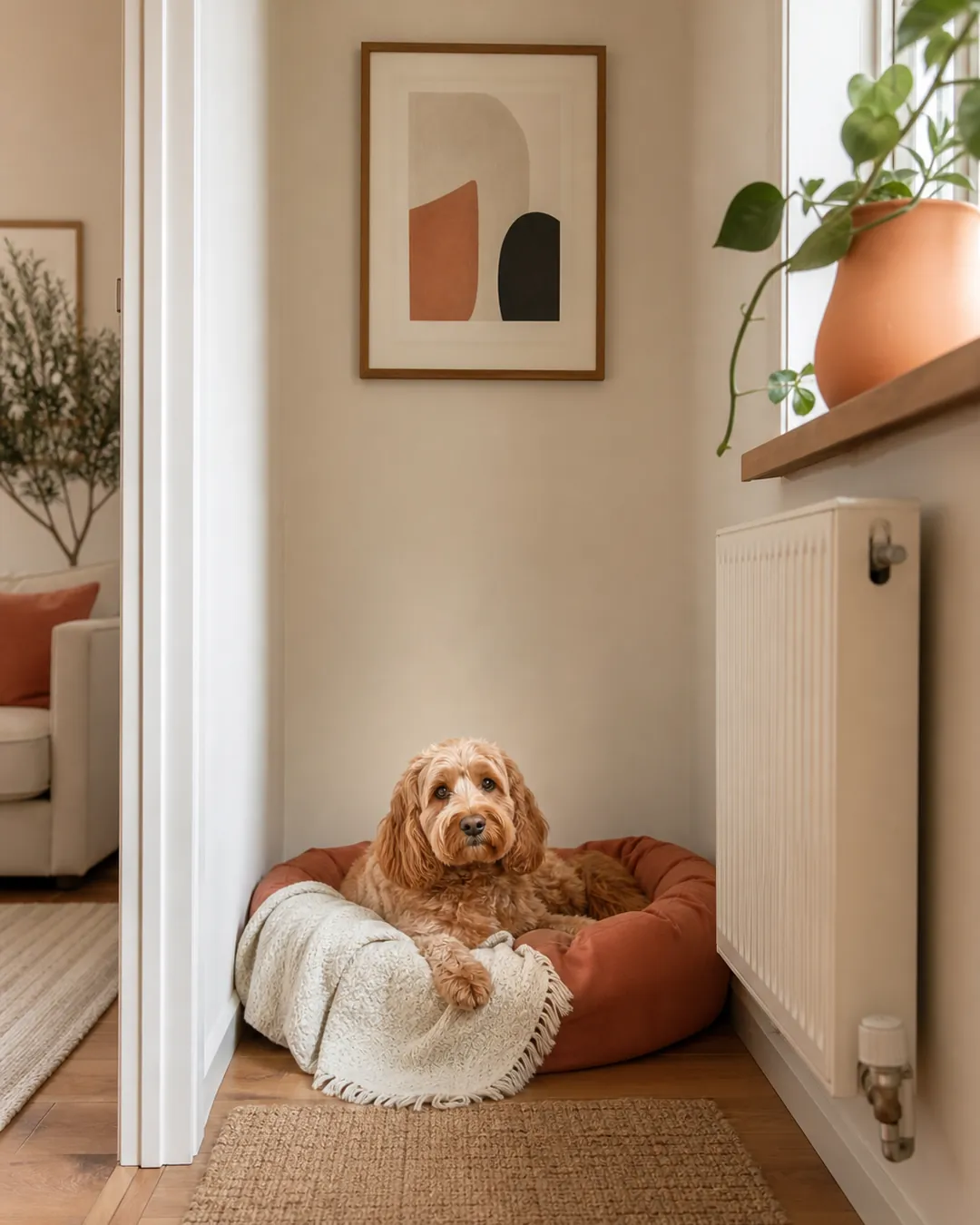
Hallways dead-end somewhere, and that last three feet is usually holding nothing but a radiator. It has walls on three sides and it is on the way to the front door, which suits a dog that likes to know who is coming and going. The catch is that hallways are also where everyone puts shoes down, so claim the space properly or it silts up within a month. If there is a radiator, leave a hand’s width of clearance rather than pushing the bed against it.
5. Give the nook a view of the room
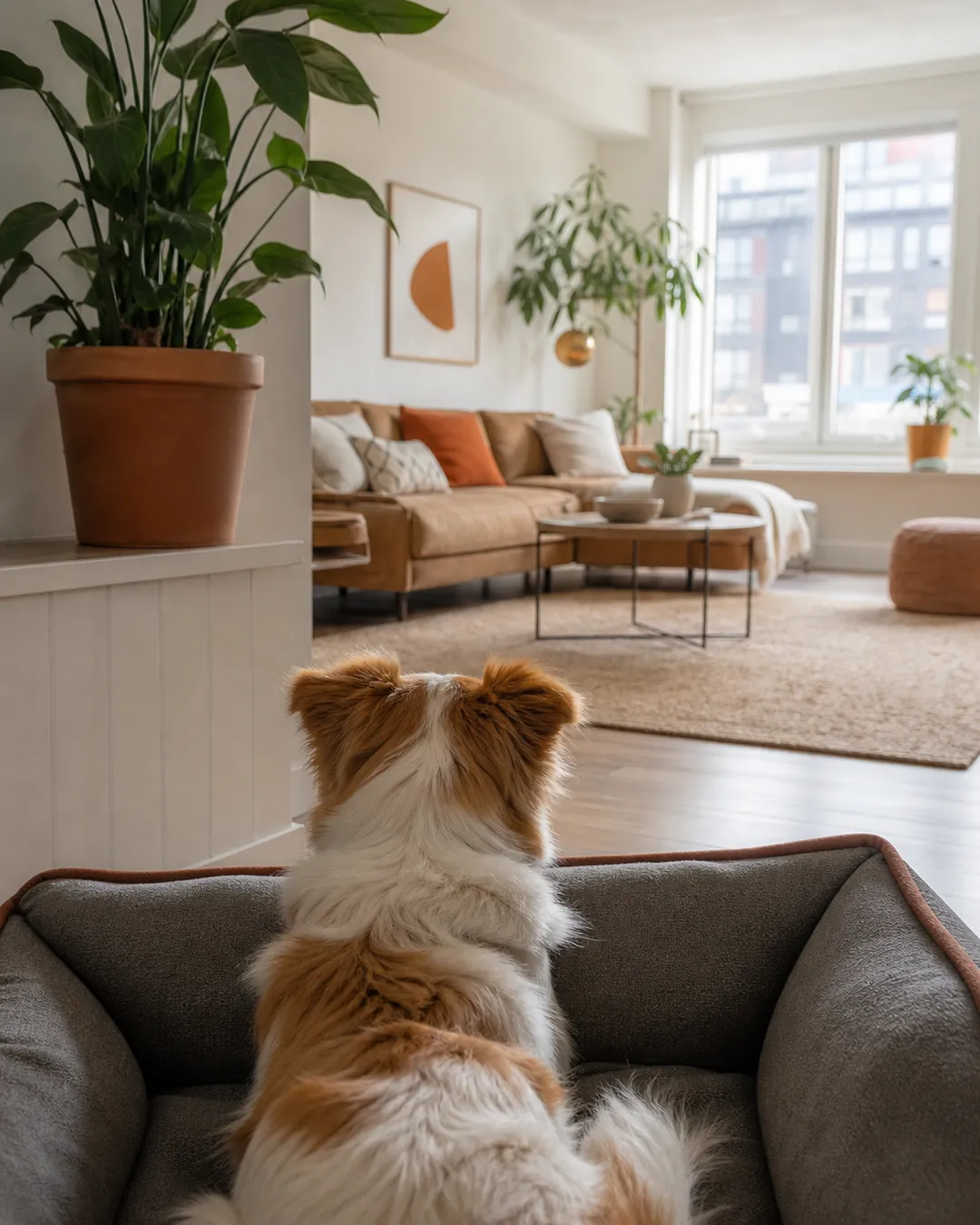
This is the rule that decides whether any of the above works. A dog wants a wall at its back and a line of sight to where you are. A nook facing into a corner is a closet with a cushion in it, and it will stay empty. Test it by crouching to the dog’s height in the spot and looking out. If you cannot see the room you spend your evenings in, neither can the dog, and no amount of soft furnishing will fix that. This single check explains most abandoned dog beds.
6. Size the bed to the nook, then to the dog
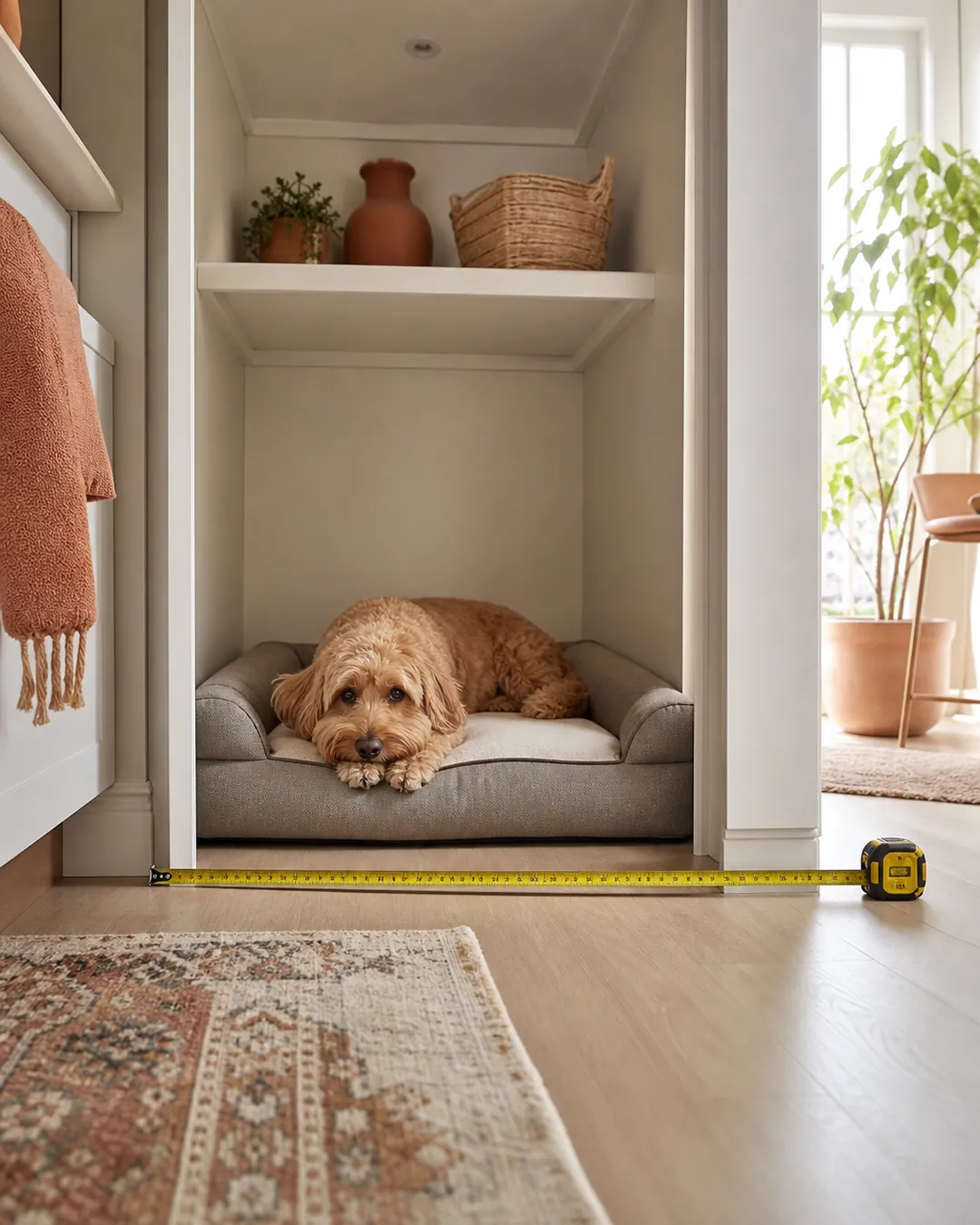
Measure the pocket first, then find a bed that fits it with a few inches spare. A waterproof orthopedic bed sized for small dogs fits an alcove or a closet floor without wedging, and the waterproof base matters more in a nook than in the open, because a nook is harder to get a mop into.
7. Do not wedge the bed in tight
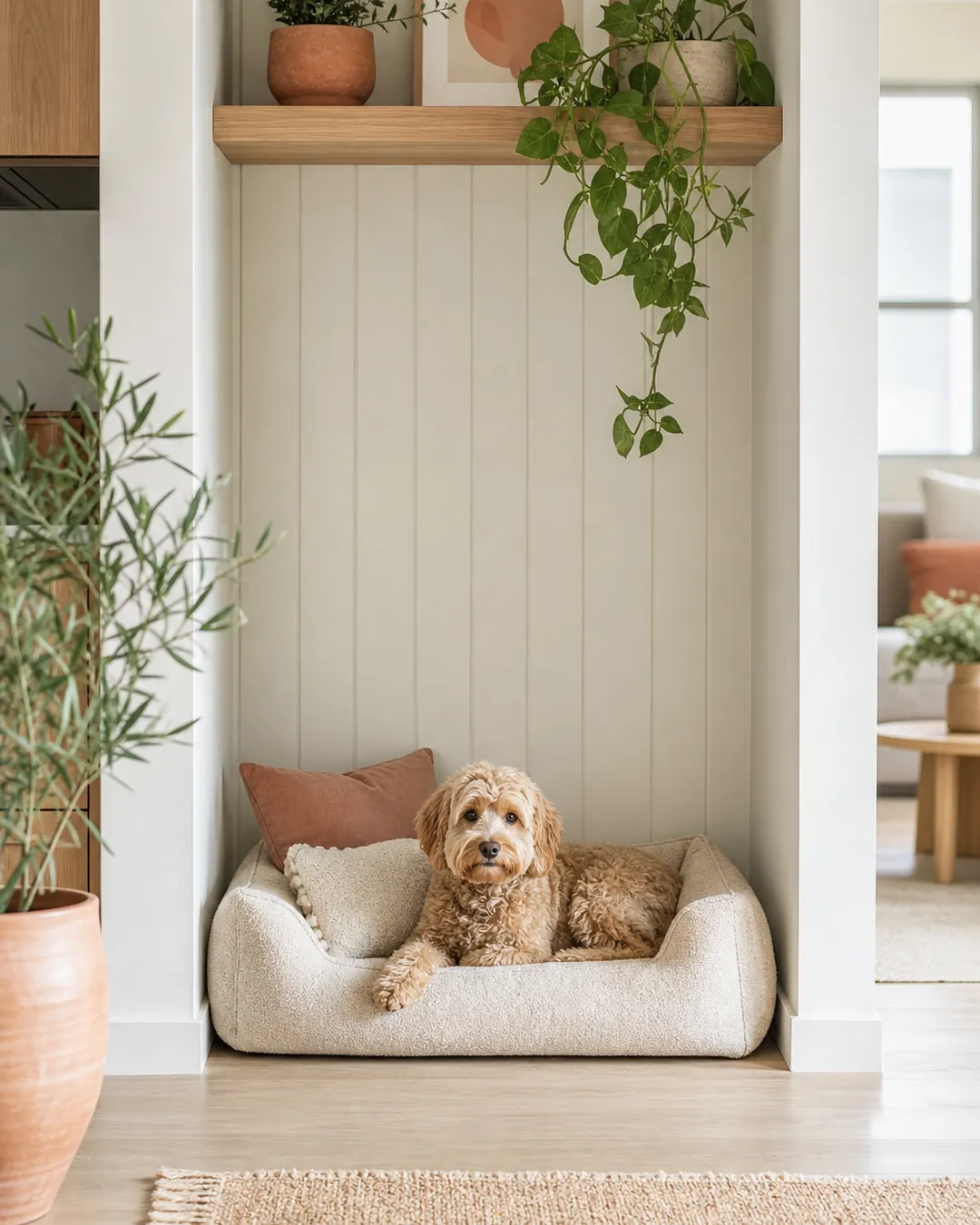
A bed jammed corner to corner leaves the dog no way to circle before lying down, which most dogs do. Leave a few inches on the open side. It looks less neat in a photograph and gets used considerably more. The same clearance matters for getting out: a dog that has to reverse out of a tight nook will avoid it as it gets older, and that is exactly when the comfortable spot matters most.
8. Put the gear on the wall above it
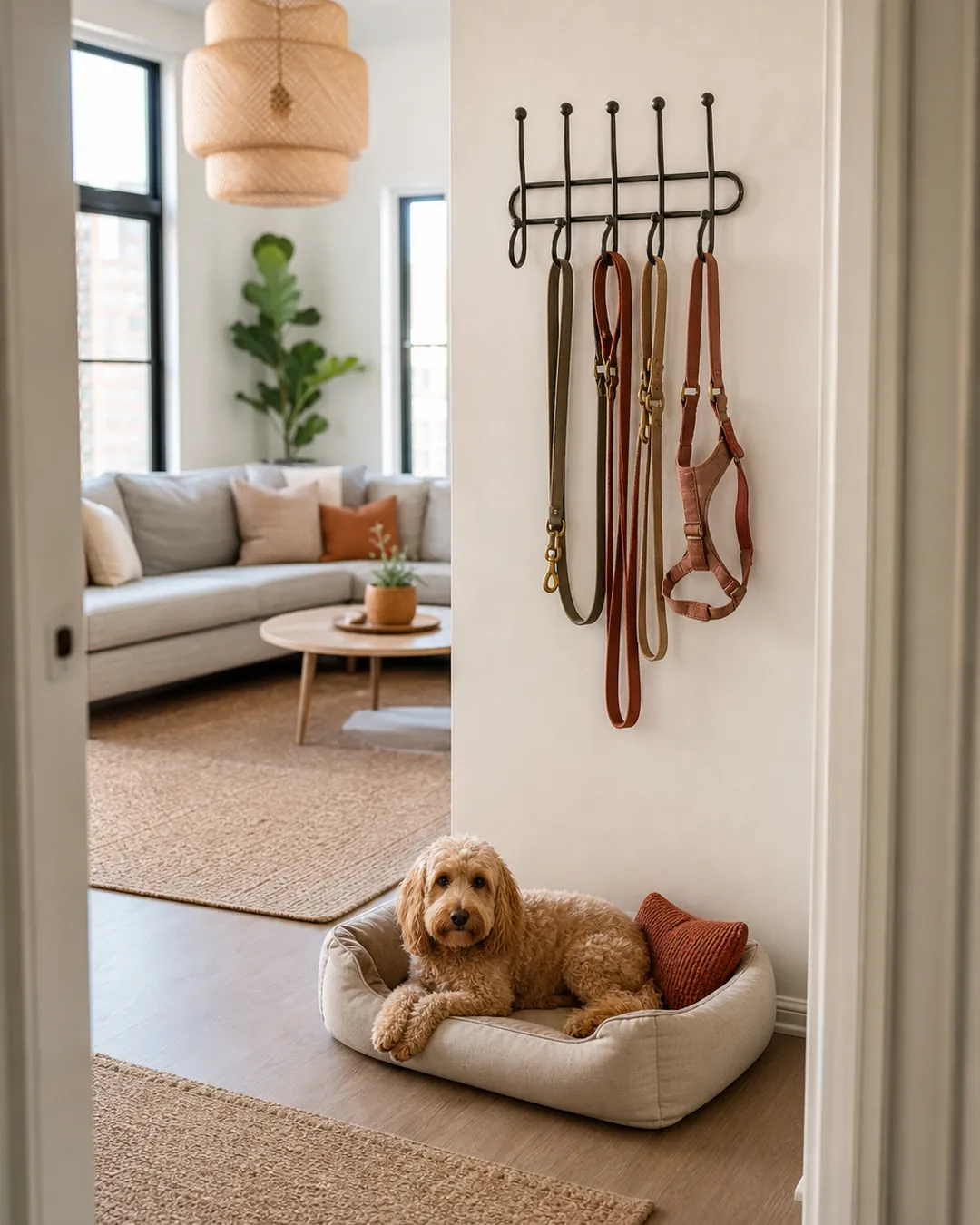
The nook fails when the floor around it becomes the place the leash, the harness and the bag of treats live. A wall-mounted metal leash holder above the bed keeps all of it vertical and off the dog’s floor. Fix it high enough that a wagging tail does not clear it.
If the nook is nowhere near the front door, the leash and harness are better off by the door instead, and dog walk station ideas for apartment entryways sets that up on a wall you are allowed to use.
9. Contain the toys in one bin
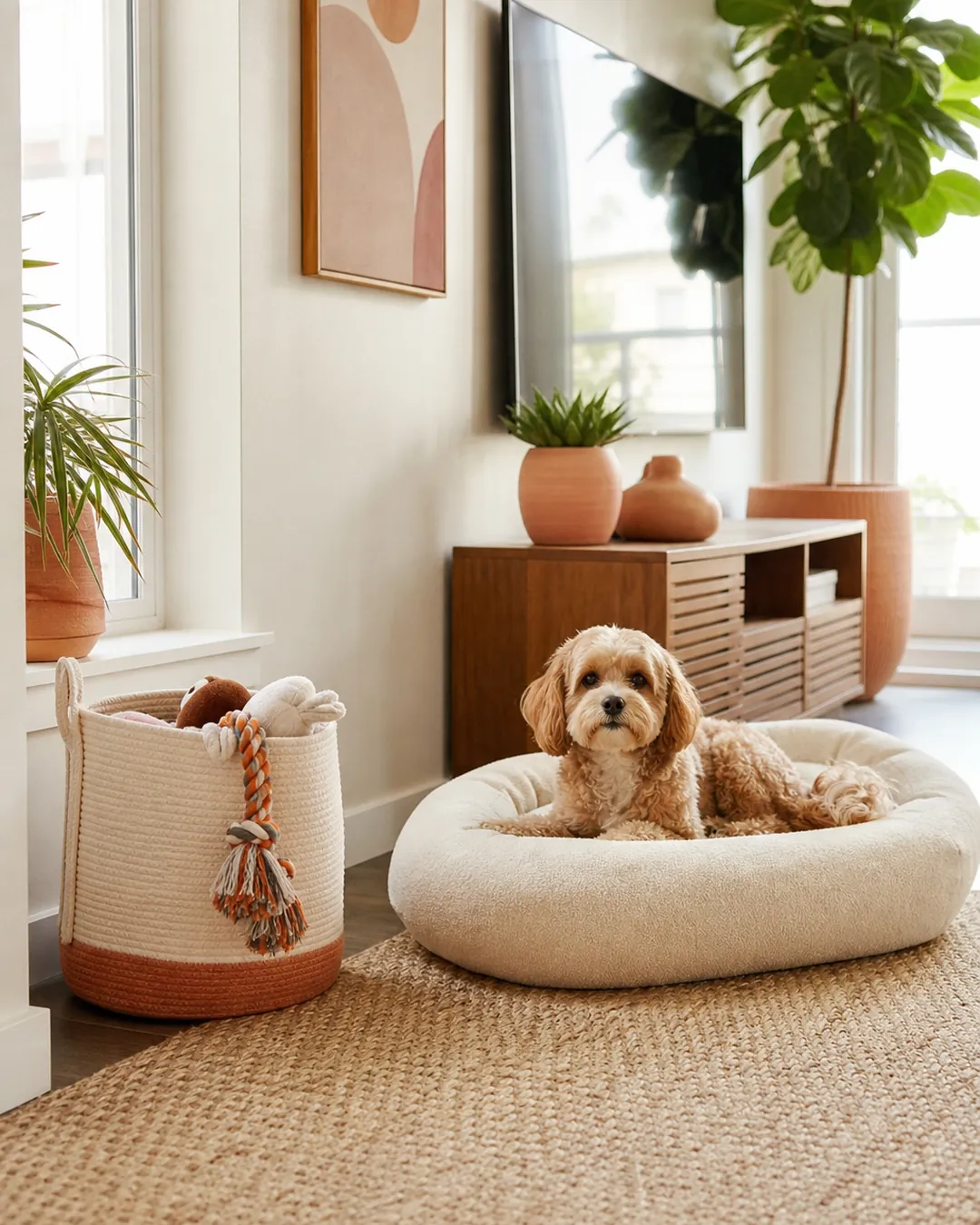
Toys migrate. A collapsible toy basket at roughly 15 by 11 inches sits beside the bed and gives them somewhere to return to, which turns a five minute tidy into a ten second one. Collapsible matters if the nook is a closet you might want back. Open topped beats lidded here: a dog that can retrieve its own toy will, and a lid just means you are the one opening it. Keep the basket beside the bed rather than in it, or it becomes furniture the dog has to sleep around.
10. Light it, or accept it is a night spot
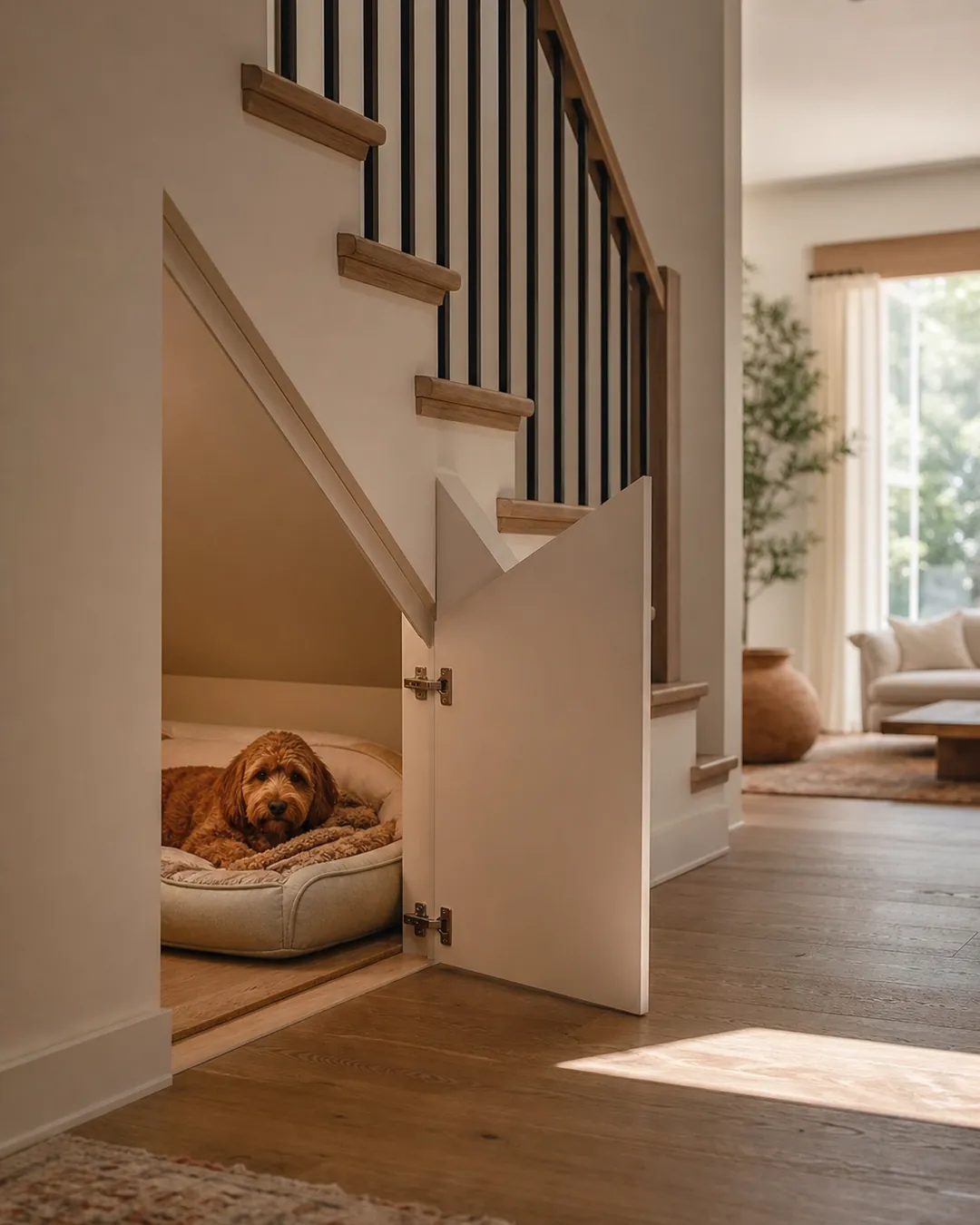
A nook with no daylight will lose to the patch of sun by the window every afternoon. That is fine if you built it as a place to sleep at night, and a waste if you expected it to be used all day. Decide which you are building before you furnish it. Under-stair and closet nooks are almost always night spots, which is an argument for putting your money into the bed rather than into making a dark corner look inviting in photographs.
11. Keep one wall soft
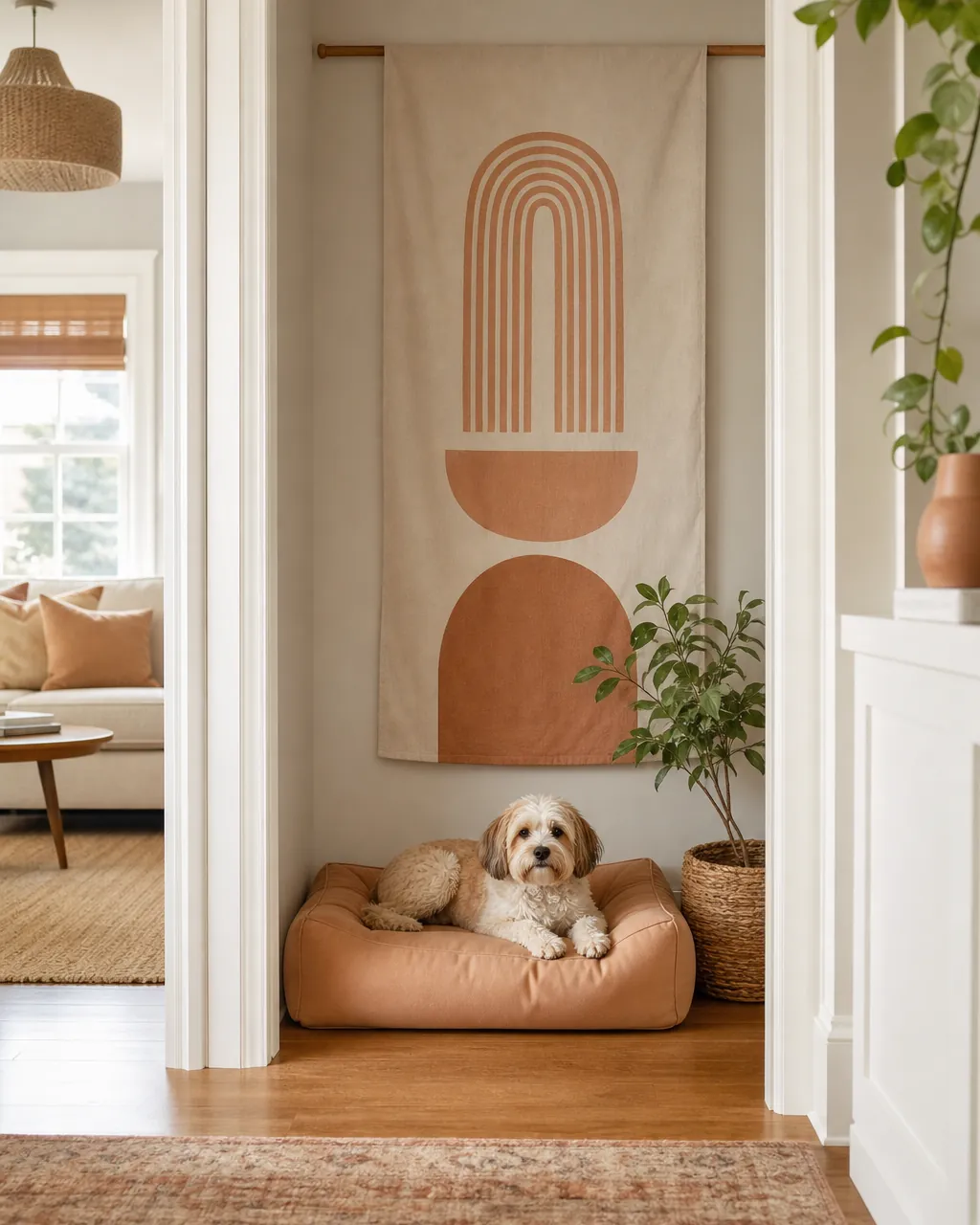
Nooks made of three hard surfaces can be noticeably colder and echo more than the open room, particularly on an outside wall. A bed with raised sides, or a hanging fabric panel on the coldest wall, fixes it without any special equipment. Dogs relocate quietly rather than complaining.
Where to start
Walk your home and list the pockets. Most people find three, and are surprised by two of them. Then apply one test to each: can the dog lie there with a wall behind it and still see the room? That question eliminates about half the candidates immediately, usually including the one you were most excited about.
Buy the bed first and nothing else. Put it in the winning pocket and leave it alone for a week. If the dog moves in, add the wall storage and the toy bin, in that order, because the leash hook is what stops the nook silting up. If the dog does not move in, the pocket failed the sightline test and the bed will work somewhere else.
Worth knowing before you start: a nook that works changes where the dog spends its day, not just where it sleeps. Dogs given a spot with a wall behind them and a view of the room tend to settle there while you are in the room rather than following you between chairs, which is the actual return on giving up a closet.
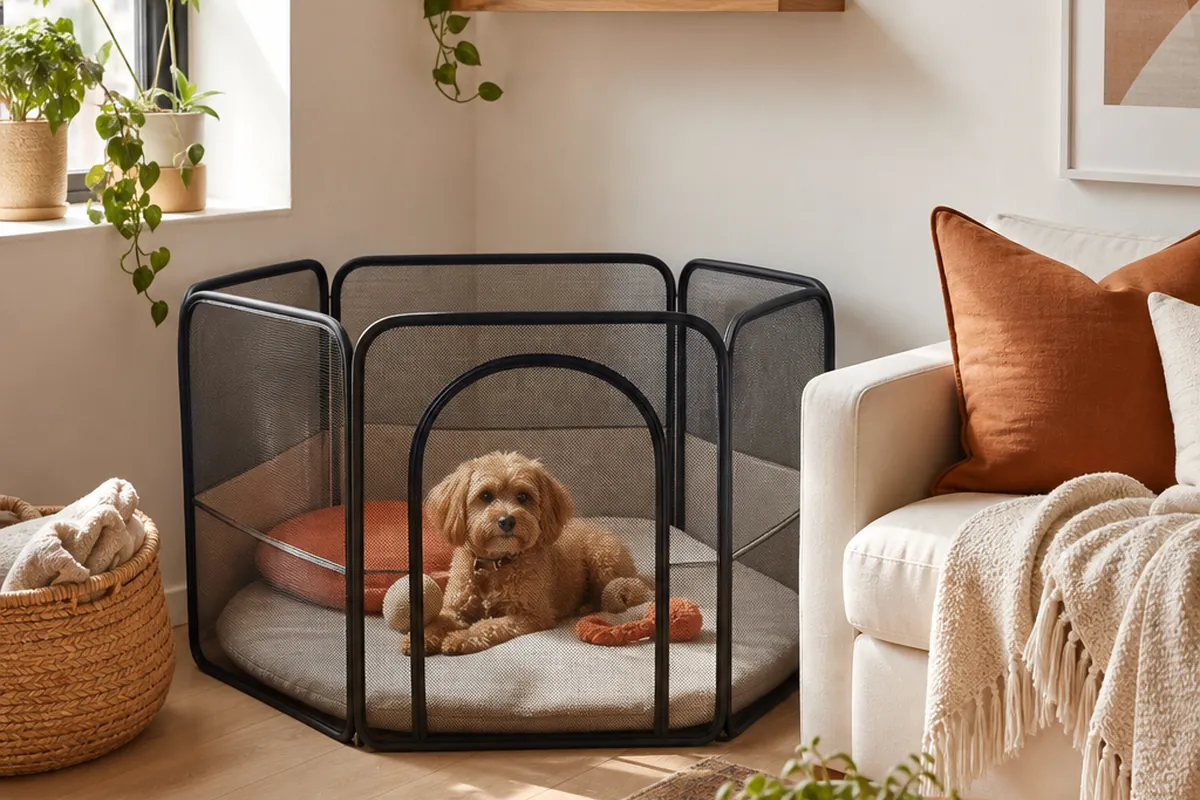
A nook is one of the few things in a small home that costs you no floor at all. You are furnishing space that was already doing nothing. A playpen is the opposite trade, because it does take floor, so fitting a dog playpen into a small living room starts with measuring the corner and ends with panels that fold flat when the pen comes down.