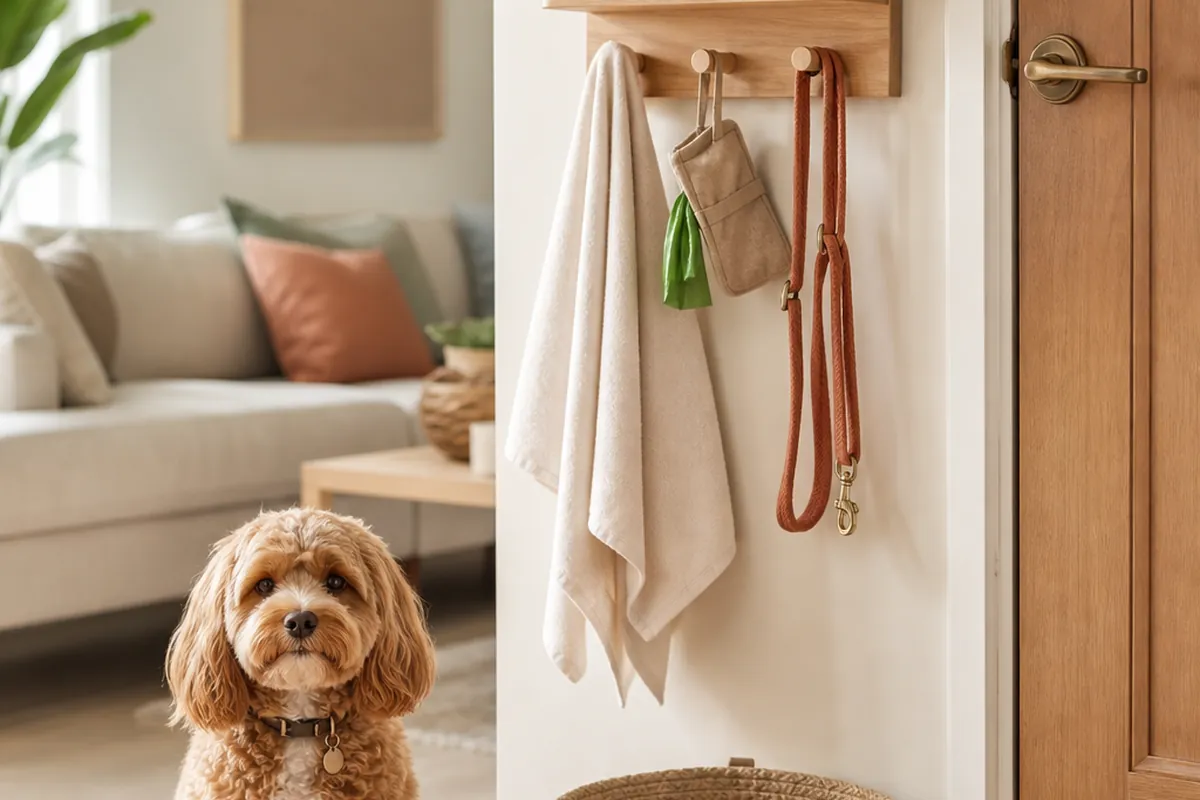
The leash lives on the doorknob until the day it does not, and then it is on the kitchen counter, or hooked over a chair, or on the floor where the dog has already stepped on it twice. A walk station is the decision to give the leash, the bags and the towel one fixed spot by the door, so that leaving the apartment stops being a small search every time.
Nine pieces of a station built for an entryway that also has to work as an entryway, not a mudroom.
1. Pick the wall the door does not swing into
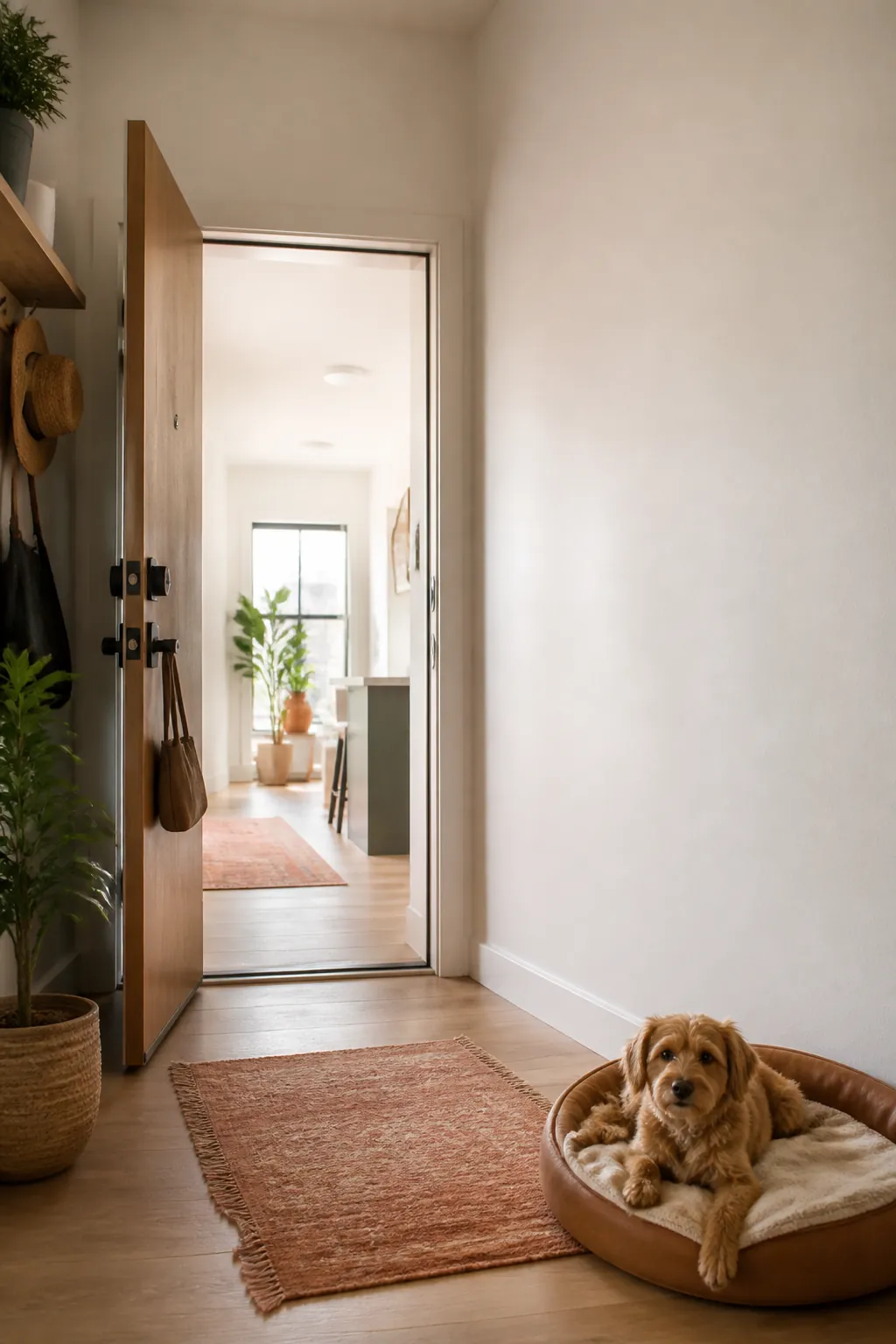
A door swings through an arc roughly equal to its own width, usually 30 to 36 inches, and anything mounted inside that arc gets clipped every time the door opens fully. Stand behind the open door and look at which wall stays clear. In most one-bedroom layouts that is the wall the door is hinged against, not the wall directly opposite it. Mount there first and work outward, rather than picking the first blank wall you see and discovering the collision later.
2. Set leash hooks at a height that will not tangle
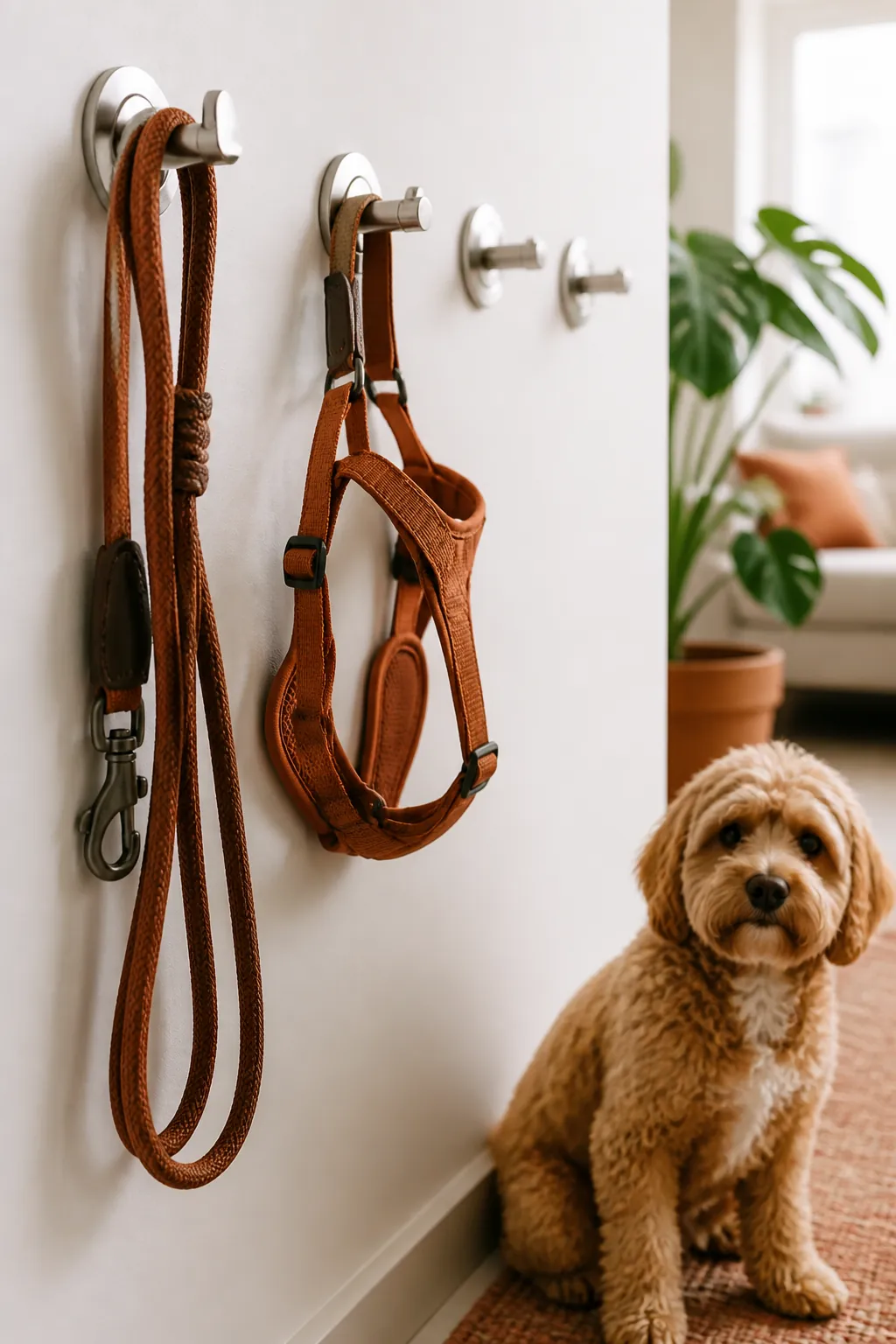
Somewhere between 48 and 54 inches off the floor is the range that works for most adults reaching with a dog already pulling toward the door. A wall-mounted leash hook rack with individually spaced hooks keeps a leash, a harness and a second leash from landing on top of each other, which is what happens on a single nail. Space the hooks three to four inches apart so straps hang separately instead of stacking. Mount too low, around 30 inches, and shoulders and grocery bags catch on them on the way past. Mount above 60 inches and you are reaching overhead one-handed while holding a dog back with the other.
3. Anchor for the real weight, not the empty-hook weight
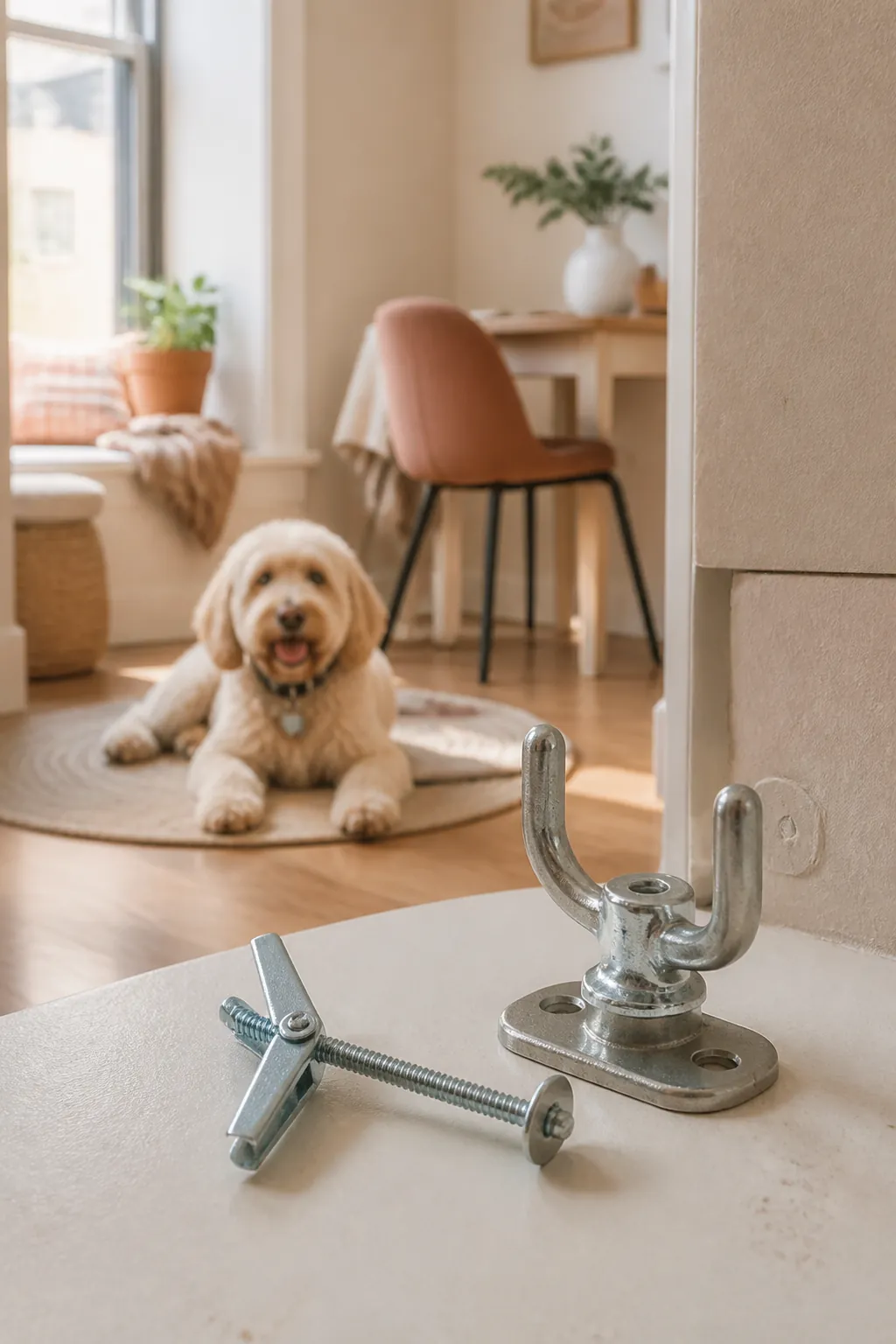
A rack looks light when it is bare. Loaded with a leash, a harness, a second leash for a second dog and an umbrella hooked on the end, it is carrying five to eight pounds, and a dog lunging at the door on the way out adds a sharp, sudden pull on top of that static weight. Screw into a stud where one lines up, or use a toggle bolt rated for at least 15 pounds where it does not. If the lease rules out drilling, look for an adhesive strip explicitly rated above that combined weight rather than the lightest one on the shelf, and expect to replace it sooner than the packaging suggests. An adhesive rated for five pounds holding a rack that briefly sees twelve will peel, and it usually takes a strip of paint with it.
4. Add a bench so the shoes-off pause has a seat
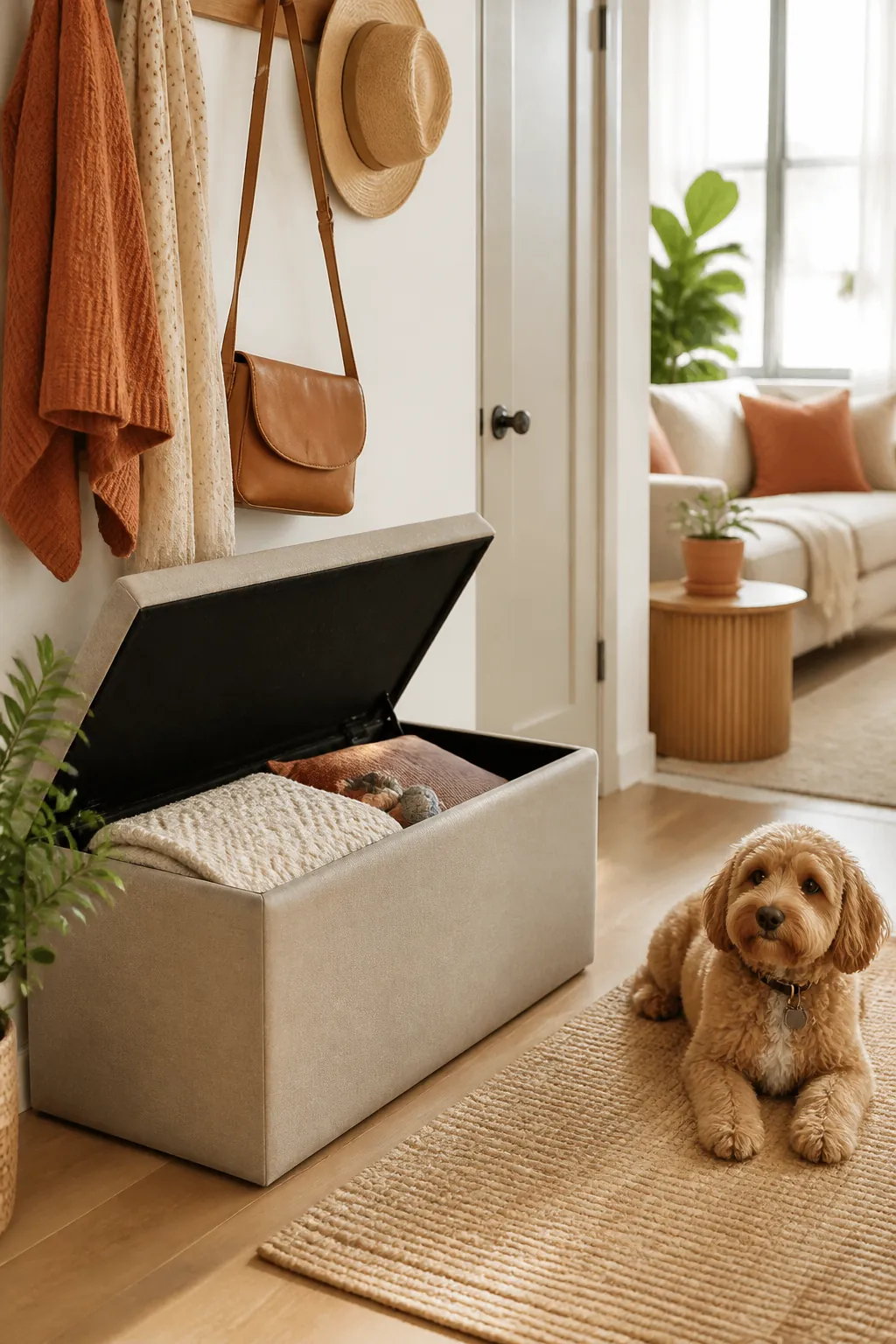
Coming back from a walk usually means pausing to towel paws, unclip a leash and take off wet shoes, and doing all three standing up is why people skip at least one. A folding storage ottoman bench at around 43 inches wide gives that pause a seat and hides the gear underneath the lid at the same time. Measure the hallway before buying: leave at least 30 inches of clear floor in front of the bench for the door to open and a person to pass, and remember the lid needs headroom to lift if you are tucking it under a shelf.
5. Corral the small stuff in one lidded bin, not three trays
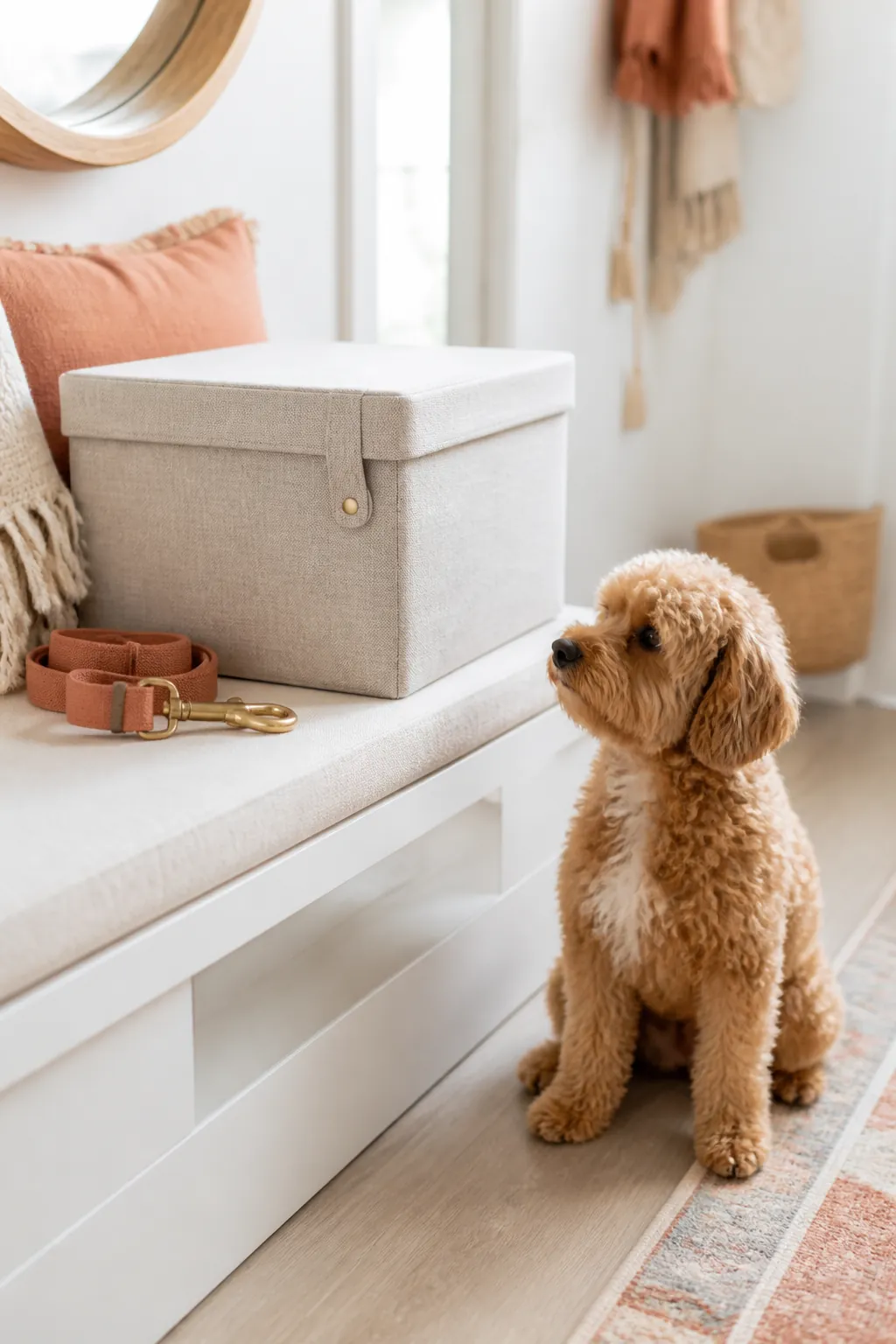
Every walk station accumulates things that are not the leash: spare bags, a bag of treats for the door-side sit, a spare collar tag, a rain coat that never quite dries. Spread across a shelf, these become the clutter the station was supposed to prevent. A single lidded storage bin that fits inside or beside the bench absorbs the whole category, and a lid means the bin does not have to look tidy inside to look tidy from the doorway. Pick one sized to the bench cubby rather than the largest one sold, since an oversized bin just gets set on top instead of tucked away.
6. Choose a poop bag dispenser that will not run dry
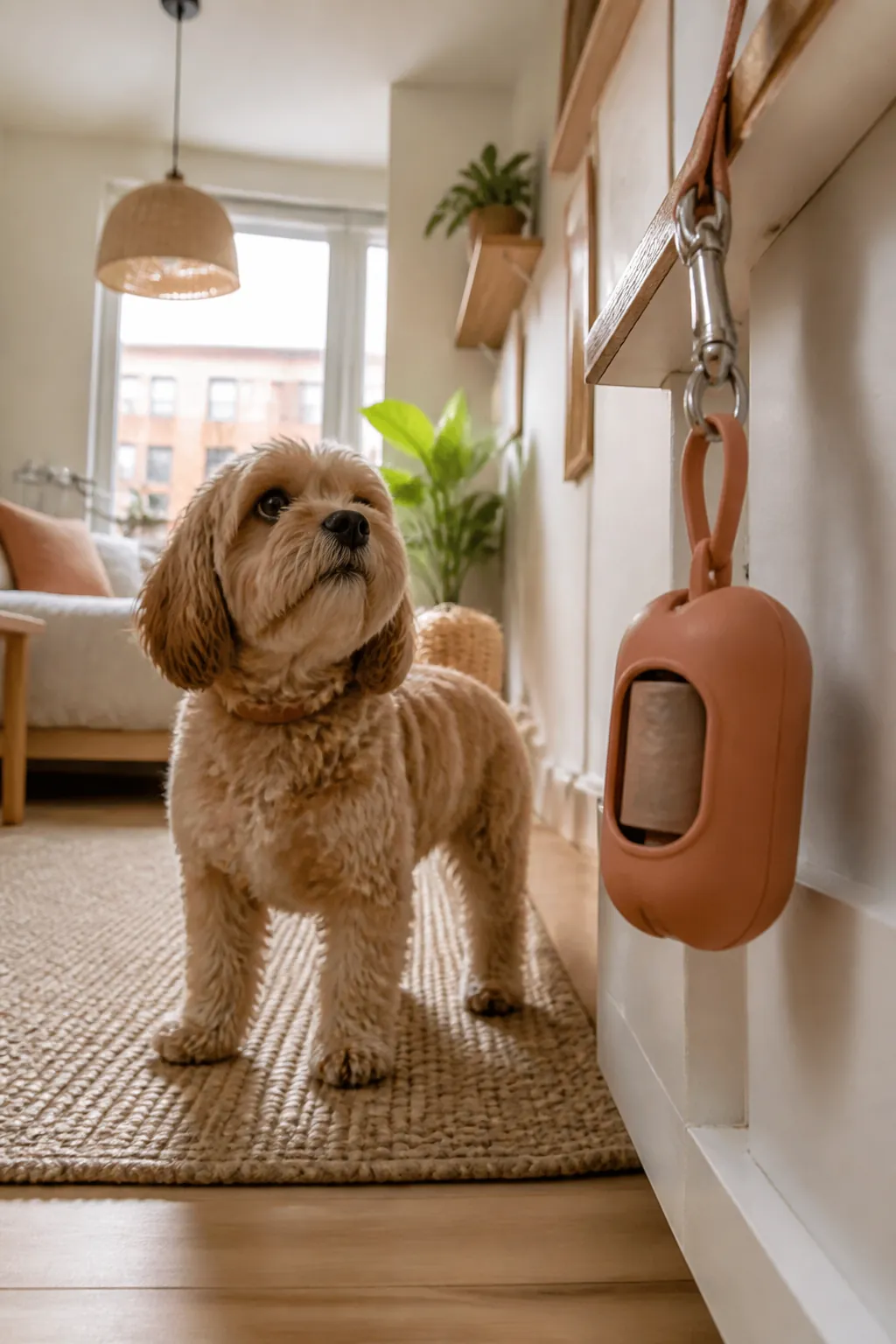
A dispenser is worth adding to the station even without a specific model in mind here, but the ones worth buying share two things: a refill capacity that holds a full roll of at least 15 bags rather than the four or five that ship pre-loaded, and a clip that attaches to the leash hook or the bench handle rather than sitting loose. A dispenser that runs out on day three trains you to grab a handful of bags and stuff them in a pocket, which defeats the point of having a dispenser mounted at the door at all. If you already own a working one, there is no reason to replace it; this is one item worth buying only once you know the brand you have keeps up.
7. Keep a dedicated paw-wipe towel where the walk actually ends
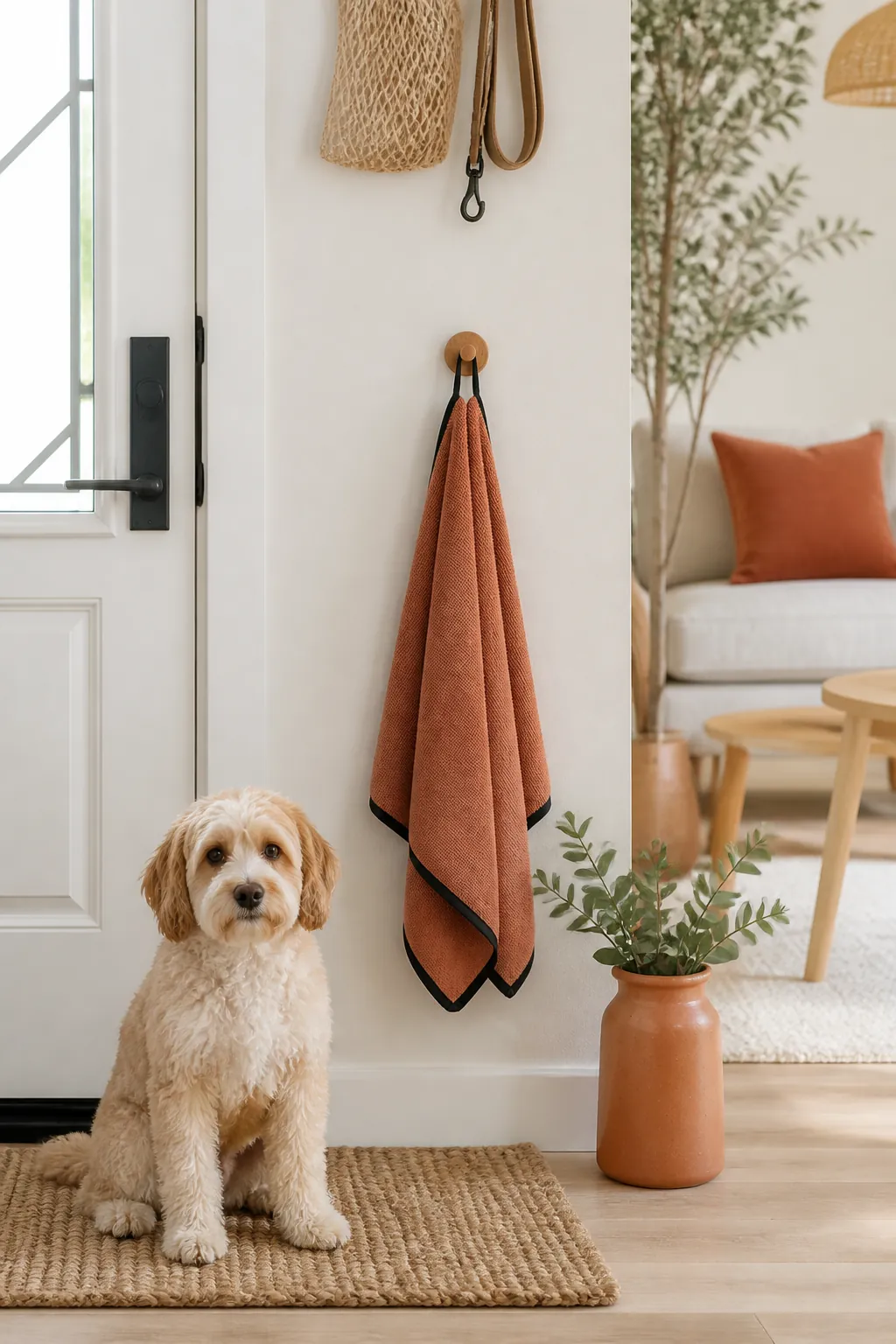
The towel that lives in the bathroom closet is the towel that never gets used, because three steps between the door and the towel is enough friction to skip it on a wet day. A microfiber towel hung on its own hook, low enough to reach without bending far, or folded inside the storage bin next to the door, closes that gap. Keep it separate from bath towels entirely so a muddy one does not end up back in the linen rotation by accident. Two towels in rotation, one drying while the other is in use, beats one that is permanently damp by the door.
8. Protect the floor under the whole station
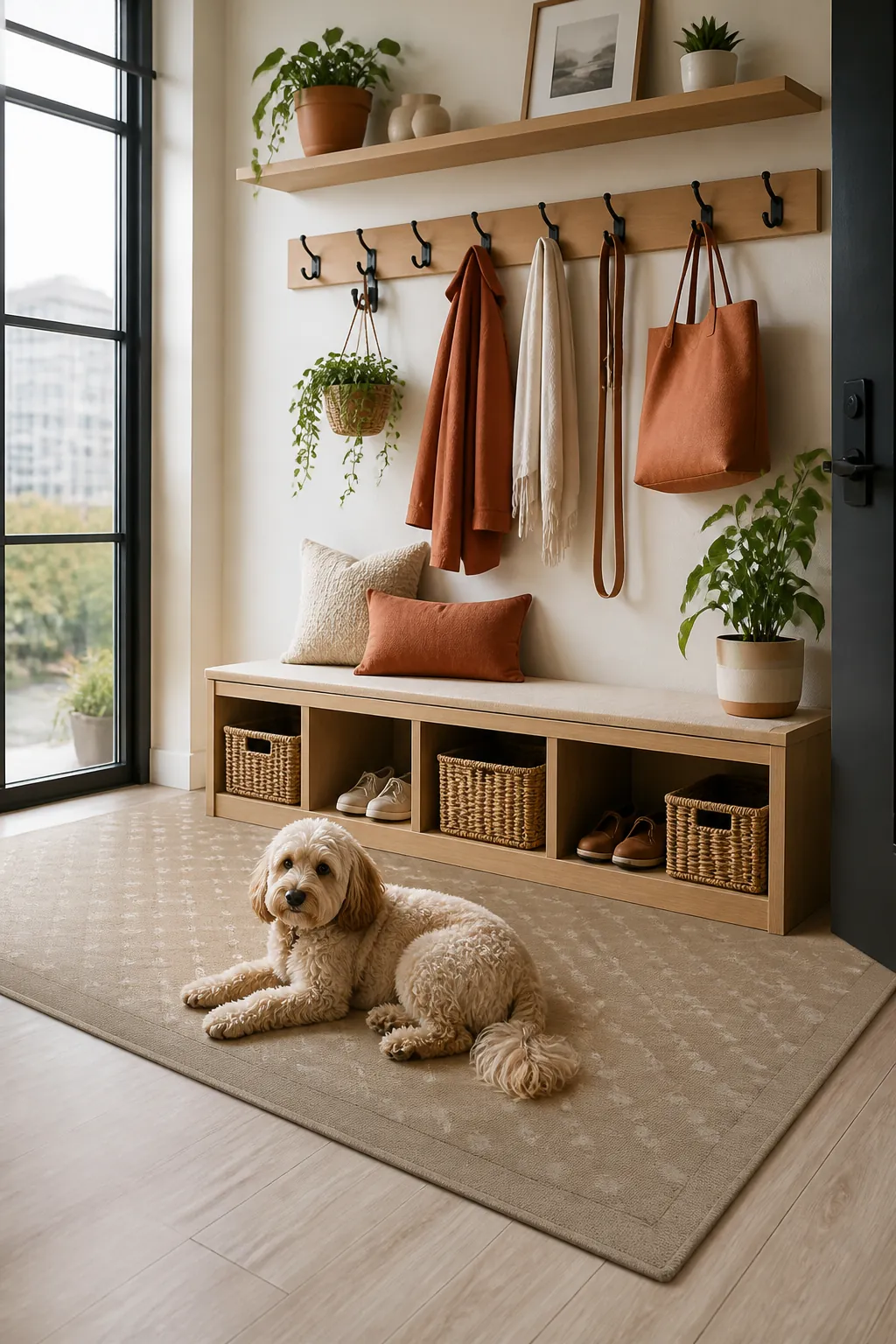
Wet leashes drip, muddy paws land before the towel gets to them, and a bench with metal feet can mark a hard floor over time. A washable mat sized to the full footprint of the station, not just under the bench, catches most of it. On a hard floor a thin rubber-backed mat is enough; on carpet, a hard mat underneath the bench legs stops indentation and gives you a wipeable surface where the wet paws actually land first. Whatever you use, make sure it lifts for a real clean rather than needing to be worked around, since a mat nobody can wash becomes the smelliest object in the entryway within a season. A pen in the living room needs the same full-footprint cover for the same reason, which is why dog playpen setups for small apartment living rooms size the washable rug to the whole pen rather than the bed inside it.
9. Leave the door’s full swing clear
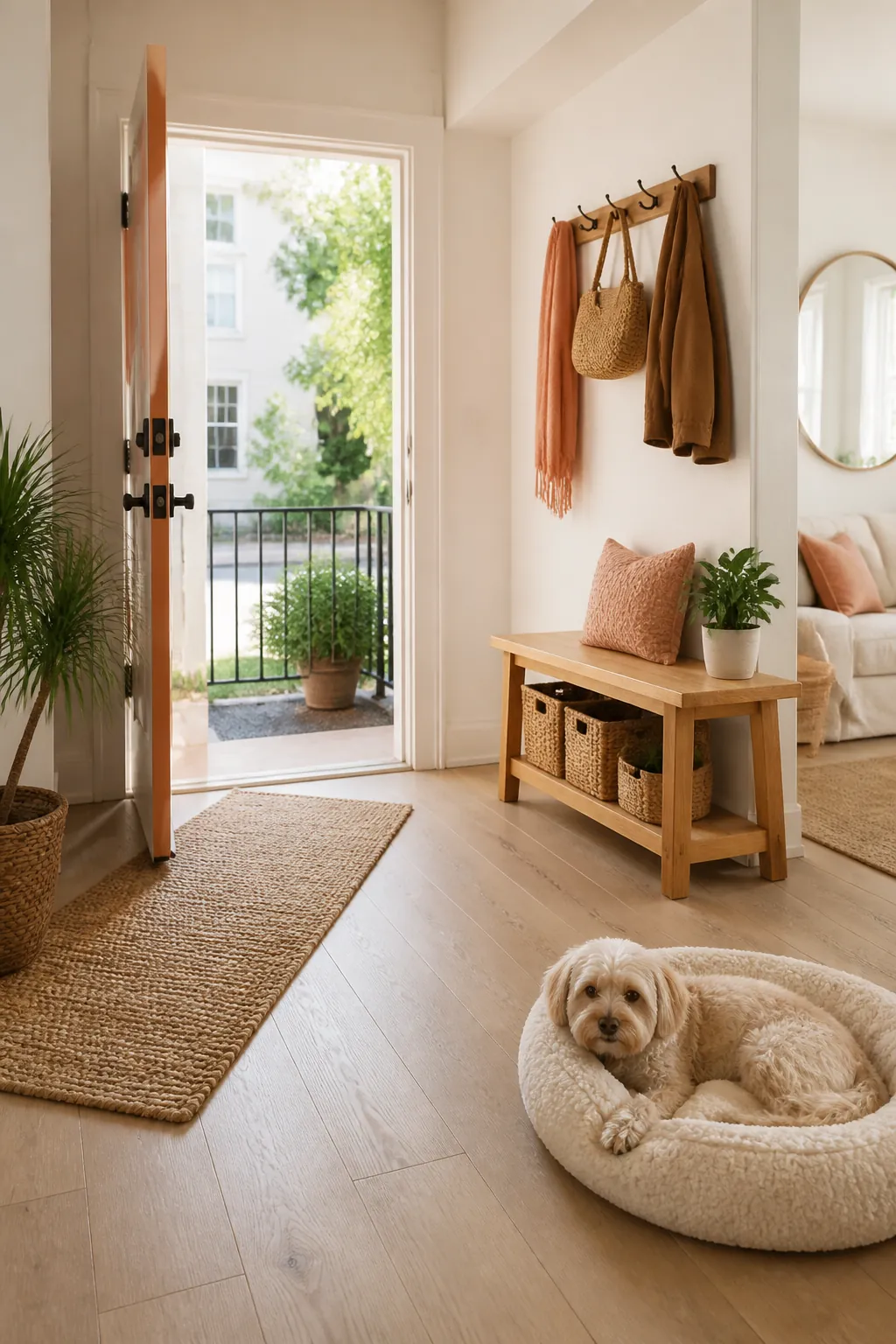
This is the check that gets skipped because everything else in the station gets tested at rest and the door only gets opened all the way once in a while. Open it fully against the wall and look for anything the arc touches: a bench corner, a bin lid, a hook that is a few inches further out than you thought. A station that is fine with the door half open and wrong with it fully open is the kind of mistake you only find during a move, when both hands are full and the door needs to open all the way.
Where to start
Measure before you buy anything. Open the door fully, mark the arc, and find the wall that stays clear. That single check rules out more bad placements than any product review will.
Then buy in this order. The leash hooks first, mounted at hand height into something solid, because they solve the daily annoyance for the least money. The bin next, sized to whatever shelf or cubby you already have, so the small stuff has one home instead of three. The bench last, once you have measured the clear floor it needs and know the door swing will not touch it.
Give the whole thing two weeks before deciding it needs more. A walk station earns its keep by being used without thinking, and that only shows up once the newness has worn off and the leash is back on its hook without anyone making a point of it.