The living room is where the negotiation actually happens. A dog wants to be where the people are, which is exactly the room you would rather not fill with pet equipment. Most apartments resolve this by accident: the bed ends up wherever there was a gap, the toys end up under the coffee table, and nobody is quite happy.
Twelve ways to do it deliberately instead, without giving up the room.
Before any of it, one framing that saves money: a living room dog area is a layout project with a small shopping list attached, not a shopping project. Almost everything that decides whether it works is free, and almost everything for sale is optional. People reverse that and end up with a well-equipped corner the dog does not use.
1. Zone with what you already own
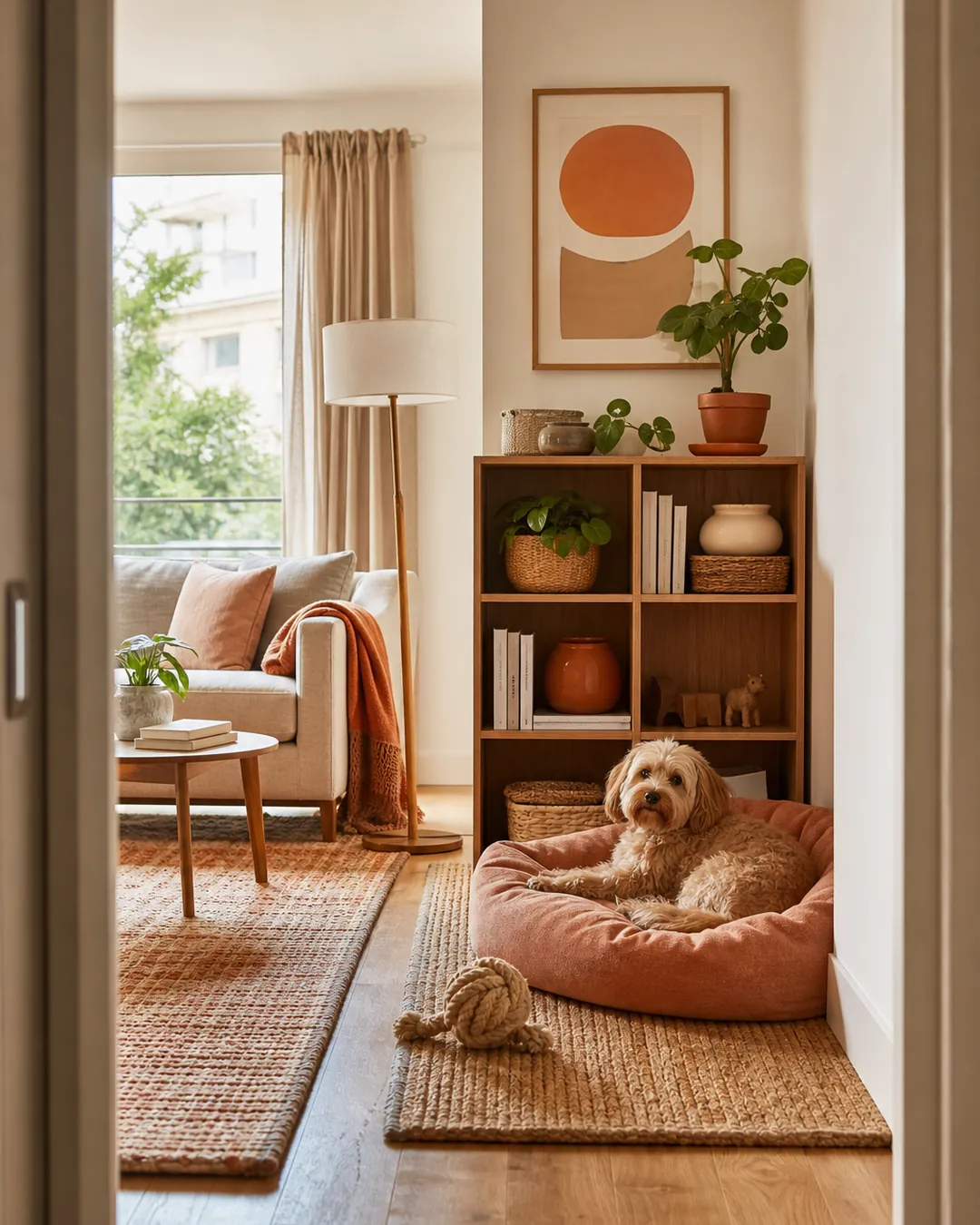
You do not need a wall to define a space. The edge of a rug, the back of a sofa, the side of a bookcase: any of these reads as a boundary to a person, and the dog gets a spot that is clearly its own. This is the entire trick of a living room dog area, and it costs nothing. The zone also does something for guests, who otherwise have no idea where the dog is supposed to be and end up either shooing it or encouraging it onto the sofa.
When the same corner has to serve a cat as well, the zoning gets a vertical layer on top, which is what pet corner ideas for homes with no spare room works through.
2. Put the bed against a wall, not in the open
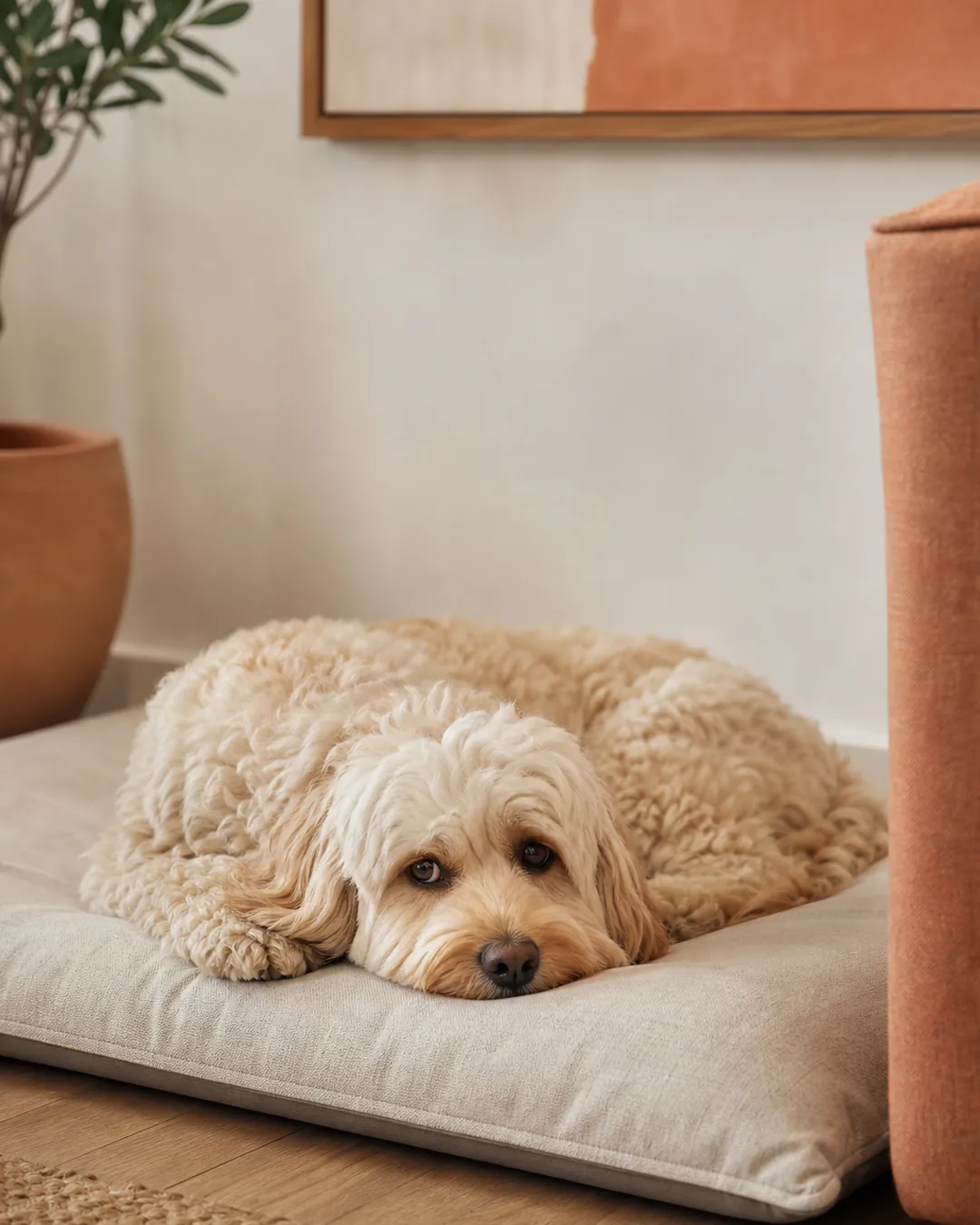
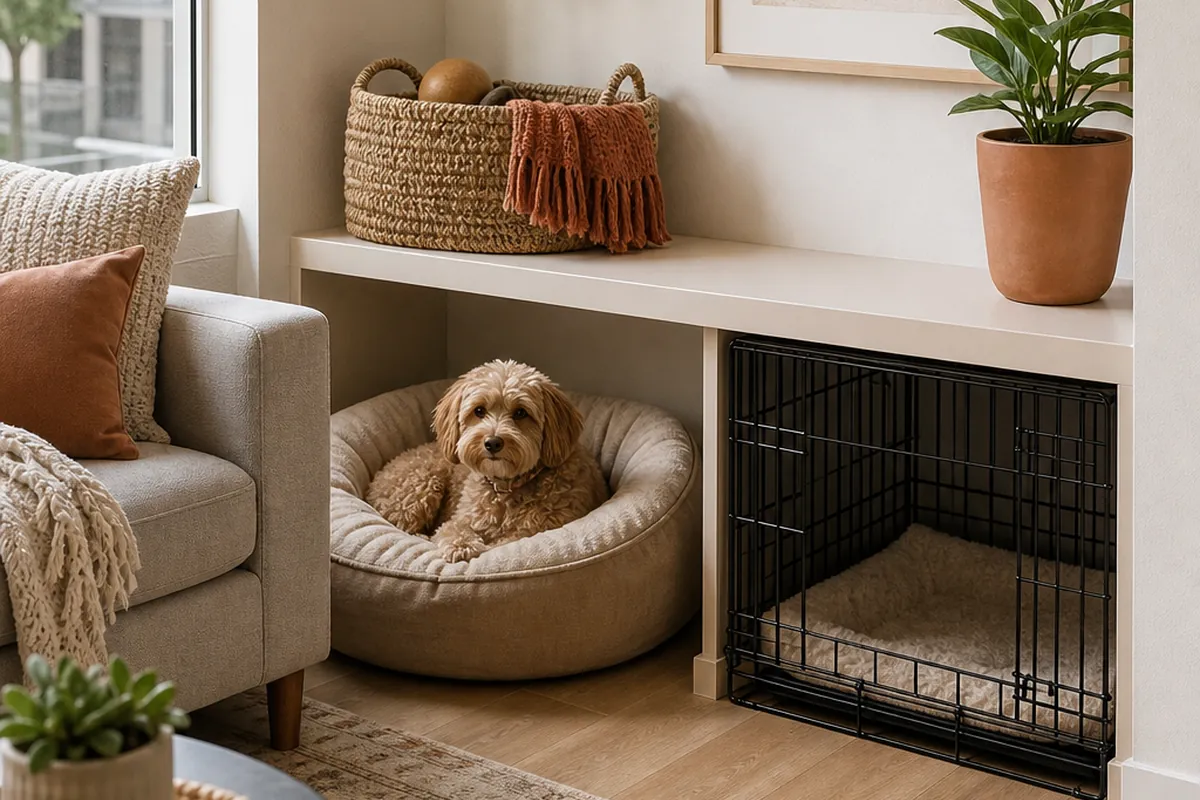
A bed floating in the middle of the floor is exposed on four sides and gets used for naps rather than sleep. Push it to a wall and the dog settles properly. It also stops being something people walk around, which is what eventually gets a bed relocated somewhere worse.
3. Face the door, not the television
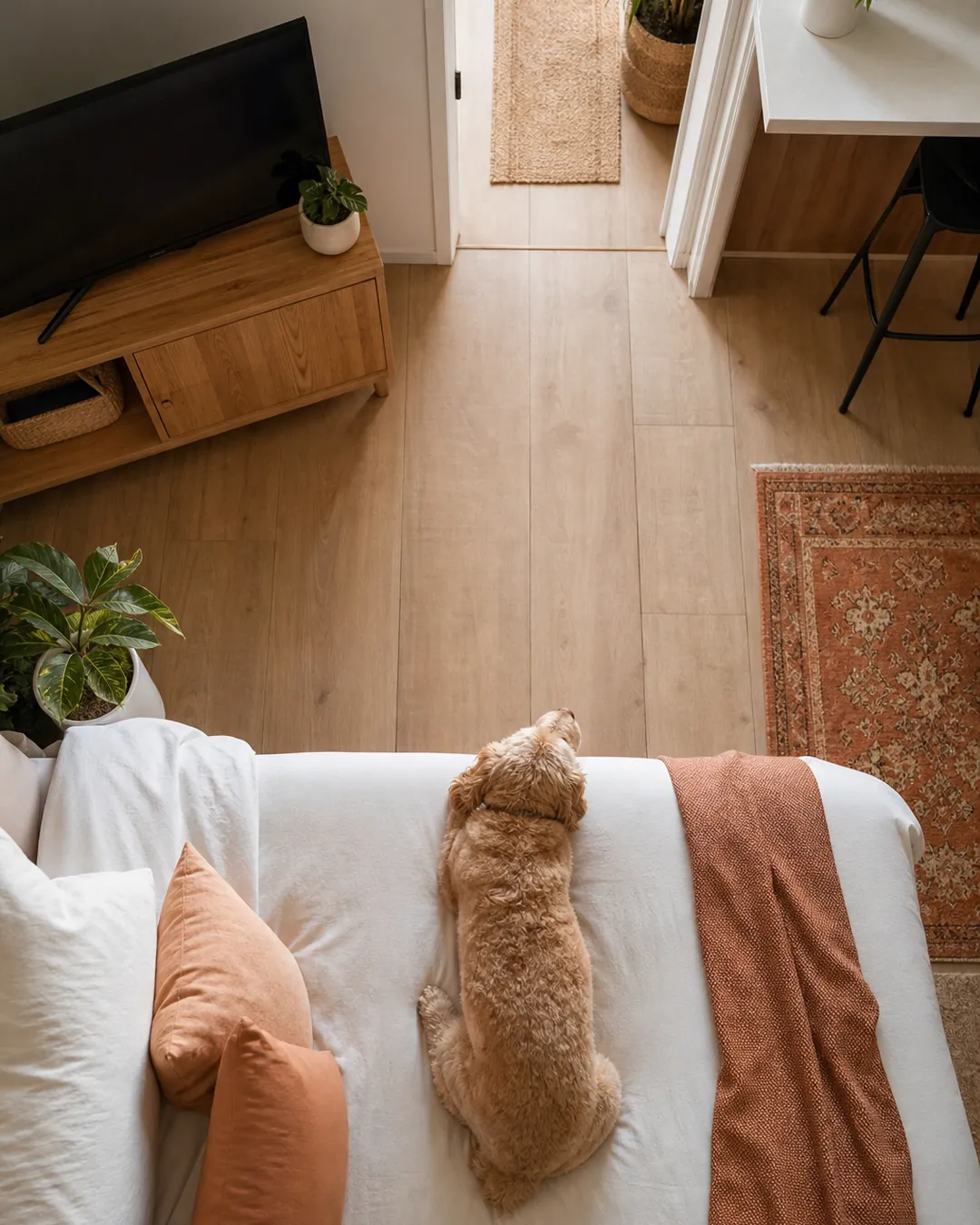
Dogs orient toward arrivals. A bed facing the door lets a dog check who came in without getting up, and a dog that does not have to get up is a dog that actually rests. This is a free change and it makes more difference than most purchases.
4. Buy a bed with sides
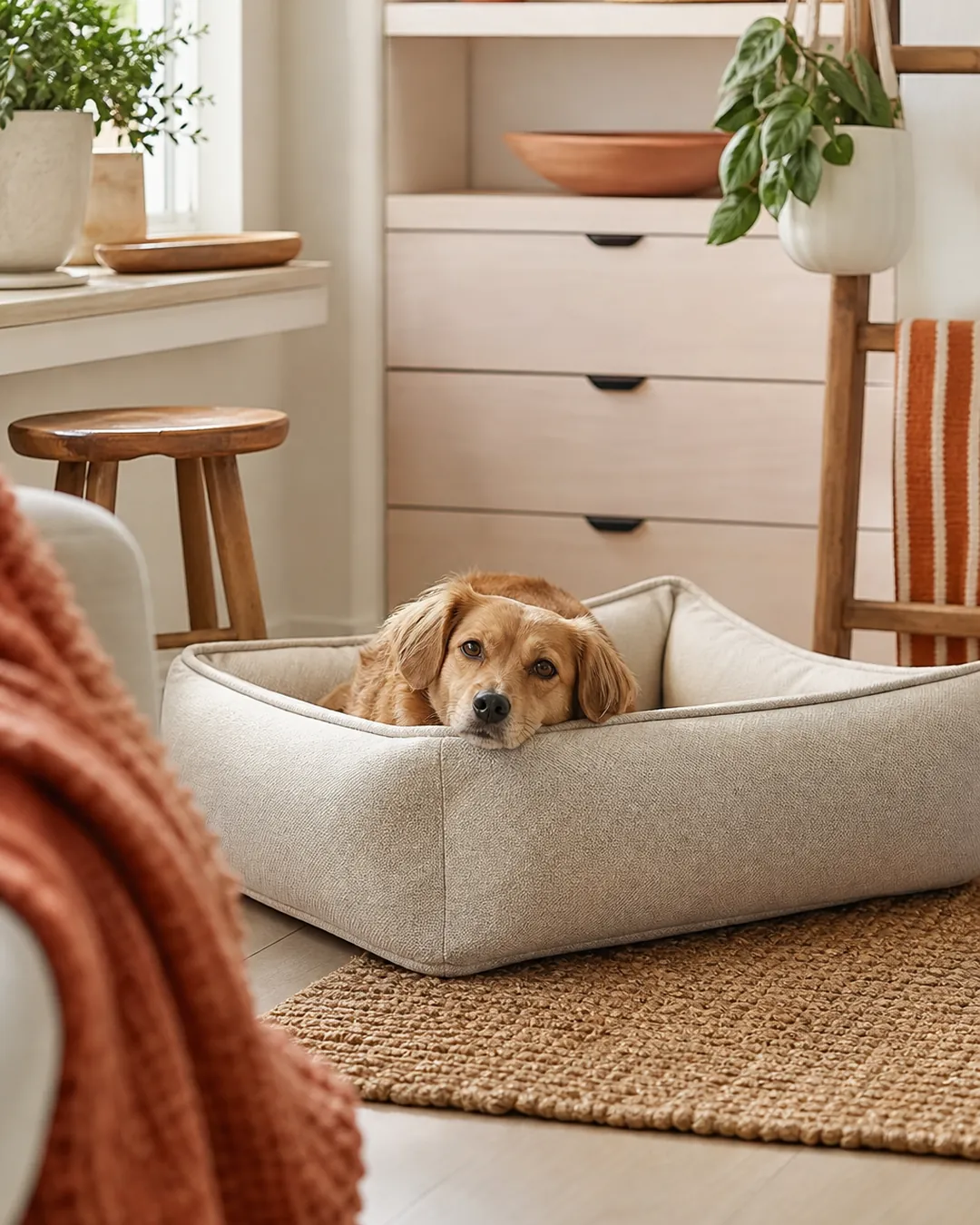
Raised sides give a dog something to lean against and give the eye a defined object rather than a flat pad. A washable orthopedic bed with raised sides reads as furniture from across the room, which a flat mat never does. Check the cover comes off before anything else.
5. Choose the bed color from the room, not the pet aisle
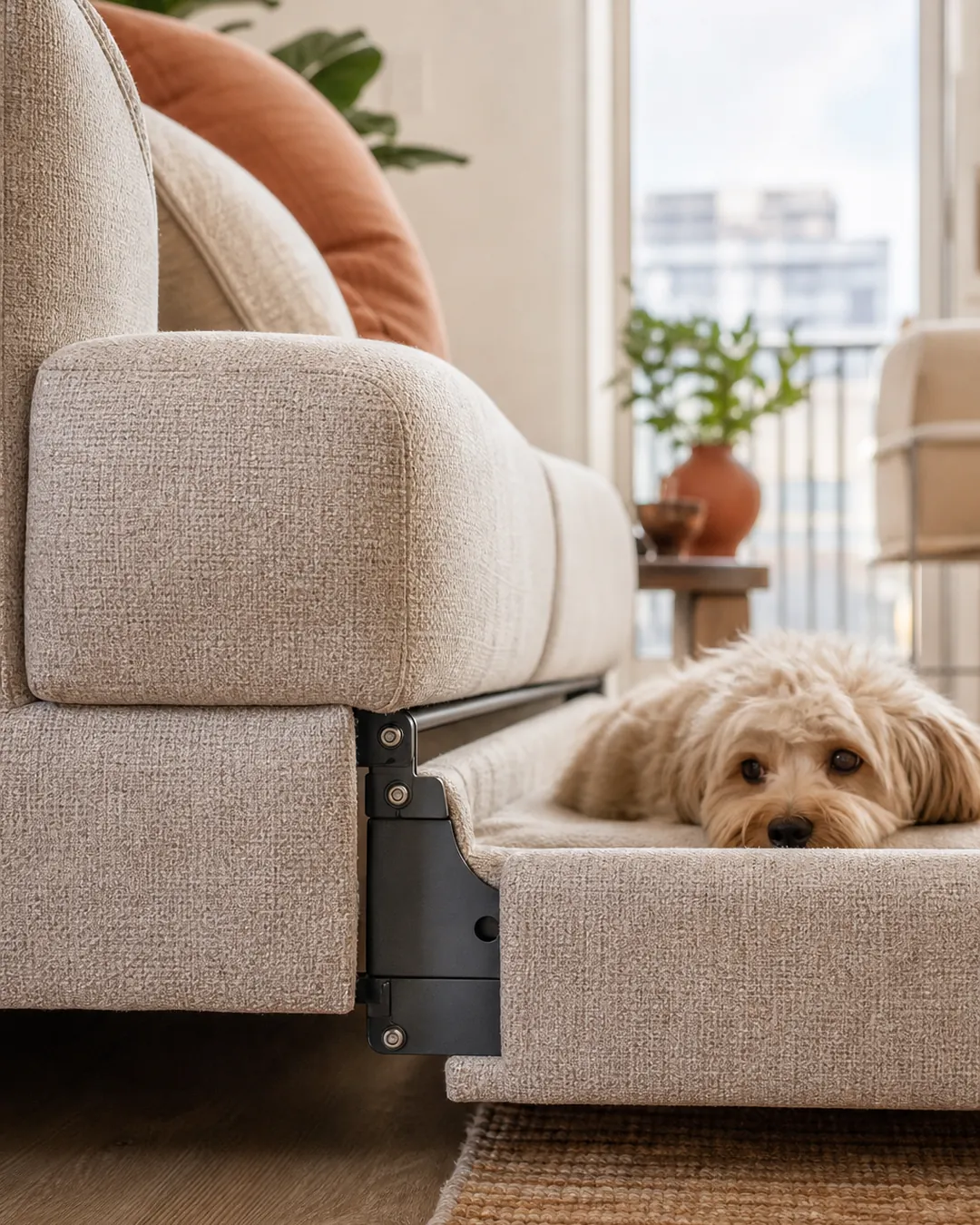
The bed is the largest pet object in your main room. In a color the room already uses it disappears; in bright blue it becomes the thing visitors look at. This is the single decision that separates a living room with a dog in it from a room that looks like a kennel.
6. Put a washable rug under the whole zone
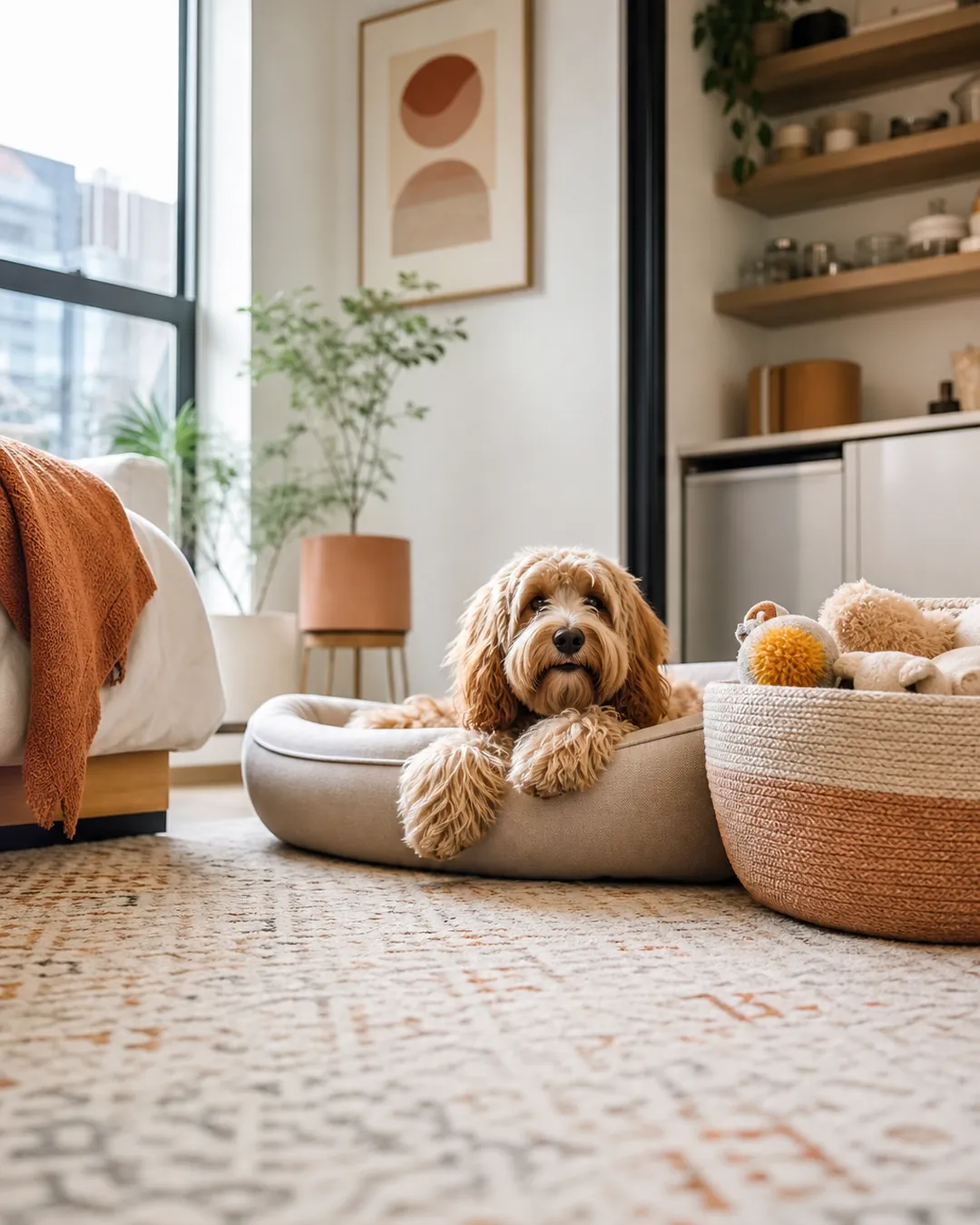
A rug does three jobs at once: it defines the zone, it protects the floor, and it goes in a machine. Hard floor under a washable rug is a far better arrangement than carpet, because carpet holds hair and odor in a way that no routine fully solves. Check the rug actually fits your machine before buying; a lot of rugs sold as washable need a commercial drum, which in practice means they get spot-cleaned forever.
The same logic decides where an indoor potty goes, and apartment dog potty setups that actually work start from the floor under them for exactly this reason.
7. Use a gate that looks like a gate should
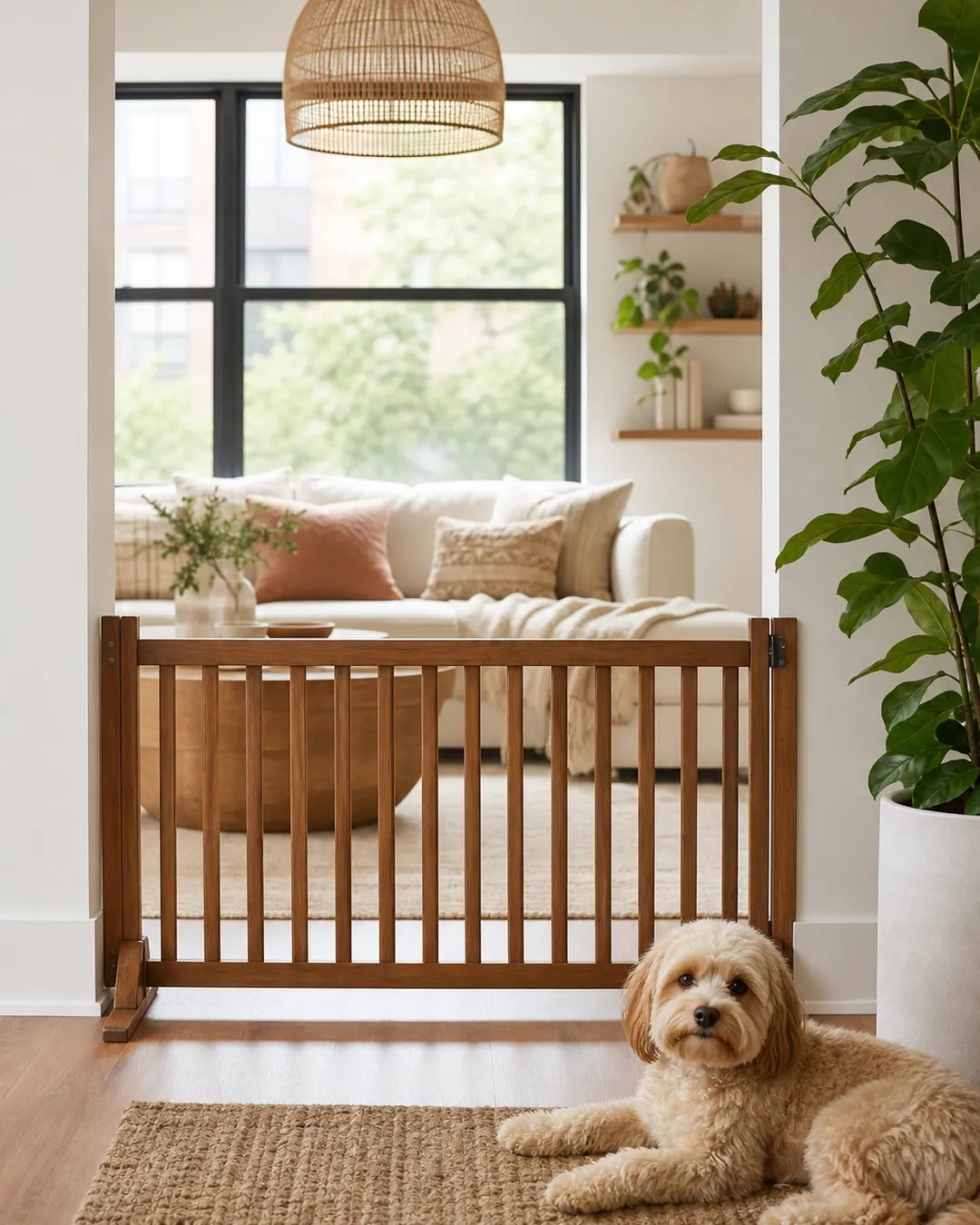
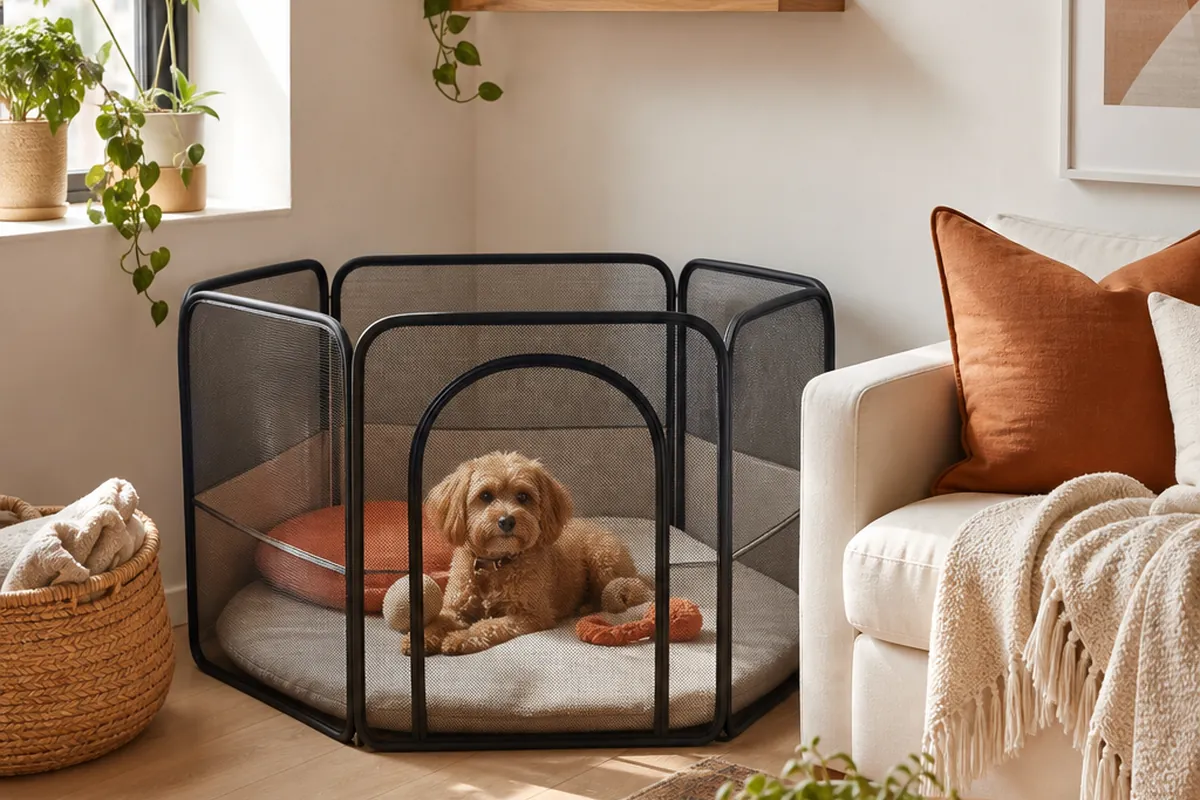
If you need to close off a doorway or a kitchen, the gate is going to be visible, so buy one you can stand to look at. An arched-top wooden dog gate reads as a piece of joinery rather than a safety product, which matters when it lives in your main room.
8. Prefer freestanding to pressure-mounted where you can
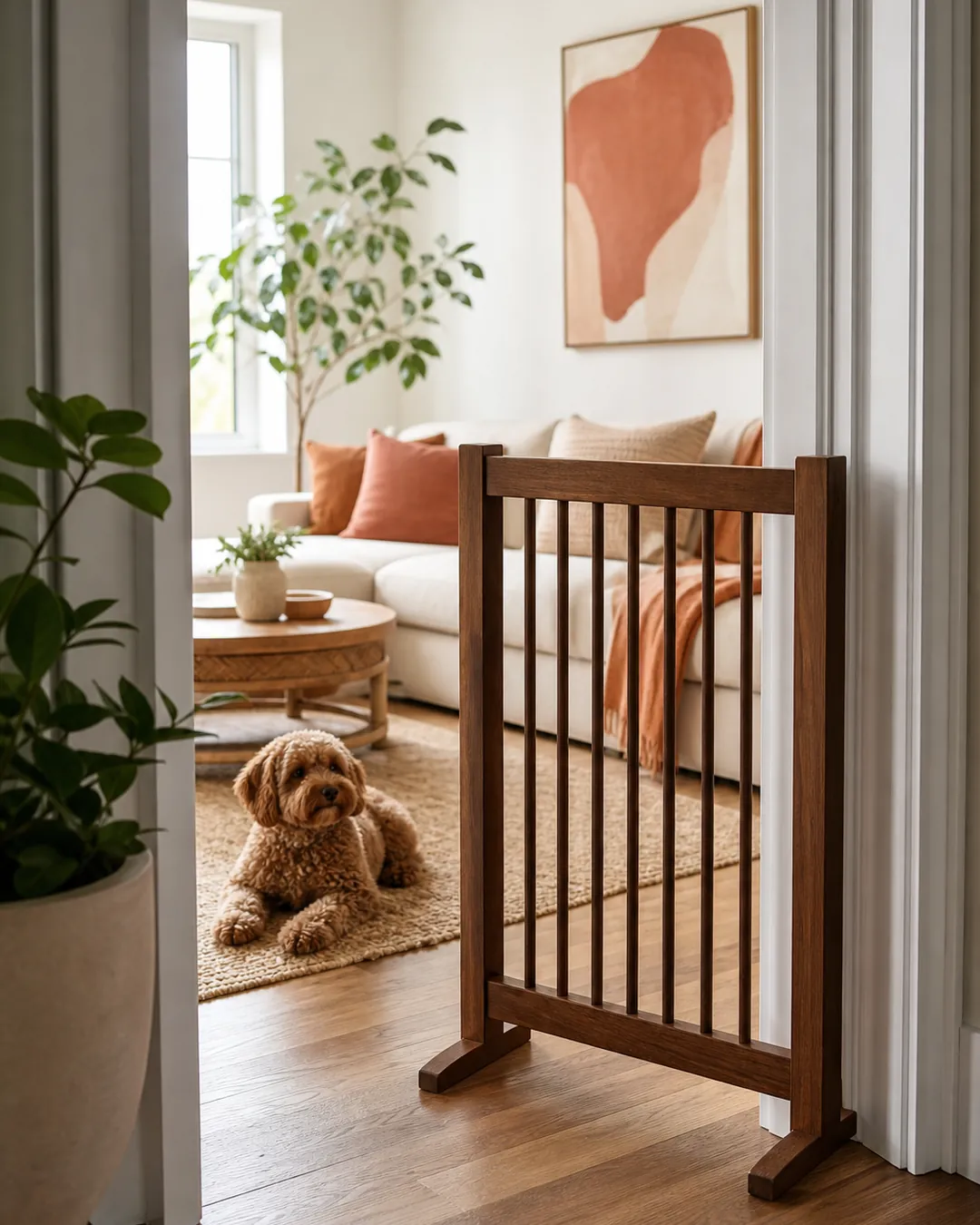
Pressure gates mark door frames over time, and in a rental that is a real cost. A freestanding gate folds away when you do not need it, which suits an apartment that needs a barrier occasionally rather than permanently. It is also the only kind you can move between doorways.
9. Contain the gear in something that has another job
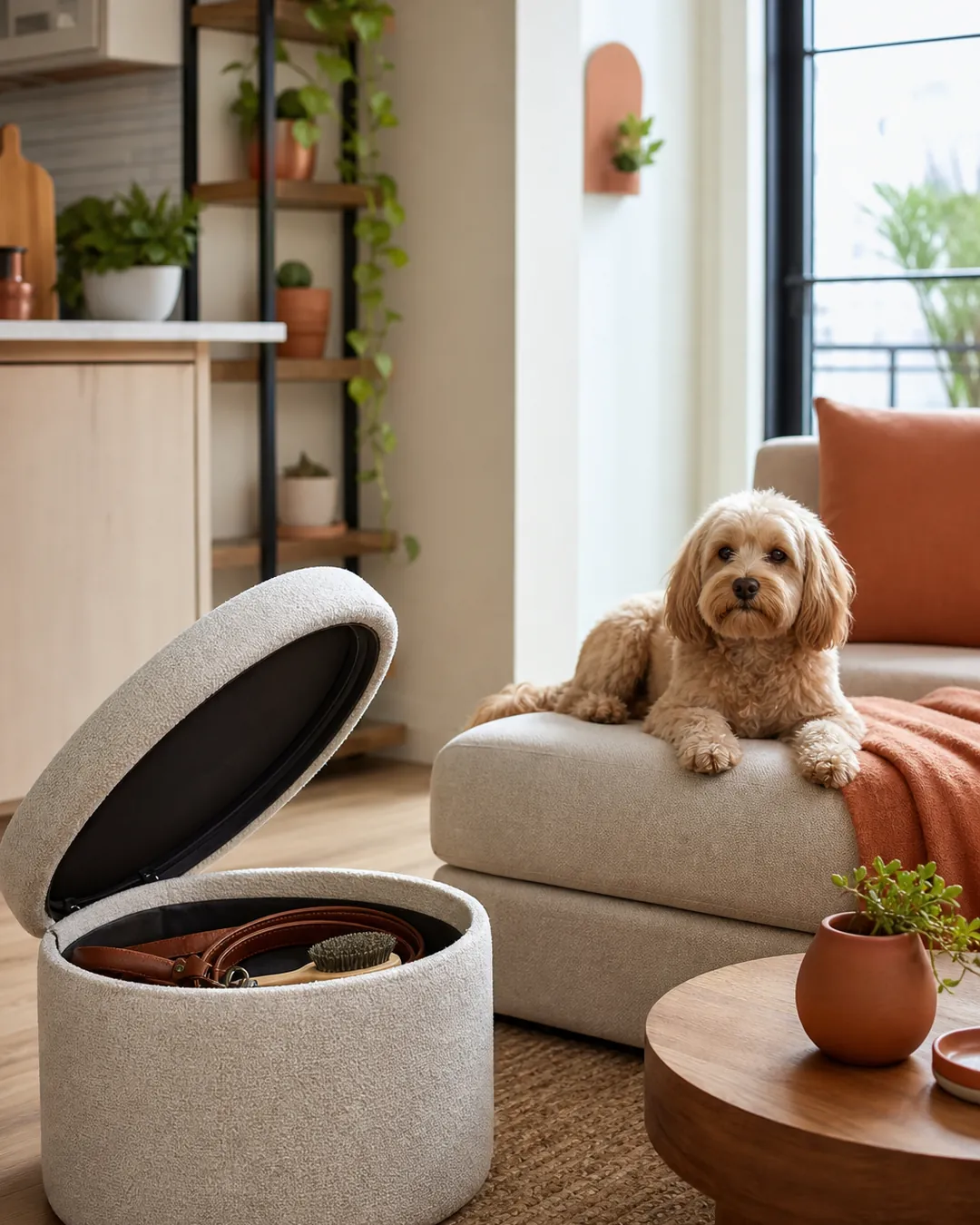
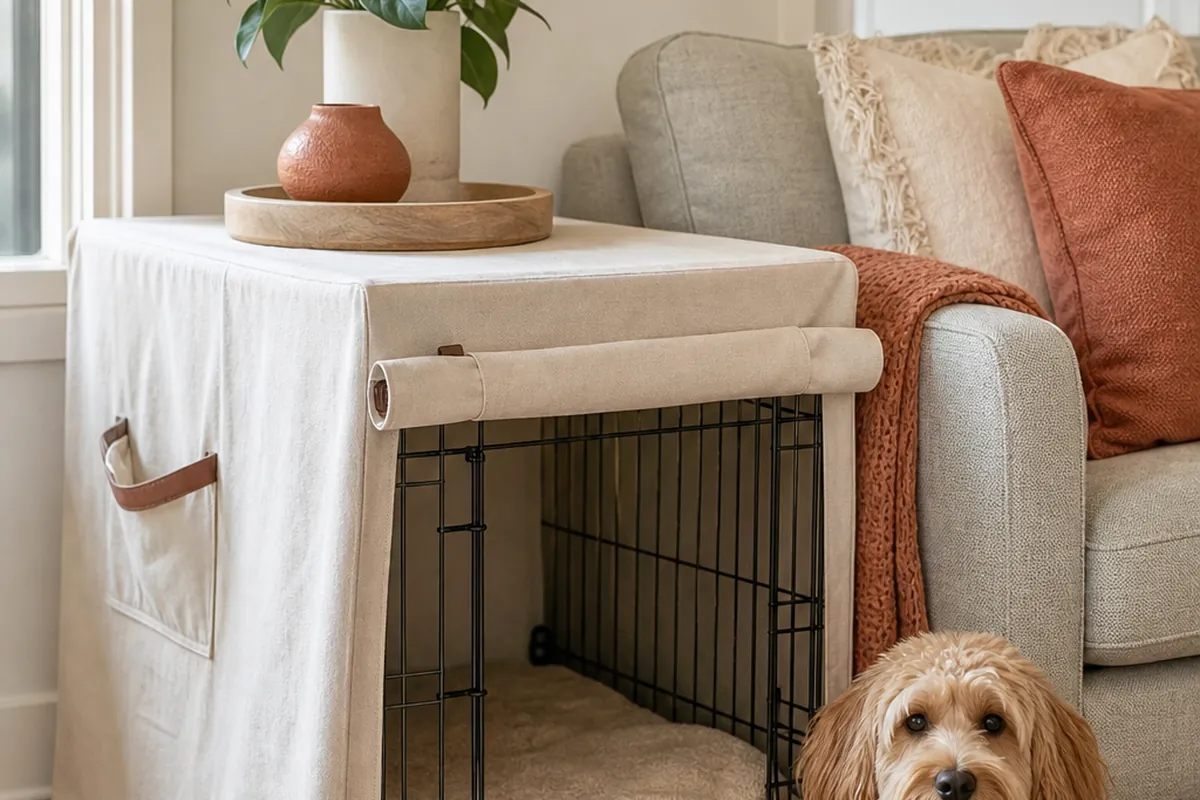
Leashes, brushes, spare towels and the bag of treats are what turn a tidy corner into a heap. A folding storage ottoman swallows all of it and gives you a footrest or extra seating, which is the same dual-purpose logic that makes crate furniture work.
The food is the one category that should not go in the ottoman, since it needs to stay sealed and near the bowls; dog feeding station ideas with built-in storage deals with that side of the gear separately.
10. Keep the toys to one visible container
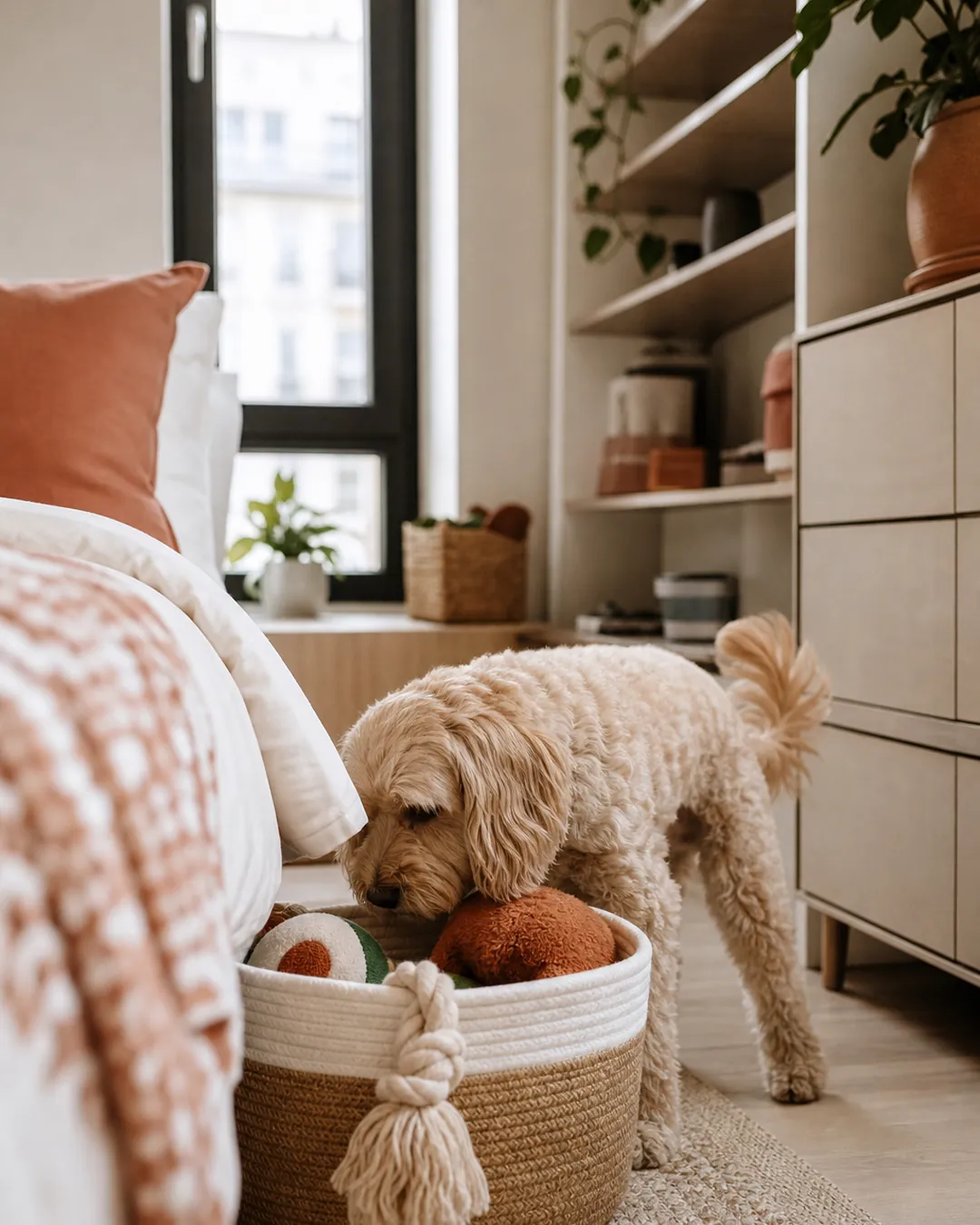
Dogs need to be able to get their own toys, so a lidded box in a cabinet defeats the point. One open basket, in the zone, is the compromise that works: the dog can help itself and you can tidy the room in ten seconds.
11. Leave a clear run to the door
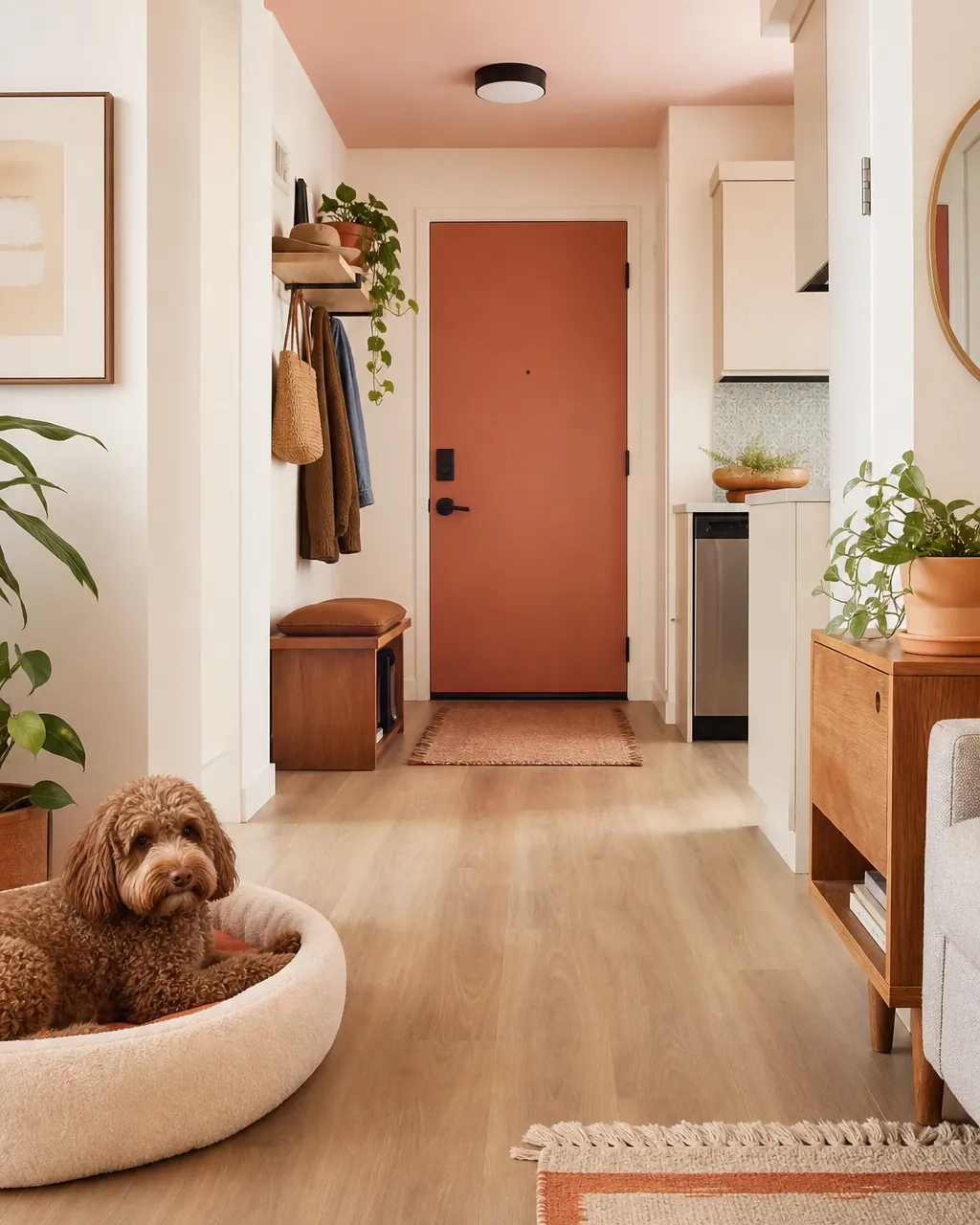
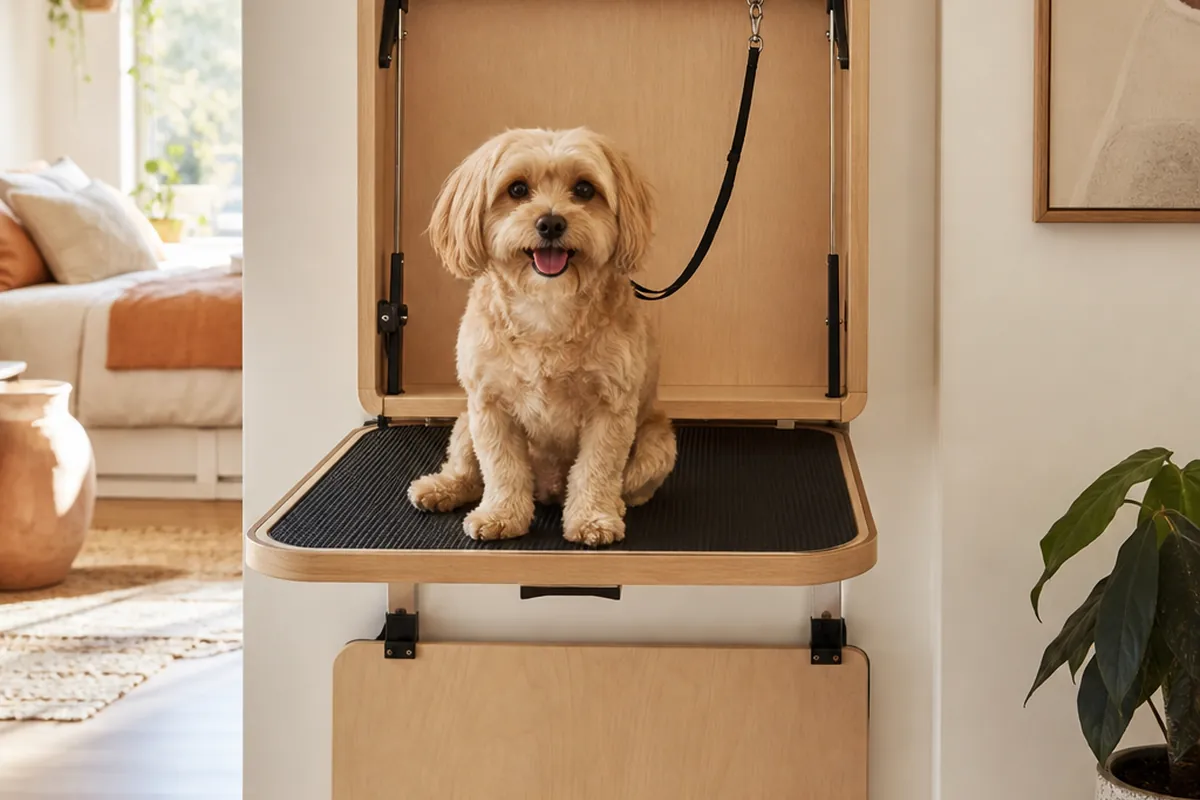
A dog that hears the buzzer will move, and it will take the shortest line. If that line goes through a coffee table, you will find out. Keep one clear route from the dog’s spot to the front door, and the excitement stops being a hazard. This matters more on hard floor than on carpet, because a dog accelerating on laminate does not corner, and the furniture it fails to corner around is usually the lightest thing in the room. The end of that route is worth planning too, because a dog walk station by the front door puts the leash, the bags and the paw towel on the wall beside the door instead of on the floor the dog is running across.
12. Give the dog a second spot for when guests come
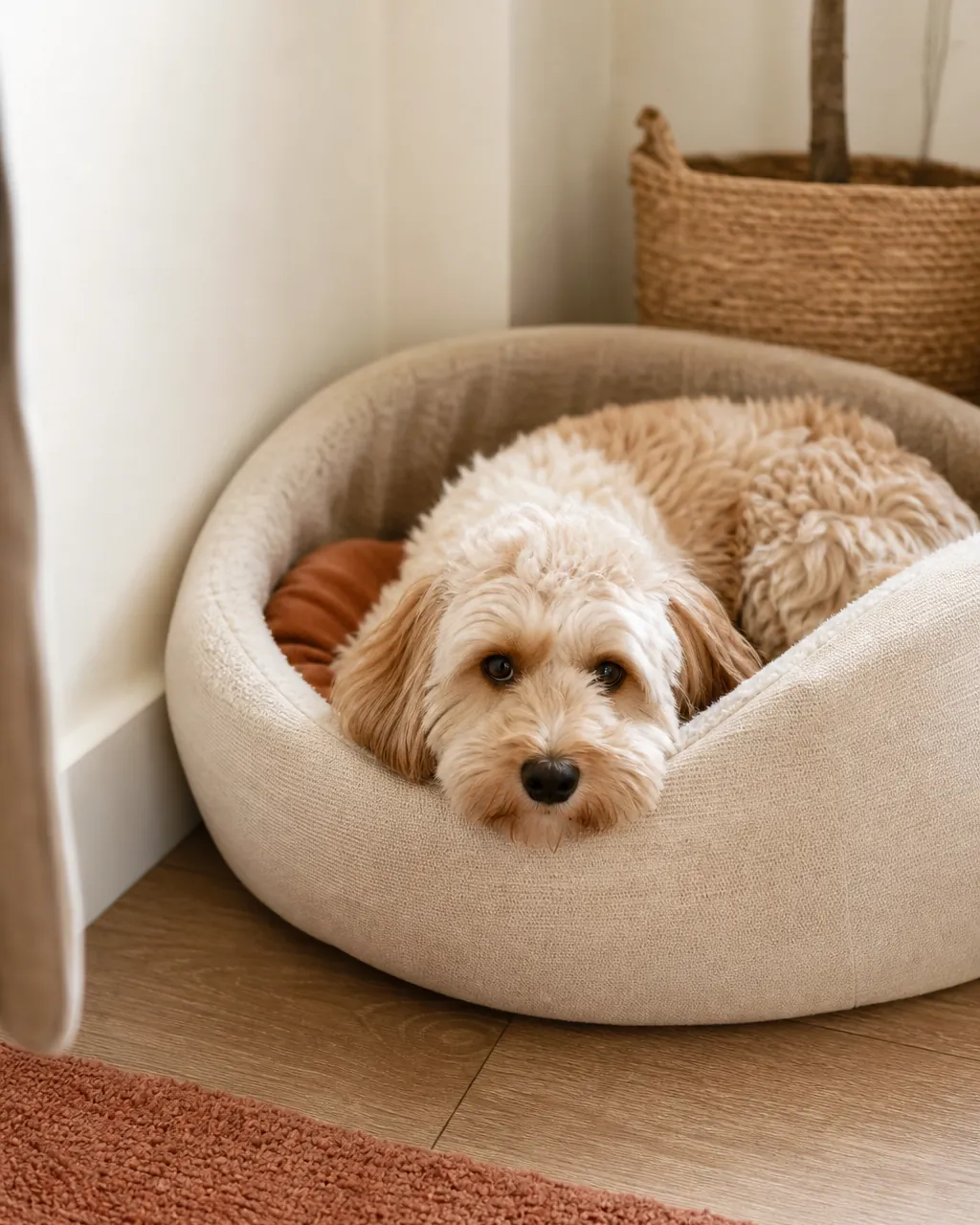
A single bed in the middle of the social area works badly when the room fills with people. A second, quieter spot, behind the sofa or in the next room, gives a dog somewhere to withdraw to without leaving entirely. This is the idea people skip and then wonder why the dog spends parties underfoot.
Where to start
Sit on your sofa and look at where the dog currently lies. Almost every dog has already picked a spot, and it is usually against something with a view of the door. That spot is your answer, and it is more reliable than any plan drawn on paper.
Then make three changes before buying anything: move the bed to a wall, turn it to face the door, and clear the route to the front door. Live with it for a week. A large share of living room dog problems are placement problems, and placement is free.
One thing worth deciding early is whether the dog is allowed on the sofa, because the whole layout follows from it. A dog with sofa rights needs a bed that competes with the sofa, which usually means elevated or bolstered and placed with an equally good view. A dog without them needs its spot to be obviously better than the floor, which is a much lower bar. Deciding halfway through is what produces a room with three beds in it and a dog on the sofa.
When you do buy, go in this order. The rug first, because it defines the zone and protects the floor. The bed second, in a color the room already uses. Storage last, and only the kind that also does something for you, because a container that exists solely to hold dog gear is another object competing for the same small room.