The question behind every pet corner is not where the animal sleeps. It is where the animal goes when it wants to be near you and not underfoot, because in a home with no spare room those two things are usually in conflict. A corner solves it by supplying two walls you already own and asking for almost no floor in return.
Ten ideas for making one work, most of which cost nothing.
1. Choose the corner by sightline, not by emptiness
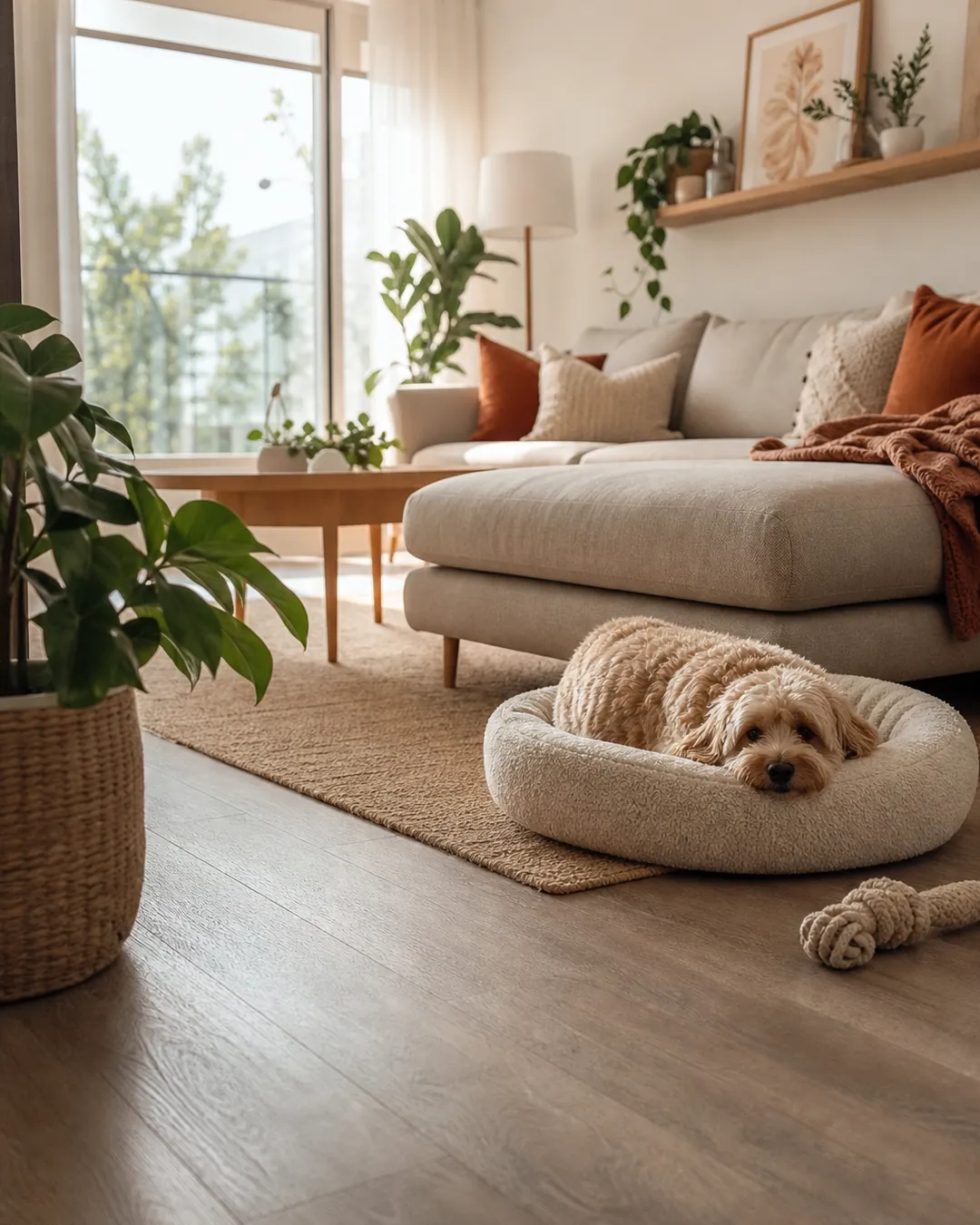
The corner that is free is rarely the corner that works. Crouch to the animal’s height in each candidate and look out. If you cannot see the sofa, the desk or wherever you actually spend your evenings, the animal cannot either, and it will lie in the doorway instead. This one test eliminates about half the options in most homes, and it usually rules out the corner behind the door that looked so convenient.
2. Keep it off the walking route
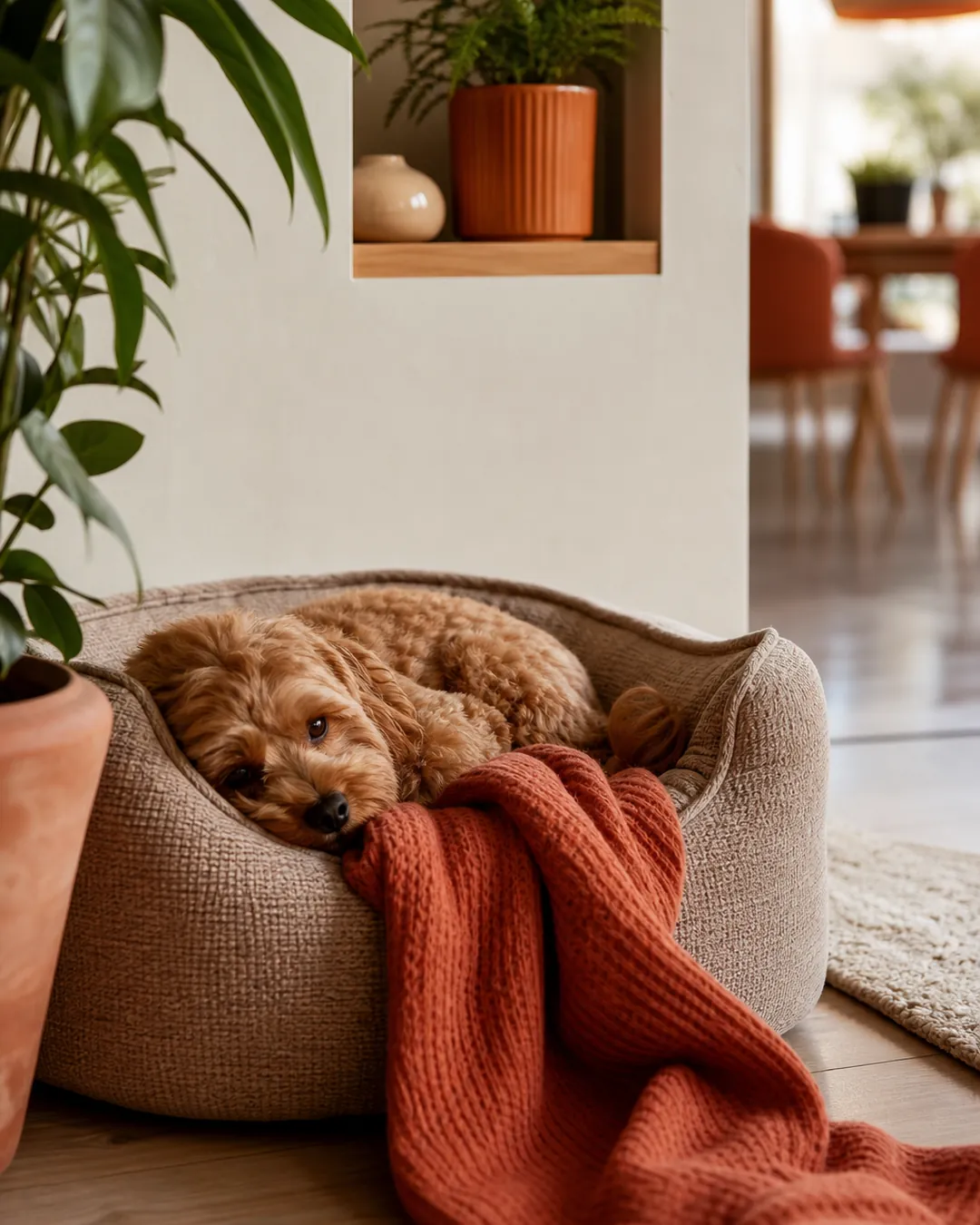
A corner in a traffic path is a corner the animal is stepped over in. Watch your own movement through the room for a day: door to kitchen, kitchen to sofa, sofa to window. The good corners are the ones outside those lines, and they are frequently the ones holding a plant stand or a laundry basket that could go elsewhere. Tape the footprint on the floor before you commit, because a corner that looks generous when empty gets noticeably tighter once a bed and a storage bin are in it, and moving a settled animal is harder than moving a plant. Settle the corner before December, too, because a cat-proof Christmas tree in a small apartment wants the same kind of off-route corner, and the two should not end up competing for it.
3. Stack the corner if you have two species
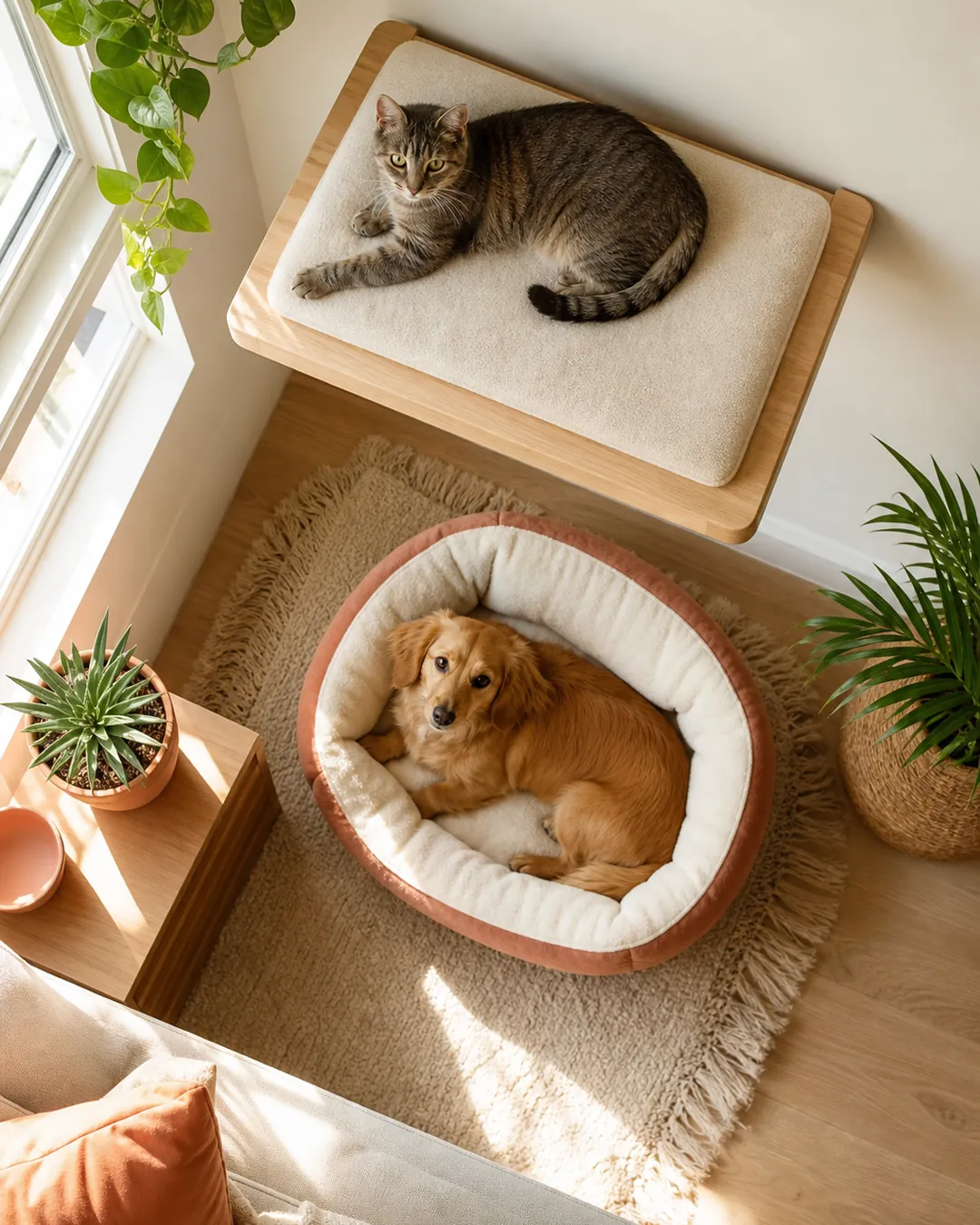
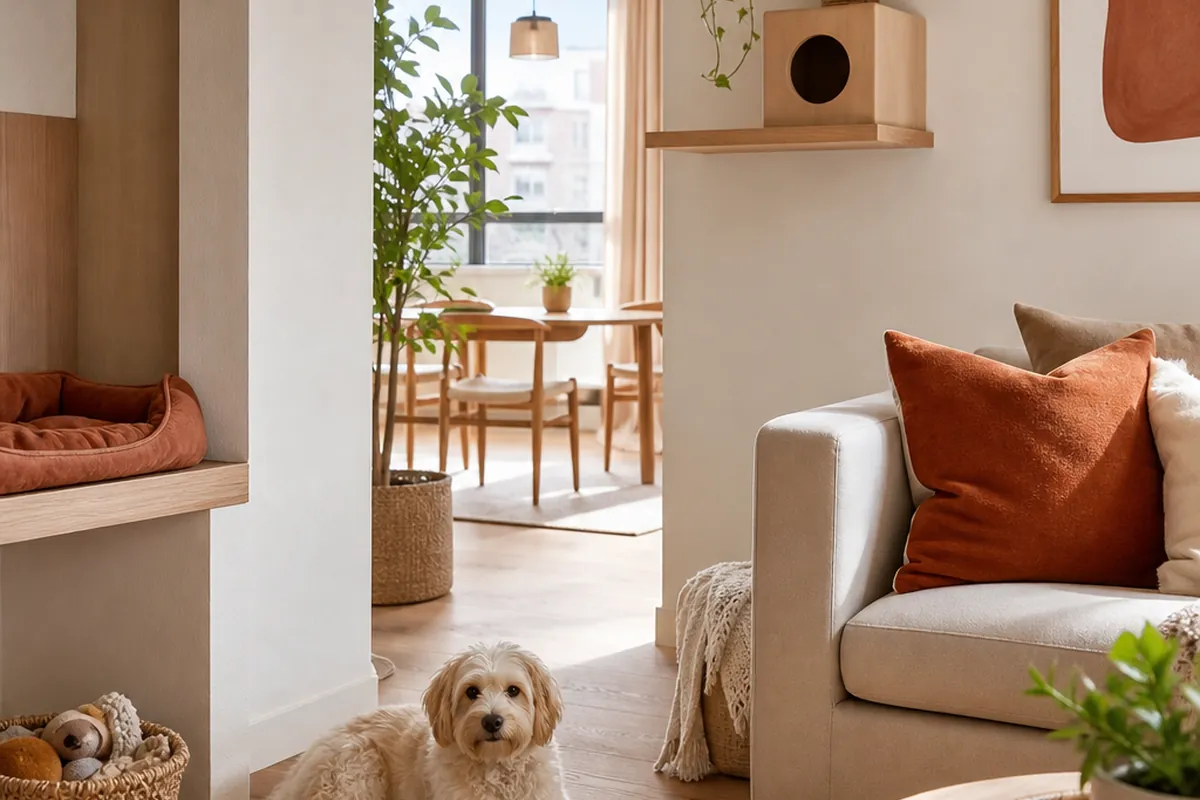
A corner is not one place. It is floor, wall and the air in between. A corner wall shelf with a cushioned platform gives a cat height in the same square foot where a dog bed sits on the floor, and the vertical separation is what makes sharing work. Give each one its own approach, so neither has to pass the other to get in or out. Mount the cat’s platform high enough that a standing dog cannot reach it with its nose, which is usually somewhere above chest height rather than at the top of the wall. The point is separation the cat can rely on, not maximum altitude.
4. Size the bed to the corner, then to the animal
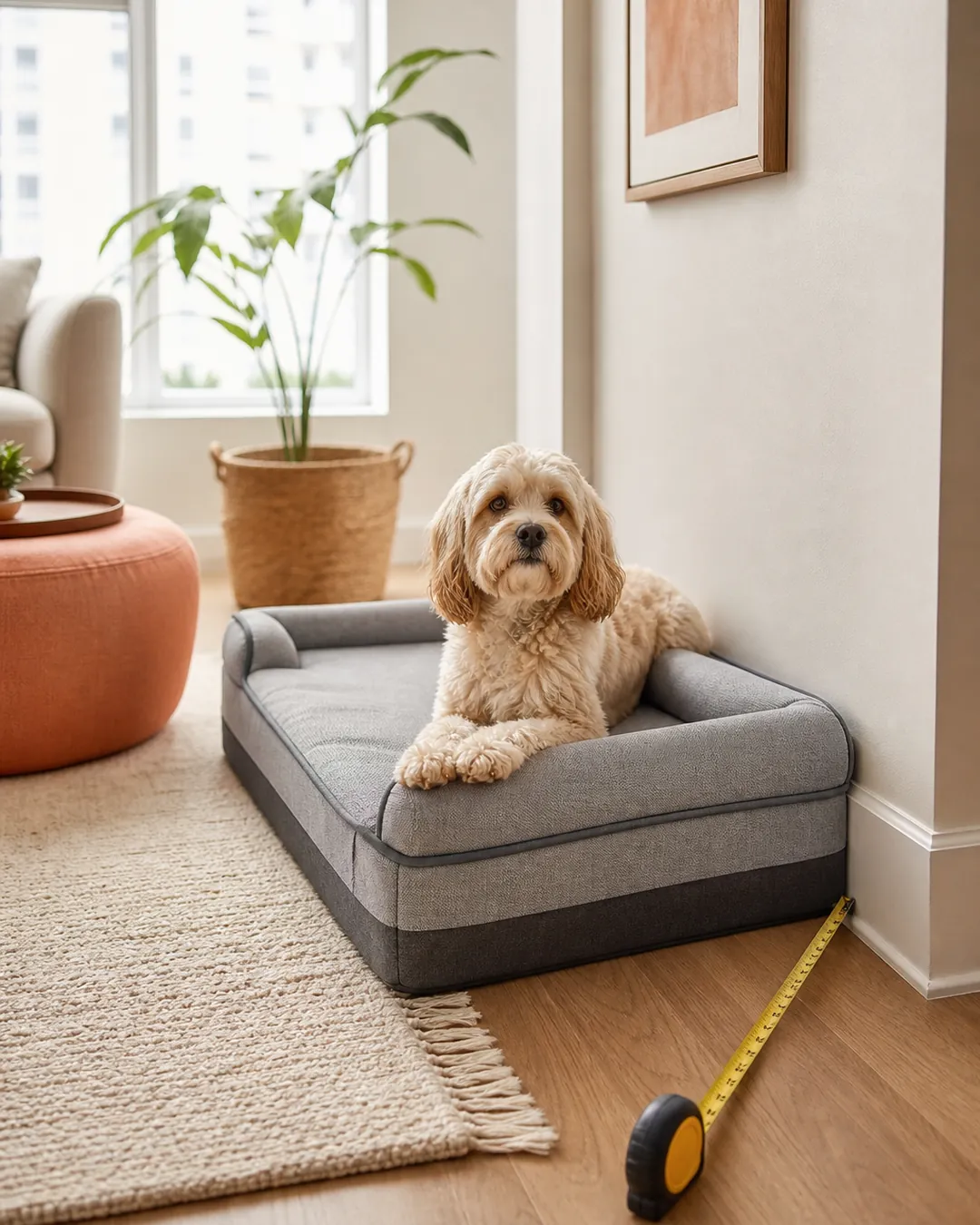
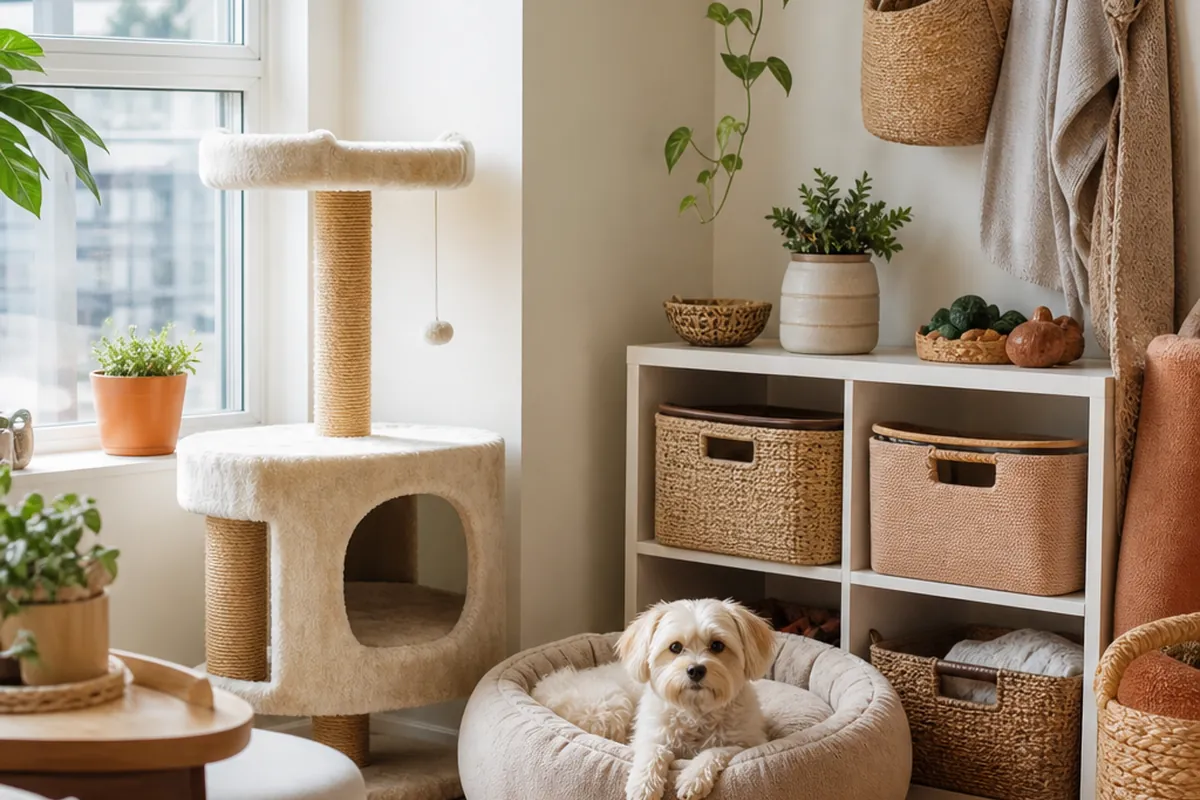
Measure the pocket first and buy to it, leaving a few inches on the open side. An orthopedic bed in a washable cover fits a corner properly if you have checked the corner is square, which in older buildings it frequently is not. A bed wedged in tight leaves no room to circle before lying down, and most dogs circle. The same clearance matters for getting out, since an animal that has to reverse out of a tight corner will avoid it as it gets older, which is exactly when a comfortable spot matters most.
5. Give the gear a container before it arrives
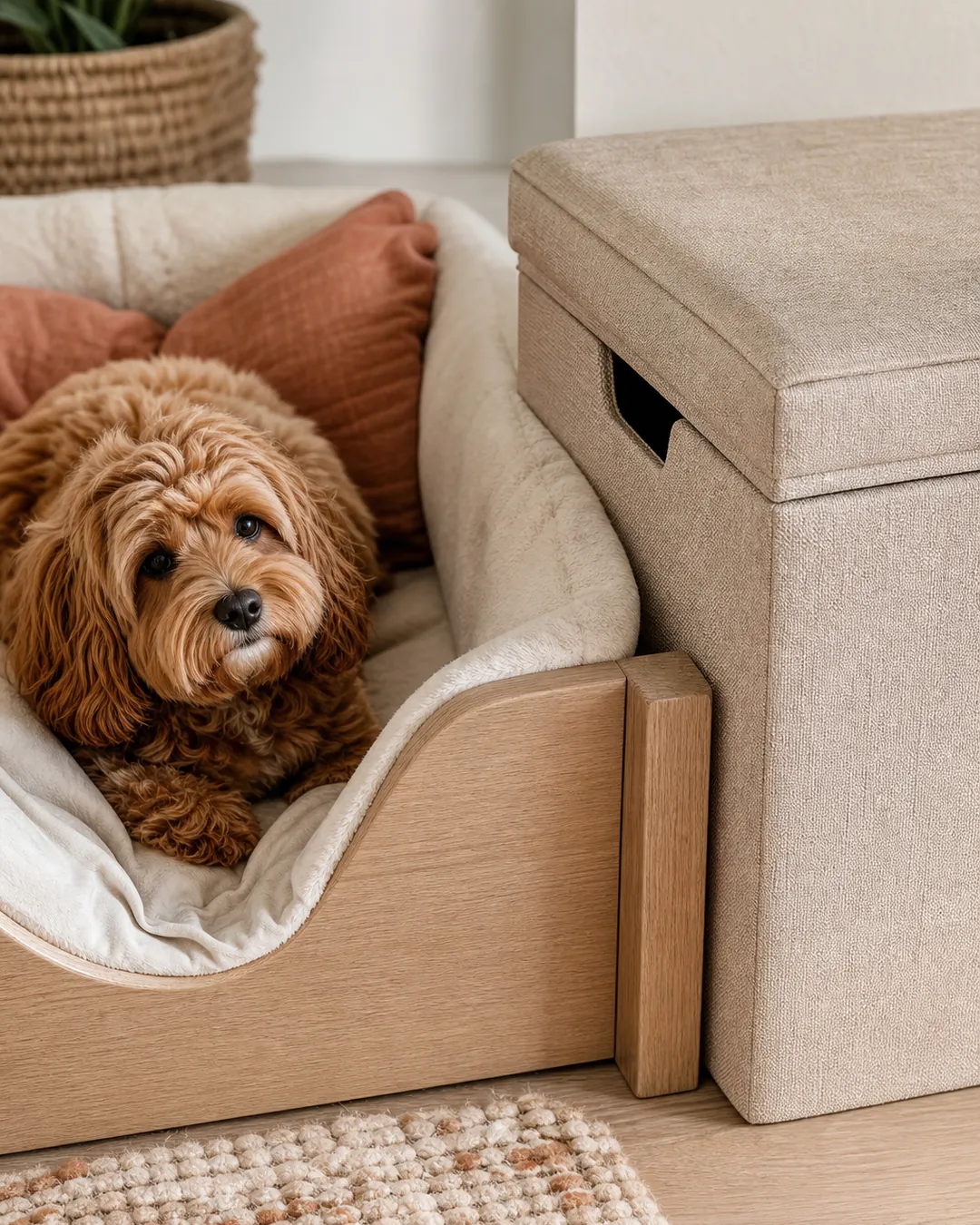
Every pet corner acquires leashes, spare toys, a brush, a half-used bag of treats. Without a home they sit on the floor and the corner becomes a heap. A lidded fabric storage bin beside the bed absorbs the whole category, folds flat when you no longer need it, and reads as furniture rather than pet equipment because of the material.
6. Put the daily toys somewhere open
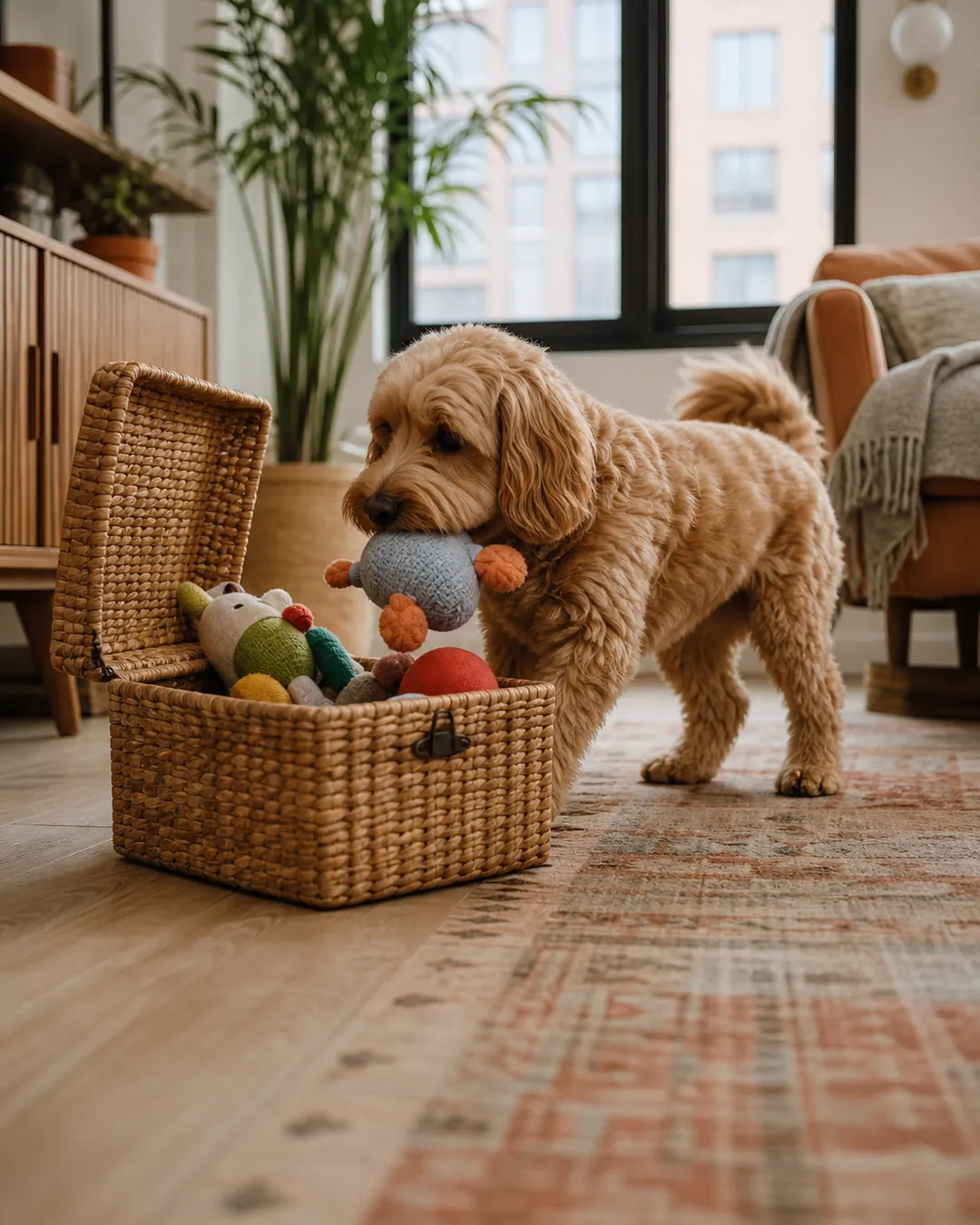
The lidded bin is for what you manage. The four or five toys in daily use want an open basket the animal can reach itself, otherwise every retrieval is your job and a system that depends on you lapses. Two containers, one closed and one open, cover both cases without either becoming a pile. Keep the open one small on purpose. A basket sized to hold every toy you own is an invitation to keep every toy out, and capacity shapes behavior more reliably than intention does.
7. Take the storage vertical
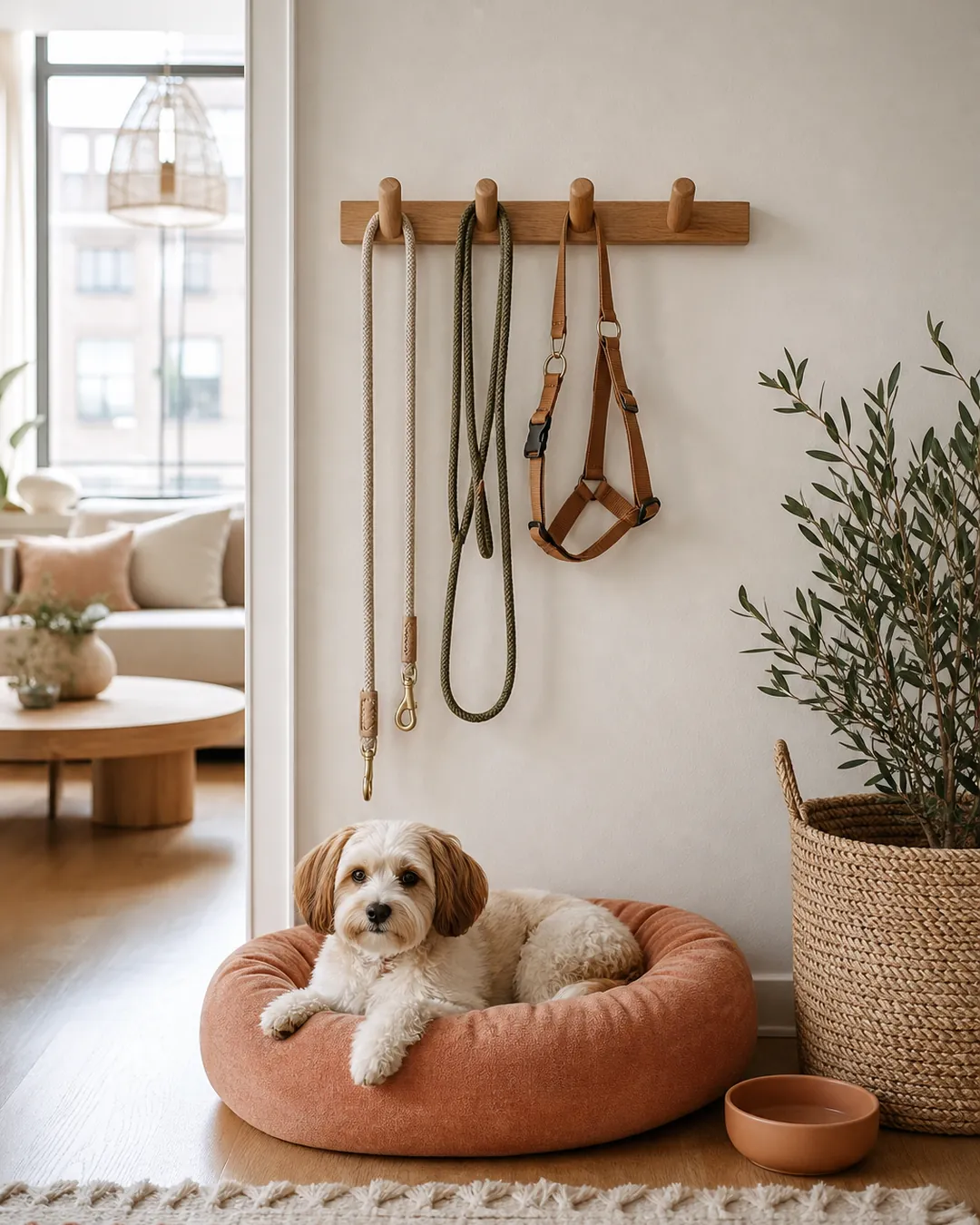
The corner has two walls, and walls are the space nobody uses. Hooks for leashes and harnesses above the bed keep the floor clear for the animal, which is what the corner is for. Mount them high enough that a wagging tail passes underneath, and keep the lowest hook above nose height if the dog is interested in what hangs there. A shallow shelf above the hooks holds the things that have no other home, the poop bags, the spare collar, the towel for wet days, and getting those four items off the floor is most of what makes a corner look deliberate rather than accumulated.
8. Watch what the corner is made of
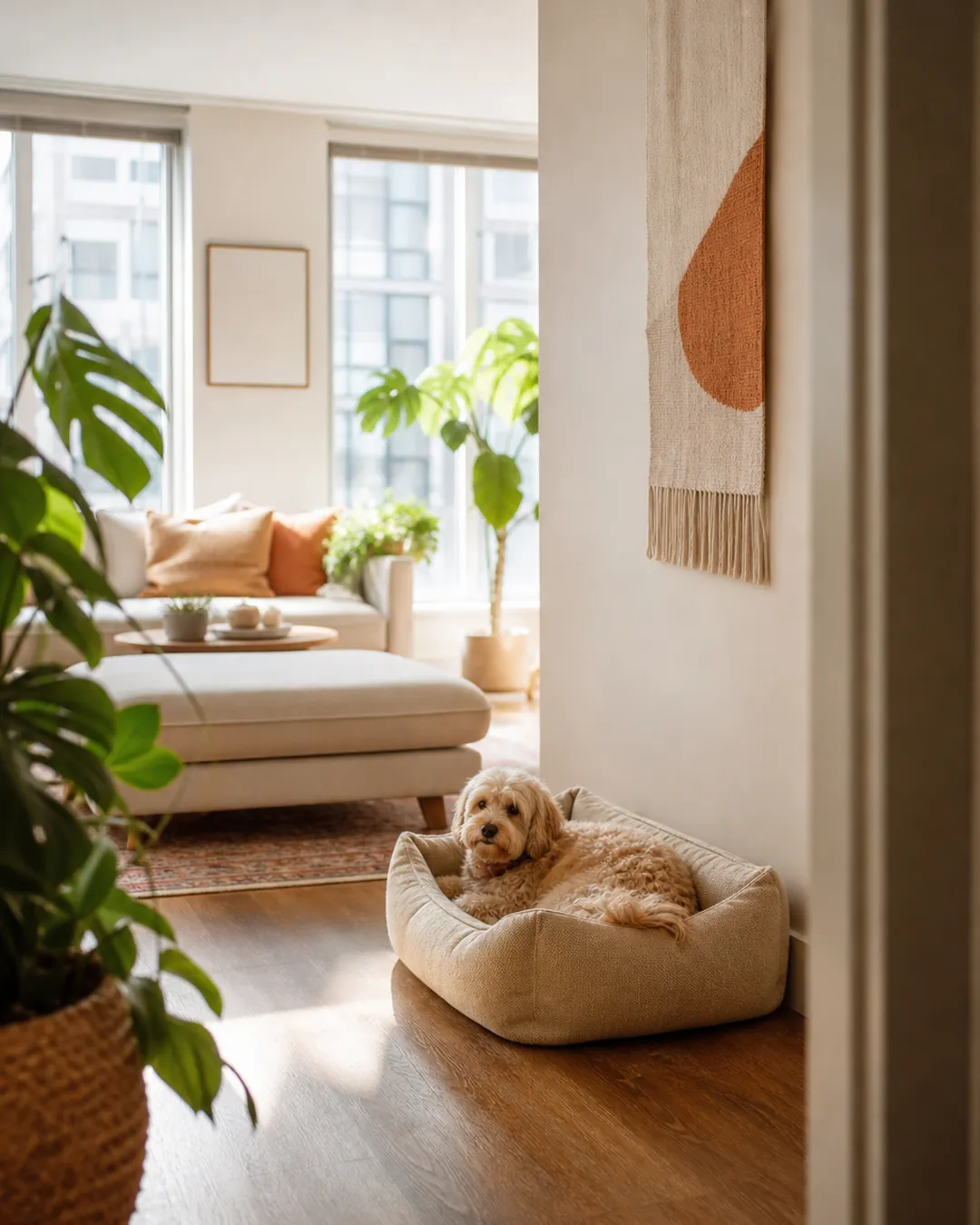
Corners on outside walls run colder than the room, and hard surfaces on two sides echo more than open floor. A bed with raised sides handles both, and a fabric panel or a hanging on the coldest wall costs almost nothing. Animals relocate quietly rather than complaining, so a corner that is abandoned in winter is usually telling you about temperature rather than about the bed. Check what is directly above and behind as well: a radiator makes a corner excellent in January and unusable in June, and a bed under a window catches a draft at floor level that you never feel standing up.
9. Do not put it under a shelf you use
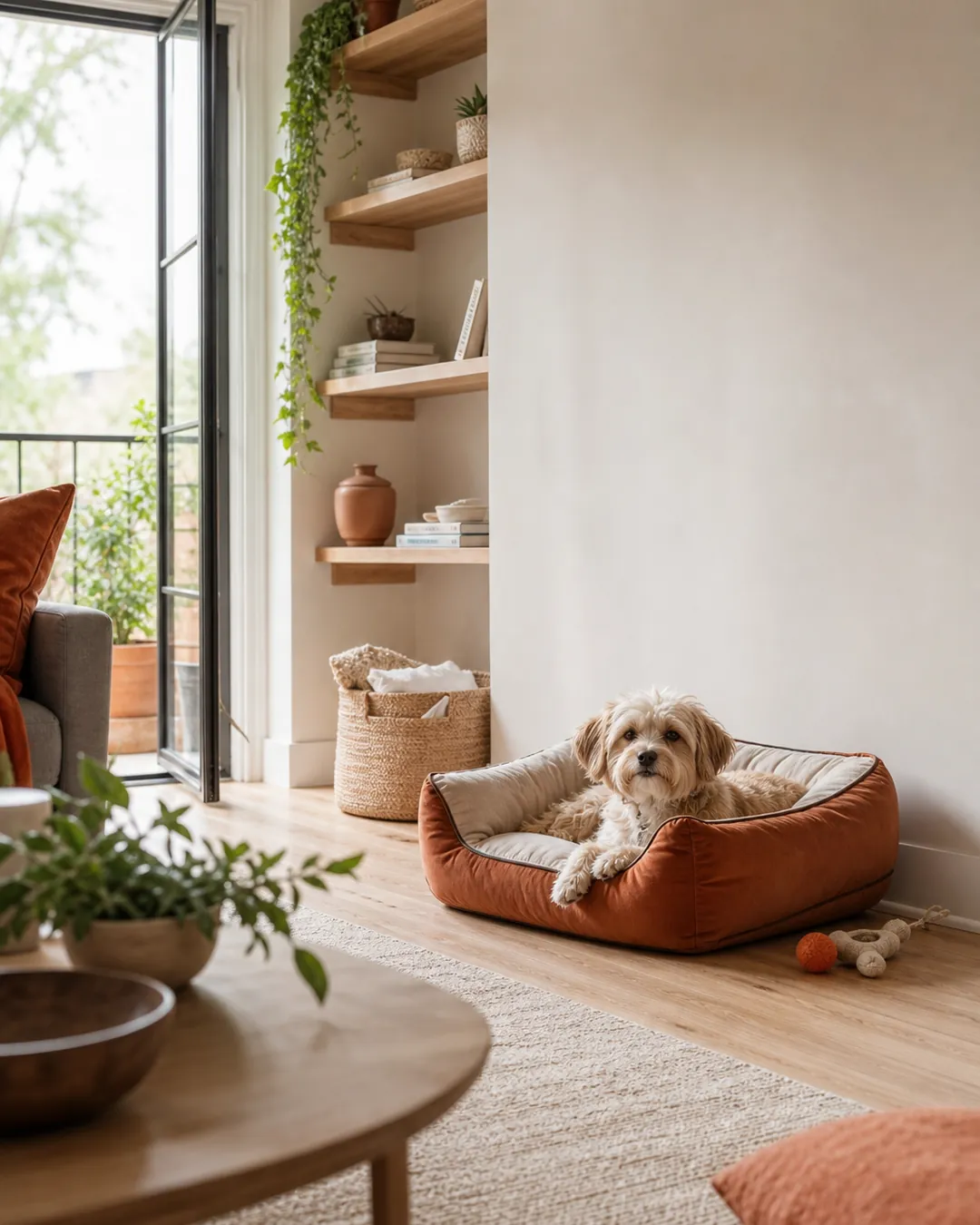
The corner will end up under something eventually, and a shelf you reach into daily means reaching over a sleeping animal daily. Keep whatever hangs above the corner to things accessed rarely, or leave the wall above the bed clear entirely and put the storage on the adjacent wall instead.
10. Leave it alone for two weeks before judging it
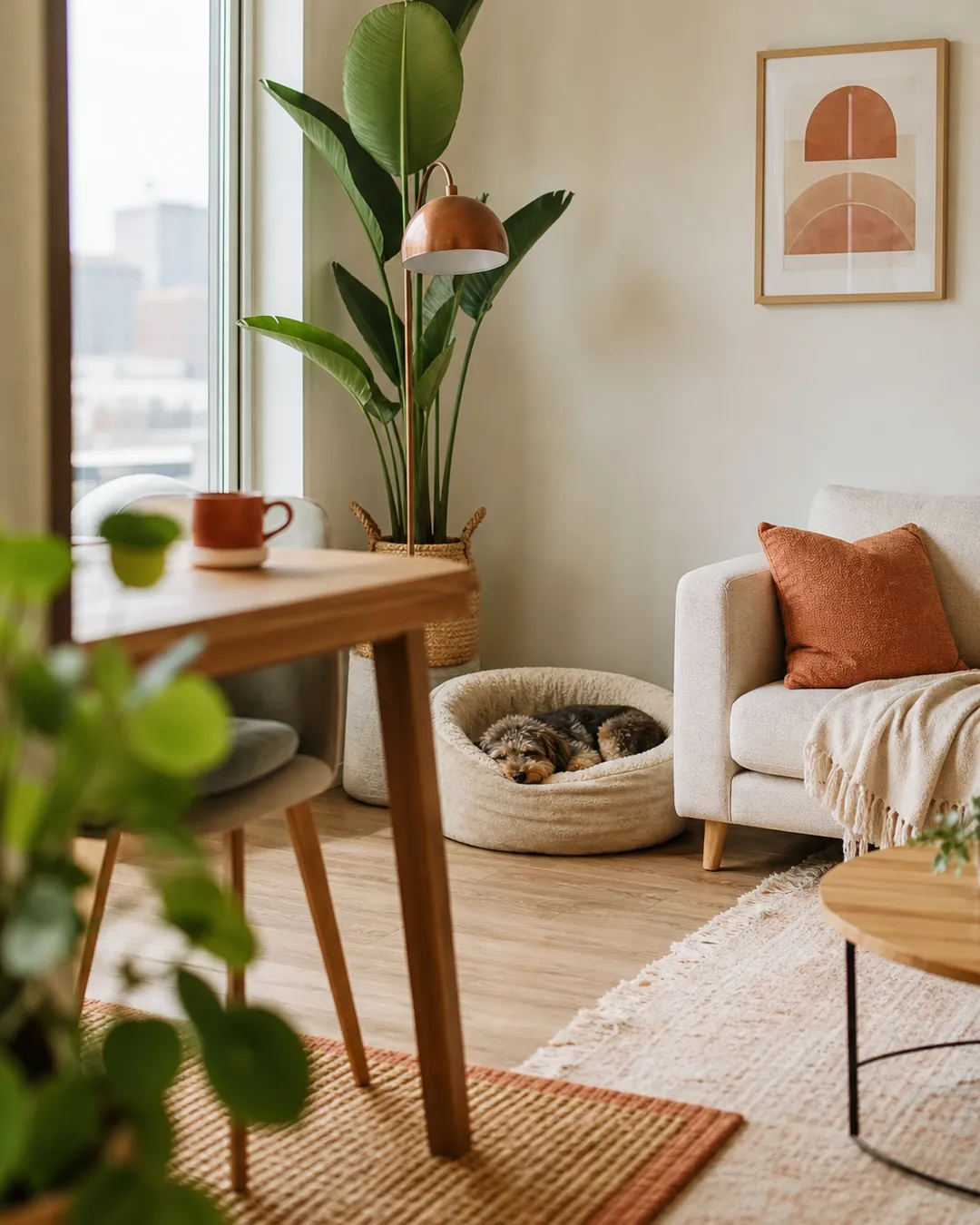
New corners get investigated and then ignored for a while, and the decision to move everything usually comes too early. Give it two weeks before concluding the position is wrong. If the animal is still choosing the doorway after that, the problem is nearly always sightline rather than comfort, and moving the same bed three feet is more effective than replacing it.
Where to start
Walk your home and find the corners that are not on a walking route. Most people find two or three, and are surprised by at least one of them. Then crouch in each and check whether you can see the room you actually use, because that single question predicts whether the corner will be adopted better than anything else.
Put the bed you already own in the winning corner before you buy anything at all. It costs nothing and it tests the position, which is the expensive thing to get wrong. If the animal moves in within a few days, the corner is right and everything else is refinement.
Then add in this order: the open toy basket, because it keeps the floor clear immediately. The wall hooks, because leashes and harnesses are what actually silt up a corner. The lidded bin last, once you know how much gear genuinely lives there rather than how much you assumed.
A pet corner is the rare improvement in a small home that costs no usable floor at all. You are furnishing the part of the room that was already doing nothing.