A one-bedroom apartment gives pet hair nowhere to disperse. The couch, the rug and the air vent all sit within about fifteen feet of each other, so hair that would settle unnoticed into a spare room or a garage in a bigger house instead ends up back on the one surface you actually use every evening. Buying a stronger vacuum treats the symptom. The fix is breaking the cycle at the three places hair actually moves: the fabric it lands on, the air it travels through, and the floor it gets tracked across.
Eleven ways to break it, roughly in the order that pays off fastest in a space this size.
1. Pick fabrics that let go of hair instead of trapping it

A tight, smooth weave like microfiber, canvas or leather sheds hair with a single wipe of a hand or a brush. A looped or textured weave like boucle or chenille grabs individual hairs at the loop and holds them, and a standard vacuum head glides right over the top without pulling them back out. If you are furnishing from scratch, run a hand across the fabric sample the way a shedding pet’s coat would brush past it. If it catches on your palm, it will catch on fur. Where you are stuck with a fabric that already holds hair, a rubber-bristled brush dragged in one direction lifts far more than a vacuum alone, because the rubber grips the strand at the root rather than skating across the top of it.
2. Brush before the fur becomes airborne
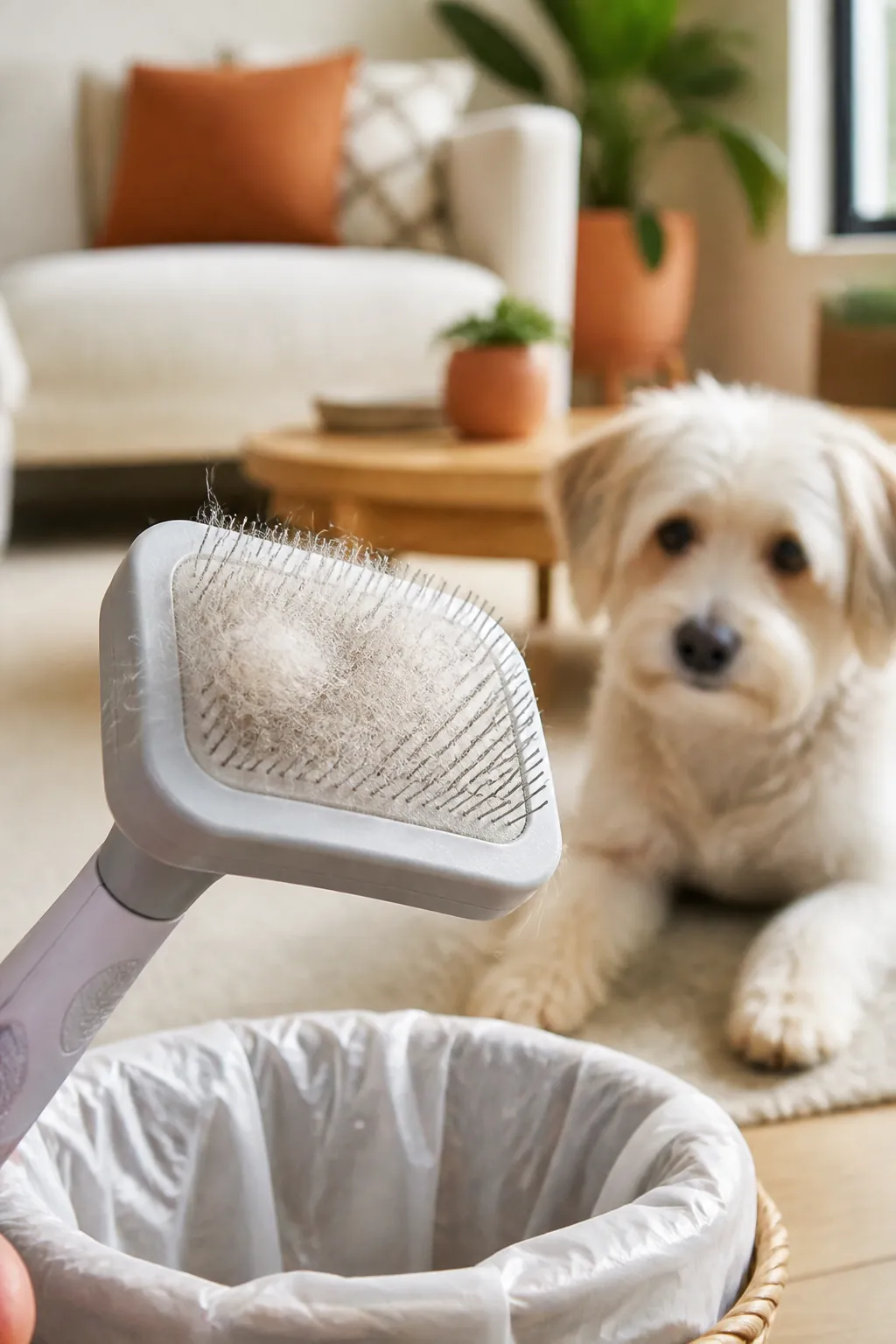
Loose hair sitting in a coat becomes loose hair floating through the apartment the moment it is shed, and once it is airborne it settles on every horizontal surface in the room rather than staying in one place you can vacuum. Five to ten minutes of brushing every day or two, done over a trash bag or in a bathroom with hard tile, catches a surprising amount before it ever reaches the couch. During a heavy shedding stretch in spring and fall, expect a golf-ball-sized clump some days. Skipping it for a week does not save time, it just moves that same volume of hair from the brush to the furniture.
3. Give them one blanket to claim instead of the whole couch
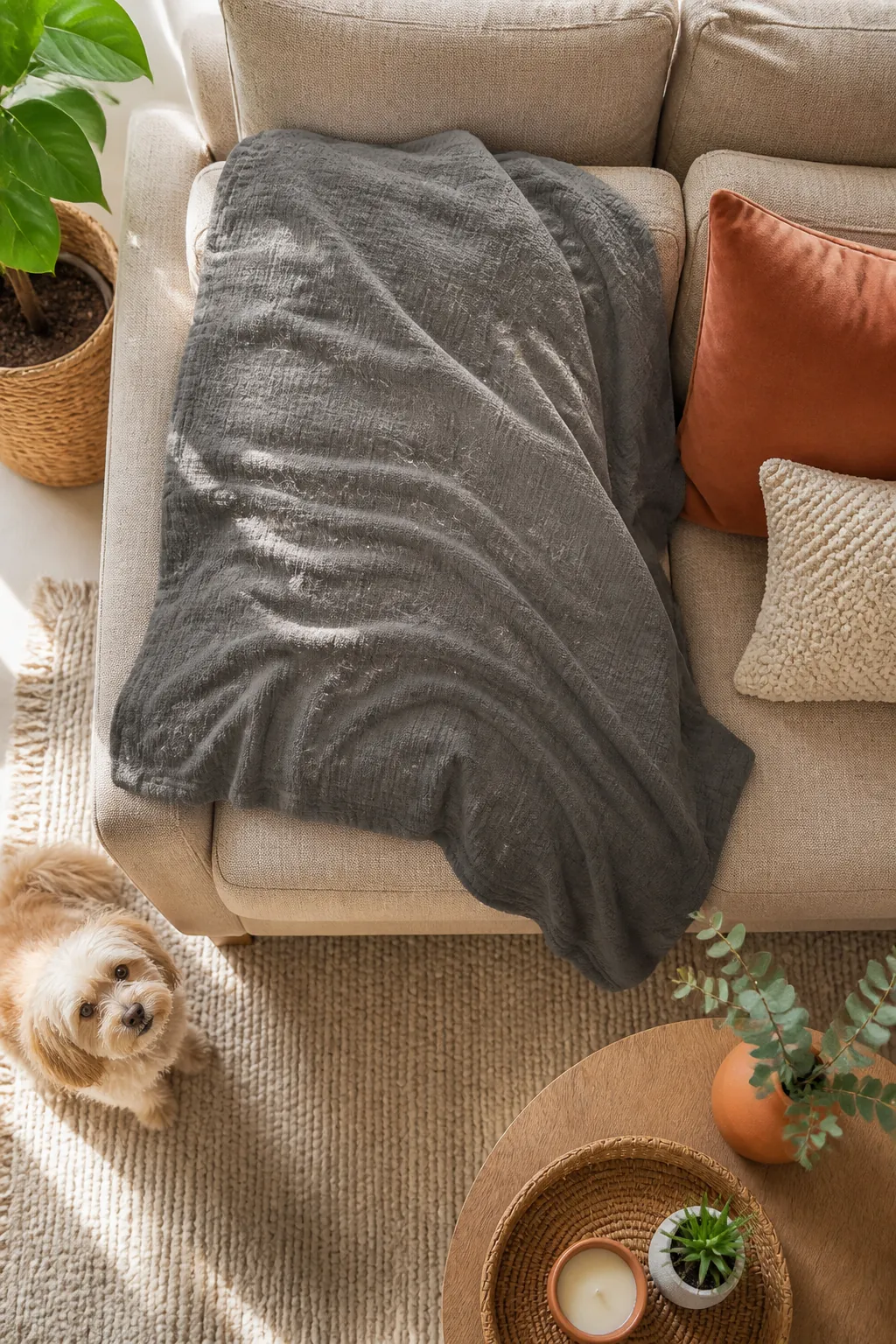
Pets tend to settle in the same spot on a couch or bed rather than distributing themselves evenly across it, so a washable pet hair throw blanket draped over that specific cushion turns one predictable spot into the thing you wash instead of the couch fabric underneath it. Fold it in thirds so it covers the full seat and armrest where they curl up, and wash it weekly on a normal cycle rather than waiting until it visibly needs it. A decorative throw that is dry-clean only defeats the purpose here. If washing it is a hassle, it stops getting washed, and then it is just another surface holding hair instead of one you can reset in twenty minutes.
4. Cover the upholstery they have not already claimed
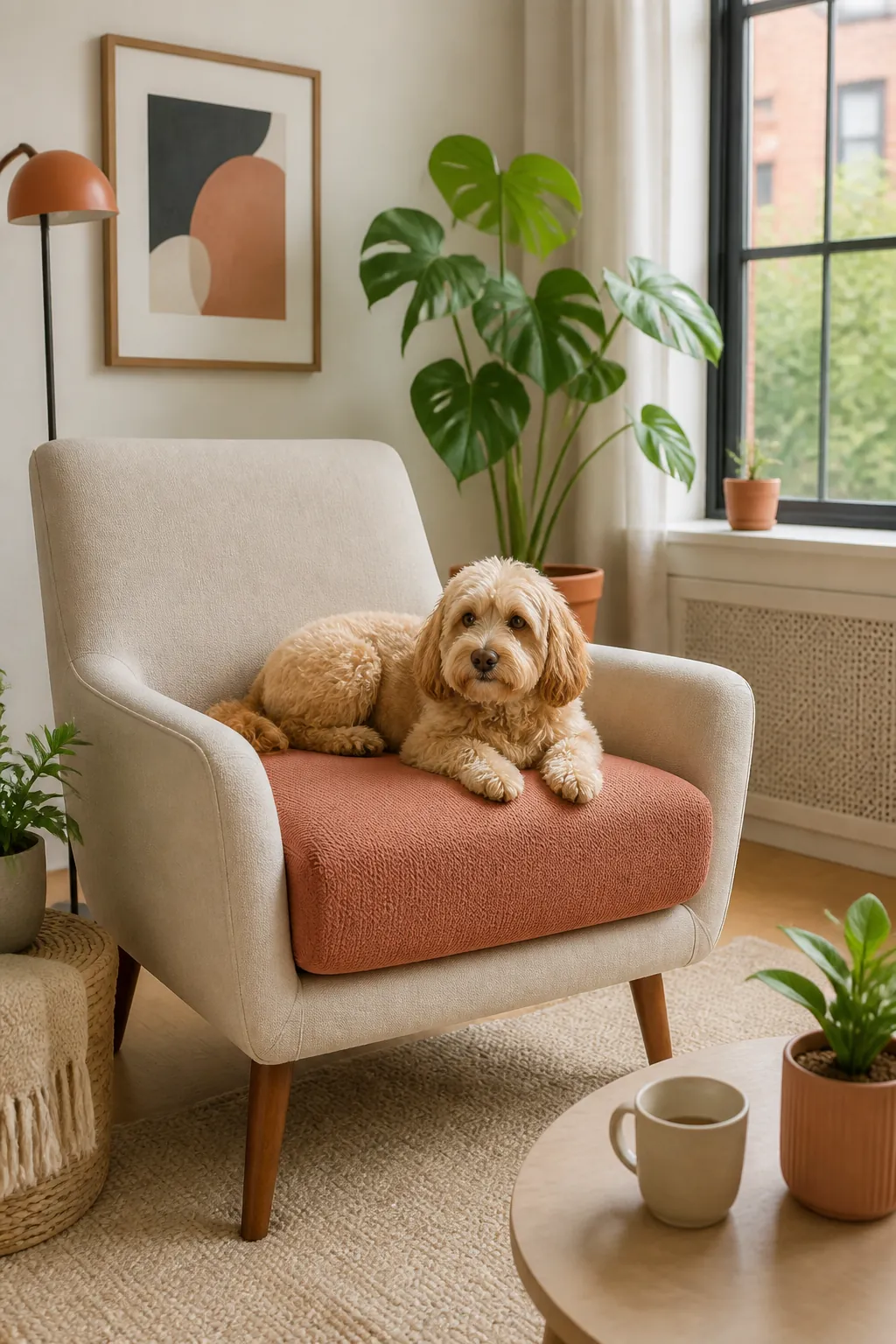
The one blanket only solves the spot they favor. The rest of the couch or an accent chair still needs protection, and washable furniture protector covers fitted at move-in stop hair from ever working its way into the weave in the first place. That timing matters more than the product itself: a cover added after months of hair has already settled into the cushion foam only catches what comes next, not what is already there. Choose a cover rated for a normal wash temperature, since one that needs hand washing gets used for a month and then folded into a closet.
5. Keep a hair tool by the door, not in a drawer
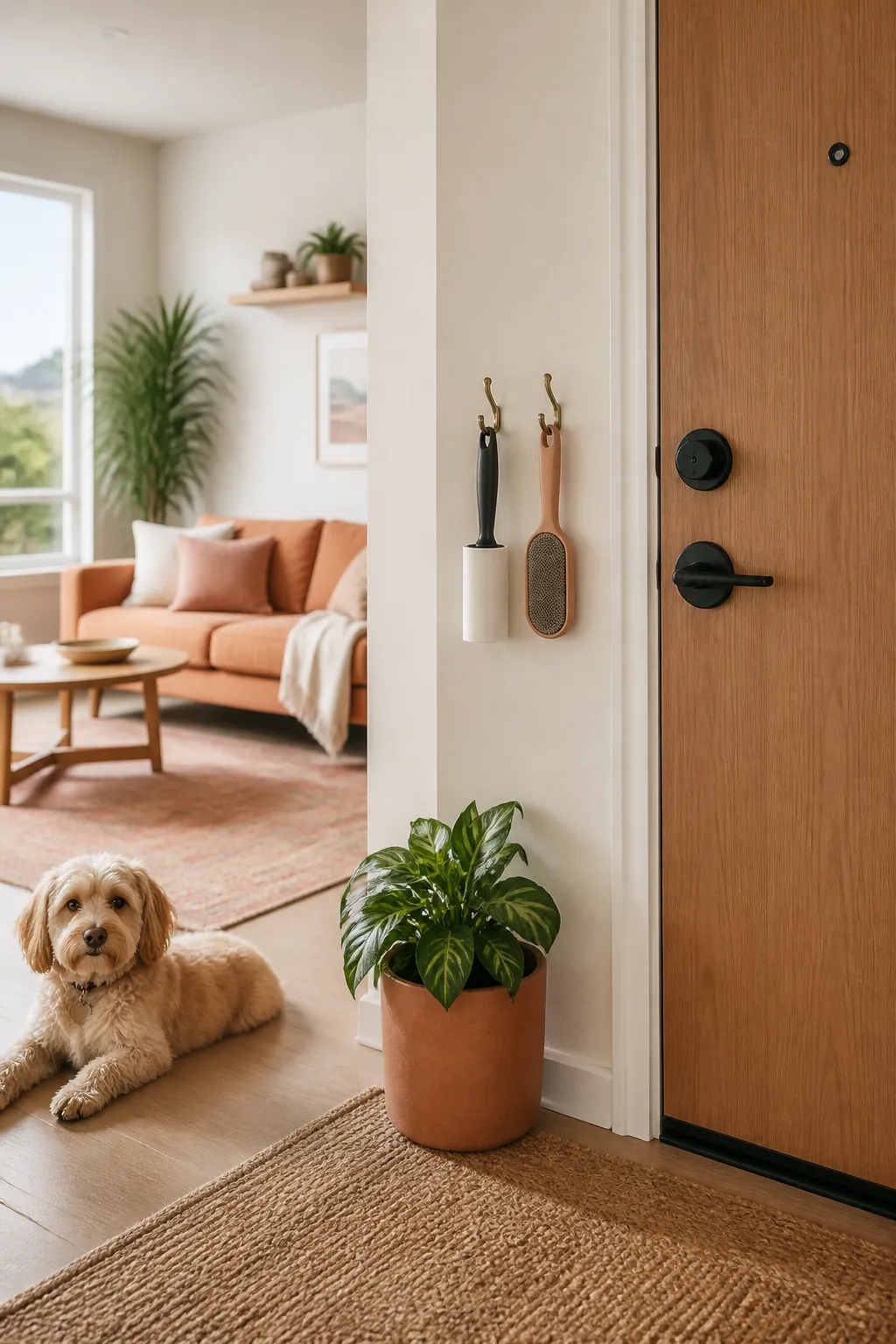
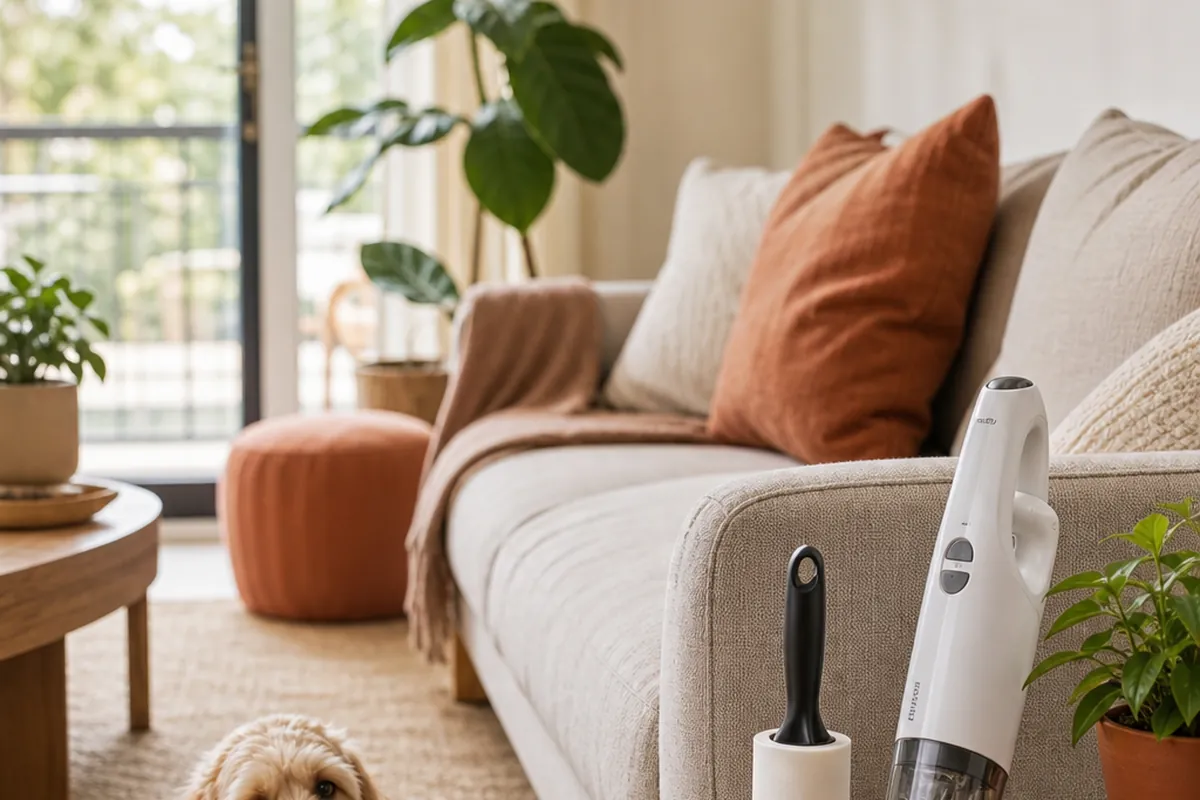
A lint roller or rubber pet-hair brush stored in a kitchen drawer three rooms from where you actually need it does not get used on the way out the door, and it is the way out the door where a quick pass matters most before you sit down somewhere else or leave for work. Hang or set the tool at the exit itself, next to keys or a bag, so reaching for it costs no extra steps. Lint rollers work well on flat, tight-weave clothing and poorly on upholstery, where the loop catches surface hair and leaves the rest behind, so keep one at the door for clothes and a rubber brush near the couch for fabric.
6. Vacuum with the nap, not against it
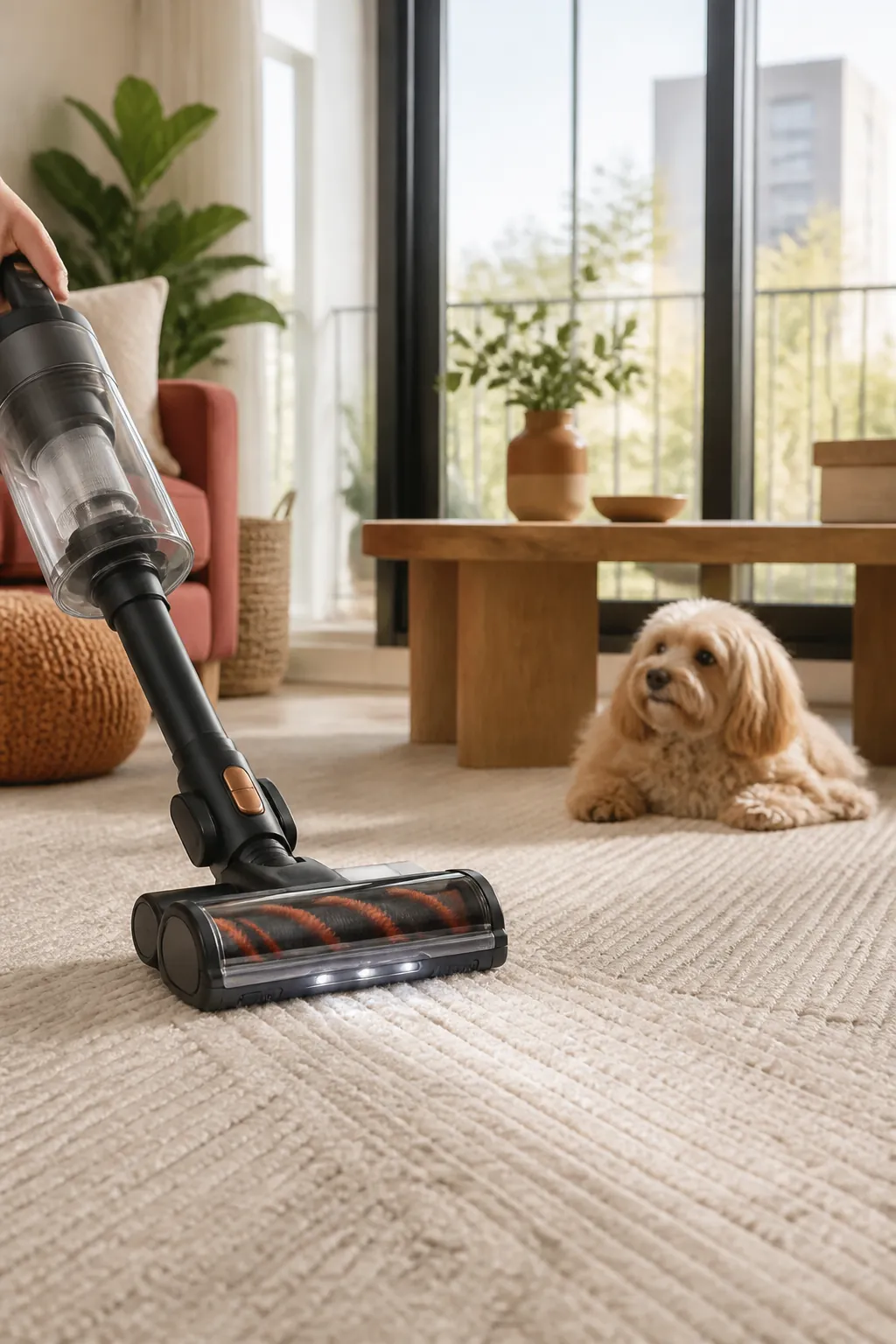
Rugs and upholstery both have a direction the pile lies in, and vacuuming against that direction pushes embedded hair deeper rather than lifting it. Run the vacuum against the nap first to stand the fibers up and loosen what is caught underneath, then go over the same area with the nap to pull the loosened hair free. A handheld unit with a motorized brush roll handles stairs, cushions and car-seat-style upholstery better than a standard upright attachment, since the spinning bristles do the same job the rubber brush does by hand. Two passes takes twice as long as one, but a single pass in the wrong direction on a heavily shed rug can leave most of the hair still sitting in the pile.
7. Filter the air in the room they use most
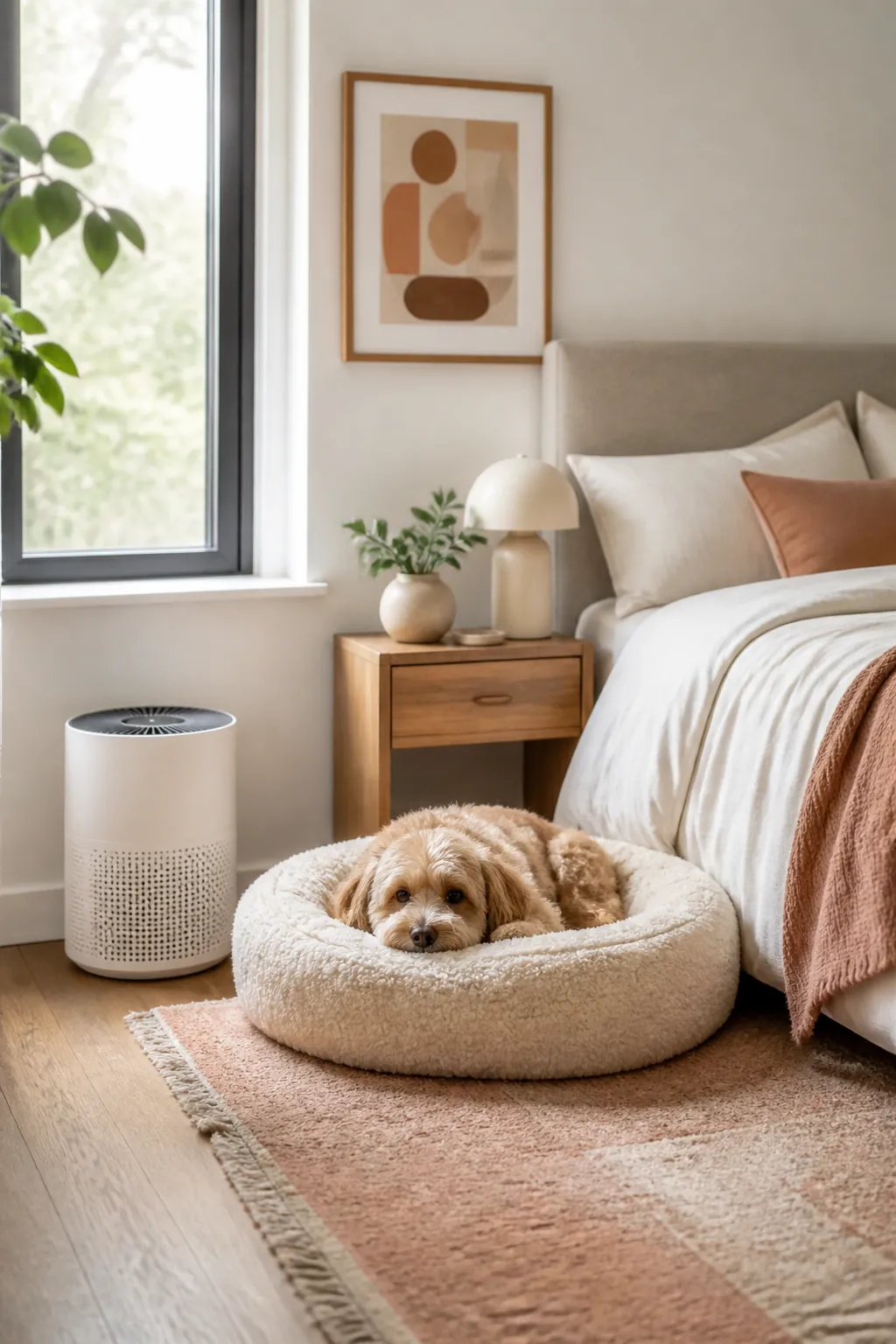
Vacuuming and brushing handle hair that has already landed. A compact air purifier catches the fine hair and dander that stays airborne long enough to resettle on every surface in the room before it ever touches the floor. Size it to the specific room rather than the whole apartment: a unit rated for 150 square feet does little good running in a 400-square-foot studio, and most of the benefit comes from placing it in the room where the pet sleeps or naps most, since that is where airborne hair concentrates overnight while nobody is moving air around by walking through it.
8. Watch the filter, not your nose
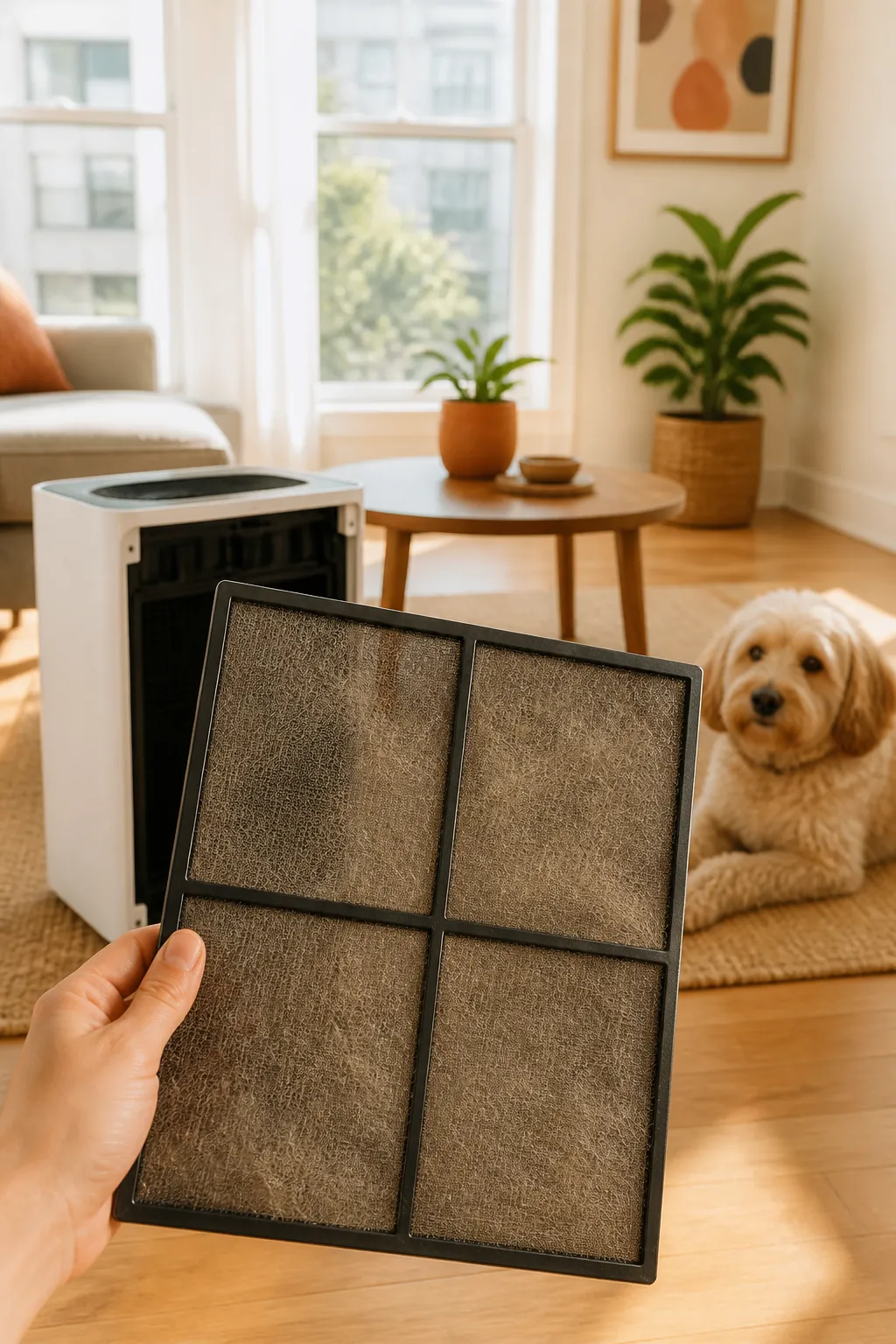
A pre-filter in a pet household clogs noticeably faster than one in a home without shedding fur pulling into the intake, so checking it monthly rather than waiting for the manufacturer’s default quarterly reminder keeps the unit actually working instead of quietly running at a fraction of its rated airflow. Vacuum the washable pre-filter screen directly, and replace the carbon or HEPA stage on the shorter of the two schedules once you have a pet in the apartment. A purifier with a clogged intake still runs and still sounds like it is working, which is exactly why the filter needs a calendar reminder rather than a visual check.
9. Catch hair at the threshold before it spreads
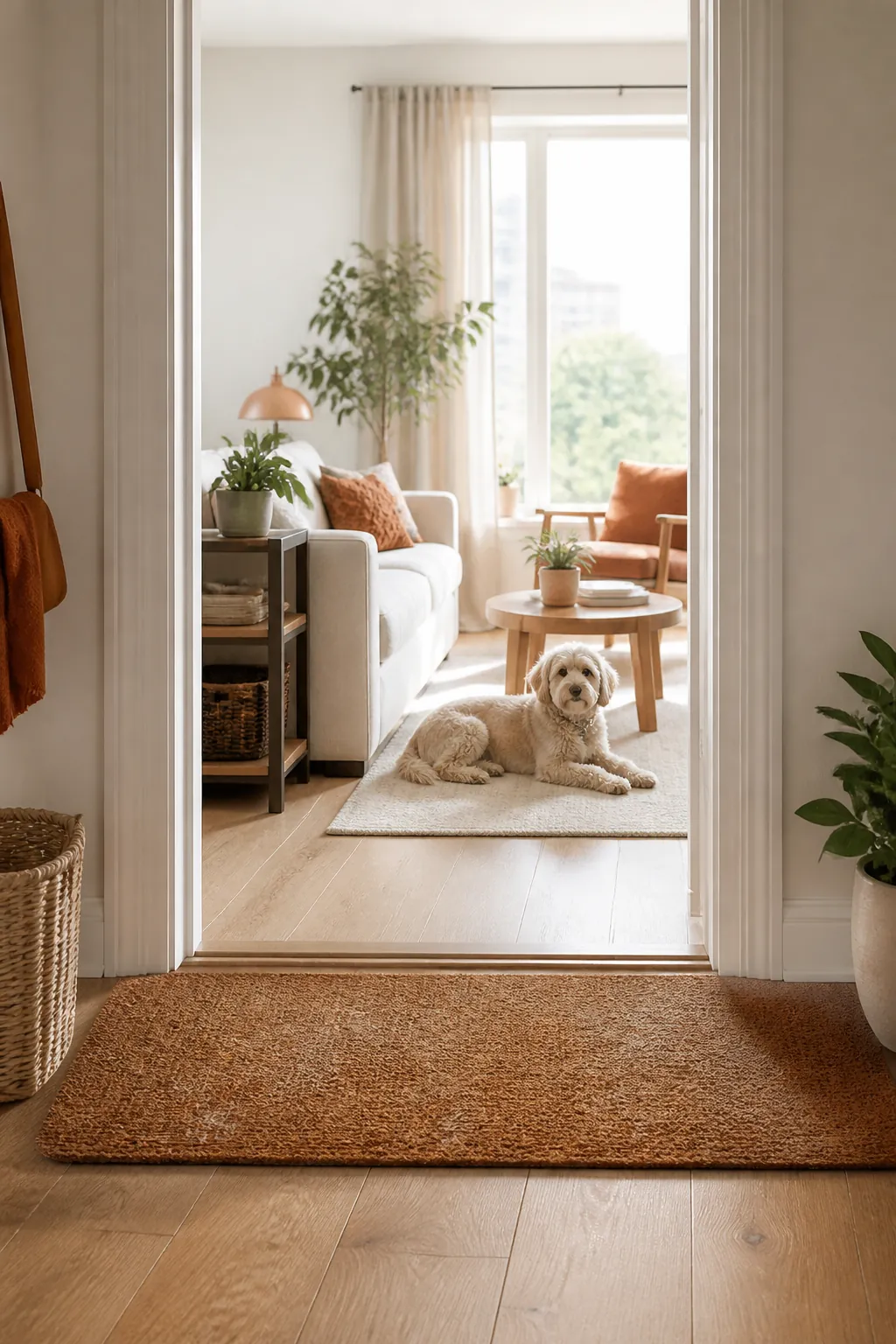
Hair tracked in on socks and hair carried on a pet’s coat both cross the same doorway on the way to the rest of the apartment, and a washable mat sized to the full width of that threshold, not a narrow strip in the middle, catches most of it before it spreads room to room. Shake the mat out or vacuum it every few days rather than waiting for a weekly deep clean, since a mat that is already saturated with hair stops catching anything new and just redistributes what it already holds.
10. Keep hair out of the wash instead of clogging it
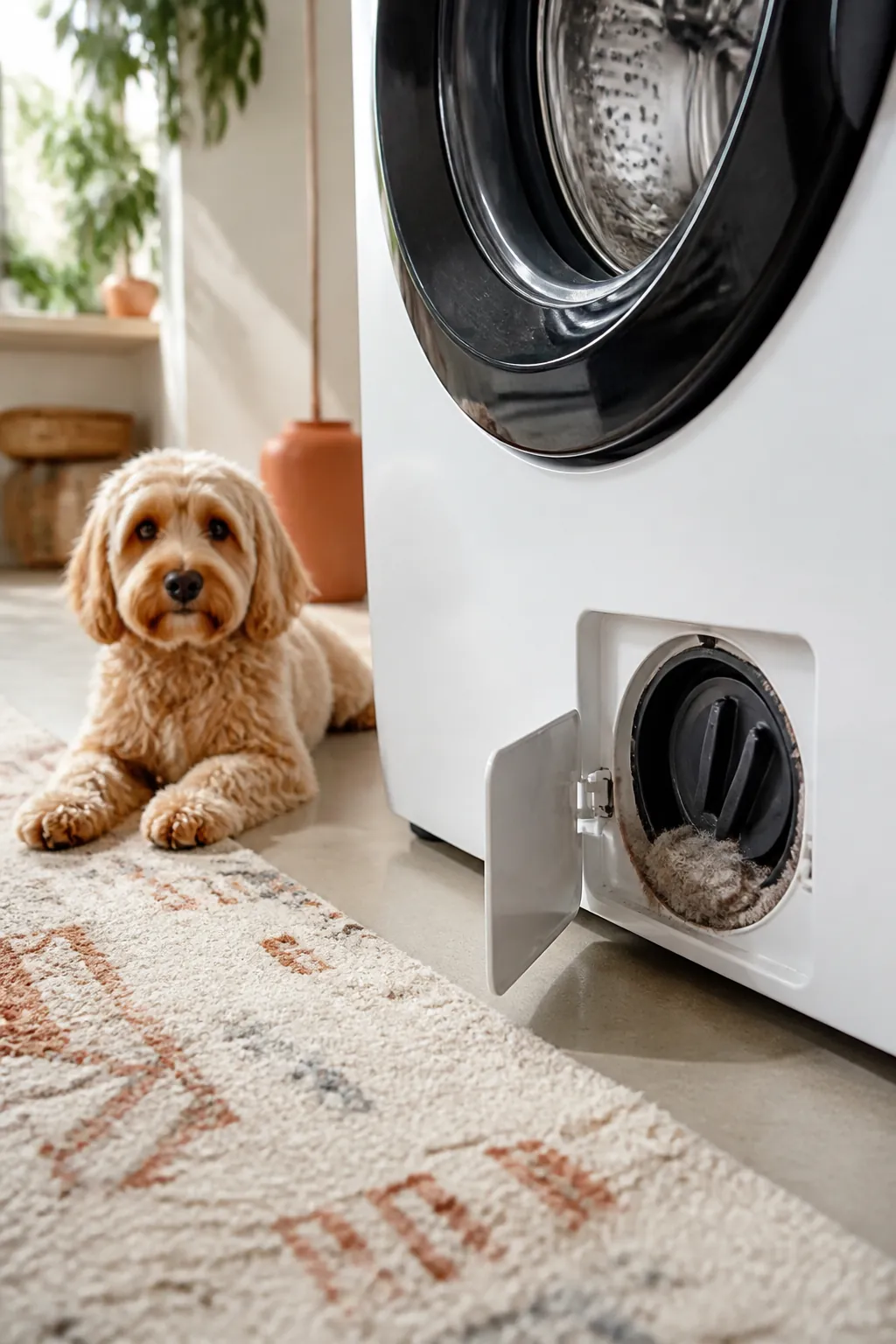
Bedding, the throw blanket and any pet bed covers all shed loose hair into the washing machine, and a top-loader’s lint filter catches most of it while a front-loader has no equivalent screen in the drum itself. Shake heavily furred items outside or over a trash can before they go in, and run an empty hot rinse cycle every few weeks to clear what makes it through anyway. On a front-loader, open the small drain filter door low on the front of the machine and clear it every month or two in a pet household. Skipping that step for a season is a common way an apartment-sized washer starts draining slowly or smelling musty, and the cause is rarely obvious until the door is actually opened.
11. Run a five-minute daily reset instead of a weekend deep clean

A five-minute pass each evening, a lint roller over the spot they were sitting, a quick brush of the couch cover, a shake of the door mat, keeps hair from accumulating into the kind of job that needs a whole Saturday afternoon. The couch and rug in a small apartment show buildup faster than the same furniture would in a larger home simply because there is less floor and fabric to absorb it, so a habit that takes five minutes daily beats one that takes ninety minutes weekly, even though the weekly total is roughly the same either way. The habit carries into December, when a cat-proof Christmas tree in a small apartment needs its own evening walk-past to straighten ornaments, and the two fit into one loop of the room.
Where to start
Start with the throw blanket and the brush, since together they cost the least and stop the most hair before it spreads past the one spot a pet already prefers. Add the furniture covers once you know which pieces actually need them, rather than covering everything up front.
The air purifier and the filter habit matter most in the room the pet sleeps in, not the room you clean most often, so place it there before judging whether it is doing anything. Airborne hair is the part that is easy to forget about because it never quite lands where you can see it.
None of this removes the need to clean. It just moves the effort from a once-a-week fight against fully embedded hair to a daily routine that keeps hair from embedding in the first place, which is the difference between twenty minutes a day and half a Saturday every few weeks.