A Christmas tree in a small apartment sits exactly where a cat already patrols, which turns a decorating job into a structural one. The tree has to survive being sniffed, climbed, batted and leaned on for six weeks, in a room that does not have a spare corner to hide it in. None of that means skipping the tree. It means choosing the corner, the anchoring and the ornaments in a different order than most decorating guides suggest.
Twelve ways to get it right, starting with the decision that shapes everything else.
1. Pick a corner with only one open side
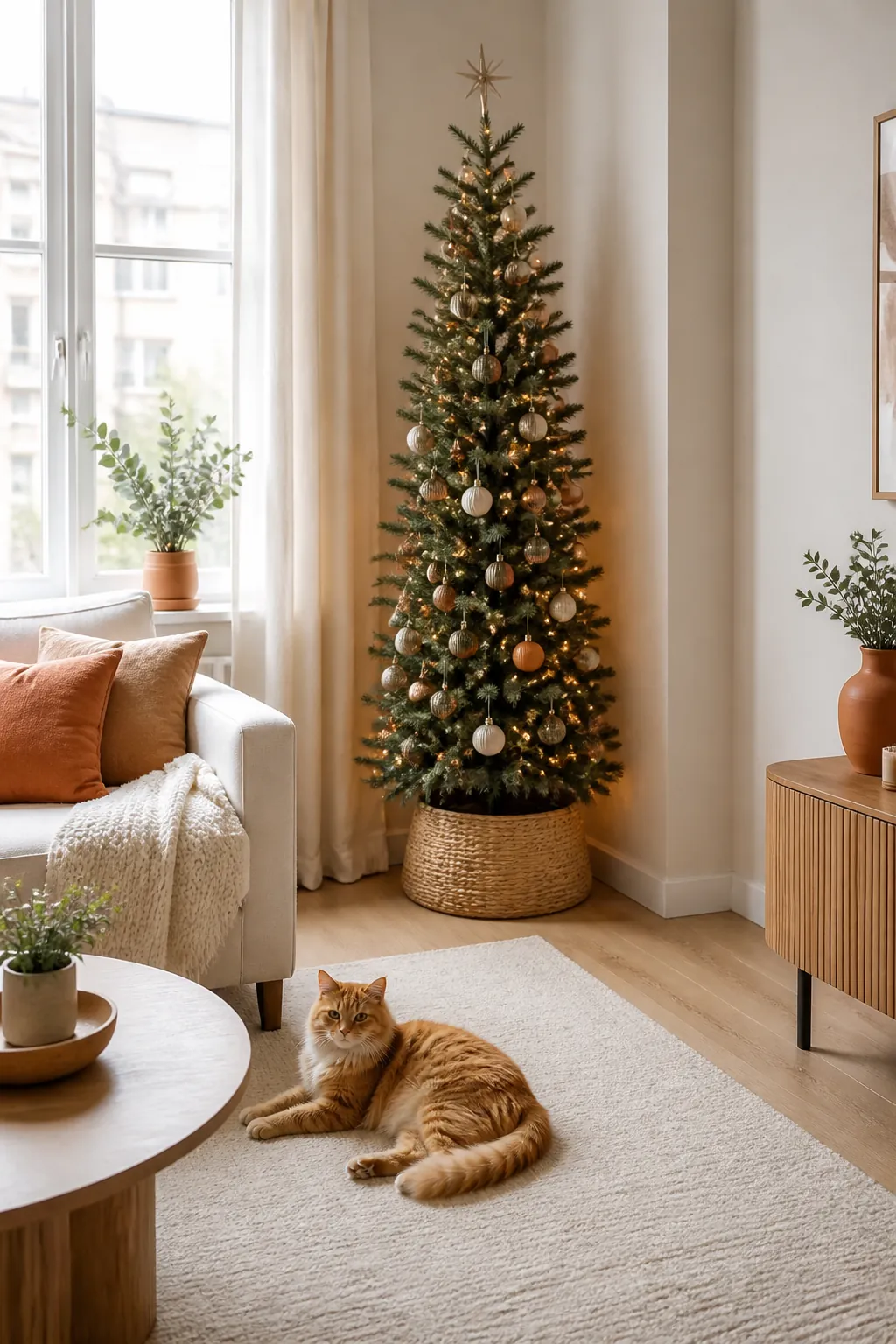
Walls on two sides of the tree remove most of the approach angles a cat would otherwise use to get a running start. A corner also means the tree only needs clearance on one face for gifts and viewing, which matters in a room where every square foot of floor is already doing a job. Measure the spot before you buy: a 6-foot tree needs roughly a 3-foot circle of clear floor around its base once the branches are fluffed out, and that circle has to land somewhere that still leaves a walking path to the door.
2. Size the tree to the room, not the box photo

A tree that looks modest in a showroom reads as enormous once it is wedged between a sofa arm and a bookshelf. Measure your ceiling height and subtract at least a foot for the topper, then match the tree’s base width to the floor footprint from step one with a few inches to spare on each side. An apartment-scale tree in the 4.5 to 6 foot range with a base under 40 inches fits most small living rooms without the lower branches brushing furniture on both sides at once.
3. Anchor the trunk before you hang a single ornament
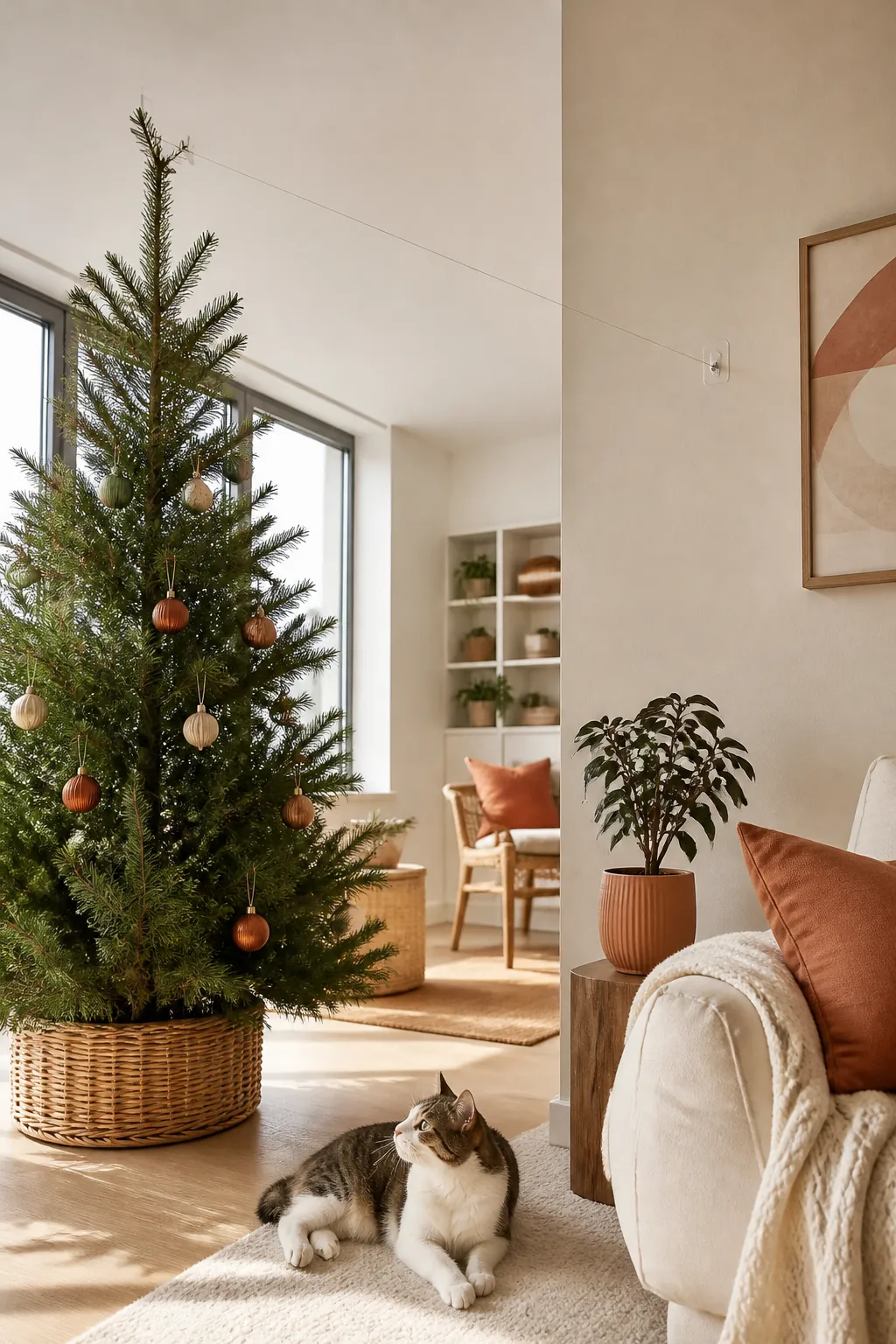
This is the single step that does the most work. Run two lengths of clear fishing line from high on the main trunk, at roughly a right angle to each other, to removable adhesive hooks on the nearest walls or a window frame. Tension each line enough to stop the tree swaying when nudged, not so tight that it pulls the tree off center. A tree anchored this way can take a cat’s full weight partway up the lower branches without tipping, because the top is already braced in two directions before the climbing even starts.
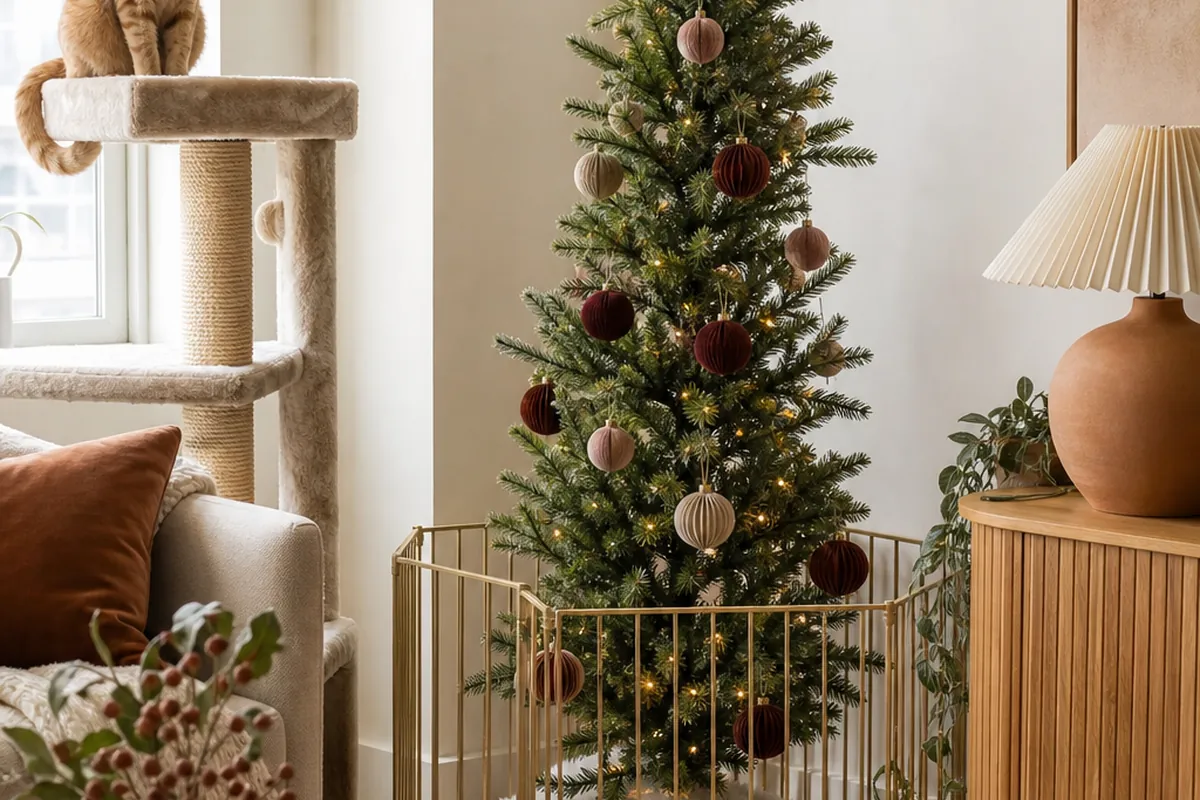
4. Gate the base if the tree stands anywhere open
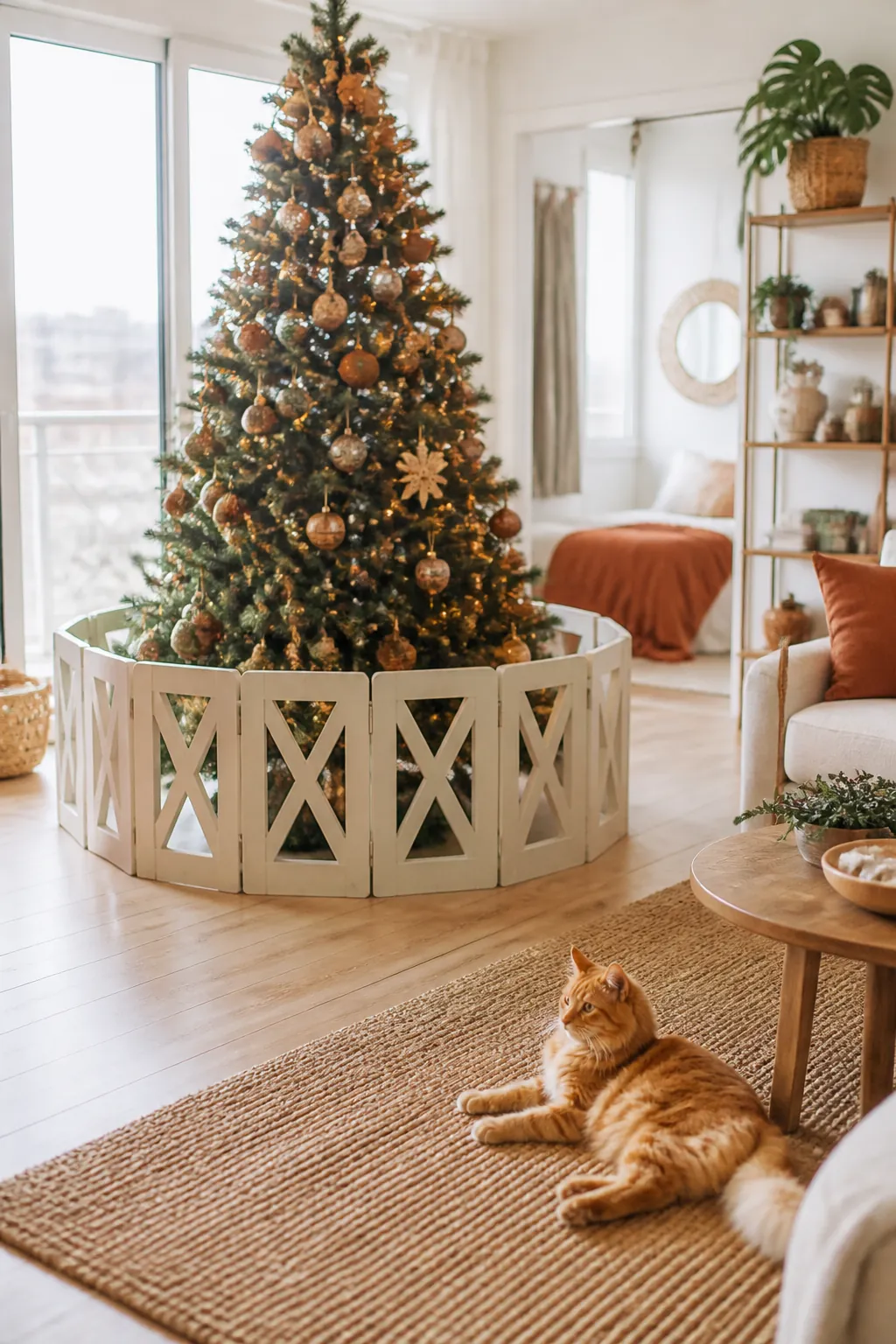
A corner placement removes two approach angles, and a low barrier removes the third. A configurable tree gate bends to fit around a tree stand rather than needing a rectangular opening, and it stands on its own without touching the wall or the tree, which matters in a rental. It will not stop a determined jumper, but it reliably stops the absent-minded stroll-up that causes most of the daytime knocking-over, since the panels sit tall enough to break a cat’s straight-line approach to the trunk.
5. Start the bare branches at a measured height
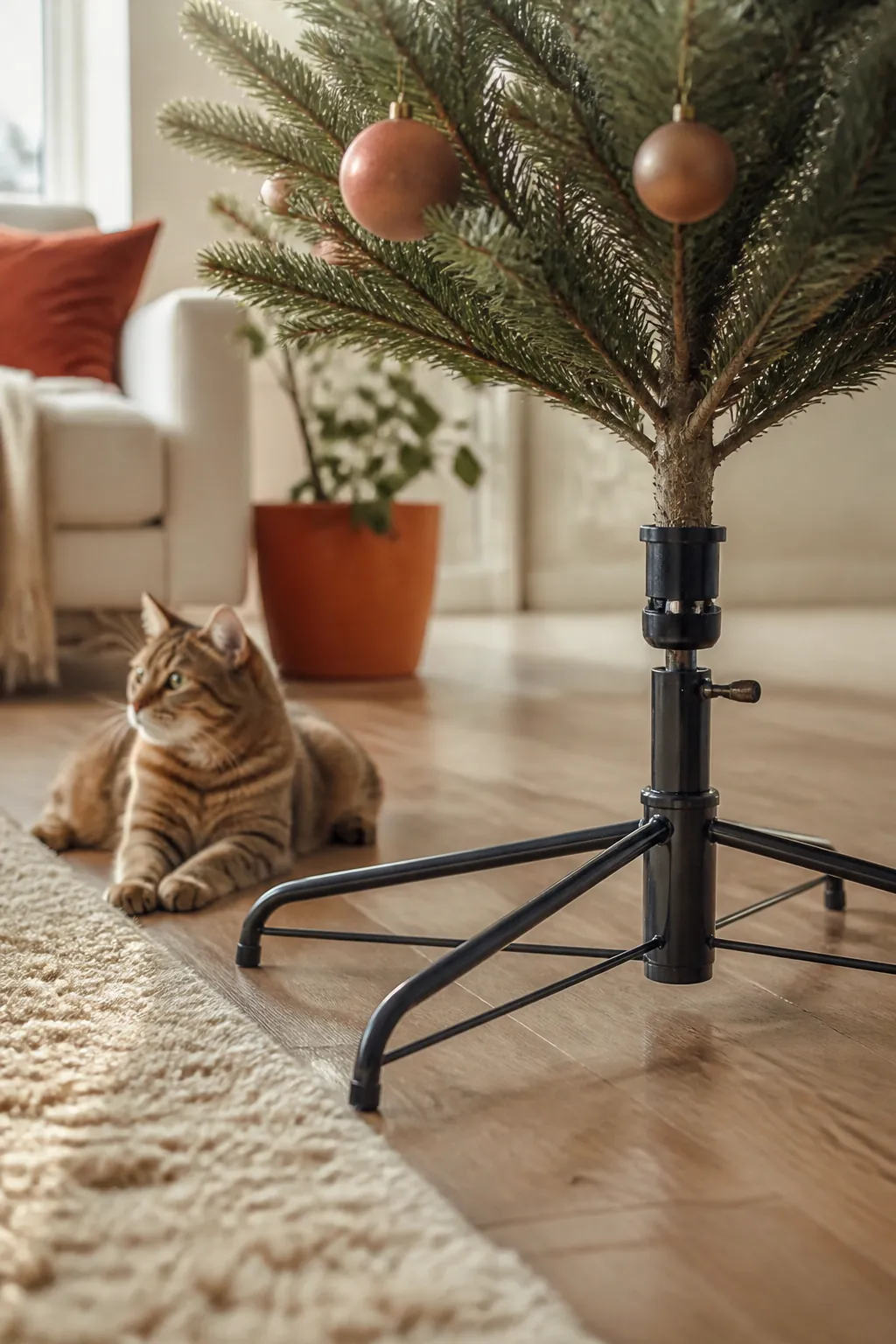
Leave the bottom 12 to 16 inches of the tree undecorated entirely. That band is exactly where a cat investigates first, and an empty branch there gives nothing to pull, chew or carry off. Decorate upward from that line instead of trying to protect ornaments at floor level, and the display still reads as full from normal viewing distance because the empty band sits below where most people look at a tree anyway.
6. Save glass for the top third, put shatter-resistant low

Everything within easy reach gets batted eventually, so put the pieces that survive a fall there. A velvet ornament set holds its shape and its color through repeated handling in a way a glass ball does not, and a dropped velvet ornament bounces rather than scatters across the floor. Reserve the glass pieces for branches above about five feet, where a standing cat on the floor cannot reach, and let the lower two-thirds of the tree carry fabric, resin and wood ornaments instead.
7. Clip ornaments on rather than hanging them loose

The thin wire hooks most ornaments ship with are built for a tree nobody touches. Swap them for sturdier hooks bent into a full loop and crimped closed around the branch, rather than left open, so a paw swipe slides the ornament along the branch instead of pulling it free. It takes maybe ten extra seconds per ornament and it is the difference between finding a decoration on the branch below where it started and finding it across the room.
8. Skip tinsel, ribbon garland and anything that sheds
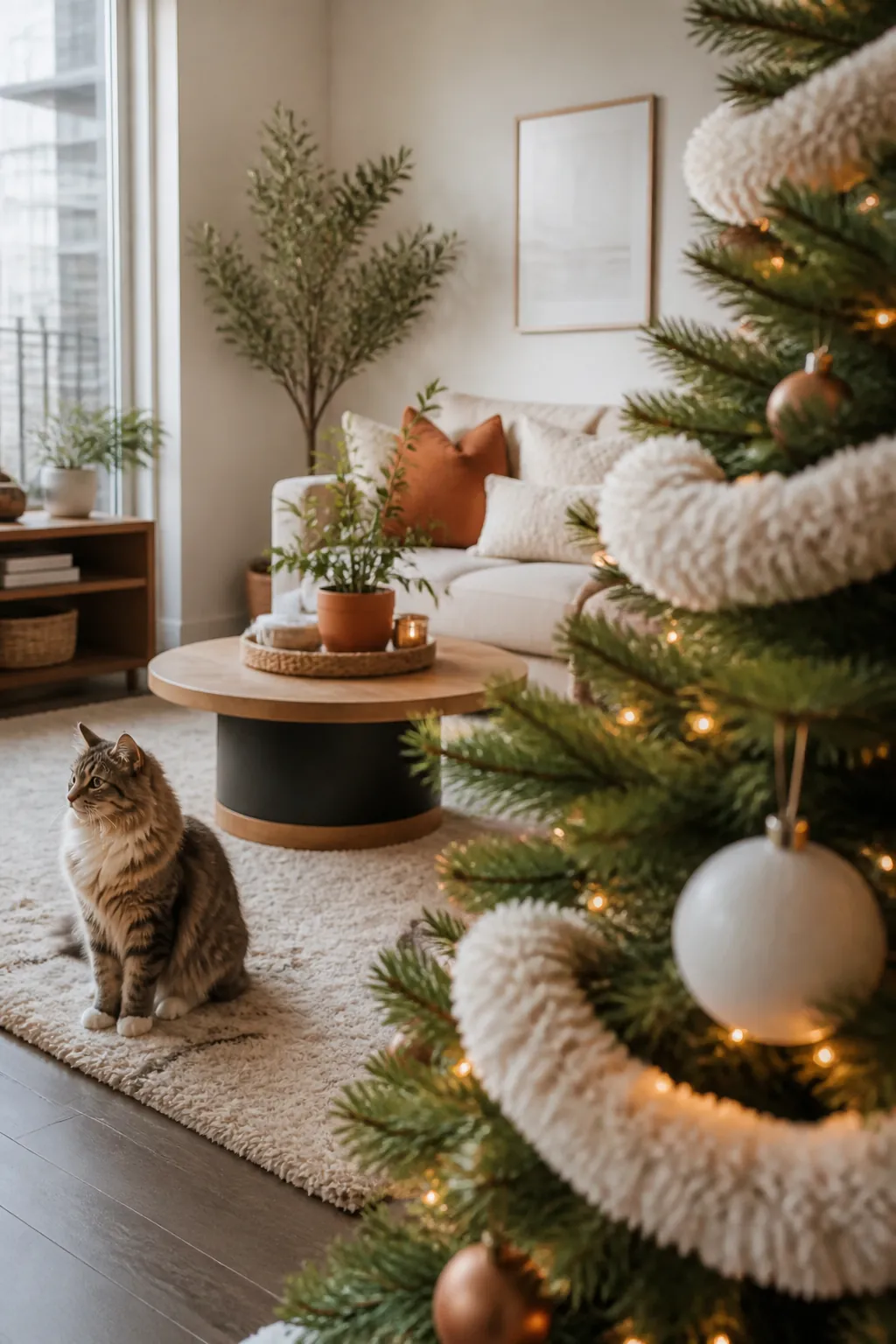
Tinsel is the one material on this list worth avoiding entirely rather than placing carefully, because it does not survive being batted the way everything else does. It sheds a few strands with every touch, and those strands turn up in corners and under furniture for weeks. A thicker chenille or fabric garland gives the same shimmer from across the room, wraps around branches instead of draping loose, and comes off the tree in one piece in January rather than a hundred.
9. Route the light cord through a sleeve before it hits the floor
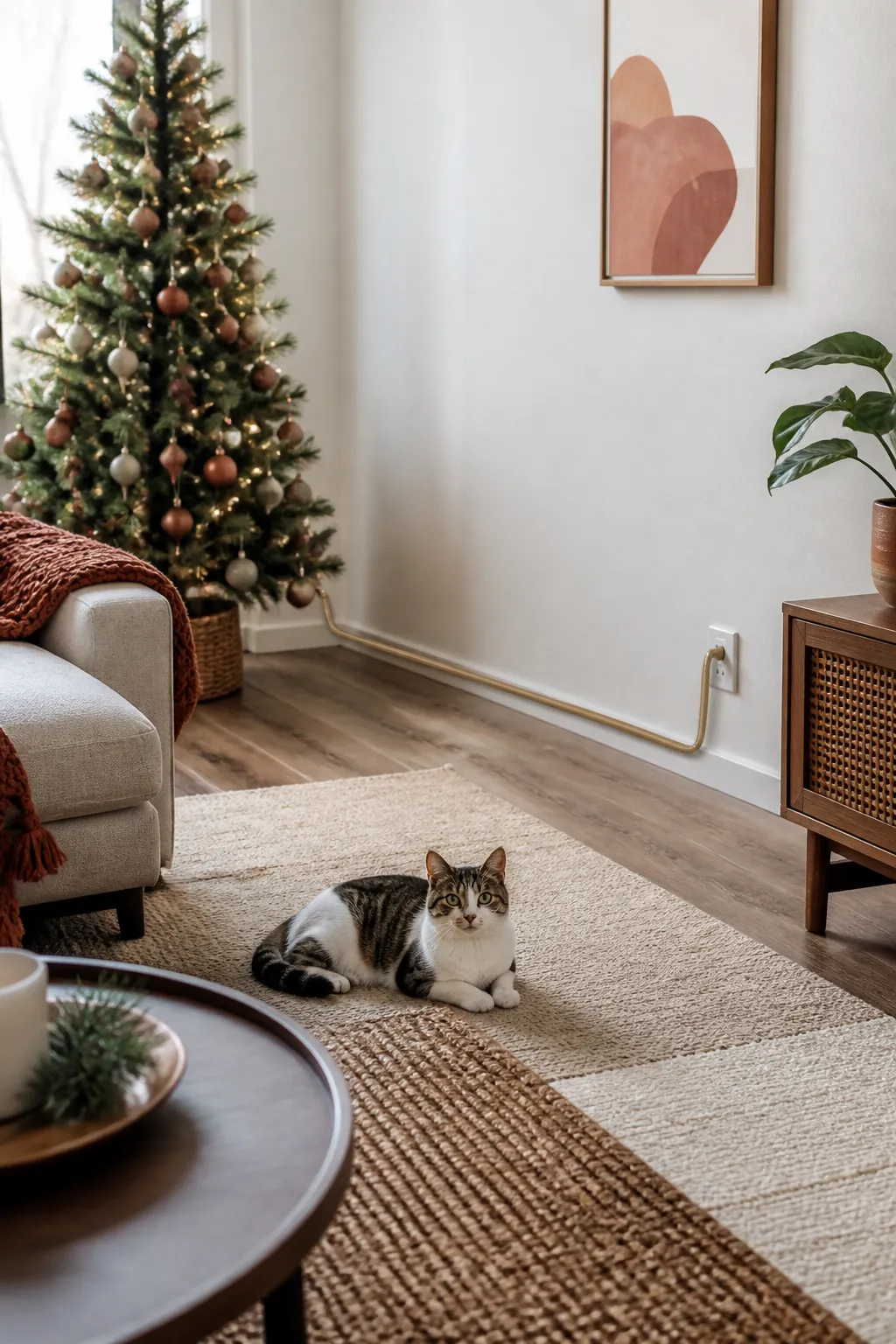
A bare cord running from the tree to the nearest outlet is round, slightly springy and exactly the texture a lot of cats treat as a toy. A cord protector sleeve changes that texture completely, and running the sleeved cord along the baseboard rather than straight across open floor removes most of the remaining interest. Cut the sleeve an inch or two longer than the measured distance, since a tight fit at either end is where a cord works its way back out within the first week. If you already sleeved a cord for Halloween decor that survives a cat, reuse that sleeve here, since a string-light cord running to the outlet needs the same baseboard route in December that it did in October.
10. Use a remote or a timer instead of a wall switch you have to reach past

Reaching behind a tree to find a plug every evening means doing it with a cat often sitting in exactly that spot. A remote-controlled outlet or an in-line timer turns the lights on from across the room, so you are not nudging the tree, the gate or the cat out of the way twice a day. Set the timer for early evening through midnight and switching it on stops being a daily decision.
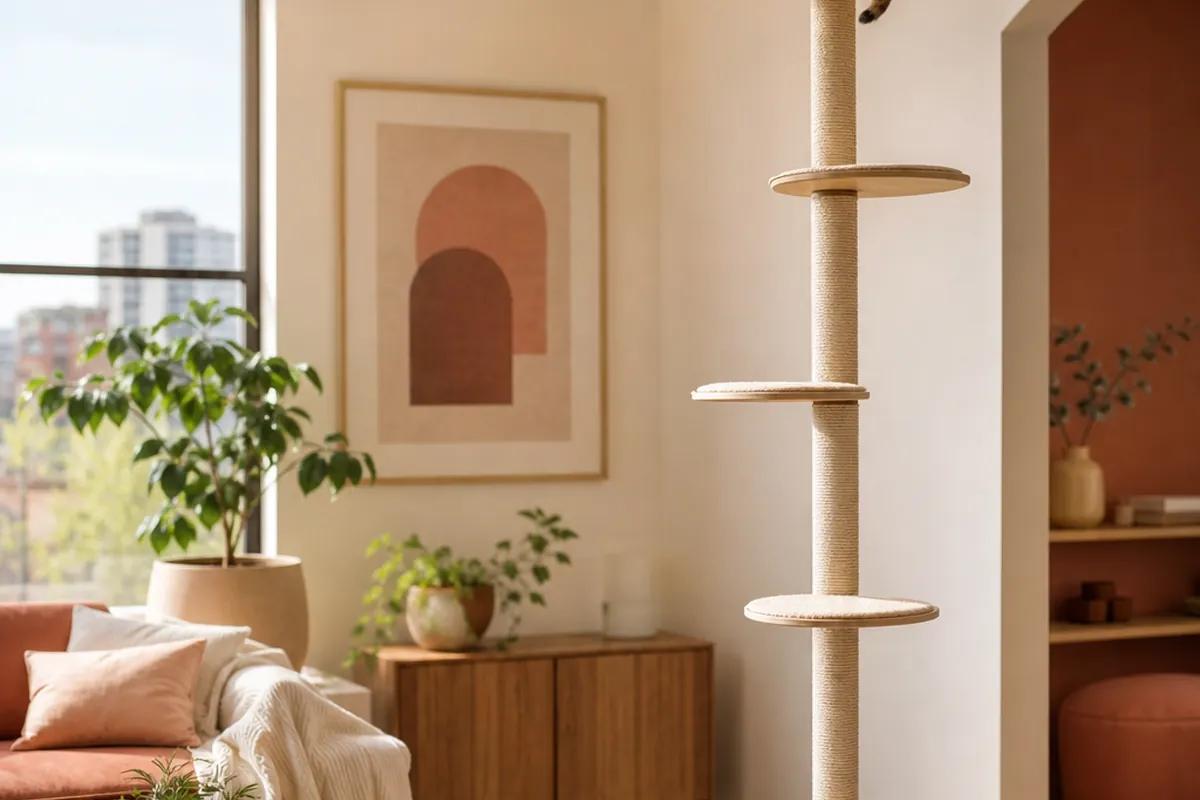
11. Give the cat a legitimate perch nearby, not on, the tree
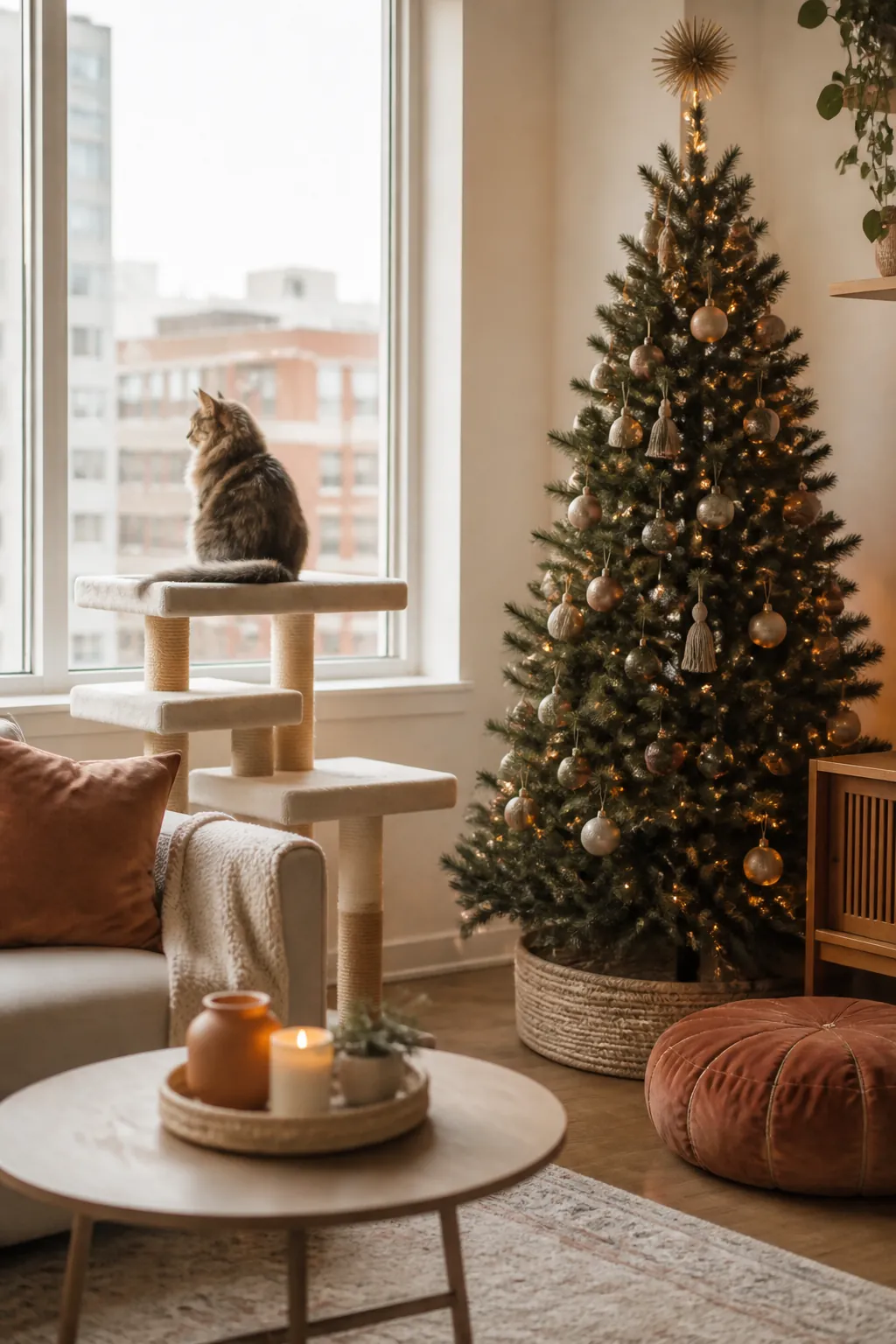
A cat drawn to the tree is often just looking for the tallest vantage point in the room, and a tree happens to be the newest tall thing that showed up. A window perch or a cat shelf positioned a few feet away, ideally with a sightline to the same window the tree is blocking, gives the same height and the same view without putting any weight on the branches. Set it up a day or two before the tree goes in, and the tree stops being the only interesting high spot in the room.
12. Build a two-minute reset into your evening routine

Even a well-anchored, well-placed tree collects the odd knocked ornament over the course of a day. Walk past it once each evening, straighten anything that has drifted, and check that the two guy lines are still tensioned. Catching a loosened line on day three is far less disruptive than finding the tree tipped against the wall on day ten because nobody noticed it had gone slack.
Where to start
Anchor first. The two guy lines in step 3 take fifteen minutes and do more to keep the tree upright than every ornament choice on this list combined, so do that before anything goes on the branches.
Then decorate from the trunk outward: bare branches low, shatter-resistant ornaments in the middle, glass only up top. That order means the tree already looks finished from a cat’s-eye view before you add a single fragile piece, and nothing you add later has to compete with gravity on the way down.
The corner, the gate and the cord sleeve round out the list, and all three cost less time to set up than they save over six weeks of not re-hanging the same ornaments every morning.