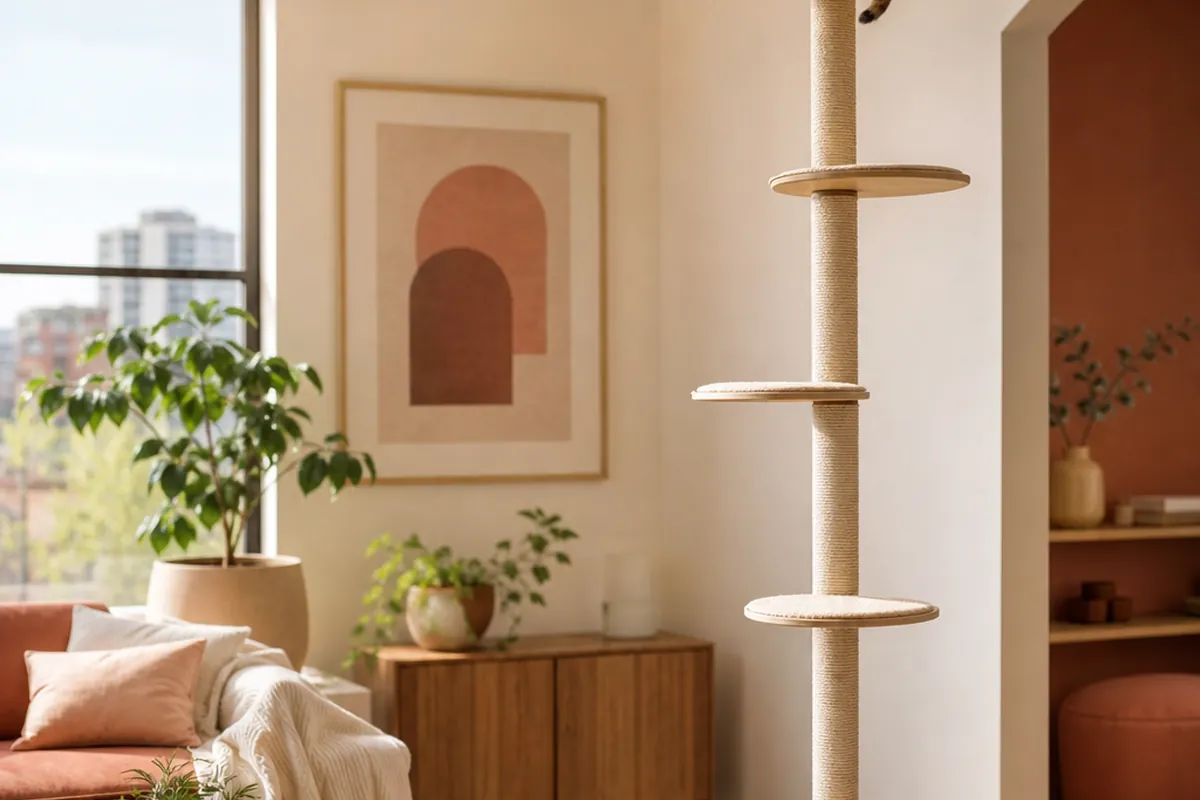
A floor-to-ceiling cat tree is the most efficient trade available in a small apartment: roughly a square foot of floor for seven or eight feet of climbing. Nothing else in the category comes close on that ratio. The catch is that tension fitting is genuinely unforgiving, and a pole that is slightly wrong is worse than no pole at all, because a cat that feels movement underfoot will not go back up.
Eight ideas, weighted toward the details that decide whether the thing feels solid.
1. Measure the ceiling before you shop, not after
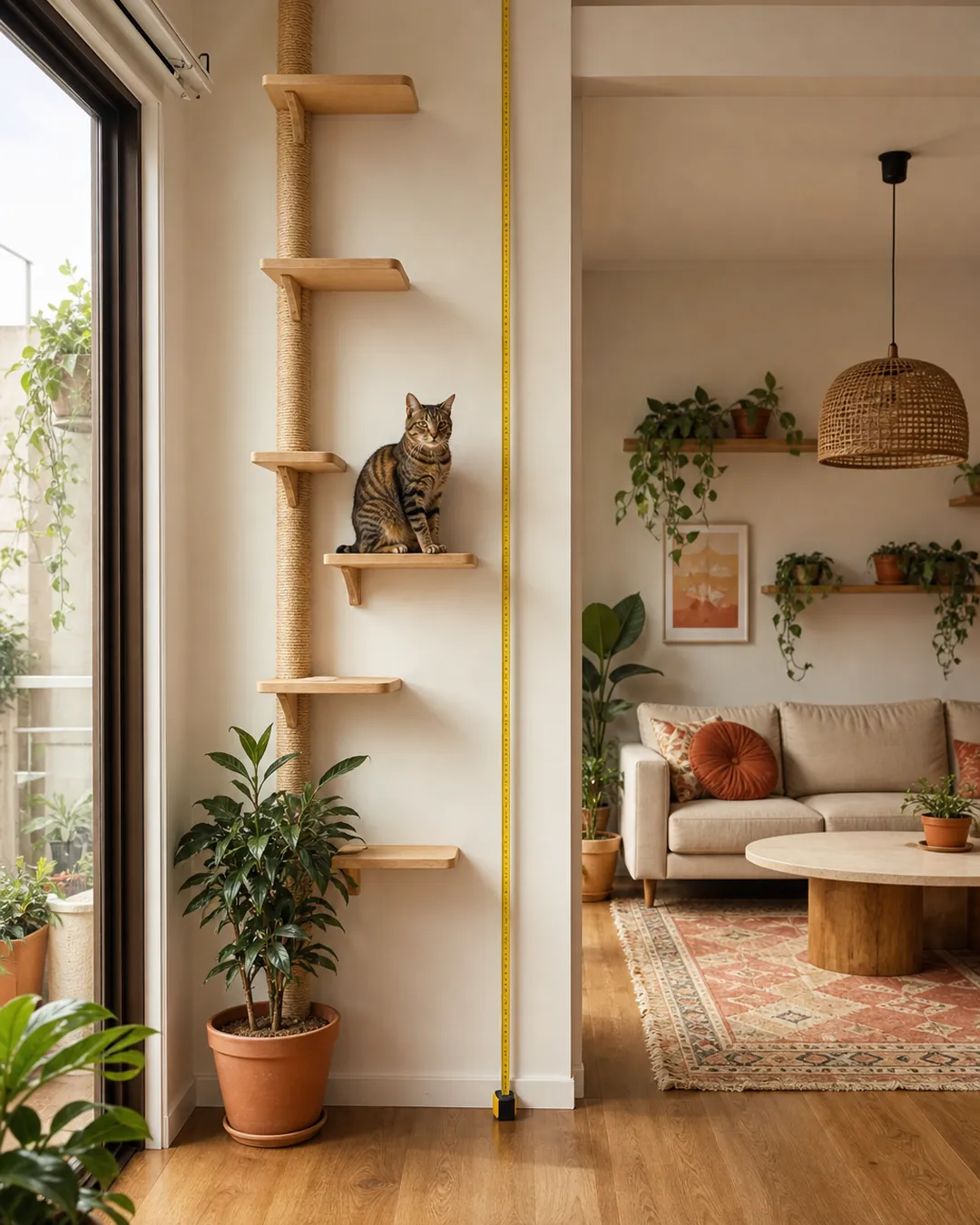
Every adjustable pole has a published range, and people fixate on the maximum while the minimum is what catches them out. A pole that adjusts from 102 to 122 inches will not fit a room with an eight foot ceiling, because it does not compress far enough. Measure floor to ceiling at the exact spot the pole will stand, since floors slope and dropped ceilings appear over closets and hallways. A tension tree covering roughly 102 to 122 inches suits taller rooms, while shorter apartments need a model whose range starts lower. Write your number down and filter on it before looking at anything else, because this is the one specification that cannot be worked around. If your ceiling sits near the top of a pole’s range, prefer a model with room to spare rather than one at full extension, since a pole extended to its limit has less thread left to take up the slack when the fit loosens.
2. Tighten to firm and then stop
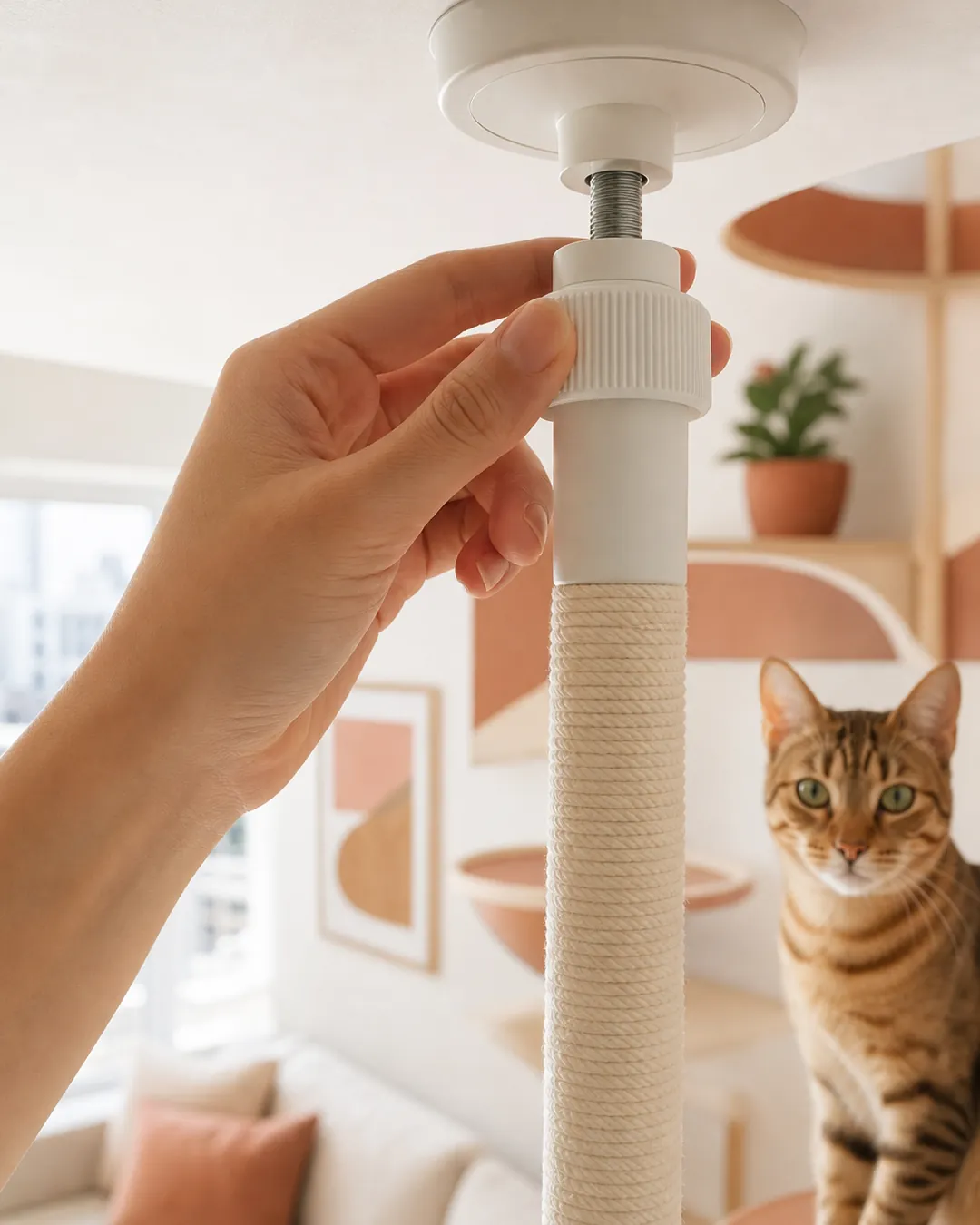
Overtightening is how tension poles damage ceilings, and a dented or cracked ceiling is a deposit deduction in a way that a scuffed floor never is. Use the spreader plate that came in the box, and if one did not, cut a square of thin plywood to spread the load. Tighten until the pole is solid to a firm push and go no further. The instinct is to keep going for reassurance, and that instinct is the problem. Check the tension monthly for the first few months, because buildings settle, temperature changes the fit, and a pole that was perfect in August is often slightly loose by November.
3. Choose the number of levels by how the cat climbs, not by the photo
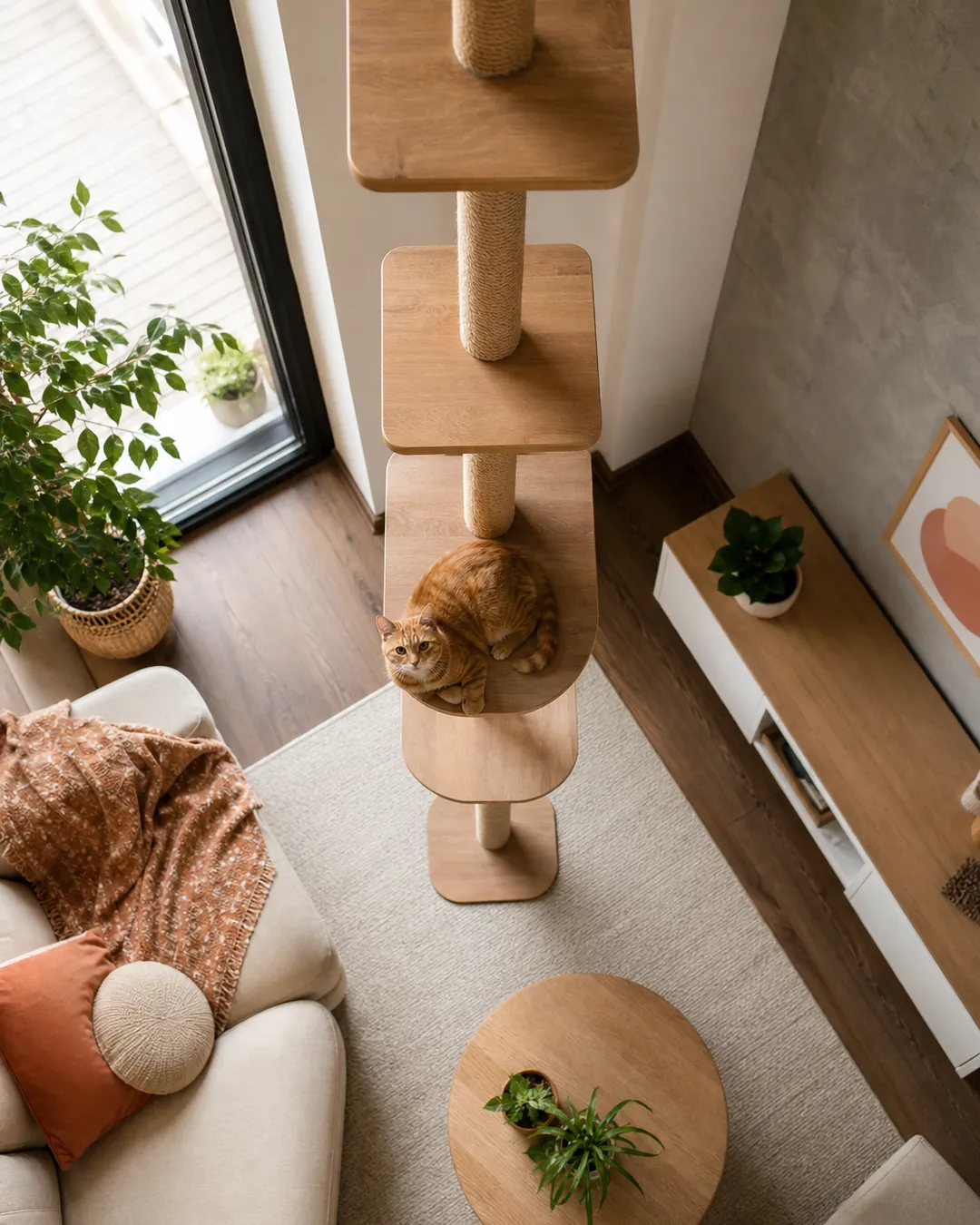
Six levels on a ten foot pole looks impressive and asks for a lot of short hops. Fewer, larger platforms suit heavy or older cats, and more, closer platforms suit young ones that treat the pole as a track. A six level pole covering six to ten feet gives you the closer spacing, which is the right answer for a cat that runs at things and the wrong one for a cat that thinks about each step. Watch your own cat on the furniture it already uses. A cat that takes the two-stage route to the top of a bookcase wants more platforms, not fewer. Check the platform sizes as well as the count, because a platform a cat cannot lie down on is a step rather than a place, and a pole made entirely of steps gets climbed rather than lived on.
4. Put the pole where a cat already wants to be
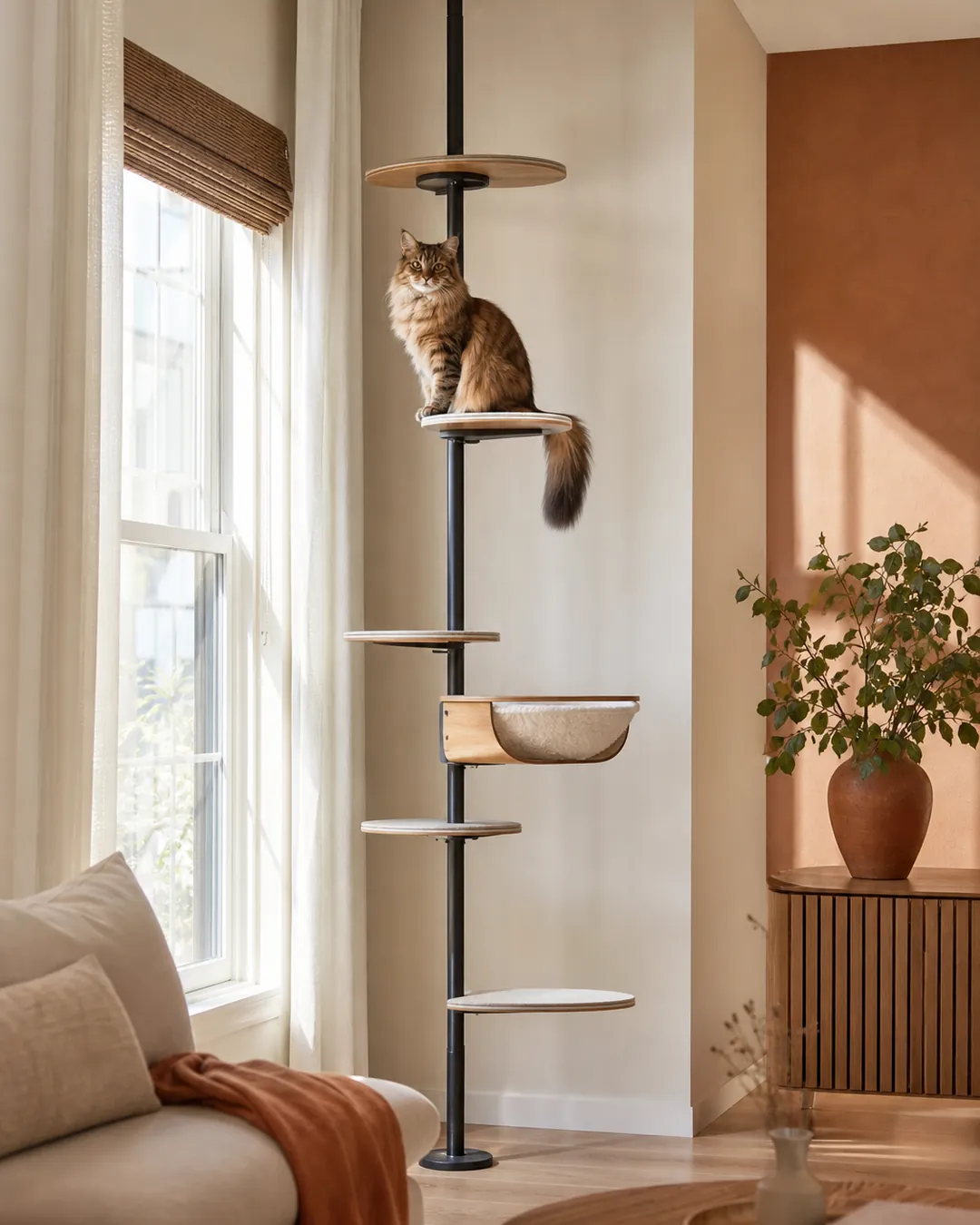
The single biggest reason these get ignored is position. A pole in the corner of a room nobody sits in gives a cat height in a place with nothing to watch. Beside a window, near where you sit, at the edge of a walkway: those are the spots that get used. Height is only half of what a cat is after, and the other half is a view of the room and of you. Moving a pole is a ten minute job, so treat the first position as a trial rather than a decision. Avoid the spot directly beside a door, though. The swing of a door passing within inches of a platform unsettles a cat that is trying to sleep there, and it is the position people most often default to because the corner behind a door looks empty.
5. Leave landing room around the base
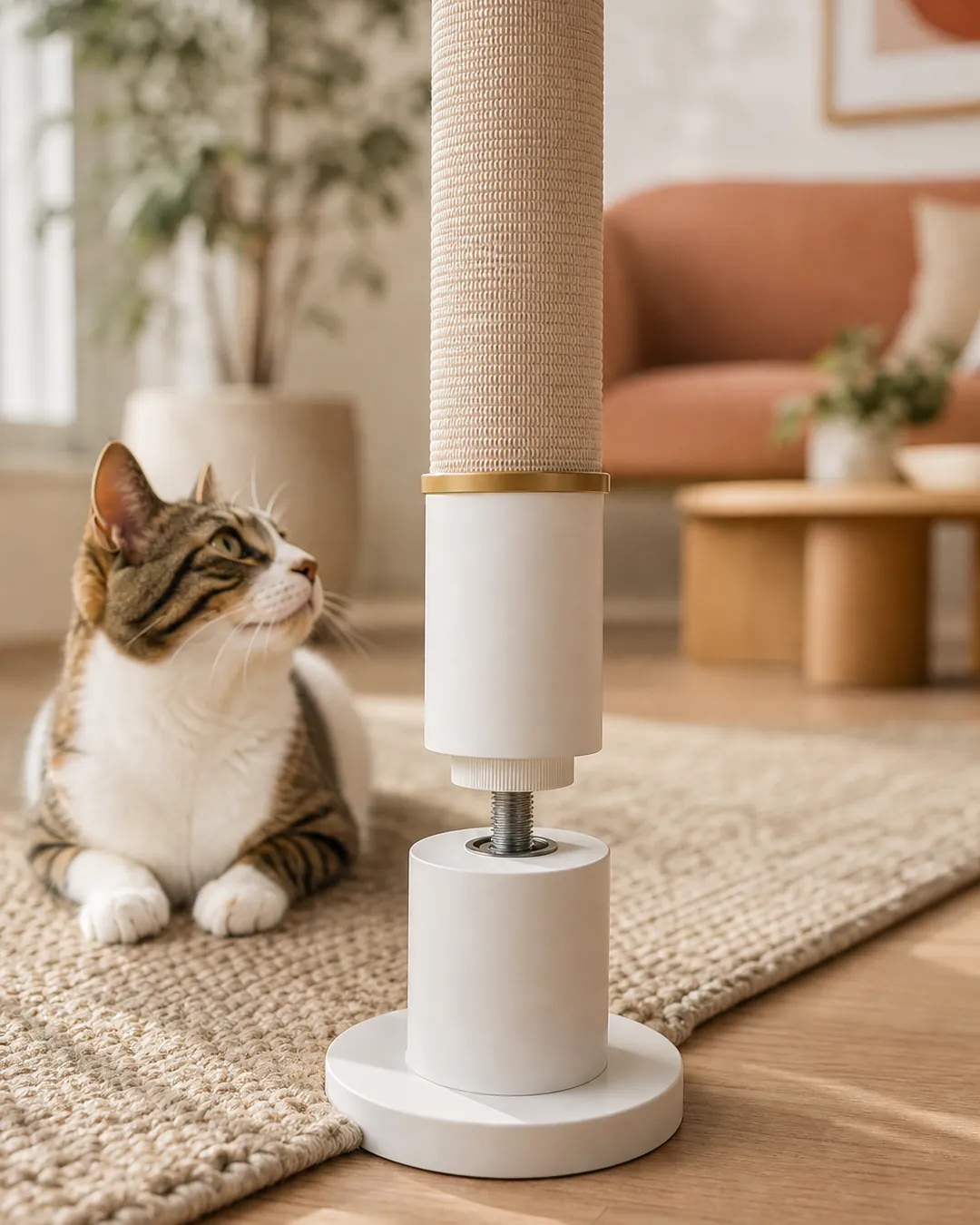
The footprint is small, which tempts people to wedge the pole into a gap between furniture. Cats do not descend vertically; they step off at an angle and land a foot or two away. A pole with a sofa on one side and a cabinet on the other forces awkward exits and, in time, a cat that stops coming down that way. Leave a clear patch on at least two sides, and keep anything breakable off the surfaces within landing distance. A rug under the base is worth adding on hard flooring, both to soften the landings and to stop the base creeping, since repeated impact will slide a lightly loaded base across laminate over a few months.
6. Extend the route onto the wall
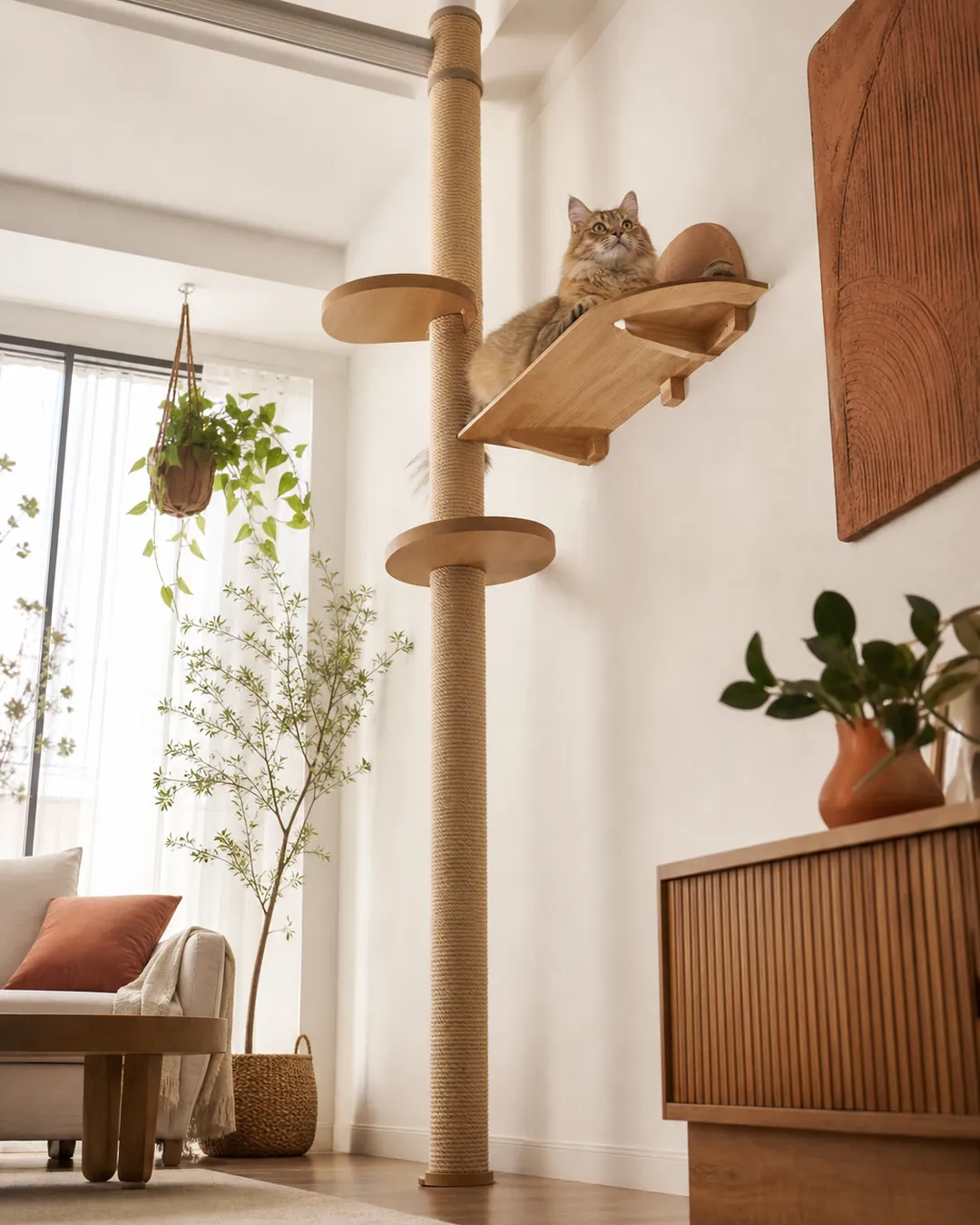
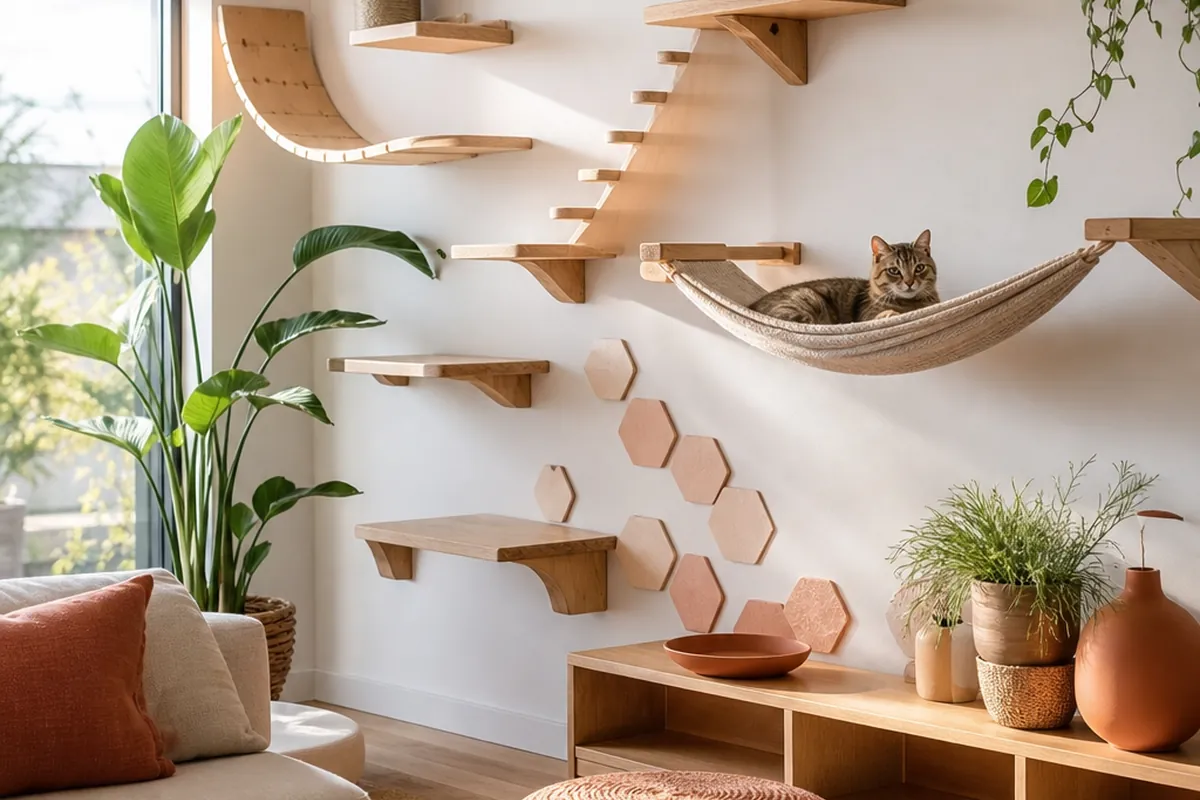
A pole is a vertical line, and a cat that reaches the top has nowhere further to go. Adding a wall shelf with two platforms near the upper section turns a dead end into a route, which changes how much time the cat spends up there. This is also how you cover a long wall without a full climbing wall: one pole doing the vertical work, two or three shelves doing the horizontal, and far fewer holes than a shelf-only route would need.
7. Know when a tension pole is the wrong tool
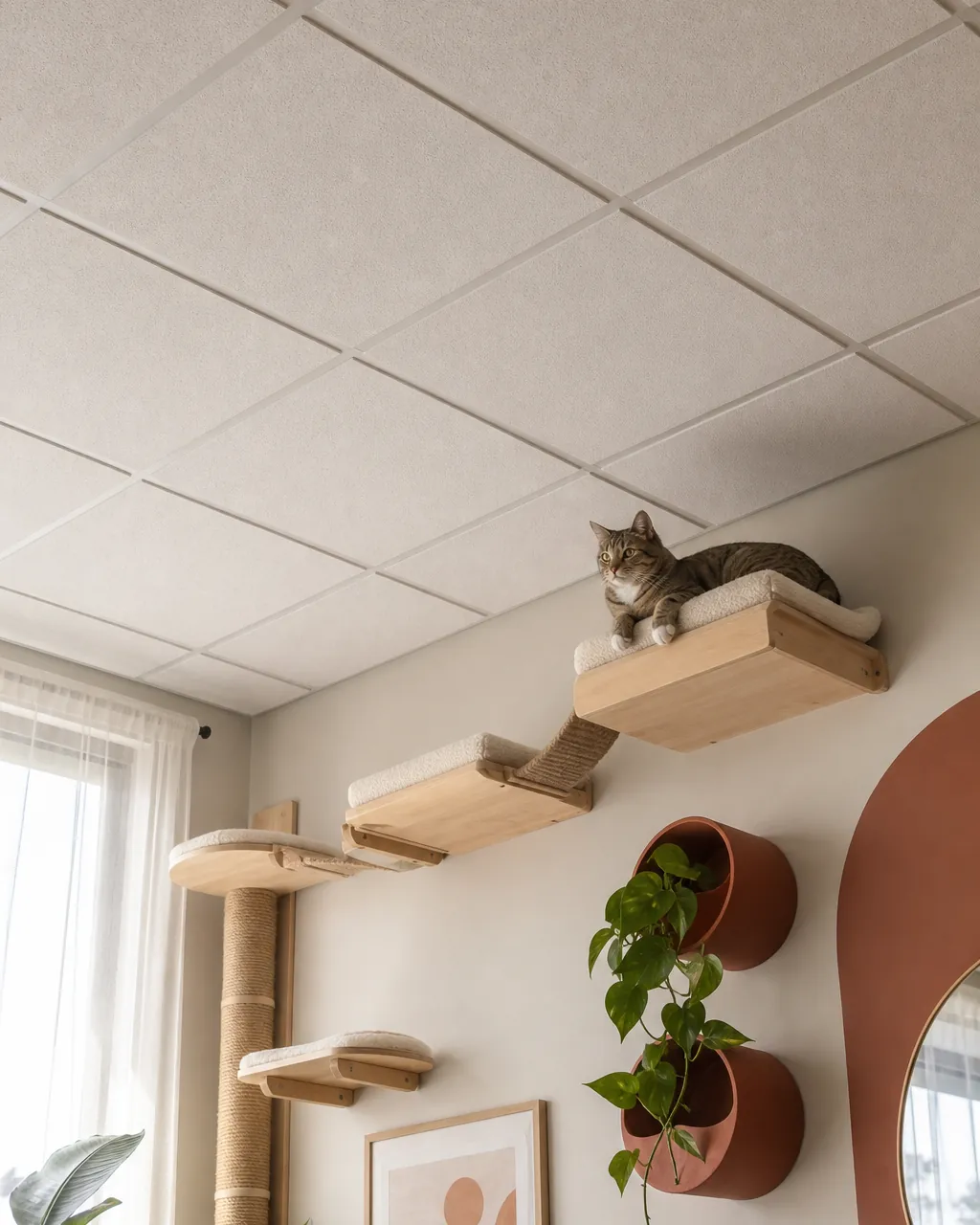
Tension needs something firm to push against. Suspended ceiling tiles, soft board and some textured finishes compress slowly under load, and the pole works loose repeatedly no matter how carefully you fit it. Very high ceilings are the other case, since past about ten feet you are outside most published ranges and improvising is not worth the risk. In either situation a freestanding tower or a set of wall shelves is the honest answer, and recognizing that before you order saves a return.
8. Re-check it after anything that shakes the building
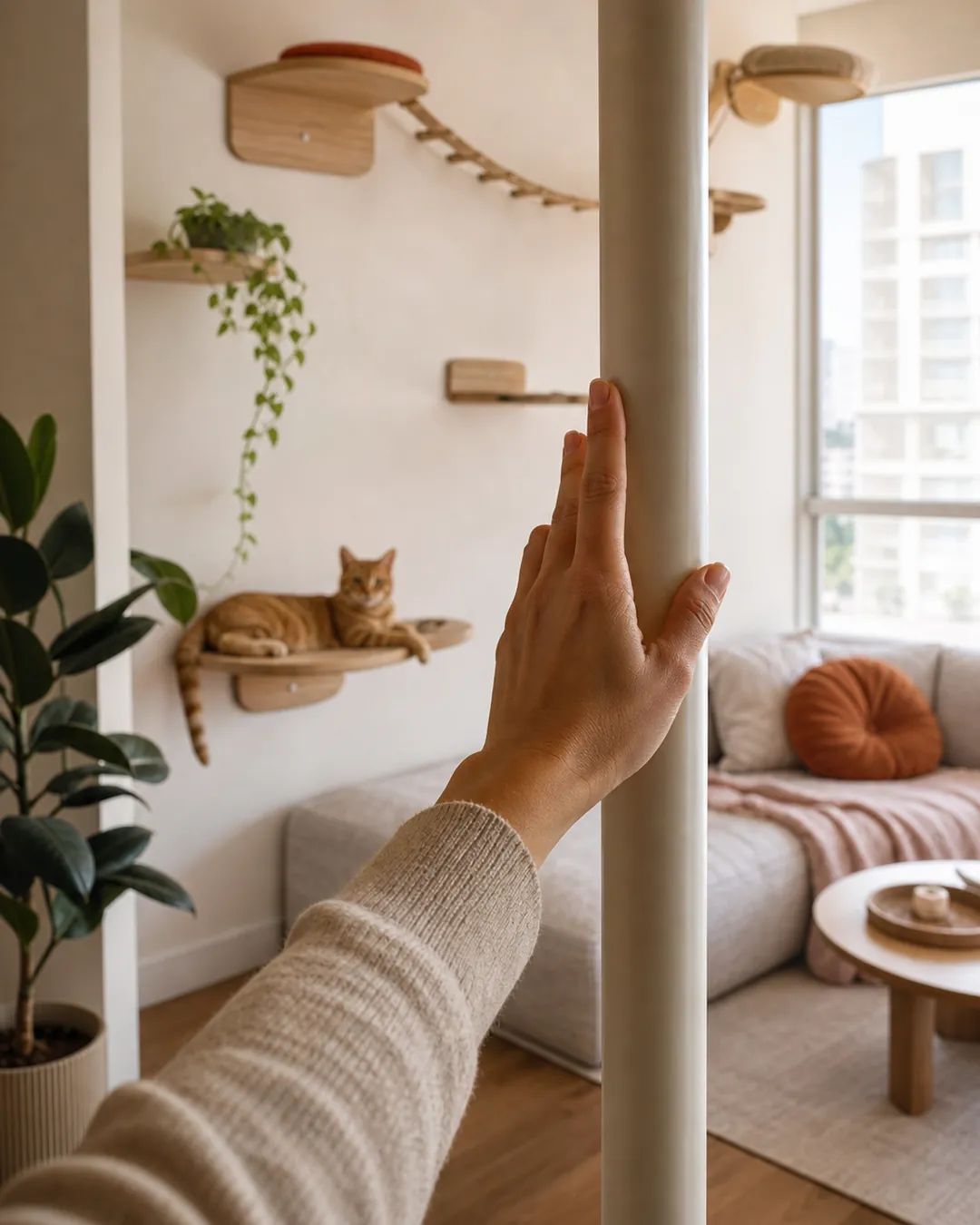
Slammed doors, heavy trucks, a neighbor’s renovation, a move of the furniture next to it. Tension fittings loosen from vibration rather than from use, and the loosening is gradual enough that you will not notice until a cat does. Press the pole firmly at chest height once a month; if it moves at all, retension it. This takes fifteen seconds and it is the whole maintenance schedule. Put it on the same day you do something else routine, because a check nobody remembers is a check that happens after the pole has already started to move.
Where to start
Measure the ceiling and write the number down. Then filter every candidate on its adjustment range, discarding anything whose minimum is above your ceiling or whose maximum is below it. This eliminates most of the market immediately and saves you from the single most common mistake here.
Fit it in a position you are willing to change. Somewhere near a window, in a room you actually use, with clear floor on two sides. Live with it for a week before deciding it is permanent, because the difference between a pole that gets used all day and one that gets ignored is usually two feet of position rather than anything about the pole.
Add the wall shelves later, once you know where the cat goes when it reaches the top. Cats reveal the route they want within a few days, and a shelf placed to match that is worth three placed to a plan drawn beforehand.