A Halloween display in a small apartment shares every surface with a cat that lives there year-round, which is a different problem than the one most decorating guides solve. It is not about picking a theme. It is about picking decor that survives four weeks of being sniffed, batted, climbed on and occasionally eaten by something that considers the whole apartment its territory. Get the mechanics right and the display lasts until November 1st. Get them wrong and you are re-hanging the garland every other morning.
Eleven ways to decorate that hold up, roughly in the order you will need them.
1. Swap real flame for flameless from the start
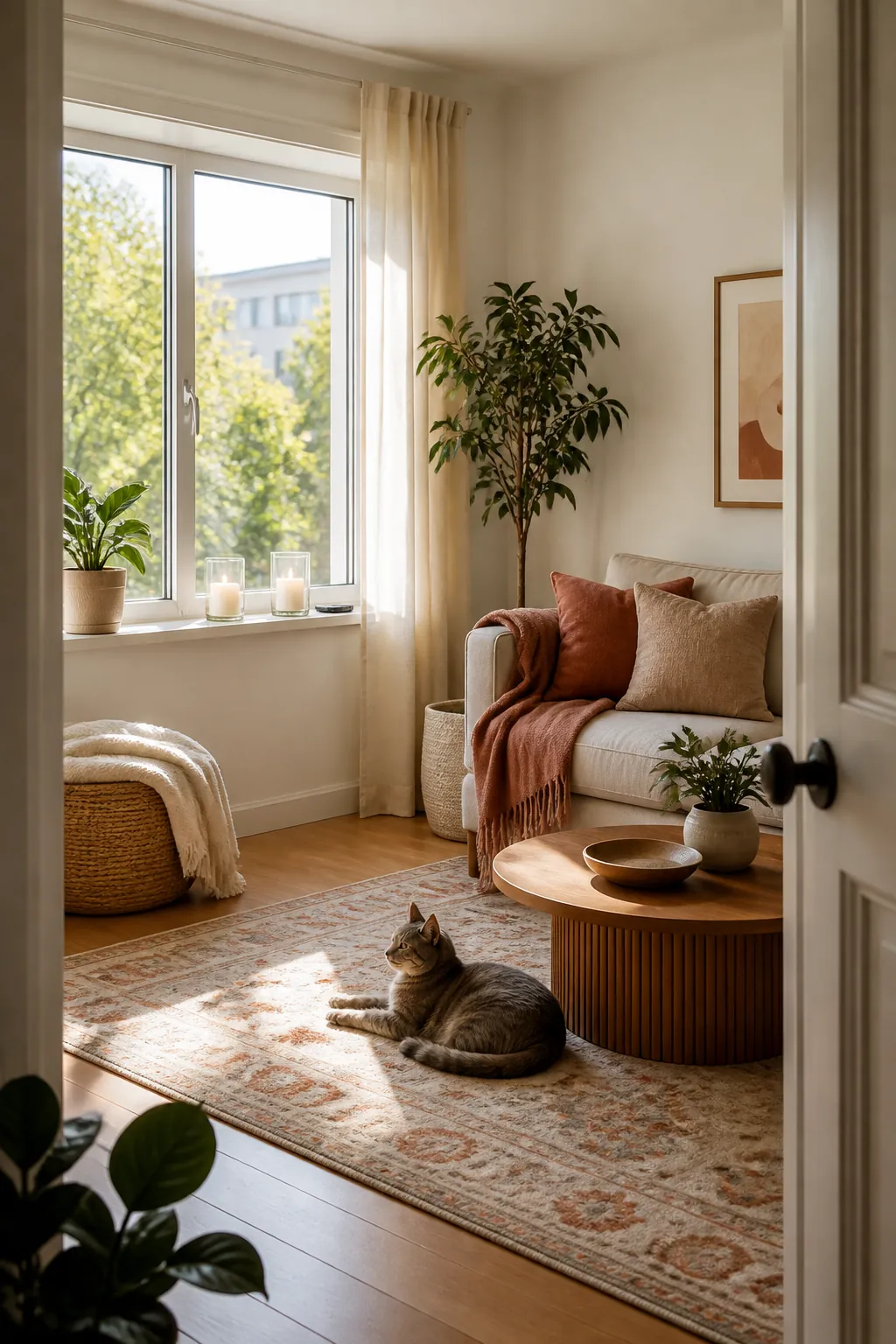
Do not even start with real candles this year. A rechargeable flameless candle set with a remote and timer gives you the amber glow in windowsills and on shelf edges without a flame that gets knocked into curtains or fur. The remote matters more than it sounds like it would, because it lets you turn the whole set on from the sofa rather than reaching past a cat perched on the same shelf. Set the built-in timer for early evening through midnight and you never have to think about it again for the rest of the month.
2. Keep string decor at wall height, not swing height
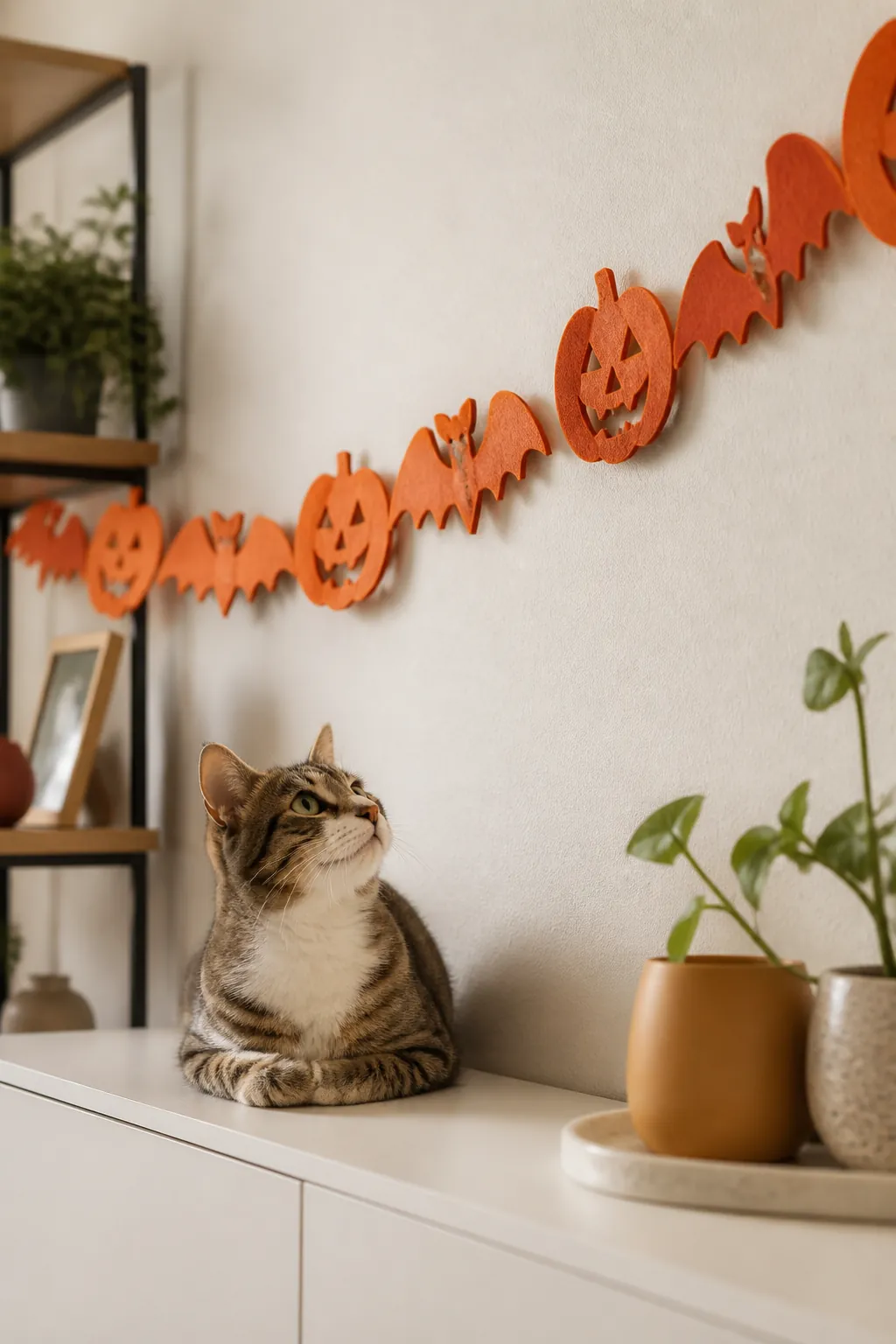
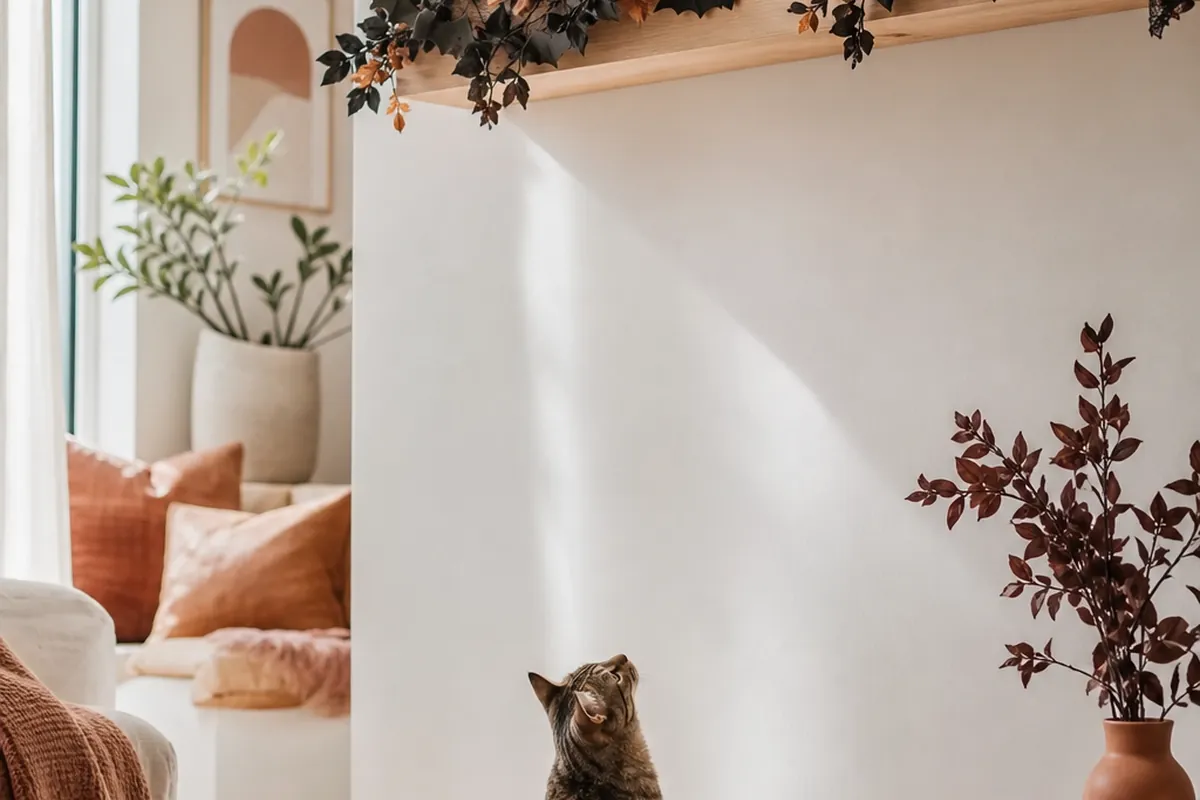
A garland that swags loose between two points, six inches lower than the shelf on either side, is built to be pulled. The same garland tacked flat against the wall a few inches above it does not swing, does not dangle, and gives a paw nothing to hook. If you want the swag look, hang it across the top third of a window or doorway frame rather than at eye level. Most cats will investigate anything within a standing jump, which in a small apartment is most of a wall up to about four feet, so treat that whole band as reachable and decorate above it.
3. Route cords through a sleeve before they hit the floor
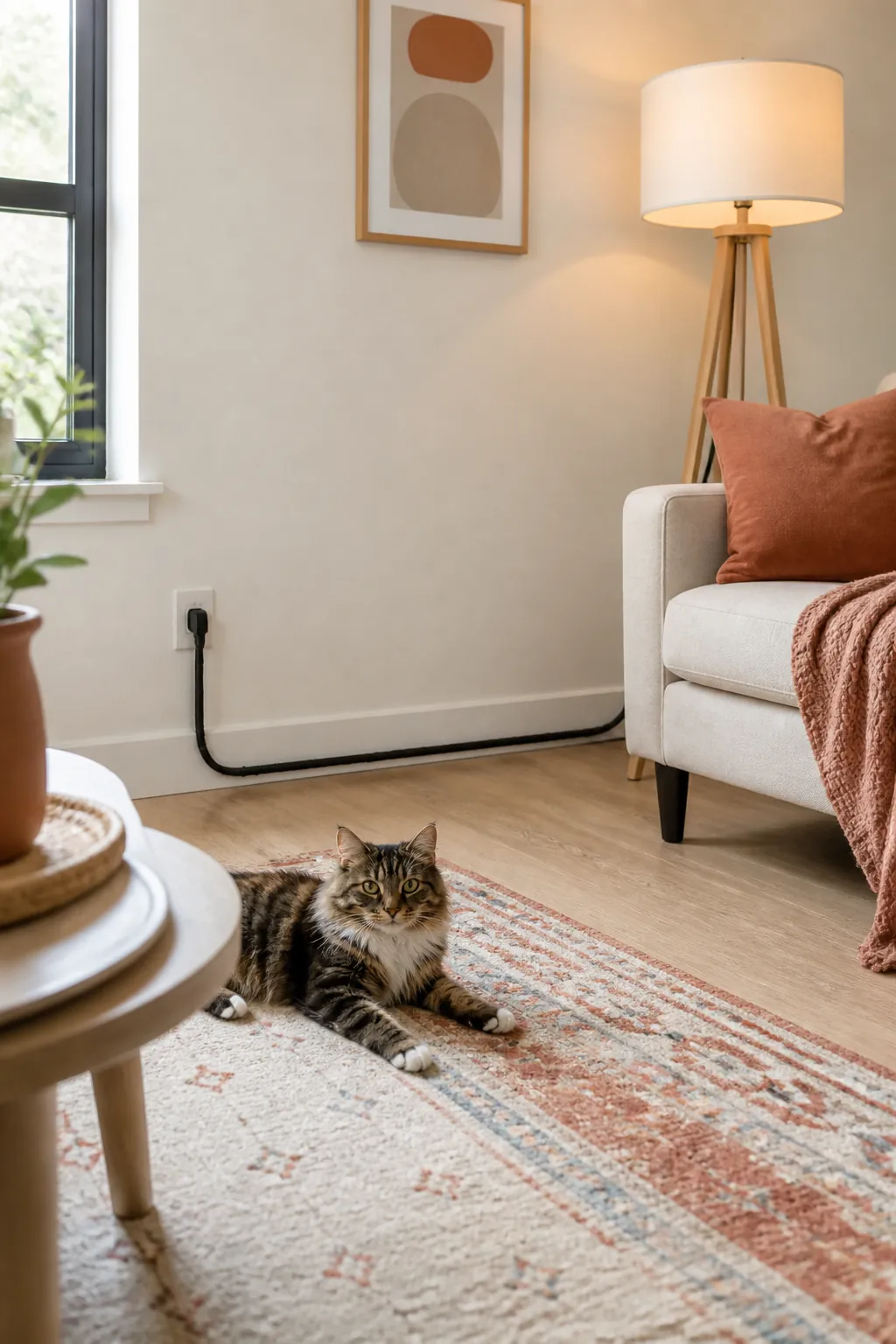
A bare extension cord snaking across the floor to reach a string-light plug is round, faintly springy and exactly the texture a lot of cats treat as prey. A ten-foot wire loom cord protector slides over the cord and changes that texture completely, and running the sleeved cord along a baseboard rather than across open floor removes most of the temptation on its own. Cut the sleeve a couple inches longer than you think you need. A tight fit at the ends is where cords work their way back out, usually within the first week.
4. Weight anything that stands on its own
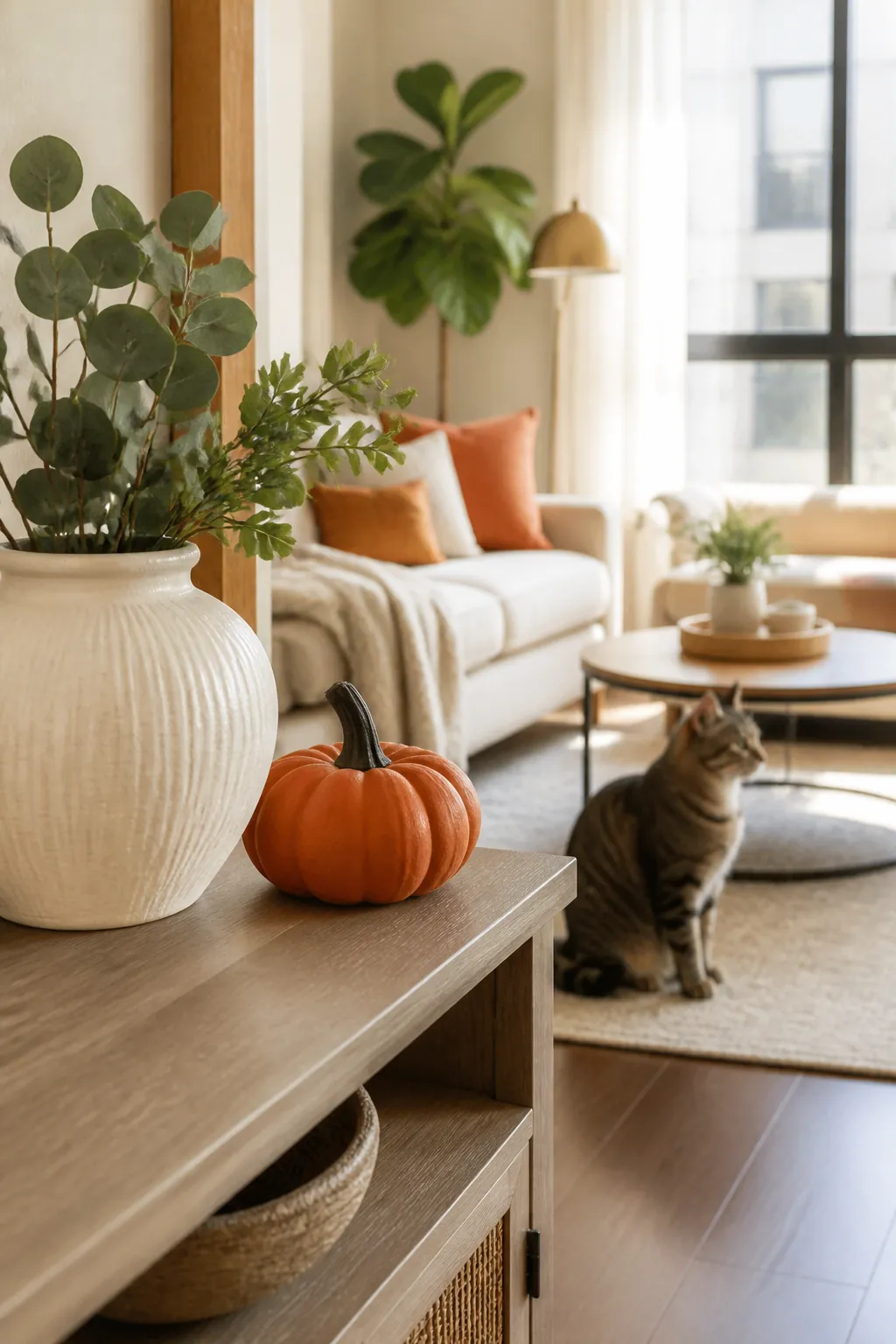
A tall, narrow decoration on a small base tips the moment a cat brushes past the table it sits on. Before buying anything freestanding, check the ratio between the base width and the height. Anything taller than about twice its base width is a tip risk on a surface a cat also uses as a walkway. Where you cannot avoid a tall piece, a small amount of museum putty under the base holds it without any adhesive on the furniture itself, and it comes off clean at the end of the season.
5. Mount hanging pieces without touching the paint
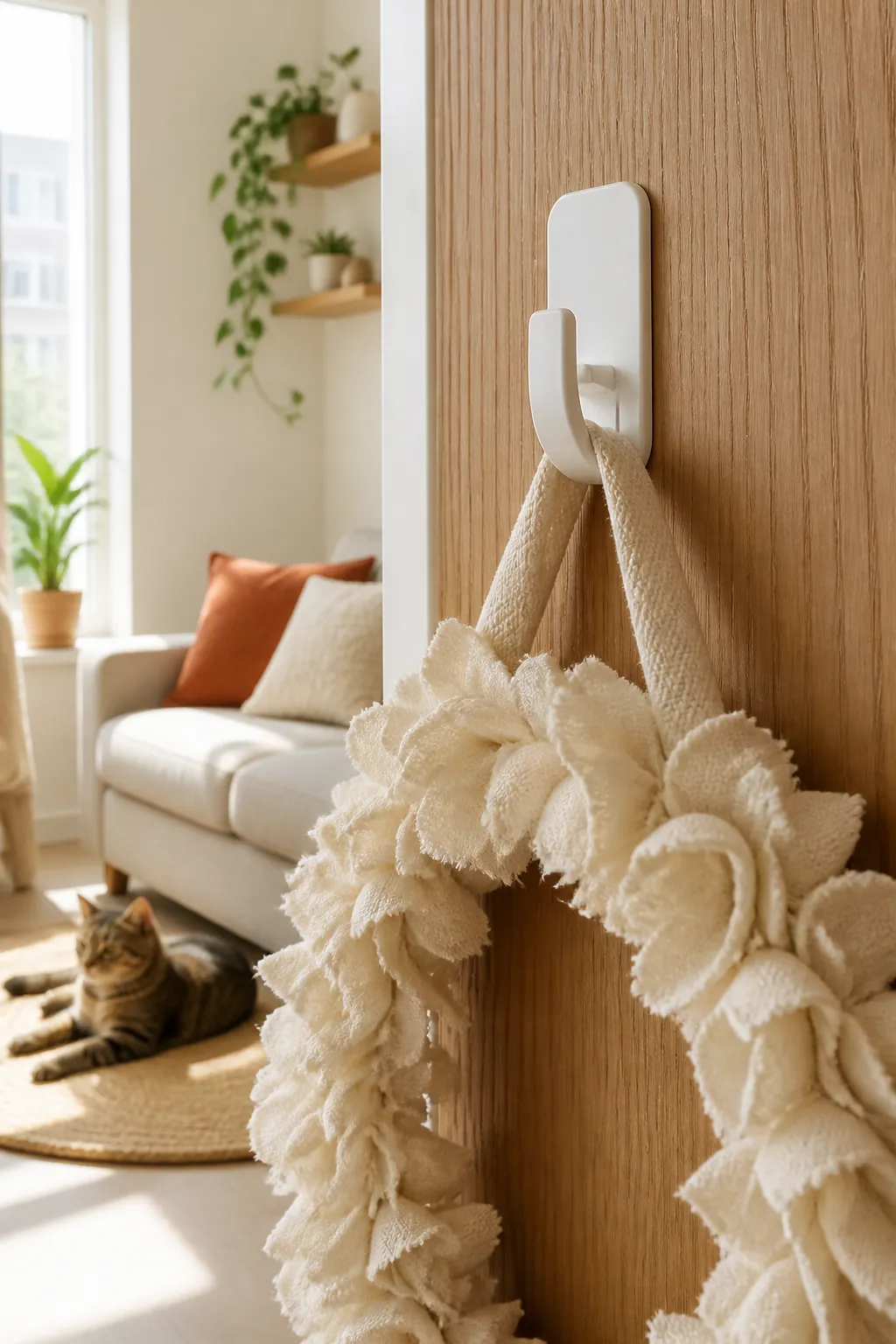
A rental doorway or window frame does not need a single nail for any of this. Removable adhesive hooks rated for two or three pounds handle a wreath or a light strand, and a tension rod dropped inside a window recess holds garland or fabric without touching the frame at all. The failure mode worth knowing is weight, not the adhesive itself. A hook rated for two pounds holding a four-pound decoration will hold for a week and then let go overnight, usually while you are asleep, and the cat gets credit for damage the hook actually caused.
6. Keep breakable pieces above shelf height a cat uses daily
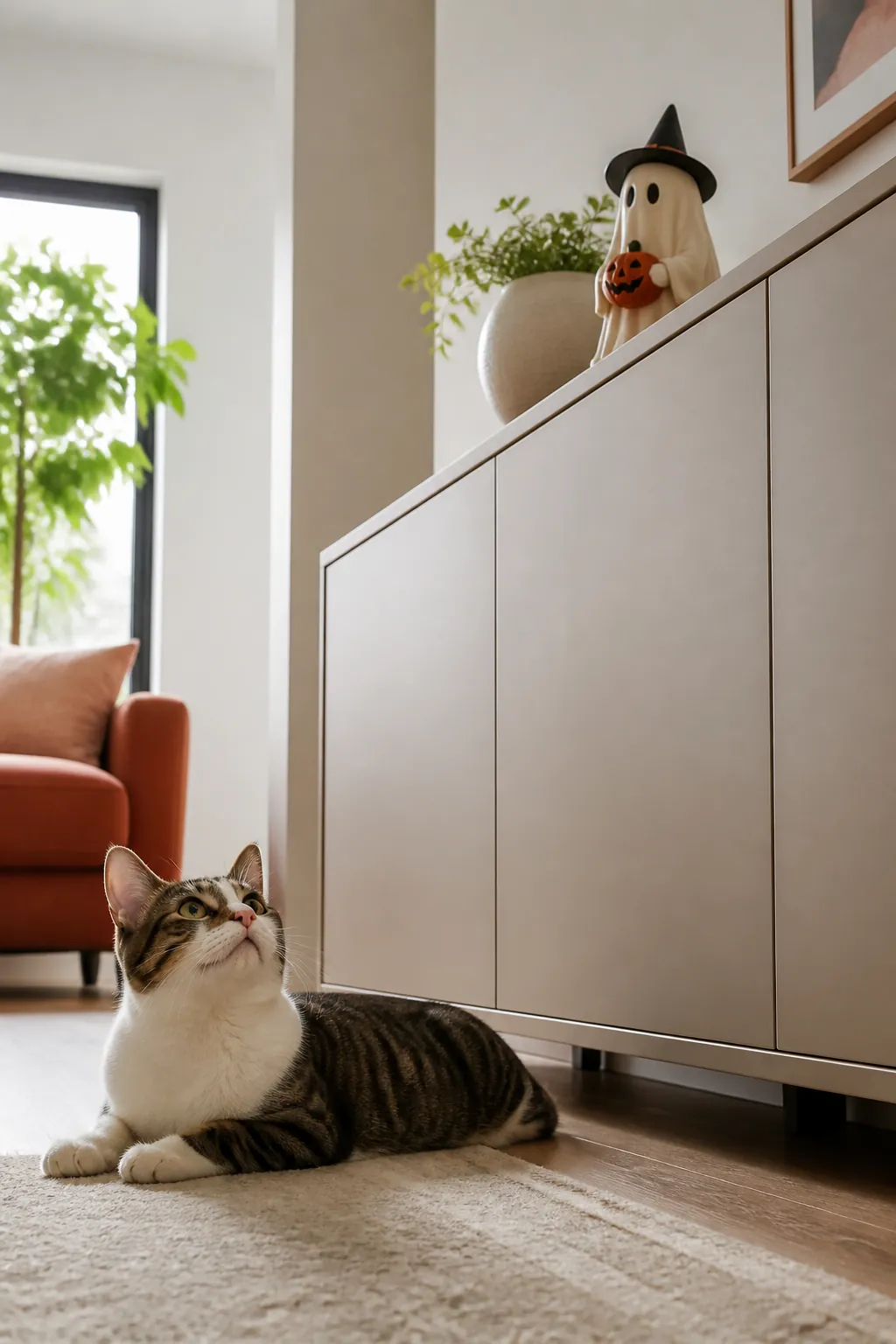
Every shelf in the apartment already has a use to the cat, and some of them are a nap spot or a route to somewhere else. Put ceramic or glass Halloween pieces on the shelves that are decorative only, not the ones the cat already treats as a path, and go one shelf higher than you think you need to. A shelf a cat merely passes gets brushed. A shelf a cat sits on gets tested with a paw eventually, on purpose or not.
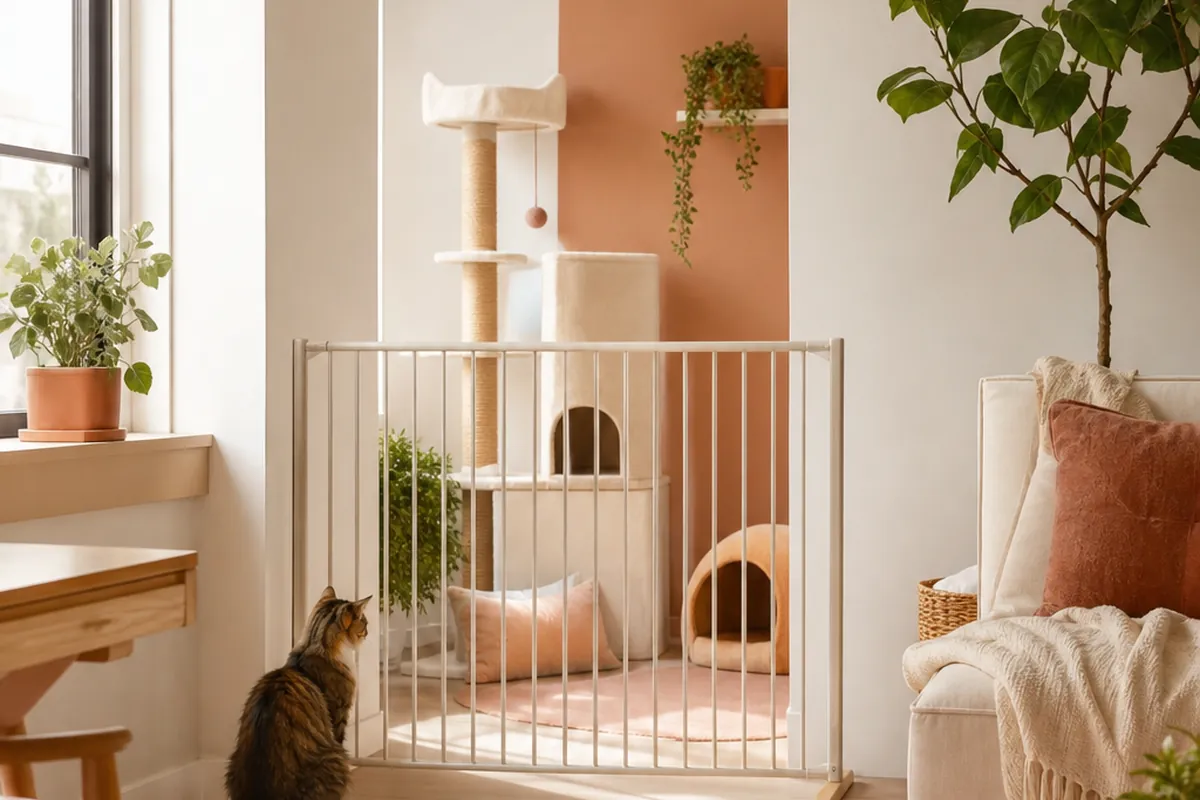
7. Gate off the most decorated room entirely
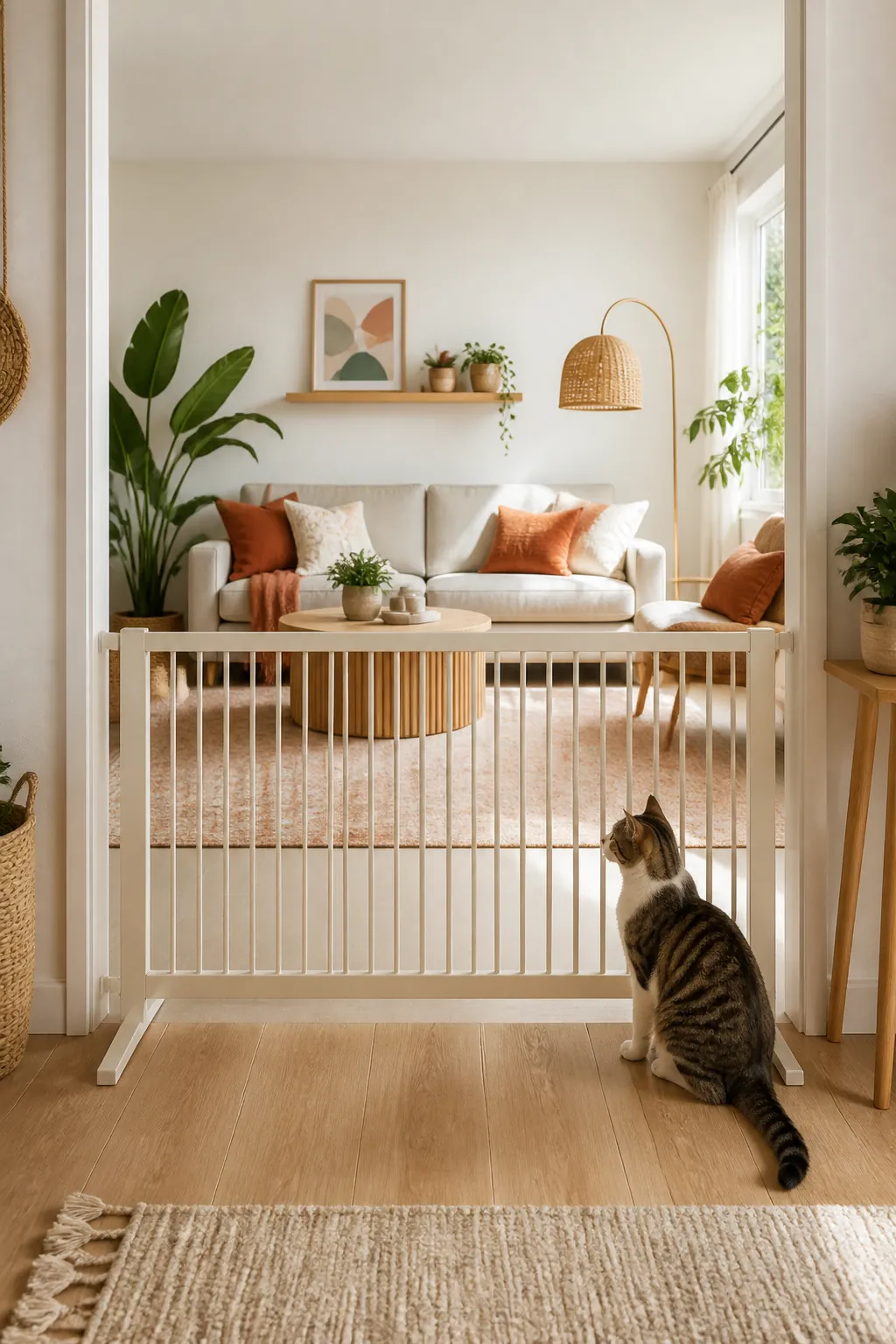
If one room is carrying most of the decorating, a freestanding pet gate across its doorway keeps a cat from wandering through it unsupervised, which covers the bulk of the incidental damage since most of it happens while nobody is watching. It will not stop a determined jumper, and it is not meant to. What it stops is the cat strolling in at 3am and treating the whole display as new furniture to investigate, which is when nearly all of this happens anyway. Because it stands on its own with no wall fittings, it comes down in seconds once the season is over.
Choosing a gate that still looks like part of the apartment in November, when the pumpkins are gone, is covered in pet gate ideas that do not ruin your doorways.
8. Choose fabric and resin over glass where you have the option
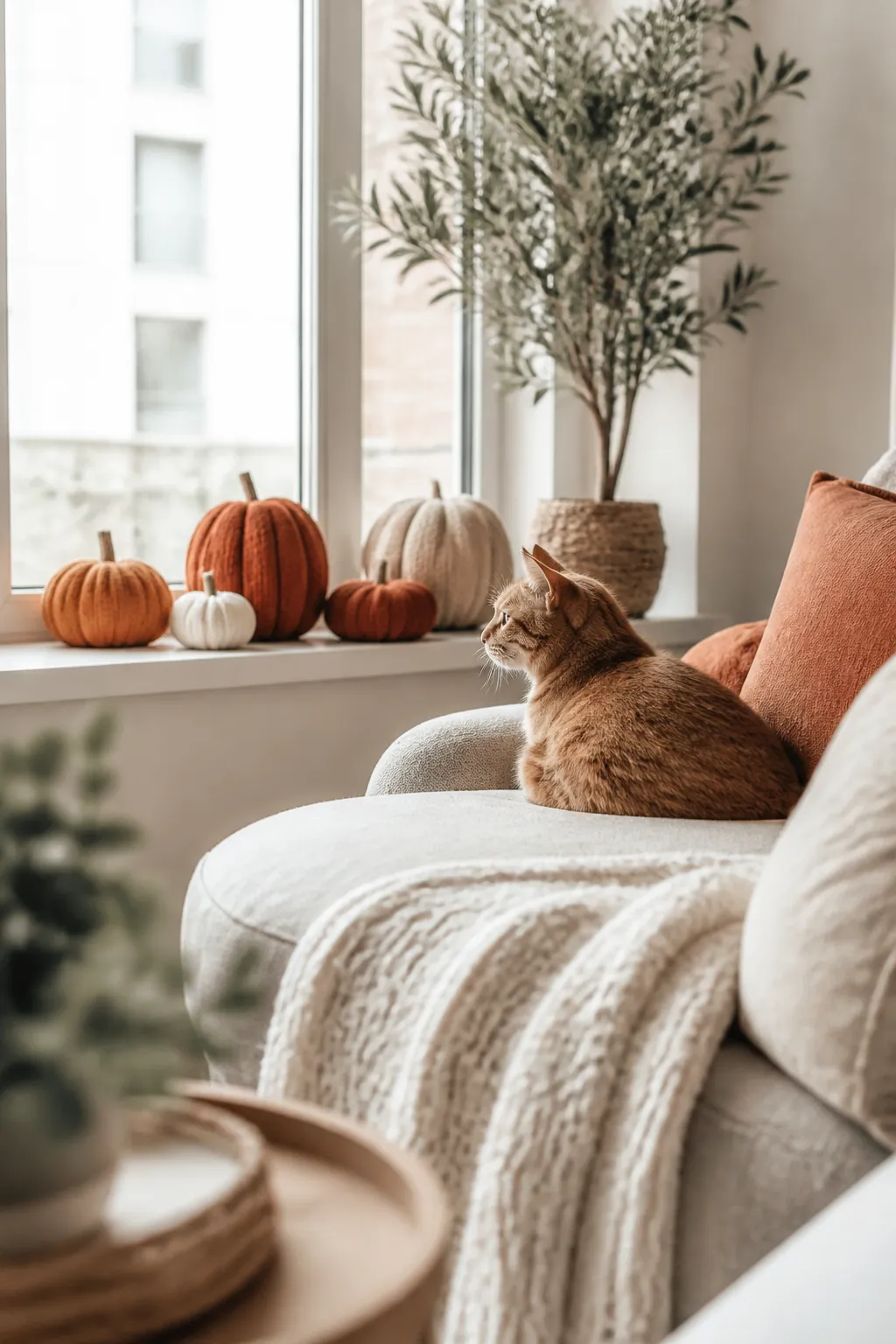
Fabric pumpkins, felt bats and resin figures survive a knock that a glass ornament does not, and most Halloween lines now sell a fabric or resin version of nearly everything glass. Reserve the glass pieces for shelves well above cat-jump height and let the low, reachable surfaces carry the softer materials. It is a small substitution that removes most of the risk of a broken piece and a floor to sweep, without changing the look of the display from across the room.
9. Skip loose confetti and scatter decor on the floor
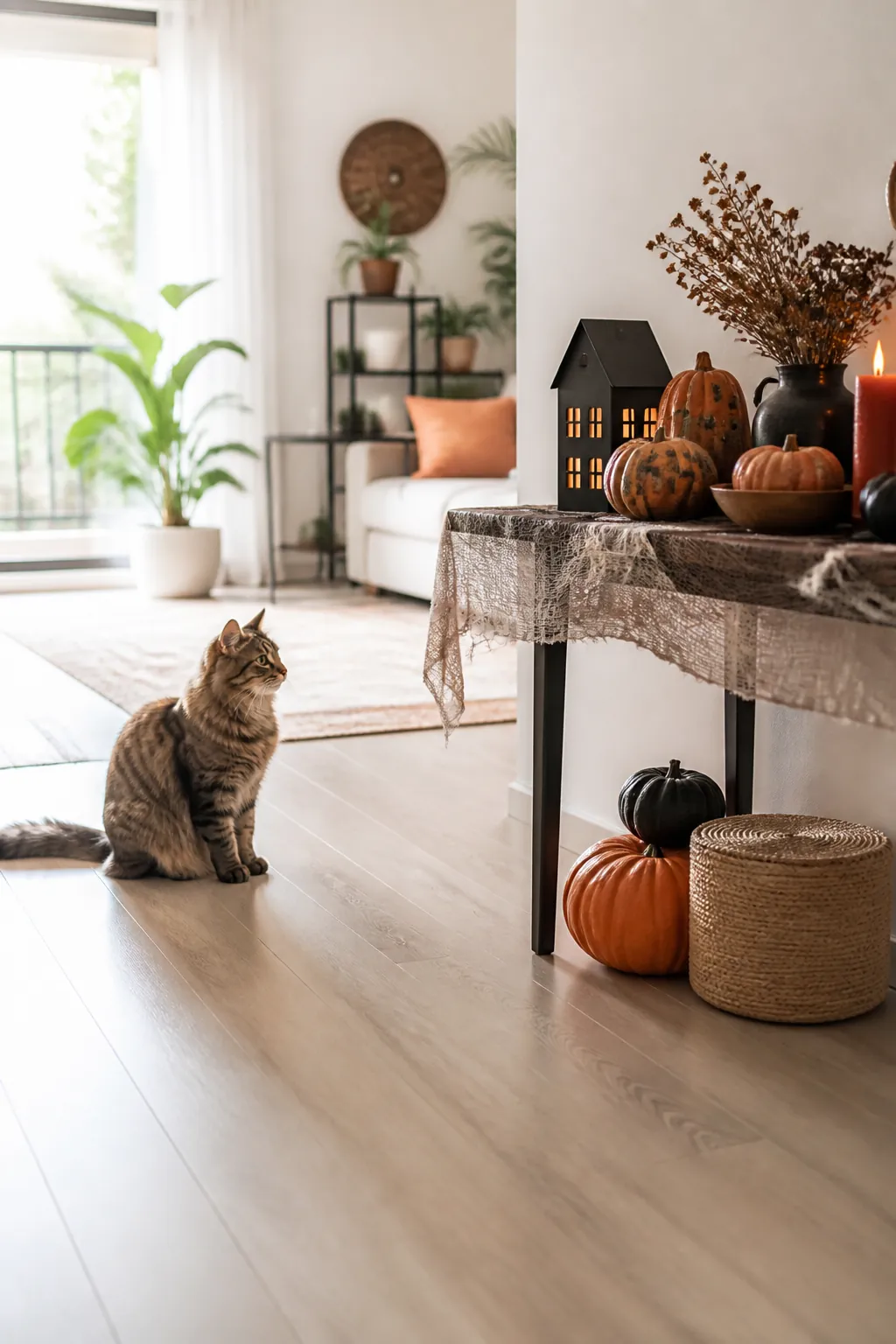
Table-scatter confetti, fake leaves and paper bats look great in a photo and terrible an hour later, once a cat has batted half of it under the couch and the rest across the kitchen. Keep any scatter decor inside a bowl or a shallow tray rather than loose on a tabletop, or skip it in favor of a runner or a printed tablecloth that gives you the same seasonal color without anything small enough to carry off.
10. Test the display for one evening before committing to it
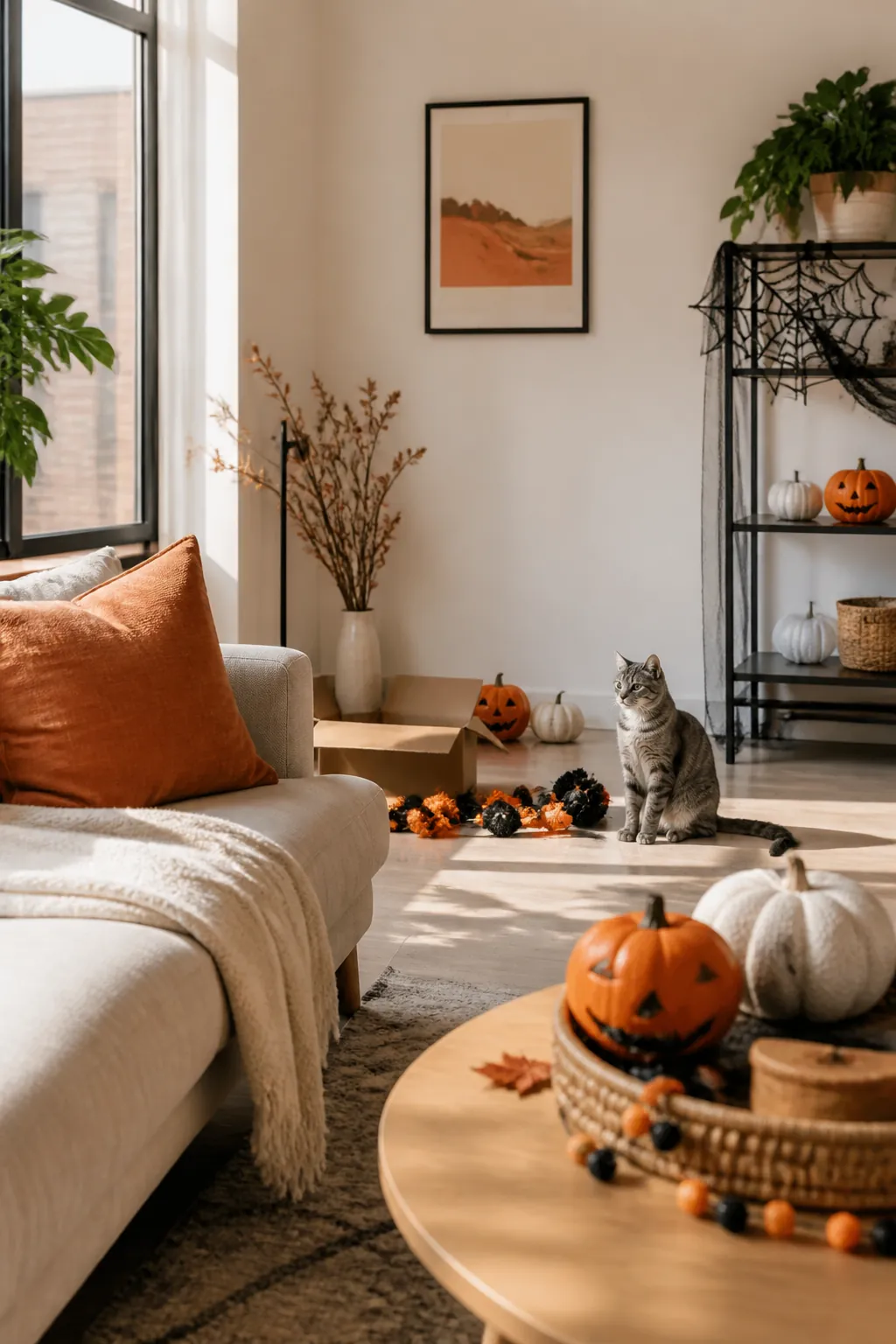
Before you commit to a full setup, put the pieces out for one evening and watch what actually draws attention. A cat that ignores the garland but climbs straight for the pumpkin display tells you exactly where to put your effort, and it is far cheaper to learn this with one evening of observation than with a broken decoration on day three. Adjust height and placement based on what you saw, then set up the rest of the display around those two or three trouble spots.
11. Plan the teardown the same way you planned the setup
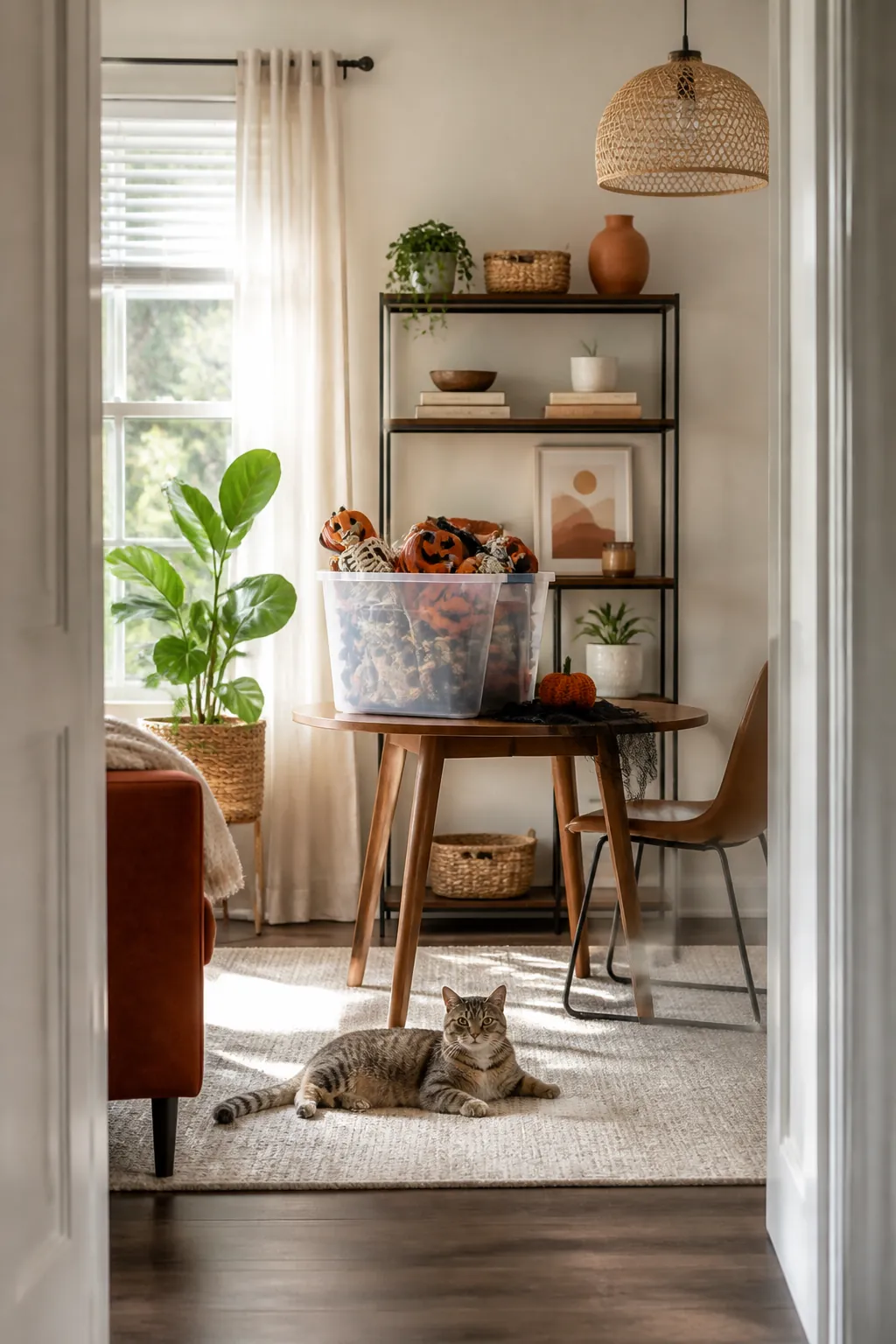
Decorations that survive the season should survive storage too, or you are rebuying half of it next October. Pack the fabric and resin pieces separately from anything glass, remove batteries from the flameless candles rather than leaving them installed for eleven months, and coil the sleeved cord rather than the bare one so the sleeve does not crack at a fold line. A bin labeled by room rather than by decoration type makes next year’s setup a single trip rather than a search through everything you own. Felt and fabric pieces come out of a month in a cat’s apartment holding a layer of fur, so run a rubber-bristled brush over them before they go in the bin, the same tool these pet hair cleanup ideas for small apartments use on fabric that holds hair.
Where to start
Start with the flameless candles and the cord sleeve, since those two swaps remove the two highest-stakes items from the room before you have hung a single garland. Everything else on this list is about placement rather than replacement, and placement costs nothing beyond the time it takes to move something six inches higher or a foot further from the walkway.
Then do the one-evening test before you finish the room. It tells you, specifically for your cat and your apartment, which two or three spots need the gate, the extra height or the weighted base, rather than guessing at all eleven ideas everywhere at once.
The apartment does not need to look less decorated to survive a cat living in it. It needs the same decorations mounted a little higher, weighted a little better, and routed a little further from the floor than a Pinterest board usually shows.