A pet gate is one of the few pieces of pet equipment that gets fitted to the building itself, which is why it is the one renters get wrong most expensively. The gate holds fine. The paint underneath the pressure cups does not, and that discovery arrives at the end of the tenancy rather than during it.
Nine approaches, starting with the decision that determines everything else.
1. Decide pressure or hardware before you shop
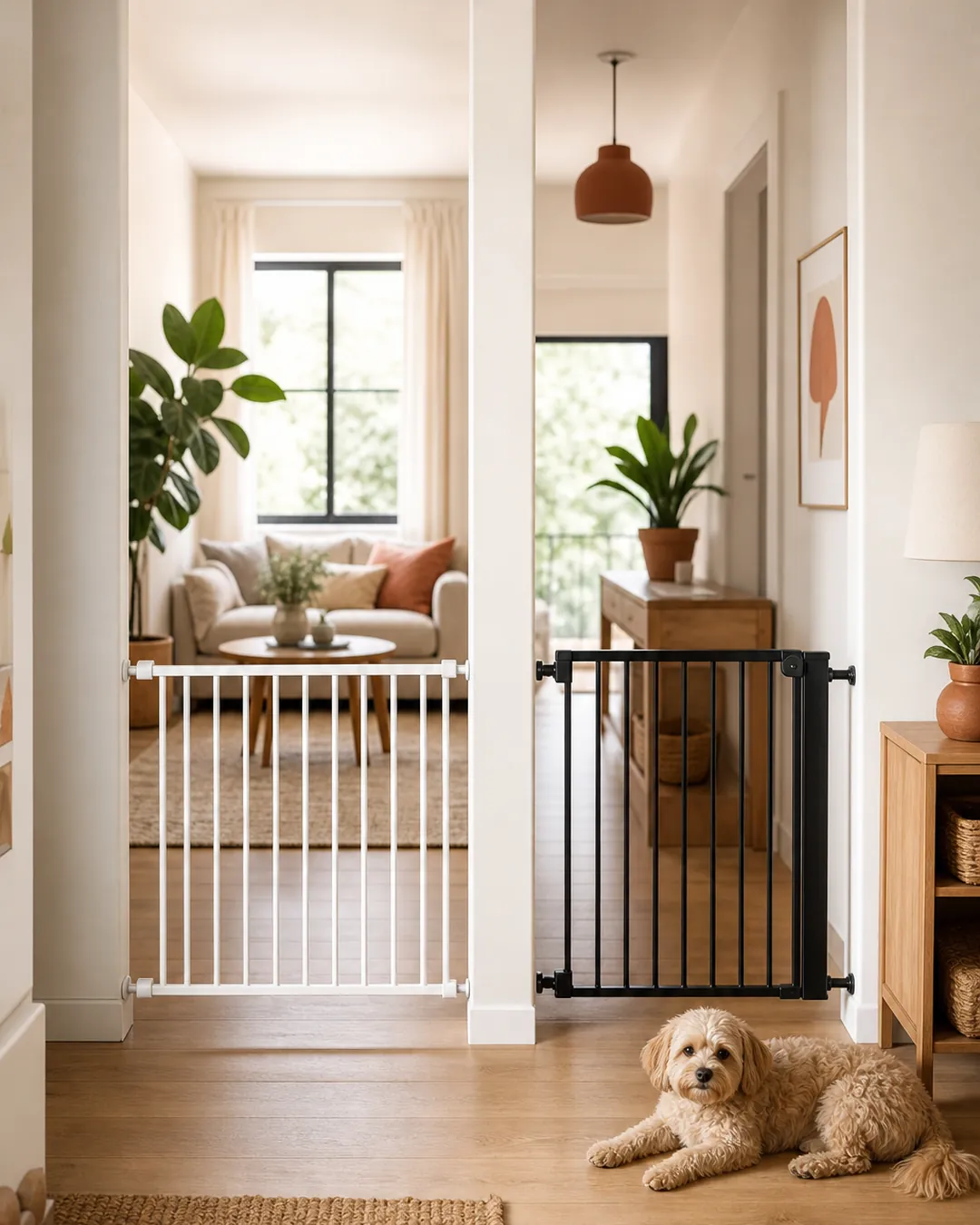
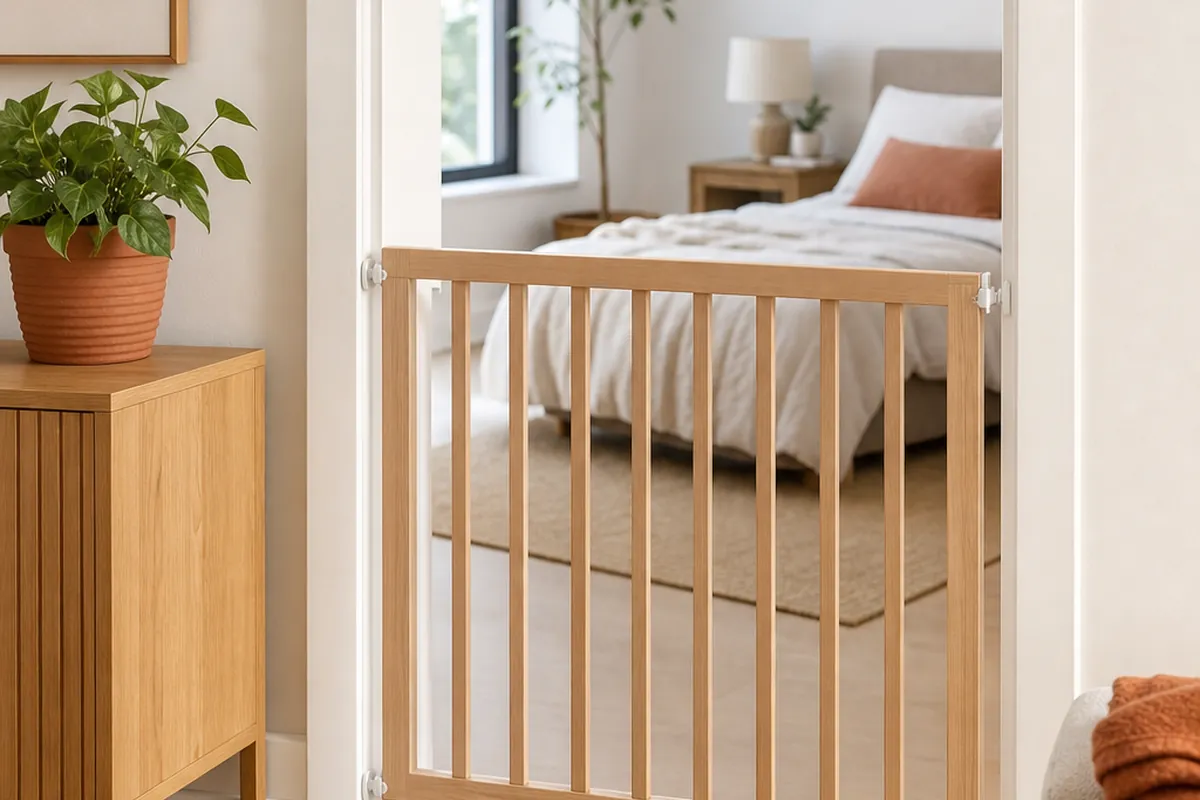
These are different products for different jobs. Pressure gates brace between two parallel surfaces using friction, come off in seconds and leave no holes. Hardware gates screw into the frame and cannot shift. For an apartment doorway used to separate rooms, pressure is almost always right. At the top of a staircase it is the wrong tool, because friction fittings can move under a hard impact and that is the position where movement matters most. Anything else in the home is a judgment call; that one is not. Worth knowing before you shop: many gates are sold as suitable for both, with the hardware mounting hardware included in the box and the pressure fitting presented as the convenient option. Read which configuration the safety rating applies to rather than assuming it covers both.
2. Measure at gate height, and measure twice
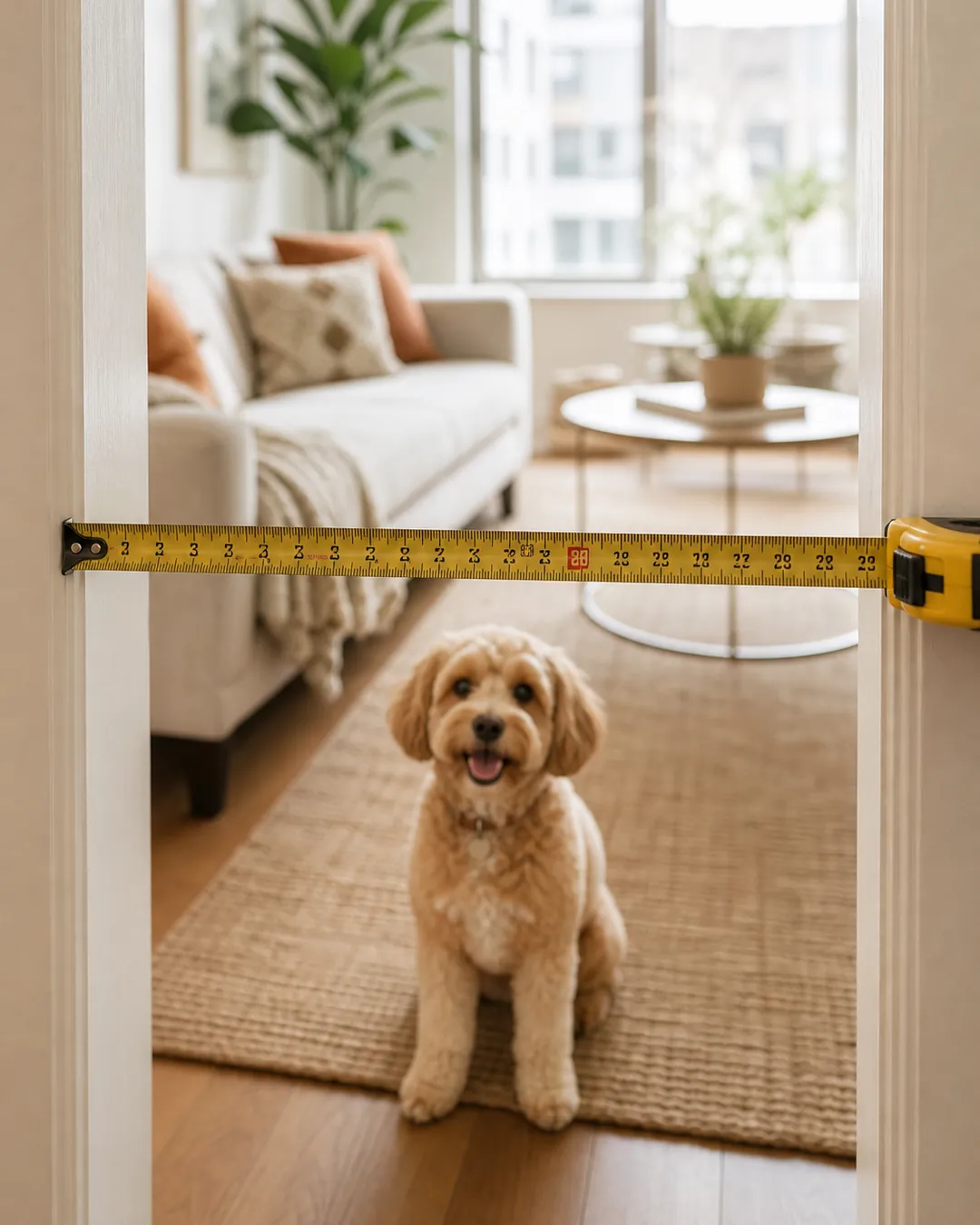
Door frames are rarely square, particularly in older buildings, and the gap at the top of a doorway is often different from the gap at the bottom. Measure at roughly the height the gate will sit, on both sides, and use the narrower figure. A pressure-mounted mesh gate covering 29.5 to 48 inches has a usable range rather than a single width, and being in the middle of that range is more comfortable than being at either end, where the threads are almost fully in or almost fully out. Check what the frame is made of as well. A doorway lined with thin architrave rather than solid timber gives slightly under pressure, and a gate that felt firm on installation day works loose against trim in a way it never would against masonry.
3. Fit wall cups even though they cost extra
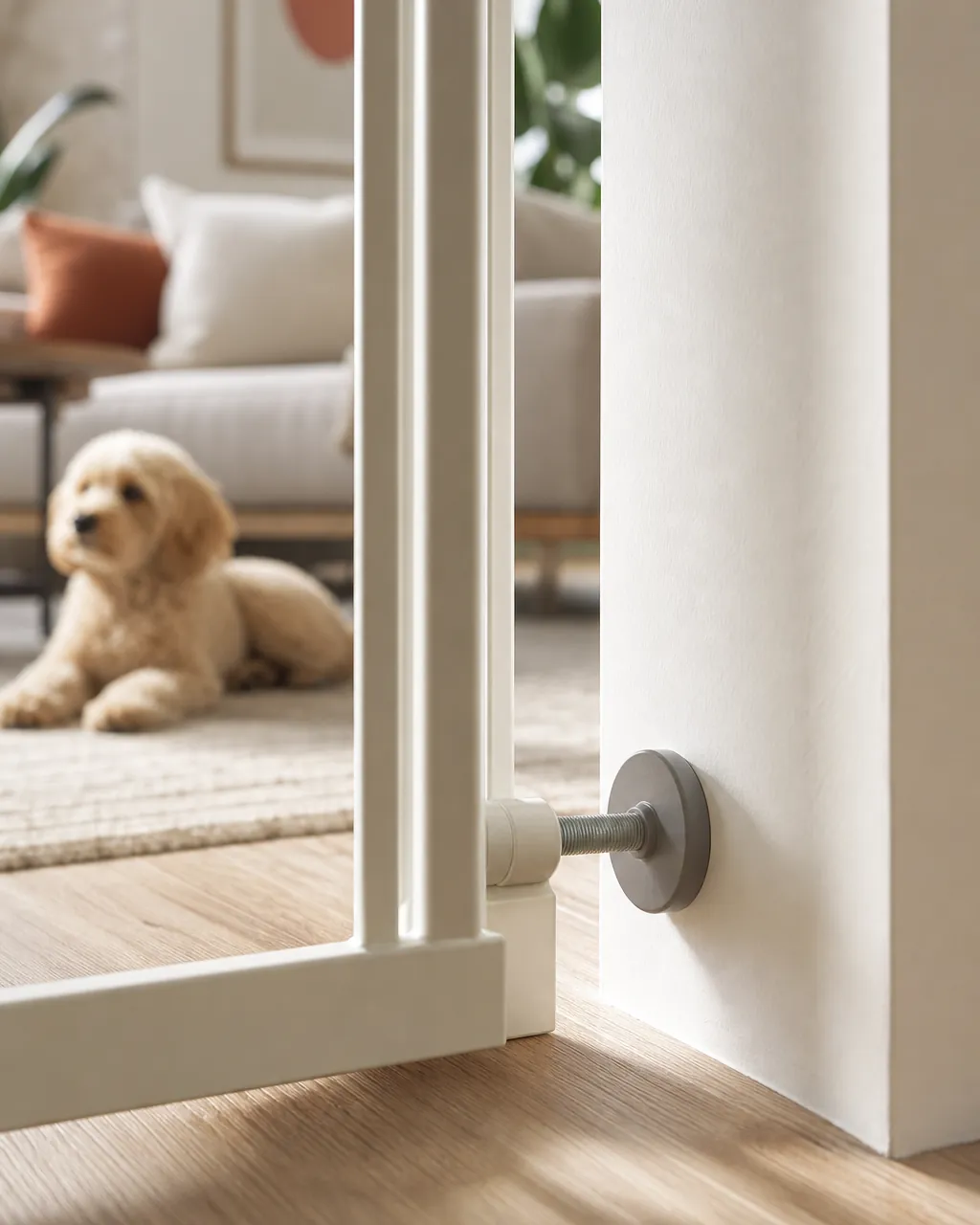
Most pressure gates ship with rubber feet that press directly on the paint, and most makers sell wall cups separately. Fit them. They spread the load over a wider area, they stop the cup twisting against the surface, and they leave a clean circle rather than a compressed dent. On a freshly painted wall this is the difference between a mark that wipes off and one that needs touching up, and touching up rented paint means matching a color you do not have.
4. Do not overtighten and then walk away
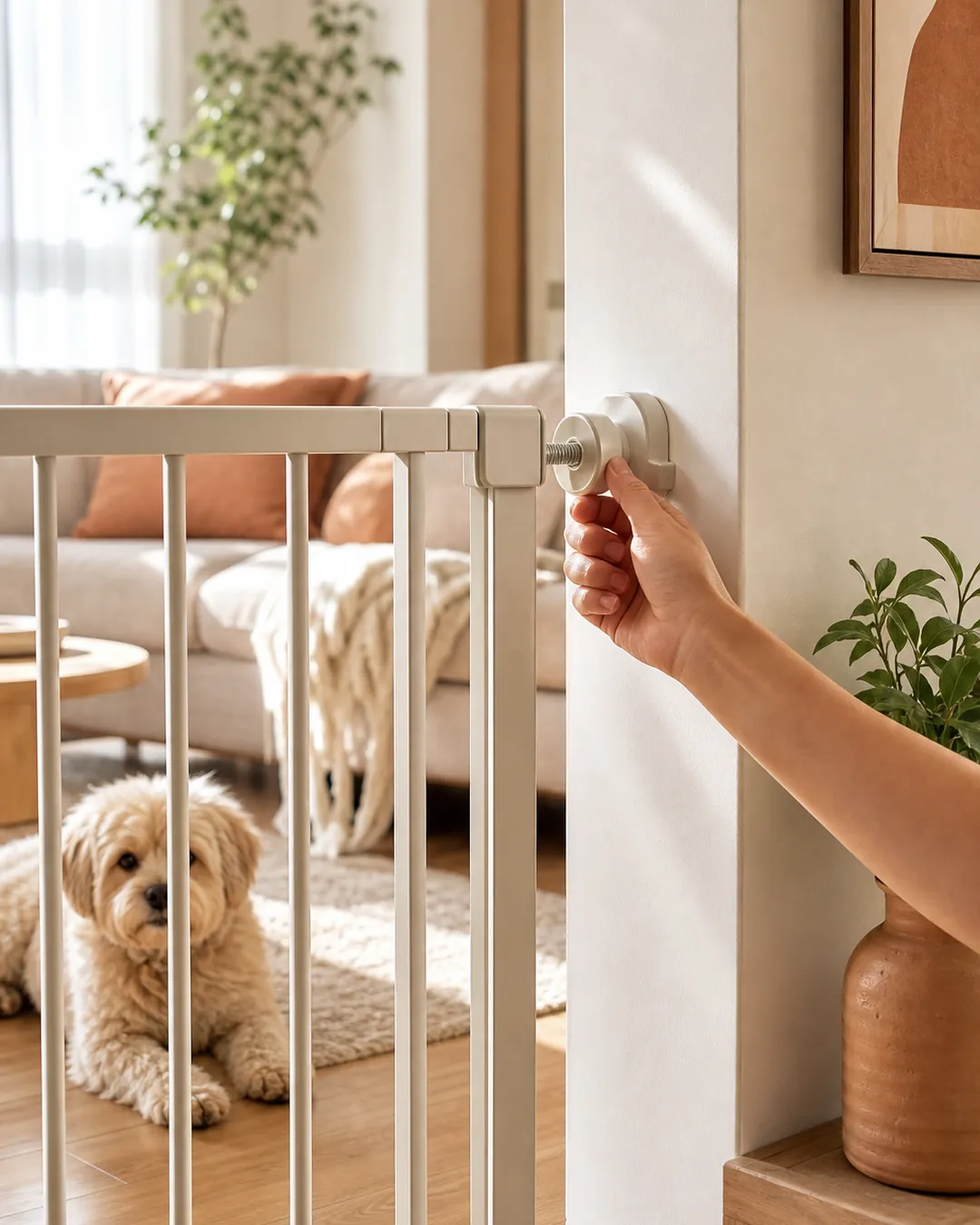
The instinct with a pressure fitting is to keep turning until it will not turn. That is how you push a cup into soft plasterboard. Tighten until the gate is solid to a firm shove and stop there, then re-check it after a week. Fittings settle, and a gate that has loosened slightly is both less effective and more likely to slip and scuff the wall as it goes.
5. Use a freestanding gate where the walls will not cooperate
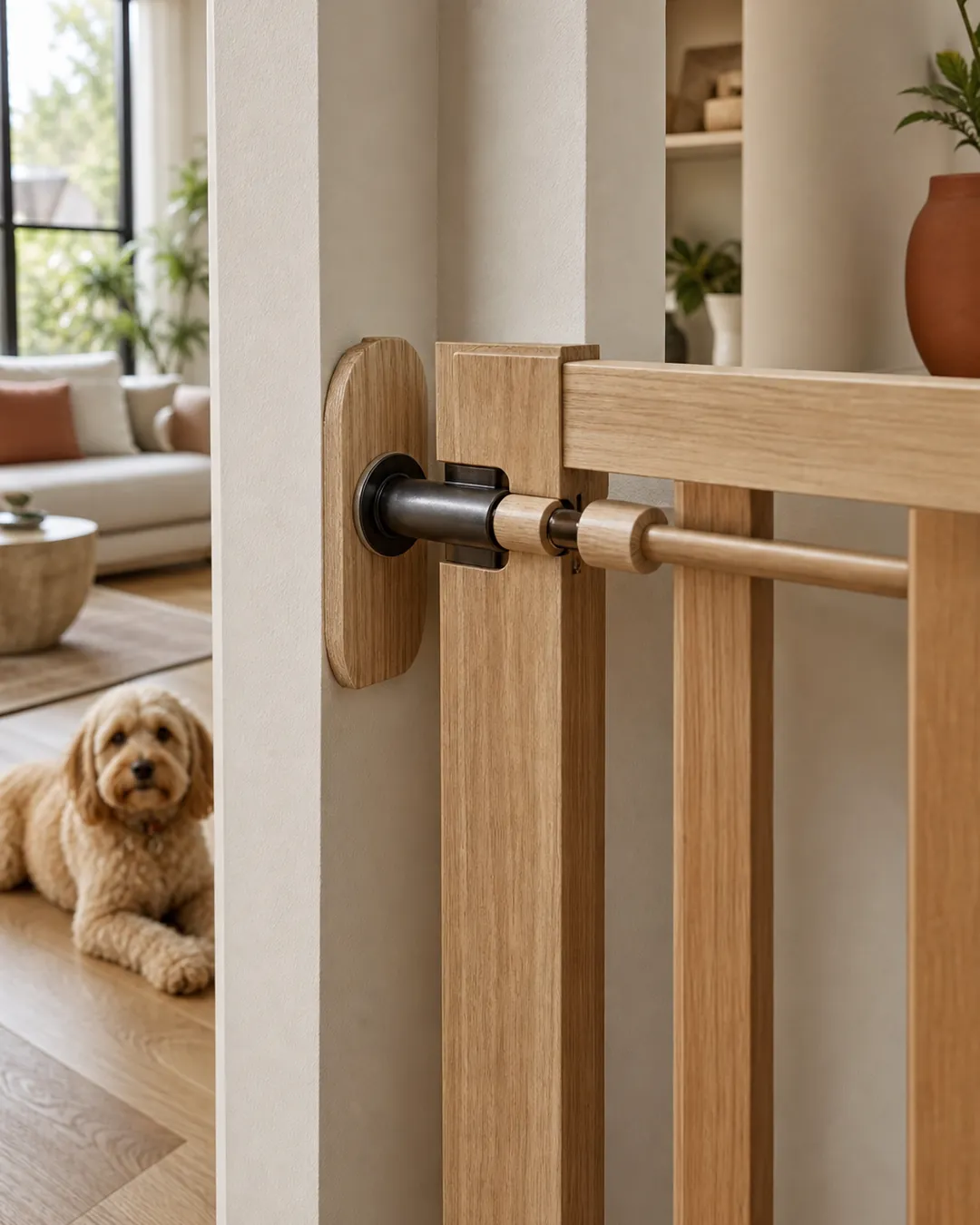
Plenty of openings in apartments are not two parallel surfaces: a room that opens onto a hallway on the diagonal, a kitchen with a counter on one side, a doorway with a radiator in the way. A freestanding gate with its own door stands on the floor and touches nothing, which makes it the only option in those positions and a genuinely zero-damage option everywhere else. The trade is footprint and the fact that a determined dog can push it, so it suits management rather than containment. Weight is what separates the usable ones from the rest, since a light panel slides across a hard floor the first time a dog leans on it. Look for rubber feet and enough mass that you notice picking it up.
6. Buy for the span rather than extending a gate to reach
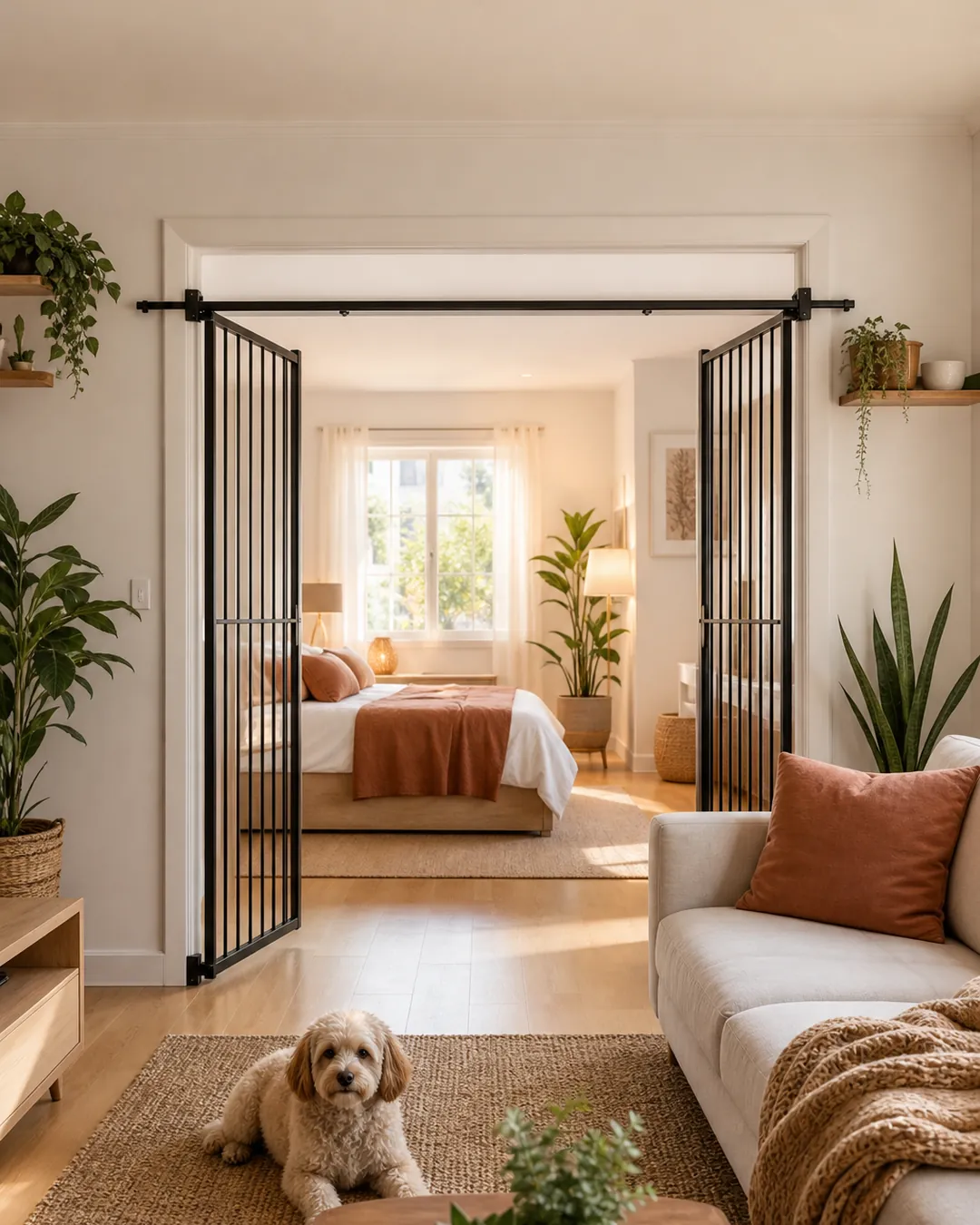
Extra-wide openings tempt people to add extension panels to a standard gate until it reaches. The result flexes in the middle, and a gate that flexes gets leaned on and eventually gets through. A walk-through gate rated to 29 to 49 inches is built for the span rather than stretched to it, and the difference is obvious the first time a dog puts weight on the center. Wide gates also sag under their own weight over time, so check whether the model has a supporting foot at the bottom of the door section. That single component is what keeps a wide gate closing properly in its second year.
7. Insist on a door you can open one-handed
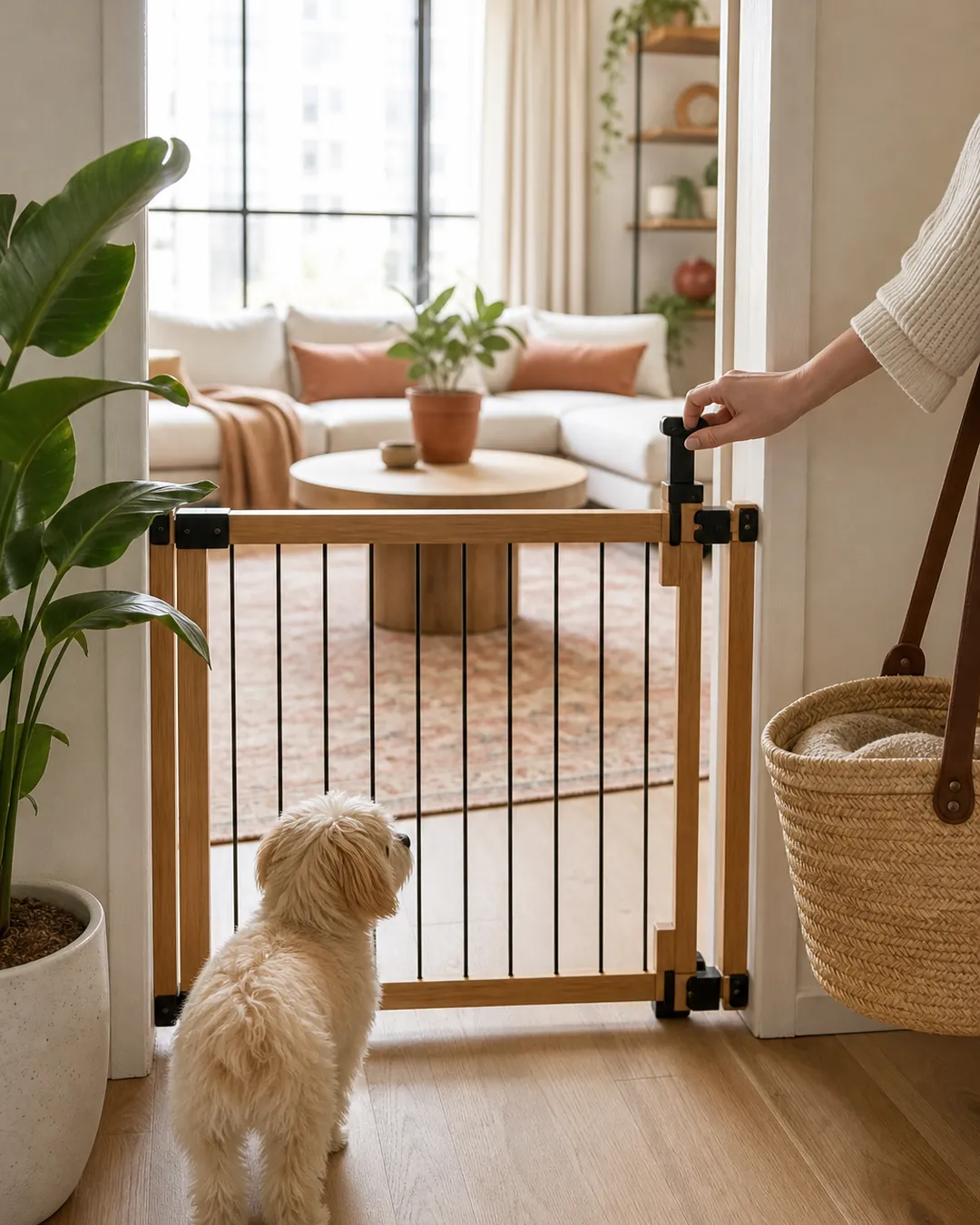
You will pass through this gate a dozen times a day, frequently carrying something. A gate you have to step over is a gate that gets left open, and a gate left open is decoration. Try the latch mechanism in the listing video before buying, and be suspicious of anything requiring two hands or a firm upward lift, because that is the design people abandon within a month. Check which way it swings, too, and whether it can be reversed. A gate that opens into a narrow hallway blocks the hallway every time you use it, and that is the kind of daily irritation that decides whether a gate stays fitted.
8. Use the gate to separate species rather than to imprison anyone
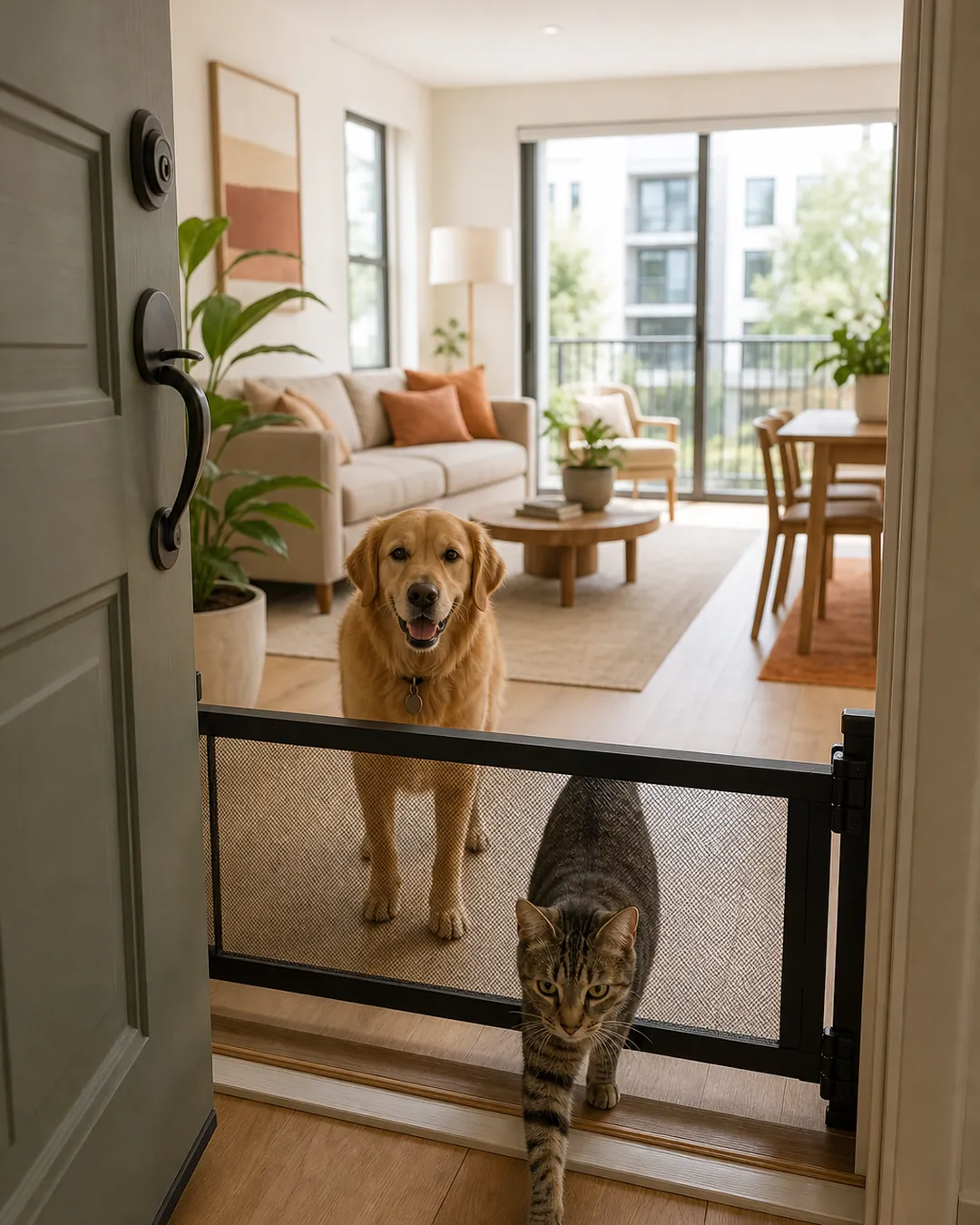
In a home with a cat and a dog, the useful configuration is often a gate the dog respects and the cat clears easily. That gives the cat a room the dog cannot enter, which is where the litter box and the food should be. It solves the two most common cat and dog conflicts in an apartment without shutting a single door, and it means the cat always has an exit rather than a corner. The same gate keeps the dog’s shed hair out of that room as well, which narrows pet hair cleanup in a small apartment to the rooms the dog actually uses.
9. Plan for the gate coming down
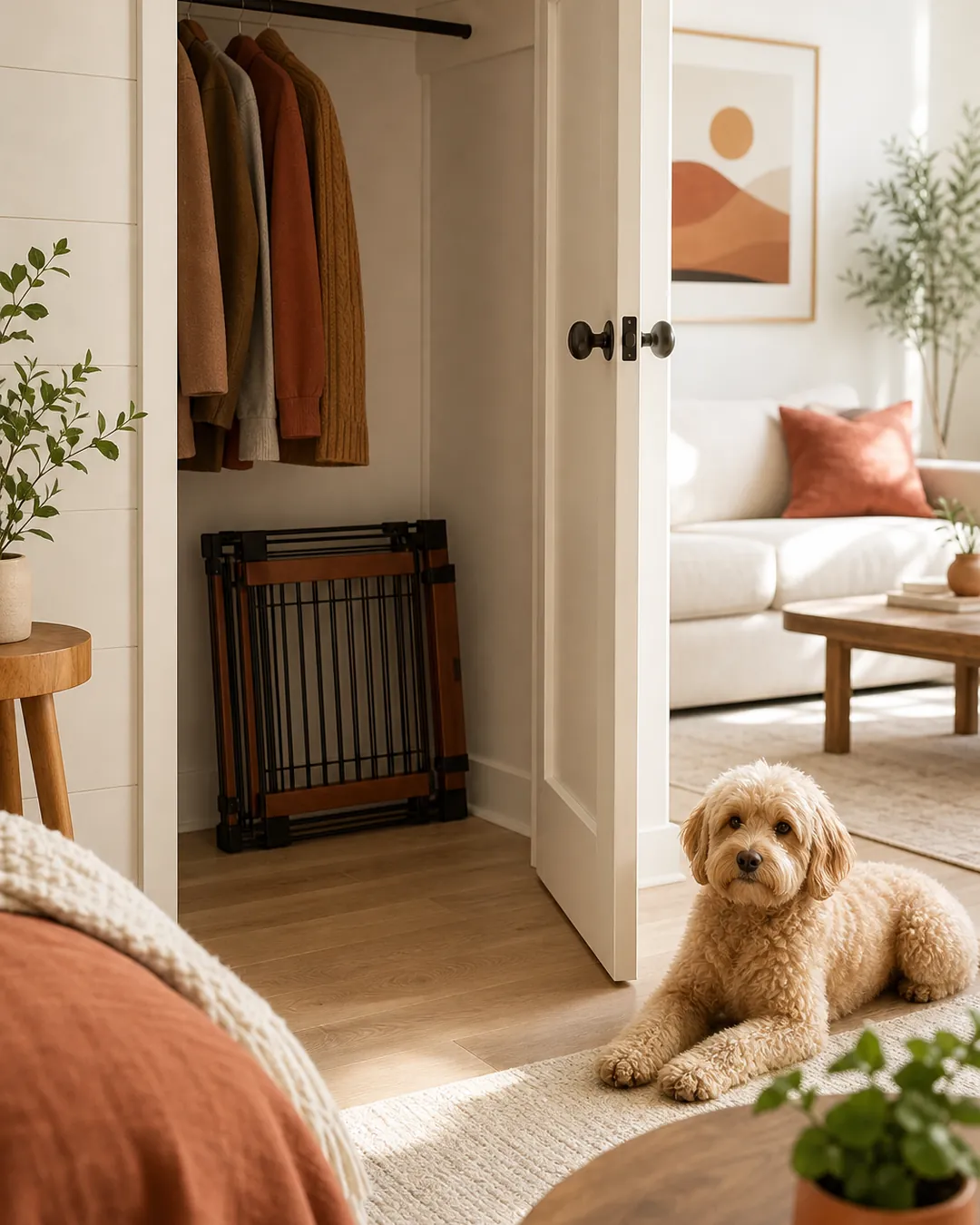
At some point the gate is temporary: a puppy grows up, a foster leaves, a visiting dog goes home. Pick something that folds or stores flat, and keep the wall cups and the instructions with it. A gate that is awkward to store stays up long after it stopped being needed, which is how a small apartment ends up with a doorway you step through sideways. Keep the original box if it stores flat, since gate hardware is small, easily lost and rarely sold separately once the model is discontinued.
Where to start
Measure the opening first, at gate height, on both sides. That number eliminates most of the market and tells you immediately whether you are shopping for a standard gate, an extra-wide one, or a freestanding panel because the walls are not parallel.
Then be honest about what the gate is for. Managing where a settled dog goes during the day is a different problem from containing a puppy that will test it, and the second needs hardware mounting or a heavier freestanding system. Buying a light pressure gate for a containment job is the mistake that ends with both a damaged wall and a dog in the wrong room.
Fit the wall cups on day one, tighten to firm rather than to maximum, and check it a week later. Those three habits are the entire difference between a gate that leaves nothing behind and one that costs you a paint touch-up you have to match by eye.