Renting with an animal is a negotiation with a building you do not own, conducted mostly through surfaces. Almost everything that goes wrong is a floor, a frame, a piece of upholstery or a sound traveling through a wall, and almost all of it is preventable with decisions made in the first month rather than the last.
Fourteen things worth doing, ordered roughly by what they save you.
1. Get the permission in writing
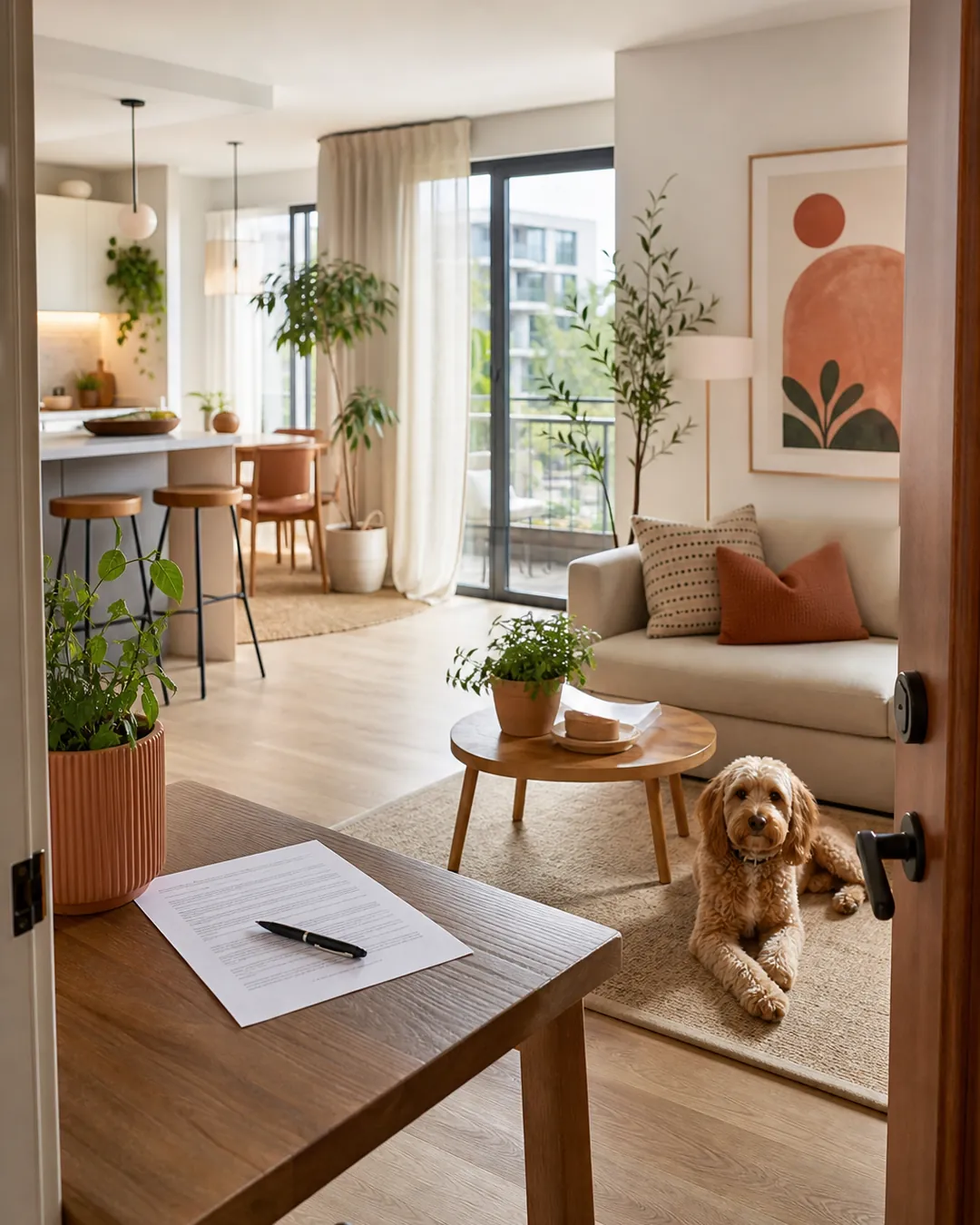
Before anything else, make sure the lease or an addendum names the animal and the terms. Verbal approval from a letting agent who leaves the company six months later is worth nothing, and an undeclared pet turns every scuff into a dispute you begin from behind. Ask specifically what the pet deposit covers and whether it is refundable.
2. Photograph everything on the day you move in
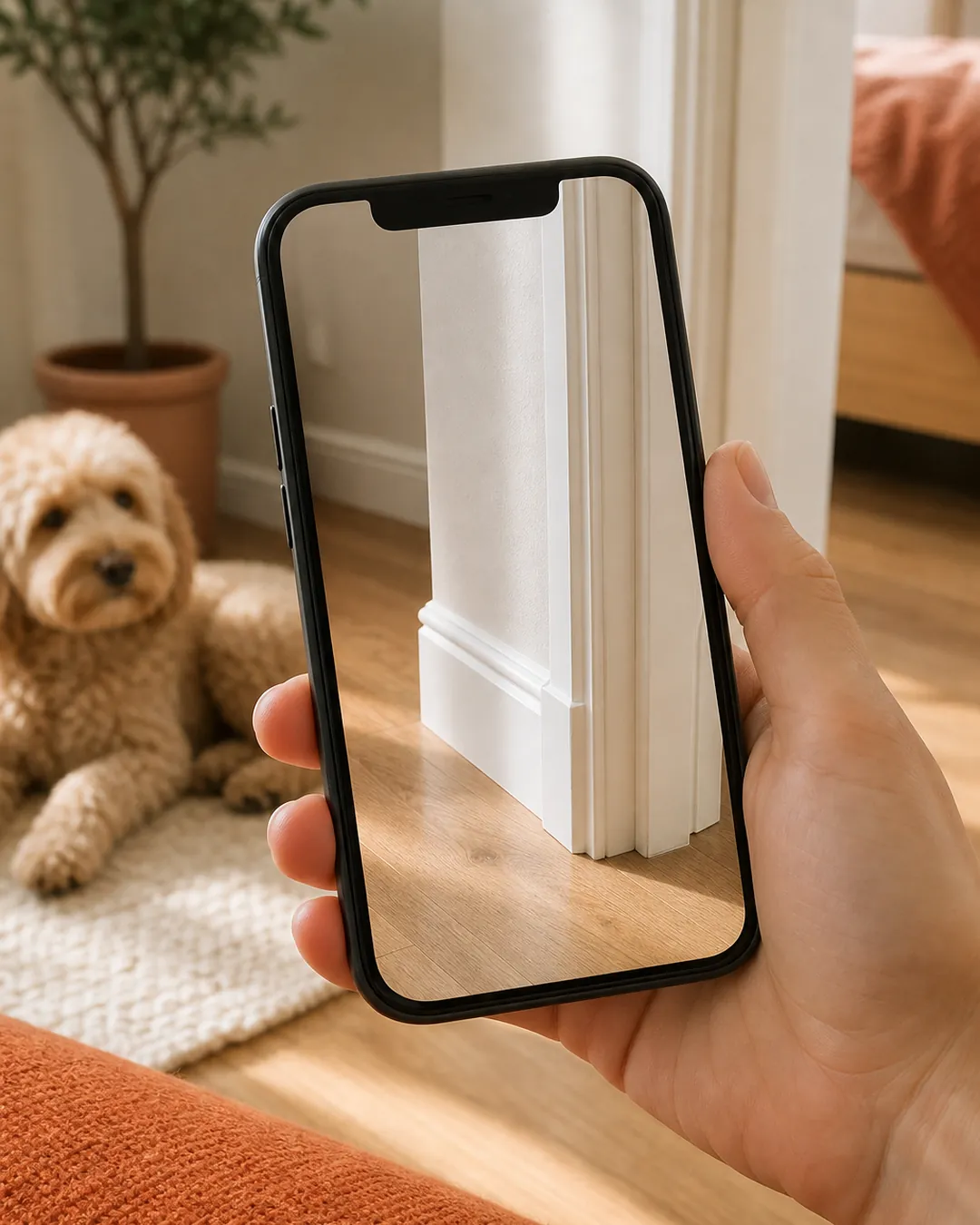
Date-stamped photos of every wall, frame, sill and carpet edge take fifteen minutes and settle every argument at the end of the tenancy. This is the highest return of anything on this list and it costs nothing. Include close-ups of anything already damaged, and email the set to yourself the same day so there is a timestamp outside your phone. Photos on a device you later replace have a way of not surviving the transfer.
3. Cover the traffic strip, not the whole floor
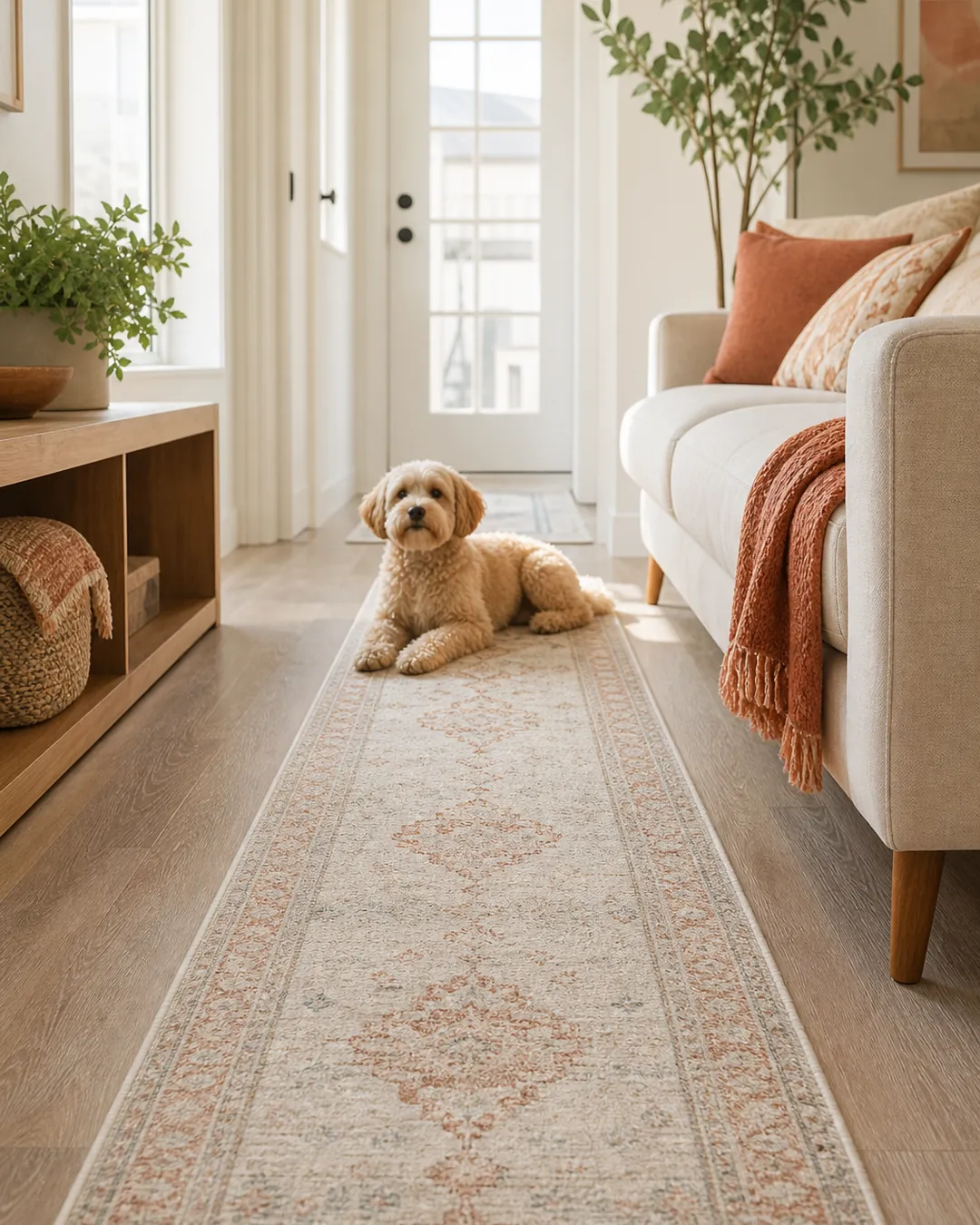
Pets wear a path, usually between the door, the window and wherever you sit. A washable area rug over that strip absorbs the wear and goes in a machine when it needs to. Covering the entire floor is expensive and unnecessary, because the rest of the carpet is not where the damage happens. Check the rug fits your machine before buying it, since a 5 by 7 that has to go to a laundromat gets washed roughly once.
4. Treat accidents as an underlay problem
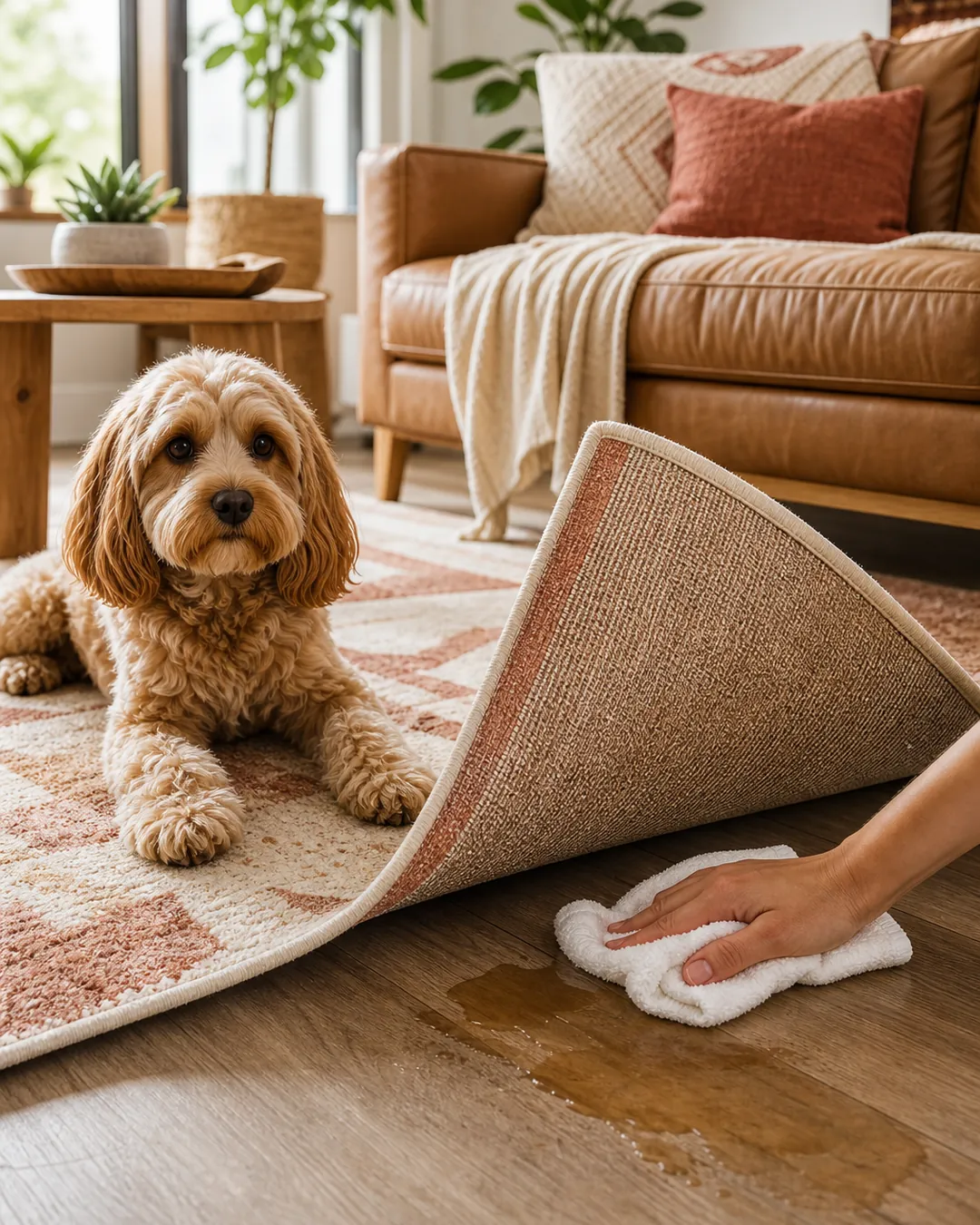
What shows on the surface is not what costs you. Liquid travels into the underlay, where cleaning does not reach and odor stays. Blot rather than rub, use an enzyme cleaner rather than a general one, and get to it fast. On a bad spill, lifting the rug and drying underneath matters more than scrubbing the top. Weight a folded towel over the spot for an hour rather than working at it, because pressure pulls more out of a pile than friction does and friction spreads the stain outward.
5. Cover the sofa before it needs covering
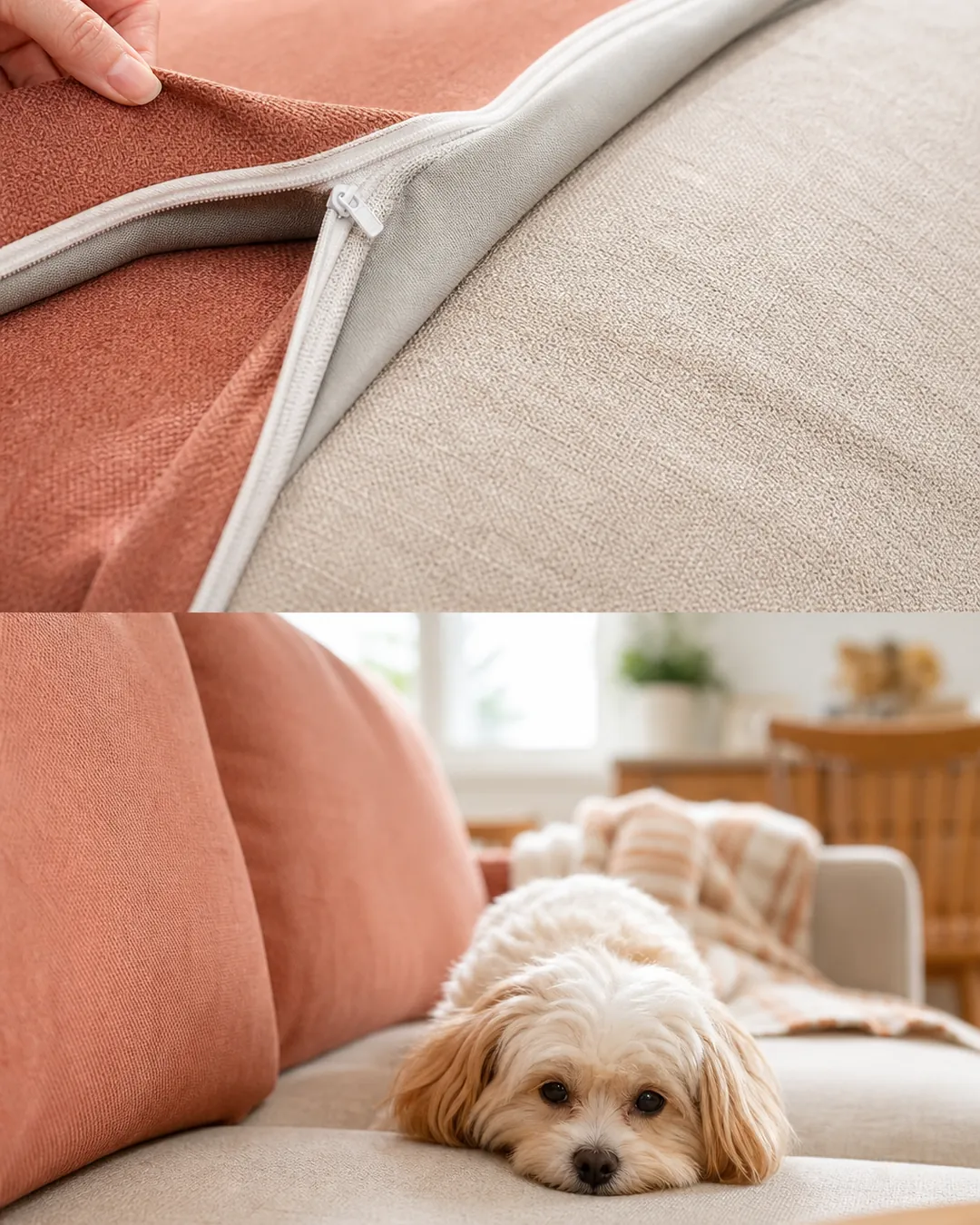
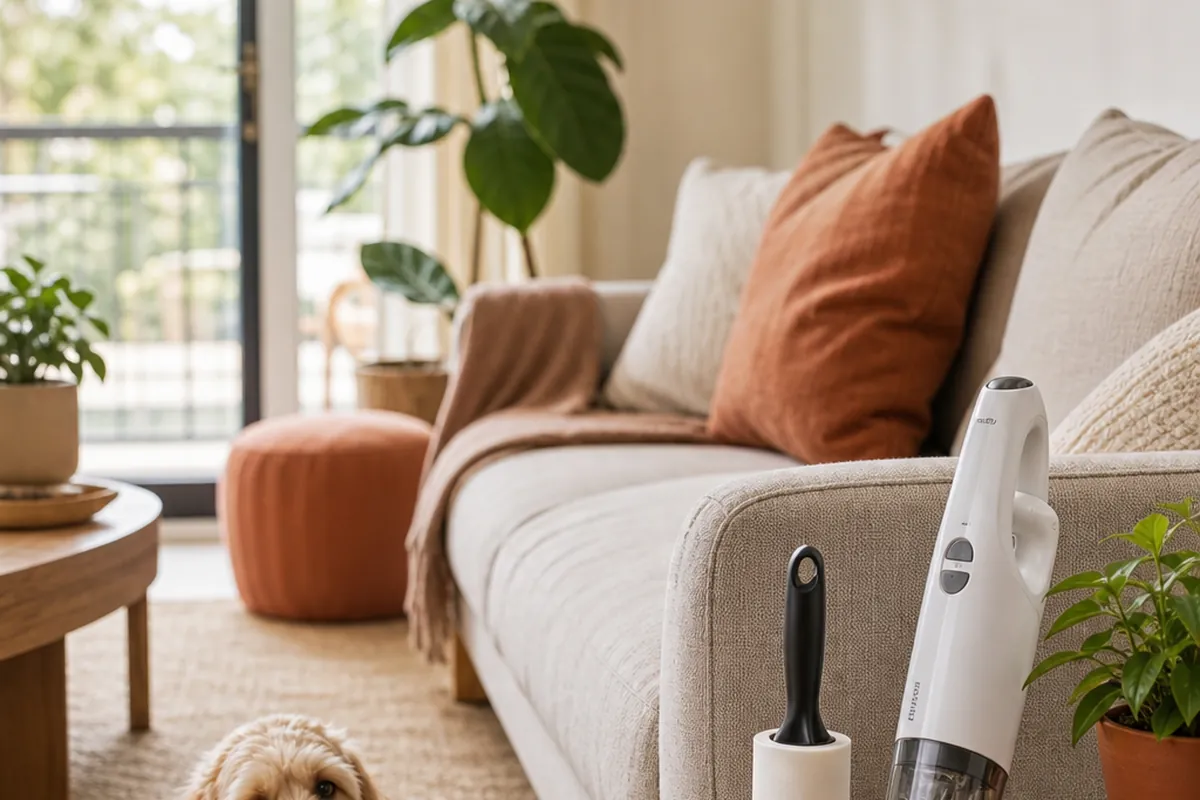
A reversible couch cover costs a fraction of reupholstering and takes the fur, the claws and the muddy paws. Fit it when the sofa is new rather than after the first damage, and choose one that washes at a normal temperature, since a cover you have to hand wash gets used for a month and then folded away.
6. Give the claws somewhere legitimate on day one
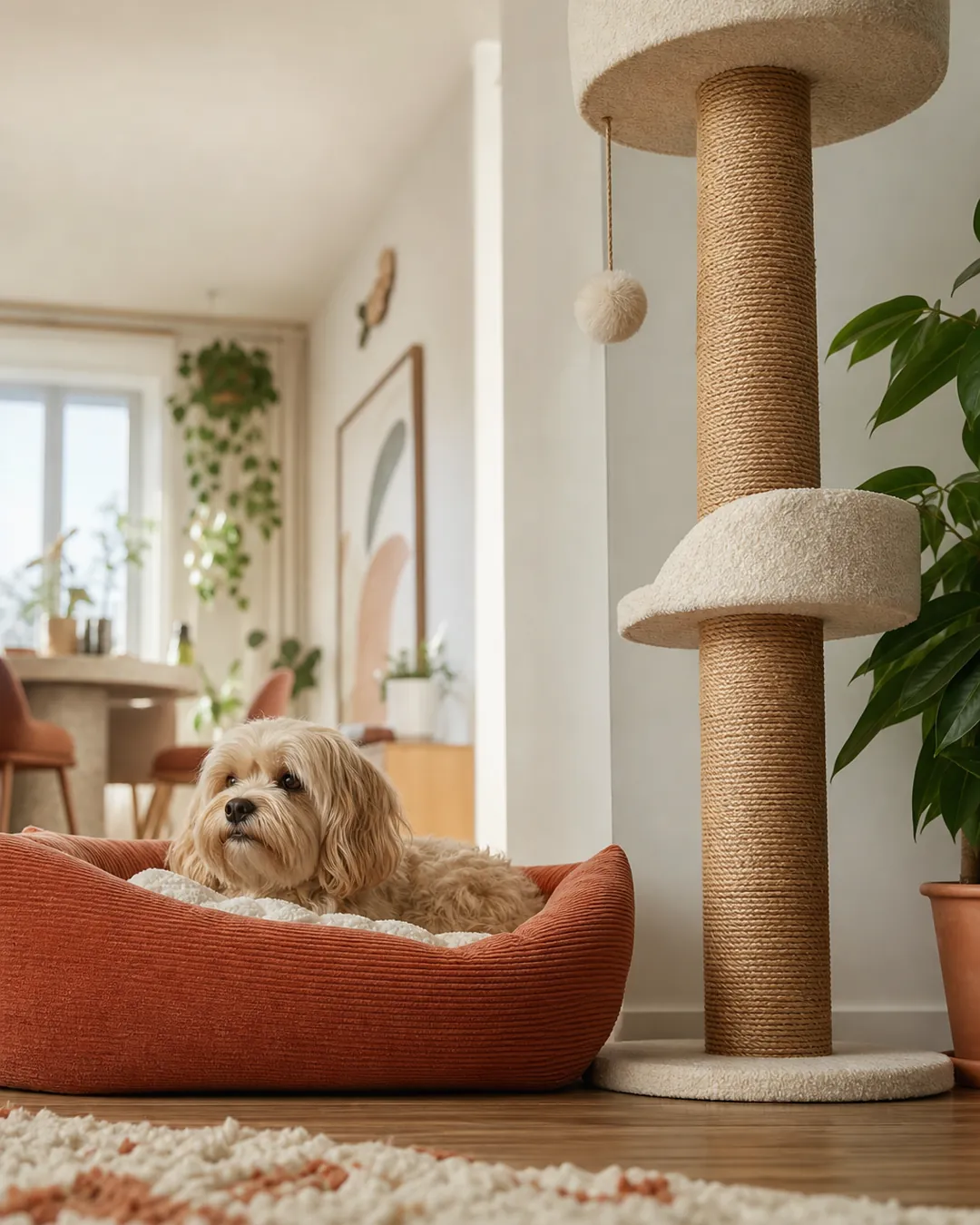
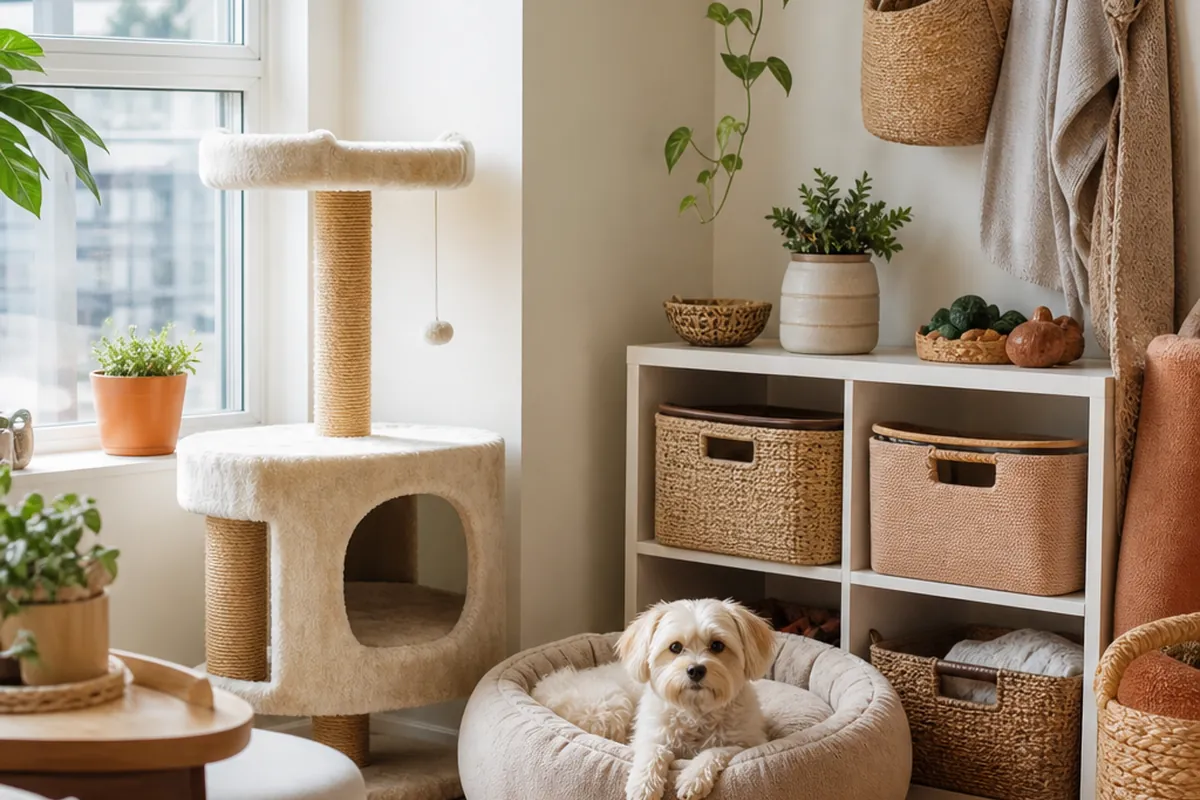
A cat will choose a scratching surface whether or not you supply one, and the surface it chooses is usually a door frame or the carpet at a corner. Put a tall post near where it sleeps before the habit forms. Redirecting an established habit is a much harder job than preventing it.
7. Protect the frames the animal has already chosen
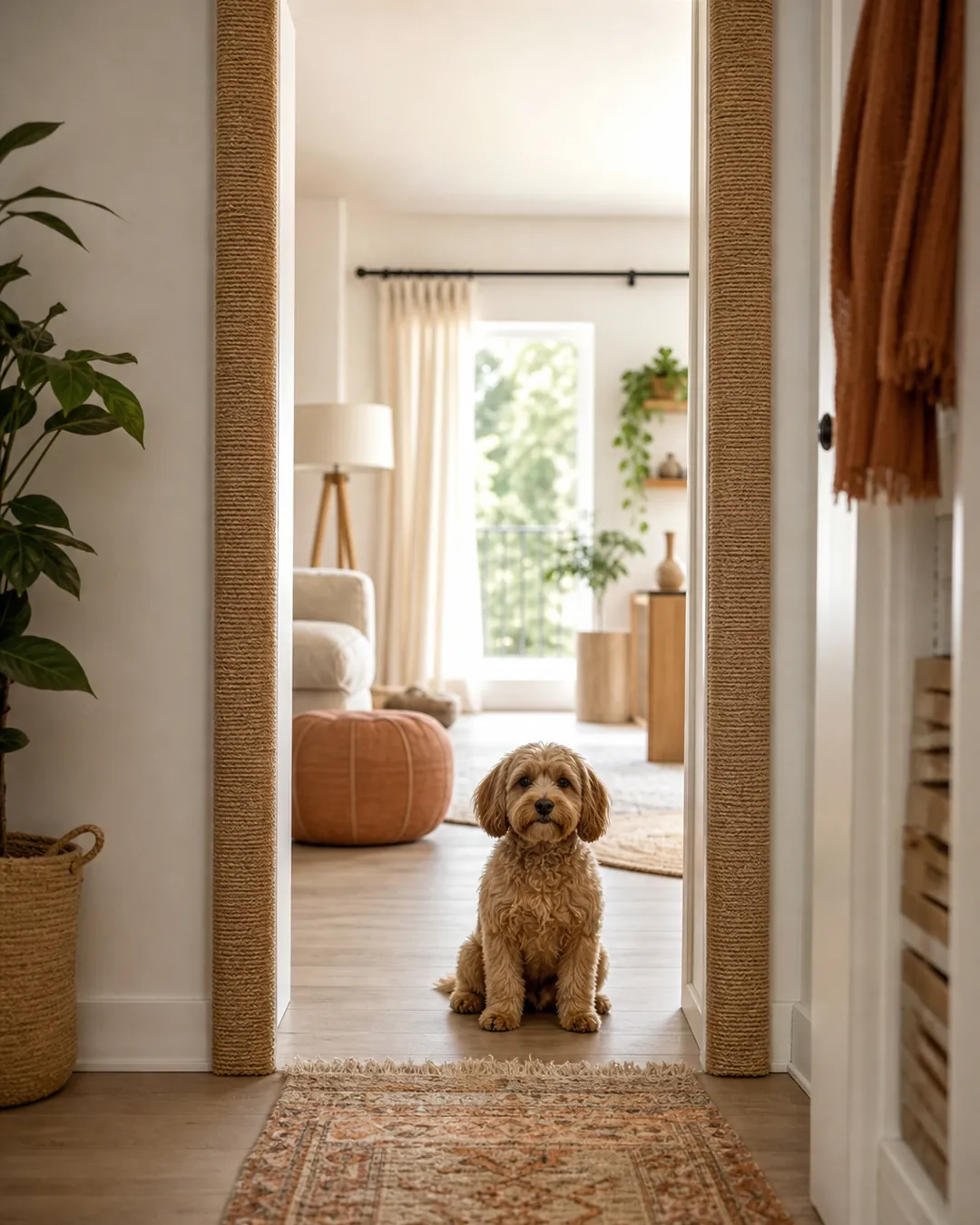
Where a habit exists, blocking it rarely works. Wrap that specific frame in sisal or fit a removable guard, so the behavior lands on something you can unscrew and take with you. Fighting it directly usually just moves the damage somewhere less visible.
8. Think about what the downstairs neighbor hears
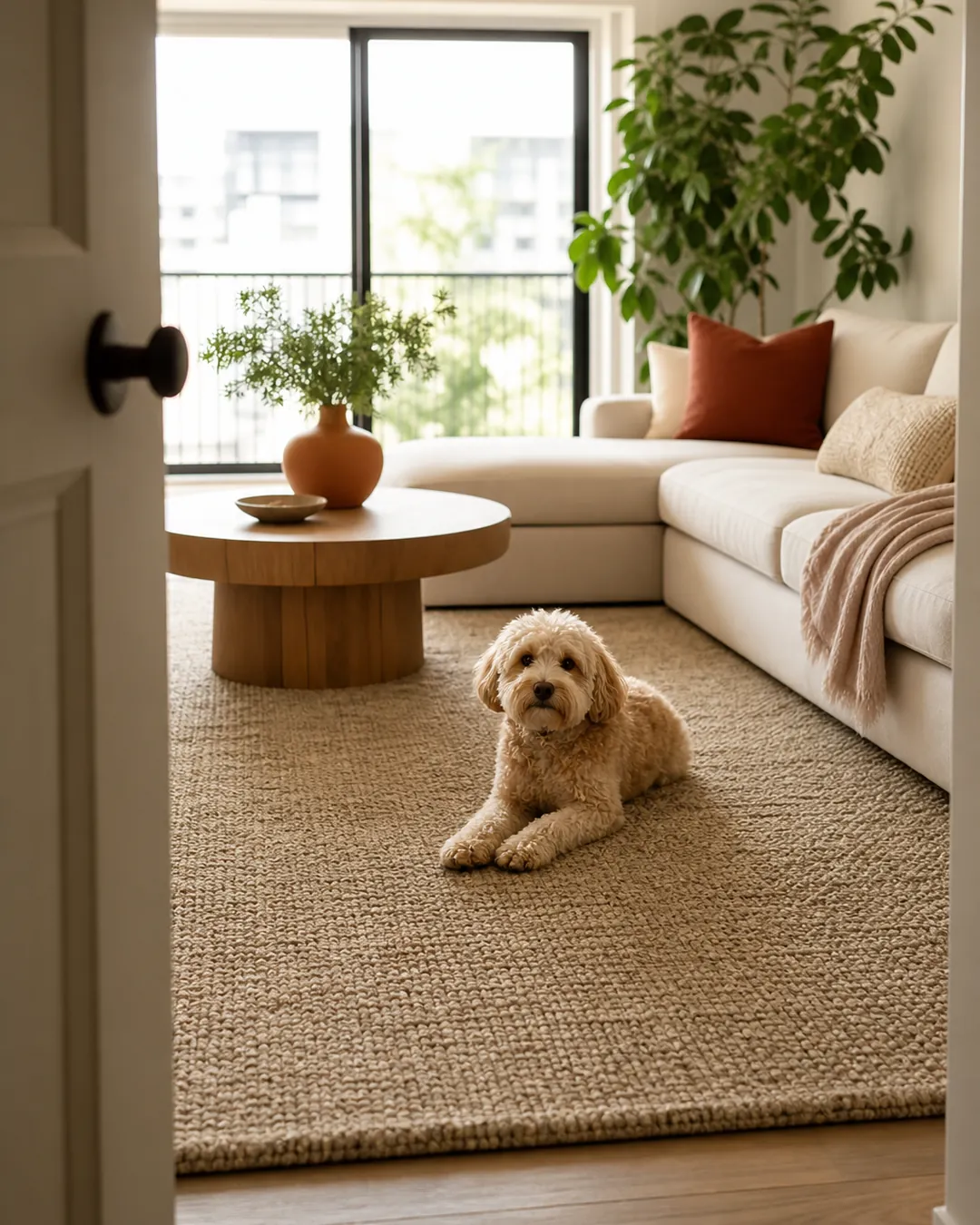
Impact noise travels through structure. Claws on laminate, a dog landing off a sofa, a cat running at three in the morning: these carry far better than conversation does. Rugs with a pad underneath are the fix, and they are worth putting where the running happens rather than where it looks best.
9. Deal with the hallway trigger
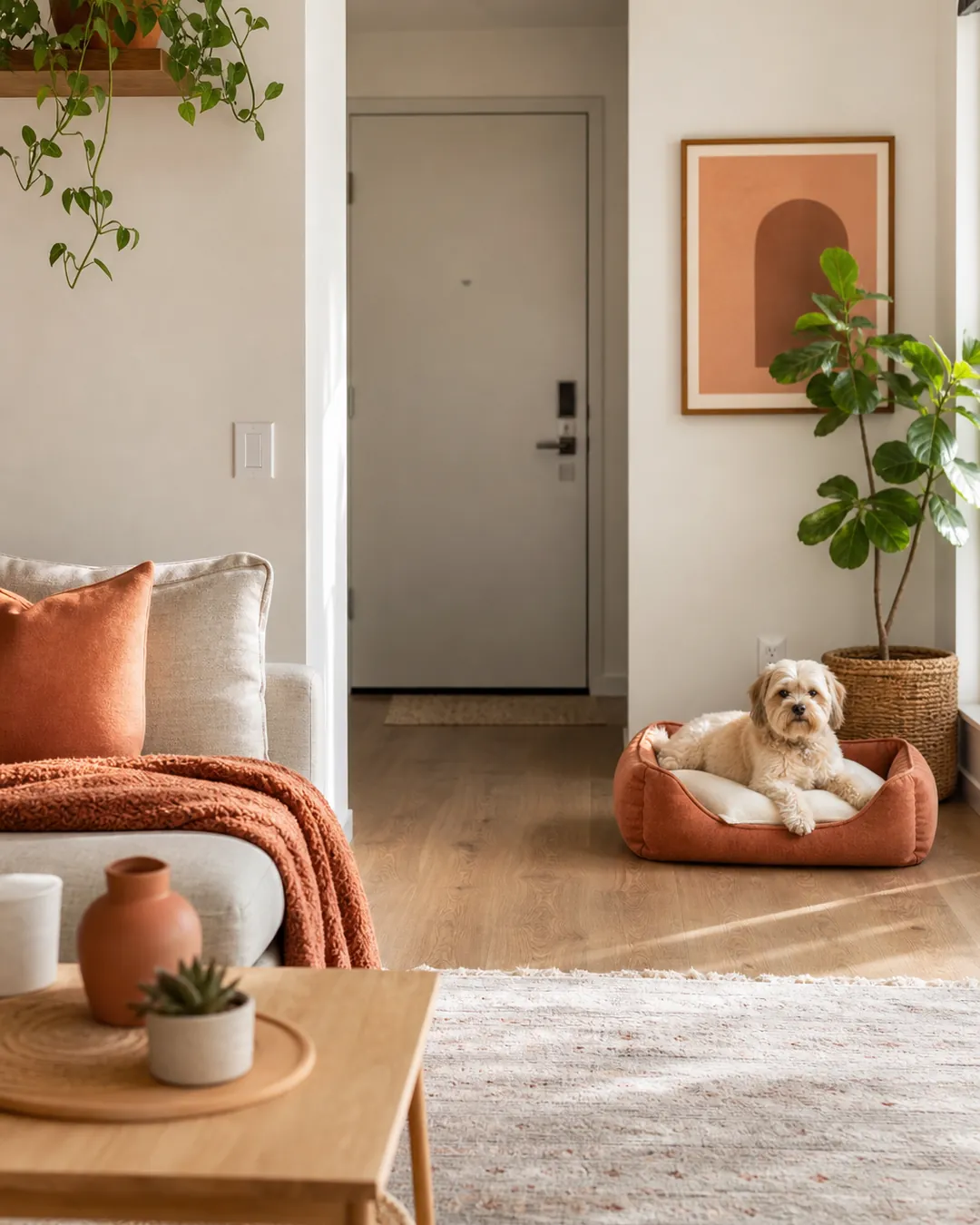
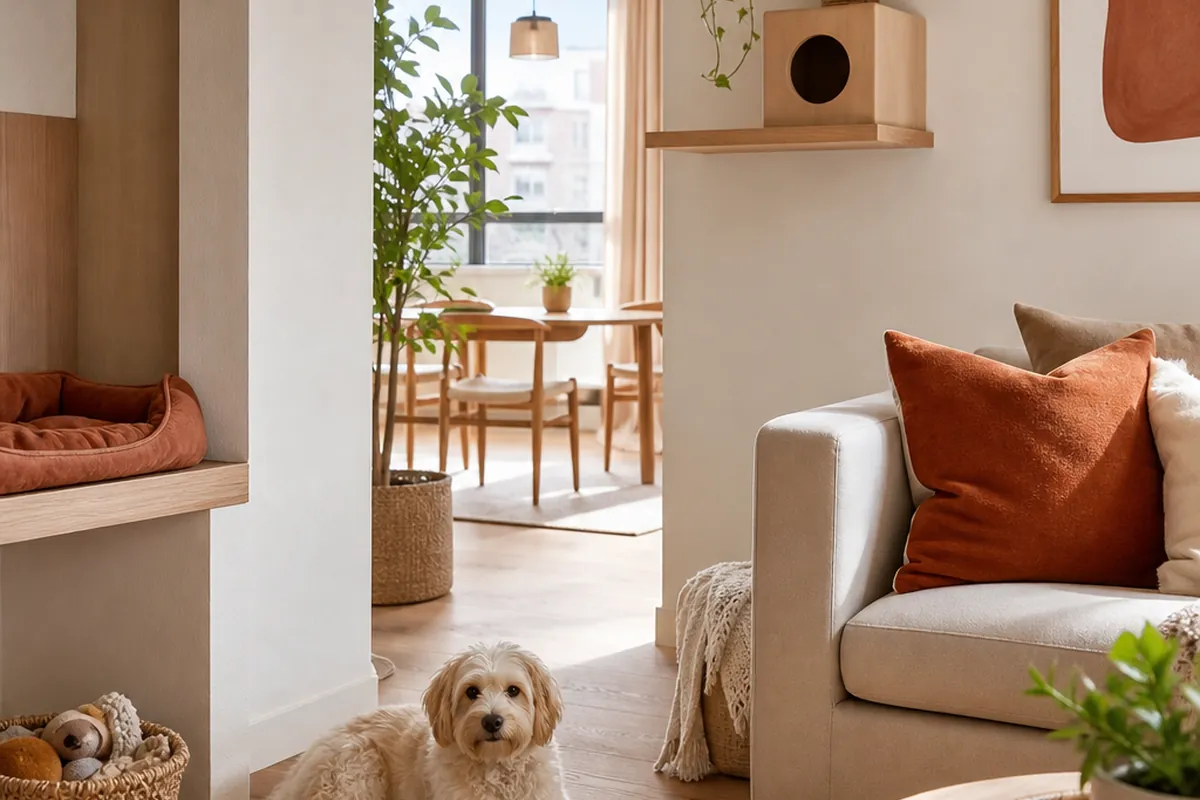
Dogs in apartments bark at the hallway because the hallway is full of unexplained sounds arriving at the door. Move the bed or crate out of sight of the door, so arrivals are heard rather than watched. That one change quiets more apartment dogs than any amount of training aimed at the barking itself. A rug or a door draft stopper in the entry helps as well, since much of what sets a dog off is sound arriving under the door rather than through it. The bed’s new spot works best in a corner off the walking route with a view of where you sit, which is the first test in these pet corner ideas for homes with no spare room.
10. Watch what actually happens when you leave
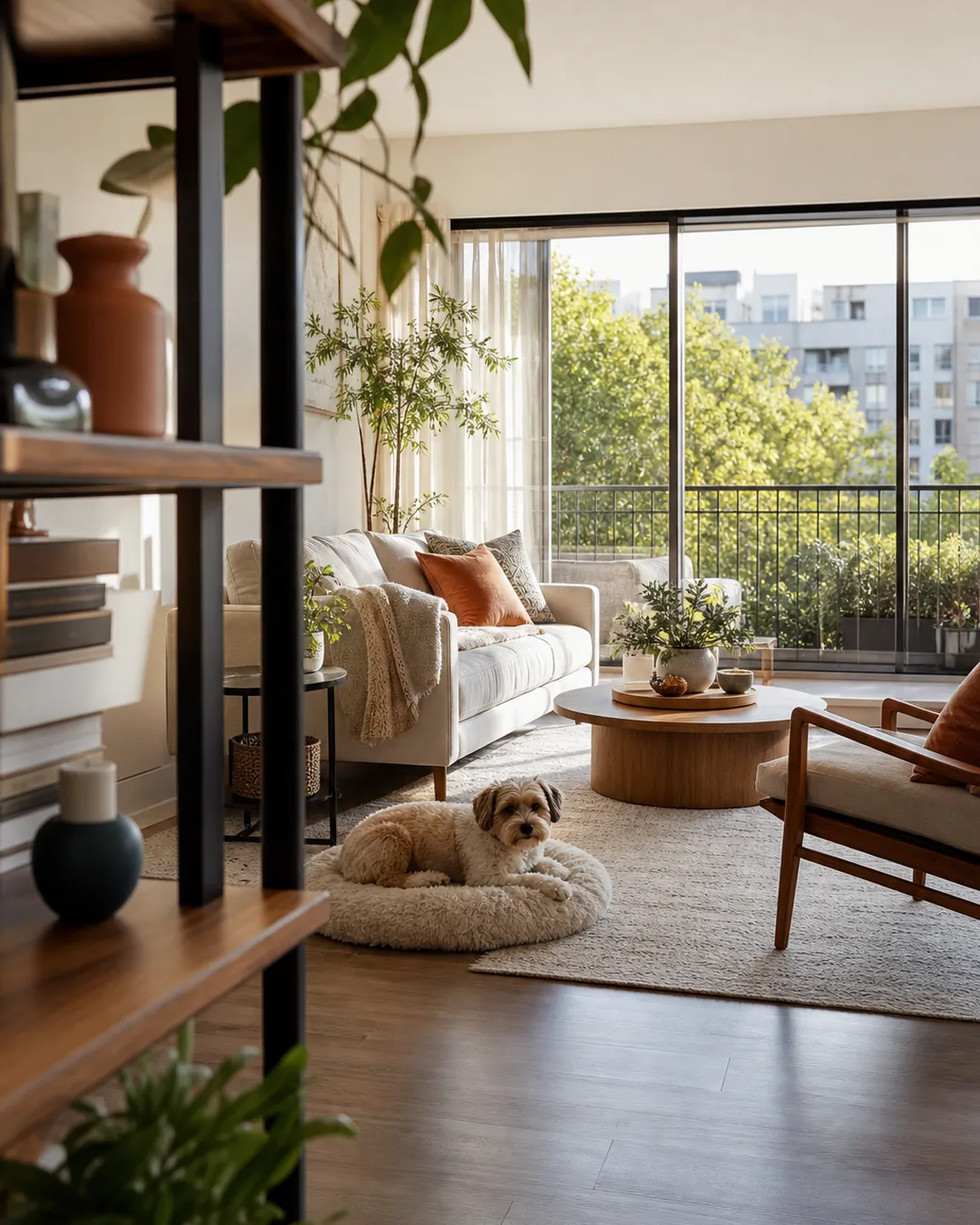
Most people are wrong about this in one direction or the other. A pan and tilt indoor camera tells you whether the dog settles in twenty minutes or paces for two hours, and whether the barking your neighbor mentioned is constant or a burst at the mail delivery. You cannot solve a problem you are guessing about, and the answer changes what you do next.
11. Choose hard surfaces wherever you have the choice
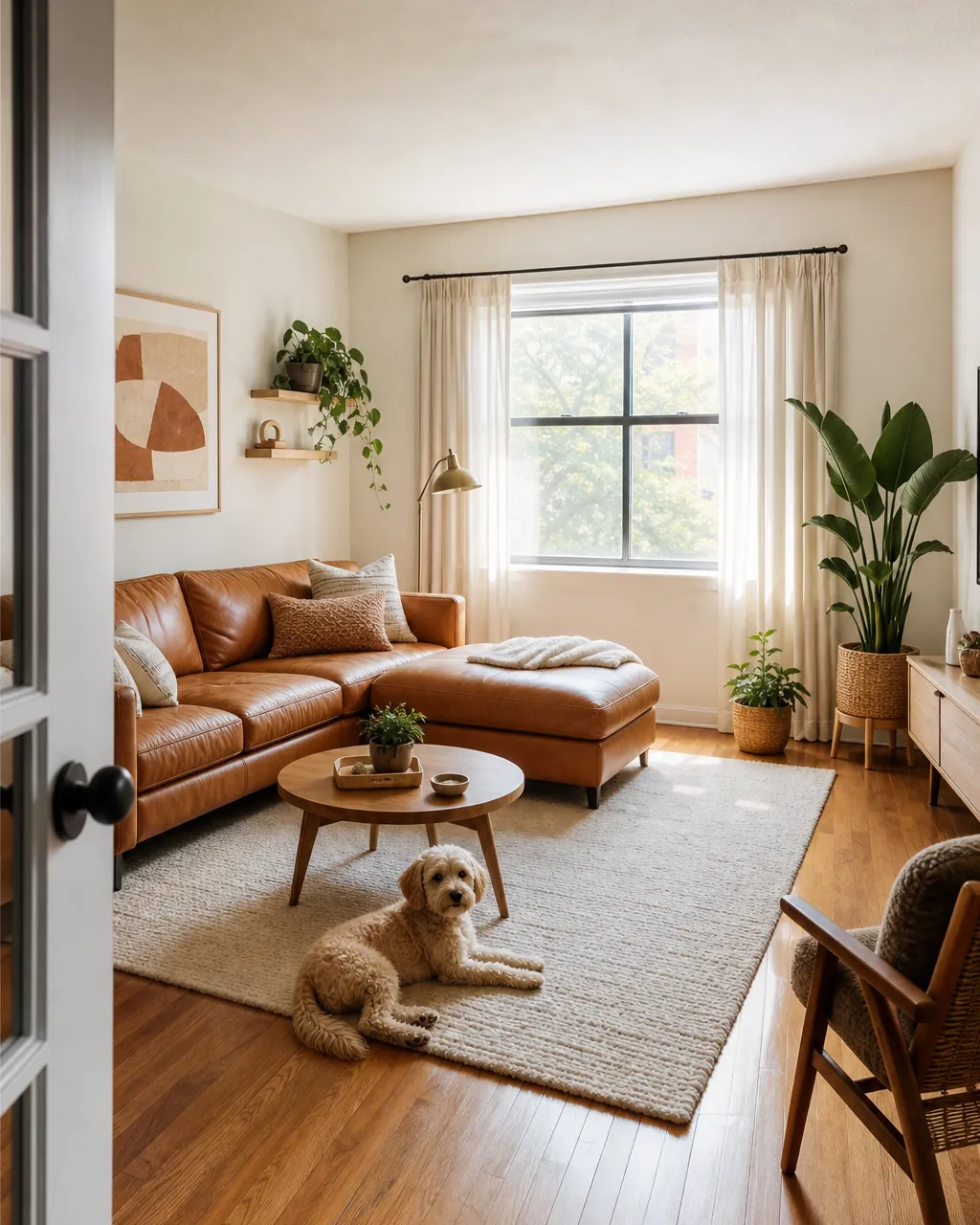
Fabric holds odor and hard surfaces do not. Where you are furnishing from scratch, leather or a tight synthetic weave, sealed wood and washable rugs give you an apartment that stays fresh with far less effort than one full of soft furnishing. This matters more in a small space, where the air volume is smaller and everything is closer to everything else.
12. Open a window every day
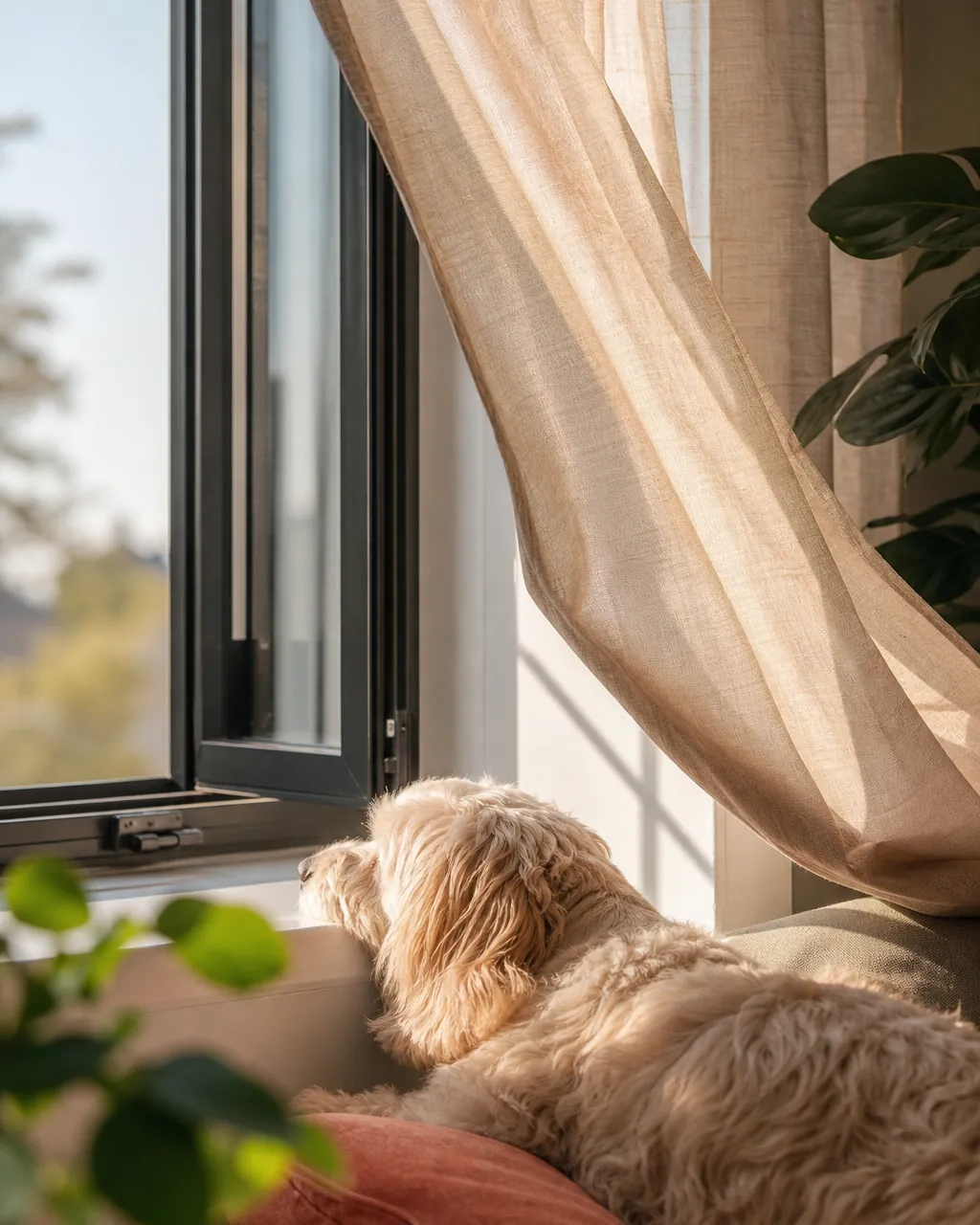
Airflow does more for the smell of a pet apartment than every product marketed for it. Ten minutes of cross ventilation moves the air in a one bedroom completely. Plug-ins mask, and masking on top of a fabric that needs washing is how an apartment develops its own particular smell that only visitors notice.
13. Make the balcony safe or make it off limits
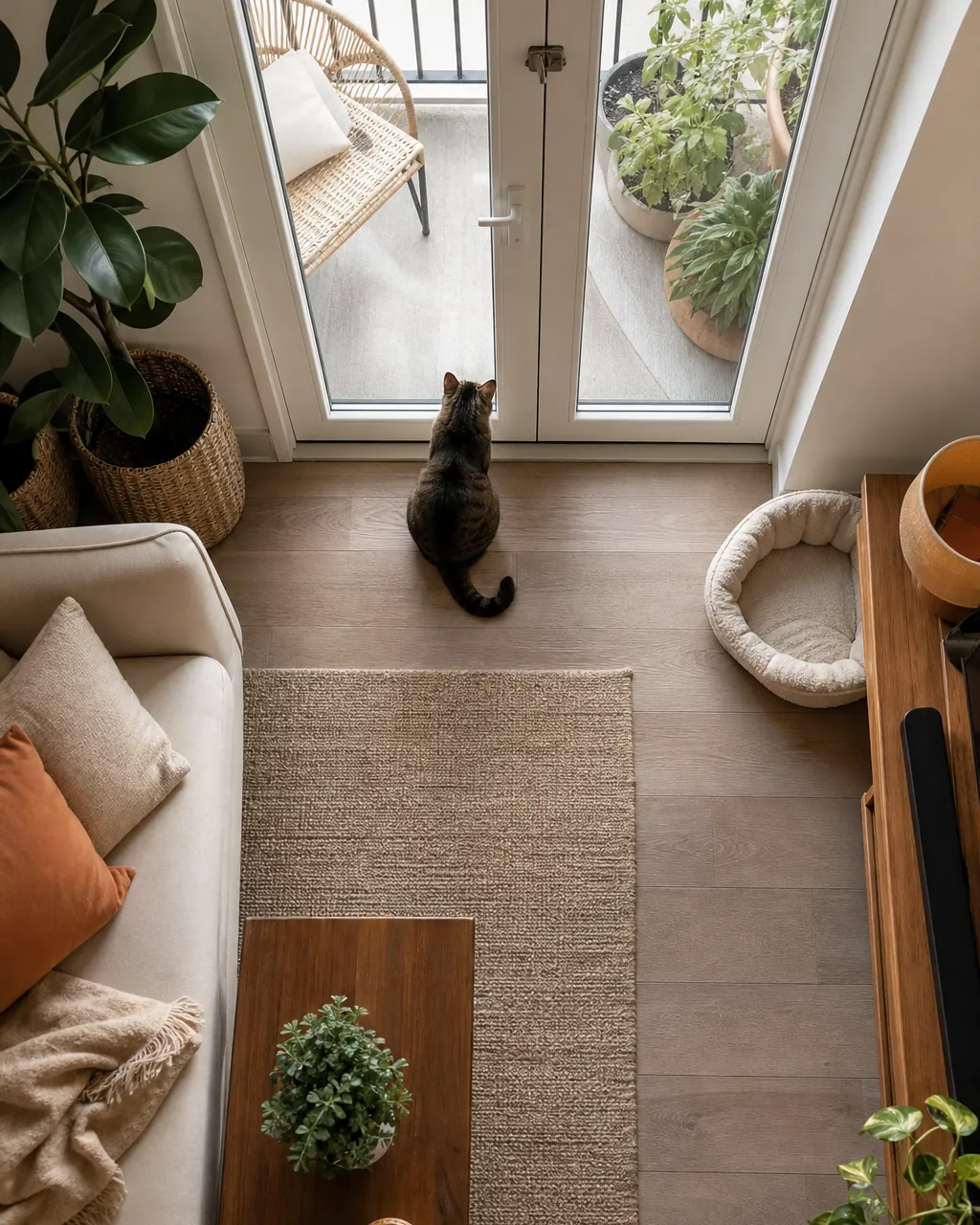
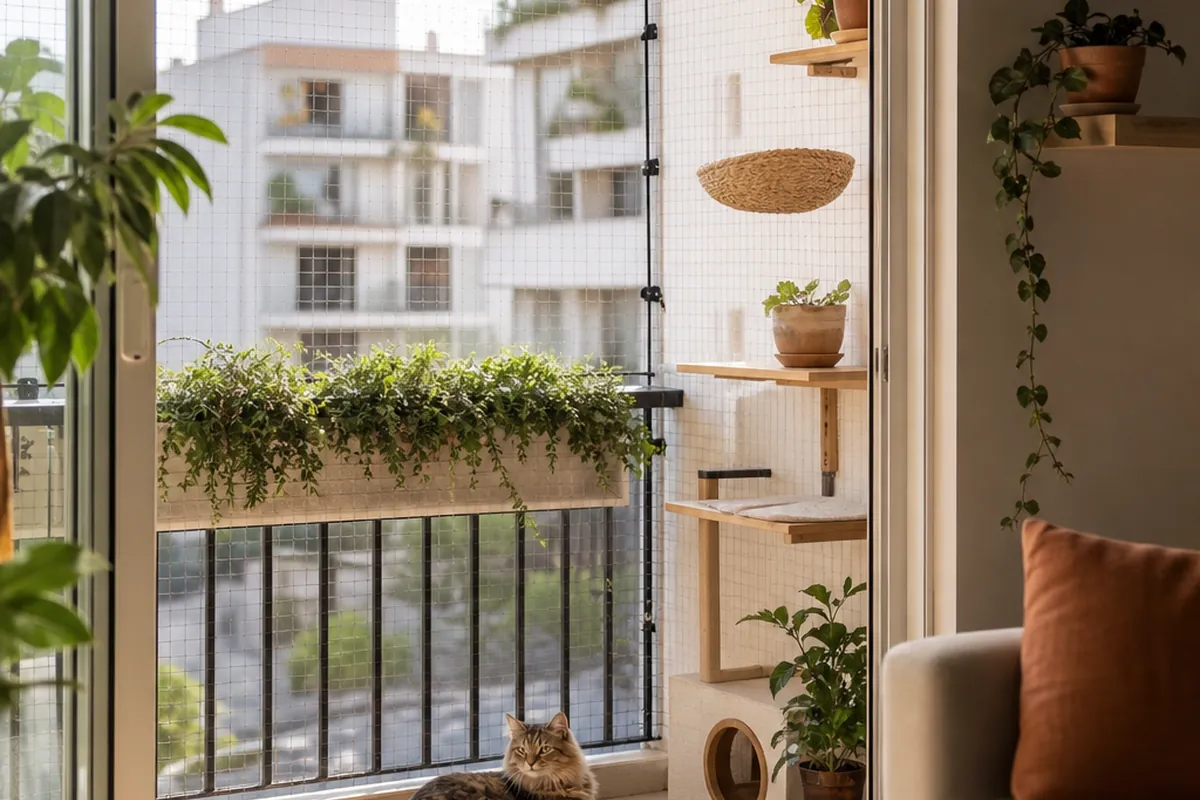
There is no useful middle position here. Either net it properly or keep the door closed, because a partially secured balcony is the most dangerous thing in an apartment with a cat. If you net it, use a system that comes down cleanly at the end of the tenancy.
14. Keep the mounting hardware and the boxes
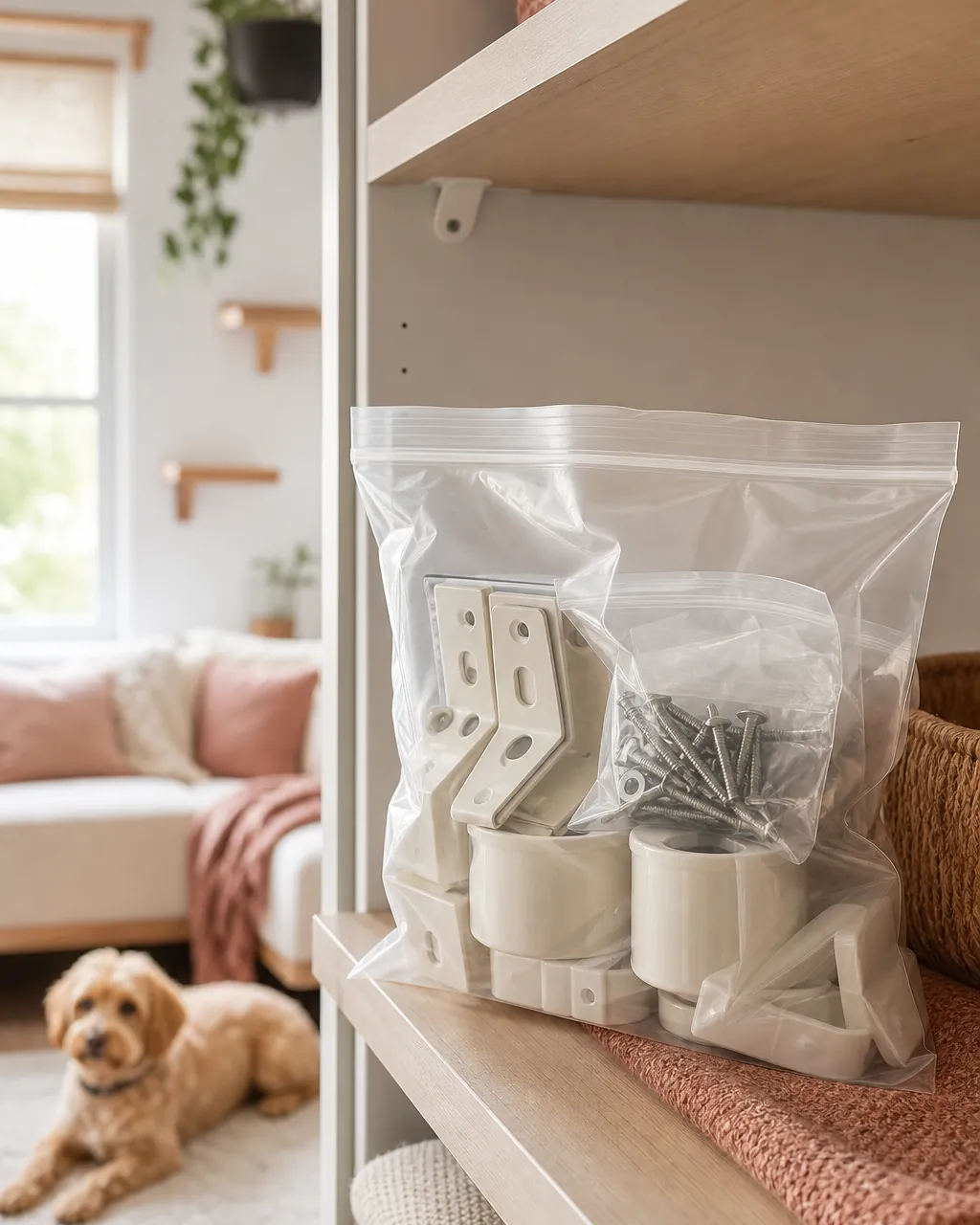
Tension poles, gates and netting all have parts that let them fit a different apartment, and those parts get thrown away in the first month. Keep them in one bag in a closet. Ceiling heights and doorway widths change between rentals, and a pole that fits your next place because you kept the extension is a purchase you do not repeat.
A freestanding gate around a Christmas tree works on the same principle, and keeping its panels and hooks together after the holidays means a cat-proof Christmas tree setup comes back out in five minutes next year instead of being rebought.
Where to start
Do the free things in week one: photograph everything, agree the pet terms in writing, move the dog’s bed out of sight of the front door, and put the scratching post beside where the cat sleeps. None of these cost anything and three of them stop problems that are expensive to reverse.
Then spend on the two surfaces that actually take the damage. A washable rug over the traffic strip and a cover on the sofa handle most of what a deposit dispute is ever about, and both come with you when you leave.
Add the camera when you have a specific question, not before. It is most useful once you suspect something, whether that is barking you have been told about or a dog that seems tired in a way that suggests it is not resting during the day.
Everything here should leave with you. That is the real test of a rental setup, and it is also why the removable version is usually the better version even when you could screw something to a wall. Seasonal decorating follows the same rule, and these Halloween decor ideas that survive a cat hang wreaths and garland on removable hooks or a tension rod rather than a nail in a rented frame.