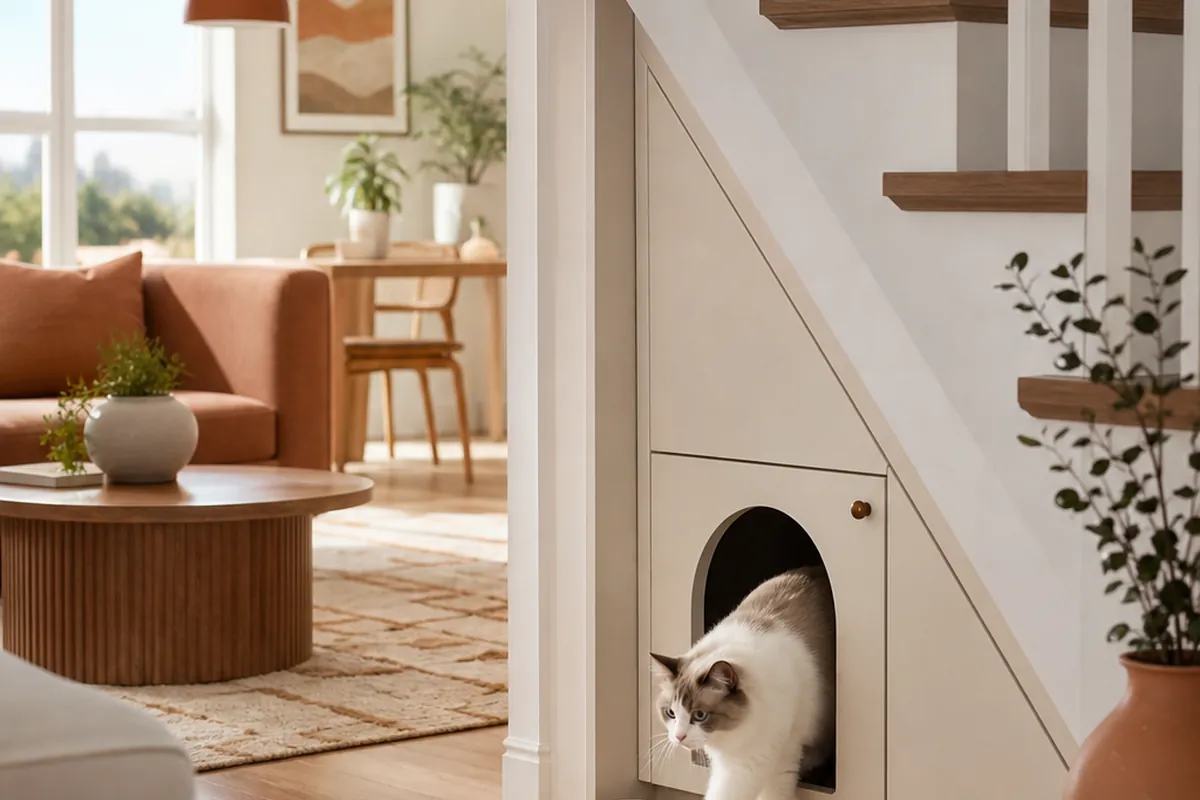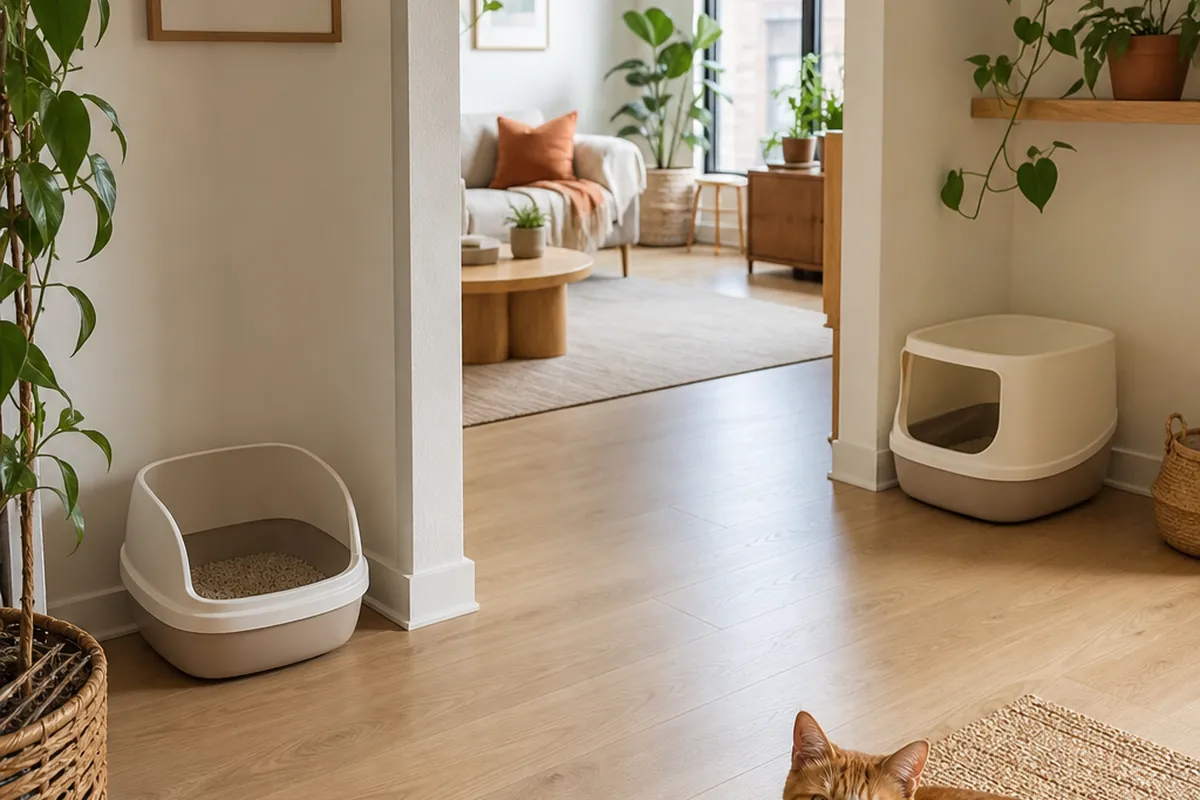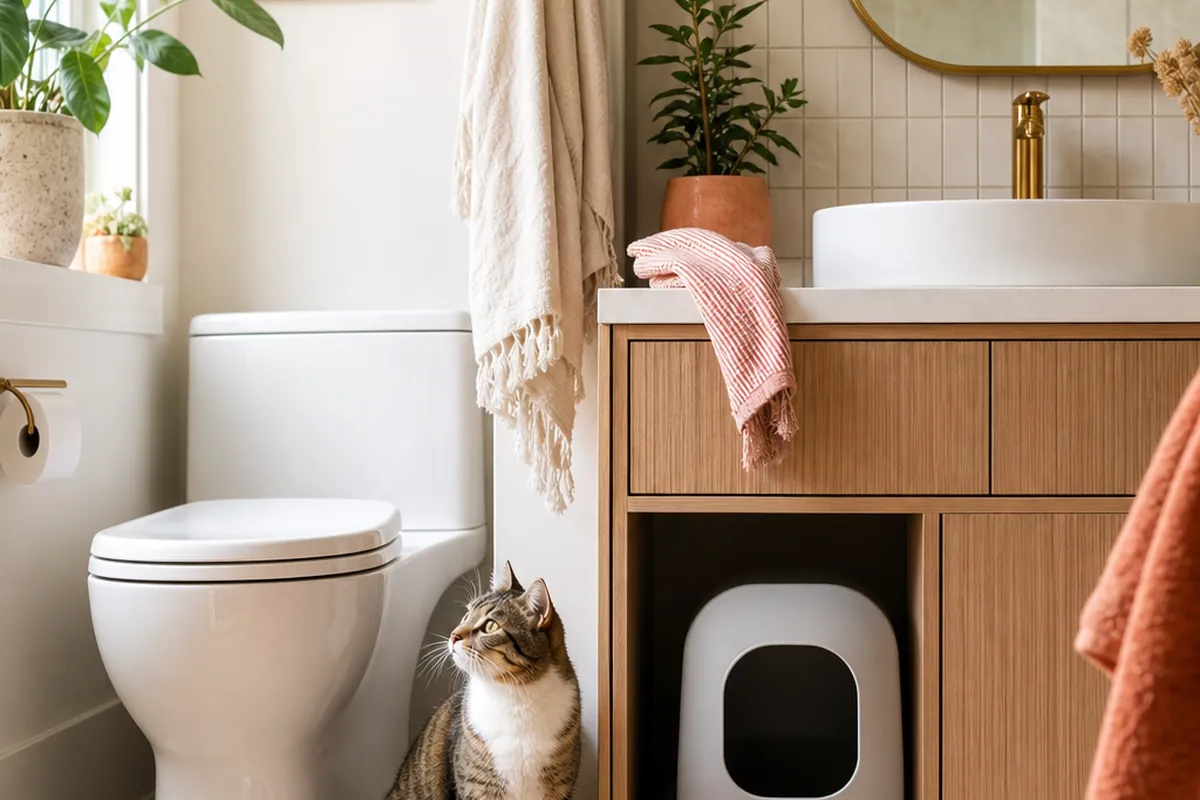
The reason most litter cabinets fail is not that they look bad. It is that they were designed by someone thinking about your living room and not about the animal that has to use the inside. A piece of furniture can hide a litter box completely and still be rejected within a week, and when that happens you own an expensive side table with a problem inside it.
Eleven pieces that work, and the specifications that separate them from the ones that get returned.
1. Start with the end table, because the height is already right
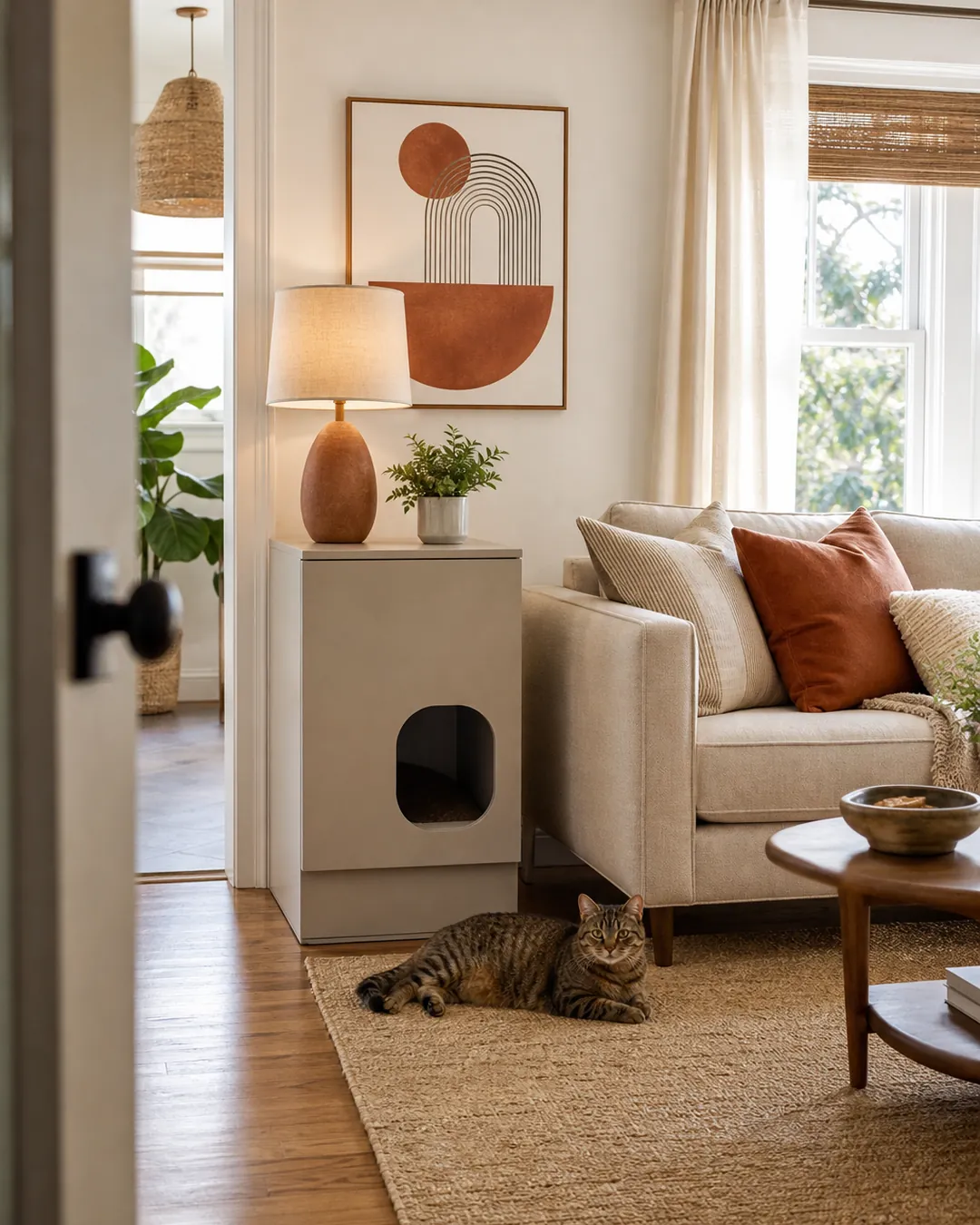
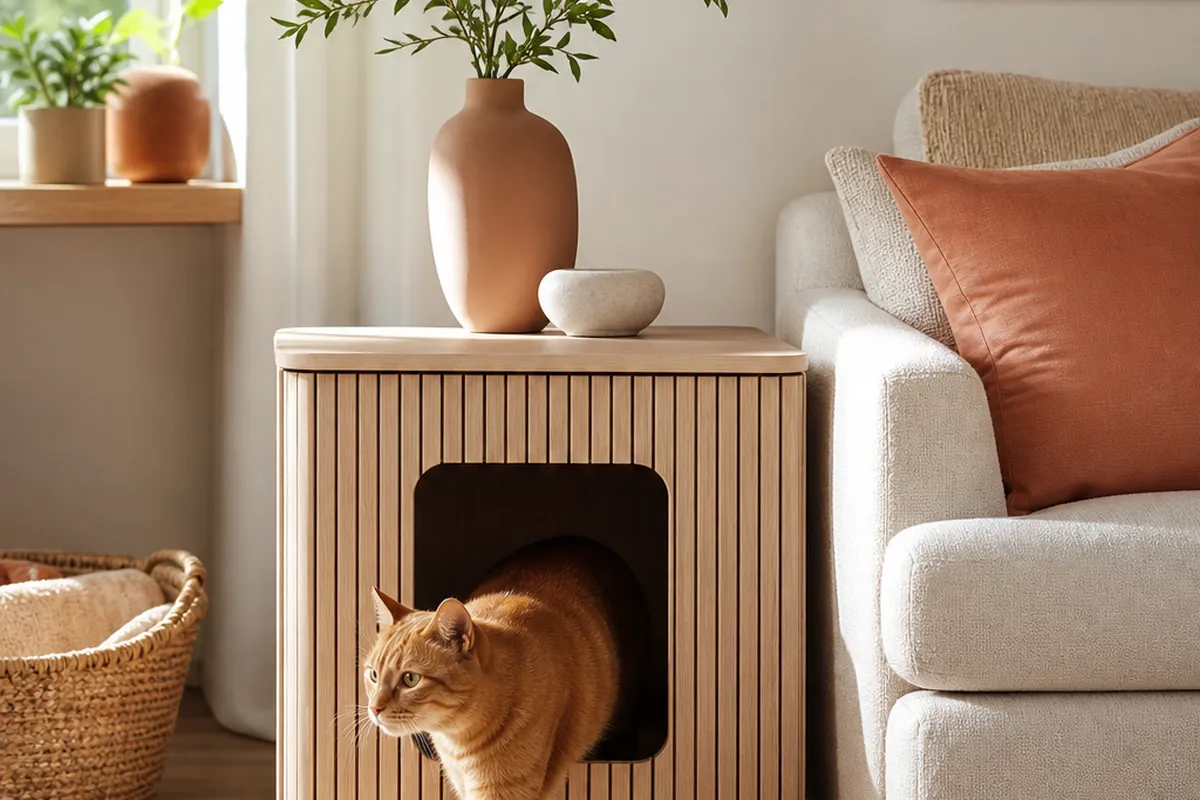
An end table sits at roughly 22 to 26 inches, which is tall enough for a standard box plus the headroom a cat needs to stand. That is not a coincidence you should waste. A drop-down door enclosure at 23.6 inches wide reads as a nightstand from across the room and takes a lamp on top without complaint. Sofa-side is the natural position, which also happens to be a spot people walk past rather than sit in.
2. Use a bench when the piece has to earn its floor twice
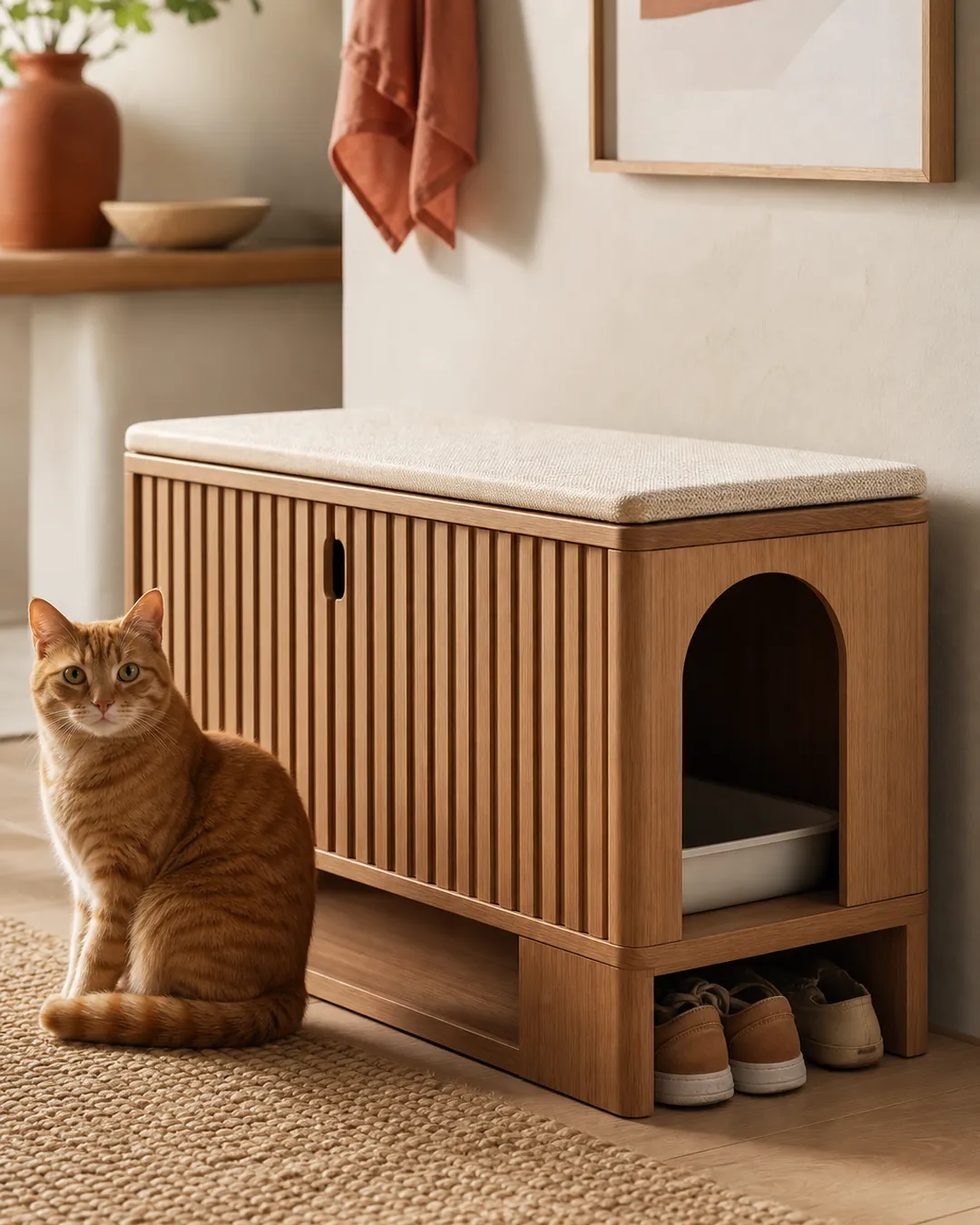
A bench does something a cabinet cannot, which is seat a person. In an entryway or at the end of a bed, a bench-style litter enclosure gives you somewhere to put shoes on and gives the cat a private room underneath. Check the seat is rated for adult weight rather than decorative, because a lot of pet-aisle benches are built to hold a cushion and nothing heavier.
3. Convert a plain cabinet you already own
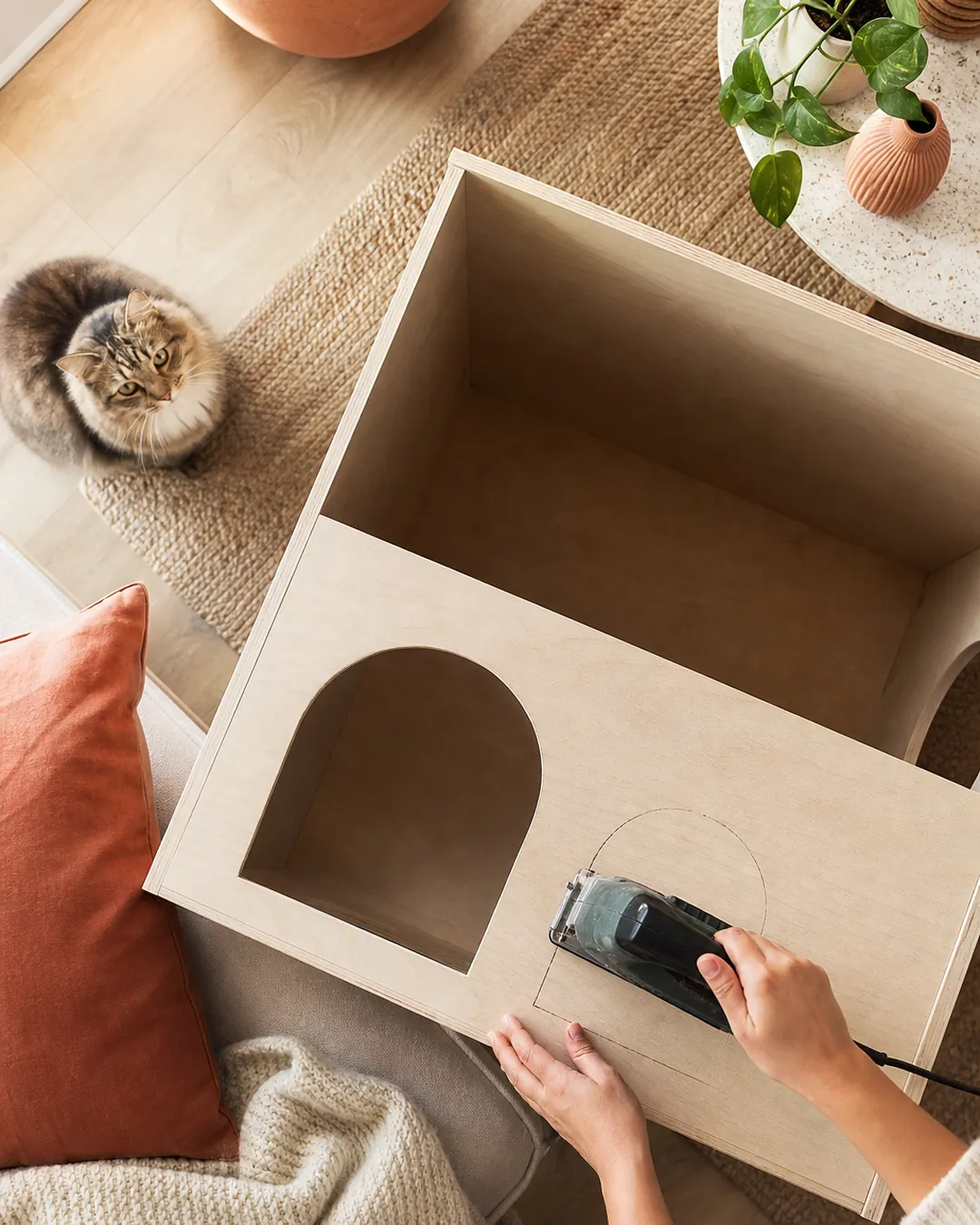
The cheapest hidden litter furniture is a cabinet with a hole in it. A jigsaw makes an arch in about ten minutes, a hole saw makes a circle in two, and either one costs nothing if you own the tool. The finish already matches your room, which is the thing purpose-built pieces struggle hardest to do. Sand the cut edge until it is smooth to a bare hand, because a rough edge catches fur and eventually stops the cat going in.
4. Seal the floor before anything else
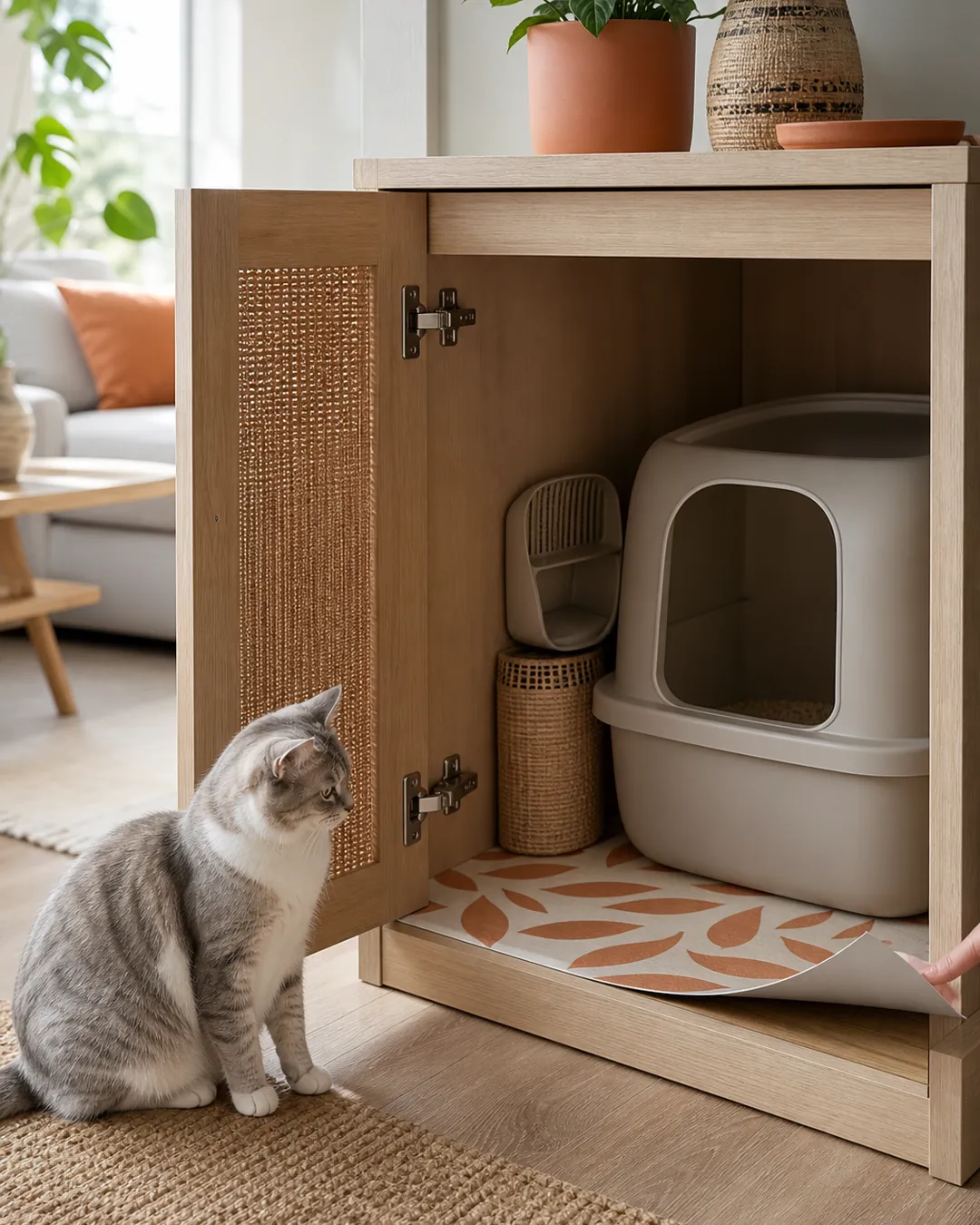
This is the step people skip and regret. Raw particleboard absorbs liquid, swells, and holds odor permanently, and no amount of cleaning brings it back. Line the interior with vinyl offcut, a cut-to-size plastic tray or peel-and-stick tile before the box goes in. Ten minutes and a few dollars now beats replacing a panel later, and on a converted piece it is the difference between furniture that lasts years and furniture that lasts one accident.
5. Measure the interior, then measure your box
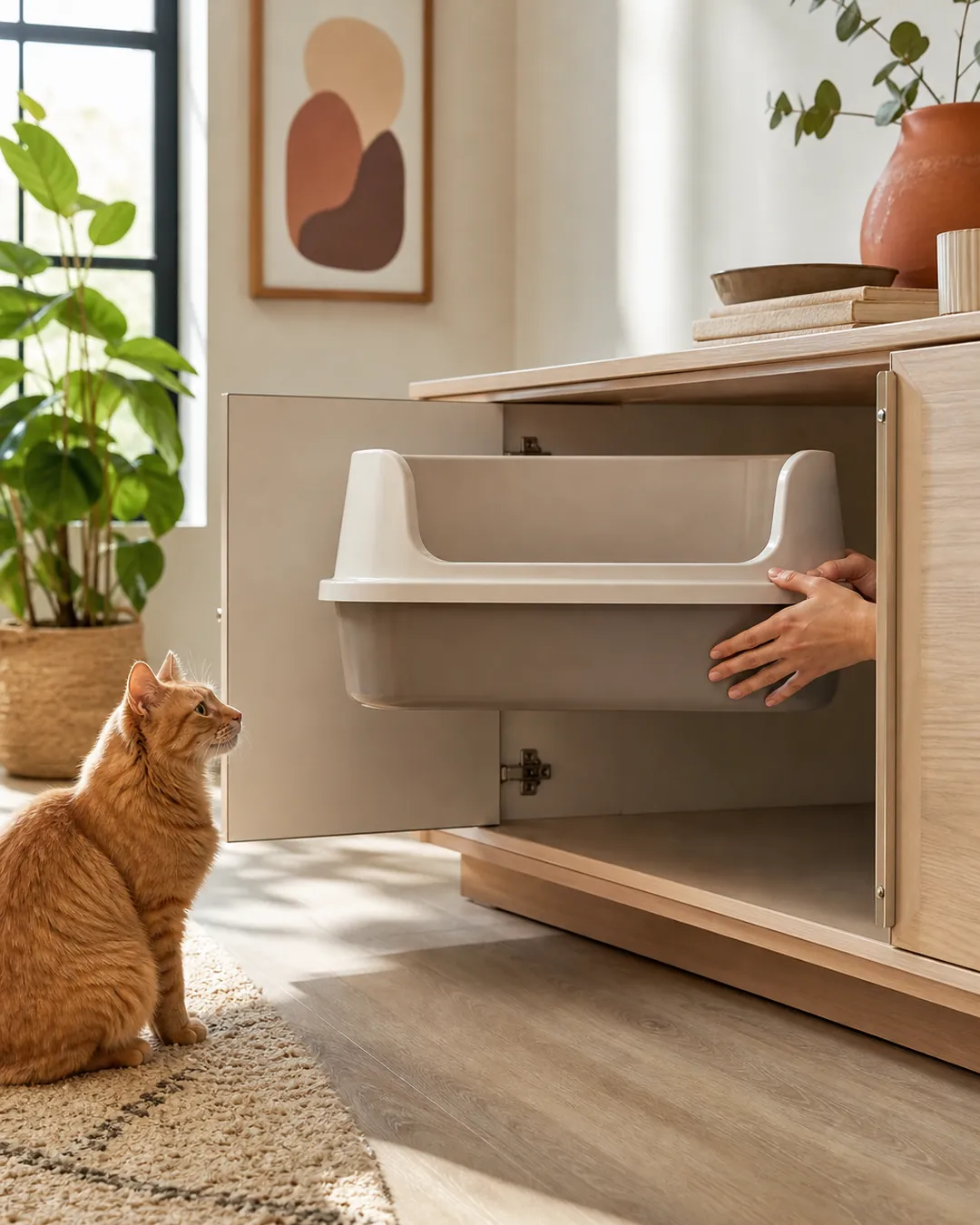
Listings advertise exterior dimensions because that is what fits your alcove. The number that decides whether the cat uses it is the interior width, and specifically whether your existing box sits inside with several inches spare on the sides. Where a listing gives no interior measurement at all, treat the silence as an answer. Ask, or buy something else. Watch for internal framing too, since corner blocks and door hardware eat an inch or more off the usable width, and that inch is usually the one that decides whether a cat can turn without brushing a wall.
If you have not yet settled on the box itself, the best litter boxes for small apartments compares sizes and entry styles, and litter box ideas for a small apartment covers placement before any furniture enters the picture.
6. Insist on a top that opens
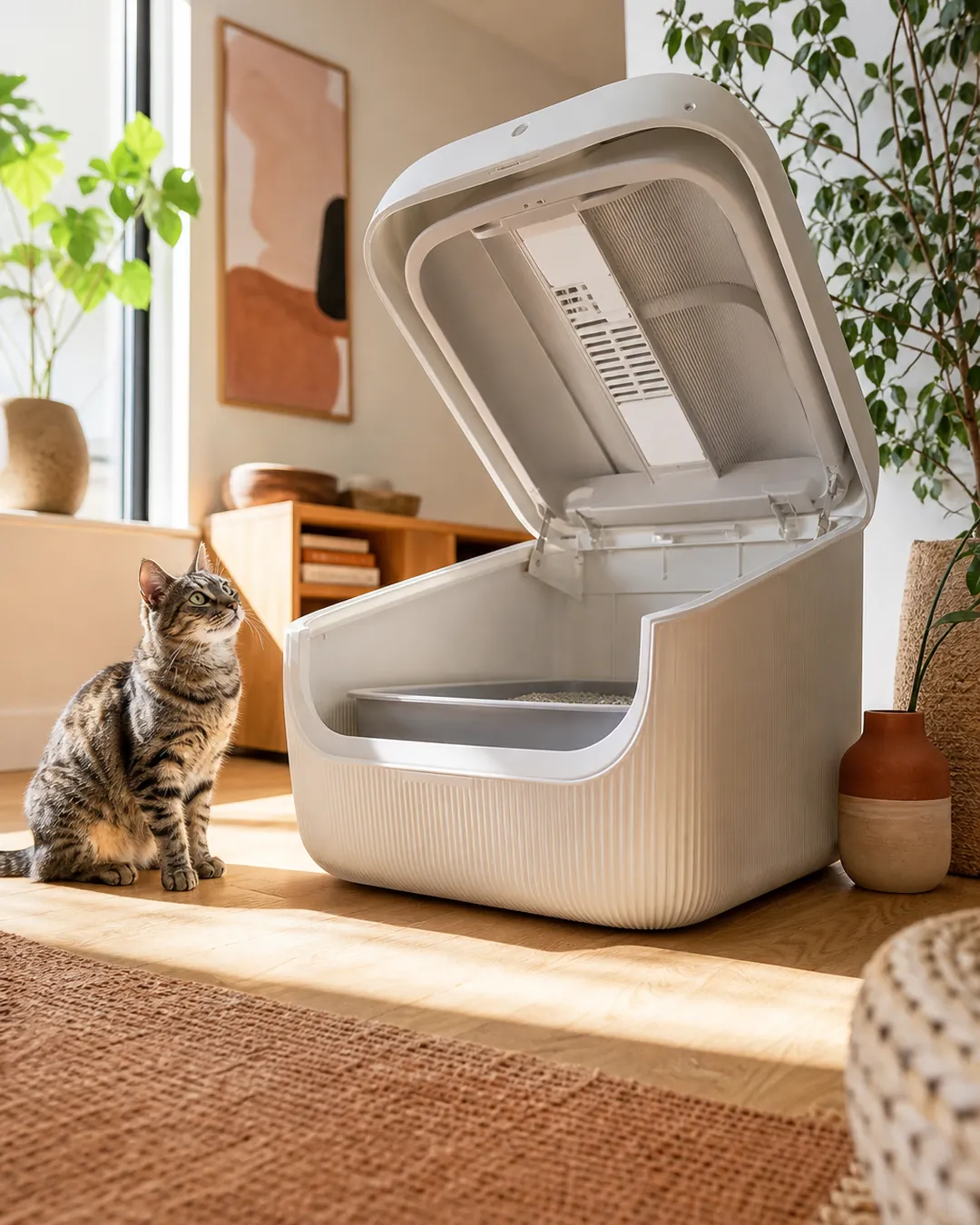
Access decides whether the system survives contact with a busy week. A lift-top or a wide front lets you scoop in twenty seconds. A cat-sized doorway as the only access turns scooping into a job you reach into blind, and a job like that gets postponed, and postponed scooping is the entire smell complaint. Test this in the listing photos before you buy: if you cannot see how a human arm gets in, it does not.
7. Give the air somewhere to go
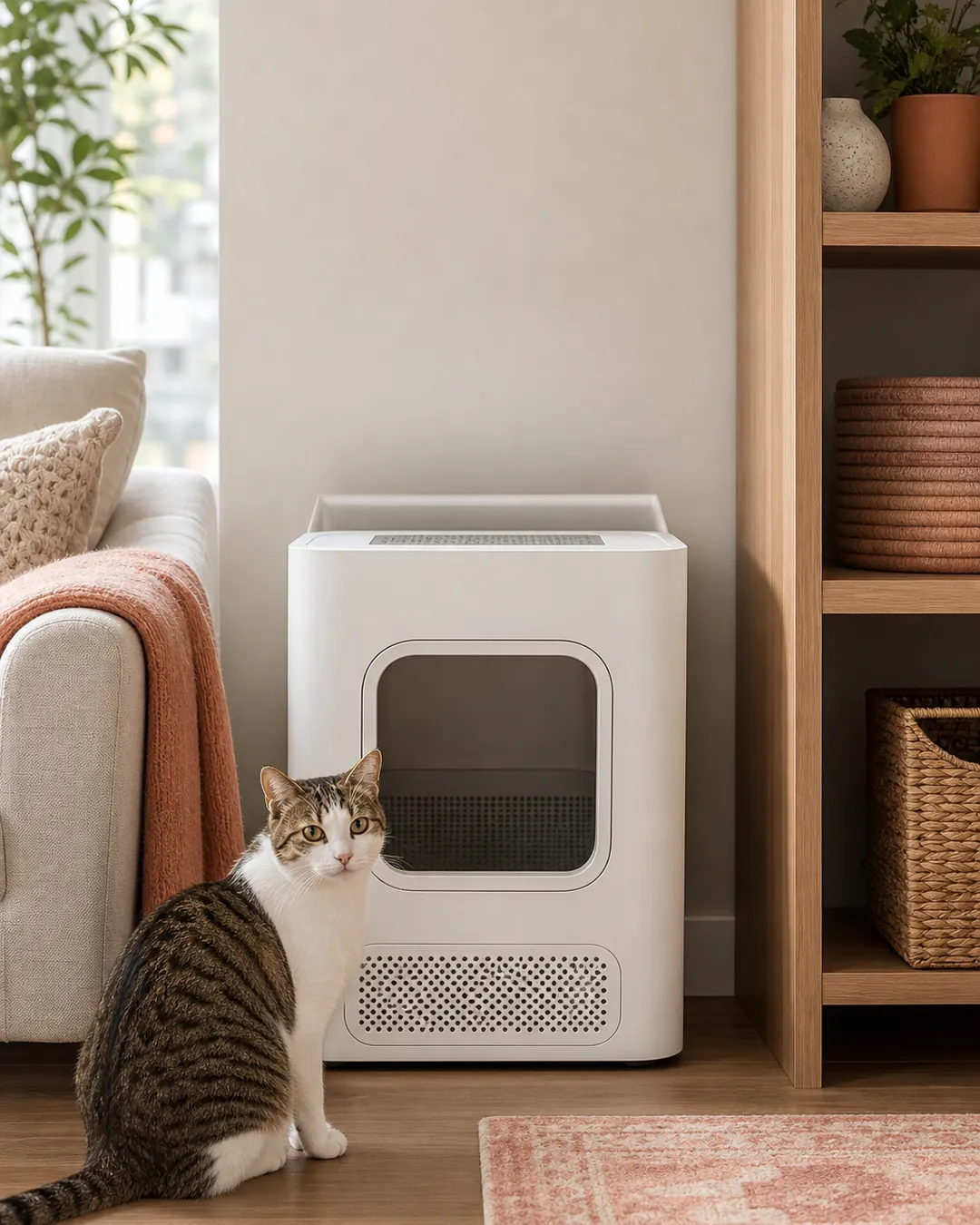
An enclosure with no vent is a sealed box that concentrates everything inside it, and it hits you all at once when the door opens. Look for a gap at the back, a vent panel or a filter slot. If the piece you like has none, drill a row of half-inch holes low on the back panel where nobody sees them. Air needs an in and an out, so one hole is decoration. The test is simple: open the door after a day and notice whether the air inside feels different from the room. If it does, the piece is holding air rather than moving it, and a deodorizer will not fix that because it is working on air that is going nowhere.
8. Fit a carbon filter and actually change it
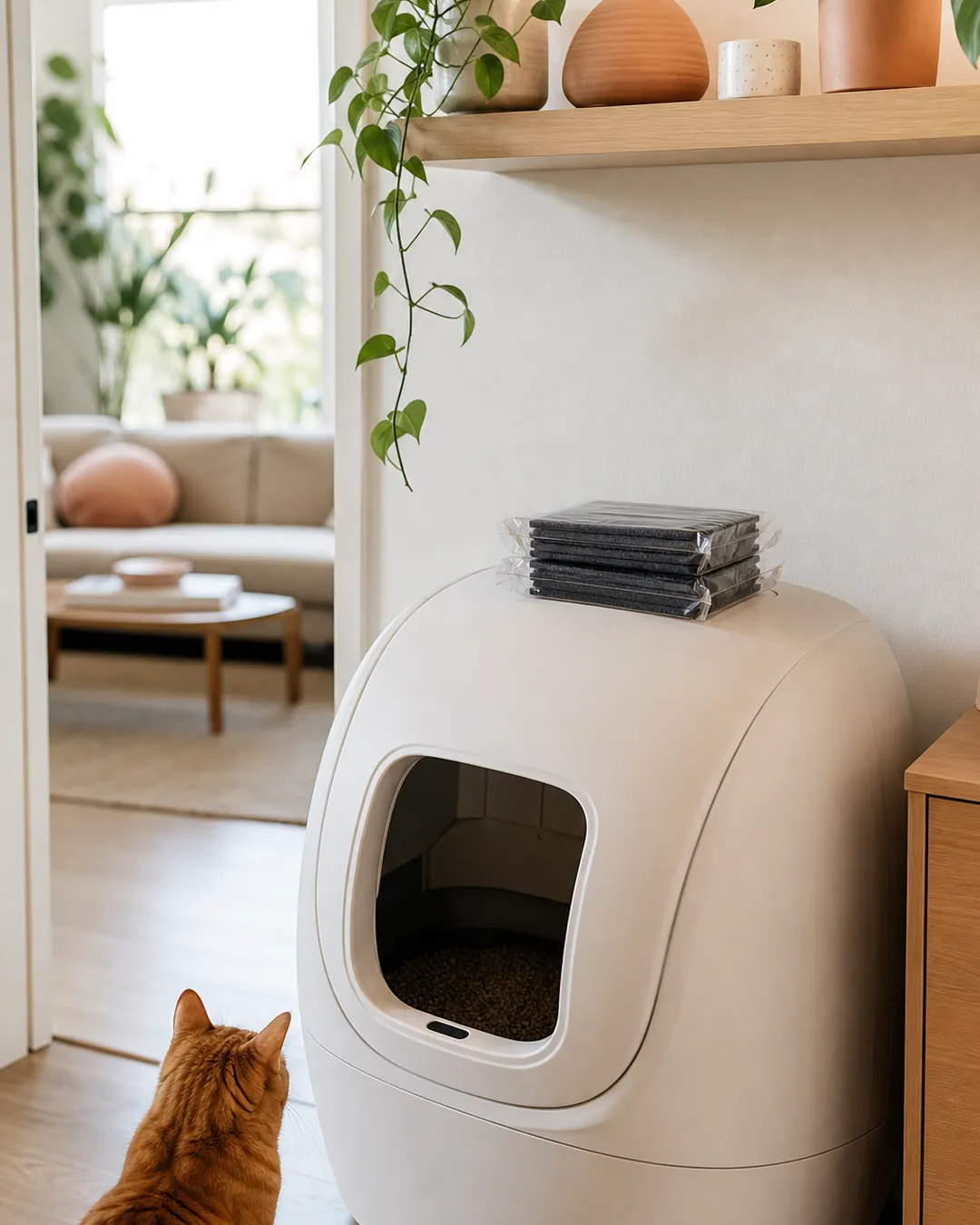
Where the design takes one, a pack of charcoal filters genuinely reduces what escapes at the door, and they cost very little per month. They are also the component everyone forgets. Buy a multipack with the furniture, write the date on the first one in pencil, and swap on a schedule rather than when you notice, because a saturated filter does nothing and gives you no warning.
9. Put the entry on the side that faces away
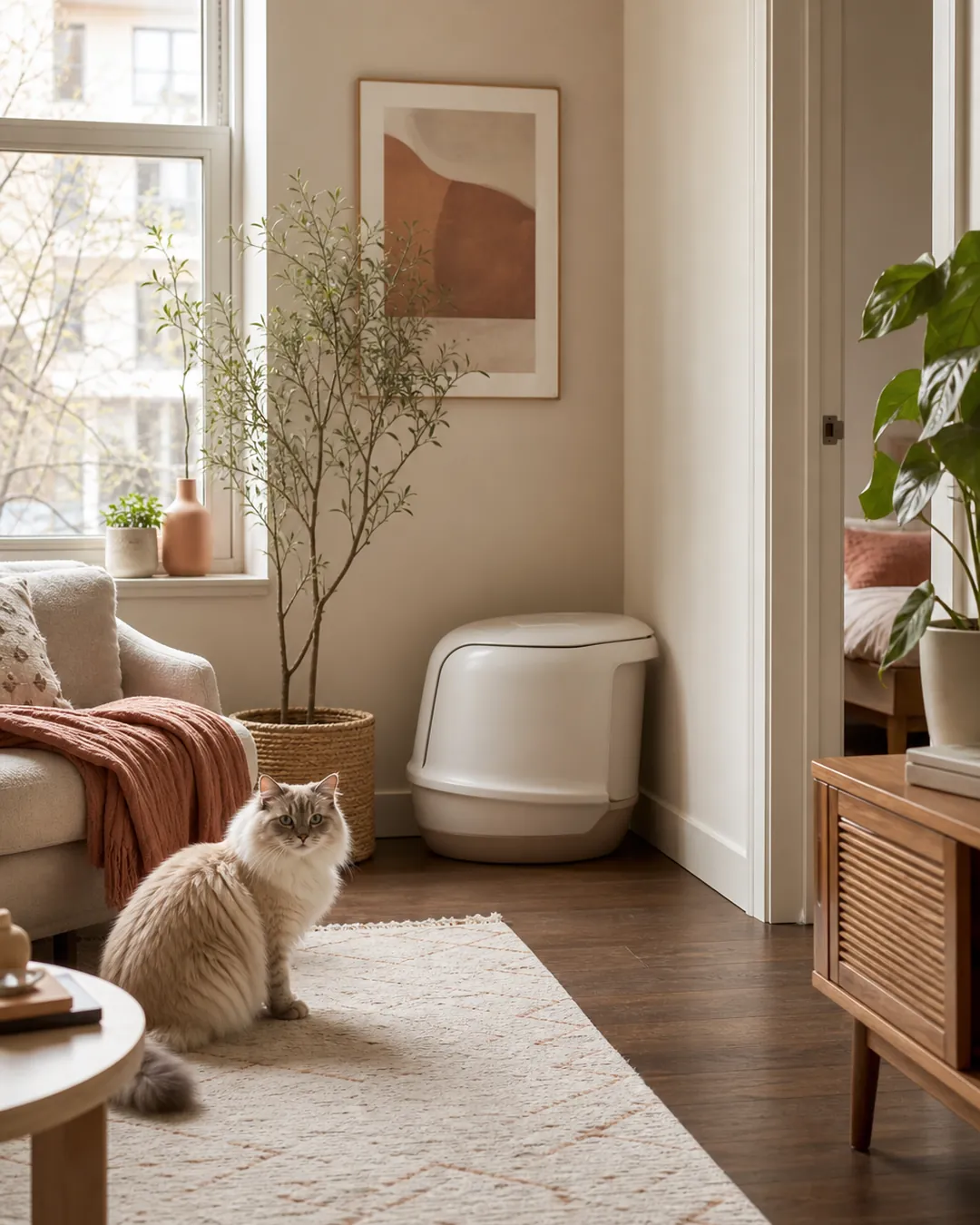
Most people mount the entry facing the room because that is how the piece arrived. Turn it. An opening that faces a wall or a corner, with a foot of approach room, keeps the cat out of sight while it is in there, which matters more to the cat than it does to you. Reversible entry panels are worth paying for precisely because you will not know the right side until the furniture is in place. The exception is a cat that likes to watch the room while it is in there. If yours sits in the doorway of an open box rather than facing the wall, point the entry outward and accept the compromise, because a cat that feels cornered stops using the box entirely. If more than one cat shares the home, a cabinet’s single doorway is the only way in or out of that box, which is why litter box ideas for multi-cat small apartments spread the boxes across separate rooms instead of relying on one.
10. Keep the mat inside the cabinet
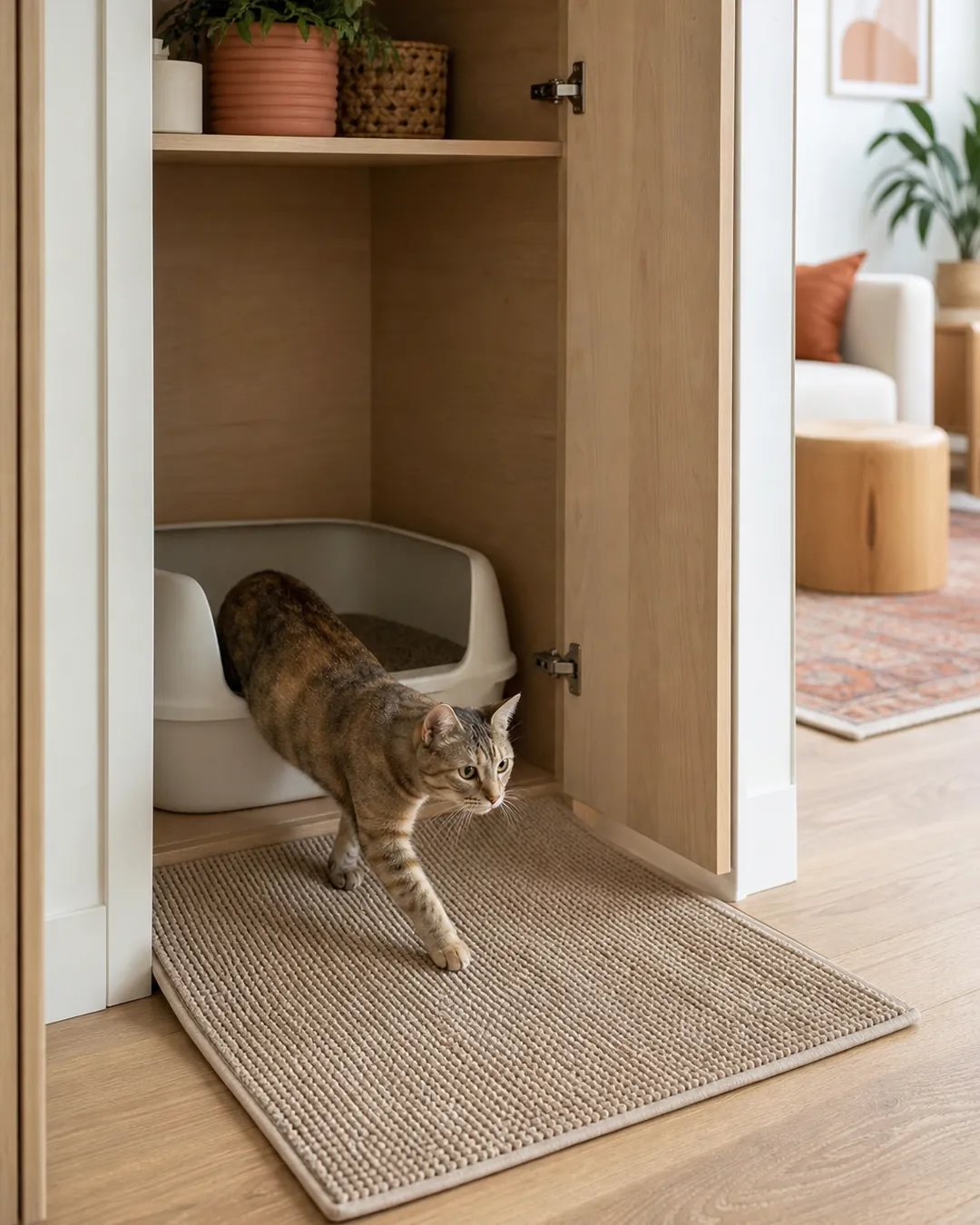
A mat on the floor outside the furniture is catching litter after it has already traveled. The productive position is inside, on the cabinet floor, filling the gap between the box and the doorway, so paws cross it before they reach your room. Cut a cheap mat to fit rather than buying a large one, and check the doorway has a lip to step over, since that knocks off more than the mat does.
11. Watch the top surface
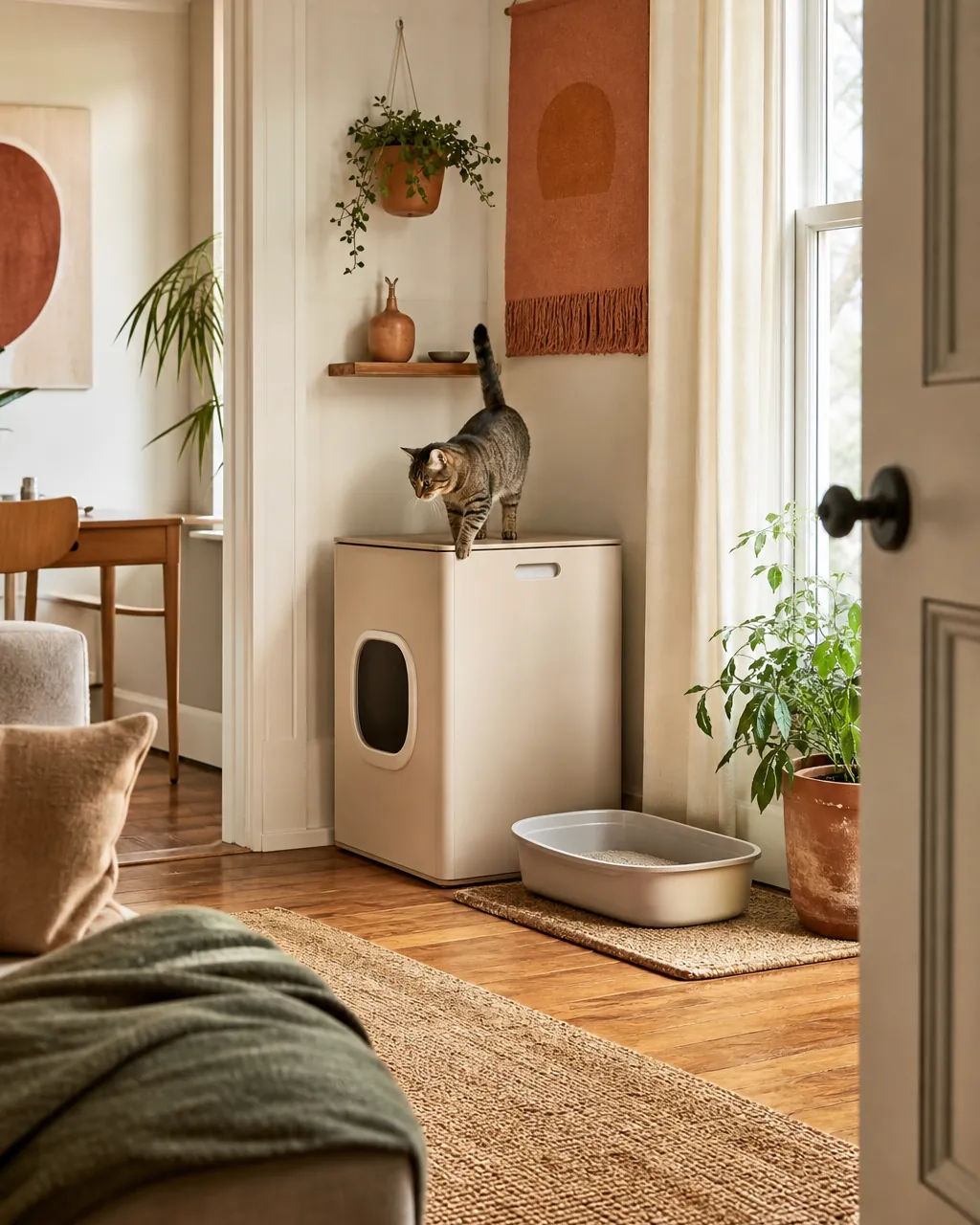
A litter cabinet at side-table height will be used as a side table, by you and by the cat. Keep it to a lamp, a tray, a book. Cats land on these pieces from the sofa arm, and a ceramic vase near the edge is on a timer. This is also the argument for a sealed, wipeable top rather than a raw wood one.
Where to start
Measure the box you already own before you look at a single listing. Width, length, and the height of the highest wall. Then filter every candidate on interior dimensions and discard anything that does not publish them.
Buy the piece to suit the room it goes in rather than the other way around: an end table beside the sofa, a bench in an entryway, a converted cabinet where the finish has to match something. Get the placement right first, on hard floor, away from food, with two clear approaches.
Then do the unglamorous part on day one, before the cat ever sees it. Seal the floor, cut ventilation if there is none, fit the filter, and lay a mat inside the doorway. All four take under an hour together and they are what separates furniture that hides a litter box from furniture that hides a problem.
Give the cat a week with the door of the old arrangement still available if you can. Cats accept a new box far more readily when the old one has not vanished overnight, and a piece of furniture that gets rejected on day one rarely gets a second look.