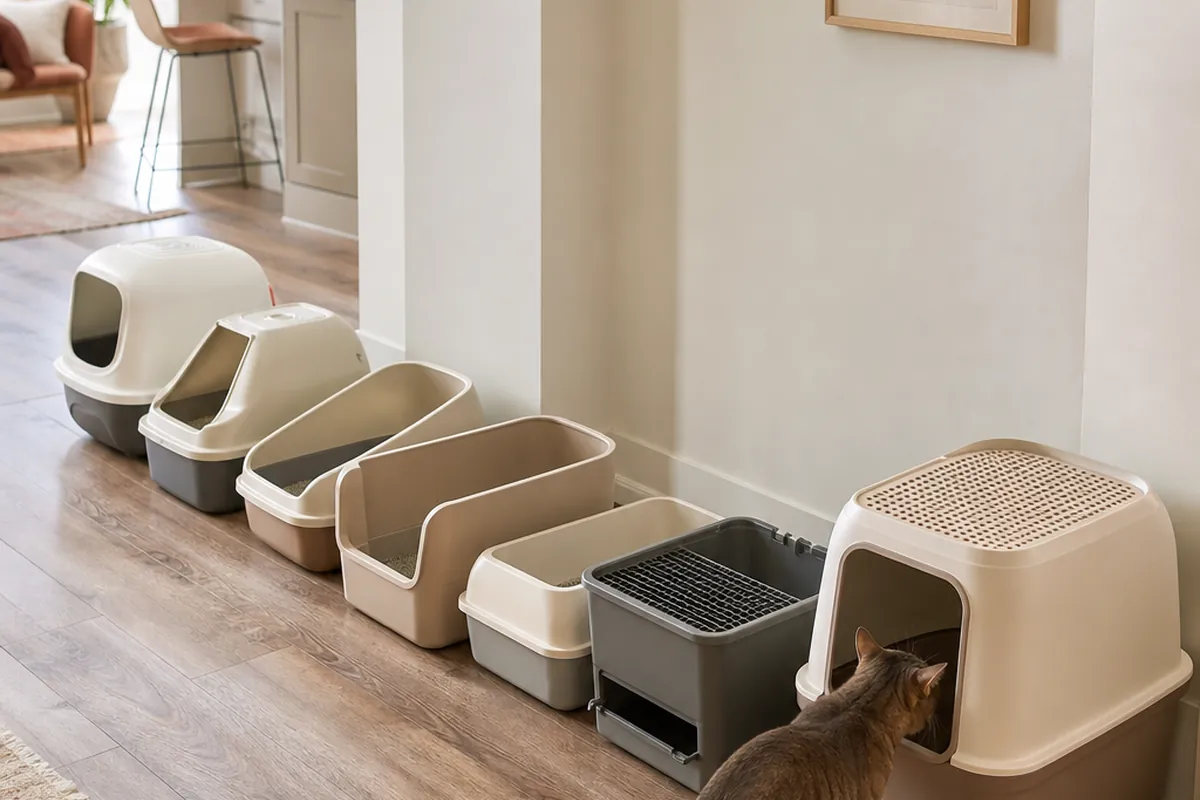
A bathroom you share is a different problem than a bathroom that is only yours. It is not enough for the litter box to work for the cat; it has to survive a roommate’s morning routine, a guest’s five minutes at the sink, and a shower that fills the room with steam twice a day. Most litter box advice assumes one household, one schedule and nobody else’s opinion, which is exactly what a shared bathroom does not have.
Nine ideas, in the order they solve the most friction.
1. Pick the corner the shower never reaches

The shower is the reason a shared bathroom has hard floor and a fan in the first place, and it is also the reason half the room is a bad spot for litter. Steam condenses on anything cool and damp litter clumps early, smells sooner and tracks worse. Stand in the room with the shower running for a minute and watch where the mist actually settles - it is usually further than people expect, often reaching the wall opposite the showerhead. Put the box on the dry side, at least a few feet clear of that line, even if it means a slightly less convenient corner.
2. Keep it clear of the door swing and the towel bar

A shared bathroom gets opened and closed by people who are not thinking about the box, and a door that clips the edge of it on every swing eventually gets kicked, or the cat learns to avoid a spot that gets bumped. Trace the door’s full arc before you commit to a corner - most people only check the closed position and miss that a fully open door claims another eighteen inches or so along the wall. The same goes for a towel bar or robe hook at hip height: fine for a person walking past, but it puts a swinging towel directly over the box every time someone dries off.
3. Use a slim box that fits the leftover space
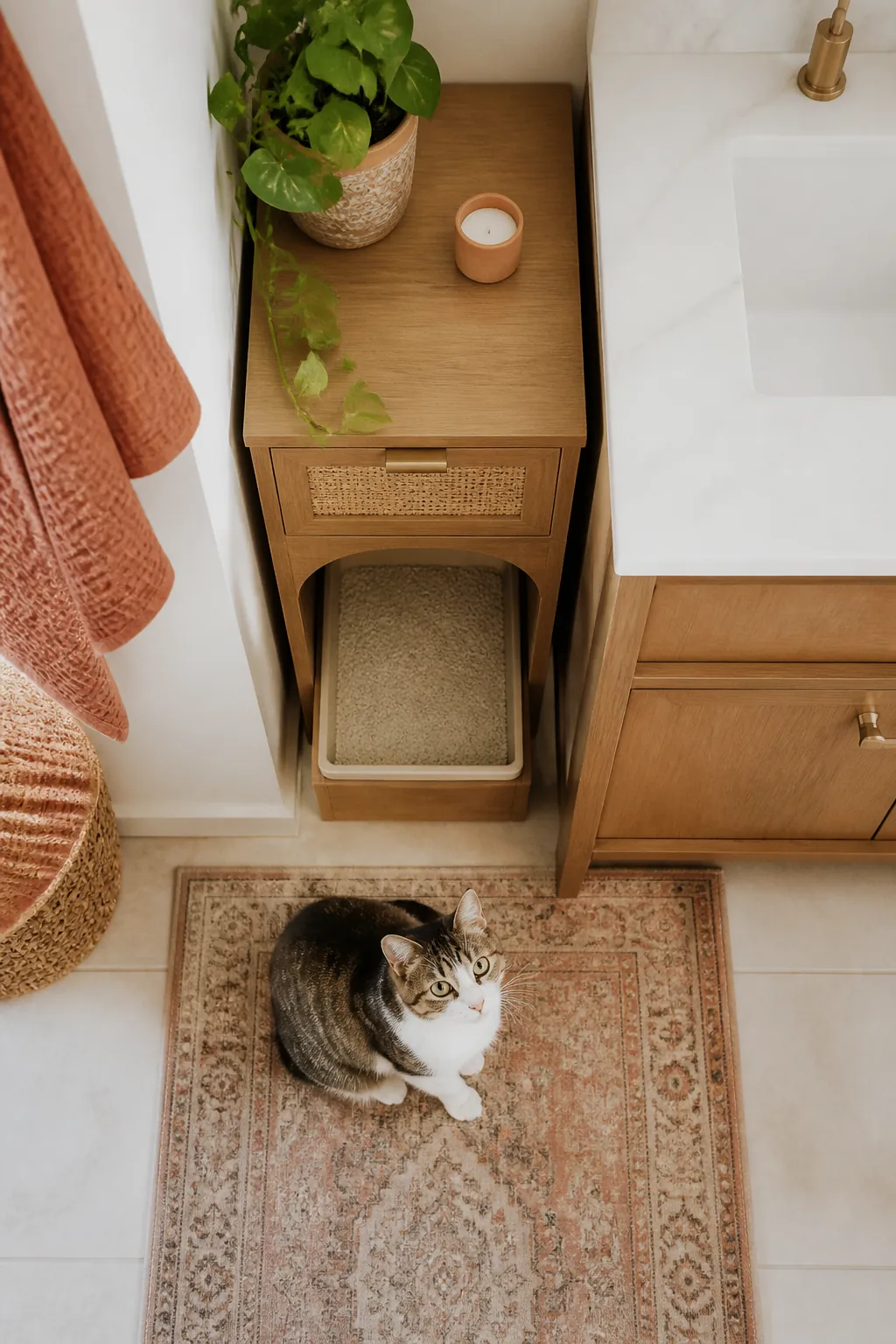
Once the shower and the door have ruled out most of the room, what is left is often a narrow strip beside the vanity or the toilet, not a full corner. A slim litter enclosure styled as a side table is built for exactly that gap, and it reads as furniture rather than equipment, which matters when the room is not only yours. Measure the strip with a tape measure, not by eye - a space that looks like it will fit a standard box often runs two or three inches short once you account for the baseboard. With two or more cats, this strip holds only one of the boxes you need, and litter box ideas for multi-cat small apartments cover spreading the rest across other rooms.
4. Give the fan or vent a reason to run

Most bathroom fans are tied to a light switch and run only while someone is in the room for their own reasons, which usually has nothing to do with the litter box. Put the box on the same side of the room as the vent so the air movement it already gets works double duty, and ask whoever else uses the bathroom to leave the fan running an extra few minutes after a shower rather than switching it off the second they step out. That habit costs nothing and does more for smell than any box feature.
5. Contain the smell for someone who didn’t choose the cat
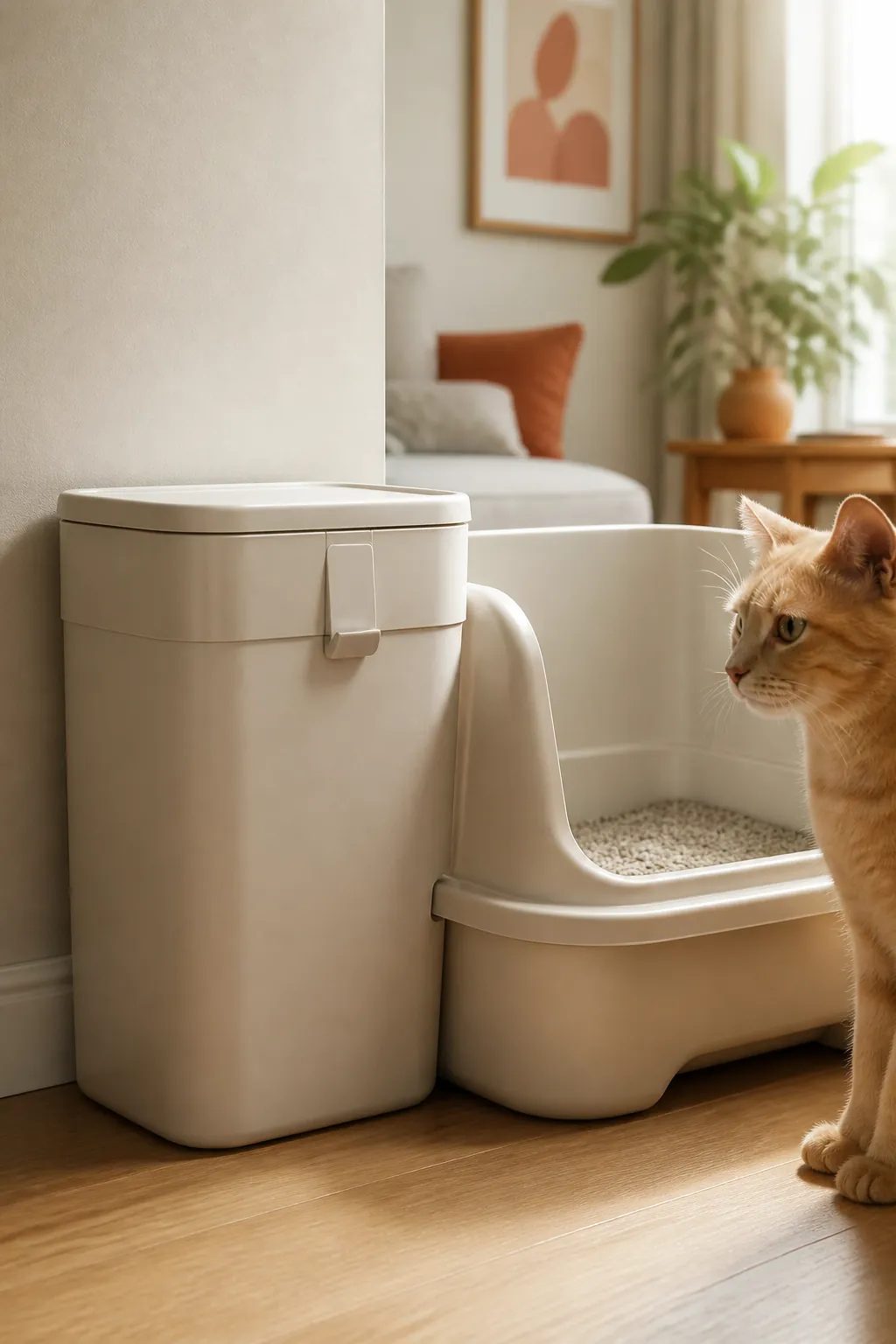
A roommate or a partner who does not own the cat has a lower tolerance for litter smell than you do, and reasonably so - it is their bathroom too. A small sealing disposal bin next to the box means used litter never sits in an open trash can where every other bathroom visit smells it. Empty it on a fixed day rather than when it starts to smell, because by the time it smells, it has already been noticed by someone who was too polite to mention it.
6. Catch tracking before it reaches the bath mat
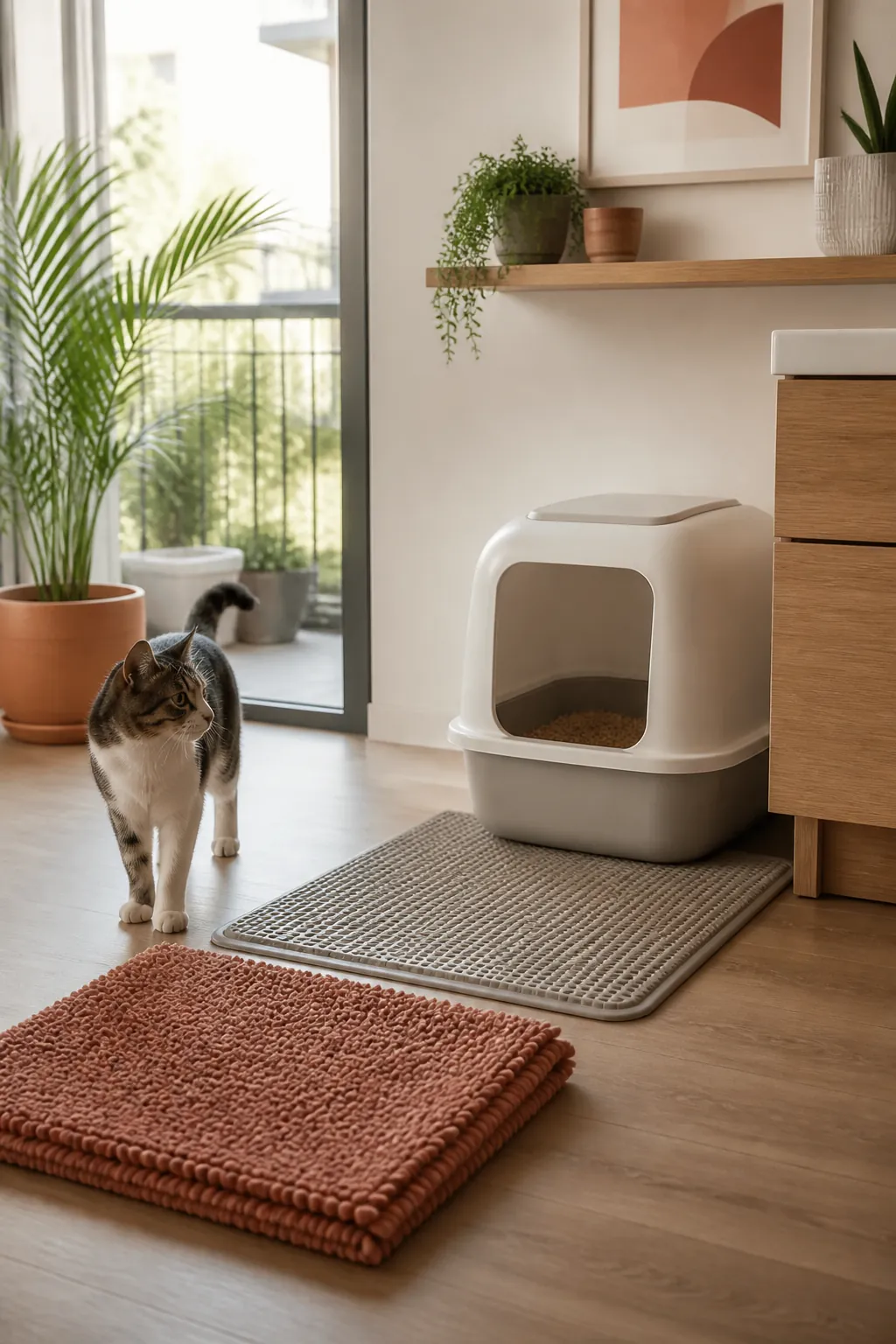
Nothing turns goodwill sour faster than someone else stepping on litter with a bare, wet foot. A large litter trapping mat placed flush against the box exit catches most of it within the first few steps, which is exactly the distance between the box and a bath mat in most bathrooms. Leave a gap between the two mats rather than overlapping them - a damp bath mat sitting on top of a litter mat holds moisture against it and neither dries properly.
7. Put the cleaning schedule where everyone sees it
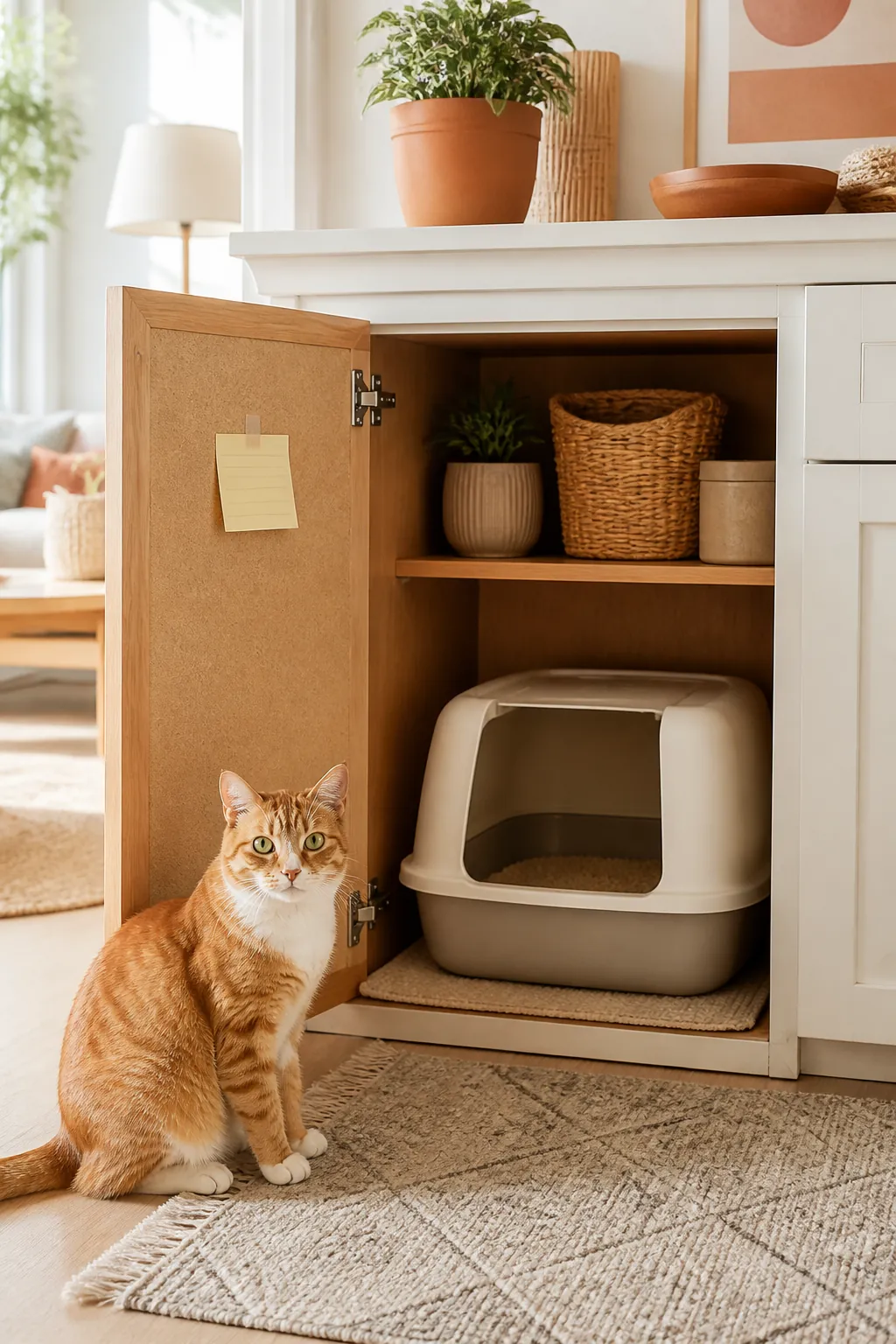
A group chat message about scooping gets buried within a day. A card taped inside the cabinet door above the box, or stuck to the wall at eye level, does not. It does not need to assign the job to anyone but the cat’s owner; it only needs to say when it was last done, because most shared-bathroom litter friction is really “I didn’t know if it had been dealt with today,” not an argument about whose job it is. A dated sticky note beats no system at all, and it takes thirty seconds to update.
8. Store the scoop and litter out of a guest’s sightline
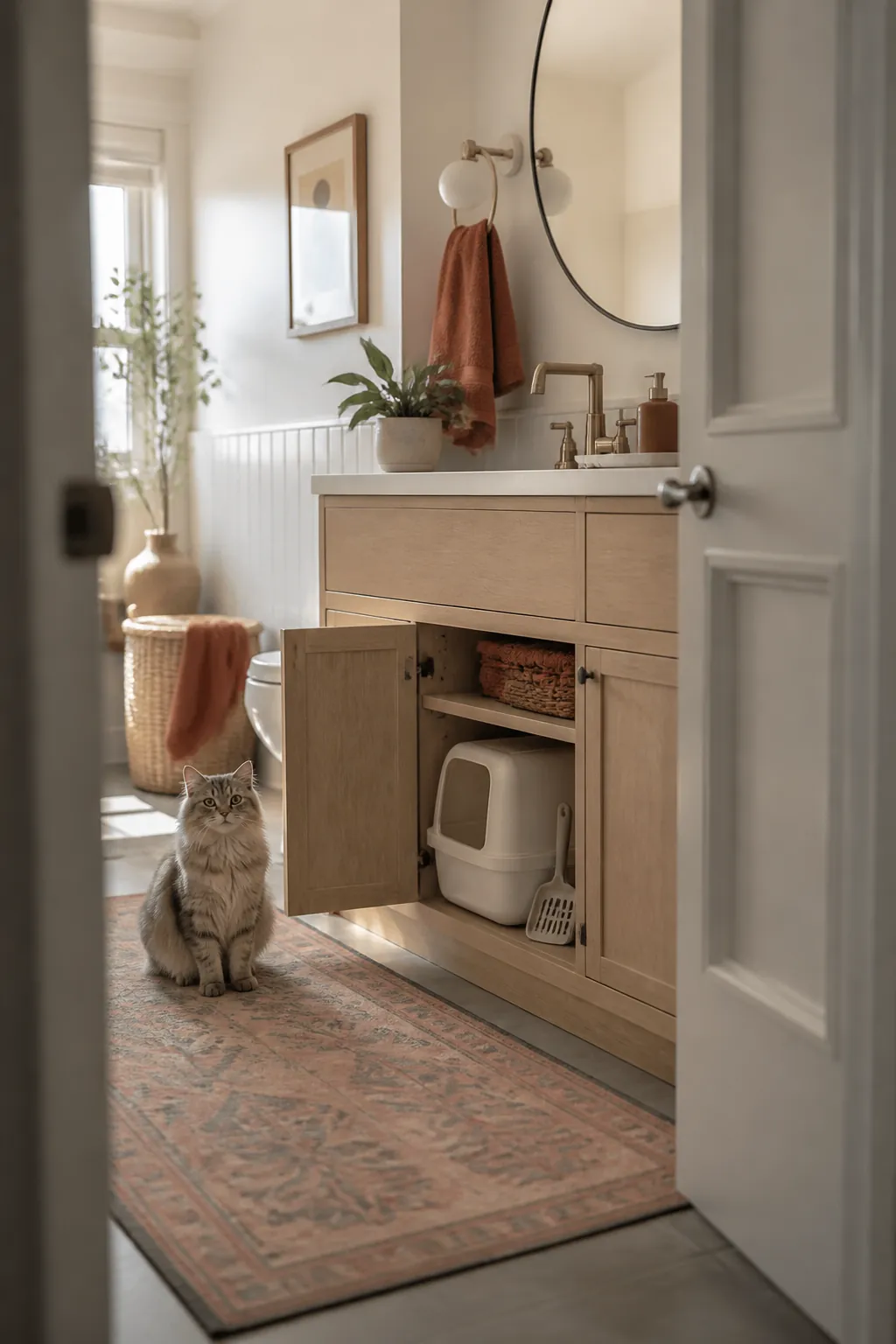
In a bathroom used by guests, an open bag of litter and a scoop sitting on the floor read as clutter in a way they would not in a laundry room. Most vanities have a low cabinet with a few inches of dead space along the back wall; that is enough for a scoop and a small sealed litter container. Keep both within arm’s reach of the box itself rather than in a hallway closet, since the point is to keep cleaning easy, not just tidy.
9. Protect the flooring from a room that already deals with water
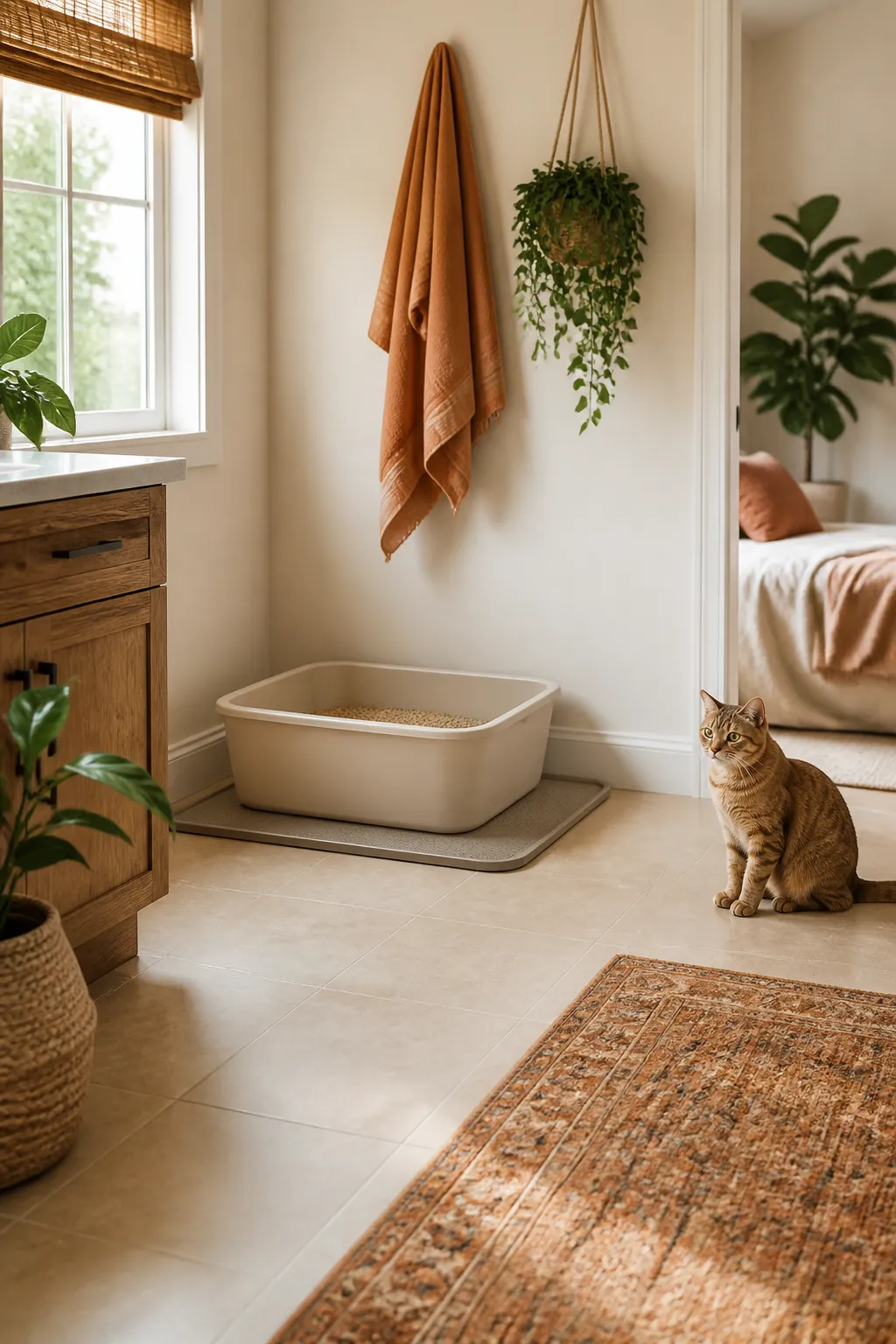
A bathroom floor already handles splashed water, so a wet paw dragging litter across it is a smaller problem than it would be on carpet, but grout lines still trap grit and go gray with it over months. A waterproof tray a couple inches larger than the box footprint on every side keeps loose litter and any spilled water in one place, and it lifts off entirely for a real clean rather than needing to be scrubbed in place. In a rental, this also means the deposit walkthrough finds a bathroom floor, not a stained one.
Where to start
Walk the bathroom with the shower running and mark where the steam actually reaches, then trace the door’s full swing. Whatever wall is left over is your real shortlist, usually one or two spots rather than the whole room. Measure that spot before buying anything, since a shared bathroom rarely has a clean rectangular corner to spare.
Buy the box and the trapping mat together, then add the sealed disposal bin as soon as you notice anyone else mentioning the smell, rather than waiting for a second mention. The chore card costs nothing and solves a different problem than any product does: it is there so nobody has to ask.
Give it two weeks before deciding the spot doesn’t work. A shared bathroom takes longer to settle into a new object than a room only you use, because more schedules are colliding with it - someone’s shower time, someone’s morning routine, a guest’s one visit. If the box is still getting used and nobody has said anything by then, the placement is right.