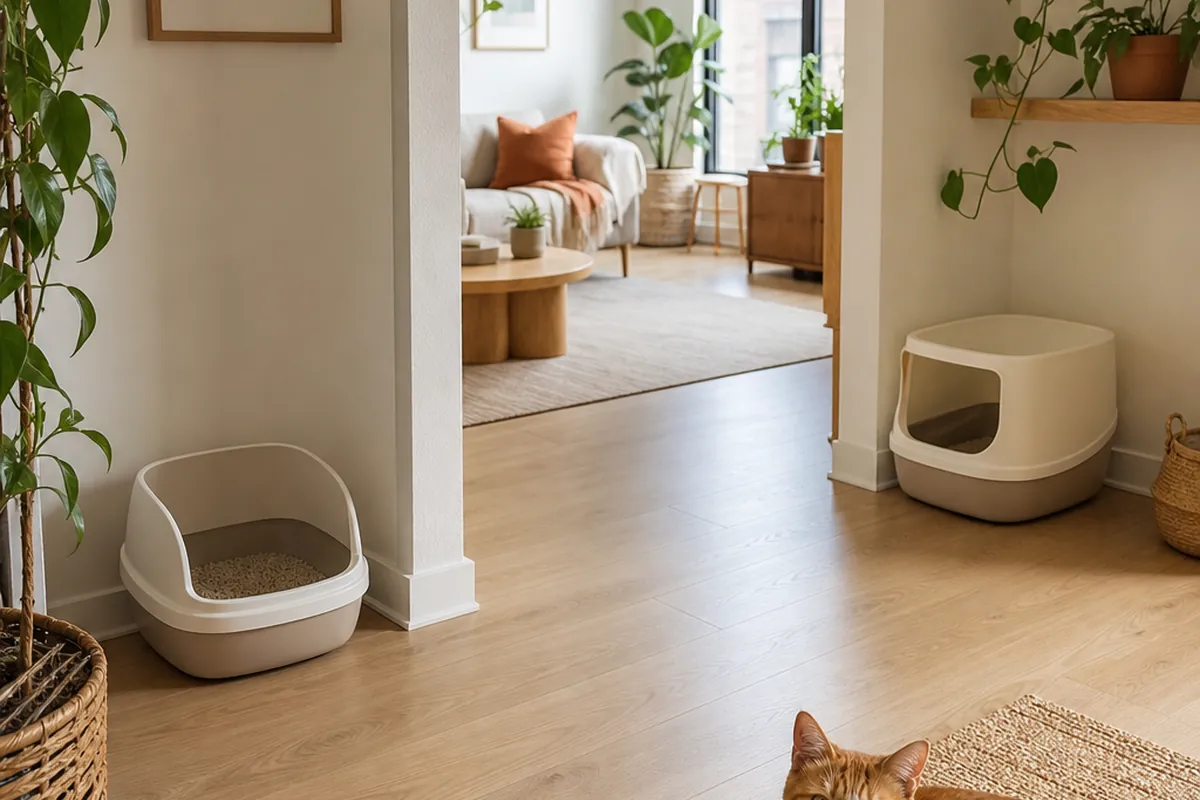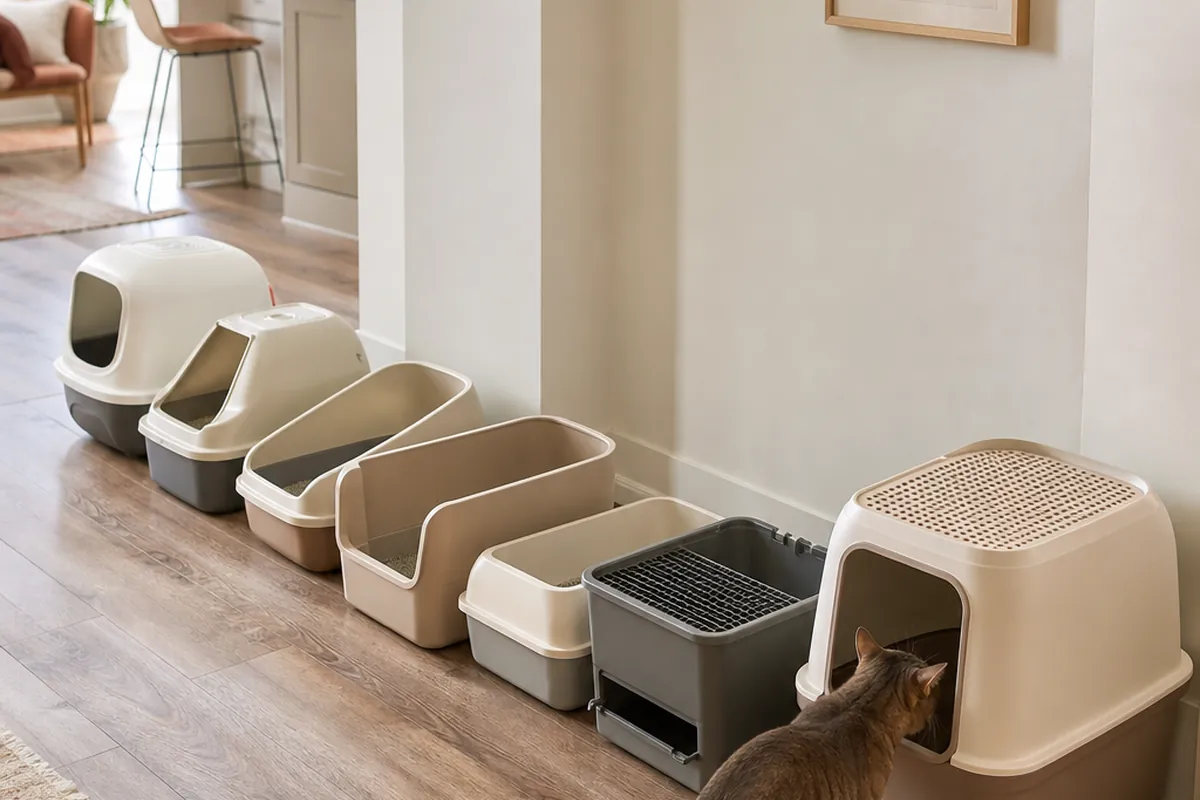
Searching “best litter box” gets you a list sorted by star rating, which tells you nothing about whether the winner fits your bathroom corner or survives being knocked by a swinging door. In an apartment the right box is the one shaped like your actual floor plan, not the one with the most reviews. Seven types, each solving one specific apartment problem, so you can skip to the one that matches yours.
If you have not settled on where the box goes at all, litter box ideas for a small apartment covers placement first. This is the buying guide for once you know the spot. If what you are after is a space-saving litter box, two of the seven genuinely take less floor: the corner box (1) and the compact pan (7). The rest earn their place some other way.
The seven at a glance (listed sizes, length by width by height):
| Box | Size | Entry | Best for |
|---|---|---|---|
| Corner, hooded | 21 x 16.1 x 14.3 in, triangular | 8.5 x 8 in flap door | A one-bedroom with only a corner free |
| Top-entry | 20.8 x 16.1 x 14.6 in | 9 x 10.5 in hole in the lid | A studio that needs the lid as a surface |
| High-sided open | 19 x 15 x 11.75 in | Low front cutout | A cat that kicks litter over the rim |
| Hooded, carbon filter | 21 x 16 x 15 in | Swinging front door | An open-plan layout with no door to close |
| Sifting, three-tray | 19 x 15 x 8 in | Open top | Two cats and not much time to scoop |
| Extra-large, low entry | 24 x 20 x 5 in | 5 in wall to step over | A big or older cat |
| Compact pan | 14 x 10.5 x 3.5 in | 3.5 in wall | The tightest spot in a studio |
1. The corner box, for an apartment with no spare wall
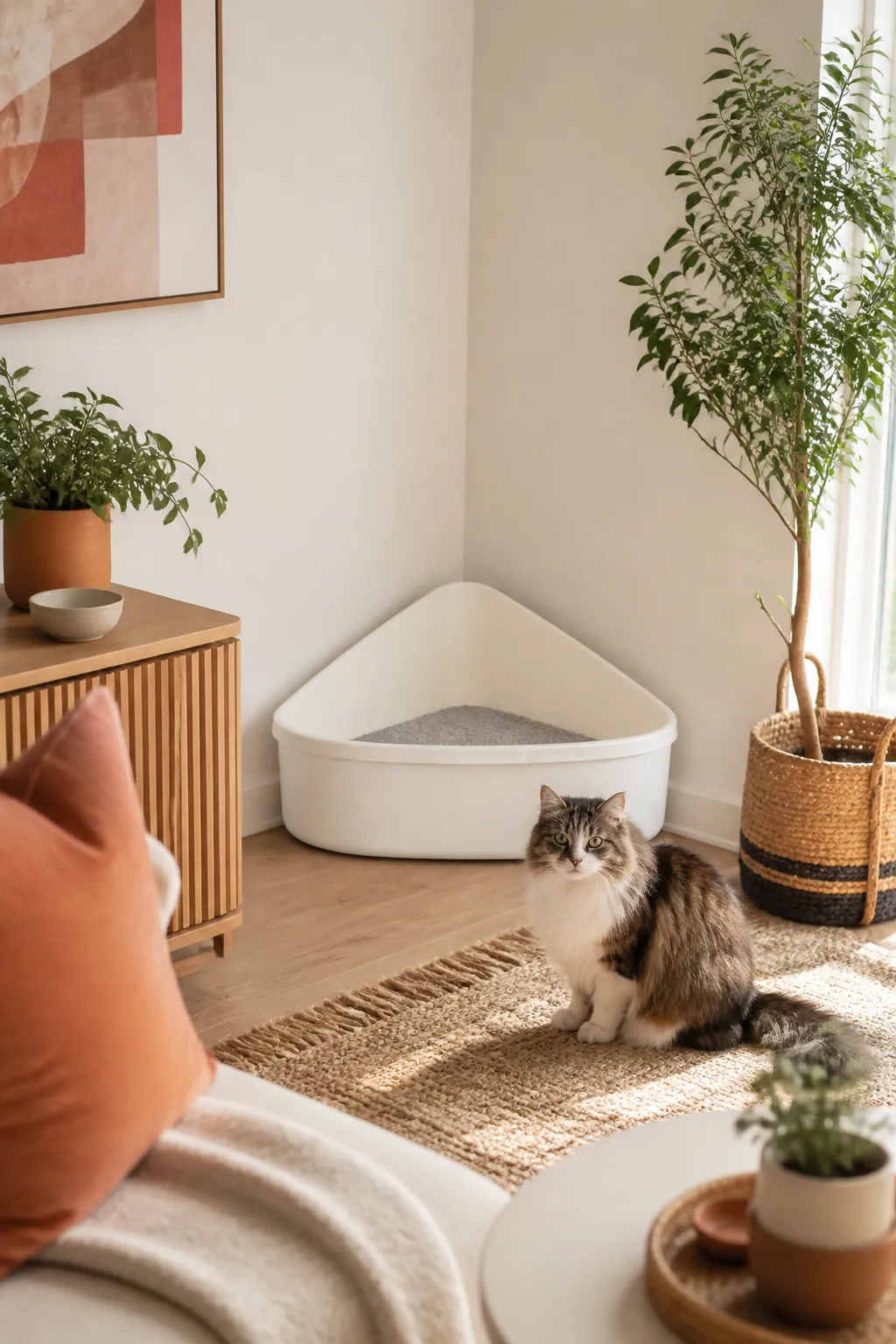
A triangular box uses the one piece of floor almost nothing else claims. The IRIS corner litter box tucks into the angle where two walls meet, and its hood and flap door keep the spray and scatter a straight-sided open box would send onto the paint behind it. It is listed at 21 by 16 inches and 14.25 inches tall, with an 8.5 by 8 inch door, which suits a kitten up to a medium-sized cat. This is the box for a one-bedroom where every rectangle of floor already has a job: a corner is the space left over after the furniture is placed, and a corner-shaped box is the only thing built to use it properly. Measure the two walls before you order, because corner boxes vary more in the depth of their triangle than their listed footprint suggests, and a box that looks fine online can still overhang a baseboard heater or a door swing you did not account for.
2. The top-entry box, for a studio that needs the lid back
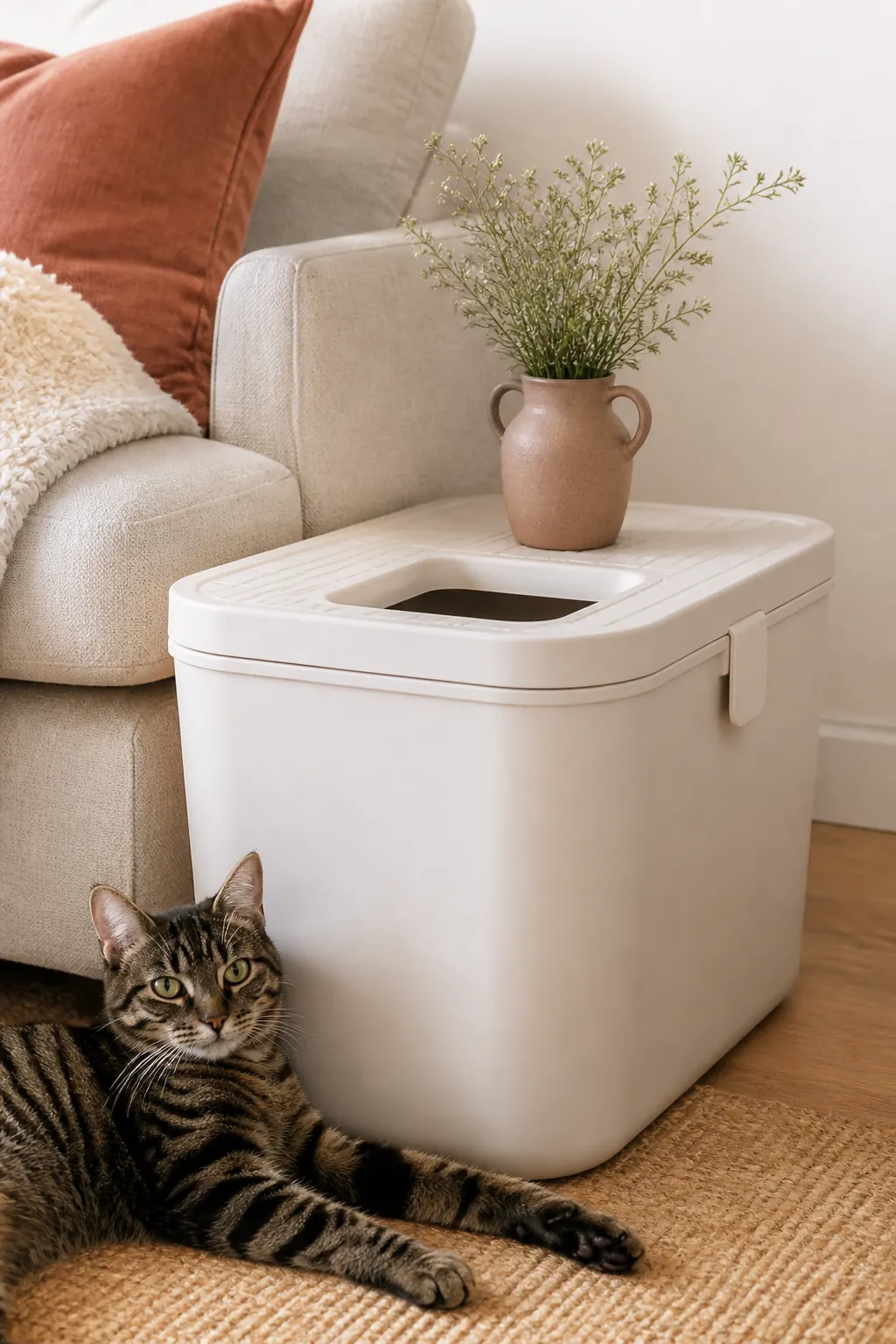
In a studio, floor space and surface space are the same scarce resource, and a box you climb into from above gives you both at once. The IRIS USA top-entry litter box has a flat lid that works as a side table the moment the cat is not using it (it stands 14.6 inches high, with a 9 by 10.5 inch opening in the top), and the step-up-and-out entry knocks a meaningful amount of litter off the cat’s paws before it ever reaches your floor. The trade-off is agility: a young, healthy cat manages the climb without a thought, while a kitten or a stiff older cat may avoid a box it cannot enter easily, so this is a better fit for a single adult cat than a household that spans ages.
3. The high-sided open box, for a cat that kicks litter everywhere
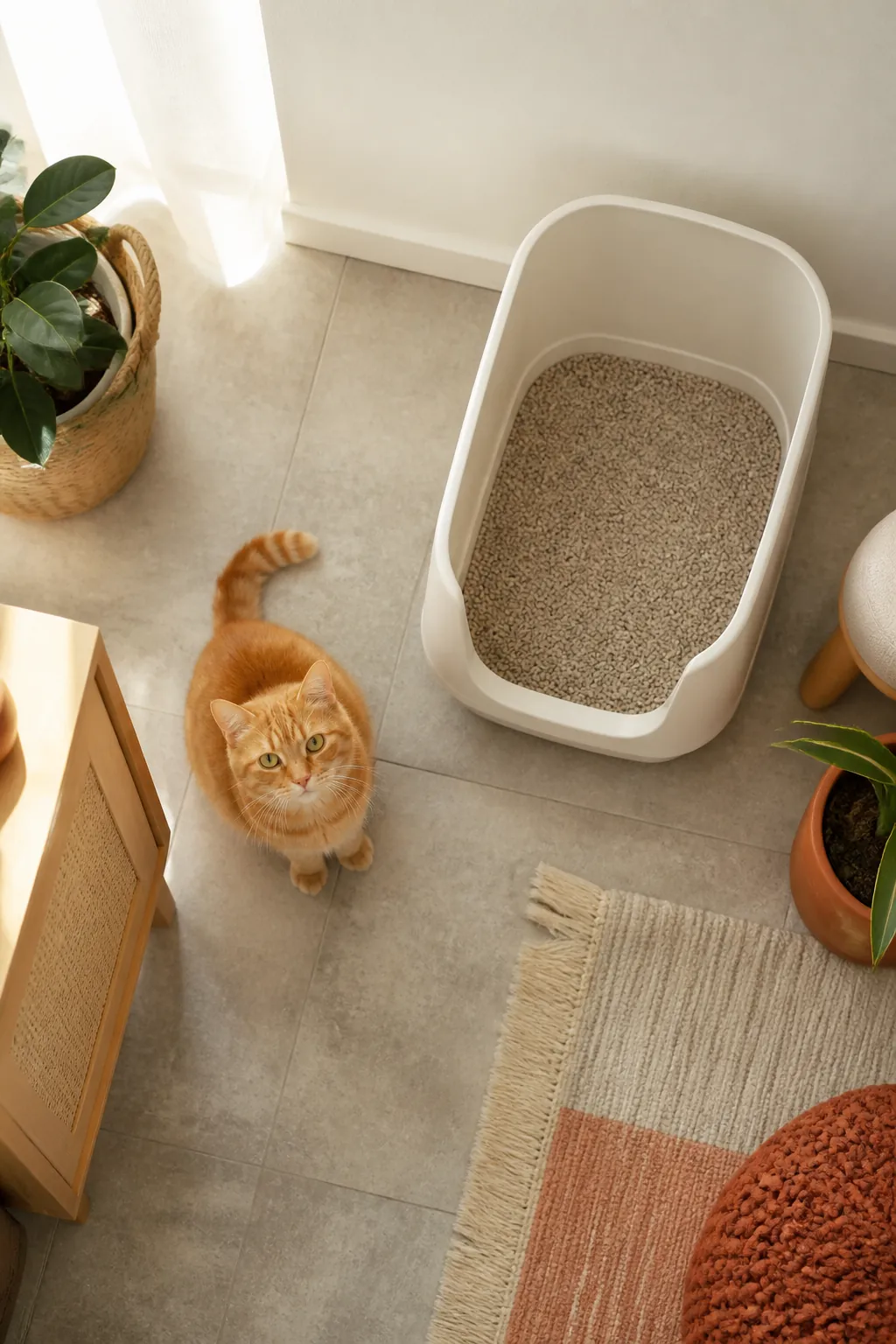
Some cats dig with enough enthusiasm to clear litter over the rim of a standard pan, and the answer is not a hood, which traps the smell along with the mess. The Amazon Basics high-sided open litter box runs 19 by 15 by 11.75 inches, with walls tall enough to stop a digging cat’s spray while the top stays open for airflow and for you to see in at a glance. The low front cutout keeps entry easy despite the height at the back and sides, which is the detail that makes high sides workable in a small apartment: contain the mess without also containing the smell in a sealed box nobody remembers to clean as often.
4. The hooded box with a carbon filter, for an open-plan layout
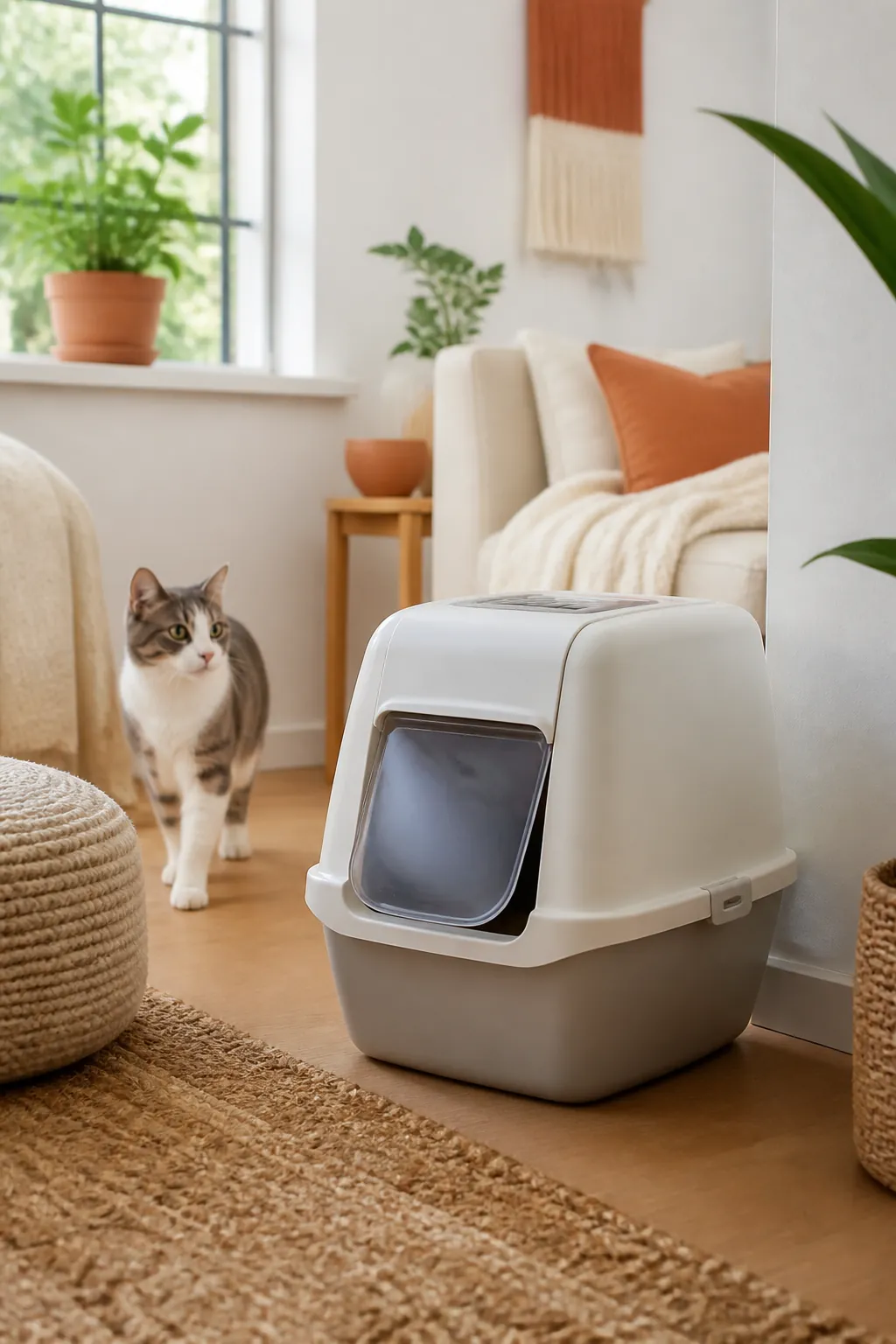
An apartment with no door between the litter area and the living room needs the box doing more odor work than a house does, where a laundry room absorbs the smell before it reaches anyone. The Amazon Basics hooded litter box with a carbon filter measures 21 by 16 by 15 inches and pairs a swinging front door with a filter slot in the lid, cutting down what escapes into the room. The filter is doing real work only if it gets changed, typically every one to two months depending on use, and a hooded box in a space with no airflow at all can trap odor worse than an open box would, so pair this one with a spot near a window or a vent rather than a sealed closet.
5. The sifting three-tray box, for two cats sharing one apartment
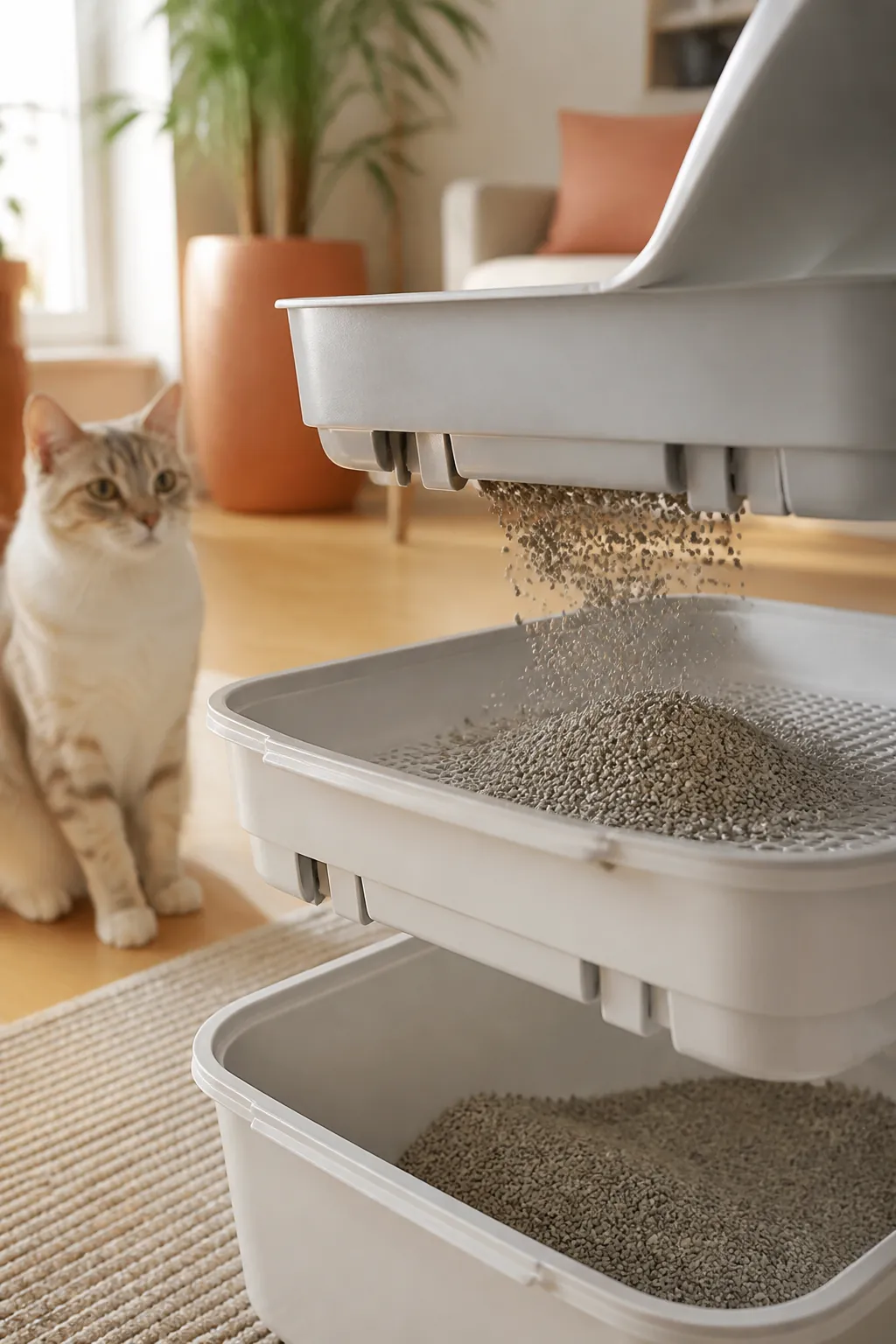
Two cats do not double your patience for scooping, and a sifting system changes what cleaning actually costs. The Arm and Hammer sifting litter box uses a top tray you lift and shake, letting clean litter fall through a screen into the tray below while waste stays on top, at 19 by 15 by 8 inches. It will not out-perform daily scooping for cleanliness, but it turns a chore that gets skipped when you are busy into one that takes under a minute, and in a two-cat apartment the box that actually gets cleaned on schedule beats the one that is theoretically better but sits full for two days.
6. The extra-large low-entry box, for a big or older cat
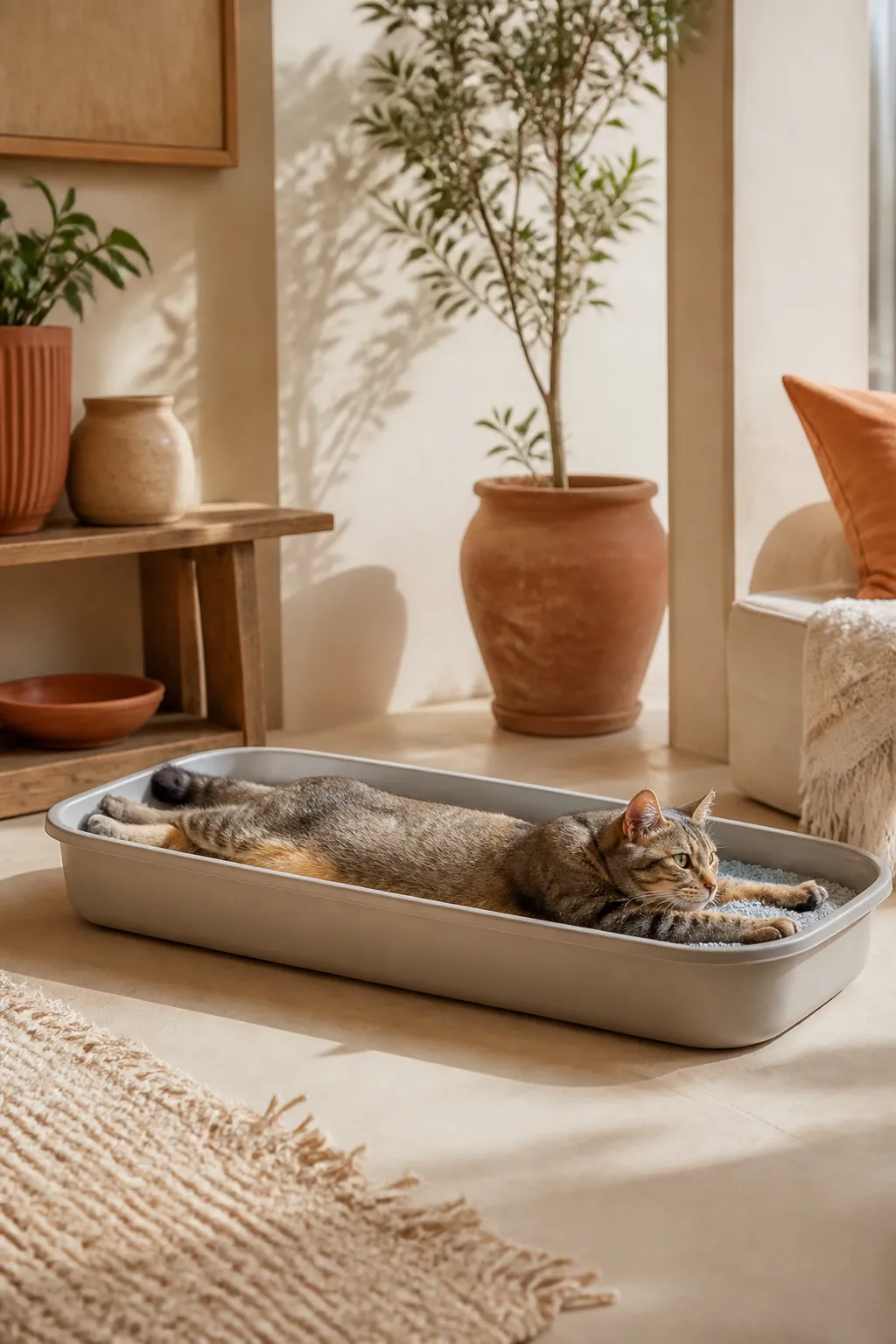
A cat should turn around inside a box without its tail draping over the edge, and most boxes sold as “large” are sized for an average cat rather than a genuinely big one. The KittyGoHere extra-large litter pan runs 24 by 20 inches with sides only 5 inches high, built specifically for cats that need floor area more than they need a contained box. That low wall is the other half of the point: an entry a cat has to step over rather than climb into matters for an older or heavier cat the same way it matters for a kitten, just for a different reason. If your cat is on the larger side, buy for the floor plan of the box, not the marketing size tier.
7. The compact box, for a studio where every inch counts
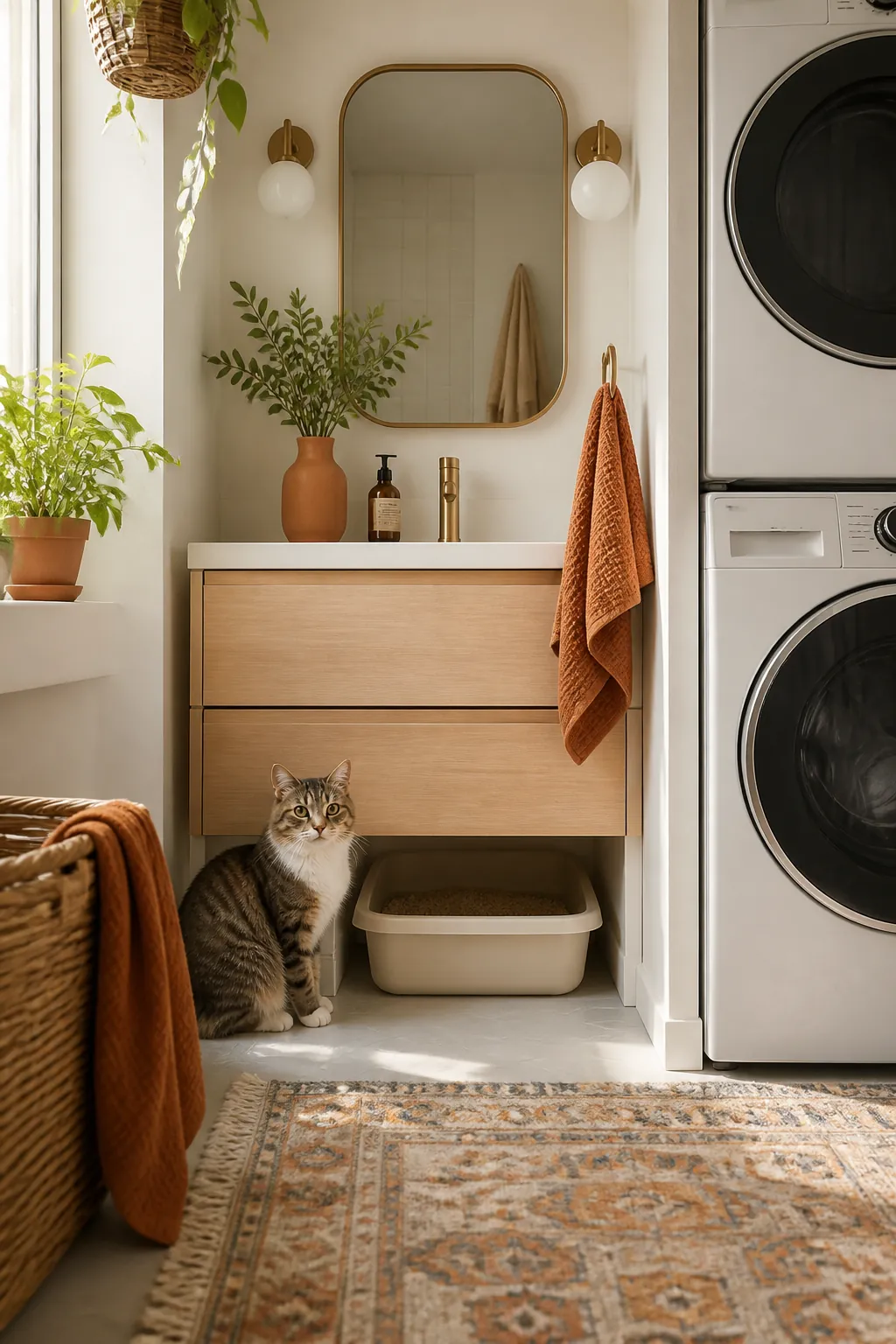
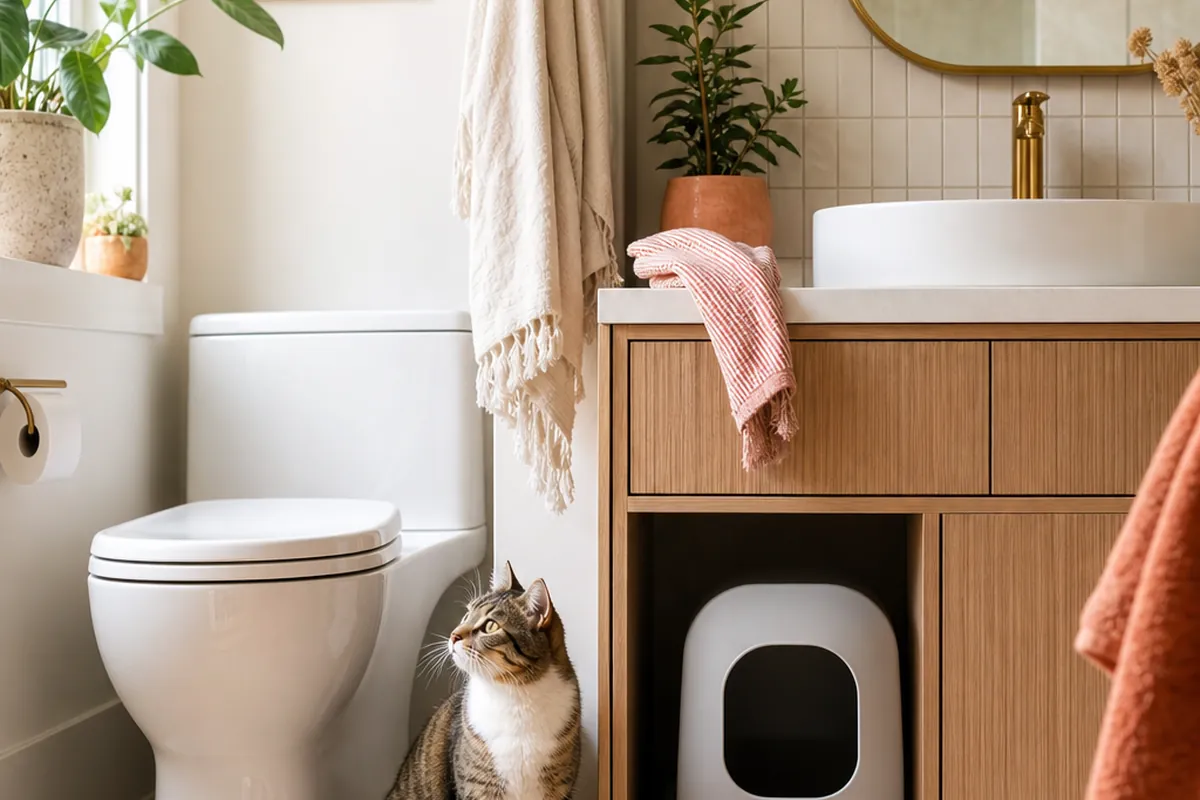
Some apartments do not have room for “large” anything, and a box that overhangs its spot gets knocked, stepped around, or eventually moved somewhere worse. The Petmate compact litter pan is 14 by 10.5 by 3.5 inches, small enough to fit under a bathroom sink or beside a stacked washer-dryer where nothing else would go. It suits a smaller cat or a tight studio corner better than a big one, and the shallow 3.5-inch wall keeps entry effortless at the cost of holding less litter, so plan on scooping more often than you would with a deeper box. If that bathroom is shared with roommates or guests, litter box ideas for a small shared bathroom cover the shower steam, foot traffic and towel bar that decide where even a compact pan can sit.
Where to start
If you are choosing with no other information, start with the high-sided open box. It handles the widest range of apartments and cats: contained enough for a digging cat, open enough that smell does not build up the way it can in a sealed hood, and its low entry works for a kitten and a senior cat alike. Everything else on this list is the better answer for a specific constraint, not a universal upgrade.
Match the box to the space before you match it to the cat. A top-entry box in a tiny bathroom with the door often shut is a worse choice than the same box beside a sofa where it can also serve as a table, because the constraint that matters most is usually the one you walk past twenty times a day.
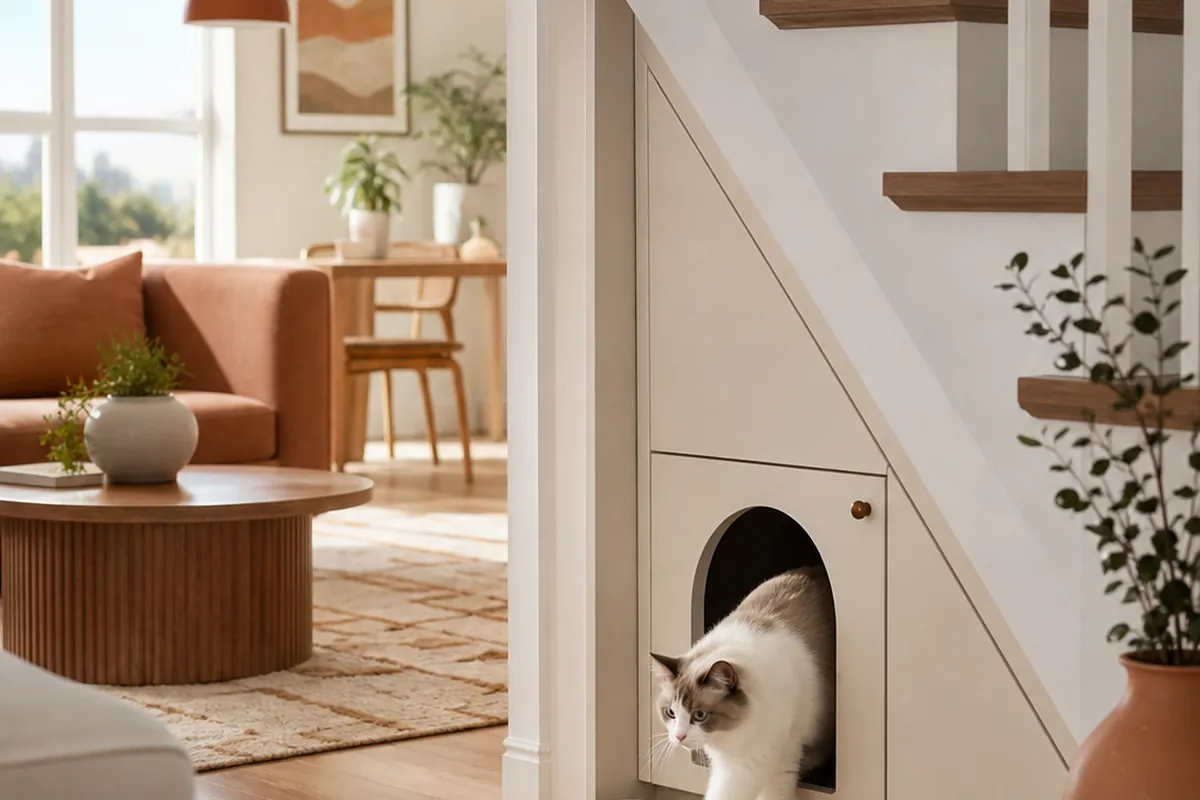
Once the box itself is settled, the furniture question is separate: if you want it out of sight entirely rather than just chosen well, litter box enclosure ideas that hide the mess covers cabinets and side tables built around a box like the ones here.