In a house, the litter box goes in the utility room and nobody thinks about it again. In a one bedroom, it goes roughly twelve feet from where you eat and sleep, and every decision about it is a compromise you live with daily. That is a placement problem before it is a product problem, which is why so much litter box advice fails in apartments.
Ten ideas, ordered by how much difference they make. This is the placement guide; for which box to buy once you know the spot, the best litter boxes for small apartments compares seven types by size and entry.
One thing to accept at the start: in an apartment you are optimizing between bad options rather than finding a good one. There is no spot that is far from the food, far from the bed, on hard floor, out of sight and convenient to clean. Knowing which of those you are willing to give up makes the decision quick, and pretending you can have all five is what keeps people shopping for a product that does not exist.
1. Solve the location before you buy the box
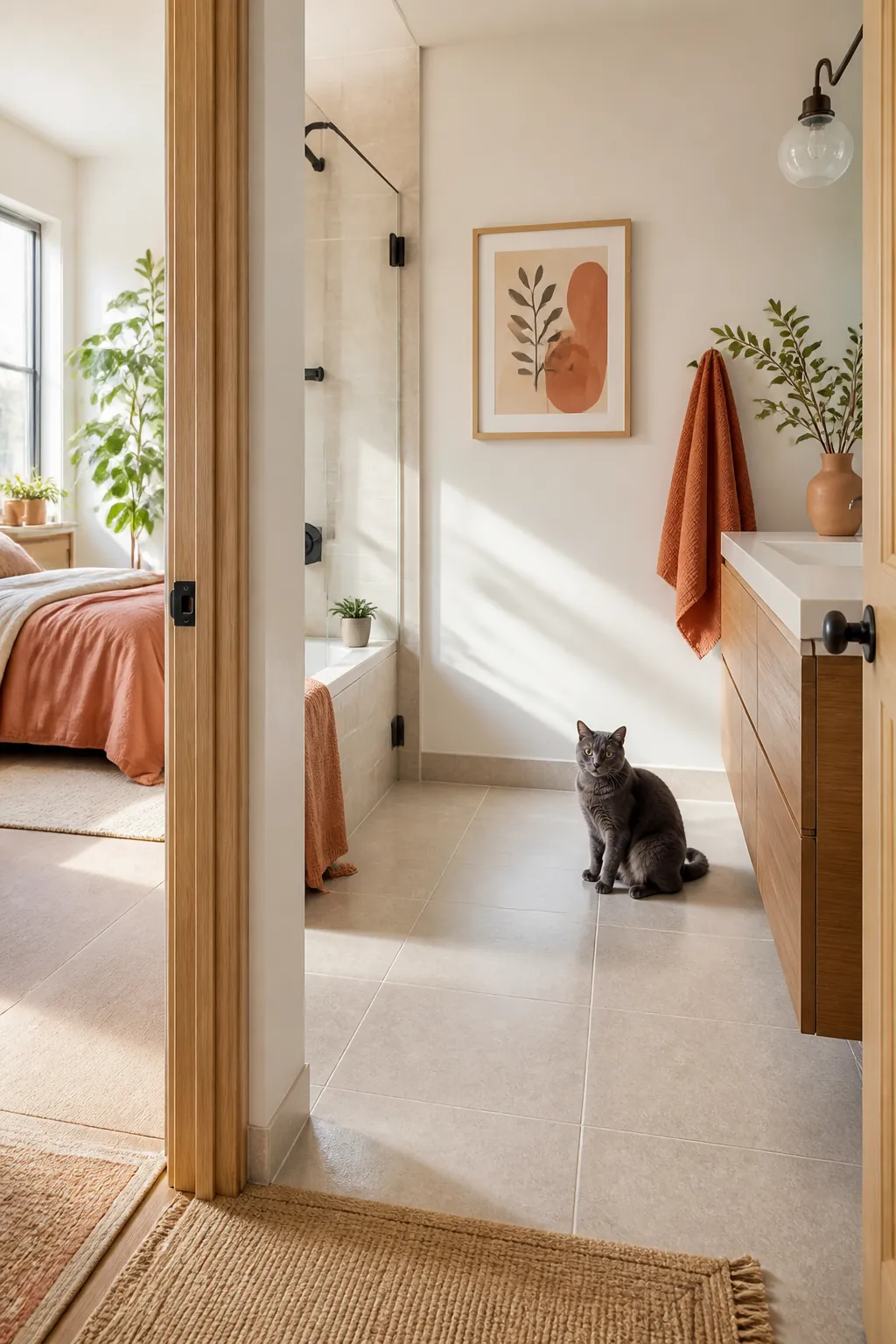
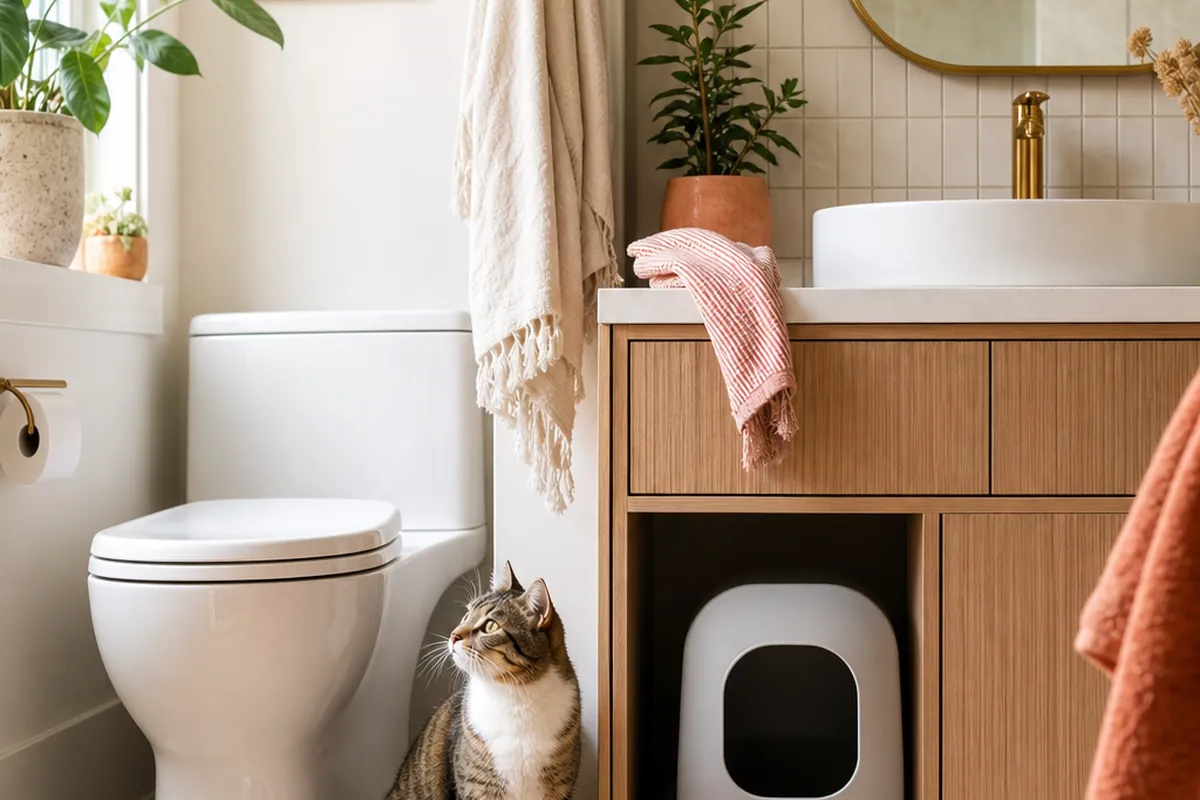
Hard floor, away from food, away from where the cat sleeps, and reachable without opening a door. In most one bedrooms there are two or three candidates and one is the bathroom. Work out which before you shop, because the spot determines the shape of box that fits it. If the bathroom is the answer, sort out the door before anything else: a door that swings shut in a draft is a box the cat cannot reach, and that is discovered the hard way.
A bathroom that other people also use brings its own set of problems, from steam to foot traffic, and litter box ideas for a small shared bathroom deals with those specifically.
2. Give the box two ways in
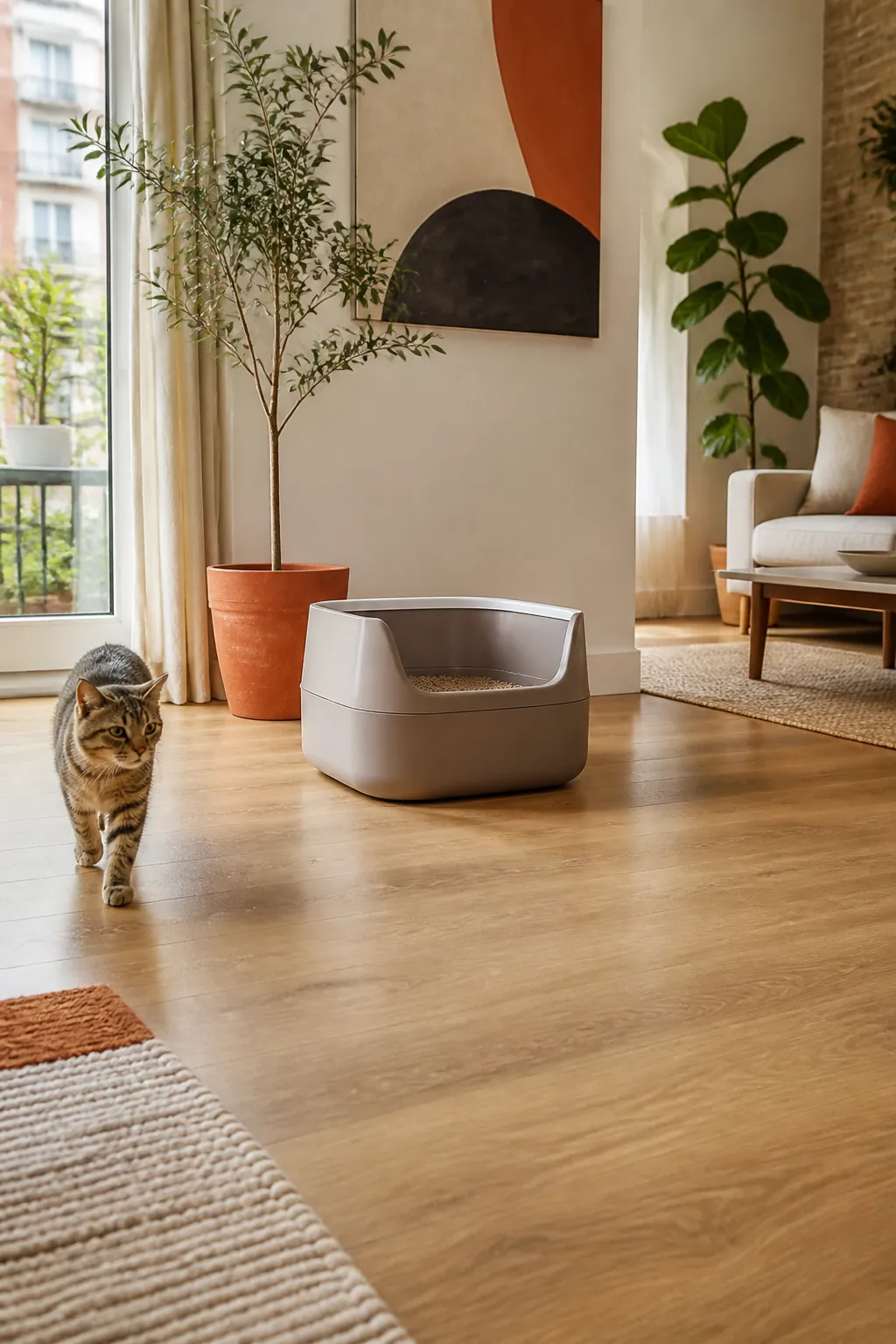
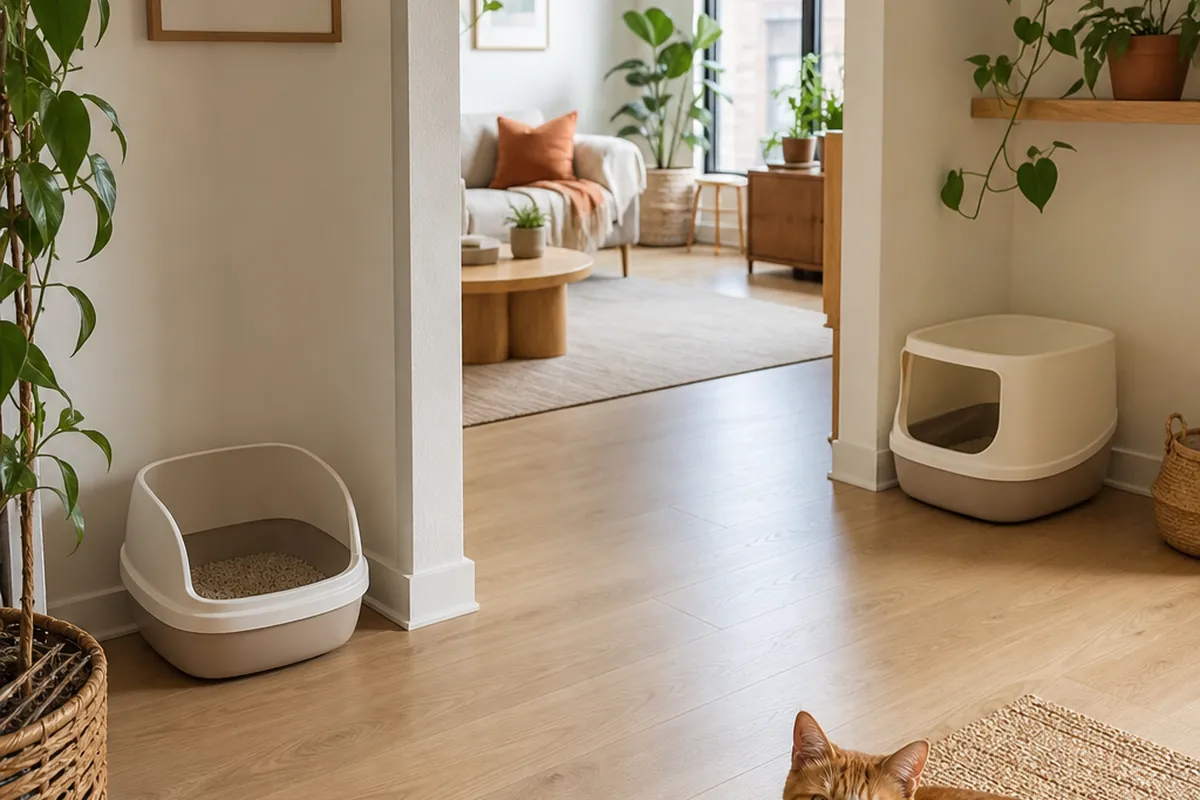
A box in a dead-end corner has one approach and one exit, and a cat that feels cornered stops using it. Leave an approach from either side, even if one is only a few inches of clearance. This is the single most common cause of a cat quietly abandoning an otherwise fine box, and it is invisible unless you look for it, because the box itself is perfectly good and nothing about the setup appears wrong.
3. Keep it away from the food, properly
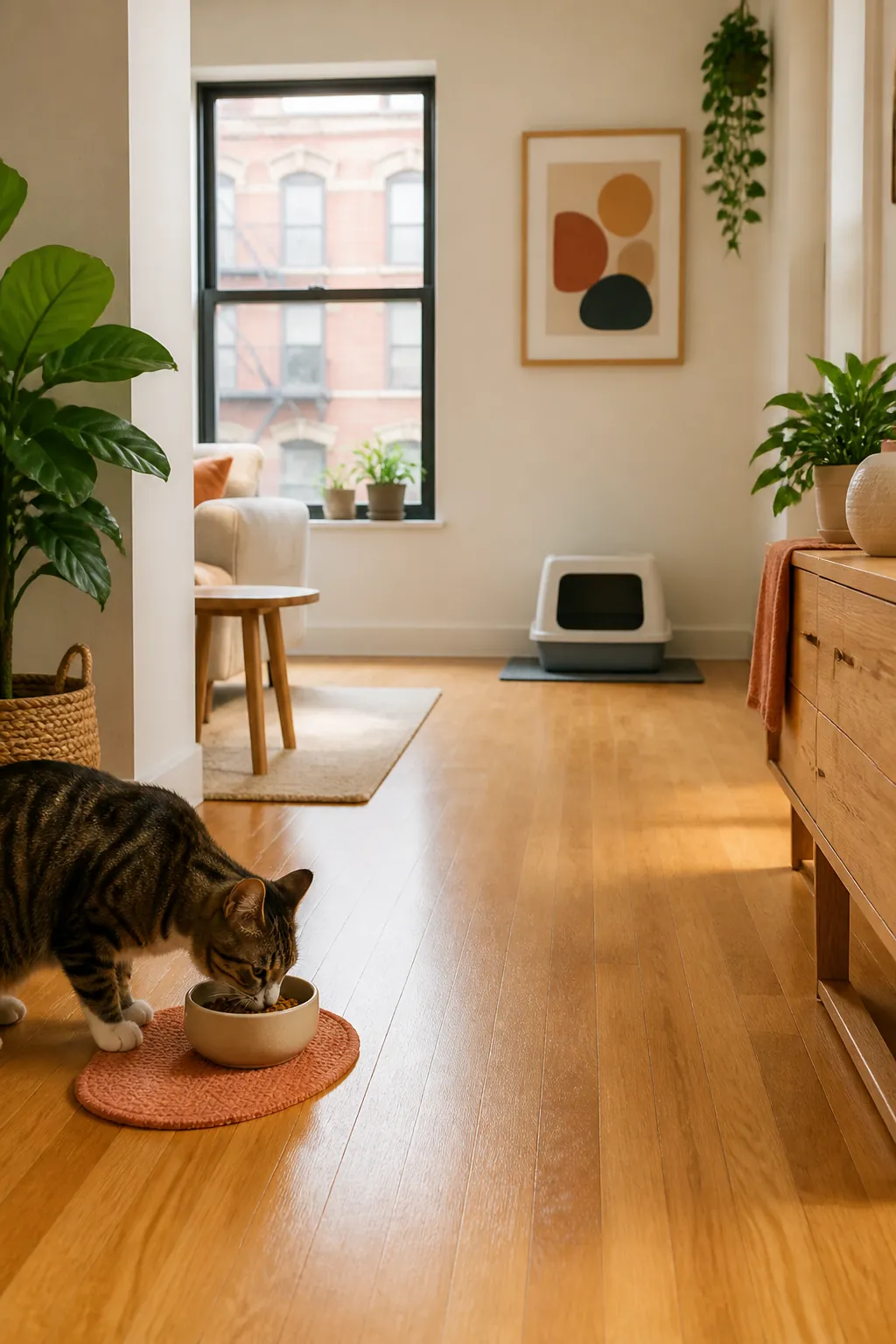
Cats routinely refuse a box placed near their food, and in a studio that refusal is expensive. Distance beats screening: a partition between the two does far less than putting them at opposite ends of the space. If you only have one room, opposite corners is the minimum.
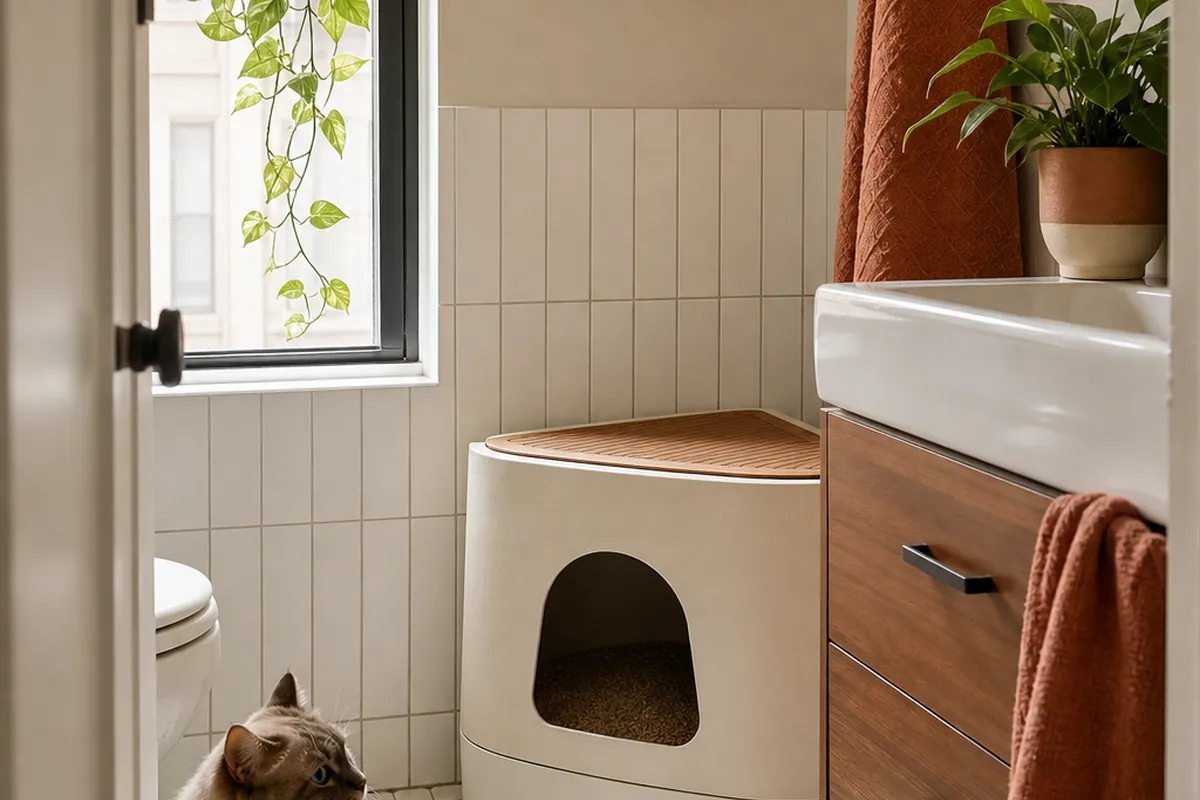
4. Use a corner box for awkward space
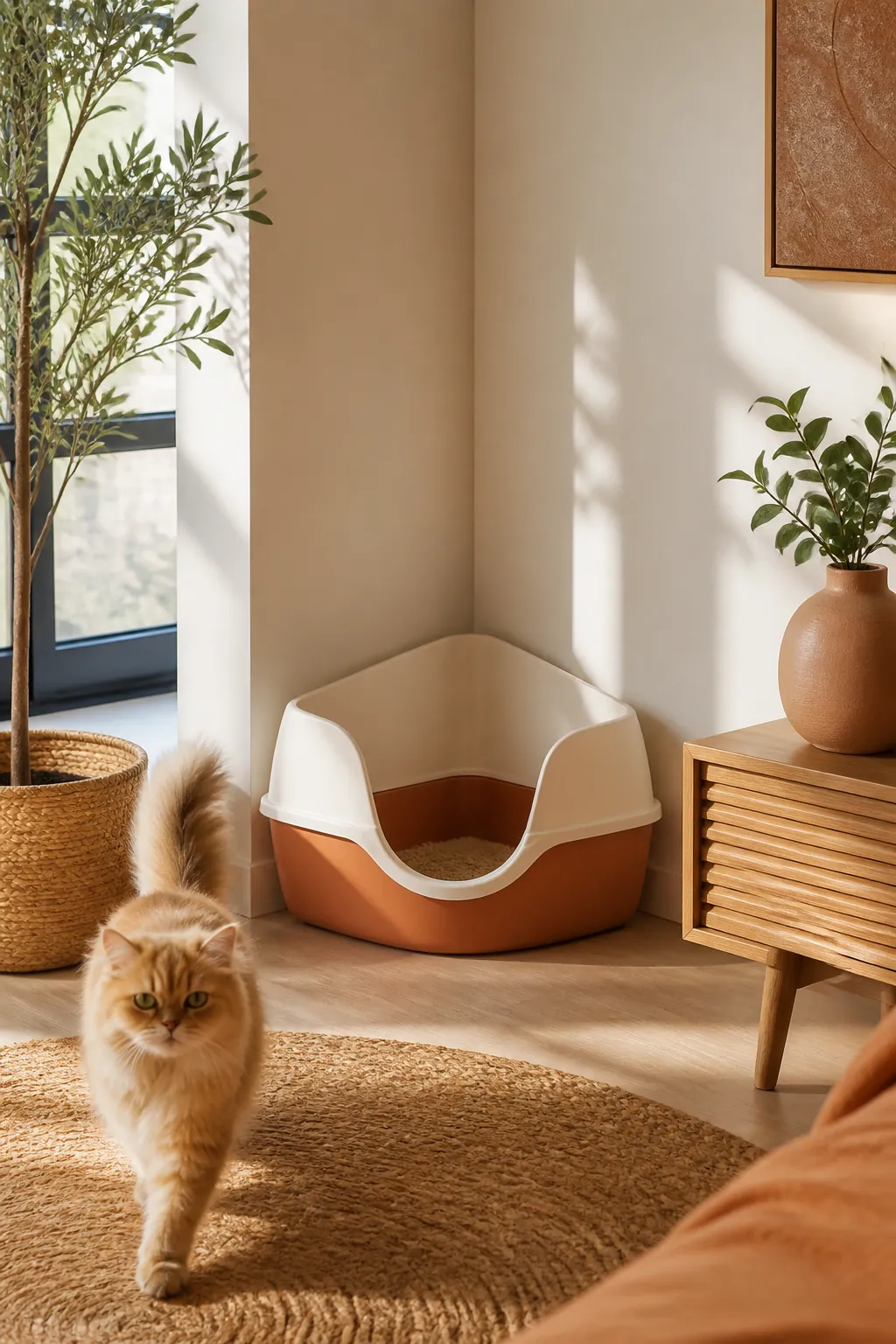
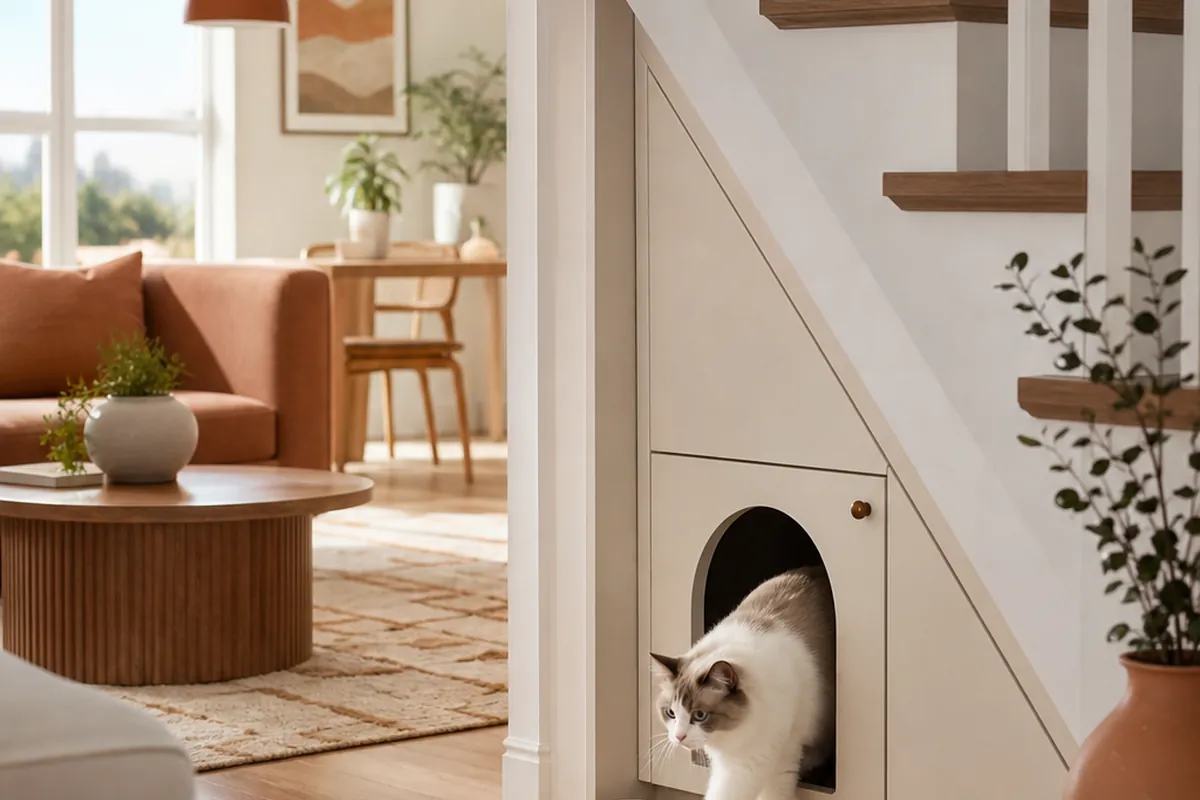
Corners are the space nothing else fits, which makes them the right place to spend. A corner litter box uses a triangle that a rectangular box wastes. Measure the corner before you shop, because corner shapes run deeper front to back than they look; the corner box in the buying guide lists the exact size. In a two-level unit or small home, the triangle under a staircase is the same kind of leftover space, and litter box ideas for under the stairs cover the headroom measurement that decides whether a box fits there.
5. Consider top-entry to reclaim the lid as surface
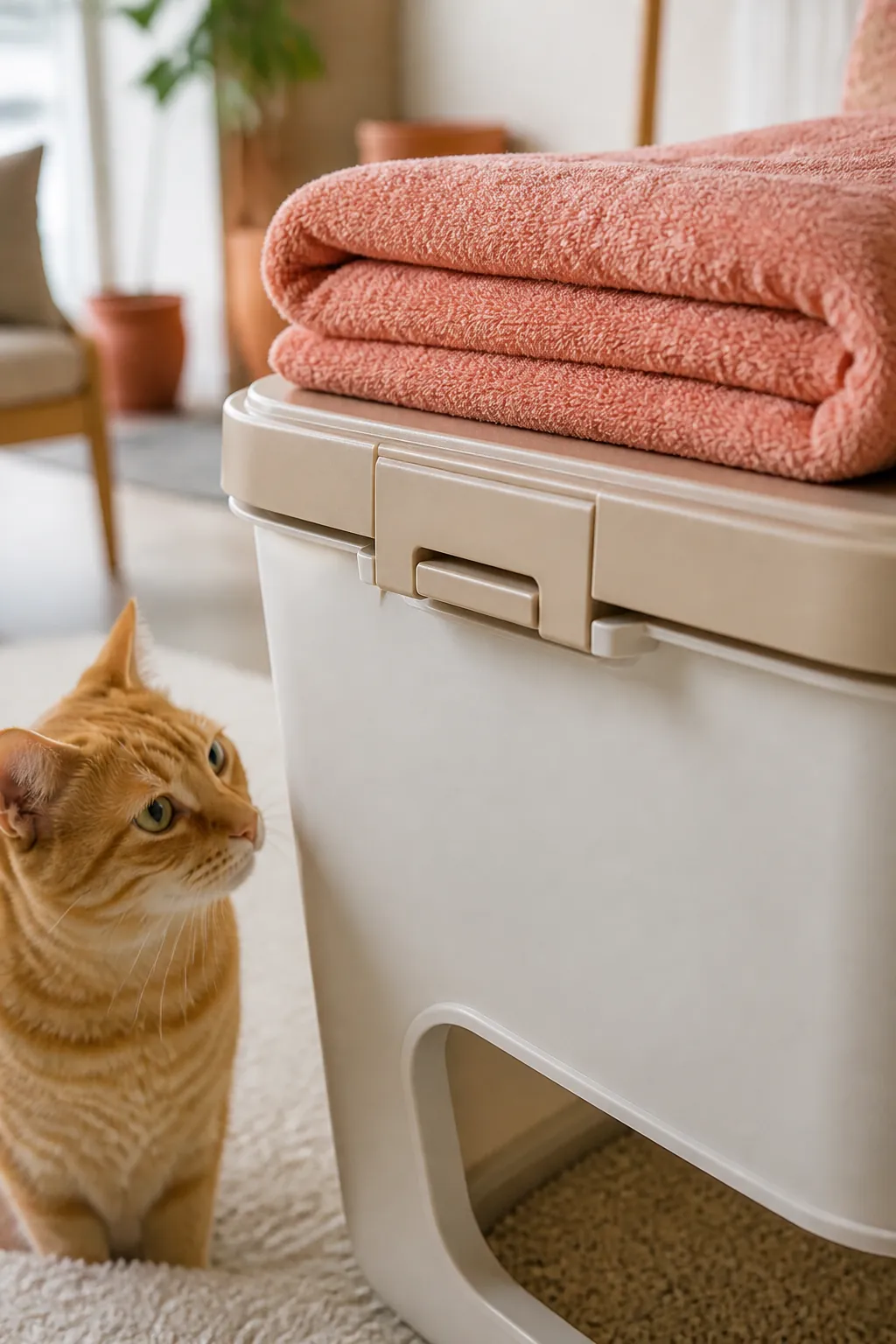
In an apartment, a flat lid at knee height is genuinely useful, and a top-entry box gives you one. Placement is what decides whether that works: it belongs beside a sofa or in a hallway where the lid can hold something, not in a bathroom where the lid is just another surface to wipe.
6. Catch the tracking in the first three steps
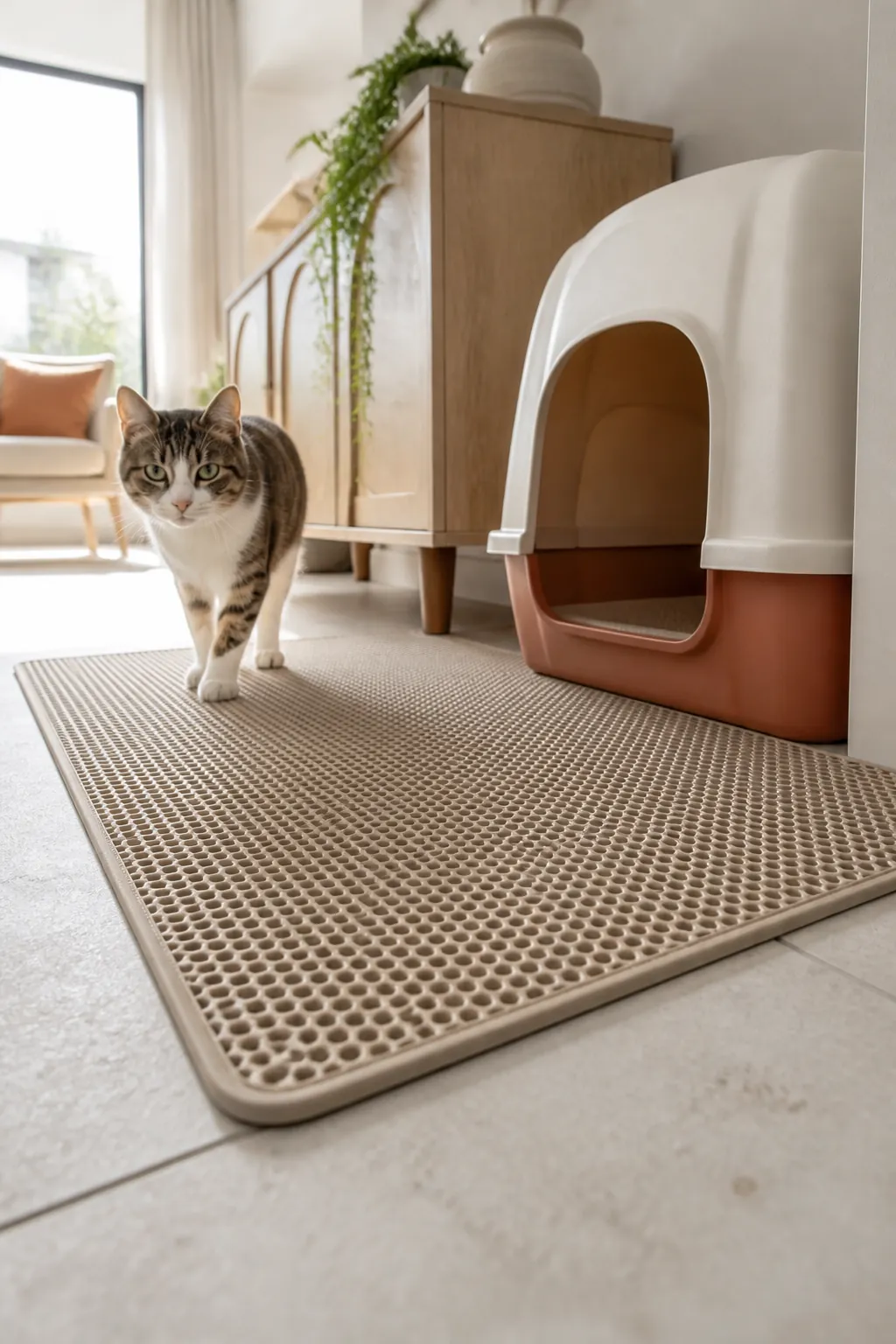
Most litter travels a very short distance on paws and then falls. A large trapping mat at 47 by 36 inches placed flush against the exit catches the majority. Placement matters more than size: a big mat a foot away catches less than a small one touching the box. Check the mat lies flat, too. A mat that curls at the edge becomes something the cat steps over rather than onto, which removes the only thing it was there to do.
7. Buy a bigger box than the pet aisle suggests
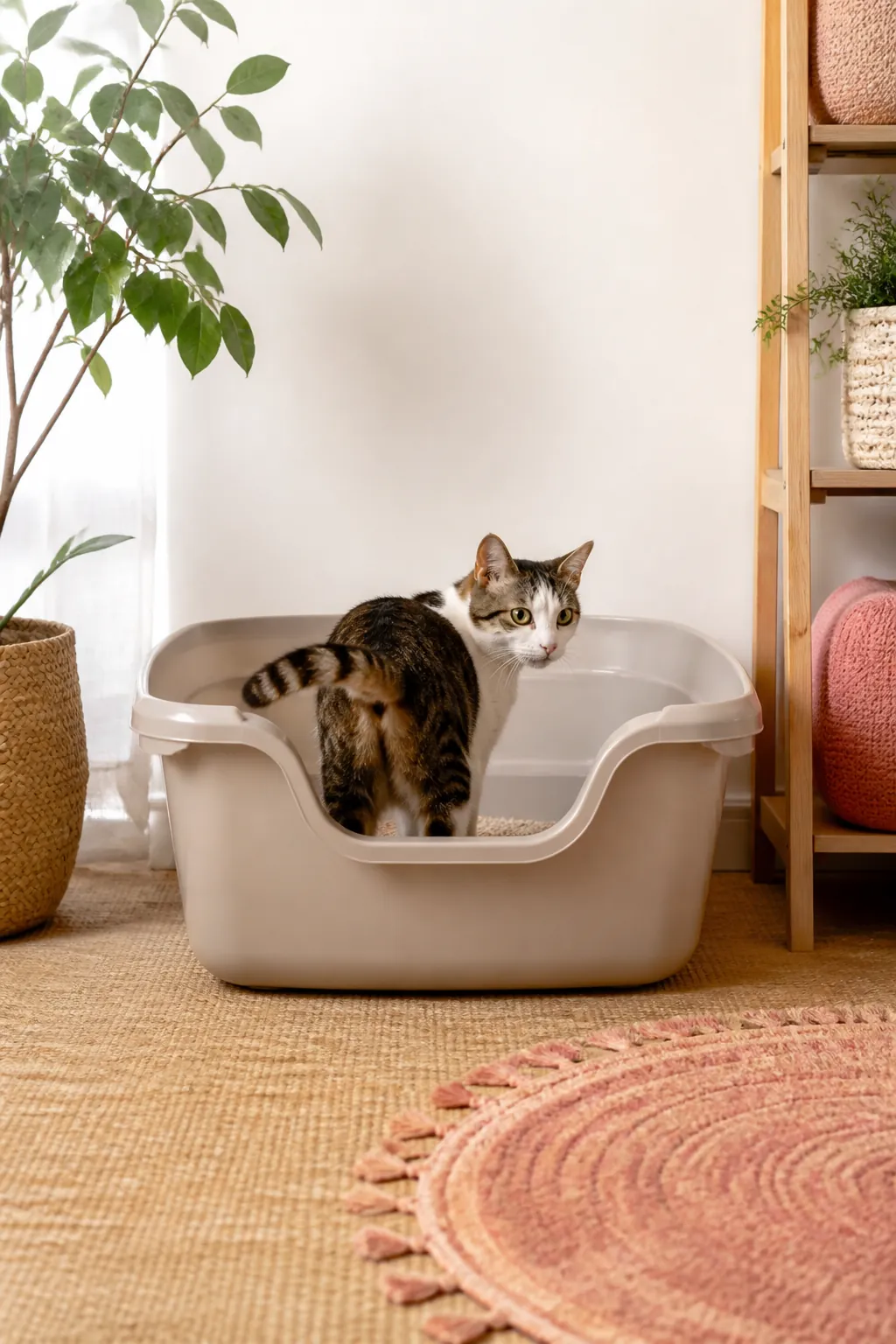
A cat should be able to turn around fully without touching the sides. Most boxes sold as standard are undersized for an adult cat, and the symptom is over-the-edge accidents that get blamed on the cat. A storage tub with a doorway cut into it is a legitimate, cheap answer here, and it is frequently larger than anything sold as a litter box at the same price. Sand the cut edge properly and keep the entry low enough to step over rather than climb.
8. Two boxes beats one, even in a one bedroom
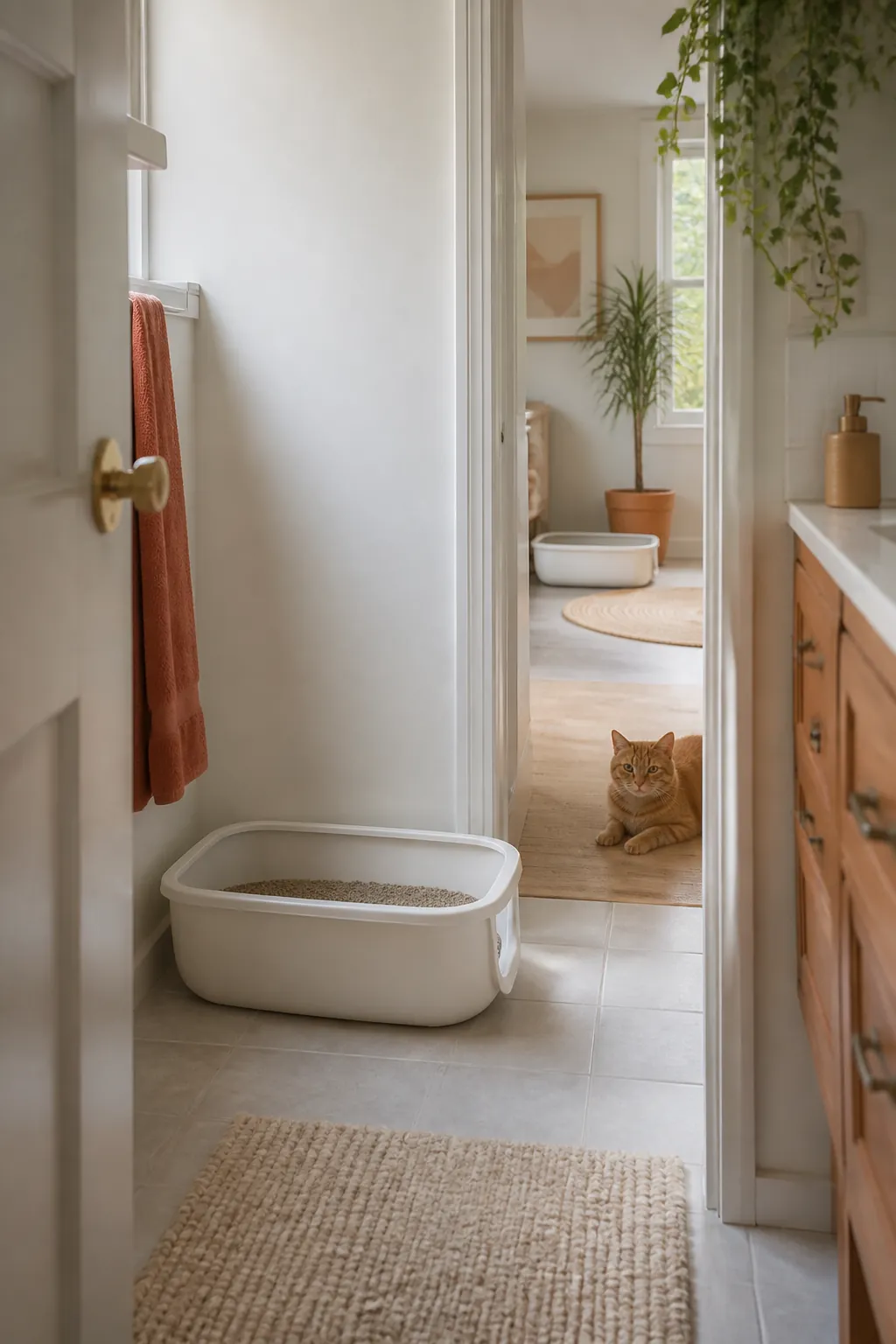
One per cat plus one is the usual guidance, and apartments treat it as impossible. It rarely is. A slim corner box in the bathroom and a second somewhere else covers it, and two boxes cleaned every other day is less unpleasant than one box cleaned daily. The second box also gives you a fallback: if the first becomes unusable for any reason, from a delivery blocking the hallway to a door swinging shut, the cat has somewhere to go rather than choosing for itself.
9. Put it on hard floor, never on carpet
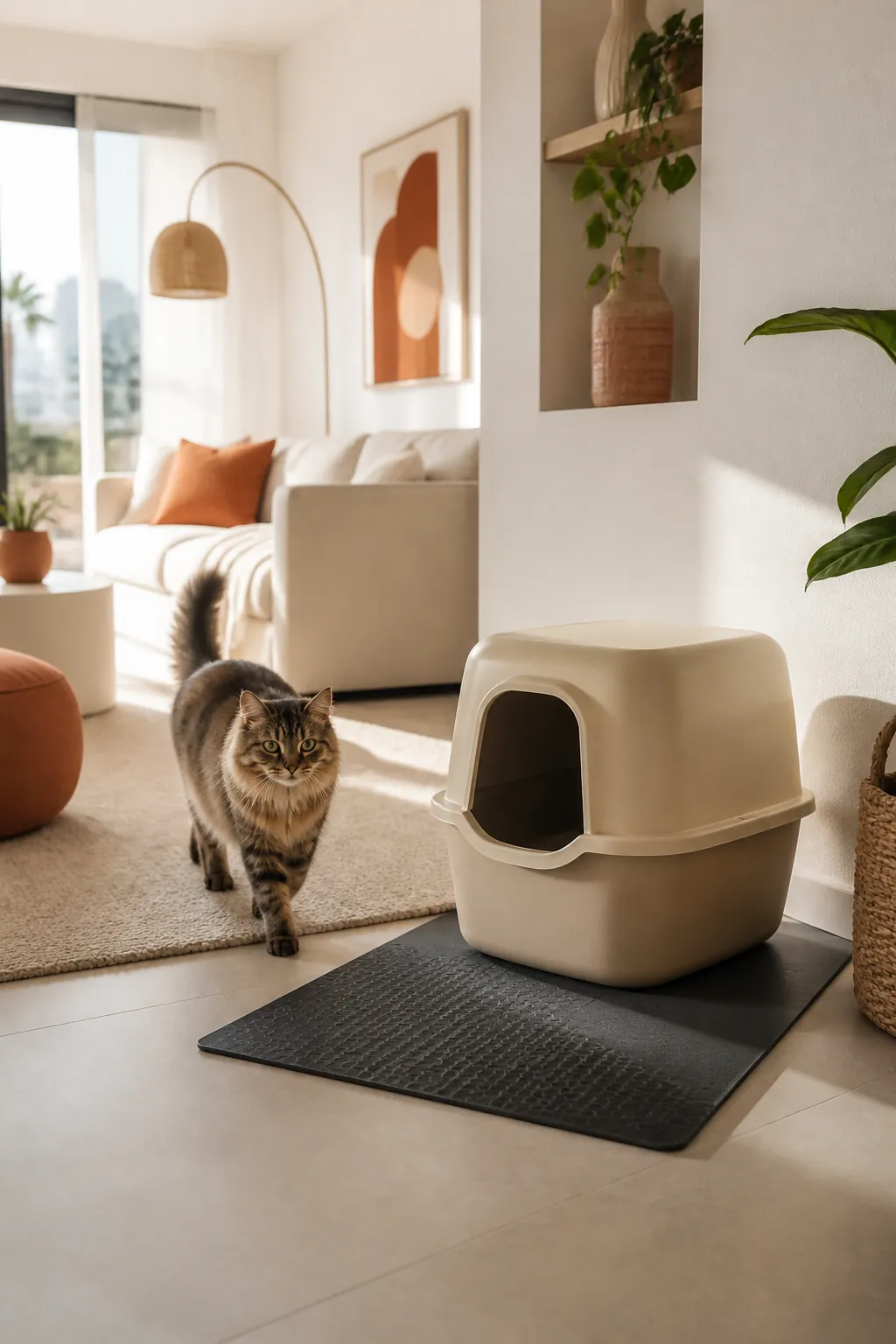
Anything that gets past the box goes through carpet into underlay, where cleaning does not reach. If the only workable spot is carpeted, put down a hard waterproof mat first and treat that as the floor. In a rental this is a deposit question rather than a preference.
10. Keep the scoop and bags at the box
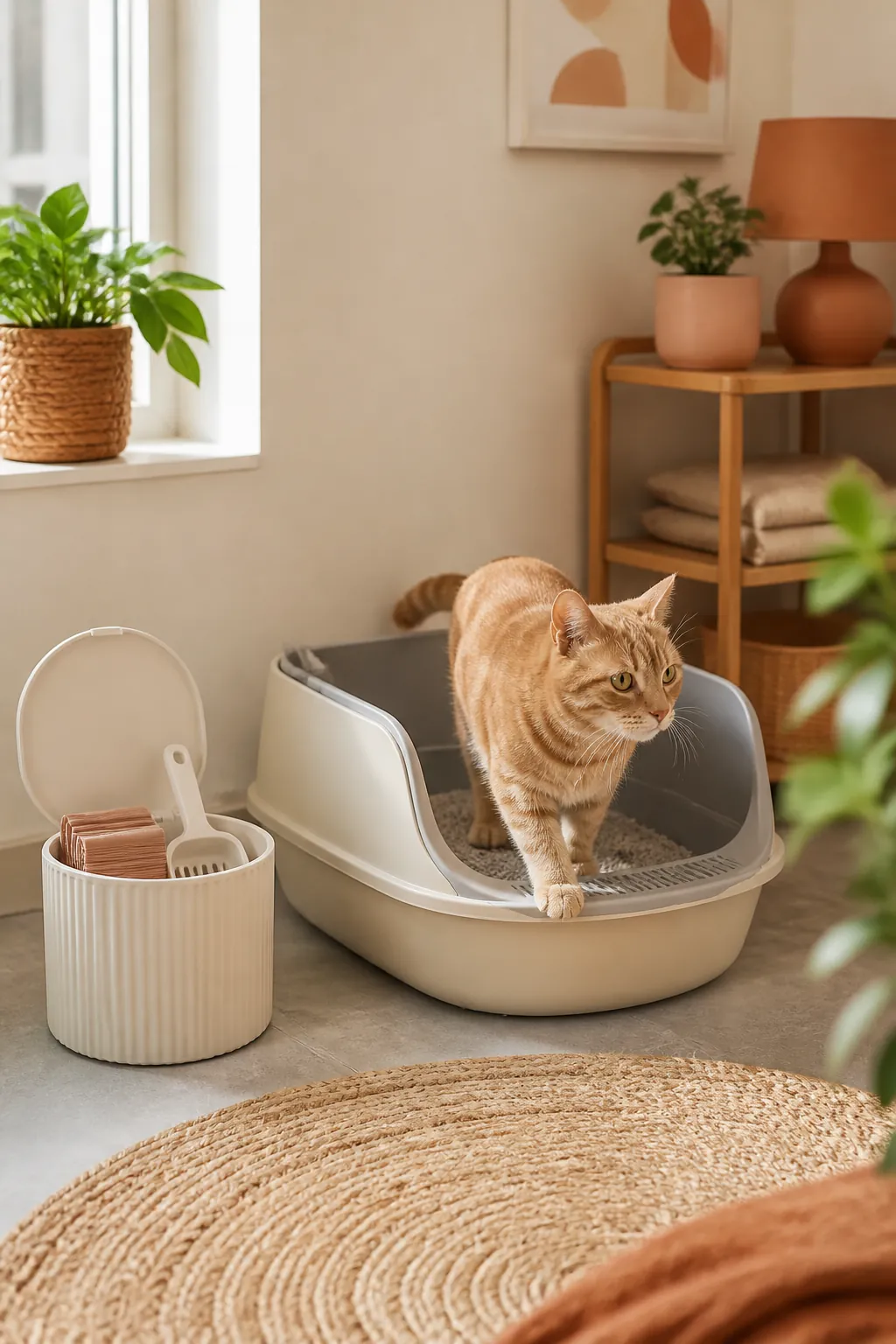
A cleaning routine survives on convenience. A small covered container beside the box holding the scoop and liners turns a two minute job into a twenty second one, and the frequency of cleaning is what actually controls how a small apartment smells. Everything else in this list is a refinement on top of that: the right box in the right place, cleaned every other day, beats an expensive setup cleaned when you notice it.
Once the scoop lives at the box, the rest of the area can be set up to make the routine even shorter, which is what cat litter area ideas that keep odor down is about.
Where to start
Walk the apartment and find hard floor, distance from the food, and two approaches. Mark the candidates. Then measure the corner or alcove you like best, because that measurement tells you whether you are buying a corner box, a top-entry box or a standard rectangle.
Buy the mat at the same time as the box, not later. Tracking is the complaint that turns into resentment fastest, and the mat is the cheapest item in the whole setup. Place it touching the exit rather than near it.
One more thing that gets overlooked in apartments specifically: noise. A box beside a washing machine, a boiler or a front door on a busy corridor is a box that gets used less, and the cat will not tell you why. If a well-placed box is being avoided, stand next to it for a minute at the times the building is busiest before you assume the problem is the litter or the box itself.
Add the second box within the first month rather than waiting for a problem. It is much easier to introduce a second box while everything is going well than to add one as a response to a cat that has already started going elsewhere, which is when most people finally consider it.