The math behind multi-cat litter setups is simple and the apartment rarely cooperates with it. One cat needs one box plus a spare, which means two cats need three, and three boxes is a lot to fit into 650 square feet without them turning into the room’s main feature. The apartment does not get bigger to accommodate the math, so the boxes have to get smarter about where they go.
Ten ideas for making the numbers work in a space that was not built for them.
1. Start from one-per-cat-plus-one, then adjust for square footage
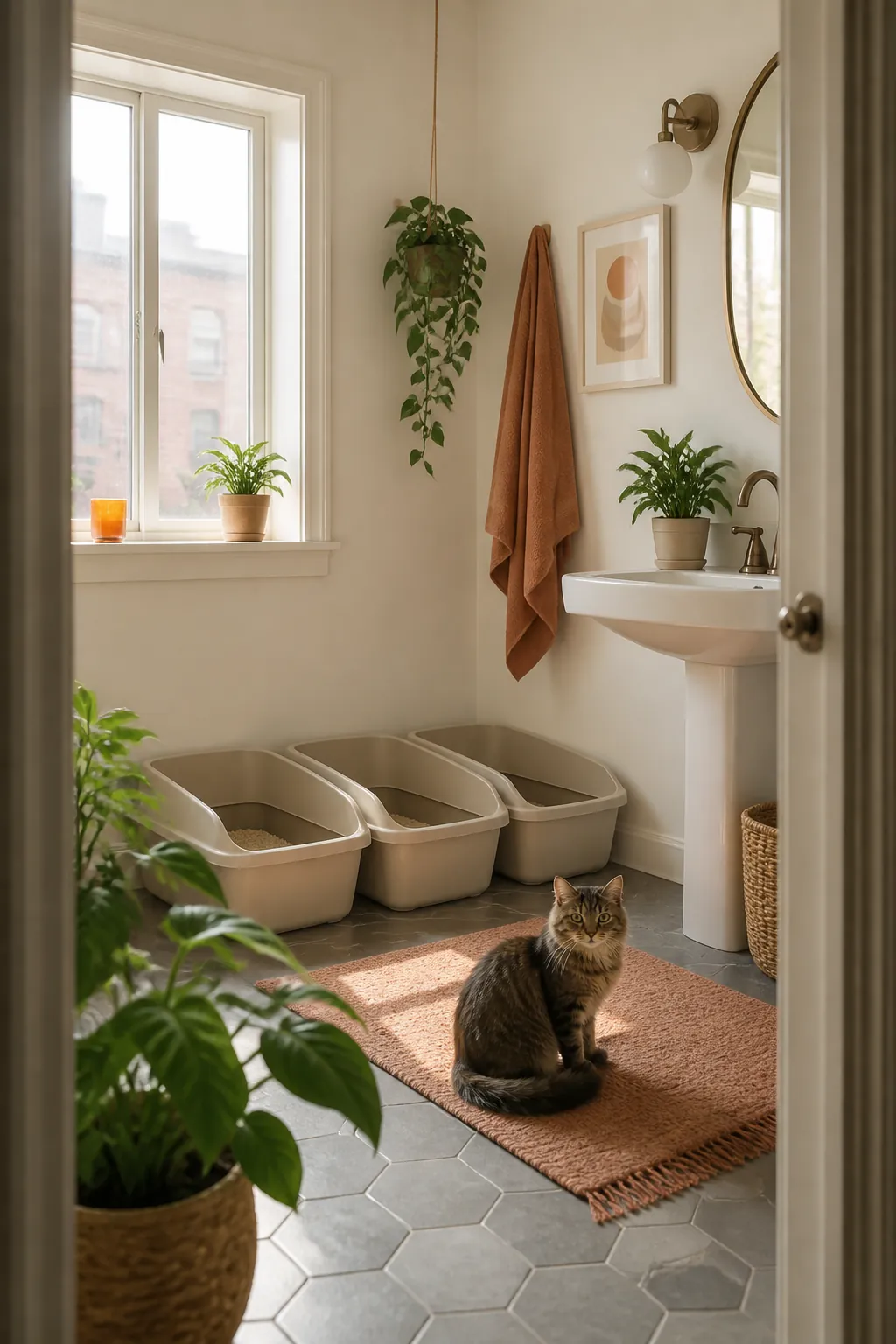
Two cats means three boxes, three cats means four, and the extra box is not optional padding. It exists so that a cat is never forced to choose between using a dirty box and using none at all. In a small apartment the honest adjustment is not fewer boxes, it is smaller and flatter ones spread thin, because the rule is about access, not square inches of litter.
A standard box runs roughly 18 by 15 inches. Three of those do not fit against one wall of most studio bathrooms, which is exactly why the next few ideas are about distributing the count rather than shrinking it.
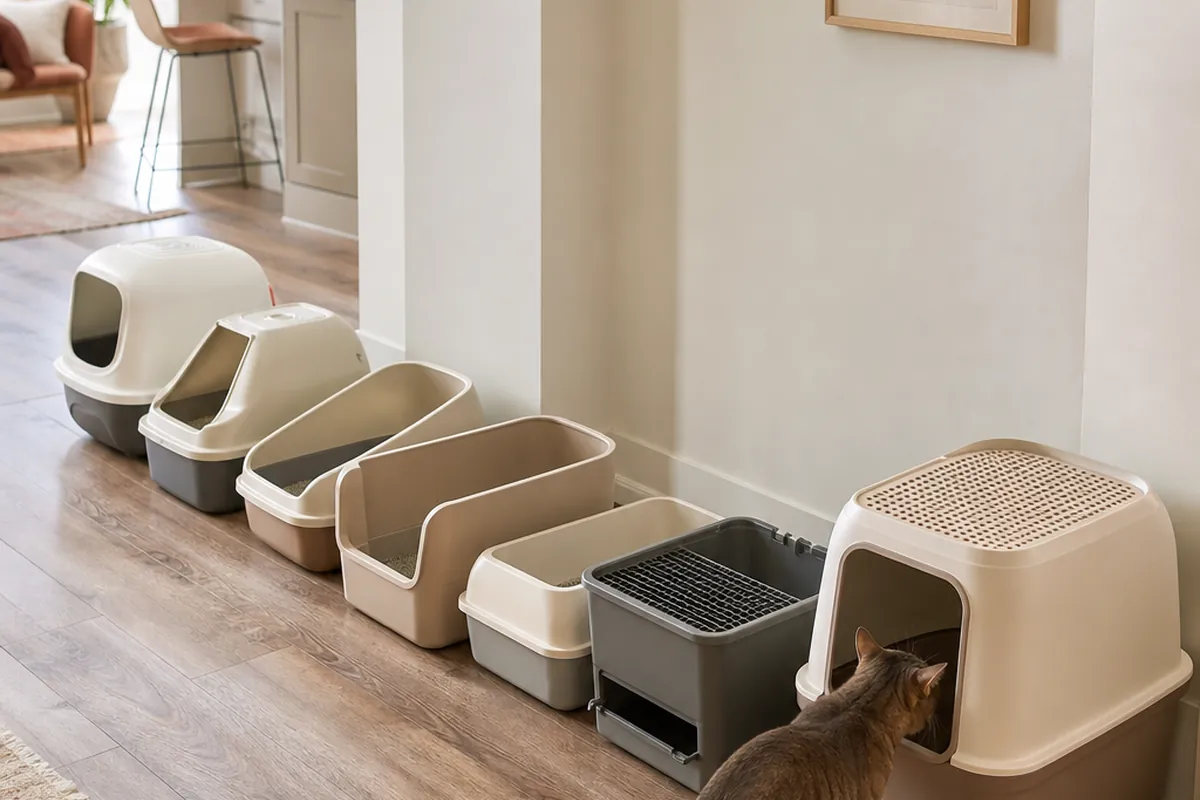
2. Put an extra-large box where a bigger cat actually lives
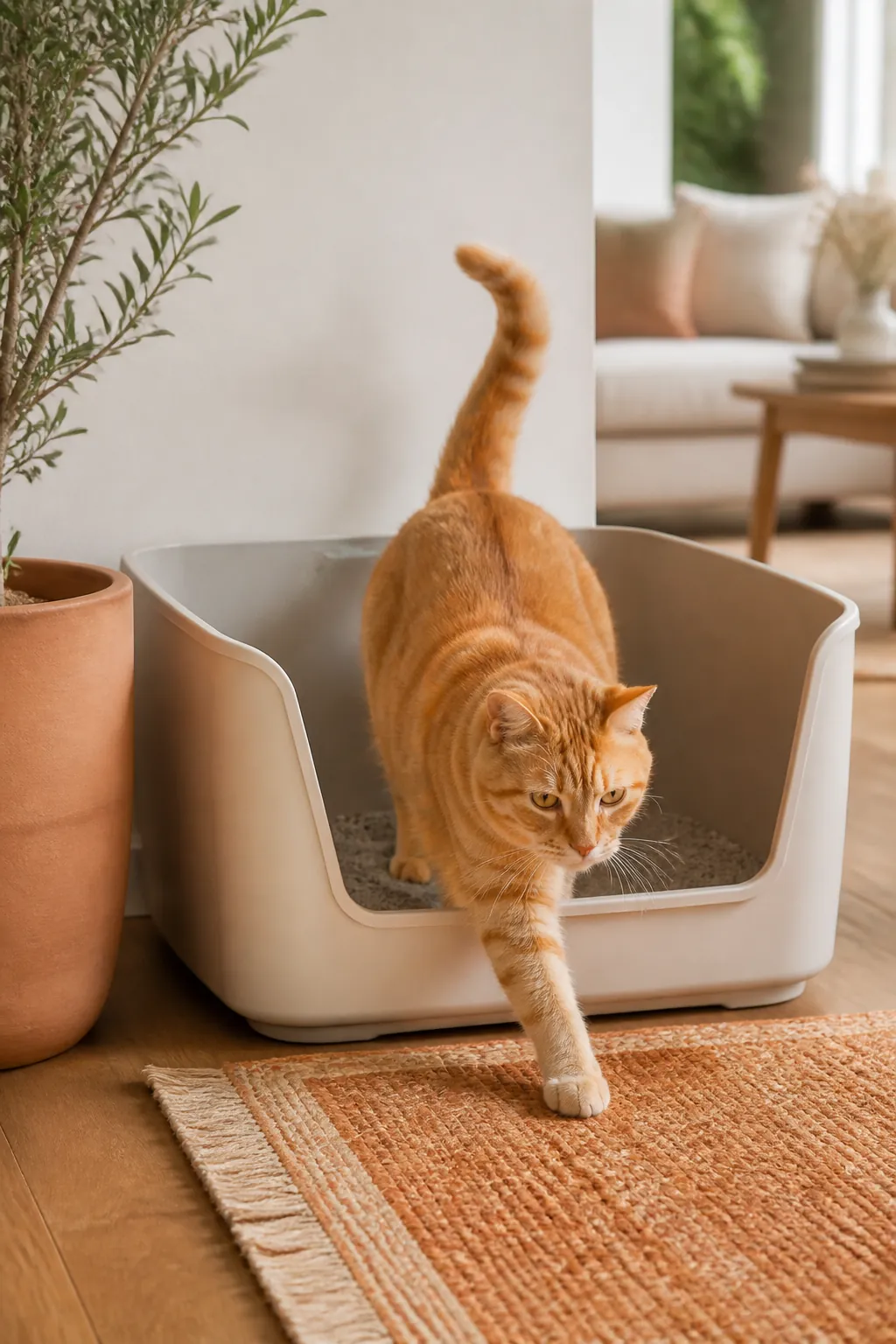
A single extra-large litter box with a low entry can absorb some of the pressure a multi-cat household puts on box count, because more digging surface means less waiting for a turn. It is a substitute for volume, not for a second location. Put it where the largest or oldest cat in the household spends the most time, since a low entry matters more to a cat with stiff hips than to a kitten that can clear any lip.
3. Split the boxes across at least two rooms
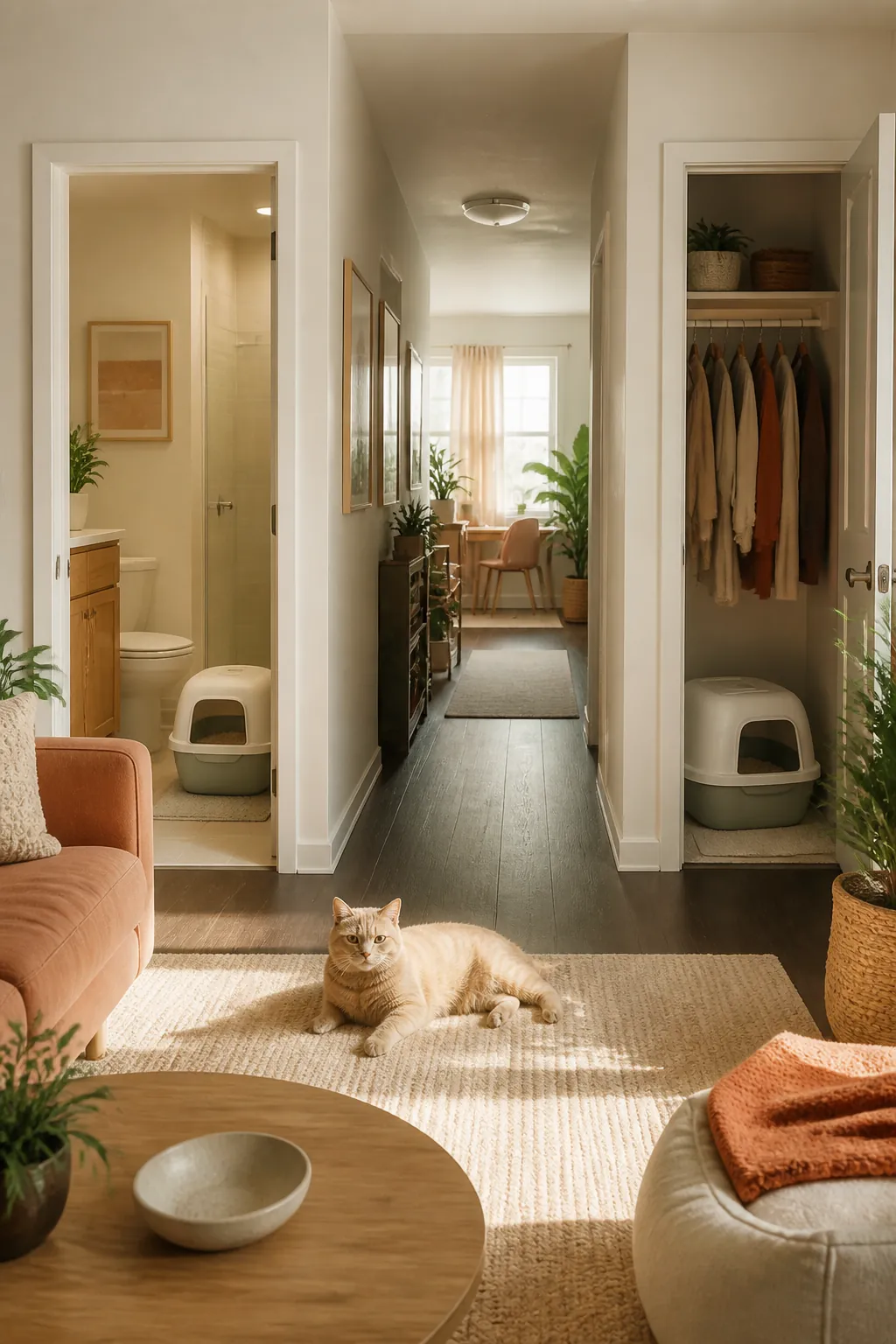
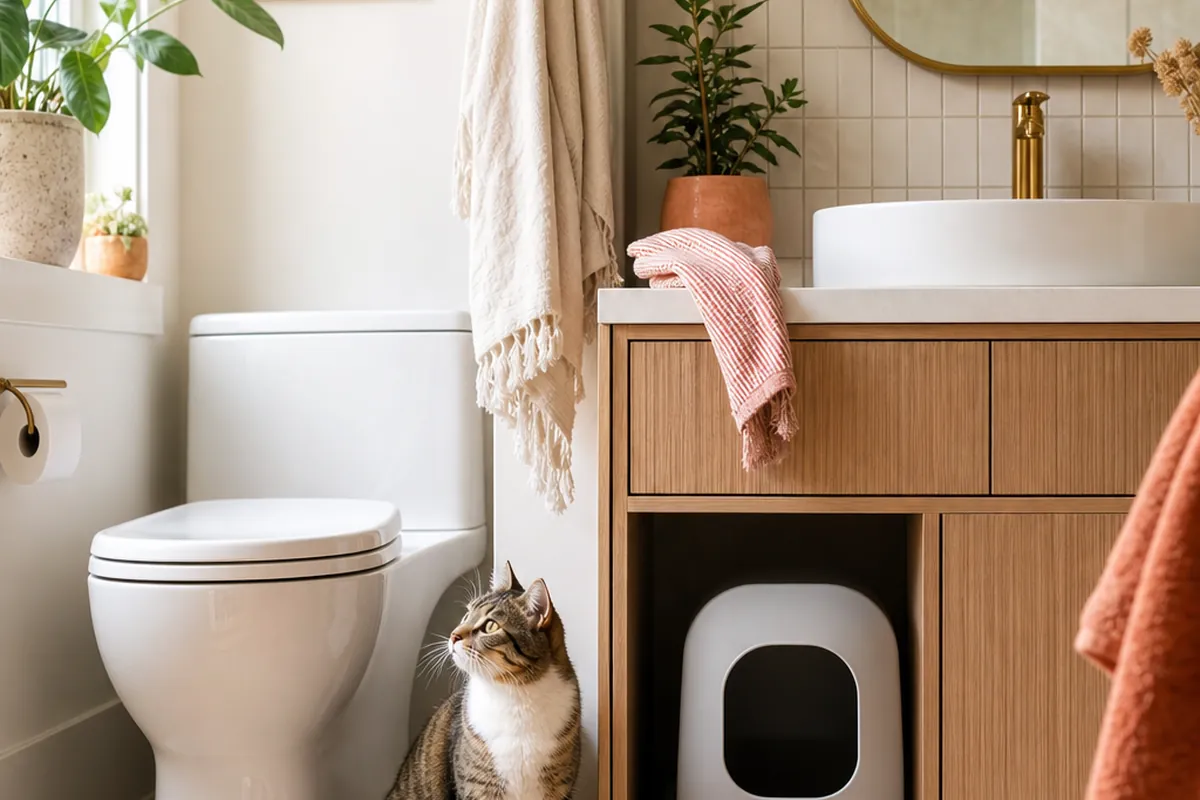
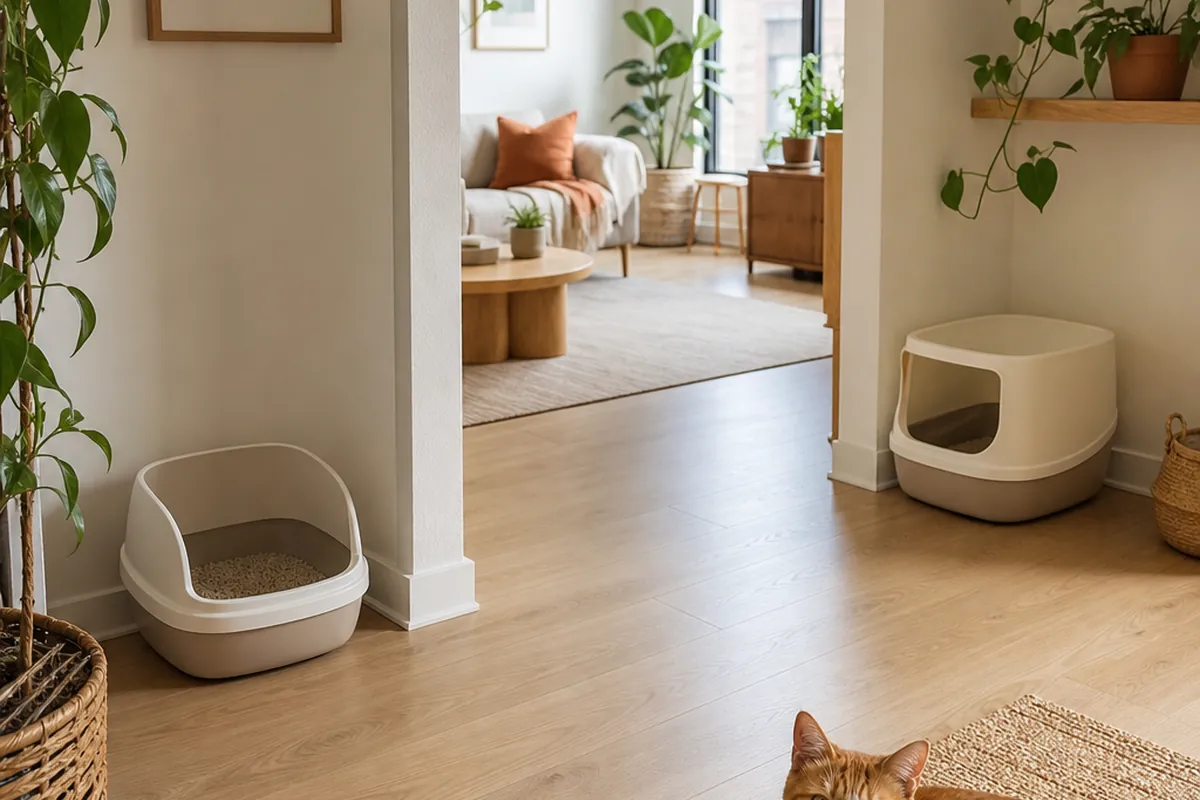
Two boxes in the same corner function as a single location the moment a cat has to decide whether to approach. Put one in the bathroom and one in a bedroom closet, or one at each end of a railroad-style apartment, rather than a matched pair against the same wall. The separation does not need to be far. Twelve feet with a doorway between counts; twelve feet in the same open room does not. If that bathroom is shared with a roommate, litter box ideas for a small shared bathroom cover keeping the box clear of shower steam and foot traffic.
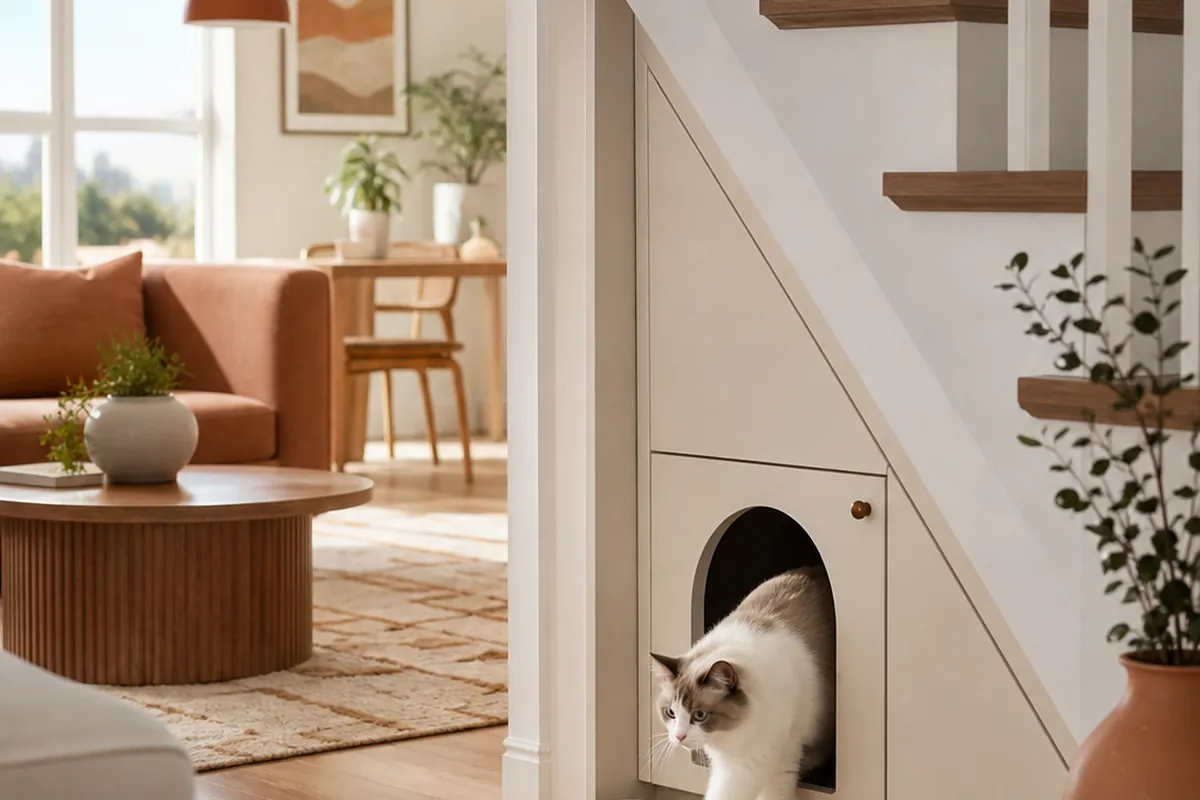
If the apartment genuinely has only one room that can take a box, split it vertically instead: one box on the floor, one on a low platform or inside an open shelf a step away. It is a smaller separation than two rooms, but a cat deciding whether to cross open floor to reach a second box still reads it as a choice rather than a formality.
4. Give every box two ways out
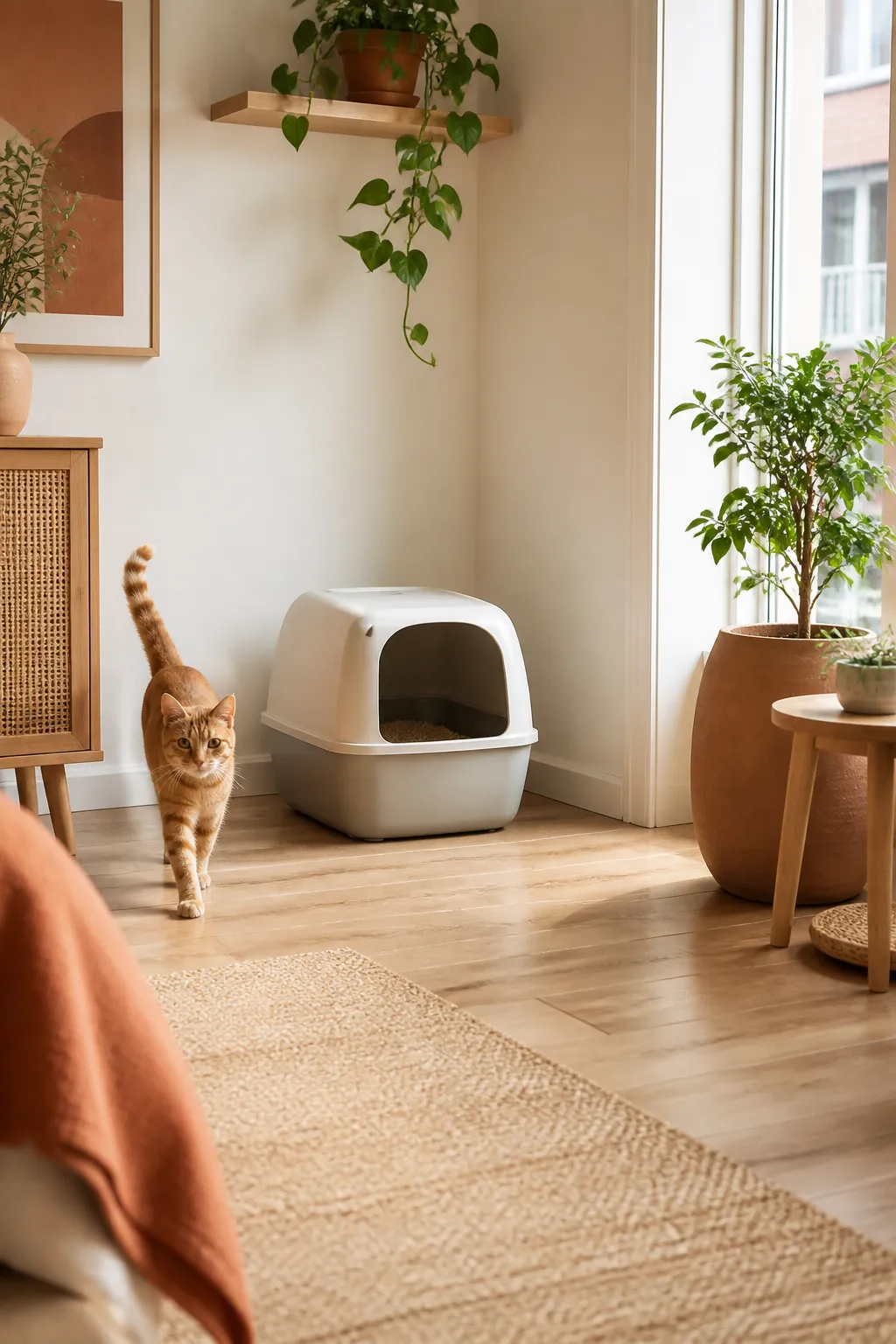
A box pushed into a true corner, with a wall on two sides, is a box one cat can block by sitting in the only sightline. An open approach on at least two sides means a nervous cat can still get to the box even when a more confident cat is nearby, which in a two-cat apartment is most of the time.
5. Skip the hooded box for a multi-cat setup
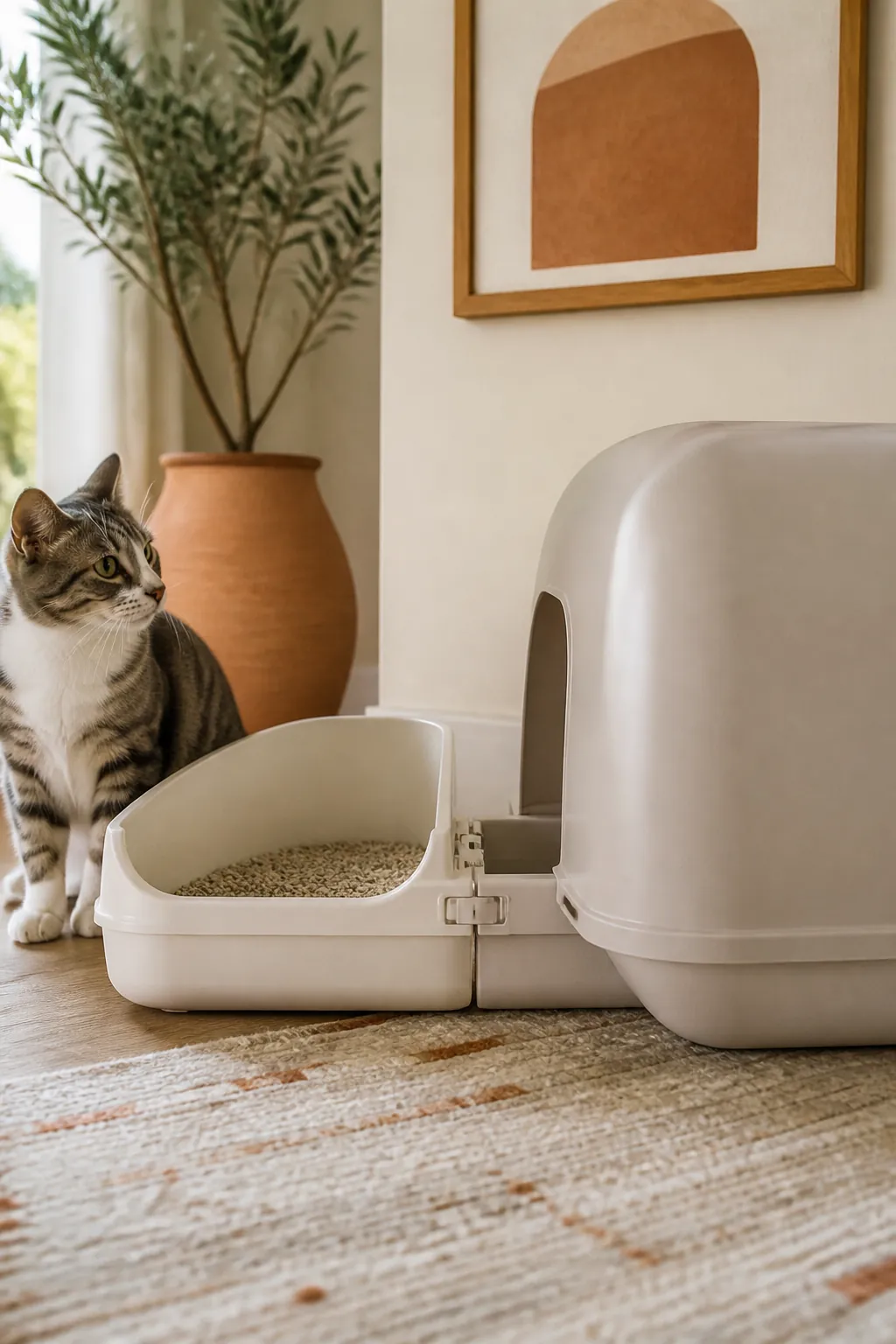
A hood concentrates smell in exchange for turning the entrance into a single narrow choke point, and a choke point is exactly what a cat guarding a box wants. Open, low-sided boxes let a cat see another cat approaching and decide whether to leave before there is a confrontation at the doorway. Trade the visual privacy for the safety margin; in a household with more than one cat it is the better trade.
6. Mat every box, not just the one by the door
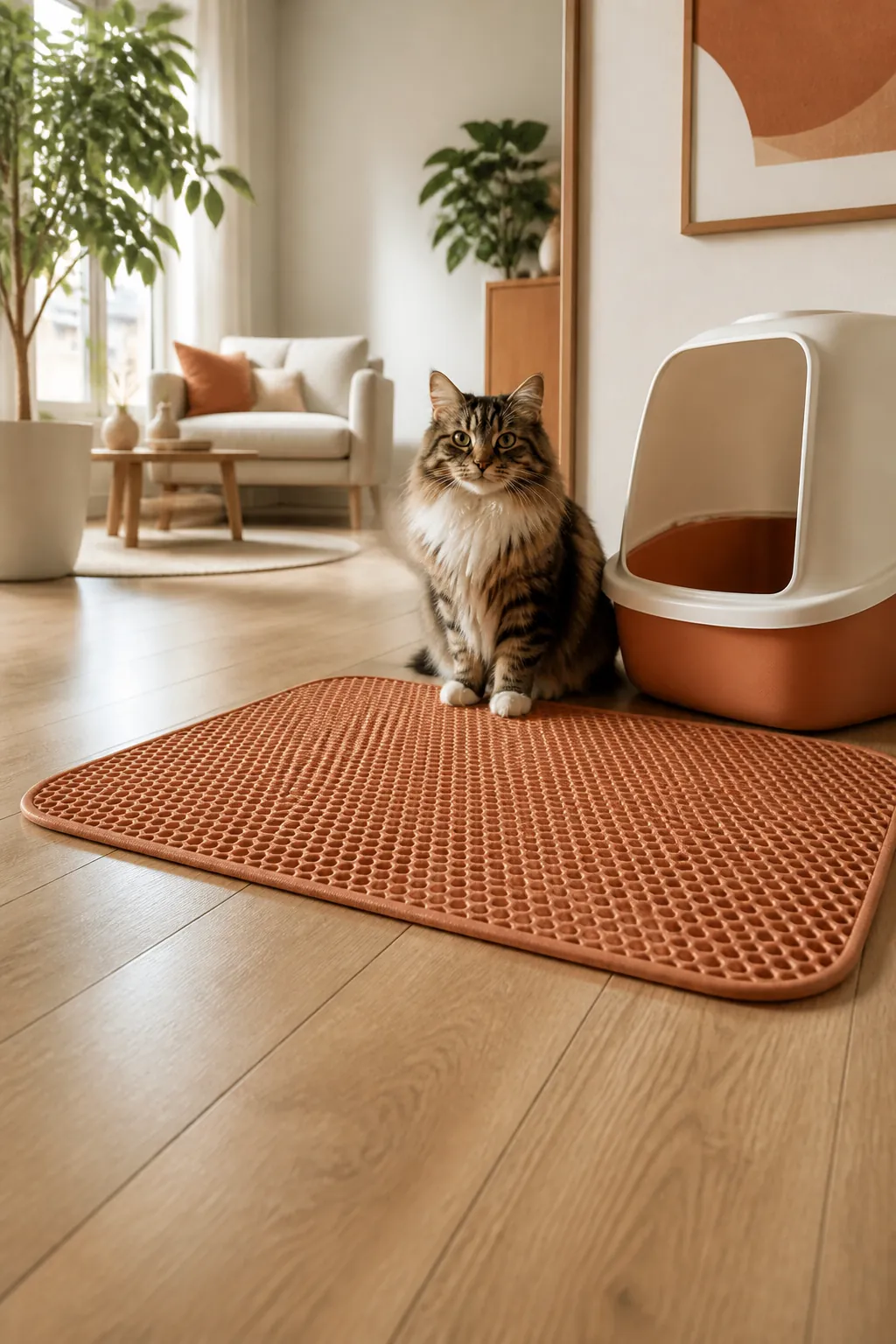
Litter trapping mats catch granules on the paws before they reach the hallway floor, and in a multi-cat apartment every box gets enough daily traffic to justify one. Skipping the mat on the “spare” box is how a floor that looked handled around one location starts collecting litter around a second.
7. Split cleaning across a schedule, not a single pass
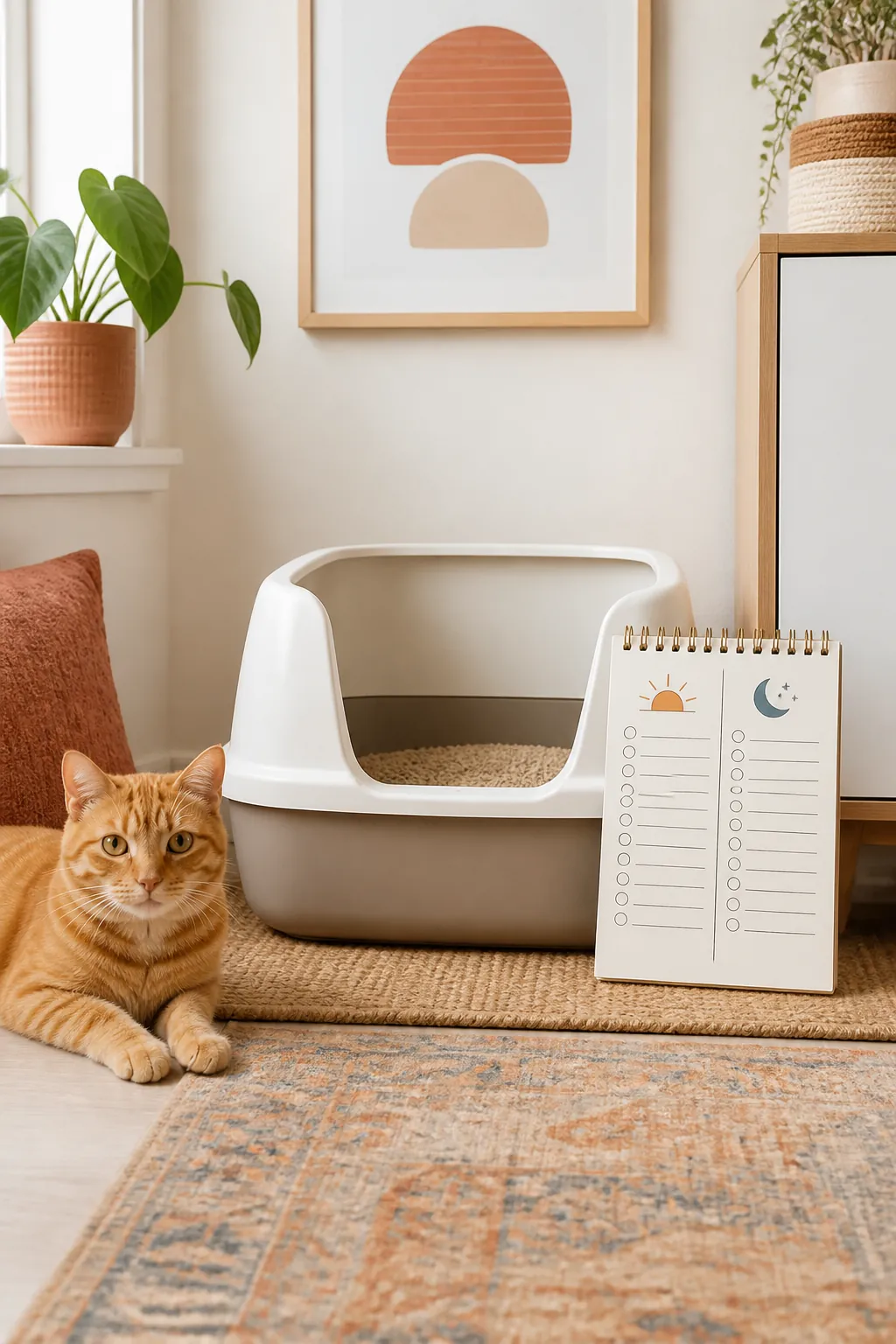
Scooping all three boxes once a day at the same time means the box used first thing in the morning sits dirty for close to twenty-four hours before its turn comes around again. Stagger it instead: a quick morning check across all boxes, a fuller scoop in the evening. The staggering costs the same total time and removes the single box that would otherwise sit fullest the longest.
8. Treat odor per box, not once for the room
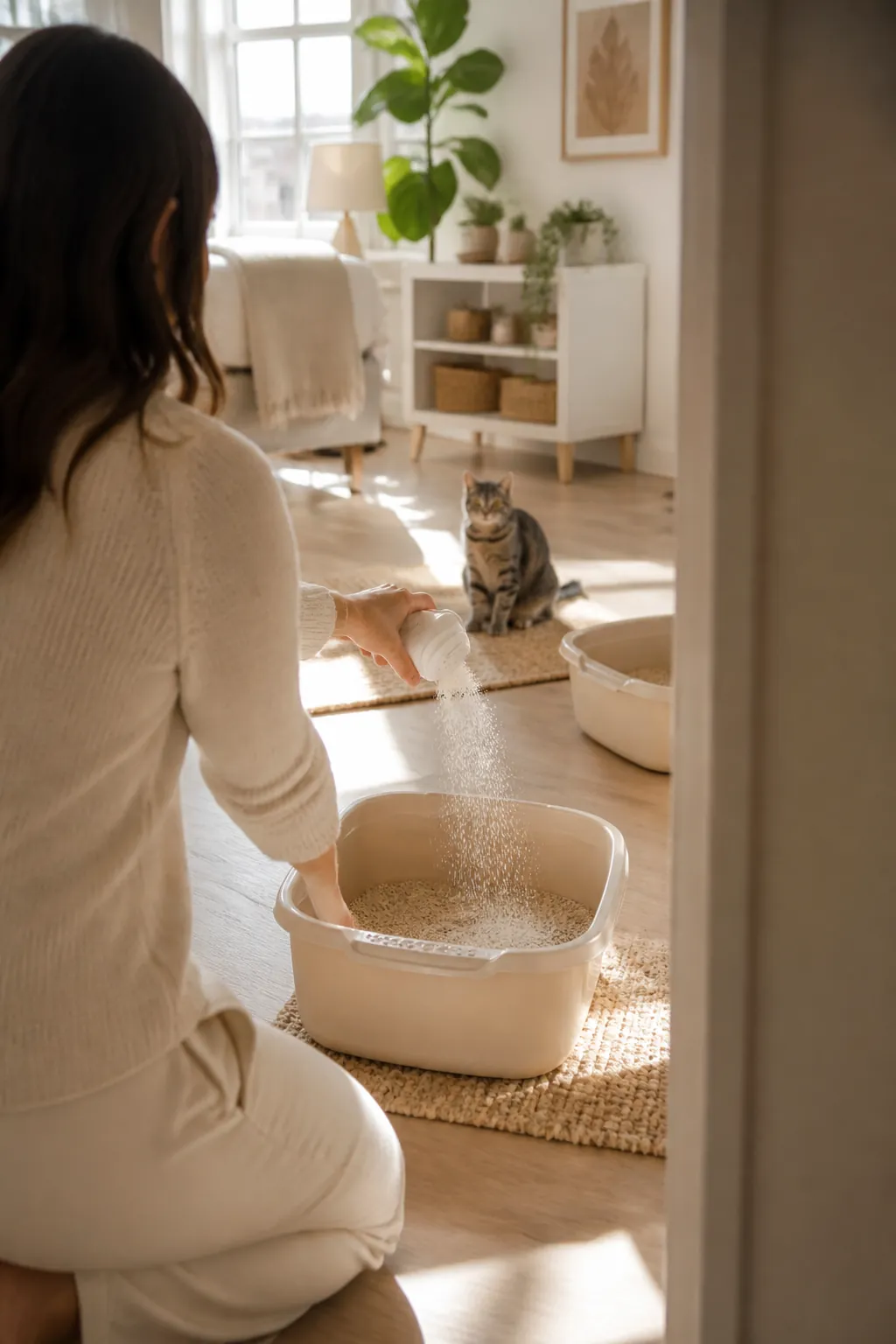
A single air purifier in the living room does nothing for a box in a closed bedroom closet, because the smell it is meant to catch never reaches it. Odor-control litter deodorizer worked into each box individually addresses the source at each location instead of chasing what has already escaped into the air of one room. It is a supplement to scooping frequency in a multi-cat home even more than in a single-cat one, because more boxes means more places for the fix to be forgotten.
9. Watch for one cat blocking access before it becomes a habit
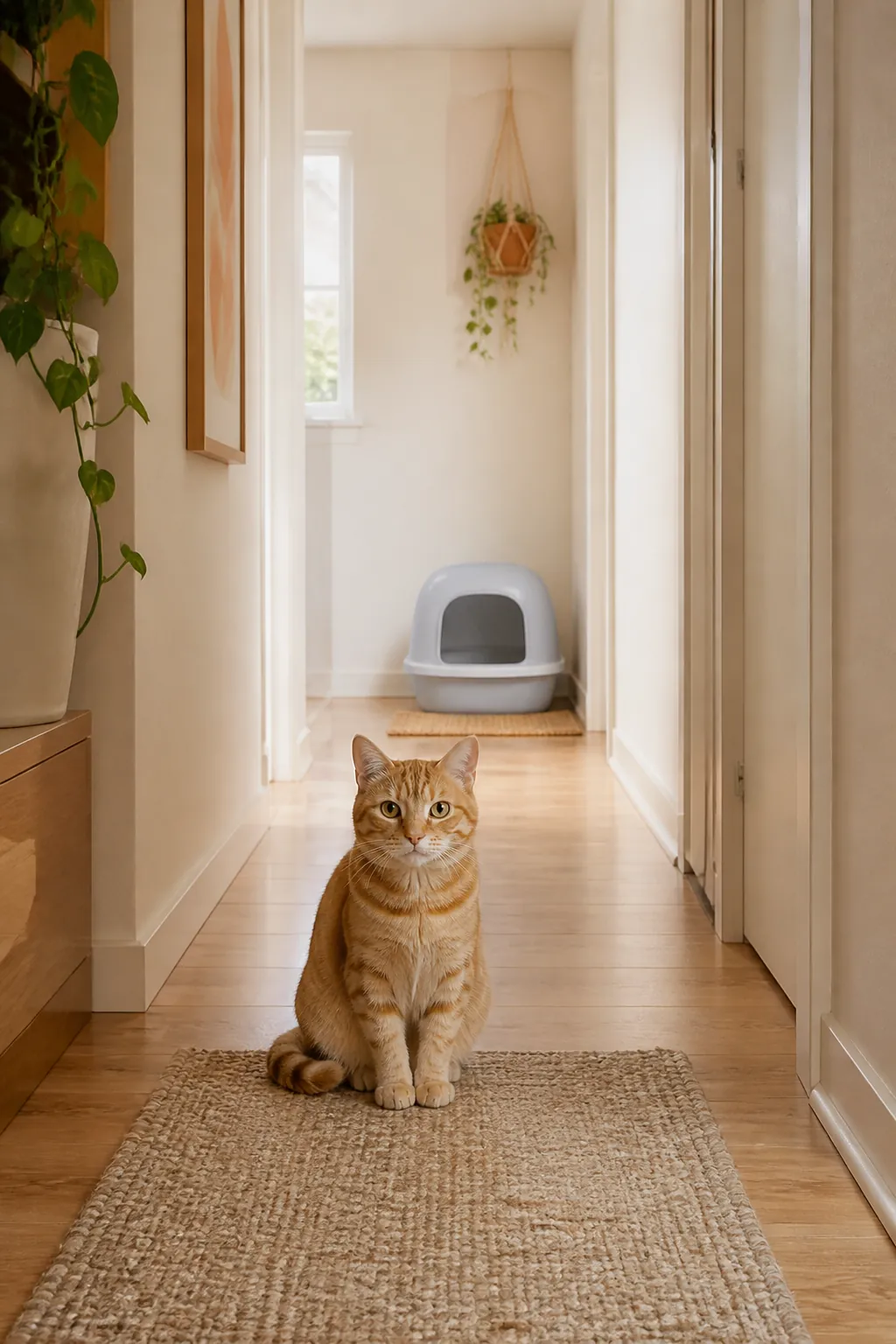
The clearest sign of guarding is a cat sitting near a box without using it, especially in a doorway or a narrow hallway leading to one. It looks like lounging and it functions as a blockade. Once you notice it at one box, check whether the same cat is doing it at the others; guarding a single chokepoint tends to expand once it works the first time. Moving that box to a location with two approaches usually breaks the pattern faster than moving the cat.
10. Add a box before a new cat arrives, not after
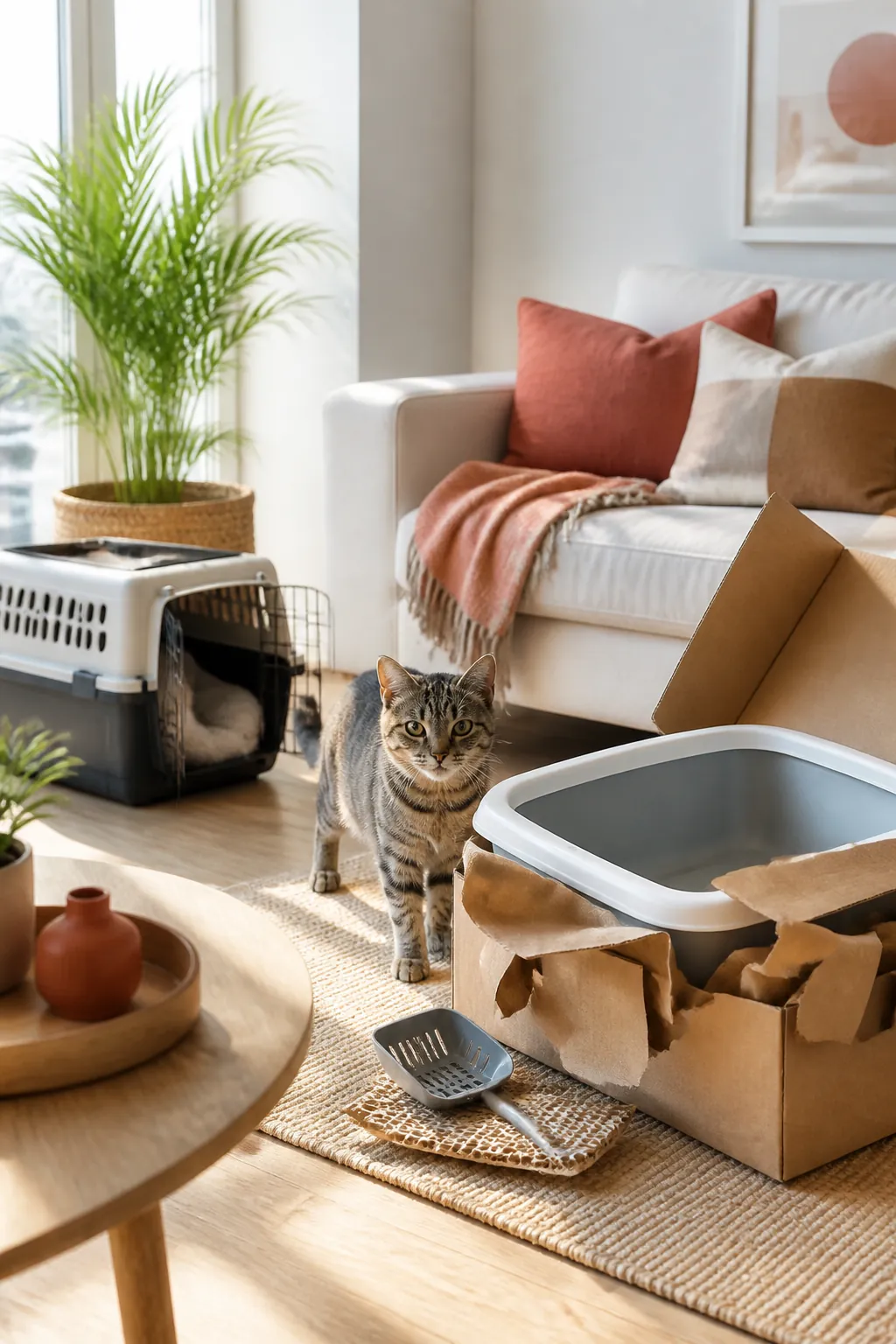
A foster, a kitten from a friend staying for a week, or a permanent second cat all change the math immediately, and the apartment rarely has a box already standing by. Set up the extra box before the new cat’s first day rather than waiting to see if the existing setup holds, because a cat that gets turned away from a crowded box in its first week forms a habit that is much harder to undo once it has already gone elsewhere. This applies in reverse too: if a foster leaves after a month, do not remove its box immediately. Give the household a week at the higher count before dropping back down, since a resident cat may have started using the extra box as its regular one.
Where to start
Count the cats, add one, and place the resulting number of boxes in at least two separate rooms before worrying about size or style. That single decision, made before any box is bought, fixes more multi-cat litter problems than any product on this list.
Then walk the apartment at cat height and look for the box a nervous cat would have to cross an open room to reach. That box is the one that will sit unused no matter how clean it is, and moving it before day one is cheaper than diagnosing an accident three weeks in.
Budget for one extra-large box rather than a fourth small one if the floor space genuinely is not there. It closes some of the gap the math demands, even though it does not close all of it, and a bigger box in the right spot beats a small one crammed into a corner nobody’s cat wants to enter.