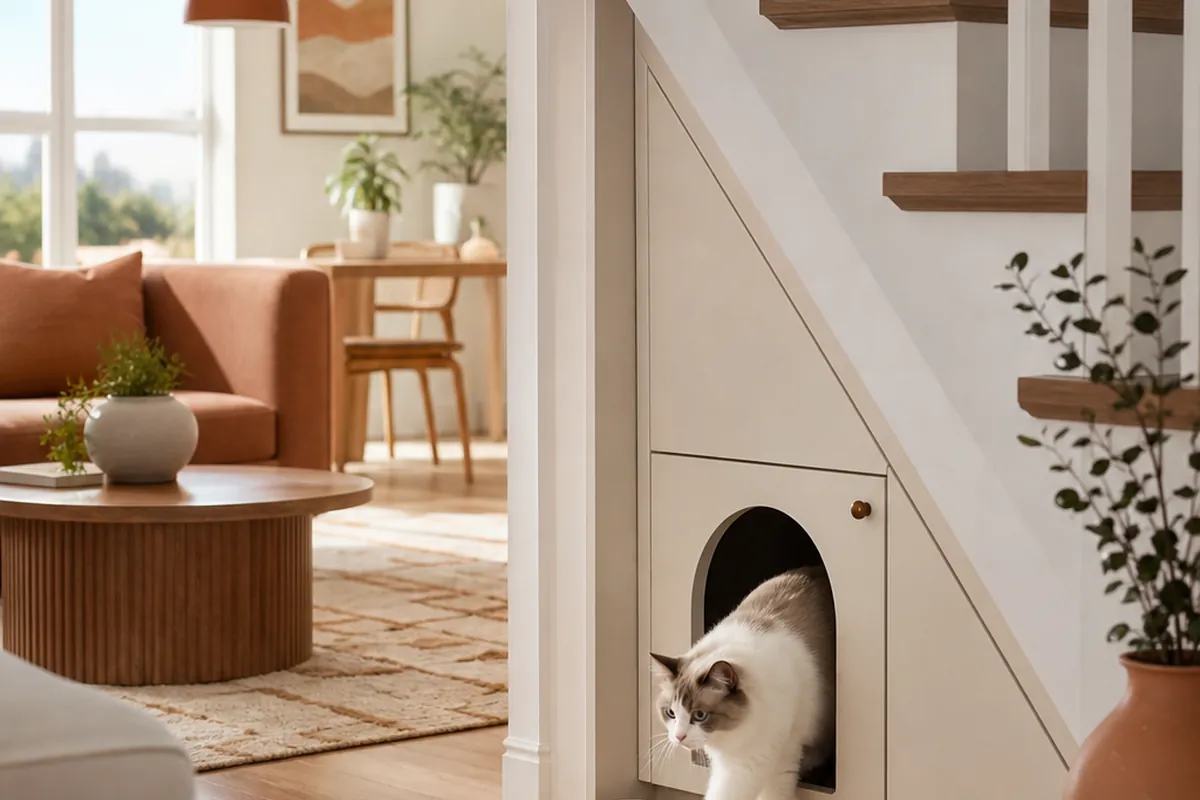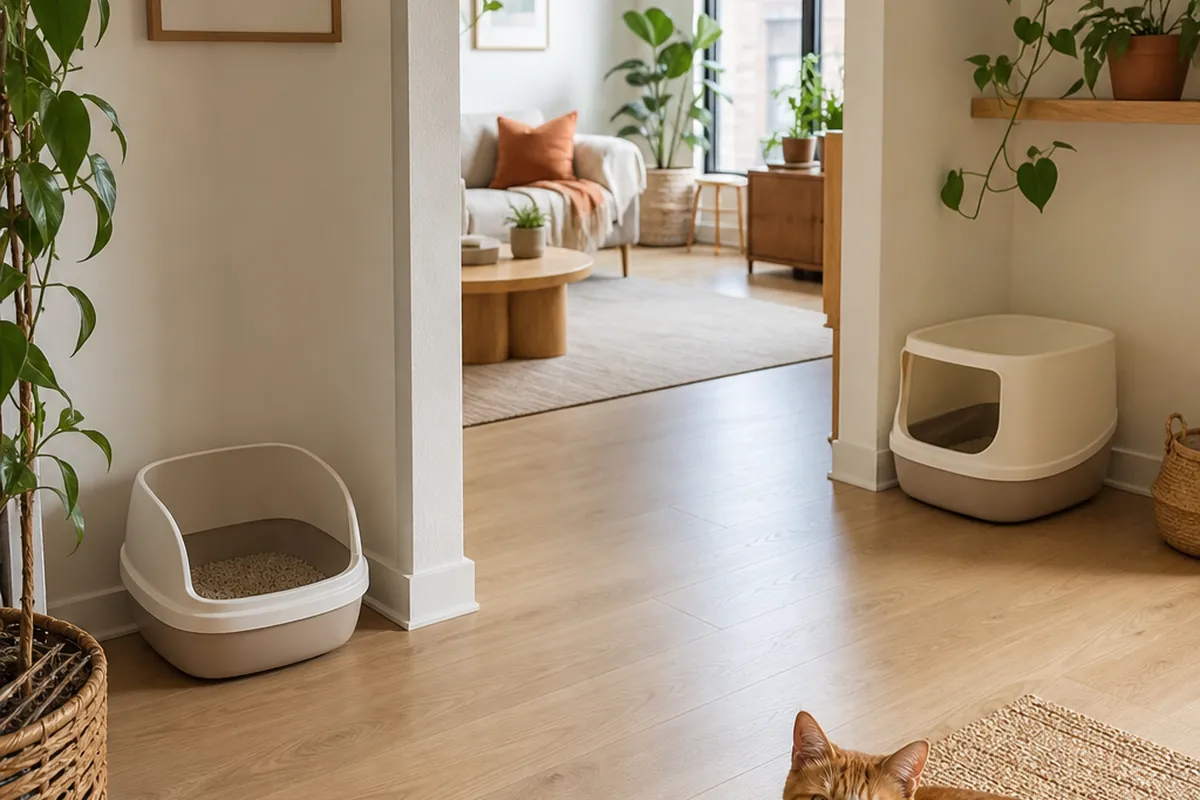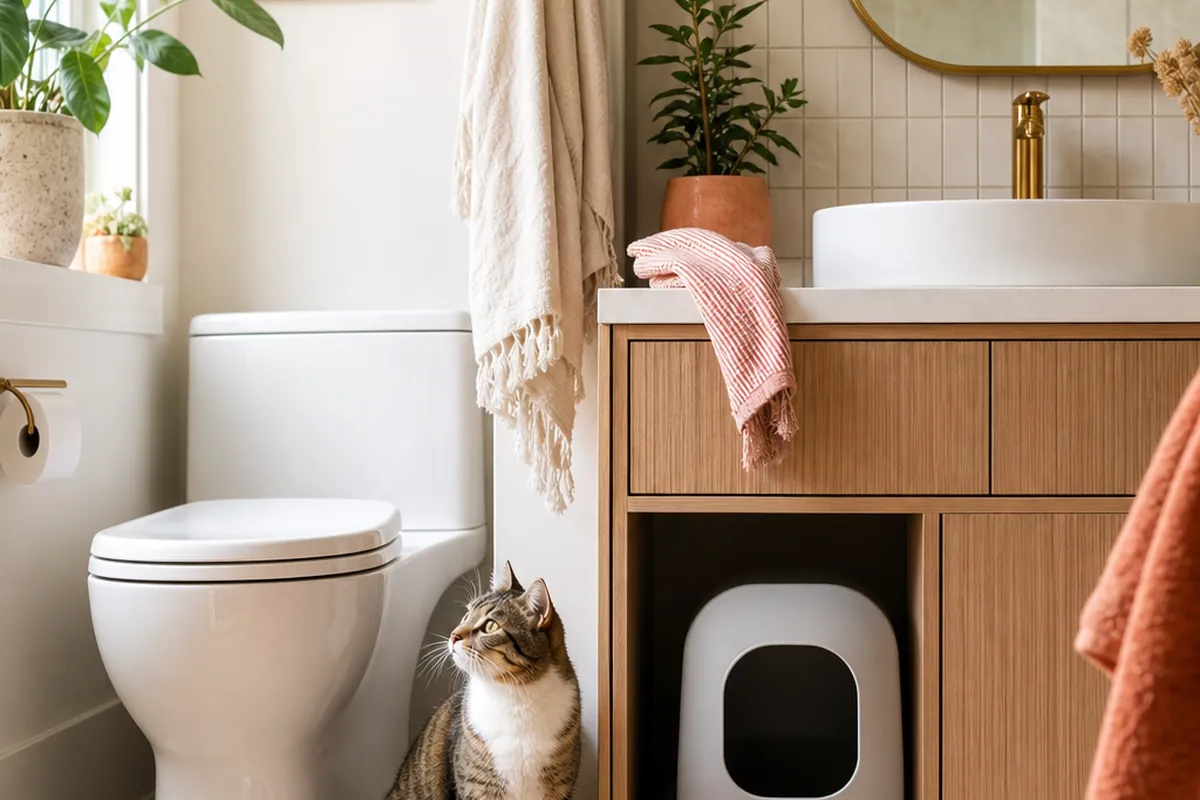
Hiding a litter box is one of the few problems in a small home where the obvious solution and the correct solution genuinely diverge. The obvious version is a box with a lid on it. The correct version is a piece of furniture that happens to contain a litter box, sized so the cat never notices it is inside something, and openable so that you never resent cleaning it.
Thirteen ideas, and the constraints that separate the two.
A useful way to think about the whole category: you are buying a cabinet that has to satisfy two users with opposite priorities. The cat wants space, light, air and two ways out. You want it closed, small and out of sight. Every enclosure on the market is a position on that trade, and the bad ones are the ones that resolved it entirely in your favor.
1. Measure the interior, not the exterior
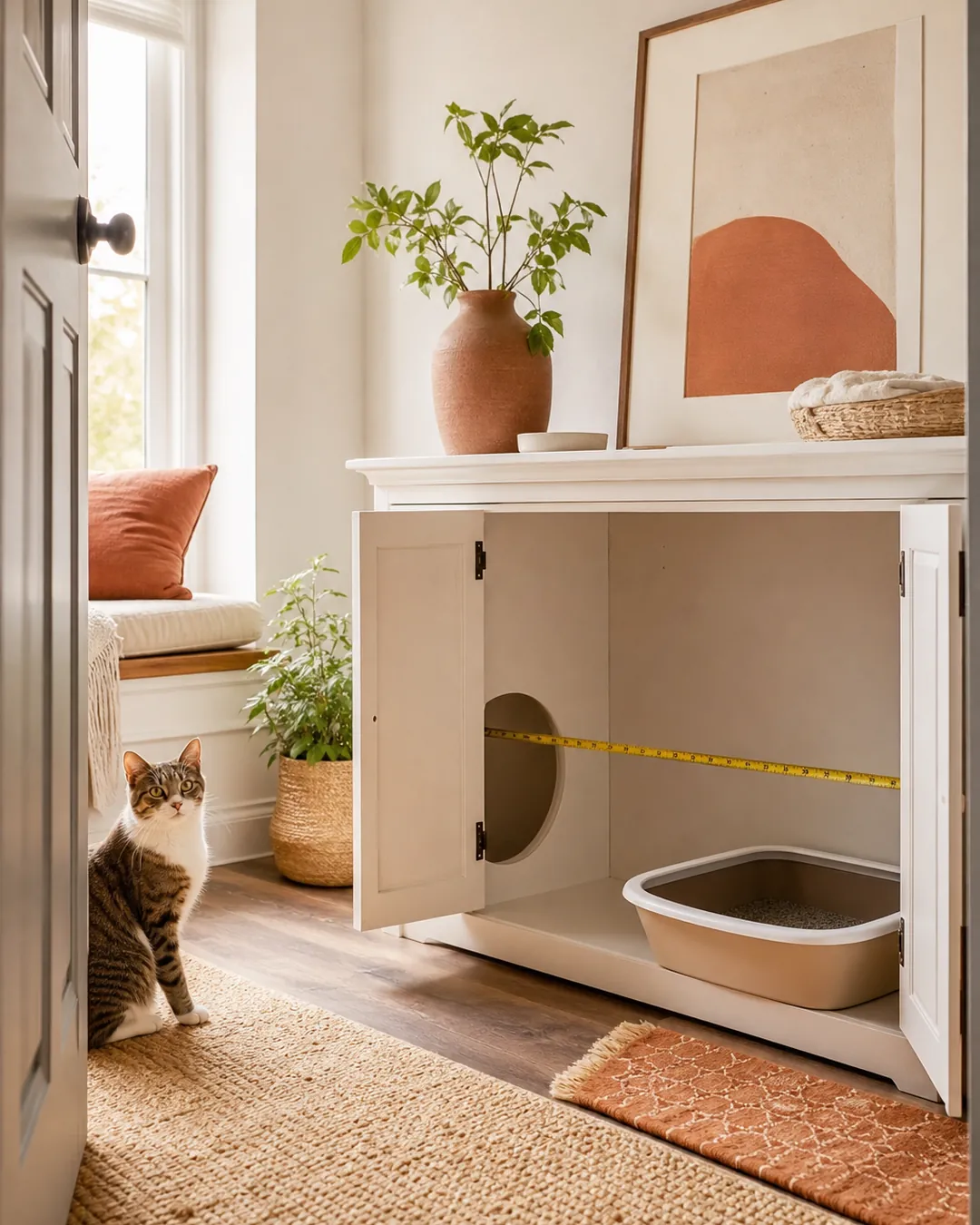
Enclosure listings advertise outside dimensions because that is what fits your alcove. The number that matters is the inside, and specifically whether your existing box fits with room to spare. Do this before anything else, because an enclosure the box barely fits into is one the cat will not turn around in. Interior dimensions are often buried in a question-and-answer section rather than the specifications, and where they are absent entirely, that silence is usually telling you something.
2. Give the cat room to turn fully
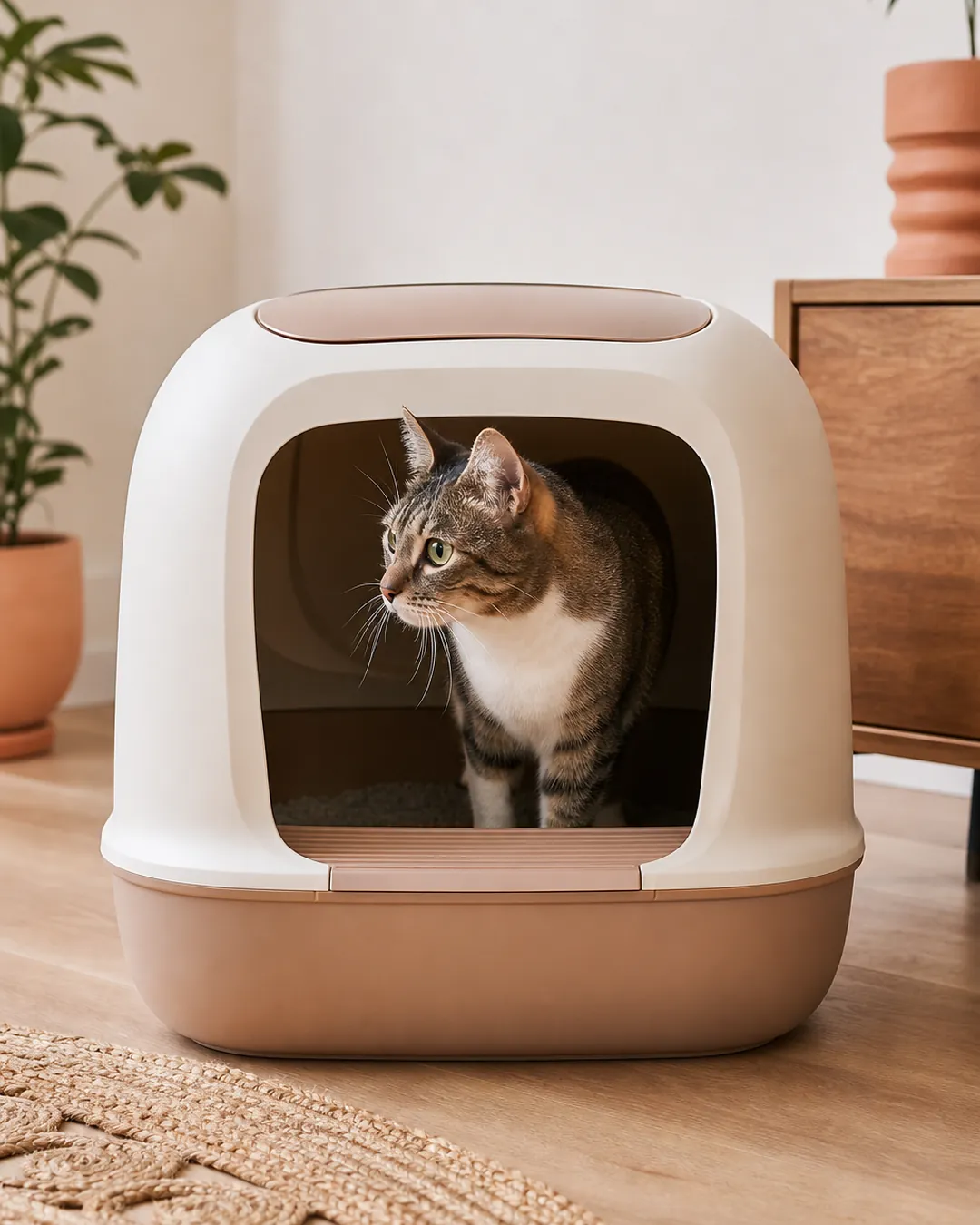
A cat should be able to stand, rotate and step out without brushing the walls. This is the specification most enclosures fail. If the interior is tight, the cat backs out, aims badly or stops using it, and all three get blamed on the cat rather than the cabinet.
3. Buy furniture that declares another purpose
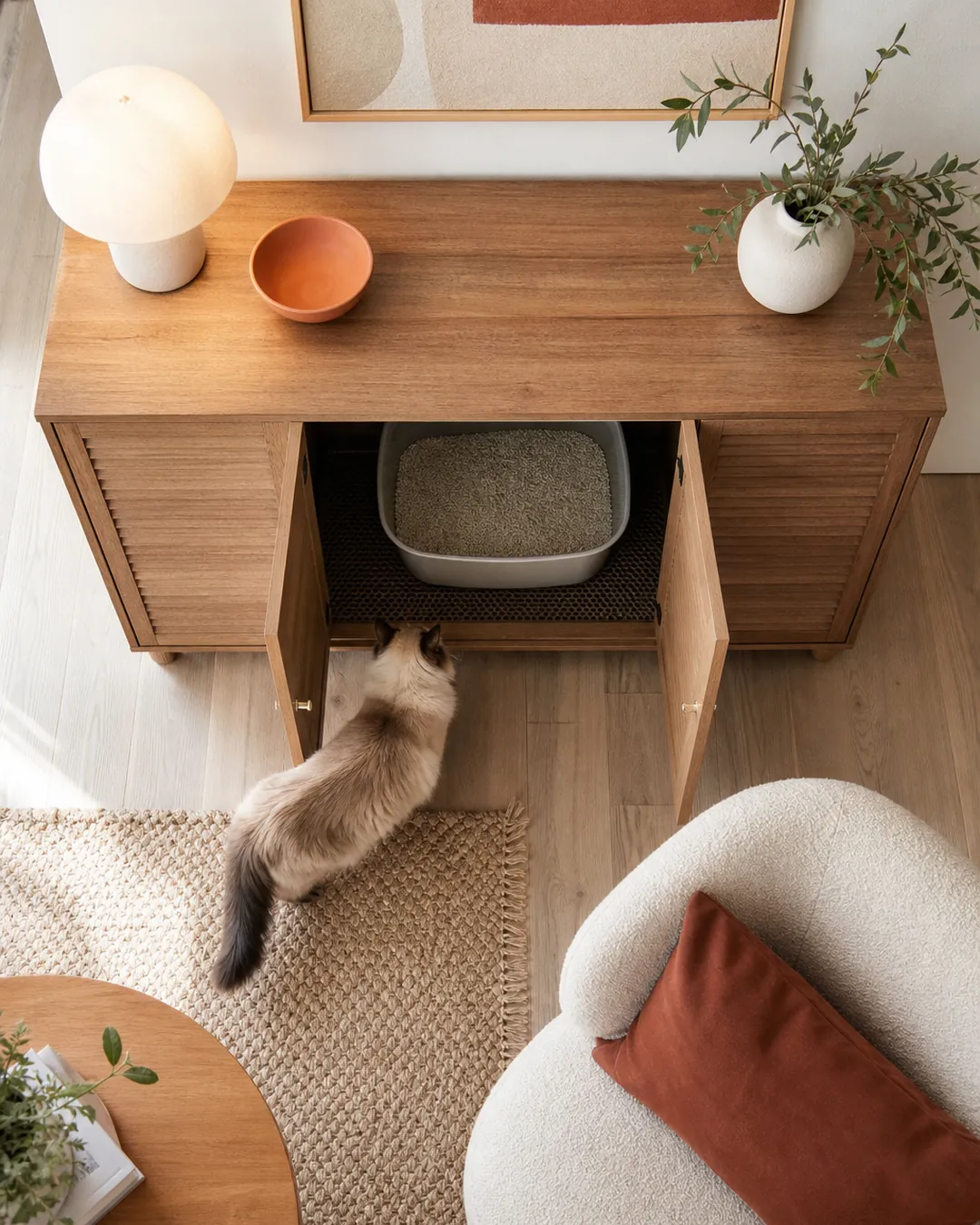
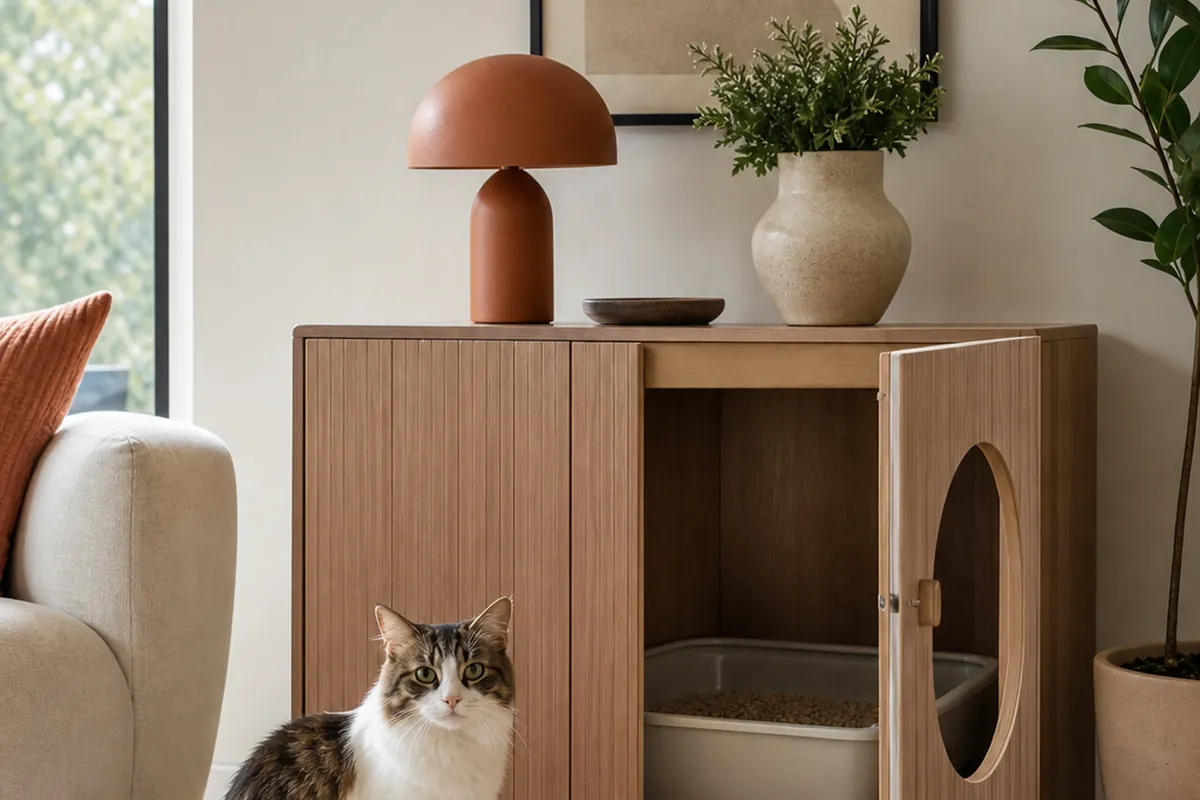
The most effective disguise is not a disguise at all. A litter box furniture enclosure built as a cabinet works because it genuinely is a cabinet, with a usable top and a finish that belongs in a room. Nobody reads it as pet equipment because it is not only pet equipment.
4. Insist on a reversible or repositionable entry
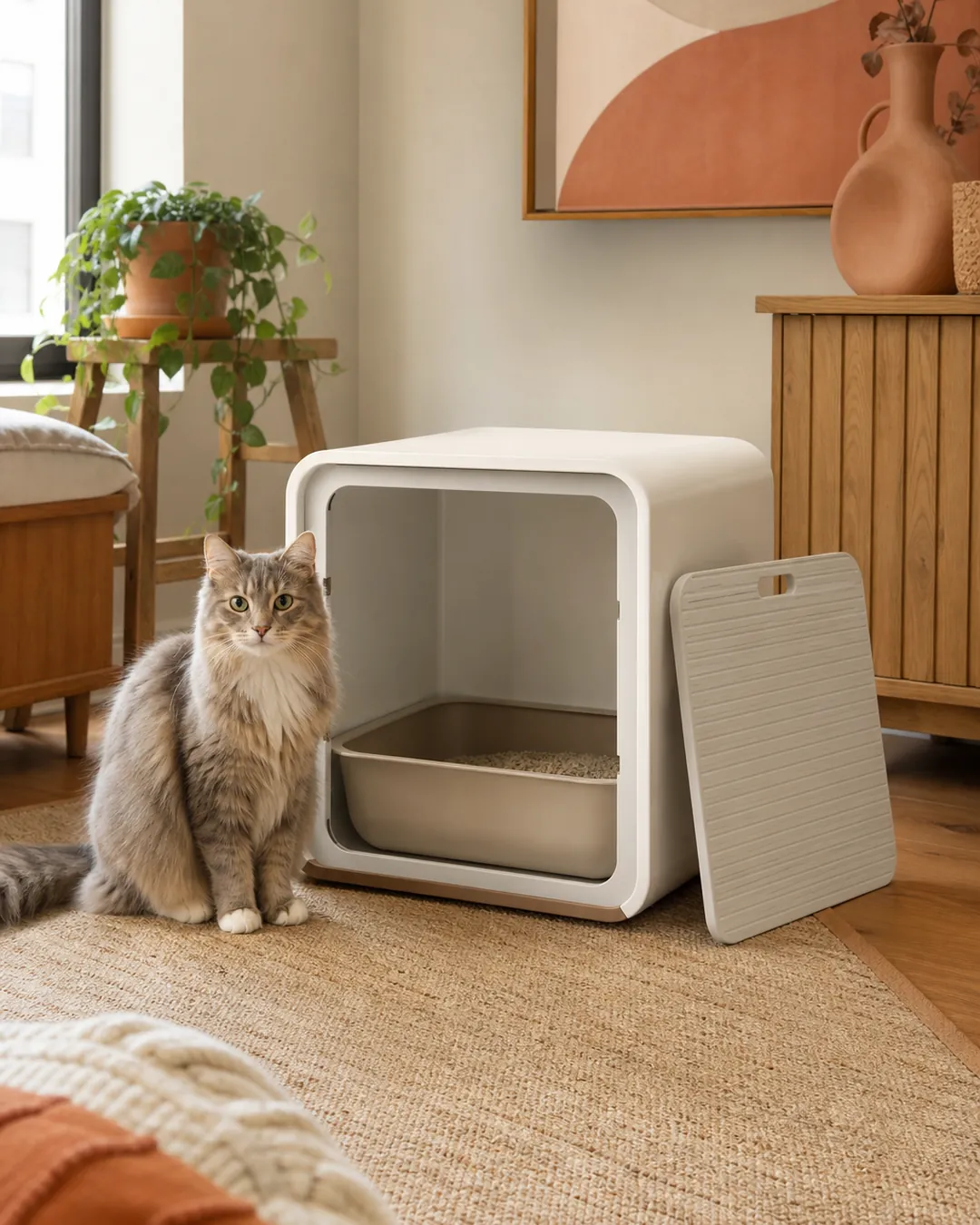
You rarely know which side the entry should be on until the piece is in the room. An entry panel that can move from left to right lets you turn the opening away from the sofa after the fact, which is the difference between a piece that works in your layout and one that nearly does.
5. Check how you get in to clean it
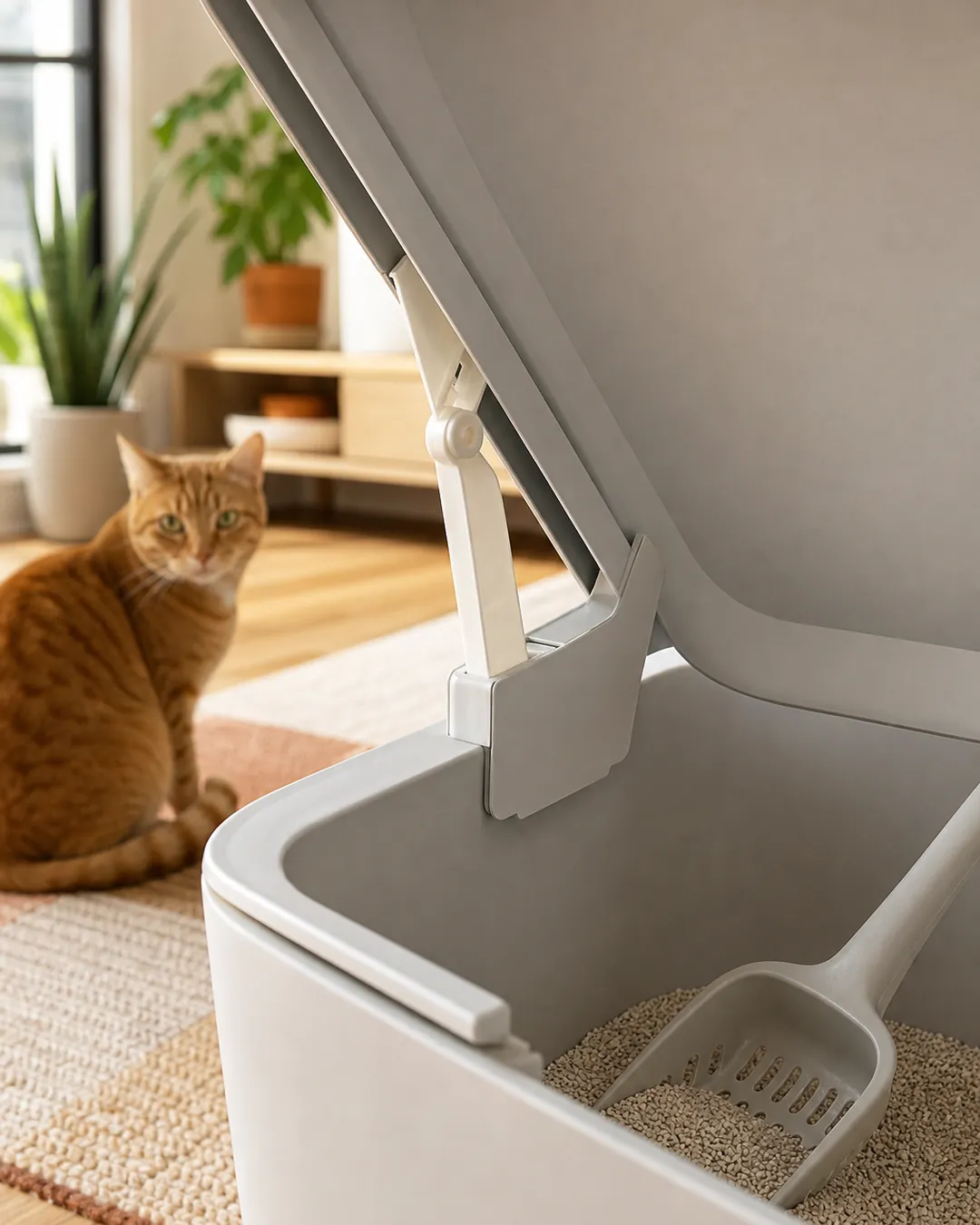
This is the constraint that decides whether the system lasts. A cabinet whose top lifts, or whose front opens wide, keeps scooping to twenty seconds. One where you reach through a cat-sized hole turns it into a job you postpone, and postponed scooping is the entire smell problem.
6. Seal the interior floor
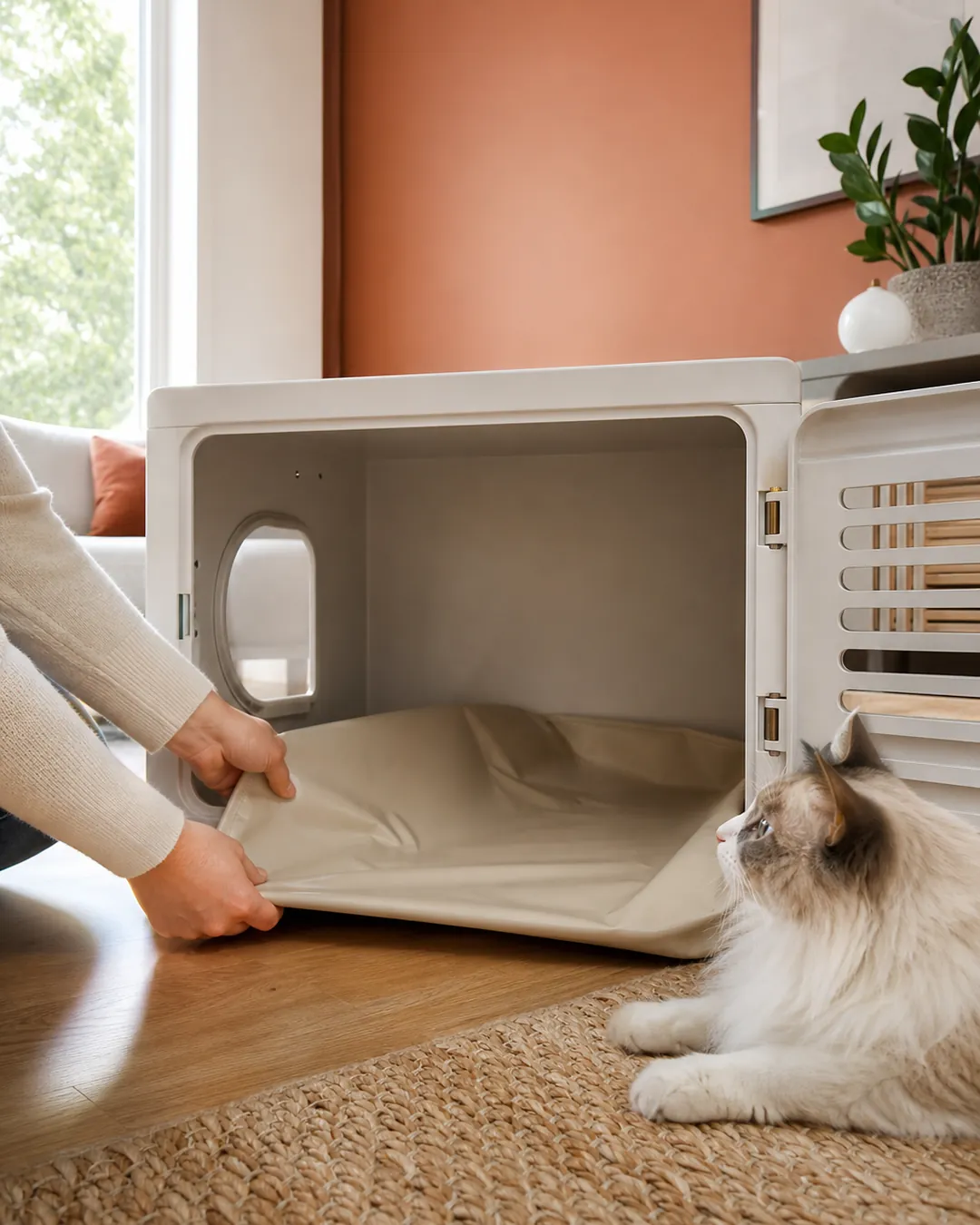
Raw particleboard and an accident are a bad combination, and the damage is permanent and smells. Look for a wipeable or lined floor, or line it yourself with vinyl offcut. On a converted piece of furniture this is the first thing to do rather than an afterthought, because once the board has absorbed anything the only real fix is replacing the panel. A sheet of vinyl and some tape costs almost nothing and takes ten minutes.
7. Ventilate, or accept you are concentrating the smell
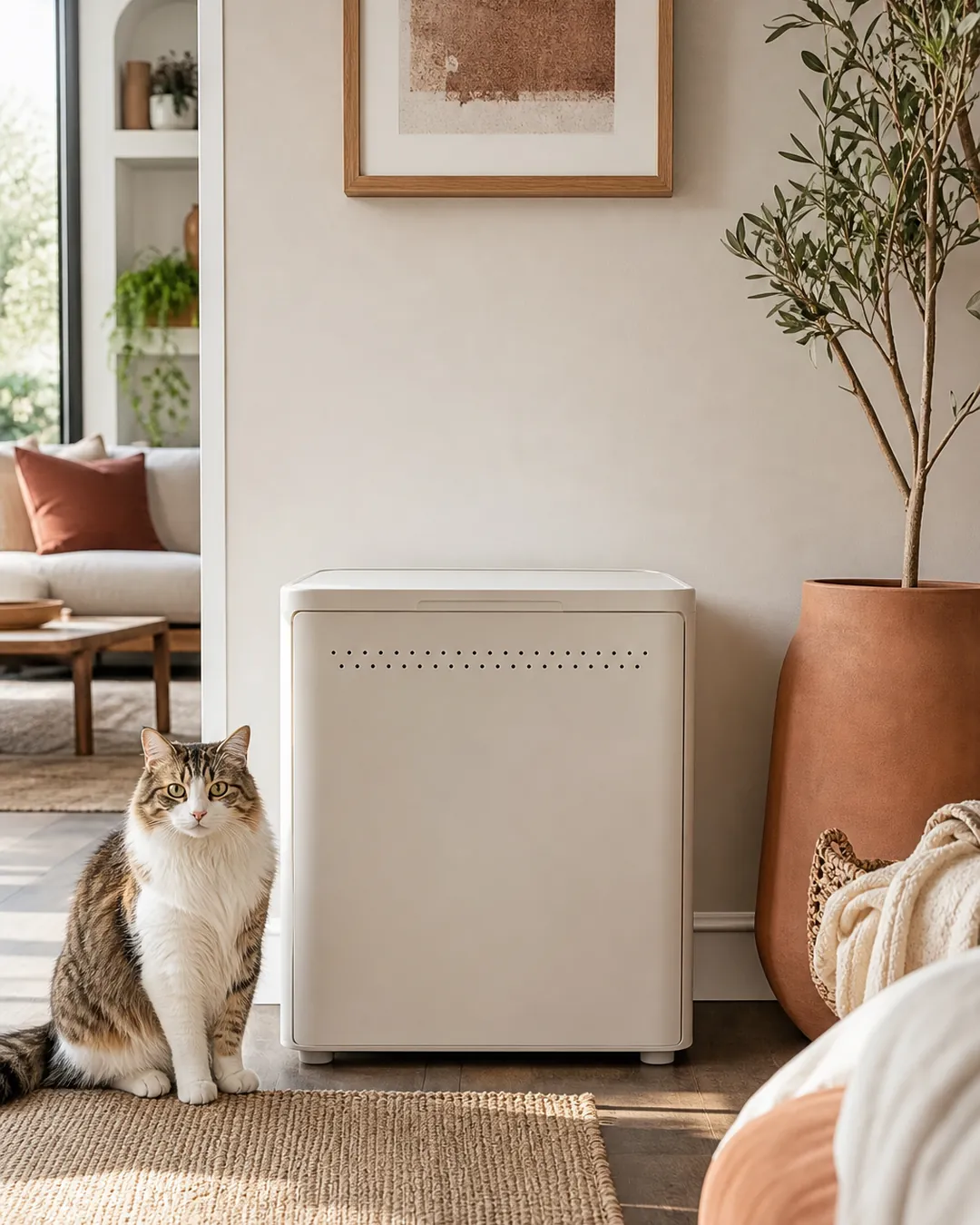
An enclosure traps air. That is fine if there is a vent, a gap at the back or a filter, and unpleasant if it is a sealed box. Do not buy an enclosure with no airflow at all and expect a deodorizer to solve it, because the deodorizer is working on air that is not going anywhere.
8. Use a carbon filter if the design takes one
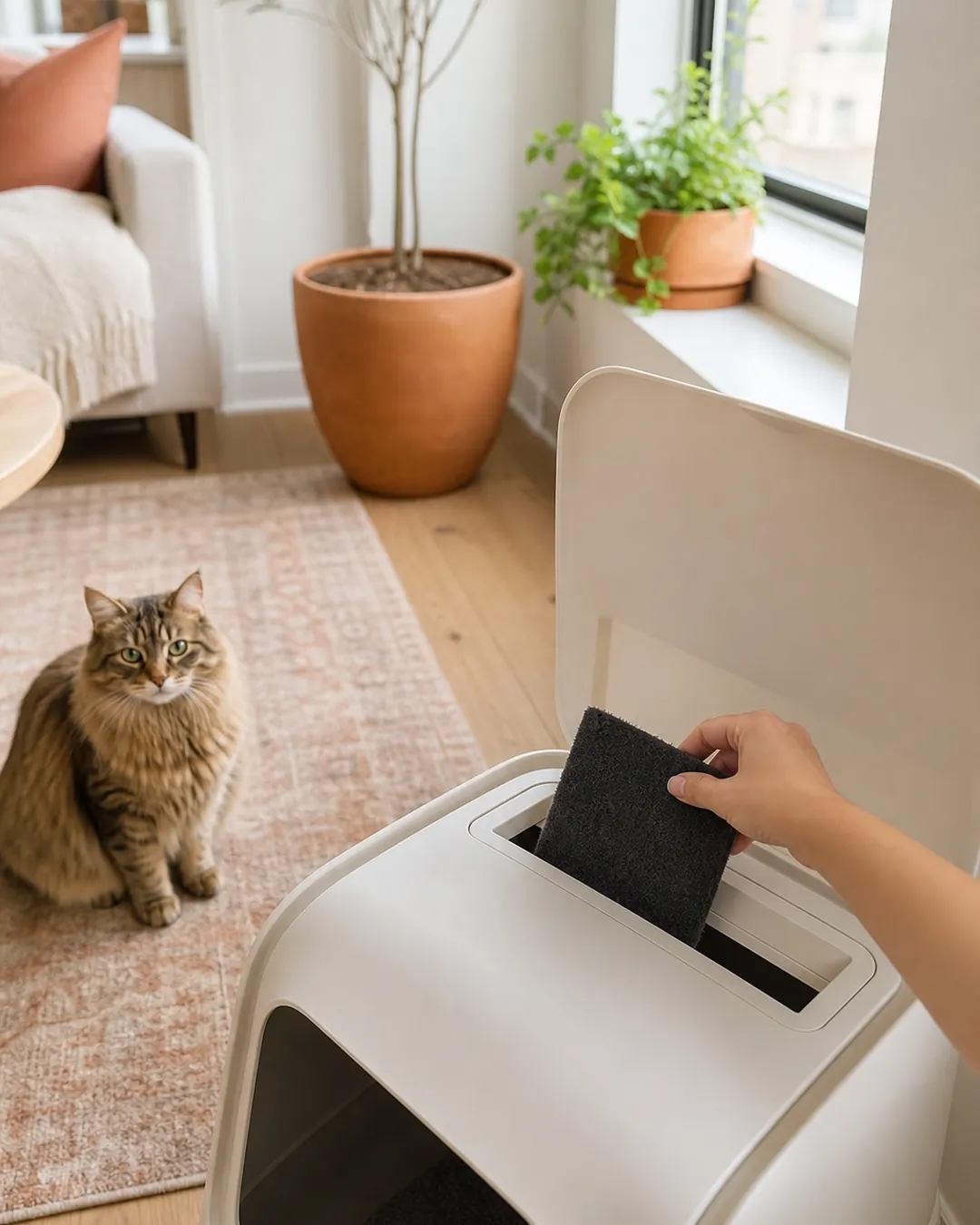
Filters are cheap, replaceable and genuinely reduce what escapes when the door opens. They are also the part everybody forgets to change. Buy a multipack with the enclosure and put a reminder somewhere, because an exhausted filter is doing nothing at all.
9. Add litter deodorizer, but for the right reason
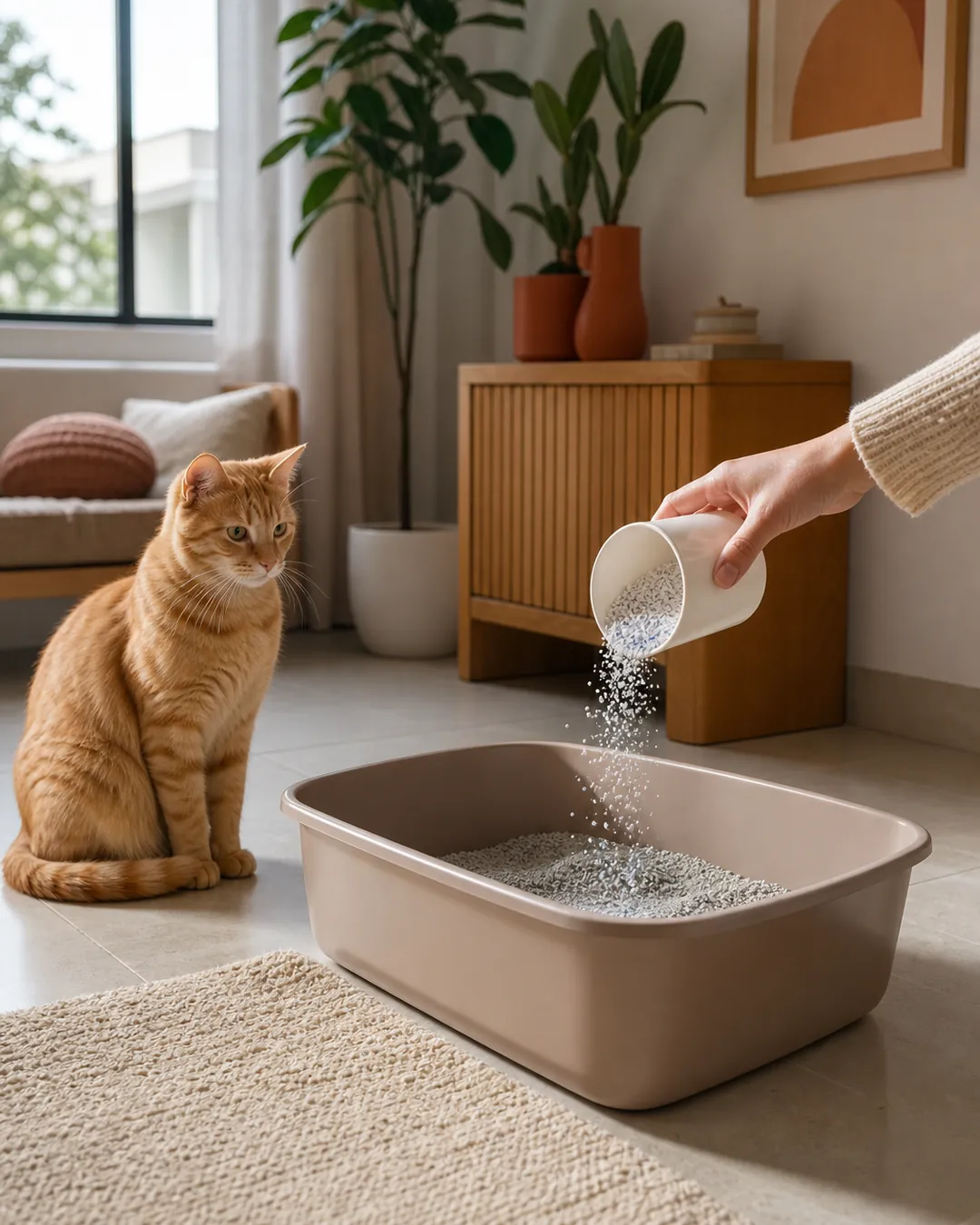
A litter deodorizer worked into the litter reduces what develops between scoops, which matters more inside a cabinet than in the open. It is a supplement to scooping frequency, not a substitute, and treating it as a substitute is how an enclosure ends up worse than a plain box.
10. Put the mat inside the enclosure, not outside it
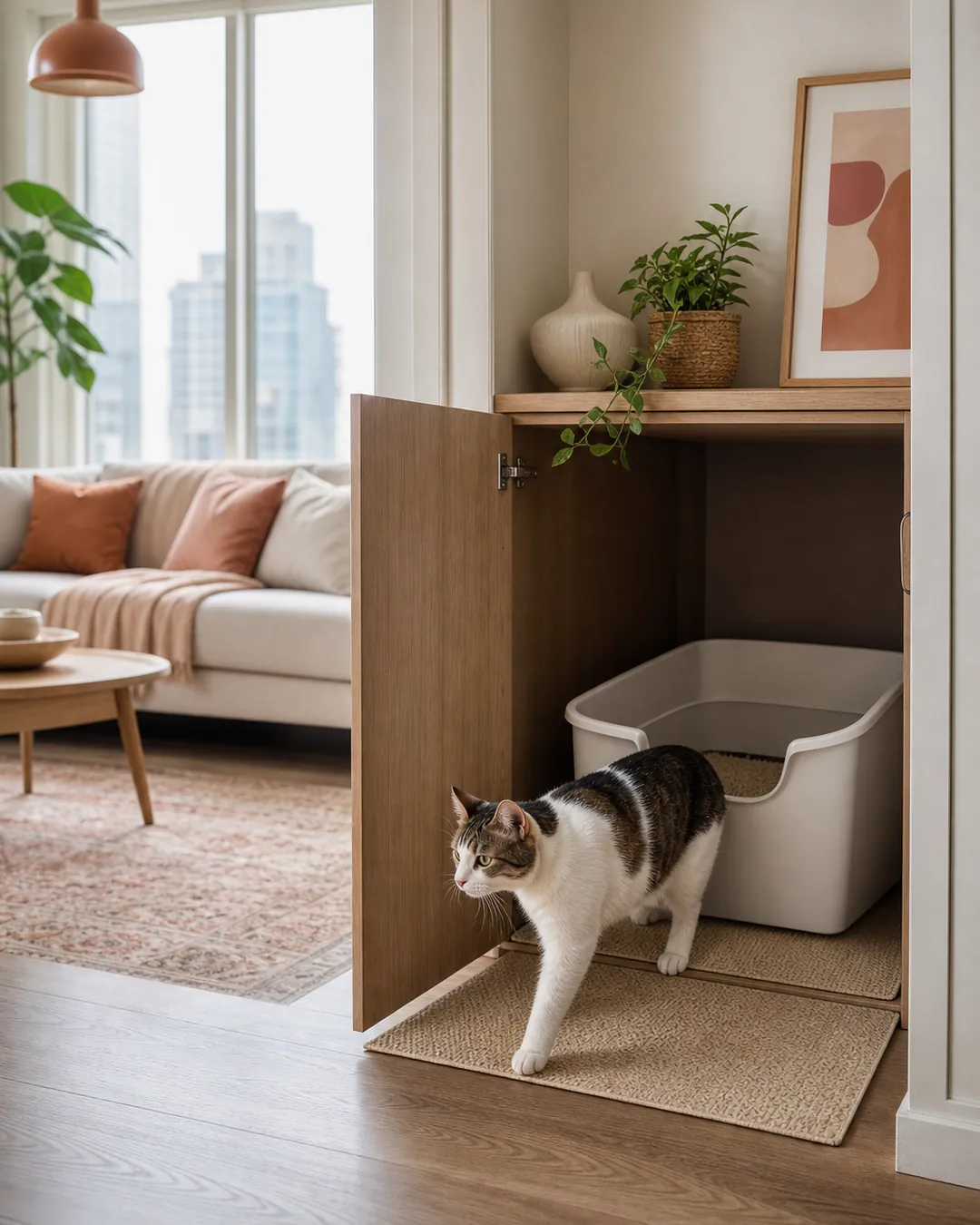
An enclosure with a mat on the floor outside catches litter after it has already spread. A double-layer trapping mat cut to sit on the cabinet floor between box and doorway catches it at the source. If the doorway has a lip, better still.
11. Do not put it in a dead-end corner
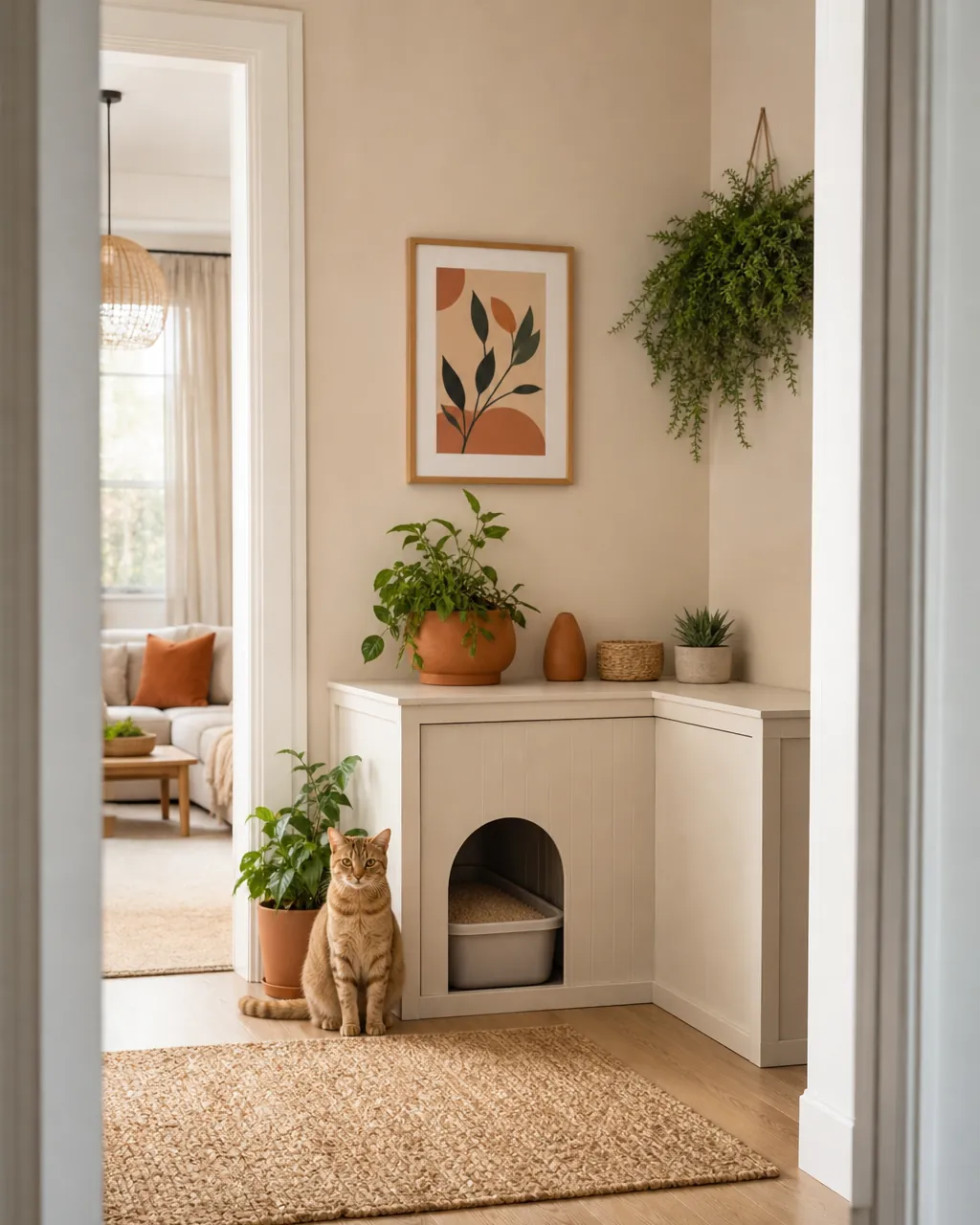
The two-exit rule applies to the room as well as the box. An enclosure jammed into an alcove with furniture on both sides gives the cat one line in and out. Leave an approach from either side of the piece, even a narrow one.
12. Keep the top clear of anything breakable
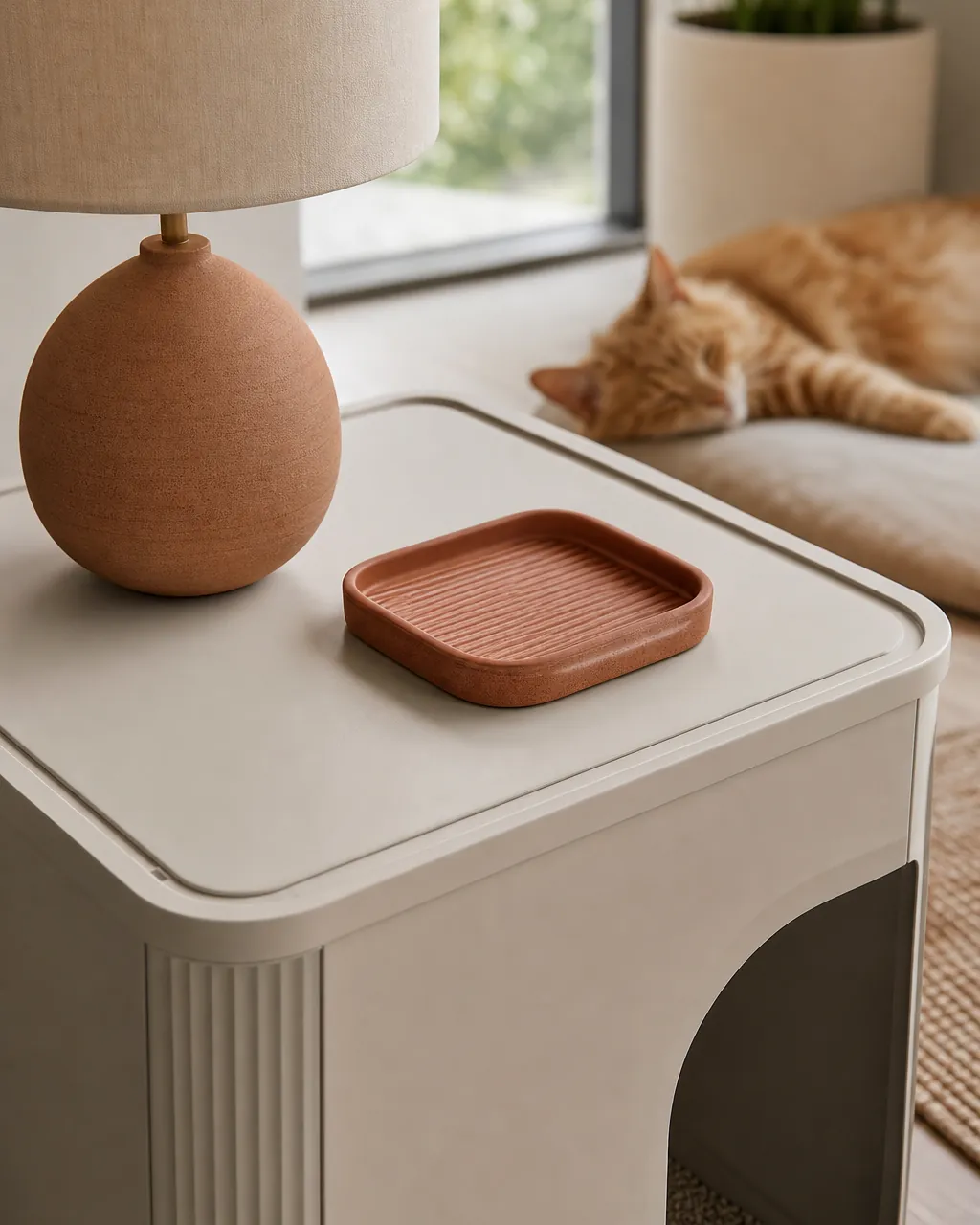
The top of a litter cabinet is a surface, and surfaces in small apartments get used. Keep it to a lamp, a tray, a plant. Cats jump onto these cabinets, and a heavy ceramic thing on the edge of one eventually meets the floor.
13. Convert something you already own if the budget is tight
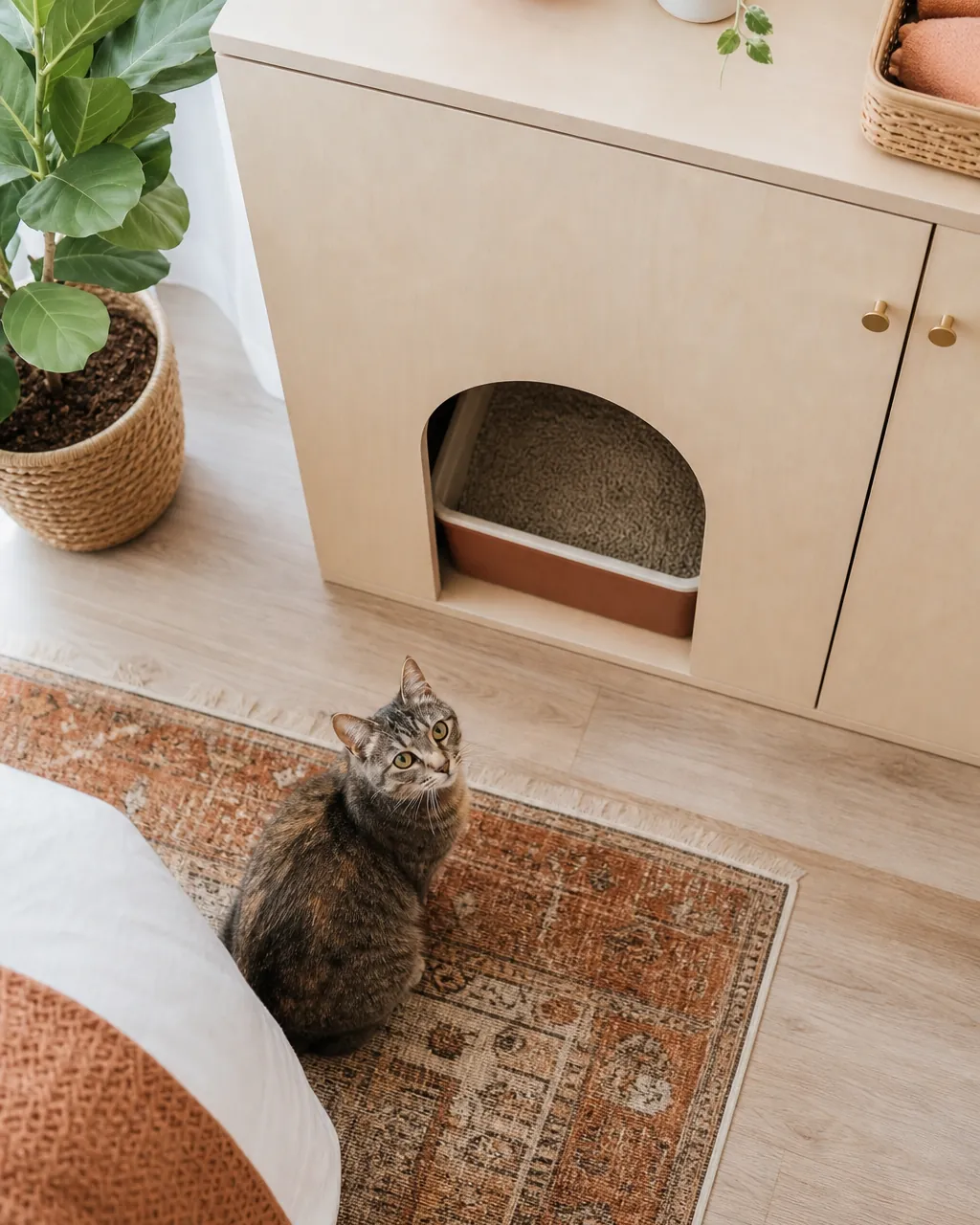
A plain cabinet, a cut entry, a sealed floor and a filter costs a fraction of purpose-built furniture and looks better than most of it, because it already matches your room. Use a hole saw for a round entry or a jigsaw for an arch, and sand the edge properly so nothing catches.
Where to start
Measure three things before you shop: the alcove the piece will sit in, the box you already own, and the cat standing with its head up. Those three numbers eliminate most of the catalog, and the second one is the one people skip.
Then apply the cleaning test to every candidate. Look at the photographs and ask how you would scoop it on a Tuesday evening. If the answer involves kneeling and reaching through a small opening, keep looking, however good the piece looks in the room.
It is also worth being honest about what an enclosure does and does not fix. It fixes the sightline, which is a real problem in a room you live in. It does not reduce how often the box needs cleaning, and by concentrating the air it makes falling behind more noticeable rather than less. Anyone hoping an enclosure will let them scoop less often is about to be disappointed, and the cat will register it before the person does.
Buy the mat and the filters at the same time as the enclosure. They are cheap, they are what actually keeps the thing pleasant to live with, and ordering them separately means a two weeks where the enclosure is doing the concentrating without any of the mitigation.
Settle the box itself first, because the seven apartment litter box types compared by footprint and entry height are what actually decide the interior dimensions an enclosure like this one has to work around.
In a household with more than one cat, that same upkeep has to repeat at every box instead of just this one, and getting the count and placement right before buying anything is what multi-cat litter box setups come down to.
That math gets even less forgiving in an odd nook like the triangle under a staircase, where the ceiling itself decides whether an enclosure fits before the box footprint ever enters the conversation, which is exactly what the litter box setups that work under a sloped staircase have to work around.