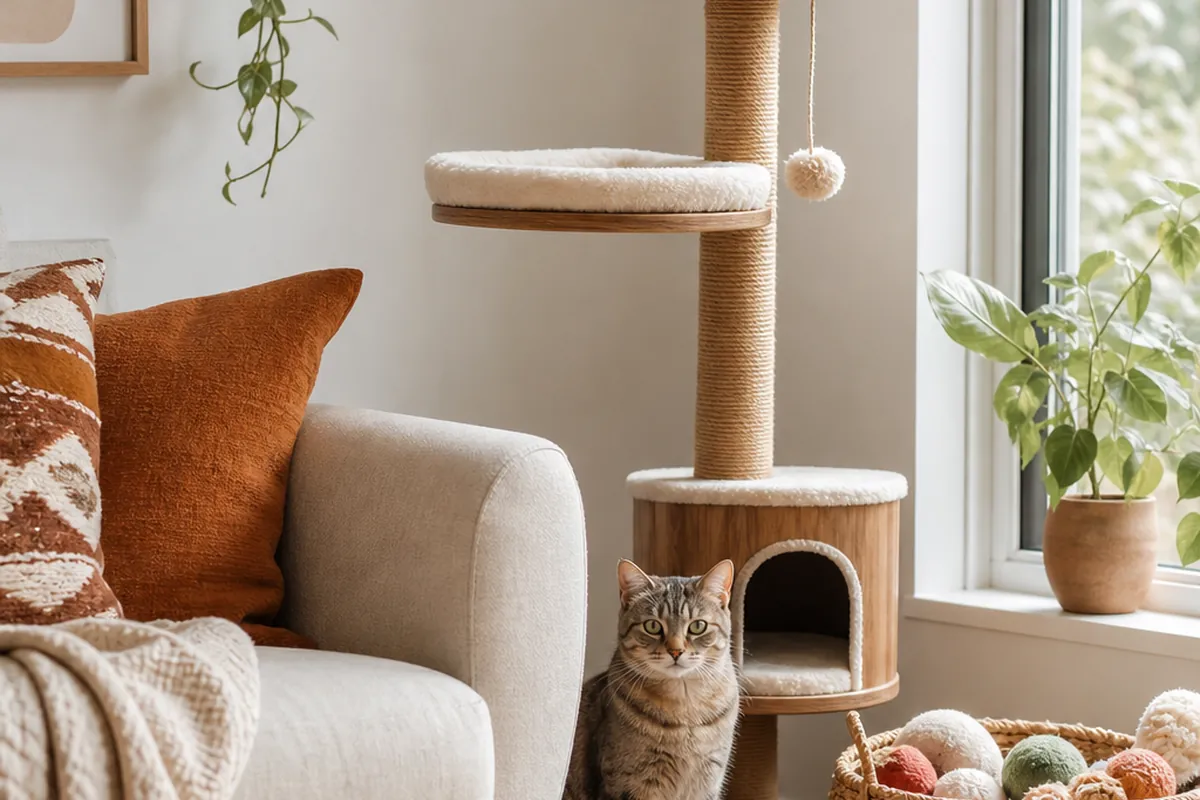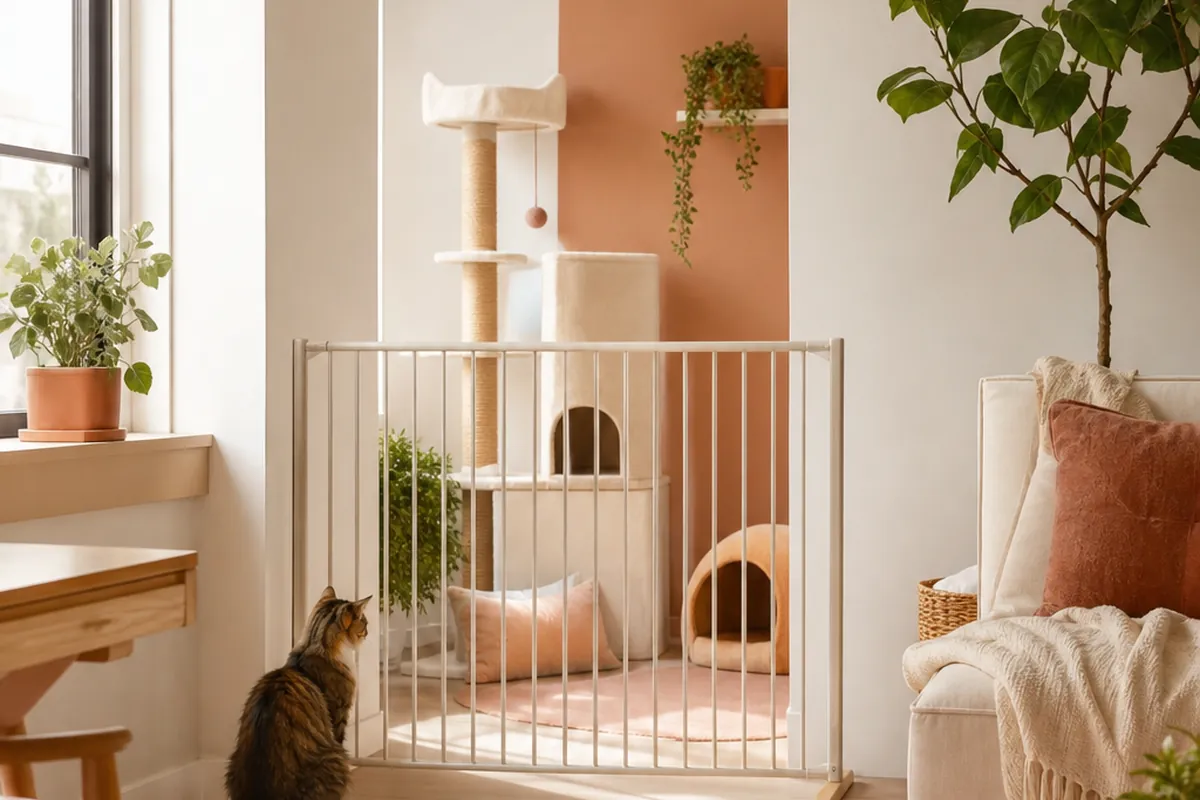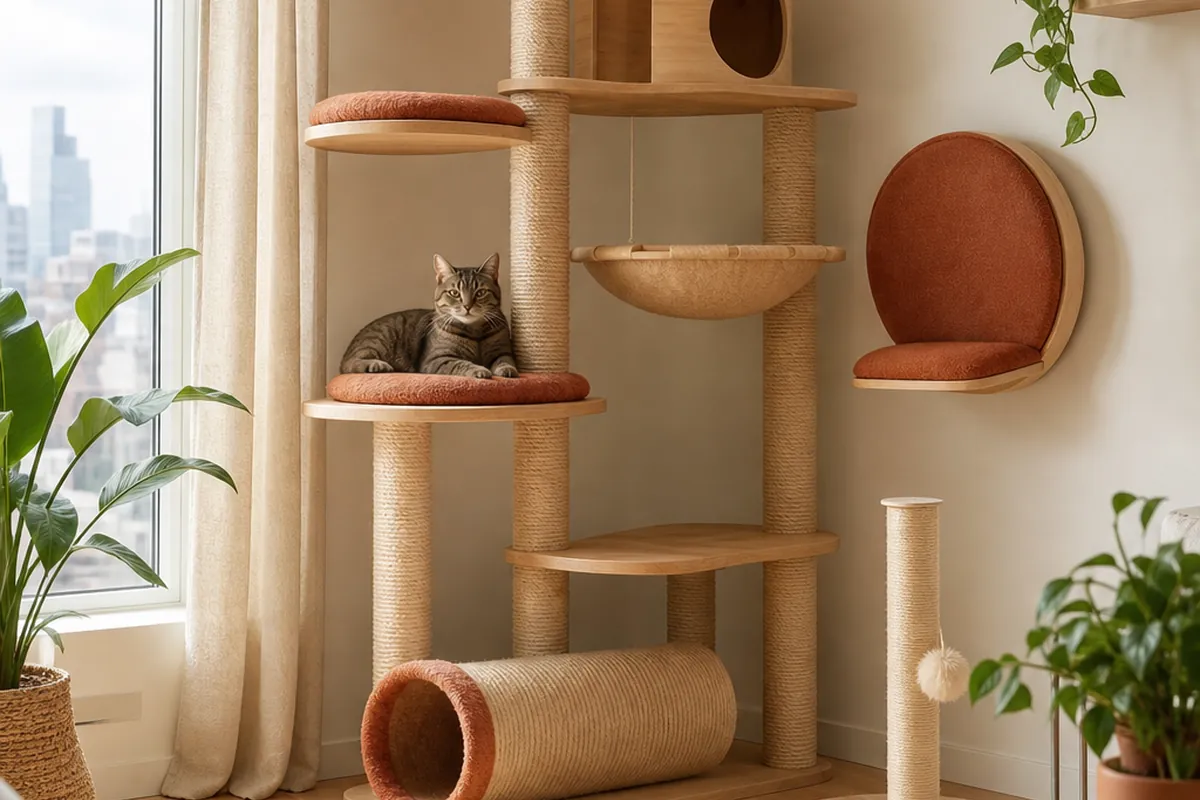
A cat tree solves height. A scratching post solves claws. Neither solves the thing a bored cat actually wants at three in the afternoon, which is somewhere to run, pounce and disappear for a minute. That is what a playroom corner is for, and in a small apartment it does not need its own room, just one corner that links a few pieces together instead of scattering them.
Eleven ideas, built around one corner rather than the whole floor.
1. Pick one corner and commit the whole layout to it
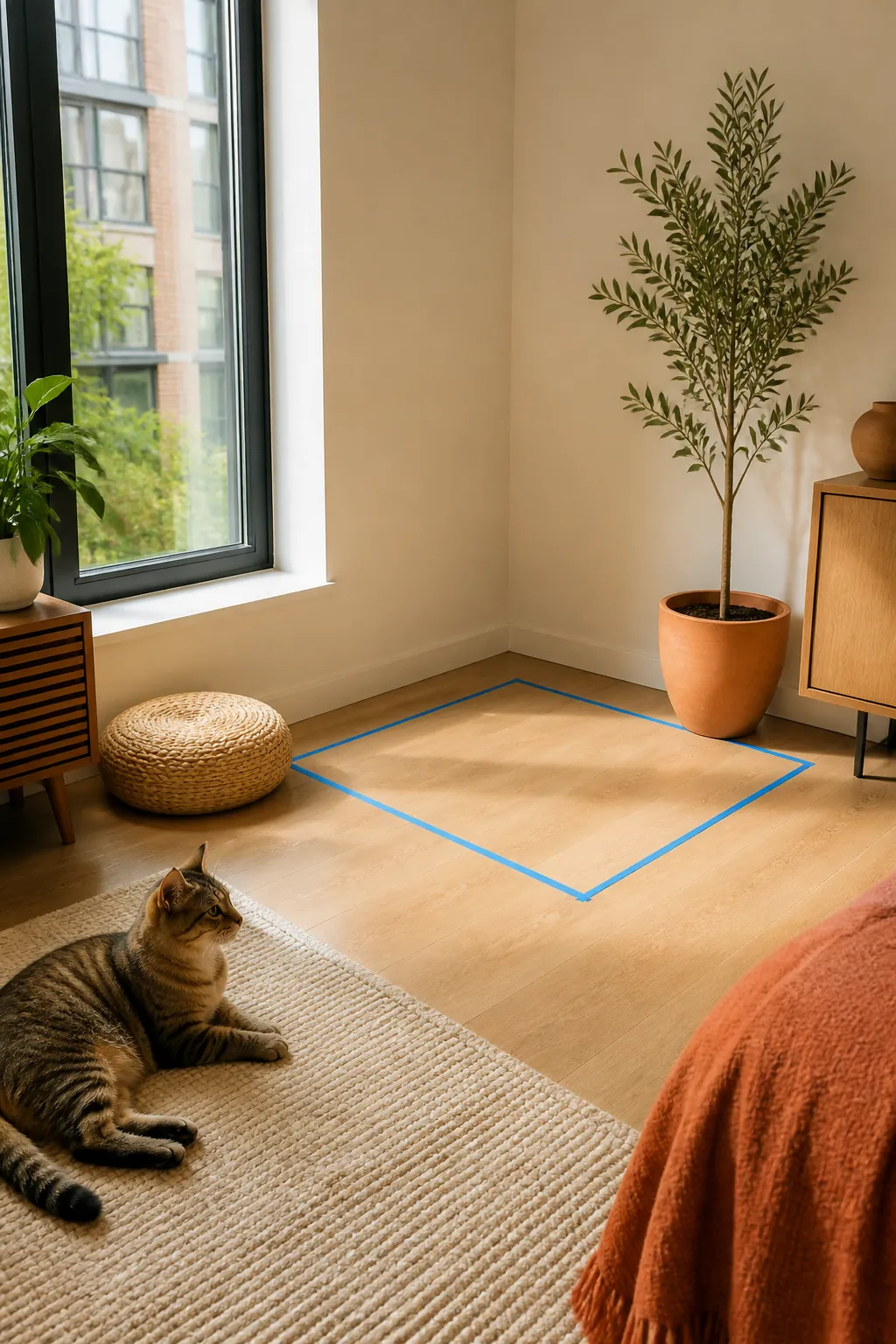
A playroom fails when its pieces get spread across the apartment, because a cat touring three unconnected objects never builds the momentum that makes play fun. Pick a corner roughly three feet by three feet and plan the tunnel, the tree and the post as one arrangement rather than three separate purchases. The footprint is smaller than people expect, closer to a reading chair than a room.
Sketch the layout on paper before buying anything, even roughly. Mark where the tunnel’s two ends land, where the tree’s base sits, and where the post goes, and check that none of the three overlaps the others’ swing room. A layout that looks fine as a list of three products often does not survive being drawn to scale, and paper is a lot cheaper to redo than furniture.
2. Start the layout with the tunnel, not the tree
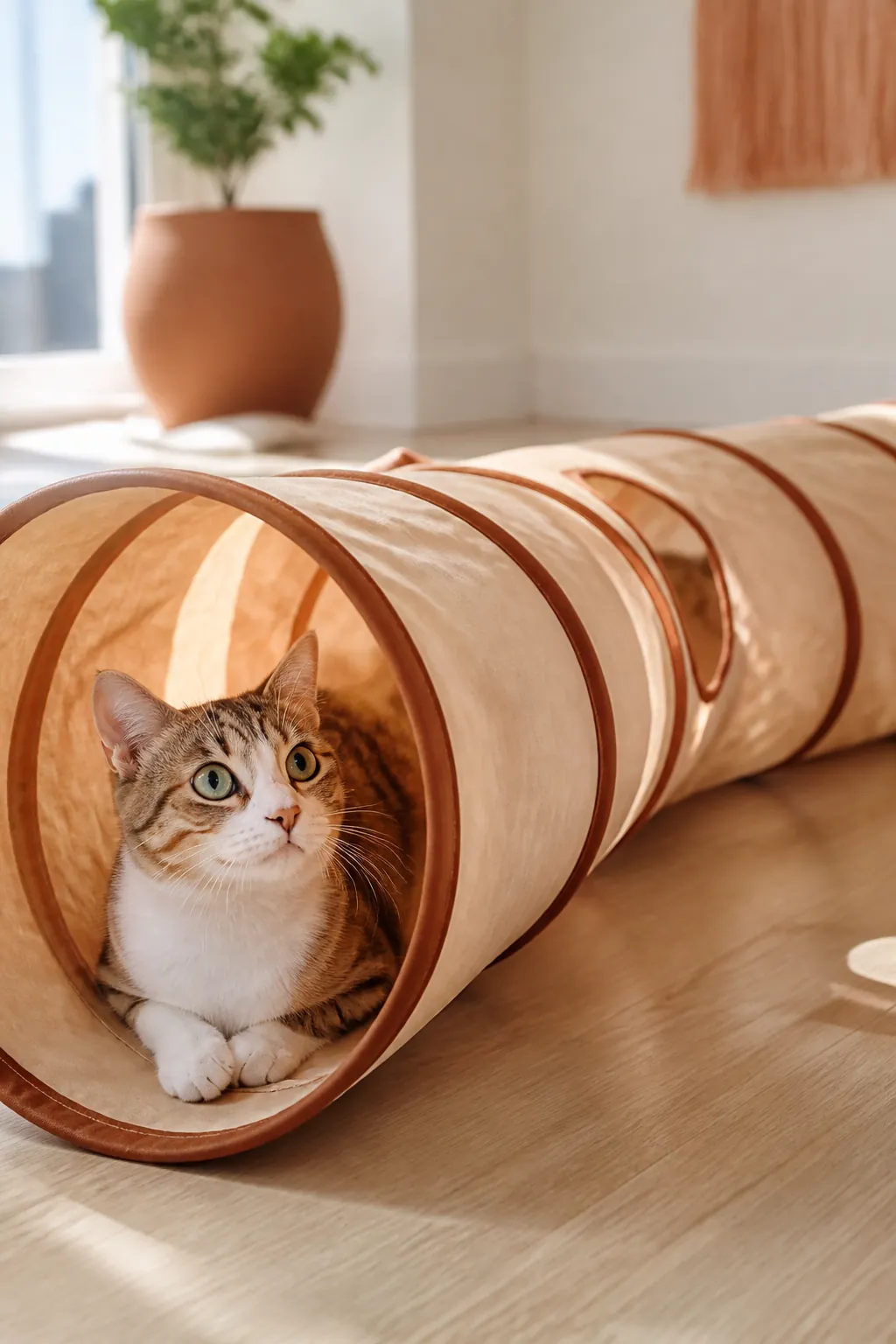
Most people buy the tree first because it is the expensive item, then try to fit a tunnel into whatever gap is left. Reverse that. A cat tunnel sets the ground-level path through the corner, and everything else gets positioned around where that path enters and exits, not the other way around.
3. Give the tunnel two ends, not one
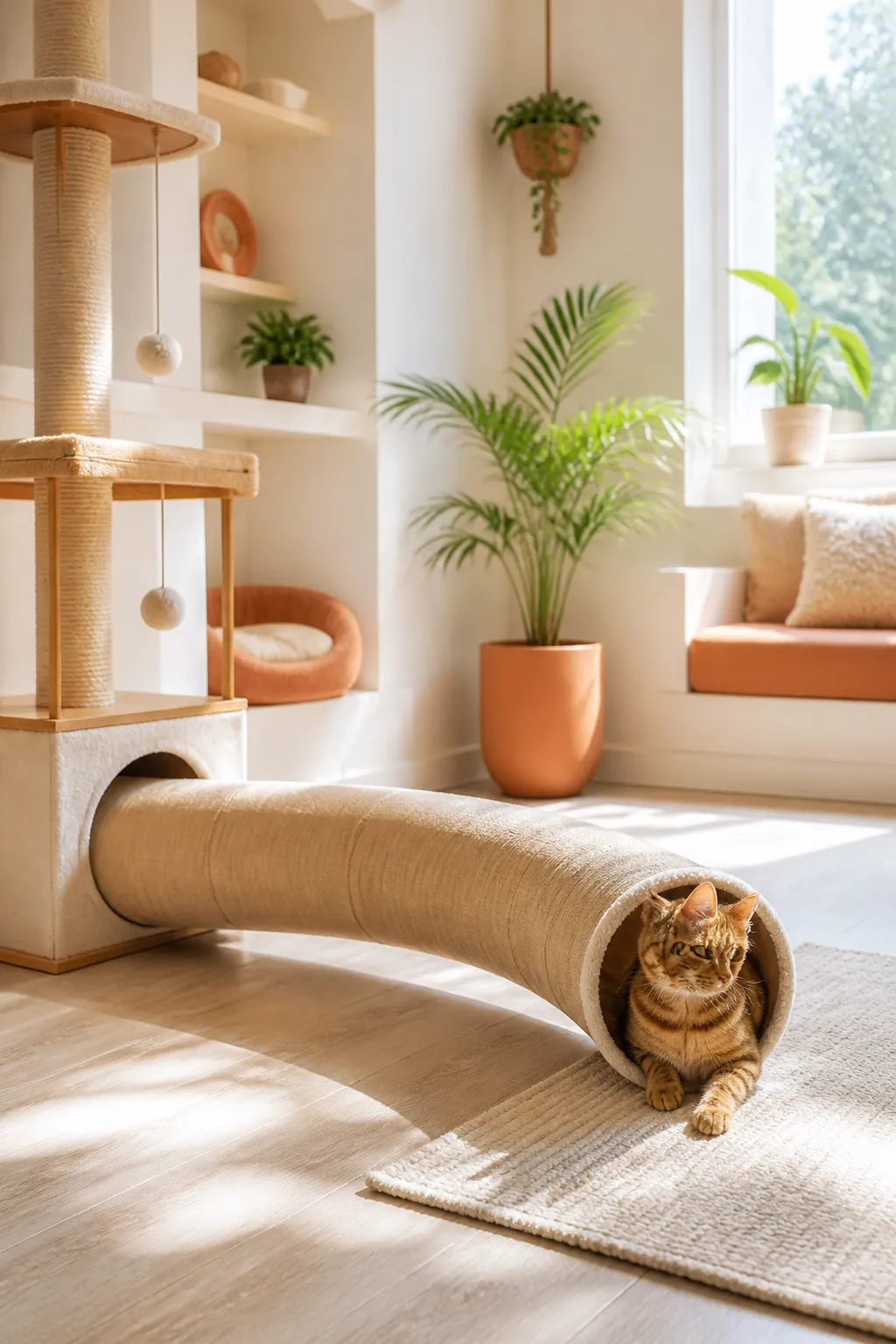
A tunnel with a dead end is a tube a cat investigates once and then ignores. Run it between two things worth arriving at, the base of the tree at one end and open floor or a doorway at the other, so going in always means going somewhere. A curved or L-shaped layout works better than a straight one here, because a cat cannot see all the way through, which is most of what makes the ambush game fun in the first place.
4. Mount the tree where it can see the room
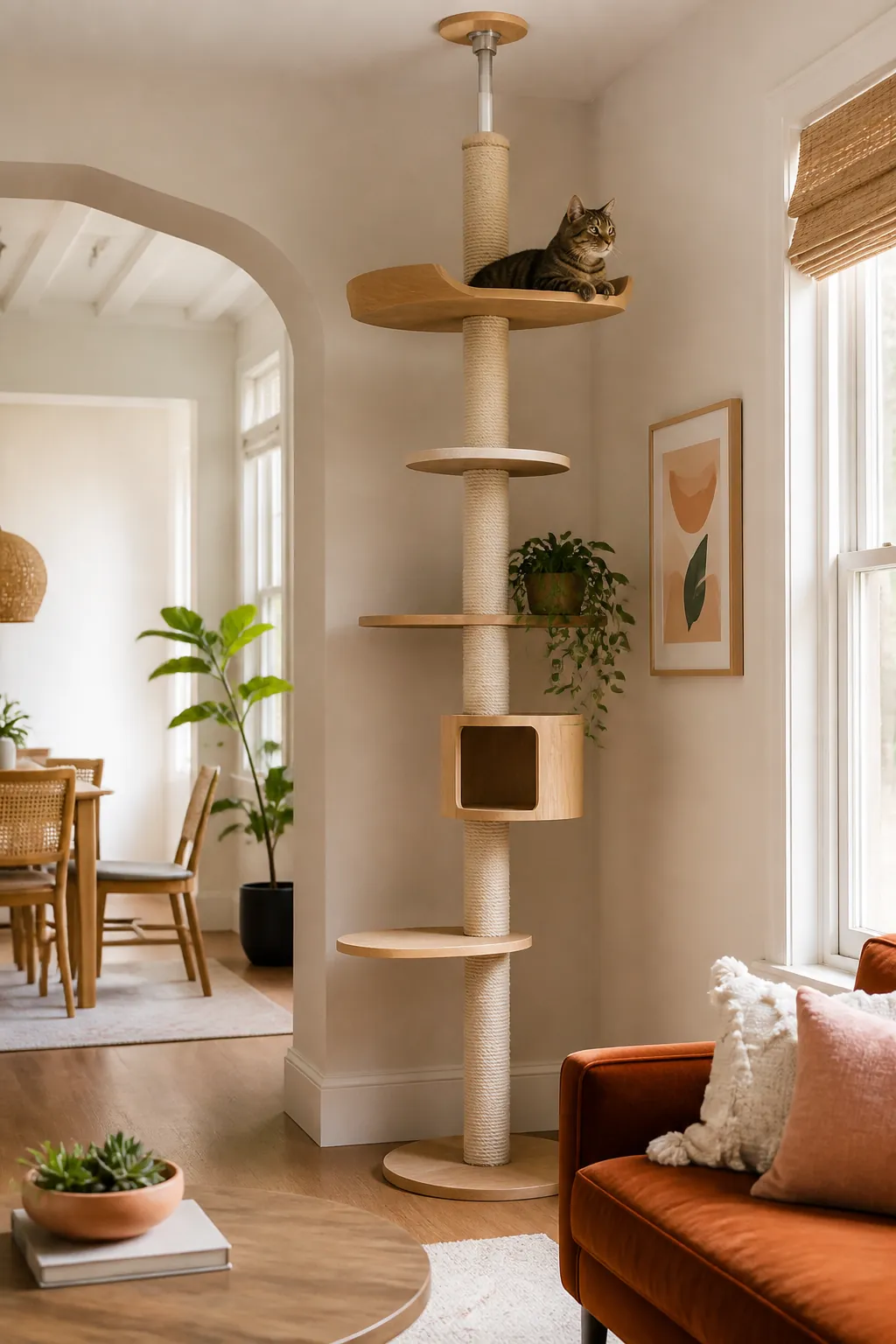
A floor-to-ceiling cat tree works as a lookout post for the whole playroom only if it is placed where the top platform has a clear view across the room, not facing straight into a wall two feet away. Check your ceiling height before ordering, since these poles have a real minimum as well as a maximum and a too-short pole will not tension properly.
5. Put the scratching post at the tunnel’s exit
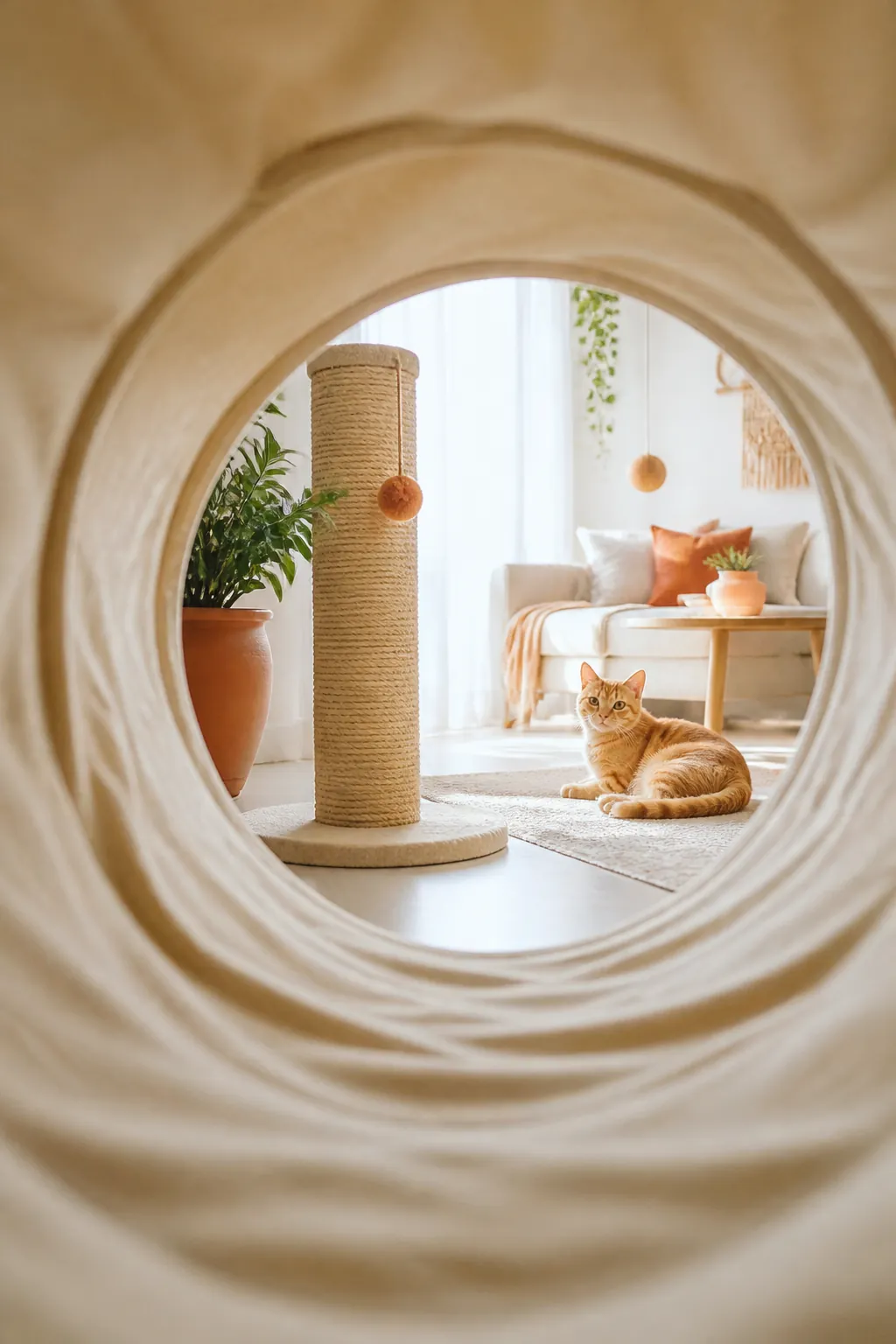
Cats stretch and scratch right after a sprint, which makes the far end of the tunnel the best spot for a scratching post rather than a random stretch of wall. A small-space scratching post sized to stand on its own takes up less floor than it looks like it needs, since the footprint that matters is the base, not the height.
6. Leave a straight run of at least six feet
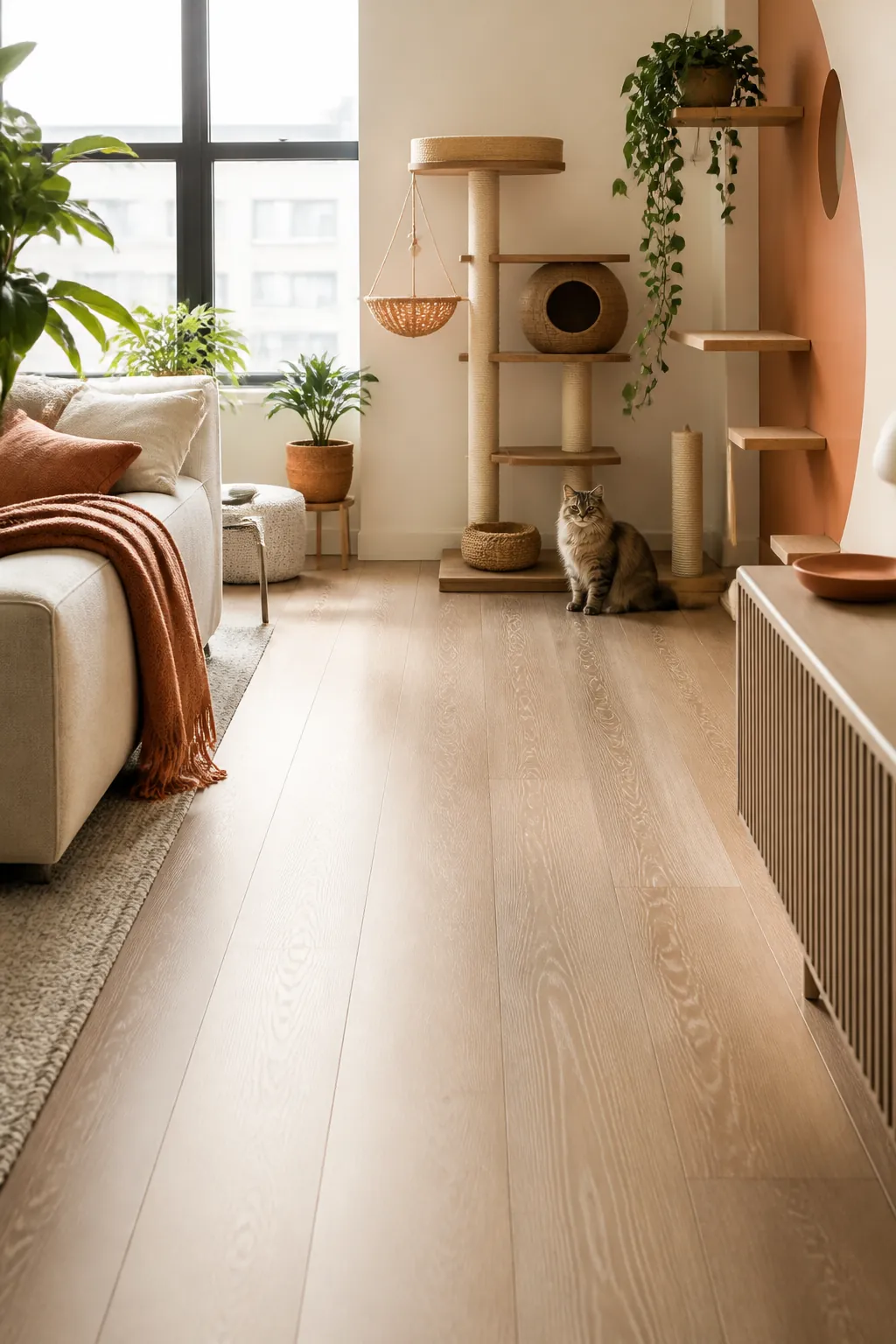
A cat accelerating out of a tunnel needs room to actually get somewhere, and a corner that dead-ends into a coffee table after eighteen inches gets used for climbing but never for running. Point the open side of the layout down the longest clear stretch of floor the room has, even if that means the corner furniture itself is smaller than you first planned.
Measure that run with the furniture that is actually there, not the room empty. A hallway that reads as six feet on a floor plan often loses two of those feet to a half-open door or a laundry basket that lives against the wall, and a playroom built around the floor-plan number rather than the lived-in one disappoints on day one.
7. Keep the first three feet of that run free of rugs with loose edges
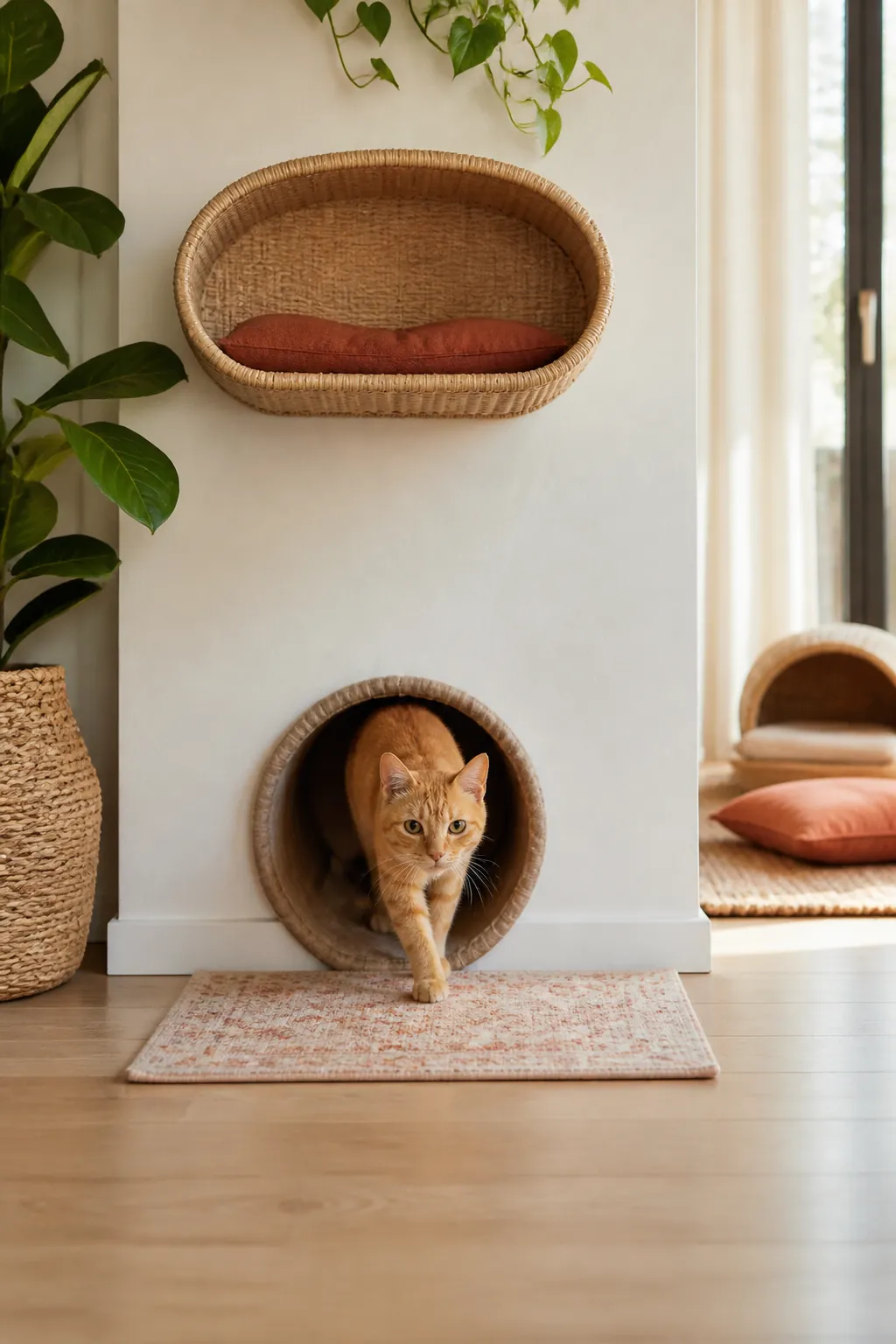
A cat at full speed out of a tunnel will catch a curled rug edge with a back foot and slide, which is how an enthusiastic play session ends with a cat avoiding the corner for a week. A thin rug with a non-slip pad underneath is fine. A loose runner with a curling edge right where the tunnel exits is the one layout mistake that undoes everything else here.
8. Separate the running height from the sleeping height
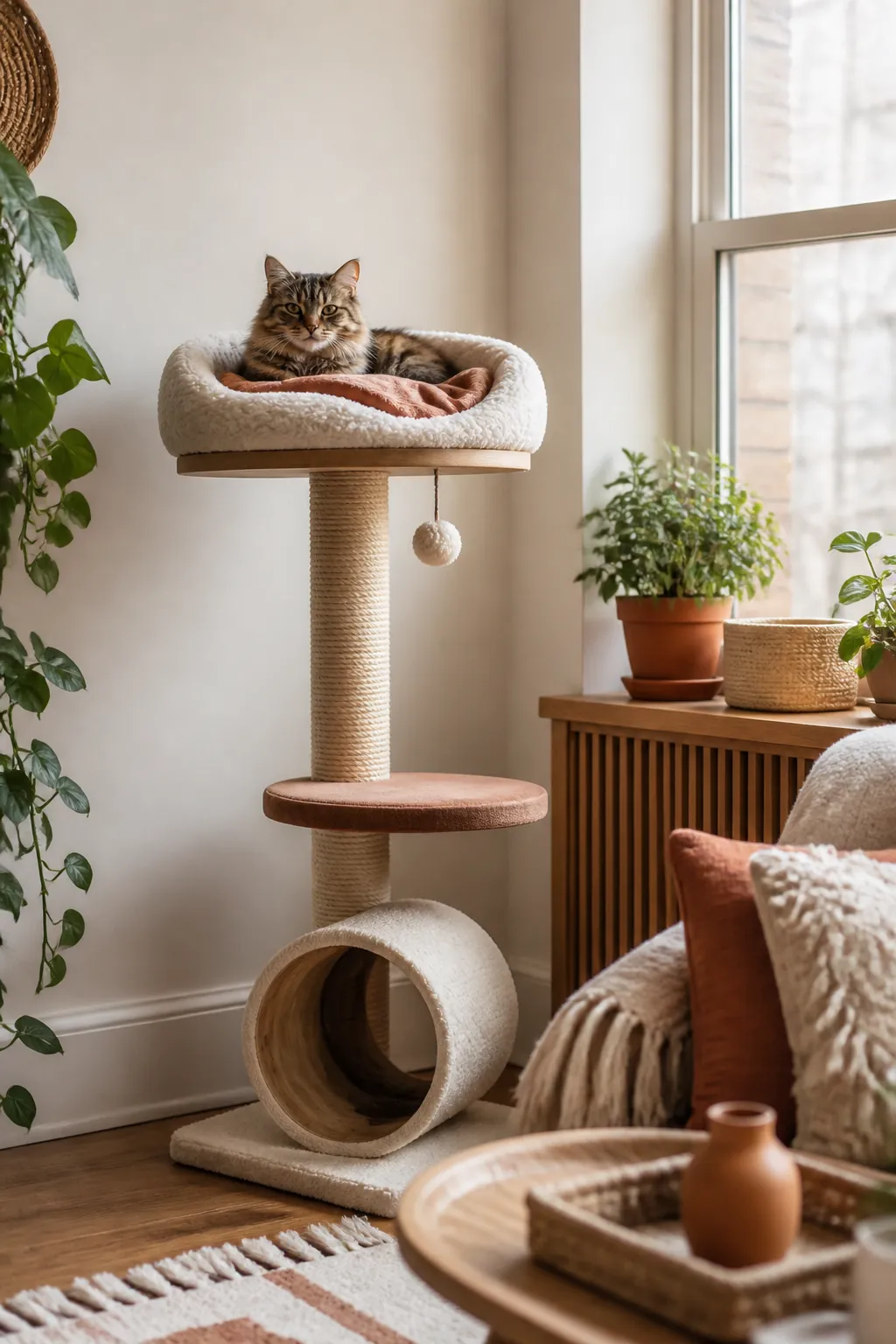
Ground level in this corner is for movement: the tunnel, the post base, the open run. Keep any bed or soft perch up on the tree’s higher platforms instead of at floor height, so the cat is not trying to nap three feet from where the tunnel dumps it out mid-sprint. The two activities want different real estate even when the corner itself is shared. If the corner is too tight to give sleeping any room at all, move it out entirely, and these cat closet ideas for turning dead space into a cat room turn a nearby reach-in closet into the quiet half of the setup.
9. Rotate two or three toys instead of adding a fourth
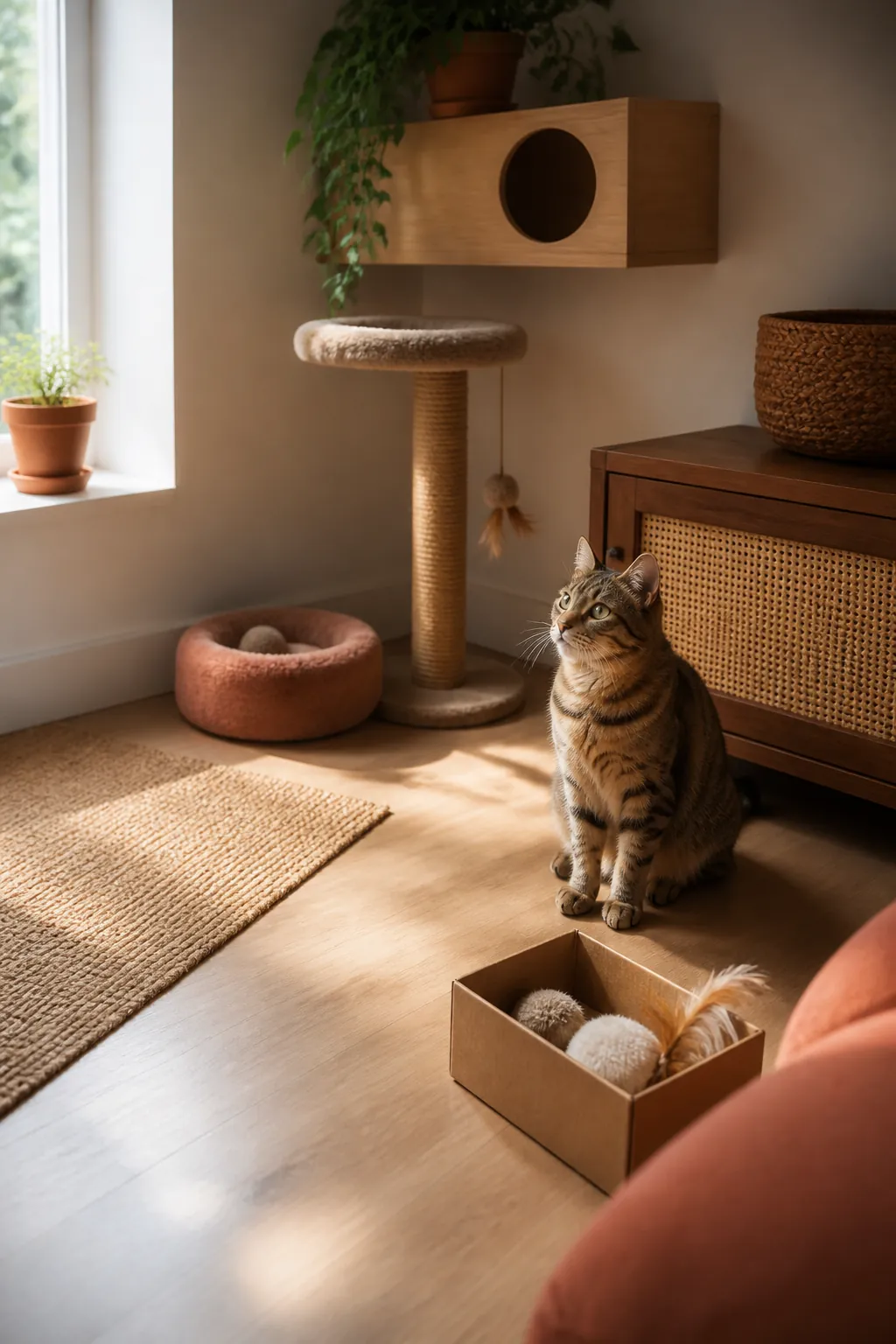
A corner that accumulates every toy a cat owns stops reading as a playroom and starts reading as storage, which is the opposite of what makes it get used. Keep two or three toys out at a time and box the rest nearby, swapping every week or two. A toy that has sat untouched for a month is not a toy the corner needs, whatever it cost. Boxing the spares is also what keeps the corner looking like part of the room, and these cat room decor ideas that skip the pet store look cover the palette and materials that do the rest of that work.
10. Build the run away from a shared wall
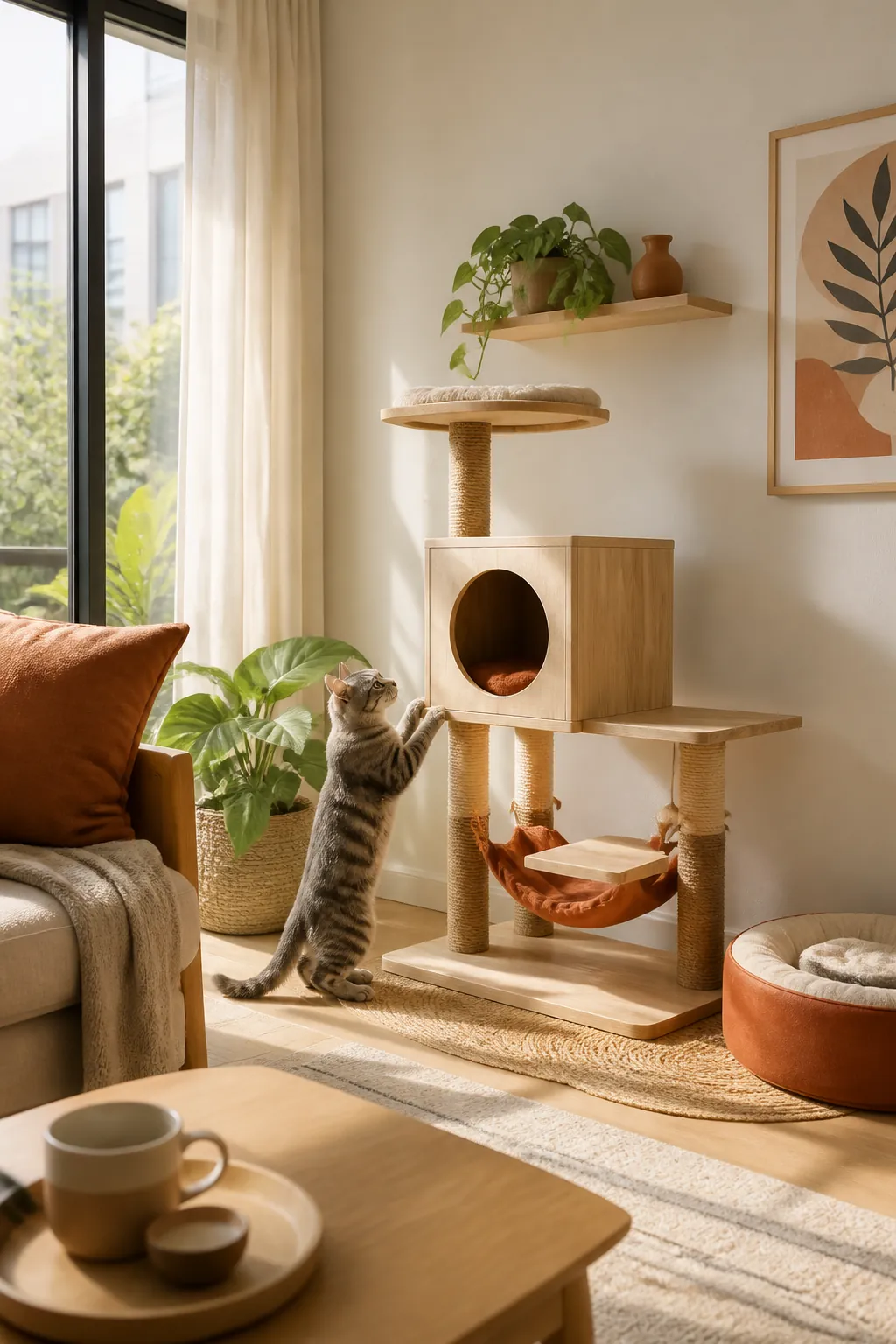
The sound a neighbor actually notices is not a toy squeaking, it is a cat landing from a run or a jump, transmitted straight through a shared wall or floor. Orient the open run toward an interior wall rather than one you share with another unit, and favor a rug over bare boards under the landing spots. This is a five-minute layout decision that avoids a conversation with the unit below.
11. Make every piece removable before you buy it
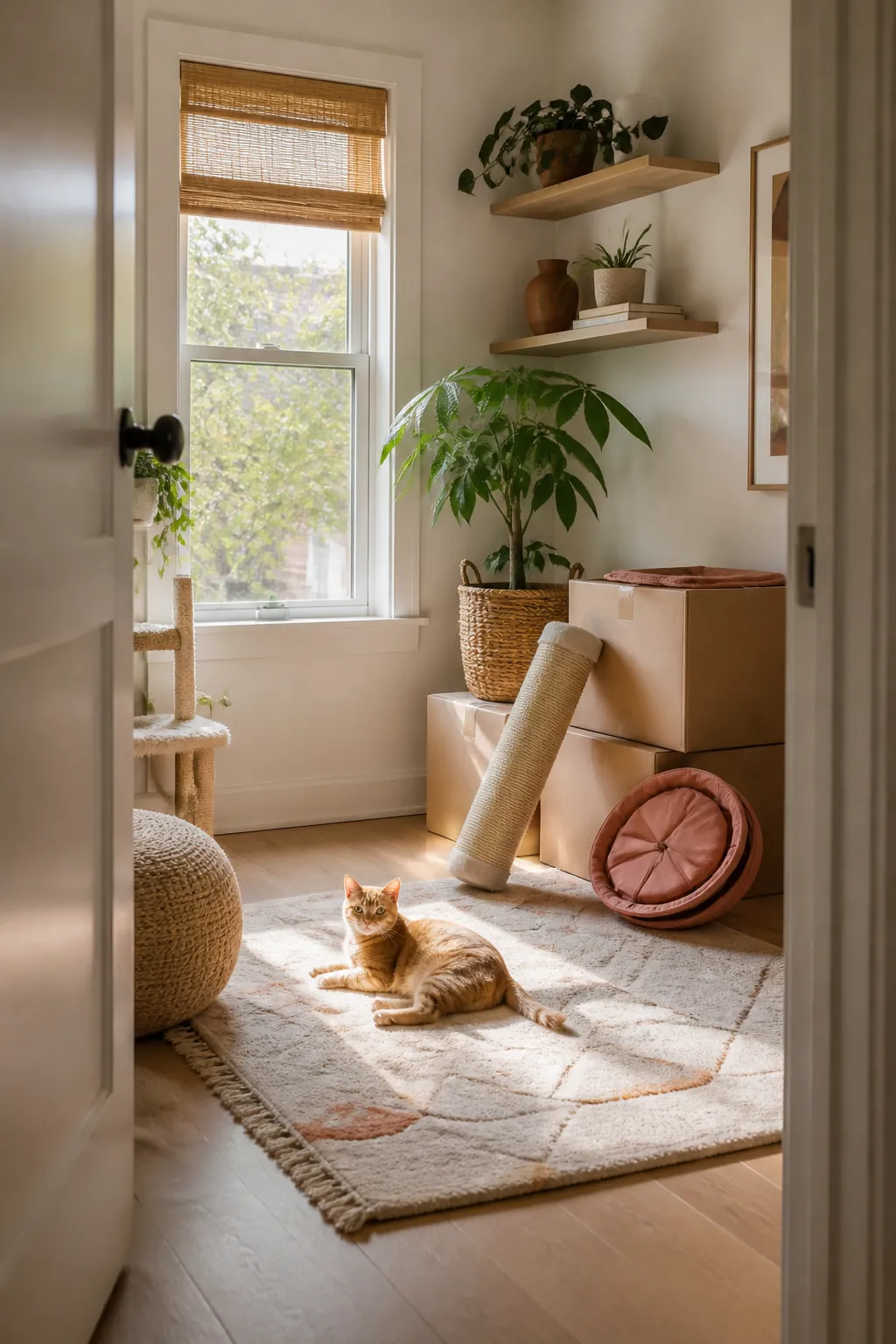
A tension pole, a freestanding post and a collapsible tunnel all move apartments without a mark left behind, which is not true of anything screwed to a wall. Before buying a piece for this corner, check that it either braces rather than fixes, or folds flat enough to fit in a moving box. A playroom built this way survives a lease renewal in a different apartment entirely.
Where to start
Buy the tunnel first. It is the cheapest piece, it sets the floor plan for everything else, and it tells you within a week whether this corner is the right one, since a tunnel in the wrong spot gets ignored fast and obviously. If it gets used, the tree and the post are a safe next purchase in the same corner.
With two cats, give the layout a second way through rather than a second tunnel. A single tunnel with one entrance turns into a chokepoint the less confident cat avoids entirely, while the same tunnel left open at both ends, with the tree and post positioned so a cat can loop around rather than double back, gets used by both without either one cornering the other.
Measure the straight run before either of those arrives. A corner that looks adequate on a tape measure can still be too tight once a tree’s base and a post’s footprint both sit inside it, and the running room is what actually makes the layout a playroom rather than just furniture with a cat on it.
Watch which end of the tunnel gets used for ambush and which gets used for exit, and put the post at the exit end once you know. Cats are consistent about this within a few days, and guessing wrong just means moving one object a few feet.
A playroom corner is finished when a cat uses all three pieces in one pass rather than visiting them separately. That is the difference between a corner with a tree in it and an actual playroom, and it comes down to layout far more than it comes down to what you bought.
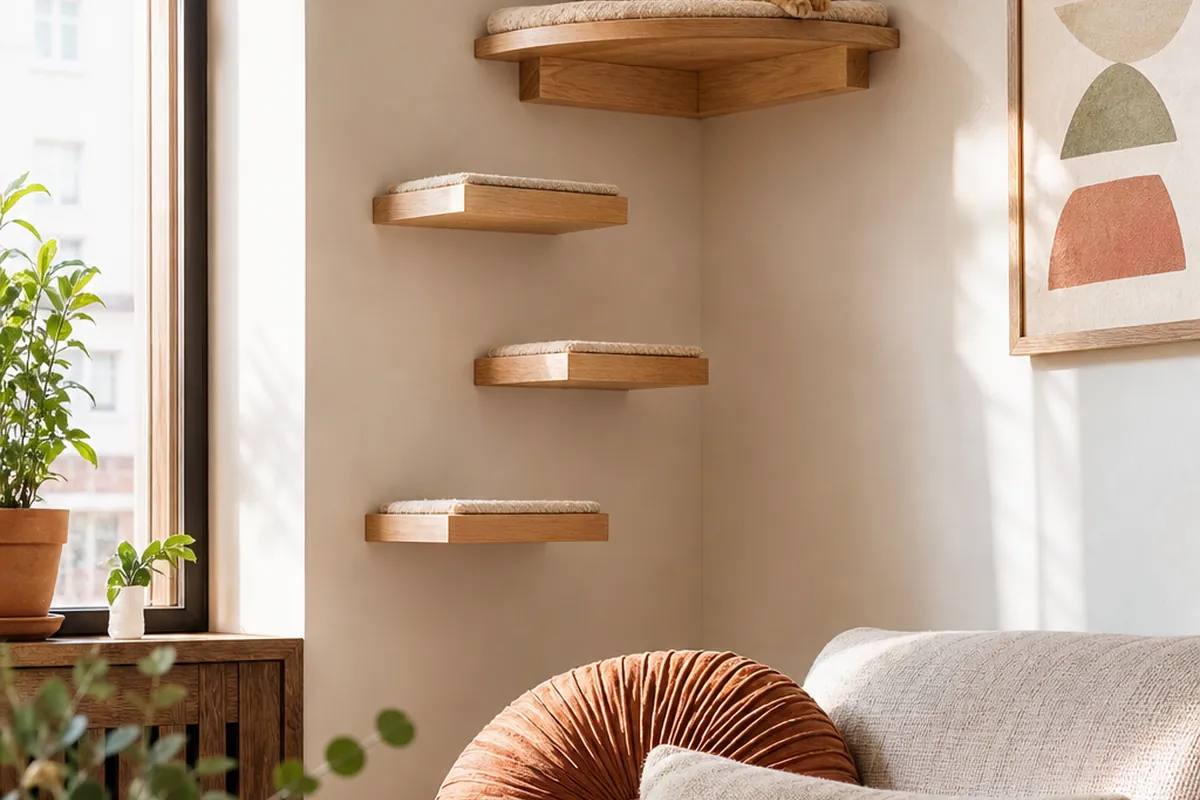
Climbing is the other half of active play, and a climbing wall built for the same small footprint pairs well with a ground-level playroom corner like this one.