Most apartment cats have never been outside, and the argument for changing that is not exercise. It is the air, the noise and the changing traffic of birds and weather, which is a different category of interest from anything you can put in a living room. A catio is how you supply that without the risks of an open door, and in an apartment it can be as small as a single window.
Thirteen ideas, scaled from a window opening up to a full balcony.
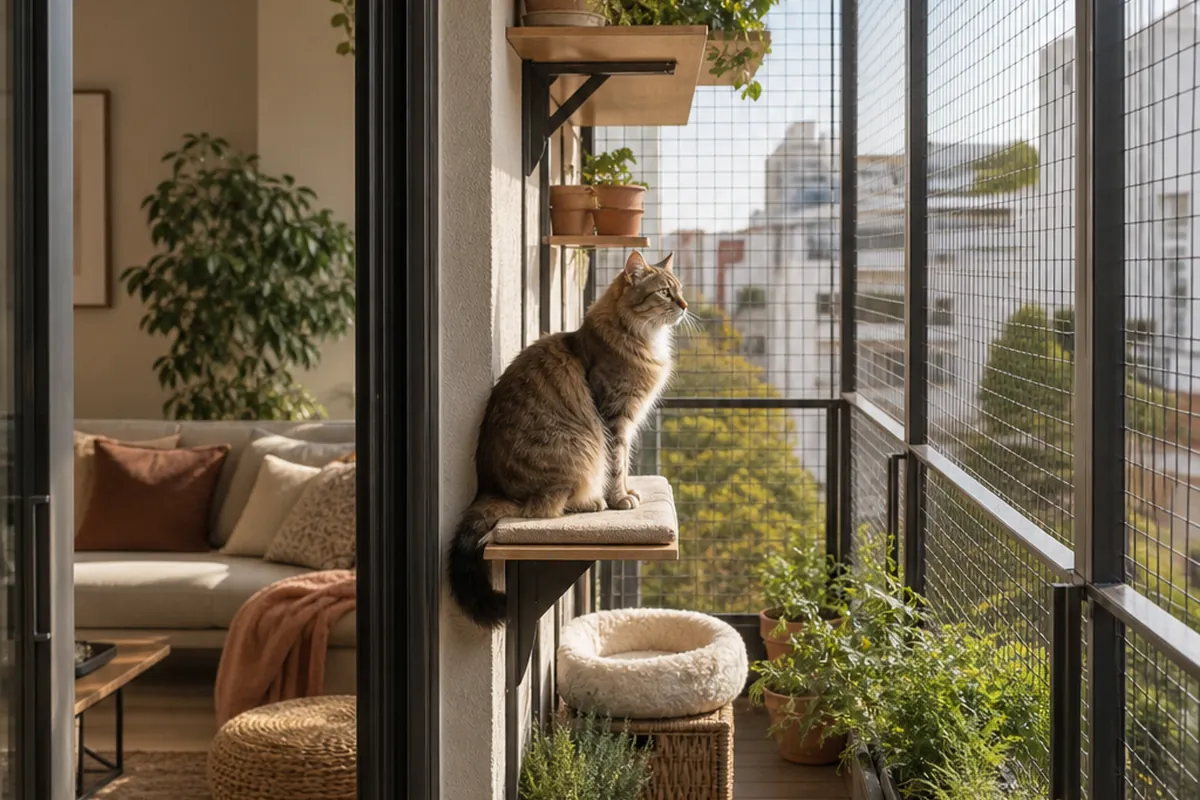
1. Start with what the cat actually wants
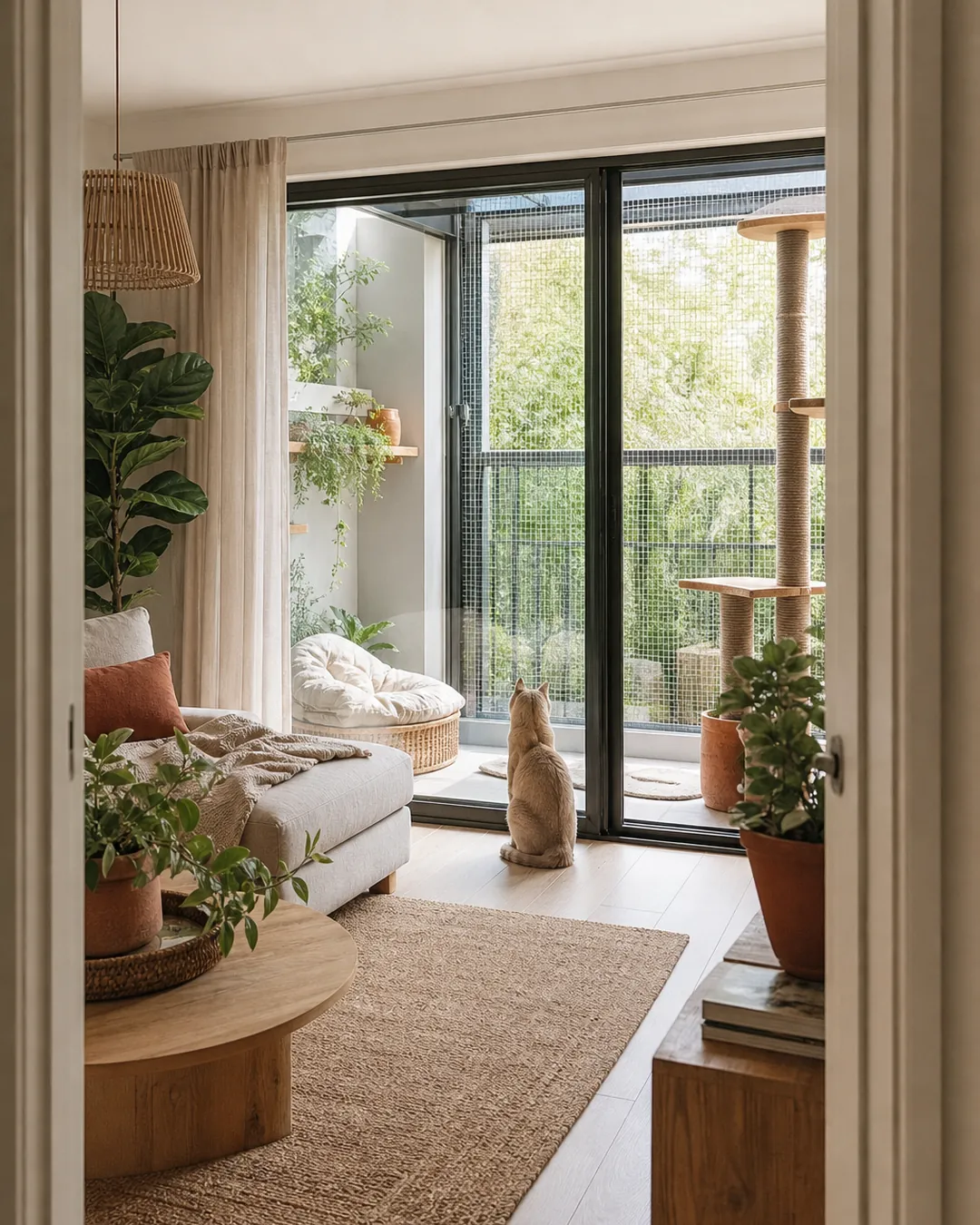
Height, a view, sun in the morning and somewhere to retreat when it gets too warm. That list is short and it is not the same as floor area. A well positioned window box beats a large bare balcony, and knowing that saves money before you spend it. Watch where your cat sits indoors for a few days first, since the window it already chooses tells you which aspect it prefers and whether it is following sun or following activity outside.
2. Net the balcony properly or not at all
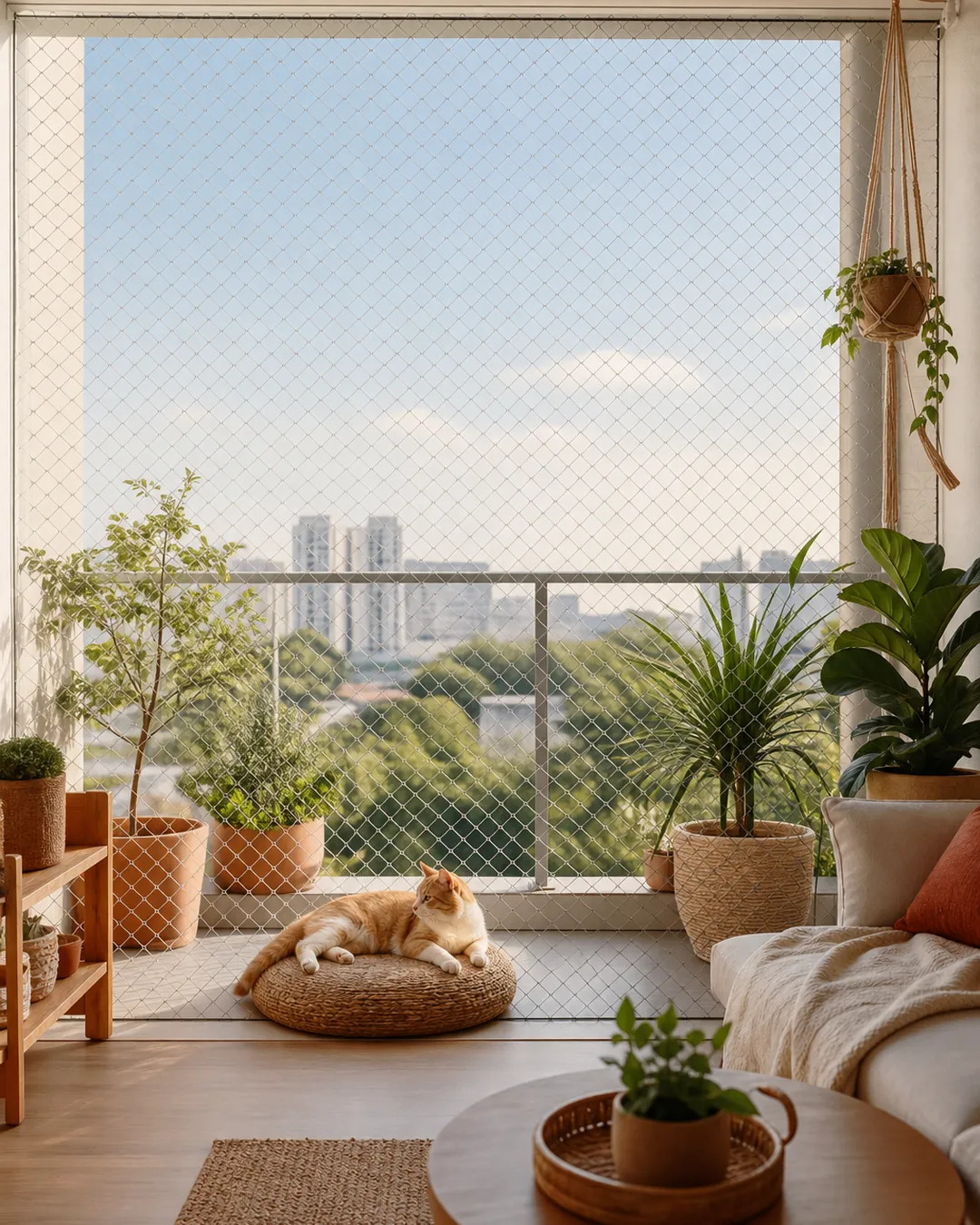
There is no partial version of this that is safe. A balcony netting kit with steel wire reinforcement covering roughly 10 by 13 feet handles a typical apartment balcony, and the reinforcement matters because plain nylon stretches over a season. Fix at every edge, tension it evenly, and treat any sag as a job rather than a cosmetic issue.
If the lease rules out fixing anything to the rail or the wall, the tensioning has to come from the frame instead, which is the whole subject of balcony catio ideas renters can remove later.
3. Hunt the gaps, because the cat will
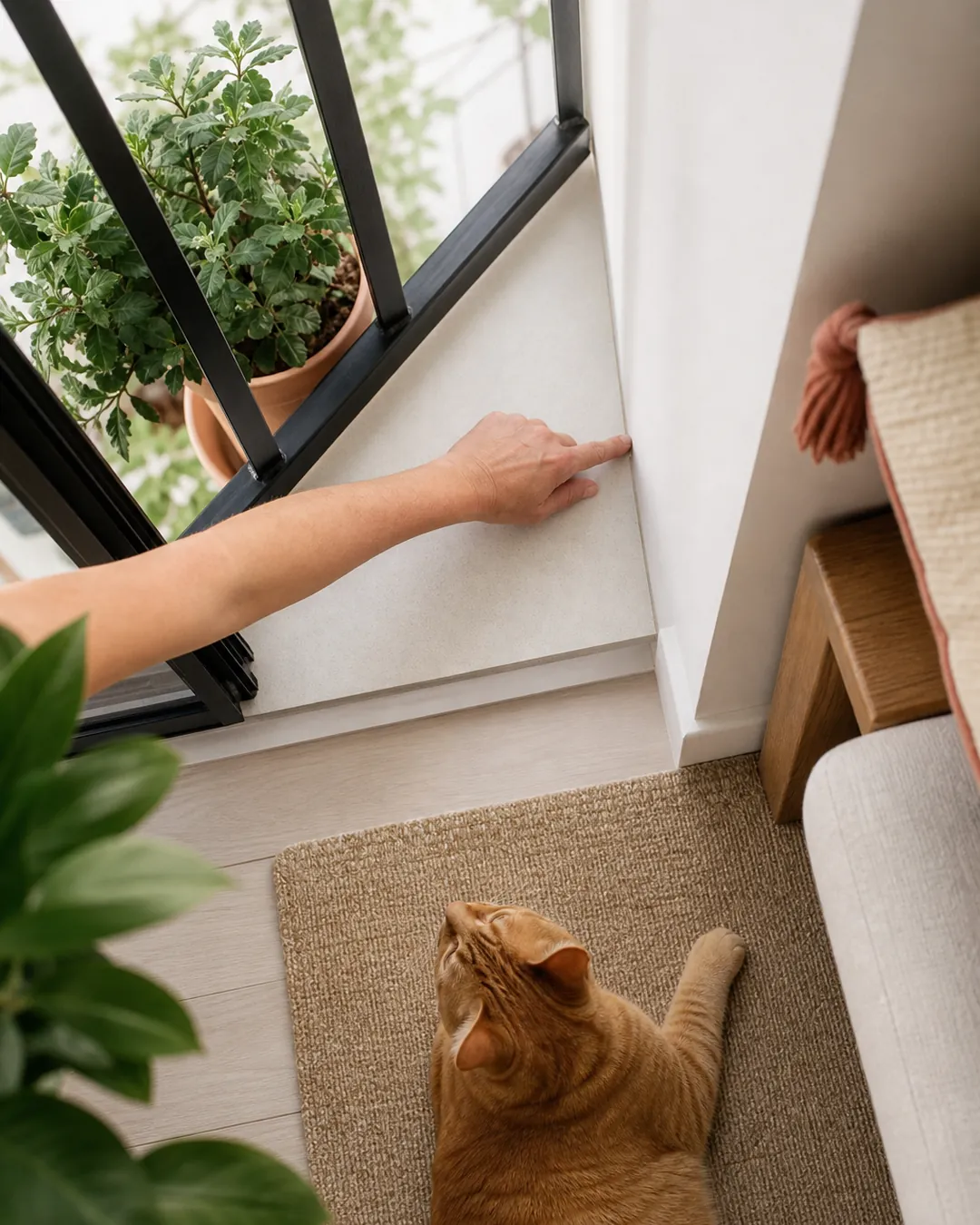
Netting almost never fails in the middle. It fails at the corners, under the bottom rail, beside a drainpipe, at the hinge side of a door, or in the triangular gap where a railing meets a wall. Walk the perimeter with your hand and look for anything a cat could put its head through, because a cat that fits its head through follows with the rest of it. Do this at the cat’s eye level rather than yours, on hands and knees, and do it again after the first windy week when everything has shifted slightly.
4. Fix the bottom edge as carefully as the top
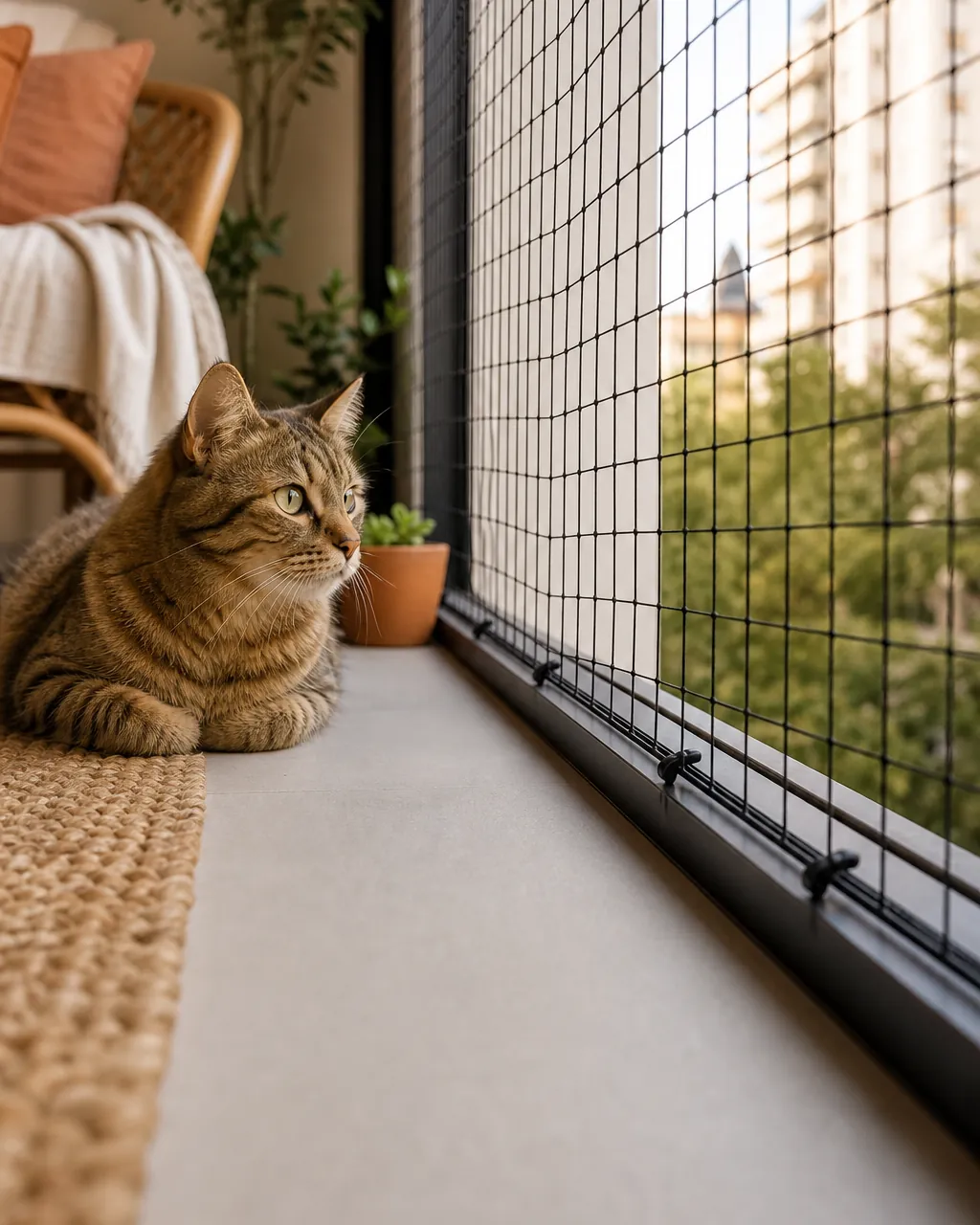
The lower perimeter is the one people leave loose, and it is the one cats test. Cats push under rather than climb over. Weight it, cable-tie it to the railing at close intervals, or trap it under the flooring you lay on top. This single detail accounts for a lot of the netting that gets described as having failed.
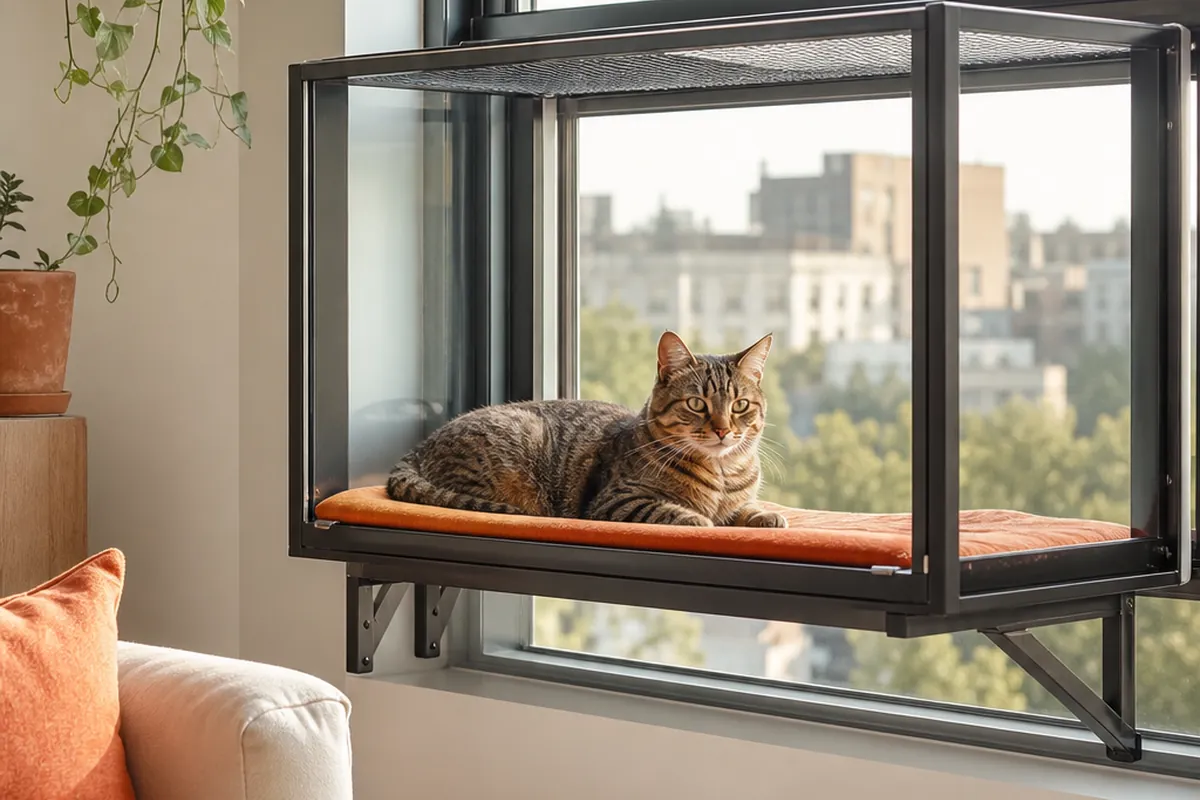
5. Use a window box if the balcony is not an option
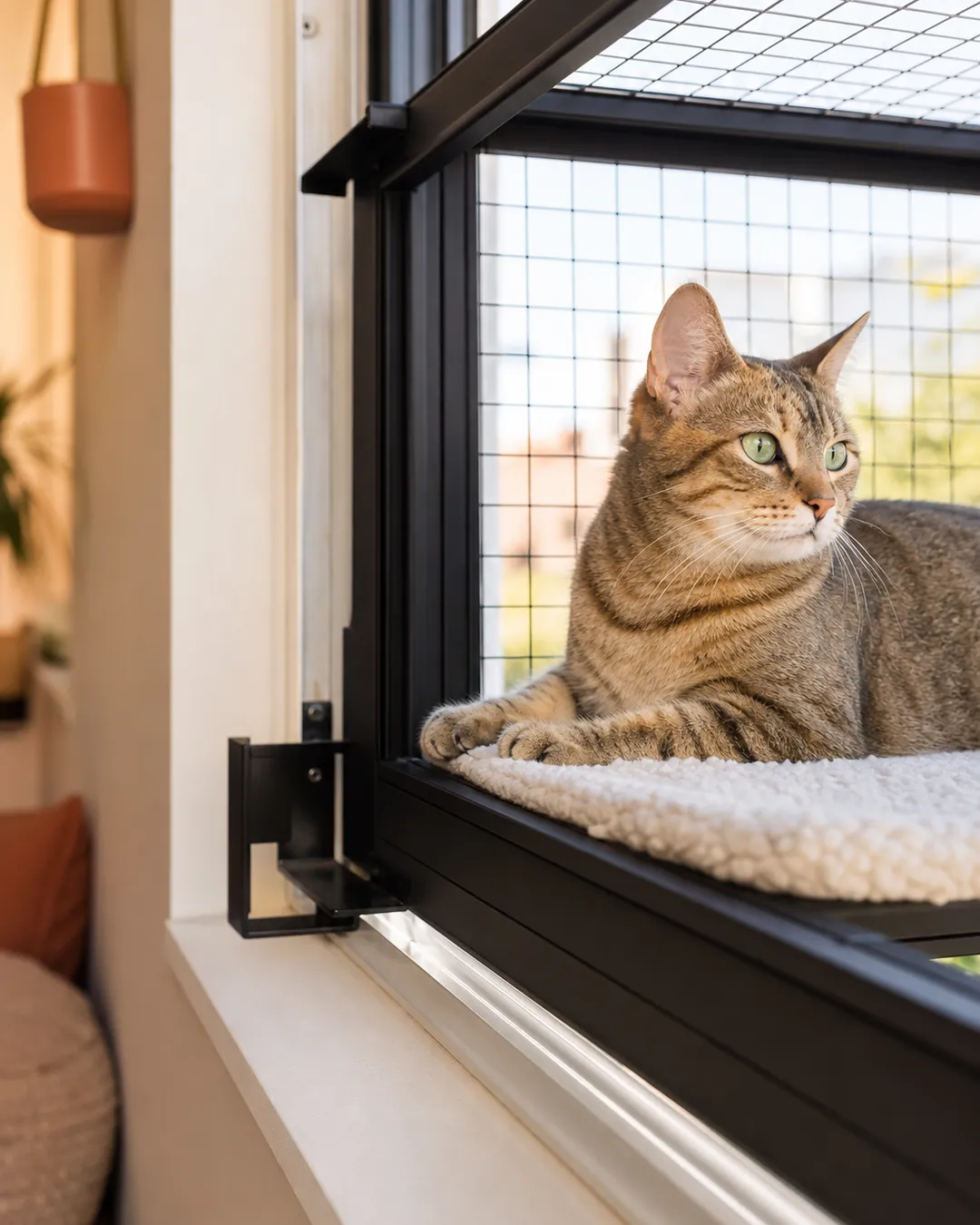
Not every apartment has outside space, and a window enclosure is the honest substitute. A mosquito-proof cat window box extends the sill outward with mesh on all sides, which gives outside air and a downward view without any balcony at all. Check the window type before ordering, since these suit a sash or a wide casement and do not fit every opening.
Which windows take a box, and what to do about the ones that do not, gets its own treatment in window catio ideas for apartments without balconies.
6. Give the cat shade it can choose
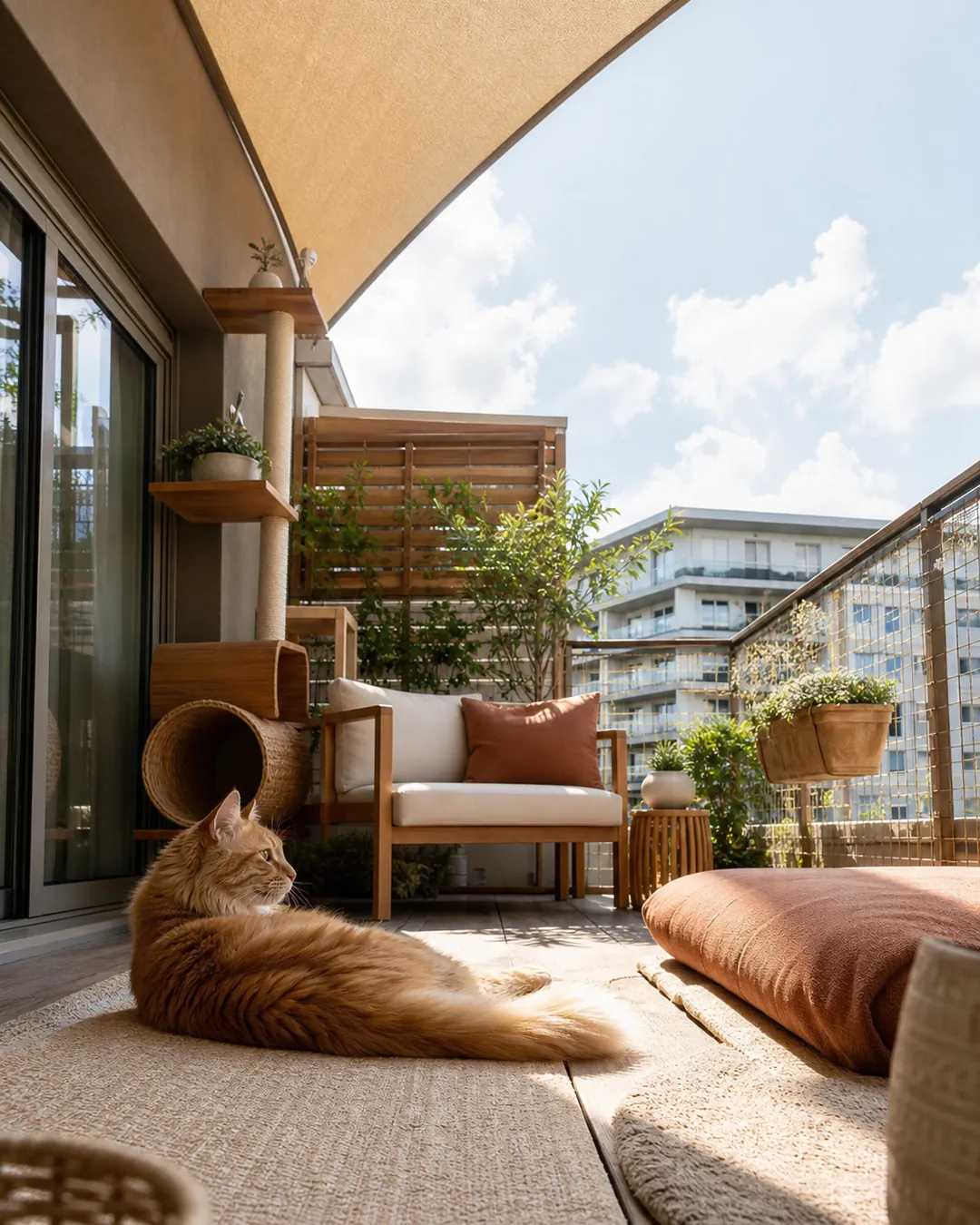
Sun moves, and a balcony that is comfortable in the morning is often unbearable by mid afternoon. Provide a shaded position the cat can move to rather than shading the whole space, since a catio with no sunny spot is one a cat visits in July and never in October. A shade sail, an umbrella or the shadow of a plant stand all work. Water matters here as well: a bowl outside gets warm and gets dusty, so put it in the shaded half and refresh it whenever you are out there rather than leaving the same bowl for days.
7. Get the resting spot off the floor
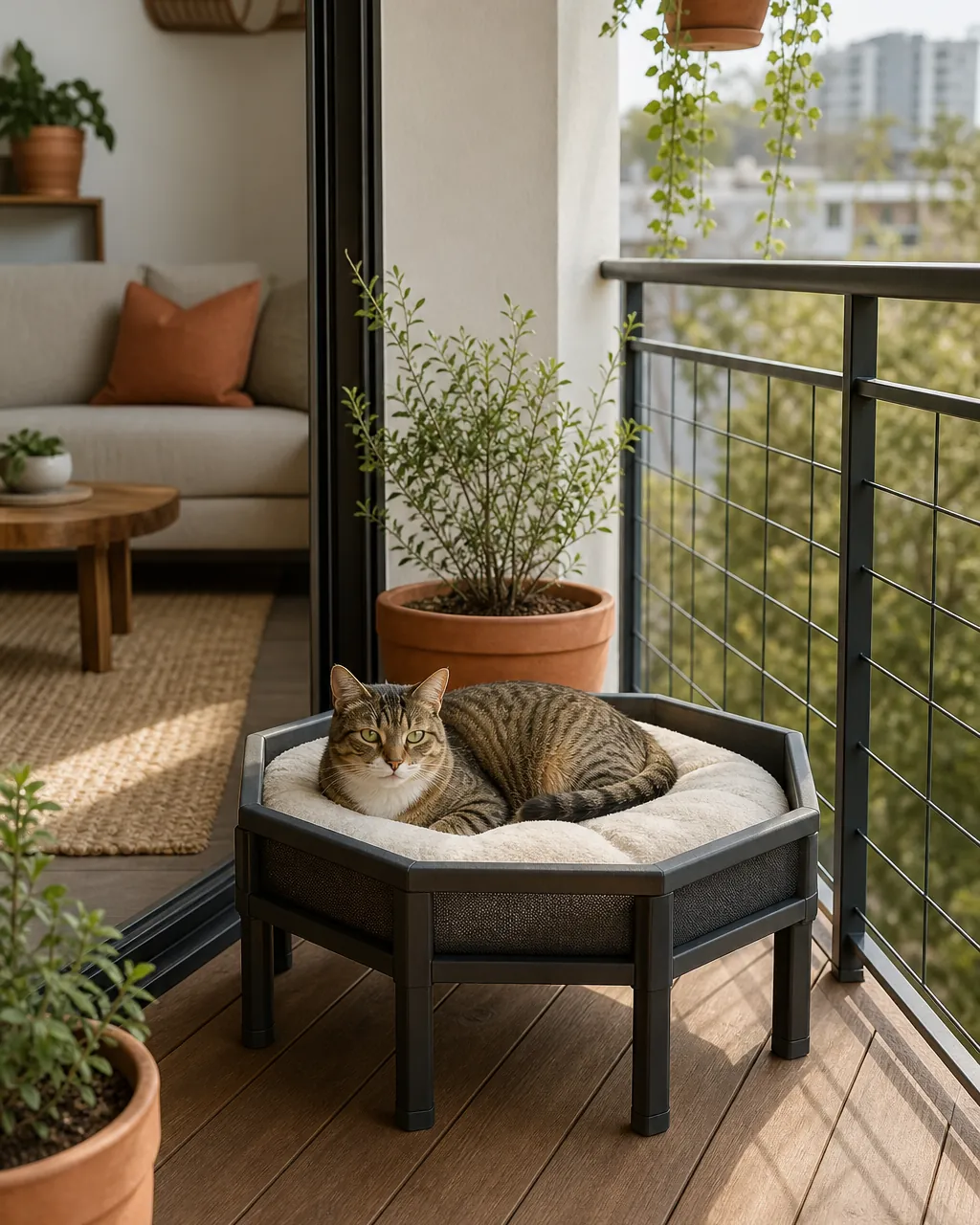
Balcony floors are hot in summer, cold in winter and wet after rain. A raised hexagonal hammock bed lifts the cat clear of all three and puts it at a height where it can see over the bottom rail, which is usually the difference between a cat that sits out for ten minutes and one that spends the afternoon there.
8. Lay flooring that drains
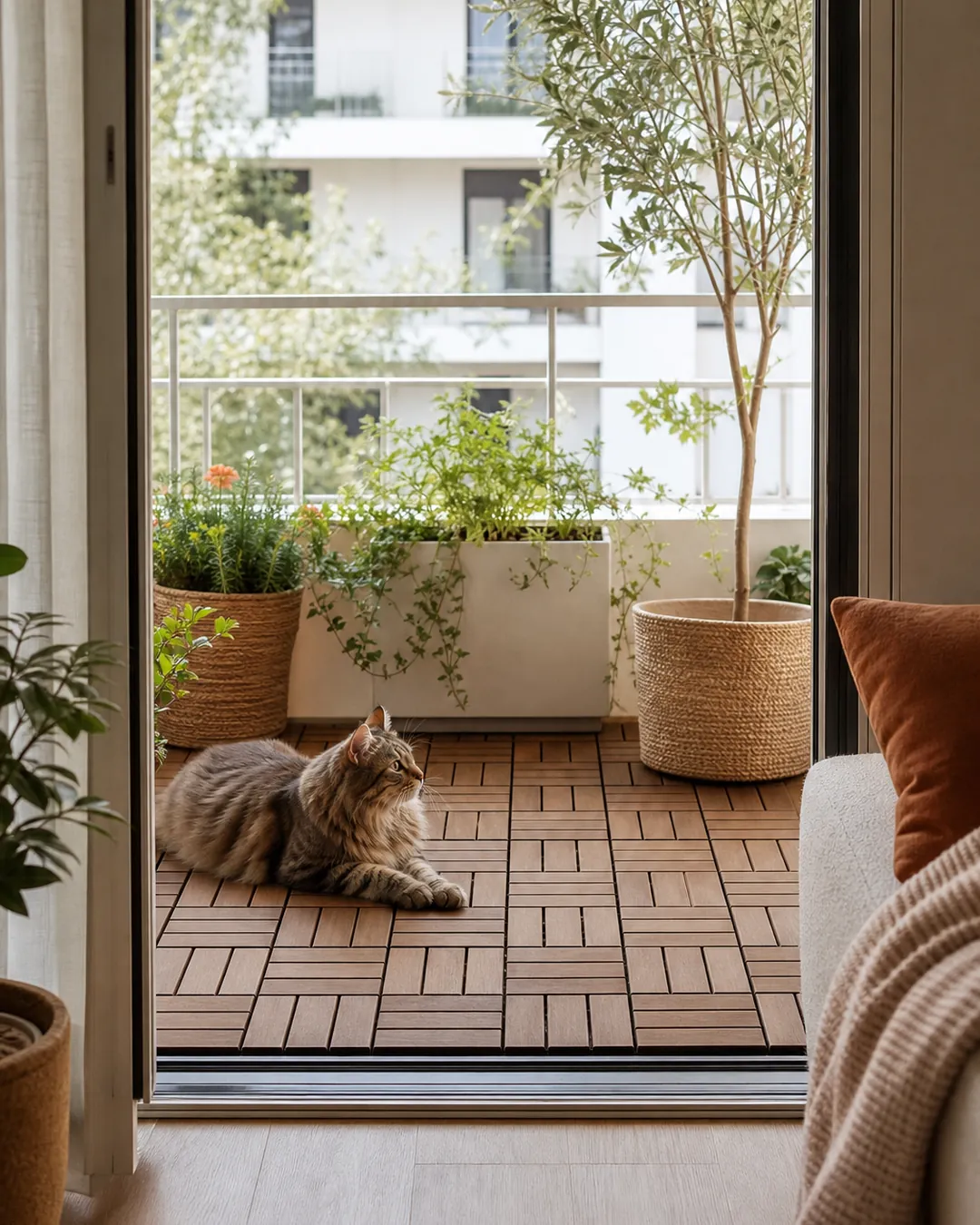
Bare concrete is unpleasant underfoot and holds water in the corners. Interlocking wood or composite tiles lift the surface, let rain drain underneath and are removable at the end of a tenancy. Avoid dark rubber matting in a sunny position, since it absorbs heat and becomes uncomfortable at exactly the time of day the cat would otherwise be out there.
9. Check the plants before the cat does
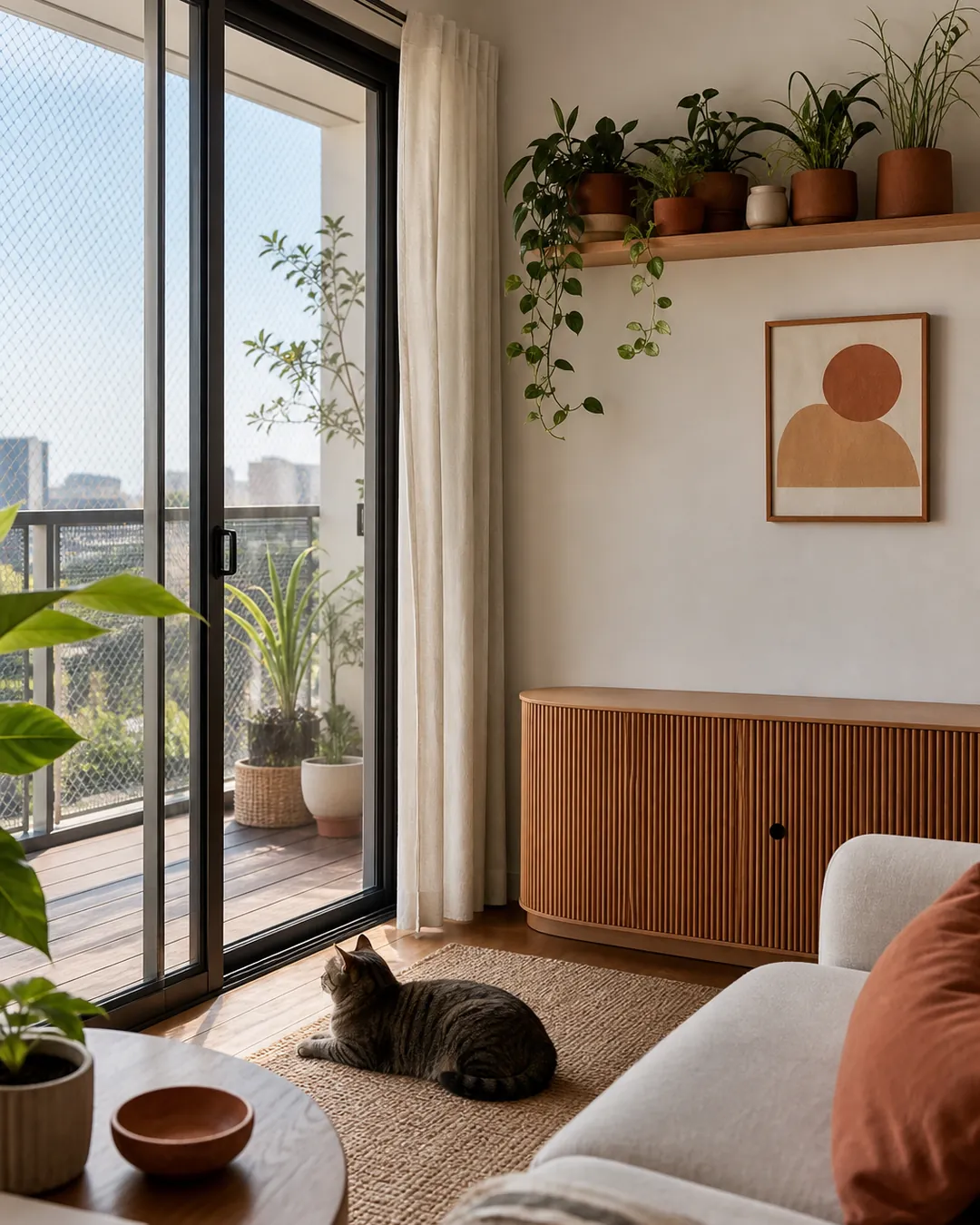
A balcony often already has plants, and several common ones are a problem for cats. Look up anything you own rather than assuming, and move what you are unsure about indoors or out of reach. This is a five minute job that is much easier before the cat has access than after.
10. Keep the netting away from the climbing furniture
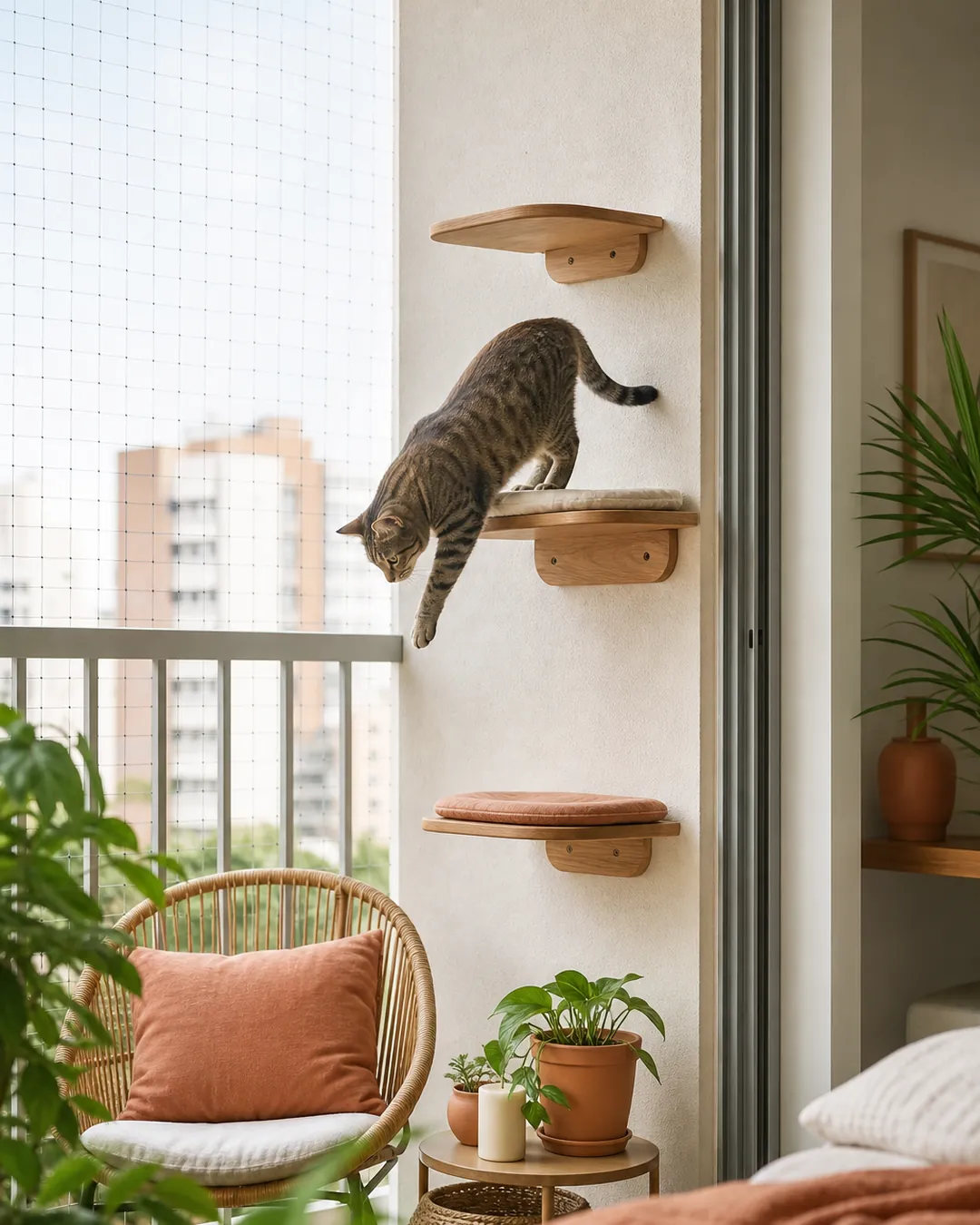
A shelf or a post placed against the mesh gives a cat somewhere to push from, and repeated pressure at one point is how a tensioned net develops a sag. Keep vertical furniture a foot clear of the perimeter and put the climbing on the wall side rather than the open side. The same applies to anything the cat can jump from onto the mesh, so check the sightline from every raised surface before deciding the layout is finished.
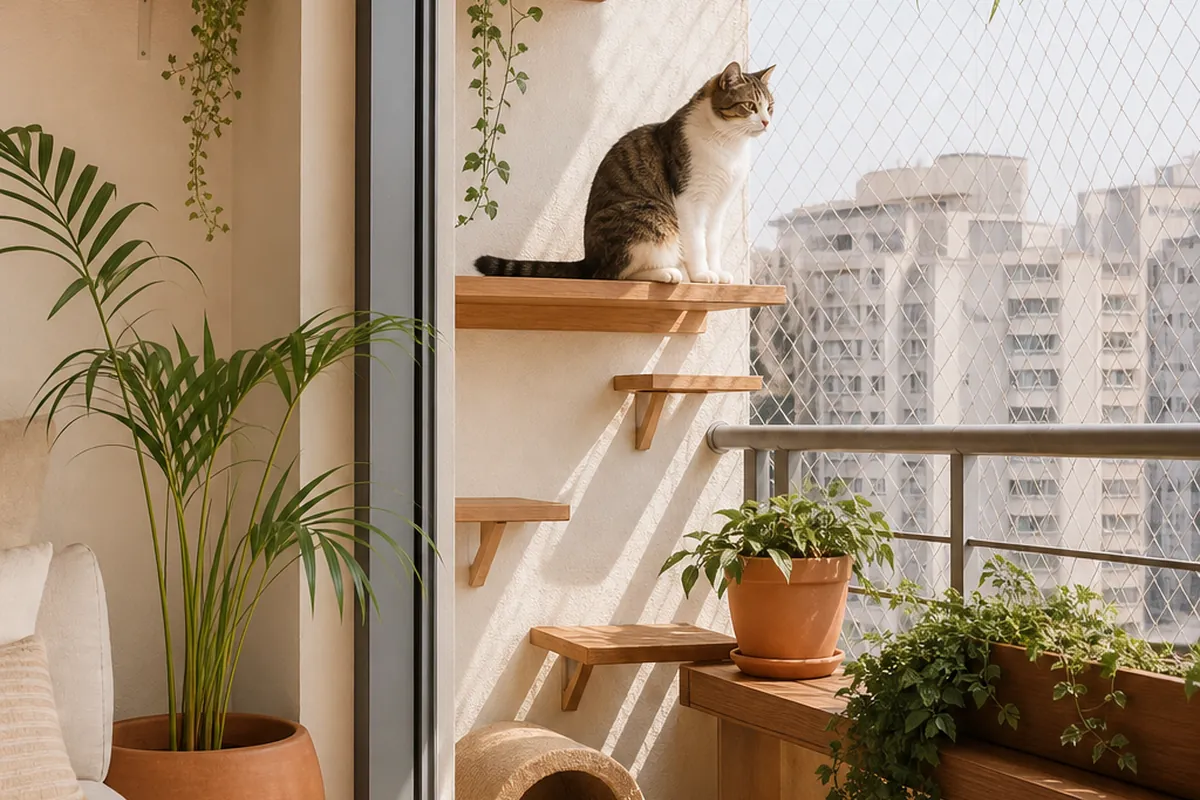
11. Add a second level, not a bigger footprint
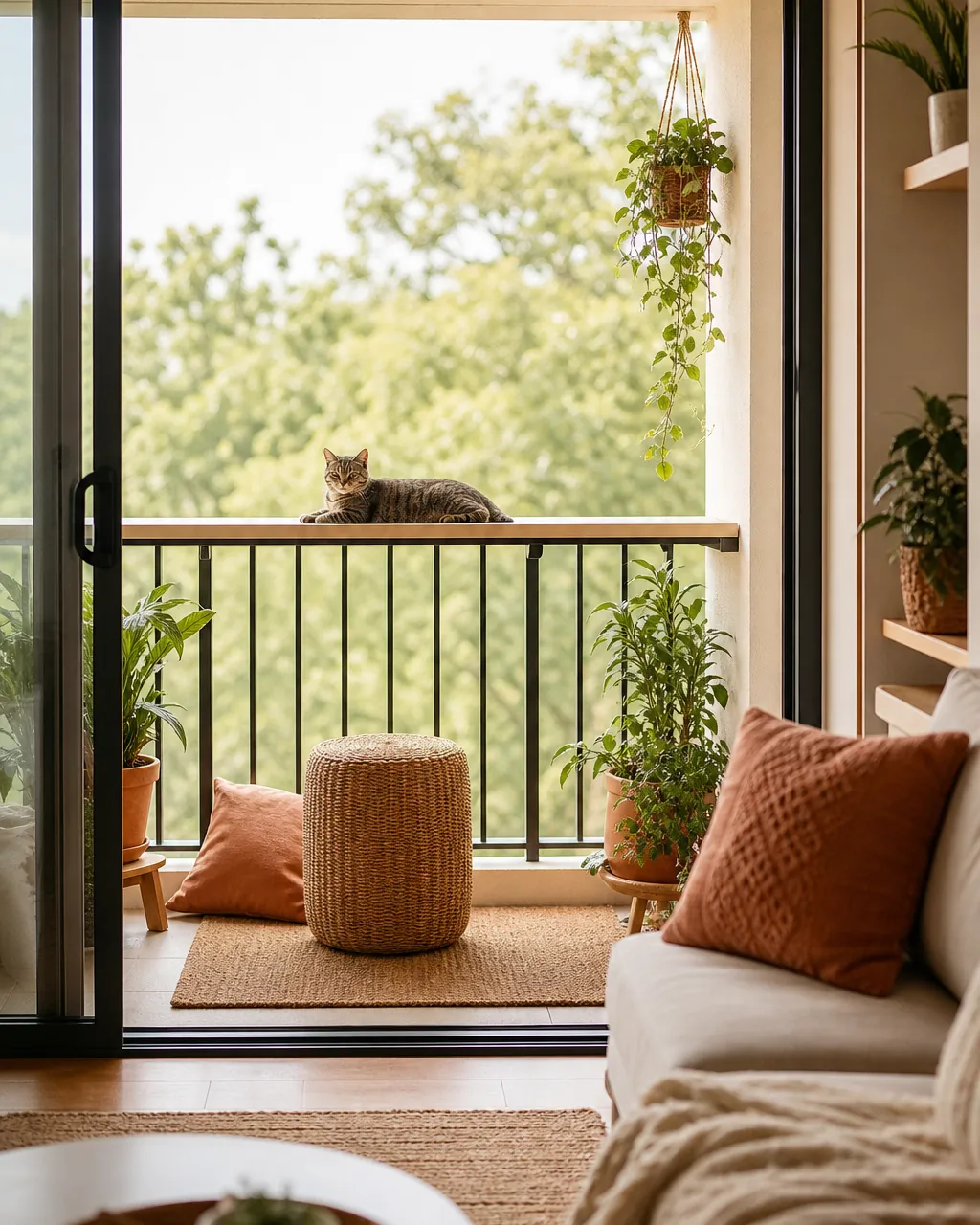
Balconies are narrow, so the space worth having is upward. A shelf, a wide rail platform or a step up to the hammock triples the usable positions without taking any floor. This is the same logic that makes wall shelves work indoors, and it applies more strongly outside because balconies are usually longer than they are deep.
12. Screen the doorway separately
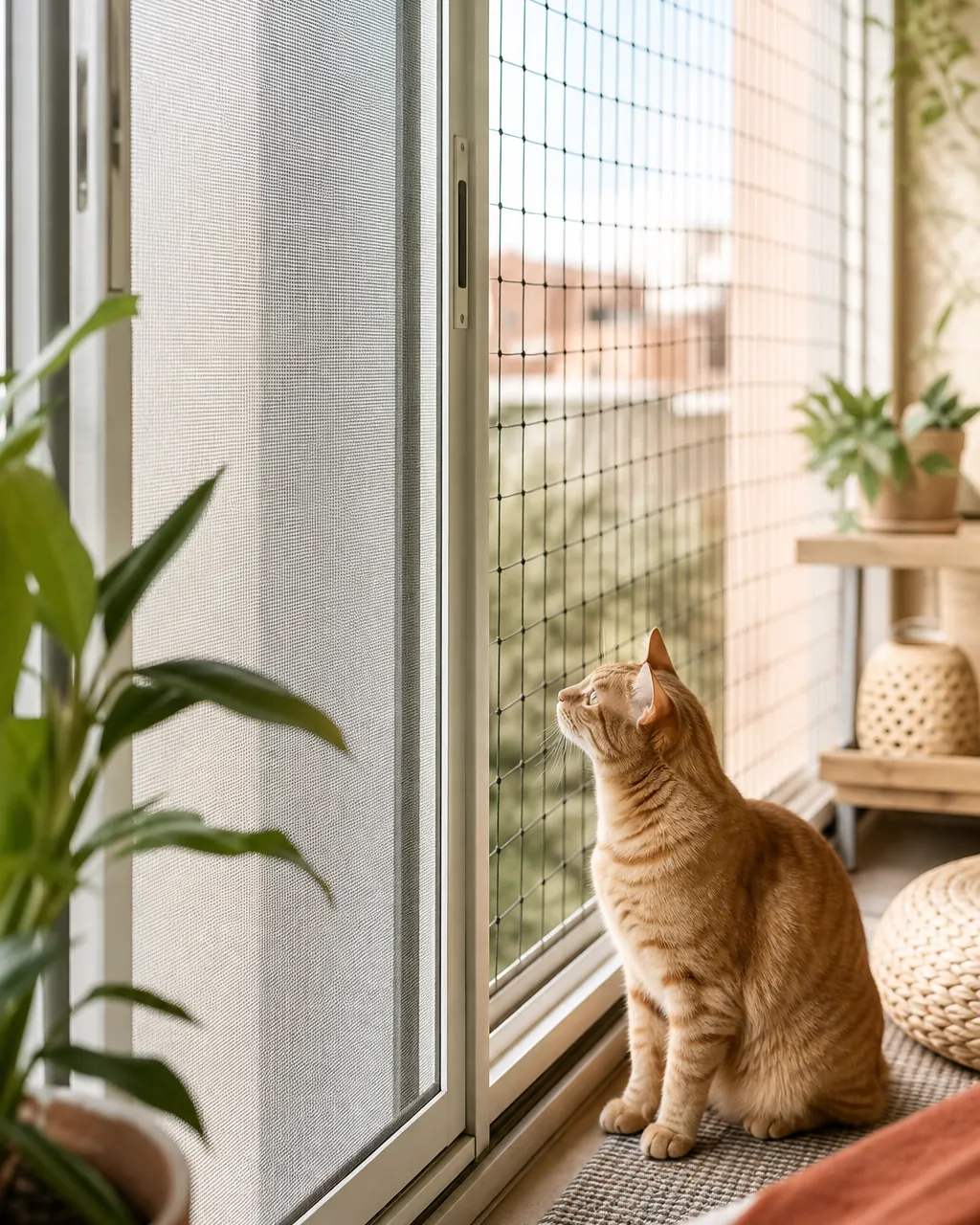
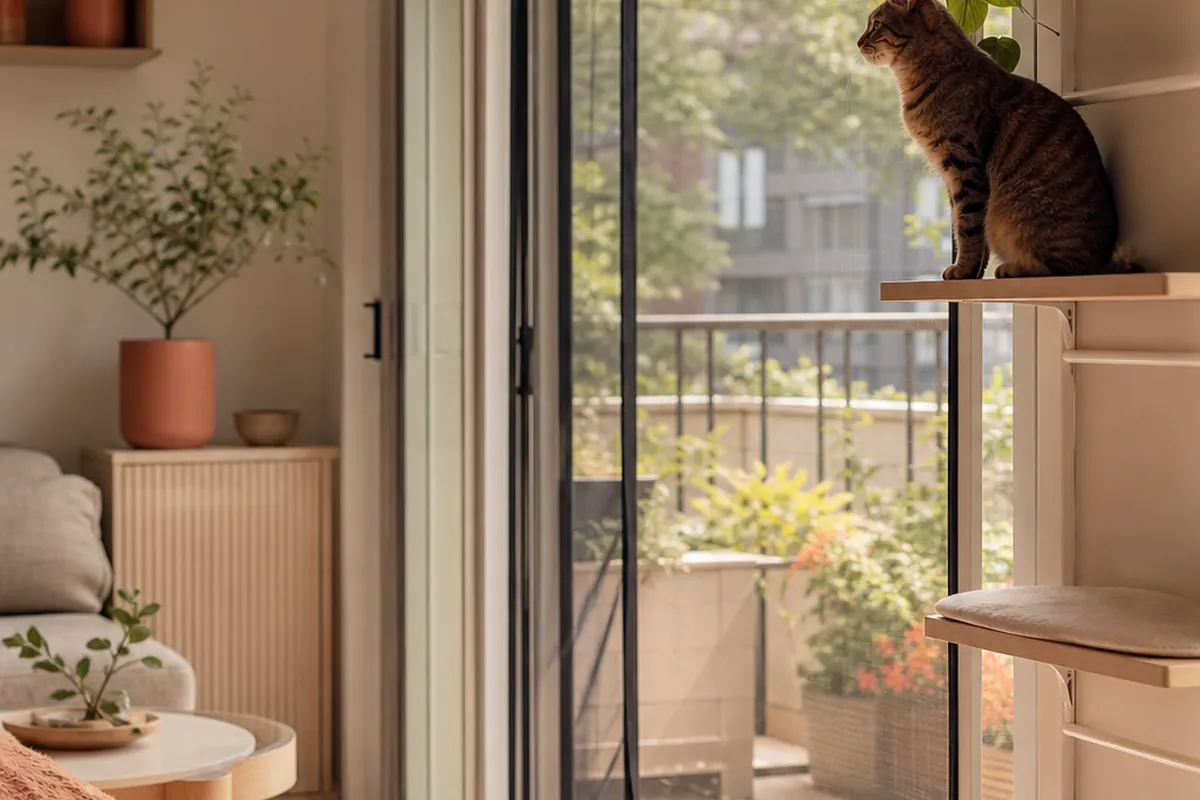
Cat netting has a wide aperture and will not keep insects out, so if the plan involves leaving the balcony door open, that opening needs its own fine mesh. Treat them as two different jobs with two different materials, because trying to solve both with one product is how people end up with a balcony full of mosquitoes.
A sliding glass door earns this same treatment on its own, and catio ideas for sliding glass doors in small apartments covers fitting a screen sized to the track so the door itself still closes behind it.
13. Check the whole thing seasonally
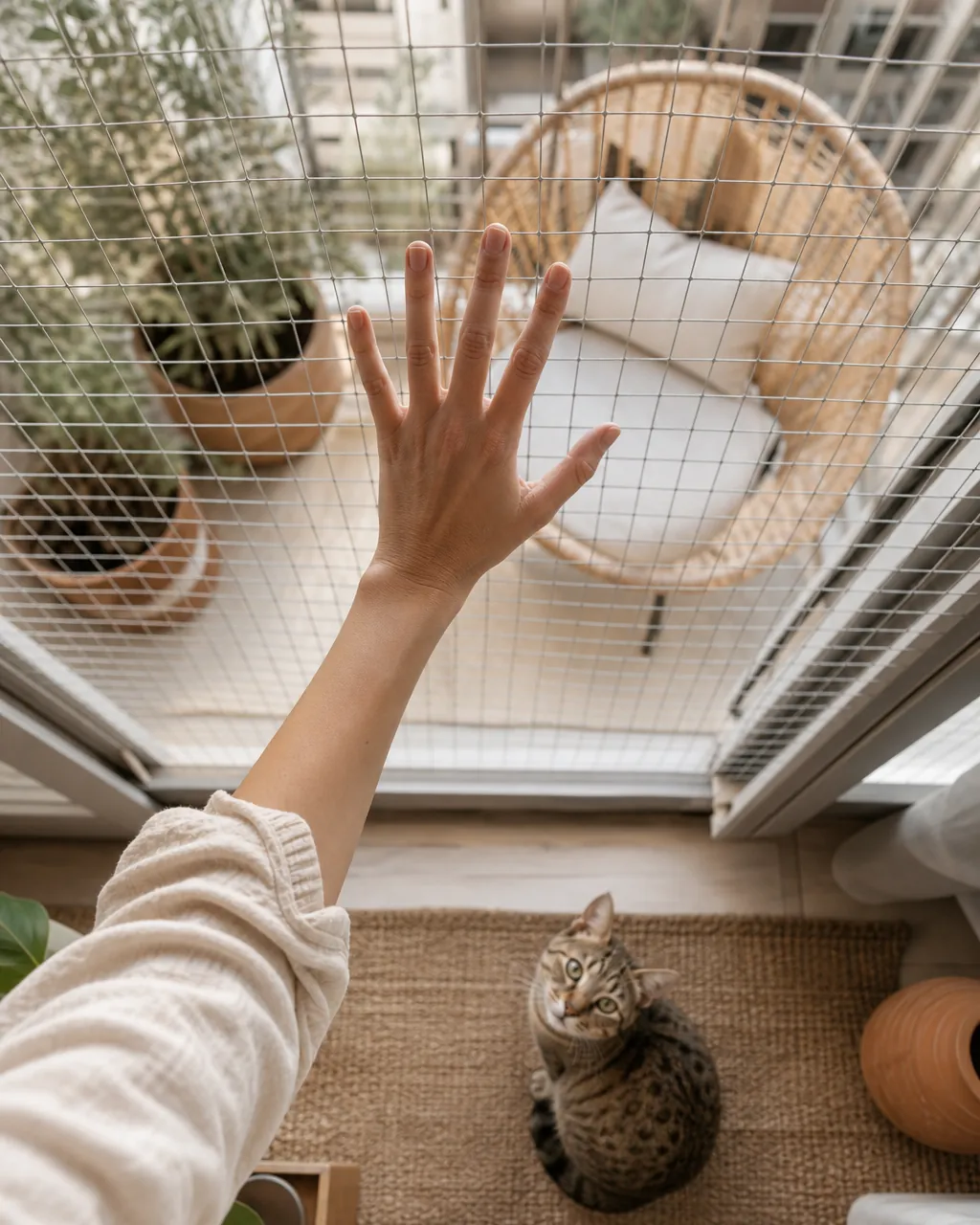
Sun degrades nylon, wind works fixings loose, and winter makes plastic clips brittle. Walk the perimeter at the start of each season, press on the mesh, and check every tie. Ten minutes, twice a year, and the failure modes are all visible before they matter.
A panel-and-connector kit needs that same walk-around at its joints instead of its ties, and DIY catio kit ideas for renters on a budget covers which connectors loosen first and how often to check them.
Where to start
Decide honestly whether you are building a balcony catio or a window catio, because they are different projects with different budgets. If the balcony is shared, overlooked by a neighbor’s window or subject to a building rule about attachments, the window box may be the better answer regardless of space.
If it is the balcony, do the netting first and do it thoroughly, then walk the perimeter twice looking for gaps at the bottom edge and the corners. Nothing else on this list matters until that is right.
Then add flooring, then shade, then the raised bed, in that order. Each one increases the amount of time the cat spends out there, and each is easier to fit once the enclosure is finished rather than around it.
Let the cat discover it in its own time with the door propped open. Most cats spend the first few days at the threshold and then commit all at once, and a cat carried out and put down usually takes considerably longer to accept the space.