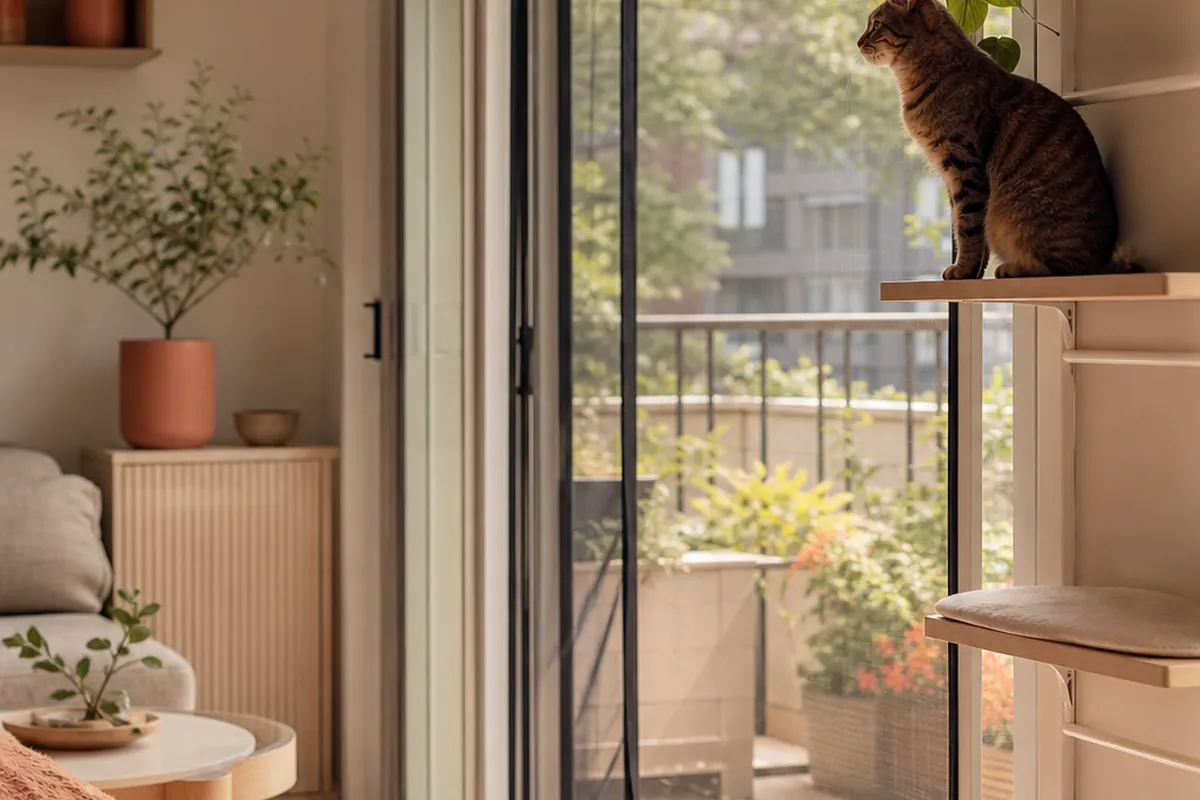
A sliding glass door is the one opening in most apartments wide enough to let a cat feel like it is actually outside, and it is also the one nobody wants to net like a balcony. You do not need to. A door catio is a screen sized to the track rather than a structure sized to the whole opening, and it solves a narrower problem than a full balcony enclosure does.
Nine ways to screen it properly, starting with what this project is not.
1. Decide if you need a screen or a full catio
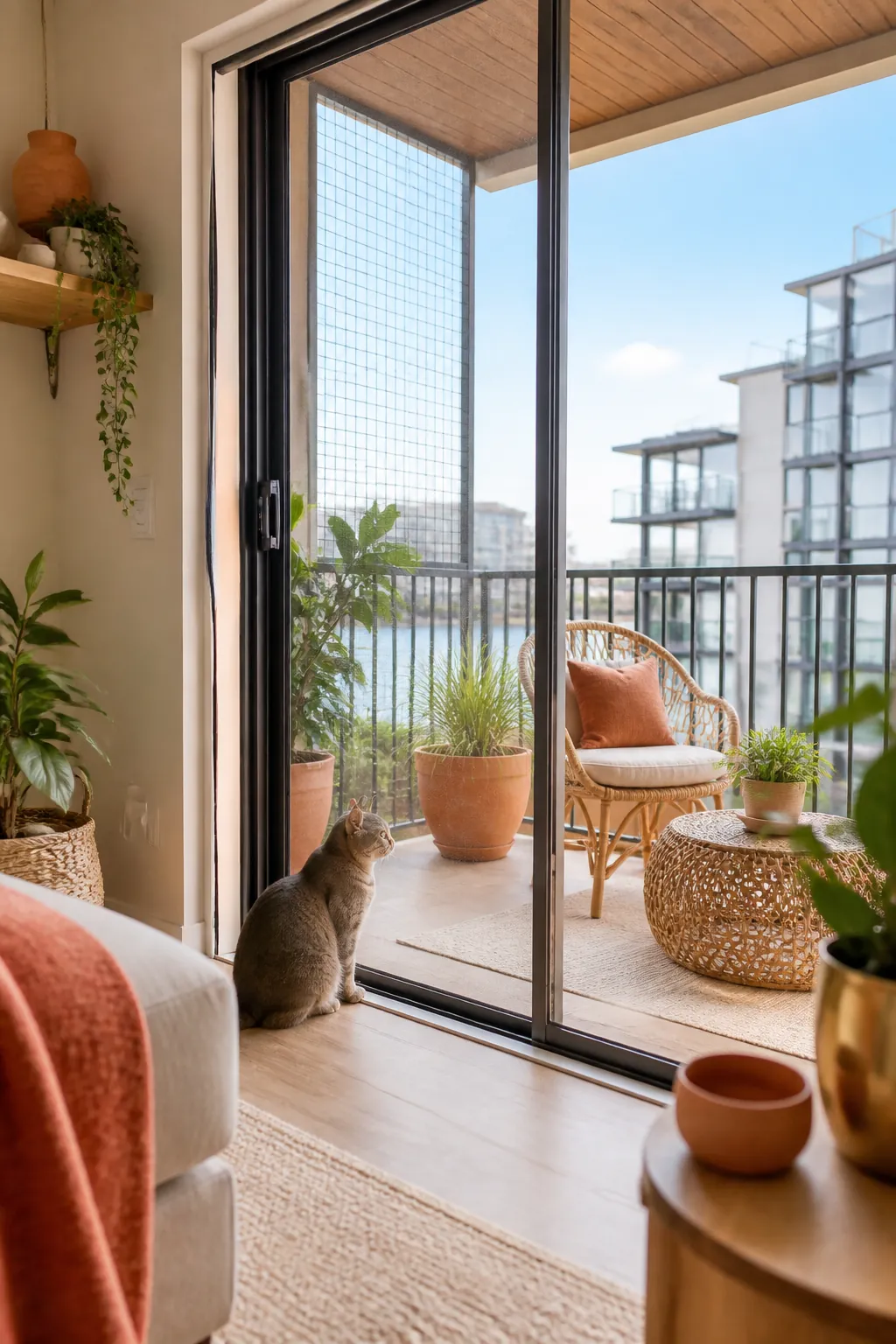
A screened sliding door gives a cat air, sound and a view with the glass door open behind it. It does not give the cat outdoor floor space, and conflating the two is where most of these projects go wrong. This project covers the doorway itself, typically a standard 80-inch-tall opening in one of the widths from step two, not the balcony beyond it. A full balcony enclosure is a different scope entirely: netting run floor to railing and across every outside corner, not just one rectangle you can measure from indoors in five minutes. If the door opens onto a shallow balcony and you do want the floor space, catio ideas for a narrow apartment balcony start from the depth between railing and door, since that strip is usually all the room an enclosure gets.
2. Measure the track, not the door
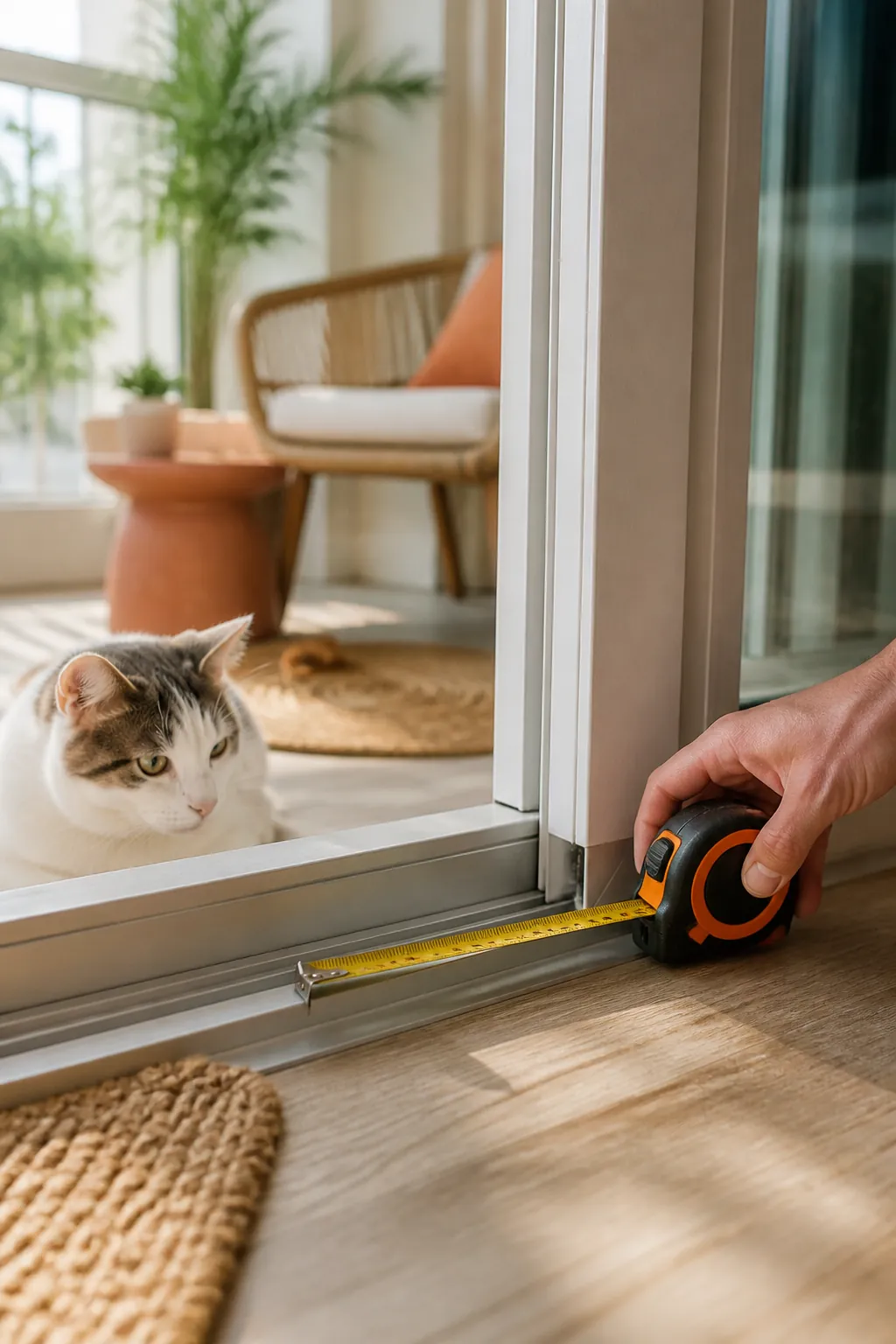
Sliding doors come in a handful of standard widths, most commonly 60, 72 and 96 inches, but the number that matters here is the track channel, not the door panel. Pull the existing screen door if there is one and measure the channel depth and the height from the bottom track to the header. A screen built to the door’s outer dimensions will bind in a channel that is a half inch narrower than you assumed. If there is no factory screen track at all, measure the opening itself and plan to fit a frame rather than a slider.
3. Choose reinforced mesh, not a fiberglass screen
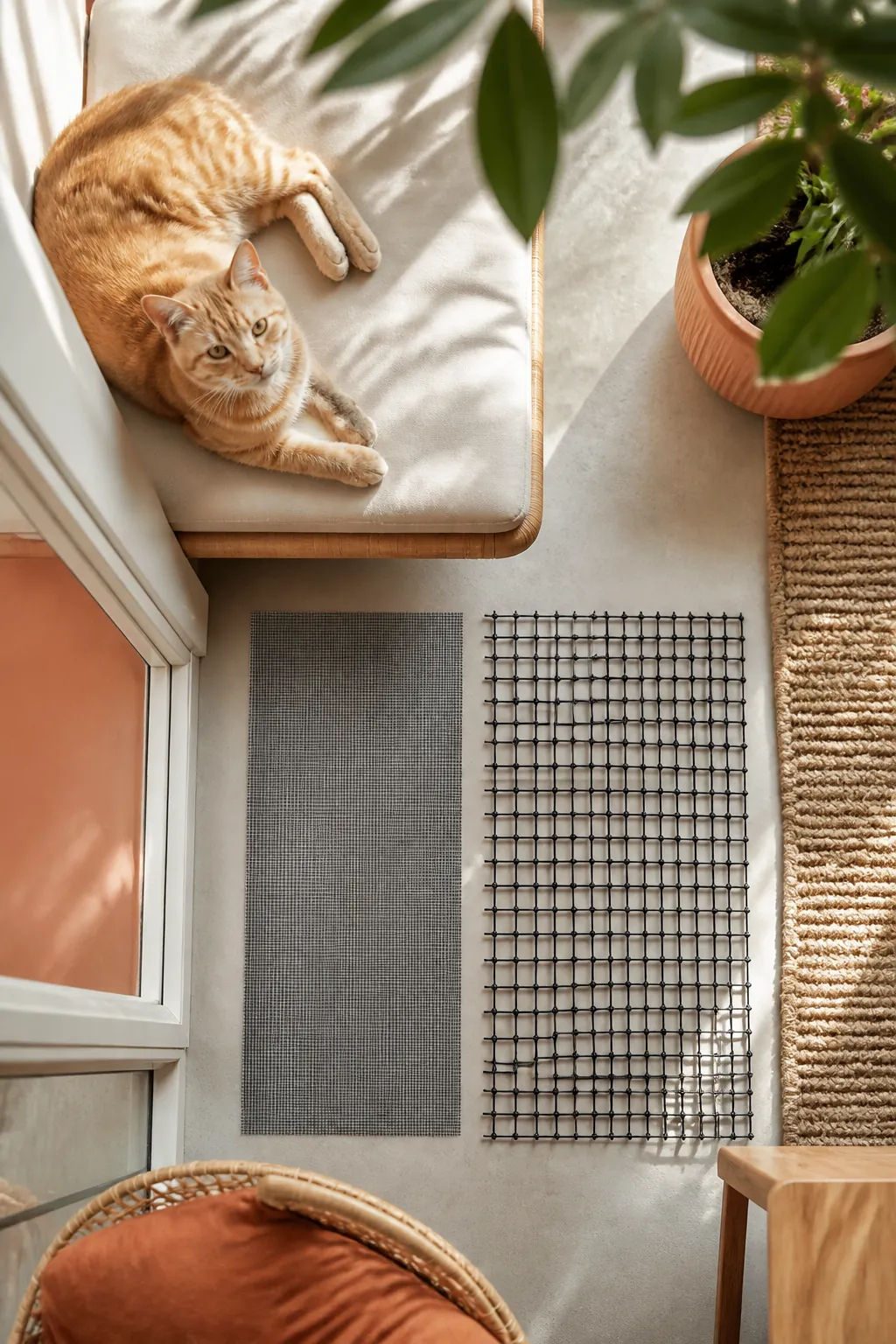
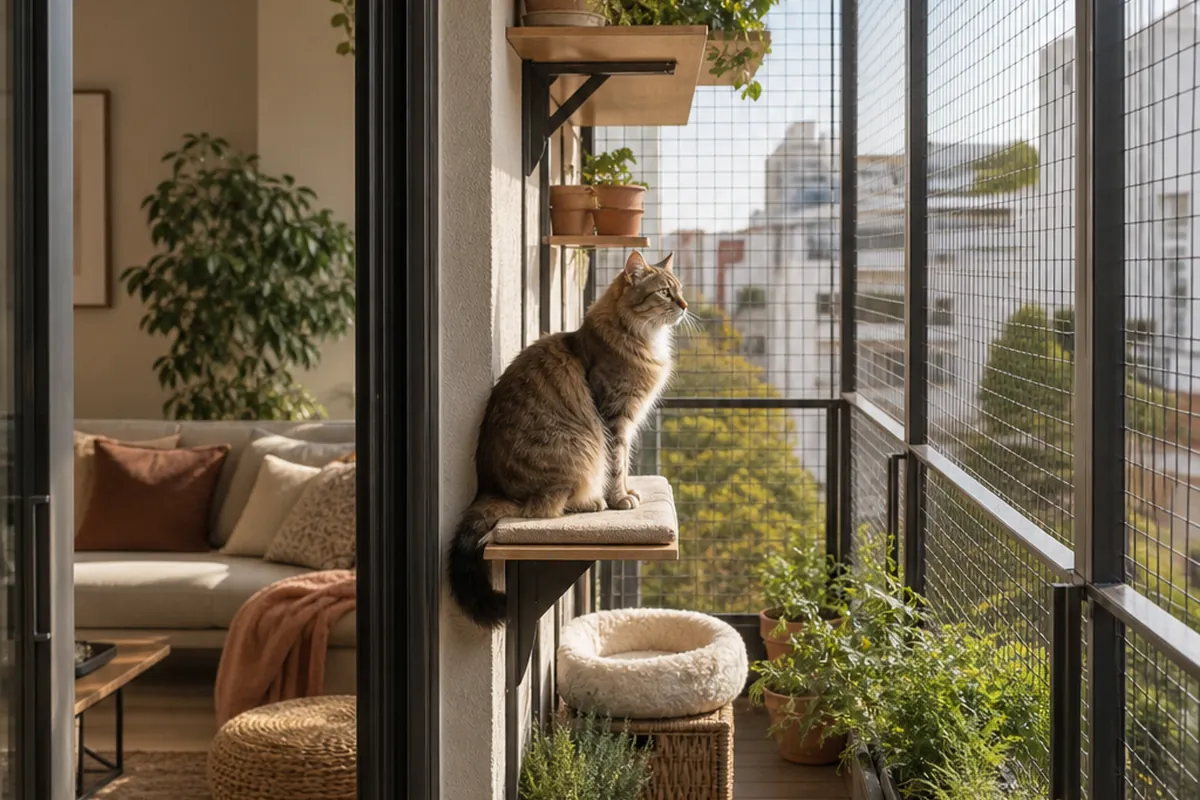
Standard window screen is built to stop insects, not claws. A cat that gets purchase on ordinary fiberglass mesh can put a hole through it in under a minute, and a hole at chest height is a hole a determined cat will eventually push through rather than just paw at. Steel-wire-reinforced cat netting sold for balconies works here too: cut a panel to the track’s measured width and height rather than trying to stretch the full ten-by-thirteen-foot roll across one doorway, and keep the offcut for patching later.
4. Frame it so the door still closes
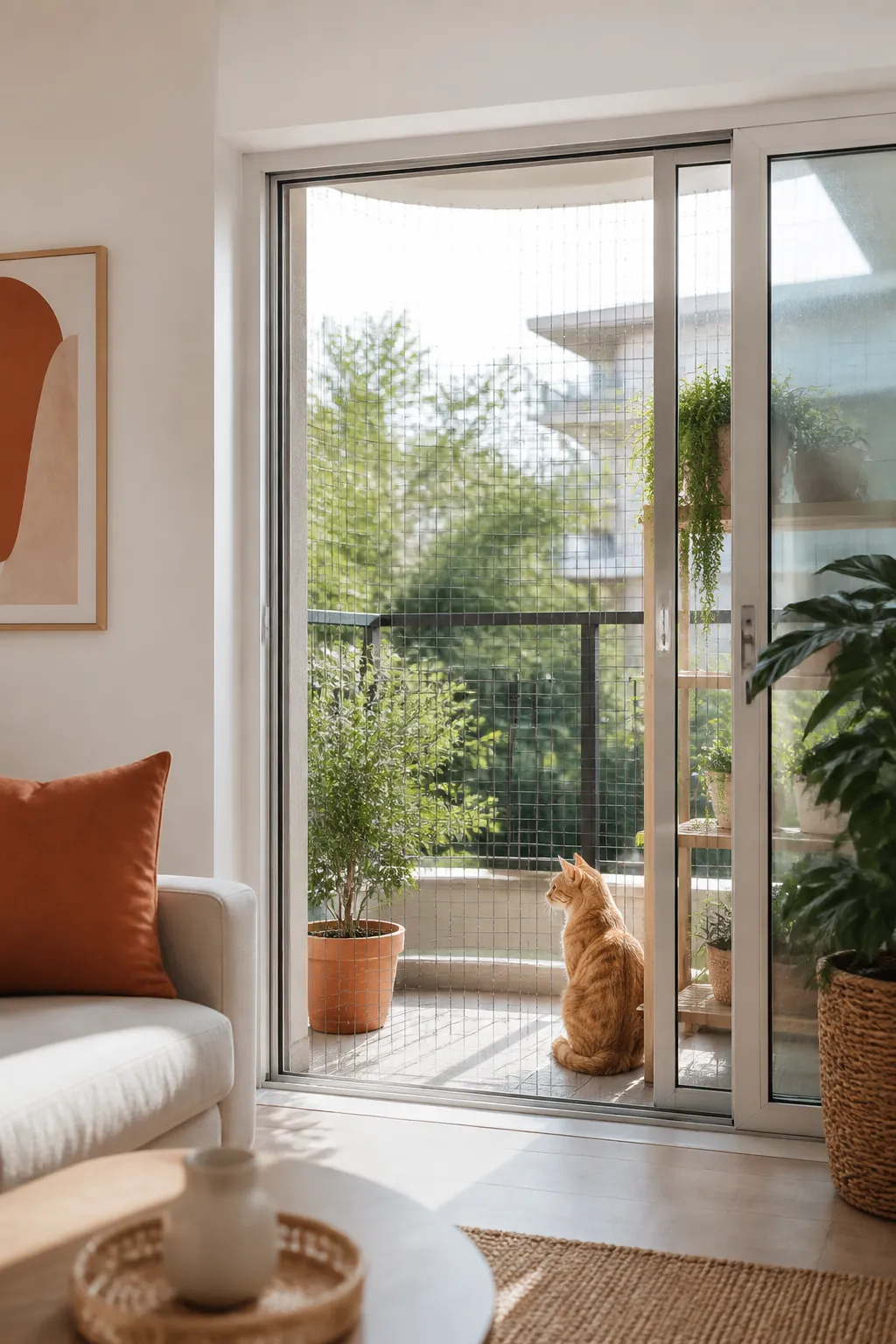
The screen has to come out of the way of the actual glass door at night or in bad weather, which rules out anything taped or glued directly to the frame. If your track already has a screen door channel, a panel of netting stapled or zip-tied to a lightweight aluminum or PVC frame slides in exactly the way a factory screen would. If there is no channel, a tension-rod frame braced inside the opening, similar to how a temporary window screen mounts, avoids drilling entirely and lifts out in one motion when you need the doorway clear.
5. Patch the corners with a second material
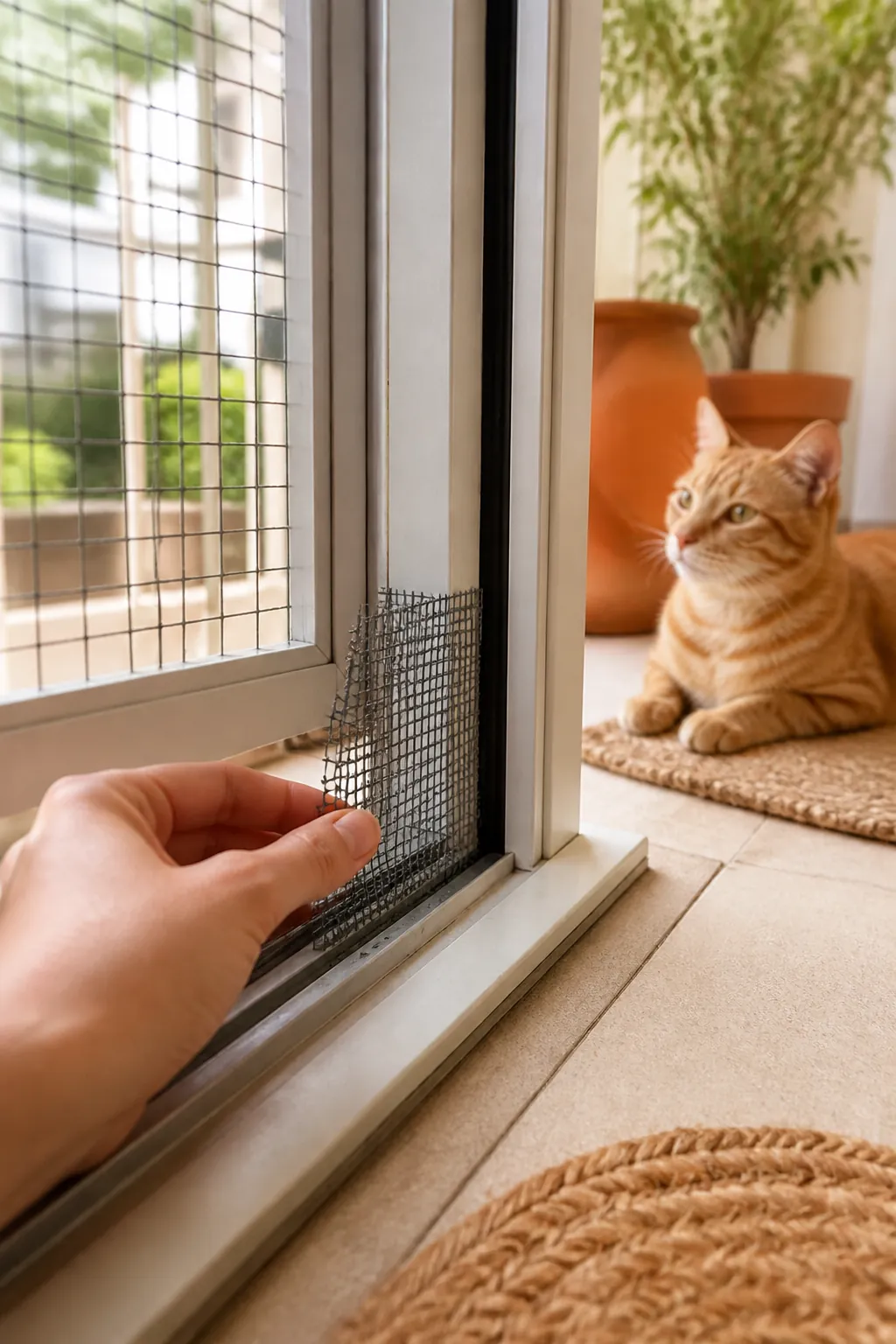
Reinforced netting handles the main span, but the corners where a frame meets the track are rarely a clean fit, and that is where gaps show up first. A roll of plastic garden mesh cuts to any shape with household scissors and fills those irregular corners without needing a custom part. Overlap the netting by an inch rather than butting the two materials edge to edge, since a seam that looks flush on day one gapes within a week as both materials settle.
6. Secure the bottom edge into the track
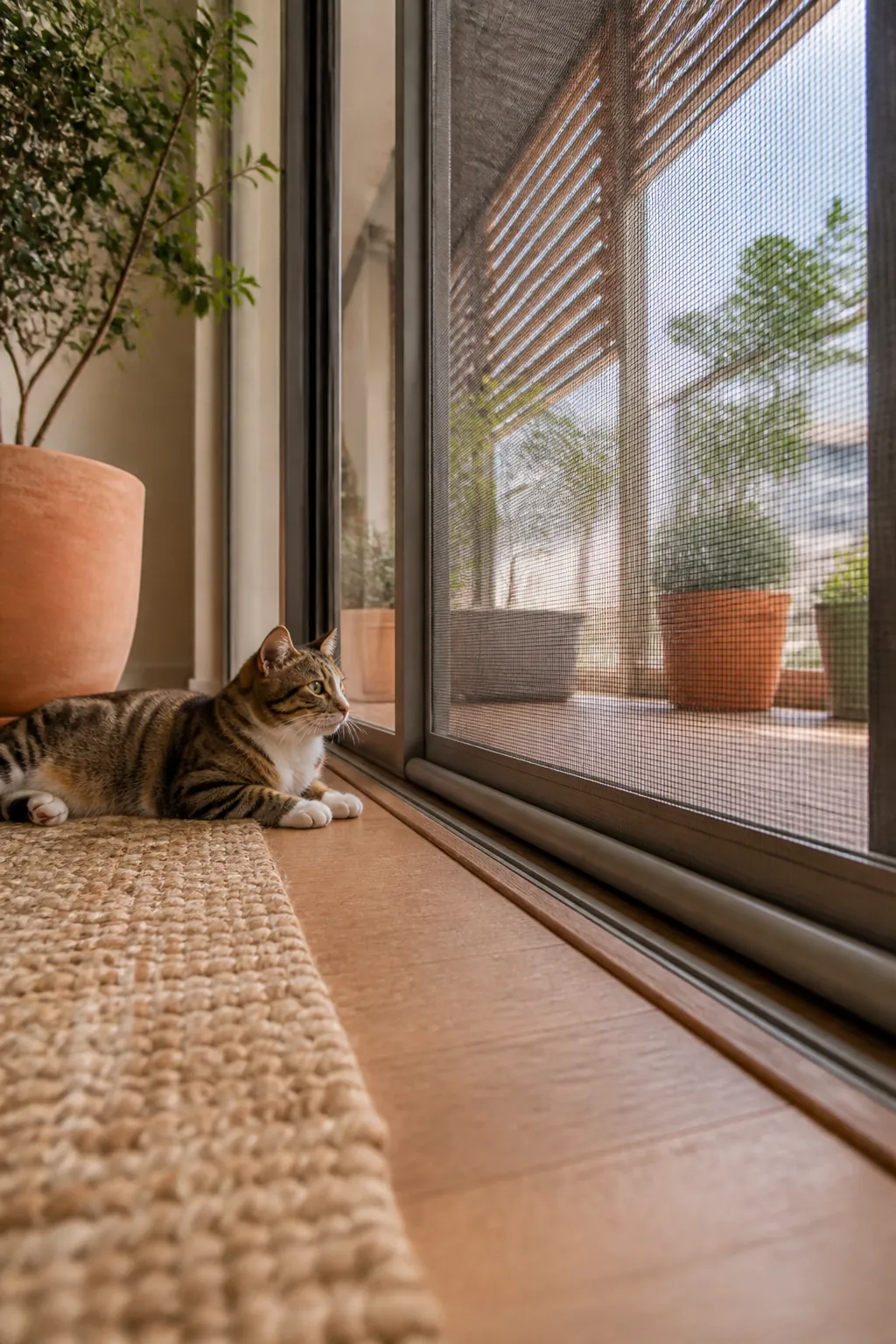
Cats push under a barrier before they try to climb over one, and the bottom edge of a door screen takes more pressure than any other part of it. If your frame sits in a screen door channel, the track’s own bottom groove does most of this work already. If you built a tension frame instead, weight the base with a length of PVC pipe or a folded strip of the same garden mesh tucked under the frame’s foot, and check it weekly for the first month while you find out whether your cat is a pusher.
7. Give the cat a perch right at the glass
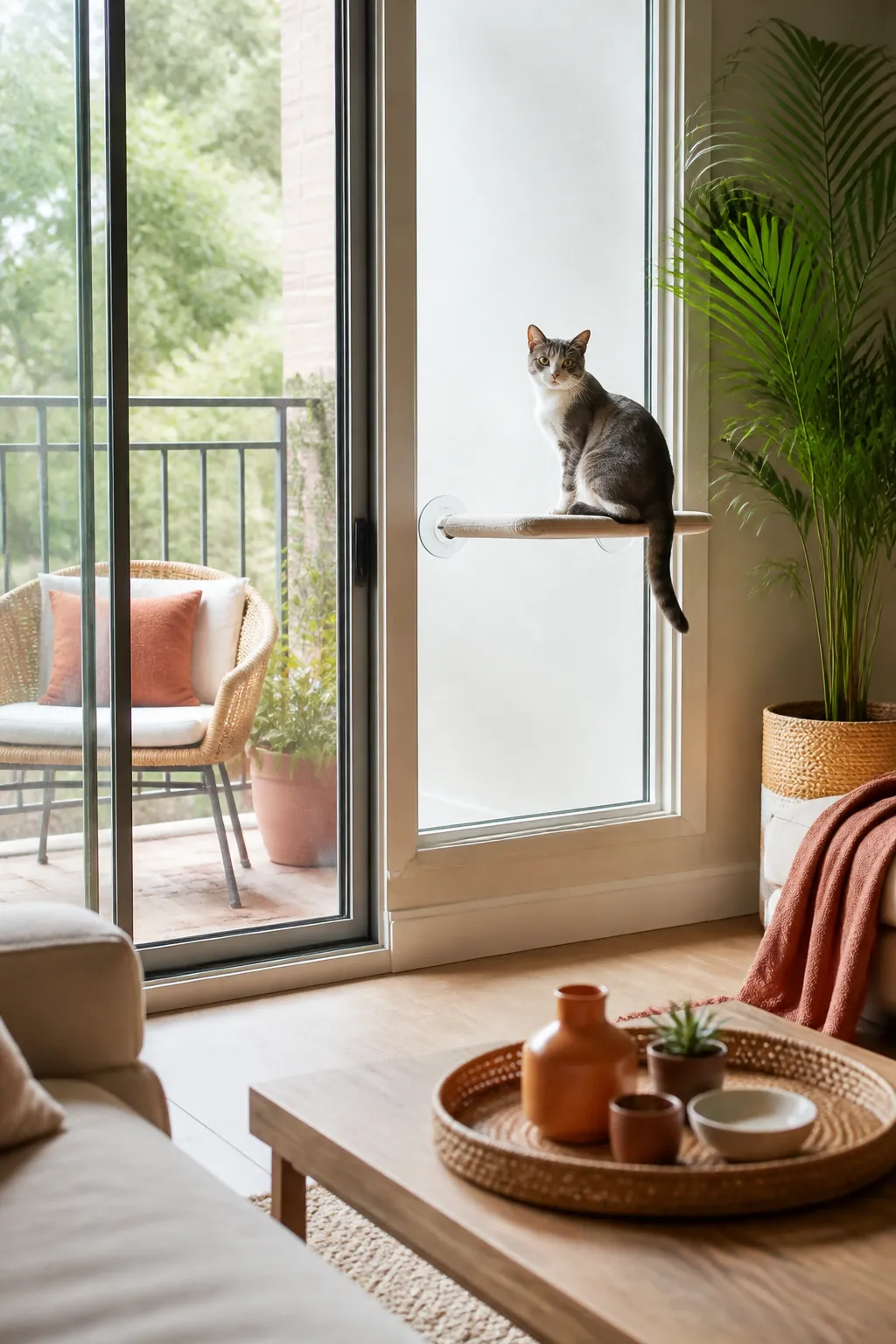
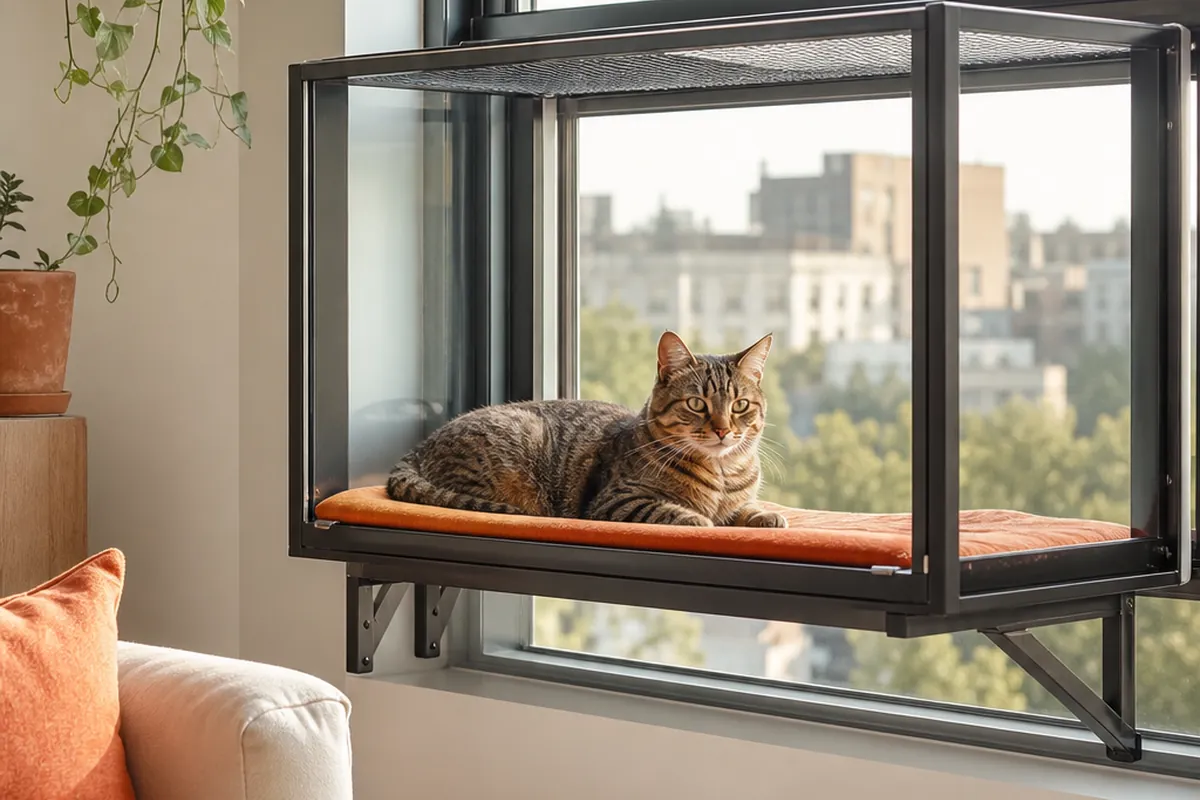
A screen at the doorway is often not the spot a cat actually wants to sit, because the frame blocks part of the view and the mesh softens it further. A suction cup window perch mounted on the fixed glass panel beside the sliding one gives the cat a seat with an unobstructed view while the screen does the job of keeping the opening itself secure. Clean the glass with alcohol before fitting it, the same rule that applies to any suction mount, and check the cups monthly rather than assuming they will hold indefinitely.
8. Keep the screen out of the sun when you can
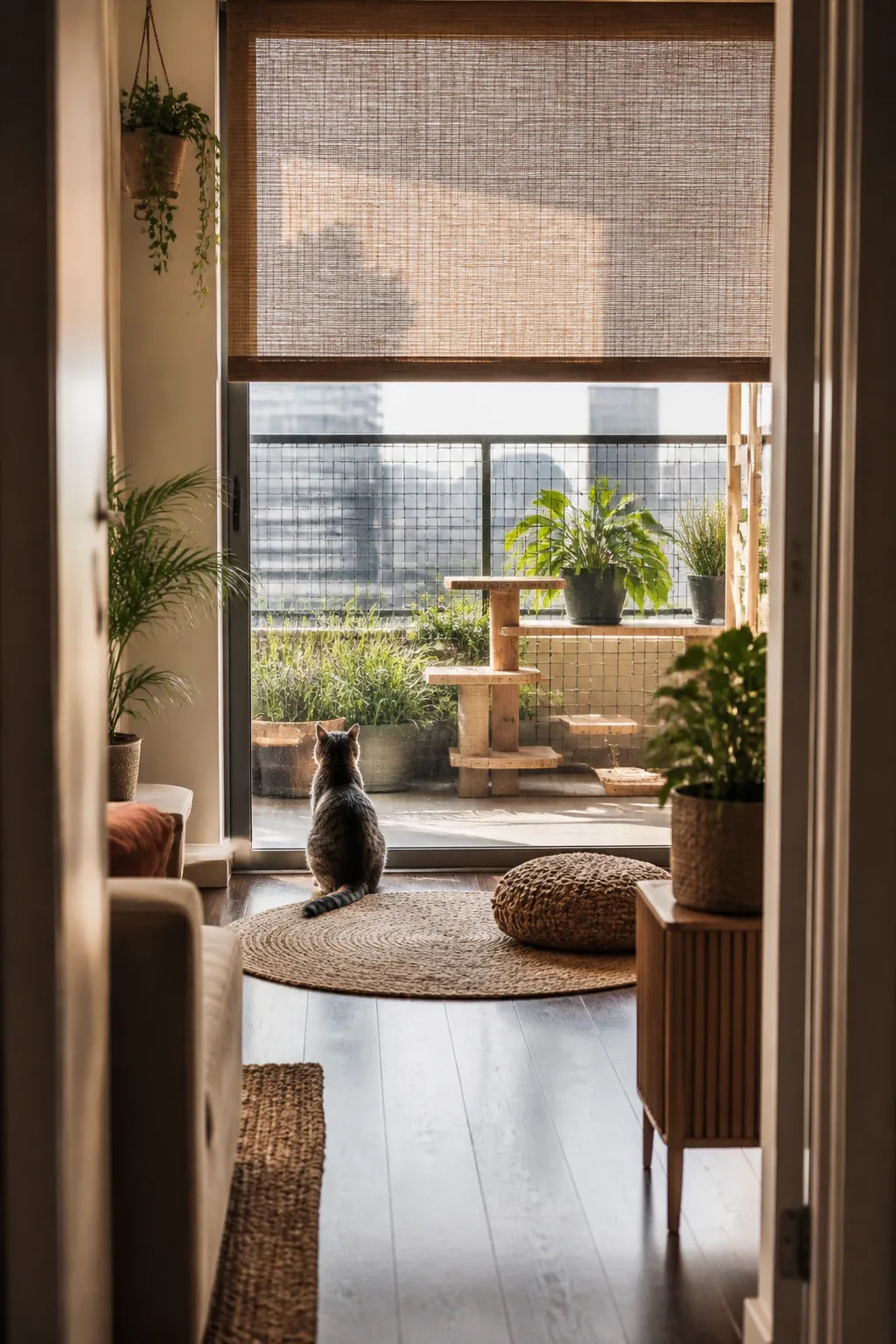
Direct afternoon sun degrades netting and mesh faster on a south- or west-facing sliding door than it does on a shaded balcony, because glass doors are usually the largest unshaded opening in the unit. Check the packaging before you buy: reinforced cat netting is usually rated for full outdoor exposure, but cheaper garden mesh patches often are not, and a missing UV rating on the label is the one line worth reading before it goes anywhere near direct sun. If a curtain or blind sits just inside the door, closing it partway during the hottest hours protects unrated material as much as it cools the room.
9. Inspect after wind, not on a fixed schedule
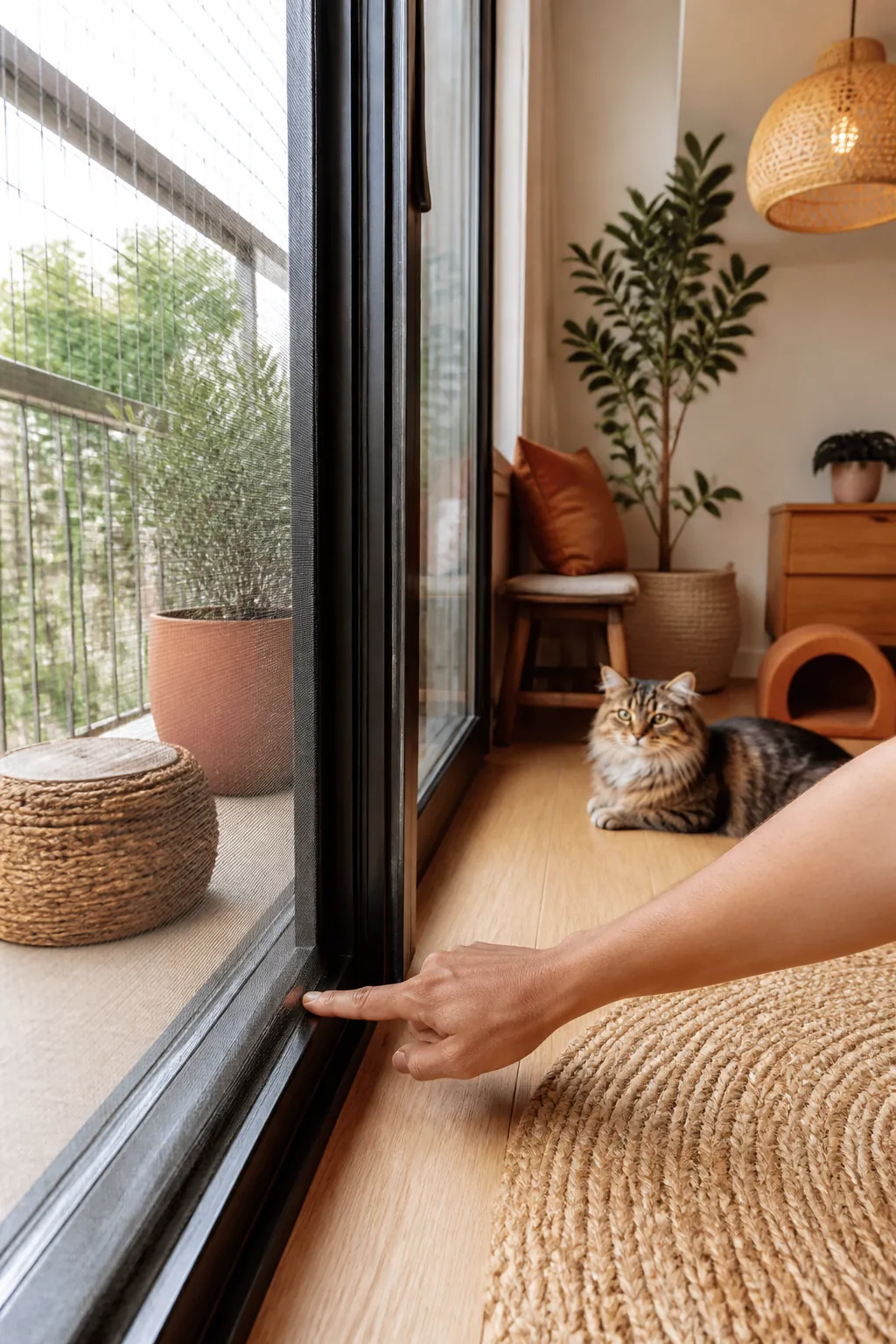
A sliding door often sits between two exposed walls or opens onto a corridor of moving air between buildings, and that funnel effect puts more strain on a door screen than the same material sees on an enclosed balcony. Rather than checking on a calendar, check after any day with strong wind: press on the mesh, pull gently at each corner, and look at the bottom track for anything that has worked loose. Ten minutes after a windy afternoon catches problems before the next calm week lets you forget about them.
Where to start
Pull any existing screen door and measure the track before buying anything. That single measurement decides whether you are building a slide-in frame or a tension frame, and guessing at it is the most common reason a first attempt does not fit.
Buy the reinforced netting and the garden mesh together. You will use the reinforced material for the main panel and the garden mesh for the corners and any patch a first attempt leaves short, and having both on hand means a bad first fit gets fixed the same afternoon instead of waiting on a second order.
Fit the frame, then check the bottom edge specifically before you consider the job done. It is the one part of this project that fails quietly, holding fine for a week before a cat finds the give in it, so treat that first inspection as part of the install rather than an optional extra.
Once the screen holds, add the window perch last. A cat that has not yet decided the doorway is safe will not use a perch there no matter how comfortable it is, and a perch added before the screen is proven just gives the cat a launch point toward the one part of the setup you have not yet tested.