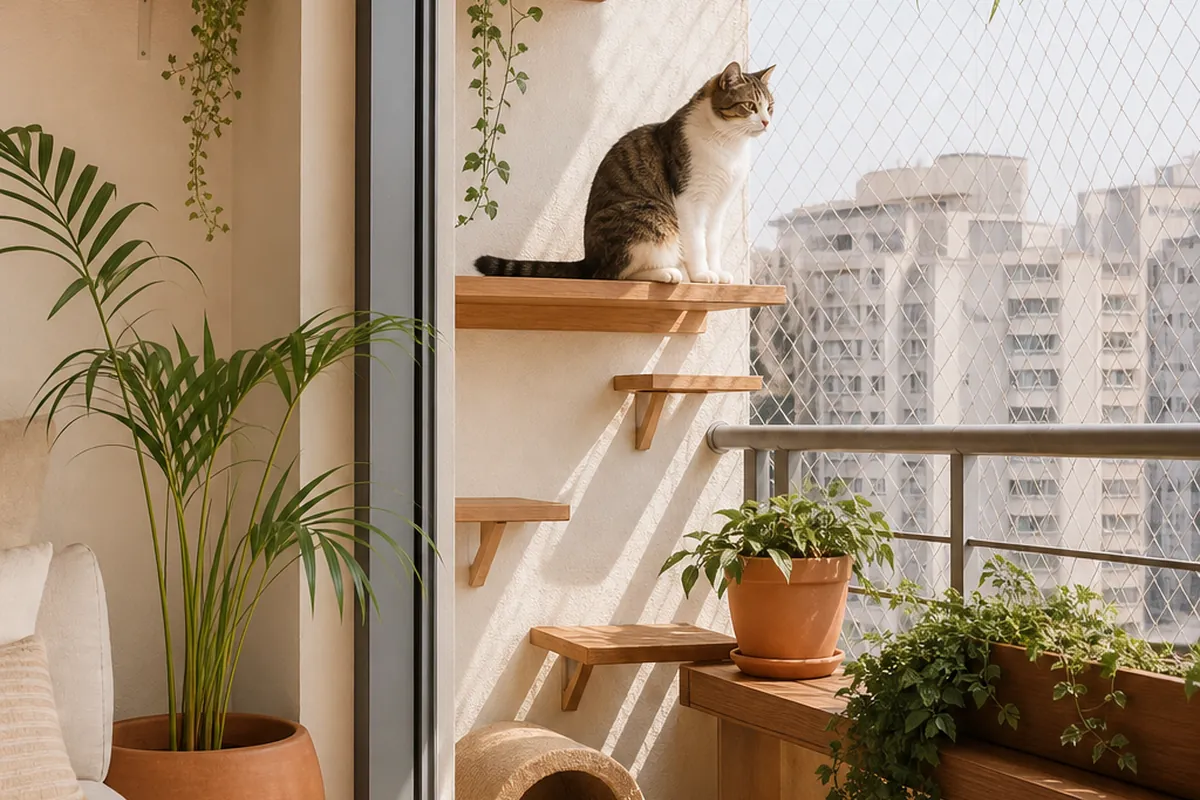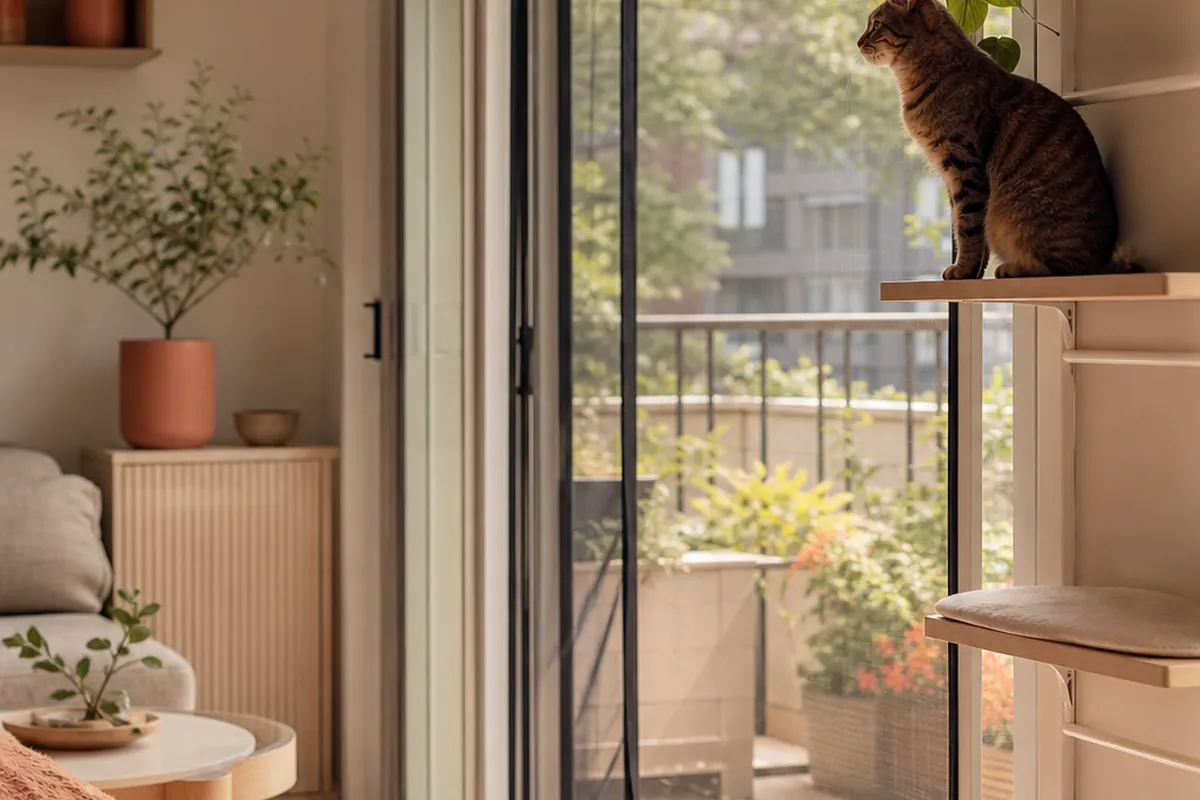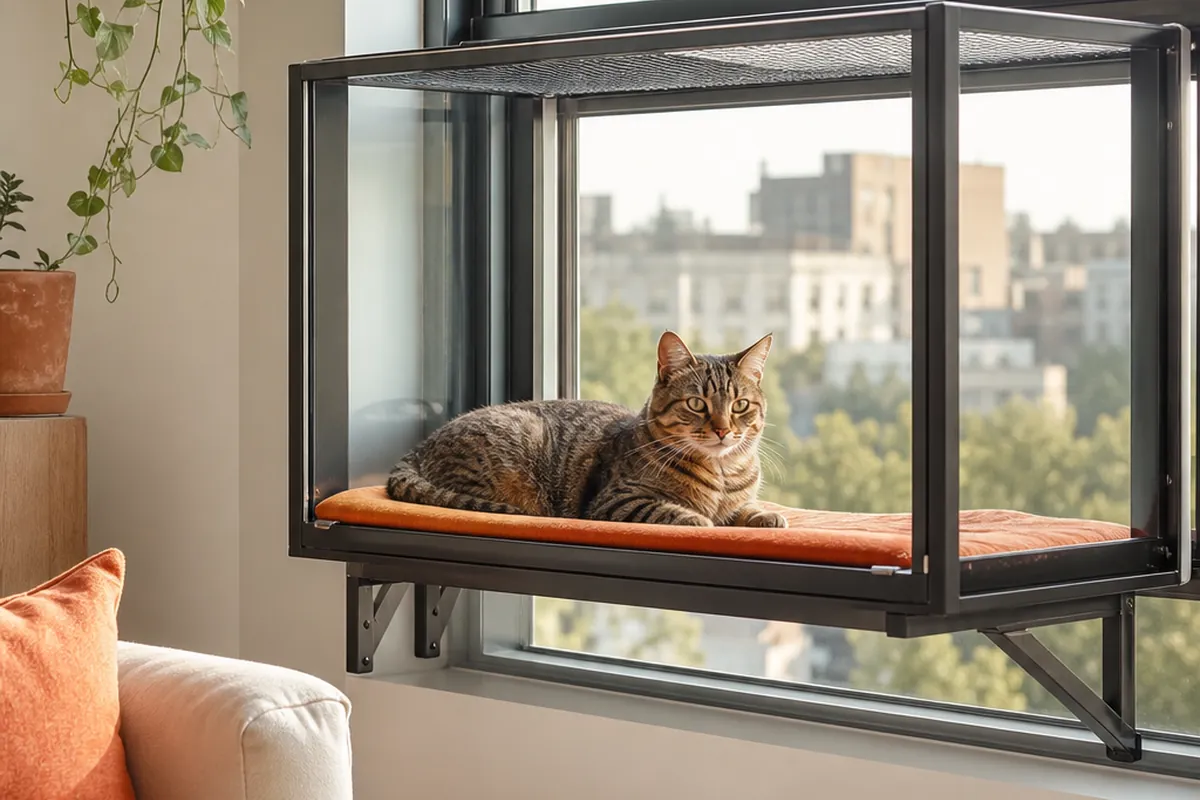
An apartment with no balcony and no yard still has a window, and for a cat that is enough. A window catio is a mesh box that clamps onto an open sash and projects outward, so the cat gets outside air and a downward view from a room that would otherwise offer neither. It solves a narrower problem than a balcony enclosure, and because the whole structure hangs off a window frame instead of sitting on a floor, it fails in different places than a balcony does.
Nine things to get right before you order one.
1. Match the box to how your window actually opens
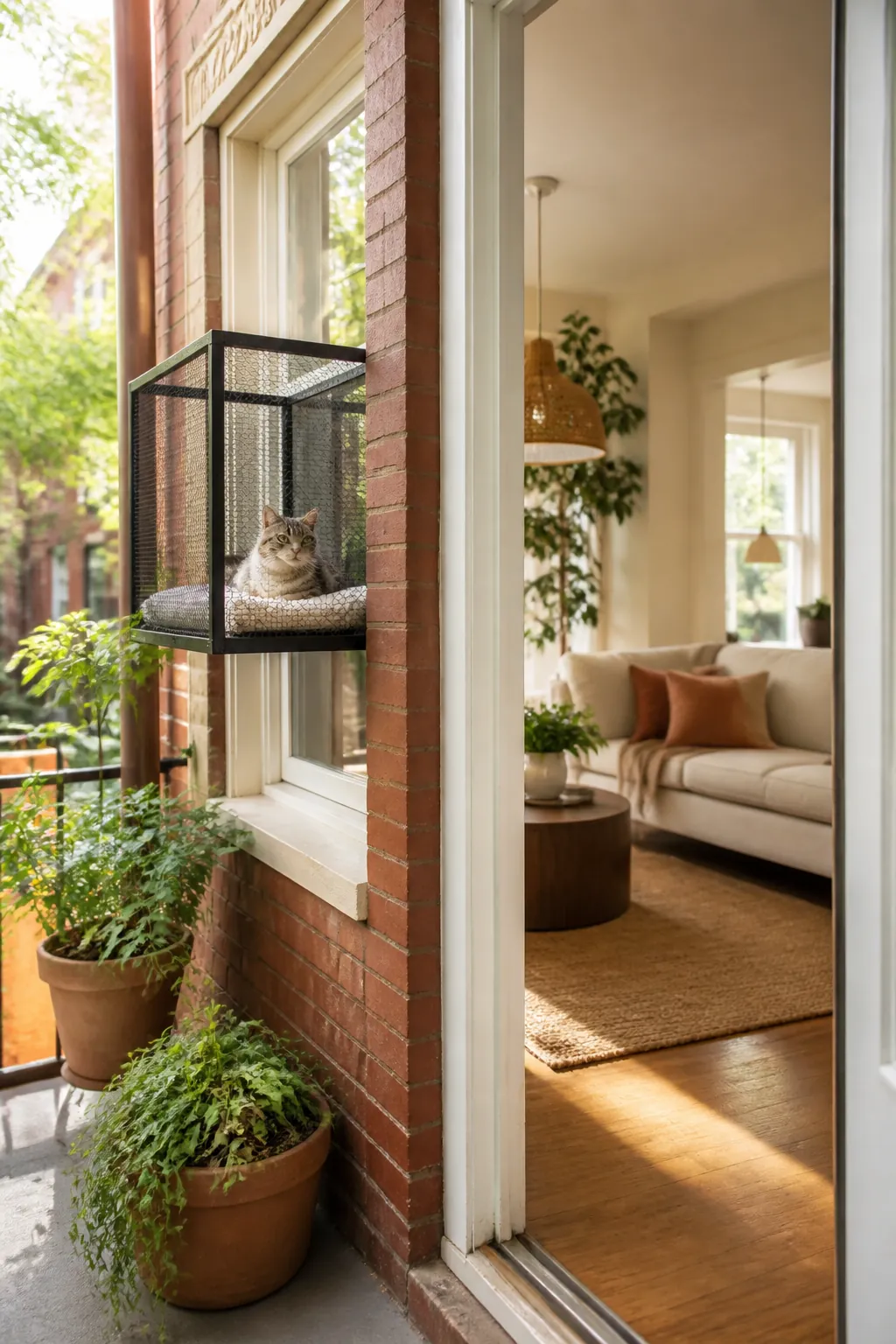
A mosquito-proof cat window box clamps between the raised lower sash and the sill, using the sash’s own weight to hold the bracket in place. That works on a double-hung window that slides up and down, and on most sliders that move side to side along a track. It does not work on a crank-out casement, because there is no sash to raise and nothing for the bracket to press against. Check the listing’s compatible window types before adding anything to the cart, since a box that will not clamp to your sash is not fixable after delivery.
2. Measure three numbers, not one
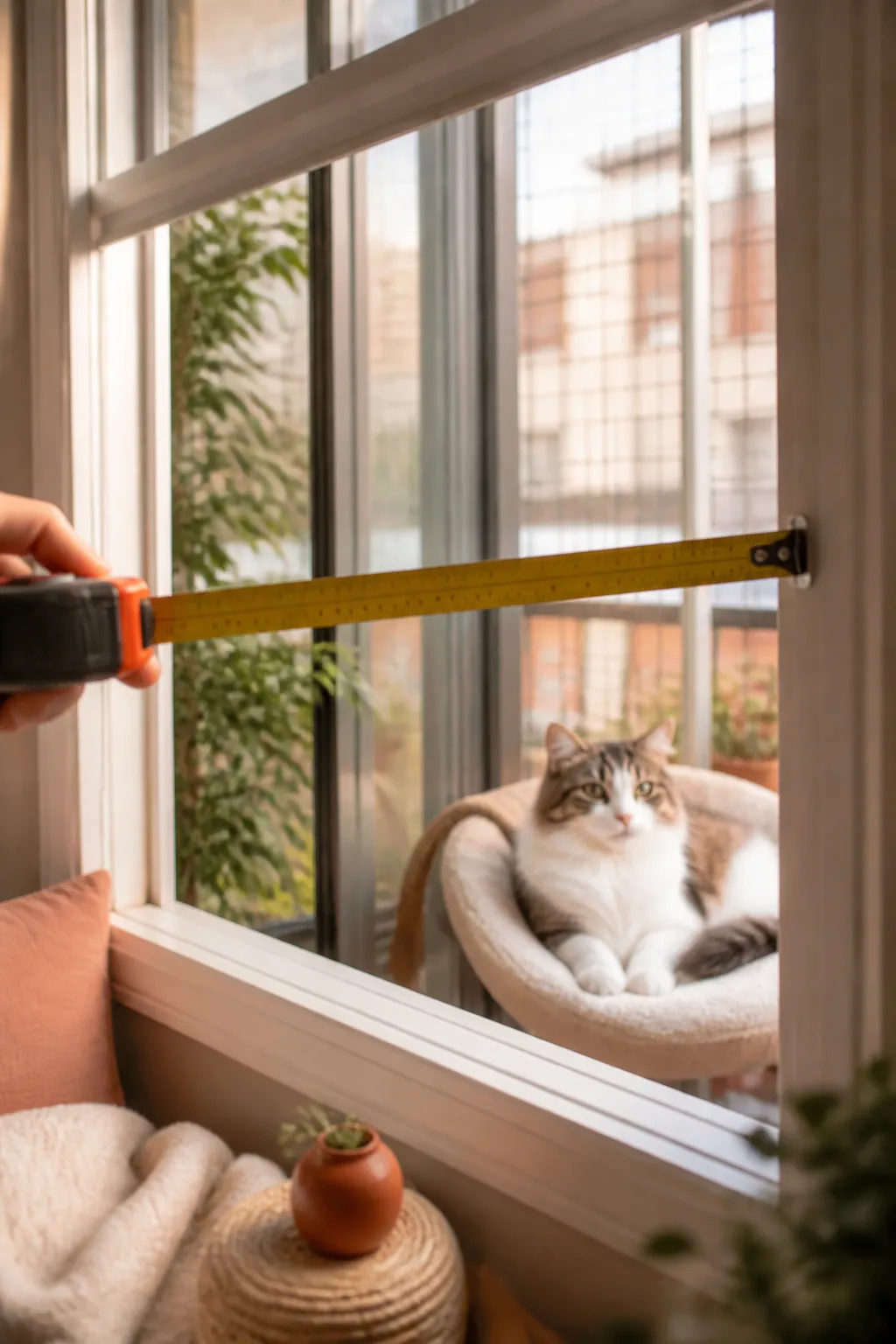
Width across the opening tells you if the box will clamp at all, most models needing the sash raised somewhere between 20 and 40 inches. Height of that raised gap matters separately, since a box designed for a tall sash can look secure while barely gripping a short one. The third number is projection: an 18 to 24 inch box needs somewhere to rest its front legs outside, and a window unit air conditioner, a fire escape platform or a protruding brick sill directly below will all block it. Look down before you order, not just across.
3. Assume it counts as an exterior alteration
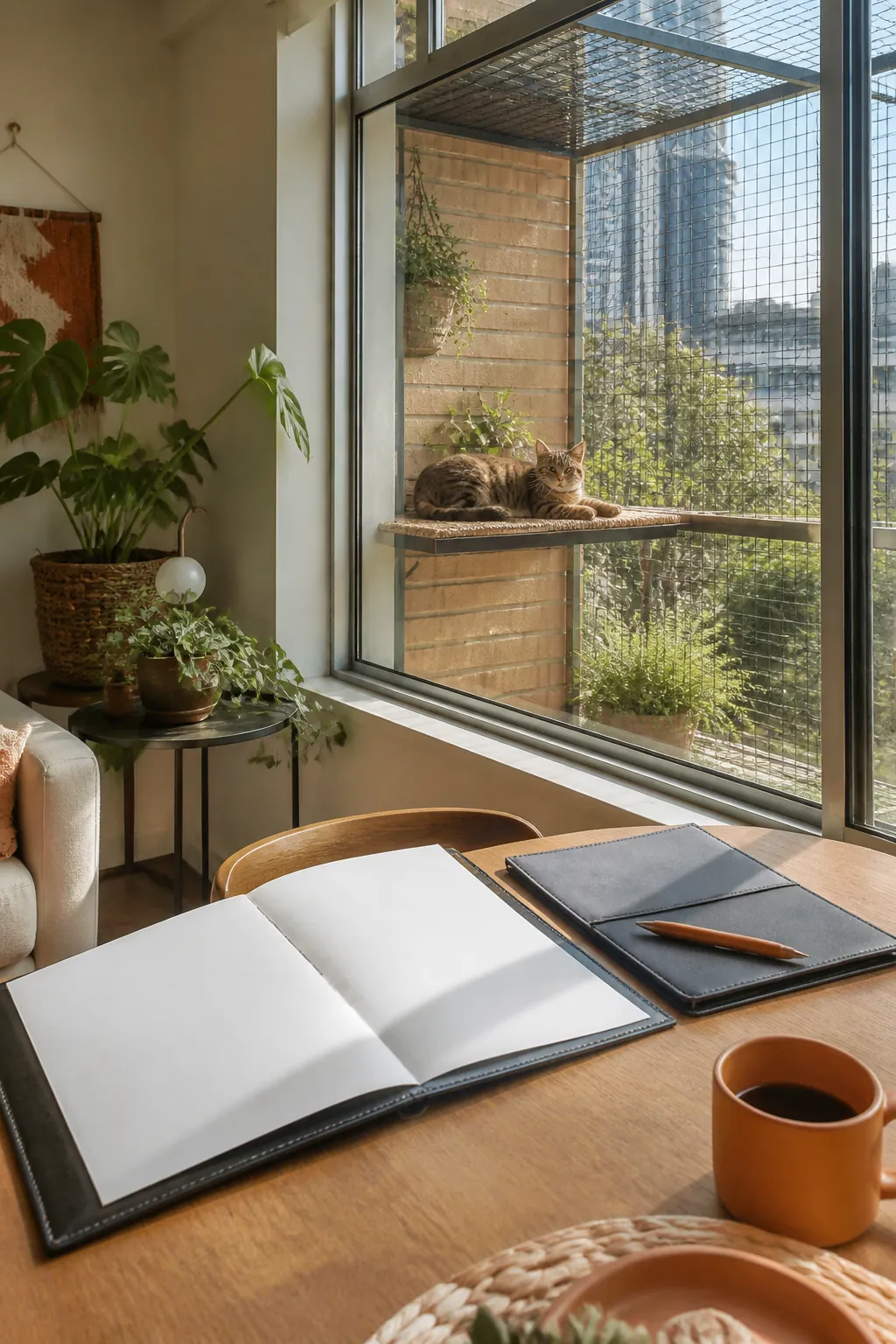
Balcony netting sits below a rail and is nearly invisible from the street. A window box does the opposite: it sticks out from the wall at whatever floor you live on, in full view of the sidewalk and every window across the courtyard. Most leases that are silent on balconies are not silent on anything attached to the building’s exterior. Choose a clamp-only model with no screws into the frame or the siding, and get the go-ahead in writing before it arrives rather than after a neighbor mentions it to the building manager. A balcony catio renters can remove later can often stay below the railing line and out of view, but a window box has no rail to hide behind, so treat that written yes as part of the purchase.
4. Tighten the clamp, then add a strap it does not depend on
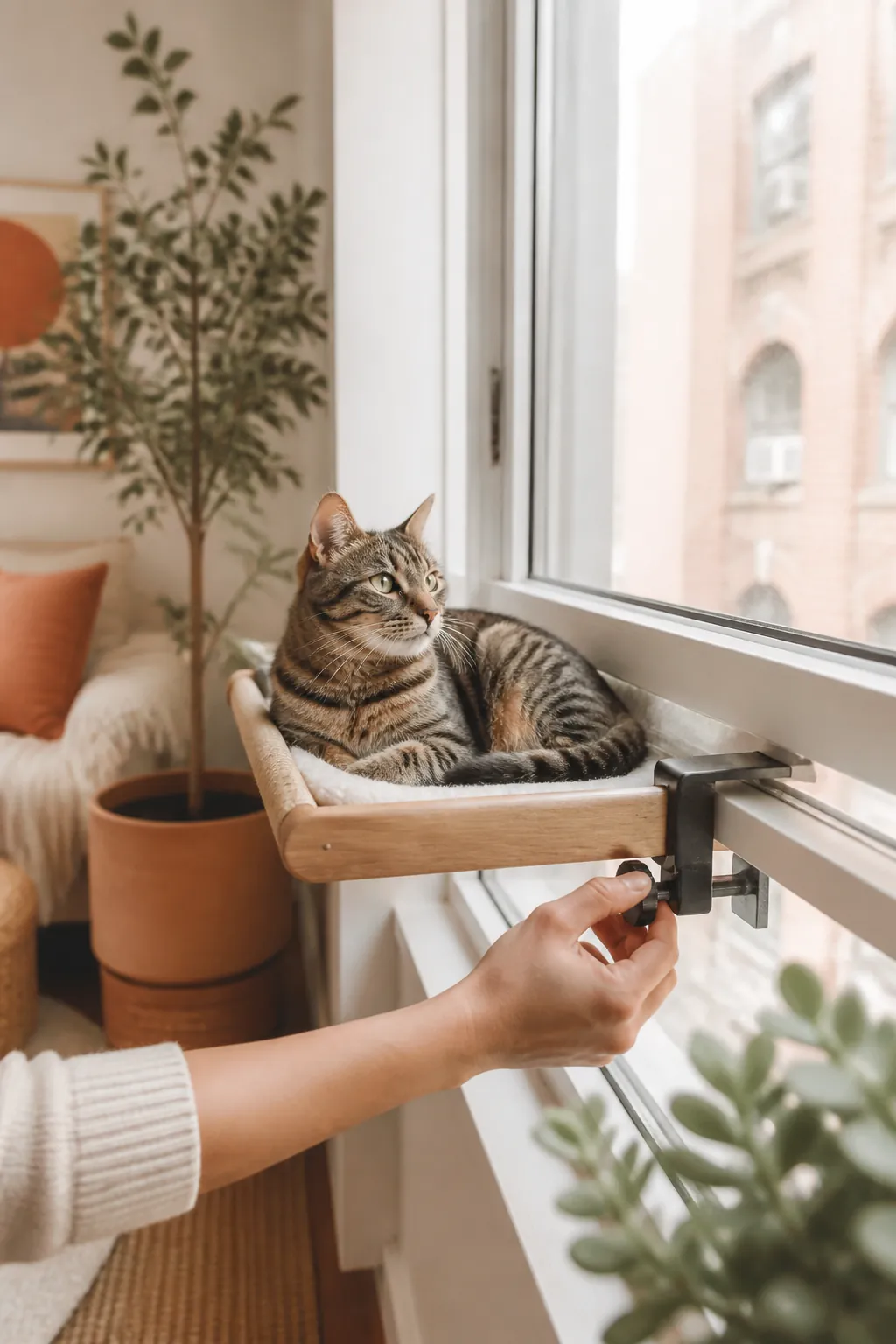
The bracket holds because the sash weight presses down on it, which means the connection can loosen as a rubber gasket compresses over the first few weeks. Check it by hand every few days at first, and every week after that once it has settled. Most kits ship with a safety strap or tether meant to anchor to something solid inside the room, a stud rather than drywall alone. Use it as a genuine backup rather than a formality: it is the thing that catches the box if the clamp ever gives, not a second attachment point doing the same job twice.
5. Put something soft at the far end, and expect to bring it in
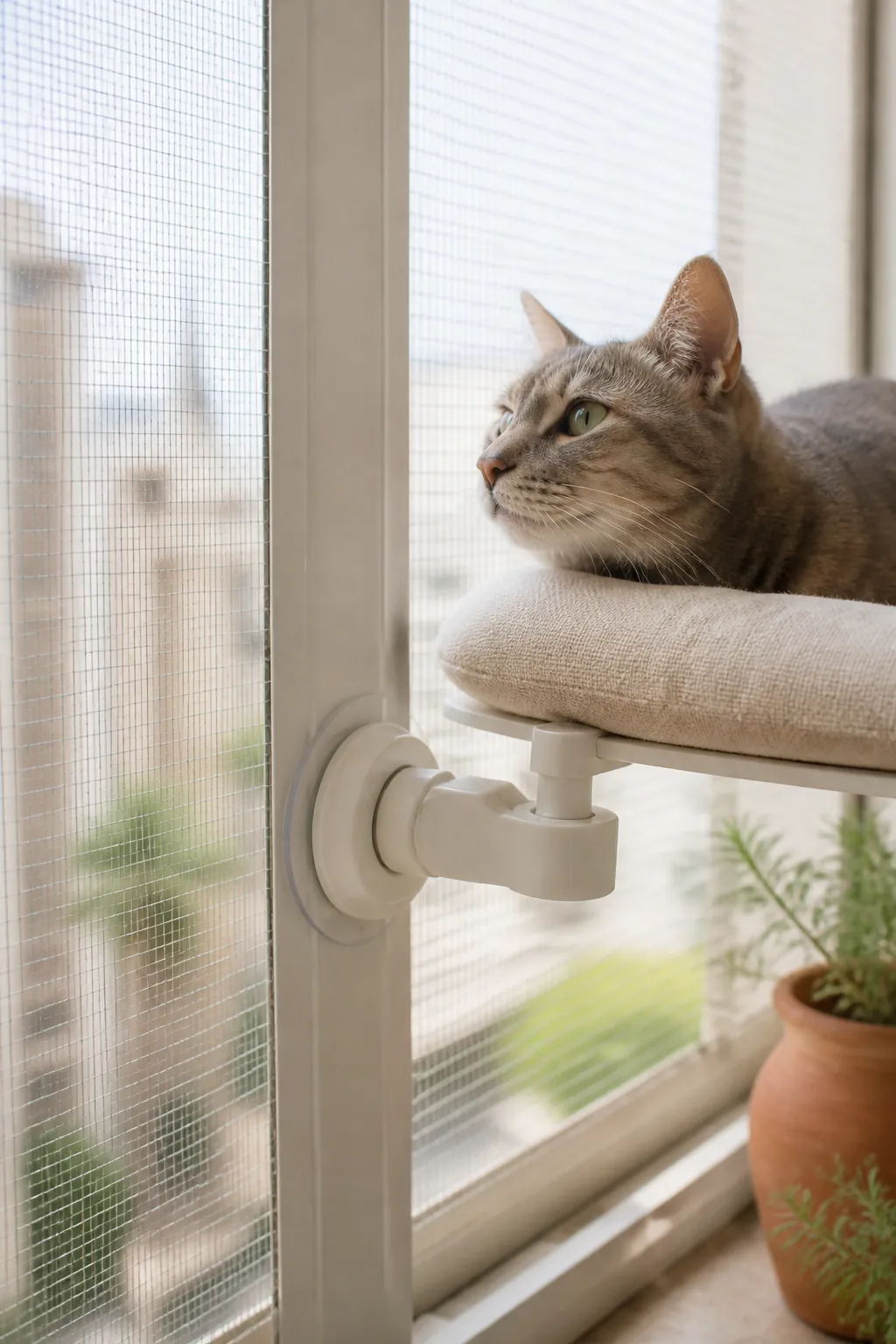
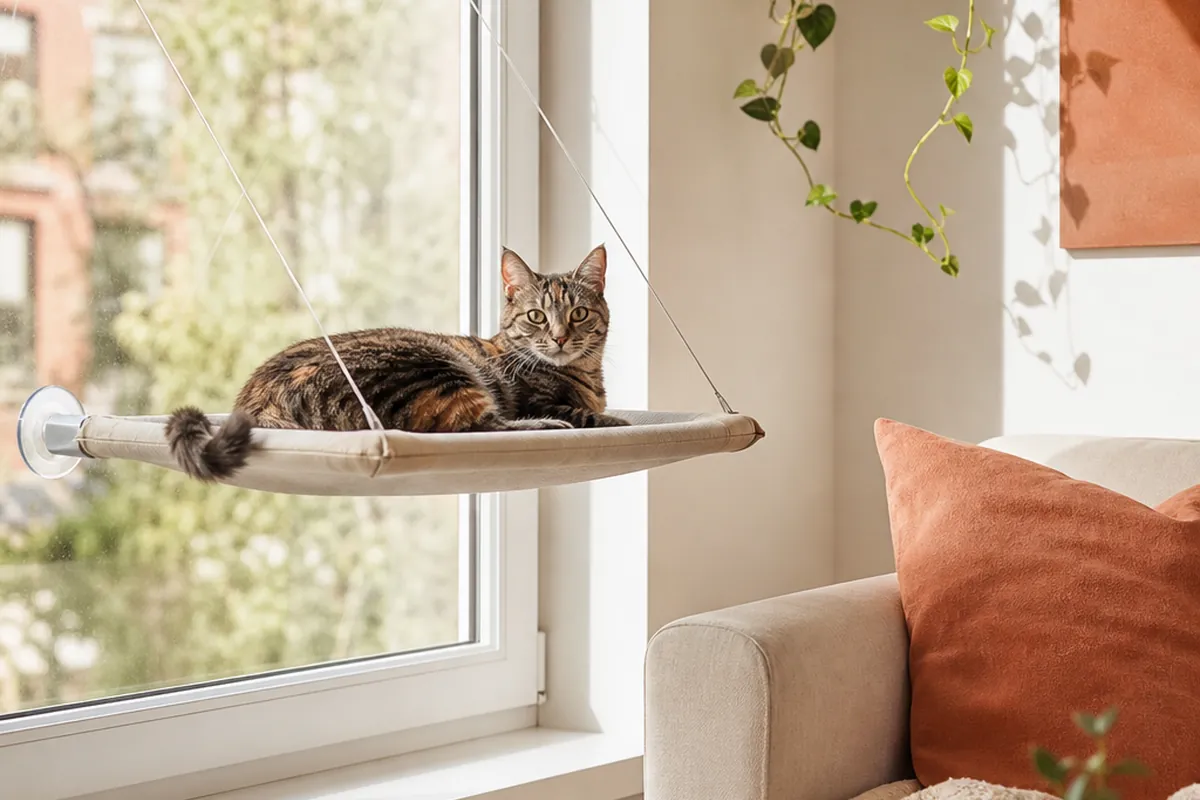
The floor of most window boxes is wire mesh or ridged plastic, comfortable for standing but not for lying down. A suction-mounted window perch hammock fitted just inside the box, on the glass rather than the mesh floor, gives a cushioned spot without adding weight to the clamp end - the same suction perch mounting logic that works on a bare window works here too. Bring the cushion in on wet days. A box left outside through a week of rain holds moisture in a way an open balcony does not, since it is smaller and shaded by the building, and a damp pad left in place starts to smell within days rather than weeks.
6. Plan for the gap the clamp leaves behind
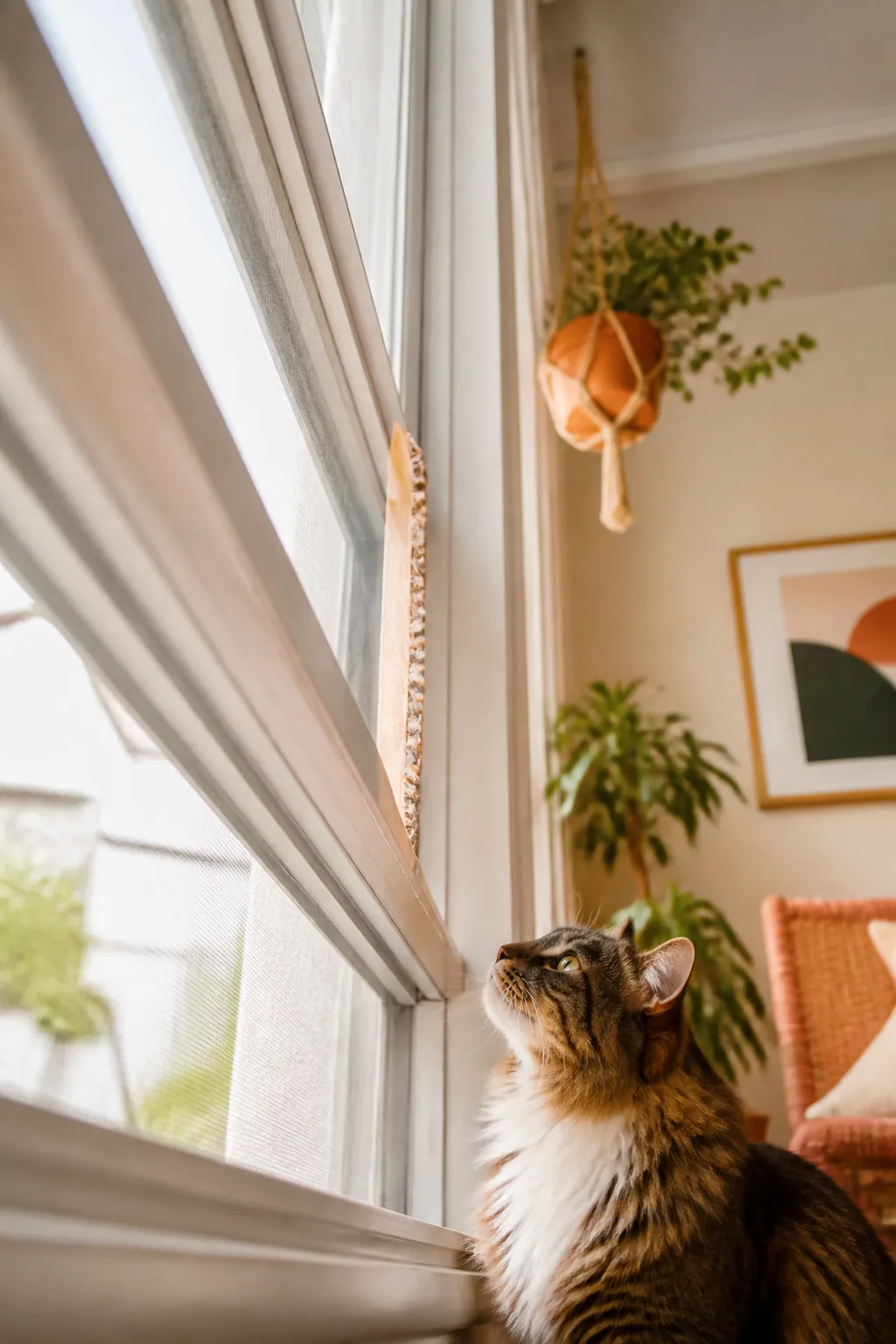
Because the bracket sits in the sash channel, the window can no longer close flush against the frame while the box is attached, typically leaving a gap of a half inch to an inch along the sides. That gap lets in insects and a surprising amount of draft. A cut piece of plastic garden mesh taped or clipped over the opening on the inside handles the insects; for the draft, weatherstripping foam pressed into the remaining gap is the cheaper fix and takes ten minutes. Neither is optional once the box has been up for more than a few days.
7. Treat a higher floor as a different risk, not the same one further up
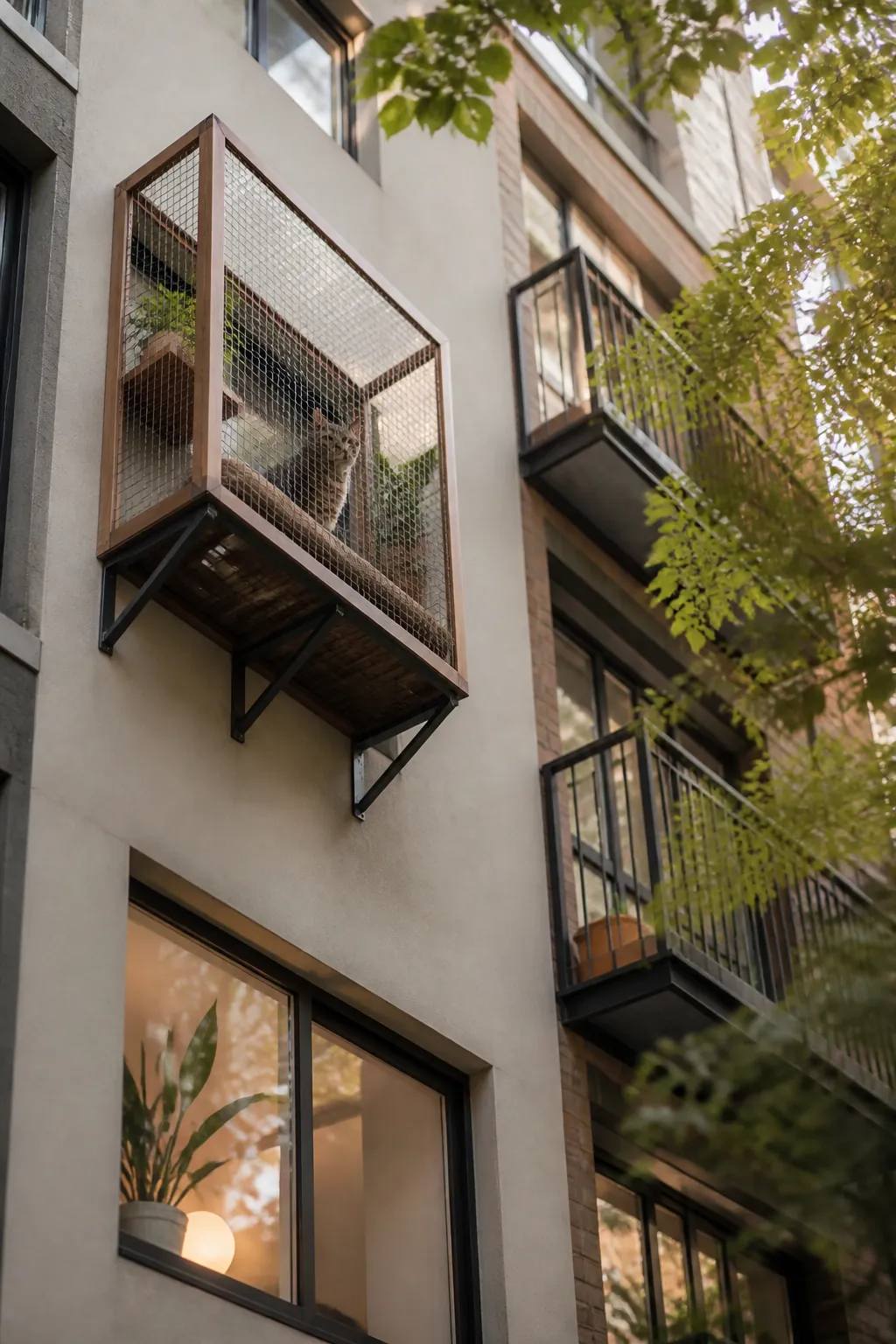
A balcony catio failing means a slower slide toward a barrier that is usually still there. A window box failing means the box, and possibly the cat, leaving the building entirely. A static weight rating does not account for leverage: a cat walking to the far end of the box shifts more force onto the bracket than the same cat’s weight sitting still at the clamp end. Above the second floor, check the clamp weekly without exception, and treat any wobble at all as a same-day fix rather than a weekend job.
8. Never use the room’s only emergency exit window
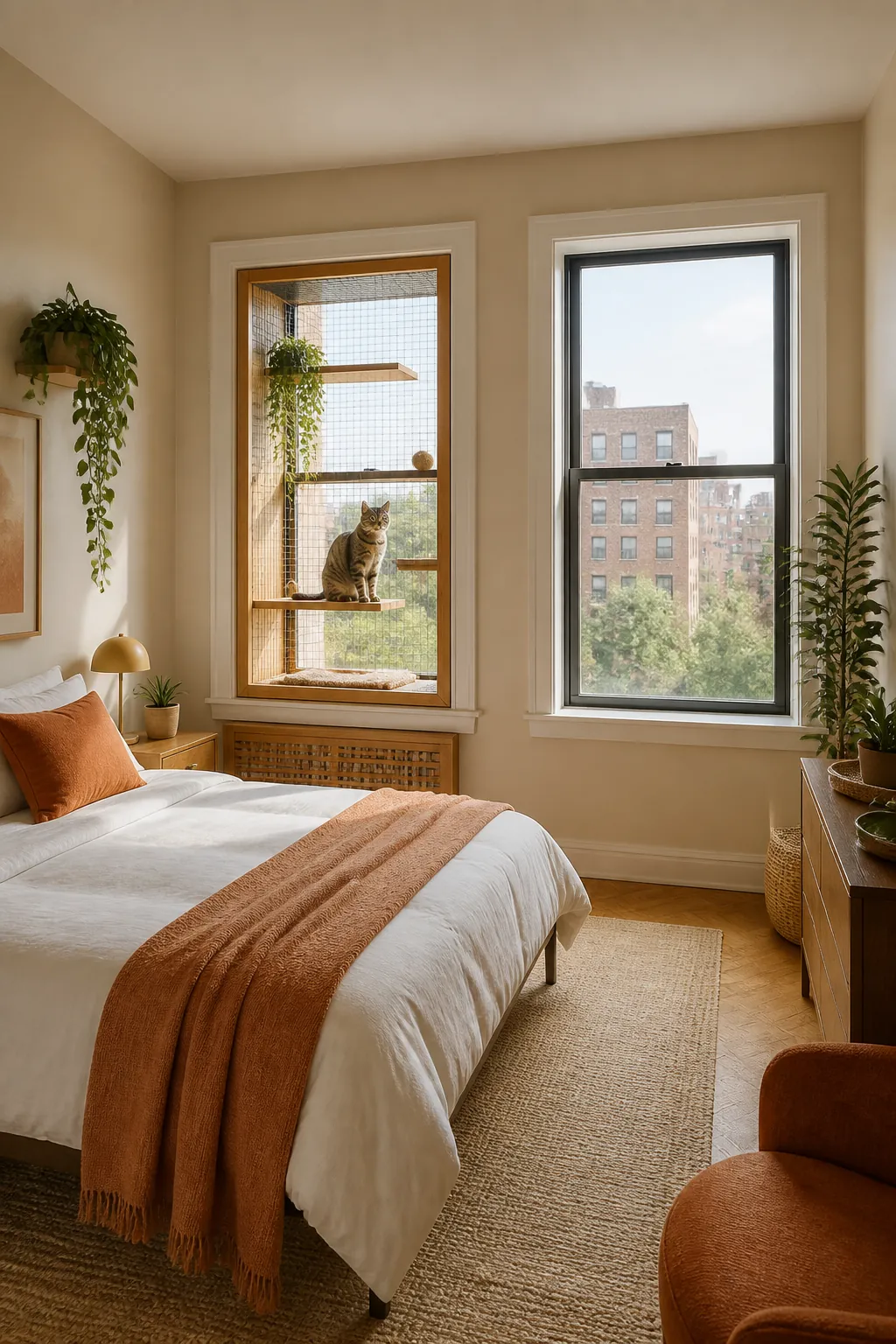
Many building codes require a bedroom to have at least one window that opens to a clear space of roughly 20 inches wide and 24 inches high, sized for a person to climb through in an emergency. A clamp bracket, even a removable one, takes time to unclip in the dark or in smoke, and a cushioned box outside makes the opening harder to use, not easier. If the bedroom has only one window, put the catio in the living room or a second bedroom instead. This is worth checking before you buy, not after installation, since it decides which window is even a candidate.
9. Take it down for winter and reassess before you put it back
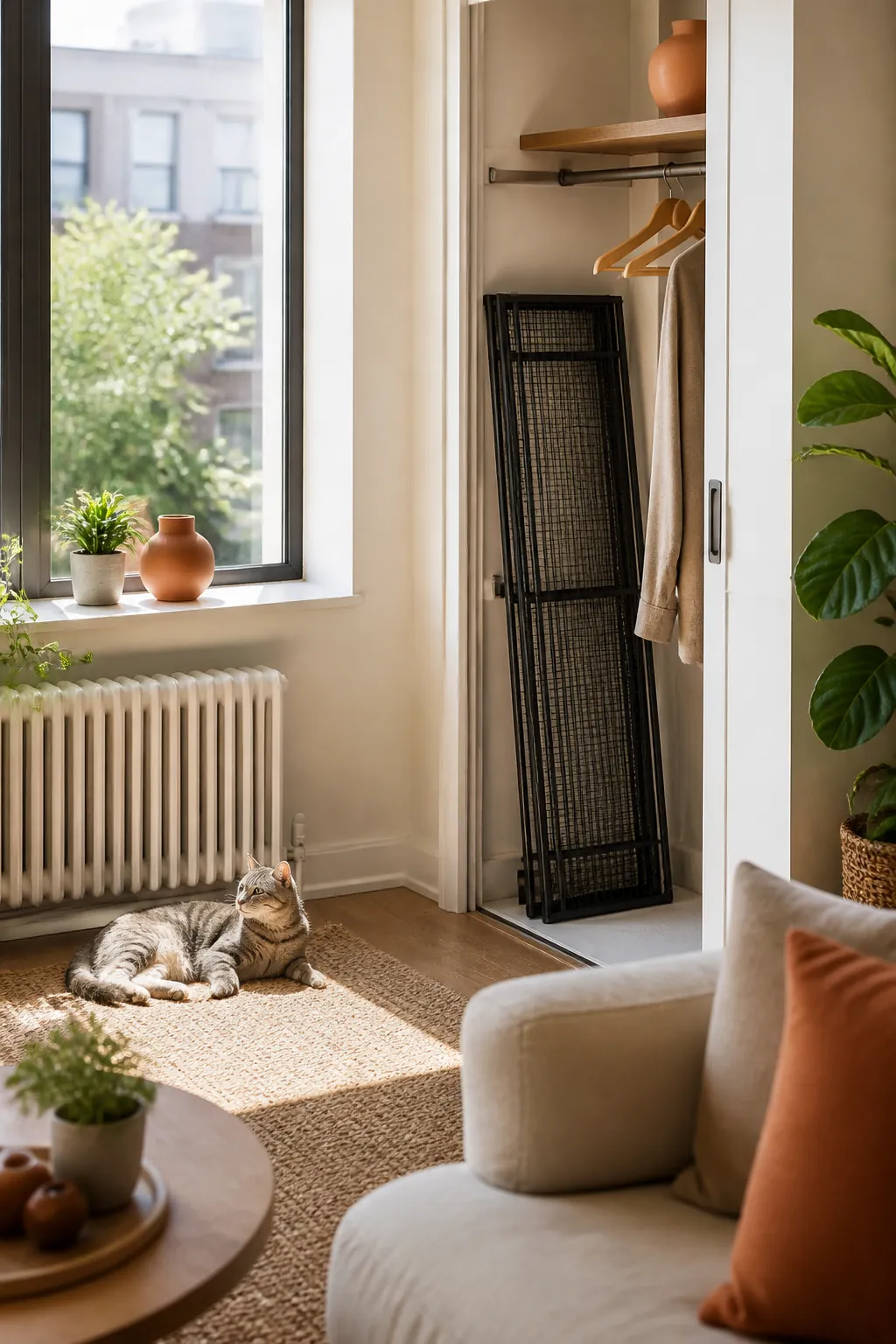
The same gap that lets in a summer breeze becomes a real heat leak once outside temperatures drop, and most boxes are not built to insulate against it. Remove the box before the cold sets in, store it somewhere dry, and inspect the mesh and the clamp gasket for cracking before the next warm season. This is also the moment to check the window’s own weatherstripping, since months of clamp pressure can flatten it in one spot, leaving a draft that has nothing to do with the catio once it is gone.
Where to start
Confirm the window type first. If it is a casement window that cranks outward, nothing on this list works and the project stops here regardless of how much floor space you do or do not have. If it is a double-hung or slider, measure the opening in all three directions and rule out anything blocking the space below before you spend money.
Get the lease question settled next, since a box is visible in a way netting is not, and a written yes is worth more than an assumption. Then check which window in the apartment is not required for emergency exit, because that decision comes before the box does, not after.
Once it is mounted, tighten the clamp, attach the strap to something solid, and add the cushioned perch. Seal the gap along the sides in the first week rather than the first cold snap, and settle into a weekly check of the bracket for as long as the box stays up. Bring it in for winter, and give the window itself a look before the next season starts.