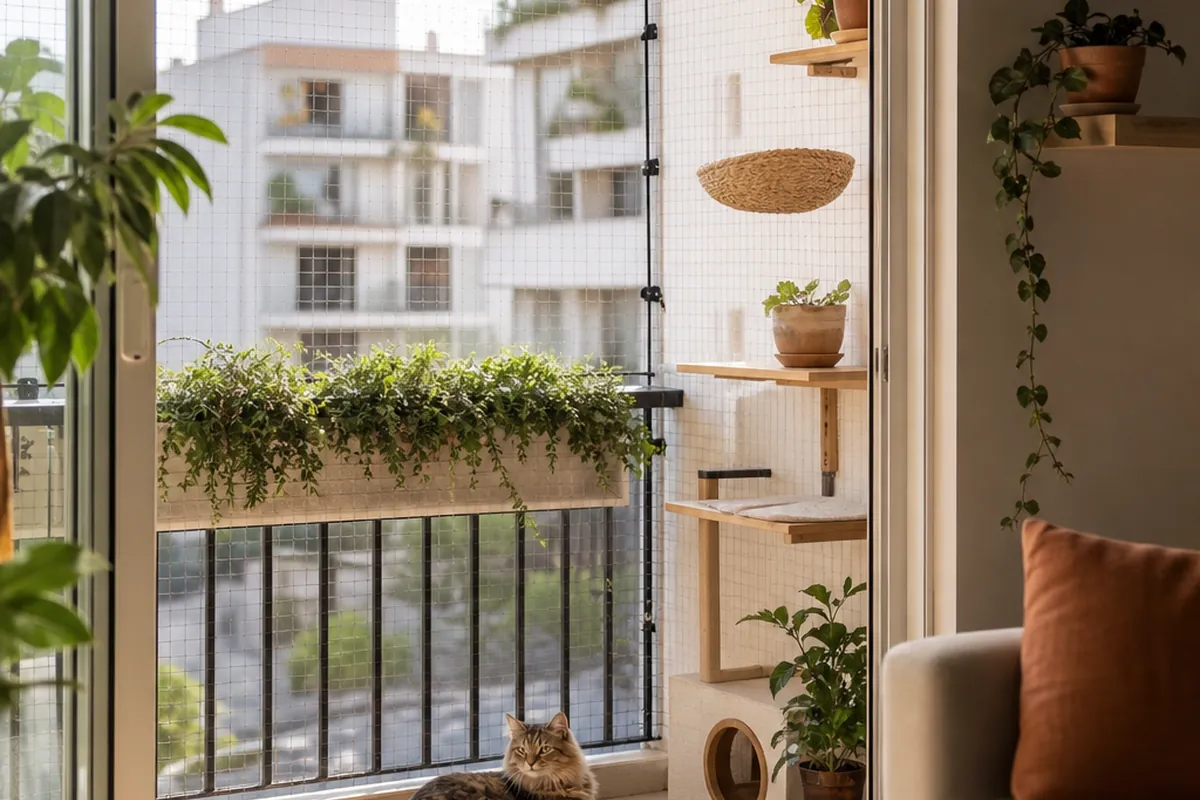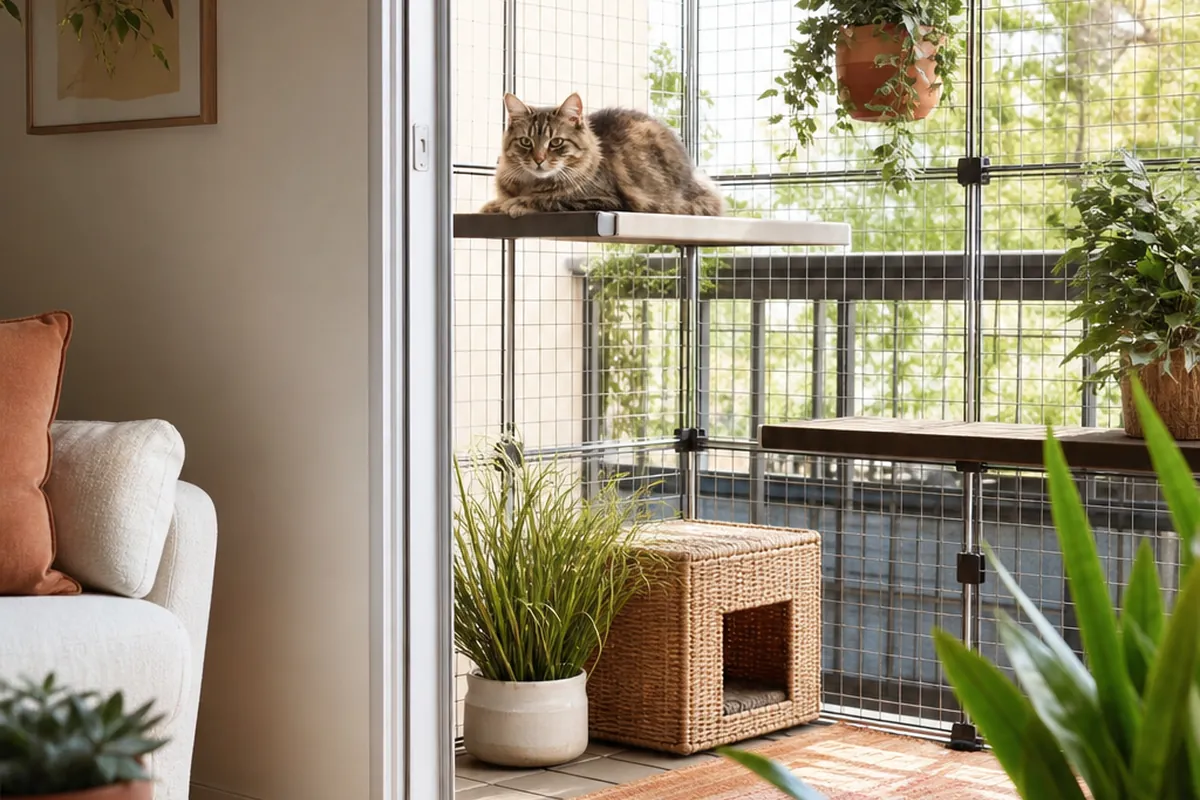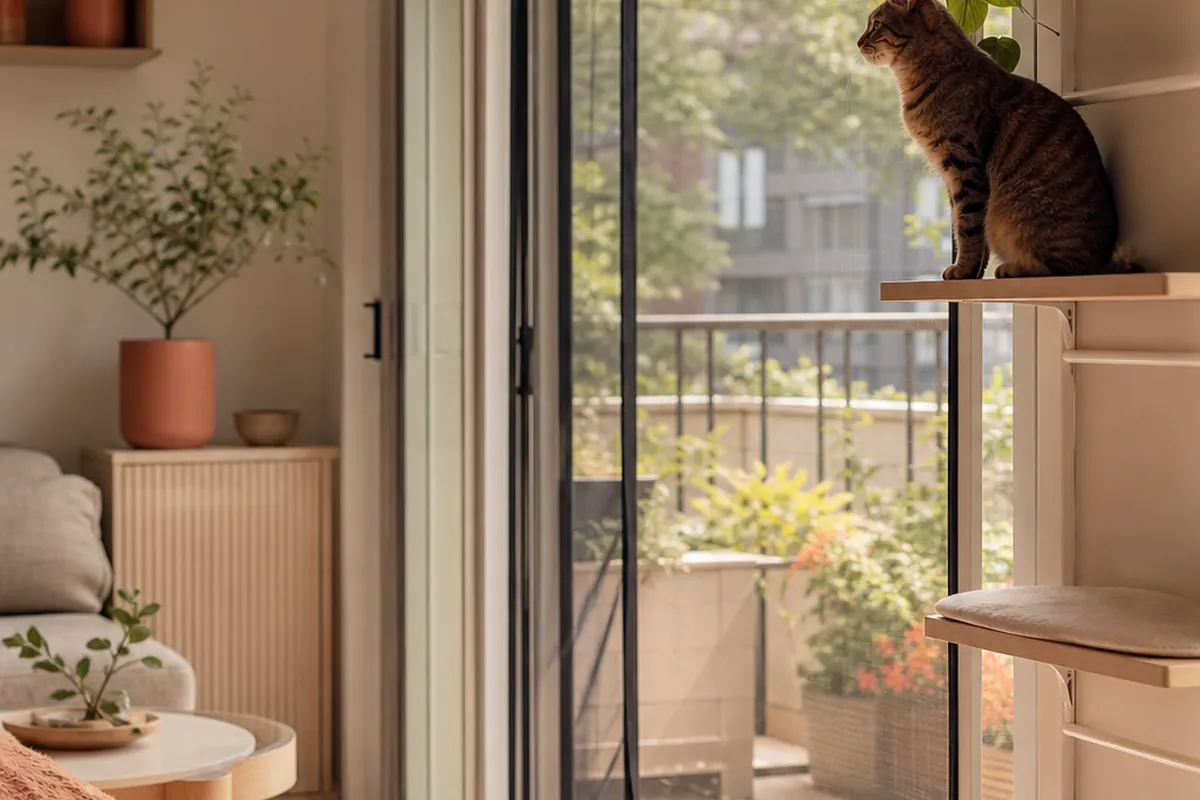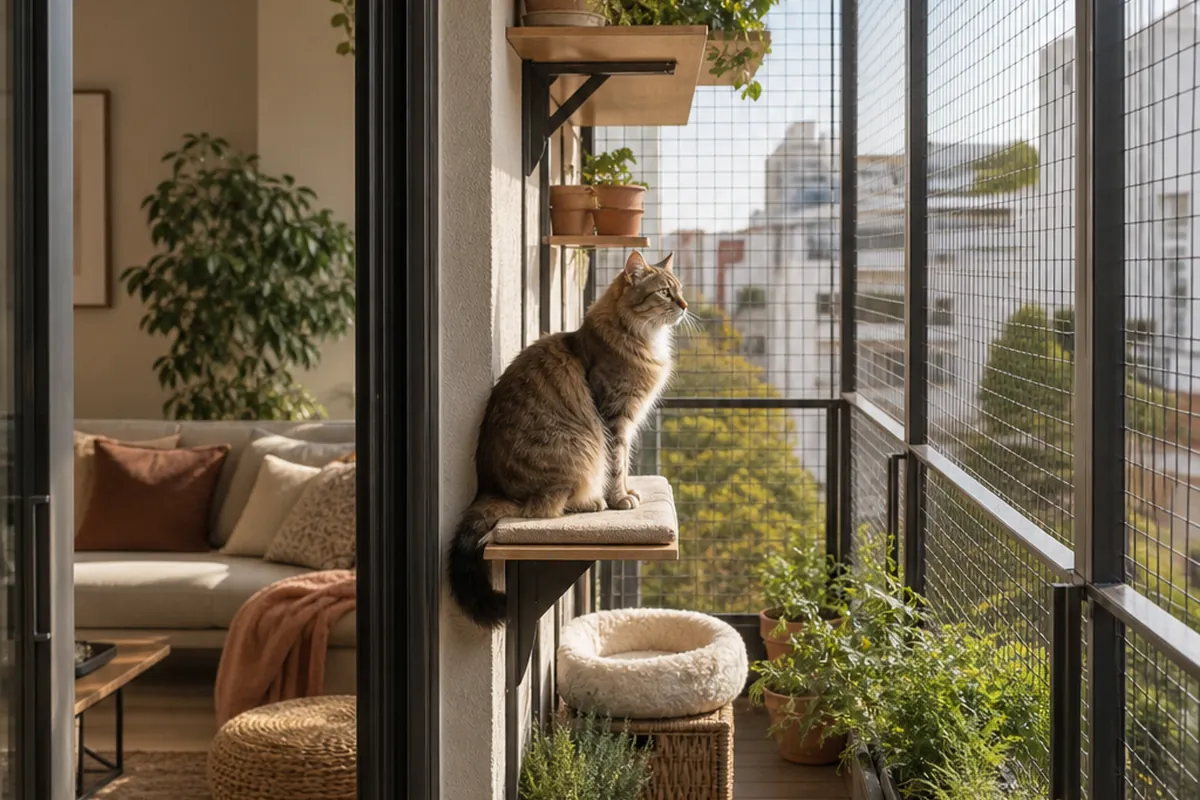
A narrow balcony is not a small version of a wide one. It is a different shape of problem, because the usual catio advice assumes you have floor to spare on both sides of whatever you build, and a balcony that is three feet deep from railing to sliding door has none to give. Fit a structure sized for an average balcony onto one of these and you lose the balcony entirely, including the part you still need to stand on.
Nine ways to give the cat the space without giving up your own, starting with the measurement everyone skips.
1. Measure the depth, not the width
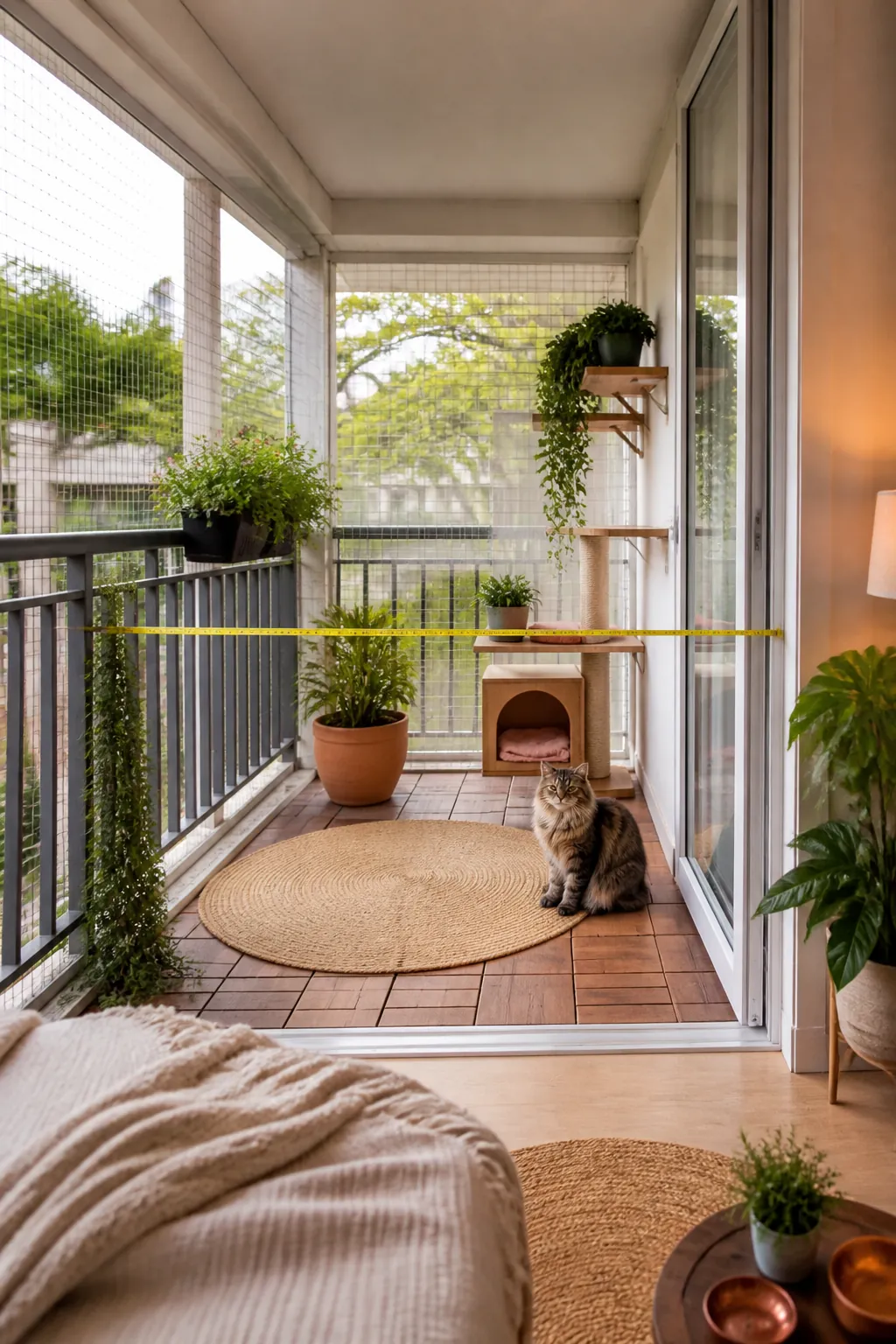
A listing calls a balcony “narrow” because of its width along the building, but the number that decides whether a catio fits is the depth front to back, from the inside face of the railing to the door. Many compact urban balconies run 30 to 42 inches deep at the narrowest point, and a freestanding enclosure that reads as a reasonable size online can still be deeper than that once you account for its base frame, which usually adds an inch or two beyond the stated footprint. Measure at the shallowest spot on the balcony, not the middle, because railings are rarely perfectly parallel to the building and a balcony that looks 38 inches deep in the center can be 33 at one end.
2. Pick the enclosure by its smallest number, not its tallest one
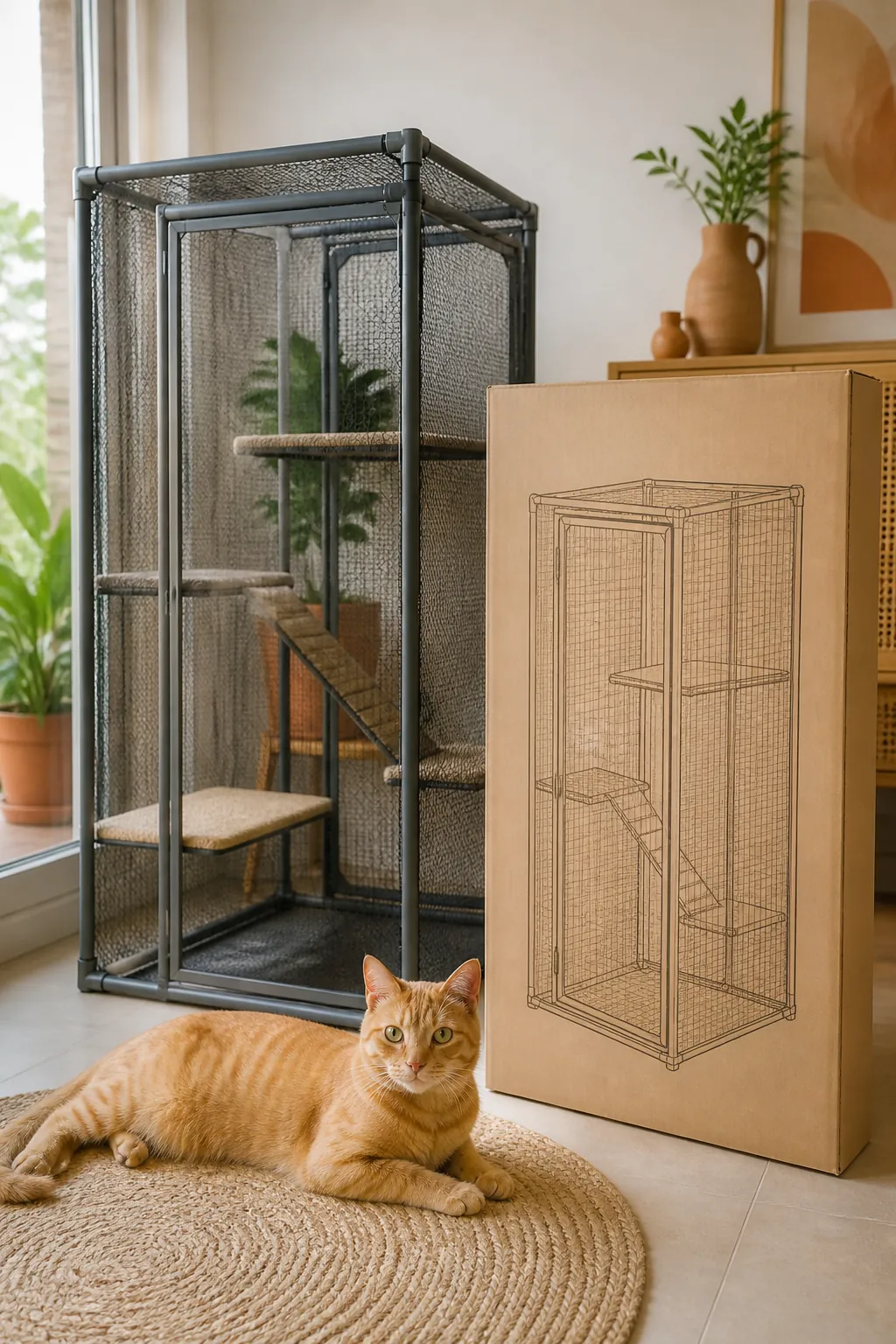
Enclosure listings lead with height, because a tall unit photographs well and height is the dimension buyers notice first. On a narrow balcony it is the least useful number you will read. A freestanding catio enclosure sized at roughly three feet square at the base will clear a balcony that is deep enough to take it, but a unit with the same footprint sold at a slightly larger height does not get any easier to fit, it just gets harder to secure against wind. Shop by base footprint against your own depth measurement first, and treat height as the thing you choose once the footprint already fits. Read the material spec too: what a DIY catio kit actually includes is a boxed set of panels, poles and mesh built to stand on its own, so a kit designed for a patio slab needs weighting before it is steady on a windy balcony.
3. Run the enclosure along the railing, not across the door
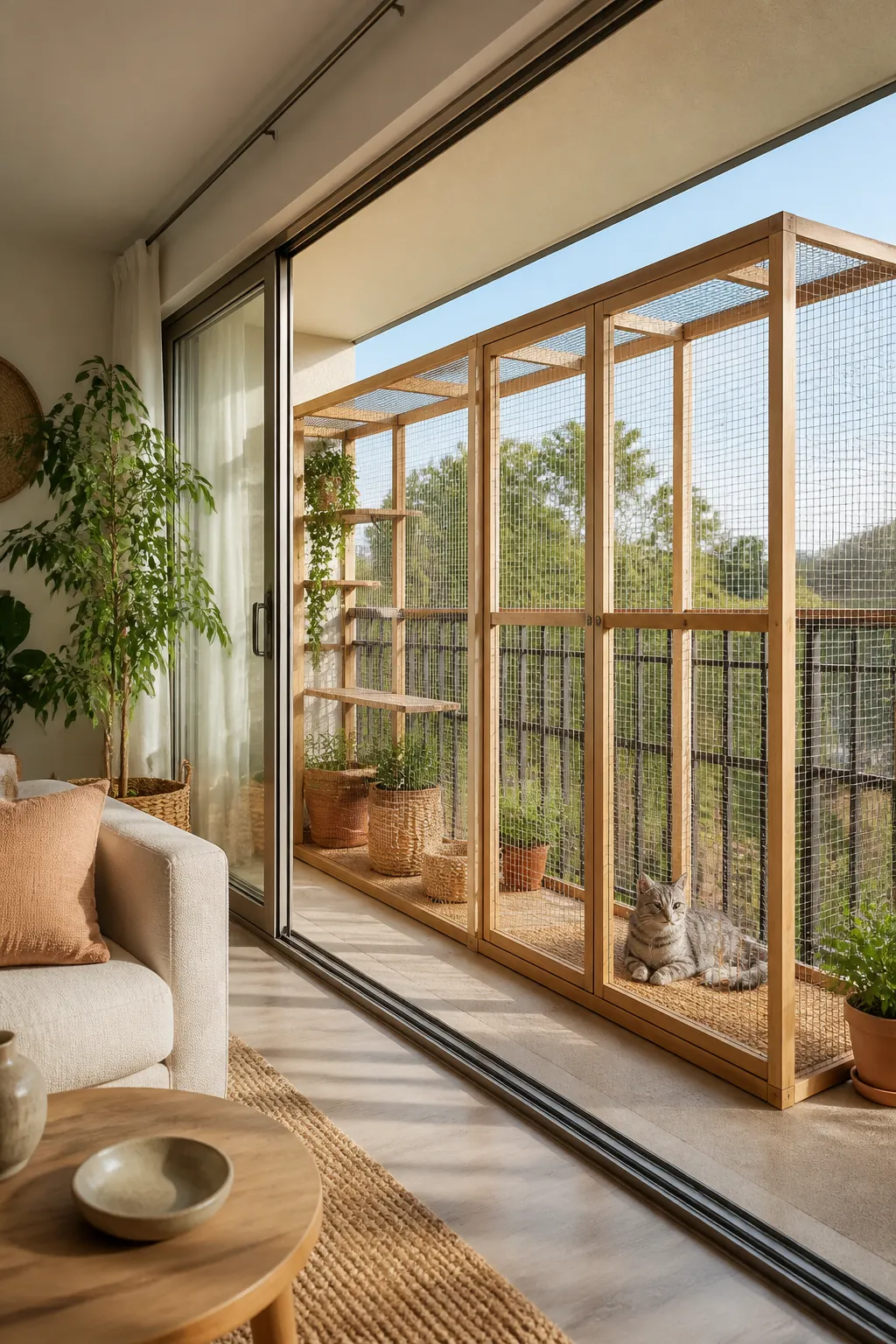
On a wide balcony, orientation barely matters. On a narrow one, it decides whether you have a balcony left to stand on. Set the enclosure’s long side flush against the railing rather than centering it between the railing and the door, and the full depth of the remaining floor becomes one continuous walking strip instead of two unusable slivers on either side of a box. This single decision does more for a cramped balcony than any amount of shopping for a smaller unit.
4. Keep 18 inches clear for yourself, measured with the door open
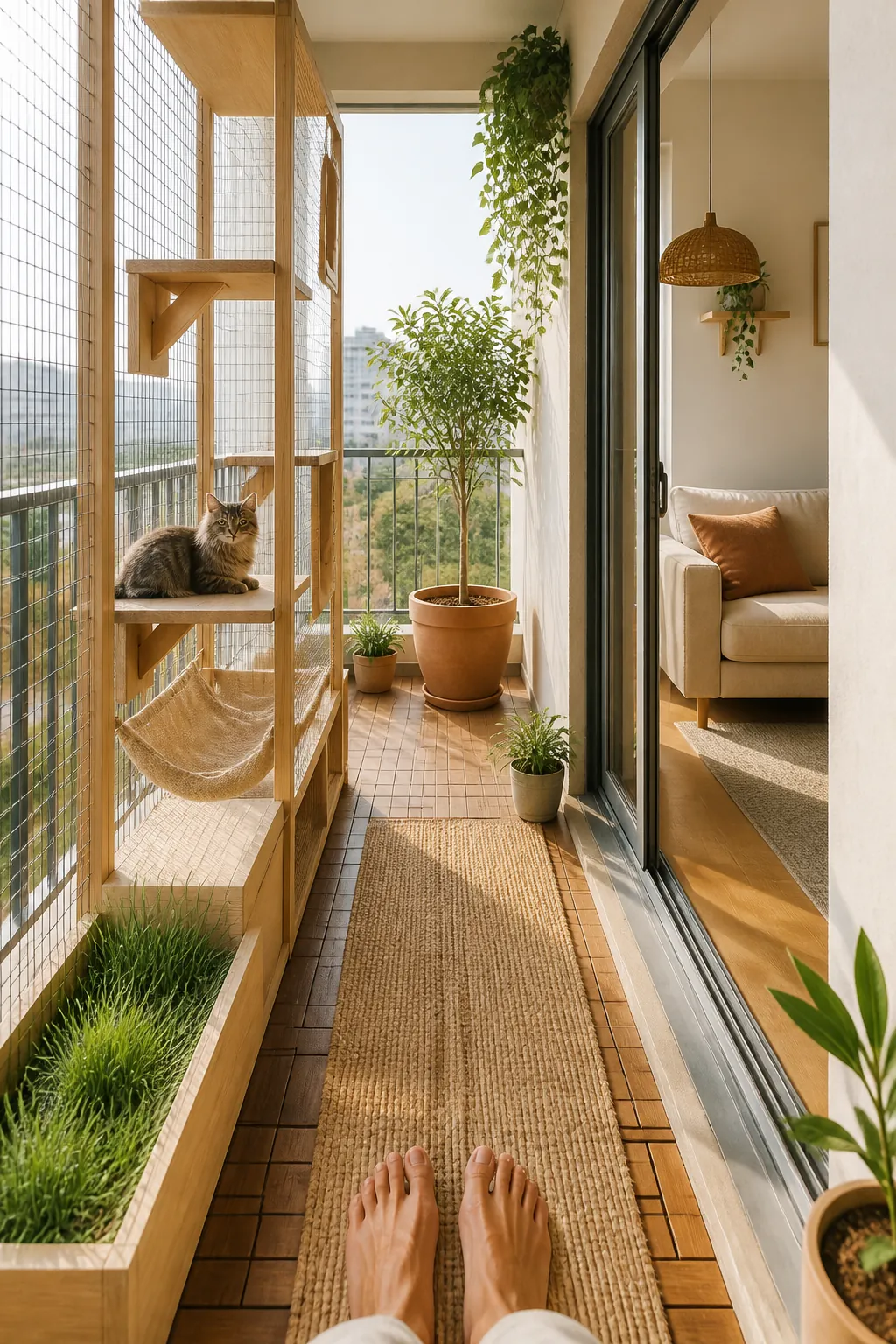
Eighteen inches is the rough minimum for a person to stand sideways and water a plant or hang laundry without stepping into the enclosure. Measure this with the balcony door fully open, not closed, because a sliding door that swings or folds inward steals several inches from exactly the strip you are trying to protect. If the path comes in under that mark once the enclosure is placed, the unit is still too big for this balcony regardless of how well it fit the depth measurement from step one.
5. Close the end gaps with mesh instead of buying a wider unit
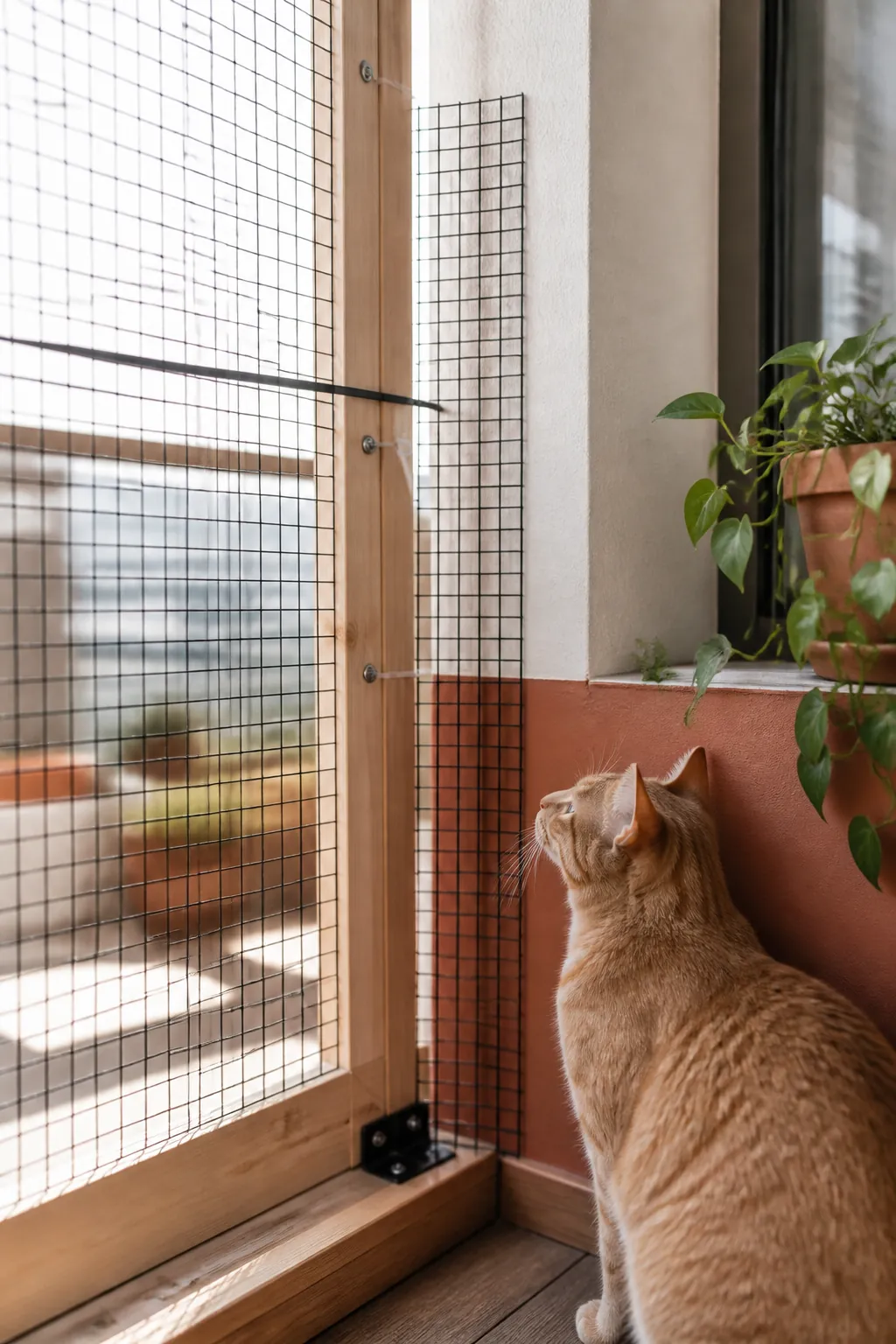
A freestanding enclosure pushed flush to the railing rarely reaches the side wall at both ends, and that remaining triangle is where a cat finds its way out first. A roll of plastic garden mesh cuts to the exact shape of each gap with household scissors, which is far cheaper and more adjustable than hunting for a wider enclosure that fits a non-standard depth. Overlap the mesh an inch onto the enclosure’s own frame rather than butting the edges, since a flush seam on day one gaps within a season as the mesh and the frame settle at slightly different rates.
6. Add height instead of footprint
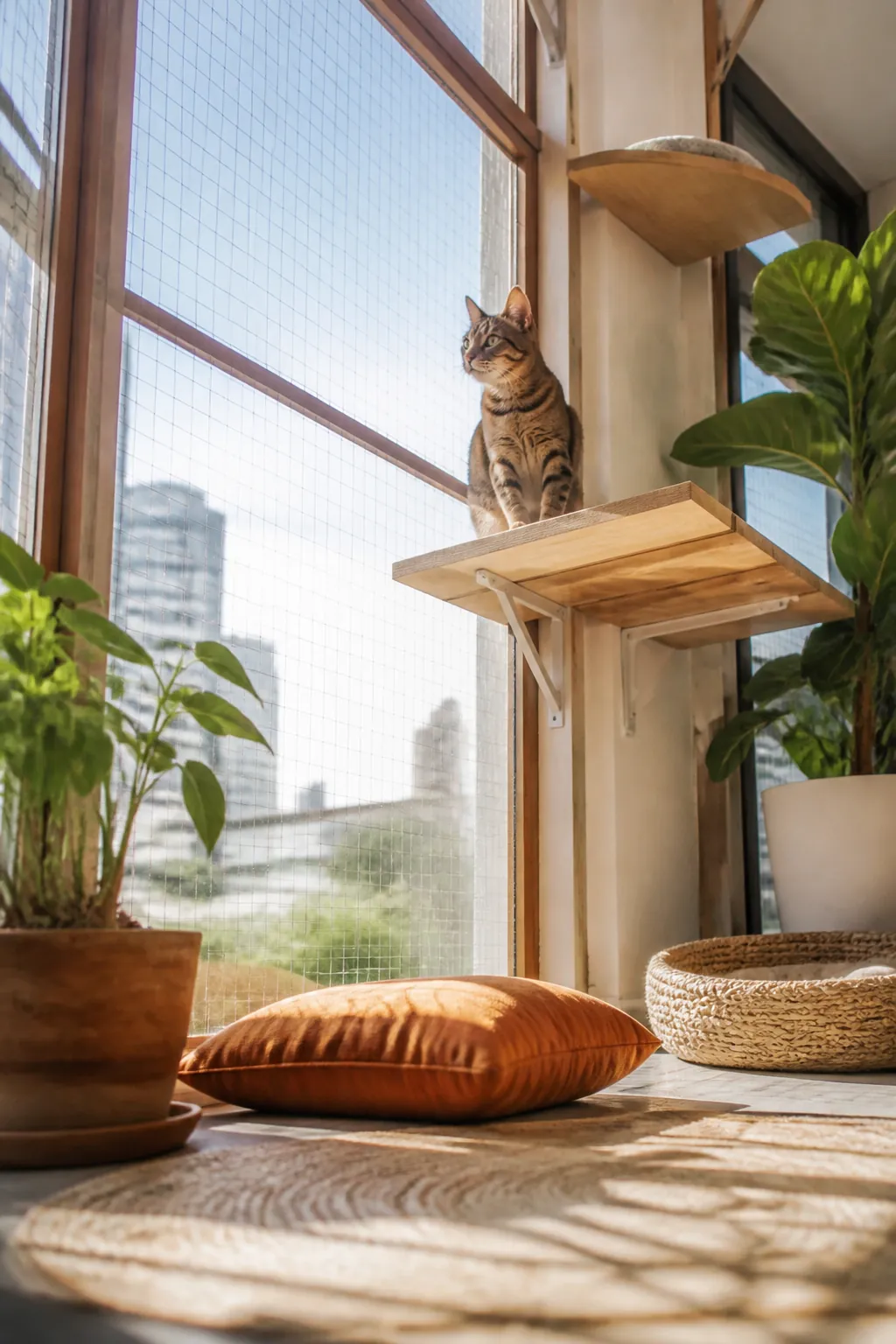
Once the footprint is fixed by the depth of the balcony, the only direction left to expand into is up. A shelf or perch mounted 12 to 18 inches off the floor, clipped or zip-tied to the enclosure’s own frame rather than drilled into it, gives the cat a second place to be without taking any more floor, and cats use vertical space readily once it is there. Check the frame’s own weight rating before hanging anything beyond a thin mat or pad, since the lightweight poles on most freestanding enclosures are sized for mesh tension, not for a cat landing on a shelf bolted to them. This matters more on a narrow balcony than a wide one, because there is no spare ground to add a second resting spot beside the first.
7. Check the door’s full swing before you commit to a spot
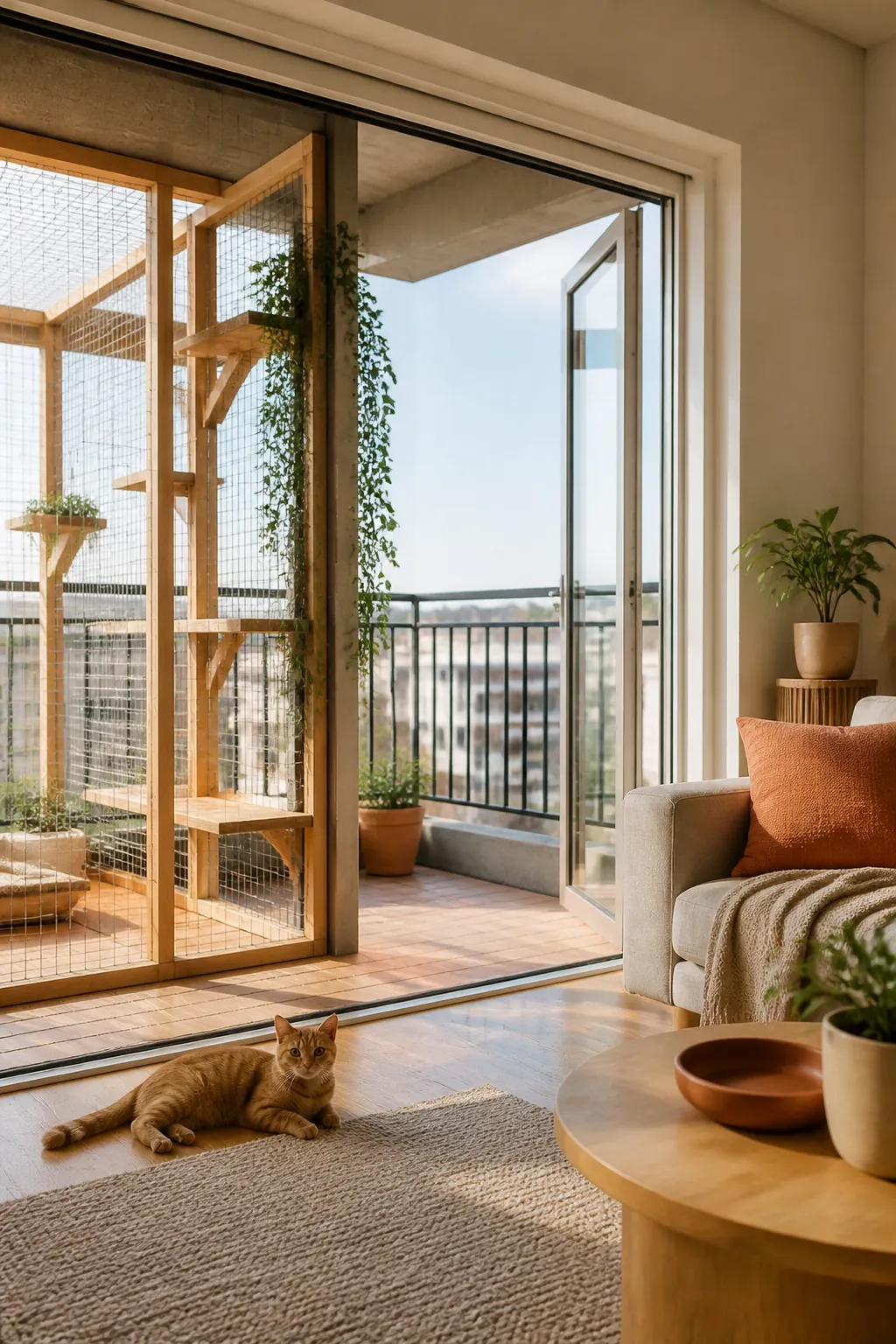
A door that opens 90 degrees on a mild day can swing a few degrees further once a frame swells with humidity or cold, and an enclosure set right at the edge of that arc will jam on exactly the morning you are in a hurry. Open the door as far as it physically goes, not just as far as you normally use it, and leave another inch past that mark before anything permanent gets placed. This is a five-minute check that prevents a problem you otherwise only discover the hard way.
8. Weight the base more than the instructions suggest
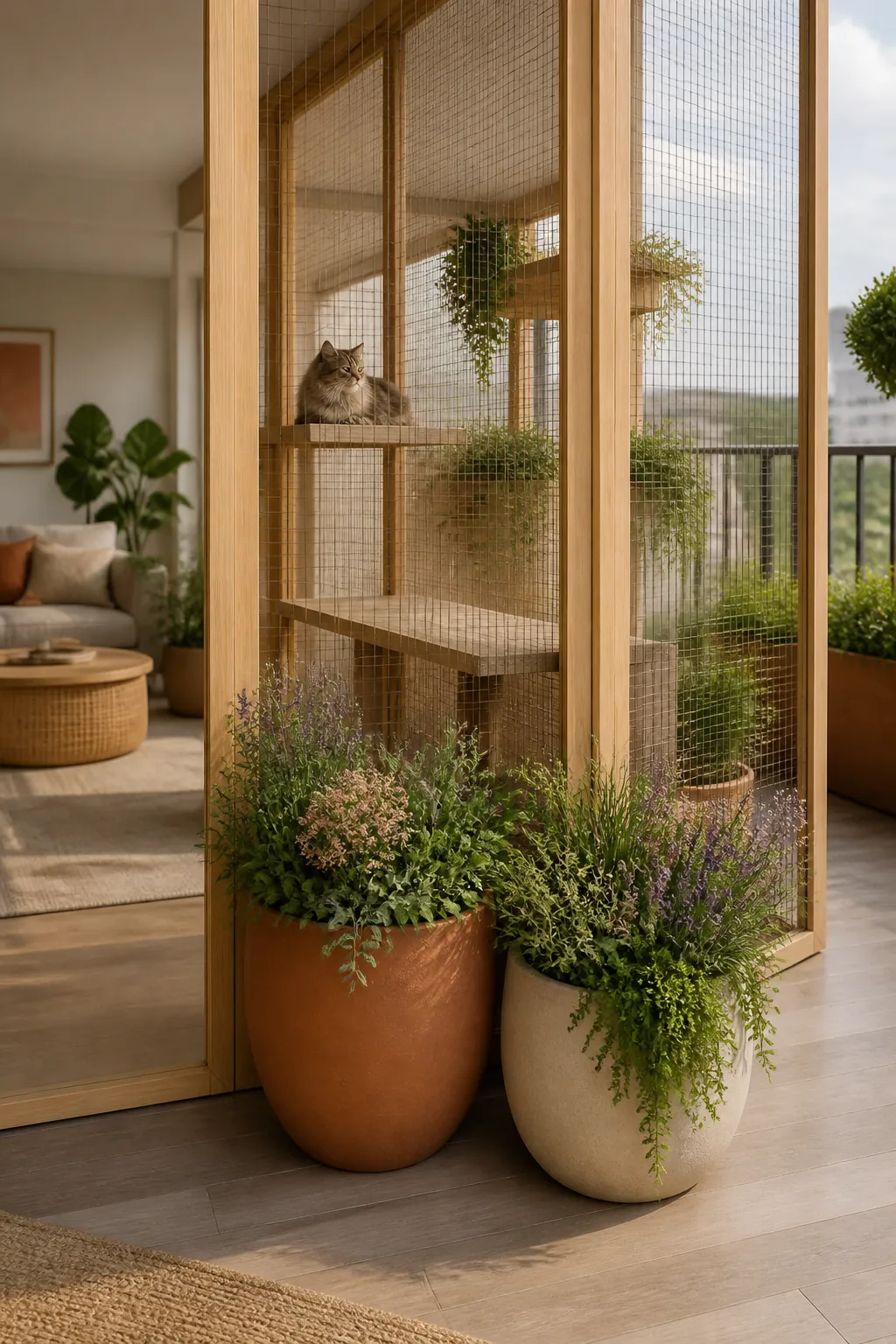
A narrow balcony puts any structure closer to the open railing than a wide one does, because there is less floor between the enclosure and the edge to slow wind down before it reaches the mesh. Add weight at the base, whether planters, paving slabs or purpose-made ballast, beyond what the packaging recommends, and check it again after the first real storm rather than assuming the factory feet are enough. A light enclosure with any kind of roof panel acts as a sail regardless of balcony width, and a narrow balcony gives that sail less resistance to work against.
9. Walk both ends at cat height before the cat goes out
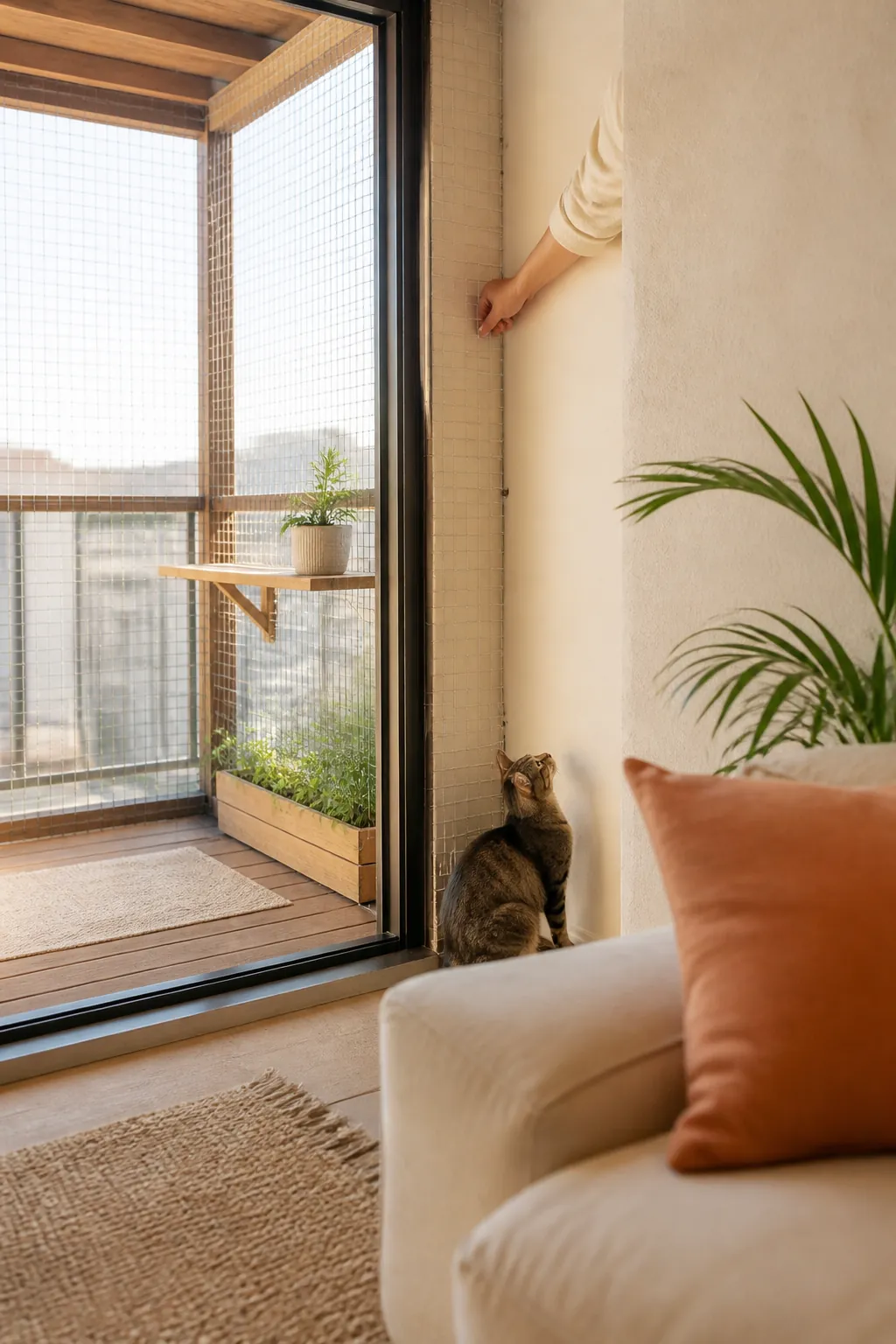
A narrow balcony has more seams relative to its floor area than a wide one, because the enclosure meets the railing, the wall and the mesh patches in a tighter space with less room for error at each join. Crouch down and check every edge your cat can reach, pressing on the mesh and pulling gently at the corners, with particular attention to the two end panels from step five. Do this before the first time the cat goes out, and again after any week with strong wind, since a seam that held in calm weather can work loose the first time the enclosure actually moves.
Where to start
Measure the balcony’s shallowest depth and the door’s full swing before buying anything. Those two numbers together decide whether a given enclosure fits at all, and they cost nothing but a tape measure and five minutes.
Buy the enclosure sized to that depth, then the garden mesh for the end gaps you will almost certainly have. Having both on hand from the start means a first fit that comes up a few inches short gets patched the same afternoon instead of sitting half-finished for a week.
Set the enclosure flush against the railing on its long side, not centered, and confirm 18 inches of walking path remains with the door open. If it does not, the unit is still too big for this balcony no matter how well the depth measurement checked out. If no enclosure leaves you that path, a window catio that clamps onto an open sash gives the cat outside air without using any balcony floor at all.
Add the mesh to the ends, weight the base, and walk the whole perimeter at cat height. Only then let the cat find the space on its own, with the door propped open rather than the cat carried out, and expect the first few visits to be shorter than the space actually allows.